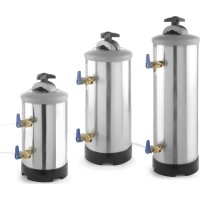
231234 - Water filter Hendi - Free user manual and instructions
Find the device manual for free 231234 Hendi in PDF.


| Product type | Water softener |
| Brand | Hendi |
| Model | 231234 |
| Height | 600 mm |
| Weight | 12 kg |
| Resin volume | 11.2 L |
| Salt per regeneration | 2 kg |
| Nominal flow rate at 4 bar | 1000 L/h |
| Supply pressure | 0.1 - 0.8 MPa (1 - 8 bar) |
| Ambient temperature | 4°C - 35°C |
| Feed water temperature | 6°C - 25°C |
| Max. feed water hardness | 900 ppm CaCO₃ (90°f) |
| Softening capacity at 20°f | 3360 L |
| Water connections | 3/8" G, 3/4" G |
| Main function | Water softening by ion exchange resins |
| Regeneration | Manual, with salt (NaCl) |
| Maintenance | Clean the lid and the bottle; check the seals |
| Resin lifespan | 5 to 7 years |
| Safety | Do not use by unsupervised persons; do not repair yourself |
| Spare parts | Resins, seals, lid, drain hoses |
| Standards | CE compliant, DM 174/2004, ICIM |
Frequently Asked Questions - 231234 Hendi
User questions about 231234 Hendi
0 question about this device. Answer the ones you know or ask your own.
Ask a new question about this device
Download the instructions for your Water filter in PDF format for free! Find your manual 231234 - Hendi and take your electronic device back in hand. On this page are published all the documents necessary for the use of your device. 231234 by Hendi.
USER MANUAL 231234 Hendi
You should read this user manual carefully before using the appliance.
A WATER INLET PIPE
B WATER OUTLET PIPE
C WATER INLET TAP
D WATER OUTLET TAP
E DEPRESSURIZATION PIPE
F REGeneration PIPE
G TANK LID
I CHECK VALVE
LABEL
M STANDARD TAP
N FLOOR SINK
3/4” G 3/8” G
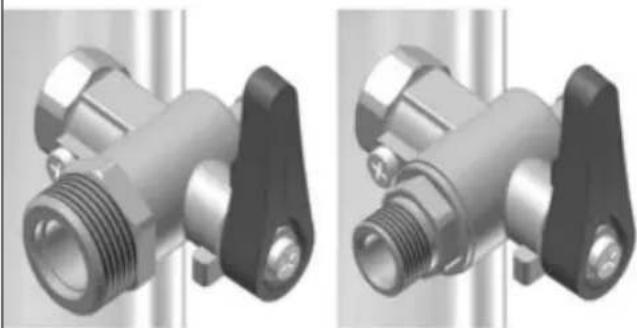
FIG. 3
FASE DI LAVORO
SERVICE MODE
MODALITE DE TRAVAIL
BETRIEB
FASE DE TRABAJO
ΦA3A PABOTbl
TRYBPRACY
- This equipment must not be used by children or by people with physical, mental or sensory impairments, or by people lacking experience, unless they be supervised by someone responsible for their safety, or they received instructions regarding the correct and safe way to use the equipment and were warned of the risks.
- Never try to repair the equipment by yourself: you may cause damage. Ask your seller for assistance.
- Never touch or use the water softener with wet or damp hands or feet, or barefoot.
1. INTRODUCTION AND GENERAL INFORMATION
1.1 OBJECTIVE OF THE MANUAL
This instruction manual is addressed to qualified personnel who must have knowledge of the health and safety norms of the place of installation.
The objective of this manual is to give useful information and warnings, both to the installer and the user, regarding:
HOW TO STORAGE AND KEEP THE EQUIPMENT BEFORE USE:
- Place and room conditions
- Expiry date
FOR THE INSTALLER
- Precautions for hygienic safety
- Equipment description and characteristics
- Place and mode of installation
- Activation
- Procedures to follow after a period of inactivity of the equipment
- Equipment disposal
- Solutions to some problems
FOR THE USER
- Instructions for the periodic rinsing of the resins
- Instructions for the care and cleaning of the equipment
- Health and hygiene warnings concerning the water produced by the equipment
The manual also gives you the guidelines to avoid an improper use of the equipment and it specifies the installer and the user's responsibilities, therefore we suggest reading through this manual before installing or using the water softener. If the dispositions are not followed, the manufacturer will decline responsibility for any damage caused to people, things or animals, and will consider the guarantee null and void.
1.2 KEEPING THE MANUAL
This manual is an integral part of the product. It must be kept with care by the user and it must accompany the equipment, even in case of a propriety transfer.
1.3 EQUIPMENT IDENTIFICATION
The equipment is identified by the numbers written in bold on the bottom left side of the label (fig. 1, L) on the softener's tank, on the package and on the back of this manual.
1.4 DECLARATION OF COMPLIANCE
This product complies with the Community Regulations and national laws applicable at the moment of its entrance on the market.
The declaration of compliance signed by the manufacturer is available on request and online.
1.5 HYGIENIC SAFETY NORMS AND ICIM TESTING
This equipment has been tested by the ICIM Institute of Italian
Certificated for the Mechanic, licensed credited labora-tory, certificated to the compliance with:
- Reg. n.1935/2004/CE products and components contact with elements according to the dispositions MOCA.
D.M. n.174/2004 products and components utilised in contact with feed water.
It is NECESSARY to use original replacements for repairs and maintenance, to guarantee hygienic safety.
To preserve hygienic safety, we commend removing the equipment from the package only at the moment of installation.
1.6 RECOMMENDATIONS AND WARNINGS
FOR THE STORAGE:
- Storage the water softener in a dry place
- The temperature in the storage must be between 0 - 35 °C
We recommend using the equipment within 24 months
FOR THE INSTALLER
We suggest installing the equipment after carefully reading the instruction manual. Should complications arise, we suggest asking your seller for assistance. The seller's information is written on the last page of this manual.
FOR THE USER
- Never try to repair the equipment by yourself: you may cause damage. Ask your seller for assistance.
- For manual regeneration and regular salt refillings, read the "ACTIVATION AND INSTRUCTIONS FOR REGENERATION".
- Cleaning the water softener is part of the user's duties.
The manufacturers are not responsible for any damage or harm that may derive by not following these precautions.
2.ABOUT THE EQUIPMENT
2.1 HOW DOES IT WORK?
The cationic resins in the softener's tank transform calcium carbonate in sodium carbonate, which is water-soluble at the working temperatures of both coffee makers and ice makers machines.
The transfer of sodium ions between the resins and water is imperative to soften drinking water, but this process tends to decline in proportion to the flow rate and the consumption of water. For this reason, it is necessary to regenerate the exhausted resins by making water and salt flow through them, therefore returning them to their active state.
The resins gradually lose their cationic function, and consequently their efficiency, with each regeneration. We recommend replacing them after seven years of use.
2.2 EQUIPMENT DESCRIPTION (fig. 1)
The main components of the water softener are:
- 1 tank containing the resins for water softening
- 2 three-way taps (fig. 1, C-D)
- 1 tank lid (fig. 1, G)
2.3 THE PACKAGING CONTAINS
- 1 complete water softener
- 1 instruction manual
- 2 drain pipes (fig. 1, E-F)
2.4 TECHNICAL FEATURES
Pressure of feed water: 0,1÷0,8 MPa (1÷8 bar)
Nominal flow rate at 4 bar: .1000 l/h
Room temperature: 4^ - 35^
Joints for the connection to the water system: 3/8"G; 3/4"G (fig. 3)
2.5 CHARACTERISTICS OF FEED WATER
Feed water must be:
- Drinkable and clean (SDI 1)
- Temperature must be between 6^ and 25^ C
- Hardness must be below 900 ppm CaCO_3 (90°f)
lation to preserve their hygienic safety. It is forbidden to use components that are not suitable for drinking water contact, or components which hygienic safety was compromised, as they could corrupt the quality of treated water and the equipment itself.
Connect the water inlet (fig. 1, A) and outlet (fig.1, B) to the connection joints (fig.3) of the water softener, tightening them safely.
2.6 EQUIPMENT PERFORMANCE BASED ON WATER HARDNESS
| MODEL | h [mm] | WEIGHT [kg] | RESIN [I] | SALT/RIG. [kg] | LITRES OF WATER SOFTENED, BASED ON HARDNESS | ||||
| 20°f 11°d 200 ppm CaCO3 | 30°f 16°d 300 ppm CaCO3 | 40°f 22°d 400 ppm CaCO3 | 50°f d 500 ppm CaCO3 | 60°f 28°d 600 ppm CaCO3 | |||||
| 231210 | 400 | 7,5 | 5,6 | 1 | 1680 | 1120 | 840 | 672 | 560 |
| 231227 | 500 | 9,5 | 8,4 | 1,5 | 2520 | 1680 | 1260 | 1008 | 840 |
| 231234 | 600 | 12 | 11,2 | 2 | 3360 | 2240 | 1680 | 1344 | 1120 |
3. INSTALLATION
3.1 PACKAGING
- Before the installation, check that the equipment was not damaged by the transport and does not show any anomaly. If in doubt, ask your seller, whose information is written on the back of this manual.
- Don't throw the package away for some time, being careful to keep any dangerous or small parts of the package away from children.
3.2 CHOOSING THE PLACE OF INSTALLATION
- Ensure that any other water treatment machine is not present upline of the place of installation.
- Ensure that feed water comes from a drinking water pipe. We recommend checking the chemical and physical parameters of the drinking water as well as its hardness before installation.
- Install the equipment near a floor sink, to dispose of the waste water produced by the regeneration.
- Install the equipment in a dry place that can be easily accessible to maintain, regenerate and clean the equipment. Do not install the equipment in dirty and unhygienic places, or in any place difficult to clean.
- Ensure that room temperature in the place of installation is between 4^ and 35^ .
- Keep away from corrosive or acid products.
- Do not install in places where electric safety norms or personal safety norms are openly disregarded.
Hydric pressure must not be under 0.1 Mpa (1 bar) or over 0.8 Mpa (8 bar). (We recommend at least 3 or 4 bar) - If hydric pressure is over 8 bar, it is necessary to install a pressure adaptor.
- Salt packages or boxes must not be kept in humid places or in direct contact with the floor: keep it, for example, on a wooden pallet.
3.3 CONNECTION TO THE WATER SYSTEM (fig.1)
The connection of the equipment to the water system must be done according to all applicable norms, following the instructions of the manufacturer and qualified personnel.
During the installation use pipes, hoses, valves and components which comply with the applicable Italian norm on hygienic safety, the Ministerial Decree 174/2004. They must be kept in their sealed package until the moment of instal
Ensure that:
- The water inlet and outlet pipes (fig. 1, A and B) comply with the norms on drinking water pipes.
The water inlet pipe (fig 1, A) has an internal diameter of at least 7mm . - A standard tap (fig. 1, M) must be installed by the user between the water system and the water softener, to ensure that water flow can be interrupted in case of necessity.
- Install on the water outlet a check valve (fig. 1, I) (DVGW, DIN 1988 T2) to protect the water softener from a reverse flow of hot water that could cause damage.
- Install a tap to take a sample of the outlet water, to test its hardness.
All pipes must be free, not crushed or constricted.
3.4 CONNECTION TO THE DRAIN SYSTEM
Waste water resulting from the regeneration is funnelled into the floor sink by the flexible pipe (fig.1, F) included in the package.
Warning: keep the drain pipe suspended over and not immersed in the water of the sink (fig. 1, N).
At the end of the installation, before opening the water inlet and outlet taps (fig. 1, C-D), rinse the resins as explained in the chapter "Activation and instructions for the regeneration".
4. ACTIVATION AND INSTRUCTIONS FOR THE REGENERATION
4.1 RINSING THE RESINS (fig. 2)
Put the water outlet pipe in the floor sink.
Turn the tap levers on the left and open the standard tap to let the water in.
Let the water flow until it is clear, then close the standard tap (fig.1, M) and connect the water outlet pipe to the machine of your choice.
4.2 PERIODIC REGeneration (fig. 4)
- Position B (DEPRESSURIZATION MODE)
1) Put the depressurization pipe in a bucket (fig. 1, E and fig. 4, position B)
2) Turn the tap levers on the right and wait until depressurization.
3) Remove the lid (fig. 1, G) and add the required quantity of
salt according to the model (see the table at paragraph 2.6)
- Position C (CLEANING)
Clean the lid and the seal (fig. 4, C) from any salt residue.
Clean the upper part of the water softener from any salt residue and clean the tank and under the cover of the weld joint of any leaked salt water.
The manufacturer does not take responsibility for the corrosion of the tank caused by the failure to follow these instructions.
4) Put the lid back on and tighten it.
- Position D (RINSING MODE)
5) Turn the water inlet tap lever (fig. 1, C) on the left
6) Let the salt water come out from the drain pipe until the water is fresh (around 40 minutes)
- Position A (SERVICE MODE)
7) Put the water softener back in service mode by turning the water outlet tap lever back on the left (fig.1, D)
WARNING: during the regeneration, the machine connected to the water softener does not receive drinking water.
5. MAINTENANCE FOR THE INSTALLER:
5.1 CHANGING THE RESINS
The resins' softening capacity ends after 5-7 years. This period can change based on the characteristic of the feed water and the quantity of softened water.
After this period of time, the user needs to decide if it is enough to change the resins or if it is better to change the water softener itself.
To change the resins it is necessary to disconnect the water softener and bring it to an appropriate place.
To disconnect the water softener:
1) Close the main water inlet tap (fig. 1, M)
2) Put the depressurization pipe in a bucket (fig. 1, E and fig. 4, Position B).
3) Turn the tap levers on the right, as in fig. 4, Position B.
4) Wait a few seconds until depressurization.
5) When water stops coming out of the depressurization pipe (fig. 1, E) it is possible to unscrew the inlet and outlet pipes (fig. 1, A and B) from the joints (fig. 3).
6) Open the lid (fig. 1, G) and change the resins. Clean the interior of the tank before inserting the new resins.
Do not throw the exhausted resins in the sewers.
The resins are not biodegradable and must be considered a non-hazardous waste (EU code CER 190905).
After changing the resins, clean the lid seal and the upper part of the softener from any resin residue.
7) Close the lid (fig. 1, G) and bring the softener back to its installation place.
8) Connect the water inlet and outlet pipes to the joints (fig. 3) and tighten them.
9) Rinse the resins as explained in paragraph 4.1.
5.2 RESIN PRESERVATION AND ACTIVATION AFTER A LONG PERIOD OF INACTIVITY
If the water softener is not to be used for more than 30 days, it is necessary to do a double regeneration first and then leave the water softener with the lid (fig. 1, G) closed.
We suggest avoiding a period of inactivity longer than 12 months. It is forbidden to reactivate the system after this period of inactivity.
If the period of inactivity is shorter than 12 months, it is necessary to rinse the resins and do a manual regeneration (paragraph 4.1 and 4.2) before reactivating the equipment.
6. IMPROPER USE OF THE EQUIPMENT
This equipment has been created to soften drinking water for domestic and technological use. The equipment must not be used for any other purpose and it must not be modified or tampered with in any way.
Any other use than the one specified in this manual is improper and therefore dangerous.
The manufacturer cannot be considered responsible for any damage caused by improper, mistaken or illogical use of the equipment.
- It is forbidden to feed the equipment with any liquid other than drinking water.
It is forbidden to introduce in the tank any products other than salt (NaCl)
7. EQUIPMENT DISPOSAL
Any waste must be disposed of according to the applicable norms.
The water softener was built with non-hazardous materials like polymers and stainless steel, and they must be disposed of according to the applicable norms.
Do not throw the resins in the sewer.
The resins are not biodegradable. They are classified as non-hazardous waste, and must be disposed of accordingly (EU code CER 190905).
AVERTISSEMENTS POUR L'UTILISATEUR
1.1 OBJECTIF DU MANUEL
3.3 RACCORDEMENT AU RESEAU HYDRIQUE (fig.1)
3.4 RACCORDEMENT AU RESEAU D'EVACUATION
- Position B (DRUCKABLASSPHASE)
- Position D (REGeneration)
1.1HA3HAAUHEHME DAHHOTOPYKOBODCTBA
3To pyKoBOcTb NO 3KcNlyaataunnpedHa3aueHo dIe KBaIIMnpuBoHHoro nepcoHana, KOtOpB3hakOM C npabIaMn rHmHeHueckOBe30NaChOCTMeTa yCTaHOBKn.
LcIbIy pkoBocBa IaBnIeTcO bcNeyHb, KaYCTaHOBunKy, a TaKKe NIOJIb3OBaTeJIIO BCE NOIE3HbI CBeDEHIN yKAcAOnuNEc:
COXPAHEHINI INPABUNbHOHO XPAHEHINI3DEJINNIO HAHAJIA NCIPOJIb3OBAHINI:
MeTO yCIOBnO OkpykaOuSe CpeDbI
- data OKOHuaHnaCpoka DeiCTBnA
ДЯ YCTAHOBUIMKA
- npabnna TeXnKn 6e3OnaChocTn
-Опсани И осobechисту устовstba - MECTO IN CNOCO YCTAHOBKIN
BBOD B3KcNJIyatauHIO - pnoeDpyb, Heo6xOIMMbIe nocne doJrOro nepmoa be3dienCTBna annapata
- YTNIM3aun
yCTpaHene HeNoIaDOK
ДЛЯ NOЛьЗВATEЛЯ
- INCHTpykUIM DnI nePmOuueckO perEhepaUIM CMOJIb
- yka3aHnNo yxOy nOChTKe np6opa
- cAHITapHOrmIeHMeCKeCKne
yka3aHnI npeoocTepeKeHnI, KacaiouNecr onpecheHHon annapatom BODbl
BpOuKopa TaKKe IMeET cIeJIbY yKa3aTb Ha OTBeCTBHeHObTe MOHTaXHnKa nIOJIb3OBaTeJI nIpeDOTbpaUeHHnФakr HeueJIeBOrO mCIOJIb3OBaHn rIp6opa, nO3ToMByMbI peKOMeHMyEam npOuHTaTb 3TO pyKOBoJCTBO, pEeJe YcTaHaBJIbBaT bNII NcNOJIb3OBaTb yMraHTeJIb. HecO6JIoHeHne CLeNyIoUxN NOLOKeHm BnEeT 3a CO6oi npEkpauHeHne OTBeCTBHeHOCn TPOIN3BOIDTeJIa 3a BO3MOKhIbe NOBpeKDeHn IIN TpaMBi IIOe, BeSeI IN JIM XJBOTbIX N KOHpCKaUN KAKNXIb6 rapaHTm Ha yCTpoCTBO.
1.2 XPAHEHME PYKOBOCTBA NO 3KCIJYATAUM
HnCTpyKlIaYABJIeTcA HeOTbEMJEMoH CaTbIO n3dEINIA.
3To pykoBOOCTBO CJIeJyET 6epexH0 XpaHNTcnoNlb3oBaTeIeM ndoJXHO Bcerda cOnpOBoKDaTb annapaTaKKe nB Cnyae erOppeDae npYROMy BnaJeBcyu Nn NnNoIb3oBaTeIIO.
1.3 INDEHTNΦIKALUNI PIPINBOPA
YmraHrTeIb OnppeJen Uppamn ,XHPbIM UpHcTOM HAnicabix BHN3y CneBa Ha 3TKeTke (PNC.1,L) YmraHrTeJRA, KOtopa npKJIeHa K BaIIHOhy,- Ha yNakOBKe H Na OobopoTe NocJeHEn CTpaHnCbI 3ToI bOpiKbpl.
1.4 DEKJIAPAUO O COOTBETCTBIM
O60pyoBaHHe 3rTOBJeHO B COOTBeTCTBm C HopMaMn EC HaMOHaJIbHbIX 3aKOHOB, DeICTByUOxIMB MOMHT erO BixOJa HpbIHOK. DeKnapauncoOTBeTCTBn, NOINCAHNApPON3BODITeIeM BcERda DOCTyHnA NO BAWemy 3anpocy Ha caIte.
1.5 TINHEHUYECKNE IN 3KCPENMEHTAJIbHbIE CTAHAPTBI B30PACHOCTN ICIM
3To obopyoBaHme 6blno npObeHeO ICIM S.p. a. nTajbIaHckn mHCTmTy CepTnDfNkaun MExaHKn B CBOe akKpeNDTOBAAHO JApOpaTOPIN Dnra TOrO, YTObbl yOCTOBEPNTb COOTBETCTBNE CLeNyIOUmm npabuImam:
PeJn. n. 1935/2004/CE npOyKTbI IN KOMIOHeHTbI, KOHTaKtpyUoJIe C NiueBbIMN pOyKTamM MOCA.
D.M.n.174/2004 npOyKtbl N KOMnOHeHTbl, INcNoIb3yeMble B KOHTaKe Tc nITbeBOB BODo
3To Deaetero Heo6xOIMbIM DnpeyIpyHoro peMOHaTn 06cLyXBaHn HnNCIOBAMnOpINHaJIbHbIX 3aNaChbIX YacteN DnAObecneHnRInHeHueckOn 6e3oNaChOCTn INpON3BOJNTeJIbHOCTN.
Iina coxpaehnna ceIOCTHOCTn peKOMeHdyETcH He paCnKaOBbBaTb annapat paBhe MOMeHTa yCTaHOBKn.
1.6 NOJIe3HbIE COBETbI IN IPEIOCTEPEXHEHM IPNXPAHEHM;
XpaHntb yMaYrHmTeB B CYXOM MecTe
TeMnepaTpyxpaHEnIdoJXHa6bITBdIaIa3OHeMeJdy 0^35^
cPOK XpAHENI DOLXKeH INPeDyCMATPnBaTb eRO NcIOJIb3OBAHne B TeHeHNE 24 MeCraeB
BHIMAHNE YCTAHOBUHKY!
Cobetyem BHNMaTeNbHO npOHTaB INCTpyKm3TOro pyKOBOcTBa nepeyctahOBKO annapata n B cnYae Bo3HKnHOBeHn TpyHocTe o6pa-aaTbcs 3a NOMsUo K BaWemy npOdaBu DaHHBe KOtOPOrO 3aINCaHb Ha o6paTHOH CTOpOHe NocJeHHe CTpaHnUy YuehHKapyKOBoCTBa.
BHIMAHME IOJIb3OBATEJIO!
He nItaTbCamaHMMpeMOHTnpoBaTb yctpoiCTBO,TAK KaK 3To MOKeT npBecTN KOnachbIM NocIeDCTBnM.BcIyue Heo6xoNMoCTn peMOHTa 0bpaataCBKa BaWemy yCTaHOBunky
- Pn pyHOn perehepaun n nepnoDnueckm 3apdom coNn Heo6xo- DIMO BHIMATEbHO npOHTaTb pa3deN BBOB B EKcIpyaTuNIO u HNCTpyKUnn no perehepaunn
OuNTKBA BOOyMRAHTeJI N eO OBCJyXkBaHHe NOJB3OBaTeJIEM
3aBOIDPON3BOINTEJbHe HECETOTBECTBENHOCTb 3a BO3MOXHbIe npuHHEHhIE yUep6bln HecuaTHbe Cnyan B CLeDCTBmN ppeHBepeXeHn HcTpyKUmaMn N PpeOCTpeXeHMaMn
2.3HAKOMGTBO C ANIAPATOM
2.1 PIPINLPI PA6OTbI PIPBOPA
Iohneckme CMOJIb HaxOJaIeCEB 6aJIIOHe yMrgHTeJIcCNOo6HbI npEbpATnB KAp6oHaT KaJIbUra B KAp6oHaT HaTpN KOTOpBpI pactBopReTCB B OBe pIn TempePaxObBuHO npcyTCTByUoEe B KoFemaunHbI, B rehepaTopax JbDa.
IpoJoxTeBHe yctyNIOHOHaTPOIN3CMOJI,HeaMeHIMbIeIINyMraHEnn NITBeBOB BObl,Kak npAInIO,3aKaHnBaIOTCB 3aBNCmOCtNTOT pacxoJaNOTpeBHeHN BObl,BNIOTb Do INX NCTOSeHnN IN,CLeDOBATEbHO,TpeByETcNIXPEREHApUINKOTopAR OcyuectBIAReTcNOcpeCTBOM IPOXOXDeHN BObl IN NobapeHHoCOnI,Yepe3 HacblueHHbeCMOJI BepHyTb COCTOAHNEAKTUBHOrnpCXOXDeHn.
KaTHOHueckne dyHKn CMONbI yMeHbwaOTcN oCTeNEHHO, B 3aBNCIMOCTN OT KOINHECTBa peAKTNaUN, I, CJIeIOBaTeJbHO, IN 3ΦΦeKTNBHOCTb,IO3OMy peKOMeHNyETcN IX 3aMeHa NOCLe cEMN JET NCIOLb30BAHn.
2.2 ONICAHNE IPNBOPA (pnc.1)
OCHOBHbIe KOMHOHEnTbI yMgYHHTeJIaBIAHOTcA:
- 16aannoh,coepkaun CMOnblIy mryeHnB0bl
- 2 wt. 3xnoocbix kpaHOB (pnc. 1, C-D)
1 KpbIka 6aJIIOHa (pnc. 1, G)
2.3 COДЕРЖИМОЕ KOPOБКИ
1 KOMNJIeKT YMRAHTeTcEepn
1 INCHTpykUIM NO pIIMMeHEnIO
- 2 trpy6knдя слпва (pnc.1, E-F)
TETXHHECKE HAHBIEYCTPOCTBA 61÷0.8Mna(1÷86ap) HomnabHyIpaXo46ap 1000 n/4 TemepaIpyaOKpykaIOeIcpebl: 4^ 35 CoedInHeHn,poKlOaembIeKBoOpnpOBy: 3/8"G;3/4"G(pnc.3)
2.5 XAPAKTEPNUKIA IOJABAEMOI BOJBI
Boda danschabxeknnaDolxkha:
- 6bItb NtBbeBOH N YUCTO
IMETb TEMepaTpy B Duaana3Oe O T 6o 25oC - IMETb XeCTKOCtB MeHee 900 ppm CaCO _3 (90°F)
2.6 PON3BOIDNTBHOCTb YMIGHTEJI B 3ABNCMOCTN OT XECTKOCTN BOIDI
MeueHnX INB KHOtAKTe C NOnOM,MOXHa pa3MeCTNtB eE, HApPIMep, Ha DepeBraHHbIe NOnDIOHbl.
3.3 NOДКЛIOUECHHEK BOДОПРОВОДHO CETN (pnc.1)
IoiKIOUHHeN K cTe N BODOCHa6KeHn DOJIHXo 6bITb CdelaHO B COOTBETCTBN C HOpMaMn, B COOTBETCTBM C IHCTpyKcHmN Ipon3BOJnteJn IToIbKO KBaINfNUPOBAHbIM NepcoHaOM.
Bo BPem yCTaHOBKn He TOnbKO NcNoJIb3OBA Tb Ty6bl, fHTnHn, Klanahn I Dpyrme KOMNekTyIOUne N3dEInn, COOTBETCTByIOUne DM 174/2004,Ho n CoXpaHNTb IN TmNEHueCKyIO CEIOCTHO B OPINHAHBn OyakOBKe BnTob Do HaHaJa MOHTaKa. 3aIpeSeHo NCNoJIb3OBA Tb MaTePnaIb I KOMNekTyIOUne N3dEInn, KOtOpBe He MOrY T KOHTAKTPOBaTc B PINTbeBOB BOOM IN XpaHrTaC RmNEHueCKn HEnpABuNbHO, TAK KaK OHN MOrYT NOBNIaTb Ha KaYeCTBO OOhUeHHoB ODo I ObopyDObAHn.
IoiKIOUHTb Wlnahr Bnycka (Pnc. 1, A) IN BblNycka (Pnc. 1, B) BoDbI K wTy-uepam (Pnc. 3) YmRHTeJIa 3abHNHbAraNX HndExHo.
Y6eNJTEcB B TOM, UTO:
- LIIaHn BxOa N BbXoDa BoBly (PNC. 1, A n B) COOTBeTCTByIOT Tpe6ObaHNm CTAnapTOB, OTHOCaXnxCk "LIIaHn IyI NITbeBOB BoBly".
| MOДЕЛь | h [mm] | BEC [kg] | СМОЛА [I] | СОЛь/PERГЕн. [kg] | ЛИТРБI OЧИSEENHо BODы B 3AВИСИМOCKТN OT JECHKOCTN | ||||
| 20°f11'd200 ppm CaCO3 | 30°f16'd300 ppm CaCO3 | 40°f22'd400 ppm CaCO3 | 50°fd500 ppm CaCO3 | 60°f28'd600 ppm CaCO3 | |||||
| 231210 | 400 | 7,5 | 5,6 | 1 | 1680 | 1120 | 840 | 672 | 560 |
| 231227 | 500 | 9,5 | 8,4 | 1,5 | 2520 | 1680 | 1260 | 1008 | 840 |
| 231234 | 600 | 12 | 11,2 | 2 | 3360 | 2240 | 1680 | 1344 | 1120 |
3. YCTAHOBKA
3.1 YNAKOBKA
- PeneyucTahOBKoY6eHITcB, YTO npu6Op He HmeeTdeFeKTbI NIN NOBpeXDeHn, Bbl3BaHHbIe TpaHCnOpTnpOBKO; B Cnyae COMHeHnOcbOPaTtEcB K npOaBuCy, DaHHbIe KOtOpOro npuBeHbI Ha OobopoTe NocEnHe CTpaHmUe pykoBDCTBa; XpaHtB kaOeTo
BpemKopo6kyN3dEINr,CTapaeCbHeOCTaBnTbOnaChbIeMeIKKe YactuYNAKO8KNBDOCTyHOMDJIDETeMecTe.
3.2 BbIBOP MECTA YCTAHOBKN
Y6eNTecb B TOM, qTO BBepx NO TeueHNO OT TOKn YCTaHOBKn npu-60pa yke He npucytCTbyET KAKARINBO CNTema ONpecheHnBAoBI. Y6eNTecb B TOM, qTO 3abop BObl pONCXOINT N3 Tpy6bl, rDe TeetNTbeBa BOda. PekomeHdyTcN pOBecTN pOBepky fN3NKoxMnueCKNX npamETPOB IN XECTKOCTN NTBeBOB BObl Ha BXOde YCTaHOBKn.
YCTaHOBtE yCTPOIcTBO B MecTe 6nI3Ko K CnIBHOI CETN, YTObI CnIBaTb BOy, O6pa3yIOUIOOc npri pereHepaun.
YctahabnBaIte np6op B cyxOM MeTe n IeKo DoCTyHOM dIaTexHHeCKOrO 0cbnykBAHn, perEhepaMn N OcNtKn; He yctahabnBaTbMaHInHy B rpa3HOM MeTe, fHe CoBnOdaETcnpHnPiNbCaHHTapHOrHMHeHueckne YCLOBnIM TpyDn DeJaTb YcTky.
- Y6eIITecb, yTO TEMnepaTyBa B NOMEueHnn, rKe BBYcTaHOBInTe YCTPOINCTBO 6blA B npedeJax O T 4^ n 35^
- DepkataB BdannOT KNCOT N OT npOyKTOB,HTO MOrY T pNnHnTB KOp3HIO.
He yctahabmbaTe B MeCTax, rde eCTb OeBnHbIe HApUWeHn npaBn3JIeKTPnuecko 6e30NaCHOCTn INN BeIMKa BO3MO3HOCTb HeCuaCThBX CnyuaeB.
- Dablenne BoDJI He DoInxHO 6bITb HnXe 0.1 Mna (1 6ap) nnn BbIe O,8 Mna (8 6ap) (peKoMeHdyTcno KpaIHe Mepe 3 nnn 4 6ap).
Bcnyae ecn daBneHne npebbIaet 86ap Heo6xOIMO yCTAHOBITb peyKTop daBneHna.
Cob MeKkAn mIn B Kopo6kAn He DoIaXHa XpaHmTBcB O BnaXbIX No
-ⅢaHr BxOHDn (pnc.1,A) BObI NmeeT BHyTpEHn DnaMeTp He MeHee 7 MM.
Mekdy BOIOnPOBOOM yMraHTeNEM DOJXeH 6bIb yCTaHOBJEN (noJIb3OBATeNEM) kpaH (puc.1,M), KOtOpBn no3BOJNT npepBaTb npoxoD BObl B cIyue Heo6xOIMOCTI.
YctahOBHTe Ha BbInyckHOM WAnHe O6paTHb KlnaH (Pnc.1,1) (DVGW, DIN 1988,T2),IINpeOxpaHEnrYmRHTeNtO T Bo3MOXHOBO3BpaUHnroP0rueH BObl, KOToPOe MOKeT erO NobpeDnTB.
-ПпсусмOTpebКранДлЯЗбopaВоьыHaВьIXODE,ДИКоHTpoJЯeTBEpIOCTN.
PpOBeBpTe, YTO BCE WLaHn CBo6oDnHbI, He CTcEChbI N 6e3 nepeRn6OB.
3.4 NOДКЛIOUCHNEK CJINBHOI CETN
Boda, kOTopa BbIeT Bo BpempeHepauu, DoJxHa Teyuepe3 uHaHR (Pc. 1, F), KOTOpBn npUraetcK KomnKeTe yMrgnteJI, 6nXke K CmBy.
PpmeaHne:epKnte 1JAAHr Ha NOBepxHOCTn CInBa, He NOrpyKeHbIM BBOy(pic.1,N).
IIO 3aBepueHn yCTaHOBKn, npee TEm, KaK OTkpblb KpaHbI BxoJa N BbIXOda (pnc.1,C-D),JeNaTb npombibky cmoJIbI, KaK ONnCaHO B rIabe "BBOD B 3KcPiYATAUIO N IHCTPYKLIIN IIO PEFEHEPALUN".
4.BBOB3KCNJYATAUIO NHHCTPYKUMI NO PETEHEPAUMN B0dbI
4.1 POMblBKA CMOJIbl (pnc. 2)
IIOJIKITb JnAHr BbIXOaB CnIMB.
PomeCTe pbyar KpaHOB cneBa n OTKpbItb BXoD BObl.
IyCTNTe NOTOK, noka OH He 6byET YHCTbIM, NocLe Yero NpeKpaTbNoCTynJIeHHe BObl (PNC.1,M),3aTeM NOcOeHNITe BbInyckHOJ WJNaHr K MaunHe ChabXeHHa.
4.2 INEPNOUHUECKAR PEGHEPALN (pnc. 4)
-110JoxKeHneB(ΦA3A1IPOUyBKN)
1)Полохит bВ BeДро wlaHr pa3pexeHnA (pnc. 1, E n pnc. 4, ПОзицИ B).
2) UctahOBNTe Cnpaba pbyaun KpaHOB ndoxdaTbca C6pOca daBHeNIA.
3) CHINMITE 3aunTHbIK KOJINaOH (pnc.1, G) IN BBecTc COJB KOKIYeCTBe, npednicaHOM B 3aBNCMOCTN OT MOeIN (CMOTpeTB TaBNIcy napa- rpaΦ 2.6).
-Положене"С"(OчNTKA)
PpmbtB Kpbikky N ee npoknaiky (pc. 4, C) ot octatKOB coH.
IpoTnE BepxHIOU qactb BOOyMraHTeIN OCTaTKOB cOnN XopoOIOPOcyuHT b aHIOH, daxe NOD YexlOM, OT HANNUY pa3NIToI COJeHOBBObl.
HnpMaPon3BOnTeNb He Hecet OTBETCTBEHHOCt 3a Koppo3nIO CTaJIbHbIX 6aJIIOHOB, Bbl3BaHHyIO N33a HecO6JIIODeHnR Mep IpeDOCTOPOXHOCTN.
4) YctahOBITe KpbIiKy 3aKpyiBaa HndexHno pyuKy.
-Положене“D”(ФАЗА ПОМьIBКИ)
5)IpeMeMeCTIePByarKpAnBxOndHoroIzIaHa(PmC.1,C)cIeBa
6)Pa3peuNTbBbTnCOJeHOB0eN3CNBHorO 7naHra doTex nOp, noka BOda cTaHET pecHoN(OKoJIO 40 MMn.)
This equipment is a water softener for domestic use, to be connected exclusively with the water system.
The following values refer to a test on 2540 litres, with domestic drinking water and 1 cycle of manual regeneration, in compliance with ICIM internal regulations on testing.
The parameters comply with the values indicated by the Italian norms on the subject, the Legislative decree n.31, February 2, 2001, and following transpositions.
| Parametro Parameters Paramètres Parameter Parâmetro Παρατρή Parametry | Riferimento normativo (D.lgs. 2 febbraio 2001, n. 31 e successivi recepimenti) Prescriptive values according to Legisla- tive decree n.31, February 2, 2001, and following transpositions Valeurs normatifs selon la loi italienne Décret Légalität du 2 février 2001, n.31, et transpositions suivantes Rechtssetzender Hinweis (D.lgs. 2. Februar 2001, n. 31 und folgende Maßnahme) Referencia normativa (Ley de 2 de Febrero 2001, n. 31 y siguientes reconocimientos) Hôpmatînbáry c妹妹 (Zak. AKT ot 02.02.2001, n.31 c noçl. não...) Norma (wg Rozporzadzenia Rep. Woskiej z dn. 2 lutego 2001, n. 31 i dalsze zmiany) | Acqua domestica potabile di prova Domestic drinking water for testing Eau domestique potable d'essais Test Haustrinkwasser Aqua domestica potable de prueba ДOMAUSHA NITBEBA BOA對於 próboi Wartosci dla wody pitnej poddanej testom + przed uzdatnieniem | Acqua domestica potabile di prova trattata Domestic drinking water for testing, treated Eau domestique potable d'essais traitée Bearbeitetes Test Haustrinkwasser Aqua domestica potabile tratada Овработанья домашенья ппльевая вoda对于我们 робы Wartosci dla wody pitnej uzdatnionej |
| Durezza Hardness | 15 - 50 °f (valori consigliati - recommended values) | Min. 17,70 - Max. 18,80 | Min. 0,10- Max. 0,20 |
| Conduitività Conductivity | 2500 μScm-1 a 20°C Media 400 Media 415 | ||
| Torbidity Turbidity | Accettabile e alla anomale variazioni Acceptable and lacking anomalous variations | Max. 1 NTU Max. 1 NTU | |
| Ammonio Ammonium | 0,50 mg/L Non rilevato (conSIGliato - recommended) | Non rilevato Not detected Not detected | |
| Calcio Calcium | 100 mg/L (conSIGliato - recommended) | Min. 47,69- Max. 48,32 mg/L | Min. 0,29 - Max. 0,56 mg/L |
| Magnesio Magnesium | 50 mg/L (conSIGliato - recommended) | Min. 14,11 -Max. 14,35 mg/L | Min. 0,07 - Max. 0,09 mg/L |
| Sodio Sodium | 200 mg/L | Min. 3,27 - Max. 3,36 mg/L | Min. 90,04 - Max. 93.30 mg/L |
| Ferro Iron | 200 μg/L | Min. 2,32 - Max. 4,19 μg/L | Min. 6,08 - Max. 6,97 μg/L |
| Escherichia Coli | 0 UFC/ 100 ml Non rilevato Non rilevato Not detected Not detected | ||
| Pseudomonas Aeruginosa | 0 UFC/ 250 ml Non rilevato Non rilevato Not detected Not detected |
The drinking water-contact materials of the water softener comply with the parameters requested by the Italian laws (D.M. 6 aprile 2004, n.174).
WARNING: this equipment needs periodic maintenance to guarantee the treated drinking water requirements and to maintain the features declared by the manufacturer.
THE EQUIPMENT MUST BE USED FOLLOWING THE RULES IN THE MANUAL
Etichetta - Label - Étiquette - Etikette - Etiqueta - Θικετα - Etykieta
DIAGRAMMA PERDITE DI CARICO
PRESSURE LOSS CHARACTERISTICS
GRAPHIQUE CHUTE DE PRESSION
DRUCKVERLUST DIAGRAMM
DIAGRAMA PÉRDIDAS DE CARGA
WYKRES STRATY CISNIENIA
ДИАРAMMA O NOTEPÉ DABJIÉHIVI
Data - Date - Date - Datum
Fecha - Data - Data
Hendi Food Service Equipment GmbH
Central Barn, Hornby Road
Lancaster, LA2 9JX, United Kingdom
Tel: +44 [0]333 0143200
Email: sales@hendi.co.uk
Hendi Food Service Equipment Romania Srl
PKS Hendi South East Europe SA
5 Metsovou Str.
18346 Moschato, Athens, Greece
Tel: +30 210 4839700
Email: office.greece@hendi.eu
Hendi HK Ltd.
1208, 12/F Exchange Tower
33 Wang Chiu Road, Kowloon Bay, Hong Kong
Tel: +852 2154 2618
Email: info-hk@hendi.eu
FindHendi on internet:
www.hendi.eu
www.facebook.com/HendiFoodServiceEquipment
www.linkedin.com/company/hendi-food-service-equipment-b.v.
www.youtube.com/HendiEquipment
- Changes, printing and typesetting errors reserved.
- Änderungen und Druckfehler vorbehalten.
-
Producent zastrzega sarepawdozmian oraz btedow drukraskich winstrukcji.
-
Variations et fautes d'impression réservés.
- Error di cambiamenti, di stampa e di impaginazione riservati.
-ImmeHeHHn neaTn BepcKn 0wn6kn 3aunneHbI.



- 3/4” G 3/8” G
- INTRODUCTION AND GENERAL INFORMATION
- OBJECTIVE OF THE MANUAL
- HOW TO STORAGE AND KEEP THE EQUIPMENT BEFORE USE:
- FOR THE INSTALLER
- FOR THE USER
- KEEPING THE MANUAL
- EQUIPMENT IDENTIFICATION
- DECLARATION OF COMPLIANCE
- HYGIENIC SAFETY NORMS AND ICIM TESTING
- RECOMMENDATIONS AND WARNINGS
- FOR THE STORAGE:
- 2.ABOUT THE EQUIPMENT
- HOW DOES IT WORK?
- EQUIPMENT DESCRIPTION (fig. 1)
- THE PACKAGING CONTAINS
- TECHNICAL FEATURES
- CHARACTERISTICS OF FEED WATER
- INSTALLATION
- PACKAGING
- CHOOSING THE PLACE OF INSTALLATION
- CONNECTION TO THE WATER SYSTEM (fig.1)
- Ensure that:
- CONNECTION TO THE DRAIN SYSTEM
- ACTIVATION AND INSTRUCTIONS FOR THE REGENERATION
- RINSING THE RESINS (fig. 2)
- PERIODIC REGeneration (fig. 4)
- - Position B (DEPRESSURIZATION MODE)
- - Position C (CLEANING)
- MAINTENANCE FOR THE INSTALLER:
- CHANGING THE RESINS
- RESIN PRESERVATION AND ACTIVATION AFTER A LONG PERIOD OF INACTIVITY
- IMPROPER USE OF THE EQUIPMENT
- EQUIPMENT DISPOSAL
- AVERTISSEMENTS POUR L'UTILISATEUR
- OBJECTIF DU MANUEL
- RACCORDEMENT AU RESEAU HYDRIQUE (fig.1)
- RACCORDEMENT AU RESEAU D'EVACUATION
- - Position B (DRUCKABLASSPHASE)
- - Position D (REGeneration)
- 1.1HA3HAAUHEHME DAHHOTOPYKOBODCTBA
- COXPAHEHINI INPABUNbHOHO XPAHEHINI3DEJINNIO HAHAJIA NCIPOJIb3OBAHINI:
- ДЯ YCTAHOBUIMKA
- ДЛЯ NOЛьЗВATEЛЯ
- XPAHEHME PYKOBOCTBA NO 3KCIJYATAUM
- INDEHTNΦIKALUNI PIPINBOPA
- DEKJIAPAUO O COOTBETCTBIM
- TINHEHUYECKNE IN 3KCPENMEHTAJIbHbIE CTAHAPTBI B30PACHOCTN ICIM
- NOJIe3HbIE COBETbI IN IPEIOCTEPEXHEHM IPNXPAHEHM;
- BHIMAHNE YCTAHOBUHKY!
- BHIMAHME IOJIb3OBATEJIO!
- 2.3HAKOMGTBO C ANIAPATOM
- PIPINLPI PA6OTbI PIPBOPA
- ONICAHNE IPNBOPA (pnc.1)
- COДЕРЖИМОЕ KOPOБКИ
- XAPAKTEPNUKIA IOJABAEMOI BOJBI
- NOДКЛIOUECHHEK BOДОПРОВОДHO CETN (pnc.1)
- YCTAHOBKA
- YNAKOBKA
- BbIBOP MECTA YCTAHOBKN
- NOДКЛIOUCHNEK CJINBHOI CETN
- 4.BBOB3KCNJYATAUIO NHHCTPYKUMI NO PETEHEPAUMN B0dbI
- POMblBKA CMOJIbl (pnc. 2)
- INEPNOUHUECKAR PEGHEPALN (pnc. 4)
- -110JoxKeHneB(ΦA3A1IPOUyBKN)
- -Положене"С"(OчNTKA)
- -Положене“D”(ФАЗА ПОМьIBКИ)
- Hendi Food Service Equipment GmbH
- Hendi Food Service Equipment Romania Srl
- PKS Hendi South East Europe SA
- Hendi HK Ltd.
- FindHendi on internet:
Brand : Hendi
Model : 231234
Category : Water filter