RB976 - Receiver ROTEL - Free user manual and instructions
Find the device manual for free RB976 ROTEL in PDF.



| Product type | 6-channel power amplifier |
| Brand | Rotel |
| Model | RB976 |
| Dimensions (W x H x D) | 440 x 121 x 400 mm |
| Weight | Approximately 12 kg (estimated) |
| Power supply | 115/230 V AC, 50/60 Hz, power consumption 700 W |
| Output power (stereo) | 60 W per channel (8 Ω, 20 Hz - 20 kHz, < 0.03% THD) |
| Output power (bridged mono) | 150 W per channel (8 Ω, 20 Hz - 20 kHz, < 0.1% THD) |
| Frequency response | 15 Hz - 100 kHz (± 1 dB) |
| Total harmonic distortion (THD) | < 0.03% (20 Hz - 20 kHz, 8 Ω) |
| Signal-to-noise ratio | 116 dB (IHF A weighted) |
| Input impedance / Sensitivity | 22 kΩ / 1.5 V |
| Speaker impedance (normal mode) | 4 Ω minimum |
| Speaker impedance (bridged mode) | 8 Ω minimum |
| Inputs | 6 x RCA (3 stereo pairs) |
| Speaker outputs | 6 pairs of terminals (bare wire, spade, banana plug) |
| Main features | Stereo / bridged / input linking mode, per-pair level adjustments, thermal protection circuit |
| Maintenance and cleaning | Clean with a dry cloth or vacuum cleaner; do not obstruct ventilation openings |
| Safety | Do not expose to moisture; disconnect if not used for extended periods; refer repairs to a qualified technician |
| Spare parts and repairability | No user-serviceable parts; for repair, contact a qualified Rotel technician |
Frequently Asked Questions - RB976 ROTEL
User questions about RB976 ROTEL
0 question about this device. Answer the ones you know or ask your own.
Ask a new question about this device
Download the instructions for your Receiver in PDF format for free! Find your manual RB976 - ROTEL and take your electronic device back in hand. On this page are published all the documents necessary for the use of your device. RB976 by ROTEL.
USER MANUAL RB976 ROTEL
This symbol is to alert the user to the presence of uninsulated dangerous voltages inside the product's enclosure that may constitute a risk of electric shock.

This symbol is to alert the user to important operating and maintenance (service) instructions in this manual and literature accompanying the product.
WARNING:
There are no user serviceable parts inside. Refer all servicing to qualified service personnel.
WARNING:
To reduce the risk of fire or electrical shock, do not expose the unit to moisture or water. Do not allow foreign objects to get into the enclosure. If the unit is exposed to moisture, or a foreign object gets into the enclosure, immediately disconnect the power cord from the wall. Take the unit to a qualified service person for inspection and necessary repairs.
Read all the instructions before connecting or operating the unit. Keep this manual so you can refer to these safety instructions.
Heed all warnings and safety information in these instructions and on the product itself. Follow all operating instructions.
Clean the unit only with a dry cloth or a vacuum cleaner.
Keep the ventilation inlets on the unit unobstructed. For example, do not place the unit on a bed, sofa, rug, or similar surface that could block the ventilation slots. If the unit is placed in a bookcase or cabinet, there must be sufficient clearance around the unit and ventilation of the cabinet to allow proper cooling.
Keep the unit away from radiators, heat registers, stoves, or any other appliance that produces heat.
The unit must be connected to a power supply only of the type and voltage specified on the rear panel of the unit.
Connect the unit to the power outlet only with the supplied 2-pin polarized power supply cable or an exact equivalent. Do not modify the supplied cable in any way. Do not attempt to defeat grounding and/or polarization provisions. The cable should be connected to a 2-pin polarized wall outlet, matching the wide blade of the plug to the wide slot of the receptacle. Do not use extension cords.
Do not route the power cord where it will be crushed, pinched, bent at severe angles, exposed to heat, or damaged in any way. Pay particular attention to the power cord at the plug and where it exits the back of the unit.
The power cord should be unplugged from the wall outlet if the unit is to be left unused for a long period of time.
Immediately stop using the unit and have it inspected and/or serviced by a qualified service agency if:
- The power supply cord or plug has been damaged.
- Objects have fallen, or liquid has been spilled, into the unit.
• The unit has been exposed to rain.
• The unit shows signs of improper operation - The unit has been dropped or damaged in any way
Place the unit on a fixed, level surface strong enough to support its weight. Do not place the unit on a moveable cart that could tip over.

natural_image
Silhouette of a person pushing a large cart with a flag, enclosed in a circular frame (no text or symbols)Figure 1: Controls and Connections
Commandes et Prises
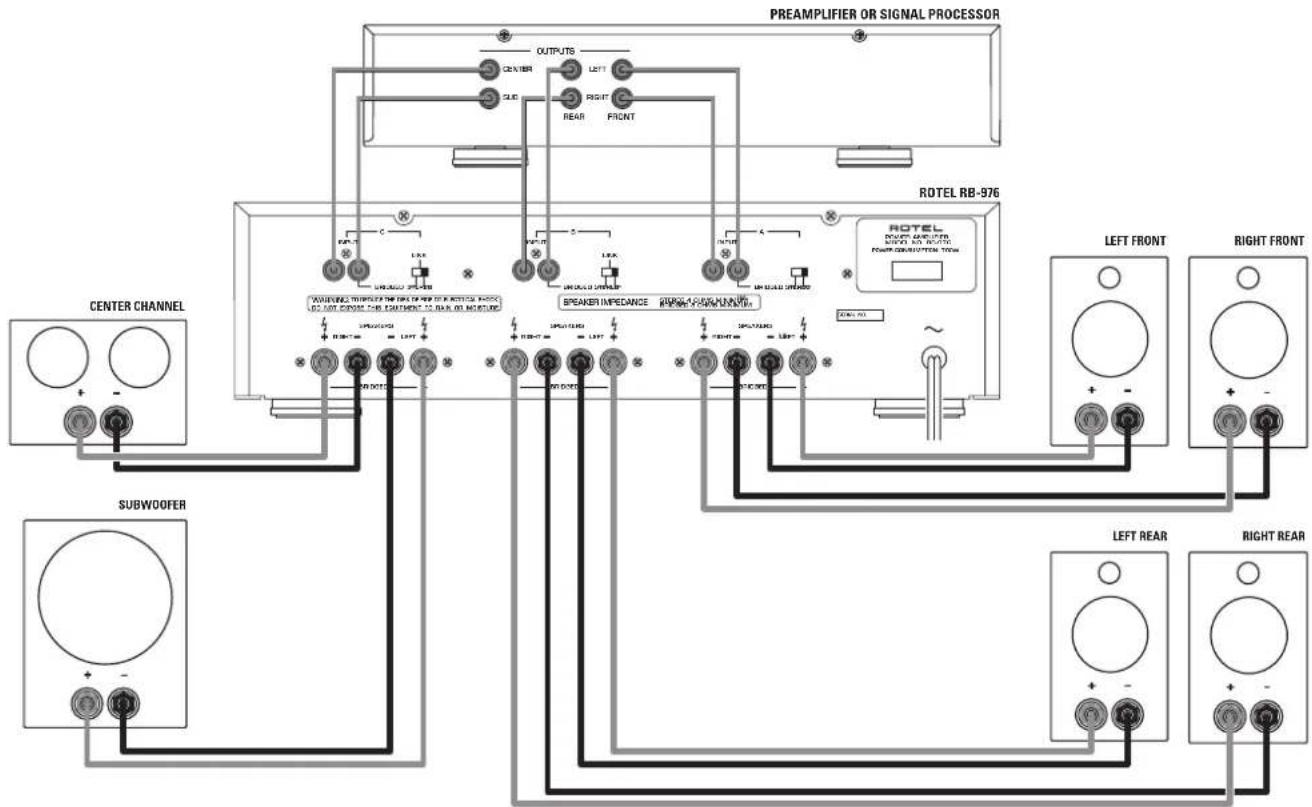
Figure 2: Normal Connections – Inputs and Speakers
Branchements normaux - Prises d'entrée et enceintes Anschlußdiagramm bei normalem Betrieb (Eingangs- und Lautsprecheranschlüsse) Collegamenti normali - Ingressi e diffusori Realización de las Conexiones - Entradas y Cajas Acústicas
flowchart
graph TD
    A["PREAMPLIFIER OR SIGNAL PROCESSOR"] --> B["OUTPUTS"]
    B --> C["CHINA"]
    B --> D["LEFT"]
    B --> E["RIGHT"]
    B --> F["FRONT"]
    B --> G["LEAD"]
    B --> H["LEAD"]
    B --> I["LEAD"]
    B --> J["LEAD"]
    B --> K["LEAD"]
    B --> L["LEAD"]
    B --> M["LEAD"]
    B --> N["LEAD"]
    B --> O["LEAD"]
    B --> P["LEAD"]
    B --> Q["LEAD"]
    B --> R["LEAD"]
    B --> S["LEAD"]
    B --> T["LEAD"]
    B --> U["LEAD"]
    B --> V["LEAD"]
    B --> W["LEAD"]
    B --> X["LEAD"]
    B --> Y["LEAD"]
    B --> Z["LEAD"]
    B --> AA["LEAD"]
    B --> AB["LEAD"]
    B --> AC["LEAD"]
    B --> AD["LEAD"]
    B --> AE["LEAD"]
    B --> AF["LEAD"]
    B --> AG["LEAD"]
    B --> AH["LEAD"]
    B --> AI["LEAD"]
    B --> AJ["LEAD"]
    B --> AK["LEAD"]
    B --> AL["LEAD"]
    B --> AM["LEAD"]
    B --> AN["LEAD"]
    B --> AO["LEAD"]
    B --> AP["LEAD"]
    B --> AQ["LEAD"]
    B --> AR["LEAD"]
    B --> AS["LEAD"]
    B --> AT["LEAD"]
    B --> AU["LEAD"]
    B --> AV["LEAD"]
    B --> AW["LEAD"]
    B --> AX["LEAD"]
    B --> AY["LEAD"]
    B --> AZ["LEAD"]
    B --> BA["LEAD"]
    B --> BB["LEAD"]
    B --> BC["LEAD"]
    B --> BD["LEAD"]
    B --> BE["LEAD"]
    B --> BF["LEAD"]
    B --> BG["LEAD"]
    B --> BH["LEAD"]
    B --> BI["LEAD"]
    B --> BJ["LEAD"]
    B --> BK["LEAD"]
    B --> BL["LEAD"]
    B --> BM["LEAD"]
    B --> BN["LEAD"]
    B --> BO["LEAD"]
    B --> BP["LEAD"]
    B --> BQ["LEAD"]
    B --> BR["LEAD"]
    B --> BS["LEAD"]
    B --> BT["LEAD"]
    B --> BU["LEAD"]
    B --> BV["LEAD"]
    B --> BW["LEAD"]
    B --> BX["LEAD"]
    B --> BY["LEAD"]
    B --> CQ["LEAD"]
    B --> CY["LEAD"]
    B --> CZ["LEAD"]
    B --> DA["LEAD"]
    B --> DB["LEAD"]
    B --> DC["LEAD"]
    B --> DD["LEAD"]
    B --> DE["LEAD"]
    B --> DF["LEAD"]
    B --> DG["LEAD"]
    B --> DH["LEAD"]
    B --> DI["LEAD"]
    B --> DJ["LEAD"]
    B --> DK["LEAD"]
    B --> DL["LEAD"]
    B --> DV["LEAD"]
    B --> DW["LEAD"]
    B --> DX["LEAD"]
    B --> DXB["LEAD"]
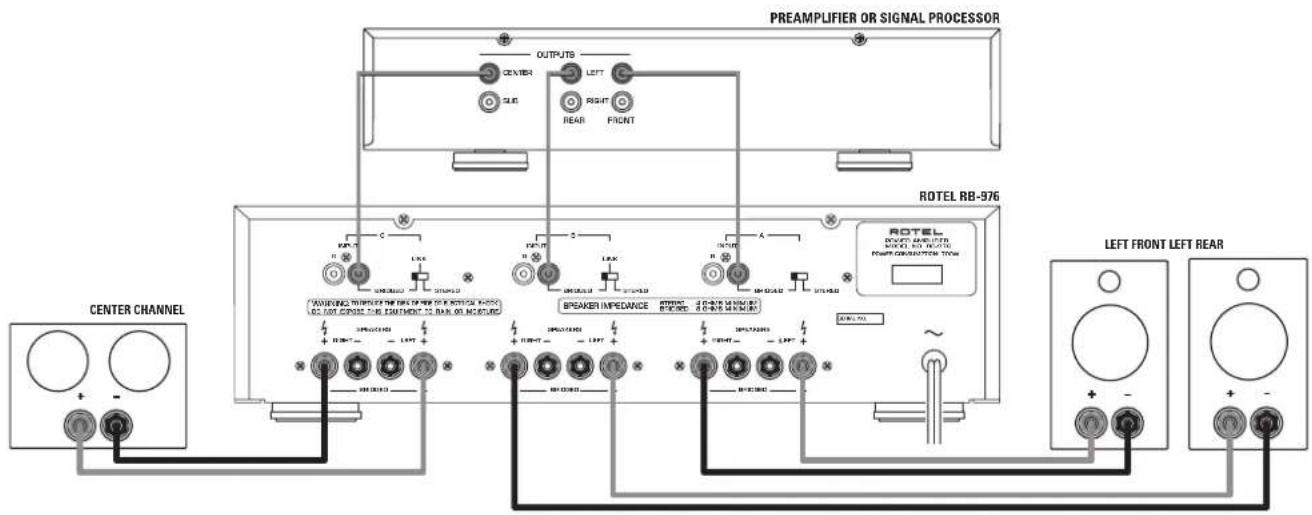
Figure 3: BrBtjegleMMonCoConnectionsInputs and Speakers
Branchements en mono en mode ponté - Prises d'entrée et enceintes
Anschlußdiagramm bei Brückenschaltung (Eingangs- und Lautsprecheranschlüsse)
Collegamenti mono "a ponte" (Bridged) - Ingressi e diffusori
Conexiones para el Funcionamiento en Modo Monofónico Puenteado - Entradas y Cajas Acústicas
flowchart
graph TD
    A["PREAMPLIFIER OR SIGNAL PROCESSOR"] --> B["OUTPUTS"]
    B --> C["CENTER"]
    B --> D["LEFT"]
    B --> E["RIGHT"]
    B --> F["FRONT"]
    B --> G["LEA"]
    B --> H["REAR"]
    B --> I["SHEM"]
    B --> J["SMALL"]
    B --> K["SMALL"]
    B --> L["SMALL"]
    B --> M["SMALL"]
    B --> N["SMALL"]
    B --> O["SMALL"]
    B --> P["SMALL"]
    B --> Q["SMALL"]
    B --> R["SMALL"]
    B --> S["SMALL"]
    B --> T["SMALL"]
    B --> U["SMALL"]
    B --> V["SMALL"]
    B --> W["SMALL"]
    B --> X["SMALL"]
    B --> Y["SMALL"]
    B --> Z["SMALL"]
    B --> AA["SMALL"]
    B --> AB["SMALL"]
    B --> AC["SMALL"]
    B --> AD["SMALL"]
    B --> AE["SMALL"]
    B --> AF["SMALL"]
    B --> AG["SMALL"]
    B --> AH["SMALL"]
    B --> AI["SMALL"]
    B --> AJ["SMALL"]
    B --> AK["SMALL"]
    B --> AL["SMALL"]
    B --> AM["SMALL"]
    B --> AN["SMALL"]
    B --> AO["SMALL"]
    B --> AP["SMALL"]
    B --> AQ["SMALL"]
    B --> AR["SMALL"]
    B --> AS["SMALL"]
    B --> AT["SMALL"]
    B --> AU["SMALL"]
    B --> AV["SMALL"]
    B --> AW["SMALL"]
    B --> AX["SMALL"]
    B --> AY["SMALL"]
    B --> AZ["SMALL"]
    B --> BA["SMALL"]
    B --> BB["SMALL"]
    B --> BC["SMALL"]
    B --> BD["SMALL"]
    B --> BE["SMALL"]
    B --> BF["SMALL"]
    B --> BG["SMALL"]
    B --> BH["SMALL"]
    B --> BI["SMALL"]
    B --> BJ["SMALL"]
    B --> BK["SMALL"]
    B --> BL["SMALL"]
    B --> BM["SMALL"]
    B --> BN["SMALL"]
    B --> BO["SMALL"]
    B --> BP["SMALL"]
    B --> BQ["SMALL"]
    B --> BR["SMALL"]
    B --> BS["SMALL"]
    B --> BT["SMALL"]
    B --> BU["SMALL"]
    B --> BV["SMALL"]
    B --> BW["SMALL"]
    B --> BX["SMALL"]
    B --> BY["SMALL"]
    B --> CA["SMALL"]
    B --> CB["SMALL"]
    B --> CC["SMALL"]
    B --> CD["SMALL"]
    B --> CE["SMALL"]
    B --> CF["SMALL"]
    B --> CG["SMALL"]
    B --> CH["SMALL"]
    B --> CI["SMALL"]
    B --> CJ["SMALL"]
    B --> CK["SMALL"]
    B --> CL["SMALL"]
    B --> CM["SMALL"]
    B --> CN["SMALL"]
    B --> CO["SMALL"]
    B --> CP["SMALL"]
    B --> CQ["SMALL"]
    B --> CR["SMALL"]
    B --> CS["SMALL"]
    B --> CT["SMALL"]
    B --> CU["SMALL"]
    B --> CV["SMALL"]
    B --> CW["SMALL"]
    B --> CX["SMALL"]
    B --> CY["SMALL"]
    B --> CZ["SMALL"]
    B --> DA["SMALL"]
    B --> DB["SMALL"]
    B --> DC["SMALL"]
    B --> ED["SMALL"]
    B --> EF["SMALL"]
    B --> GF["SMALL"]
    B --> GH["SMALL"]
    B --> ID["SMALL"]
    B --> AE["SMALL"]
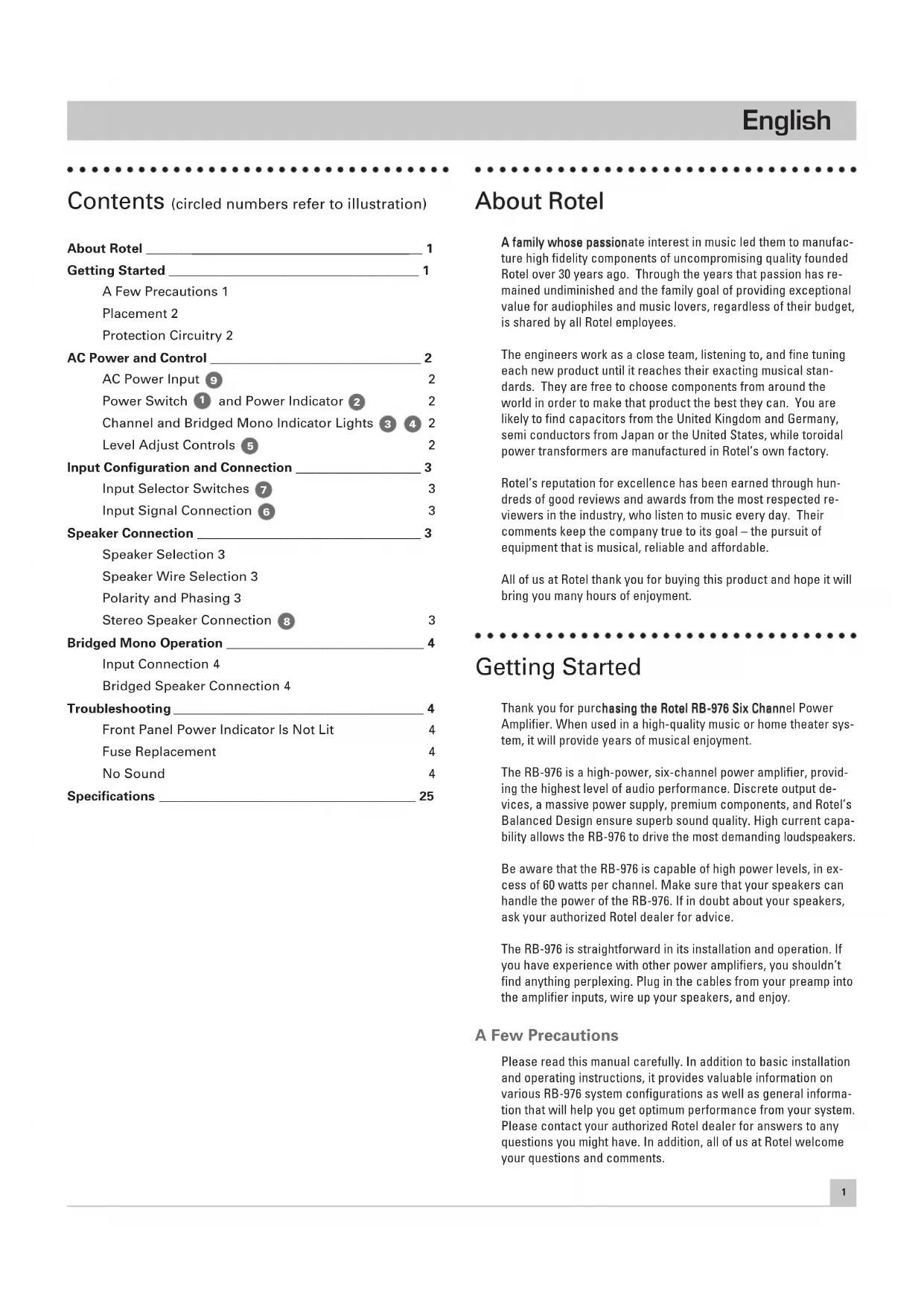
Contents (circled numbers refer to illustration)
About Rotel 1
Getting Started 1
A Few Precautions 1
Placement 2
Protection Circuitry 2
AC Power and Control 2
AC Power Input 9 2
Power Switch 1 and Power Indicator 2 2
Channel and Bridged Mono Indicator Lights 3 4 2
Level Adjust Controls 5 2
Input Configuration and Connection 3
Input Selector Switches 7 3
Input Signal Connection 6 3
Speaker Connection 3
Speaker Selection 3
Speaker Wire Selection 3
Polarity and Phasing 3
Stereo Speaker Connection 8 3
Bridged Mono Operation 4
Input Connection 4
Bridged Speaker Connection 4
Troubleshooting 4
Front Panel Power Indicator Is Not Lit 4
Fuse Replacement 4
No Sound 4
Specifications 25
About Rotel
A family whose passionate interest in music led them to manufacture high fidelity components of uncompromising quality founded Rotel over 30 years ago. Through the years that passion has remained undiminished and the family goal of providing exceptional value for audiophiles and music lovers, regardless of their budget, is shared by all Rotel employees.
The engineers work as a close team, listening to, and fine tuning each new product until it reaches their exacting musical standards. They are free to choose components from around the world in order to make that product the best they can. You are likely to find capacitors from the United Kingdom and Germany, semi conductors from Japan or the United States, while toroidal power transformers are manufactured in Rotel's own factory.
Rotel's reputation for excellence has been earned through hundreds of good reviews and awards from the most respected reviewers in the industry, who listen to music every day. Their comments keep the company true to its goal – the pursuit of equipment that is musical, reliable and affordable.
All of us at Rotel thank you for buying this product and hope it will bring you many hours of enjoyment.
Getting Started
Thank you for purchasing the Rotel RB-976 Six Channel Power Amplifier. When used in a high-quality music or home theater system, it will provide years of musical enjoyment.
The RB-976 is a high-power, six-channel power amplifier, providing the highest level of audio performance. Discrete output devices, a massive power supply, premium components, and Rotel's Balanced Design ensure superb sound quality. High current capability allows the RB-976 to drive the most demanding loudspeakers.
Be aware that the RB-976 is capable of high power levels, in excess of 60 watts per channel. Make sure that your speakers can handle the power of the RB-976. If in doubt about your speakers, ask your authorized Rotel dealer for advice.
The RB-976 is straightforward in its installation and operation. If you have experience with other power amplifiers, you shouldn't find anything perplexing. Plug in the cables from your preamp into the amplifier inputs, wire up your speakers, and enjoy.
A Few Precautions
Please read this manual carefully. In addition to basic installation and operating instructions, it provides valuable information on various RB-976 system configurations as well as general information that will help you get optimum performance from your system. Please contact your authorized Rotel dealer for answers to any questions you might have. In addition, all of us at Rotel welcome your questions and comments.
Save the RB-976 shipping carton and all enclosed packing material for future use. Shipping or moving the RB-976 in anything other than the original packing material may result in severe damage to your amplifier.
Fill out and send in the owner's registration card packed with the RB-976. Also be sure to keep the original sales receipt. It is your best record of the date of purchase, which you will need in the event warranty service is ever required.
Placement
Because of its high power output, the RB-976 may generate considerable heat. The heat sinks and ventilation openings in the amplifier are more than capable of dissipating this heat under normal conditions, but don't smother your amplifier. There must be adequate clearance around the chassis. The ventilation slots in the top cover must be unblocked, and there must be reasonable airflow around the amplifier. Use common sense when placing the amplifier in a cabinet or when stacking other equipment.
Likewise, remember the weight of the amplifier when you select an installation location. Make sure that the shelf or cabinet can support its considerable bulk. Again, use common sense.
Protection Circuitry
The RB-976 features a thermal protection circuit that protects the amplifier against potential damage in the event of extreme or faulty operating conditions. Unlike many designs, the RB-976's protection circuit is independent of the audio signal and has no impact on sonic performance. Instead, the protection circuit monitors the temperature of the output devices and shuts down the amplifier if temperatures exceed safe limits.
Most likely, you will never see this protection circuitry in action. However, should a faulty condition arise, one or more channels of the amplifier will stop playing.
If this happens, turn the amplifier off, let it cool down for several minutes, and attempt to identify and correct the problem that caused the protection circuitry to engage. When you turn the amplifier back on, the protection circuit will automatically reset.
In most cases, the protection circuitry activates because of a fault condition such as shorted speaker wires, or inadequate ventilation leading to an overheating condition. In very rare cases, highly reactive or extremely low impedance speaker loads could cause the protection circuit to engage.
If the protection circuitry triggers repeatedly and you are unable to isolate and correct the faulty condition, contact your authorized Rotel dealer for assistance in troubleshooting.
AC Power and Controls
AC Power Input 9
Because of its high power rating, the RB-976 can draw considerable current. Therefore, it should be plugged directly into a 2-pin polarized wall outlet. Do not use an extension cord. A heavy duty multi-tap power outlet strip may be used if it (and the wall outlet) is rated to handle the current demanded by the RB-976 and all the other components connected to it.
Be sure the power switch on the front panel of the RB-976 is turned off (in the out position). Then, connect the supplied power cord to the AC power outlet.
Your RB-976 is configured at the factory for the proper AC line voltage in the country where you purchased it (either 115 volts AC or 230 volts AC with a line frequency of either 50 Hz or 60 Hz). The AC line configuration is noted on a decal on the back panel.
Note: Should you move your RB-976 amplifier to another country, it is possible to reconfigure your amplifier for use on a different line voltage. Do not attempt to perform this conversion yourself. Opening the enclosure of the RB-976 exposes you to dangerous voltages. Consult a qualified service person or the Rotel factory service department for information.
If you are going to be away from home for an extended period of time such as a month-long vacation, it is a sensible precaution to unplug your amplifier (as well as other audio and video components) while you are away.
Power Switch 1 and Power Indicator 2
The power switch is located on the front panel of your amplifier. To turn the amplifier on, push the switch in. The LED indicator above the switch will light, indicating that the amplifier is turned on. To turn the amplifier off, push the button again and return it to the out position.
Channel and Bridged Mono Indicator Lights

When a channel pair is in stereo mode the two channel indicator lights for those channels will light. When a channel pair is in Bridged Mono mode, the two Channel Indicator Lights are turned off and the Bridged Mono Indicator Light for that channel pair is turned on. Refer to the Input Configuration and Connection section on the following page for more information.
Level Adjust Controls

The Level Adjust controls enable you to individually adjust the input sensitivity of the three channel pairs. They can be used to set the sound output balance of the speakers in a home theater system, or control the volume level in the various rooms when the RB-976 is used to drive the speakers in a multi-room installation. The setting of the Input Selector Switch does not affect the operation of the Level Adjust controls.
Input Configuration and Connection
The six channels of the RB-976 are grouped into 3 channel pairs labeled A, B and C for easy identification and control.
Note: To prevent loud noises that neither you nor your speakers will appreciate, make sure the amplifier is turned off when you make any signal connections or change the setting of the Input Selector Switches.
Input Selector Switches 7
When an Input Selector Switch is in the "Stereo" position the two channels of the channel pair operate independently. When the Input Selector Switch for one or more of the channel pairs is in the "Bridged" position the two channels are combined into one high power (150 watt) channel. See the "Bridged Mono Operation" section of this manual for more information.
The "Link" position of the Input Selector Switch connects the inputs of the channel pairs together. In this configuration the inputs connected to the A channels can also drive the B and/or C channels. This is sometimes called a "daisy chain" configuration. It is typically used in custom installations where one set of stereo inputs is used to drive multiple pairs of speakers, which are often located in different rooms.
To use the input link function move the Input Selector Switch for the channel pair(s) you want to link to the "Link" position. Note that the inputs of the B channels may be linked, while the C channels operate independently, or the inputs of the C channels may be linked, while the B channels operate independently.
Note: When the input linking function is used the linked channel pairs cannot be bridged.
Input Signal Connection 6
[See Figure 2 for normal wiring illustration.]
The RB-976 has conventional RCA type input connectors, the type found on nearly all audio equipment.
Use high quality audio interconnect cables to connect the outputs of the preamplifier or signal processor to the inputs of the RB-976. Be sure to connect the left and right channels properly and that you use the correct channel pair of the RB-976.
Speaker Connection
Speaker Selection
We recommend using loudspeakers with a nominal impedance of 4 ohms or higher with the RB-976. You should exercise some caution in driving multiple pairs of speakers in parallel configuration, because the effective impedance the amplifier sees is cut in half. For example, when driving two pair of 8 ohm speakers, the amplifier sees a 4 ohm load. When driving multiple speakers in parallel, it is recommended that you select speakers with a nominal impedance of 8 ohms or higher. Speaker impedance ratings are less than precise. In practice, very few loudspeakers will present any problems for the RB-976. See your authorized Rotel dealer if you have any questions.
Speaker Wire Selection
Use insulated two-conductor stranded wire to connect the RB-976 to the speakers. The size and quality of the wire can have an audible effect on the performance of the system. Standard speaker wire will work, but can result in lower output or diminished bass response, particularly over longer distances. In general, heavier wire will improve the sound. For best performance, you may want to consider special high-quality speaker cables. Your authorized Rotel dealer can help in the selection of appropriate cables for your system.
Polarity and Phasing
The polarity — the positive/negative orientation of the connections — for every speaker and amplifier connection must be consistent so all the speakers will be in phase. If the polarity of one connection is mistakenly reversed, bass output will be very weak and stereo imaging degraded. All wire is marked so you can identify the two conductors. There may be ribs or a stripe on the insulation of one conductor. The wire may have clear insulation with different color conductors (copper and silver). There may be polarity indications printed on the insulation. Identify the positive and negative conductors and be consistent with every speaker and amplifier connection.
Stereo Speaker Connection 8
The RB-976 has six pairs of color coded binding posts on the back panel. These connectors accept bare wire, connector lugs, or dual banana type connectors (except in the European Community countries where their use is not permitted).
Route the wire from the RB-976 to the speakers. Give yourself enough slack so you can move the components enough to allow access to the speaker connectors.
If you are using dual banana plugs, connect them to the wires and then plug into the backs of the binding posts. The hexagonal thumbscrews of the binding posts should be screwed in all the way (clockwise).
If you are using terminal lugs, connect them to the wires. If you are attaching bare wires directly to the binding posts, separate the wire conductors and strip back the insulation from the end of each conductor. Be careful not to cut into the wire strands. Unscrew (turn counterclockwise) the binding post hexagonal thumbscrews. Place the connector lug or wire around the binding post shaft. Turn the hexagonal thumbscrews clockwise to clamp the connector lug or wire firmly in place.
Note: Be sure there are no loose wire strands that could touch adjacent wires or connectors.
Bridged Mono Operation
[See Figure 3 for bridged operation connection illustration.]
The channel pairs of the RB-976 can be "bridged". In this configuration the single channel produces a massive 150 watts! This feature allows you to increase the overall power output of your system by bridging the channel pairs of the RB-976 and adding a second RB-976 that also has bridged channel pairs. Or one of the RB-976 channel pairs may be bridged to drive a monophonic subwoofer. Note however that when one of the RB-976 channel pairs is bridged the speaker connected to it must have an impedance of 8 ohms or more.
Note: Turn off all the system components before you change any signal connections or the setting of the Input Selector Switches.
To bridge one of the RB-976 channel pairs move the Input Selector Switch for that channel to the "Bridged" position.
Input Connection
When using one of the RB-976 channel pairs in bridged mono mode, connect the cable from the preamplifier or signal processor output to the left input of the channel pair. No connection is made to the right input.
Note: It is possible to link inputs B and/or C while A is in the Bridged Mode. Both left and right inputs are used for A.
Bridged Speaker Connection
When using one of the RB-976 channel pairs in bridged mono mode, the wire to the speakers is connected to the positive terminals of the left and right channels. Connect the wire that goes to the positive terminal of the speaker to the positive terminal of the left channel of the channel pair. Connect the wire that goes to the negative terminal of the speaker to the positive terminal of the right channel of the channel pair. No connections are made to the negative terminals.
Troubleshooting
Most difficulties in audio systems are the result of incorrect connections, or improper control settings. If you encounter problems, isolate the area of the difficulty, check the control settings, determine the cause of the fault and make the necessary changes. If you are unable to get sound from the RB-976, refer to the suggestions for the following conditions:
Front Panel Power Indicator Is Not Lit
No main power to the RB-976. Check the front panel power switch. Make sure that it is set to the on position. Check AC power connections at the amplifier and the AC outlet.
Fuse Replacement
If everything checks out correctly and you still cannot get the amplifier to turn on, the internal power fuse may have blown. If you believe this has happened, contact your authorized Rotel dealer to get the fuse replaced.
No Sound
If the amp is getting AC power, but is producing no sound, check the Channel and Bridged Mono indicator lights on the front panel. Then check all input and output connections to be sure they are correct. Finally check the connections to, and the control settings of, the associated components.
AVERTISSEMENT
Continuous Power Output 60 watts/ch
(20-20 kHz, < 0.03%, 8 ohms)
Bridged Mono Power Output 150 watts/ch
(20-20 kHz, < 0.1%, 8 ohms)
Total Harmonic Distortion (20Hz-20kHz, 8 ohms) < 0.03%
Intermodulation Distortion (60 Hz : 7 kHz, 4:1) < 0.03%
Frequency Response (±1 dB) 15Hz-100kHz
Damping Factor (20-20,000 Hz, 8 ohms) 150
Speaker Impedance (Normal mode) 4 ohms minimum
Signal to Noise Ratio (IHF A network) 116 dB
Input Impedance/Sensitivity 22 k Ohms/1.5 volt
Power Requirements 115 Volts, 60 Hz or
230 Volts, 50 Hz
Power Consumption 700 Watts
Dimensions (W x H x D) 440 x 121 x 400 mm
173/8" × 43/4" × 153/4"
Weight (net) 11.8 kg, 26 lb.
All specifications are accurate at the time of printing.
Rotel reserves the right to make improvements without notice.
Fiche technique
17 3/8 × 4 3/4 × 15 3/4
Poids (net) 11.8 kg, 26 lb
(20-20kHz, < 0.03%, 8Ω)
Distorsione armonica totale (20-20kHz, 8 Ω) < 0.03%
North Reading, MA 01864-2699
USA
Phone: +1 978-664-3820
Fax: +1 978-664-4109
Rotel Europe
Meadow Road
Worthing, West Sussex BN11 2RX
England
Phone: +44 1903-524-813
Fax: +44 1903-524-831
Rotel Deutschland
Kleine Heide 12
- WARNING:
- The unit must be connected to a power supply only of the type and voltage specified on the rear panel of the unit.
- Contents (circled numbers refer to illustration)
- About Rotel
- Getting Started
- A Few Precautions
- Placement
- Protection Circuitry
- AC Power and Controls
- AC Power Input 9
- Power Switch 1 and Power Indicator 2
- Channel and Bridged Mono Indicator Lights
- Level Adjust Controls
- Input Configuration and Connection
- Input Selector Switches 7
- Input Signal Connection 6
- [See Figure 2 for normal wiring illustration.]
- Speaker Connection
- Speaker Selection
- Speaker Wire Selection
- Polarity and Phasing
- Stereo Speaker Connection 8
- Bridged Mono Operation
- [See Figure 3 for bridged operation connection illustration.]
- Input Connection
- Bridged Speaker Connection
- Troubleshooting
- Front Panel Power Indicator Is Not Lit
- Fuse Replacement
- No Sound
- AVERTISSEMENT
- Fiche technique
Brand : ROTEL
Model : RB976
Category : Receiver