EasyManual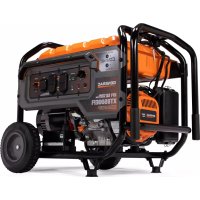
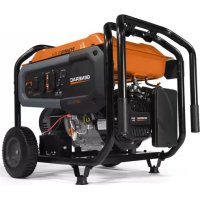
XT8500EFI - Generator Generac - Free user manual and instructions
Find the device manual for free XT8500EFI Generac in PDF.



User questions about XT8500EFI Generac
0 question about this device. Answer the ones you know or ask your own.
Ask a new question about this device
Download the instructions for your Generator in PDF format for free! Find your manual XT8500EFI - Generac and take your electronic device back in hand. On this page are published all the documents necessary for the use of your device. XT8500EFI by Generac.
USER MANUAL XT8500EFI Generac
SAVE THIS MANUAL FOR FUTURE REFERENCE
MODEL:________________________ SERIAL:________________________ DATE PURCHASED:______________ (000209b) WARNING Loss of life. This product is not intended to be used in a critical life support application. Failure to adhere to this warning could result in death or serious injury. BCTable of Contents
Section 1 Introduction and Safety 1
- Introduction p. 1
- Safety Rules p. 1
- Safety Symbols and Meanings p. 1
- Exhaust and Location Hazards p. 2
- Electrical Hazards p. 2
- Fire Hazards p. 3
- Standards Index p. 3
- Replacement Hazard Labels p. 3
Section 2 General Information and
Section 4 Maintenance and
www.P65Warnings.ca.gov.Owner’s Manual for Portable Generator 1
Section 1 Introduction and Safety
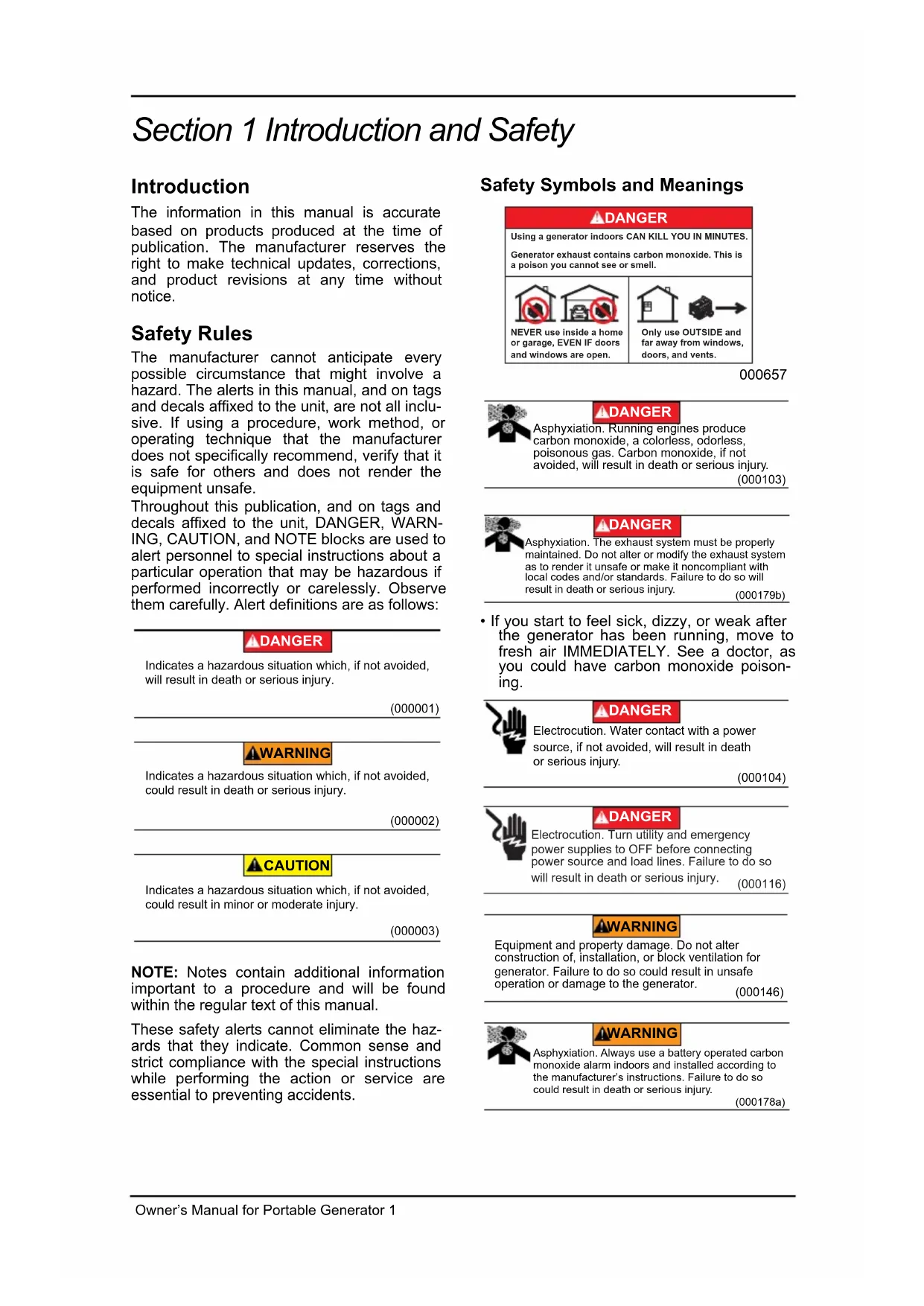
Introduction The information in this manual is accurate based on products produced at the time of publication. The manufacturer reserves the right to make technical updates, corrections, and product revisions at any time without notice. Safety Rules The manufacturer cannot anticipate every possible circumstance that might involve a hazard. The alerts in this manual, and on tags and decals affixed to the unit, are not all inclu- sive. If using a procedure, work method, or operating technique that the manufacturer does not specifically recommend, verify that it is safe for others and does not render the equipment unsafe. Throughout this publication, and on tags and decals affixed to the unit, DANGER, WARN- ING, CAUTION, and NOTE blocks are used to alert personnel to special instructions about a particular operation that may be hazardous if performed incorrectly or carelessly. Observe them carefully. Alert definitions are as follows: NOTE: Notes contain additional information important to a procedure and will be found within the regular text of this manual. These safety alerts cannot eliminate the haz- ards that they indicate. Common sense and strict compliance with the special instructions while performing the action or service are essential to preventing accidents. Safety Symbols and Meanings
- If you start to feel sick, dizzy, or weak after the generator has been running, move to fresh air IMMEDIATELY. See a doctor, as you could have carbon monoxide poison- ing. (000001) DANGER Indicates a hazardous situation which, if not avoided, will result in death or serious injury. (000002) WARNING Indicates a hazardous situation which, if not avoided,could result in death or serious injury. (000003) CAUTION Indicates a hazardous situation which, if not avoided,could result in minor or moderate injury. DANGERUsing a generator indoors CAN KILL YOU IN MINUTES. Generator exhaust contains carbon monoxide. This isa poison you cannot see or smell.NEVER use inside a homeor garage, EVEN IF doorsand windows are open.Only use OUTSIDE andfar away from windows,doors, and vents.
Asphyxiation. Running engines produce carbon monoxide, a colorless, odorless, poisonous gas. Carbon monoxide, if not avoided, will result in death or serious injury. (000103) DANGER (000179b) DANGER Asphyxiation. The exhaust system must be properly maintained. Do not alter or modify the exhaust system as to render it unsafe or make it noncompliant with local codes and/or standards. Failure to do so will result in death or serious injury. (000104) DANGER Electrocution. Water contact with a power source, if not avoided, will result in death or serious injury. Electrocution. Turn utility and emergency power supplies to OFF before connecting power source and load lines. Failure to do so will result in death or serious injury. (000116) DANGER (000146) WARNING Equipment and property damage. Do not alter construction of, installation, or block ventilation for generator. Failure to do so could result in unsafe operation or damage to the generator. (000178a) Asphyxiation. Always use a battery operated carbon monoxide alarm indoors and installed according to the manufacturer’s instructions. Failure to do so could result in death or serious injury. WARNING2 Owner’s Manual for Portable Generator
- For safety reasons, it is recommended that the maintenance of this equipment be per- formed by an IASD. Inspect the generator regularly, and contact the nearest IASD for parts needing repair or replacement. Exhaust and Location Hazards
- If you start to feel sick, dizzy, or weak after the generator has been running, move to fresh air IMMEDIATELY. See a doctor, as you could have carbon monoxide poison- ing.
- NEVER run a generator indoors or in a partly enclosed area such as garages.
- ONLY use outdoors and far away from win- dows, doors, vents, crawl spaces and in an area where adequate ventilation is avail- able and will not accumulate deadly exhaust gas.
- Using a fan or opening a door will not pro- vide sufficient ventilation.
- Point muffler exhaust away from people and occupied buildings. Electrical Hazards (000250)WARNINGEquipment and property damage. Do not operate unit on uneven surfaces, or areas of excessive moisture, dirt, dust or corrosive vapors. Doing so could result in death, serious injury, property and equipment damage. (000111)WARNINGMoving Parts. Keep clothing, hair, and appendages away from moving parts. Failure to do so could result in death or serious injury. (000108)WARNINGHot Surfaces. When operating machine, do not touch hot surfaces. Keep machine away from combustibles during use. Hot surfaces could result in severe burns or fire. (000142a) Personal injury. Do not insert any object through the air cooling slots. Generator can start at any time and could result in death, serious injury, and unit damage. WARNING WARNING Risk of injury. Do not operate or service this machine if not fully alert. Fatigue can impair the ability to service this equipment and could result in death or serious injury. (000215) WARNING Injury and equipment damage. Do not use generator as a step. Doing so could result in falling, damaged parts, unsafe equipment operation, and could result in death or serious injury. (000216) (000501) Personal Injury. Fuel lines are pressurized. Servicing the fuel lines may release high pressure fuel and could result in death or serious injury. WARNING
Asphyxiation. Running engines produce carbon monoxide, a colorless, odorless, poisonous gas. Carbon monoxide, if not avoided, will result in death or serious injury. (000103) DANGER (000179b) DANGER Asphyxiation. The exhaust system must be properly maintained. Do not alter or modify the exhaust system as to render it unsafe or make it noncompliant with local codes and/or standards. Failure to do so will result in death or serious injury. (000178a) Asphyxiation. Always use a battery operated carbon monoxide alarm indoors and installed according to the manufacturer’s instructions. Failure to do so could result in death or serious injury. WARNING (000146) WARNING Equipment and property damage. Do not alter construction of, installation, or block ventilation for generator. Failure to do so could result in unsafe operation or damage to the generator. (000144)DANGERElectrocution. Contact with bare wires, terminals, and connections while generator is running will result in death or serious injury. (000104) DANGER Electrocution. Water contact with a power source, if not avoided, will result in death or serious injury.Owner’s Manual for Portable Generator 3
- The National Electric Code (NEC) requires the frame and external electrically conduc- tive parts of the generator be properly con- nected to an approved earth ground. Local electrical codes may also require proper grounding of the generator. Consult with a local electrician for grounding requirements in the area.
- Once generator has been started outside, connect electrical loads to extension cord(s) inside. Fire Hazards
- Allow at least 5 feet of clearance on all sides of the generator when operating to prevent overheating and fire.
- Do not operate the generator if connected electrical devices overheat, if electrical out- put is lost, if engine or generator sparks, or if flames or smoke are observed while unit is running.
- Keep a fire extinguisher near the generator at all times. Standards Index
TION AND SAFETY CODE available from www.nfpa.org
3. International Building Code available from
nance of Farm Standby Electric Power available from www.asabe.org, American Society of Agricultural & Biological Engi- neers 2950 Niles Road, St. Joseph, MI
generators for installation and use, in accordance with the Rules of the Cana- dian Electrical Code
7. ANSI/PGMA G300 Safety and Perfor-
mance of Portable Generators. Portable Generator Manufacturer’s Association, www.pgmaonline.com This list is not all inclusive. Check with the Authority Having Jurisdiction (AHJ) for any local codes or standards which may be appli- cable to your jurisdiction. Replacement Hazard Labels The following replacement hazard labels are available free from Generac:
- 0H0115C (000145) DANGER Electrocution. In the event of electrical accident, immediately shut power OFF. Use non-conductive implements to free victim from live conductor. Apply first aid and get medical help. Failure to do so will result in death or serious injury. (000130)WARNINGAccidental Start-up. Disconnect the negative battery cable, then the positive battery cable when working on unit. Failure to do so could result in death or serious injury. CAUTION Equipment damage. Do not power sensitive electronic devices (computers, televisions, microwaves...) when Idle Control switch is ON (if equipped). Lower engine rpm operation results in low voltage/frequency and may damage electronic devices. (000591) (000105) DANGER Explosion and Fire. Fuel and vapors are extremely flammable and explosive. Add fuel in a well ventilated area. Keep fire and spark away. Failure to do so will result in death or serious injury. (000166b) DANGER Explosion and Fire. Do not overfill fuel tank. Fill to 1/2 inch from top of tank to allow for fuel expansion. Overfilling may cause fuel to spill onto engine causing fire or explosion, which will result in death or serious injury. (000174) DANGER Risk of fire. Allow fuel spills to completely dry before starting engine. Failure to do so will result in death or serious injury. (000142a) Personal injury. Do not insert any object through the air cooling slots. Generator can start at any time and could result in death, serious injury, and unit damage. WARNING WARNING!
Section 2 General Information and Setup
Figure 2-1. Features and Controls Generator Components Figure 2-2. Control Panel
276 Owner’s Manual for Portable GeneratorFigure 2-3. Unit Identification Label Know Your Generator Replacement owner’s manuals are available at www.generac.com. Emissions The United States Environmental Protection Agency (US EPA) (and California Air Resources Board (CARB), for engines/equip- ment certified to California standards) requires this engine/equipment to comply with exhaust and evaporative emissions standards. Locate the emissions compliance decal on the engine to determine applicable standards. See the included emissions warranty for emissions warranty information. Follow the maintenance specifications in this manual to ensure the engine complies with applicable emissions standards for the duration of the product’s life.
(000100a) WARNING Consult Manual. Read and understand manualcompletely before using product. Failure to completely understand manual and productcould result in death or serious injury. Product Specifications Generator Specifications Rated Power 8.5 kW**Surge Watts 10 KVA**Rated AC Voltage 120/240Rated AC Load (120 Volt / 240 Volt) 70.8 / 35.4 Amps**Rated Frequency 60 Hz @ 3600 RPMPhase Single PhaseUnit Weight (Dry) 214 lbs. (97 kg)** Operating Temperature Range: -7 deg. C (20 deg. F) to 40 Deg. C (104 Deg. F). When operatedabove 25 deg. C (77 deg. F) there may be a decrease in power.** Maximum wattage and current are subject to, and limited by, such factors as fuel Btu content, ambi- ent temperature, altitude, engine condition, etc. Maximum power decreases about 3.5% for each 1,000 feet above sea level; and will also decrease about 1% for each 6° C (10° F) above 16° C (60° F) ambient temperature. Engine Specifications Displacement 459 ccSpark Plug Part No. 0K20670117Spark Plug Type F7RTC or EquivalentSpark Plug Gap 0.028-0.031 inch (0.70-0.80mm)Gasoline Capacity 30.3 L (8.0 U.S. gallons)Oil TypeSee chart in Add Engine Oil. Oil Capacity 1.0 L (1.05 qt.)Run Time at 50% Load 9 Hours* Go to www.generac.com or contact an IASD for replacement parts.Owner’s Manual for Portable Generator 7 Connection Plugs 120 VAC, 20 Amp, GFCI Duplex Receptacle The 120 Volt outlet is overload protected by a 20 Amp push-to-reset circuit breaker. See Fig- ure 2-4. Each receptacle will power 120 Volt AC, single phase, 60 Hz electrical loads requiring up to 2400 watts (2.4 kW) or 20 Amps of current. Use only high quality, well- insulated, 3-wire grounded cord sets rated for 125 Volts at 20 Amps (or greater). It also pro- vides protection with a Ground Fault Circuit Interrupter with a press to TEST and RESET button. Figure 2-4. 120 VAC, 20 Amp, GFCI Duplex Receptacle NEMA 5-20R 120/240 VAC, 30 Amp Receptacle Use a NEMA L14-30 plug with this receptacle (rotate to lock/unlock). Connect a suitable 4- wire grounded cord set to plug and desired load. The cord set should be rated 250 Volts AC at 30 Amps (or greater). See Figure 2-5. Use this receptacle to operate 120 Volt AC, 60 Hz, single phase loads requiring up to 3600 watts (3.6 kW) of power at 30 Amps or 240 Volt AC, 60 Hz, single phase loads requiring up to 7200 watts (7.2 kW) of power at 30 Amps. The outlet is protected by one 30 Amp 2-pole circuit breaker. Figure 2-5. 120/240 VAC, 30 Amp Receptacle
Hour Meter The Hour Meter tracks hours of operation for scheduled maintenance. See Figure 2-6.
- The SVC display will illuminate one hour before and one hour after each 100 hour interval providing a two hour window to per- form service. When the hour meter is in flash alert mode, the maintenance message will alternate with elapsed time in hours and tenths. The hours will flash four times, then alternate with the maintenance message four times until the meter automatically resets.
- 100 hours - SVC — Change oil, oil filter, air filter, and spark plug. Clean spark arrestor screen (every 100 hrs). NOTE: The hour glass icon will flash when the engine is running. This signifies the meter is recording hours of operation. Figure 2-6. Hour Meter EFI Fault Indicator Light See Fault Indicator Codes. This unit is equipped with an EFI Fault indicator light, that will flash diagnostic codes in the event of a failure for easy troubleshooting. There are 3 levels of fault codes:
1. Level 1 will flash and the generator will
run. There may be a slight impact on per- formance.
2. Level 2 will flash and the generator will
shut down if multiple errors are detected.
3. Level 3 will shut down the generator imme-
diately. Call Generac Customer Service at 1-888- GENERAC (1-888-436-3722) for assistance. COsense® Carbon Monoxide (CO) Detection and Shut-off System (if equipped) The COsense® module monitors for the accu- mulation of poisonous CO gas found in engine exhaust when the generator is running. If COsense® detects increasing levels of CO gas, it automatically shuts off the engine. COsense® only monitors when the engine is running. Generators are intended to be used outdoors, far from occupied buildings and the
0002058 Owner’s Manual for Portable Generator exhaust pointed away from personnel and buildings. However, if mis-used and operated in a location that results in the accumulation of CO, like indoors or in a partially enclosed area, COsense® shuts off the engine, notifies the user of what has happened and directs the user to read the instruction action label for steps to take. See Figure 2-7. COsense® is not a substitute for an indoor carbon monox- ide alarm. See Figure 2-8. After a shut-off, a blinking RED light in the COsense® badge on the side of the generator provides notification that the generator was shut off due to an accumulating CO hazard. The RED light will blink for at least five minutes after a CO shut-off. Move the generator to an open, outdoor area and point the exhaust away from people and occupied buildings. Once relocated to a safe area, the generator can be restarted and the proper electrical connections made to supply electri- cal power. The RED light will stop blinking automatically upon engine re-start. Introduce fresh air and ventilate the location where the generator had shut down. See Figure 2-8. If a COsense® system fault has occurred and no longer provides protec- tion, the portable generator is shut off auto- matically and the YELLOW light will blink for at least five minutes in the COsense® badge to notify the user of the fault. The COsense® module can only be diagnosed and repaired by a trained technician at the dealer. The gen- erator can be re-started, but may continue to shut-off. COsense® will detect the accumulation of Carbon Monoxide from other fuel burning sources such as engine powered tools or pro- pane heaters used in the area of operation. For example, if another generator is used and the exhaust is pointed at a COsense® equipped generator, COsense® may initiate a shut-off due to rising CO levels. This is not an error. Hazardous Carbon Monoxide has been detected. The user must take action to move and re-direct these devices to better dissipate Carbon Monoxide far away from personnel and occupied buildings. Figure 2-7. Instruction Action LabelFigure 2-8. Instruction Badge
1. Open carton completely by cutting each
corner from top to bottom.
2. Remove and verify carton contents prior to
assembly. Carton contents should contain the following:
3. Call 1-888-GENERAC (1-888-436-3722) with
the unit model and serial number for any missing carton contents.
4. Record model, serial number, and date of
purchase on front cover of this manual. Accessories Assembly Call 1-888-GENERAC (1-888-436-3722) for any assembly issues or concerns. Please have model and serial number available. The following tools are required to install the accessory kit.
- Needle Nosed Pliers (1) NOTE: The wheels are not intended for over- the-road use. See Figure 2-9. Install wheels as follows:
1. Slide axle pin (D) through the wheel (C)
and generator frame axle holes.
2. Slide one 5/8" flat washer (B) onto axle
and secure with cotter pin (A). Repeat on opposite side. Figure 2-9. Wheel Assembly See Figure 2-10. Install frame foot assembly as follows:
1. Slide M8 hex bolts (G) through holes in
2. Slide frame foot (E) on to hex head bolts
3. Install locking flange nuts (F) and tighten
with a ratchet, 12mm socket and 13mm wrench. Install gasket and control guard as follows:
1. Place gasket (H) and control guard (J) in
place against side panel opening.
2. Loosely install Allen screws (K). Tighten
with 4mm Allen wrench. Item Qty. Main Unit 1 Owner’s Manual 1 Product Registration Card 1 Warranty and Emission Sheets 1 Quart SAE Oil 1 Battery Charger 1 Oil Funnel 1 Hardware Bag Qty. Cotter Pin (A) 2 Washers (B) 2 Never-flat Wheels (C) 2 Axle Pins (D) 2 Frame Foot Assembly (E) 2 Hex Flanged Nuts (M8) (F) 4 Hex Bolts (M8) (G) 4 Gasket (H) 1 Control Guard (J) 1 Allen Screw (4 mm) (K) 4 Handle Assembly (L) (not in hardware bag)
Hex Bolt (M8 x 55 mm) (M) 2 Nylon Washer (N) 4 Hex Lock Nut (P) 2 Allen Hex Wrench (4 mm) not shown 1 (000100a) WARNING Consult Manual. Read and understand manualcompletely before using product. Failure to completely understand manual and productcould result in death or serious injury.
01021310 Owner’s Manual for Portable Generator Figure 2-10. Frame Foot and Control Guard Assembly Install the handle (L) as follows:
1. Place handle brackets between the frame
2. Slide hex bolt (M) through frame, nylon
washers (N), and handle bracket. Place washers (N) on each side of the handle brackets and frame.
3. Install hex lock nut (P) and tighten with a
ratchet, 13mm socket and 13mm wrench. Figure 2-11. Handle Assembly Battery Cable Connection The unit has been shipped with the battery cables disconnected. See Figure 4-5. You will need two 8mm box wrenches to connect the battery cables.
1. Cut off cable ties securing battery cables
and remove red cover from battery termi- nal.
2. First, connect the red cables to the positive
(+) battery terminal with the bolt and nut supplied.
3. Make sure connections are secure and
slide rubber boot over the positive (+) bat- tery terminal and connection hardware.
4. Connect the black cables to the negative
(-) battery terminal with the bolt and nut supplied. Slide rubber boot over the neg- ative (-) battery terminal and connection hardware.
5. Make sure all connections are secure.
NOTE: With key in RUN position, the fault indicator light will flash rapidly if battery power is too low and the engine will not start. Charge battery with appropriate 12V charger. Add Engine Oil
1. Place generator on a level surface.
2. Disconnect the spark plug wire from the
spark plug and place the wire where it cannot contact spark plug.
3. Verify oil fill area is clean.
4. Remove oil fill cap/dipstick and wipe dip-
stick clean. See Figure 2-12. Figure 2-12. Remove Dipstick
5. Slowly pour oil into oil fill opening. DO
NOT overfill. Climate determines proper engine oil viscosity. See chart to select correct viscosity. NOTE: Use petroleum based oil (supplied) for engine break-in before using synthetic oil.
NOTE: Some units have more than one oil fill location. It is only necessary to use one oil fill point.
(000167a) CAUTION Equipment damage. Do not make battery connections in reverse. Doing so will result in equipment damage. (000135) CAUTION Engine damage. Verify proper type and quantity of engine oil prior to starting engine. Failure to do so could result in engine damage.
6. Thread dipstick into oil filler neck. Oil level
is checked with dipstick fully installed.
7. See Figure 2-13. Remove dipstick and ver-
ify oil level is within safe operating range. Figure 2-13. Safe Operating Range
8. Install oil fill cap/dipstick and hand-tighten.
Fuel Fuel requirements are as follows:
- Clean, fresh, unleaded gasoline.
- Minimum rating of 87 octane/87 AKI (91 RON).
- Up to 10% ethanol (gasohol) is acceptable (where available; non-ethanol-premium fuel is recommended).
- DO NOT use a gas oil mix.
- DO NOT modify engine to run on alternate fuels. Stabilize fuel prior to storage.
1. Verify unit is OFF and cooled for a mini-
mum of two minutes prior to fueling.
2. Place unit on level ground in a well venti-
3. Clean area around fuel cap and remove
Figure 2-14. Add Recommended Fuel NOTE: Allow spilled fuel to evaporate before starting unit. IMPORTANT NOTE: It is important to pre- vent gum deposits from forming in fuel system parts such as the fuel hose or tank during storage. Alcohol-blended fuels (called gasohol, ethanol or methanol) can attract moisture, which leads to separation and formation of acids during storage. Acidic gas can damage the fuel system of an engine while in storage. To avoid engine problems, the fuel system should be emp- tied before storage of 30 days or longer. See the Storage section. Never use engine or carburetor cleaner products in the fuel tank as permanent damage may occur.
(000105) DANGER Explosion and Fire. Fuel and vapors are extremely flammable and explosive. Add fuel in a well ventilated area. Keep fire and spark away. Failure to do so will result in death or serious injury. (000166b) DANGER Explosion and Fire. Do not overfill fuel tank. Fill to 1/2 inch from top of tank to allow for fuel expansion. Overfilling may cause fuel to spill onto engine causing fire or explosion, which will result in death or serious injury.
Operation and Use Questions Call Generac Customer Service at 1-888- GENERAC (1-888-436-3722) with questions or concerns about equipment operation and maintenance. Before Starting Engine
1. Verify engine oil level is correct.
2. Verify fuel level is correct.
3. Verify unit is secure on level ground, with
proper clearance and is outdoors in a well ventilated area. Prepare Generator for Use Grounding the Generator When Used as a Portable The generator is equipped with a terminal for the connection of a grounding electrode sys- tem. Article 250.34 (A) does not require the frame of the generator to be connected to a grounding electrode system when the genera- tor only supplies power to cord and plug con- nected equipment through the receptacles on the generator. When the generator supplies power to a 3- pole manual transfer switch or distribution panel boards for temporary power, a ground- ing electrode system shall be installed and connected to the grounding electrode terminal on the generator. See NEC 250.30, 250.34 and 250.52 for clarification. There is a permanent conductor between the generator (stator winding) and frame. See Fig- ure 3-1.
- Neutral Bonded to Frame Figure 3-1. Grounding the Generator Connecting the Generator to a Building Electrical System It is recommended to use a manual transfer switch when connecting directly to a building electrical system. Connecting a portable gen- erator to a building electrical system must be made in strict compliance with all national and local electrical codes and laws, and be com- pleted by a qualified electrician. Connecting Electrical Loads DO NOT connect 240 Volt loads to 120 Volt receptacles. DO NOT connect 3-phase loads to generator. DO NOT connect 50 Hz loads to generator. Let engine stabilize and warm up for a few minutes after starting. Plug in and turn on the desired 120 or 240 Volt AC, single phase, 60 Hz electrical loads. Add up the rated watts (or amps) of all loads to be connected at one time. This total should not be greater than (a) the rated wattage/ Asphyxiation. Running engines produce carbon monoxide, a colorless, odorless, poisonous gas. Carbon monoxide, if not avoided, will result in death or serious injury.(000103)DANGER (000179b)DANGERAsphyxiation. The exhaust system must be properly maintained. Do not alter or modify the exhaust system as to render it unsafe or make it noncompliant with local codes and/or standards. Failure to do so will result in death or serious injury. WARNING (000118a) Risk of fire. Do not use generator without spark arrestor installed. Failure to do so could result in death or serious injury. (000178a) Asphyxiation. Always use a battery operated carbon monoxide alarm indoors and installed according to the manufacturer’s instructions. Failure to do so could result in death or serious injury. WARNING (000110) WARNING Risk of Fire. Hot surfaces could ignite combustibles, resulting in fire. Fire could result in death or serious injury. (000108) WARNING Hot Surfaces. When operating machine, do not touch hot surfaces. Keep machine away from combustibles during use. Hot surfaces could result in severe burns or fire. (000136) CAUTION Equipment and property damage. Disconnect electrical loads prior to starting or stopping unit. Failure to do so could result in equipment and property damage. 010036Owner’s Manual for Portable Generator 13 amperage capacity of the generator or (b) cir- cuit breaker rating of the receptacle supplying the power. See Know Generator Limits. Know Generator Limits Overloading a generator can result in damage to the generator and connected electrical devices. Observe the following to prevent overload:
- Add the total wattage of all electrical devices to be connected at one time. This total should NOT be greater than the gener- ator's wattage capacity.
- The rated wattage of lights can be taken from light bulbs. The rated wattage of tools, appliances, and motors can be found on a data label or decal affixed to the device.
- If the appliance, tool, or motor does not give wattage, multiply volts times ampere rating to determine watts (volts x amps = watts).
- Some electric motors, such as induction types, require approximately three times more watts of power for starting than for running. This surge of power lasts only a few seconds when starting such motors. Make sure to allow for high starting wattage when selecting electrical devices to con- nect to the generator:
1. Calculate the watts needed to start the
2. Add to that figure the running watts of all
Oil Fired Space Heater (85,000 Btu) 225 Oil Fired Space Heater (30,000 Btu) 150 *Paint Sprayer, Airless (1/3 HP) 600 Paint Sprayer, Airless (hand-held) 15014 Owner’s Manual for Portable Generator Transporting/Tipping of the Unit Do not store or transport the unit at an angle greater than 15 degrees. Starting Pull Start Engines IMPORTANT NOTE: Electronic system requires 10V minimum at battery connec- tions for pull starting. The engine will not start unless the battery connections have the required voltage for the electronics and fuel pump. If the EFI fault indicator light flashes rapidly with key in RUN position, the generator will not start. Charge battery prior to starting.
1. Unplug all electrical loads from the unit's
receptacles before starting engine.
2. Place generator on a level surface.
3. Rotate key to RUN. The RUN light will stay
Figure 3-2. Rotate Key
4. Firmly grasp recoil handle and pull slowly
until increased resistance is felt. Pull rap- idly up and away. NOTE: Running the generator will charge the battery. Do not overload generator or individual panel receptacles. These outlets are overload pro- tected by circuit breakers. If amperage rating of any circuit breaker is exceeded, that breaker opens and electrical output to that receptacle is lost. Read Know Generator Lim- its carefully. Starting Electric Start Engines
1. Unplug all electrical loads from the unit's
receptacles before starting the engine.
2. Place generator on a level surface.
3. Rotate key to RUN, wait 1 second. Rotate
key to START until engine starts. See Fig- ure 3-2. NOTE: The key will automatically return to RUN and the fault light will turn off. Generator Shut Down
1. Shut off all loads and unplug electrical
loads from the unit's receptacles.
2. Let engine run at no-load for several min-
utes to stabilize internal temperatures of engine and generator.
NOTE: Leaving key in the RUN position will drain battery power. Turn key OFF for any pur- pose. Low Oil Pressure Shutdown System The engine is equipped with a low oil pressure sensor that shuts down the engine automati- cally when the oil pressure drops below speci- fications. If the engine shuts down and there is sufficient fuel, check engine oil level.The engine will not run if the oil is below proper level. See Inspect Engine Oil Level. Radio 50 to 200*Refrigerator 700Slow Cooker 200*Submersible Pump (1-1/2 HP) 2800*Submersible Pump (1 HP) 2000*Submersible Pump (1/2 HP) 1500*Sump Pump 800 to 1050*Table Saw (10") 1750 to 2000Television 200 to 500Toaster 1000 to 1650Weed Trimmer 500* Allow 3 times the listed watts for starting these devices. (000183) WARNING Recoil Hazard. Recoil could retract unexpectedly.Kickback could result in death or serious injury. (000136) CAUTION Equipment and property damage. Disconnect electrical loads prior to starting or stopping unit. Failure to do so could result in equipment and property damage.
(000136) CAUTION Equipment and property damage. Disconnect electrical loads prior to starting or stopping unit. Failure to do so could result in equipment and property damage. (000136) CAUTION Equipment and property damage. Disconnect electrical loads prior to starting or stopping unit. Failure to do so could result in equipment and property damage.Owner’s Manual for Portable Generator 15
Section 4 Maintenance and Troubleshooting
Maintenance Regular maintenance will improve perfor- mance and extend engine/equipment life. Generac Power Systems, Inc. recommends that all maintenance work be performed by an Independent Authorized Service Dealer (IASD). Regular maintenance, replacement, or repair of the emissions control devices and systems may be performed by any repair shop or person of the owner’s choosing. To obtain emissions control warranty service free of charge, the work must be performed by an IASD. See the emissions warranty. NOTE: Call 1-888-GENERAC (1-888-436- 3722) with questions about component replacement. Maintenance Schedule Follow maintenance schedule intervals, whichever occurs first according to use. NOTE: Adverse conditions will require more frequent service. NOTE: Go to Generac.com or contact an IASD for replacement parts. NOTE: All required service and adjustments should be each season as detailed in the fol- lowing chart. Preventive Maintenance Dirt or debris can cause improper operation and equipment damage. Clean generator daily or before each use. Keep area around and behind muffler free from combustible debris. Inspect all cooling air openings on generator.
- Use a damp cloth to wipe exterior surfaces clean.
- Use a soft bristle brush to loosen caked on dirt, oil, etc.
- Use a vacuum to pick up loose dirt and debris.
- Low pressure air (not to exceed 25 psi) may be used to blow away dirt. Inspect cooling air slots and openings on generator. These openings must be kept clean and unobstructed. NOTE: DO NOT use a garden hose to clean generator. Water can enter engine fuel system and cause problems. If water enters generator through cooling air slots, some water will be retained in voids and crevices of rotor and sta- tor winding insulation. Water and dirt buildup on generator internal windings will decrease insulation resistance of windings. Engine Maintenance Engine Oil Recommendations To maintain the product warranty, the engine oil should be serviced in accordance with the recommendations of this manual. For your convenience, maintenance kits designed and intended for use on this product are available from the manufacturer that include engine oil, oil filter, air filter, spark plug(s), a shop towel At Each UseCheck engine oil levelEvery 3 monthsCharge battery for 12 hoursEvery 100 Hours or Every Year*Change oil ǂClean oil filterClean spark arrestor screenEvery YearCheck valve clearance***Every 200 Hours or Every YearReplace spark plugInspect/clean air cleaner filter**ǂ Change oil after first 25 hours of operation,then every year.* Change oil and oil filter every month whenoperating under heavy load or in high tem-peratures.** Clean more often under dirty or dusty oper-ating conditions. Replace air filter parts ifthey cannot be adequately cleaned.*** Check valve clearance and adjust if neces-sary after first 50 hours of operation andevery 300 hours thereafter. (000501)Personal Injury. Fuel lines are pressurized. Servicing the fuel lines may release high pressure fuel and could result in death or serious injury.WARNING (000142a)Personal injury. Do not insert any object through the air cooling slots. Generator can start at any time and could result in death, serious injury, and unit damage. WARNING (000141) WARNING Accidental start-up. Disconnect spark plug wires when working on unit. Failure to do so could result in death or serious injury.16 Owner’s Manual for Portable Generator and funnel. These kits can be obtained from an Independent Authorized Service Dealer (IASD). Inspect Engine Oil Level Inspect engine oil level prior to each use, or every 8 hours of operation.
1. Place unit on a level surface.
2. Disconnect the spark plug wire from the
spark plug and place the wire where it cannot contact spark plug.
3. Clean area around oil fill.
4. See Figure 4-1. Remove oil fill cap/dipstick
and wipe dipstick clean. Figure 4-1. Engine Oil Fill
5. Thread dipstick into filler neck. Oil level is
checked with dipstick fully installed.
6. See Figure 4-2. Remove dipstick and verify
oil level is within safe operating range. Figure 4-2. Safe Operating Range
7. Add recommended engine oil as neces-
sary. See Add Engine Oil.
8. Install oil fill cap/dipstick and hand-tighten.
NOTE: Some units have more than one oil fill location. It is only necessary to use one oil fill point. Change Engine Oil When using generator under extreme, dirty, dusty conditions, or in extremely hot weather, change oil more frequently. NOTE: Don’t pollute. Conserve resources. Return used oil to collection centers. Change oil while engine cool as follows:
1. Place generator on a level surface.
2. Disconnect the spark plug wire from the
spark plug and place the wire where it cannot contact spark plug.
3. Clean area around oil fill, and oil drain
4. Remove oil fill cap/dipstick.
5. Remove oil drain plug and drain oil com-
pletely into a suitable container.
6. Install oil drain plug and tighten securely.
7. Remove crankcase oil filter and wipe off
8. Clean filter element with aerosol carbure-
tor or brake cleaner, solvent/degreasing agent, or warm water and dish soap.
9. Use compressed air to remove excess
cleaning agent or let filter air dry. Reinstall oil filter.
10. Slowly pour oil into oil fill opening until oil
level is in safe operating range on dipstick. DO NOT overfill.
11. Install oil fill cap/dipstick and hand tighten.
12. Wipe up any spilled oil.
13. Properly dispose of oil in accordance with
all applicable regulations. Air Filter Engine will not run properly and may be dam- aged if run with a dirty air filter. Service air fil- ter more frequently in dirty or dusty conditions. To service air filter:
1. See Figure 4-3. Remove air filter cover (A)
2. Wash filter in soapy water. Squeeze filter
dry in clean cloth (do not twist). If too dirty, replace with new filter. SAE 3010W-30Synthetic 5W-30000399 (000139) WARNING Risk of burns. Allow engine to cool before draining oil or coolant. Failure to do so could result in death or serious injury.
(000141) WARNING Accidental start-up. Disconnect spark plug wires when working on unit. Failure to do so could result in death or serious injury. (000139) WARNING Risk of burns. Allow engine to cool before draining oil or coolant. Failure to do so could result in death or serious injury.Owner’s Manual for Portable Generator 17
3. Clean air filter cover before installation.
NOTE: To order a new air filter, contact the nearest IASD at 1-888-GENERAC (1-888- 436-3722). Figure 4-3. Air Filter Assembly Service Spark Plug To service spark plug:
1. Clean area around spark plug.
2. Remove and inspect spark plug.
3. See Figure 4-4. Inspect electrode gap with
feeler gauge and reset spark plug gap to 0.028-0.031 in (0.70-0.80 mm). Figure 4-4. Spark Plug NOTE: Replace spark plug if electrodes are pitted, burned or porcelain is cracked. Use ONLY recommended replacement plug. See Specifications.
4. Install spark plug finger tight, and tighten
an additional 3/8 to 1/2 turn using spark plug wrench. Battery Replacement NOTE: The battery shipped with the generator has been fully charged. A battery may lose some charge when not in use for prolonged periods of time. The battery may have to be charged before the first use. Running the gen- erator will charge the battery.
1. See Figure 4-5. Disconnect and remove
the battery connecting hardware (8mm) and BLACK wire (B) from the battery’s NEGATIVE (-) terminal.
2. Remove the red rubber boot (A) and dis-
connect the battery connecting hardware (8mm) and RED wire (A) from the battery’s POSITIVE (+) terminal.
3. Remove screws and bracket from battery
tray to remove battery.
4. Install new battery and replace battery
battery terminal (A). Slide rubber boot over connection hardware.
6. Connect BLACK wire to the NEGATIVE (-)
battery terminal (B). Figure 4-5. Battery Connection Battery Charger Fuse Replacement The charging port is protected by a 3.0 Amp replaceable in-line fuse. If the charger is not charging the battery, check the fuse. NOTE: To order a new fuse, contact the near- est IASD at 1-888-GENERAC (1-888-436- 3722). The battery charger fuse is located behind the control panel. Inspect Muffler and Spark Arrester NOTE: It is a violation of California Public Resource Code, Section 4442, to use or oper- ate the engine on any forest-covered, brush- covered, or grass-covered land unless the exhaust system is equipped with a spark arrester, as defined in Section 4442, main- tained in effective working order. Other states or federal jurisdictions may have similar laws.
(000130) WARNING Accidental Start-up. Disconnect the negative battery cable, then the positive battery cable when working on unit. Failure to do so could result in death or serious injury.
(000163a) WARNING Risk of burn. Do not open or mutilate batteries. Batteries contain electrolyte solution which can cause burns and blindness. If electrolyte contacts skin or eyes, flush with water and seek immediate medical attention. WARNING(000228)Environmental Hazard. Always recycle batteries at an official recycling center in accordance with all local laws and regulations. Failure to do so could result in environmental damage, death, or serious injury.18 Owner’s Manual for Portable Generator Contact original equipment manufacturer, retailer, or dealer to obtain a spark arrester designed for exhaust system installed on this engine. NOTE: Use ONLY original equipment replace- ment parts. Inspect muffler for cracks, corrosion, or other damage. Remove spark arrester, if equipped, inspect for damage or carbon blockage. Replace parts as required. Inspect Spark Arrester Screen
1. Loosen clamp (A) and remove screw. See
2. Inspect screen (B) and cone (C). Replace
if torn, perforated or otherwise damaged. If screen is not damaged, clean with com- mercial solvent.
3. Replace spark arrestor cone (C) and
screen (B). Secure with clamp and screw. Figure 4-6. Spark Arrestor Screen Valve Clearance Important: Please contact an Independent Authorized Service Dealer for service assis- tance. Proper valve clearance is essential for prolonging the life of the engine. Check valve clearance after the first fifty-hours of operation. Adjust as necessary.
- Intake — 0.15 ± 0.02 mm (0.006" ± 0.001" inch)
- Exhaust — 0.20 ± 0.02 mm (0.008" ± 0.001" inch) Storage General It is recommended to start and run the genera- tor for 30 minutes, every 30 days. If this is not possible, refer to the following list to prepare unit for storage.
- DO NOT place a storage cover on a hot generator. Allow unit to cool to room tem- perature before storage.
- DO NOT store fuel from one season to another unless properly treated.
- Replace fuel container if rust is present. Rust in fuel will cause fuel system prob- lems.
- Cover unit with a suitable protective, mois- ture resistant cover.
- Store unit in a clean and dry area.
- Always store generator and fuel away from heat and ignition sources. Prepare Fuel System for Storage Fuel stored over 30 days can go bad and damage fuel system components. Keep fuel fresh, use fuel stabilizer. If fuel stabilizer is added to fuel system, pre- pare and run engine for long term storage. Run engine for 10-15 minutes to circulate sta- bilizer throughout fuel system. Adequately prepared fuel can be stored up to 24 months.
1. Change engine oil.
2. Remove spark plug.
3. Pour tablespoon (5-10cc) of clean engine
oil or spray a suitable fogging agent into cylinder.
4. Pull starter recoil several times to distrib-
ute oil in cylinder.
5. Install spark plug.
6. Pull recoil slowly until resistance is felt.
This will close valves so moisture cannot enter engine cylinder. Gently release recoil. Change Oil Change engine oil before storage. See Change Engine Oil. (000108) WARNING Hot Surfaces. When operating machine, do not touch hot surfaces. Keep machine away from combustibles during use. Hot surfaces could result in severe burns or fire.
(000143) DANGER Explosion and Fire. Fuel and vapors are extremely flammable and explosive. Store fuel in a well ventilated area. Keep fire and spark away. Failure to do so will result in death or serious injury. (000109) WARNING Risk of Fire. Verify machine has properly cooled before installing cover and storing machine. Hot surfaces could result in fire. (000181) WARNING Vision Loss. Eye protection is required to avoid spray from spark plug hole when cranking engine. Failure to do so could result in vision loss.Owner’s Manual for Portable Generator 19 Troubleshooting
PROBLEM CAUSE CORRECTION
Engine is running, but AC output is not available.
1. Circuit breaker OPEN.
2. Poor connection or defective
3. Connected device is bad.
4. Fault in generator.
2. Check and repair.
3. Connect another device that is
5. Correct ground fault and press
reset button on GFCI breaker module. Engine runs well at no-load, but bogs when load is applied.
1. Short circuit in a connected
2. Generator is overloaded.
3. Engine speed is too slow.
1. Disconnect shorted electrical
Engine will not start; or starts and runs rough.
4. Spark plug wire not connected
8. Excessive rich fuel mixture.
9. Intake valve stuck open or
10. Engine lost compression.
11. Fuel pump failure.
12. Ignition fuse open.
13. Low battery charge or no con-
protection engine switch.
3. Drain fuel tank and fill with
4. Connect wire to spark plug.
5. Replace spark plug.
6. Drain fuel tank; fill with fresh
7. Fill crankcase to correct level.
13. Charge battery. Battery con-
nection required for pull start.
Engine shuts down during operation.
due to accumulating carbon monoxide (red light) on side panel.
5. Automatic COsense® shut-off
due to a system fault (yellow light) on side panel.
2. Fill crankcase to correct level.
4. Follow all safety instructions
and relocate generator to an open area outside, far away from windows, doors and vents. See COsense®.
5. Start generator to confirm yel-
low light blinks when/if genera- tor shut-off. If COsense® fault continues, contact IASD. Battery does not charge with generator opera- tion.
1. Possible blown 10 Amp fuse
protection charge coil.
Engine lacks power. 1. Load is too high.
2. Dirty air filter.
3. Engine needs to be serviced.
Fault Indicator Codes The fault (P) code is displayed by a series of blinks to indicate the code number. There is a one second pause between blink sequences.
- If multiple failures have been detected, the fault light will turn off for 2 seconds between fault codes.
- Once the fault light has flashed all failure codes, the fault light will turn off for 4 sec- onds. Then the 4 second End Code light turns on. After the End Code light, the unit will repeat the codes up to 10 times, and then stay lit.
- Once the fault(s) have been resolved, dis- connect and reconnect the battery. The ECU will automatically reset and stop flash- ing fault codes. Call Generac Customer Service at 1-888- GENERAC (1-888-436-3722) for assistance. Flashing EFI fault indica- tor light.
1. Engine may or may not run
depending on severity of fault.
Steady ON EFI fault indi- cator light.
1. Engine may or may not run
depending on severity of fault.
1. Disconnect battery to reset
ECU. Contact IASD. Engine starts and shuts off right away.
1. Automatic COsense® shut-off
due to accumulating carbon monoxide (red light) on side panel.
2. Automatic COsense® shut-off
due to a system fault (yellow light) on side panel.
1. Follow all safety instructions
and relocate generator to an open area outside, far away from windows, doors and vents. See COsense®.
2. Start generator to confirm yel-
low light blinks when/if gener- ator shut-off. If COsense® fault continues, contact IASD.
PROBLEM CAUSE CORRECTION
Fault code example: Fault code P0123 is displayed by, ten blinks = 0, one second pause, one blink = 1, one second pause, two blinks = 2, one second pause, three blinks = 3, four second pause, four second light = End code. There is a one second pause between blink sequences Fault (P) Code Example 0 = 10 Blinks - ********** 9 = 9 Blinks - ********* 8 = 8 Blinks - ******** 7 = 7 Blinks - ******* 6 = 6 Blinks - ****** 5 = 5 Blinks - ***** 4 = 4 Blinks - **** 3 = 3 Blinks - *** 2 = 2 Blinks - ** 1 = 1 Blink - * End Code = 4 Second Light ********** (0)