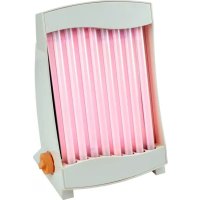
SC GB 836 N - Face cleansing Efbe-Schott - Free user manual and instructions
Find the device manual for free SC GB 836 N Efbe-Schott in PDF.



| Product type | UV Solarium for Face |
| Brand | Efbe-Schott |
| Model | SC GB 836 N |
| Number of UV lamps | 6 UVA lamps |
| Exposure distance | 5 cm from skin |
| Timer | Mechanical timer adjustable up to 60 minutes |
| Memory buttons | 4 buttons to track the number of sessions per user |
| Protective glasses | Included in the packaging |
| Supply voltage | 230 V ~ |
| Power | Approximately 120 W (estimated) |
| Dimensions (approx.) | 50 x 30 x 15 cm |
| Weight (approx.) | 2.5 kg |
| Main functions | UVA facial tanning with timer and memory buttons |
| Maintenance | Clean with a damp cloth after unplugging; replace lamps and starters if necessary |
| Safety | Do not use in a bathroom; do not immerse; unplug after use; wait 15 minutes for cooling before storage |
| Spare parts | UV fluorescent lamps and starters available via after-sales service |
| Repairability | Repairs reserved for customer service |
| General information | Use reserved for persons over 18 years old; respect exposure times according to skin type |
Frequently Asked Questions - SC GB 836 N Efbe-Schott
User questions about SC GB 836 N Efbe-Schott
0 question about this device. Answer the ones you know or ask your own.
Ask a new question about this device
Download the instructions for your Face cleansing in PDF format for free! Find your manual SC GB 836 N - Efbe-Schott and take your electronic device back in hand. On this page are published all the documents necessary for the use of your device. SC GB 836 N by Efbe-Schott.
USER MANUAL SC GB 836 N Efbe-Schott
natural_image
Line drawing of a hand holding a tool with three circular holes, next to a curved blade (no text or symbols)Note: Read and follow the User Instructions carefully before using the tanning system. Keep the User Instructions handy.
What you should know about skin tanning
The Sun
is the source of life on earth. Everyone knows from the change of seasons and personal experience during vacations that the light and heat of the sun affect our health and well-being in general. If your skin is bronzed, you look more attractive and healthy and feel better Skin tan also had a biological function in that it protects your skin from sunburn, e.g. before you go on a sun vacation.
Tanning
is caused by a certain part of the light spectrum. Tanning does not depend on whether the light is natural sunlight or artificial light.
The radiation of the sun contains a visible portion, which we perceive as light and an invisible portion, which we perceive, for example, as heal. The light also contains radiation that makes the skin turn red or even burns it. Radiation that gives the skin a tan is invisible radiation, viz. ultraviolet (UV) radiation consisting of UVA, UVB and UVC radiation. Intensive UVA radiation with a very low proportion of UVB and no UVC produces the best tan. The earth's atmosphere keeps the UVC radiation away, whereas UVB and UVA radiation reach the earth's surface and tan the skin. However, as the UVB proportion of solar light is rather high, pale skin is irritated easily, becomes red and sun-burned.
The UVA tanning system
has better proportions of UVA and UVB radiation than natural light. The tanning UVA radiation is much more intense than in sunlight whereas the harmful UVB proportion is only fraction of that of the solar proportion.
A person using the tanning system usually gets a suntan quicker than from exposure to sunlight and the solarium does not burn the skin. The tan is similar to suntan. However, everybody's skin may respond differently to exposure to sunlight.
Skin type and exposure time
We all know how our skin responds when it is exposed to direct sunlight. A similar reaction can be expected from exposure to artificial light. Those whose skin can stand much sunlight will bronze quickly; those whose skin is not tanned by the sun will not profit much from the UVA tanning system.
Skin type by reaction of the unexposed skin to natural sunlight
Skin Type Skin reaction and ethnic affiliation
| I | Always gets sunburn quickly, hardly any or only little tan, even after repeated exposure (Celtic type) |
| II | Gets sunburn almost always; moderate tan after repeated exposures (fair-skinned, European type) |
| III | Gets sunburn moderately often; progressing tanning after repeated exposures (dark-skinned, European type) |
| IV | Gets sunburn rarely; quick and strong tan (Mediterranean type) |
The use of at tanning system is only recommended to persons fitting the description of skin type II, III or IV. Skin-type I persons are unable to develop a normal tan either from the sun or exposure to artificial light. Exposure, if at all, should be after consulting a doctor.
Decide your exposure time after careful and considering your experience with natural light exposure.
The following exposure sequences are recommended for the various skin types.
Typ 834 - Radiation distance: 5 cm
Exposure schedule
| Skin type | II | III | IV | ||
| 1st exposure | The time between the exposures must be 48 hours minimum | 10 | 10 | 10 | min. |
| 2nd exposure | 11 | 12 | 13 | min. | |
| 3rd exposure | 13 | 15 | 16 | min. | |
| 4th exposure | 14 | 17 | 20 | min. | |
| 5th exposure | 16 | 19 | 23 | min. | |
| 6th exposure | 17 | 21 | 26 | min. | |
| 7th exposure | 18 | 24 | 29 | min. | |
| 8th exposure | 20 | 26 | 32 | min. | |
| 9th exposure | 21 | 28 | 36 | min. | |
| 10th exposure | 22 | 31 | 39 | min. | |
| 11th exposure | 24 | 33 | 42 | min. | |
| 12th exposure | 25 | 35 | 45 | min. | |
| First exposure period: Initial dose | 10 (-100 J/m^2) | 10 (-100 J/m^2) | 10 (-100 J/m^2) | min. | |
| Maximum period of exposures: Final dose | 25 (=250 J/m^2) | 35 (=350 J/m^2) | 45 (=450 J/m^2) | min. | |
| Maximum number of exposures per year: | 60 | 43 | 33 | ||
| Yearly dose | 15 | 15 | 15 | kJ/m2 | |
Typ 836 - Radiation distance: 5 cm
Exposure schedule
| Skin type | II | III | IV | ||
| 1st exposure | The time between the exposures must be 48 hours minimum | 7 | 7 | 7 | min. |
| 2nd exposure | 8 | 9 | 9 | min. | |
| 3rd exposure | 9 | 10 | 12 | min. | |
| 4th exposure | 10 | 12 | 14 | min. | |
| 5th exposure | 11 | 13 | 16 | min. | |
| 6th exposure | 12 | 15 | 18 | min. | |
| 7th exposure | 13 | 17 | 21 | min. | |
| 8th exposure | 14 | 18 | 23 | min. | |
| 9th exposure | 15 | 20 | 25 | min. | |
| 10th exposure | 16 | 21 | 27 | min. | |
| 11th exposure | 17 | 23 | 30 | min. | |
| 12th exposure | 18 | 25 | 32 | min. | |
| First exposure period:Initial dose | 7 (-100 J/m^2) | 7 (-100 J/m^2) | 7 (-100 J/m^2) | min. | |
| Maximum period of exposures:Final dose | 18 (-250 J/m^2) | 25 (-350 J/m^2) | 32 (-450 J/m^2) | min. | |
| Maximum number of exposures per year: | 60 | 43 | 33 | ||
| Yearly dose | 15 | 15 | 15 | kJ/ m^2 | |
Typ 838 - Radiation distance: 10 cm
Exposure schedule
| Skin type | II | III | IV | ||
| 1st exposure | The time between the exposures must be 48 hours minimum | 6 | 6 | 6 | min. |
| 2nd exposure | 7 | 8 | 9 | min. | |
| 3rd exposure | 8 | 9 | 11 | min. | |
| 4th exposure | 9 | 11 | 13 | min. | |
| 5th exposure | 10 | 12 | 15 | min. | |
| 6th exposure | 11 | 14 | 17 | min. | |
| 7th exposure | 12 | 15 | 19 | min. | |
| 8th exposure | 13 | 17 | 21 | min. | |
| 9th exposure | 14 | 18 | 23 | min. | |
| 10th exposure | 14 | 20 | 25 | min. | |
| 11th exposure | 15 | 21 | 27 | min. | |
| 12th exposure | 16 | 23 | 29 | min. | |
| First exposure period: Initial dose | 6 (= 100 J/m2) | 6 (= 100 J/m2) | 6 (= 100 J/m2) | min. | |
| Maximum period of exposures: Final dose | 16 (= 250 J/m2) | 23 (= 350 J/m2) | 29 (= 450 J/m2) | min. | |
| Maximum number of exposures per year: | 60 | 43 | 33 | ||
| Yearly dose | 15 | 15 | 15 | kJ/m2 | |
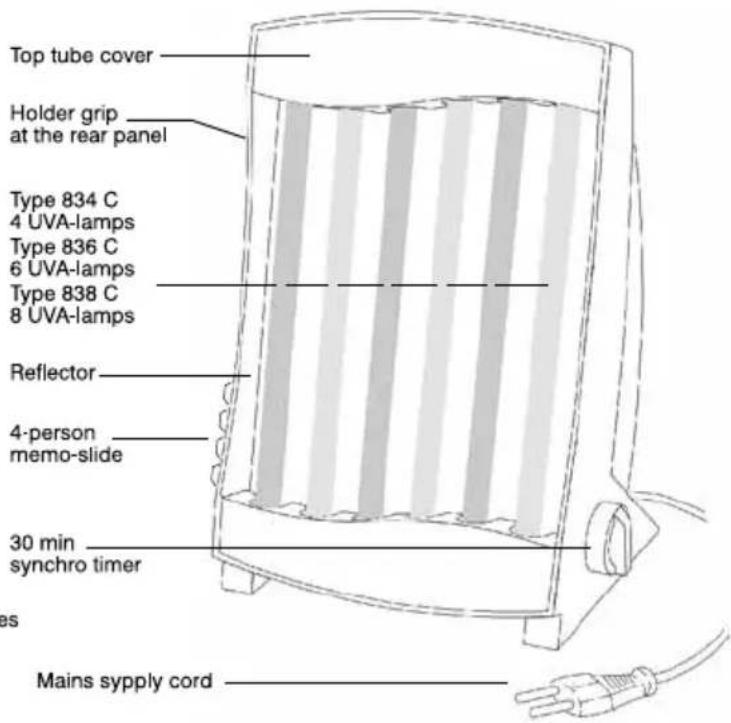
SUN BOX
Typ 834
836
838
text_image
Top tube cover Holder grip at the rear panel Type 834 C 4 UVA-lamps Type 836 C 6 UVA-lamps Type 838 C 8 UVA-lamps Reflector 4-person memo-slide 30 min synchro timer Mains supply cordOperating position
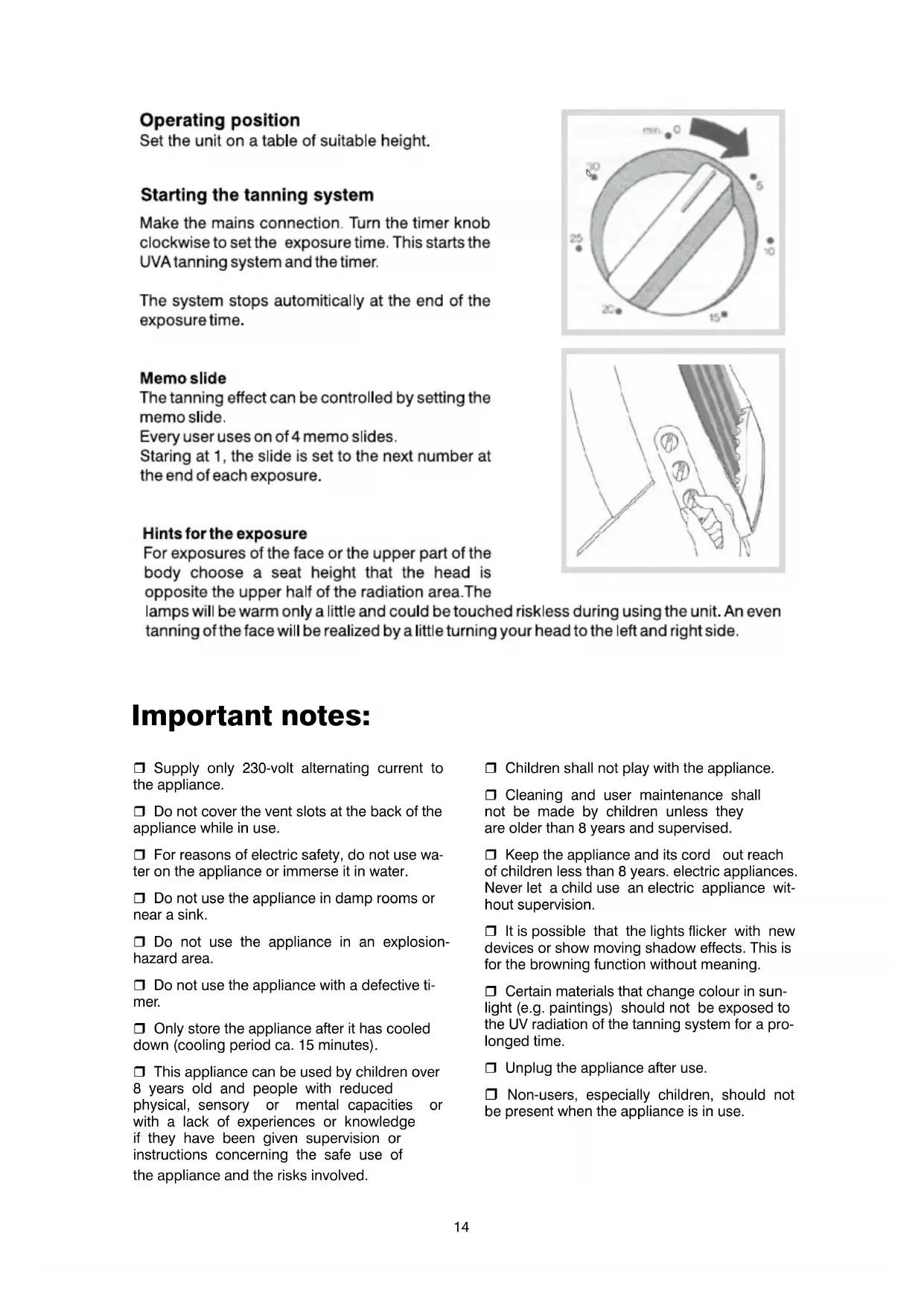
Set the unit on a table of suitable height.
Starting the tanning system
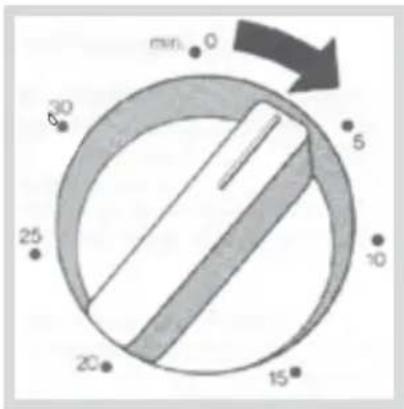
Make the mains connection. Turn the timer knob clockwise to set the exposure time. This starts the UVA tanning system and the timer.
The system stops automatically at the end of the exposure time.
Memo slide
The tanning effect can be controlled by setting the memo slide.
Every user uses on of 4 memo slides.
Staring at 1, the slide is set to the next number at the end of each exposure.
Hints for the exposure
For exposures of the face or the upper part of the body choose a seat height that the head is opposite the upper half of the radiation area. The
text_image
min. 0 30 25 20 15 5 0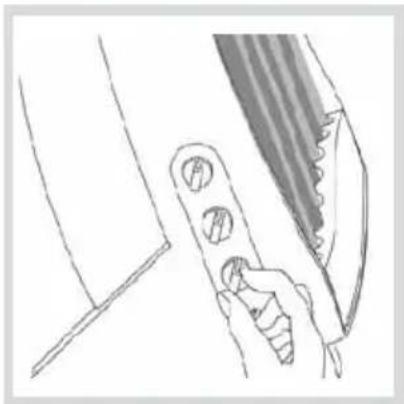
natural_image
Line drawing of a hand holding a vertical control knob with three circular buttons, next to a curved object (no text or symbols)lamps will be warm only a little and could be touched riskless during using the unit. An even tanning of the face will be realized by a little turning your head to the left and right side.
Important notes:
□ Supply only 230-volt alternating current to the appliance.
☐ Do not cover the vent slots at the back of the appliance while in use.
☐ For reasons of electric safety, do not use water on the appliance or immerse it in water.
☐ Do not use the appliance in damp rooms or near a sink.
☐ Do not use the appliance in an explosion-hazard area.
☐ Do not use the appliance with a defective timer.
☐ Only store the appliance after it has cooled down (cooling period ca. 15 minutes).
☐ This appliance can be used by children over 8 years old and people with reduced physical, sensory or mental capacities or with a lack of experiences or knowledge if they have been given supervision or instructions concerning the safe use of the appliance and the risks involved.
☐ Children shall not play with the appliance.
☐ Cleaning and user maintenance shall not be made by children unless they are older than 8 years and supervised.
- Keep the appliance and its cord out reach of children less than 8 years. electric appliances. Never let a child use an electric appliance without supervision.
☐ It is possible that the lights flicker with new devices or show moving shadow effects. This is for the browning function without meaning.
☐ Certain materials that change colour in sunlight (e.g. paintings) should not be exposed to the UV radiation of the tanning system for a prolonged time.
☐ Unplug the appliance after use.
☐ Non-users, especially children, should not be present when the appliance is in use.
☐ UV appliances should not be used by:
• People under 18;
• People with the tendency to get freckles;
• People with natural red hair colour;
• People with atypically decolourised skin areas;
• People who have more than 16 moles (2 mm diameter or bigger) on their body;
• People who have atypical moles (atypical moles are described as asymmetric moles with a diameter that is bigger than 5 mm with different pigmentation and irregular borders);
• People who suffer from sunburn;
• People who cannot tan at all or who can not tan without getting sunburn when they are exposed to the sun;
• People who sunburn easily when they are exposed to the sun;
• People who have had a history of repeated, heavy sunburns during childhood;
• People who suffer or suffered from skin cancer or who are predisposed to it;
• People whose relatives of the first degree have had black skin cancer (melanoma);
• People who are in medical treatment because of suffering that comes along with photosensibility;
• People who get photosensitising medication;
☐ The exposures should not exceed the personal minimal erythemal dose (MED), i.e. the minimal UV dose that causes perceptible reddening of the skin. If an erythema (reddening of the skin) occurs hours after an exposure, no further exposures should take place. After a week the exposures can be taken up again starting from the beginning of the exposure plan.
☐ If unexpected effects occur, such as itching within 48 h after the first exposure, ask your doctor for advice before further exposures.
☐ People (including children) who are not able to use the appliance in a safe way, due to their physical, sensorial or mental capacity or their lack of experience or knowledge, must never use the appliance without supervision or instructions of a responsible person.
Please note the following information
☐ Ultraviolet radiation of the sun or from artificial light sources can cause skin or eye damage. The biological effect depends on the type and amount of irradiation and also on the sensitivity of the skin exposed to it.
☐ Excessive irradiation can cause sunburn. Overly frequent exposure to ultraviolet radiation of the sun or an artificial light source can lead to early ageing of the skin and increased risk of skin tumours. These risks increase according to the accumulated UV radiation. Exposure at a young age increases the risk of skin damage later on in life.
☐ The surface of the unprotected eye can be inflamed and in certain cases excessive exposure to radiation can cause retinal damage. Cataract can be the consequence of many repeated irradiation exposures.
☐ In case of pronounced individual sensitivity or allergic reactions to ultraviolet radiation, ask your doctor for advice before the start of the exposure.
The following precautionary measures have to be respected:
- Always use the supplied safety goggles, contact lenses and sunglasses are no surrogate for the safety goggles;
- Remove cosmetics before exposure and do not use any sun protecting agents or self-tanning lotion;
- Certain medical conditions or side effects of medication can be heightened because of ultraviolet radiation. In case of doubt, consult your doctor;
-
Let an interval of at least 48 hours between the first two exposures;
-
When using the appliance, do not sunbathe the same day;
- Follow the recommended exposure time, exposure intervals and keep the recommended distance to the tubes;
- Consult your doctor if your skin starts swelling, wounds or pigmented spots appear;
- Sensitive skin areas such as scars, tattoos and private parts need to be protected before exposure.
- Consult your doctor if your skin starts swelling, wounds or pigmented spots appear;
- Sensitive skin areas such as scars, tattoos and private parts need to be protected before exposure.
Cleaning and care
☐ Pull the mains lead before starting to clean.
Bulb replacement
The replacement of the lamps is carried out as follows:
- Loosen the fastening bolts at the top of the unit's rear side. Remove the shutter. Turn each lamp a quarter of a turn to remove them from the socket.
- If lamps are suspected defective but work in other sockets, the starter may be the cause. You may also test their function replacing them against each other.
Caution
UV fluorescent bulbs have to be replaced by bulbs of the same type.
Changing the starters
Turn the starter counterclockwise at the unit's rear panel. Insert the new starter turning the starter clockwise.
Limited warranty
We are neither responsible for broken glass of fluorescent tubes nor for handling damages on defective units sent in with insufficient packing. We recommend to keep the original packing for this purpose.
Caution! If fluorescent tubes do not light after switching them on, turn the tubes slightly back and forward.
Our warranty does not cover non-defective units which were sent in with fluorescent lamps which did not light, but are non-defective.
Caution! If the mains cord of the units gets damaged, it shall be replaced by the manufacturer or authorised service centres or other qualified people to avoid any hazard.
Caution! Should you give away the appliance to another user, make sure to hand over the instruction manual together with the appliance.
Replacement tubes
| Typ 834 | 4 pieces UV-A lamps | Typ Cleo 15 W | 29 cm |
| Typ 836 | 6 pieces UV-A lamps | Typ Cleo 15 W | 29 cm |
| Typ 838 | 8 pieces UV-A lamps | Typ Cleo 15 W | 29 cm |
Like all fluorescent tubes, tanning system tubes contain specific admixtures.
These tubes are classed as hazardous waste and must be disposed of according to law.
If you order spare tubes or starters, please quote the serial data on the tube or starter and the type number of your tanning system.
Modifications and repairs must be carried out by our after-sales service staff.
Spare parts and customer service available in Germany.
PROTECTION OF THE ENVIRONMENT-DIRECTIVE 2002/96/EC
In order to preserve our environment and protect human health, the waste electrical and electronic equipment should be disposed of in accordance with specific rules with the implication of both suppliers and users.
For this reason, as indicated by the symbol ☒ on the rating label or on the packaging, your appliance should not be disposed of as unsorted municipal waste. The user has the right to bring it free of charge to a municipal collection point performing waste recovery by means of reuse, recycling or use for other applications in accordance with the directive.
Producer and Customer Service