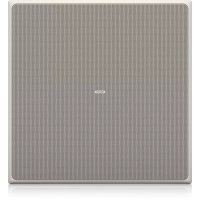
PCI 45DC - Speaker TANNOY - Free user manual and instructions
Find the device manual for free PCI 45DC TANNOY in PDF.


User questions about PCI 45DC TANNOY
0 question about this device. Answer the ones you know or ask your own.
Ask a new question about this device
Download the instructions for your Speaker in PDF format for free! Find your manual PCI 45DC - TANNOY and take your electronic device back in hand. On this page are published all the documents necessary for the use of your device. PCI 45DC by TANNOY.
USER MANUAL PCI 45DC TANNOY
natural_image
Close-up of a gray mesh panel with a small white mark in the center (no text or symbols)PCI 45DC
Premium 3-way Dual Concentric In-Ceiling Loudspeaker for Installation Applications
2 A745DC Quick Stay Guide 3
EN
ES
EN Important Safety Instructions

Terminals marked with this symbol carry electrical current of sufficient magnitude to constitute risk of electric shock. the only high quality professional speaker tables with 15" TS or twist-locking plugs pre installed. All other installation or modification should be performed only by qualified personnel.
This symbol, wherever it appears, alerts you to the presence of uninsulated dangerous voltage inside the enclosure - voltage that may be sufficient to constitute a risk of shock.
This symbol, wherever it appears, alerts you to important operating and maintenance instructions in the accompanying literature. Please read the manual.
Caution To reduce the risk of electric shock, do not remove the top cover (or the rear section). No user serviceable parts inside. Refer servicing to qualified personnel.
Caution To reduce the risk of fire or electric shock, do not expose this appliance to rain and moisture. The apparatus shall not be exposed to dripping or splashing liquids and no objects filled with liquids, such as wares, shall be plated on the apparatus.
Caution These service instructions are for use by qualified service personnel only. To reduce the risk of electric shock do not perform any servicing other than that contained in the operation instructions. Repairs have to be performed by qualified service personnel.
- Read these instructions.
- Keep these instructions.
- Here all warnings.
- Follow all instructions.
- Do not use this apparatus near water.
- Clean only with dry cloth.
- Do not lock any ventilation openings, install in accordance with the manufacturer's instructions.
-
Do not install near any heat sources such as rotators, heat registers, stoves, or other apparatus (including amplifiers) that produce heat.
-
Do not defeat the safety purpose of the polarized or grounding-type plug. A polarized plug has two blades with one wider than the other. A grounding-type plug has two blades and a third grounding proing. The wide blade or the third proing are provided for your safety. If the provided plug does not fit into your outlet, consult an electrician for replacement of the obsolete outlet.
-
Protect the power card from being walked on or pinched particularly at plugs, convenience receptacles, and the point where they exit from the apparatus.
- Use only attachments/accessories specified by the manufacturer.

- Use only with the cart, stand, tripod, bracket, or table specified by the manufacturer, or sold with the apparatus. When a cart is used, use caution when moving the cart/apparatus combination to avoid
injury from tip-over
-
Unplug this apparatus during lightning storms or when unused for long periods of time.
-
Refer all servicing to qualified service personnel. Servicing is required when the apparatus has been damaged in any way, such as power supply cord or plug in damaged, liquid has been spilled or objects have fallen into the apparatus, the apparatus has been exposed to rain or moisture, does not operate normally, or has been dropped.
-
The apparatus shall be connected to a MANG socket outlet with a protective earthing connection.
-
Where the MAINS plug or an appliance coupler is used as the disconnect device, the disconnect device shall remain readily operable.

- Correct disposal of this product: This symbol indicates that this product must not be disposed at with household waste, according to the WEE Directive (2012/19/EU) and
should be taken to a collection center licensed for the recycling of waste electrical and electronic equipment. EEL, the misunderstanding of this type of waste could have a possible negative impact on the environment and human health due to potentially hazardous substances that are generally associated with EEL, at the same time your cooperation in the correct disposal of this product will contribute to the efficient use of natural resources. For more information about where you can take your waste equipment for recycling, please contact your local city office, or your households waste collection service. 18. Do not install in a confined space, such as a book case or similar unit.
-
Do not place naked flame sources, such as lighted candles, on the apparatus.
-
Please keep the environmental aspects of battery disposal in mind. Batteries must be disposed-of at a battery collection point.
-
This apparatus may be used in tropical and moderate climates up to 45°C.
LEGAL DISCLAIMER
Music Tribe accepts no liability for any loss which may be suffered by any person who relies either wholly or in part upon any description, photograph, or statement contained herein. Technical specifications, appearances and other information are subject to change without notice. All trademarks are the property of their respective owners. Vidas, Klark Teknik, Lab Suggers, Lake, Tanney, Turbosound, TC Electronic, TC Helicon, Behringes, Sugera, Osterheim, Auratone, Aston Microphones and Coledudio are trademarks or registered trademarks of Music in The Global Brands Ltd. © Music Tribe Global Brands Ltd. 2021 All rights reserved.
LIMITED WARRANTY
For the applicable warranty terms and conditions and additional information regarding Music Tribe's Limited Warranty, please see complete details online at musictribe.com/warranty.
ES
BESCHRÄNKTE GARANTIE
Thank you for purchasing this Tammy premium Dual Concentric Loudspeaker for installation Applications. Tammy in ceiling speaker systems are monitor quality speaker systems based on the company's expertise in the manufacture of premium quality cabinet loudspeakers and studio monitors. Exclusive drive unit designs and triple bandwidth technology ensure that these loudspeaker deliver the performance that is essential for applications such as multi-room distributed audio installations, home theatre systems and discrete audio systems, as well as in the many other applications where space is at a premium but ultimate sound quality is still paramount. The speaker construction is based around a rigid molded ABS buffer with excellent structural integrity; this, when combined with the secure polyacetate clamp mounting system patient applied for 0736892.5%, ensures a performance-enhancing rigid acoustic coupling with the wall surface, and an immensely stable platform for the drivers to deliver optimum performance. Complementing any style of decor, the perforated metal grille and low profile mounting frame can be painted to blend in seamlessly with the domestic environment. The result is a system offering audiophile quality sound with minimal envision of the living space.
Unpacking
Every Tammy product is carefully inspected before shipment. After unpacking, please inspect your product to ensure no damage has occurred in transit. In the unlikely event of damage, please notify your dealer and retain all shipping materials as your dealer may require return shipment.
Safety Notices
Tannoy will not be held responsible for any damages caused by the improper installation of these loudspeakers.
ES
Introducción
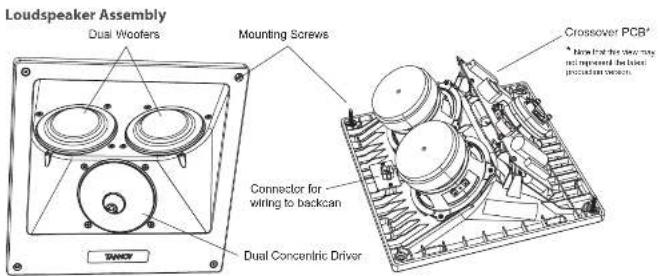
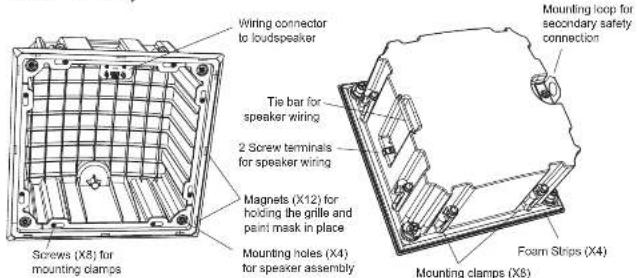
Product Feature Identification
PCI 45DC
text_image
Loudspeaker Assembly Dual Woofers Mounting Screws Crossover PCB* * Note that the screw may not represented by the label production wafers. Connector for writing to backcan Dual Concentric Driver TANCOYBack Can Assembly
text_image
Wiring connector to loudspeaker Tie bar for speaker wiring 2 Screw terminals for speaker wiring Magnets (X12) for holding the grille and paint mask in place Mounting holes (X4) for speaker assembly Mounting loop for secondary safety connection Screws (X8) for mounting clamps Foam Strips (X6)Loudspeaker and Back Can Assembled
natural_image
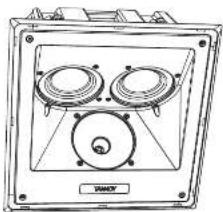
Technical line drawing of a front-mounted speaker or audio unit with three speakers and a central button (no text or symbols)Grille
natural_image
Uniform gray textured surface with a small black mark in the center (no text or symbols)Paint Mask

natural_image
Empty rectangular frame with corner brackets and corner markers (no text or symbols)Acoustic Foam
(This is supplied rolled up in the packaging, and it fits inside the PCI 45DC back can)

natural_image
Solid gray image with no visible content, text, or symbols.18 PCI45DC
PCI 45DC Installation Guide
PCI 45DC Back Can Installation
WARNING: To avoid potential damage to your loudspeaker, ensure that the power amplifier is switched OFF prior to connecting or disconnecting any cables.
WARNING: Make sure that there are no power lines, other cables, or plumbing such as water, sewer, gas lines in the chosen location.
The procedure below describes the installation of the back can into a typical 2" x 8" joint ceiling with 16" centers, with drywall plaster board already installed. After the PCI 4SDC back can is installed and wired, the paint mask can be added for painting and finishing. The loudspeaker can be installed into the back can later.
Procedure
Follow the procedure steps below in the order in which they are presented. Read all the instructions before starting.
- Locate a suitable mounting position for the speaker, using a stud-finder. WARNING: Make sure that there are no power lines, other cables, or plumbing such as water, sewer, gas lines in the chosen cutout location. Also make sure that the location is far enough from ceiling joints so that all the clamping mechanisms can operate without interference.
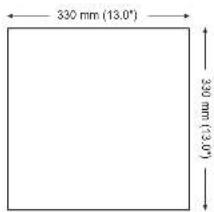
- Carefully mark out a square in the desired location and carefully cutout a hole in the drywall/plasterboard. Remove any dust and debris from the hole (Fig. 12).
- Run the speaker wire from your amplifier to this location, leaving enough slack to allow for the connection (Fig. 13).
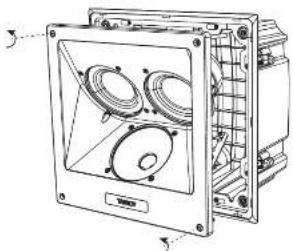
- If the loudspeaker assembly is already fitted to the back can (during shipping for example), then remove it from the back can by undoing the screws holding it in place (Fig. 14).
- Remove the block of shaped foam inside the back can. This is used to protect the speakers during shipping.
- A square sheet of acoustic foam is supplied with the packaging. Install this foam to the inside of the back can. [Note that the foam is not shown in the illustrations below.]
text_image
330 mm (13.0") 330 mm (13.0)Fig. 12. PCI 45DC Cutout Dimensions
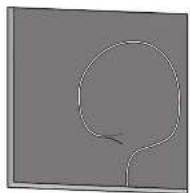
Fig. 13. Speaker Wire
natural_image
Technical line drawing of a mechanical device with internal components and mounting holes (no text or symbols)Fig. 14. Removing the loudspeaker from the back can
Quick Star Guide
19
EN
Wiring the Back Can
WARNING: To avoid potential damage to your loudspeaker, ensure that the amplifier is switched OFF prior to connecting or disconnecting any cables.
WARNING: Before switching the amplifier ON, double check that all connections are secure and that the polarity is correct.
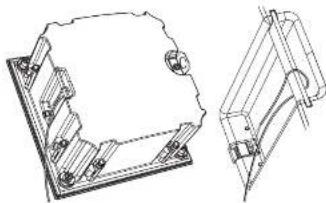
Note that the speaker wire connections are made to the two screw terminals on the outside of the back can.
We recommend the use of insulated speaker wiring of between 12 and 18 NWG.
1. Pull out the ends of the speaker cables from the cutout aperture, and strip off approximately 8 mm [N°] of the outer protective layer from each conductor.
2. With the help of an assistant, hold the back can up near the aperture.
3. The speaker cable may be wrapped around the bar near the screw terminals on the back can (Fig. 15).
4. The positive wire from your amplifier should connect to the positive terminal of the back can. The negative wire from your amplifier should connect to the negative terminal of the back can. Secure both wires by tightening the two small screws. Make sure that the polarity is correct and the wires are secure.
5. Make sure that the speaker cables are secured to the ceiling joints so they will not move and rattle about during operation. Also make sure the cables are not near any screws or sharp metal edges that may cut the insulation.
Installing the Back Can
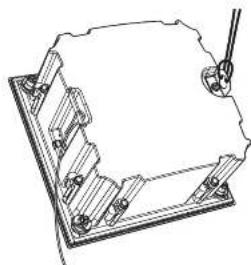
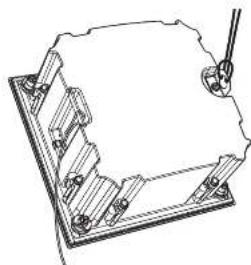
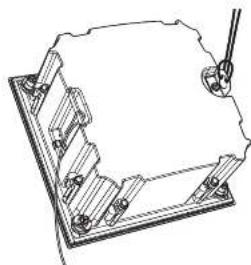
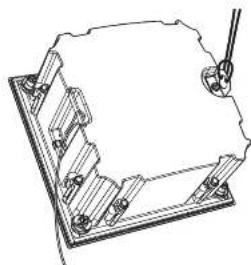
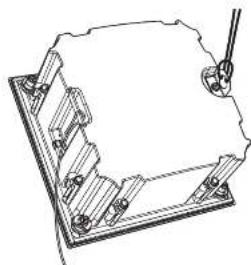
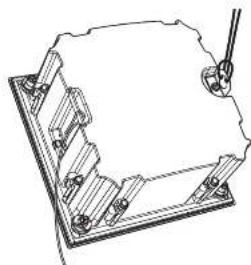
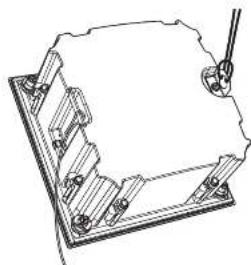
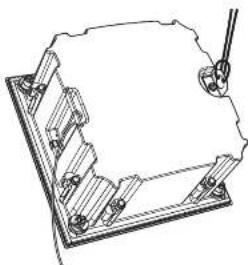
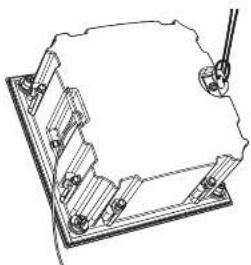
- With the back can wired correctly as shown above, connect a secondary safety cable to the metal mounting loop on the rear of the back can. The other end of the secondary safety cable should be secured to suitable strong mounting point in the ceiling (Fig. 16).
natural_image
Technical line drawing of a mechanical housing component with mounting brackets (no text or symbols)Fig. 15. Wiring the back can
natural_image
Technical line drawing of a mechanical assembly with mounting brackets and a tool (no text or symbols)Fig. 16. Connecting the secondary safety to the back can
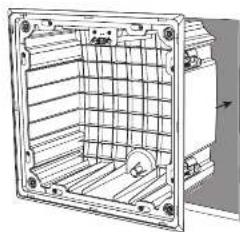
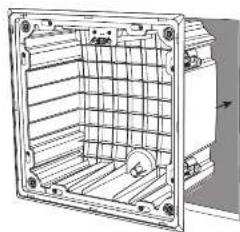
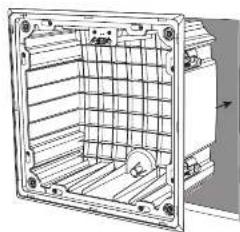
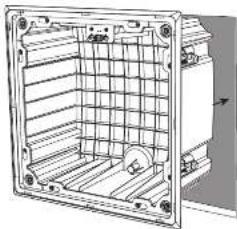
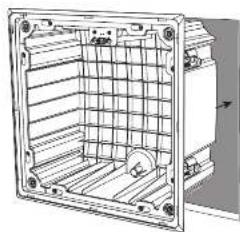
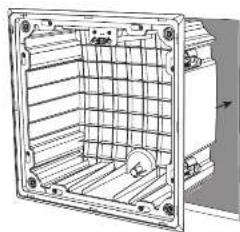
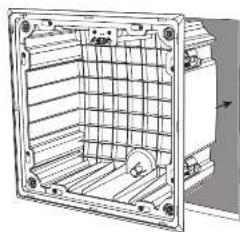
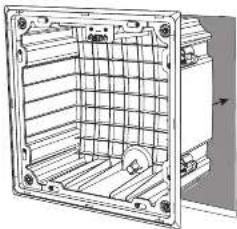
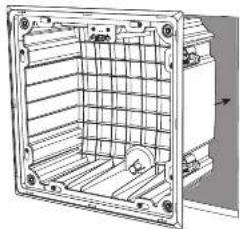
- With the eight back can mounting clamps in the showed (inward) position, press the back can into the drywall aperture. Be careful not to pinch the speaker wires or your fingers (Fig.17).
natural_image
Technical line drawing of a mechanical enclosure or enclosure with grid-like internal structure (no text or symbols)Fig. 17, Installing the back can
PC145DC
- Hold the back can in place in the ceiling, while tightening the mounting clamp screws clockwise (Fig. 18). Do this systematically until all eight clamps are in position and holding the back can securely to the ceiling drywall.

natural_image
Technical line drawing of a rectangular enclosure with internal grid structure and mounting points (no text or symbols)Fig. 18. Tighten the mounting clamp screws (X8)
Painting
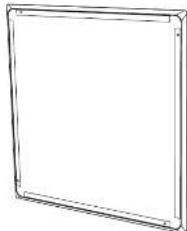
- A paint mask is supplied to protect the back can from paint, dust, and debris. It allows you to paint and finish the ceiling after the installation of the back can.
- Press the paint mask into the front of the back can, where it will be kept in place by magnets. This mask is left in place while the ceiling and frame surround is painted (Fig. 19).
- It is strongly recommended that the metal perforated grille is sprayed separately, as this will avoid clogging of the holes. If painting with a brush is the only option, then several thin coats of paint will provide a superior finish to that achieved by one applied too thickly.
natural_image
Simple line drawing of a square frame with rounded corners and no text or symbolsFig. 19. Install the point mask
Installing the Loudspeaker
- Remove the paint mask from the back can.
- Note that loudspeaker assembly will only fit into the back can in one way: the connector on the rear of the loudspeaker assembly must align with the matching connector on the back can.
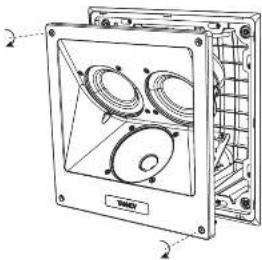
- Install the loudspeaker into the back can and secure it in place with the screws (Fig.20).
natural_image
Technical line drawing of a mechanical device with internal components and mounting brackets (no text or symbols)Fig. 20. Install the loudspeaker
Quick Star Guide
21
Grille Installation
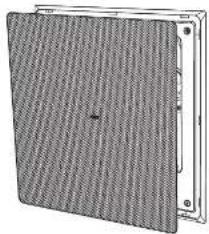
- The grille should be carefully fitted by lining up the edges of the grille carefully with the baffle and frame inside edges (Fig. 21). To avoid indentation damage, do not press the centre of the grille; apply even pressure to each corner as it is pressed firmly into position.
- To remove the grille, loop an opened paper clip or similar length of firm wire, through two holes near a corner and pull gently. The grille is intended to be a tight fit, so insert the wire at each corner in turn, pulling carefully to avoid distortion of the mesh.
System Testing
- Switch on the amplifier with the volume control at its lowest setting. Select a suitable signal source and slowly turn up the volume to a low level. Check that the loudspeaker is working correctly and is in phase - if not, switch off the amplifier and recheck the connections.
- Carefully check the area surrounding the installation and listen carefully to ensure that there are no buzzes or rattles that could potentially impair enjoyment of the system. If there are, then locate and silence the causes using cable ties or suitable packing material.
natural_image
Exterior view of a rectangular electronic device with a mesh panel and mounting bracket (no text or symbols visible)Fig. 21, install the grille
22 PCT45DC Quick Start Guide 23
natural_image
Technical line drawing of a mechanical device with multiple circular components and mounting brackets (no text or symbols)Fig. 14. Removing the loudspeaker from the back can
natural_image
Technical line drawing of a mechanical housing component with mounting holes and mounting brackets (no text or symbols)Fig. 15. Wiring the back can
natural_image
Technical line drawing of a mechanical assembly with mounting brackets and a tool (no text or symbols)Fig. 16. Connecting the secondary safety to the back can
natural_image
Technical line drawing of a mechanical enclosure or enclosure with grid pattern and mounting holes (no text or symbols)Fig. 17, installing the back can
24 PCI 45DC Quick Start Guide 25
natural_image
Technical line drawing of a rectangular enclosure with internal grid structure and mounting holes (no text or symbols)Fig. 18. Tighten the mounting clamp screws (X8)
Cuadro
natural_image
Simple line drawing of a rectangular frame with rounded corners and corner markers (no text or symbols)Fig. 19. Install the point mask
natural_image
Technical line drawing of a mechanical device with multiple circular components and mounting holes (no text or symbols)Fig. 20. Install the loudspeaker
natural_image
Exterior view of a rectangular electronic device with a textured surface and mounting brackets (no visible text or symbols)Fig. 21, install the grille
natural_image
Technical line drawing of a mechanical device with internal components and mounting brackets (no text or symbols)Fig. 14. Removing the loudspeaker from the back can
natural_image
Technical line drawing of a mechanical housing component with mounting holes and internal components (no text or symbols)Fig. 15. Wiring the back can
natural_image
Technical line drawing of a mechanical assembly with mounting brackets and a central component (no text or symbols)Fig. 16. Connecting the secondary safety to the back can
natural_image
Technical line drawing of a mechanical enclosure or enclosure with grid pattern and mounting holes (no text or symbols)Fig. 17, Installing the back can
natural_image
Technical line drawing of a 3D rectangular enclosure with internal grid structure and mounting holes (no text or symbols)Fig. 18. Tighten the mounting clamp screws (X8)
Peinture
natural_image
Simple line drawing of a square frame with rounded corners and no text or symbolsFig. 19. Install the point mask
natural_image
Technical line drawing of a mechanical device with multiple circular components and mounting brackets (no text or symbols)Fig. 20. Install the loudspeaker
Installation de la grille
natural_image
Exterior view of a rectangular electronic device with a mesh panel and mounting bracket (no text or symbols visible)Fig. 21, install the grille
PCI 45DC Installationshandbuch
PCI 45DC Back Can Installation
natural_image
Technical line drawing of a mechanical device with multiple circular components and mounting brackets (no text or symbols)Fig. 14. Removing the loudspeaker from the back can
natural_image
Technical line drawing of a mechanical housing component with mounting holes and mounting brackets (no text or symbols)Fig. 15. Wiring the back can
natural_image
Technical line drawing of a mechanical assembly with mounting brackets and a handle (no text or symbols)Fig. 16. Connecting the secondary safety to the back can
natural_image
Technical line drawing of a mechanical housing or enclosure with internal grid structure (no text or symbols)Fig. 17, installing the back can
natural_image
Technical line drawing of a rectangular enclosure with internal grid structure and ventilation slots (no text or symbols)Fig. 18. Tighten the mounting clamp screws (X8)
Malerei
natural_image
Simple line drawing of a square frame with rounded corners and no text or symbolsFig. 19. Install the point mask
natural_image
Technical line drawing of a device casing with internal components and mounting brackets (no text or symbols)Fig. 20. Install the loudspeaker
natural_image
Exterior view of a rectangular electronic device with a mesh panel and mounting bracket (no text or symbols visible)Fig. 21, install the grille
natural_image
Technical line drawing of a mechanical device with multiple circular components and housing (no text or symbols)Fig. 14. Removing the loudspeaker from the back can
natural_image
Technical line drawing of a mechanical housing component with mounting brackets and internal components (no text or symbols)Fig. 15. Wiring the back can
natural_image
Technical line drawing of a mechanical assembly with mounting brackets and a tool (no text or symbols)Fig. 16. Connecting the secondary safety to the back can
natural_image
Technical line drawing of a mechanical enclosure or enclosure with grid pattern and mounting holes (no text or symbols)Fig. 17, Installing the back can
natural_image
Technical line drawing of a 3D rectangular enclosure with internal grid structure and mounting holes (no text or symbols)Fig. 18. Tighten the mounting clamp screws (X8)
Pintura
natural_image
Simple line drawing of a square frame with rounded corners and no text or symbolsFig. 19. Install the point mask
natural_image
Technical line drawing of a mechanical device with internal components and mounting brackets (no text or symbols)Fig. 20. Install the loudspeaker
Instalação da grade
natural_image
Exterior view of a rectangular electronic device with a textured surface and mounting brackets (no visible text or symbols)Fig. 21, install the grille
38 PCI45DC
Quick Star Guide
39
natural_image
Technical line drawing of a mechanical device with multiple circular components and mounting brackets (no text or symbols)Fig. 14. Removing the loudspeaker from the back can
natural_image
Technical line drawing of a mechanical housing component with mounting holes and mounting brackets (no text or symbols)Fig. 15. Wiring the back can
natural_image
Technical line drawing of a mechanical assembly with mounting brackets and a tool (no text or symbols)Fig. 16. Connecting the secondary safety to the back can
natural_image
Technical line drawing of a rectangular enclosure with internal grid structure and mounting holes (no text or symbols)Fig. 17, installing the back can
natural_image
Technical line drawing of a rectangular enclosure with internal grid structure and mounting points (no text or symbols)Fig. 18. Tighten the mounting clamp screws (X8)
Pittura
natural_image
Simple line drawing of a square frame with rounded corners and no text or symbolsFig. 19. Install the point mask
natural_image
Technical line drawing of a mechanical device with internal components and mounting brackets (no text or symbols)Fig. 20. Install the loudspeaker
natural_image
Exterior view of a rectangular electronic device with a mesh panel and mounting bracket (no text or symbols visible)Fig. 21, install the grille
natural_image
Technical line drawing of a mechanical device with multiple circular components and mounting brackets (no text or symbols)Fig. 14. Removing the loudspeaker from the back can
natural_image
Technical line drawing of a mechanical housing component with mounting holes and mounting brackets (no text or symbols)Fig. 15. Wiring the back can
natural_image
Technical line drawing of a mechanical assembly with mounting brackets and a tool (no text or symbols)Fig. 16. Connecting the secondary safety to the back can
natural_image
Technical line drawing of a mechanical enclosure or enclosure with grid pattern and mounting holes (no text or symbols)Fig. 17, Installing the back can
natural_image
Technical line drawing of a rectangular enclosure with internal grid structure and mounting points (no text or symbols)Fig. 18. Tighten the mounting clamp screws (X8)
Schilderen
natural_image
Simple line drawing of a square frame with rounded corners and no text or symbolsFig. 19. Install the point mask
natural_image
Technical line drawing of a mechanical device with multiple circular components and internal structure (no text or symbols)Fig. 20. Install the loudspeaker
Grille installatie
natural_image
Exterior view of a rectangular electronic device with a textured surface and mounting brackets (no visible text or symbols)Fig. 21, install the grille
PCI 45DC installationshandbok
PCI 45DC Back Can Installation
natural_image
Technical line drawing of a mechanical device with multiple circular components and mounting brackets (no text or symbols)Fig. 14. Removing the loudspeaker from the back can
natural_image
Technical line drawing of a mechanical housing component with mounting brackets and internal components (no text or symbols)Fig. 15. Wiring the back can
natural_image
Technical line drawing of a mechanical assembly with mounting brackets and a handle (no text or symbols)Fig. 16. Connecting the secondary safety to the back can
natural_image
Technical line drawing of a mechanical enclosure or enclosure with grid-like structure and mounting holes (no text or symbols)Fig. 17. Installing the back can
natural_image
Technical line drawing of a 3D rectangular enclosure with internal grid structure and mounting holes (no text or symbols)Fig. 18. Tighten the mounting clamp screws (X8)
Målning
natural_image
Simple line drawing of a square frame with rounded corners and no text or symbolsFig. 19. Install the point mask
natural_image
Technical line drawing of a mechanical device with internal components and mounting brackets (no text or symbols)Fig. 20. Install the loudspeaker
natural_image
Exterior view of a rectangular electronic device with a textured surface and mounting brackets (no visible text or symbols)Fig. 21, install the grille
natural_image
Technical line drawing of a mechanical device with multiple circular components and housing (no text or symbols)Fig. 14. Removing the loudspeaker from the back can
natural_image
Technical line drawing of a mechanical housing component with mounting brackets and internal components (no text or symbols)Fig. 15. Wiring the back can
natural_image
Technical line drawing of a mechanical assembly with clamps and a handle (no text or symbols)Fig. 16. Connecting the secondary safety to the back can
natural_image
Technical line drawing of a mechanical enclosure or enclosure with internal grid structure and mounting holes (no text or symbols)Fig. 17. Installing the back can
natural_image
Technical line drawing of a rectangular enclosure with internal grid structure and mounting holes (no text or symbols)Fig. 18. Tighten the mounting clamp screws (X8)
Obraz
natural_image
Simple line drawing of a square frame with rounded corners and no text or symbolsFig. 19. Install the point mask
natural_image
Technical line drawing of a mechanical device with multiple circular components and internal structure (no text or symbols)Fig. 20. Install the loudspeaker
Instalacja kratki
natural_image
Exterior view of a rectangular electronic device with a mesh panel and mounting bracket (no text or symbols visible)Fig. 21, install the grille
54 PCI45DC
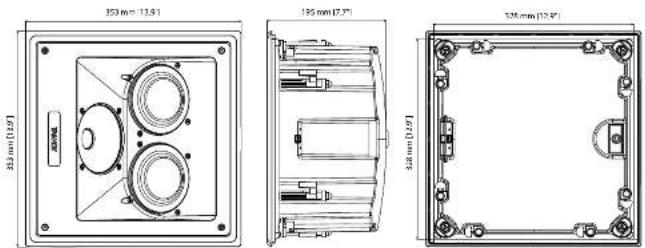
EN Dimensions
PCI 45DC
text_image
353 mm (13.9) 353 mm (13.9) 195 mm (7.3) 328 mm (7.3) 528 mm (7.3)Quick Star Guide 55
EN
Specifications
| Performance | |
| Frequency response (1-3 dB), 100 Hz - 20 kHz | |
| Frequency response (-10 dB) 60 Hz - 25 kHz | |
| Sensitivity (1 V or 1m) 95 dB | |
| Directivity factor (IQ) 6.3 averaged 1 MHz to 10 kHz | |
| Directivity index (D) 8 averaged 1 kHz to 10 kHz | |
| Power handling (IEC) | |
| Average 70 W | |
| Programme 110 W | |
| Peak 250 W | |
| Recommended amplifier power 210 W (≥ 80 W) | |
| Nominal Impedance (Lo Z) 80 | |
| Rated maximum SPL (1 m, Lo Z) | |
| Average 100 dB | |
| Peak | 114 dB |
| Transformer laps | NA |
| Crossover joint | 750 Hz / 2.1 kHz |
| Coverage angles | |
| 500 Hz | 156° horizontal, 162° vertical |
| 1 kHz | 81° horizontal, 101° vertical |
| 2 kHz | 145° horizontal, 138° vertical |
| 4 kHz | 123° horizontal, 120° vertical |
| Transduces | |
| Low frequency diameter/material/type | 2 x 126 mm (5' x 1 x 118.5 mm (4.5") |
| High frequency diameter/material/type | 20.4 mm (0.8") |
| Physical | |
| Enclosure | |
| Back scan | Plastic contact spraying |
| Ruffle | Reflex loaded 18.94 V-coated RMS |
| Grille | Steel, with weather resistant coating |
| Safety features | With a safety loop |
| Clamping design | Security toggle clamp |
| Connections | Phoenix Contact terminal block |
| Dimensions (HCM/LO) | 355 x 353 x 199 mm (13.9 x 13.5 x 7.8") |
| Bezel dimensions | 35x35.5mm (13.9"x13.5") |
| Mounting depth | 188 mm (7.4") |
| Hole cutout dimensions | 330.2 x 330.2 mm (13.0"x13.0") |
| Net weight | 7.2 kg (16.9 kg) |
| Packed quantity | 3 |
| Included accessories | Guttle, paint mask, tool kit, screws, plain washer |
Other important information

Important information
- Register online. Please register your new Music Tribe equipment right after you purchase it by visiting musictribe.com. Registering your purchase using our simple online form helps us to process your repair claims more quickly and efficiently. Also, read the terms and conditions of our warranty, if applicable.
- Malfunction. Should your Music Tribe Author and Reseller not be located in your vicinity, you may contact the Music Tribe Authorized Fulfill for your country listed under "Support" at musicitibe.com. Should your country not be listed, please check if your problem can be dealt with by our "Online Support" which may also be found under "Support" at musicitibe.com. Alternatively, please submit an online warranty claim at musicitibe.com BEFORE returning the product.
- Power Connections. Before plugging the unit into a power socket, please make sure you are using the correct mains voltage for your particular model. Fuzzy fuses must be replaced with fuses of the same type and rating without exception.

Hereby, Music Tribe declares that this product is in compliance with Directive
2011/06/EU and Amendment 2015/BG3/EU, Directive 2012/19/EU, Regulation ELP/2012 PEACH/SWC and Directive 1957/1956/EC, and this service conduct is
not applicable to I/AC Directive 2014/30/FU. U Directive 2014/35/EII
Full text of EU DoC is available at https://community.musietribe.com/
EU Representative: Music Tribe Brands DK A/S
Address: U Slang Ulsens Gade 17, DK - 8200 Paribus N, Denmark
EN