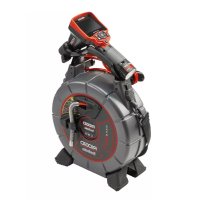
SeeSnake nanoReel - Inspection camera RIDGID - Free user manual and instructions
Find the device manual for free SeeSnake nanoReel RIDGID in PDF.


| Product Type | Drain inspection camera |
| Brand | RIDGID |
| Model | SeeSnake nanoReel |
| Dimensions (L x W x H) | 337 mm x 224 mm x 411 mm |
| Weight | 5.5 kg |
| Drum diameter | 305 mm |
| Push cable length | 26 m |
| Push cable diameter | 7.2 mm |
| Cable bend radius | 38 mm |
| Pipe capacity | 25 mm — 64 mm |
| Camera head diameter | 15.5 mm |
| Camera head length | 17.5 mm |
| Lighting | 6 LEDs |
| Integrated sonde | 512 Hz |
| Resolution (NTSC) | 656 × 492 pixels |
| Resolution (PAL) | 768 × 576 pixels |
| Power supply | Via SeeSnake monitor or CSx Via (system cable) |
| Operating temperature | 0°C to 46°C |
| Storage temperature | -20°C to 70°C |
| Waterproof rating | Up to 100 m depth |
| Standard equipment | NanoReel, operator's manual, ball guide rings (two sizes) |
| Monitor compatibility | All SeeSnake monitors, CSx Via, micro CA-350 (with optional handle) |
| Maintenance | Soft cloths, nylon brush, mild detergent. No solvent or high-pressure cleaner. |
| Spare parts and repairability | RIDGID Independent Authorized Service Center. See RIDGID.com. |
| Safety | Read manual before use. Wear PPE. Avoid water and explosive atmosphere. Disconnect before maintenance. |
Frequently Asked Questions - SeeSnake nanoReel RIDGID
User questions about SeeSnake nanoReel RIDGID
0 question about this device. Answer the ones you know or ask your own.
Ask a new question about this device
Download the instructions for your Inspection camera in PDF format for free! Find your manual SeeSnake nanoReel - RIDGID and take your electronic device back in hand. On this page are published all the documents necessary for the use of your device. SeeSnake nanoReel by RIDGID.
USER MANUAL SeeSnake nanoReel RIDGID

WARNING!
Read this Operator's Manual carefully before using this tool. Failure to understand and follow the contents of this manual may result in electrical shock, fire, and/or serious personal injury.
- Français – 17
- Español – 33
For support and additional information about using your NANOreel go to support.seesnake.com/nanoreel or scan this QR code.

Table of Contents
Introduction ....3
Regulatory Statements....3
Safety Symbols....3
General Safety Rules....4
Work Area Safety 4
Electrical Safety....4
Personal Safety 4
Equipment Use and Care 5
Pre-Operation Inspection 6
SeeSnake NANOreel Overview....7
Description 7
Specifications 8
Specifications 8
Components 9
Specific Safety Information....10
SeeSnake NANOreel Safety 10
Operating Instructions.... 11
Placement 11
Opening the NANOreel Case 11
Installing the Drum 12
Inspection Overview 12
Pipe Guides....13
Removing the Slip Ring Assembly....13
Using Guide Tubes 14
Maintenance and Support ....14
Cleaning 14
Maintaining Components....14
Service and Repair....15
Disposal....15
Introduction
The warnings, cautions, and instructions discussed in this manual cannot cover all possible conditions and situations that may occur. It must be understood by the operator that common sense and caution are factors that cannot be built into this product, but must be supplied by the operator.
Regulatory Statements

The EC Declaration of Conformity (999-995-232.10) will accompany this manual as a separate booklet when required.

This device complies with Part 15 of FCC rules. Operation is subject to the following two conditions: (1) This device may not cause harmful interference, and (2) this device must accept any interference received, including interference that may cause undesired operation.

UK Importer
Ridge Tool UK (RIDGID)
44 Baker Street
London W1U 7AL, UK
Safety Symbols
In this manual and on the product, safety symbols and signal words are used to communicate important safety information. This section is provided to improve understanding of these signal words and symbols.

This is the safety alert symbol. It is used to alert you to potential personal injury hazards. Obey all safety messages that follow this symbol to avoid possible injury or death.

DANGER
DANGER indicates a hazardous situation which, if not avoided, will result in death or serious injury.

WARNING
WARNING indicates a hazardous situation which, if not avoided, could result in death or serious injury.

CAUTION
CAUTION indicates a hazardous situation which, if not avoided, could result in minor or moderate injury.
NOTICE
NOTICE indicates information that relates to the protection of property.

This symbol means read the operator's manual carefully before using the equipment. The manual contains important information on the safe and proper operation of the equipment.

This symbol means always wear safety glasses with side shields or goggles when handling or using this equipment to reduce the risk of eye injury.

This symbol indicates the risk of electrical shock.
General Safety Rules

WARNING
Read all safety warnings and instructions. Failure to follow the warnings and instructions may result in electric shock, fire, and/or serious injury.
SAVE THESE INSTRUCTIONS!
Work Area Safety
- Keep your work area clean and well lit. Cluttered or dark areas invite accidents.
- Do not operate equipment in explosive atmospheres, such as in the presence of flammable liquids, gases, or dust. Equipment can create sparks which may ignite the dust or fumes.
- Keep children and bystanders away while operating equipment. Distractions can cause you to lose control.
- Avoid traffic. Pay attention to moving vehicles when using on or near roadways. Wear high-visibility clothing or reflector vests.
Electrical Safety
- Avoid body contact with earthed or grounded surfaces such as pipes, radiators, ranges, and refrigerators. There is an increased risk of electrical shock if your body is earthed or grounded.
- Do not expose equipment to rain or wet conditions. Water entering equipment will increase the risk of electrical shock.
-
Do not abuse the cord. Never use the cord for carrying, pulling, or unplugging the power tool. Keep cord away from heat, oil, sharp edges, and moving parts. Damaged or entangled cords increase the risk of electric shock.
-
If operating equipment in a damp location is unavoidable, use a ground fault circuit interrupter (GFCI) protected supply. Use of a GFCI reduces the risk of electric shock.
- Keep all electrical connections dry and off the ground. Do not touch equipment or plugs with wet hands to reduce the risk of electrical shock.
Personal Safety
- Stay alert, watch what you are doing, and use common sense when operating equipment. Do not use equipment while you are tired or under the influence of drugs, alcohol, or medication. A moment of inattention while operating equipment may result in serious personal injury.
- Dress properly. Do not wear loose clothing or jewelry. Loose clothes, jewelry, and long hair can be caught in moving parts.
- Practice good hygiene. Use hot, soapy water to wash hands and other body parts exposed to drain contents after handling or using drain inspection equipment. To prevent contamination from toxic or infectious material, do not eat or smoke while operating or handling drain inspection equipment.
• Always use appropriate personal protective equipment when handling and using equipment in drains. Drains may contain chemicals, bacteria, and other substances that may be toxic, infectious, and cause burns or other issues. Appropriate personal protective equipment always includes safety glasses and may include a dust mask, hard hat, hearing protection, drain cleaning gloves or mitts, latex or rubber gloves, face shields, goggles, protective clothing, respirators, and steel toed, non-skid footwear. - If using drain cleaning equipment and drain inspection equipment at the same time, wear RIDGID drain cleaning gloves. Never grasp the rotating drain cleaning cable with anything else,
including other gloves or a rag which can become wrapped around the cable and cause hand injuries. Only wear latex or rubber gloves underneath RIDGID drain cleaner gloves. Do not use damaged drain cleaning gloves.
Equipment Use and Care
- Do not force equipment. Use the correct equipment for your application. The correct equipment does the job better and more safely.
- Do not use equipment if the power switch does not turn it on and off. Any equipment that cannot be controlled with the power switch is dangerous and must be repaired.
- Disconnect the plug from the power source and/or the battery pack from the equipment before making adjustments, changing accessories, or storing. Preventive safety measures reduce the risk of injury.
- Store idle equipment out of the reach of children and do not allow persons unfamiliar with the equipment or these instructions to operate the equipment. Equipment can be dangerous in the hands of untrained users.
- Maintain equipment. Check for misalignment or binding of moving parts, missing parts, breakage of parts, and any other condition that may affect the equipment's operation. If damaged, have the equipment repaired before use. Many accidents are caused by poorly maintained equipment.
- Do not overreach. Keep proper footing and balance at all times. This enables better control of the equipment in unexpected situations.
-
Use the equipment and accessories in accordance with these instructions, taking into account the working conditions and the work to be performed. Use of the equipment for operations different from those intended can result in hazardous situations.
-
Use only accessories that are recommended by the manufacturer for your equipment. Accessories that may be suitable for one piece of equipment may become hazardous when used with other equipment.
- Keep handles dry, clean, and free from oil and grease. Clean handles give better control of the equipment.
Pre-Operation Inspection

WARNING
To reduce the risk of serious injury from electrical shock or other causes, and to prevent damage to your equipment, inspect all equipment and correct any problems before each use.
To inspect all equipment, follow these steps:
- Power off your equipment.
- Disconnect and inspect all cords, cables, and connectors for damage or modification.
- Clean any dirt, oil, or other contamination from your equipment to ease inspection and to prevent it from slipping from your grip during transportation or use.
-
Inspect your equipment for any broken, worn, missing, misaligned, or binding parts, or any other condition which might prevent safe, normal operation.
-
Refer to the instructions for all other equipment to inspect and make sure it is in good, usable condition.
-
Check your work area for the following:
-
Adequate lighting.
- The presence of flammable liquids, vapors, or dust that may ignite. If present, do not work in area until sources have been identified and corrected. The equipment is not explosion proof. Electrical connections can cause sparks.
-
A clear, level, stable, and dry place for the operator. Do not use the equipment while standing in water.
-
Examine the job to be done and determine the correct equipment for the task.
-
Observe the work area and erect barriers as necessary to keep bystanders away.
See additional product specific safety information and warnings starting on page 10.
See Snake NANOreel Overview
natural_image
Ridgid SeeSnake electric vehicle with visible branding and wiring (no readable text beyond branding)Description
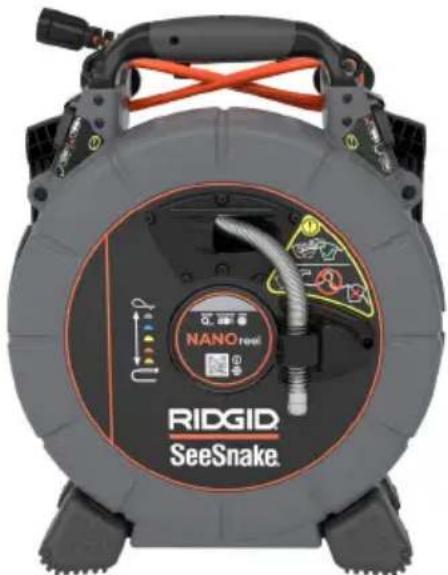
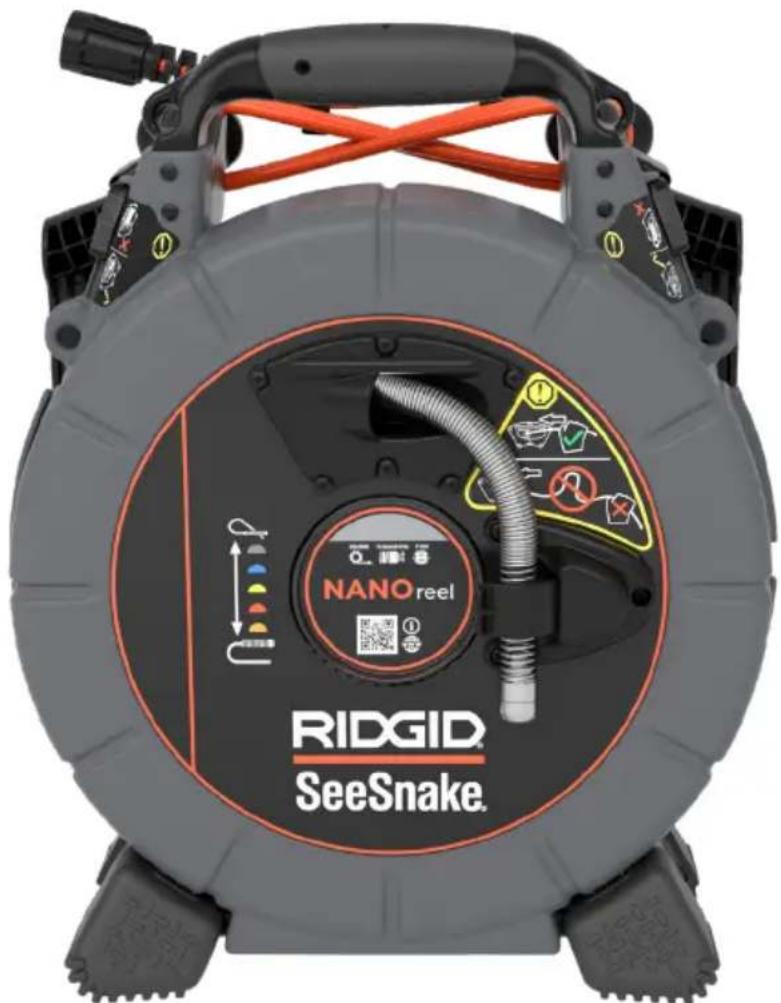
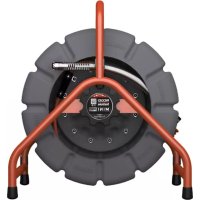
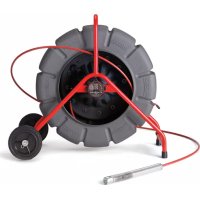
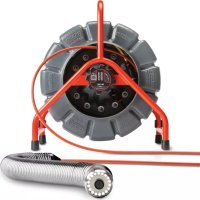
The NANOreel is a portable SeeSnake diagnostic camera reel that has the flexibility to view small pipes, tubes, voids, and conduits. It contains a unique, removable cable drum which makes cleaning and replacing push cables convenient.
The NANOreel uses an advanced push cable design and a proprietary small radius camera design which allows camera inspection through pipes with small diameters, P-traps, and very small radius bends which conventional inspection systems often cannot inspect. The included kickstand lets you set up the NANOreel in the optimal position for stability while pushing or retrieving the cable. Each NANOreel features a built-in sonde in the camera head that can be located with a utility locating receiver to find points of interest in the pipe.
The NANOreel is compatible with any SeeSnake monitor as well as the CSx Via mobile inspection device. When used with a SeeSnake monitor or the CSx Via, the operator can connect an external line transmitter and use a locator to line-trace the path of the push cable in the pipe. The NANOreel can also be used with the handheld RIDGID micro CA-350 inspection monitor with the docking handle accessory, sold separately.
| Specifications | |
| Weight 5.5 kg [12.1 lb] | |
| Dimensions: | |
| Length 337 mm [13.3 in] | |
| Depth 224 mm [8.8 in] | |
| Height 411 mm [16.2 in] | |
| Interior Drum Diameter | 305 mm [12 in] |
| Camera specifications: | |
| Length 17.5 mm [0.7 in] | |
| Diameter 15.5 [0.6 in] | |
| Sonde 512 Hz | |
| Lighting 6 LEDs | |
| Resolution: | |
| NTSC 656 × 492 pixels | |
| PAL 768 × 576 pixels | |
| Push cable: | |
| Length 26 m [85 ft] | |
| Diameter 7.2 mm [0.28 in] | |
| Bend radius 38 mm [1.5 in] | |
| Pipe capacity‡ | 1 in to 2.5 in[25 mm to 64 mm] |
| Operating environment: | |
| Temperature | 0°C to 46°C[32°F to 115°F] |
| Storage temperature | -20°C to 70°C[-4°F to 158°F] |
| Humidity 5% – 95% RH | |
| Camera depth rating § | Waterproof to 100 m [328.1 ft] |
| Specifications | |
| ‡ | The NANOreel will traverse a 1 in [25 mm] straight pipe, but its ability to go past 90-degree turns will depend on the material and construction of individual pipes and joints. Test the material you intend to inspect to ensure the camera can pass through turns successfully. Some fittings in small diameter joints will allow passage of the camera in only one direction. |
| § | Attached to connector during testing. |
Standard Equipment
- NANOreel
- Operator's Manual
• Ball Guides (two sizes)
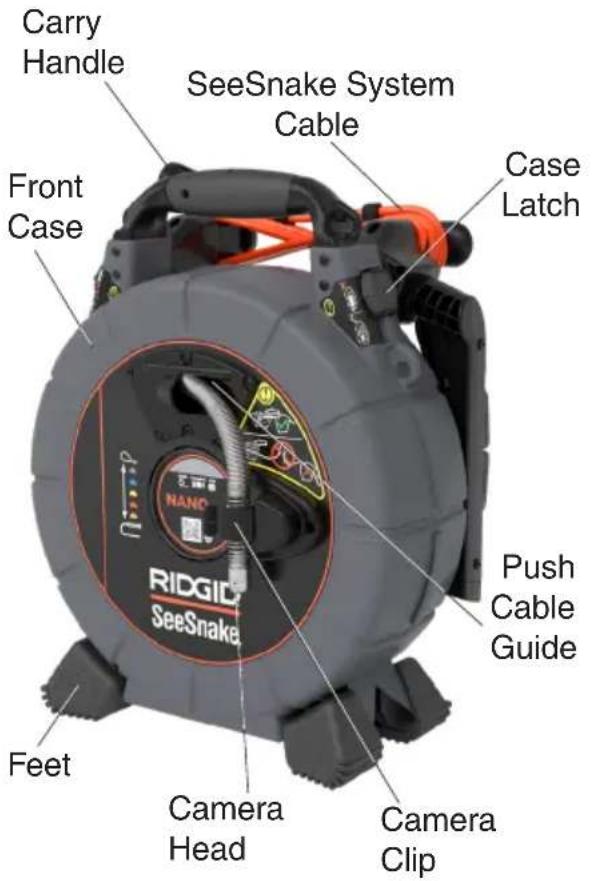
Components
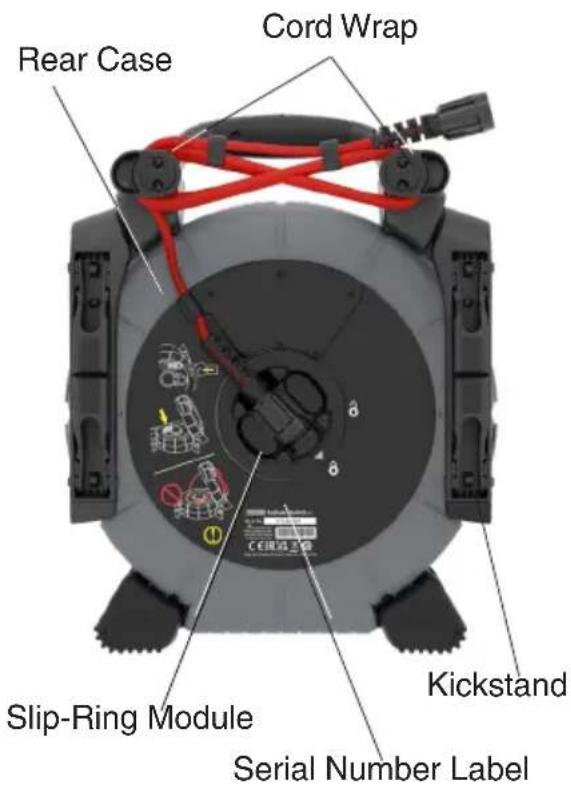
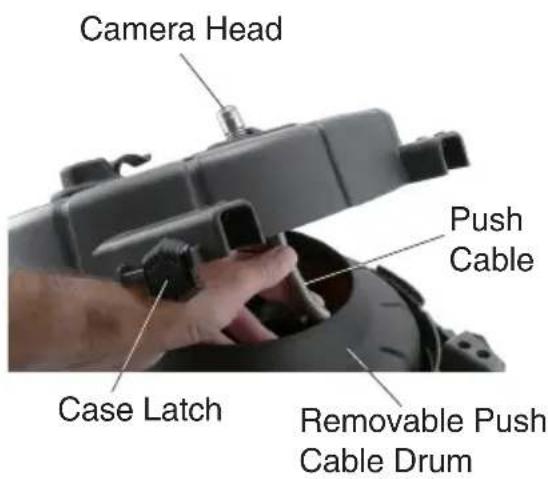
Specific Safety Information

WARNING


This section contains important safety information that is specific to the RIDGID See Snake NANOreel. Read these precautions carefully before using the equipment to reduce the risk of electrical shock, fire, and/or serious injury.
SAVE ALL WARNINGS AND INSTRUCTIONS FOR FUTURE REFERENCE!
NANOreel Safety
- Read and understand this manual, the digital reporting monitor's manual, and the instructions for any other equipment you are using before operating the equipment. Failure to follow all instructions may result in property damage and/or serious injury. Keep this manual with the equipment for future use.
- Operating the equipment while in water increases the risk of electrical shock. Do not operate the system if operator or equipment are standing in water.
- The equipment is not designed to provide high voltage protection and isolation. Do not use where a danger of high voltage contact is present.
- To prevent damage to the equipment and to decrease the risk of injury, do not expose the equipment to mechanical shocks. Exposure to mechanical shocks can damage equipment and increase the risk of serious injury.
• Always use appropriate personal protective equipment when handling and using equipment in drains. Wear
appropriate protective equipment such as latex or rubber gloves, goggles, face shields, and respirators when inspecting drains that might contain hazardous chemicals or bacteria. Always wear eye protection to protect against dirt and other foreign objects.
- Ensure the push cable is secured inside the drum to prevent the push cable from unwinding itself if the drum is removed from the case or if the case is left open with the drum inside. If the push cable unwinds, do not manually twist or force the push cable back into the non-rotating drum. The twisting and bending of the push cable that results from forcing it into the drum without the use of the outer case to rotate it will damage the push cable.
Operating Instructions
Placement
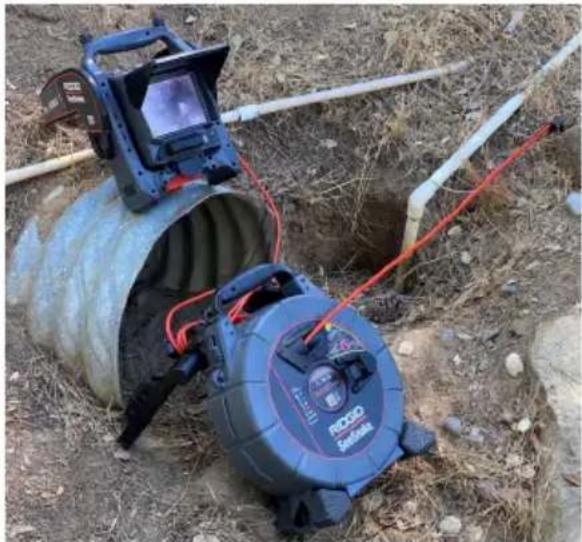
Set up your NANOreel near the pipe entrance so you can manipulate the push cable while viewing the display. Use the kickstand to position the NANOreel so that it does not tip during use.
natural_image
Two blue circular devices with red cables and a device labeled 'ROCCO Solaris' placed inside a pipe system in a dry, grassy outdoor environment (no visible text or symbols on the devices themselves).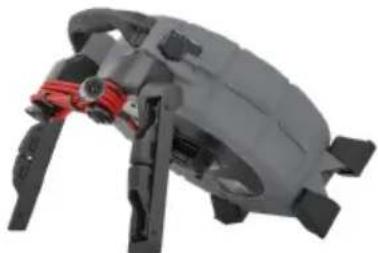
natural_image
Close-up of a gray mechanical device with red connectors and black straps (no visible text or symbols)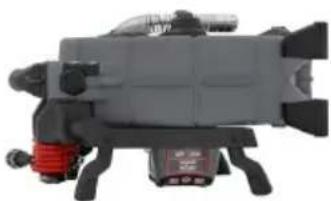
natural_image
Exterior view of a mechanical device with red and black components (no visible text or symbols)Opening the NANOreel Case
WARNING
Make sure the camera is completely inside the drum before unlatching and opening the NANOreel case. Do not open the NANOreel case while the camera is stored in the camera clip. If the camera is not in the drum, the push cable can unwind and cause damage or serious injury.
Open the NANOreel case to route the camera, replace the drum, rewind the push cable, and to maintain and clean the system.
-
Set the unit on a level surface and lay it on its back.
-
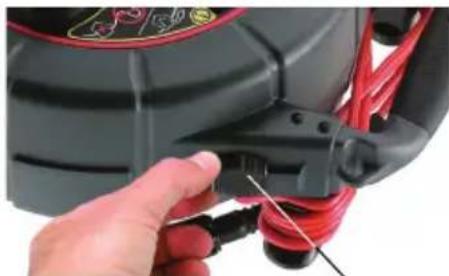
Unfasten the case latches on either side of the NANOreel.
natural_image
Close-up of a hand adjusting a red and black cable on a car tire (no visible text or symbols)Case Latch
-
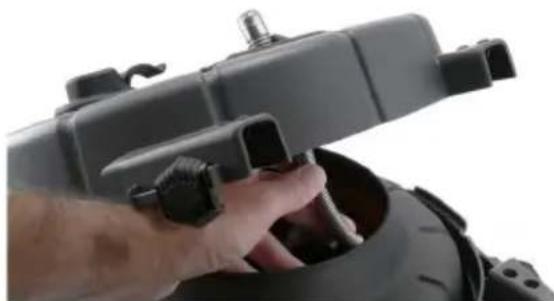
Carefully open the front case and locate the camera head in the push cable drum.
-
Route the camera head out through the push cable guide in the front of the case.
-
Secure the camera head in the clip.
-
Close and relatch the case.
natural_image
Close-up of a hand holding a black mechanical device with a circular base (no visible text or symbols)Installing the Drum
The NANOreel case gives you the ability to swap out the drum when the job requires a different push cable and camera combination. Either NANOreel drum can be installed in the NANOreel case, as well as the drums on the SeeSnake microDRAIN™ and microREEL™ systems.
To install the drum, follow these steps:
- Open the NANOreel case and remove the drum.
- Place the drum you want to use in the NANOreel case.
- Make sure the product name label faces up.
- Spin the drum to make sure it rotates freely.
- Close and lock the case.
Inspection Overview
To perform a pipe inspection, connect any See Snake monitor to the reel, power on the system, push the push cable through the pipe, and observe the display.
For advanced inspection options, such as capturing media, locating the sonde, tracing the push cable, and delivering reports, refer to the manual that comes with your monitor.
Connecting to the Monitor
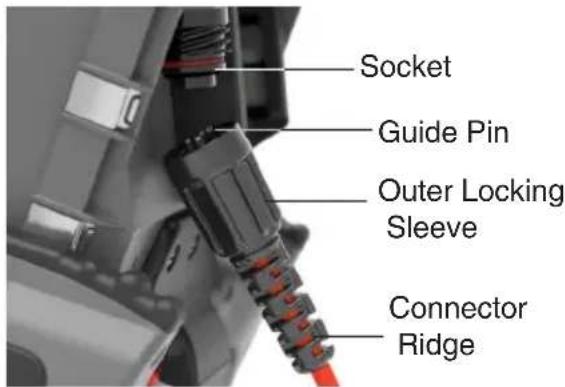
Connect the system cable to the monitor by aligning the connector guide pin with the socket and pushing the connector straight in.
NOTICE
Only twist the outer locking sleeve. Never bend or twist the connector.
Connecting to the CSx Via
The CSx Via Wi-Fi inspection device can be connected to the NANOreel through the slip-ring cavity. Remove the slip-ring assembly from the NANOreel and install the CSx Via into the slip-ring cavity.
For more instructions on installing the CSx Via, refer to the operator's manual.
Retrieving the Camera
Pull the push cable back out of the pipe with slow, steady force and feed small lengths back into the drum. Wipe the push cable with a paper towel or rag as you retrieve it.
NOTICE
Do not exert excessive force or pull at sharp angles. Feeding longer lengths or forcing the push cable may cause it to loop, kink, or break.
Pipe Guides
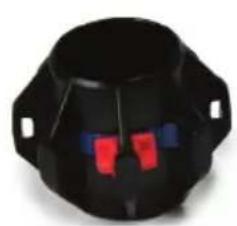
Pipe guides center the camera in the pipe, improve picture quality, and help keep the lens clear. Use pipe guides when possible to reduce wear and tear on the camera system.
natural_image
Black plastic mechanical component with red and blue internal markings (no visible text or symbols)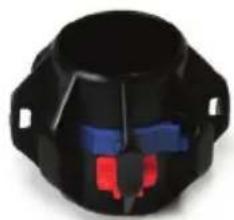
natural_image
Close-up of a black plastic mechanical component with blue and red internal features (no text or symbols visible)Removing the Slip Ring Assembly
- Disconnect the system cable from the reporting monitor and remove the monitor from the docking system.
- Unwrap the system cable from the cable wraps.
- Pop the frame cable anchor off the frame and unhook the system cable from the frame hook.
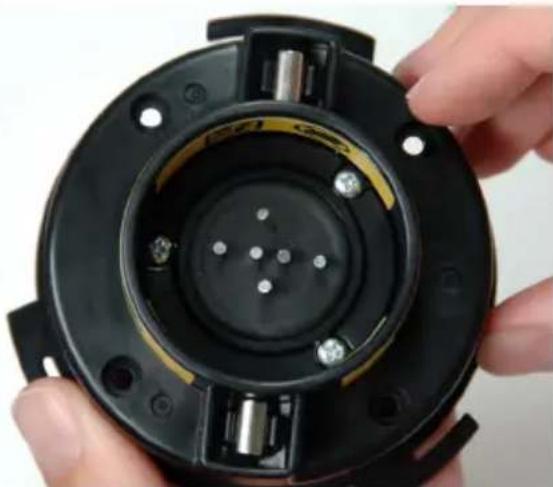
- Turn the slip-ring dial counter-clockwise to the unlocked position 6
- Pull straight out.
NOTICE
Do not touch the contact pins inside the slip-ring dial. Stressing the contact pins can cause them to break.
natural_image
Close-up of hands holding a black circular mechanical component with internal components and mounting holes (no visible text or symbols)Using Guide Tubes
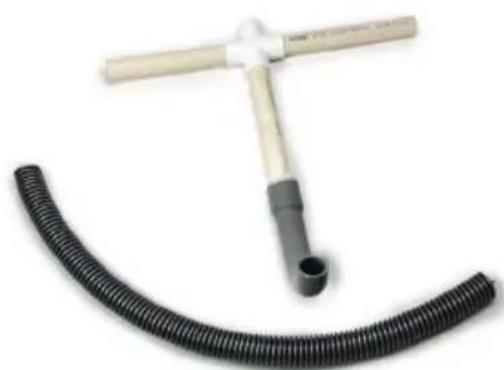
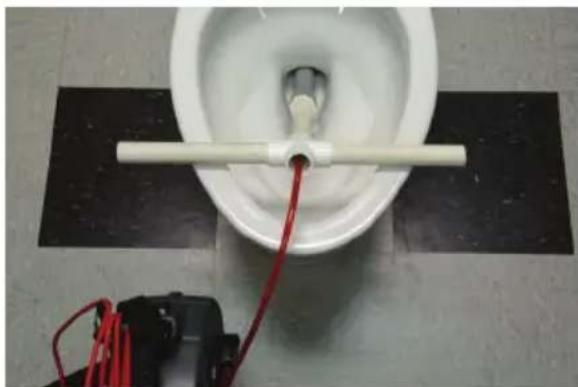
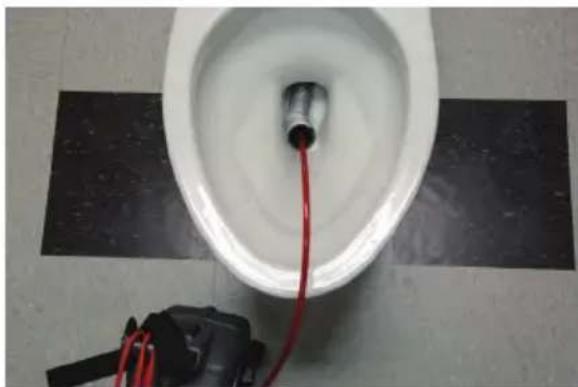
Use guide tubes, such as PVC or flexible tubing, to avoid marring or scratching porcelain surfaces.
natural_image
Close-up of a flexible hose with a wooden handle and black rubber hose, no visible text or symbols.Use PVC pipe and conduit to form a guide tube with a curved access tube at the bottom to guide the push cable past the porcelain without damage.
natural_image
Top-down view of a white ceramic sink with a red wire and a black clamp on a dark surface, no text or symbols visible.Use ribbed flexible conduit to fashion a flexible guide tube similar to the PVC guide tube.
natural_image
Top-down view of a white ceramic toilet with red tubing inserted into the sink, placed on a black tiled floor (no text or symbols visible)Maintenance and Support
Cleaning
Clean the micro CA-350 or monitor in accordance with its operator's manual. Before cleaning the NANOreel, remove the micro CA-350 from the display cradle. Do not allow the micro CA-350 or monitor to get wet during cleaning.
Clean your system with rags and a soft nylon brush. If desired, a mild detergent or disinfectant can be used. Do not use solvents or high pressure water to clean any part of the system.
Maintaining Components
Camera Head
Scratches on the camera have a minimal effect on its performance. Do not use scraping tools or sand the camera to remove scratches.
Push Cable
Run a rag over the push cable and visually inspect it for cuts and abrasions while pushing it back into the drum. Replace or repair the push cable if the outer jacket is cut or abraded.
Storage
The NANOreel must be stored in a dry, secure area between -20°C and 70°C [-4°F and 158°F]. Store your equipment in a locked area out of the reach of children and people unfamiliar with its purpose.
Support
For support and additional information about using your system, visit support. seesnake.com/nanoreel.
Service and Repair
Improper service or repair can cause the camera reel to be unsafe to operate.
Service and repair of the camera reel must be performed at a RIDGID Independent Authorized Service Center. To find your nearest service center or for any service or repair questions:
- Contact your local RIDGID distributor.
- Visit RIDGID.com.
- Contact Ridge Tool Company Technical Service Department at rttechservices@emerson.com or, in the USA and Canada, call 1-800-519-3456.
Disposal
Parts of your system contain valuable materials that can be recycled. There are companies that specialize in recycling that may be found locally. Dispose of the components in compliance with all applicable regulations. Contact your local waste management authority for more information.
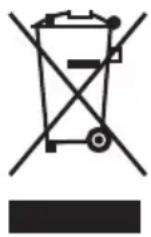
EC Countries: Do not dispose of electrical equipment with household waste!
According to the European Guideline 2012/19/EU for Waste Electrical and Electronic Equipment and its implementation into national legislation, electrical equipment that is no longer usable must be collected separately and disposed of in an environmentally correct manner.
Battery Disposal
EC Countries: Defective or used batteries must be recycled according to the guideline 2006/66/EEC.
SeeSnake®
NANO reel

AVERTISSEMENT!
natural_image
Top-down view of a RibGID Seesnake robotic device with visible branding and control buttons (no readable text beyond branding)Description
natural_image
Outdoor installation of a blue RDCO power pump and a black handheld device on a dirt path, surrounded by pipes and debris (no visible text or symbols)
natural_image
Close-up of a gray automotive helmet with red connectors and black straps (no visible text or symbols)
natural_image
Mechanical component with red and black parts, no visible text or symbolsnatural_image
Close-up of a hand using a tool to adjust or install a red cable or plug on a black industrial machine (no visible text or symbols)Verrou du boîtier
natural_image
Close-up of a hand holding a black mechanical device with a circular base (no visible text or symbols)natural_image
Black plastic mechanical component with red and blue highlights (no text or symbols visible)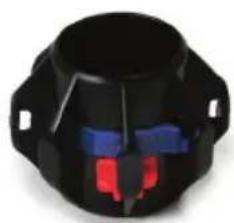
natural_image
Close-up of a black plastic electrical connector with blue and red internal components (no text or symbols visible)natural_image
Close-up of hands holding a black mechanical component with multiple holes and a central hub (no visible text or symbols)natural_image
Coiled black rubber hose with a wooden handle, isolated on white background (no text or symbols)natural_image
Top-down view of a white basin with a red cable and multimeter on a black surface, no visible text or symbols.natural_image
Top-down view of a white urinal sink with red tubing and a black electrical plug attached to the surface (no text or symbols visible)Maintenance et assistance
Nettoyage

¡ADVERTENCIA!
Ridge Tool UK (RIDGID)
44 Baker Street
London W1U 7AL, UK
natural_image
Ridgid SeeSnake water heater device with visible branding and wiring (no readable text beyond branding)Descripción
natural_image
Outdoor scene showing two blue water pumps with red cables and a person operating equipment near a large pipe (no visible text or symbols)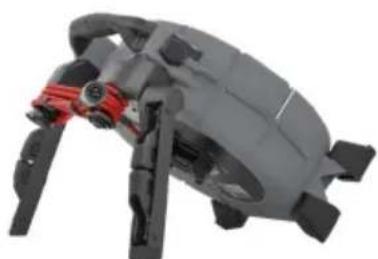
natural_image
Close-up of a mechanical device with red and gray components (no visible text or symbols)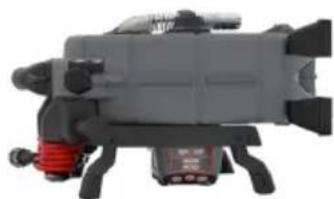
natural_image
Mechanical device with red spring and black housing (no visible text or symbols)natural_image
Close-up of a hand inserting cable into a black motor or electric scooter (no visible text or symbols)natural_image
Close-up of a hand holding a black mechanical device with a handle, no visible text or symbolsnatural_image
Close-up of a black plastic mechanical component with two red and blue square highlights (no text or symbols visible)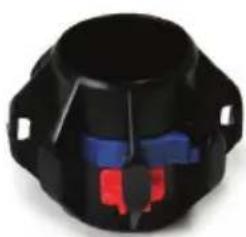
natural_image
Close-up of a black plastic electrical connector with blue and red internal components (no text or symbols visible)natural_image
Close-up of hands holding a black circular mechanical component with multiple pins and mounting holes (no visible text or symbols)natural_image
Close-up of a mechanical tool with a coiled black hose and wooden handle (no text or symbols visible)natural_image
Close-up of a white ceramic bowl with a red wire and black clamp on a dark surface, no visible text or symbols.natural_image
White circular sink with red cable inserted into a black rectangular base, no visible text or symbolsRidge Tool Europe NV (RIDGID)
Belgium
© 2023 Ridge Tool Company. All rights reserved.
Every effort has been made to ensure that the information in this manual is accurate.
Ridge Tool Company and its affiliates reserve the right to change the specifications of the hardware, software, or both as described in this manual without notice. Visit RIDGID.com for current updates and supplemental information pertaining to this product. Due to product development, the photos and other presentations specified in this manual may differ from the actual product.
RIDGID and the RIDGID logo are trademarks of Ridge Tool Company, registered in the USA and other countries. All other registered and unregistered trademarks and logos mentioned herein are the property of their respective owners. Mention of third-party products is for informational purposes only and constitutes neither an endorsement nor a recommendation.
Printed in USA 2023/03/03
999-995-423.10
744-034-0209-00-0B

- WARNING!
- Table of Contents
- Introduction ....3
- General Safety Rules....4
- SeeSnake NANOreel Overview....7
- Specific Safety Information....10
- Operating Instructions.... 11
- Maintenance and Support ....14
- Introduction
- Regulatory Statements
- UK Importer
- Safety Symbols
- DANGER
- WARNING
- CAUTION
- NOTICE
- General Safety Rules
- SAVE THESE INSTRUCTIONS!
- Work Area Safety
- Electrical Safety
- Personal Safety
- Equipment Use and Care
- Pre-Operation Inspection
- See Snake NANOreel Overview
- Description
- Standard Equipment
- Components
- Specific Safety Information
- SAVE ALL WARNINGS AND INSTRUCTIONS FOR FUTURE REFERENCE!
- NANOreel Safety
- Operating Instructions
- Placement
- Opening the NANOreel Case
- Installing the Drum
- Inspection Overview
- Connecting to the Monitor
- Connecting to the CSx Via
- Retrieving the Camera
- Pipe Guides
- Removing the Slip Ring Assembly
- Using Guide Tubes
- Maintenance and Support
- Cleaning
- Maintaining Components
- Camera Head
- Push Cable
- Storage
- Support
- Service and Repair
- Disposal
- Battery Disposal
- SeeSnake®
- NANO reel
- AVERTISSEMENT!
- Maintenance et assistance
- Nettoyage
- ¡ADVERTENCIA!
- Descripción
- Ridge Tool Europe NV (RIDGID)
Brand : RIDGID
Model : SeeSnake nanoReel
Category : Inspection camera