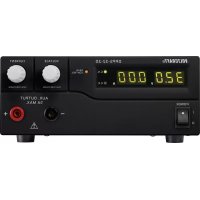
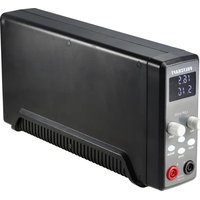
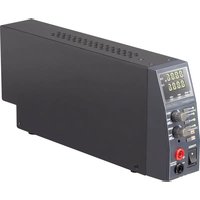
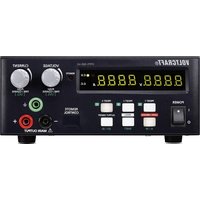
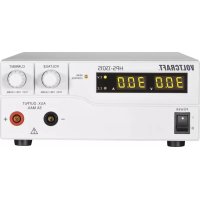
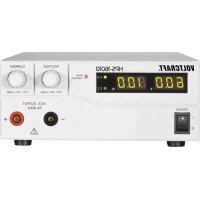
DPPS3220 - Laboratory power supply VOLTCRAFT - Free user manual and instructions
Find the device manual for free DPPS3220 VOLTCRAFT in PDF.


| Product Type | Programmable Laboratory Power Supply |
| Brand | Voltcraft |
| Model | DPPS3220 |
| Dimensions (W x H x D) | 200 x 90 x 215 mm |
| Weight | 2.6 kg |
| Mains Power Supply | 200 - 240 V~, 50/60 Hz |
| Output Voltage Range | 1 - 32 V DC |
| Output Current Range | 0 - 20 A |
| Maximum Output Power | 640 W |
| Display | LED screen with C.V. (constant voltage) and C.C. (constant current) indicators |
| Voltage Regulation (Load Variation 10-100%) | 50 mV |
| Current Regulation (Load Variation 10-90%) | 100 mA |
| Display Accuracy | ±(0.2% + 0.3) V/A |
| Residual Ripple (rms) | 5 mV, 30 mA |
| Operating Modes | Normal, Preset (3 memories), Remote Ctrl, Set |
| Protection Functions | Overvoltage protection (OVP), overtemperature protection (OTP), overload protection (OLP), short-circuit |
| Remote Control | Via external voltage 0-5 V or 5 kΩ potentiometer, on/off contact |
| PC Interface | USB with supplied software (Windows XP to 8) |
| Sensing Function (Sense) | Yes, voltage drop compensation (compatible models) |
| Outputs | Front: AUX OUTPUT 5A max (4 mm sockets), Rear: MAIN OUTPUT (screw terminals) |
| Mains Fuse | T3.15AL250V (5 x 20 mm) for 640W model |
| Operating Temperature | 0 to +40 °C |
| Operating Humidity | 10 - 80 % (non-condensing) |
| Protection Class | 1 (with earth ground) |
| Maintenance and Cleaning | Clean with a dry, antistatic cloth; replace mains fuse with an identical type |
| Supplied Accessories | Mains cable, USB cable, remote control connector, software CD, instruction manual |
Frequently Asked Questions - DPPS3220 VOLTCRAFT
User questions about DPPS3220 VOLTCRAFT
0 question about this device. Answer the ones you know or ask your own.
Ask a new question about this device
Download the instructions for your Laboratory power supply in PDF format for free! Find your manual DPPS3220 - VOLTCRAFT and take your electronic device back in hand. On this page are published all the documents necessary for the use of your device. DPPS3220 by VOLTCRAFT.
USER MANUAL DPPS3220 VOLTCRAFT
Laboratory power supply

OPERATING INSTRUCTIONS
Page 39-74
These Operating Instructions accompany this product. They contain important information on setting up and using the device. You should refer to these instructions, even if you are buying this product for someone else.
Please retain these Operating Instructions for future use! A list of the contents can be found in the Table of contents, with the corresponding page number, on page 39.
www.business.conrad.at
- Operating elements 46
7.Start-up 48
a) Connecting the power cable 48
b) Unit installation. 48
c) General informations 48
- Normal Operation 50
a) Set current limitation 50
b) Set output voltage 51
c) Connecting a load 51
- Memory Slot Operation "Preset" and "Set". 53
a)Assigning memory slots with "Set" 54
b) Reset to memory slots to default settings 54
- Remote Control Operation "Remote Ctrl" 55
a) Preparation of the remote control connection. 55
b) Control through external voltage source 56
c) Control through a controllable resistance (poti) 57
d) Remote-control output (on/off) 58
- Sense function (1086562) 59
-
Software installation 60
-
Control with the PC software 60
a) Operating elements of the software and the basic operation. 61
b) Internal preset memory 63
c) Data log. 64
d) Setting 65
- Protective measures 66
a) Over-voltage protection. 66
b) Overheating protection. 66
c) Overload protection. 67
15.Maintenance and cleaning 67
a) Exchanging the fuse 67
16.Troubleshooting. 68
17. Disposal 69
18. Technical data 70
19.Added functions 73
a) Zeroing the unit manually. 73
b) Resetting output presets (P1/P2/P3) to factory default values 74
1. INTRODUCTION
Dear Customer,
In purchasing this Voltcraft® product, you have made a very good decision for which we would like to thank you.
Voltcraft® - In the field of measuring, charging and network technology, this name stands for high-quality products which perform superbly and which are created by experts whose concern is continuous innovation.
From the ambitious hobby electronics enthusiast to the professional user, products from the Voltcraft® brand family provide the optimum solution even for the most demanding tasks. And the remarkable feature is: we offer you the mature technology and reliable quality of our Voltcraft® products at an almost unbeatable price-performance ratio. In this way, we aim to establish a long, fruitful and successful co-operation with our customers.
We wish you a great deal of enjoyment with your new Voltcraft® product!
All names of companies and products are trademarks of the respective owner. All rights reserved.
If there are any technical questions, please contact:
International: www.conrad.com/contact United Kingdom: www.conrad-electronic.co.uk/contact
2. INTENDED USE
The laboratory power unit serves as a potential-free DC voltage source to operate low-voltage consumers. The adjustable output can be tapped with up to 5 A at the front and up to the full nominal current at the back. The front output is limited to 5 A and protected against overload. When switching the outputs of several power supplies in series, voltages of >75V / DC , which are dangerous to touch, may be generated. This is why insulated lines/measuring cables must be used for safety reasons for voltages above this. Connection on the front is performed with 4 mm safety sockets, on the back with high-current socket screw connectors. The outputs (front and back) are connected to each other.

The connection cables used must be large enough. Where the conductor section is too small, overheating and fire may result.
The output data of the laboratory measuring devices is as follows:
| Type Output voltage Output current | (Total, MAIN + AUX) |
| DPPS-16-30 1 – 16 V/DC 0 – 30 | A |
| DPPS-32-15 1 – 32 V/DC 0 – 15 | A |
| DPPS-60-8 1 – 60 V/DC 0 – 8 A | A |
| DPPS-16-40 1 – 16 V/DC 0 – 40 | A |
| DPPS-32-20 1 – 32 V/DC 0 – 20 | A |
| DPPS-60-10 1 – 60 V/DC 0 – 10 | A |
| DPPS-16-60 1 – 16 V/DC 0 – 60 | A |
| DPPS-32-30 1 – 32 V/DC 0 – 30 | A |
| DPPS-60-15 1 – 60 V/DC 0 – 15 | A |
Current and voltage can be set continually through digital rotary controls using coarse and fine settings in order to allow fast and precise value settings. The values are displayed on the structured LC display. A power limit for constant power operation can be pre-set without a shorting bar.
The power unit can be remote-controlled. An external voltage (0 - 5 V/DC) or external potentiometer (5 kOhm) can be used to set the output voltage and output current. The DC output is turned on and off via the a switching contact.
Three freely programmable memory slots can be assigned to different fixed voltages and current limitations. The selection switch is located at the back of the device.
With the software included and the USB connection, the power supply can be controlled by a personal computer for running cyclical operations. Up to 20 programmable sets of voltage and current at different time durations can be programmed into the operation and the cyclical operations can be repeated up to 999 times.
The device is overload- and short-circuit-proof and contains a safety temperature cut-off. The laboratory power unit is designed in compliance with protection class 1. It is only approved for connection to shockproof sockets with protective grounding and an alternating current of 230V / AC commonly used in households.
Unauthorised conversion and/or modification of the device are inadmissible because of safety and approval reasons (CE). Any usage other than described above is not permitted and can damage the product and lead to associated risks such as short-circuit, fire, electric shock, etc. Please read the operating instructions thoroughly and keep them for further reference.

Observe all safety instructions and information within this operating manual.
3. DELIVERY CONTENT
Laboratory power supply
- Remote connection socket
- Power cable with grounding contact
USB cable
CD (software)
- Operating instructions
Up-to-date Operating Instructions:
- Open www.conrad.com/downloads in a browser or scan the displayed QR code.
- Select document type and language and enter the item number into the search field. After submitting the query you can download displayed records.

4. SYMBOL EXPLANATION

An exclamation mark in a triangle indicates important instructions in this operating manual which absolutely have to be observed.
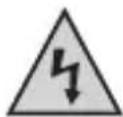
The triangle containing a lightning symbol warns of danger of an electric shock or of the impairment of the electrical safety of the device.

The symbol can be found when you are to be given tips and information on operation.

Only to be used in dry indoor areas.

This product has been CE-tested and meets the required European guidelines.
Grounding wire connection; this screw may not be loosened.
5. SAFETY INSTRUCTIONS
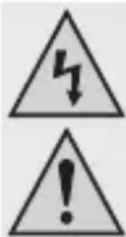
Read the operating instructions carefully and especially observe the safety information. If you do not follow the safety instructions and information on proper handling in this manual, we assume no liability for any resulting personal injury or damage to property. Such cases will invalidate the warranty/guarantee.
a) Persons / Product
- The device is not a toy. Keep it out of the reach of children and pets.
- Do not leave packaging material lying around carelessly. These may become dangerous playing material for children.
- Protect the product from extreme temperatures, direct sunlight, strong jolts, high humidity, moisture, flammable gases, vapours and solvents.
- Do not place the product under any mechanical stress.
- If it is no longer possible to operate the product safely, take it out of operation and protect it from any accidental use. Safe operation can no longer be guaranteed if the product:
-is visibly damaged,
-is no longer working properly,
-has been stored for extended periods in poor ambient conditions or
-has been subjected to any serious transport-related stresses.
- Please handle the product carefully. Jolts, impacts or a fall even from a low height can damage the product.
- Also observe the safety and operating instructions of any other devices which are connected to the product.
- Products operated using the mains voltage must be kept out of the reach of children. For this reason, be particularly careful when using the product in the presence of children. They may try to stick objects into the device through openings in the housing. This poses a risk of death by electric shock.
- Never pour liquids over electrical appliances and never leave objects filled with liquids (e.g. vases) on it or in the vicinity. There is a high risk of fire or life-threatening electric shock.
- Operate the product in dry interior spaces only. It must not get damp or wet. Otherwise there is a risk of a life-threatening electric shock!
- In schools, training facilities, hobby or self-service workshops, handling of electrical devices must be monitored by trained personnel.
- When operating on commercial premises, the relevant accident prevention regulations of workers' compensation boards for electrical equipment must be observed.
-
Live parts may become exposed when opening covers or removing parts. You must therefore disconnect the product from all power sources before performing any maintenance or repairs. Capacitors in the device can still carry a charge even if the device has been disconnected from all voltage sources.
-
Always lay the cables so that nobody can trip over or become entangled in them. This poses a risk of injury.
- When working with power supplies or chargers, do not wear any metallic or conductive chains, bracelets, rings etc. Never connect the power supply or charger with humans or animals.
- Check the product for damage(s) each time before use. If you discover any damages, do not use the product. Disconnect the power supply and unplug the mains adapter from the wall outlet. Then bring the product to a specialised workshop.
- Use only a proper mains socket (230V~/50Hz) connected to the public power supply.
- The mains outlet must be located near to the device and be easily accessible.
- Do not touch the mains cable if it is damaged. First, power down the respective mains socket (e.g. via the respective circuit breaker) and then carefully pull the mains plug from the mains socket. Never use the product if the mains cable is damaged.
- A damaged mains cable may only be replaced by the manufacturer, a workshop commissioned by the manufacturer or a similarly qualified person, so as to prevent any danger.
- Never plug in or unplug the mains plug when your hands are wet.
- Do not pull the mains adapter out of the wall outlet by its cable!
- The plug must be pulled out of the socket under the following conditions:
- before cleaning the product
- during a thunder storm
- if the product is not being used over a long period.
- Make sure that the product is provided with adequate ventilation during operation. Do not cover the ventilation openings with magazines, blankets, curtains or similar. Keep a minimum distance of approx. 15 cm from other objects.
- When setting up the product, make sure that the cable is not pinched, kinked or damaged by sharp edges.
- Make sure there are no devices with strong electric or magnetic fields such as transformers, motors, cordless telephones and radio-controlled devices in the vicinity of the product as these can influence the product.
- Do not operate the product in places or rooms with unfavourable ambient conditions. This can damage the sensitive electronics found inside the product and can potentially pose life-threatening risks. Poor ambient conditions are:
-High humidity (>80%) relative, condensation)
-Humidity, dust, flammable gases, solvent vapours, benzine
-High ambient temperatures (> approx. +50^)
-
Electromagnetic fields (motors, transformers, audio systems for model building etc.) or electrostatic fields
-
The product should not be used immediately after it has been brought from an area of cold temperature to an area of warm temperature. Condensed water might destroy the product. Wait until the product adapts to the new ambient temperature before use.
b) Miscellaneous
- Consult an expert when in doubt about operation, safety or connection of the device.
- Maintenance, modifications and repairs are to be performed exclusively by an expert or at a qualified shop.
- If you are not sure about the correct connection or use, or if questions arise which are not covered by these operating instructions, please do not hesitate to contact our technical support or another qualified specialist.
6. OPERATING ELEMENTS
- LED panel meter display with C.V. (Constant voltage) and C.C (Constant current) indicator
- Control indicator REAR CONTROL (Control over rear side)
- Control knob VOLTAGE (Output voltage)
- Control knob CURRENT (Output current)
- On/Off switch POWER (on/off)
- Terminals AUX. OUTPUT 5A MAX. (Auxiliary output terminals)
- Terminals MAIN OUTPUT (Output terminals)
- Selection switch MODE (Mode selection)
- Selection switch RECALL (Recall)
- Remote control terminal Remote Control
- Cooling fan protective grille
- Power input and fuse
- USB port
- Terminals SENSE (Sensor terminals)
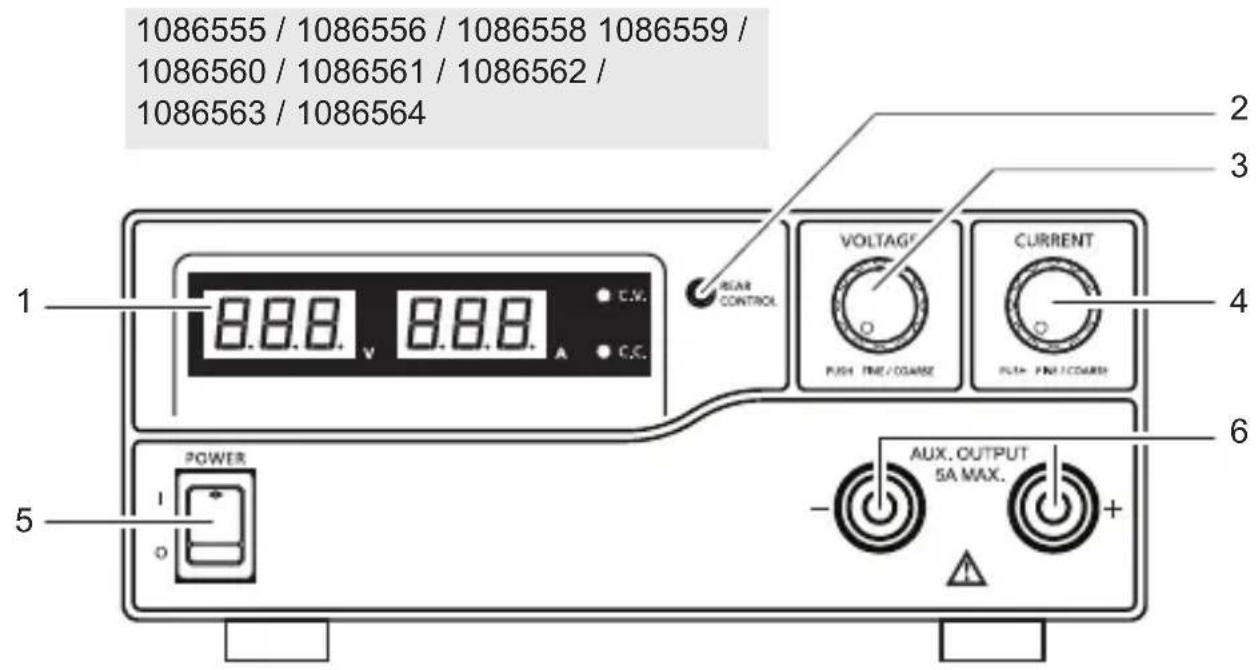
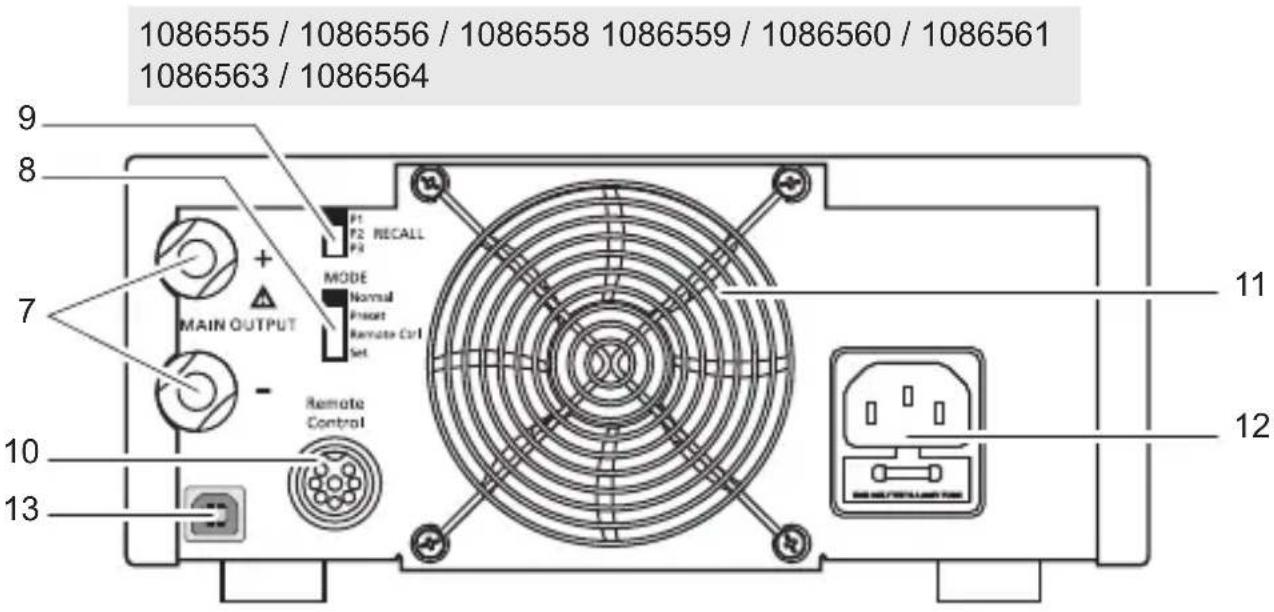
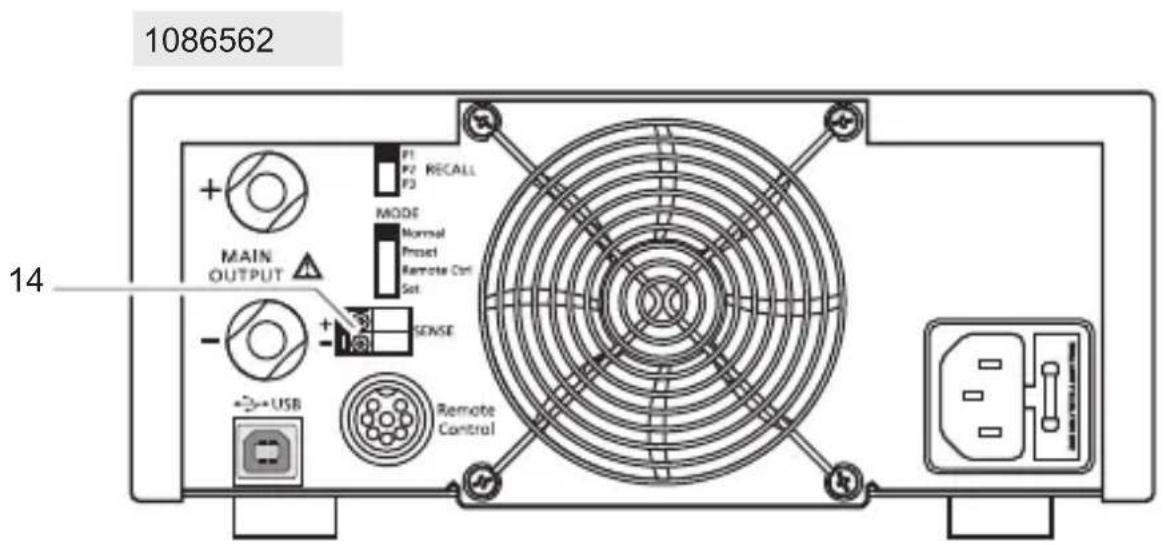
7. START-UP

The laboratory power unit is not a charger. To charge batteries, use suitable chargers with a charging current cut-off.
During a longer period of operation under nominal load, the surface of the housing will heat up. Attention! Risk of burns! Therefore, make sure that there is adequate ventilation of the power unit and never operate it partly or fully covered to avoid any damage.
When connecting a consumer, ensure that it is not connected when switched on.
A switched-on consumer can result in sparks when connecting to the output terminals of the power unit, which in turn can damage the sockets or the connected cables and/or their clamps.
If your power unit is not required, switch it off and disconnect it from the mains.
The displays remain on for a few seconds after it is switched off to unload the internal capacitors and to store the last parameters that were set.
Always ensure a sufficient conductor cross-section for the DC connection lines, since overload may cause fire in the line.
a) Connecting the power cable
- Connect the supplied grounding mains cable to the power input (12) on the power unit. Ensure a tight fit.
- Connect the power cable to a shockproof mains socket with protective grounding. The maximum length of the power cable to the outlet must not exceed 3m
b) Unit installation
Place the laboratory power unit on a stable, level and robust surface. Make sure that ventilation slots in the casing are not covered up.
c) General informations
The laboratory power unit is micro-processor-controlled and is operated through two digital controls (incremental encoders without end position) with sensor function. This enables fine and coarse control via a control.
After the device switches on, a system check is performed. The test status is displayed on the two displays. The displays are in the following order:
| - EU 15 |
| 888.888. |
| TE 5E |
| OUP CHE |
| OLP CHE |
| OEP CHE |
| FAN CHE |
| OP OFF |
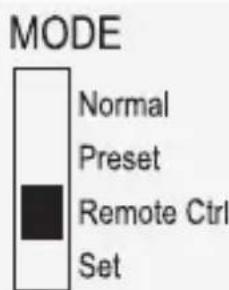
The power unit enables operation in 4 modes. These modes are selected by the selection switch MODE (8) slider on the back. The following modes are possible:
| Normal Normal operation. Voltage and current are adjusted on the front. | |
| Preset Memory slot operation Three fixed voltages can be stored in the device and directly selected through this Preset function. The memory slot is selected with the selection switch RECALL (9). The front controls are inactive. | |
| Remote Ctrl Remote control operation. The power unit can be remote-controlled via an external voltage or external potentiometer. The remote settings can be performed for voltage and current. The front controls are inactive. | |
| Set Settings operation. The three preset slots can be programmed freely. Select the memory slot with the selection switch RECALL (9) and make the settings using the control knobs (3, 4). |
The separate operating modes are described in more detail in the following.
8. NORMAL OPERATION
In normal operation, the power unit can be operated through the front controls. Ensure that the selection switch MODE is in the Normal position. Remove any connected consumers from output (6 or 7).
Switch on the power unit at the On/Off switch POWER (5). The display (1) lights up, and after a short self test, the current and voltage displays appear.

MODE
Normal
Preset
Remote Ctrl
Set
Set the current limitation before setting any voltages. If the current value is too high, your connection lines can be damaged; if it is too low (<1 A), the output voltage can be limited.
a) Set current limitation
Limiting the output current is a protection mechanism to protect the consumer or connection cables. Current limitation can be pre-set at the output without any short circuit. The power unit then supplies the maximum current set.
- Remove any connected consumers from the power unit.
- Switch on the power unit at the On/Off switch POWER (5). The display (1) lights up, and after a short self test, the current and voltage displays appear.
- Set the current limitation at the control knob CURRENT (4) according to your application.
- Turn the control and a current limitation value appears.

Where no setting is made within 2 seconds, the display switches back to the current current display.
- Turn the control to the left or right to set the current limitation. After switching on, the fine settings area (0.1 A) is always active. This is indicated by a slightly lighter digit. Press the rotary control slightly from the front. The decimal position (1.0 or 0.1) of the setting range changes each time you press. Turning changes the value.
- Settings can be made coarsely (whole numbers) or fine (by tenths).
- Where the desired current value was set, the display switches back to normal display after 2 seconds.

If the preset current is reached in normal operation, the power unit switches to current limitation mode and reduces the voltage value. This operation is signalled with the red status display C.C. (1).
b) Set output voltage
The output voltage can be set at the control knob VOLTAGE (3) control. The coarse and fine control is performed in the same way as for setting the current limitation.

With the large control range, it is possible that the voltage setting takes approx. 1-2 seconds to switch from a high to a low voltage value.

In normal mode the device operates in constant voltage mode. This means that the power unit emits a constant, preset output voltage. This operation is indicated with a green status LED C.V. (1).
c) Connecting a load

When connecting a consumer, make sure that it is connected to the power unit when switched off. The maximum current consumption of the device to be connected must not exceed the capacity indicated in the technical specifications.
For serial connection of the outputs with several power supplies, the resulting voltages can be fatal on contact ( >75V / DC ). As of this voltage, you may only use insulated accessories.
Avoid the use of non-insulated metallic cables and contacts. All these exposed areas must be covered with suitable, flame-resistant insulation materials or by other measures and be protected from direct contact and short circuits.
Ensure a sufficient cable diameter for the intended current.
The power unit has two outputs. These outputs always have the same output voltage. The difference, however, is in the current carrying capacity.

Max. 5 A shall be tapped at the terminals AUX. OUTPUT 5A MAX. (6).
A PTC overcurrent protection protects those terminals against overloading and interrupts the current supply when triggered ( >5~A ). To reset the unit, immediately turn it off and let it cool down to room temperature before using it again.
The terminals MAIN OUTPUT (screw sockets) (7) on the back are indicated for full nominal current. From an output current of 5 A, the screw clamp function of the rear sockets is recommended to avoid overheating of the plug sockets.
- Remove any connected consumers from the output.
- Switch on the power unit at the On/Off switch POWER (5). The operating display (1) lights up and the current and voltage display appears on the display.
- Set the parameters according to your specifications as described in the chapter "Start-Up".
- Check once more that the correct output voltage is set.
- Connect the plus pole (+) of the consumer with the red socket "+" and the minus pole (-) of the consumer with the black socket "-" of the respective output (front = AUX. OUTPUT 5A MAX. (6), rear = MAIN OUTPUT (7)).
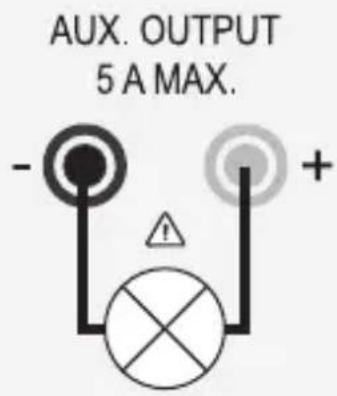
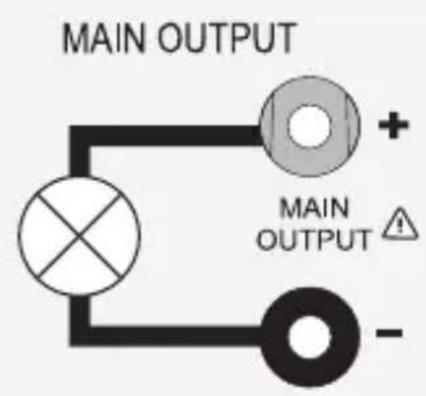
Now you can switch on the connected consumer.

The current consumption of the connected consumer is displayed in Ampere (A) in the display (1).
9. MEMORY SLOT OPERATION “PRESET” AND “SET”
Three fixed voltages, including current settings, can be stored in the device with the Set function and directly selected through the Preset function.
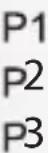
Ex works, all three memory slots (P1, P2, P3) are preset.
They are assigned as follows:
| Memory Type | P1 P2 P3 | |
| Voltage Current Voltage | Current Voltage Current | |
| DPPS-16-30 5 V Maximum | 13.8 V Maximum | 15 V Maximum |
| DPPS-32-15 5 V Maximum | 13.8 V Maximum | 25 V Maximum |
| DPPS-60-8 5 V Maximum | 13.8 V Maximum | 55 V Maximum |
| DPPS-16-40 5 V Maximum | 13.8 V Maximum | 15 V Maximum |
| DPPS-32-20 5 V Maximum | 13.8 V Maximum | 25 V Maximum |
| DPPS-60-10 5 V Maximum | 13.8 V Maximum | 55 V Maximum |
| DPPS-16-60 5 V Maximum | 13.8 V Maximum | 15 V Maximum |
| DPPS-32-30 5 V Maximum | 13.8 V Maximum | 25 V Maximum |
| DPPS-60-15 5 V Maximum | 13.8 V Maximum | 55 V Maximum |

Make sure that no consumers are connected.

The memory can also be set via the software provided, check the chapter "Control with the PC software".
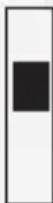
- Activate the Preset function through the selection switch MODE (8) on the rear.
- Put the switch in the Preset position. The front LED indicator REAR CONTROL (2) lights up. The front control knobs are now inactive.
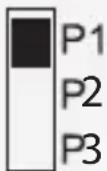
- Select the respective memory slot P1, P2 or P3 on the rear selection switch RECALL (9). The respective output voltage is indicated on the display (1).
- Now you can connect and switch on the consumer.
Normal
Preset
Remote Ctrl
Set
MODE

RECALL
- For deactivating the fixed voltage function, slide the selection switch MODE (8) back to the Normal position. The control indicator REAR CONTROL (2) goes out. The device switches back to normal power unit operation (always remove DC consumers before!).
a) Assigning memory slots with "Set"
All three memory slots can be assigned user-specific values for output voltage and current limitation.

Make sure that no consumers are connected.
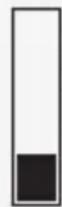
- Activate the Set function through the MODE (8) slider on the rear. Put the switch in the Set position. The front control indicator REAR CONTROL (2) lights up. Select the respective memory slot P1, P2 or P3 on the selection switch RECALL (9). The respective values for current and voltage are indicated on the display (1).
- The front control knobs (3 and 4) can be used to set the desired output voltage and current limitation.
- If required, repeat these steps with the other memory slots.
- When all parameters are set, slide the selection switch MODE (8) back to the Preset position for fixed voltage operation or to the Normal position for standard operation.
Normal
Presel
Remote Ctrl
Set
RECALL
MODE
b) Reset to memory slots to default settings
- Switch off the power unit.
- Press the two rotary controls on the front at the same time and keep them pressed.
- Switch on the power unit. When the displays light up, let go of both rotary controls. The default settings for the parameters are active again.
10. REMOTE CONTROL OPERATION “REMOTE CTRL”
Through the built-in remote control terminal Remote control (10), the voltage and current can be set through an external voltage source or an external adjustable resistance (short "poti"). The remote control is connected on the remote control terminal Remote control (10). There is a remote socket included for connection.

In remote-controlled operation, the current control path must also be connected, since the output otherwise switches to the current limitation mode "C.C." and limits the output voltage.
a) Preparation of the remote control connection
-
Turn the lateral screw of the supplied socket and remove the front, black contact socket turning it slightly.
-
Draw five connecting cables with a conductor cross-section of at least 0.34mm^2 through the metal sleeve from the rear. Carefully solder these cables to the soldering lugs nos.1, 2, 3, 4 and 5 of the black contact socket. Ensure that no short circuits are created.

The numbers of the soldering lugs are indicated on the black insulator.
Mark the loose ends of the cables with the corresponding contact numbers (1-5) to avoid confusion. Insert the black contact jack in the reverse order into the metal sleeve and screw them tight.
The contacts are assigned as follows:
Contact 1 Internal control voltage + 5 V/DC (<50 mA)
Contact 2 Voltage setting
Contact 3 Current setting
Contact 4 Reference ground ("Ground")
Contact 5 Output on / off
Contact 6-8 Not assigned

b) Control through external voltage source
The power unit can be remote-controlled with an external voltage source from 0 to 5 V/DC throughout the range for voltage and current.
Proceed as follows for connection:
Connect the connecting cables of the remote sockets as illustrated:
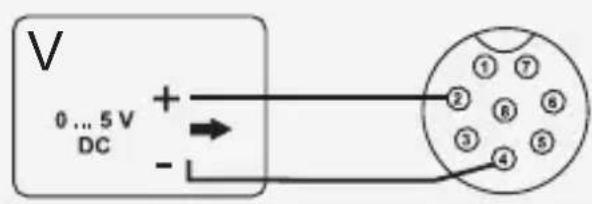

Voltage setting "V"
- Connection 2 to the plus pole (+) of the external control voltage.
- Connection 4 to the minus pole (-) of the external control voltage.
Current setting "I":
- Connection 3 to the plus pole (+) of the external control voltage.
- Connection 4 to the minus pole (-) of the external control voltage

The voltage on the remote control connection must not exceed 5V The connections must not be shorted.
- Switch off the power unit and then connect the remote socket to the remote control terminal Remote Control. Screw on the external fastening ring.
- Turn the voltage of the external voltage source to 0V
- Switch on the power unit.
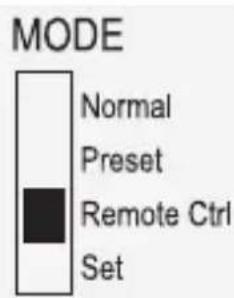
- Put the selection switch MODE (8) on the rear into the Remote Ctrl position. The control indicator REAR CONTROL (2) is lit.
- The desired output value can now be set through the external voltage source. Control the complete adjustment area for correct function. The output voltage can be monitored in the display.

Short-circuit the rear terminals MAIN OUTPUT (7) with a sufficiently thick cable for checking the current control (at least 8mm^2 ). Check the entire setting for proper operation.
If this remote control function is no longer required, put the selection switch MODE (8) to the Normal position.
c) Control through a controllable resistance (poti)
The power unit can be remote-controlled with an external poti (5 Kohm) throughout the range for voltage and current.
Proceed as follows for connection:
Connect the connecting cables of the remote sockets as illustrated.
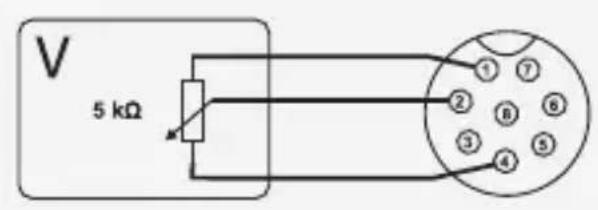
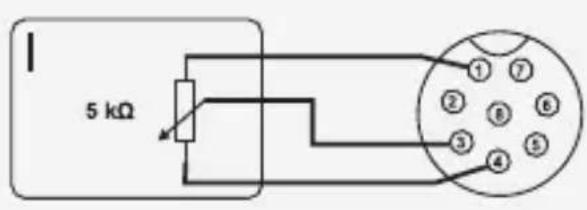
Voltage setting "V"
- Connection 1 at one end of the resistance.
- Connection 2 at the centre sliding contact of the resistance.
- Connection 4 at the second end of the resistance.
Current setting "I":
- Connection 1 at one end of the resistance.
- Connection 3 at the centre sliding contact of the resistance.
- Connection 4 at the second end of the resistance.

Connections 1 and 4 must not be short-circuited.
- Switch off the power unit and then connect the remote socket to the remote control terminal Remote Control. Screw on the external fastening ring.
- Switch on the power unit.
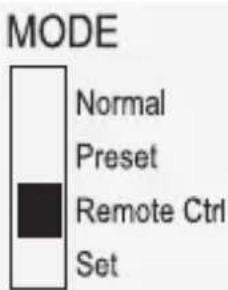
- Put the selection switch MODE (8) on the rear into the Remote Ctrl position. The control indicator REAR CONTROL (2) is lit.
- The desired output values can now be set through the external poti. Control the complete adjustment area for correct function. The output voltage can be monitored in the display.

Short-circuit the rear terminals MAIN OUTPUT (7) with a sufficiently thick cable for checking the current control (at least 8mm^2 ). Check the entire setting for proper operation.
If this remote control function is no longer required, put the selection switch MODE (8) to the Normal position.
d) Remote-control output (on/off)
The DC output can be turned on and off via the a switching contact. Proceed as follows for connection:
- Connect the connecting cables of the remote sockets as illustrated.
- Contact connections 4 and 5 with an isolated switching contact.
- When the output is turned off, the status displays "C.V." and "C.C." (1) will flash. The display will then show the current settings of the output voltage and the output current (1).
- When the output is turned off, you can set the output values with the control knobs for voltage (VOLTAGE) (3) and current limiting (CURRENT) (4).
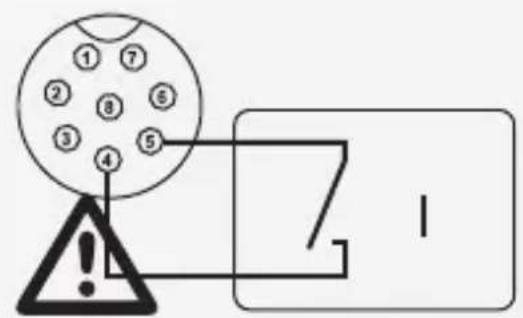
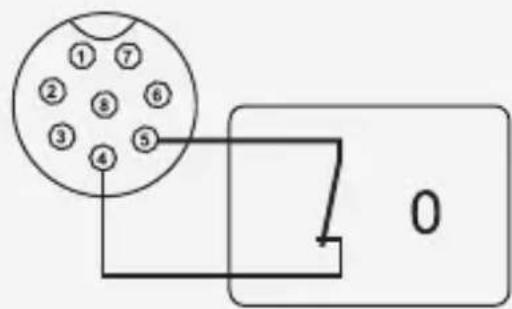

No voltage must be applied to contacts 4 and 5.
- Switch off the power unit and then connect the remote socket to the rear remote connection. Screw on the external fastening ring.
- Switch on the power unit.
- Put the selection switch MODE (8) on the rear into the Remote Ctrl position. The control indicator REAR CONTROL (2) display is lit.
- If the switching contact is open, the DC output is active; if it is closed, the DC output is switched off. Check the switching function for correct function.
- When the DC output is switched off, "O P OFF" is displayed.
- If this remote control function is no longer required, put the selection switch MODE (8) to the Normal position.

The sense function is only available with Item No. 1086562.
The sense function is an automatic voltage control for the rear high-current output (MAIN OUTPUT) (7). For this, two separate measuring cables are connected parallel to the connecting cables. The potential drop which occurs on the connecting cables is measured on these two measuring cables. The laboratory power unit automatically compensates for this voltage drop so that the actually set voltage is supplied to the consumer.
Proceed as follows for connection:
- Turn off the power supply unit and the consumer.
- Always connect the supply cables from the power unit to the consumer first. Pay attention to correct polarity.
- Press the clamp release on the rear terminals SENSE (14) inwards with a small screwdriver and insert the cables into the terminal openings. Check that they are plugged firmly.
- Now connect the two sense cables to the consumer observing the correct polarity. The conductor cross-section for the sense cables must be at least 0.34mm^2
- Always slacken the connection in the reverse order (first of all sense cables and then the connecting cables).
1086562
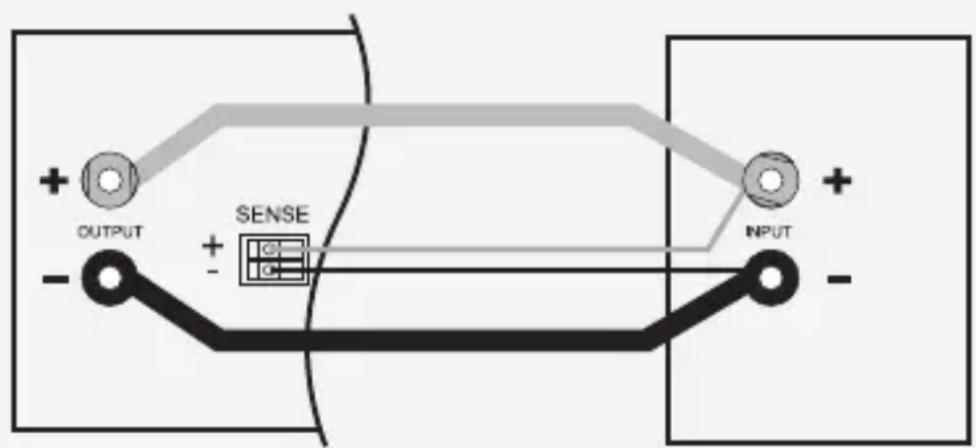

Make sure that you contact the sense cables as close as possible to the connecting point of the consumer. Observe correct polarity.

Never short-circuit the sense cables.
12. SOFTWARE INSTALLATION

Software is compatible with Windows® operating systems XP, 2003, Vista, 7,8
- Insert the supplied software CD into the DVD drive of your computer.
- Located in directory USB CP210x Drivers... install the driver (USB to UART Bridge) suitable to your operating system.
- Copy the directory hcs from the CD to the computer's application directory or any location of your choosing.
- Open the file hcs.bat in the directory hcs. The program starts up.
13. CONTROL WITH THE PC SOFTWARE
- Set selection switch MODE (8) into position Normal.
- Connect the power supply with the USB cable to a USB hub on your computer. Connect the USB cable to the USB port (13) on the rear.
- Turn the power supply on.
- Start the program with the hcs.bat file. After start-up the power supply is controlled via the program.
- The control indicator REAR CONTROL (2) lights up. The power supply no longer registers inputs by the front control knobs.
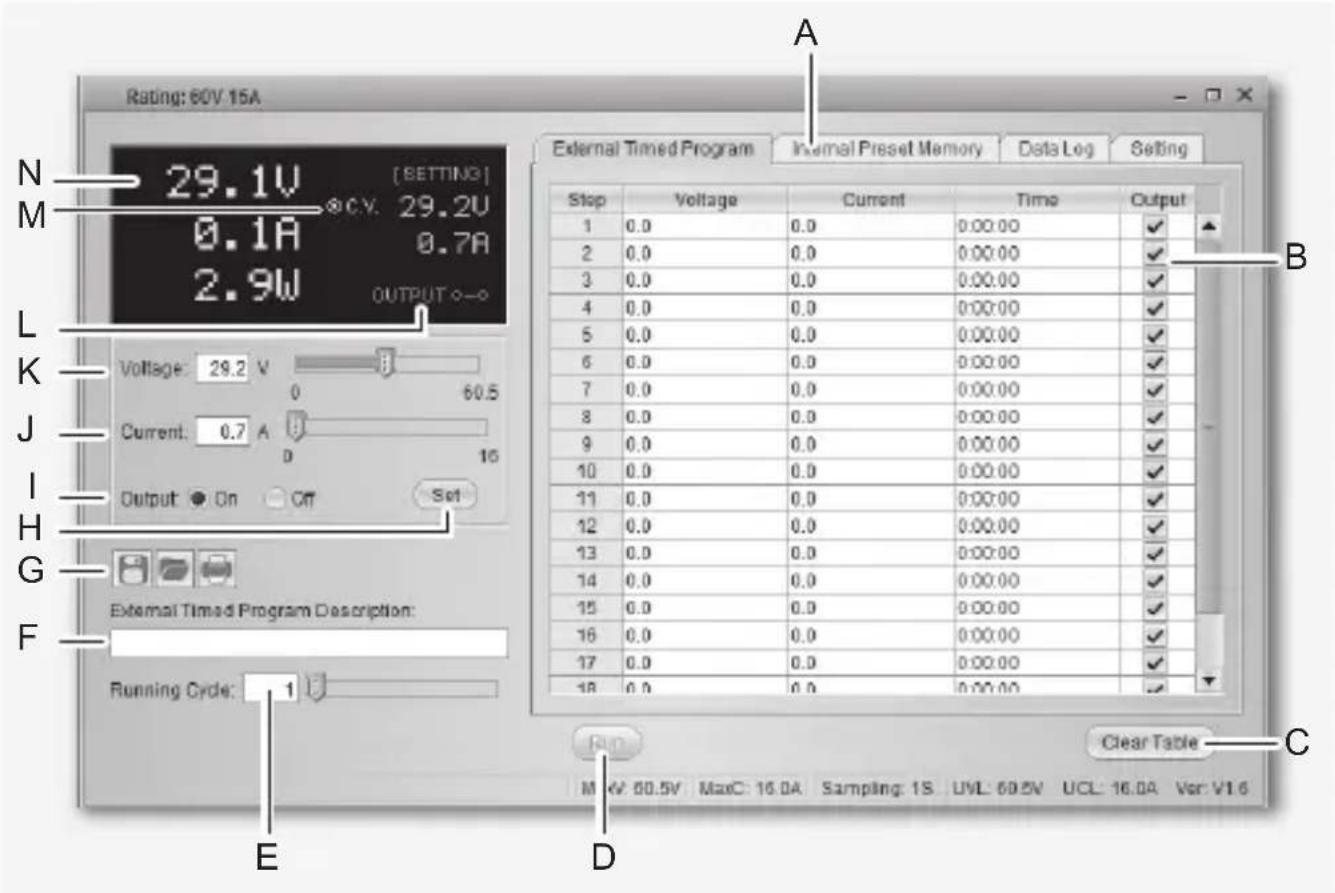
a) Operating elements of the software and the basic operation
| A Function tabs Switch the function of the window on the right-hand side between: ·External timed program (External Timed Program) ·Internal preset memory (Internal Preset Memory) ·Data log (Data Log) ·Setting (Setting) | |
| B Data entry table The data entry field for the external timed programming function. The maximum number of actions is 20. | |
| C Clear Table Clear all the data in the data entry table for the external timed programming function. | |
| D Run / Stop | Run (Run) / Stop (Stop) the external timed program according to the values in the data entry table. |
| E Running Cycle The number of cycle that the timed program is going to run. The value is valid from 0 – 999, where 0 means an infinite cycle. | |
| F Table Description A text field for entering a table description. | |
| G File management | Export table/settings as .csv file. |
| Import .csv formatted table/settings | |
| Print current view | |
| H Transfer settings Transfer set voltage and current to power supply. | |
| I Output on/off | Activate/deactivate power supply. Confirm input with button (H). The LED display displays “O P OFF”. |
| J Current The field where you can program the current to the power supply. | |
| After inputting the value, press the enter button (H) to transfer the settings to the power supply. Optionally, you may set the current by the slider. | |
| K Voltage The field where you can program the voltage to the power supply. | |
| After inputting the value, press the enter button (H) to transfer the settings to the power supply. Optionally, you may set the voltage by the slider. | |
| L Output on/off Activate/deactivate power supply. Click on the control. While the output is deactivated the LED display displays “O P OFF”. | |
| M Settings You can read the voltage setting and current limitation of the power supply. | |
| N Status You can read the present voltage, current and power output of the power supply. “C.V” is equivalent to the C.V. indicator; “C.C.” is equivalent to the C.C. indicator. | |
b) Internal preset memory
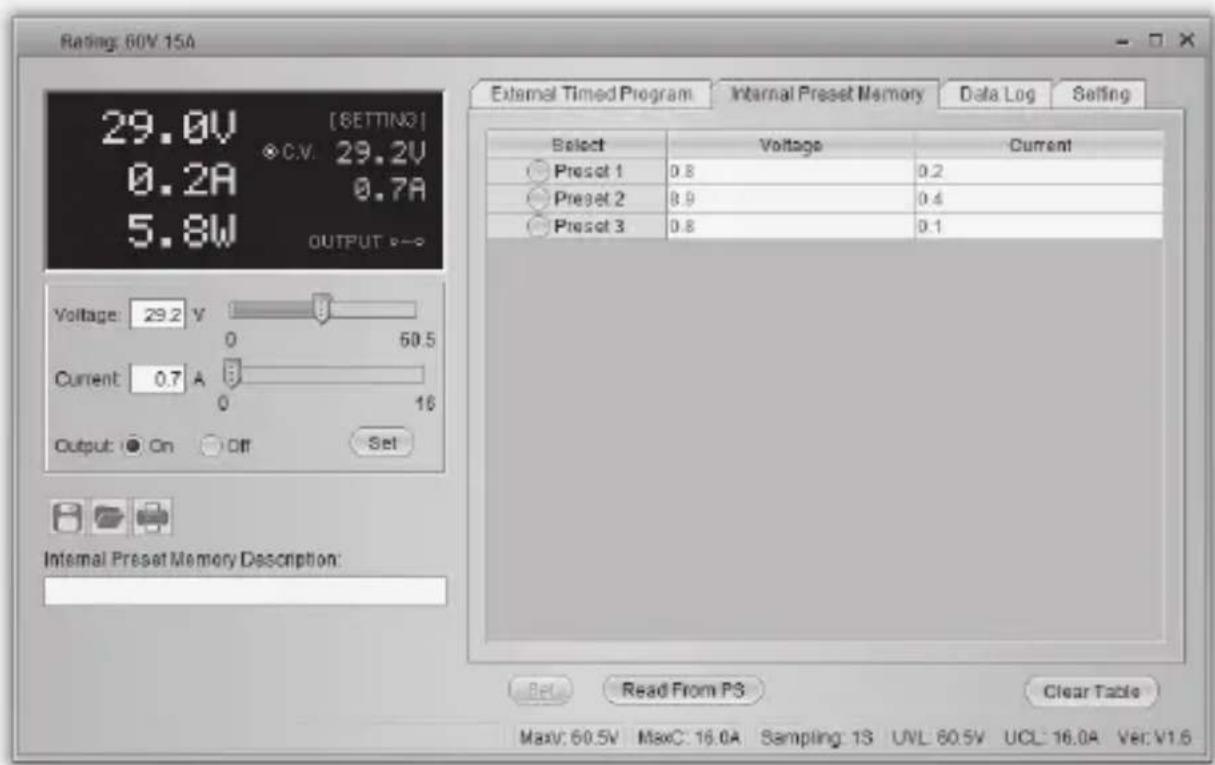
You can read, set and apply the preset memory of the power supply via the software.
-
The preset values are loaded into the software automatically, but if not, press the button Read From PS button to load the information.
-
If you want to use either of the preset values, select the corresponding option. Then press the button Set.
-
If you want to change the preset values, double-click on voltage (Voltage) or current field (Current) and set the desired values with the sliders.

The set values for voltage and current must be >0.0 (larger than zero) in order for you to transfer the settings to the power supply via the button Set.
If you want to clear the table, press the button Clear Table.
With the buttons for file management (G) you can import, export or print the settings.
c) Data log
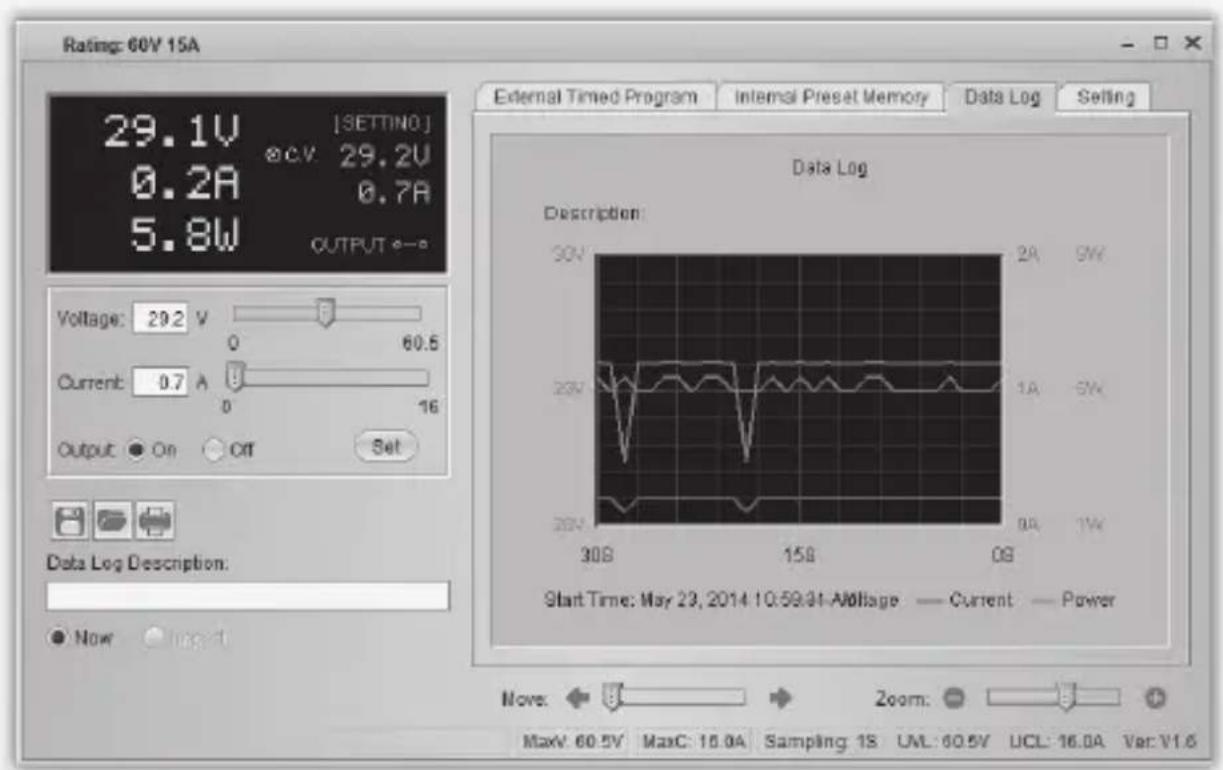
You can see the real-time/recorded voltage-current-power chart in this function.
With the buttons for file management (G) you can import, export or print the settings.
- Switch between recorded diagram (Import) and the real-time diagram (Now) by selecting the corresponding option in the left bottom corner.
- Shift the diagram by time with the slider Move.
- Proportionally resize the diagram with the slider Zoom.
- Read voltage, current und power consumption from the diagram. These three units are colour-coded and can easily be distinguished by the legend.
d) Setting
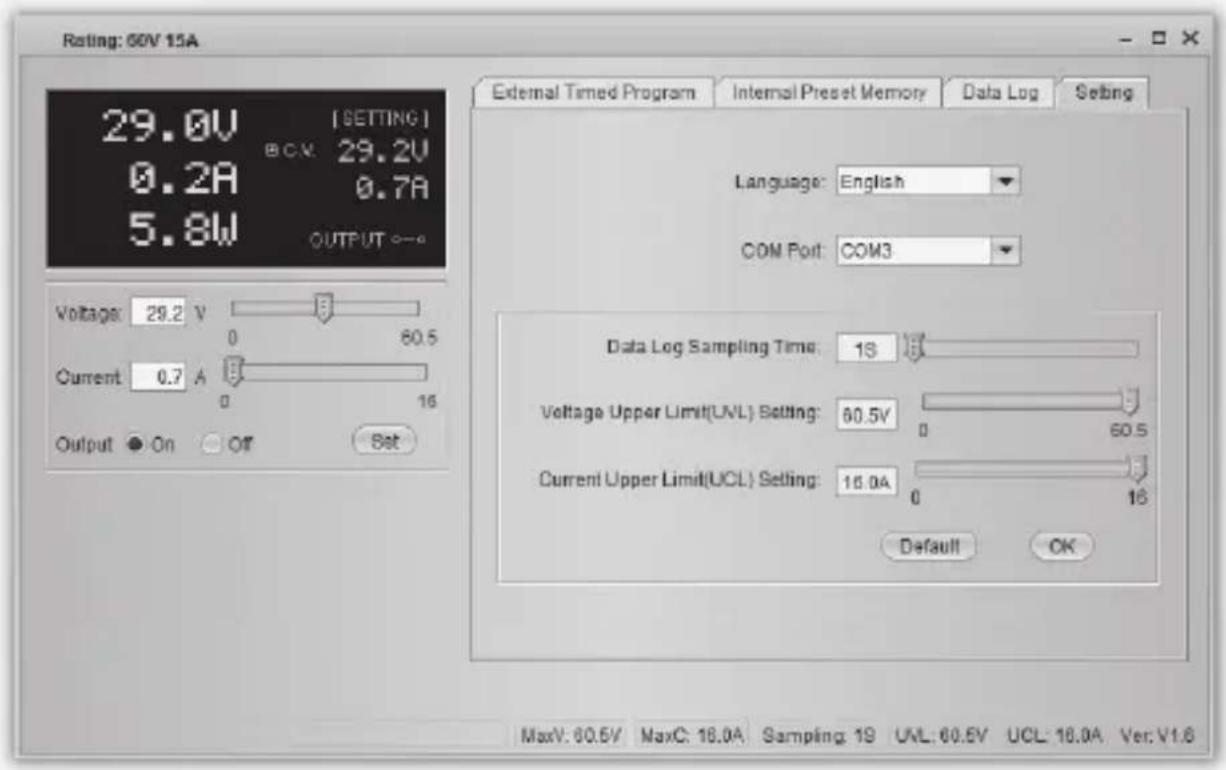
Language Choose software language.
COM Port The connection between the personal computer
and the power supply. It is automatically configured during software launch and not recommended to be changed manually.
Data Log Sampling Time The time interval between each sampling.
Voltage Upper Limit (UVL) Setting Limit the voltage output from the software side.
Current Upper Limit (UCL) Setting Limit the current output from the software side.
- Press the OK button to save the setting.
- Press the Default button to set it back to the default settings.
14. PROTECTIVE MEASURES
The power unit has several integrated automatic protective measures that protect the power unit from damage. The activated protective measures are displayed with letter codes and the DC output is switched off for safety reasons at the same time.

When a protective measures is active, the consumer must be switched off and disconnected from the power unit immediately.
To reactivate the output, switch off the power unit. Wait until all displays have gone out. Switch on the power unit again. The power unit should work normally again. Where this is not the case, please contact our customer service.
The following displays are possible:
a) Over-voltage protection
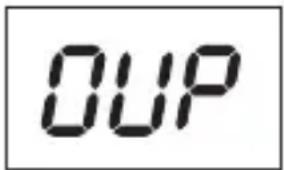
- A higher external voltage than provided by the power unit was determined at the DC output. The output is switched off.
- The current levels for switching off are listed in the technical data.
b) Overheating protection
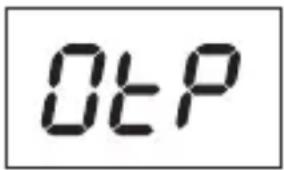
- The integrated temperature sensor determined that the system temperature is too high. To prevent overheating, the output is switched off.
- Turn off the power unit and let it cool down for at least 30 minutes. After switching it on, check if the fan or ventilation apertures are blocked. During the start-up self-test stage, the fan must start up audibly. Where this is not the case, please contact our customer service.
c) Overload protection
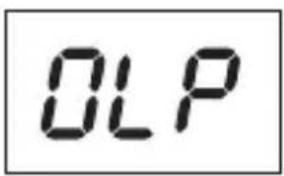
- In case of overload at the DC output, the power limitation is usually switched on. If this is not the case, the second protective function becomes active.
- Switch off the power unit at once when this warning message appears and check the connection data of the consumer. Remove the consumer from the power unit's DC output.
- Switch on the power unit again and check its function. If the error message remains on, please contact our customer service.
15. MAINTENANCE AND CLEANING
- Unplug the product from the power source.
- Apart from an occasional cleaning or exchanging the fuse, this laboratory power unit is maintenance free.
- Use a clean, lint-free, antistatic and dry cloth to clean the device. Do not use any abrasive or chemical agents or detergents containing solvents.
a) Exchanging the fuse
If it is no longer possible to switch on the laboratory power unit, the rear mains fuse (12) is probably defective.
Proceed as follows to replace the mains fuse:
- Switch off the power unit and remove all the connection cables and the mains plug from the device.
- Lever the rear fuse holder (12) with a suitable screwdriver from the bracket.
- Replace the defective fuse with a new fine-wire fuse of the same type and rated current. The fuse value is listed in the chapter on "Technical Data".
- Press the fuse into the fuse holder.
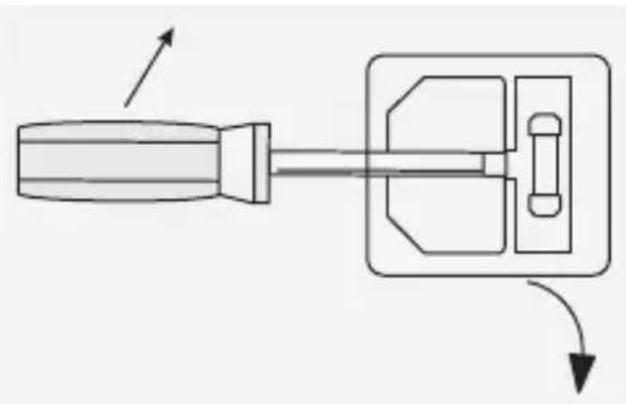

Fuses are replacement parts and not covered by the warranty/guarantee.
16. TROUBLESHOOTING
By purchasing the laboratory power unit, you have acquired a product that is reliable and operationally safe.
Nevertheless, problems or errors may occur.
For this reason we want to describe how to troubleshoot potential malfunctions:

Always follow the safety instructions!
| Error Possible cause | |
| The power unit cannot be switched on. | Does the indicator C.V. or C.C. light up?Check the mains voltage (you may also want to check the mains fuse in the device or the line circuit breaker). |
| Connected consumer devices do not work. | Is the voltage set correctly?Is the polarity correct?Check the technical data of the consumers. |
| The control indicator REAR CONTROL is lit. The device cannot be operated via the rotary controls. | Remote control operation is active. Put the rear MODE slider into the Normal position. |
| The “O P OFF” display is lit. | The DC output was switched off through the remote control terminal Remote Control (10) or software. |
| The output current is limited to 5 A, although the current settings are higher. | The output current is limited to 5 A. For higher currents, connect the consumer to the rear main output. |
| The control indicator C.C. is lit. | Constant current operation:The preset current was exceeded. Check power consumption on your consumer and increase the current limitation on your power unit, if applicable. |
| The control indicator C.V. LED is lit. | Constant voltage operation:The power unit works normally. The output provides the constant voltage set. |
| Display “OVP” Over-voltage protection:See chapter PROTECTIVE MEASURES. | |
| Display “OtP” Overheating protection:See chapter PROTECTIVE MEASURES. | |
Display "OLP" Overload-protection:
See chapter "Protective measures".

Repairs other than those described above may only be carried out by an authorised specialist. If you have any questions concerning the handling of the device, please do no hesitate to contact our Technical Support.
17. DISPOSAL
Electronic devices are recyclable waste and must not be disposed of in the household waste.
At the end of its service life, dispose of the product according to the relevant statutory regulations.
You thus fulfil your statutory obligations and contribute to the protection of the environment.
18. TECHNICAL DATA
| 1086555 (DPPS-16-30) | 1086556 (DPPS-32-15) | 1086558 (DPPS-60-8) | |
| Operating voltage: 200 – 240 V/AC, 50/60 Hz | |||
| Max. input current (230 V/AC): 2.4 A 2.4 A 2.5 A | |||
| Maximum output power: 480 W 480 W 480 W | |||
| Output voltage: 1 – 16 V/DC 1 – 32 V/DC 1 – 60 V/DC | |||
| Output current: 0 – 30 A 0 – 15 A 0 – 8A | |||
| Residual ripple at nominal load: 5 mV, 50 mA 5 mV, 20 mA 5 mV, 10 mA | |||
| Voltage control response at 10 – 100 % load change: | 50 mV 50 mV | 50 mV | |
| Voltage control response at mains fluctuation (170 – 264 V/AC): | 20 mV 20 mV | 20 mV | |
| Current control response at 10 – 90 % load change: | 150 mA 100 mA | 100 mA | |
| Current control response at mains fluctuation (170 – 264 V/AC): | 50 mA 50 mA | 50 mA | |
| Display accuracy: | ±(0.2% +0.3) V/A | ±(0.2% +0.3) V/A | ±(0.2% +0.3) V/A |
| OVP switch-off level of the V output: | +2 V (1 – 5 V) +3 V (5 – 16 V) | +2 V (1 – 5 V) +3 V (5 – 20 V) +4V(20 – 32V) | +2 V (1 – 5 V) +3 V (5 – 20 V) +4V(20 – 60V) |
| Degree of effectiveness: | 85 % 86 % | 87 % | |
| Clock signal: | 65 – 85 kHz | 75 – 95 kHz | 65 – 85 kHz |
| Performance factor with active PFC: | >0.96 | >0.96 | >0.96 |
| Device fan: | Temperature controlled (0 – 100 %) | ||
| Mains fuse slow-blow (5 x 20 mm): | T3.15AL250V | T3.15AL250V | T3.15AL250V |
| Operating temperature: | 0 to +40 °C | ||
| Operating humidity: | 10 – 80 %, non-condensing | ||
| Storage temperature: | -15 to +70 °C | ||
| Storage humidity: | 0 – 85 %, non-condensing | ||
| Operating altitude: | max. 2000 m above mean sea level | ||
| Safety class: | 1 | ||
| Approvals: | CE EMC: EN 55011, 55012, LVD: EN 60950, 61010 | ||
| Weight: | 2.6 kg | ||
| Dimensions (W x H x D): | 200 x 90 x 215 mm | ||
| 1086559(DPPS-16-40) | 1086560(DPPS-32-20) | 1086561(DPPS-60-10) | |
| Operating voltage: 200 - 240 V/AC, 50/60 Hz | |||
| Max. input current (230 V/AC): 3.1 A 3.1 A 3.1 A | |||
| Maximum output power: 640 W 640 W 600 W | |||
| Output voltage: 1 - 16 V/DC 1 - 32 V 1 - 60 V | |||
| Maximum output current: 0 - 40 A 0 - 20 A 0 - 10 A | |||
| Residual ripple at nominal load (eff): 5 mV, 70 mA 5 mV, 30 mA 5 mV, 10 mA | |||
| Voltage control response at 10 - 100 %load change | 50 mV 50 mV | 50 mV | |
| Voltage control response at mainsfluctuation (170 - 264 V/AC): | 20 mV 20 mV | 20 mV | |
| Current control response at 10 - 90 % loadchange: | 150 mA 100 mA | 100 mA | |
| Current control response at mainsfluctuation (170 - 264 V/AC): | 50 mA 50 mA | 50 mA | |
| Display accuracy: ±(0.2% +0.3) V/A ±(0.2% +0.3) V/A ±(0.2% +0.3) V/A | |||
| OVP switch-off level of the V output: | +2 V (1 - 5 V)+3 V (5 - 16 V) | +2 V (1 - 5 V)+3 V (5 - 20 V)+4 V (20 - 32 V) | +2 V (1 - 5 V)+3 V (5 - 20 V)+4 V (20 - 60 V) |
| Degree of effectiveness: | 85 % 87 % | 89 % | |
| Clock signal: | 65 - 85 kHz | 75 - 95 kHz | 65 - 85 kHz |
| Performance factor with active PFC: | >0.97 | >0.97 | >0.97 |
| Device fan: | Temperature controlled (0 - 100 %) | ||
| Mains fuse slow-blow (5 x 20 mm): | T4.0AL250V | T4.0AL250V | T4.0AL250V |
| Operating temperature: | 0 to +40 °C | ||
| Operating humitiy: | 10 - 80 %, non-condensing | ||
| Storage temperature: | -15 to +70 °C | ||
| Storage humidity: | 0 - 85 %, non-condensing | ||
| Operating altitude: | max. 2000 m above mean sea level | ||
| Safety class: | 1 | ||
| Approvals: | CE EMC: EN 55011, 55012, LVD: EN 60950, 61010 | ||
| Weight: | 2.6 kg | ||
| Dimensions (W x H x D): | 200 x 90 x 215 mm | ||
| 1086562(DPPS-16-60) | 1086563(DPPS-32-30) | 1086564(DPPS-60-15) | |
| Operating voltage: 200 – 240 V/AC, 50/60 Hz | |||
| Max. input current (230 V/AC): 4,7 A 4,5 A 4,5 A | |||
| Maximum output power: 960 W 960 W 900 W | |||
| Output voltage: 1 – 16 V/DC 1 – 32 V/DC 1 – | 60 V/DC | ||
| Maximum output current: 0 – 60 A 0 – 30 A 0 – 15 A | |||
| Residual ripple at nominal load (eff): 5 mV, 100 mA 5 mV, 40 mA 5 mV, 15 mA | |||
| Voltage control response at 10 – 100 %load change | 50 mV 50 mV | 50 mV | |
| Voltage control response at mainsfluctuation (170 – 264 V/AC): | 20 mV 20 mV | 20 mV | |
| Current control response at 10 – 90 % loadchange: | 200 mA 150 mA 100 mA | ||
| Current control response at mainsfluctuation (170 – 264 V/AC): | 50 mA 50 mV | 50 mV | |
| Display accuracy: | ±(0.2% +0.3) V/A | ±(0.2% +0.3) V/A | ±(0.2% +0.3) V/A |
| OVP switch-off level of the V output: | +2 V (1 – 5 V)+3 V (5 – 16 V) | +2 V (1 – 5 V)+3 V (5 – 20 V)+4 V (20 – 32V) | +2 V (1 – 5 V)+3 V (5 – 20 V)+4 V (20 – 60V) |
| Degree of effectiveness: | 86 % 90 % | 90 % | |
| Clock signal: | 65 – 85 kHz | 75 – 95 kHz | 65 – 85 kHz |
| Performance factor with active PFC: | >0.97 | >0.97 | >0.97 |
| Device fan: | Temperature controlled (0 – 100 %) | ||
| Mains fuse fast-acting (5 x 20 mm): | F8AL250V | F8AL250V | F8AL250V |
| Operating temperature: | 0 to +40 °C | ||
| Operating humidity: | 10 – 80 %, non-condensing | ||
| Storage temperature: | -15 to +70 °C | ||
| Storage humidity: | 0 – 85 %, non-condensing | ||
| Operating altitude: | max. 2000 m above mean sea level | ||
| Safety class: | 1 | ||
| Approvals: | CE EMC: EN 55011, 55012, LVD: EN 60950, 61010 | ||
| Weight: | 3.2 kg | ||
| Dimensions (W x H x D): | 200 x 90 x 275 mm | ||
The supplement is only valid for devices running firmware version 3.x.
a) Zeroing the unit manually
The power supply is auto-zeroed every time you turn it on. In case you need to zero the unit during operation and do not want to restart it, zero it manually.
- Press and hold the VOLTAGE control knob for approx. 30 s to enter the MENU mode. "CCO" and "no" are displayed.
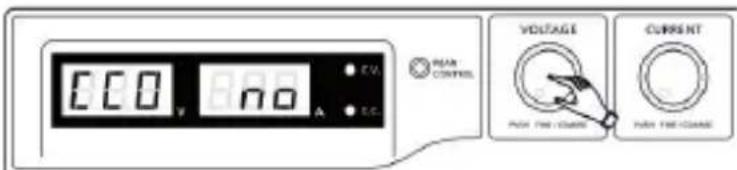
- Rotate the CURRENT control knob until "CCO" and "YES" are displayed.
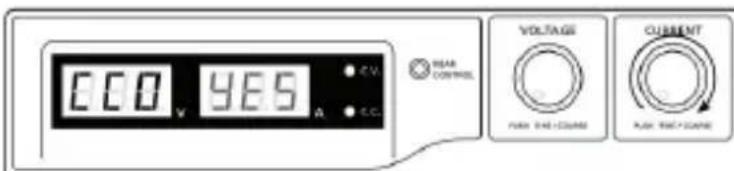
- Press the CURRENT control knob once to zero the unit. "YES" lights up in the display to confirm successful zeroing.
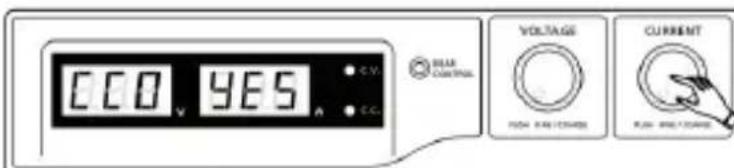
- Press the VOLTAGE control knob to exit the MENU mode.
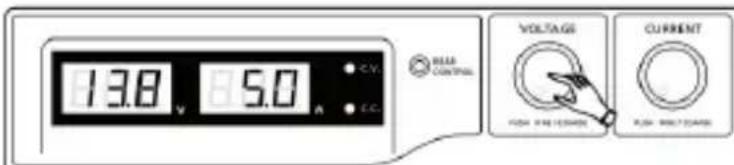
b) Resetting output presets (P1/P2/P3) to factory default values
The power supply allows for presetting three voltage values (including current settings) by means of three memory slots: P1, P2, and P3. In case you want to reset the memory slots to the factory default values during operation, do the following.
- Press and hold the VOLTAGE control knob for approx. 30 s to enter the MENU mode. "CCO" and "no" are displayed.
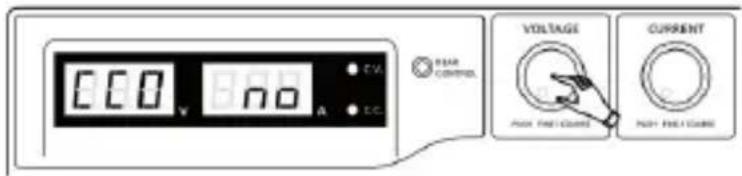
- Rotate the VOLTAGE control knob until "rPr" and "no" are displayed.
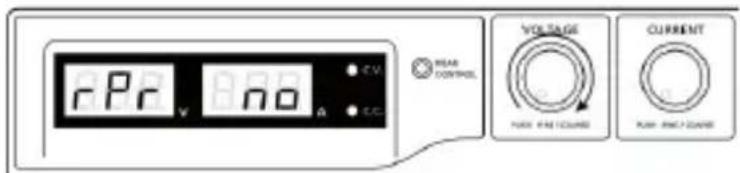
- Rotate the CURRENT control knob until "rPr" and "YES" are displayed.
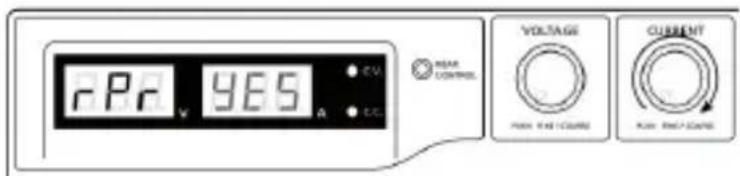
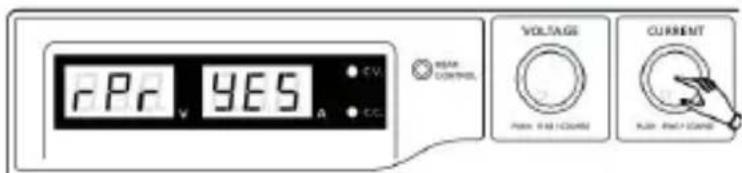
- Press the CURRENT control knob once to reset the preset values. "YES" lights up when the values have been successfully reset.
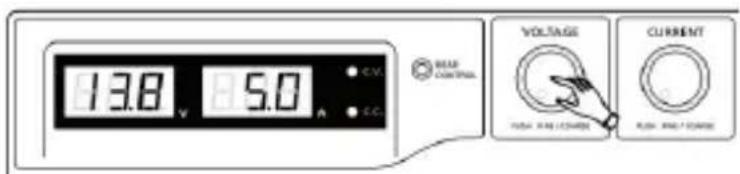
- Press the VOLTAGE control knob to exit the MENU mode.
Chere cliente, cher client,
France (email): technique@conrad-france.fr
- Remote control operation "Remote Ctrl" 127
c) Connecting a load

Stroominstelling "I":
Stroominstelling "I":
Copyright 2016 by Conrad Electronic SE.

Legal notice
This is a publication by Conrad Electronic SE, Klaus-Conrad-Str. 1, D-92240 Hirschau (www.conrad.com).
All rights including translation reserved. Reproduction by any method, e.g. photocopy, microfilming, or the capture in electronic data processing systems require the prior written approval by the editor. Reprinting, also in part, is prohibited. This publication represents the technical status at the time of printing.
© Copyright 2016 by Conrad Electronic SE.

Information legales
© Copyright 2016 by Conrad Electronic SE.
- Laboratory power supply
- INTRODUCTION
- INTENDED USE
- DELIVERY CONTENT
- → Up-to-date Operating Instructions:
- SYMBOL EXPLANATION
- SAFETY INSTRUCTIONS
- a) Persons / Product
- b) Miscellaneous
- OPERATING ELEMENTS
- START-UP
- a) Connecting the power cable
- b) Unit installation
- c) General informations
- NORMAL OPERATION
- a) Set current limitation
- Where no setting is made within 2 seconds, the display switches back to the current current display.
- b) Set output voltage
- With the large control range, it is possible that the voltage setting takes approx. 1-2 seconds to switch from a high to a low voltage value.
- c) Connecting a load
- MEMORY SLOT OPERATION “PRESET” AND “SET”
- Make sure that no consumers are connected.
- MODE
- a) Assigning memory slots with "Set"
- b) Reset to memory slots to default settings
- REMOTE CONTROL OPERATION “REMOTE CTRL”
- a) Preparation of the remote control connection
- b) Control through external voltage source
- The voltage on the remote control connection must not exceed 5V The connections must not be shorted.
- c) Control through a controllable resistance (poti)
- Voltage setting "V"
- d) Remote-control output (on/off)
- No voltage must be applied to contacts 4 and 5.
- SOFTWARE INSTALLATION
- CONTROL WITH THE PC SOFTWARE
- b) Internal preset memory
- c) Data log
- d) Setting
- PROTECTIVE MEASURES
- a) Over-voltage protection
- b) Overheating protection
- c) Overload protection
- MAINTENANCE AND CLEANING
- a) Exchanging the fuse
- TROUBLESHOOTING
- Always follow the safety instructions!
- DISPOSAL
- TECHNICAL DATA
- a) Zeroing the unit manually
- b) Resetting output presets (P1/P2/P3) to factory default values
- Legal notice
- Information legales
Brand : VOLTCRAFT
Model : DPPS3220
Category : Laboratory power supply