OL5019 - Photoelectric sensor IFM - Free user manual and instructions
Find the device manual for free OL5019 IFM in PDF.


| Product type | Photoelectric sensor (through-beam) |
| Brand | IFM |
| Model | OL5019 |
| Category | Photoelectric sensor |
| Operating principle | Contactless detection of objects and materials, emission of a switching signal |
| Range | Indicated on the product label |
| Electrical connection | Disconnect power before connection; refer to the diagram on page 20 or the label |
| Diagnostic output | Max load 10 mA; switches in case of detection error, short circuit, or internal error |
| Mounting | Using a mounting bracket; precisely align the emitter towards the receiver |
| Adjustment aid | Button on the emitter to temporarily increase light intensity for alignment |
| Sensitivity adjustment | Programmable for static or moving objects; adjustment using push button on the receiver |
| LED indications | Green: device operational; Yellow: output switched; Red: detection error; Yellow+Red flashing: short circuit or internal error |
| Output function | Normally closed (NC) or normally open (NO) programmable |
| Maintenance and cleaning | Clean the lenses with a non-aggressive product; do not use solvents |
| Safety | Do not look into the axis of the light source; apply laser warning labels near the sensor |
| Mounting conditions | Avoid vibrations; sensors with small spot diameter require very precise alignment |
| Commissioning | Plug and play, set to maximum range; additional adjustments for partially transparent objects |
Frequently Asked Questions - OL5019 IFM
User questions about OL5019 IFM
0 question about this device. Answer the ones you know or ask your own.
Ask a new question about this device
Download the instructions for your Photoelectric sensor in PDF format for free! Find your manual OL5019 - IFM and take your electronic device back in hand. On this page are published all the documents necessary for the use of your device. OL5019 by IFM.
USER MANUAL OL5019 IFM
Through-beam sensor OL laser
Function and features
The through-beam sensor detects objects and materials without contact and indicates their presence by a switched signal.
Range (r): see type label.
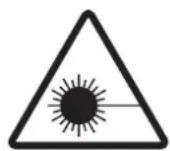
Laser radiation; laser protection class 2.
Do not look directly into the beam!
The enclosed labels (warning laser) must be applied in close proximity to the unit.
Electrical connection

Isolate power, then connect unit (see page 20 or type label). Load of the function check output (fc output): max. 10mA
Installation
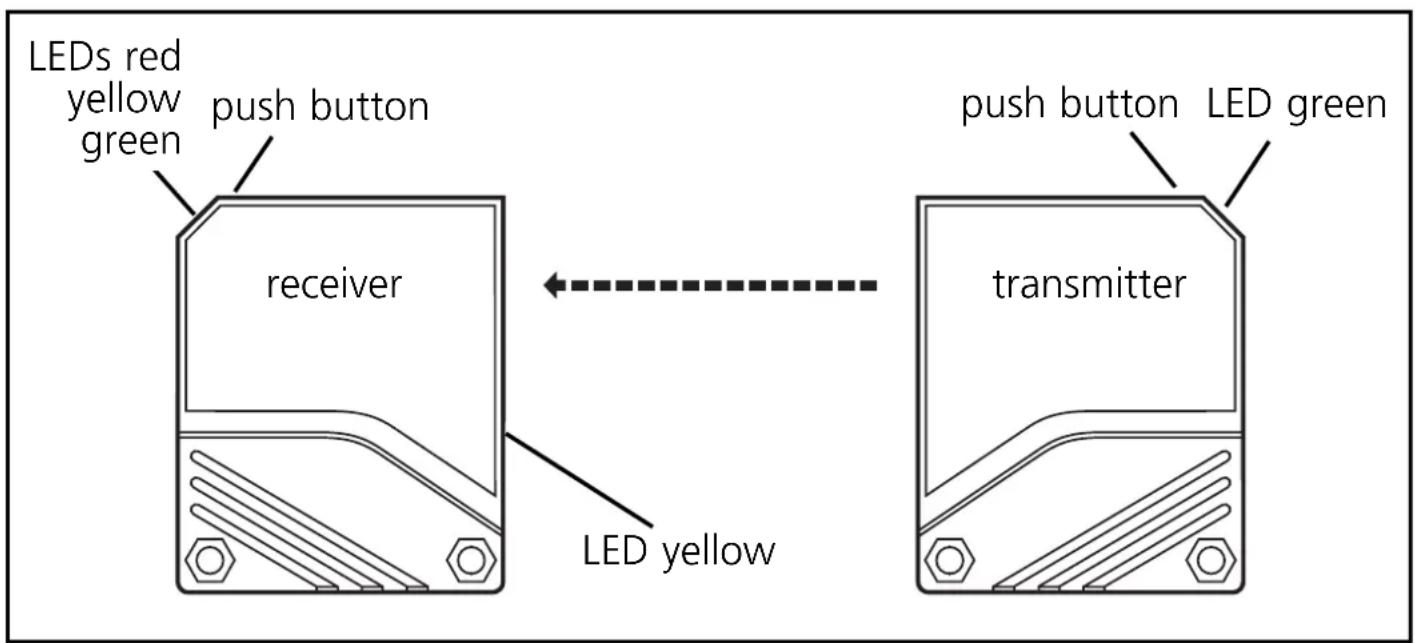
Fix the receiver (type OLE-...) in position. Align the transmitter (type OLS-...) towards the receiver and tighten in the same way. The light spot must hit the receiver lens.
Maximum range is only possible with precise alignment.
Adjustment aid:
For the alignment the transmitter incorporates an adjustment aid. By pressing the setting button on the transmitter the intensity of the transmitted light is increased so that the light spot is clearly visible. After pressing the button again the transmitted light is set again to normal intensity. If the button is not pressed again, the transmitted light is set to normal intensity after about 15 min.
NB: Commissioning
The through-beam sensor is supplied ready to operate (plug and play) set at the max. sensing range. This is sufficient if the through-beam sensor can operate with maximum excess gain (highest contrast). The following setting procedures should only be necessary in less straightforward applications, for example if partly transparent objects must be detected.
Setting of the sensitivity with stationary objects
| 2 | Set the sensitivity with object. receiver transmitter Press once. |
| The yellow and green LEDs go out for approx. 1s, then flash again alternately. |
| 3 | Set the sensitivity without object. receiver transmitter Press once. |
| The yellow and green LEDs go out for approx. 1s, after approx 3s the green LED is on. The unit is in the operating mode. |
You can also proceed in reverse order: first setting without the object, then with the object.

If the setting of the sensitivity is not possible (e.g. object signal and background signal are about the same), the red LED flashes after step 3 for approx. 2s. The unit then passes into the operating mode with the sensitivity being unchanged.
If the setting button is not activated for 15 minutes during the programming process, the unit passes automatically into the operating mode with the sensitivity being unchanged.
Setting of the sensitivity with moving objects
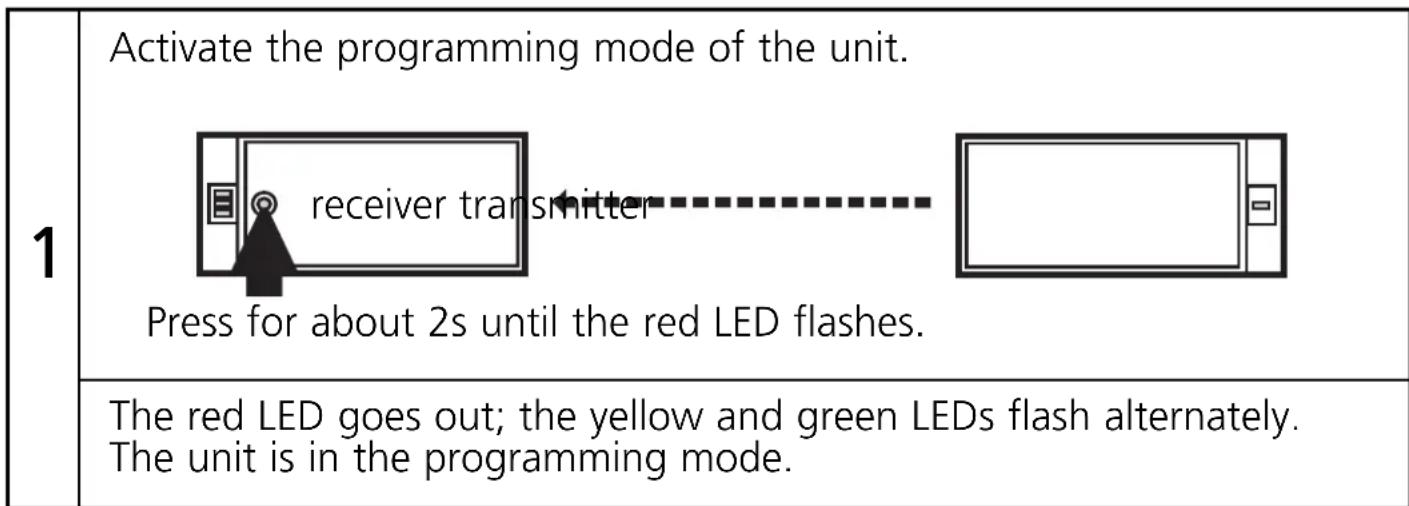
| 1 | Activate the programming mode of the unit. receiver transmitter Press for about 2s until the red LED flashes. |
| The red LED goes out; the yellow and green LEDs flash alternately. The unit is in the programming mode. |
| 2 | During the measurement (about 1s) allow at least two objects to move through the detection area. 接收 transmitter Press once. The yellow and green LEDs go out for approx. 1s, then flash again alternately. |
| 3 | During the measurement (about 1s) allow at least two objects to move through the detection area. 接收 Press once. ←−−−−−−−−−−−−−−−−−−−−−−−−−−−−−−−−−−−−−−−−−−−−−−−−−−−−−−−−−−−−−−−−−−−−−−−−−−−−−−−−−−−−−−−−−−−−−−−−−−−− |
| The yellow and green LEDs go out for approx. 1s, after approx. 3s the green LED is on. The unit is in the operating mode. |

If the setting of the sensitivity is not possible (e.g. object signal and background signal are about the same), the red LED flashes after step 3 for approx. 2s. The unit then passes into the operating mode with the sensitivity being unchanged.
If the setting button is not activated for 15 minutes during the programming process, the unit passes automatically into the operating mode with the sensitivity being unchanged.
Setting of the maximum sensitivity
- Go into the programming mode (step 1).
- Interrupt the light beam.
- Press the setting button twice (see steps 2 and 3).
Programming the output function
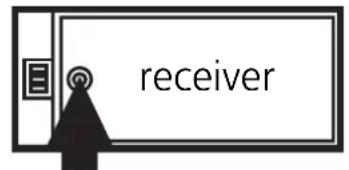
Press for 10s.

The red LED starts to flash fast after 2s. Then the yellow and green LEDs flash alternately. After 8s all LEDs go off, the output function has changed from light-on mode to dark-on mode (or vice versa).
Operation
Check the safe functioning of the unit. Display by LEDs and by the function check output.
| LED green is lit Unit is ready for operation. | |
| LED yellow is lit Output is switched. | |
| LED red is lit | Error in object detection, e.g. maladjustment, soiling of the lenses. |
| LEDs yellow + red | Flash alternately, 2 Hz: output short-circuited. Flash alternately, 1 Hz: internal malfunction (output is not switched). |
Function check output
- Switches in the case of incorrect object detection (error in object detection, maladjustment, soiling of the lenses) after approx. 4 s, it switches back approx. 4 s after the object is again correctly detected.
- Immediately switches in the case of a short circuit of the switching output, it switches back approx. 2 s after the fault has been rectified.
- Immediately switches in the case of an internal fault, it is only switched back by turning off the operating voltage and then on again.
Maintenance
Keep the plastic lenses of the sensor free from soiling.
For cleaning do not use any solvents or cleaning agents which could damage the plastic lenses.