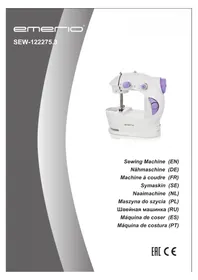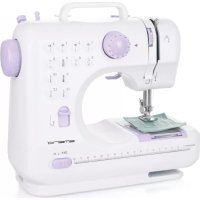
SEW121820.1 - Sewing machine Emerio - Free user manual and instructions
Find the device manual for free SEW121820.1 Emerio in PDF.


| Product type | Sewing machine |
| Brand | Emerio |
| Model | SEW121820.1 |
| Power supply | AC adapter 100-240 V AC, 50/60 Hz, output 6 V DC, 1200 mA; or 4 AA batteries |
| Speed | 2 speeds (L: slow, H: fast) or pedal control |
| Stitch patterns | 12 |
| Main functions | Forward sewing, reverse sewing, buttonhole, bobbin winding, threading |
| Included presser foot | Overcast foot (other types not included) |
| Work lamp | Yes, with switch |
| Thread cutter | Yes, integrated |
| Pedal | Yes, connectable |
| Backup power | 4 AA batteries (not included) |
| Storage | Drawer under the handwheel for accessories |
| Safety | Automatic stop in case of jam; unplug before maintenance; do not use without fabric |
| Maintenance | Clean regularly; remove threads; do not oil without instructions |
| Warranty | 2 years from purchase date |
| Weight | Not specified |
Frequently Asked Questions - SEW121820.1 Emerio
User questions about SEW121820.1 Emerio
0 question about this device. Answer the ones you know or ask your own.
Ask a new question about this device
Download the instructions for your Sewing machine in PDF format for free! Find your manual SEW121820.1 - Emerio and take your electronic device back in hand. On this page are published all the documents necessary for the use of your device. SEW121820.1 by Emerio.
USER MANUAL SEW121820.1 Emerio
natural_image
White sewing machine with purple buttons and a green fabric base, no visible text or symbols on the device itself.Sewing Machine (EN)
Nähmaschine (DE)
Instruction manual – English ...... - 2 -
Before use make sure to read all of the below instructions in order to avoid injury or damage, and to get the best results from the appliance. Make sure to keep this manual in a safe place. If you give or transfer this appliance to someone else make sure to also include this manual.
In case of damage caused by user failing to follow the instructions in this manual the warranty will be void. The manufacturer/importer accepts no liability for damages caused by failure to follow the manual, a negligent use or use not in accordance with the requirements of this manual.
- This appliance can be used by children aged from 8 years and above and persons with reduced physical, sensory or mental capabilities or lack of experience and knowledge if they have been given supervision or instruction concerning use of the appliance in a safe way and understand the hazards involved.
- Children shall not play with the appliance.
- Cleaning and user maintenance shall not be made by children without supervision.
- The appliance is only to be used with the power supply unit provided with the appliance.

- Always switch off the appliance, disconnect from
the power supply and remove foot pedal when:
changing the needle; threading the needle; changing bottom bobbin; changing any parts; inserting or removing batteries;
cleaning the machine; after each use.
- Never run the machine when there's thread in the needle, but no fabric on the machine. This could damage the machine.
- Always keep your hands away from the needle, hand wheel, upper thread tension dial and pattern selection dial when the appliance is running.
- Never attempt to open the housing of the appliance, or to repair the appliance yourself. This could cause electric shock.
- Never leave the appliance unattended during use.
- Switch off or unplug the appliance when leaving it unattended.
- Unplug the appliance before carrying out maintenance.
- This appliance is not designed for commercial use.
- Do not use the appliance outdoors.
- Do not use the appliance for other than intended use.
- Never use the appliance if damaged in anyway.
- Whenever the sewing machine is not in use make sure it is switched off and unplugged from the power supply and remove the foot pedal.
- Keep the machine in a dry and ventilated place.
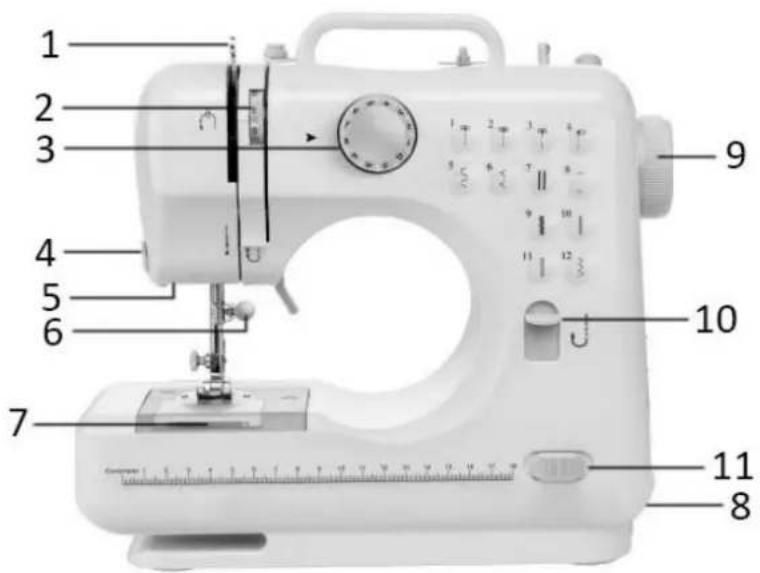
PARTS IDENTIFICATION
Front view
- Take-up lever
- Upper thread tension dial
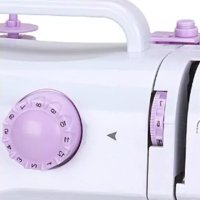
- Pattern selection dial
- Thread cutter
- Light
- Needle clamp screw
- Bottom bobbin
- Drawer
- Hand wheel
- Reverse button
- Power & speed switch
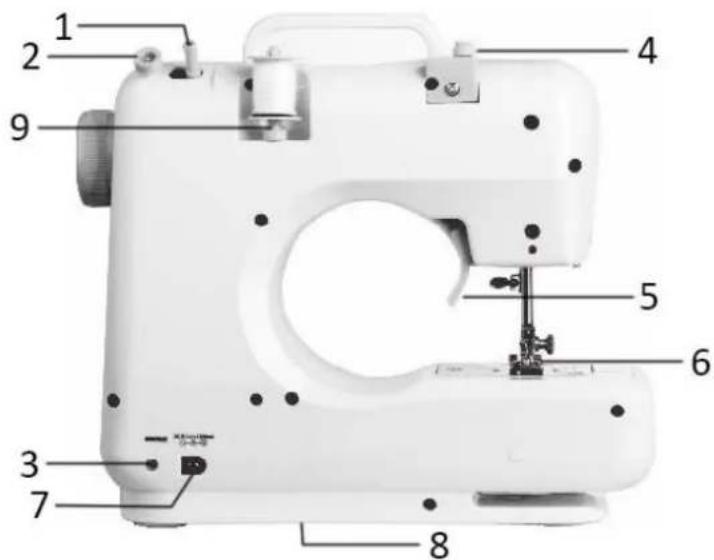
Back view
- Bobbin winder pin
- Bobbin winder stop
- Foot pedal input
- Bobbin winder tension disk
- Presser foot lifter
- Presser foot
- DC input
- Battery compartment
- Spindle
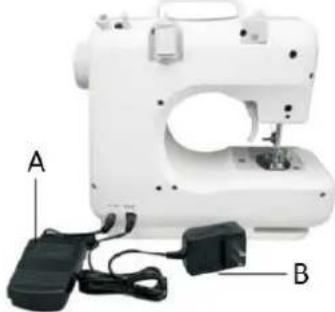
USING THE FOOT PEDAL (A) AND ADAPTOR (B)
- Connect the foot pedal by inserting the jack into the foot pedal input socket. Then you can use the foot pedal to turn on the machine instead of using the hand switch (Power & speed switch).
- Connect the adaptor's jack to the DC input socket on the back of the machine, and connect the plug to the main power supply.
Caution:
- Make sure the foot pedal is unplugged from the machine when you are not using it, so the sewing machine won't accidentally start up.
- The foot pedal cannot be used together with the power & speed switch. Make sure the switch is placed at the position "OFF".
- There is no speed selection when using foot pedal to control the machine.
natural_image
White sewing machine with attached power cord and labeled parts A and B (no text or symbols on device body)INSTALLING THE BATTERIES
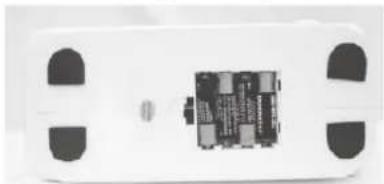
-
Make sure the "Power & speed switch" is on the position "OFF".
-
Turn the sewing machine over on a flat surface and remove the battery compartment cover.
- Insert 4xAA batteries into the compartment and replace the battery cover.
Caution:
- To prevent the accidental start-up of the sewing machine, always make sure that the "Power & speed switch" is on the position "OFF" when inserting or removing the batteries.
- When using the adapter, remember to remove all batteries from the machine.
natural_image
White electronic device casing with internal circuit board (no visible text or symbols)NEEDLE REPLACEMENT
If the needle breaks, or you need a different needle to sew a different kind of fabric, just follow these steps:
Caution: To prevent injury from accidentally starting up the machine, make sure to turn off the switch, remove the foot pedal and the adaptor plug first.
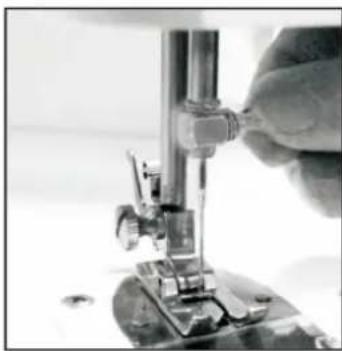
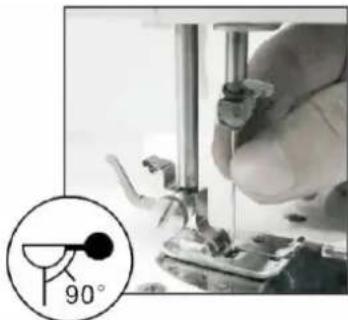
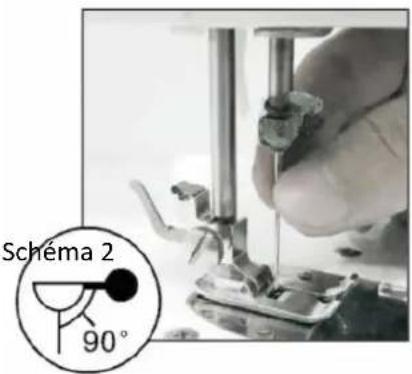
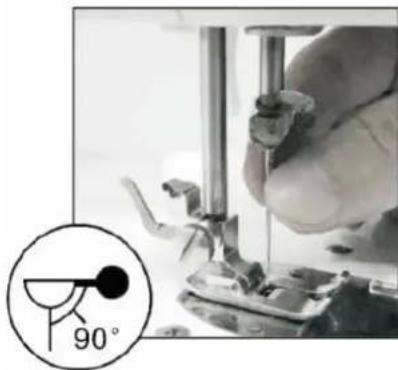
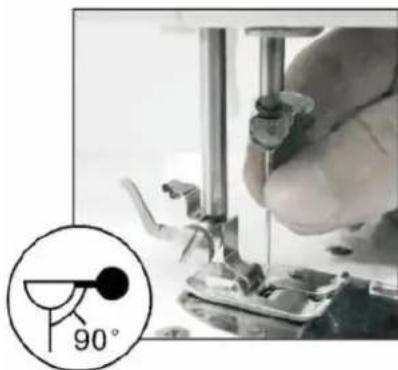
- Turn the hand wheel to raise the needle to its highest position. Hold the old needle and loosen the needle clamp screw. Remove the old needle and discard it properly. (Fig.1)
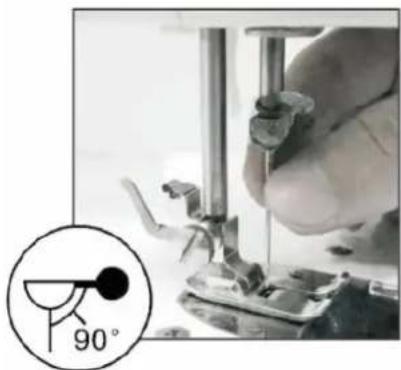
- Insert the new needle into the clamp with the flat side toward the correct direction (to the back). Be sure to push the needle completely into the clamp before tightening the needle clamp screw.
- Tighten the needle clamp screw.
Caution: Needle direction must be correct, and be sure to tighten the thimble screw, to avoid needle falling by accident.
natural_image
Close-up of a sewing machine needle being adjusted, no visible text or symbolsFig.1
natural_image
Close-up of a hand using a sewing machine to adjust or install a mechanical component, with a 90-degree angle indicator (no text or symbols on the diagram itself)Fig.2
PRESSER FOOT REPLACEMENT
1. Removing the presser foot
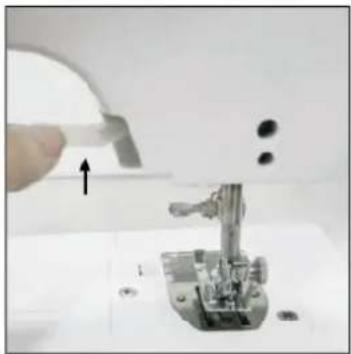
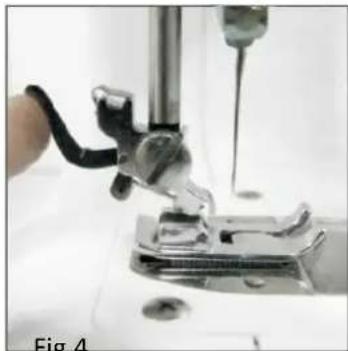
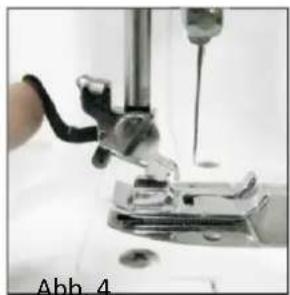
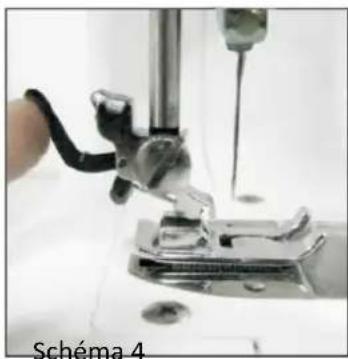
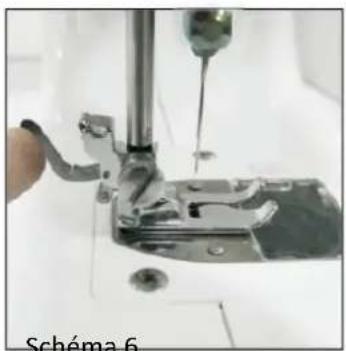
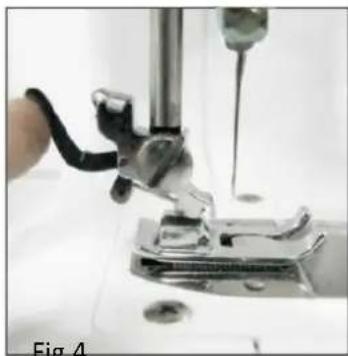
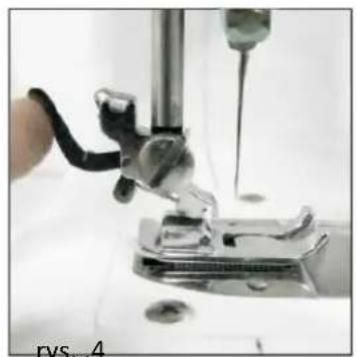
Turn the hand wheel counterclockwise to raise the needle to its highest position. Raise the presser foot lifter, and press the presser foot locking lever. The presser foot will drop off automatically from the locking device.
(Fig.3; Fig.4)
2. Installing the presser foot
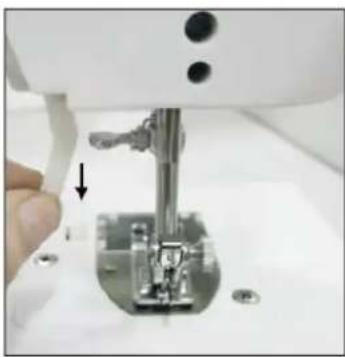
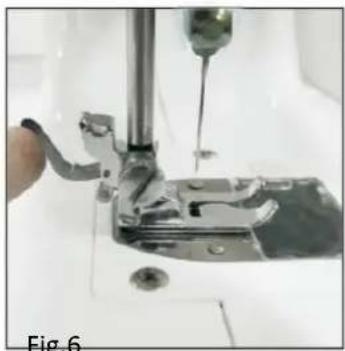
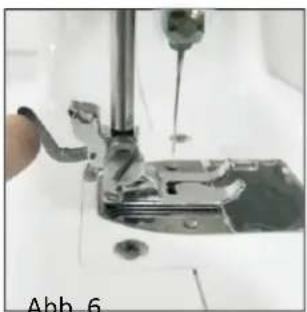
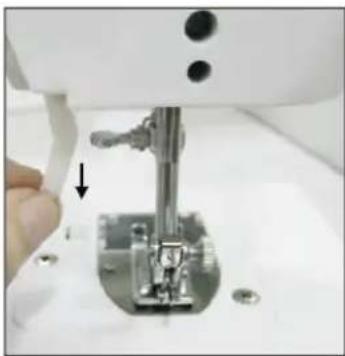
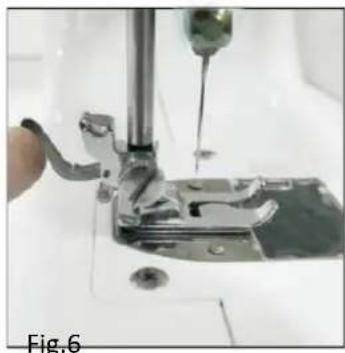
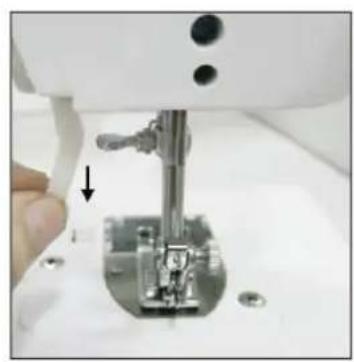
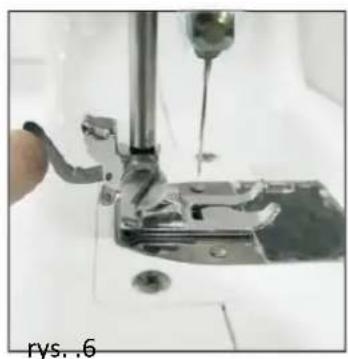
Put the presser foot under the presser foot locking device, lower the presser foot lifter, press the presser foot locking device to reset the foot, and lift the presser foot lifter. (Fig.5; Fig.6)
Caution:
- Always switch off the appliance, disconnect it from the power supply and remove the foot pedal when replacing the presser foot.
- When replacing the presser foot, please place the machine on a stable platform.
- When putting down the presser foot, please do not put your hand or finger under it to avoid injuring fingers.
natural_image
Close-up of a sewing machine needle being cut with a hand using a tool (no visible text or symbols)Fig.3
natural_image
Close-up of a sewing machine needle stitching metal components (no visible text or symbols)Fig.4
natural_image
Close-up of a sewing machine needle with metal components and a hand adjusting the base (no visible text or symbols)Fig.5
natural_image
Close-up of a sewing machine needle being adjusted, showing metal components and a hand operating the tool (no text or symbols visible)Fig.6
THREADING THE SEWING MACHINE
1. Threading upper thread
Caution: Always switch off the appliance, disconnect the appliance from the power supply and remove the foot pedal when threading the machine.
1) Turn the hand wheel to raise the needle to its highest position.
2) Put a spool on the thread spindle, put on the thread spindle cover and then pull out the thread.
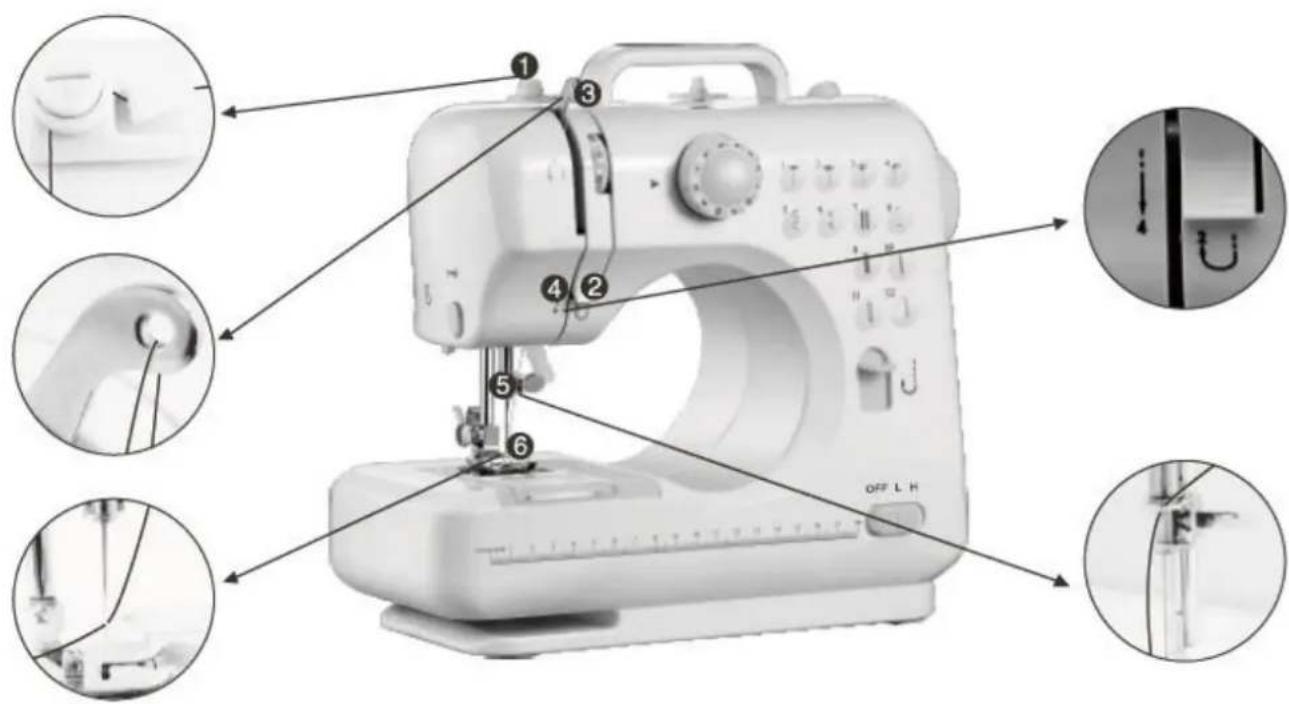
3) Pull the thread and let it pass through the bobbin winder tension disk. (mark ① in the pic. below)
4) Guide the thread through the groove and pull it up towards the chromed take-up lever. (marks ② & ③ in the pic. below)
5) Feed the thread through the hole in the chromed lever and pull it straight down towards the needle. (marks ④ & ⑤ in the pic. below)
6) Feed the thread through the hole in the needle holder, then through the eye of the needle from the front side to the back and pull out 10cm to the back. (mark ⑥ in the pic. below)
2. Replacing the bottom bobbin
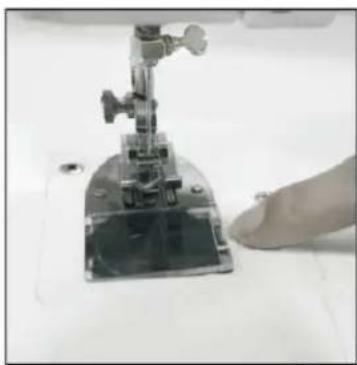
1) Slide the bobbin cover button to the right and remove the bobbin cover (Fig.7).
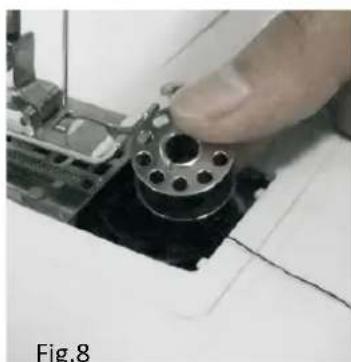
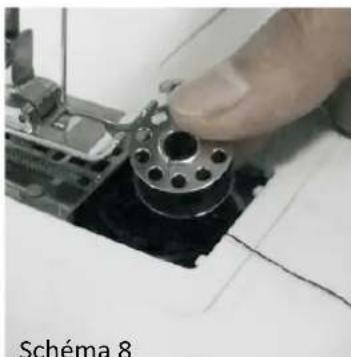
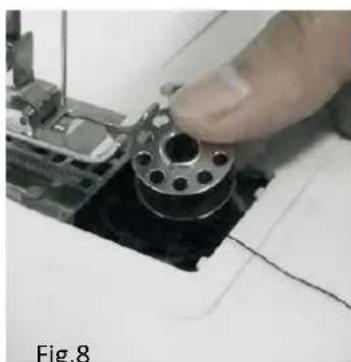
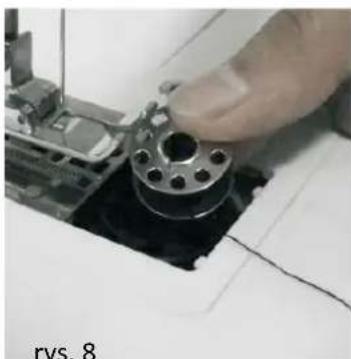
2) Put the new bobbin in the holder, with the thread going clockwise. Leave 10cm of thread hanging out (Fig.8).
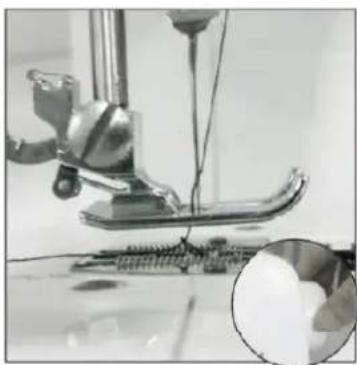
3) Hold the end of the upper thread with one hand, and turn the hand wheel counterclockwise with the other hand, the needle thread will pick up the bobbin thread and pull it up through the hole under the needle (Fig.9).
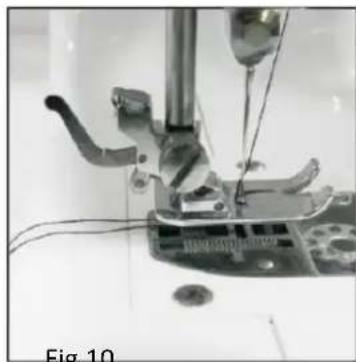
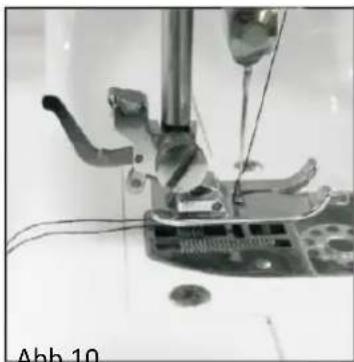
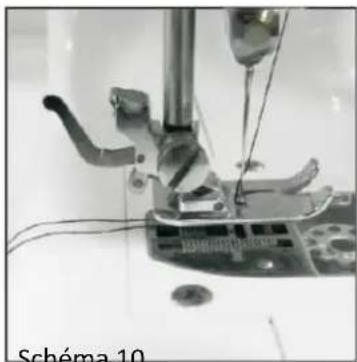
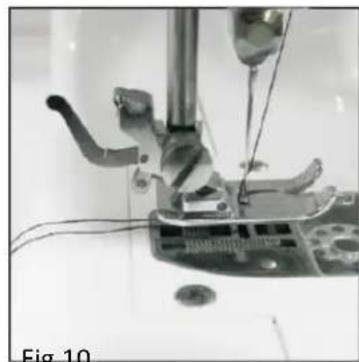
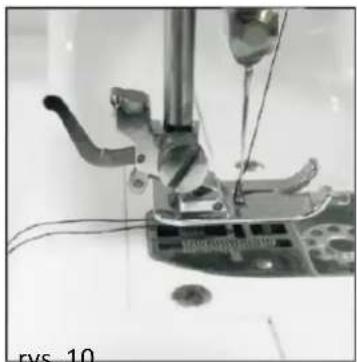
4) Replace the bobbin cover and separate the two threads and pull them to the back of the machine under the presser foot, leaving about 15cm hanging there. (Fig. 10)
Caution:
- Always switch off the appliance, disconnect it from the power supply and remove the foot pedal when replacing the bottom bobbin.
- Please use metal bobbins, otherwise the magnetic holder cannot tense the bobbin thread and work rightly.
natural_image
Close-up of a sewing machine needle with a finger pressing a button (no visible text or symbols)Fig.7
natural_image
Close-up of a hand holding a mechanical component with a circular hole, placed on a circuit board (no visible text or symbols)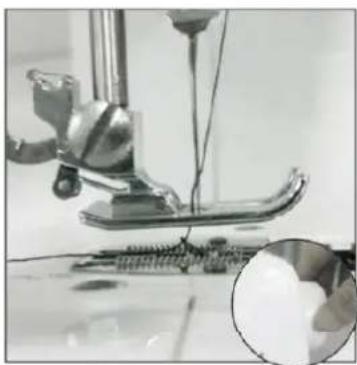
natural_image
Close-up of a sewing machine needle stitching fabric, with a magnified inset showing the needle detail (no text or symbols visible)Fig.9
natural_image
Close-up of a sewing machine needle and base mechanism (no visible text or symbols)Fig.10
SEWING
- Turn the hand wheel counterclockwise to raise the needle to its highest position.
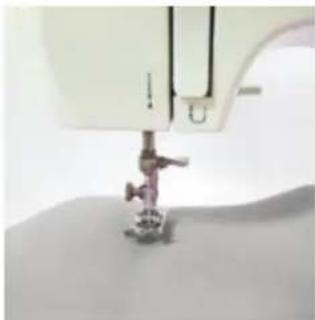
- Raise the presser foot lifter and place the fabric you want to sew under the presser foot (Fig.11).
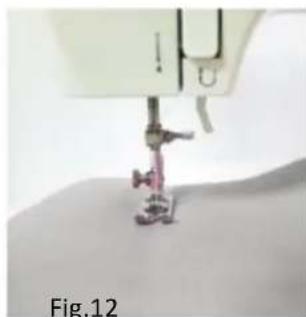
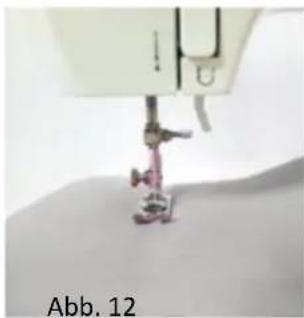
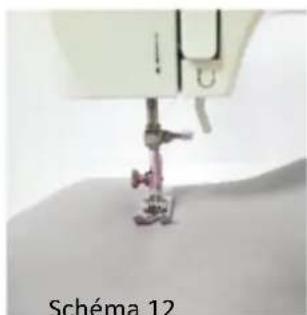
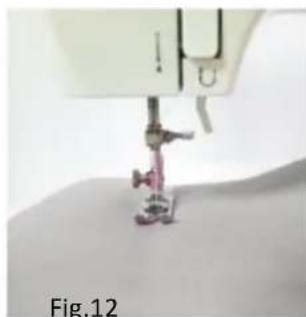
- Lower the presser foot. (Fig.12).
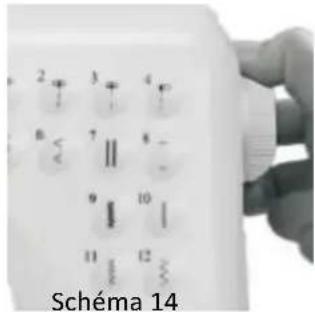
- Rotate the pattern selection dial to select the stitch pattern you wanted.
Caution:
- Before you change the stitch pattern, please turn off the switch and turn the hand wheel to raise the needle all the way up so it doesn't get stuck and bent.
- Changing the stitch pattern is not allowed when the machine is running, otherwise the needle and/or machine may damage.
- Turn the hand wheel several times to make sure there is no jamming in the stitches.
- Slide the power switch to the position "L" (meaning low speed) or "H" (meaning high speed), and the machine will automatically start sewing. We recommend the low speed for beginners (Fig.13).
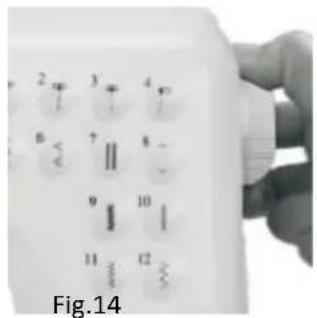
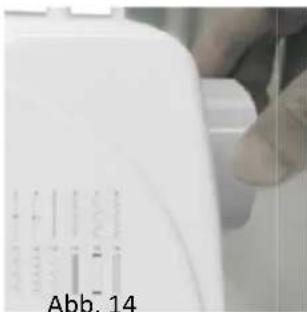
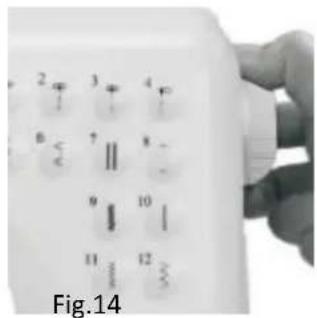
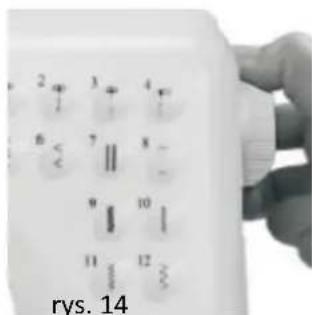
- When you finish the sewing, turn off the switch, unplug the adapter, turn the hand wheel to raise the needle all the way up, lift the presser foot, and then gently remove the fabric from the sewing machine, and cut the thread with the thread cutter (Fig.14).
Tips:
- Please turn the hand wheel if it is difficult to remove the fabric, and then pull out the fabric gently.
- If the thread had tangled or jammed, please turn the hand wheel and simultaneously pull the thread slightly to release the thread. Bottom bobbin mechanism is a more precise part, inappropriate actions may damage it. Please to not push or pull it by finger or any tools.
natural_image
Close-up of a sewing machine needle stitching fabric (no visible text or symbols)Fig.11
natural_image
Close-up of a sewing machine needle stitching fabric, labeled 'Fig.12' (no other text or symbols visible)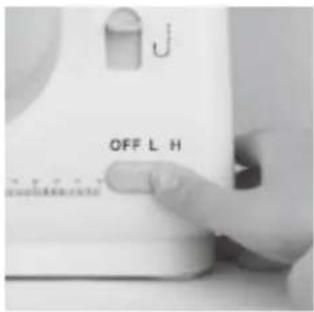
Fig.13
FEATURES
1. Selection of stitch pattern
Rotate the pattern selection dial to select one pattern you want from the 12 stitch patterns. There are pattern illustrations on the surface of machine body for your reference.
Caution:
- Before you change the stitch pattern, please turn off the switch and turn the hand wheel to raise the needle all the way up so it doesn't get stuck and bent.
- Changing the stitch pattern is not allowed when the machine is running, otherwise the needle and/or machine may damage.
2. Reverse sewing
Reverse sewing (back stitching) is useful for reinforcing the beginning and end of seams. To use this function proceed as follows:
1) Sew forwards as normal, and then press and hold down the reverse stitch button on the front of the sewing machine to sew backwards.
2) To sew forwards again simply release the reverse stitch button.
Note: Reverse sewing is applicable only to stitch patterns 1 to 4.
3. Setting the sewing speed
Slide the power switch to "L" or "H" position. ("L" = low speed; "H" = High speed)
4. Working lamp
If additional light is needed, press the light switch to turn the light on. Press the switch again to turn it off. The working lamp cannot be replaced yourself.
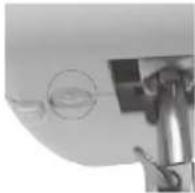
5. Thread cutter
The machine has a thread cutter on the central left side of the machine, it can cut off the thread after sewing or winding thread.
natural_image
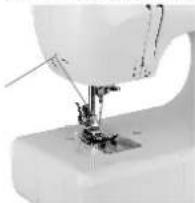
Close-up of a sewing machine needle stitching fabric (no visible text or symbols)6. Sewing sleeves
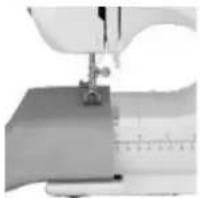
This sewing machine has been designed to sew sleeves or any narrow openings in garment. Lift the presser foot. Position the garment over the sewing arm. Lower the presser foot and follow the regular sewing instructions.
natural_image
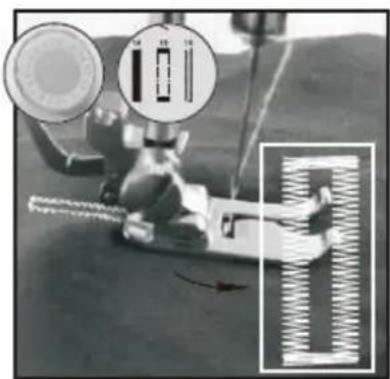
Close-up of a sewing machine needle stitching fabric (no visible text or symbols)7. Manual buttonhole
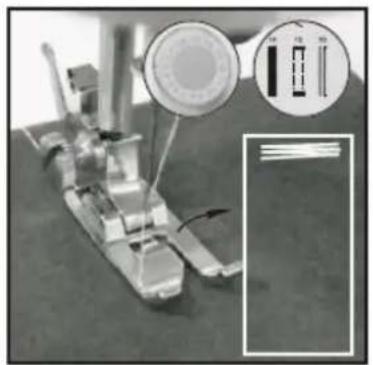
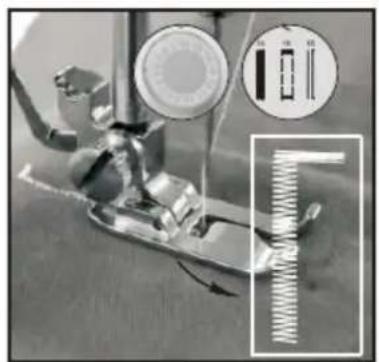
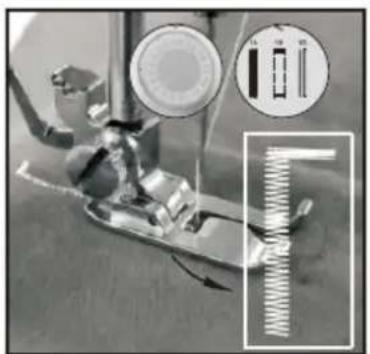
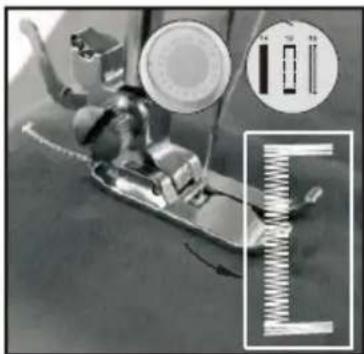
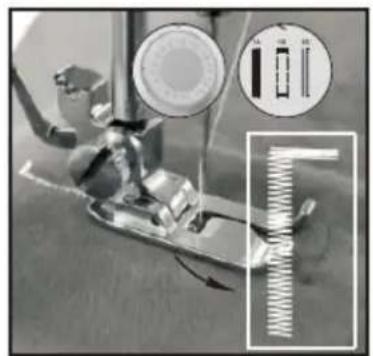
1) Pull the cloth under the presser foot and lower the presser foot on the cloth where you need to sew buttonhole, then choose the 8^th stitch.
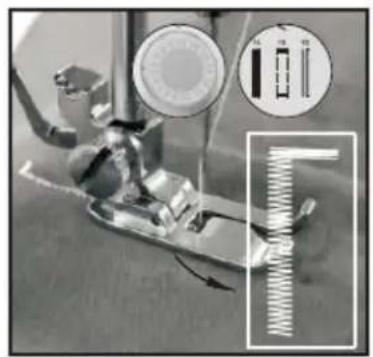
2) Turn on the switch and sew 5-6 stitches in low speed, then turn off the switch (Fig.15).
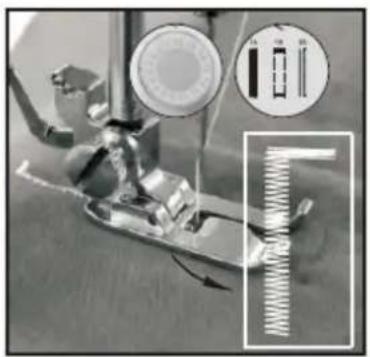
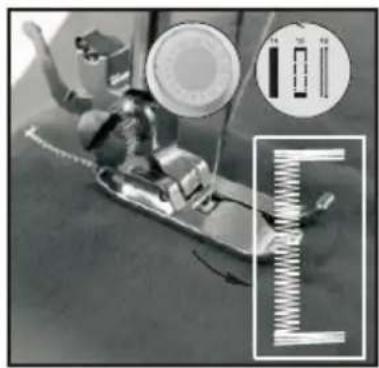
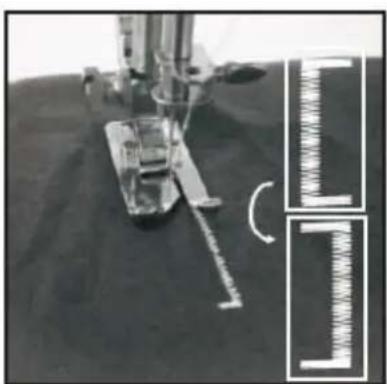
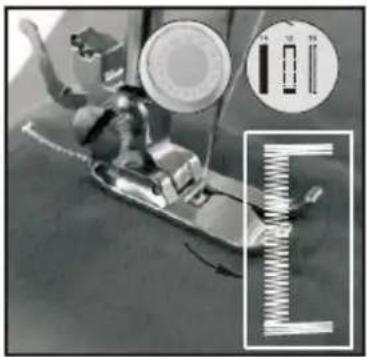
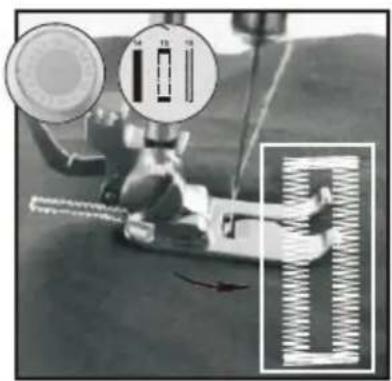
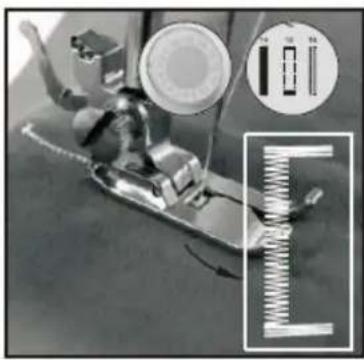
3) Choose the 7^th stitch, turn on switch and sew on the cloth in suitable length, then turn off switch. Note that try to keep sewed stitches in straight line (Fig.16).
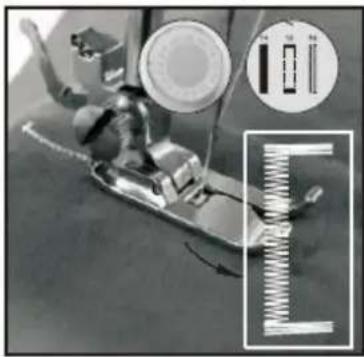
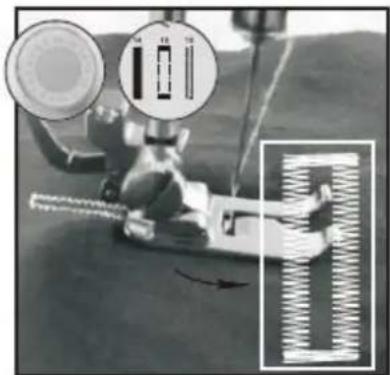
4) Choose the 8^th stitch, then turn on switch and sew 5-6 stitches in low speed, then turn off switch (Fig.17).
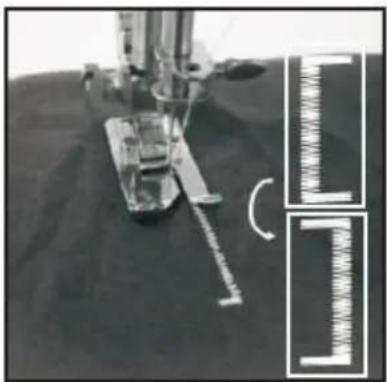
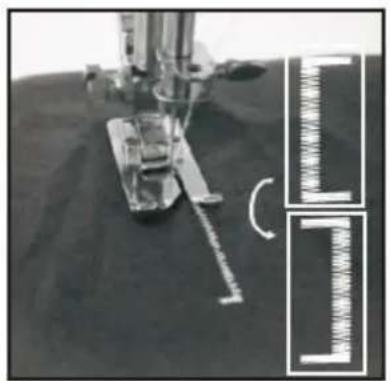
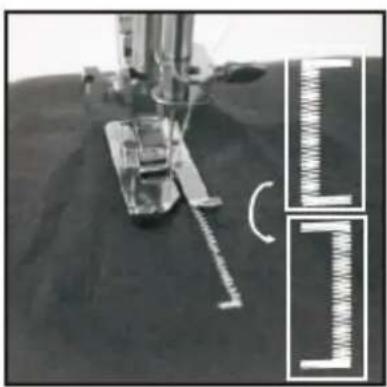
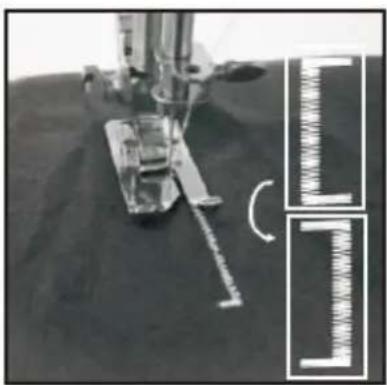
5) Raise the presser foot, rotating the cloth for 180° (Fig.18).
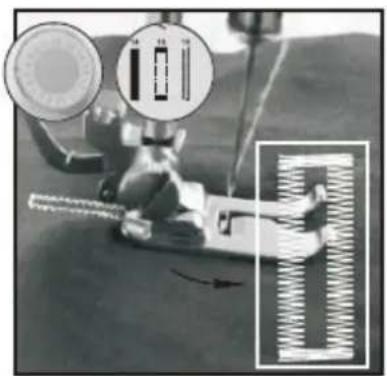
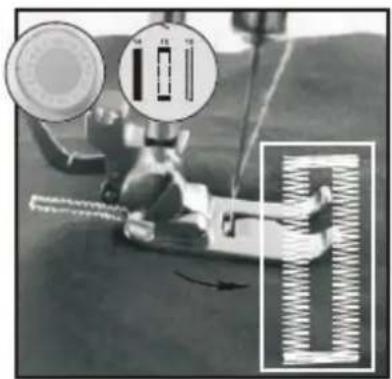
6) Choose the 7^th stitch, then turn on switch and sew till buttonhole is fully sewed (Fig.19).
natural_image
Mechanical device with circular component and inset diagram showing internal components (no readable text or symbols)Fig.15
natural_image
Close-up of a sewing machine with mechanical components and a magnified inset showing a spring mechanism (no visible text or symbols)Fig.16
natural_image
Close-up of a sewing machine with mechanical components and a magnified inset showing internal spring mechanism (no text or symbols visible)Fig.17
natural_image
Close-up of a sewing machine needle stitching fabric, with inset diagrams showing measurement or alignment details (no text or symbols)Fig.18
natural_image
Mechanical assembly diagram showing a tool interacting with a spring-loaded component, with no visible text or symbols.Fig.19
8. Drawer
This drawer is an accessory storage compartment, which can be slid out and you can store spare bobbins, needles, etc. in it. It is located at the bottom side below the hand wheel.

natural_image
White plastic container with cylindrical components, no visible text or symbolsWINDING THE BOBBIN
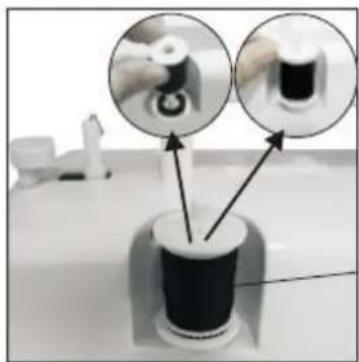
- Put a spool of thread on spool pin. (Fig.20)
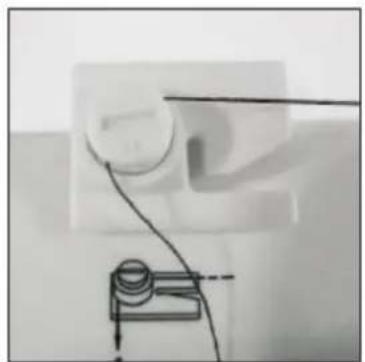
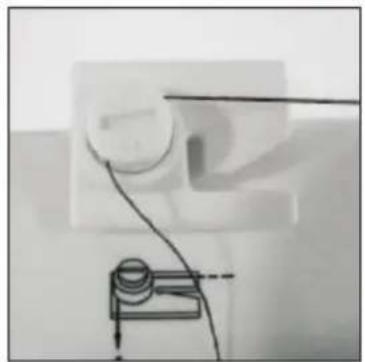
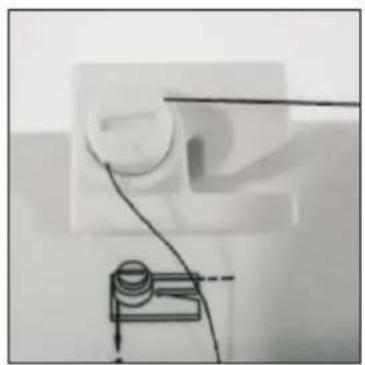
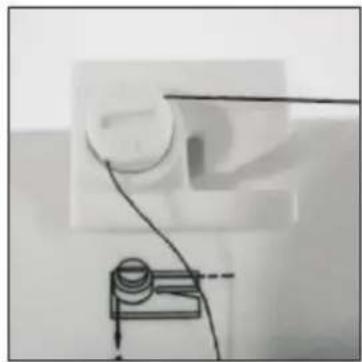
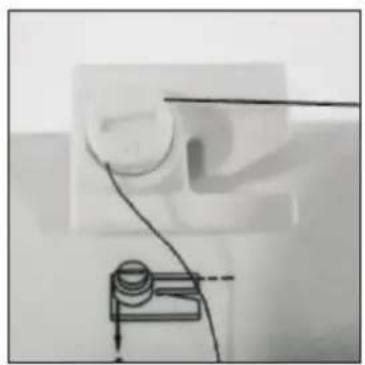
- Guide the thread through the bobbin winder tension disk on the upper side of the machine. (Fig.21)
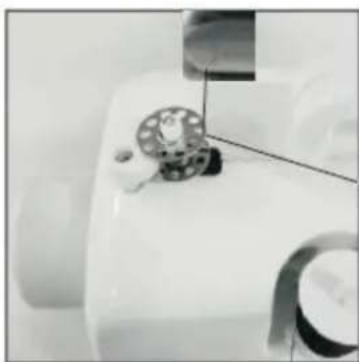
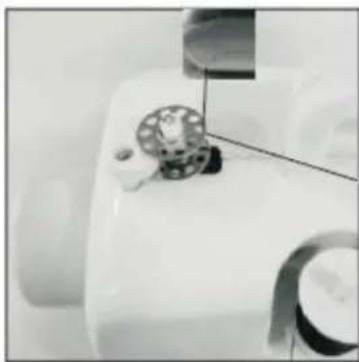
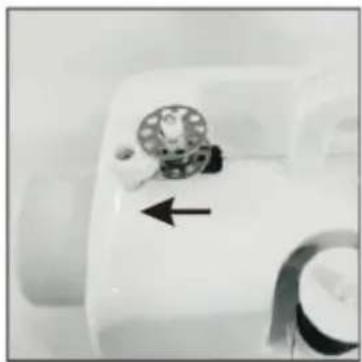
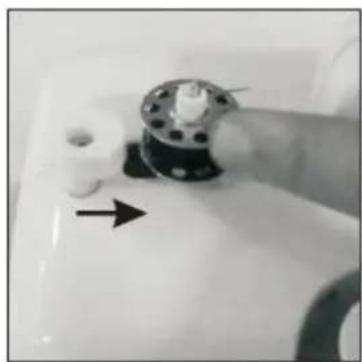
- Put the bobbin on the bobbin winder pin, wind thread clockwise around bobbin several times. (Fig.22)
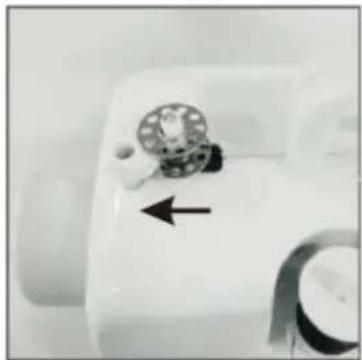
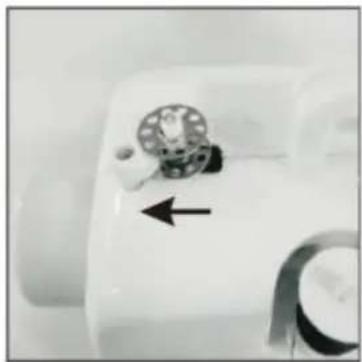
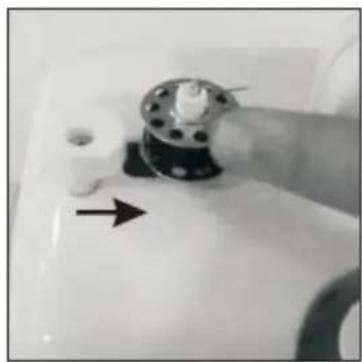
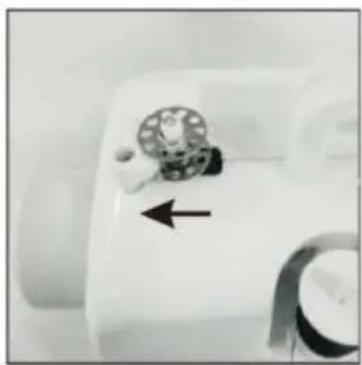
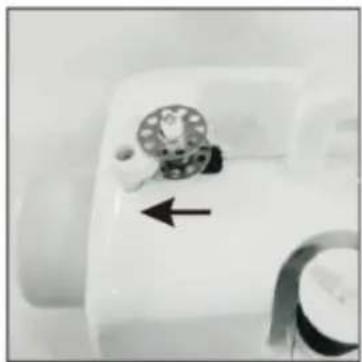
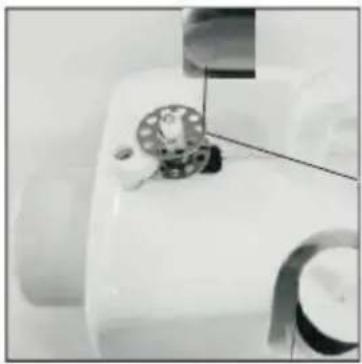
- Push bobbin to the left. (Fig.23)
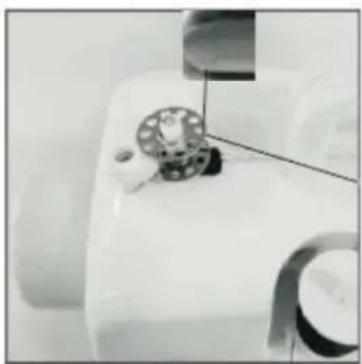
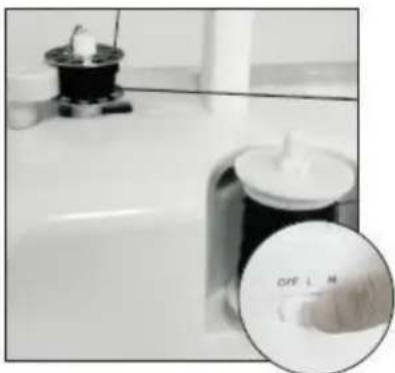
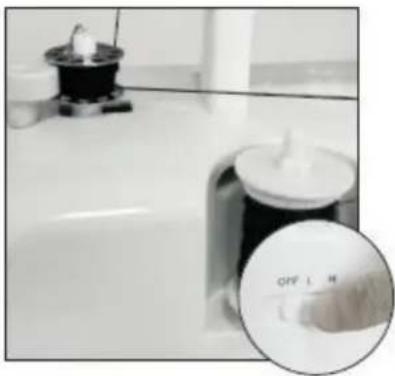
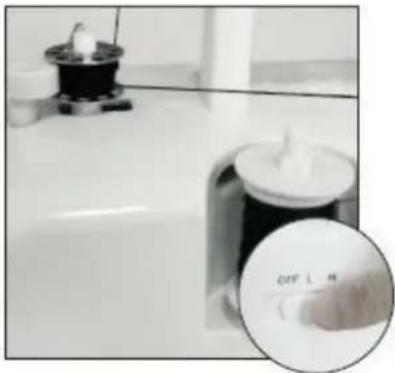
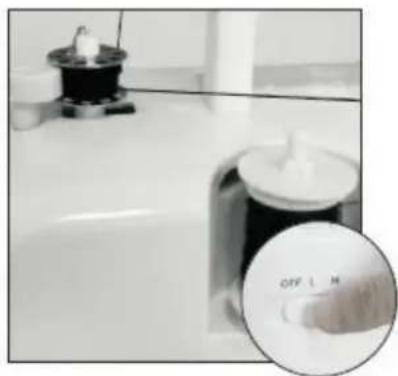
- Switch on the machine to start winding. (Fig.24)
- Switch off the machine to stop winding after appropriate volume of thread you had been winded on bobbin.
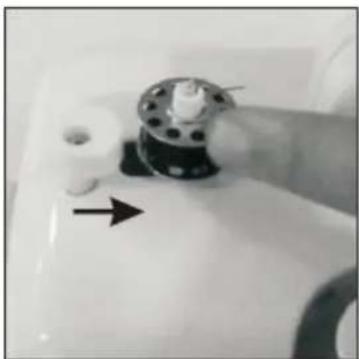
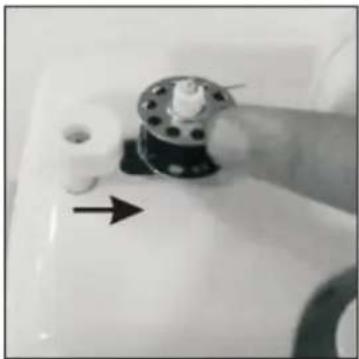
- Push bobbin away from bobbin winder stop, take bobbin off the pin and cut the thread. (Fig.25)
Caution:
Before winding the bobbin, raise the presser foot, take out the bottom bobbin and the upper thread.
natural_image
Close-up of a black plastic cup with two circular insets showing hand positioning (no text or symbols visible)Fig.20
natural_image
Close-up of a mechanical component with a cylindrical part and a curved base, no visible text or symbolsFig.21
natural_image
Close-up of a mechanical component with a circular housing and an arrow pointing to it (no visible text or symbols)Fig.22
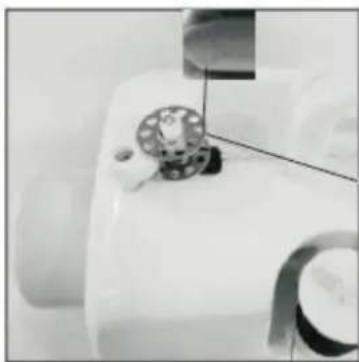
natural_image
Close-up of a mechanical component with a circular component mounted on a white base, no visible text or symbols.Fig.23
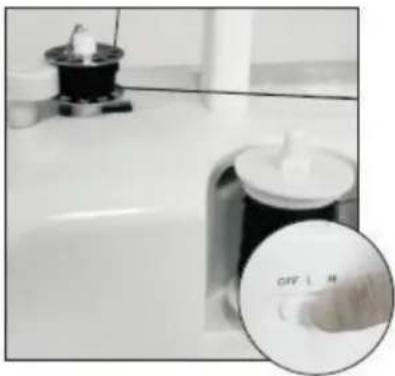
natural_image
Close-up of a kitchen sink with a hand pressing a button, showing a magnified inset of the dial (no text or symbols visible)Fig.24
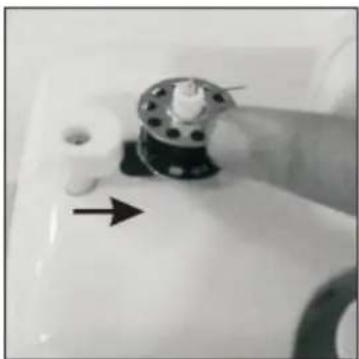
natural_image
Close-up of a white bathtub with a metallic knob and a small hole, marked by an arrow (no text or symbols visible)Fig.25
ADJUSTING STITCHING
- As shown in the Fig.A, normal stitching shall have top and bottom threading evenly, neither over tight nor loose. (① = Top thread; ② = Cloth; ③ = Bottom thread)
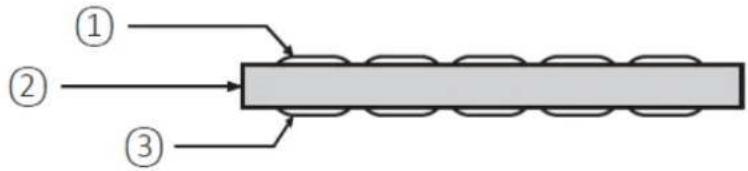
Fig.A
- If the bottom threading looks like a straight line (Fig.B), which indicates the top thread is too loose. Please turn upper thread tension dial to direction with bigger number to increase pressure until the stitching returns to normal.

natural_image
Simple line drawing of a rectangular object with evenly spaced circular elements on both sides (no text or symbols)Fig.B
- If the top thread looks like a straight line (Fig.C), which indicates an over-tight top thread. Please turn the upper thread tension dial to the direction with smaller number to reduce pressure until the stitching back to normal.

natural_image
Simple line drawing of a rectangular object with rounded ends, resembling a battery or connector (no text or symbols)Fig.C
APPLICABLE CLOTH FOR SEWING
| Sewing Cloth PresentationFabric specification | Cotton/Linen | Silk/Wool | Polyester | Elastic |
| Regular | √ | × | √ | △ |
| Thick | √ | × | √ | △ |
| Thin | √ | × | × | × |
| Hard | √ | √ | √ | △ |
| Soft | × | × | × | × |
Sewing effective:
v: means easy to sew
×: means difficult to sew
Δ: means not smooth to sew
Note:
1. The definition of the fabric thickness:
Thin (fabric): two layers of the fabric thickness < 0.35mm;
Thick (fabric): two layers of the fabric thickness > 0.8mm;
Regular (fabric): two layers of the fabric thickness ≥ 0.35mm and ≤ 0.8mm.
2. The definition of elastic cloth:
If the cloth, which size is “100mm x 30mm”, is extending to over 106mm under 0.5KG tension force, then the cloth is defined elastic, otherwise it is inelastic.
3. Hard fabric: such as Jeans, fine canvas, etc.
4. Soft fabric: such as towel, duster, etc.
APPLICABLE PRESSER FOOT (Only the "Catcher presser" is provided with this machine.)
| Type of presser foot | Picture | Range of use | Function of this type of presser foot |
| Catcher presser | 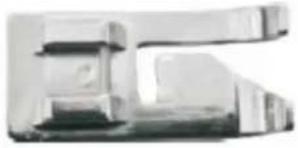 | Pattern 1 to 12 | Sewing catcher stitches professionally, along the fabric cutting edge to stitch and sew the edges. Presser foot with guide plate is used to align the selvage and selvage maintains smooth. |
| Patchwork presser | 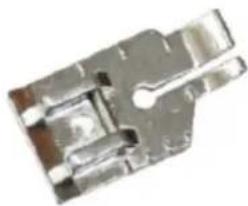 | Pattern 1 to 3 | Keep the right position for the presser foot down to keep the needle in 0.6cm. You can easily sew a straight line at the fabric edge at 1/4 for professional quilting stitch. |
| Blind hem presser | 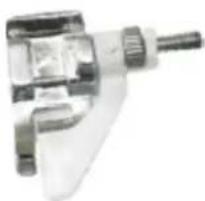 | Pattern 1 to 12 | By blind hem foot adjustable guide, it can make blind hem in a variety of fabrics, such as trousers, skirt, curtains edge etc. |
| Presser foot curling | 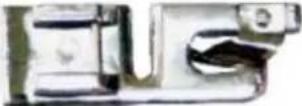 | Pattern 5 to 12 | Used to make a 5mm three-folded flat curling edge of the fabric, with the center of the straight stitch suture, for some fabric edging processing. |
| Leather roller presser | 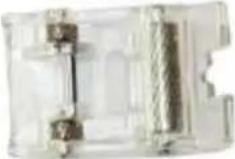 | Pattern 1 to 12 | Use the roller presser foot, evenly into the leather, synthetic leather, denim, very useful when sewing cloth coat and leather into cloth of difficulties. |
| Nail withhold presser | 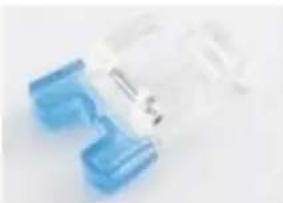 | Pattern 8 | Use to nail two or four buttons, it can suppress buttons smoothly, to avoid buttons moving around when sewing. |
Note: Please choose the applicable presser foot based on the practical sewing of fabric.
Caution: Do not use other presser foot except above mentioned ones.
MORE TIPS
- Make sure there is fabric under the needle when the machine is working and needle is moving, otherwise the machine will get stuck and the thread will be jammed.
- Turn the hand wheel for 2 to 3 circles by hand to test if it goes smoothly or not before starting the machine. Direction to turn the hand wheel should be the same as the arrow's direction on the hand wheel.
- Make sure the machine was threaded correctly (do not forget any step or have wrong threading).
- Do not sew the cloth with too much elasticity, neither too thin (like silk) nor too thick cloth, please follow the IM for the applicable cloth.
- If the machine gets stuck or jammed due to wrong operation, turn off the power & speed switch immediately.
- Before winding the bobbin, please take out the bottom bobbin and the upper thread.
TECHNICAL DATA:
Adapter input: 100-240 V AC, 50/60 Hz, 0,4A Max
Adapter output: 6 V DC, 1200 mA, 7.2W
Sewing Machine: 6 V DC, 1200 mA
GUARANTEE AND CUSTOMER SERVICE
Before delivery our devices are subjected to rigorous quality control. If, despite all care, damage has occurred during production or transportation, please return the device to your dealer. In addition to statutory legal rights, the purchaser has an option to claim under the terms of the following guarantee:
For the purchased device we provide 2 years guarantee, commencing from the day of sale. If you have a defective product, you can directly go back to the point of purchase.
Defects which arise due to improper handling of the device and malfunctions due to interventions and repairs
by third parties or the fitting of non-original parts are not covered by this guarantee. Always keep your receipt, without the receipt you can't claim any form of warranty. Damage caused by not following the instruction manual, will lead to a void of warranty, if this results in consequential damages then we will not be liable. Neither can we hold responsible for material damage or personal injury caused by improper use if the instruction manual is not properly executed. Damage to accessories does not mean free replacement of the whole appliance. In such case please contact our service department. Broken glass or breakage of plastic parts is always subject to a charge. Defects to consumables or parts subjected to wearing, as well as cleaning, maintenance or the replacement of said parts are not covered by the warranty and are to be paid.
ENVIRONMENT FRIENDLY DISPOSAL
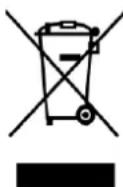
Recycling – European Directive 2012/19/EU
This marking indicates that this product should not be disposed with other household wastes. To prevent possible harm to the environment or human health from uncontrolled waste disposal, recycle it responsibly to promote the sustainable reuse of material resources. To return your used device, please use the return and collection systems or contact the retailer where the product was purchased. They can take this product for environmental safe recycling.


BATTERY MUST BE RECYCLED OR DISPOSED OF PROPERLY. DO NOT OPEN. DO NOT DISPOSE
OR IN FIRE OR SHORT CIRCUIT.
Manufactured by: Emerio Deutschland GmbH
BENUTZUNG DES FUSSPEDALS (A) UND ADAPTERS (B)
natural_image
White sewing machine with attached power cord and labeled parts A and B (no text or symbols on device body)natural_image
White electronic device casing with internal circuit board (no visible text or symbols)AUSWECHSELN DER NADEL
natural_image
Close-up of a hand using a sewing machine to adjust or install a mechanical component (no visible text or symbols)Abb.1
natural_image
Close-up of a hand using a tool to adjust or install electronic components, with an inset showing a 90-degree angle indicator (no text or symbols on the main subject)Abb. 2
AUSWECHSELN DES NÄHFUSSES
natural_image
Close-up of a sewing machine needle being cut with a knife, showing mechanical components and a finger (no text or symbols visible)Abb. 3
natural_image
Close-up of a sewing machine needle stitching fabric, no visible text or symbols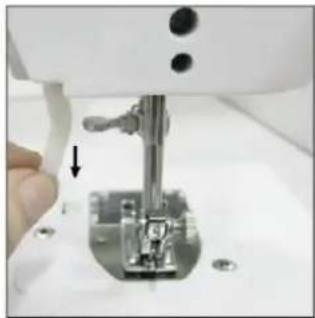
natural_image
Close-up of a sewing machine needle and base mechanism with a hand adjusting the hook (no visible text or symbols)Abb. 5
natural_image
Close-up of a sewing machine needle and clasp mechanism (no visible text or symbols)Abb. 6
EINFÄDELN DER NÄHMASCHINE
natural_image
Close-up of a sewing machine needle being adjusted, with a finger pointing to the base (no visible text or symbols)Abb. 7

natural_image
Close-up of a hand adjusting a mechanical component on a circuit board (no visible text or symbols)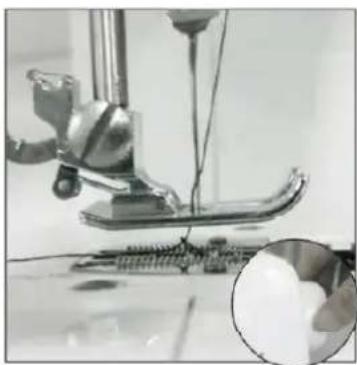
natural_image
Close-up of a sewing machine needle and fabric being processed, with a magnified inset showing a close-up of the fabric (no visible text or symbols)Abb. 9
natural_image
Close-up of a sewing machine needle stitching fabric, no visible text or symbolsNÄHEN
natural_image
Close-up of a sewing machine needle stitching fabric (no visible text or symbols)Abb. 11
natural_image
Close-up of a sewing machine needle stitching fabric, labeled 'Abb. 12' at bottom (no other text or symbols visible)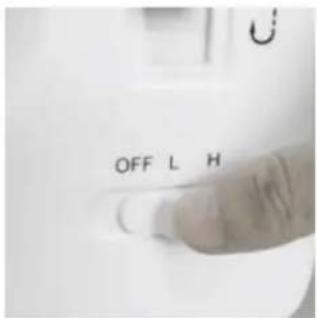
Abb. 13
natural_image
Close-up of a white electronic device with a finger inserted, showing internal components (no visible text or symbols)EIGENSCHAFTEN
natural_image
Close-up of a sewing machine needle stitching fabric (no visible text or symbols)6. Ärmel nähen
natural_image
Close-up of a sewing machine needle and fabric (no visible text or symbols)natural_image
Mechanical device with circular components and a magnified inset showing internal components (no visible text or symbols)Abb. 15
natural_image
Close-up of a sewing machine with a magnified inset showing internal components (no visible text or symbols)Abb. 16
natural_image
Close-up of a mechanical device with a magnified inset showing internal components (no visible text or symbols)Abb. 17
natural_image
Close-up of a sewing machine needle stitching fabric, with measurement markings visible (no readable text or symbols)Abb. 18
natural_image
Mechanical device with threaded rod and circular components, no visible text or symbolsAbb. 19
8. Schublade
natural_image
White plastic container with cylindrical objects inside, no visible text or symbolsAUFSPULEN
natural_image
Close-up of a small black object being held by two circular insets, with no visible text or symbols.Abb. 20
natural_image
Close-up of a mechanical device with a circular component and a cylindrical component, no visible text or symbolsAbb. 21
natural_image
Close-up of a mechanical component with a black arrow pointing to a circular feature (no visible text or symbols)Abb. 22
natural_image
Close-up of a mechanical component with a circular component and a connecting rod (no visible text or symbols)Abb. 23
natural_image
Close-up of a kitchen sink with a small container and a hand holding a button, showing no visible text or symbols.Abb. 24
natural_image
Close-up of a kitchen sink with a metallic tool and arrow pointing to a surface (no text or symbols visible)Abb. 25
ANPASSEN DER NAHT
natural_image
Simple line drawing of a rectangular object with evenly spaced circular elements on both sides (no text or symbols)Abb. B
natural_image
Simple line drawing of a rectangular object with rounded ends, resembling a container or panel (no text or symbols)Abb. C
GEEIGNETE STOFFE
UTILISATION DE LA PÉDALE (A) ET DE L'ADAPTATEUR SECTEUR (B)
natural_image
White sewing machine with attached black components and labeled parts A and B (no visible text or symbols on the device itself)INSTALLATION DES PILES
natural_image
White electronic device casing with internal circuit board (no visible text or symbols)REMPLACEMENT DE L'AIGUILLE
natural_image
Close-up of a hand using a sewing machine to adjust or install a mechanical component (no visible text or symbols)Schéma 1
REMPLACEMENT DU PIED PRESSEUR
natural_image
Close-up of a sewing machine needle stitching fabric, with a hand adjusting the part (no visible text or symbols)Schéma 3
natural_image
Close-up of a sewing machine needle being cut with a hand operating it (no visible text or symbols)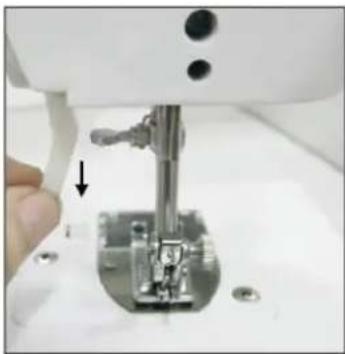
natural_image
Close-up of a sewing machine needle with metal components and a hand adjusting the base (no visible text or symbols)Schéma 5
natural_image
Close-up of a sewing machine needle being cut, no visible text or symbols on the device itselfSchéma 6
ENFILAGE DE LA MACHINE À COUDRE
natural_image
Close-up of a sewing machine needle being adjusted, with a finger pointing to the base (no visible text or symbols)Schéma 7
natural_image
Close-up of a hand adjusting a mechanical component with a circular flange (no visible text or symbols)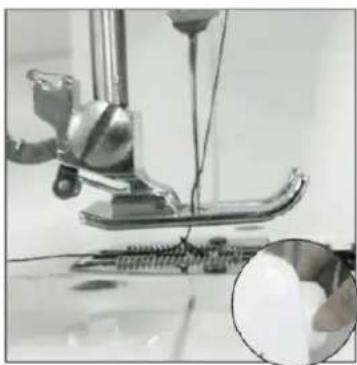
natural_image
Close-up of a sewing machine needle stitching fabric, with a magnified inset showing the fabric detail (no text or symbols visible)Schéma 9
natural_image
Close-up of a sewing machine needle stitching fabric, no visible text or symbolsSchéma 10
COUTURE
natural_image
Close-up of a sewing machine needle stitching fabric (no visible text or symbols)Schéma 11
natural_image
Close-up of a sewing machine needle stitching fabric, labeled 'Schéma 12' at bottom (no other text or symbols visible)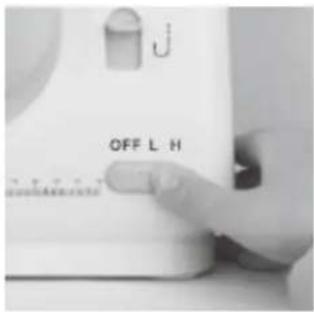
Schéma 13
CARACTÉRISTIQUES
natural_image
Close-up of a sewing machine needle stitching fabric (no visible text or symbols)6. Couture de manches
natural_image
Close-up of a sewing machine needle stitching fabric (no visible text or symbols)7. Couture manuelle de boutonnières
natural_image
Mechanical device with circular components and a magnified inset showing internal components (no visible text or symbols)Schéma 15
natural_image
Close-up of a sewing machine with mechanical components and a close-up of a spring mechanism (no visible text or symbols)Schéma 16
natural_image
Close-up of a sewing machine with mechanical components and a magnified inset showing internal components (no visible text or symbols)Schéma 17
natural_image
Close-up of a sewing machine needle stitching fabric, with magnified insets showing thread details (no text or symbols visible)Schéma 18
natural_image
Mechanical assembly diagram showing a tool interacting with a spring-loaded component, with no visible text or symbols.Schéma 19
8. Tiroir
natural_image
White plastic container with rolled paper and small items, no visible text or symbolsENROULER LA BOBINE
natural_image
Close-up of a small mechanical component with two circular insets showing close-ups of the top view (no text or symbols visible)Schéma 20
natural_image
Pure mechanical diagram showing a cylindrical component and a base with no text or symbolsSchéma 21
natural_image
Close-up of a mechanical component with a black arrow pointing to a small circular feature (no visible text or symbols)Schéma 22
natural_image
Close-up of a sewing machine needle stitching a small mechanical component (no visible text or symbols)Schéma 23
natural_image
Close-up of a kitchen sink with a hand pressing a button, showing a small container and a small pot (no text or symbols visible)Schéma 24
natural_image
Close-up of a mechanical component with a black arrow pointing to it, no visible text or symbolsSchéma 25
AJUSTEMENT DES POINTS
Schéma A
natural_image
Simple line drawing of a rectangular object with evenly spaced circular elements on both sides (no text or symbols)Schéma B
natural_image
Simple line drawing of a rectangular object with rounded ends, resembling a container or plate (no text or symbols)Schéma C
TISSUS APPROPRIÉS À LA COUTURE
DE VOETPEDAAL (A) EN ADAPTER (B) GEBRUIKEN
natural_image
White sewing machine with labeled components A and B, shown with wiring and a power plug (no text or symbols beyond labels)DE BATTERIJEN INSTALLEREN
natural_image
White electronic device casing with internal circuit board (no visible text or symbols)DE NAALD VERVANGEN
natural_image
Close-up of a sewing machine needle being adjusted, no visible text or symbolsFig.1
natural_image
Close-up of a sewing machine needle stitching a small object, with a 90-degree angle indicator (no text or symbols on the diagram itself)Fig.2
DE NAAIVOET VERVANGEN
natural_image
Close-up of a sewing machine needle being cut with a hand adjusting the blade (no visible text or symbols)Fig.3
natural_image
Close-up of a sewing machine needle and foot, showing metal components and a hand operating it (no visible text or symbols)Fig.4
natural_image
Close-up of a sewing machine needle with metal components and a hand adjusting the base (no visible text or symbols)Fig.5
natural_image
Close-up of a sewing machine needle stitching metal components, no visible text or symbolsFig.6
DE NAAIMACHINE VAN DRAAD VOORZIEN
natural_image
Close-up of a sewing machine needle with a finger pointing to the base (no visible text or symbols)Fig.7
natural_image
Close-up of a hand holding a mechanical component with a circular housing, next to a black base (no visible text or symbols)Fig.8
natural_image
Close-up of a sewing machine needle stitching fabric, with a magnified inset showing the fabric detail (no text or symbols visible)Fig.9
natural_image
Close-up of a sewing machine needle and foot assembly (no visible text or symbols)Fig.10
NAAIEN
natural_image
Close-up of a sewing machine needle stitching fabric (no visible text or symbols)Fig.11
natural_image
Close-up of a sewing machine needle stitching fabric (no visible text or symbols)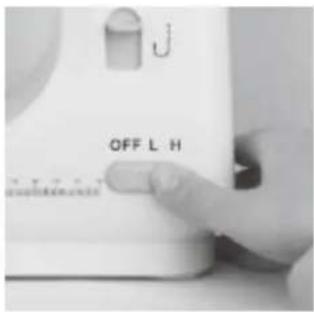
Fig.13
EIGENSCHAPPEN
natural_image
Close-up of a sewing machine needle stitching a metal component (no visible text or symbols)6. Mouwen naaien
natural_image
Close-up of a sewing machine needle stitching fabric (no visible text or symbols)7. Handmatig knoopsgat
natural_image
Mechanical device with circular component and magnified inset showing internal components (no visible text or symbols)Fig.15
natural_image
Close-up of a sewing machine with attached mechanical components and a close-up inset showing a spring mechanism (no visible text or symbols)Fig.16
natural_image
Mechanical device with attached circular component and magnified inset showing internal spring mechanism (no text or symbols)Fig.17
natural_image
Close-up of a sewing machine needle stitching fabric, with magnified insets showing thread details (no text or symbols visible)Fig.18
natural_image
Close-up of a sewing machine needle with a magnified inset showing internal components (no visible text or symbols)Fig.19
8. Lade
natural_image
White plastic container with rolled paper and small items, no visible text or symbolsDE SPOEL OPWINDEN
natural_image
Close-up of a black plastic cup with two circular insets showing hand positioning (no text or symbols visible)Fig.20
natural_image
Pure mechanical diagram showing a pulley and base assembly without any text or symbolsFig.21
natural_image
Close-up of a mechanical component with a circular feature and an arrow pointing to it (no visible text or symbols)Fig.22
natural_image
Close-up of a mechanical component with a circular component and a connecting rod (no visible text or symbols)Fig.23
natural_image
Close-up of a kitchen sink with a hand pointing to a white object, showing no visible text or symbols.Fig.24
natural_image
Close-up of a mechanical component with a black arrow pointing to it, no visible text or symbolsFig.25
STEKEN AANPASSEN
Fig.A
natural_image
Simple line drawing of a rectangular object with four circular elements on both sides, no text or symbols present.Fig.B
natural_image
Simple line drawing of a rectangular object with rounded ends, resembling a container or panel (no text or symbols)Fig.C
GEPASTE KLEDING OM TE NAAIEN
natural_image
White sewing machine with labeled parts A and B, shown with wiring and a power plug (no text or symbols on the device itself)WKŁADANIE BATERII
natural_image
White electronic device casing with internal battery module (no visible text or symbols)WYMIANA IGŁY
natural_image
Close-up of a sewing machine needle being adjusted, no visible text or symbolsrys. 1
natural_image
Close-up of a sewing machine needle stitching metal components, with a 90-degree angle indicator (no text or symbols on the main subject)rys. 2
WYMIANA STOPKI
natural_image
Close-up of a sewing machine needle being cut with a hand adjusting the blade (no visible text or symbols)rys. 3
natural_image
Close-up of a sewing machine needle being adjusted, no visible text or symbolsrys..4
natural_image
Close-up of a sewing machine needle stitching metal components, with a hand adjusting the part (no visible text or symbols)rys. 5
natural_image
Close-up of a sewing machine needle stitching metal components, no visible text or symbolsNAWLEKANIE NICI W MASZYNIE DO SZYCIA
natural_image
Close-up of a sewing machine needle with a finger pressing a button (no visible text or symbols)rys. 7
natural_image
Close-up of a hand operating a mechanical component with a circular base and mounting holes (no visible text or symbols)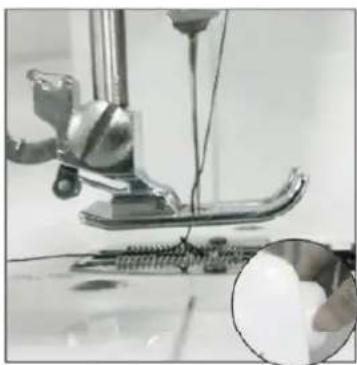
natural_image
Close-up of a sewing machine needle stitching fabric, with a magnified inset showing the needle detail (no text or symbols visible)rys .9
natural_image
Close-up of a sewing machine needle and baseplate (no visible text or symbols)rys. 10
SZYCIE
natural_image
Close-up of a sewing machine needle stitching fabric (no visible text or symbols)rys. 11

natural_image
Close-up of a sewing machine needle stitching fabric, no visible text or symbols on the instrument itself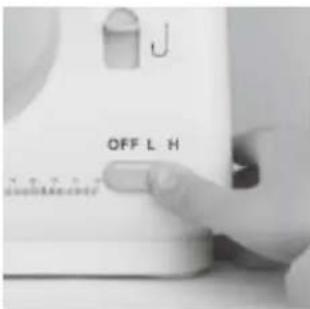
rys. 13
FUNKCJE
natural_image
Close-up of a sewing machine needle stitching fabric (no visible text or symbols)6. Szycie rękawów
natural_image
Close-up of a sewing machine needle stitching fabric (no visible text or symbols)natural_image
Mechanical device with circular component and schematic diagram (no readable text or symbols)rys. 15
natural_image
Close-up of a sewing machine with attached mechanical components and a close-up inset showing a spring mechanism (no visible text or symbols)rys. 16
natural_image
Mechanical assembly with spring mechanism and circular component (no visible text or symbols)rys. 17
natural_image
Close-up of a sewing machine needle stitching fabric, with measurement markings visible (no text or symbols)rys. 18
natural_image
Mechanical assembly with spring-loaded components and a magnified inset showing internal structure (no visible text or symbols)rys. 19
8. Szuflada
natural_image
White plastic container with rolled paper and small items inside (no visible text or symbols)NAWIJANIE SZPULKI
natural_image
Close-up of a small black object being held by two circular insets, with no visible text or symbols.rys. 20
natural_image
Close-up of a mechanical component with a cylindrical part and a curved base, no visible text or symbolsrys. 21
natural_image
Close-up of a white mechanical component with a metallic knob and a black arrow pointing to it (no visible text or symbols)rys. 22
natural_image
Close-up of a sewing machine needle stitching a white cylindrical component (no visible text or symbols)rys. 23
natural_image
Close-up of a kitchen sink with a hand presser and a magnified inset showing the finger pressing down (no text or symbols visible)rys. 24
natural_image
Close-up of a kitchen sink with a mechanical component and an arrow pointing to it (no visible text or symbols)rys. 25
REGULACJA ŚCIEGU
natural_image
Simple line drawing of a rectangular object with evenly spaced circular elements on both sides (no text or symbols)rys. B
natural_image
Simple line drawing of a rectangular object with rounded ends and horizontal lines, resembling a container or panel (no text or symbols)rys. C
DOBÓR ŚCIEGU DO RODZAJU TKANINY