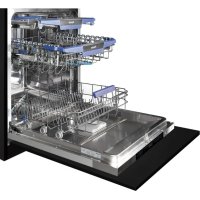
PLT7460 - Dishwasher Pando - Free user manual and instructions
Find the device manual for free PLT7460 Pando in PDF.



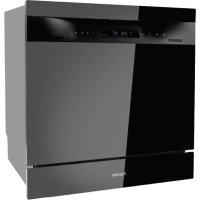
| Product type | Built-in dishwasher |
| Brand | Pando |
| Model | PLT7460 |
| Capacity | 14 place settings |
| Dimensions (H x W x D) | 815 x 598 x 550 mm (door closed) |
| Depth with door open | 1150 mm |
| Net weight | Approximately 45 kg |
| Power supply | 220-240 V, 50 Hz, 10 A |
| Energy class | C |
| Energy consumption (eco cycle) | 0.747 kWh |
| Water consumption (eco cycle) | 9.8 L |
| Duration of eco program | 3 h 50 min |
| Noise level | 44 dB(A) – Class B |
| Wash programs | Auto, Hygiene, Universal, ECO, Glass, 90 min, Rapid, Self-cleaning |
| Additional functions | Extra wash, Energy saving, Ultra fast, Automatic opening, Basket selection |
| Water softener | Adjustable (H1 to H6) |
| Filtration system | Coarse residue filter and fine filter, washable |
| Spray arms | Upper and lower arms, cleanable |
| Safety | Grounding, frost protection, door lock, automatic shut-off |
| Spare parts and repairability | Available through Pando authorized after-sales service |
| Warranty | 3 years |
Frequently Asked Questions - PLT7460 Pando
User questions about PLT7460 Pando
0 question about this device. Answer the ones you know or ask your own.
Ask a new question about this device
Download the instructions for your Dishwasher in PDF format for free! Find your manual PLT7460 - Pando and take your electronic device back in hand. On this page are published all the documents necessary for the use of your device. PLT7460 by Pando.
USER MANUAL PLT7460 Pando
Installation and user manual
Guarantee certificate
+info
+info
+info
+info

| copas(PCOS) | copas(PCOS) |
| <120 mm | <180 mm(with the third tray)<250 mm(without the third tray) |
Cesta superior
https://www.pando.es/en/after-sales-services/
FR
MANUTENÇÂO E LIMPEZA
| coupes moyennespetites coupes | |
| Ø 120 mm | Ø 180 mm (with the third tray) Ø 250 mm (without the third tray) |
Panier supérieur
CAUSE RECOMMANDATION
First of all we wish to thank you for the trust shown on our Company by purchasing one of our products. We are sure you have made the right choice. In Pando, not only we offer first quality products, but also we make available a large professional team to serve and assist you on any query you may have regarding installation and/or performance.
We also suggest you to pay a visit to our web site (www.pando.es/en) to get to know us better and where you will find all product range containing all necessary commercial and technical information.
A wide selection of extractor hoods can be found there; Wall Hoods, Ceiling, Island or Canopy Hoods. Four types of installation making possible to adapt ourselves to any type of kitchen based on different needs.
At the same time, we take the opportunity to introduce you our collection of in house essential appliances, such our new high performance Ovens and Microwaves, Induction and Gas Hobs to make real your best recipes. Wine Coolers and Aging Wine Coolers to maintain and keep your wines in best of conditions and built-in Dishwashers with latest technology.
All that under a brand with over 40 year history in the market, making products like a real craftsman, and gathering in them the best of our experience to please all your needs.
We sincerely look forward you to have fun, experience and enjoy with the comfort and capacity of what already became your new kitchen ally.
Many Thanks
The PANDO Team
CONTENTS
SAFETY INFORMATION 166
Earthing Instructions 167
Disposal 170
PRODUCT OVERVIEW 171
USING YOUR DISHWASHER 172
Loading The Salt Into The Softener 172
Basket Loading Tips 174
Water Softener 176
Preparing And Loading Dishes 177
Function Of The Rinse Aid And Detergent 180
Filling The Rinse Aid Reservoir 181
Filling The Detergent Dispenser 182
QUICK USER GUIDE 183
CONTROL PANEL 184
LOADING THE BASKETS 187
PROGRAM SELECTION 190
Wash cycle table 190
Saving energy. 191
Starting A Program 191
Changing The Program Mid-cycle 191
Forget To Add A Dish? 192
Auto Open 192
MAINTENANCE AND CLEANING 193
External Care 193
Internal Care 193
Caring For The Dishwasher 196
TROUBLESHOOTING TIPS 197
ERROR CODES 201
WARRANTY 202
TECHNICAL INFORMATION 203
INSTALLATION INSTRUCTION 205
About Power Connection 206
Water Supply And Drain 207
Connection Of Drain Hoses 208
PositioningThe Appliance 209
Built-In Installation 209
Sound-absorbing strip installation 214
NOTE:
- Reviewing the section on Troubleshooting Tips will help you solve some common problems by yourself.
- If you cannot solve the problems by yourself, please ask for help from a professional technician.
- The manufacturer, following a policy of constant development and updating of the product, may make modifications without giving prior notice.
- If lost or out-of-date, you can receive a new user manual from the manufacturer or responsible vendor.
SAFETY INFORMATION
WARNING
When using your dishwasher, follow the precautions listed below:
- Installation and repair can only be carried out by a qualified technician
- This appliance is intended to be used in household
- This appliance can be used by children aged 8 and older, and persons with reduced physical, sensory or mental capabilities or lack of experience and knowledge if they have been given supervision or instruction concerning use of the appliance in a safe way and understand the hazards involved.
- Children shall not play with the appliance. Cleaning and user maintenance shall not be done by children without supervision. (For EN60335-1)
-
This appliance is not intended for use by persons mental capabilities, or lack of experience and knowledge, unless they have been given supervision or instruction concerning use of the appliance by a person responsible for their safety. (For IEC60335-1)
-
Packaging material could be dangerous for children!
- This appliance is for indoor household use only. To protect against the risk of electrical shock, do not immerse the unit, cord or plug in water or other liquid.
- Please unplug before cleaning and performing maintenance on the appliance.
- If the supply cord is damaged, it must be replaced by the manufacturer or its service agent or a similarly qualified person in order to avoid a hazard.

Earthing Instructions
- This appliance must be earthed. In the event of a malfunction or breakdown, earthing will reduce the risk of an electric shock by providing a path of least resistance of electric current. This appliance is equipped with an earthing conductor plug.
- The plug must be plugged into an appropriate outlet that is installed and earthed in accordance with all local codes and ordinances.
- Improper connection of the equipment-earthing conductor can result in the risk of an electric shock.
-
Check with a qualified electrician or service representative if you are in doubt whether the appliance is properly grounded.
-
Do not modify the plug provided with the appliance; If it does not fit the outlet.
- Have a proper outlet installed by a qualified electrician.
- Do not abuse, sit on, or stand on the door or dish rack of the dishwasher.
- Do not operate your dishwasher unless all enclosure panels are properly in place.
- Open the door very carefully if the dishwasher is operating, there is a risk of water squirting out.
- Do not place any heavy objects on or stand on the door when it is open. The appliance could tip forward.
- When loading items to be washed:
1) Locate sharp items so that they are not likely to damage the door seal;
2) Warning: Knives and other utensils with sharp points must be loaded in the basket with their points facing down or placed in a horizontal position.
- Some dishwasher detergents are strongly alkaline. They can be extremely dangerous if swallowed. Avoid contact with the skin and eyes and keep children away from the dishwasher when the door is open.
-
Check that there are no detergent residues after completion of the wash cycle.
-
Do not wash plastic items unless they are marked "dishwasher safe" or the equivalent.
- For unmarked plastic items not so marked, check the manufacturer's recommendations.
- Use only detergent and rinse agents recommended for use in an automatic dishwasher.
- Never use soap, laundry detergent, or hand washing detergent in your dishwasher.
- The door should not be left open, since this could increase the risk of tripping. If the supply cord is damaged, it must be replaced by the manufacturer or its service agent or a similarly qualified person in order to avoid a hazard.
- During installation, the power supply must not be excessively or dangerously bent or flattened.
- Do not tamper with controls.
- The appliance needs to be connected to the main water valve using new hose sets. Old sets should not be reused.
- To save energy, in stand by mode, the appliance will switch of automatically after 15 minutes without any user interaction.
- The maximum number of place settings to be washed is 14.
- The maximum permissible inlet water pressure is 1MPa .
- The minimum permissible inlet water pressure is 0.04MPa .
Disposal

The symbol on the product or its packaging indicates that this product cannot be disposed of like normal domestic waste. The product must be handed over at a collection point for recycling electrical and electronic equipment. If you ensure that this product is correctly disposed of, you will help to avoid the possible negative environmental and public health effects that could arise from incorrect disposal. For more detailed information about recycling this product, please contact your city authorities, the domestic waste service or the establishment where you purchased it. This electrical appliance is marked in compliance with European Directive 2012/19/EU on electrical and electronic appliance waste (WEEE).

ENVIRONMENTAL PROTECTION AND WASTETREATMENT
DISPOSAL OF THE PACKAGING. The packaging is marked with in Green Dot.
In its commitment to the protection of the environment and in compliance with the provisions of the European Directive 94/62 / EC on packaging and packaging waste and the derived Law 22/2011 on Contaminated Residues and Soils, Pando entrusts entities of social economy an Integrated Management System, responsible for the periodic collection at the consumer's home or in its vicinity of used packaging and packaging waste for subsequent treatment.
To remove all packaging materials such as cardboard, expanded polyurethane, and film, use the appropriate containers.
This ensures the correct treatment and reuse of packaging materials.
The manufacturer will not be held liable for any possible inaccuracies due to printing or transcription errors in this manual. The manufacturer reserves the right to incorporate modifications considered useful or necessary into the products, which will not alter their essential functional and safety characteristics.
PRODUCT OVERVIEW
IMPORTANT:
To get the best performance from your dishwasher, read all operating instructions before using it for the first time.
Annexed documents ofWarnings 1 andWarnings 2 and PANEL mounting template and plinth and installation, are attached to this manual.
They must be taken into account by both the installer and the user.

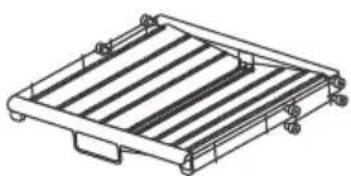
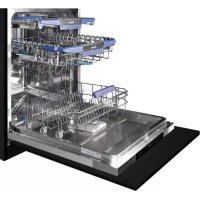
Cutlery rack

Upper spray arm Cup rack
Upper basket
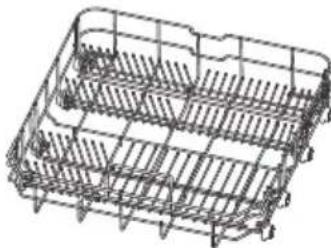
Lower basket

PANDO 720^ WATER SPRAY SYSTEM
The breakthrough innovative spray arm uses two separate rotating axes to maximize water spray to all corners of the dishwasher and saves up till 15% time. Exceptional cleaning result in a faster and quieter way.
USING YOUR DISHWASHER
Before using your dishwasher :

- Set the water softener
- Loading the salt Into the softener
- Loading the basket
- Fill the dispenser detergent
Loading The Salt Into The Softener

NOTE:
If your model does not have any water softener, you may skip this section. Always use salt intended for dishwasher use.
The salt container is located beneath the lower basket and should be filled as explained in the following:
WARNING
- Only use salt specifically designed for dishwashers use!
Every other type of salt not specifically designed for dishwasher use, especially table salt, will damage the water softener. In case of damages caused by the use of unsuitable salt the manufacturer does not give any warranty nor is liable for any damages caused.
- Only fill with salt before running a cycle.
This will prevent any grains of salt or salty water, which may have been spilled, remaining on the bottom of the machine for any period of time, which may cause corrosion.
Please follow the steps below for adding dishwasher salt:

- Remove the lower basket and unscrew the reservoir cap.
- Place the end of the funnel (supplied) into the hole and pour in about 1.5kg of dishwasher salt.
- Fill the salt container to its maximum limit with water, It is normal for a small amount of water to come out of the salt container.
- After filling the container, screw back the cap tightly.
- The salt warning light will turn off after the salt container has been filled with salt.
- Immediately after filling the salt into the salt container, a washing program should be started (We suggest to use a short program). Otherwise the filter system, pump or other important parts of the machine may be damaged by salty water. This is out of warranty.

NOTE:
- The salt container must only be refilled when the salt warning light ( ) in the control panel comes on. Depending on how well the salt dissolves, the salt warning light may still be on even though the salt container is filled. If there is no salt warning light in the control panel (for some m ydaIscan estimate when to fill the salt into the softener by the cycles that the dishwasher has run.
- If salt has spilled, run a soak or quick program to remove it.
Basket Loading Tips
Adjusting the upper basket
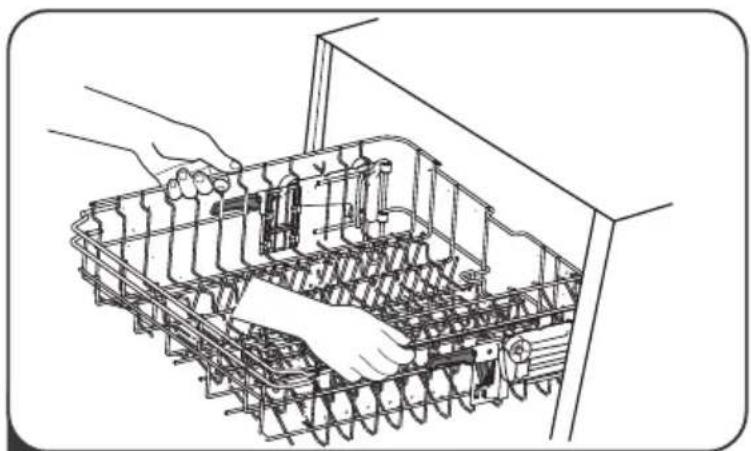
To raise the upper basket just lift, the upper basket at the center of each side until the basket locks into place in the upper position. It is not necessary to lift the adjuster handle.

2 To lower the upper basket, adjust handles on each side to release the basket and lower it to the lower position.


Folding back the cup shelves
You can load cups or glasses onto the glass support. This is also very convenient for washing wine glasses. Hang your wine glasses onto the pegs of the glass support.
Please determine the position according to the size of the wine glasses.
| Small glass | Middle glass |
| <120 mm | <180 mm (with the third tray) <250 mm (without the third tray) |
Small glasses are placed on the left side of the upper basket, and middle glasses are placed on the right side.

To make room for taller items in the upper basket, raise the cup rack upwards. You can then lean the tall glasses against it. You can also remove it when it is not required for use.
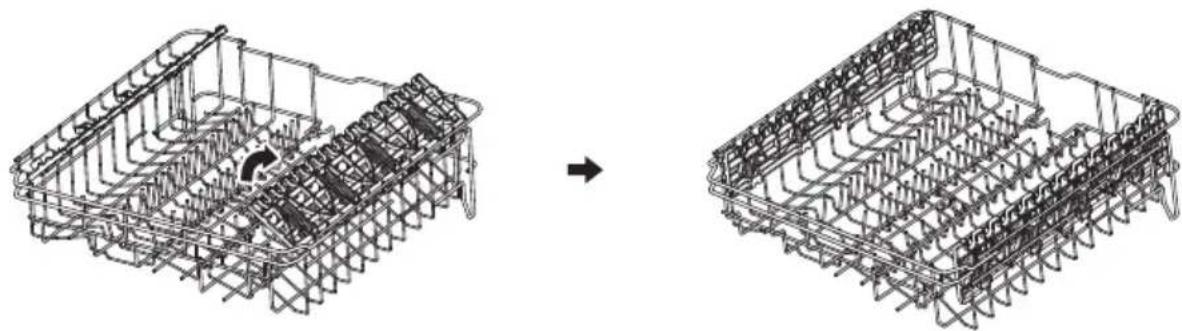
Folding back the rack shelves
The spikes of the lower basket are used for holding plates and a platter.
They can be lowered to make more room for large items.

raise upwards fold backwards
Water Softener
The water softener must be set manually, using the water hardness dial.
The water softener is designed to remove minerals and salts from the water, which would have a detrimental or adverse effect on the operation of the appliance.
The more minerals there are, the harder your water is.
The softener should be adjusted according to the hardness of the water in your area. Your local Water Authority can advise you on the hardness of the water in your area.
Adjusting salt consumption
The dishwasher is designed to allow for adjustment in the amount of salt consumed based on the hardness of the water used. This is intended to optimise and customise the level of salt consumption.
Please follow the steps below for adjustment in salt consumption.
- Open the door, switch on the appliance;
- Within 60 seconds after the appliance was switched on, press the Program button >> for more than 5 seconds, then press +' to enter the water softener setting mode.
- Press the ' button thap proper set according to your local environment, the set change in the following sequence: H1->H2->H3->H4->H5->H6;
- Press the Power button to end the setting mode.
| WATER HARDNESS | Water softner level | Regeneration occurs every X program sequence 1) | Salt consumption (gram/cycle) | |||
| German dH | French fH | British Clarke | Mmol/l | |||
| 0 - 5 | 0 - 9 | 0 - 6 | 0 - 0.94 | H1 | No regeneration | 0 |
| 6 - 11 | 10 - 20 | 7 - 14 | 1.0 - 2.0 | H2 | 10 | 9 |
| 12 - 17 | 21 - 30 | 15 - 21 | 2.1 - 3.0 | H3 | 5 | 12 |
| 18 - 22 | 31 - 40 | 22 - 28 | 3.1 - 4.0 | H4 | 3 | 20 |
| 23 - 34 | 41 - 60 | 29 - 42 | 4.1 - 6.0 | H5 | 2 | 30 |
| 35 - 55 | 61 - 98 | 43 - 69 | 6.1 - 9.8 | H6 | 1 | 60 |
1dH=1.25 Clarke=1.78 fH=0.178mmol/l
The setting: H3factory
1) Every cycle with a regeneration operation consumes additional 2.0 litres of water, the energy consumption increases by 0.02kWh and the program extents by 4 minutes.

NOTE:
If your model does not have any water softener, you may skip this section.
Water Softener
The hardness of the water varies from place to place. If hard water is used in the dishwasher, deposits will form on the dishes and utensils.
The appliance is equipped with a special softener that uses a salt containerspecifically designed to eliminate lime and minerals from the water.
Adjusting the rinse aid reservoir
To achieve a better drying performance with limited rinse aid, the dishwasher is designed to adjust the consumption by user. Follow the below steps.
Open the door, power on the dishwasher by plugging in;1.
Within 60 seconds after step 1, press the Program '' > '' button more than 5 2. seconds, and then press the Delay '' + '' button to enter the set model, the rinse aid indication blinks as 1 Hz frequency.
Press the Program " " button to select the proper set according to your3. using habits, the sets will change in the following sequence:
D1->D2->D3->D4->D5->D1. The higher the number, the more rinse aid the dishwasher uses.
- Without operation in 5 seconds or press the Power button to exit the set model, the set success.
Preparing And Loading Dishes
- Consider buying utensils which are identified as dishwasher-proof.
- For particular items, select a program with the lowest possible temperature.
- To prevent damage, do not take glass and cutlery out of the dishwasher immediately after the program has ended.
For washing the following cutlery/dishes
Are not suitable
Cutlery with wooden, horn china or mother-of-pearl handles
- Plastic items that are not heat resistant
- Older cutlery with glued parts that are not temperature resistant
Bonded cutlery items or dishes
- Pewter or cooper items
Crystal glass
- Steel items subject to rusting
Wooden platters
- Items made from synthetic fibres
Are of limited suitability
- Some types of glasses can become dull after a large number of washes
Silver and aluminum parts have a tendency to discolour during washing - Glazed patterns may fade if machine washed frequently
Recommendations for loading the dishwasher
Scrape off any large amounts of leftover food. Soften remnants of burnt food in pans. It is not necessary to rinse the dishes under running water.
For best performance of the dishwasher, follow these loading guidelines.
(Features and appearance of baskets and cutlery baskets may vary from your model.)
Place objects in the dishwasher in following way:
- Items such as cups, glasses, pots/pans, etc. are faced downwards.
- Curved items, or ones with recesses, should be loaded aslant so that water can run off.
- All utensils are stacked securely and can not tip over.
- All utensils are placed in the way that the spray arms can rotate freely during washing.
- Load hollow items such as cups, glasses, pans etc. With the opening facing downwards so that water cannot collect in the container or a deep base.
- Dishes and items of cutlery must not lie inside one another, or cover each other.
- To avoid damage, glasses should not touch one another.
- The upper basket is designed to hold more delicate and lighter dishware such as glasses, coffee and tea cups.
- Long bladed knives stored in an upright position are a potential hazard!
- Long and / or sharp items of cutlery such as carving knives must be positioned horizontally in the upper basket.
- Please do not overload your dishwasher. This is important for good results and for reasonable consumption of energy.

NOTE:
Very small items should not be washed in the dishwasher as they could easily fall out of the basket.
Removing the dishes
To prevent water dripping from the upper basket into the lower basket, we recommend that you empty the lower basket upper basket. first, followed by the
WARNING

Items will be hot! To prevent damage, do not take glass and cutlery out of the dishwasher for around 15 minutes after the program has ended.
Loading the upper basket
The upper basket is designed to hold more delicate and lighter dishware such as glasses, coffee and tea cups and saucers, as well as plates, small bowls and shallow pans (as long as they are not too dirty). Position the dishes and cookware so that they will not get moved by the spray of water.

Loading the lower basket
We suggest that you place large and difficult to clean items into the lower basket: such as pots, pans, lids, serving dishes and bowls, as shown in the figure below. It is preferable to place serving dishes and lids on the side of the racks in order to avoid blocking the rotation of the top spray arm.
The maximum diameter advised for plates in front of the detergent dispenser is of 19cm this not to hamper the opening of it.

Loading the cutlery basket
Cutlery should be placed in the cutlery basket separate from each other in the appropriate positions. Avoid nesting of the cutlery to prevent insufficient cleaning performance.
WARNING

Do not let any item extend through the bottom.
Always load sharp utensils with the sharp point down!

For the best washing effect, please load the baskets refer to standard loading options on page 27
Function Of The Rinse Aid And Detergent
The rinse aid is released during the final rinse to prevent water from forming droplets on your dishes, which can leave spots and streaks. It also improves drying by allowing water to roll off the dishes. Your dishwasher is designed to use liquid rinse aids.
WARNING
Only use branded rinse aid for dishwasher. Never fill the rinse aid dispenser with any other substances (e.g. Dishwasher cleaning agent, liquid detergent). This would damage the appliance.
When to refill the rinse aid
The regularity of the dispenser needing to be refilled depends on how often dishes are washed and the rinse aid setting used.
The Low Rinse Aid indicator ( ) will be lit when more rinse aid is needed.
- Do not overfill the rinse aid dispenser.
Function of detergent
The chemical ingredients that compose the detergent are necessary to remove, crush and dispense all dirt out of the dishwasher. Most of the commercial quality detergents are suitable for this purpose.
WARNING
- Proper Use of Detergent
- Use only detergent specifically made for dishwashers use. Keep your detergent fresh and dry.
Do not fill detergent into the dispenser until you are ready to start the dishwasher
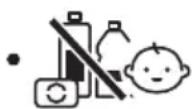
Dishwasher detergent is corrosive! Keep dishwasher detergent out of the reach of children.
Filling The Rinse Aid Reservoir

1 Remove the rinse reservoir cap by lifting up the handle.

3 Close the cap after all.
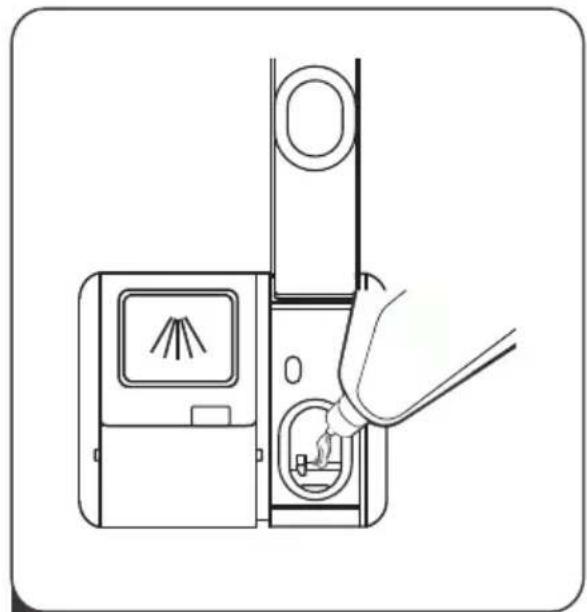
Pour the rinse aid into the dispenser, being careful not to overfill.
Filling The Detergent Dispenser

Sliding it to the right
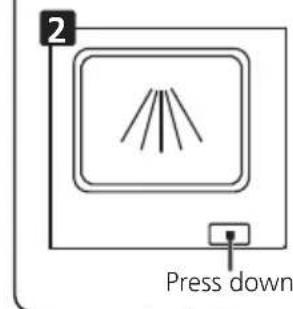
Press down

1 Please choose an open way according to the actual situation.
- Open the cap by sliding the release catch.
- Open the cap by pressing down the release catch.

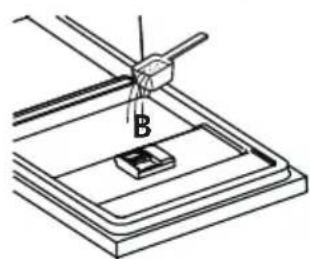
2 Add detergent into the larger cavity (A) for the main wash cycle.
For better cleaning result, especially if you have very dirt items, pour a small amount of detergent onto the door.
The additional detergent will activate during the pre-wash phase.

3 Close the flap by sliding it to the front and then pressing it down.

NOTE:
- Be aware that depending on the soiling of water, setting may be different.
- Please observe the manufacturer's recommendations on the detergent packaging.
QUICK USER GUIDE
Please read the corresponding content on the instruction manual for detailed operating method.
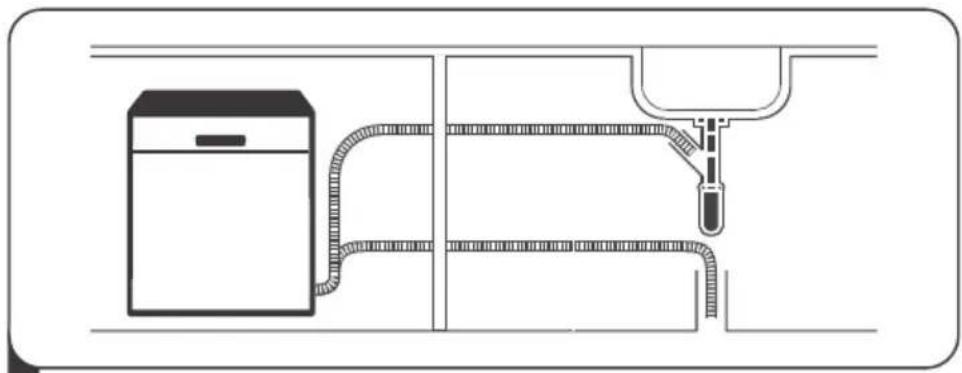
1 Install the dishwasher
(Pleasesheck the section"INSTALLATIONINSTRUCTION")
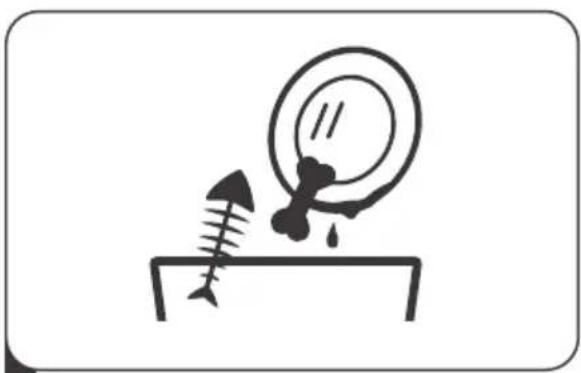
2 Remove larger residue from dishes. Avoid pre-rinsing.

3 Load the baskets.

4 Fill the dispenser with detergent and rinse aid.

5 Select a suitable program and start the dishwasher.
CONTROL PANEL
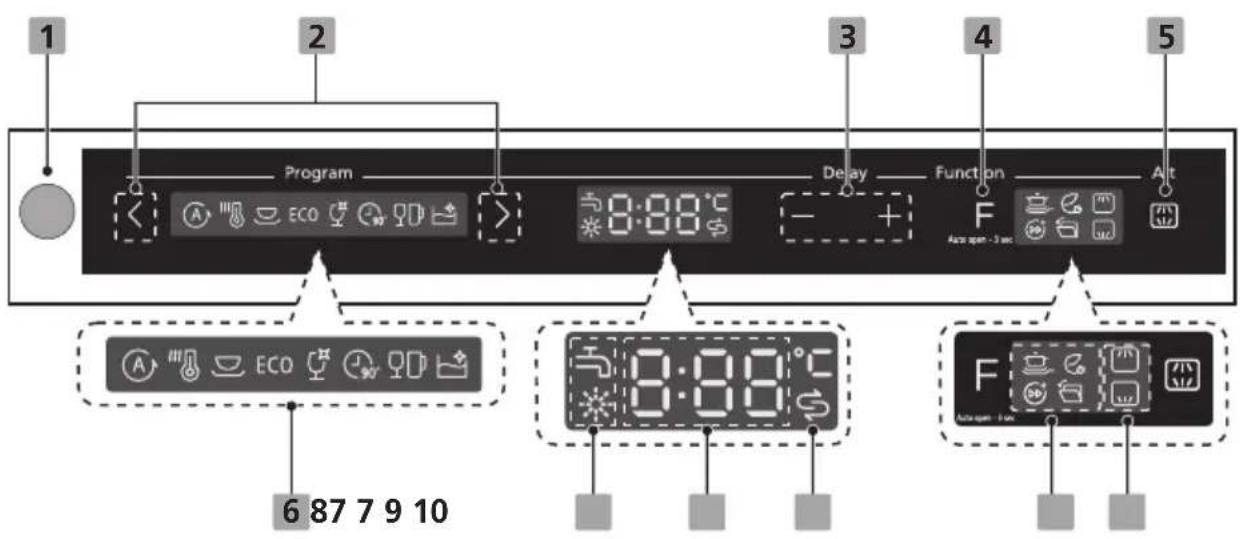
Operation (Button)
| 1 Power | Press the button to turn on your dishwasher, the screen lights up. |
| 2 Program | Press the “<” or “>” button to select a program, and the corresponding indicator will be lit. |
| 3 Delay +/- | Press the "+" button to add the delay time or press the "-" button to decrease the delay time, maximum 24 hours delay can be defined. |
| 4 Function | Press the button to select a function, corresponding indicator will be lit. |
| 5 Alt | Press the button to select either upper basket or lower basket loaded, and the response indicators will be lit. |
Screen
| 6 Program indicator | A Auto For lightly, normally or heavily soiled crockery with or without dried-on food. Hygiene With the sanitize option selected, the water temperature is increased to 70 °C for high temperature sanitization. Universal For normally soiled loads, such as pots, plates, glasses and lightly soiled pans. ECO ECO This is standard program, it is suitable to clean normally soiled tableware and it is the most efficient program in terms of its combined energy and water consumption for that type of tableware. Glass For lightly soiled crockery and glass. 90 min For normally soiled loads that need quick wash. Party For lightly soiled loads, such as glasses, crystal and fine china. Self-Cleaning This program provides an effective cleaning of the dishwasher itself. | |
| 7 Warning indicator | Rinse Aid If the “ ” indicator is lit, it means the dishwasher is low on dishwasher rinse aid and requires a refill. Salt If the “ ” indicator is lit, it means the dishwasher is low on dishwasher salt and needs to be refilled. Water Faucet If the “ ” indicator is lit, it means the water faucet closed. | |
| Screen8 | Shows the reminding time and delay time, error codes etc. | |
| 9 Function indicator | Strong wash To wash very dirty, hard to clean dishes. (It can only be used with Hygiene, Universal, ECO, Glass, 90 min) Energy save Function suitable for low-load washes. (It can only be used with Hygiene, Universal, ECO, Glass, 90min.) Turbo speed+ Reduce the program time. (It can only be used with Hygiene, Universal, ECO, Glass, 90min) Automatic opening The dishwasher door opens automatically at the end of the selected program, improving drying results. Activate automatic opening: - Press the function F for 3 seconds. The indicator will litght up. Deactivate automatic opening: - Press the function bottom F again for 3 seconds. The indicator will turn off. The Function is invalid in Party wash program, then the indicator will keep go off. | |
| 10 Alt indicator | Upper When you select Upper, only the dishes in the upper rack will be washed. The spray system of the lower basket will not operate. Lower When you select Lower, only the dishes in the lower rack will be washed. The spray system of the upper basket will not operate. | |

NOTE:
Indicator lamp function
The Indicator lamp will be lit up during the washing program, then blink for 5 minutes and extinguished on the end of the program.

LOADING THE BASKETS ACCORDING TO EN60436:
Loading the dishwasher to its full capacity will contribute to energy and water savings.
1. Upper basket:

| Number | Item |
| 1 | Cups |
| 2 | Saucers |
| 3 | Glasses |
| 4 | Mugs |
| 5 | Small pot |
2. Lower basket:

| Number | Item |
| 6 | Oven pot |
| 7 | Dessert plates |
| 8 | Dinner plates |
| 9 | Soup plates |
| 10 | Oval platter |
| 11 | Melamine dessert plates |
| 12 | Melamine bowls |
| 13 | Glass bowl |
| 14 | Dessert bowls |
3.Cutlery rack:
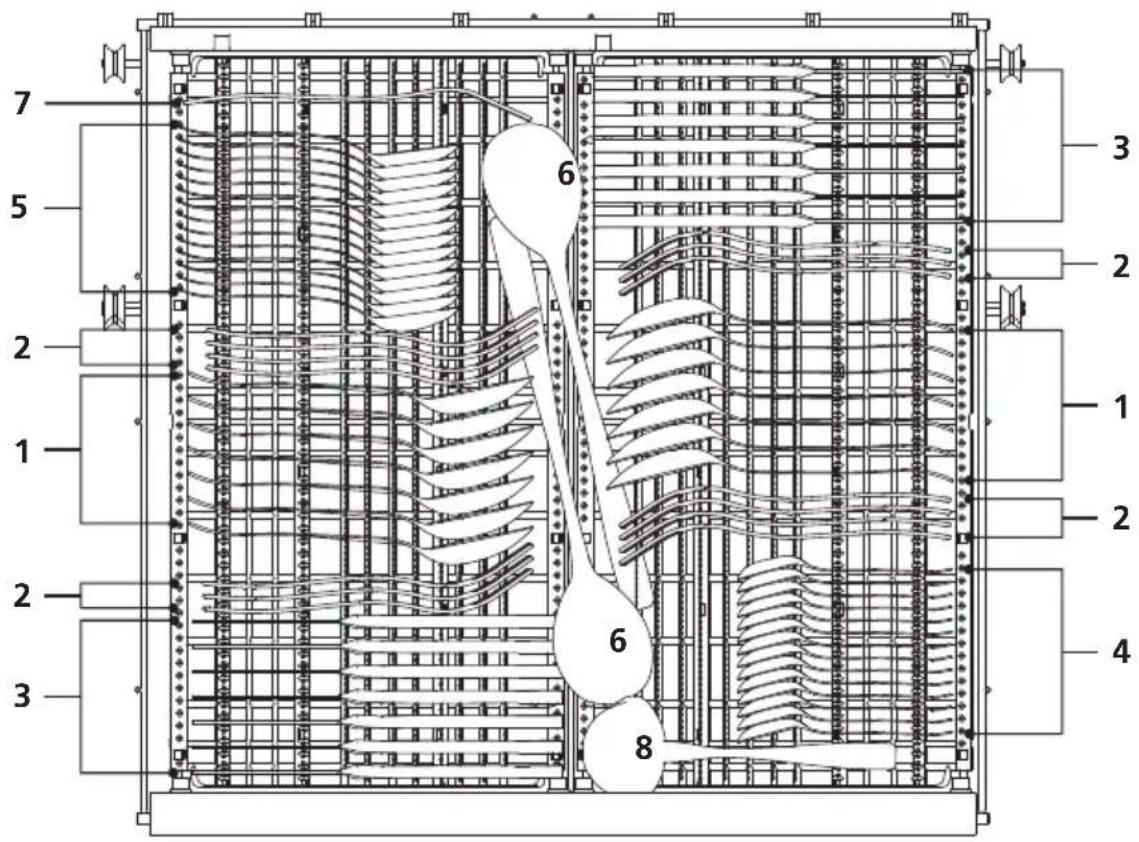
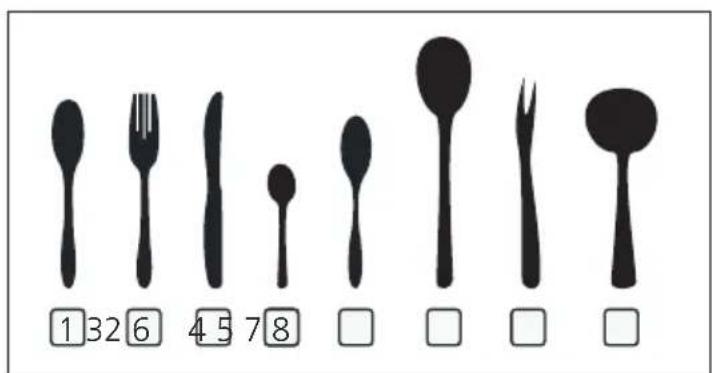
Information for comparability
tests in accordance with EN 60436
Capacity: 14 place settings
Position of the upper basket: lower position
Program: ECO
Rinse aid setting: 6
Softener setting: H3
| Number | Item |
| 1 | Soup spoons |
| 2 | Forks |
| 3 | Knives |
| 4 | Teaspoons |
| 5 | Dessert spoons |
| 6 | Serving spoons |
| 7 | Serving forks |
| 8 | Gravy ladles |
Cutlery Rack Used Tips
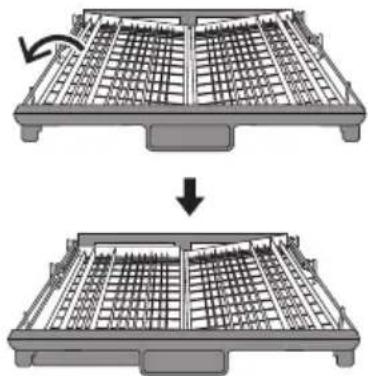
Lift the left basket up, adjust it to lower position, left basket is flat and right basket is sideling.

Lift the right basket up, both left and right baskets are flat.
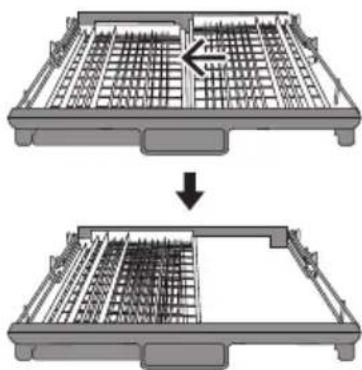
Move the right basket from right to left, two basket are overlapping.

Remove the right basket from the tray, only has the left basket.
PROGRAMSELECTION
, Wash Cycle Table
The table below shows which programs are best for the levels of food residue on them and how much detergent is needed. It also show various information about the programs. Consumption values and program duration are only indicative except for ECO program.
() Means: need to fill rinse into the Rinse-Aid Dispenser.
| Program | Description Of Cycle | Detergent Pre/Main | Running Time(min/h) | Energy (kW/h) | Water (L) | Rinse Aid |
| A Auto | Pre-wash (45 °C) AutoWash (55-65 °C) Rinse Rinse (50-55 °C) Drying | 4/18 g 1 or 2 tabs | 85 - 150 min 1:25 - 2:30 h | 0,850-1,550 | 8.5-18.0 | ● |
| Hygiene | Wash (70 °C) Rinse Rinse Rinse (70 °C) Drying | 22 g 1 or 2 tabs | 200 min 3:20 h | 1,500 | 13,5 | ● |
| Universal | Pre-wash (45 °C) Wash (55 °C) Rinse Rinse (55 °C) Drying | 4/18 g 1 or 2 tabs | 175 min 2:55 h | 0,980 | 13,6 | ● |
| ECO (*EN 60436) | Pre-wash Rinse Rinse (45 °C) Drying | 4/18 g 1 or 2 tabs | 230 min 3:50 h | 0,747 | 9,8 | ● |
| Glass | Pre-wash Wash (50 °C) Rinse (50 °C) Rinse (50 °C) Drying | 4/18 g 1 tab | 120 min 2:00 h | 0,950 | 13,5 | ● |
| 90 min | Wash (60 °C) Rinse Rinse (50 °C) Drying | 22 g 1 tab | 90 min 1:30 h | 1,180 | 12,5 | ● |
| Party | Wash (35 °C) Rinse (35 °C) | 12 g 1 tab | 20 min 0:20 h | 0,4 10 11,2 | 2 | ○ |
| Self-Clean | Pre-wash Wash (60 °C) Rinse Rinse (60 °C) Drying | 4/18 g 1 tab | 145 min 2:25 h | 1,250 | 14.9 | ● |

NOTE:
ECO:The ECO program is suitable to clean normally soiled tableware, that (*EN60436) for this use, it is the most efficient program in terms of its combined energy and water consumption, and it is used to assess compliance with the EU ecodesign legislation.
Saving Energy
- Pre-rinsing of tableware items leads to increased water and energy consumption and is not recommended.
- Washing tableware in a household dishwasher usually consumes less energy and water in the use phase than hand dishwashing when the household dishwasher is used according to the instructions.
Starting A program
- Draw out the lower and upper basket, load the dishes and push them back. It is commended to load the lower basket first, then the upper one.
- Pour in the detergent.
- Insert the plug into the socket. The power supply refers to last page "Product fiche". Make sure that the water supply is turned on to full pressure.
- Open the door, Press the Power button.
- Choose a program, the response light will turn on. Then close the door, the dishwasher will start its cycle.
Changing The Program Mid-cycle
A program can only be changed if it has been running only for a short period of time, otherwise the detergent may have already been released or the wash water with detergent has already been drained. If this is the case, the dishwasher needs to be reset and the detergent dispenser must be refilled. To reset the dishwasher, follow the instructions below:
- Open the door a little to stop the dishwasher, after the spray arm stopped working, you can open the door completely.
- Press >'' button more than three seconds the machine will be in program selection mode.
- You can change the program to the desired cycle setting.

Forget To Add A Dish?
A forgotten dish can be added any time before the detergent dispenser opens. If this is the case, follow the instructions below:
- Open the door a little to the washing.stopped
- After the spray arms stop working, you can open the door completely.
- Add the forgotten dishes.
- Close the door. The dishwasher will start after 10 seconds.

WARNING

It is dangerous to open the door mid-cycle, as hot steam may scald you.
Auto Open
After washing, the door will open automatically to achieve better drying effect.


NOTE:
The dishwasher door must not be blocked when set to open automatically.
This can disrupt door lock functionality.
The party program don't have the Auto open function.
MAINTENANCE AND CLEANING
External Care
The door and the door seal
Clean the door seals regularly with a soft damp cloth to remove food deposits. When the dishwasher is being loaded, food and drink residues may drip onto the sides of the dishwasher door. These surfaces are outside the wash cabinet and are not accessed by water from the spray arms. Any deposits should be wiped off before the door is closed.
The control panel
If cleaning is required, the control panel should be wiped with a soft damp cloth only.
WARNING
- To avoid penetration of water into the door lock and electrical components, do not use a spray cleaner of any kind.
- Never use abrasive cleaners or scouring pads on the outer surfaces because they may scratch the finish. Some paper towels may also scratch or leave marks on the surface.
Internal Care
Filtering system
The filtering system in the base of the wash cabinet retains coarse debris from the washing cycle, including foreign objects such as tooth picks or shards. The collected coarse debris may cause the filters to clog. Check the condition of the filters regularly, carefully remove foreign objects and clean the parts of the filtering system if necessary with water. Follow the steps below to clean the filter.

NOTE:
Pictures are only for reference, different models of the filtering system and spray arms may be different.
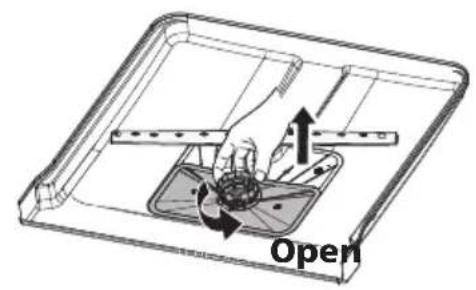
1 Hold the coarse filter and rotate it anticlockwise to unlock the filter. Lift the filter upwards and out of the dishwasher.

3 Larger food remnants can be cleaned by rinsing the filter under running water.
For a more thorough clean, use a soft cleaning brush.
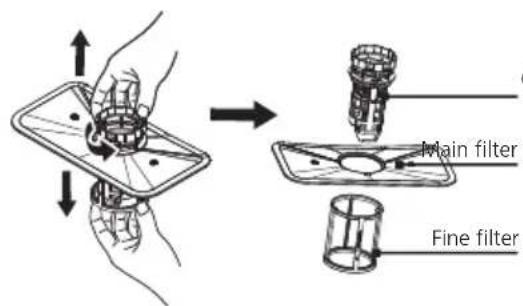
Coarse filter
The fine filter can be pulled off the bottom of the filter assembly. The coarse filter can be detached from the main filter by gently squeezing the tabs at the top and pulling it away.
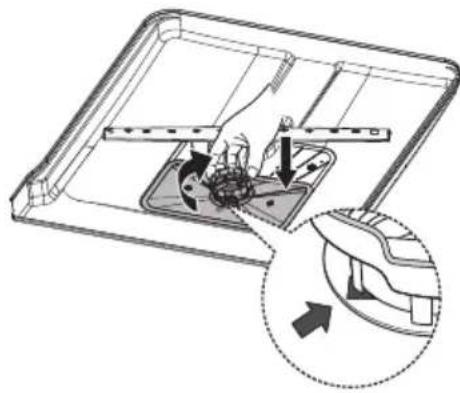
4 Reassemble the filters in the reverse order of the disassembly, replace the filter insert, and rotate clockwise to the close arrow.
WARNING
- Do not over tighten the filters. Put the filters back in sequence securely, otherwise coarse debris could get into the system and cause a blockage.
- Never use the dishwasher without filters in place. Improper replacement of the filter may reduce the performance level of the appliance and damage dishes and utensils.
Spray arms
It is necessary to clean the spray arms regularly for hard water chemicals will clog the spray arm jets and bearings.
To clean the spray arms, follow the instructions below:
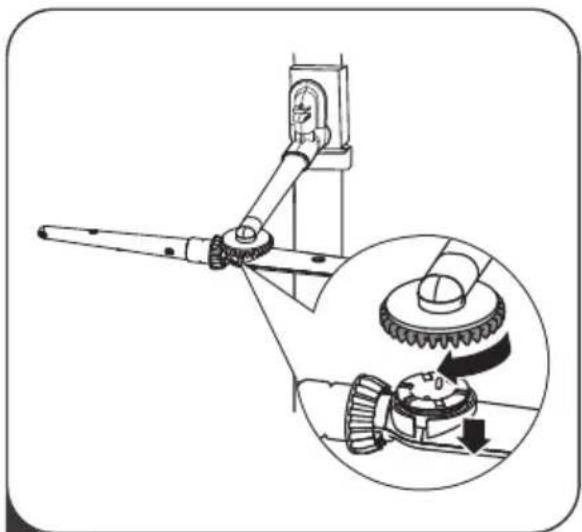
1 To remove the upper spray arm, hold the nut in the center still and rotate the spray arm clockwise to remove it.
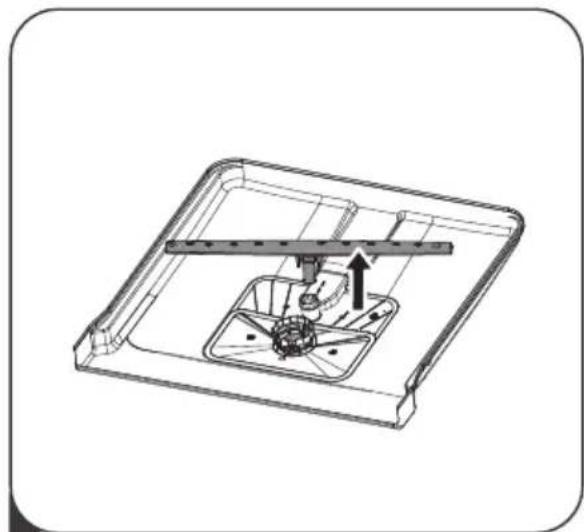
To remove the lower spray arm, pull out the spray arm upward.
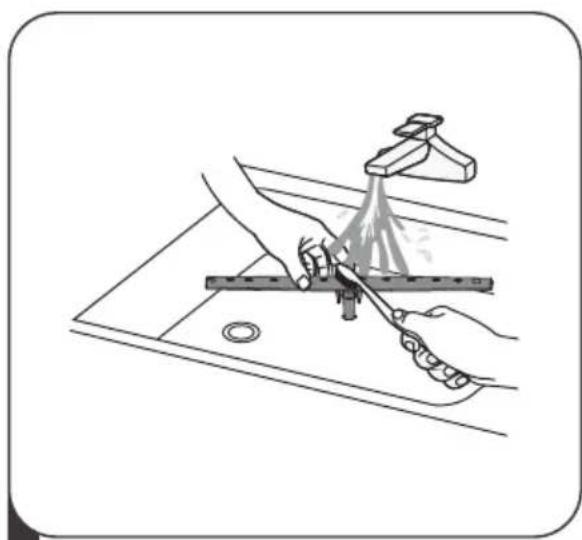
3 Wash the arms in soapy and warm water and use a soft brush to clean the jets. Replace them after rinsing them thoroughly.
Caring For The Dishwasher
Frost precaution
Please take frost protection measures on the dishwasher in winter. Every time after washing cycles, please operate as follows:
- Cut off the electrical power to the dishwasher at the supply source.
- Turn off the water supply and disconnect the water inlet pipe from the water valve.
- Drain the water from the inlet pipe and water valve. (Use a pan to gather the water)
- Reconnect the water inlet pipe to the water valve.
- Remove the filter at the bottom of the tub and use a sponge to soak up water in the sump.
After every wash
After every wash, turn off the water supply to the appliance and leave the door slightly open so that moisture and odors are not trapped inside. for a while
Remove the plug
Before cleaning or performing maintenance, always remove the plug from the socket.
No solvents or abrasive cleaning
To clean the exterior and rubber parts of the dishwasher, do not use solvents or abrasive cleaning products. Only use a cloth with warm soapy water.
To remove spots or stains from the surface of the interior, use a cloth dampened with water an a little vinegar, or a cleaning product made specifically for dishwashers.
When not in use for a long time
It is recommend that you run a wash cycle with the dishwasher empty and then remove the plug from the socket, turn off the water supply and leave the door of the appliance slightly open. This will help the door seals to last longer and prevent odors from forming within the appliance.
Moving the appliance
If the appliance must be moved, try to keep it in the vertical position. If absolutely necessary, it can be positioned on its back.
Seals
One of the factors that cause odours to form in the dishwasher is food that remains trapped in the seals. Periodic cleaning with a damp sponge will prevent this from occurring.
TROUBLESHOOTING TIPS
Before Calling For Service
Reviewing the charts on the following pages may save you from calling for service.
| Problem Possible Causes What To Do | ||
| Dishwasher doesn't start | Fuse blown, or the circuit break tripped. | Replace fuse or reset circuit breaker. Remove any other appliances sharing the same circuit with the dishwasher. |
| Power supply is not turned on. | Make sure the dishwasher is turned on and the door is closed securely. Make sure the power cord is properly plugged into the wall socket. | |
| Water pressure is low | Check that the water supply is connected properly and the water is turned on. | |
| Door of dishwasher not properly closed. | Make sure to close the door properly and latch it. | |
| Water not pumped form dishwasher | Twisted or trapped drain hose. | Check the drain hose. |
| Filter clogged. | Check .the filter system | |
| Kitchen sink clogged. | Check the kitchen sink to make sure it is draining well. If the problem is the kitchen sink that is not draining, you may need a plumber rather than a serviceman for dishwashers. | |
| Foam in the tub Wrong detergent. | Use only the special dishwasher detergent to avoid suds. If this occurs, open the dishwasher and let suds evaporate. Add 1 liter of cold water to the bottom of the dishwasher. Close the dishwasher door, then select any cycle. Initially, the dishwasher will drain out the water. Open the door after draining stage is complete and check if the suds have disappeared. Repeat if necessary. | |
| Spilled rinse aid. Always wipe up rinse aid spills immediately. | ||
| Stained tub interior Detergent with colourant may have been used. | Make sure that the detergent has no colourant. | |
| White film on inside surface | Hard water minerals. | To clean the interior, use the damp soft cloth with dishwasher detergent and wear rubber gloves. Never use any other cleaner than dishwasher detergent otherwise, it may cause foaming or suds. |
| There are rust stains on cutlery | The affected items are not corrosion resistant. | Avoid washing items that are not corrosion resistant in the dishwasher. |
| A program was not run after dishwasher salt was added. Traces of salt have gotten into the wash cycle. | Always run a wash program without any crockery after adding salt. Do not select the Turbo function (if present), after adding dishwasher salt. | |
| The lid of the softer is loose. | Check the softener lid is secure. | |
| Knocking noise in the dishwasher | A spray arm is knocking against an item in a basket | Interrupt the program and rearrange the items which are obstructing the spray arm. |
| Rattling noise in the dishwasher | Items of crockery are loose in the dishwasher. | Interrupt the program and rearrange the items of crockery. |
| Knocking noise in the water pipes | This may be caused by on-site installation or the cross-section of the piping. | This has no influence on the dishwasher function. If in doubt, contact a qualified plumber. |
| The dishes are not clean | The dishes were not loaded correctly. | See PART “Preparing And Loading Dishes” page 17. |
| The program was not powerful enough. | Select a more intensive program. | |
| Not enough detergent was dispensed. | Use more detergent, or change your detergent. | |
| Items are blocking the movement of the spray arms. | Rearrange the items so that the spray can rotate freely. | |
| The dishes are not clean. | The filter combination is not clean or is not correctly fitted in the base of wash cabinet. This may cause the spray arm jets to get blocked. | Clean and/or fit the filter correctly. Clean the spray arm jets. |
| Cloudiness on glassware. | Combination of soft water and too much detergent. | Use less detergent if you have soft water and select a shorter cycle to wash the glassware and to get them clean. |
| White spots appear on dishes and glasses. | Hard water area can cause limescale deposits. | Check water softener settings or fill status of salt container. |
| Black or grey marks on dishes | Aluminium utensils have rubbed against dishes | Use a mild abrasive cleaner to eliminate those marks. |
| Detergent left in dispenser | Dishes block detergent dispenser | Re-loading the dishes properly. |
| The dishes aren't drying | Improper loading | Use gloves if detergent residue can be found on dishes to avoid skini rritations. |
| Dishes are removed too soon | Do not empty your dishwasher immediately after washing. Open the door slightly so that the steam can come out. Take out the dishes until the inside temperature is safe to touch. Unload the lower basket first to prevent the dropping water from the upper basket. | |
| The dishes aren't drying (see next page) | Wrong program has been selected. | With a short program, the washing temperature is lower, decreasing cleaning performance. Choose a program with a long washing time. |
| Use of cutlery with a low-quality coating. | Water drainage is more difficult with these items. Cutlery or dishes of this type are not suitable for washing in the dishwasher. | |
WARNING
Self-repair or non-professional repair may cause serious risks to the safety of the user of the appliance and impact warranty.
Causes and Recommendations on what to do when drying is not appropriated.
Reasons for not having a fine drying process are usually found beyond the product operating, as long as there is not any clear evidence of a product flaw. Most of times, reasons can be explained by external elements such as an unappropriated use of the device (settings) or of relatedwashing products (tablets and/or soap)
Before contacting Customer Service, dismiss any non-existing flaw on the device, as it would mean labour and transport costs wouldn't be covered by the guarantee. Further below you can find main reasons causing an inadequate drying, as well as recommendations to get a fine drying:
CAUSE RECOMMENDATION

In some places, mainly coastal, the amount of lime I in water is quite high, which makes difficult to obtain a fine drying
Hard water adjust dishwasher salt and rinse aid, following the user's manual instructions.
Additionally the installation of a water softener in the water intake, shall improve substantially the outcome.

Pre washing using soap: A manual dish prewashed should be done only with water, as if soap is used some leftovers may trespass into the dish and affect a fine drying.

Avoid soap on manual prewashing, using only water.

Loading the dishwashing rack: Should the dish be eventually loaded incorrectly in the appropriated racks, washing and drying programs may result deficient.

Follow the instructions and tips on loading procedures shown in the user's manual.

Unappropriated use of rinse: Replacement of rinse by tablets type "3 in 1" or the use of own brand labels may negatively affect the drying quality.

Always use rinse filling in full its deposit and checking frequently that it contains liquid enough to achieve the desired finish.
Use well known quality rinse brands and avoid the use of own brand labels.
Adjust rinse consume: by setting to the desired level as shown in the user's manual. By doing this the water leftover inside the device is reduced boosting the drying process.

Plastic containers: Many of these are composed by hydrophobic materials, being very susceptible to condensation and traces of water, very difficult to dry out in full. Should the drying problem occur only with this type of containers, there is no problem or technical issue with the dishwasher machine.

Load the dishwasher following instructions in the Manual.

Dishes are not dry:
1 Dishes not place properly.
Dishes removed too early.
3 Unappropriate program selected.
4 Low quality coat cutlery use.

Do not empty the dishwasher right after finish, open the door slightly allowing steam out. Remove dishes when the inside temperature is safe. Remove first lower basket to avoid water dropping from upper basket.

Using a short program, washing temperature is lower, reducing washing efficiency. Select a long washing program.

Water drain is more difficult with these objects. Cutlery or dishes this type are not appropriate to use the dishwasher.
To achieve a fine result, use the ExtraDry program.

To make a more complete dry. (Can only be used on Intensive, Normal, ECO, Cristal and 90 min programs).
Program Selection: There is plenty of programs with a fine drying. We recommend long programs and those specifically set for drying such as "Extra Dry" (*depending on model and version), see user's manual.
ERROR CODES
If there is a malfunction, the dishwasher will display error codes to identify these:
| Codes | Meanings | Possible Causes |
| E1 | Longer inlet time. | Faucets is not opened, or water intake is restricted,or water pressure is too low. |
| E3 | Not reaching required temperature. | Malfunction of heating element. |
| E4 | Overflow. | Some element of dishwasher leaks. |
| E8 | Failure of orientation of distributary valve. | Open circuit or break of distributary valve. |
| E9 | Keep pressing a button more than 30 seconds. | Water or something on the button. |
| EC | Washing control system fail. | PCB or motor fail. |
| Ed | Failure of communication between main PCB with display pcb. | Open circuit or break wiring for the communication. |
WARNING
- If overflow occurs, turn off the main water supply before calling a service.
- If there is water in the base pan because of an overfill or small leak, the water should be removed before restarting the dishwasher.
PANDO WARRANTY CERTIFICATE
INOXPAN S.L. appreciates your trust in our brand, Pando, distinguished by its Quality, Design and Innovation, loyal to its origins and commitments.
PANDO WARRANTY TERMS:
This appliance covers 3 years guaranty from its purchasing date covering any manufacturing defect affecting its fine performance. To grant the same is mandatory to show Invoice or purchasing ticket to the Pando Customer Service authorized engineer.
During the above mentioned period of time the Company is committed to replace or repair free of charge parts and labor faulty in origin, as well as any expense due to said service or replacement and until a fine performance is achieved.
EXCEPTIONS ON THE WARRANTY:
This warranty shall not cover or it may be subjected to termination, before any of the situations described further below. In these cases the end user is meant to cover for any parts and/or pieces cost involved as well as labor and customer service travel expenses:
- Appliance malfunction or damage caused by missing any instructions, recommendations and/or standards shown in the User's Manual and Installation Manual.
- Damage in the device, furniture or external elements caused by inappropriate installation or use of the device and its connecting parts, as main's cable, water intake or water drain connection
- Whenever the device is use for not domestic use, purpose for which the appliance is not prepared.
- Any Installation or performance, clean up or product maintenance check up.
- Malfunction or damages produced by carriage and/or handling made by any non authorized outside staff than the official PANDO Customer Service.
Any scratch, dents or aesthetical flaws appearing due to installation, handling or inappropriate use.
Aesthetic components due to time use or tear, as panels, filters, trays, rails and accessories. - Rust or stains on Stainless Steel or painting produced by a wrong application or exposition without protection to corrosive elements as inappropriate or inadequate cleaning products.
- Aesthetical damages or corrosion on the machine inside walls and accessory elements and /or door device, produced by non appropriate cleaning products, or inappropriate and inadequate use of products intended for cleaning holding tanks like salt, rinse aid, or detergent, not following the advise given in the User's Manual.
- Malfunction and damages produced by external agents; as anomalies on main's supply, natural disasters, atmospheric or geological phenomena, storms, lightning, floods, bugs, or any animal, etc
- Malfunction or internal and/or external damage caused by water chemical effects as lime-like for instance in the water pump.
- Lack of easy and safe access to product disassembly from the furniture, as well as from main supply, water and drain associated, or in case the furniture parts impeding an easy disassembly, in which case the end user is liable to arrange an easy access, covering any labor and transport expenses in case Pando Customer Service may require of further time or second service call due to inaccessibility.
INOXPAN, S.L. is expressly excluded of any liability before eventual damages directly or indirectly to people or materials caused by inappropriate handling of the appliance.
PANDO Official authorised Customer Service Contact Details:
SPAIN, PORTUGAL AND ANDORRA: OTHER COUNTRIES:
ES
| Height (H) | 815mm |
| Width (W) | 598mm |
| Depth (D1) | 550mm (with the door closed) |
| Depth (D2) | 1150mm (with the door opened 90°) |
Product information sheet
| Supplier's name or trade mark: PANDO | ||||
| Supplier's address (b): | ||||
| Model identifier: PLT-7460 | ||||
| General product parameters: | ||||
| Parameter Value | Parameter Value | |||
| Rated capacity (a) (ps) | 14 | Dimensions in cm | Height | 82 |
| Width | 60 | |||
| Depth | 55 | |||
| EEI (a) | 43,9 | Energy efficiency class (a) | C(9) | |
| Cleaning performance index (a) | 1,125 | Drying performance index (a) | 1,065 | |
| Energy consumption in kWh [per cycle], based on the eco programme using cold water fill. Actual energy consumption will depend on how the appliance is used. | 0,747 | Water consumption in litres [per cycle], based on the eco program. Actual water consumption will depend on how the appliance is used and on the hardness of the water. | 9,8 | |
| Program duration (a) (h:min) | 3:50 | Type | built-in | |
| Airborne acoustical noise emissions (a) (dB(A) re 1 pW) | 44 | Airborne acoustical noise emission class (a) | B (c) | |
| Off-mode (W) | 0,49 | Standby mode (W) | N/A | |
| Delay start (W) (if applicable) | 1,00 | Networked standby (W) (if applicable) | N/A | |
| Minimum duration of the guarantee offered by the supplier (b): 2 years | ||||
| Additional information: www.pando.es | ||||
| Weblink to the supplier's website, where the information in point 6 of Annex II to Commission Regulation (EU) 2019/2022 (1) (b) is found: | ||||
| (a) for the eco program. (b) changes to these items shall not be considered relevant for the purposes of paragraph 4 of Article 4 of Regulation (EU) 2017/1369. (c) if the product database automatically generates the definitive content of this cell the supplier shall not enter these data. | ||||
(1) Commission Regulation (EU) 2019/2022 of 1 October 2019 laying down eco design requirements for household dishwashers pursuant to Directive 2009/125/EC of the European Parliament and of the Council amending Commission Regulation (EC) No 1275/2008 and repealing Commission Regulation (EU) No 1016/2010 (see page 267 of this Official Journal).
PLT-7460
INSTALLATION INSTRUCTION
INSTALLATION INSTRUCTION
WARNING

Electrical Shock Hazard
Disconnect electrical power before installing dishwasher.
Failure to do so could result in death or electrical shock.
Attention
The installation of the pipes and electrical equipments should be done by professionals.
About Power Connection
WARNING
For personal safety:
- Do not use an extension cord or an adapter plug with this appliance.
- Do not, under any circumstances, cut or remove the earthing connection from the power cord.
Electrical requirements
Please look at the rating label to know the rating voltage and connect the dishwasher to the appropriate power supply. Use the required fuse 10A/13A/16A, time delay fuse or circuit breaker recommended and provide separate circuit serving only this appliance.
Electrical connection
Ensure the voltage and frequency of the power being corresponds to those on the rating plate. Only insert the plug into an electrical socket which is earthed properly. If the electrical socket to which the appliance must be connected is not appropriate for the plug, replace the socket, rather than using a adaptors or the like as they could cause overheating and burns.
Ensure that proper earthing exists before use
Water Supply And Drain
Cold water connection
Connect the cold water supply hose to a threaded 3/4(inch) connector and make sure that it is fastened tightly in place.
If the water pipes are new or have not been used for an extended period of time, let the water run to make sure that the water is clear. This precaution is needed to avoid the risk of the water inlet to be blocked and damage the appliance.

ordinary supply hose
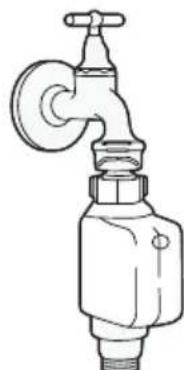
safety supply hose
About the safety supply hose
The safety supply hose consists of the double walls. The hose's system guarantees its intervention by blocking the flow of water in case of the supply hose breaking and when the air space between the supply hose itself and the outer corrugated hose is full of water.
WARNING
A hose that attaches to a tapn burst if it is installed on the same water line as the dishwasher. If your sink has one, it is recommended that the hose be disconnected and the hole plugged.
How to connect the safety supply hose
- Pull the safety supply hoses out from storage compartment located at rear of dishwasher.
- Tighten the screws of the safety supply hose to the faucet with thread 3/4inch.
- Turn theater fully on before starting the dishwasher.
How to disconnect the safety supply hose
- Turn off the water.
- Unscrew the safety supply hose from the faucet.
Connection Of Drain Hoses
Insert the drain hose into a drain pipe with a minimum diameter of 4cm , or let it run into the sink, making sure to avoid bending or crimping it. The height of drain pipe must be less than 1000mm . The free end of the hose must not be immersed in water to avoid the back flow of it.

Please securely fix the drain hose in either position A or position B

How to drain excess water from hoses
If the connection to the drain pipe is positioned higher than 1000mm , excess water may remain in the drain hose. The hose It will be necessary to drain excess water from into a bowl or suitable container that is held outside and lower than the sink.
Water outlet
Connect the water drain hose. The drain hose must be correctly fitted to avoid water leaks. Ensure that the water drain hose is not kinked or squashed.
Extension hose
If you need a drain hose extension, make sure to use a similar drain hose. It must not be longer than 4 meters, otherwise the cleaning effect of the dishwasher could be reduced.
Syphon connection
The waste connection must be at a height less than 10000mm from the bottom of the dishwasher
Positioning The Appliance
Position the appliance in the desired location. The back should rest against the wall behind it, and the sides, along the adjacent cabinets or walls. The dishwasher is equipped with water supply and drain hoses that can be positioned either to the right or the left sides to facilitate proper installation.
Levelling the appliance
Once the appliance is positioned for levelling, the height of the dishwasher may be altered via adjustment of the screwing level of the feet. In any case, the appliance should not be inclined more than 2^ .
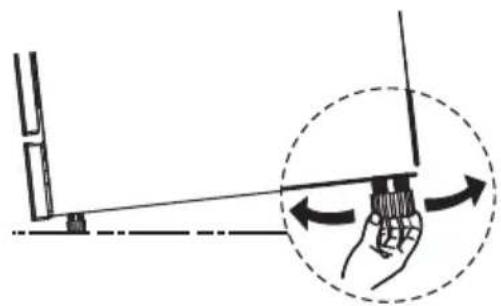

NOTE:
Only apply to the free standing dishwasher.
Built-In Installation
Step 1. Selecting the best location for the dishwasher
The installation position of this dishwasher should be near the existing inlet and drain hose sucker.
Illustrations of cabinet dimensions and installation position of the dishwasher.
- Less than 5mm between the top of dishwasher and cabinet and the outer door aligned to cabinet.
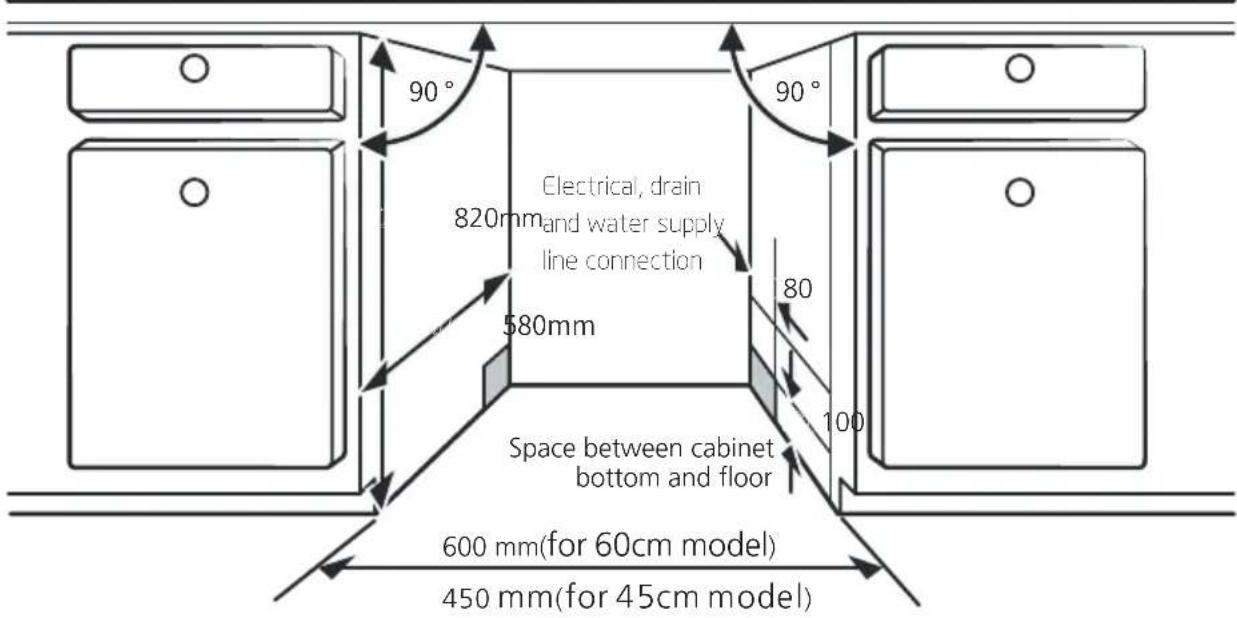
- If dishwasher is installed at the corner of the cabinet, there should be some space when the door is opened.
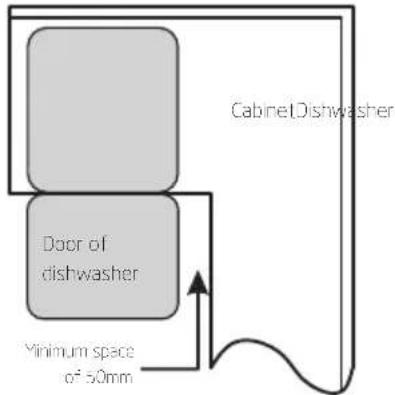

NOTE:
Depending on where your electrical outlet is, you may need to cut a hole in the opposite cabinet side.
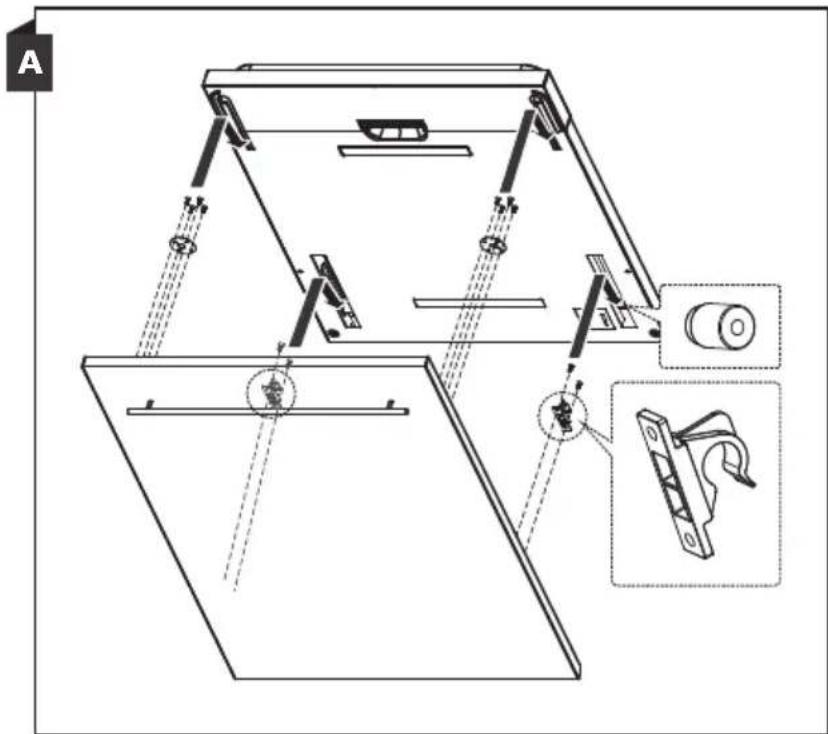
Step 2. Aesthetic panel's dimensions and installation

The aesthetic wooden panel could be processed according to the installation drawings.
| Weight feature for decorative and sliding door. | Minimum | Maximum |
| 60cm | 4kg | 9 kg |
| 45cm | 4kg | 8kg |
Built-in model
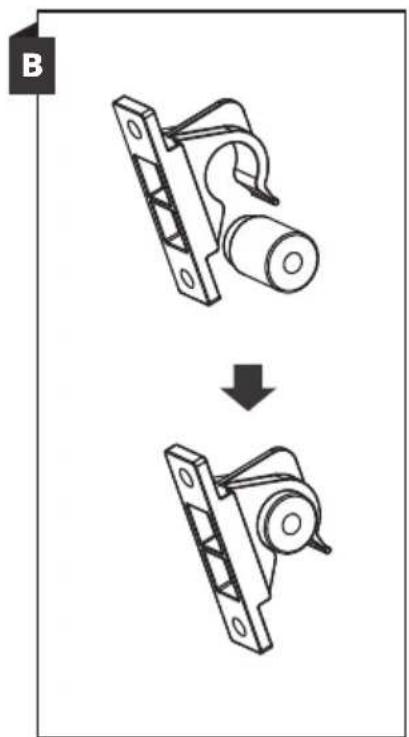
Install the hook on the aesthetic wooden panel (see figure 4A/4C) and put the hook into the slot of the outer door of dishwasher (see figure 4B).
After positioning of the panel, press top of the aesthetic wooden panel to make sure that the plastichook are fastened.
Built-in model

C
Step 3. Dishwasher installation steps

Please refer to the specialization steps in the installation lation drawings.
- Affix the condensation strip under the work surface of cabinet. Please ensure the condensation strip is flush with edge of work surface. (Step 2)
- Connect the inlet hose to the cold water supply.
- Connect the drain hose.
- Connect the power cord.
- Place the dishwasher into the cabinet
- Level the dishwasher. The rear foot can be adjusted from the front of the dishwasher by turning the Philips screw of the base of dishwasher use a Philips screw
front feet until the dishwasher is level. (Step 5 to Step 6)
- Install the furniture door to the outer door of the dishwasher. (Step 7 to Step 9)
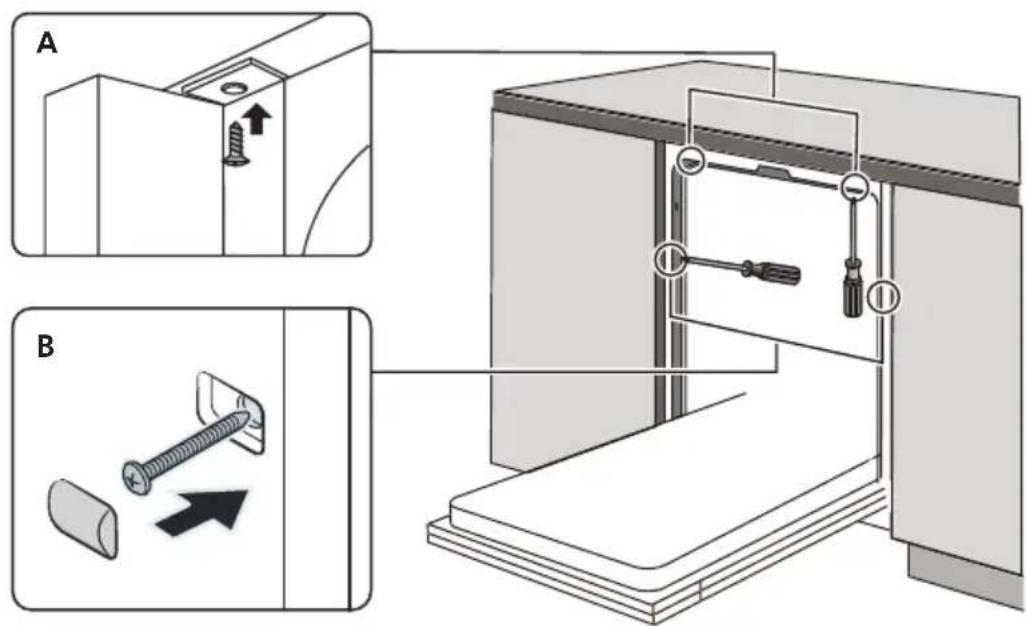
- The dishwasher must be secured in place. There are two ways to do this:
A. Normal work surface: Put the installation hook into the slot of the side plane and secure it to the work surface with the screws.
B. Marble or granite work top: Fix the side with screws
Step 4. Levelling the dishwasher
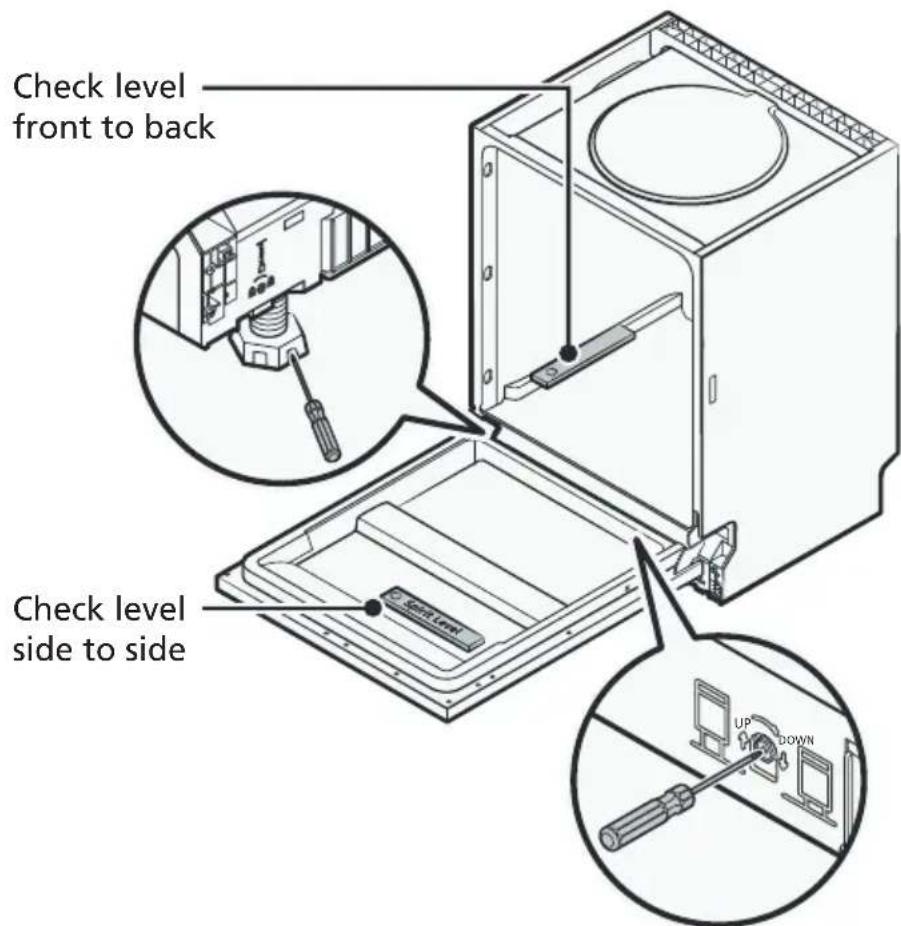
Dishwasher must be level for proper dish rack operation and wash performance.
- Place a spirit level on door and rack track inside the tub as shown to check that the dishwasher is level.
- Level the dishwasher by adjusting the three levelling feet individually.
- When level the dishwasher, please pay attention not to let the dishwasher tip over.

NOTE:
The maximum adjustment height of the feet is 50~mm
SOUND-ABSORBING STRIP INSTALLATION
Sound-absorbing strip
Left

Right

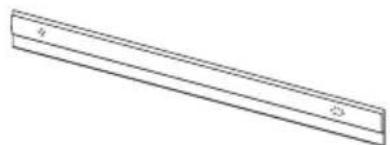
Take away the four screws form the right and left side plates.
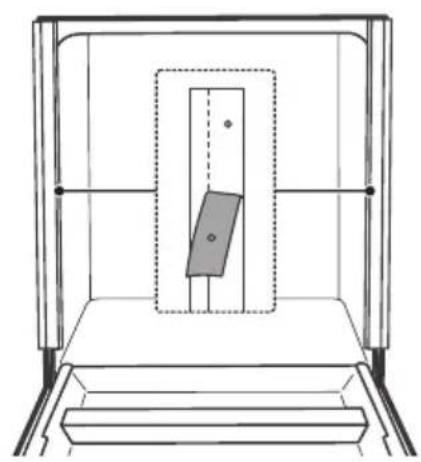
2 Remove the protection from the sound-absorbing strips, then stick the strips to the side plates, please align to the hole position.

3 Screw on the screws after all.
Pando
NOTES:
INOXPAN S.L.
Pol. Ind. El Cros
Av. El Moli de les Mateves, 11
Apdo. Correos n° 21
08310 ARGENTONA
Barcelona - Spain)
Tel. +34 93 757 94 11
Fax +34 93 757 96 53
www.pando.es
com.pando@pando.es
Export:
export@pando.es
Tel. 902 41 55 11

Pando
www.pando.es

SERVICIO POST VENTAPana, Portugal y Andorra
www.pando.es/asistencia-technica/
SERVICE APRES VENTE AFTER SALES SERVICE
Otros paises
Autres pays/Other countries www.pando.es/en/after-sales-services/

- Cesta superior
- MANUTENÇÂO E LIMPEZA
- Panier supérieur
- CAUSE RECOMMANDATION
- CONTENTS
- SAFETY INFORMATION 166
- PRODUCT OVERVIEW 171
- USING YOUR DISHWASHER 172
- QUICK USER GUIDE 183
- CONTROL PANEL 184
- LOADING THE BASKETS 187
- PROGRAM SELECTION 190
- MAINTENANCE AND CLEANING 193
- TROUBLESHOOTING TIPS 197
- ERROR CODES 201
- WARRANTY 202
- TECHNICAL INFORMATION 203
- INSTALLATION INSTRUCTION 205
- NOTE:
- SAFETY INFORMATION
- WARNING
- Earthing Instructions
- Disposal
- ENVIRONMENTAL PROTECTION AND WASTETREATMENT
- PRODUCT OVERVIEW
- IMPORTANT:
- PANDO 720° WATER SPRAY SYSTEM
- USING YOUR DISHWASHER
- Loading The Salt Into The Softener
- WARNING
- Basket Loading Tips
- Adjusting the upper basket
- Folding back the cup shelves
- Folding back the rack shelves
- Water Softener
- Adjusting salt consumption
- Adjusting the rinse aid reservoir
- Preparing And Loading Dishes
- For washing the following cutlery/dishes
- Are not suitable
- Are of limited suitability
- Recommendations for loading the dishwasher
- (Features and appearance of baskets and cutlery baskets may vary from your model.)
- Removing the dishes
- Loading the upper basket
- Loading the lower basket
- Loading the cutlery basket
- Function Of The Rinse Aid And Detergent
- When to refill the rinse aid
- Function of detergent
- Filling The Rinse Aid Reservoir
- Filling The Detergent Dispenser
- QUICK USER GUIDE
- CONTROL PANEL
- Screen
- Indicator lamp function
- LOADING THE BASKETS ACCORDING TO EN60436:
- Upper basket:
- Lower basket:
- 3.Cutlery rack:
- Cutlery Rack Used Tips
- PROGRAMSELECTION
- , Wash Cycle Table
- Saving Energy
- Starting A program
- Changing The Program Mid-cycle
- Forget To Add A Dish?
- Auto Open
- MAINTENANCE AND CLEANING
- External Care
- The door and the door seal
- The control panel
- Internal Care
- Filtering system
- Spray arms
- Caring For The Dishwasher
- Frost precaution
- After every wash
- Remove the plug
- No solvents or abrasive cleaning
- When not in use for a long time
- Moving the appliance
- Seals
- TROUBLESHOOTING TIPS
- Before Calling For Service
- Causes and Recommendations on what to do when drying is not appropriated.
- CAUSE RECOMMENDATION
- ERROR CODES
- PANDO WARRANTY CERTIFICATE
- PANDO WARRANTY TERMS:
- EXCEPTIONS ON THE WARRANTY:
- SPAIN, PORTUGAL AND ANDORRA: OTHER COUNTRIES:
- Product information sheet
- PLT-7460
- INSTALLATION INSTRUCTION
- Electrical Shock Hazard
- Attention
- About Power Connection
- Electrical requirements
- Electrical connection
- Water Supply And Drain
- Cold water connection
- About the safety supply hose
- How to connect the safety supply hose
- How to disconnect the safety supply hose
- Connection Of Drain Hoses
- How to drain excess water from hoses
- Water outlet
- Extension hose
- Syphon connection
- Positioning The Appliance
- Levelling the appliance
- Built-In Installation
- Step 1. Selecting the best location for the dishwasher
- Step 2. Aesthetic panel's dimensions and installation
- Built-in model
- Step 3. Dishwasher installation steps
- Step 4. Levelling the dishwasher
- SOUND-ABSORBING STRIP INSTALLATION
- Sound-absorbing strip
- Pando
- INOXPAN S.L.
Brand : Pando
Model : PLT7460
Category : Dishwasher