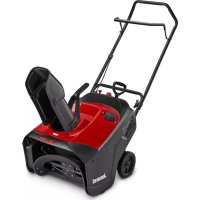
ST1153EP - Snow blower JONSERED - Free user manual and instructions
Find the device manual for free ST1153EP JONSERED in PDF.


| Brand | Jonsered |
| Model | ST1153EP |
| Product type | Snow thrower |
| Engine type | 4-stroke gasoline engine, cold weather use only |
| Displacement | 208 cc |
| Fuel | Unleaded gasoline (octane rating ≥85), max 10% ethanol |
| Engine oil | 5W-30 (synthetic oil acceptable) |
| Spark plug | F6RTC (standard) or F6RTP (platinum), gap 0.027-0.030 in (0.69-0.76 mm) |
| Starting | Manual (recoil start) and electric (120 VAC) |
| Clearing width | Not specified (estimated: 50-60 cm) |
| Weight | Approximately 54 kg (120 lb) |
| Dimensions (L x W x H) | Approximately 127 x 76 x 102 cm (50 x 30 x 40 in) |
| Fuel tank capacity | Not specified (estimated: 3 L) |
| Regular maintenance | Check oil level before each use, change oil every 6 months or 40 hours, replace spark plug once a year |
| Safety | Never use indoors; risk of carbon monoxide poisoning; use a CO detector |
| Emission control warranty | 2 years (parts and labor) |
Frequently Asked Questions - ST1153EP JONSERED
User questions about ST1153EP JONSERED
0 question about this device. Answer the ones you know or ask your own.
Ask a new question about this device
Download the instructions for your Snow blower in PDF format for free! Find your manual ST1153EP - JONSERED and take your electronic device back in hand. On this page are published all the documents necessary for the use of your device. ST1153EP by JONSERED.
USER MANUAL ST1153EP JONSERED
California Proposition 65
WARNING:
The engine exhaust from this product contains chemicals known to the state of California to cause cancer and birth defects, or other reproductive harm.

DANGER
CARBON MONOXIDE HAZARD
NEVER use engine inside homes, garages, crawl spaces, or other partially enclosed areas. Poisonous gases that can be harmful or fatal can build up in these areas. Using a fan and opening doors or windows does NOT provide enough fresh air. Engine exhaust contains carbon monoxide - a poisonous gas that can be harmful or fatal. You CANNOT see or smell this gas.
Use a battery-powered carbon monoxide detector when running an engine.
If you start to feel sick, dizzy, or weak while using an engine, shut it off and get to fresh air RIGHT AWAY. See a doctor. You may have carbon monoxide poisoning.
ADANGER
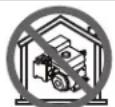
Using an engine or engine application indoors CAN KILL YOU IN MINUTES. Exhaust contains carbon monoxide, a poison gas you cannot see or smell.

NEVER use in the home or in partly enclosed areas such as garages.

←

ONLY use outdoors and far from open windows doors, and vents.
Avoid other engine dangers. READ MANUAL BEFORE USE

DANGER
RISQUE DE MONOXYDE DE CARBONE
Engine and Safety Symbols 2
Engine Safety 3
Controls & Features 4
Before Operation 5
Pre-Operation Checks 5
Safe Operation Precautions 5
Operation 6-7
Before Starting the Engine 6
Starting the Engine (Manual Start) 6
Pull Start Procedure 6
Starting the Engine (Electric Start) 6
Stopping the Engine 7
High Altitude Operation 7
Servicing Your Engine 8-10
The Importance of Maintenance 8
Maintenance Safety Instructions 8
Refueling 9
Fuel Recommendations 9
Engine Oil Level Check 9
Snow Engine Oil Change Procedure 10
Engine Oil Recommendations 10
Spark Plug Maintenance 10
Helpful Tips and Suggestions 11-12
Storing Your Engine 11
Maintenance Schedule 11
Storage Precautions 12
Transport 12
Technical & Consumer Information 12-13
Emission Control System Information 12
Consumer Information 12
Engine Model Number 13
& Serial Numbering System
Warranty 14
Introduction 15
When using this engine, your safety and the safety of others should be your top priority.
To assist you in making informed decisions regarding safety, we have provided operating procedures and other information on labels and in this manual. This information warns you of potential hazards that could hurt you or others.
Please stay safety conscious when using this engine. We have provided important safety information in a variety of forms, including:
- Safety Labels: placed on the engine.
- Safety messages: preceded by a safety alert symbol and one of three signal words, DANGER, WARNING, or CAUTION. These safety alert symbols mean:

DANGER
If you do not follow instructions, it WILL cause you SERIOUS INJURY or DEATH.

WARNING
If you do not follow instructions, it MAY cause you SERIOUS INJURY or DEATH.

CAUTION
If you do not follow instructions, it may cause you SERIOUS INJURY or EQUIPMENT DAMAGE.
- Safety Headings: such as IMPORTANT SAFETY INSTRUCTIONS.
- Safety Section: such as ENGINE SAFETY.
- Instructions: How to use this engine correctly and safely.
Thoroughly read and review this manual to know how to stay safe and get maximum benefit and enjoyment from using this engine.
Engine and Safety Symbols

WARNING
IMPORTANT SAFETY SYMBOLS
Shown below are important safety symbols found throughout this manual. Become familiar with these, as they are important to the safe and efficient use of your engine.
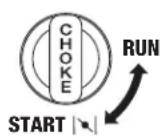
Choke Control
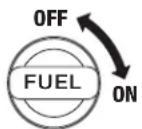
Fuel Control

Push/Pull Key Switch
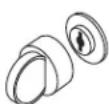
Keyed RUN/ STOP Switch (if equipped)
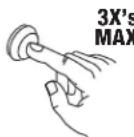
Primer Bulb
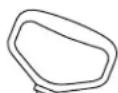
Recoil Handle
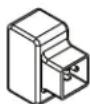
Electric Starter Adaptor Plug
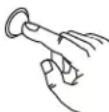
Starter Button (electric start only)

Idle Down Control (if equipped)

Choke Position

Shock

Hot Surface

Primer
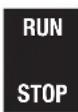
RUN/STOP Switch
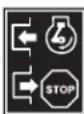
Stop

Key Insert

WARNING
IMPORTANT SAFETY INSTRUCTIONS
Accidents occur less frequently when instructions are followed, the operator is safety conscious and the engine is properly maintained. Some of the most common hazards are discussed below, along with the best way to protect yourself and others.
This engine is for COLD WEATHER USE ONLY.
FUEL STABILIZER IS RECOMMENDED FOR LONG TERM STORAGE.
Owner and Operator Responsibilities
Owners and operators should perform the following suggestions:
- Carefully read the owners manual.
- Follow the instructions in this manual carefully.
- Familiarize yourself with all controls and know how to stop the engine quickly in case of an emergency.
- Keep children away from the engine and do not let them operate it. Keep children and pets away from the area of operation.
- Operate this engine in well-ventilated areas. NEVER run engine indoors.
Refueling the Engine
Gasoline is extremely flammable, and gasoline vapor can explode. When refueling the engine, take the following precautions.
- Perform when the engine is cool.
- Refuel outdoors in well-ventilated areas.
The engine must not be running. - Make sure the engine is grounded to prevent static electrical spark.
- Do not smoke or use cell phones when refueling.
- Keep away from flames or sparks.
- If spillage occurs, be sure all areas are dry and vapor has dissipated prior to starting the engine.
Exhaust

DANGER
CARBON MONOXIDE HAZARD:
Engine exhaust is dangerous because of intense heat and emission of carbon monoxide, a poisonous gas. Avoid inhalation of exhaust gas. Always run the engine in a well-ventilated area. Never run the engine indoors.
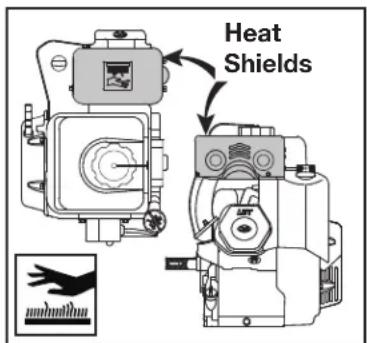
Heat Shield
- The snow engine is equipped with a heat shield that is designed to allow the engine to operate in cold conditions (see starting procedure for correct choke placement when starting the engine). The heat shield and components inside are hot. Make sure the engine has sufficient time to cool before touching the shield or performing maintenance work inside the shield. See Maintenance Section for further information.
- To prevent fire hazards and for adequate ventilation, keep the engine at least 3 feet (1 meter) away from building walls and other equipment during operation. Do not place flammable objects close to the engine.
Other Equipment
Review the instructions provided with the equipment powered by this engine for any additional safety precautions that should be observed in conjunction with engine startup, shutdown, operation, or protective safety gear that may be needed to operate the equipment.


Do not touch hot sections of engine (see figure above). The hot sections of the engine can cause severe burns.
Controls & Features
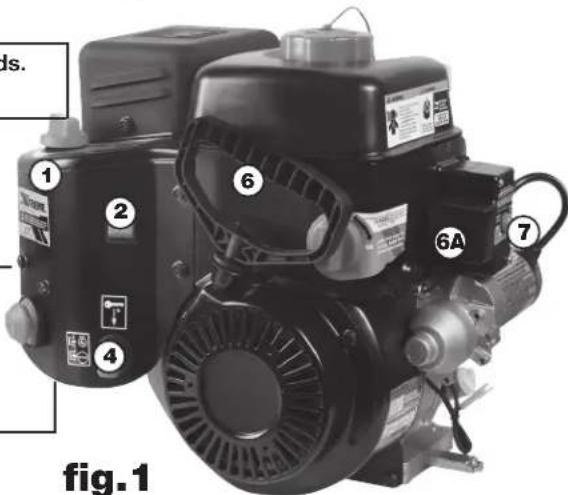
CONTROLS
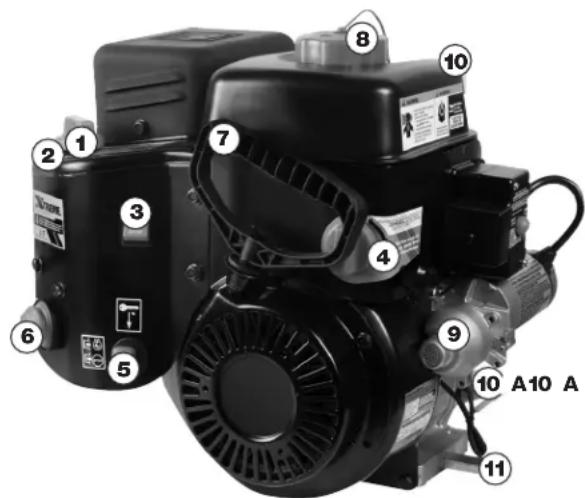
1. Choke Control Knob
The Choke Control Knob opens and closes the choke valve in the carburetor. The "START" position enriches the fuel mixture which allows easier starting a cold engine. The "RUN" position provides the correct fuel mixture once engine warms up. Never try to shut the engine down using the Choke Control Knob.
2. Idle-Down Control Ring (if equipped) (not shown)
The Idle-Down Control Ring sets engine speed from high-speed to low-speed. Rotate the ring clockwise, "RUN" position for high-speed. This control MUST be set in the "RUN" position for starting a cold engine. By rotating the ring counterclockwise, "IDLE" position, will allow your engine to run at low-speed. DO NOT OPERATE EQUIPMENT IN THE IDLE POSITION. Note: the idle-down control is intended to be either in "RUN" or "IDLE" positions only.
3. Engine RUN/STOP Rocker Switch (or optional Rotary Key Switch)
The Engine Rocker Switch (or optional Rotary Key Switch) enables and disables the ignition system. Turn the engine switch to the RUN position to start the engine. Turn the Engine Rocker Switch to the STOP position to stop the engine.
4. Fuel Control Knob
The Fuel Control Knob opens and closes the passage between the fuel tank and carburetor. The Fuel Control Knob must be in the "ON" position for the engine to run. When the engine is not in use, be sure to turn the Fuel Control Knob to the "OFF" position.
5. Safety Key Switch
The Safety Key Switch enables the engine electrical system and must be installed to start the engine. On some models this key switch is incorporated with the RUN/STOP switch, #3.
6. Primer Bulb
The Primer Bulb system is designed to enrich the fuel mixture for starting a cold engine. DO NOT over prime the fuel system. To properly use the Primer Bulb system, depress Primer Bulb 3 times maximum when starting a cold engine. Do not use Primer Bulb system when attempting to start a warm engine.
7. Oversized Recoil Handle
The engine is started by pulling the Recoil Handle. Always grip firmly and have your body positioned properly when pulling.
When starting the engine:
- Slowly pull Recoil Handle until resistance is felt.
- Then pull firmly the full length of the rope to start engine.
- Never wrap thumb around Recoil Handle in the event of engine kick-back.
8. Oversized Gas Cap
Allows for easy opening and closing for more efficient refueling.
9. Electric Start (if equipped)
Used to start the engine with 120VAC extension cord. Always use correct size extension cord to prevent electric starter damage.
10. High Oil Fill Tube (if equipped)
Allows convenient location for adding oil during the life of the engine. Check oil level with lower oil fill plug (10A) per owner's manual instructions.
11. Oil Drain
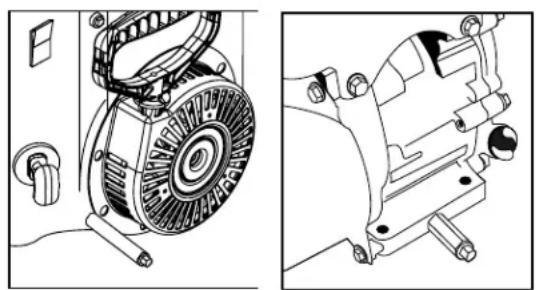
The oil drain can be located on either side and on some models extend out below the recoil housing.
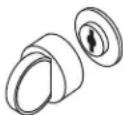
Optional combined Engine Run/Stop and Safety Key Switch (3 & 5)
Before Operation
For your safety, and to maximize the service life of your equipment, it is very important to take a few moments before you operate the engine to check its condition. Be sure to take care of any problem you find, or have your servicing dealer correct it, before you operate the engine.

WARNING
Improperly maintaining this engine or failing to correct a problem before operation, could cause a malfunction in which you could be seriously injured.
Always perform a pre-operation inspection before each operation and correct any problem.
Before beginning your pre-operation checks, be sure the engine is level and the engine switch is in the STOP position.
Check the General Condition of the Engine
- Remove any excess dirt or debris, especially around the heat shield, recoil starter, and cylinder head fins.
- Inspect for signs of damage and oil leakage.
- Be sure all shields and covers are in place. All nuts, bolts, and screws must be tight.
Check the Engine
- Check the engine oil level. Running the engine with a low oil level or improper oil can cause engine damage. To avoid the inconvenience of an unexpected shutdown, always check the engine oil on a level surface before startup. Engine may be shipped with or without oil. 5W-30 oil is recommended for general use. Synthetic oil is an acceptable alternative (refer to Engine Oil Level Check (page 9) for proper engine oil levels).
- Check the fuel level before start-up. Since the engine must be cool before refueling, starting with a full tank will help to eliminate or reduce operating interruptions for refueling.
Electric Start
- Determine what type of power source outlet you will be connecting the power cord to. If the starter is equipped with a 120V AC electrical requirement, make sure to use the appropriate 120V AC household current input.
- Determine if your power source has a Ground Fault Interrupt (GFI) three-wire system by consulting with a licensed electrician. If your power source does not have a GFI three-way ground system, DO NOT USE THE ELECTRIC STARTER due to a possible hazardous condition.
Check all Equipment Powered by this Engine
Review the instructions provided with the equipment powered by this engine for all precautions and procedures that should be followed before starting the engine.
SAFE OPERATING PRECAUTIONS
Review the instructions provided with the equipment powered by this engine for any safety precautions that should be observed in conjunction with starting, shutting down, or operating the engine.

WARNING
This engine is designed for COLD WEATHER USE ONLY.

WARNING
Carbon monoxide gas is toxic. Breathing it can cause unconsciousness and/or death. Avoid any areas or actions that expose you to carbon monoxide.

WARNING
DO NOT place hands on or near the exhaust system while starting.
Operation
BEFORE STARTING THE ENGINE (fig. 1)
Before starting the Engine, carefully note the following:
- Check engine oil level.
- Allow Engine To Warm Up for approximately 15-20 seconds before rotating Choke Knob to Run Position.
- If inconsistent engine speeds are experienced when Choke Knob is rotated to Run Position:
- Move Choke Knob to Mid-Point Between Run and Start Positions and allow Engine to develop additional operating heat.
- After Engine has warmed up, rotate Choke Knob to Run Position.
STARTING THE ENGINE (MANUAL START) (fig. 1)
- Rotate Choke Knob to START position. Rotate Idle-Down Ring clockwise to "RUN" position (if equipped). Note: The engine pictured on these pages does not have an Idle Down feature.
- Select RUN on Run/Stop Rocker Switch or turn Rotary Key Switch to Run (see insert).
- Rotate Fuel Control Knob to ON position.
- Only on models with individual Key Switch and Rocker Switch: Insert Safety Key into slot (DO NOT TURN SAFETY KEY SWITCH). Be sure you feel a "snap" when Safety Key is fully inserted.
- Prime system: 3 primes maximum. DO NOT over prime system. Make sure you cover the vent hole before the primer is compressed. Hold the primer bulb in the compressed position for one full second each time you press it. Repeat for a total of 3 primes.
- Firmly grasp rope handle. Position your body so you are standing close to engine. Pull slowly until resistance is felt, then pull rope firmly and quickly to start engine and avoid kickback. DO NOT stand far away from engine or over extend the rope handle. Doing this will damage the recoil.
PULL START PROCEDURE
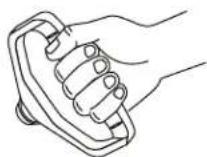
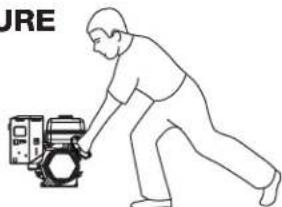
1. Firmly grasp recoil handle. 2. Position your body so you are standing close to engine.
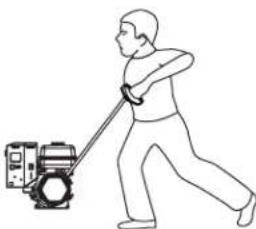
3. PULL SLOWLY UNTIL RESISTANCE IS FELT, then pull rope firmly and quickly to start engine and avoid kickback.
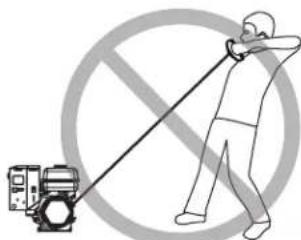
AWARNING
Do not stand far away from engine or over-extend the rope handle. Doing this will damage the recoil
STARTING THE ENGINE (ELECTRIC START) (fig. 1)
Follow steps 1-5 for manual engine start procedure.
6A.Use a 3-wire extension cord and plug cord into starter motor adaptor first. Then plug cord into wall receptacle. Use appropriately sized extension cord (a minimum of 16 gage, 3-wire, 13 amp, no longer that 25 feet, and suitable for outdoor use) to prevent damage to electric starter.
- Press and hold starter button.
CAUTION
Do not hold the electric starter button down for more than 5 seconds. Wait at least 1 minute before additional starting attempts.
IMPORTANT: After engine starts, unplug the cord from the starter adaptor.
AWARNING
If additional extension cord is needed, make sure to use a three-wire cord. Do not exceed extension cord length provided by Equipment Manufacturer. Only use extension cord with equal to or greater AWG size wire that is provided by the Equipment Manufacturer.
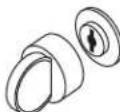
Optional combined Engine Run/Stop and Safety Key Switch
Snow Engine Manual 6rev.01/04/
Operation CONTINUED
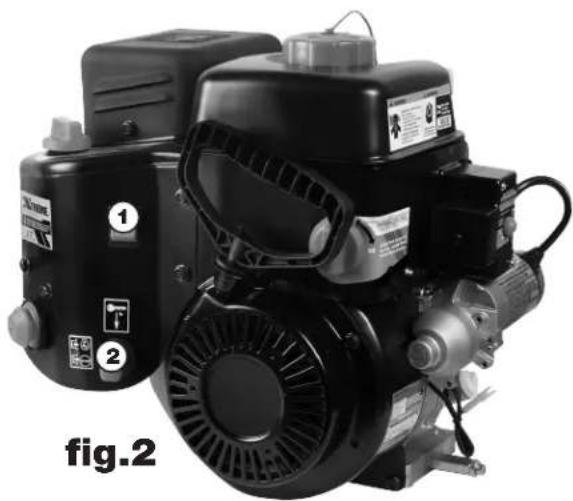
STOPPING THE ENGINE (fig. 2)
To stop the engine in an emergency:
- Flip Rocker Switch to STOP position (with a rotary type switch, turn the key to the STOP position (see insert).
- Pull Safety Key from Engine.
Under normal conditions, use the following procedure:
- Flip Rocker Switch to STOP position (with a rotary type switch, turn the key to the STOP position (see insert).
- Pull Safety Key from Engine and store in a safe place for future use.
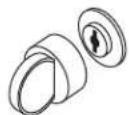
Optional combined Engine Run/Stop and Safety Key Switch
The standard carburetor air-fuel mixture may be too rich when operated at high altitude resulting in possible decreased performance and increased fuel consumption. Please have an authorized Service Center modify this engine's carburetor if it is operated continuously above 5000 feet. Failure to modify may result in poor engine performance, spark plug fouling, hard starting, and increased emissions.
Carburetor modification by an authorized Service Center will improve performance and allow this engine to continually meet US EPA and California ARB emission standards throughout its useful life.
Important Note
When the carburetor has been modified for high altitude operation, the air-fuel mixture may be too lean for operation at 5000 feet or below. This could result in the engine overheating and could cause serious engine damage. Please have an authorized Service Center restore high altitude converted carburetors back to the original factory specification before operating below 5000 feet.
To locate the nearest dealer, please visit our website or call our toll free hotline:
www.lctusa.com
Toll Free: (800) 558-5402
Servicing Your Engine
THE IMPORTANCE OF MAINTENANCE
Protect yourself and your equipment by properly maintaining your engine.
Proper engine maintenance is necessary for safe, economical, and trouble-free operation.

WARNING
Improperly maintaining this engine, or failure to correct a problem before operation, can cause a malfunction in which you can be seriously hurt or killed. Always follow the inspection and maintenance recommendations and schedules in this owner's manual.
To assist you in properly caring for your engine, the following pages include routine inspection procedures and simple maintenance procedures using basic hand tools. Service tasks that are more difficult or which require special tools should be handled by professionals and are normally performed by a service technician or qualified mechanic.
NOTICE
See Maintenance Schedule for normal and extreme operation condition differences.
MAINTENANCE SAFETY INSTRUCTIONS
This manual contains very important safety precautions. However, we cannot warn you of every conceivable hazard that can arise while performing maintenance. You must decide whether or not you should perform a given task and always be safety conscious.
Safety Precautions
- Make sure the engine is not running, is turned OFF, spark plug cap is removed from spark plug, and engine is cooled off before you begin any maintenance or repairs. This can prevent several potential hazards, such as the following:
Carbon monoxide poisoning from engine exhaust.
Run engine in a well-ventilated area.
Burns from hot parts.
Let the engine and exhaust system cool-off before touching. (see drawing right)
Injury from moving parts.
Do not run the engine unless instructed to do so.
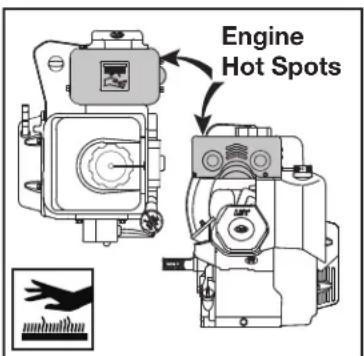
- Before you begin maintenance, read all instructions and make sure you have the tools and skills required.
- To reduce the possibility of fire or explosion, be alert when working around gasoline. Use only a nonflammable solvent, not gasoline, to clean parts. Keep cigarettes, sparks and flames away from all fuel-related parts.
- It is suggested to keep a fire extinguisher close by when performing maintenance.
Your servicing dealer knows your engine best and is equipped to maintain and repair it.
REFUELING
With the engine stopped and cool, remove the fuel tank cap and check the fuel level. Refill the tank if the fuel level is low. Leave enough area in the tank to allow for fuel expansion caused by heat. This will help prevent fuel from being forced from the tank onto a hot surface. NEVER FILL TANK ABOVE MARKED RECOMMENDATIONS ON FUEL STRAINER.

WARNING
Gasoline is highly flammable and explosive. You can be burned or seriously injured when handling fuel.
- Stop the engine and keep heat, sparks and flame away.
Only handle fuel outdoors. - Wipe up spills immediately.
- Allow engine to cool before refueling.
Refuel in a well-ventilated area with the engine OFF and cool. Avoid spilling fuel. Do NOT fill above the fuel strainer marking. Fuel cap should make a "clicking" sound when properly tightened. After refueling, tighten the fuel tank cap securely. Refuel the engine in a properly ventilated location and away from where fuel fumes may reach flames or sparks. Keep fuel away from appliance pilot lights, barbecues, electric appliances, power tools, and other electric appliances.
Spilled fuel is a fire hazard and it causes environmental damage. Wipe up spills immediately. Do not use cell phones or other electronic devices while refueling. Prevent static electricity when refueling. Fuel can damage paint and plastic. Do not spill fuel when filling your fuel tank. Damage caused by spilled fuel is not covered under warranty.
FUEL RECOMMENDATIONS
Use unleaded gasoline with a pump octane rating of 86 or higher. These engines operate best on unleaded gasoline.

CAUTION
Do NOT use stale or contaminated gasoline or an oil/gasoline mixture. Avoid getting dirt or water per fuel containers that are properly marked.

CAUTION
els. This engine is also not E15 compatible.
Maximum recommended ethanol content: 10%
ENGINE OIL LEVEL CHECK
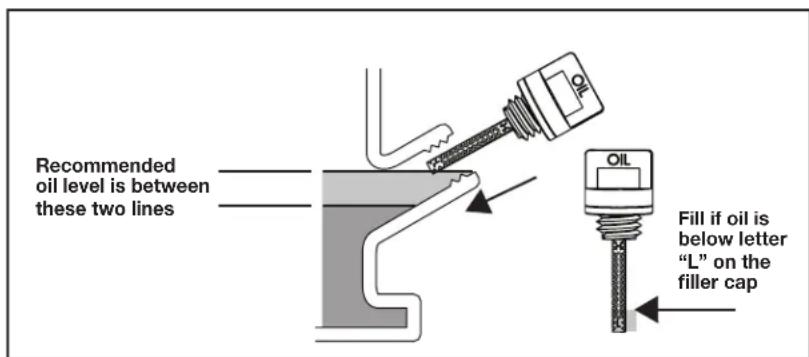
Check the engine oil level with the engine stopped and with the engine in a level position.
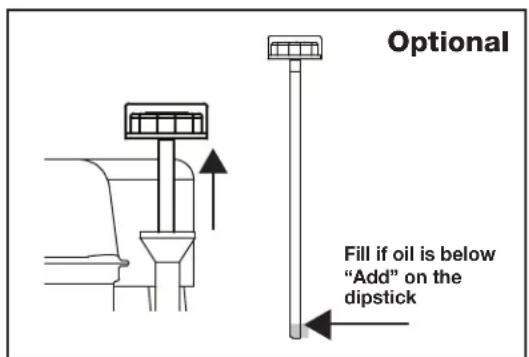
- Remove either side mounted filler cap dipstick or high oil fill dipstick (if equipped) and wipe it clean.
- Insert the dipstick into the filler neck and turn clockwise until fully seated. Then remove the dipstick by turning it counter-clockwise. Check the oil level shown on the dipstick.
- Securely screw in the filler cap/dipstick. Running the engine with a low oil level can cause engine damage. Always check the engine oil before start up.
SNOW ENGINE OIL CHANGE PROCEDURE
- Begin the oil change with a cold engine.
- Start and run the engine for 1-2 minutes.
- Turn the engine off.
- Place the rocker switch in the stop position.
- Remove the snow safety key.
- The body of the oil drain tube (if equipped) should be supported as the oil drain plug is removed. Support the body of the oil drain tube with a 14mm wrench in a clockwise direction. Loosen the 10mm oil drain plug by turning it counter-clockwise. Remove the oil drain plug and crush washer.
- Drain the oil completely.
- Verify the oil drain tube (if equipped) is tight in the engine cylinder block: 36 NM & 320-330 in. Ibs.
- Reinstall the oil drain plug and crush washer. The crush washer must be reinstalled between the oil drain tube and oil drain plug to prevent oil leakage. Tighten the oil drain plug to 31 NM & 270-280 in. lbs.
- Refill the crankcase with the proper oil type and amount.
- Checking oil with a dip stick; screw the dip stick cap down tightly, then remove and check oil level.
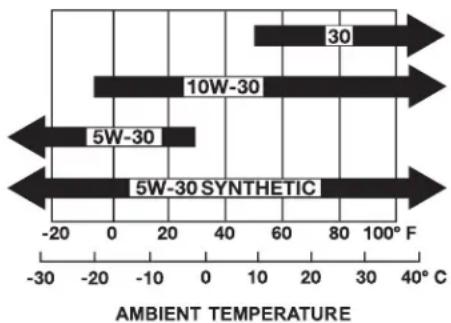
ENGINE OIL RECOMMENDATIONS
- Engine oil affects performance and service life. Use 4-cycle automotive detergent oil.
- 5W-30 oil is recommended for general use (synthetic oil is an acceptable alternative).
- The SAE oil viscosity and service classification are in the API label on the oil container. Use API SERVICE category SJ engine oil, or higher.
SPARK PLUG MAINTENANCE
F6RTC (Torch) Plug Recommended / F6RTP (Platinum) Optional Cross References:
- Champion plug cross reference is: RN9YC (some tables show RN9YCC)
- NGK plug cross reference: BPR6ES
BOSCH plug cross reference is: WR6DC
NOTICE
Using an incorrect spark plug may cause engine damage.
Changing the Spark Plug
Engine Oil Capacities:
136cc / 179cc / 208cc 16 oz (.473 liter)
254cc 20 oz (.591 liter)
291cc/306cc 32 oz (.946 liter)
369cc/414cc/420cc 38 oz (1.123 liter)
Note: Total oil capacity could be as much as 4 additional ounces over volumes above due to engine mounting angle and proper draining.
A WARNING
The heater box may be hot and must be allowed to cool completely before touching. Muffler and components inside heat shield may be HOT! Allow to cool before servicing the spark plug any area inside and around the heat shield.
- When engine is cool, remove safety key.
- Disconnect the spark plug cap and remove any debris from the spark plug area with high pressure air.
- Remove the spark plug with a 13/16-inch spark plug wrench.
- Inspect the spark plug. Replace it if the electrodes are worn or if the insulator is cracked or chipped. Spark plug gap should be set to 0.027 - 0.030 inches.
- Install the spark plug carefully to avoid cross threading. Screw in spark plug by hand until it stops turning.
- Tighten the spark plug with a 13/16-inch spark plug wrench. Tighten 1/4 turn after the spark plug seats.
NOTICE
A loose spark plug can overheat and damage the engine. Over-tightening the spark plug can damage the threads in the cylinder head.
- Attach the spark plug cap. Ensure spark plug cap snaps into place securely.
- Reinstall Safety Key before attempting to start engine.
Helpful Tips & Suggestions
STORING YOUR ENGINE
Storage Preparation
Proper storage preparation keeps your engine trouble-free and clean. The following steps will assist in keeping rust and corrosion from impairing your engine's function and appearance, and will make the engine easier to start when using again.
Cleaning
If the engine has been running, allow it to cool for at least half an hour before cleaning. Clean all exterior surfaces and apply a light film of spray penetrating lubricant.
- Do not allow water to enter into the exhaust ports or into the heat shield openings (intake port). Water that passes through these areas can cause damage to the engine. Use a rag to wipe down heat shield if cleaning is required.
Water contacting a hot engine can cause damage. If the engine has been running, allow it to cool for at least half an hour before cleaning. - It's best to use compressed air to clean debris from engine.
Adding a Fuel Stabilizer to Extend Fuel Storage Life
NOTICE
Fuel stabilizer is recommended for long term storage.
- Turn the red fuel knob to the OFF position while engine is running and allow the engine to run until it stops. Turn engine OFF when it begins surging to avoid engine damage.
- Add fuel stabilizer, following the manufacturer's instructions.
- Turn the red fuel knob to the ON position after adding fuel stabilizer.
- Re-start engine.
- Run the engine outdoors for 1 minute to be sure that treated gasoline has replaced the untreated gasoline in the carburetor.
- Slow the engine to an idle speed.
- Repeat step 1 above.
MAINTENANCE SCHEDULE
Normal Operating Conditions (less than 40 hrs. per year)
| EACH USE | FIRST MONTH | EVERY 6 MONTHS | ONCE A YEAR | |
| Engine Oil Level | Check | |||
| Engine Oil | Replace Replace | |||
| Spark Plug* | ReplaceClear | |||
| Cylinder/Head Fins | Clean | |||
| Oil Leaks | Check/Repair | |||
| Bolts | Check/Repair | |||
| Fuel Hose Clamps | Check/Repair | |||
- Spark plug gap to be set to 0.027 - 0.030 inches.
Extreme Operating Conditions (greater than 40 hrs. per year)
EACH
USE
EVERY 40 HOURS
| Engine Oil Level | Check | |
| Engine Oil | Drain and Replace | |
| Spark Plug* | Replace | |
| Cylinder/Head Fins | Check | Clean |
| Oil Leaks | Check/Repair | |
| Bolts | Check/Repair | |
| Fuel Hose Clamps | Check/Repair |
- Spark plug gap to be set to 0.027 - 0.030 inches.

CAUTION
Following proper maintenance is critical under extreme operating conditions.
Helpful Tips & Suggestions CONTINUED
STORAGE PRECAUTIONS
If your engine will be stored with gasoline in the fuel tank and in the carburetor, there is the possible hazard of gasoline vapor ignition. Choose a well-ventilated storage area away from heat, sparks, flames, and any appliance that operates with a flame or spark such as a furnace, water heater, or clothes dryer. Avoid any area with a spark-producing electric motor, garage door openers, or where power tools are operated.
Avoid storage areas with high humidity which causes rust and corrosion. Leave the red fuel knob in the OFF position to reduce the possibility of fuel leakage.
Position the equipment so the engine is level to avoid fuel or oil leakage. When the engine and exhaust system are cool, cover the engine to keep out dust. A hot engine and exhaust system can ignite or melt certain materials. Do not use sheet plastic as a dust cover. A nonporous cover can trap moisture around the engine causing rust and corrosion.
Removal From Storage
Check your engine as described in the BEFORE OPERATION chapter of this manual. If refueling is required, only use fresh gasoline.
TRANSPORT
Transport only when engine is cool. A hot engine and exhaust system can burn you and can ignite some materials. Keep the engine level when transporting to reduce the possibility of fuel leakage. Position the red fuel knob to the OFF position. Secure the engine to prevent movement during transporting to prevent potential injury and damage to the engine.
Technical & Consumer Information
The U.S. and California Clean Air Acts
EPA and California regulations require all manufacturers to furnish written instructions describing the operation and maintenance of emission control systems.
The following instruction and procedures must be followed in order to keep the emissions from your engine within the emission standards.
Tampering and Altering
Tampering with or altering the emission control system may increase emissions beyond the legal limit. Among those acts that constitute tampering are:
- Removal or alteration of any part of the intake, fuel or exhaust systems.
- Altering or defeating the governor linkage or speed-adjusting mechanism to cause the engine to operate outside its design parameters.
CONSUMER INFORMATION
Manufacturer Publications
These publications will give you additional information for maintaining and repairing your engine. You may order them online at most book retailing web sites.
Small Engine Repair - Chilton Manual
This manual covers complete maintenance and overhaul procedures. It is intended to be used by a skilled technician.
Technical & Consumer Information CONTINUED
ENGINE MODEL NUMBER & SERIAL NUMBERING SYSTEM
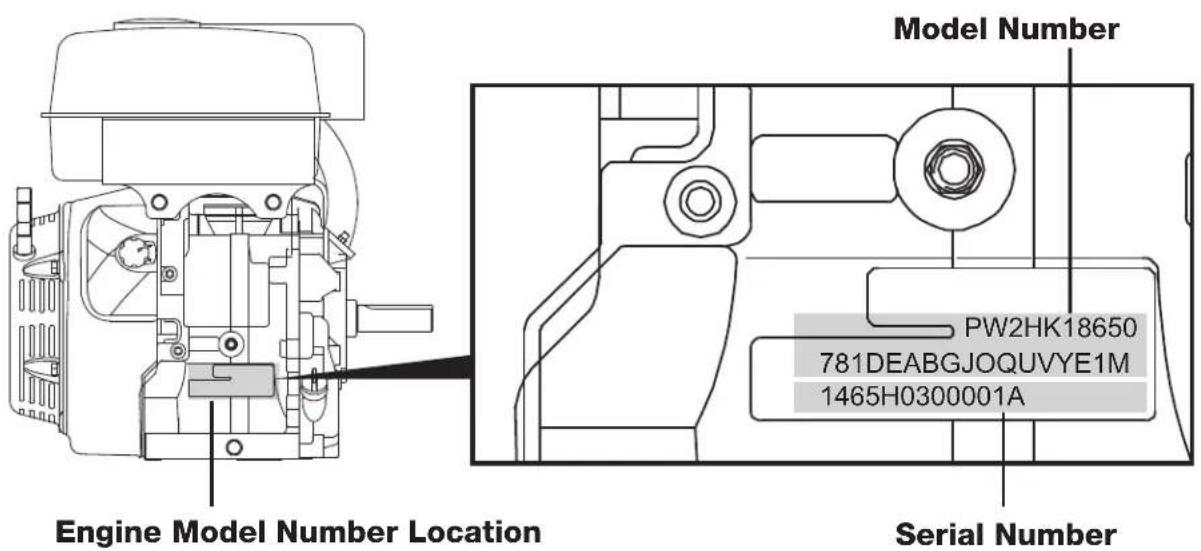
The first two lines of an engine's number is the model number. It is alphanumeric and engraved on the side of the block to the right of the recoil. The third line is alphanumeric and is the serial number.
Engine Serial Number Sequence
14 65H 03 00001 A:

Example:
Engine Serial Number 1465H0300001A represents:
14: 2014
65H: 208cc Horizontal Engine Series (Refer to Engine Model Number System)
03: March
00001: 1st Engine Produced During Month of March
A: Horizontal Assembly Line
Note: The LCT Model Number and Serial Numbering System is subject to be changed or edited at any time.
LIQUID COMBUSTION TECHNOLOGY, LLC EMISSION CONTROL WARRANTY STATEMENT
YOUR WARRANTY RIGHTS AND OBLIGATIONS
The California Air Resources Board, United States Environmental Protection Agency (US EPA), and Liquid Combustion Technology, LLC (LCT) are pleased to explain the emissions control system warranty on your 2016 and later small off-road engine (SORE). In California, new small off-road engines must be designed, built and equipped to meet the State's stringent anti-smog standards. Liquid Combustion Technology, LLC must warrant the emission control system (EEC) on your small off-road engine for the periods of time listed below provided there has been no abuse, neglect or improper maintenance of your small off-road engine.
Your emission control system may include parts such as the carburetor or fuel tanks, fuel lines, fuel caps, valves, canisters, filters, vapor hoses, clamps, connectors, and other associated components.
MANUFACTURER'S WARRANTY COVERAGE
This emissions control system is warranted for two years. If any emissions-related part on your equipment is defective, the part will be repaired or replaced by Liquid Combustion Technology, LLC, provided there has been no abuse, neglect or improper maintenance of your small off-road engine.
OWNER'S WARRANTY RESPONSIBILITIES
As the small off-road engine owner, you are responsible for the performance of the required maintenance listed in your owner's manual. Liquid Combustion Technology, LLC recommends that you retain all receipts covering maintenance on your small off-road engine, but Liquid Combustion Technology, LLC cannot deny warranty solely for the lack of receipts or for your failure to ensure the performance of all scheduled maintenance.
As the small off-road engine owner, you should however be aware that Liquid Combustion Technology, LLC may deny you warranty coverage if your small off-road engine or a part has failed due to abuse, neglect, improper maintenance or unapproved modifications.
You are responsible for presenting your small off-road engine to a Liquid Combustion Technology, LLC dealer as soon as a problem exists. If you have any questions regarding your warranty rights and responsibilities, you should contact LCT at one of the following:
Certified Parts Corporation
1029 South Jackson Street
Janesville, WI 53546
800.558.5402
www.lausonpower.com
Liquid Combustion Technology
100 Roe Road
Travelers Rest, SC 29690
877.274.2214
www.lctusa.com
support@lctllc.com
GENERAL EMISSIONS WARRANTY COVERAGE
Liquid Combustion Technology, LLC's application for certification warrants to the ultimate purchaser and each subsequent purchaser that the engine is:
Designed, built, and equipped so as to conform with all applicable regulations and free from defects in materials and workmanship that cause the failure of a warranted part to be identical in all material respects to the part as described in the Liquid Combustion Technology, LLC's application for certification.
The warranty period begins on the date the engine or equipment is delivered to an ultimate purchaser. The warranty period is two years.
Subject to certain conditions and exclusions as stated below, the warranty on emission-related parts is as follows:
Any warranted part that is not scheduled for replacement as required maintenance in the written instructions supplied is warranted for the warranty period stated above. If the part fails during the period of warranty coverage, the part will be repaired or replaced by Liquid Combustion Technology, LLC according to subsection (4) below. Any such part repaired or replaced under the warranty will be warranted for the remaining warranty period
Any warranted part that is scheduled only for regular inspection in the written instructions supplied is warranted for the warranty period stated above. Any such part repaired or replaced under warranty will be warranted for the remaining warranty period.
Any warranted part that is scheduled for replacement as required maintenance in the written instructions supplied is warranted for the period of time before the first scheduled replacement date for that part. If the part fails prior to the first scheduled replacement, the part will be repaired or replaced by Liquid Combustion Technology, LLC's according to (4) below. Any such part repaired or replaced under warranty will be warranted for the remainder of the period prior to the first scheduled replacement point for the part.
Repair or replacement of any warranted part under the warranty provisions herein will be performed at a warranty station at no charge to the owner.
Notwithstanding the provisions of herein, warranty services or repairs will be provided at all Liquid Combustion Technology, LLC's distribution centers that are franchised to service the subject engines.
The owner will not be charged for diagnostic labor that is directly associated with diagnosis of a defective, emission-related warranty part, provided that such diagnostic work is performed at a warranty station.
Liquid Combustion Technology, LLC is liable for damages to other engine components proximately caused by a failure under warranty of any warranted part.
Throughout the engine's warranty period defined above, Liquid Combustion Technology, LLC will maintain a supply of warranted parts sufficient to meet the expected demand for such parts.
Any replacement part may be used in the performance of any warranty maintenance or repairs and will be provided without charge to the owner. Such use will not reduce the warranty obligations of Liquid Combustion Technology, LLC
Add-on or modified parts that are not exempted by the Air Resources Board may not be used. The use of any nonexempted add-on or modified parts by the ultimate purchaser will be grounds for disallowing a warranty claim. Liquid
Combustion Technology, LLC will not be liable to warrant failures of warranted parts caused by the use of such an add-on or modified part.
WARRANTED PARTS
The repair or replacement of any warranted part otherwise eligible for warranty coverage may be excluded from such warranty coverage if Liquid Combustion Technology, LLC demonstrates that the engine or equipment has been abused, neglected, or improperly maintained, and that such abuse, neglect, or improper maintenance was the direct cause of the need for repair or replacement of the part. That notwithstanding, any adjustment of a component that has a factory installed, and properly operating, adjustment limiting device is still eligible for warranty coverage. The following emission warranty parts lists are covered if factory installed:
(1) Fuel Metering System
(i) Carburetor and internal parts (and/or pressure
regulator or fuel injection system)
(ii) Air/fuel ratio feedback and control system
(iii) Cold start enrichment system
2) Air Induction System
(i) Controlled hot air intake system
(ii) Intake manifold
(iii) Air filter
(3) Ignition System
(i) Spark Plugs
(ii) Magneto or electronic ignition system
(iii) Spark advance/retard system
(4) Exhaust Gas Recirculation (EGR) System
(i) EGR valve body, and carburetor spacer if applicable.
(ii) EGR rate feedback and control system
(5) Air Injection System
(i) Air pump or pulse valve
(ii) Valves affecting distribution of flow
(iii) Distribution manifold
(6) Catalyst or Thermal Reactor Systems
(i) Catalytic convert
(ii) Thermal reactor
(iii) Exhaust manifold
(7) Particulate Control Traps
(i) Filters, precipitators, and any other device used to capture particulate emissions
(8) Miscellaneous Items Used in Above Systems
(i) Vacuum, temperature, and time sensitive valves and switches
(ii) Electronic controls
(iii) Hoses, belts, connectors, and assemblies
9) Evaporative Emissions Components
(i) Fuel Line
(ii) Fuel Line Clamps
(iii) Fuel Tank and Fuel Cap
(iv) Carbon Canister and connecting parts
(v) ROV
Introduction
Certified Parts Corporation
1029 South Jackson Street
Janesville, WI 53546
800-558-5402
www.lausonpower.com
Liquid Combustion Technology
100 Roe Road
Travelers Rest, SC 29690
877-274-2214
www.lctusa.com
support@ictllc.com
COUVERTURE GÉNÉRALE DE GARANTIE ANTIPOLLUTION
LaDemande de certificationde LiquidCombustionTechnology, LLCgarantiet alacheteurfinal etauchacachetuersuivantque lemoteurest: