EasyManual
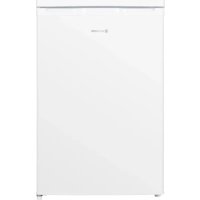
WBTTKV55DB - Fridge Wisberg - Free user manual and instructions
Find the device manual for free WBTTKV55DB Wisberg in PDF.



User questions about WBTTKV55DB Wisberg
0 question about this device. Answer the ones you know or ask your own.
Ask a new question about this device
Download the instructions for your Fridge in PDF format for free! Find your manual WBTTKV55DB - Wisberg and take your electronic device back in hand. On this page are published all the documents necessary for the use of your device. WBTTKV55DB by Wisberg.
USER MANUAL WBTTKV55DB Wisberg
1.2 VEILIGHEIDSWAARSCHUWINGEN EN -VOORSCHRIFTEN
1.1 BEDOELD GEBRUIK EN TE VERWACHTEN ONBEDOELD GEBRUIK
WAARSCHUWING! GEVAAR!
- 1 is de warmste instelling.
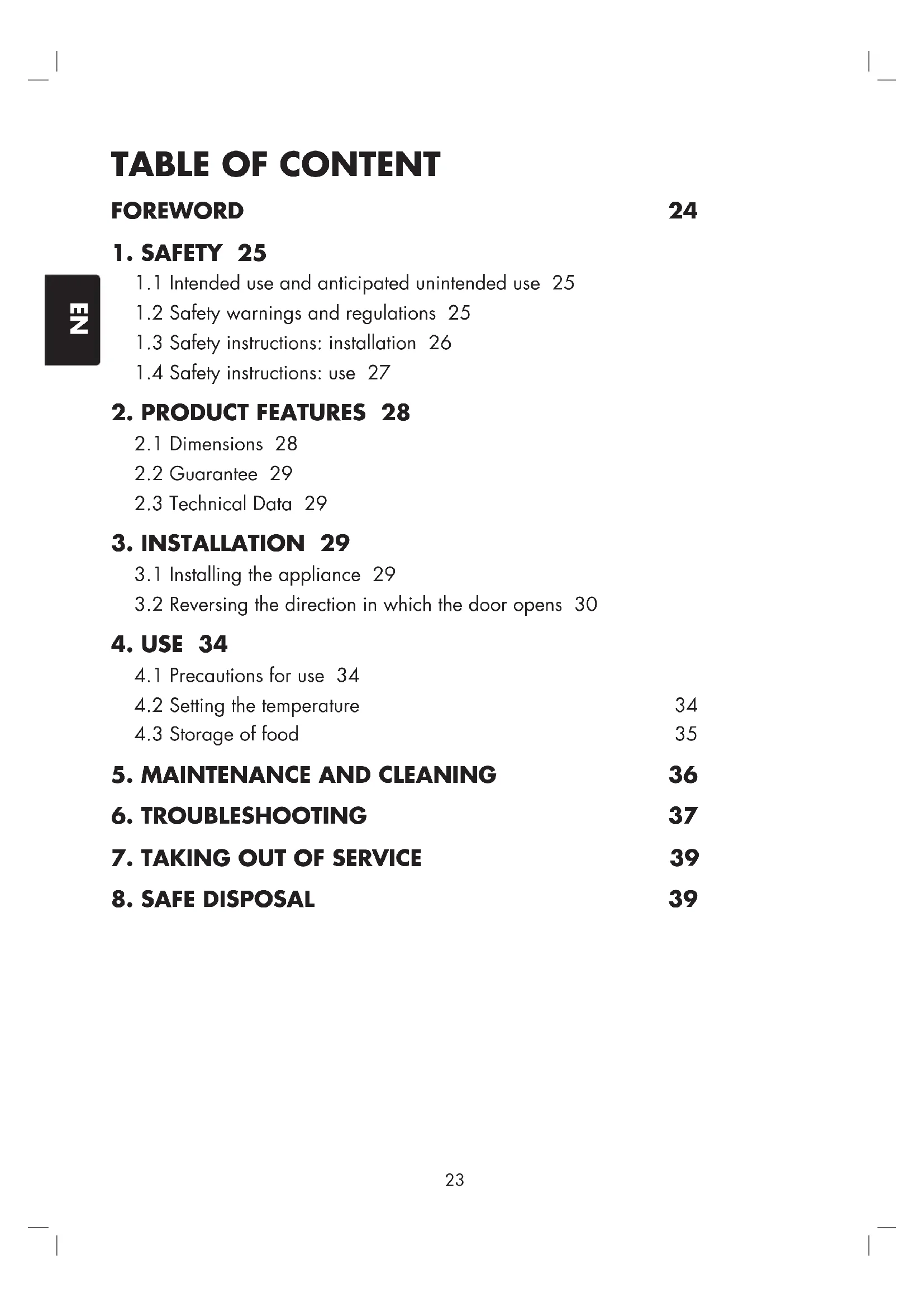
1.1 Intended use and anticipated unintended use 25
1.2 Safety warnings and regulations 25
1.3 Safety instructions: installation 26
1.4 Safety instructions: use 27
2. PRODUCT FEATURES 28
3.2 Reversing the direction in which the door opens 30
4.2 Setting the temperature 34
4.3 Storage of food 35
- This manual contains all information for the correct, efcient and safe use of the appliance.
- This manual is intended for the end user and/or buyer of this appliance.
- Make sure you have read and understood the instructions in this manual completely before installing or using the appliance. Keep this document for future use as long as you use and/or own the appliance.
- Wisepick Productions B.V. cannot in any way be held liable for material or immaterial damage to you or to others, the appliance, your other belongings or belongings of others caused by not following the instructions in this manual.
- The warnings and safety instructions in this manual do not cover all possible circumstances and situations.
- If you contact our customer service, make sure you have the model number ready. The information can be found on the type plate or on the front of this manual. Original instructions This manual was originally written in Dutch. All other languages are translated documents. In the case of translation errors, the Dutch version is leading. Symbols used SYMBOL DESCRIPTION Fire hazard and/or ammable materials Indicates a dangerous situation which, if not avoided, may result in serious immaterial damage to you or others. Indicates a dangerous situation which, if not avoided, may result in slight immaterial damage to you or others. Indicates a situation related to material damage. Indicates useful additional information. You can also nd the latest version of this manual online, at wisberghome.com if you search for the article number. DANGER! CAUTION! ATTENTION! WARNING! NOTE NOTE Copyright The data depicted in this manual, including texts, photographs, graphic drawings, trademarks, (trade) names and logos, are the property of Wisepick Productions B.V. and are protected by copyright, trademark law and/or any other intellectual property right, unless these data belong to a third party. You are never allowed to reproduce, transfer, distribute, store or make the contents of the manual available to third parties, in whole or in part, without the prior written consent of Wisepick Productions B.V. and/or the third party to whom the data belong. Wisberg contact details Customer service can be reached at: wisberghome.com Wisepick Productions B.V. Weena 664 3012 CN Rotterdam The Netherlands Made in China25
- This appliance is only intended for use indoors.
- This appliance is not intended for use as a built-in appliance.
- This appliance is intended for domestic use and similar applications such as: - staff kitchens in shops, ofces and other work environments; - farms and guests in hotels, motels, B&B and other residential environments; - catering and similar non-retail applications.
- This appliance is not intended for use by persons (including children) with limited physical, sensory or mental capabilities or lack of experience and knowledge, unless they have been given supervision or instructions concerning use of the appliance by a person responsible for their safety.
- Any use of the appliance other than as described in this manual is considered to be unintended use and may result in property and immaterial damage to you or to others, the appliance, your other property or other people’s property and the expiry of the warranty.
- Keep the vents in the appliance housing open.
- Do not use mechanical devices, electrical appliances (such as a hairdryer or heater) or other means to defrost your freezer.
- Ensure that no components of the cooling circuit are damaged during transport and installation of the appliance.
- Do not place electrical appliances in the food storage compartments of the freezer (such as ice cream machines) unless they are of a type expressly declared suitable by the manufacturer.
- Never open the appliance and do not perform any repairs to the appliance that are not described in this manual. The appliance may only be opened for maintenance by an authorised service technician.
- It is dangerous to change the characteristics or specications of the appliance or to try to modify this product in any way.
- Do not use this appliance with extension leads or power strips.
- Never use a timer, inverter or a separate remote control that automatically turns the appliance on or off. Do not connect the appliance to an earthed power socket that is regularly switched on or off.
- Do not twist or kink the power cable or roll the cable up. Do not clamp the power cable between the surface and the appliance. This can damage the cable’s insulation.
- Never pull on the power cable to move the appliance or to unplug it from the earthed socket.
- Keep the power cable away from heat, oil, sharp edges or moving parts.
1.2 SAFETY WARNINGS AND REGULATIONS
1.3 SAFETY INSTRUCTIONS: INSTALLATION
- Never leave the power cable in such a way that someone could trip over it or accidentally pull it.
- Always move the appliance with two people. Use two hands when moving, lifting or turning the appliance.
- Use only the original accessories provided for the installation.
- Make sure that the power cable is not stuck or damaged during installation or positioning the appliance.
- Never clean the appliance with aggressive or abrasive cleaners, or sharp objects.
- Cleaning and user maintenance must not be carried out by children without supervision.
- Never drop the appliance and avoid bumping. Dropping or bumping the appliance may affect the proper operation of the appliance. Do not use the appliance if it has been dropped.
- Make sure that the power cable of the installed appliance is always easily accessible.
- Ensure that air can circulate around the appliance.
- Pull the plug out of the socket before carrying out any actions on the appliance (e.g. turning the door).
- The correct operation of the appliance can only be guaranteed if the specied temperature range is respected. If, as a result of another installation, the correct ventilation requirements are not met, the appliance will function correctly, but energy consumption may increase slightly.
- Do not install the appliance near radiators, stoves, ovens or hobs. CAUTION!
- Do not use the appliance if the power cable is damaged. Never replace the power cable yourself. The power cable may only be replaced by an authorised service technician.
- Before use, check that the voltage on the socket you want to use matches that on the type plate of the appliance (220-240V~ 50Hz). Only connect the appliance to an earthed power socket. Damage caused by faulty voltage is not covered by the guarantee.
- Do not store containers containing ammable materials, propellant or explosive substances such as aerosols, rell cartridges for re extinguishers, etc. in the appliance.
ELECTROCUTION HAZARD DUE TO SHORT CIRCUIT
- Do not use the appliance if any of its components are damaged or faulty. Replace a damaged or faulty appliance immediately. Remove the plug from the earthed socket and contact customer service.
- Always place the appliance on a moisture-resistant and dry surface.
- Never use the appliance in a damp room, such as a bathroom, or in the vicinity of a bath, shower or swimming pool.
- Do not touch the appliance or power cable with wet hands. ATTENTION!27
SN From +10°C to +32°C N From +16°C to +32°C ST From +16°C to +38°C T From +16°C to +43°C
- Do not install the appliance in direct sunlight.
- If you want to avoid forming a combustible gas-air mixture in the event of a leak in the cooling circuit, consider the size of the space in which the appliance is located and the amount of refrigerant used.
- The total volume of the space in which the appliance is installed divided by the amount of refrigerant of the appliance must not be less than 8 g/m3. The amount of refrigerant contained in the appliance can be found on the type plate.
- The appliance may not operate optimally if it is in a place where the ambient temperature is below the minimum or above the maximum of the temperature range for which the appliance is designed for a longer period of time. Please refer to the “Climate Range” table. Climate Range The information about the climate range of the appliance is stated on the type plate. It indicates at which ambient temperature (or room temperature) the operation of the appliance is optimal (correct). This type of refrigerator has climate range N, ST.
1.4 SAFETY INSTRUCTIONS: USE
- Do not place carbonated or sparkling drinks in the freezer compartment.
- Do not remove objects from the freezer compartment if your hands are wet/damp as this may cause grazes or frostbite.
- Food storage times recommended by the food manufacturer must be observed.
- When the door is open for a long time, the temperature in the compartments of the appliance can rise considerably.
- Clean surfaces that may come into contact with food and accessible drainage systems regularly.
- Store raw meat and sh airtight in suitable containers or freezer bags in the appliance so that they do not come into contact with or drip on other foods.
- If the appliance remains empty for a long time, switch it off, clean and dry it and leave the door open to prevent mould forming in the appliance.28
Adjusting legsBottle holderDoor compartments• Figure 1. Front view • Figure 2. Top viewCrisper drawer cover*Figures 1 and 2 illustrate the space required for the appliance.
Remove the packaging materials and dispose of them properly. Check that the appliance is not damaged. Do not connect the appliance if it is damaged. Report any damage immediately to the salesperson via customer service. In that case, keep the packaging.
- The location where you place your appliance should be well ventilated.
- Always move the appliance with two people. Use two hands when moving, lifting or turning the appliance.
- Do not place the appliance near a heat source, such as a stove or boiler, and avoid direct sunlight, so as to guarantee the cooling effect and save on energy consumption.
- Do not place the appliance in a damp place so that it cannot rust and there is no leakage current.
- Do not use the appliance outdoors. This appliance is only intended for use indoors.
3. Installation of the appliance
- This appliance is not intended for use as a built-in appliance.
- Use only the original accessories provided for the installation.
- To reverse the direction in which the door opens, go to section 3.2.
- During operation, the appliance emits heat to the environment. Therefore there must be at least 5 cm clearance on the top, at least 5 cm on both sides and at least 5 cm on the back of the appliance (see also section 2.1).
- Use the front adjusting legs to level the appliance. If the appliance is not level, it is possible that the door may not close properly, reducing the cooling performance of the appliance. If the appliance is not level, this can also lead to malfunctions.
- Make sure that the power cable is not stuck or damaged during installation or positioning the appliance.
- It must be possible to disconnect the appliance from the mains power supply. The plug must therefore be easily accessible after installation.
- Always place the appliance on a moisture-resistant and dry surface. Before installing the appliance, carefully review the safety information (chapter 1).
This appliance comes with a guarantee period of three years after purchase. For more information on guarantee conditions, please visit wisberghome.com. In any case, you must have the purchase order with purchase and/or delivery date in order to be able to claim the guarantee. If you place the appliance in an ambient temperature that is colder than the minimum temperature, the guarantee lapses. Spare parts Spare parts for this appliance are available. To order or nd out more, visit: wisberghome.com.
Does not contain freon The freon-free freezerrant (R600a) and the environmentally friendly foam insulation (cyclopentane) used for the appliance do not affect the ozone layer and have a very small impact on global warming. Technical data and energy label The technical data is indicated on the type plate on the inside of the appliance and on the energy label (both also printed on page 2). The QR code on the energy label provided with the appliance provides a web link to the information related to the appliance performance in the EU EPREL database. Keep the energy label for reference together with the user manual and any other documents provided with this appliance. It is also possible to nd the same information in EPREL via the link https://eprel.ec.europa.eu and the model name and product number that can be found on the type plate of the appliance. See link www.theenergylabel.eu for detailed information on the energy label.
- Place the appliance on a rm and at surface (oor) so that it is stable, otherwise vibrations and noise may occur. When placing the appliance on oor coverings such as carpets, straw mats or polyvinyl chloride (PVC), place a solid sheet or cover under the appliance to prevent colour change due to heat dissipation.
Before putting the appliance into use, clean the interior and all associated accessories with lukewarm water and neutral soap. Dry everything carefully. Do not use solvents or abrasive powders; these may damage the coating.
On rst installation (or after turning the door) wait at least four hours before plugging in the appliance. This allows the oil to ow back into the compressor.
Before plugging in the power cable, check that the voltage and frequency of the type plate match your power supply network. Only connect the appliance to an earthed power socket. After one hour, open the door of the appliance. If the temperature in the appliance is noticeably lower, this indicates that the cooling system is operating normally.
7. Mounting accessories
- Adjustable shelves The walls of the appliance are equipped with a series of guide proles so that the shelves can be inserted if desired. - Installing the door compartments To store food of different sizes, the door compartments can be set to different heights. Proceed as follows: gradually pull the compartment in the direction of the arrows until it comes loose and put it in the desired position.
To remove the door, the appliance must be tilted backwards. We recommend doing this with two people. Rest the appliance on a rm surface so that it does not slip away as you reverse the door. Keep all removed parts to remount the door later. During this process, the appliance must be placed on its back. After this, wait four hours before connecting the appliance so that the oil can ow back to the compressor.
- Crosshead screwdriver
- Flat head screwdriver
appliance. Remove the two screws at the back of the top cover.
2. Remove the top cover and set it
remove the door; place it on a soft surface to avoid scratching.
4. Unscrew the bottom hinge of the
freezer door. Then dismantle the door.32
5. Move the handle from the left-
hand side to the right-hand side of the door.
6. Move the hinge cover from the
left-hand side to the right-hand side of the door.
7. Rotate the freezer door and
place the hinge on the left-hand side. Close the door with the handle.
8. Unscrew the bottom hinge.
Then remove the adjusting legs on both sides.33
on the bottom hinge, turn the bracket over and replace it.
10. Mount the bottom hinge pin
bracket. Mount both adjusting legs.
11. Mount the door. When tting the
door, make sure the top of the door is level with the top of the cabinet. Otherwise the rubber gasket does not seal the cabinet properly, which can cause the appliance to malfunction.
12. Replace the top cover and
secure it with two screws at the back.
13. Remove the door gaskets from
the appliance, rotate and re- attach them.34
- On rst use or after a long period of downtime: run the appliance for at least four hours at position ‘7’ before placing products in the freezer. After 24 hours, set the temperature control back to position ‘4’.
- The appliance may not operate optimally (risk of thawing or too high a temperature in the freezer) if it is in a place where the ambient temperature is below the minimum of the temperature range for which the appliance is designed for a longer period of time. The information about the temperature range (climate type) of the appliance is stated on the type plate, which is explained in section 1.3.
- The interior temperature may be affected by factors such as the location of the cooling unit, the ambient temperature and the frequency with which the door is opened. Adjust the temperature setting if desired.
- If vibration noise occurs because the appliance is positioned against the wall or if the wall becomes black due to air circulation around the compressor, you should place the appliance away from the wall.
- Do not place lled glass or can packages in the freezer to avoid breakage due to volume expansion.
- Do not place electrical appliances in the freezer (such as ice cream machines) unless they are of a type expressly declared suitable by the manufacturer.
- Packaging with ammable gases or liquids may leak at low temperatures, do not store ammable gases or liquids in the appliance.
- Do not store containers containing ammable materials, propellant or explosive substances such as aerosols, rell cartridges for re extinguishers, etc. in the appliance.
- Do not place carbonated or sparkling drinks in the freezer compartment.
- Do not use the appliance if any of its components are damaged or faulty. Replace a damaged or faulty appliance immediately. Remove the plug from the earthed socket and contact customer service.
- Only use the power cable installed on the appliance from the factory. Do not change the power cable. The power cable may only be replaced by an authorised service technician.
- Never use the appliance in a damp room, such as a bathroom, or in the vicinity of a bath, shower or swimming pool.
- Before use, check that the voltage on the socket you want to use matches that on the type plate of the appliance (220-240V~50Hz). Only connect the appliance to an earthed power socket. Damage caused by faulty voltage is not covered by the guarantee.
4.2 SETTING THE TEMPERATURE
You can set the temperature of the appliance by turning the thermostat button.
- The thermostat can be set between 1 and 7.
- 1 is the warmest setting.
- 7 is the coldest setting.
- The recommended setting is 4.
- Turn the dial to 0 to turn the appliance off.
The internal temperature of the appliance may vary due to the ambient temperature, the amount of products stored and the frequency with which the door is opened. Under normal operating conditions we recommend setting the temperature to 4. In summer, when the ambient temperature is high, we recommend setting the temperature to 3-4. In winter, when the ambient temperature is low, we recommend setting the appliance to 5-6. NOTE The thermostat setting ‘6’ or ‘7’ is suitable when the ambient temperature is below 16°C, but this can lead to ice formation if the appliance continues to run at such a setting for a long time below the normal ambient temperature, which is a normal phenomenon. In this case we recommend setting the appliance to a higher temperature (position 1-5) provided that the articles in the appliance allow this.35
- The freezer is suitable for freezing fresh food and storing frozen food for a long time.
- The maximum amount of food that can be frozen in 24 hours is for this appliance: 2,4 kg.
- The freezing process takes 24 hours. Do not add any other food to freeze during this period.
- The temperature of the freezer is kept below -18°C if the thermostat is set to position ‘4’. This allows food to be stored for a long time. The storage period on the packaging must be observed.
- The ideal temperature setting for the freezer is -18°C. It is possible to set it colder, but in principle this is not necessary. A lower temperature does not mean that food will last longer, but every degree lower does mean more energy consumption.
- Allow hot food to cool to room temperature before putting it in the freezer.
- Only freeze fresh and thoroughly cleaned foods.
- Prepare the food in small portions so that it is soon completely frozen and can then be thawed in the desired amount.
- Do not allow fresh, non-frozen food to come into contact with food that has already been frozen, and prevent the temperature of the food that has already been frozen from rising.
- Lean foods are better and more durable than fatty foods; salt shortens the shelf life of food.
- Ice lollies, if eaten directly from the freezer, can cause frostbite.
- It is advisable to indicate the freezing date on each individual package in order to keep track of the shelf life.
- It is advisable to keep the time between buying the food and putting it in the freezer as short as possible.
- Pack the food airtight into food freshness bags before distributing it evenly over the freezer drawers.
- Packaging bags you use should be dry, in case several packaging bags are frozen together.
- Ensure there is sufcient space between foods. Putting them too close together blocks the cold airow, affecting the cooling effect.
- To prevent cross-contamination and odour transfer, food should be packed in suitable materials that are sturdy, avourless, impermeable to air and water, non-toxic and pollution-free. Tips for buying frozen goods
- When you buy frozen products, read the storage guidelines on the packaging. You can store any frozen product for the period indicated by the star rating. This usually corresponds to the period stated as “best before” on the front of the package.
- Ensure that frozen food packaging is in perfect condition.
- Always buy frozen products at the end of your shopping trip or visit to the supermarket.
- Try to keep frozen food together while shopping and on the way home as this helps to keep food cooler.
- Only buy frozen food if you can freeze it immediately. In most shops, you can buy special insulating bags. These keep frozen food cold for longer.
- Use good quality food and handle it as little as possible. When food is frozen in small quantities, it takes less time to freeze or thaw it.
- Estimate the amount of food to be frozen. When freezing large quantities of fresh food, set the temperature control knob to low mode, this sets the freezer temperature lower. This allows you to freeze the food quickly, keeping it fresh. Tips for buying frozen goods
- When you buy frozen products, read the storage guidelines on the packaging. You can store any frozen product for the period indicated by the star rating. This usually corresponds to the period stated as “best before” on the front of the package.
- Ensure that frozen food packaging is in perfect condition.
- Always buy frozen products at the end of your shopping trip or visit to the supermarket.
- Try to keep frozen food together while shopping and on the way home as this helps to keep food cooler.
- Only buy frozen food if you can freeze it immediately. In most shops, you can buy special insulating bags. These keep frozen food cold for longer.
- Use good quality food and handle it as little as possible. When food is frozen in small quantities, it takes less time to freeze or thaw it.
- Estimate the amount of food to be frozen. When freezing large quantities of fresh food, set the temperature control knob to low mode, this sets the freezer temperature lower. This allows you to freeze the food quickly, keeping it fresh.36
Before cleaning the appliance, carefully review the safety information (Section 1).• Always remove the plug from the earthed socket before cleaning the appliance. • Cleaning and user maintenance must not be carried out by children without supervision. • Never touch the plug with wet or moist hands because of the risk of electric shocks and injury. • Do not remove objects from the freezer compartment if your hands are wet/damp as this • may cause grazes or frostbite. • Do not put your hands unprotected in the bottom of the appliance as the sharp metal corners can cause scratches.• Do not use mechanical devices, electrical appliances (such as a hairdryer or heater) or other means to defrost your appliance. • Do not use the appliance if any of its components are damaged or faulty. Replace a damaged or faulty appliance immediately. Remove the plug from the earthed socket and contact customer service.
- Clean surfaces that may come into contact with food and accessible drainage systems regularly. • Never open the appliance. The appliance may only be opened for maintenance by an authorised service technician. • Do not spill water directly onto the appliance to prevent rust, leakage and accidents. • Do not use water jets and steam to clean the appliance. • To prevent damage, do not use a hard brush, steel brush, detergent, soap powder, alkaline detergent, benzene, petrol, acids, chlorine, abrasive powders, hot water or other corrosive or soluble substances to clean the cabinet surface, door gasket or plastic decorative parts etc. • The electrical parts of the appliance may only be cleaned with a dry cloth.
Once in use, it is best to use the appliance continuously. Under normal circumstances it is best not to interrupt its use in order not to affect the lifetime of the appliance. DEFROSTING When the appliance is in use for some time, a thin layer of ice is formed on the surface of the inner wall of the freezer compartment (or evaporator). If this layer is more than 3 mm thick, it can affect the cooling effect. Energy consumption increases by about 10 percent for every 2 millilitres of ice. The ice layer should be removed approximately every three months. Go through the following steps to remove the ice layer: • Remove frozen food from the appliance. Place the food temporarily in a cool box, cooler bag or an extra freezer. • Turn the appliance off, open the door and allow the freezer to defrost. • Place a drip tray under the freezer, or place towels in and under the freezer. Stay nearby to drain meltwater. • Remove the xed ice crust when it softens. Do not use scrapers or spatulas as this can damage the freezer. • After defrosting, clean the inside of the appliance and turn the appliance on.
- Run the unit for at least four hours on position ‘7’ before putting products back in the freezer. After 24 hours, set the temperature control back at ‘4’.
INTERIOR AND EXTERIOR CLEANING
- Food residues in the appliance can cause a bad smell. The appliance should therefore be cleaned regularly. • Remove all drawers, shelves, door compartments etc. and clean with a soft cloth or sponge moistened with warm water or a neutral detergent. • If you are using cleaning agents, clean with a soft cloth or sponge, and wipe dry.
- Regularly remove the dust from the back panel and side plates of the appliance. Use a dry cloth for this (no water).
- If the appliance will not be used for several months, switch it off, unplug it from the socket, clean and dry it and leave the door open to prevent mould forming in the appliance. For more information on switching off and storage, see Section 7. CAUTION! ATTENTION! NOTE37
PROBLEM POSSIBLE CAUSE SOLUTIONS
The appliance does not cool at all - The temperature control knob is in the highest position. - The plug is not inserted properly. - There is no voltage on the socket.
- The fuse is blown or defective. - The appliance is installed in a place where the ambient temperature is less than 16°C, such as a balcony, garage or storage room. - Switch the thermostat to another position. - Insert the plug properly. - Open the door and check if lamp is on. If the lamp is off, there may be no voltage on the socket. Have the socket repaired by an electrician. - Check the fuse and replace if necessary. - Install the appliance in a protected location where the ambient temperature is higher than 16°C. If the appliance is installed in a room with too low a temperature, the internal cooling system may not operate correctly. The door does not open easily. - You tried to open the door immediately after closing. - Wait a few seconds between closing and re-opening the door. Water runs over the back of the appliance - During the automatic defrosting process, icing thaws against the back wall. - Wipe up the water with a soft cloth. Water enters the appliance - Products prevent water from entering the water collection container. - The water collection channel is blocked. - Ensure products do not touch the back wall. - Clean the water collection channel. There is too much condensation on the back wall of the appliance. - The door has been opened too often. - The door is not completely closed. - The stored food was not packed. - Only open the door if necessary. - Make sure the door is completely closed. - Pack food in suitable material before putting it in the appliance. There is water on the oor. - The defrost water collection channel is not connected to the evaporator container above the compressor. - Secure the defrost water collection channel to the evaporator container. The appliance freezes or cools too much. - The temperature is set too cold or the appliance is in the coldest position. - Temporarily set the temperature control knob to a warmer position.
You can solve some problems easily yourself using the table below. If the following descriptions do not solve your problem, please contact our customer service: wisberghome.com Only an authorised service technician may solve the malfunctions that are not listed in this manual. Repairs carried out by unauthorised persons may cause injury and/or serious damage to persons and property.38
PROBLEM POSSIBLE CAUSE SOLUTIONS
The temperature in the appliance is too low/high. - The temperature is not set correctly. - The door is not closed properly. - The temperature of the food in the fridge is too high. - Many products are stored at the same time. - The door has been opened too often. - Set a higher/lower temperature. - Find the cause of the door not closing properly, remove or move possible obstacles. - Allow the food to cool to room temperature before preserving. - Preserve fewer products at the same time. - Only open the door if necessary. Strange smell in the refrigerator - There is spoiled food in the fridge. - The appliance is not clean. - Food with a strong smell is present in the appliance. - Throw away spoiled food. - Clean the appliance. - Pack food with a strong smell. There is too much frost and ice. - The door is not closed properly. - The door gasket is deformed or dirty.
- The products are not packed correctly. - The temperature is set incorrectly. - The appliance is fully loaded and set to the lowest temperature. - The set temperature in the appliance is too low and the ambient temperature is too high. - Find the cause of the door not closing properly, remove or move possible obstacles. - As a result, the door does not close properly. Clean the seal and repair the deformation. If necessary, replace the seal, contact customer service. - Pack the products better. - Please refer to Section 4. - Set a higher temperature. Please refer to Section 4. - Set a higher temperature. Please refer to Section 4. The compressor works continuously. - The temperature is set incorrectly. - Many products are placed at the same time. - The room temperature is too high. - The food placed in the appliance was too hot. - The door is not closed properly. - Please refer to Section 4. - Wait a few hours and then check the temperature again. - Please refer to Section 4. - Allow food to cool to room temperature before storing. - See the previous section. The lamp does not work. - The lamp is broken. - The lamp is in the standby position. - Please contact our customer service. - Close and open the door. The side panels are hot. - This is normal. The heat exchanger components are on the side.39
Switching off and storage
- If the appliance will not be used for several months, rst switch it off and then pull the plug out of the socket.
- Make sure the appliance is completely thawed.
- Clean the inside thoroughly and wipe dry. To prevent the formation of odours and moulds, leave the door open: block it.
- Clean the door gasket groove with soap and water and wipe everything dry with a soft cloth.
- Do not use a hard brush, steel brush, detergent, soap powder, alkaline detergent, benzene, gasoline, acids, hot water or other corrosive or soluble substances to clean the appliance.
- Store the cleaned appliance in a dry, ventilated place, away from a heat source. Make sure the appliance is on a level surface and do not place heavy objects on top.
- The appliance in storage must not be accessible to children playing.
- Refrigerants and the cyclopentane foam used for the appliance are ammable. When the appliance is disposed of, it must therefore be kept away from sources of re and collected or returned to a qualied waste processing company.
- The appliance may not under any circumstances be incinerated to prevent damage to the environment or other damage.
- R-600a is used as a refrigerant in this appliance. Therefore, please contact local authorities regarding the safe disposal of this appliance. The materials used in this appliance marked with this symbol are recyclable. This marking indicates that, throughout the EU, this product must not be disposed of with the household waste. This symbol indicates that the device must not be disposed of with other household waste within the EU. By disposing of the device properly, you help to prevent possible dangers to the environment and human health. The recycling of materials contributes to the conservation of natural resources. Therefore, do not dispose of discarded electronic devices with household waste. When disposing of the device, follow the national and local regulations regarding the environmentally friendly disposal of electronic equipment. You can also contact Wisepick Productions B.V. if you no longer wish to use the device or to return the device.
- The refrigerants and insulation materials used in your appliance require special care. When draining, ensure that the pipes on the back of the appliance are not damaged.
- Avoid damaging the cooling unit, especially the heat exchanger. Wisberg contact details Customer service can be reached at: wisberghome.com Wisepick Productions B.V. Weena 664 3012 CN Rotterdam The Netherlands Made in China DANGER! ATTENTION!40