SJG4100LP - Generator Sun Joe - Free user manual and instructions
Find the device manual for free SJG4100LP Sun Joe in PDF.



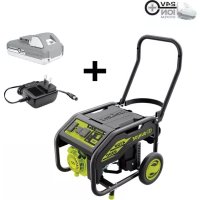
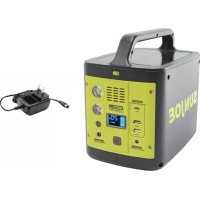
| Product type | Portable propane generator |
| Brand | Sun Joe |
| Model | SJG4100LP |
| Starting power | 4 100 W |
| Rated power | 3 300 W |
| Engine | 223 cc, 4-stroke, overhead valves |
| Fuel | Propane (LPG) only |
| Rated voltage | 120 V AC |
| Rated frequency | 60 Hz |
| Rated current | 27.5 A |
| Engine oil capacity | 55 cl (10W-30 or 10W-40 oil) |
| Runtime | 9 hours at 50% load with a 9.1 kg propane tank |
| Starting system | Electric (24V 2.0 Ah Li-ion battery) or manual (recoil starter) |
| AC outlets | 3 × 120 V AC (including 1 × 30 A locking, 1 × 30 A RV, 1 × 20 A duplex) |
| USB ports | 1 × USB-A 5V 2A, 1 × USB-C (5V/9V/15V/20V) |
| Net weight | 49 kg |
| Safety | Circuit breakers (main and AC), low oil shutdown, overload protection, spark arrester |
| Maintenance | Oil change (first at 20 hrs, then every 100 hrs), air filter cleaning (50 hrs), spark plug (100 hrs) |
| Included accessories | 24V Li-ion battery, charger, propane hose, funnel, tools, wheels, feet, folding handle |
| Warranty | 2 years (residential use) |
Frequently Asked Questions - SJG4100LP Sun Joe
User questions about SJG4100LP Sun Joe
0 question about this device. Answer the ones you know or ask your own.
Ask a new question about this device
Download the instructions for your Generator in PDF format for free! Find your manual SJG4100LP - Sun Joe and take your electronic device back in hand. On this page are published all the documents necessary for the use of your device. SJG4100LP by Sun Joe.
USER MANUAL SJG4100LP Sun Joe
IMPORTANT! Safety Instructions
All Operators Must Read These Instructions Before Use
Misuse of the generator may result in injury to the user and/or damage to property. Read, understand and follow all CAUTION and WARNING statements contained in this manual.
⚠ WARNING! This indicates a hazardous situation, which, if not avoided, could result in death or serious injury.
⚠️CAUTION! This indicates a hazardous situation, which, if not avoided, could result in minor or moderate injury.
⚠️DANGER! This indicates a hazardous situation, which, if not followed, will result in death or serious injury.
Improper use of the generator will invalidate the warranty, relieve the manufacturer from all liabilities. The user will consequently be liable for all and any damage or injury to himself/herself or others.
General Safety
⚠️DANGER! Carbon Monoxide. Using a generator indoors CAN KILL YOU IN MINUTES. Generator exhaust contains high levels of carbon monoxide (CO), a poisonous gas you cannot see or smell. If you can smell the generator exhaust, you are breathing CO. But even if you cannot smell the exhaust, you could be breathing CO.
- Never use a generator inside homes, garages, crawlspaces, or other partly enclosed areas. Deadly levels of carbon monoxide can build up in these areas. Using a fan or opening windows and doors does NOT supply enough fresh air.
- ONLY use a generator outdoors and far away from open windows, doors, and vents. These openings can pull in generator exhaust.
Even when you use a generator correctly, CO may leak into the home. ALWAYS use a battery-powered or battery-backup CO alarm in the home. If you start to feel sick, dizzy, or weak after the generator has been running, move to fresh air RIGHT AWAY. See a doctor. You could have carbon monoxide poisoning.
⚠️DANGER! If you smell propane gas, shut off propane to the generator at the propane cylinder. If odor continues, keep away from generator and immediately call your propane gas supplier or your fire department.
⚠ WARNING! Read and understand all instructions.
Failure to follow all instructions listed below could result in electrocution, fire, and/or carbon monoxide poisoning, which can cause death or serious injury.
⚠ WARNING! In some applications, National Electric Code requires generator to be grounded to an approved earth ground. Before using the ground terminal, consult a qualified electrician, electrical inspector, or local agency having jurisdiction for local codes or ordinances that apply to the intended use of the generator.
⚠ WARNING! To reduce the risk of fire or explosion, do not store an unconnected propane cylinder in the vicinity of the generator or any other appliance. To reduce the risk of fire or explosion, propane cylinders must be stored outdoors out of reach of children and must not be stored in a building, garage, or any other closed in area.
-
Do not connect to a building's electrical system unless the generator and transfer switch have been properly installed and the electrical output has been verified by a qualified electrician. The connection must isolate the generator power from utility power and must comply with all applicable laws and electrical codes.
-
Do not allow children or untrained individuals to use this unit.
-
Do not use or install generator in or on boats, recreational vehicles, camper trailers, or motor homes.
-
Do not start or operate the engine in a confined space, building, near open windows, or in other unventilated space where dangerous carbon monoxide fumes can collect. Carbon monoxide, a colorless, odorless, and extremely dangerous gas, can cause unconsciousness or death.
-
Keep all bystanders, children, and pets at least 10 feet away.
-
Wear sturdy and dry shoes or boots. Do not operate while barefoot.
-
Do not operate generator when you are tired or under the influence of drugs, alcohol, or medication.
-
Keep all parts of your body away from any moving parts and all hot surfaces of the unit.
-
Do not touch bare wire or receptacles.
-
Do not use generator with electrical cords which are worn, frayed, bare, or otherwise damaged.
-
Do not operate or store the generator in rain, snow, or wet weather.
-
Remove propane cylinder and restrain the unit from moving before transporting in a vehicle.
-
Provide a plastic sheet or absorbent pad below the generator to catch any drips of lubricant when transporting.
-
Generators vibrate in normal use. During and after the use of the generator, inspect the generator as well as extension cords and power supply cords connected to it for damage resulting from vibration. Have damaged items repaired or replaced as necessary. Do not use plugs or cords that show signs of damage such as broken or cracked insulation or damaged blades.
-
For power outages, permanently installed stationary generators are better suited for providing back-up power to the home. Even a properly connected portable generator can become overloaded. This may result in overheating or stressing the generator components, possibly leading to generator failure.
-
Use only recommended or equivalent replacement parts and accessories and follow instructions in the Maintenance section of this manual. Use of any other parts or failure to follow maintenance instructions may create a risk of shock or injury.
-
Maintain the unit per maintenance instructions in this manual.
-
Inspect the unit before each use for loose fasteners, gas leaks, etc. Replace damaged parts.
-
Always turn off gas at the propane cylinder when the generator is not in use. Disconnect the cylinder before storage.
-
Before storing, allow the engine to cool for 30 minutes and remove propane cylinder from the unit. Do not store a propane cylinder attached to or near the generator. If not followed exactly, a fire causing death or serious injury may occur.
-
Inspect the propane connection hose for damage before each use. If it is evident there is excessive abrasion or wear, or the hose is cut, it must be replaced prior to the generator being put into operation. The replacement hose assembly shall be that specified by the manufacturer.
-
Only use a propane cylinder that includes a collar to protect the cylinder valve.
-
If a leak is detected at any time, get away from the propane cylinder and call the fire department.
-
Do not use the generator until leak-tested as described in the manual.
-
Propane cylinders must be stored outdoors out of reach of children and must not be stored in a building, garage, or any other closed in area.
Additional Safety Instruction for Propane Generator
⚠️DANGER! Never disconnect the propane cylinder when unit is running. Shut off engine and allow the unit to cool at least five minutes.
⚠ WARNING! When this generator is used to supply a building wiring system: generator must be installed by a qualified electrician and connected to a transfer switch as a separately derived system in accordance with NFPA 70, National Electrical Code. The generator shall be connected through a transfer switch that switches all conductors other than the equipment grounding conductor. The frame of the generator shall be connected to an approved grounding electrode. Failure to isolate the generator from power utility can result in death or injury to electric utility workers.
- Do not use this generator to provide power for emergency medical equipment or life support devices.
- This generator has a neutral floating condition. This means the neutral conductor is not electrically connected to the frame of the machine.
- Operate in a well-ventilated, well-lit area isolated from working areas to avoid noise interference.
- Operating the generator in wet conditions could result in electrocution. Keep the unit dry.
- Keep the generator a minimum of 3 feet away from all types of combustible material.
- Do not operate generator near hazardous material.
- Do not operate generator at a gas or natural gas filling station.
- Do not touch the muffler or cylinder during or immediately after use; they are HOT and will cause burn injury.
- Do not remove the oil dipstick when the engine is running.
- Pay close attention to all safety labels located on the generator.
- Keep children a minimum of 10 feet away from the generator at all times.
- The unit operates best in temperatures between 23^ and 104^ with a relative humidity of 90% or less.
- Operating voltage and frequency requirement of all electronic equipment should be checked prior to plugging them into this generator. Damage may result if the equipment is not designed to operate within a +/- 10% voltage variation, and +/- 3 hz frequency variation from the generator name plate ratings. To avoid damage, always have an additional load plugged into the generator if solid state equipment (such as a television set) is used. A power line conditioner is recommended for some solid state applications.
- For outdoor use only.
- Save these instructions. Refer to them frequently and use them to instruct others who may use this product. If you loan someone this product, loan them these instructions also.
- Use generator only with propane and the propane connection hose supplied.
- Check for leaks prior to generator operation. Do this even if this generator was assembled at the store.
- Do not operate the generator if there is a gas leak present.
- Never use a flame to check for gas leaks.
- Propane gas is not natural gas. Do not try to convert this generator to natural gas as it will void the warranty and is extremely dangerous.
- Place dust cap on cylinder valve outlet whenever the cylinder is not in use. Only install the type of dust cap on the cylinder valve outlet that is provided with the cylinder valve. Other types of caps or plugs may result in leakage of propane.
- Do not store propane cylinders, gasoline, or other flammable liquids in the vicinity of the generator.
- Shut down the engine and allow to cool for five minutes before changing the propane cylinder or adding lubricant to the generator.
- Do not smoke when attaching or removing the propane cylinder.
Shock or Fire Hazard
⚠ WARNING! This generator may emit highly flammable and explosive vapors, which can cause severe burns or even death. A nearby open flame can lead to an explosion even if not directly in contact with the fuel.
- Do not operate this generator near open flame.
- ONLY place and operate the generator on a flat, stable surface.
- This fuel is highly flammable and explosive. Handling fuel can result in serious injury or burns.
- Before starting the generator, inspect the propane tank and valve for damage or leaks, attach only approved tanks that have been properly filled by an approved station, DO NOT light or smoke cigarette.
- Replace the hose at the first sign of a leak or if age-cracking becomes apparent.
- Always handle the propane tank and the generator outdoors.
- Before transporting and storing, turn the fuel valve to the off position and disconnect the propane hose.
Electric Shock Hazard
⚠ WARNING! This generator produces powerful voltage, which can result in electrocution.
• Always ground the generator before using it.
- Only electrical devices should be plugged into this generator. Never connect a building electrical system to this generator without a qualified electrician. Doing so voids your warranty. Such connections must isolate generator power from utility power and comply with local electrical laws and codes. Failure to comply can create a back feed into utility lines creating an electrocution hazard, which may result in serious injury or death to utility workers. Such a back feed may cause this generator to explode, burn and create fires when utility power is restored.
- Do not use this generator in wet conditions. Always keep this generator dry and only operate it with dry hands.
- Do not touch bare wires or outlets.
- Do not allow children or a non-qualified person to use this generator.
Heat Hazard
⚠ WARNING! This generator produces heat when in operation. Temperatures near the exhaust can exceed 150°F (65°C).
- Do not touch hot surfaces. Observe all warning placards on this generator denoting hot surfaces.
- Allow the generator to cool down after use for 5 minutes before touching the engine, muffle, or other areas that are hot during operation and before storing indoors.
- Hot exhaust may ignite some material. Keep flammable materials away from this generator.
- Keep at least several feet of clearance on all sides of this generator during operation. Do not enclose this generation in any structure.
Battery & Charger Safety Instructions
We pay a great deal of attention to the design of every battery pack to ensure that we supply you with batteries that are safe, durable and have a high energy density. The battery cells have a wide range of safety devices. Each individual cell is initially formatted and its electrical characteristic curves are recorded. This data is then used exclusively to be able to assemble the best possible battery packs.
Despite all the safety precautions, caution must always be exercised when handling batteries. The following points must be obeyed at all times to ensure safe use. Safe use can only be guaranteed if undamaged cells are used. Incorrect handling of the battery pack can cause cell damage.
IMPORTANT! Analyses confirm that incorrect use and poor care of high-performance batteries are the main factors responsible for personal and/or product damage.
⚠ WARNING! Use only approved replacement batteries; other batteries may damage the generator and cause it to malfunction, which can lead to serious personal injury.
⚠ WARNING! Do not use a battery pack or appliance that is damaged or modified. Damaged or modified batteries may exhibit unpredictable behavior resulting in fire, explosion or risk of injury.
Do not modify or attempt to repair the generator or the battery pack except as indicated in the instructions for use and care. Have your battery pack serviced by a qualified repair person using only identical replacement parts. This will ensure that the safety of the battery pack is maintained.
⚠️CAUTION! To reduce the risk of injury, charge the Sun Joe® 24V lithium-ion battery pack only in its designated Sun Joe® lithium-ion charger. Other types of chargers present risk of fire, personal injury and damage. Do not wire a battery pack to a power supply plug or car cigarette lighter. Such misuse will permanently disable or damage the battery pack.
- Avoid dangerous environments – Do not charge the battery pack in rain, snow or in damp or wet locations. Do not use the battery pack or charger in the presence of explosive atmospheres (gaseous fumes, dust or flammable materials) because sparks may be generated when inserting or removing the battery pack, which could lead to a fire.
- Charge in a well-ventilated area – Do not block the charger vents. Keep them clear to allow for proper ventilation. Do not allow smoking or open flames near a charging battery pack. Vented gases may explode.
NOTE: The safe temperature range for the battery is 41^ F – 105^ F ( 5^ C – 40.5^ C). Do not charge the battery outside in freezing weather; charge it at room temperature.
- Maintain charger cord – When unplugging the charger, pull the plug, not the cord, from the receptacle to reduce the risk of damage to the electrical plug and cord. Never carry the charger by its cord or yank it by the cord to disconnect it from the receptacle. Keep the cord away from heat, oil and sharp edges. Make sure the cord will not be stepped on, tripped over or subjected to damage or stress when the charger is in use. Do not use the charger with a damaged cord or plug. Replace a damaged charger immediately.
- Do not use an extension cord unless it is absolutely necessary – Using the wrong, damaged or improperly wired extension cord poses a risk of fire and electric shock. If an extension cord must be used, plug the charger into a properly wired 16 gauge or larger extension cord with the female plug matching the male plug on the charger. Make sure that the extension cord is in good electrical condition.
- Charger (XZ2600-0450) is rated for 100 – 240 volt AC only – The charger must be plugged into an appropriate receptacle.
- Use only recommended attachments – Use of an attachment not recommended or sold by the battery charger or battery pack manufacturer may result in risk of fire, electric shock or personal injury.
- Unplug charger when not in use – Make sure to disconnect battery pack from unplugged charger.
⚠ WARNING! To reduce the risk of electric shock, always unplug the charger before performing any cleaning or maintenance. Do not allow water to flow into the charger. Use a Ground Fault Circuit Interrupter (GFCI) to reduce shock hazards.
- Do not burn or incinerate battery pack – Battery pack may explode, causing personal injury or damage. Toxic fumes and materials are created when battery packs are burned.
- Do not crush, drop or damage battery pack – Do not use the battery pack or charger if they have sustained a sharp blow, been dropped, run over or have been damaged in any way (i.e. pierced with a nail, hit with a hammer, stepped on, etc.).
- Do not disassemble – Incorrect reassembly may pose a serious risk of electric shock, fire or exposure to toxic battery chemicals. If the battery or charger are damaged, contact an authorized Snow Joe ^® + Sun Joe ^® dealer or call the Snow Joe ^® + Sun Joe ^® customer service center at 1-866-SNOWJOE (1-866-766-9563) for assistance.
- Battery chemicals cause serious burns – Never let a damaged battery pack contact the skin, eyes or mouth. If a damaged battery pack leaks battery chemicals, use rubber or neoprene gloves to safely dispose of it. If skin is exposed to battery fluids, wash the affected area with soap and water and rinse with vinegar. If eyes are exposed to battery chemicals, immediately flush with water for 20 minutes and seek medical attention. Remove and dispose of contaminated clothing.
- Do not short circuit – When battery pack is not in use, keep it away from other metal objects, like paper clips, coins, keys, nails, screws or other small metal objects that can make a connection from one terminal to another. Shorting the battery terminals together may cause burns or a fire.
- Store your battery pack and charger in a cool, dry place – Do not store the battery pack or charger where temperatures may exceed 105°F (40.5°C), such as in direct sunlight or inside a vehicle or metal building during the summer.
Information about the battery
-
The battery pack supplied with your generator is only partially charged. The battery pack has to be charged completely before you use the tool for the first time.
-
For optimum battery performance, avoid low discharge cycles by charging the battery pack frequently.
-
Store the battery pack in a cool place, ideally at 77^ F ( 25^ C) and charged to at least 40%.
-
Lithium-ion batteries are subject to a natural aging process. The battery pack must be replaced at the latest when its capacity falls to just 80% of its capacity when new. Weakened cells in an aged battery pack are no longer capable of meeting the high power requirements needed for the proper operation of your generator, and therefore pose a safety risk.
-
Do not throw the battery pack into an open fire as this poses a risk of explosion.
-
Do not ignite the battery pack or expose it to fire.
-
Do not exhaustively discharge batteries. Exhaustive discharge will damage the battery cells. The most common cause of exhaustive discharge is lengthy storage or non-use of partially discharged batteries. Stop working as soon as the performance of the battery falls noticeably or the electronic protection system triggers. Place the battery pack in storage only after it has been fully charged.
-
Protect the battery and the tool from overloads. Overloads will quickly result in overheating and cell damage inside the battery housing even if this overheating is not apparent externally.
-
Avoid damage and shocks. Immediately replace batteries that have been dropped from a height of more than 3 feet (1 meter) or those that have been exposed to violent shocks, even if the housing of the battery pack appears to be undamaged. The battery cells inside the battery may have suffered serious damage. In such instances, please read the waste disposal information for proper battery disposal.
-
If the battery pack suffers overloading and overheating, the integrated protective cutoff will switch off the equipment for safety reasons.
IMPORTANT! Do not press the power supply button any more if the protective cut-off has been activated. This may damage the battery pack.
-
Recharge only with the charger specified by the manufacturer. A charger that is suitable for one type of battery pack may create a risk of fire when used with another battery pack.
-
Use appliances only with specifically designated battery packs. Use of any other battery packs may create a risk of injury and fire.
-
Under abusive conditions, liquid may be ejected from the battery; avoid contact. If contact accidentally occurs, flush with water. If liquid contacts eyes, additionally seek medical help. Liquid ejected from the battery may cause irritation or burns.
-
Do not use a battery pack or appliance that is damaged or modified. Damaged or modified batteries may exhibit unpredictable behavior resulting in fire, explosion or risk of injury.
-
Do not expose a battery pack or appliance to fire or excessive temperature. Exposure to fire or temperature above 265^ F ( 130^ C) may cause explosion.
-
Follow all charging instructions and do not charge the battery pack or appliance outside of the temperature range specified in the instructions. Charging improperly or at temperatures outside of the specified range may damage the battery and increase the risk of fire.
Information about the charger and the charging process
- Please check the data marked on the rating plate of the battery charger. Be sure to connect the battery charger to a power supply with the voltage marked on the rating plate. Never connect it to a different mains voltage.
- Protect the battery charger and its cord from damage. Keep the charger and its cord away from heat, oil and sharp edges. Have damaged cords repaired without delay by a qualified technician at an authorized Snow Joe ^® + Sun Joe ^® dealer or call the Snow Joe ^® + Sun Joe ^® customer service center at 1-866-SNOWJOE (1-866-766-9563).
- Electrical plugs must match the outlet. Never modify the plug in any way. Do not use any adapter plugs with grounded appliances. Unmodified plugs and matching outlets will reduce the risk of electric shock.
- Keep the battery charger, battery pack and the generator out of the reach of children.
- Do not use the supplied battery charger to charge other cordless tools.
- During periods of heavy use, the battery pack will become warm. Allow the battery pack to cool to room temperature before connecting with the charger to recharge.
- Do not overcharge batteries. Do not exceed the maximum charging times. These charging times only apply to discharged batteries. Frequent insertion of a charged or partially charged battery pack will result in overcharging and cell damage. Do not leave batteries in the charger for days on end.
- Never use or charge the battery if you suspect that it has been more than 12 months since the last time they were charged. There is a high probability that the battery pack has already suffered dangerous damage (exhaustive discharge).
- Charging batteries at a temperature below 41^ F ( 5^ C) will cause chemical damage to the cells and may cause a fire.
-
Do not use batteries that have been exposed to heat during the charging process, as the battery cells may have suffered dangerous damage.
-
Do not use batteries that have suffered curvature or deformation during the charging process or those that exhibit other atypical symptoms (gassing, hissing, cracking, etc.).
- Never fully discharge the battery pack (maximum recommended depth of discharge is 80%). A complete discharge of the battery pack will lead to premature aging of the battery cells.
Protection from environmental influences
- Protect you generator and the battery charger from moisture and rain. Moisture and rain can cause dangerous cell damage.
- Do not use the generator or the battery charger near vapors and flammable liquids.
- Use the battery charger and the generator only in dry conditions and at an ambient temperature of 41^ F – 105^ F ( 5^ C – 40.5^ C).
- Do not keep the battery charger in places where the temperature is liable to reach over 105^ F ( 40.5^ C). In particular, do not leave the battery charger in a car that is parked in the sunshine.
- Protect batteries from overheating. Overloads, overcharging and exposure to direct sunlight will result in overheating and cell damage. Never charge or work with batteries that have been overheated – replace them immediately, if possible.
- Store the charger and your the generator only in dry locations with an ambient temperature of 41^ F – 105^ F ( 5^ C – 40.5^ C). Store your lithium-ion battery pack in a cool, dry place at a temperature of 77^ F ( 25^ C). Protect the battery pack, charger and generator from humidity and direct sunlight. Only place fully charged batteries in storage (charged to at least 40%).
- Prevent the lithium-ion battery pack from freezing. Battery packs that were stored below 32^ F ( 0^ C) for more than 60 minutes must be discarded.
- When handling batteries, be wary of electrostatic charge. Electrostatic discharges can damage the electronic protection system and the battery cells. Avoid electrostatic charging and never touch the battery poles.
Safety Symbols
The following table depicts and describes safety symbols that may appear on this product. Read, understand, and follow all instructions on the machine before attempting to assemble and operate.
| Symbols | SymbolsDescriptions Descriptions | ||
 | READ THE OPERATOR'S MANUAL(S) – Read, understand, and follow all instructions in the user manual(s) before attempting to assemble and operate. | 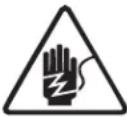 | WARNING! Electrical shock hazard. |
 | SAFETY ALERT – Indicates a precaution, a warning, or a danger. |  | WARNING! Do not expose the unit to rain or wet conditions. Keep dry. |
 | TOXIC FUMES – Running generator gives off carbon monoxide, an odorless, colorless, poison gas. Breathing carbon monoxide can cause nausea, fainting, or death. | 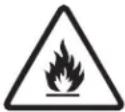 | Fuel and its vapors are extremely flammable and explosive. Fire or explosion can cause severe burns or death. |
 | HOT SURFACE – To reduce the risk of injury or damage, avoid contact with any hot surface and do not place any body parts in the path of hot exhaust gases. |  | Store indoors. Never store the generator outdoors. |
Know Your Portable Propane Generator
Read the owner's manual and safety instructions carefully before operating the propane generator. Compare the illustration below to the propane generator in order to familiarize yourself with the location of the various controls and adjustments. Save this manual for future reference.
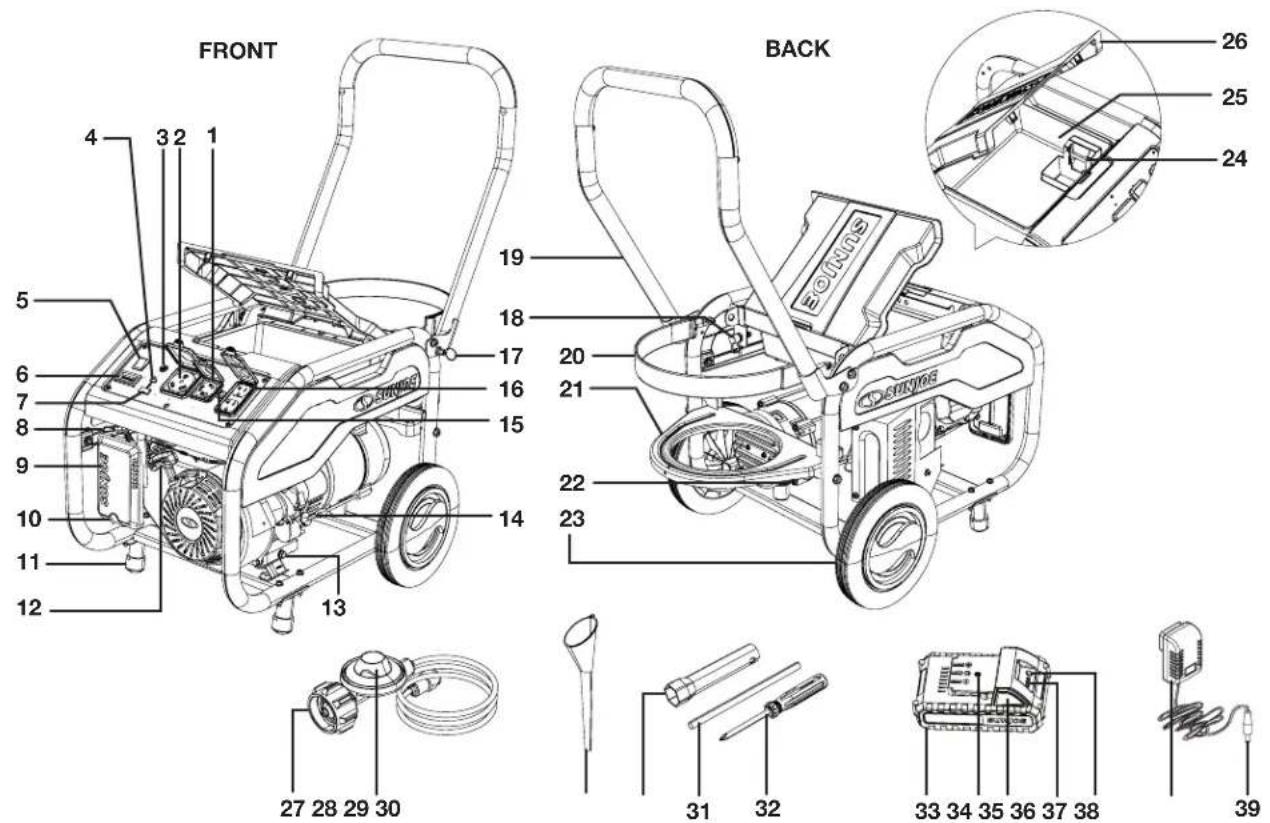
-
AC twist lock receptacle
-
RV receptacle
-
Main circuit breaker
-
USB Type-C receptacle
-
Engine switch
-
Digital display
-
USB receptacle
-
Choke lever
-
Air filter
-
Air filter lock knob
-
Feet (2)
-
Recoil starter grip
-
Oil drain plug
-
Oil cap/dipstick (2)
-
AC circuit breaker
-
AC duplex receptacles
-
Handle lock pin
-
Propane inlet with cover
-
Handle
-
Cylinder strap
-
Cylinder bracket
-
Ground terminal
-
Wheel (2)
-
Battery compartment
-
Storage compartment
-
Compartment cover
-
Propane connecting hose
-
Propane control regulator
-
Funnel
-
Spark plug wrench
-
Spark plug wrench handle
-
Phillips screwdriver
-
iON+ 24V lithium-ion battery (24VBAT-LTE) featuring exclusive EcoSharp® technology
-
Charge socket
-
Push lock button
-
Battery indicator
-
Push button for battery indicator
-
24V iON+ lithium-ion charger (XZ2600-0450)
-
Charger plug
Technical Data
Power 8 HP
Starting Output 4100 Watts
Rated Output 3300 Watts
Engine 223cc 4-Stroke OHV Engine
Rated Voltage 120V A.C.
Rated Amp 27.5 A
Rated Frequency 60 Hz
Engine Lubricant Volume 18.6 Oz
Fuel Type .... Liquid Propane Gas Only
Run Time 9 hrs
50% load per 20 lbs of LP fuel
Starting System ....Recoil Start + Electric Start
Battery Voltage Max ^* 24V D.C.
Battery Capacity 2.0 Ah
Electric Start-ups Max 400/charge
Charger Input 100 – 240V AC, 50 – 60 Hz, 0.4 A
Charger Output ....26V DC --- 450 mA
Charge Time Max 5 hr
USB Output Voltage....USB-A: 5 V D.C. USB-C: 5 V D.C. | 9 V D.C. | 15 V D.C. | 20 V D.C
AC Output Voltage 3 x 120 V A.C.
RV Output Voltage 120 V A.C.
Net Weight 108 lbs (49 kg)
*Initial no-load voltage, when fully charged, peaks at 24 volts; nominal voltage under typical load is 21.6 volts.
Unpacking
Carton Contents
- Portable propane generator
- Foot (2)
• Foot bolts + nuts (4 set)
- Wheels (2)
- Wheel axles (2)
- Wheel covers (2)
• Wheel washers + nuts (2 sets)
- Handle lock pin
• Propane connection hose
- Cylinder strap
- Funnel
- Tool kit (Phillips screwdriver + Spark plug wrench + Spark plug wrench handle)
• 24V iON+ lithium-ion battery
• 24V iON+ lithium-ion battery charger
- Manual with registration card
-
Carefully remove the portable generator and check to see that all of the above items are supplied.
-
Inspect the product carefully to make sure no breakage or damage occurred during shipping. If you find damaged or missing parts, DO NOT return the unit to the store. Please call the Snow Joe ^® + Sun Joe ^® customer service center at 1-866-SNOWJOE (1-866-766-9563).
NOTE: Do not discard the shipping carton and packaging material until you are ready to use your new portable generator. The packaging is made of recyclable materials. Properly dispose of these materials in accordance with local regulations.
IMPORTANT! The equipment and packaging material are not toys. Do not let children play with plastic bags, foils, or small parts. These items can be swallowed and pose a suffocation risk!
Battery Pack Operation
The equipment can be started with a lithium-ion battery. The battery pack is completely sealed and maintenance free.
Battery Charge Level Indicator
The battery pack is equipped with a push button for checking the charge level. Simply press the push button to read off the battery charge level from the LEDs of the battery indicator:
- All 3 level monitoring LEDs are lit: Battery charge level is high.
- 2 level monitoring LEDs are lit: Battery charge level is decreasing. Charge the battery as soon as possible.
- 1 level monitoring LED is lit: Battery is flat. Charge the battery IMMEDIATELY. Otherwise the battery's service life will be greatly shortened.
| Light IndicatorsLights | |
| Charge level button | |
| The battery is at 30% capacity and requires charging | |
| The battery is at 60% capacity and requires charging soon | |
| The battery is at full capacity |
NOTE: If the charge level button does not appear to be working, connect to the charger and charge as needed.
NOTE: Immediately after using the battery pack, the charge level button may display a lower charge than it will if checked a few minutes later. The battery cells "recover" some of their charge after resting.
Charger Operation
WARNING! Charge only 24V iON+ lithium-ion battery pack with its compatible 24V iON+ lithium-ion charger. Other types of batteries may cause personal injury and damage.
To reduce the risk of electric shock, do not allow water to flow into the charger's AC/DC plug.
When to Charge the iON+ 24VBAT-LTE Lithium-iON Battery
NOTE: The iON+ 24VBAT-LTE lithium-iON battery pack does not develop a "memory" when charged after only a partial discharge. Therefore, it is not necessary to run down the battery pack before inserting the charger plug.
- Use the battery indicator lights to determine when to charge your iON+ 24VBAT-LTE lithium-iON battery pack.
- You can "top-off" your battery pack's charge before starting a big job or after a long day of use.
Charging the Battery
- Press the push lock buttons on the battery to pull it out of the equipment (Fig. 1).
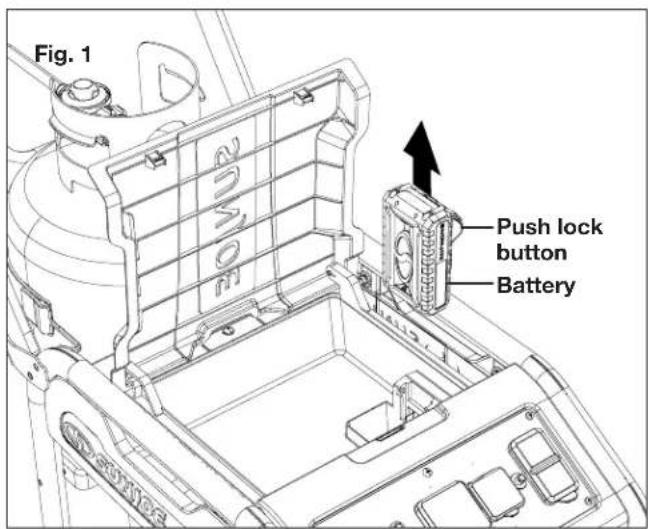
- Check that the mains voltage is the same as that marked on the rating plate of the battery charger. Then, plug the charger adapter into an appropriate AC power outlet. Connect the charger plug into the charge socket of the battery to start charging (Fig. 2).
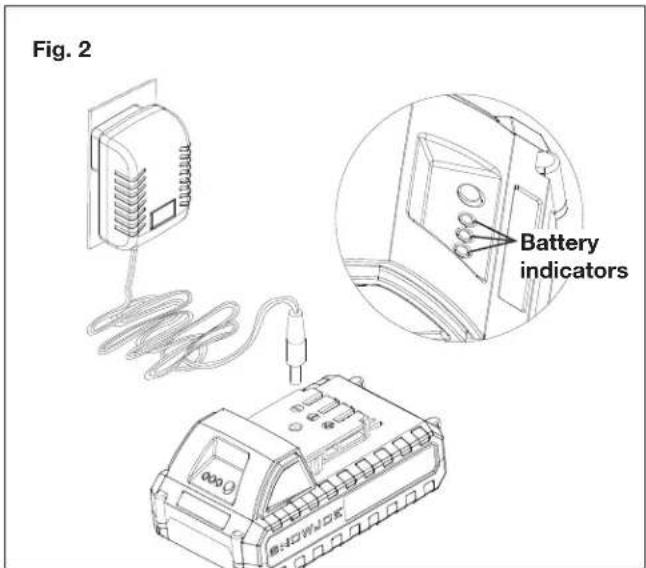
- The battery will take approximately 5 hours to charge. The battery indicator LEDs will twinkle and illuminate one by one during the charging process. Unplug the charger immediately when the 3 LEDs are all illuminated.
CAUTION! FIRE HAZARD. When disconnecting the charger from the battery, be sure to unplug the charger from the outlet first, then disconnect the charger from the battery.
⚠ WARNING! This charger does not automatically turn off when the battery is fully charged. Please take care not to leave the battery plugged into the charger. Switch off or unplug the charger at the mains when charging is complete.
- Timely recharging of the battery will help prolong the battery's life.
IMPORTANT! Never allow the battery pack to become fully discharged as this will cause irreversible damage to the battery.
Assembly
WARNING! Do not attempt to operate the generator until assembly is complete. Failure to comply could result in possible serious personal injury. Do not put lubricant in the generator before installing the feet and wheels.
Installing the Feet
- Raise the end of the generator where the recoil starter is located high enough to gain access to the frame bottom.
- Align the bolts and the holes on the feet with the holes on the generator frame. Insert the bolts through the holes so they go through the frame. Secure the assembly with the nuts (Fig. 3).
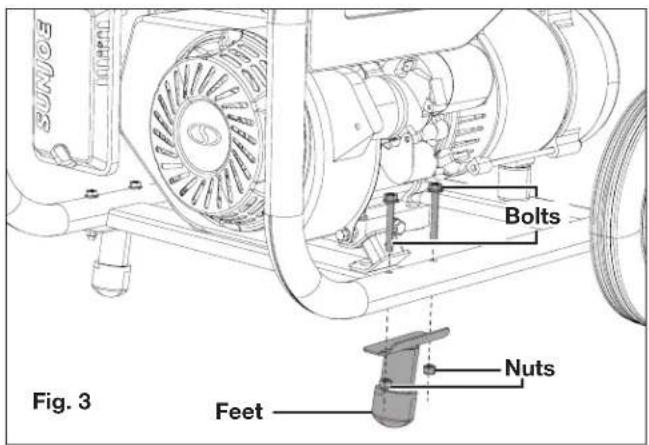
- Repeat the above operation for the other foot.
Installing the Wheels
Wheels are provided to assist in moving the generator to the desired location and should be installed on the side where the handle is located.
- Raise the end of the generator where the handle is located high enough to gain access to the frame bottom.
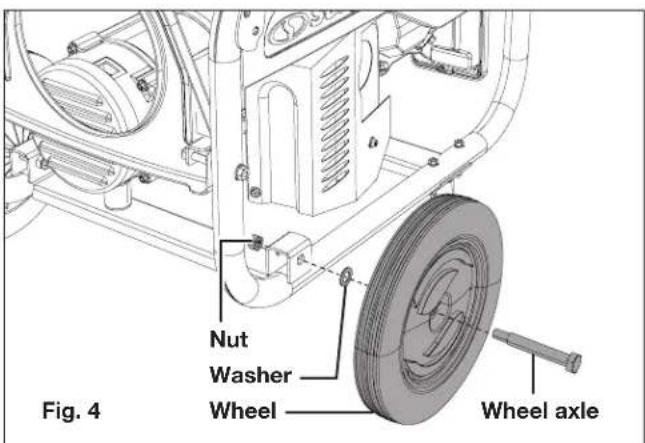
- Slide the wheel axle through the hole in the center of the wheel. Slide a washer onto the axle, then slide the axle into the wheel mounting hole as shown. Fix the assembly with the nut. Tighten to secure (Fig. 4).
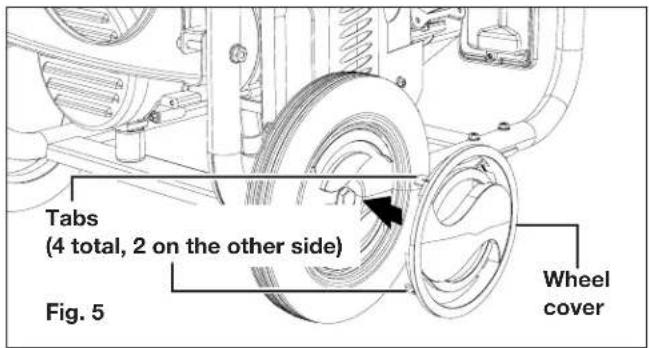
- Insert the 4 tabs on the S cover into the slots on the wheel. Push firmly to secure (Fig. 5)
- Repeat the above instructions for the other wheel.
Locking the Handle
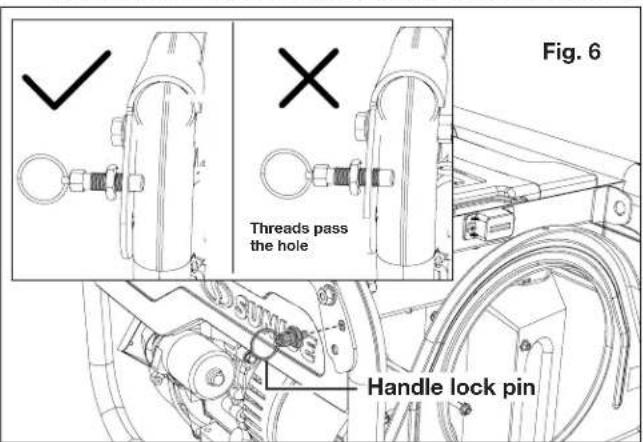
- Insert the lock pin through the hole in the handle. Do not insert fully (Fig. 6). Insert only enough to ensure the pin threads do not extend inside the handle frame, as shown.
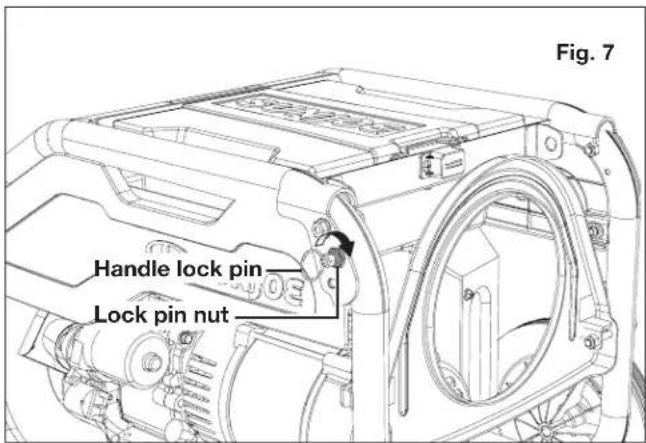
- Holding the lock pin in place, use a wrench to turn the nut on the lock pin clockwise to secure (Fig. 7).
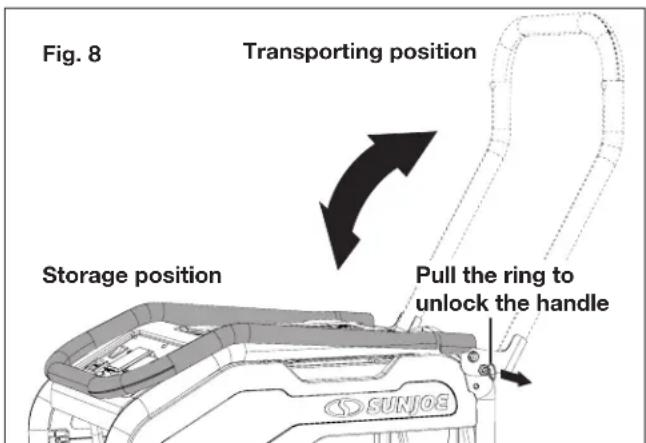
- To extend the handle, pull the lock pin ring to unlock the handle, and turn the handle up to the transporting position. Release the ring to lock the handle in place. To
release the handle, pull the lock pin ring to unlock the handle, and turn the handle down to the storage position. Release the ring to lock the handle in place (Fig. 8).
⚠️CAUTION! Do not attempt to lift the unit by the handle assembly. If it is necessary to lift the generator, always grasp by the frame. Use proper lifting techniques to avoid back injury.
Operation
⚠️DANGER! Carbon Monoxide. Using a generator indoors CAN KILL YOU IN MINUTES.
Generator exhaust contains high levels of carbon monoxide (CO), a poisonous gas you cannot see or smell. If you can smell the generator exhaust, you are breathing CO. But even if you cannot smell the exhaust, you could be breathing CO.
- Never use a generator inside homes, garages, crawlspaces, or other partly enclosed areas. Deadly levels of carbon monoxide can build up in these areas. Using a fan or opening windows and doors does NOT supply enough fresh air.
- ONLY use a generator outdoors and far away from open windows, doors, and vents. These openings can pull in generator exhaust.
Even when you use a generator correctly, CO may leak into the home. ALWAYS use a battery-powered or battery-backup CO alarm in the home. If you start to feel sick, dizzy, or weak after the generator has been running, move to fresh air RIGHT AWAY. See a doctor. You could have carbon monoxide poisoning.
⚠ WARNING! This generator will be used ONLY with cord and plug connected equipment, National Electric Code does not require that the unit be grounded. However, other methods of using the generator may require grounding to reduce the risk of shock or electrocution. Consult a qualified electrician, electrical inspector, or local agency having jurisdiction for local codes or ordinances to find out if grounding is needed in your situation before using the generator.
⚠ WARNING! Do not allow familiarity with this product to make you careless. Remember that a careless fraction of a second is sufficient to inflict serious injury.
⚠ WARNING! Do not use any attachments or accessories not recommended by the manufacturer of this product. The use of attachments or accessories not recommended can result in serious personal injury.
NOTE: This product is equipped with a spark arrestor; however, product users must comply with Federal, State, and local fire prevention regulations. Check with appropriate authorities. Contact Snow Joe ^® + Sun Joe ^® customer service center at 1-866-SNOWJOE (1-866-766-9563) or a qualified service center to purchase a replacement spark arrestor.
NOTE: Before each use, inspect the entire product for damaged, missing, or loose parts such as screws, nuts, bolts, caps, etc. Tighten securely all fasteners and caps and do not operate this product until all missing or damaged parts are replaced. Please call the Snow Joe ^® + Sun Joe ^® customer service center at 1-866-SNOWJOE (1-866-766-9563).
This generator is designed to supply electrical power for operating compatible electrical lighting, appliances, tools, and motor loads.
Before Operating the Unit
- Only use OUTSIDE and at least 20 feet away from windows, doors, and vents. Your specific home and/or wind conditions may require additional distance.
- NEVER use inside a home or garage, EVEN IF doors and windows are open.
• Always position the generator on a flat firm surface.
NOTE: There may be General or State Occupational Safety and Health Administration (OSHA) regulations, local codes or ordinances that apply to the intended use of the generator. Please consult a qualified electrician, electrical inspector, or the local agency having jurisdiction before using the appliance.
Grounding the Generator
⚠ WARNING! If this generator will be used only with cord and plug-connected equipment, National Electric Code does not require that the unit be grounded. However, other methods of using the generator may require grounding to reduce the risk of shock or electrocution. Consult a qualified electrician, electrical inspector, or local agency having jurisdiction for local codes or ordinances to find out if grounding is needed in your situation before using the generator.
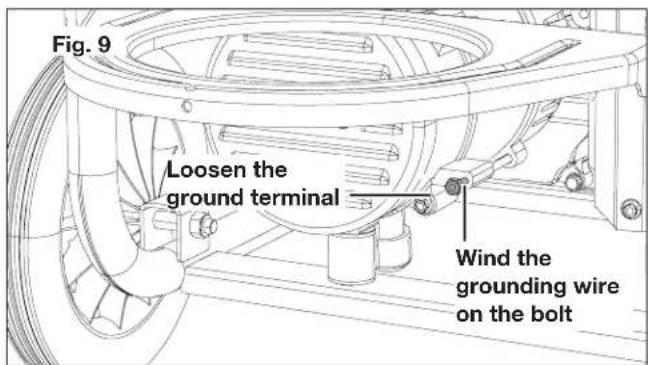
When grounding is required, the ground terminal on the frame is used to connect the generator to a suitable ground source. The ground path should be made with at least #12 size wire. Loosen the ground terminal. Wind the wire on the terminal insuring a metal to metal connection, and tighten the terminal fully (Fig. 9). Connect the other end of the wire securely to a suitable ground source that is in contact with the soil for a minimum distance of 8 ft.
The National Electric Code contains several practical ways in which to establish a good ground source. If a steel or iron rod is used, it should be at least 5/8 in. diameter, and if a nonferrous rod is used, it should be at least 1/2 in. diameter and be listed as material for grounding. If a rock bottom is encountered before reaching a depth of 8 ft., drive the ground rod in at an angle of up to 45°. If the rock bottom is again encountered, the rod can be buried in a trench that is at least 30 in. deep. In all cases, the upper end of the grounding rod should either be flush with (or below) the ground or must be otherwise protected from physical damage.
All electrical tools and appliances operated from this generator must be properly grounded by use of a third wire or be "Double Insulated". It's recommended to
- Use electrical devices with 3-prong grounded plugs.
- Use an extension cord intended for outdoor use with a 3-pole receptacle and a 3-prong plug at opposite ends to ensure continuity of the ground protection from the generator to the appliance.
Checking/Adding Lubricant/Oil
WARNING! Attempting to start the engine before it has been properly filled with lubricant will result in equipment failure.
Engine lubricant has a major influence on engine performance and service life. Always use a 4-stroke motor lubricant (oil) that meets or exceeds the requirements for API service classification SJ, SF, 10W-30 or 10W-40. Non-detergent or 2-stroke engine lubricants will damage the engine and should not be used.
This engine comes with a feature that will shut off the engine when a specific lubricant level is not maintained. The engine will not restart until an appropriate lubricant level is reached.
Follow the instructions below to check and add lubricant.
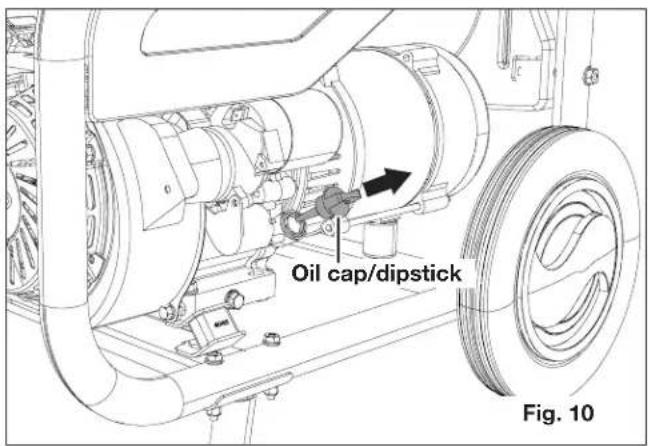
- Unscrew the oil cap/dipstick and remove (Fig. 10).
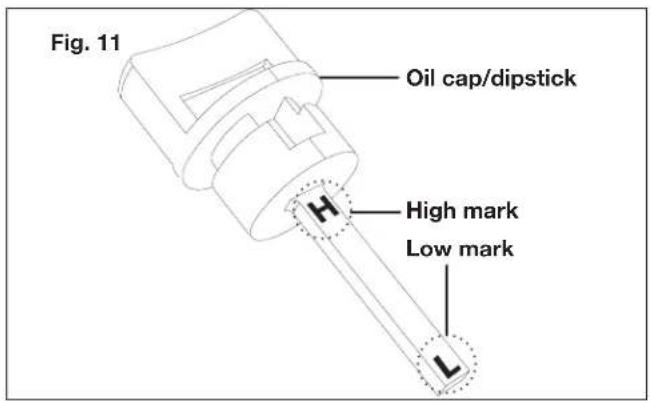
- Wipe dipstick clean and re-seat in hole; do not re-thread. Remove dipstick again and check lubricant level. Lubricant level should fall between the L mark and H mark on the dipstick (Fig. 11).
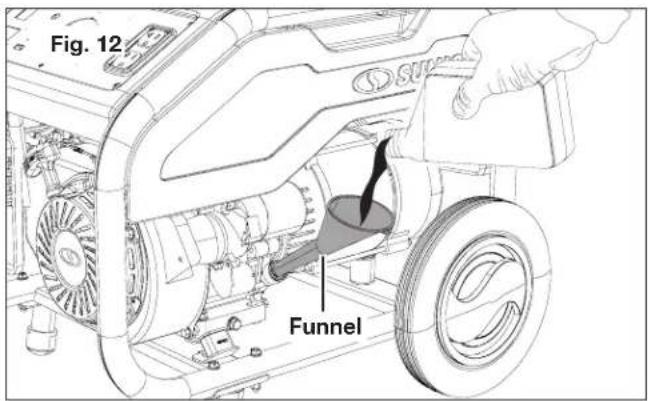
- If the lubricant (oil) level is low, add engine lubricant using the equipped funnel. Make sure the generator is placed on a stable and level surface when adding lubricant. Fill with oil until the fluid level rises to the upper portion of the dipstick (Fig. 12).
- Replace and secure the oil cap/dipstick.
Testing the Propane Cylinder
Before connecting the cylinder with the generator, make sure to test the cylinder for leakage. Follow the instructions below.
- Make sure the propane cylinder is disconnected from the propane hose and regulator.
- Make leakage solution by mixing 1 part liquid dish soap and 3 parts water.
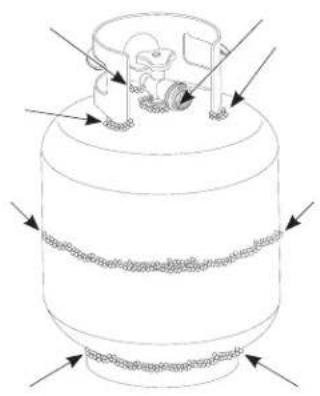
- Using a clean paint brush, brush the soapy solution over areas indicated by arrows in Fig. 13.
Fig. 13
natural_image
Diagram of a cylindrical container with internal components and directional arrows indicating flow or movement (no text or symbols)- If bubbles show up, there is a leak. Do not use or move the propane cylinder. Contact a gas supplier or the fire department!
-
If you see, smell, or hear the hiss of escaping gas from the propane cylinder:
-
Move away from propane cylinder.
- Do not attempt to correct the problem yourself.
- Call your local fire department.
Connecting/Installing the Propane Cylinder
Propane is highly flammable and may ignite unexpectedly when mixed with air. The propane cylinder used with this generator must meet the following requirements:
- Constructed and marked in accordance with all specifications required by related law and regulations.
- Measurements: 12 in. diameter x 18 in. tall with 20 lb. maximum capacity, or 12 in. diameter x 23 in. tall with 30 lb. maximum capacity.
- Cylinder valve must have Type 1 connection device compatible with the connector for the generator.
- Cylinder must be equipped with safety relief valve.
- Cylinder valve must have UL listed Overfill Protection Device (OPD). This OPD safety feature is identified by a unique triangular handwheel. Use only propane cylinders with this type of valve.
- Arranged for vapor withdrawal and include collar to protect propane cylinder valve. Always keep propane cylinder in upright position during use, transport, or storage.
To install and connect the propane cylinder with the generator, follow the instructions below.
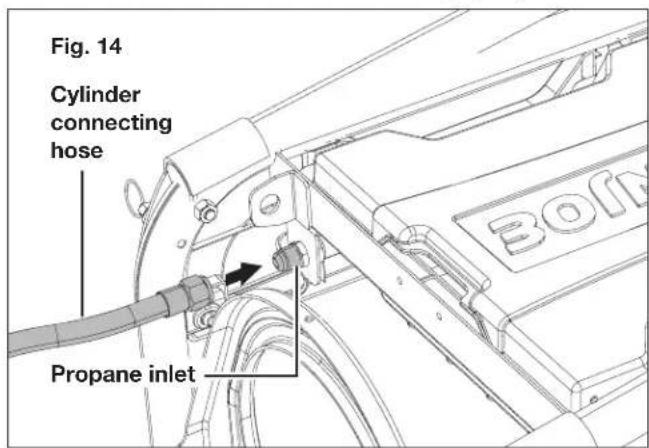
- Pull the handle lock pin ring and restore the handle to the storage position. Remove the cap on the propane inlet, and connect the propane connecting hose to the propane inlet. Screw the locking nut on the hose clockwise tightly with a wrench for a secure connection (Fig. 14).
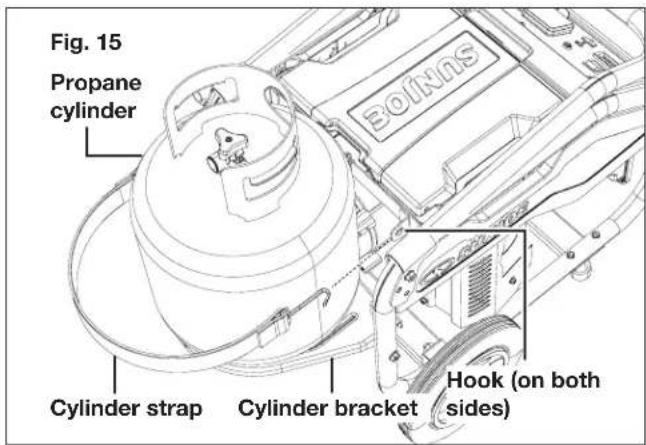
- Lower the cylinder bracket completely. Place a propane cylinder (not included) into the bracket, making sure the bottom of the cylinder is placed securely in the opening in the bracket. To secure the cylinder, place the cylinder strap around the cylinder and connect to the hook on the generator frame as shown (Fig. 15).
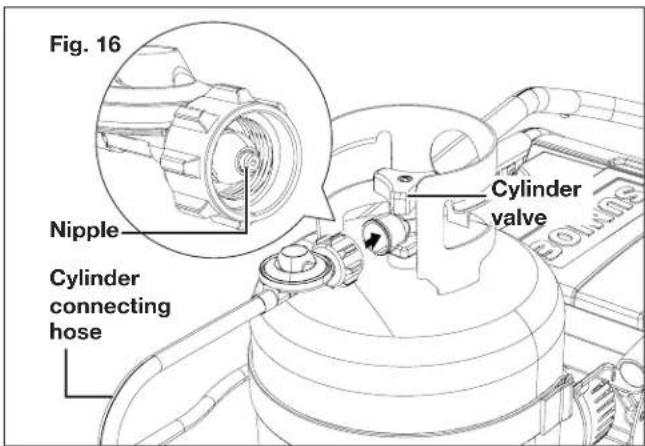
- Make sure the cylinder valve on the propane cylinder is turned clockwise to its full off position. Hold the propane connecting hose firmly and insert the nipple into the cylinder valve (Fig. 16).
NOTE: Nipple must be centered in the cylinder valve.
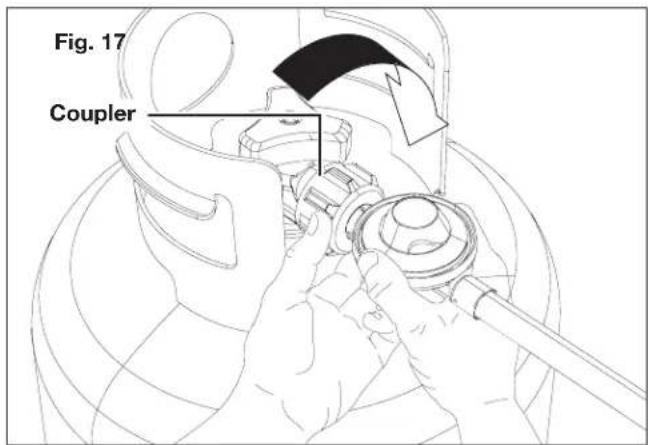
- Holding the coupler and hose as shown, turn the coupler clockwise and tighten by hand, taking care not to cross-thread the connection. Do not use tools (Fig. 17).
NOTE: The hose will seal in the cylinder valve resulting in some resistance. An additional one-half to three quarters turn is required to complete the connection. If you cannot complete the connection, disconnect and repeat the above two steps. If you still cannot complete the connection, DO NOT use this propane connection hose!
- Inspect valve connections port and propane connection hose. Look for any damage or debris. Remove any debris. Inspect hose for damage. Never attempt to use damaged or plugged equipment. See your local propane dealer for repairs.
Leakage Test
All connections of this generator have been checked at the factory for leakage. However, in transportation and handling some connections may have loosened. It's recommended to run the leakage test every time before using.
WARNING!
- Do not use an open flame to check for leakage.
- Do not smoke during testing.
- Do not test indoors.
- A leak check must be performed whenever the cylinder is replaced.
NOTE: Use only the propane connecting hose supplied with this generator. Replace it with those specified by the manufacturer only.
- Make leakage solution by mixing 1 part liquid dish soap and 3 parts water.
- With the cylinder connected to the hose, spoon or brush several drops (or use squirt bottle) of the solution onto the connections along the hose, regulator and cylinder (Fig. 18).
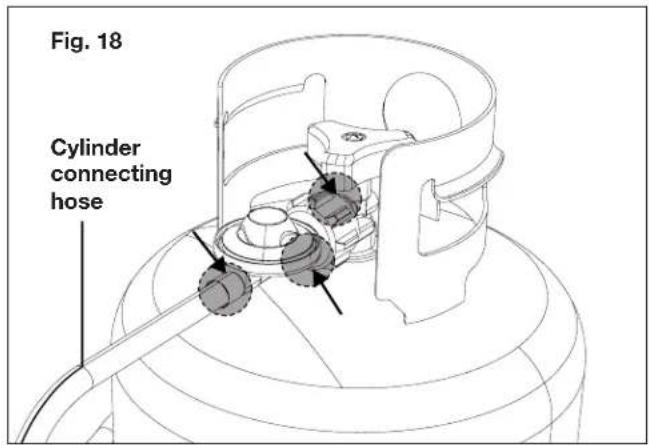
- Turn on the cylinder. Inspect the connections and look for bubbles. If no bubbles appear, the connection is safe. If bubbles appear, there is leakage. Loosen and re-tighten this connection. If there is still a leak, turn off the cylinder and contact the Snow Joe® + Sun Joe® customer service center at 1-866-SNOWJOE (1-866-766-9563).
Control Panel (Fig. 19)
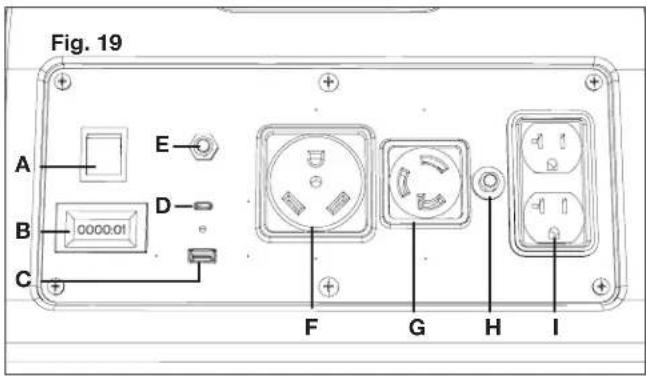
A. Engine switch - Use the engine switch to start the generator.
B. Digital display – The display shows the amount of time the generator has run since being started. It will automatically reset when reached the Max. number it can show.
When a cumulative run time of 20 hours has been reached, replace the engine lubrication. After the first time of replacing lubricant, replace the lubricant every 100 hours.
When a cumulative time of 50 hours is reached, clean the air filter.
When a cumulative time of 100 hours is reached, clean the spark plug.
C. 5 Volt 2 Amp USB receptacle.
D. Multi Volts (5V, 9V, 15V and 20V) USB-Type C receptacle.
E. Main circuit breaker button – Main circuit breaker is designed to protect the generator against overload. The breaker will trip and the button will stick out if overload happens. Press the main circuit beaker button to reset the circuit.
F. 120 Volt AC 30 Amp RV receptacle.
G. 120 Volt AC 30 Amp twist lock receptacle.
H. AC circuit breaker button – AC circuit breaker is designed to protect the AC circuit against overload. The breaker will trip and the button will stick out if overload happens. Press the AC circuit breaker button to reset the circuit.
I. 120 Volt AC 20 Amp duplex receptacle.
Start the Generator
Electric start
Follow the instruction below to start the generator.
- On a level surface with the engine off, check the lubricant level before each use of the generator.
NOTE: If location of generator is not level, the unit may not start or may shut down during operation. - Make sure there's no load plugged into the generator.
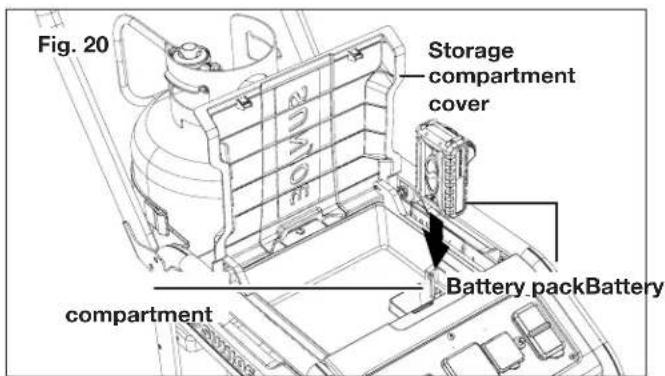
- Open the storage compartment, and insert the battery into the battery compartment (Fig. 20).
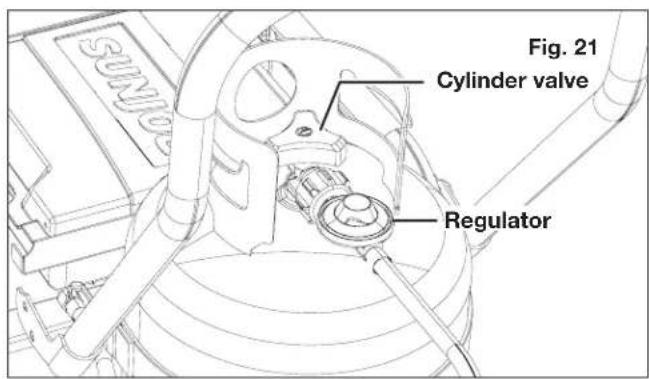
- Make sure the propane cylinder is tested and installed as described, then open the cylinder valve completely (Fig. 21).
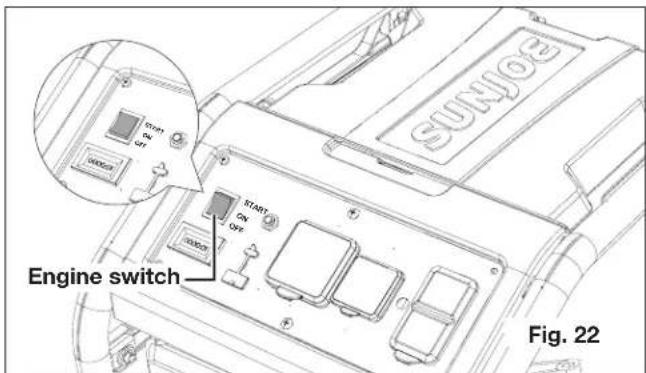
- Press the engine switch to ON position (Fig. 22).
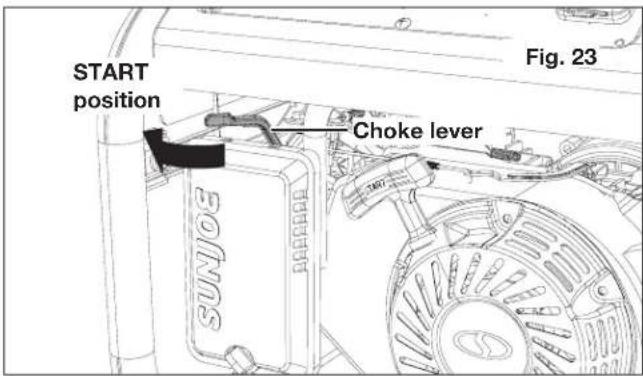
- Move the choke lever all the way LEFT to the START position (Fig. 23).
- Press the engine switch to START position (Fig. 24).
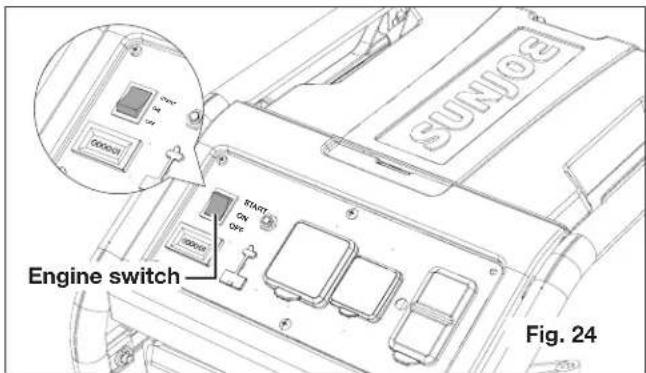
NOTE: The battery may require charging before the generator can be electric started. In this case, start the engine by recoil start described below.
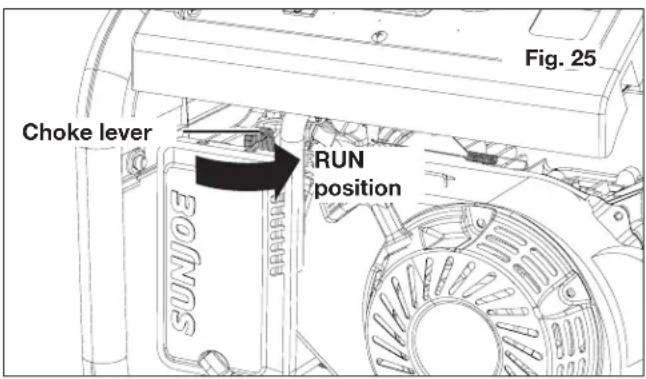
- Allow the engine to run for 15 - 30 seconds, then move the choke lever all the way RIGHT to the RUN position (Fig. 25).
Recoil start
The generator can also be started by pulling the recoil grip, as described below.
- Follow the step 1 to step 6 in Electric start section.
- Grab the recoil grip and pull it out. Keep pulling until the engine runs (Fig. 26).
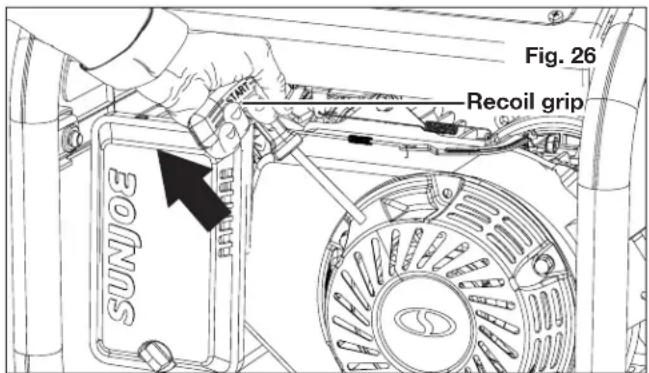
NOTE: Do not allow the grip to snap back after starting; return it gently to its original place.
- Allow the engine to run for 15 - 30 seconds, then move the choke lever all the way RIGHT to the RUN position (Fig. 25).
Power Management
The generator can provide 4100 surge wattage and 3300 running wattage. Before plugging in any load, make sure the generator can supply enough continuous (running) and surge (starting) watts for the items you will power at the same time. Follow these steps.
- Select the items you will power at the same time.
-
Total the continuous (running) watts of these items. This is the amount of power the generator must produce to keep the items running.
-
Estimate the surge (starting) watts you will need. Surge wattage is the short burst of power needed to start electric motor-driven tools or appliances such as a circular saw or refrigerator. Because not all motors start at the same time, total surge watts can be estimated by adding only the item(s) with the highest additional surge watts to the total rated watts from step 2.
Example
| Tool/Application Running Watt Surging Watt | ||
| RV Air Conditioner 1010 | 1600 | |
| TV 300 0 | ||
| RV Refrigerator 180 600 | ||
| Radio 200 0 | ||
| 1690 total running watt | 1600 Highest starting watts | |
Total running watt 1690 + Highest starting watt 1600
= Total starting watt needed 3290 W
To prolong the life of the generator and attached devices, it is important to take care when adding electrical loads to the generator. There should be nothing connected to the generator outlets before starting its engine. The correct and safe way to manage generator power is to sequentially add loads as follows:
- With nothing connected to the generator, start the engine as described above. Let the engine warm up by running with no load for 2 - 3 minutes.
- Plug in and turn on the first load, preferably the largest load you have.
- Allow the generator output to stabilize (engine runs smoothly and attached device operates properly).
- Plug in and turn on the next load.
- Again, allow the generator to stabilize.
- Repeat steps 4 and 5 for each additional load.
Never add more loads than the generator capacity. Take special care to consider surge loads in generator capacity as previously described.
WARNING! Do not overload the generator's capacity. Exceeding the generator's wattage/amperage capacity may damage the generator and/or electrical devices connected to it.
⚠ WARNING! While operating and storing, keep at least 3 feet of clearance on all sides of this product, including overhead.
Stop the Generator
Emergency stop
To stop the unit quickly in an emergency:
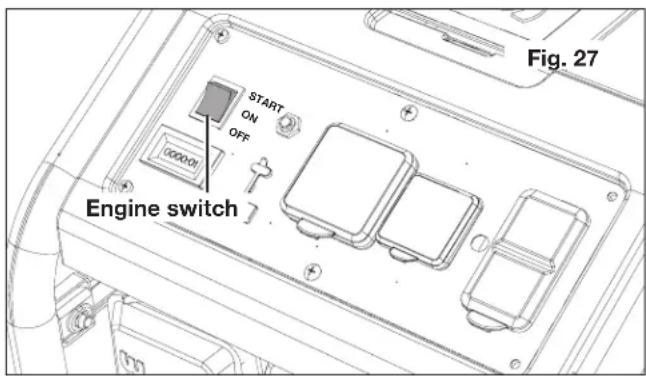
- Turn the engine switch to the OFF position (Fig. 27).
- Close the cylinder valve completely.
Normal stop
To stop the engine under normal operating conditions:
- Remove any load from the generator.
- Turn the engine switch to the OFF position (Fig. 27).
- Close the cylinder valve completely.
⚠ WARNING! Allow a minimum of 30 minutes of “cool down” time before storage. Heat created by muffler and exhaust gases could be hot enough to cause serious burns and/or ignite combustible objects.
Maintenance
Normal maintenance, replacement or repair of emission control devices and systems may be performed by any qualified repair establishment or individual with original or equivalent parts. Warranty and recall repairs must be performed by an authorized service center; please contact Snow Joe ^® + Sun Joe ^® customer service center at 1-866-SNOWJOE (1-866-766-9563) for assistance.
⚠ WARNING! Before inspecting, cleaning or servicing the machine, shut off engine, and remove the battery, wait for all moving parts to stop. Allow 30 minutes of cool down time before performing any maintenance. Failure to follow these instructions can result in serious personal injury or property damage.
⚠ WARNING! When servicing, use only recommended or equivalent replacement parts. Use of any other parts can create a hazard or cause product damage.
NOTE: Periodically inspect the entire product for damaged, missing, or loose parts such as screws, nuts, bolts, caps, etc. Tighten securely all fasteners and caps and do not operate this product until all missing or damaged parts are replaced. Please contact Snow Joe® + Sun Joe® customer service center
at 1-866-SNOWJOE (1-866-766-9563) or a qualified service center for assistance.
General Maintenance
Keep the generator in a clean and dry environment where it is not exposed to dust, dirt, moisture, or corrosive vapors. Do not allow the cooling air slots in the generator to become clogged with foreign material such as leaves, etc.
Do not use a garden hose to clean the generator. Water entering the fuel system or other internal parts of the unit can cause problems that will decrease the life of the generator.
Close propane cylinder valve completely. Inspect all hoses before each use. Replace any damaged hoses before using the generator.
Cleaning the Generator
- Use a soft bristle brush and/or vacuum cleaner to loosen and remove dirt and debris.
- Clean air vents with low pressure air that does not exceed 25 psi.
- Wipe the exterior surfaces of the generator with a damp cloth.
Cleaning the Air Filter
For proper performance and long life, keep air filter clean.
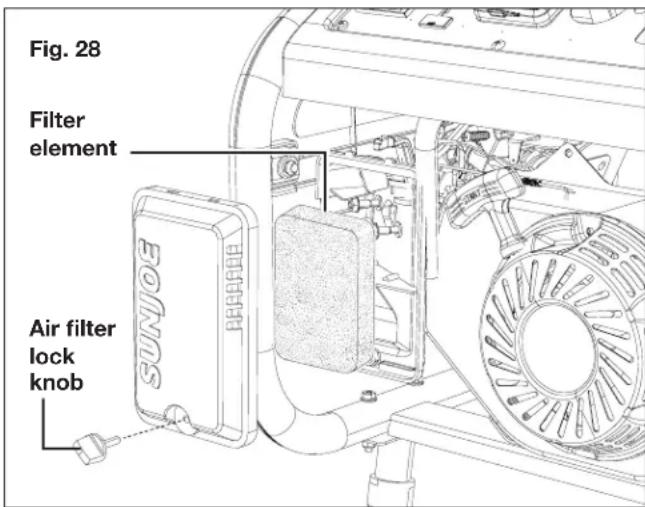
- Rotate the air filter lock knob counterclockwise to release. Remove cover and the filter element inside (Fig. 28).
- Clean air vents with low pressure air that does not exceed 25 psi.
- If the filter element is dirty, clean with warm, soapy water. Rinse and let dry.
- Apply a light coat of engine lubricant to the filter element, then squeeze it out.
- Replace the element in the air filter unit.
WARNING! Do not run the generator without the air filter. Rapid engine wear will result.
Change the Lubricant/Oil
- Remove the oil cap/dipstick.
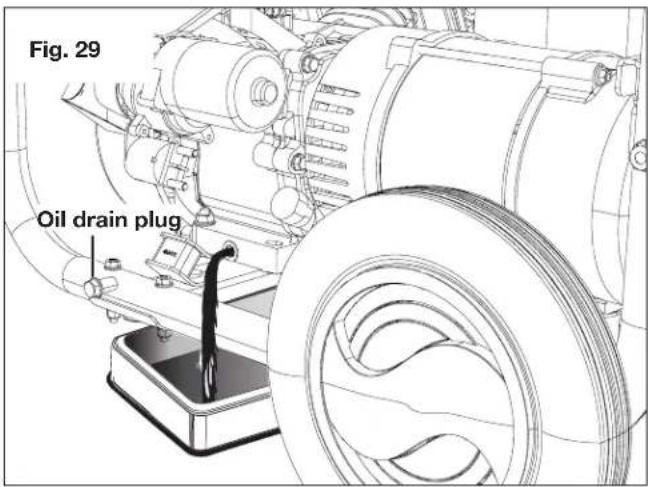
- Place a container underneath the oil drain plug to collect used lubricant as it drains. Unscrew and remove the oil drain plug. Allow lubricant to drain completely (Fig. 29).
⚠ WARNING! Drain the lubricant while the engine is still warm but not hot. Warm lubricant will drain quickly and more completely.
- Reinstall the oil drain plug and tighten securely.
- Refill with lubricant following the instructions in the Checking/Adding Lubricant section.
- Reinstall the oil cap/dipstick.
NOTE: Used lubricant should be disposed of at an approved disposal site. See your local oil retailer for more information.
Spark Plug Maintenance
The spark plug must be properly gapped and free of deposits in order to ensure proper engine operation. To check:
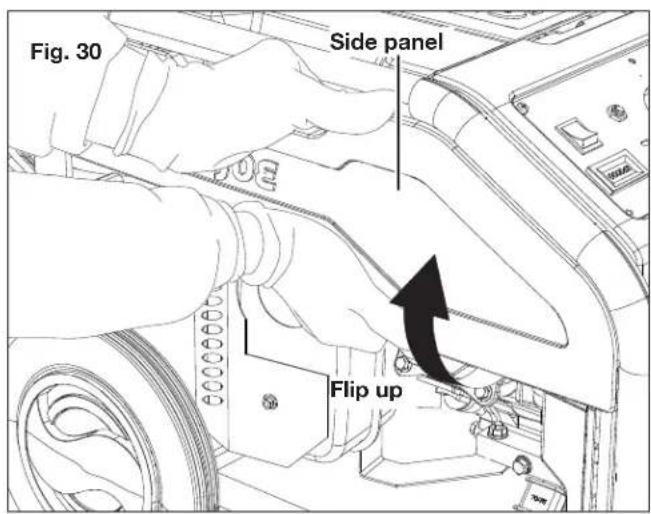
- The spark plug is located behind the left side panel. To reach the spark plug, remove the left side panel by flipping the bottom of the side panel first, and pulling it out (Fig. 30).
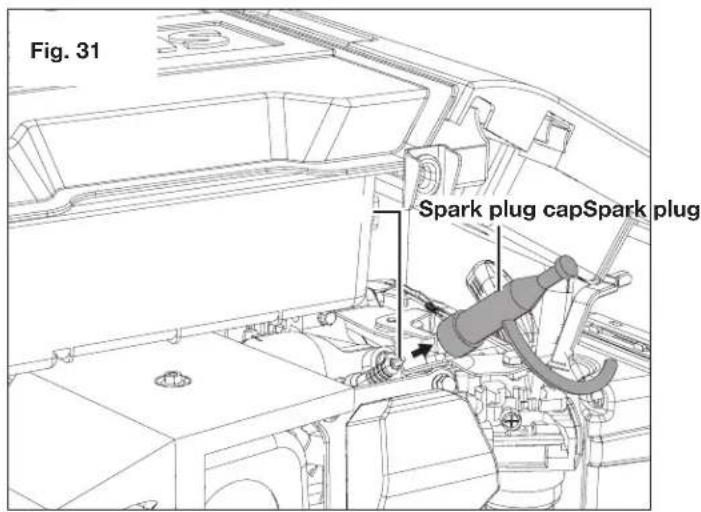
- Remove the spark plug cap by pulling it out (Fig. 31).
- Clean any dirt from around base of spark plug.
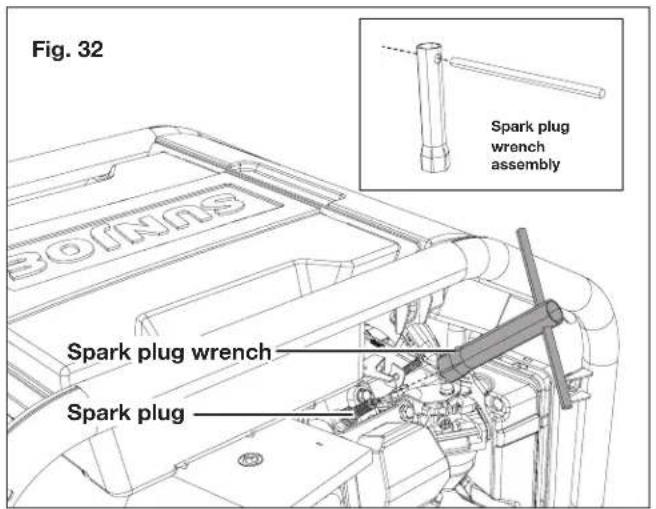
- Assemble the spark plug wrench by inserting the handle into the hole on the wrench. Using the assembled wrench, remove the spark plug (Fig. 32).
- Inspect spark plug for damage, and clean with a wire brush before reinstalling. If insulator is cracked or chipped, spark plug should be replaced.
- Measure plug gap. The correct gap is 0.020 - 0.028 in. (0.5 - 0.7 mm). To widen gap, if necessary, carefully bend the ground (top) electrode. To lessen gap, gently tap ground electrode on a hard surface.
- Seat spark plug in position; thread in by hand to prevent cross-threading.
- Secure the spark plug with wrench. Do not over-tighten, replace the spark plug cap.
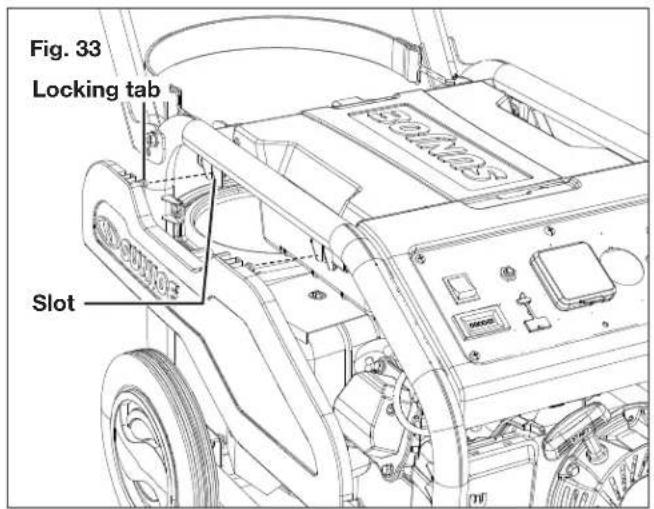
NOTE: An improperly tightened spark plug will become very hot and could damage the engine. - Replace the left side panel by inserting the locking tabs into the slots on the generator's frame, and push at the bottom of the side panel to lock it in place (Fig. 33).
Cleaning the Exhaust Port and Muffler
Depending on the type and amount of lubricant used and/or your operating conditions, the exhaust port and muffler may become blocked with carbon deposits. If you notice a power loss, you may need to remove these deposits to restore performance. We highly recommend that only qualified service technicians perform this service.
Cleaning the Spark Arrestor
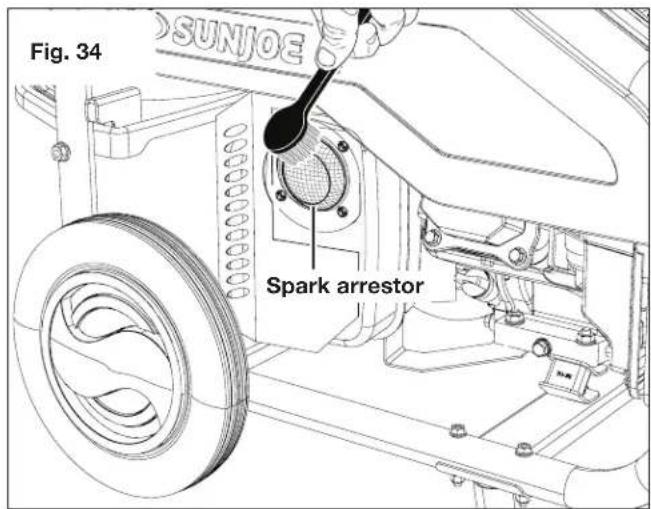
- Inspect the spark arrestor screen for breaks or holes. Replace if necessary.
- Use a brush to remove carbon deposits from the spark arrestor screen as needed (Fig. 34).
Transporting
- Turn the engine switch to the OFF position.
- Allow 30 minutes of "cool down" time before transporting the machine. Make sure engine and exhaust of unit are cool.
- Pull the lock pin ring to unlock the handle, and turn the handle up to the transporting position.
- Tilt the machine until it balances on the wheels, then roll the machine to the desired location.
- If transporting in a vehicle, securely restrain the generator.
- If the generator need to be lifted, fold the handle to the storage position. This tool is heavy and requires several people to lift. To avoid back injury, keep your knees bent and lift with your legs, not your back, and get help when needed.
Storage
When preparing the generator for storage, allow the unit to cool for 30 minutes then follow the guidelines below.
-
Store for less than 1 year – Fully close the propane cylinder valve, then disconnect the propane hose.
-
Store for 1 year or more -
-
Fully close the propane cylinder valve, then disconnect the propane hose.
- Remove spark plug.
- Put a tablespoon of engine lubricant into the spark plug cylinder. Turn the engine slowly with the recoil starter grip to distribute the lubricant.
- Reinstall spark plug.
- Change engine lubricant.
Store the generator indoors in a cool and dry place. Do not place the generator under heavy objects. Provide a plastic sheet or absorbent pad below the generator to catch any drips of lubricant.
⚠ WARNING! Propane cylinders must be stored outdoors out of reach of children and must not be stored in a building, garage, or any other closed-in area.
Battery Caution + Disposal
Always dispose of your battery pack according to federal, state, and local regulations. Contact a recycling agency in your area for recycling locations.
⚠️CAUTION! Even discharged battery packs contain some energy. Before disposing, use electrical tape to cover the terminals to prevent the battery pack from shorting, which could cause a fire or explosion.
⚠ WARNING! To reduce the risk of injury or explosion, never burn or incinerate a battery pack even if it is damaged, dead, or completely discharged. When burned, toxic fumes and materials are emitted into the surrounding atmosphere.
- Batteries vary according to device. Consult your manual for specific information.
- Install only new batteries of the same type in your product (where applicable).
- Failure to insert batteries in the correct polarity, as indicated in the battery compartment or manual, may shorten the life of the batteries or cause batteries to leak.
- Do not mix old and new batteries.
-
Do not mix Alkaline, Standard (Carbon-Zinc), or Rechargeable (Nickel Cadmium, Nickel Metal Hydride, or Lithium-Ion) batteries.
-
Do not dispose of batteries in fire. The cell of the battery may explode.
- Batteries should be recycled or disposed of as per state and local guidelines.
Service + Support
- Generator service must be performed only by qualified repair personnel. Service or maintenance performed by unqualified personnel may result in a risk of injury.
- When servicing generator, use only identical replacement parts. Follow instructions in the cleaning and maintenance section of this manual. Use of unauthorized parts or failure to follow maintenance instructions may create a risk of shock or injury.
- If your Sun Joe ^ portable propane generator requires service or maintenance, please call the Snow Joe ^ + Sun Joe ^ customer service center at 1-866-SNOWJOE (1-866-766-9563).
Model + Serial Numbers
When contacting the company or reordering parts, you will need to provide the model and serial numbers of your product. These are found on the decal affixed to the housing or handle of your portable generator. Copy these numbers into the space provided below.
Record the following numbers from the housing or handle of your new product:


Troubleshooting
| PROBLEM POSSIBLE CAUSES SOLUTIONS | ||
| Engine will not start. | Lubricant level is low.Spark plug faulty, fouled, or improperly gapped.Propane cylinder is empty.Choke lever is in RUN position.Engine is cold. | Engine is equipped with Low Oil Shutoff. If engine lubricant level is low, it must be filled before unit will start. Check engine lubricant level and fill, if necessary.Replace spark plug.Replace or refill propane cylinder.Move choke lever to START position.Move the generator to somewhere warm to start and then move to desired place. |
| Engine is hard to start. • Weak spark at spark plug. | Replace spark plug or contact a qualified service center. | |
| Engine lacks power. | Air filter element clogged.Too much load.Spark arrestor clogged. | Check air filter element. Clean or replace as needed.Reduce load.Clean the spark arrestor. |
| Electric start feature not working. | Engine switch is in OFF position.Battery is not charged. | Turn engine switch ON.Charge the battery. |
| AC receptacle does not work. | Circuit breaker is tripped.Item plugged in is defective. | Reset the AC circuit breaker.Try a different item. |
| Smell of propane gas. | Propane cylinder valve is open.Hose or valve leaking. | Turn off cylinder valve immediately and tighten connections.Turn off cylinder valve immediately and check for damaged hose or valve. |
| Gas leak detected from cylinder, regulator, or other connection. | Improper installation and loose connections.Mechanical failure due to rusting or mishandling. | Tighten fittings.Replace or refill propane cylinder. |
| Humming noise from regulator. | Cylinder valve turned on too quickly. | Turn off generator and close cylinder valve. Turn valve on slowly. |
NOTE: If problem persists after trying the above solutions, please call the Snow Joe ^® + Sun Joe ^® customer service center at 1-866-SNOWJOE (1-866-766-9563).
Parts + Accessories
⚠ WARNING! ALWAYS use only authorized Snow Joe® + Sun Joe® replacement parts and accessories. NEVER use replacement parts or accessories that are not intended for use with this portable generator. Contact Snow Joe® + Sun Joe® if you are unsure whether it is safe to use a particular replacement part or accessory with your portable generator. The use of any other attachment or accessory can be dangerous and could cause injury or mechanical damage.
NOTE: Accessories are subject to change without any obligation on the part of Snow Joe® + Sun Joe® to provide notice of such changes. Accessories can be ordered online at sunjoe.com or via phone by contacting the Snow Joe® + Sun Joe® customer service center at 1-866-SNOWJOE (1-866-766-9563).
| ModelPart / Ad | ||
①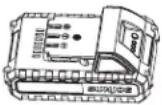 | 24V iON+ 2.0 Ah Lithium-Ion Battery | 24VBAT-LTE |
②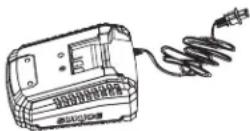 | 24V iON+ Lithium-Ion Battery Quick Charger 24VCHRG-QC | |
③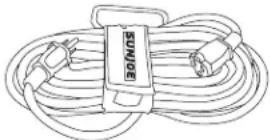 | 25-Foot Heavy-Duty Universal Generator Series 14-Gauge Extension Cord | SJG-EXT2514-HJ |
④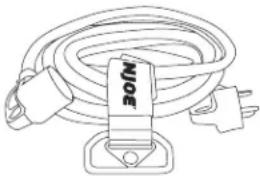 | 25-Foot Heavy-Duty Universal Generator Series RV Extension Cord | SJG-EXT2510-RV |
⑤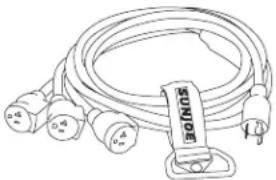 | 25-Foot Heavy-Duty Universal Generator Series 3-Way Extension Cord | SJG-EXT2510-3WAY |
⑥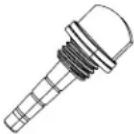 | Magnetic Oil Dipstick | SJG-MOD1 |
⑦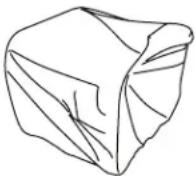 | Universal Weatherproof Generator Cover | SJG-CVR1 |
8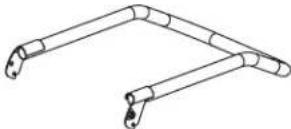 | Replacement Handle Assembly | SJG4100LP-HANDLE |
9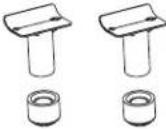 | Replacement Leg Assembly | SJG4100LP-LEGS |
10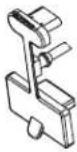 | Replacement USB Waterproof Cover | SJG4100LP-USBCVR |
11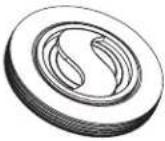 | Replacement Single Wheel Kit | SJG4100LP-WHEEL |
12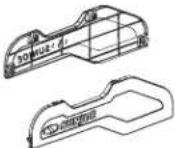 | Replacement Left and Right Side Panels | SJG4100LP-SDPANELS |
13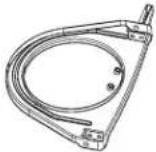 | Replacement Propane Tank Holder | SJG4100LP-LPHOLDER |
14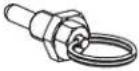 | Replacement Handle Locking Pin | SJG4100LP-LOCKPIN |
15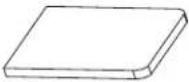 | Replacement Air Filter | SJG4100LP-FILTER |
16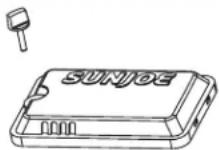 | Replacement Air Filter Cover & Key | SJG4100LP-FLTRCVR |
17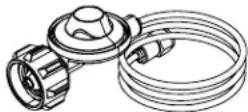 | Replacement Liquid Propane Hose | SJG4100LP-LPHOSE |
18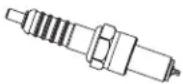 | Replacement Spark Plug | SJG4100LP-SPARK |
19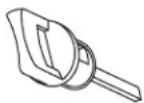 | Replacement Plastic Dipstick | SJG4100LP-DIPSTICK |
SNOW JOE® + SUN JOE® CUSTOMER PROMISE
ABOVE ALL ELSE, Snow Joe, LLC (“Snow Joe”) is dedicated to you, our customer. We strive to make your experience as pleasant as possible. Unfortunately, there are times when a Snow Joe ^® , Sun Joe ^® , or Aqua Joe ^® product (“Product”) does not work or breaks under normal operating conditions. We think it’s important that you know what you can expect from us. That’s why we have a Limited Warranty (“Warranty”) for our Products.
OUR WARRANTY:
Snow Joe warrants new, genuine, powered and non-powered Products to be free from defects in material or workmanship when used for ordinary household use for a period of two years from the date of purchase by the original, end-user purchaser when purchased from Snow Joe or from one of Snow Joe's authorized sellers with proof of purchase. Because Snow Joe is unable to control the quality of its Products sold by unauthorized sellers, unless otherwise prohibited by law, this Warranty does not cover Products purchased from unauthorized sellers. If your Product does not work or there's an issue with a specific part that is covered by the terms of this Warranty, Snow Joe will elect to either (1) send you a free replacement part, (2) replace the Product with a new or comparable product at no charge, or (3) repair the Product. How cool is that!
This Warranty gives you specific legal rights, and you may also have other rights which vary from State to State.
PRODUCT REGISTRATION:
Snow Joe strongly encourages you to register your Product. You can register online at snowjoe.com/register, or by printing and mailing in a registration card available online from our website, or calling our Customer Service Department at 1-866-SNOWJOE (1-866-766-9563), or by e-mailing us at help@snowjoe.com. Failure to register your Product will not diminish your warranty rights. However, registering your Product will allow Snow Joe to better serve you with any of your customer service needs.
WHO CAN SEEK LIMITED WARRANTY COVERAGE:
This Warranty is extended by Snow Joe to the original purchaser and original owner of the Product.
WHAT IS NOT COVERED?
This Warranty does not apply if the Product has been used commercially or for non-household or rental applications. This Warranty also does not apply if the Product was purchased from an unauthorized seller. This Warranty also does not cover cosmetic changes that do not affect performance. Wearing parts like belts, augers, chains and tines are not covered under this Warranty, and can be purchased at snowjoe.com or by calling 1-866-SNOWJOE (1-866-766-9563).

Vataje nominal 3,300 W
- IMPORTANT! Safety Instructions
- All Operators Must Read These Instructions Before Use
- General Safety
- Additional Safety Instruction for Propane Generator
- Shock or Fire Hazard
- Electric Shock Hazard
- Heat Hazard
- Battery & Charger Safety Instructions
- Information about the battery
- Information about the charger and the charging process
- Protection from environmental influences
- Safety Symbols
- Know Your Portable Propane Generator
- Technical Data
- Unpacking
- Carton Contents
- Battery Pack Operation
- Battery Charge Level Indicator
- Charger Operation
- When to Charge the iON+ 24VBAT-LTE Lithium-iON Battery
- Charging the Battery
- Assembly
- Installing the Feet
- Installing the Wheels
- Locking the Handle
- Operation
- Before Operating the Unit
- Grounding the Generator
- Checking/Adding Lubricant/Oil
- Testing the Propane Cylinder
- Connecting/Installing the Propane Cylinder
- Leakage Test
- WARNING!
- Start the Generator
- Electric start
- Recoil start
- Power Management
- Stop the Generator
- Emergency stop
- Normal stop
- Maintenance
- General Maintenance
- Cleaning the Generator
- Cleaning the Air Filter
- Change the Lubricant/Oil
- Spark Plug Maintenance
- Cleaning the Exhaust Port and Muffler
- Cleaning the Spark Arrestor
- Transporting
- Storage
- Battery Caution + Disposal
- Service + Support
- Model + Serial Numbers
- Parts + Accessories
- SNOW JOE® + SUN JOE® CUSTOMER PROMISE
- OUR WARRANTY:
- PRODUCT REGISTRATION:
- WHO CAN SEEK LIMITED WARRANTY COVERAGE:
- WHAT IS NOT COVERED?
Brand : Sun Joe
Model : SJG4100LP
Category : Generator