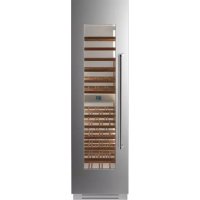
WC605BRX2T - Refrigerator BERTAZZONI - Free user manual and instructions
Find the device manual for free WC605BRX2T BERTAZZONI in PDF.



| Product type | Wine cellar |
| Brand | Bertazzoni |
| Model | WC605BRX2T |
| Compartments | 2 independent compartments (upper and lower) |
| Temperature range | +4°C to +18°C (39°F to 64°F) for each compartment |
| Default temperature | Upper compartment: +12°C, lower compartment: +8°C |
| Refrigerant | R600a (isobutane) |
| Power supply | 220-240 V, 50/60 Hz, Schuko 16 A plug |
| Lighting | LED, adjustable from 1 to 12 hours after door closure |
| Control | Touch screen with electronic control system |
| Functions | Humidity control, Sabbath mode, Demo mode, date/time/language settings |
| Shelves | Sliding oak wood shelves on telescopic guides, removable |
| Number of shelves | Not specified (several depending on configuration) |
| Bottle capacity | Not specified, but compatible with Magnum formats on upper shelf |
| Maintenance | Cleaning of condenser and filter every 6 months (audible and visual reminder) |
| Cleaning | Use microfiber cloth and soft sponge; avoid abrasive or chlorine products |
| Included accessories | Cleaning kit (microfiber cloth, small sponge) |
| Safety | Temperature locking, open door detection, anomaly alarm |
| Dimensions | Not specified in the manual |
| Weight | Not specified in the manual |
| Warranty | Manufacturer's warranty (consult dealer) |
| After-sales service | Contact Bertazzoni after-sales service |
Frequently Asked Questions - WC605BRX2T BERTAZZONI
User questions about WC605BRX2T BERTAZZONI
0 question about this device. Answer the ones you know or ask your own.
Ask a new question about this device
Download the instructions for your Refrigerator in PDF format for free! Find your manual WC605BRX2T - BERTAZZONI and take your electronic device back in hand. On this page are published all the documents necessary for the use of your device. WC605BRX2T by BERTAZZONI.
USER MANUAL WC605BRX2T BERTAZZONI
in Spagna https://universal.bertazzoni.com/more/care-service
in Olanda https://nl.bertazzoni.com/zorg-enservice
in Svezia https://se.bertazzoni.com/more/care-service
in Danimarca https://dk.bertazzoni.com/more/care-service

Importante
1.1 For your safety 2
1.2 Important information when using the appliance 2
1.3 Caring for the environment 4
1.4 Informations for control bodies 4
1.5 To save energy. 5
2 INSTALLATION 6
2.1 Installation 6
2.2 Connection to electrical power supply 6
2.3 Refrigerant 6
3 BEFORE STARTING 7
3.1 Know your appliance.. 7
3.2 Main components.. 8
3.3 Electronic control 9
3.4 Main control panel 9
4 APPLIANCE SWITCHING ON AND OFF 10
4.1 Turning the appliance on and off 10
4.2 How to adjust the temperature for different requirements 12
4.3 Information signals of warning messages on the display 13
4.4 Wine Cellar temperatures 14
5 FUNCTIONS AND SETTINGS 15
5.1 Functions 15
5.2 Settings 16
6 INTERNAL LAYOUT 22
6.1 Internal layout (positioning, adjustment, removal) 22
7 LIGHTING 22
7.1 Interior lighting 22
8 WINE STORAGE 23
8.1 General directions 23
8.2 Conservation temperature 23
8.3 Time of conservation 24
8.4 Consumption temperature 25
8.5 Position of bottles 26
9 CARE AND CLEANIG 26
9.1 Care and cleaning 26
9.2 Cleaning of the toe kick cover and condenser 27
9.3 Internal cleaning 28
0 TROUBLESHOOTING GUIDE 28
0.1 Troubleshooting guide 28
0.2 Malfunction indications appearing on the display 30
1.1 For your safety
If this appliance is replacing an existing appliance which must be removed or disposed of, make sure that it does not become a dangerous trap for children by cutting its power supply cable and rendering it impossible to close the door. Use the same caution at the end of the lifespan of the new appliance.
The appliance is not designed to operate with external timers or with remote-control systems.
This appliance is designed to refrigerate beverages and foods and is intended for domestic use.
The appliance must be installed by following the instructions in the Installation Guide, particular care should be taken not to obstruct the vent openings of the appliance and of the built-in units.
The appliance features a concentrated lighting system with LED lamps. Do not stare into these lamps when they are on to avoid possible eyesight damage.
Do not use any type of electrical equipment inside of the food conservation compartments.
When positioning the shelves, do not place fingers in the shelf slide guides.
Never attempt to extinguish a flame/fire with water: turn off the appliance and cover the flame with a fireproof blanket.
Do not position containers of flammable liquids near the appliance.
Completely switch off the appliance and unplug the power supply cable during cleaning operations. If the plug is not easily reached, it is a good idea to turn off the breaker or remove the fuse that controls the socket that the appliance is connected to.
The packaging parts can be dangerous for children: do not allow children to play with the plastic bags, plastic film or Styrofoam.
Any repairs must be performed by a qualified Bertazzoni Service technician.
This appliance is not intended for use by persons (including children) with reduced physical, sensory or mental capabilities or lack of experience and knowledge unless they have been given supervision or instruction concerning use of the appliance by a person responsible for their safety. Children should be supervised to ensure that they do not play with the appliance.
Do not damage the appliance refrigerant circuit pipes.
Do not store explosive substances such as aerosol cans with a flammable propellant in this appliance.
If the power cord of this appliance is damaged, it must be replaced by the manufacturer, customer
service or a similarly qualified person. Improper installations and repairs may put the user at considerable risk.
Repairs may be performed by the manufacturer, customer service or a similarly qualified person only.
Plug into a grounded 2-prong Schuko outlet.
Do not remove ground prong.
Do not use an adapter.
Do not use an extension cord.
Disconnect power to all units before servicing.
Do not modify this appliance.
Do not insert pointed metal objects (cutlery or utensils) into the slots in the appliance.
Do not store inflammable, explosive or volatile substances.
Do not keep explosive substances, such as spray bottles with flammable propellants in the appliance.
Bottles containing strong alcoholic drinks must be tightly closed and stored vertically.
Organic compounds, acids and essential oils can corrode the seals and plastic surfaces if left in contact with them for extended periods.
Turn off the appliance and unplug it from the mains before cleaning or maintenance.
Do not pull the cable to unplug the appliance.
1.2 Important information when using the appliance
Cleaning and maintenance that should be performed by the user must not be carried out by unsupervised children.
Never use electrical appliances inside the appliance (e.g. heater, electric ice maker, etc.). Explosion hazard!
Never defrost or clean the appliance with a steam cleaner! The steam may penetrate electrical parts and cause a short-circuit. Risk of electric shock!
Do not use pointed and sharp-edged implements to remove frost or layers of ice. You could damage the refrigerant tubes. Leaking refrigerant may cause eye injuries or ignite.
Take care that no objects are stuck in the doors.
Do not store products which contain flammable propellants (e.g. spray cans) or explosive substances in the appliance.
Explosion hazard!
Do not stand on or lean heavily against base of appliance, drawers or doors, etc.
Before cleaning the appliance, pull out the power cord plug or switch off the fuse. Do not pull out the power cord plug by tugging on the power cord.
Store high-percentage alcohol tightly closed and standing up.
Keep plastic parts and the door seal free of oil and grease. Otherwise, parts and door seal will become porous.
Never cover or block the ventilation openings of the appliance.
According to current regulations, children between 3 and 8 years of age can take or load food from the appliance, but it is highly discouraged to allow children under 8 years of age to perform these operations and in general to use the appliance.Keep children under the age of eight at a safe distance unless they are constantly supervised and make sure that they do not play with the appliance.
Do not use mechanical, electrical, chemical devices other than those recommended by the manufacturer to speed up the defrosting process.
Do not damage the cooling circuit (if it can be accessed).
Do not use electrical appliances inside food storage compartments unless these are of the type recommended by the manufacturer.
In the event of damage to the cooling circuit, avoid the use of naked flames and ventilate the area properly.
Do not use the appliance or parts of it in ways other than those specified in this manual.
Opening the door for long periods can cause the temperature in the appliance compartments to rise considerably.
Clean surfaces that may come into contact with food and accessible drainage systems regularly.
If the appliance is left empty for long periods of time, switch it off, thaw it, clean it, dry it and leave the door open to prevent the development of mould inside.
Never rest sharp metal objects such as knives, forks, spoons and lids on the appliance during use.
Do not use abrasive or corrosive detergents (e.g. scouring powders, stain removers and metallic sponges) on glass parts.
Do not sit on the appliance.
Do not sit or lean on the door or any open drawers.
Do not prize the door or handle to move the appliance.
Do not use electrical appliances (e.g. hair dryers) or sprays for defrosting, the plastic parts could be damaged.
Do not use the appliance to cool rooms for any reason.Always unplug the appliance in the event of a fault or when performing cleaning or maintenance.
Do not place heavy objects on the top of the appliance.
Symbols used in the Guide:

Note
Recommendations for correct use of the appliance

Important
Directions for avoiding appliance damage

Warning
Indications for avoiding injury to people
1.3 Caring for the environment

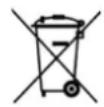
This appliance conforms to the WEEE European directive (2012/19/EU) and must be disposed of separately from other waste at the end of its service life.
The appliance does not contain substances in quantities sufficient to be considered hazardous to health and the environment, in accordance with current European directives.
Pay special attention to correct disposal procedure for all the packaging materials.

Power voltage Danger of electrocution
Disconnect the mains power supply. Unplug the appliance.
The appliance must not be disposed of with urban waste. Contact local waste disposal centres for how to dispose of recyclable waste.
Prior to disposal, cut the power supply cord and make it impossible to close the door.
During disposal, avoid damage to the refrigeration circuit.
The appliance does not contain hazardous substances for the atmospheric ozone layer, neither in the refrigeration circuit nor in the insulation.
Our appliances are packaged in non-polluting and recyclable materials.
Deliver the packing materials to the appropriate recycling centre.

Plastic packaging Danger of suffocation
Do not leave the packaging or any part of it unattended.
Do not let children play with the plastic bags.

Warning To avoid contamination of food, please respect the following instructions:
Opening the door for long periods can cause a significant increase of the temperature in the compartments of the appliance.
Clean regularly surfaces that can come in contact with food and accessible drainage systems.
If the refrigerating appliance is left empty for long periods, switch off, defrost, clean, dry, and leave the door open to prevent mould developing within the appliance.
1.4 Information for control bodies
For EcoDesign checks, the installation and preparation of the appliance must comply with EN 62552 standard.
Ventilation requirements, dimensions and minimum space from the rear wall are indicated in the "Installation" chapter of this manual.
Contact the manufacturer for more information.
1.5 To save energy
Correct use of the appliance, correct packaging of foodstuffs, a constant temperature and food hygiene have effects on the quality of storage.
Reduce the number of times that the doors are opened and the length of time they remain open to prevent the compartments from heating up excessively.
Clean the condenser (if it can be accessed) at the rear of the appliance periodically to prevent the appliance from losing efficiency.
2.1 Installation
Make sure that installation is performed correctly, adhering to all directions in the specific installation manual provided with the appliance.
2.2 Connection to the electrical power supply
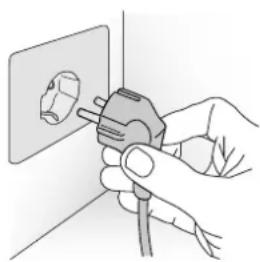
The appliance is equipped with a Schuko type 16A plug and must be connected to the electrical power supply through a corresponding Schuko socket. Do not use extension cords and/or multiple adapters for the power supply connection.

Important
Do not use extension cords and/or multiple adapters for the power supply connection.

Warning
If energy is supplied through an alternative energy power source (solar, geothermal, etc.) or if home automation systems are installed, it is necessary to install the Alternative Energy Kit to integrate the unit into the power grid.
2.3 Refrigerant
The refrigerant isobutane (R600a) is contained within the refrigerant circuit of the appliance, a natural gas with a high level of environmental compatibility, which is nevertheless flammable.
During transportation and installation of the appliance, be certain that none of the components of the refrigerant circuit become damaged.
If the refrigerant circuit should become damaged: - avoid open flames and sources of ignition;
- thoroughly ventilate the room in which the appliance is situated.
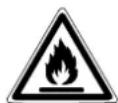
ISO 7010 W021

Caution: risk of fire / flammable materials.

Important
Carry out transportation, installation and/or clearing with extra care so that no damage occurs to the refrigeration circuit.
EN
3.1 Know your appliance
Congratulations for having purchased your new appliance: from now on you can use our innovative conservation system, which will allow you to keep any kind of beverage in the best way possible.
This manual will answer most of your questions about the product's features. Should you require further information or technical assistance, please refer to your dealer or visit our website:
in the UK https://uk.bertazzoni.com/more/care-service
in France https://fr.bertazzoni.com/customer-care in Spain https://universal.bertazzoni.com/more/ care-service
in the Netherlands https://nl.bertazzoni.com/zorgen-service
in Sweden https://se.bertazzoni.com/more/care-servicein Denmark https://dk.bertazzoni.com/ more/care-service

Important
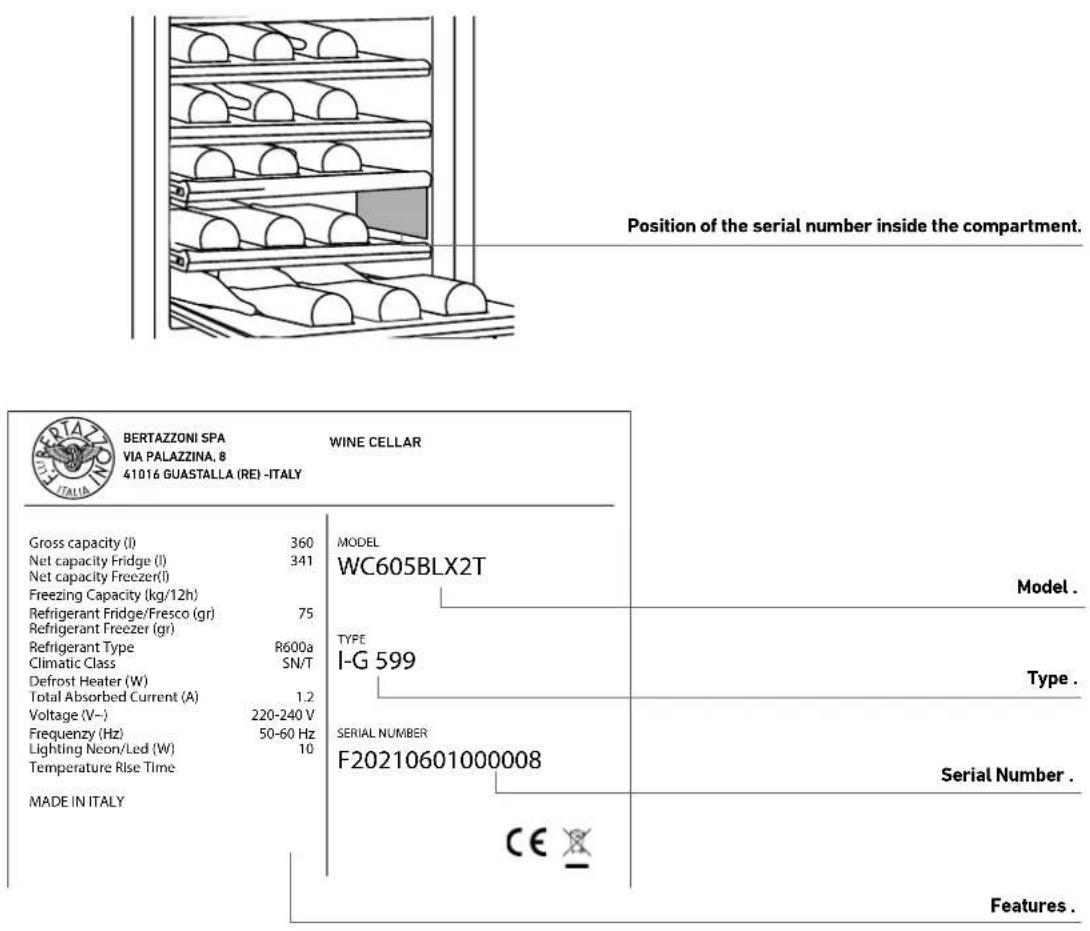
Before calling, write down the model type and serial number which are available on the rating plate located on the bottom left-hand corner of the appliance, behind the bottom drawer.
Before calling, please make sure to have the following information ready:
- Date of Purchase;
- Name of dealer where product was purchased.
3.2 Main components
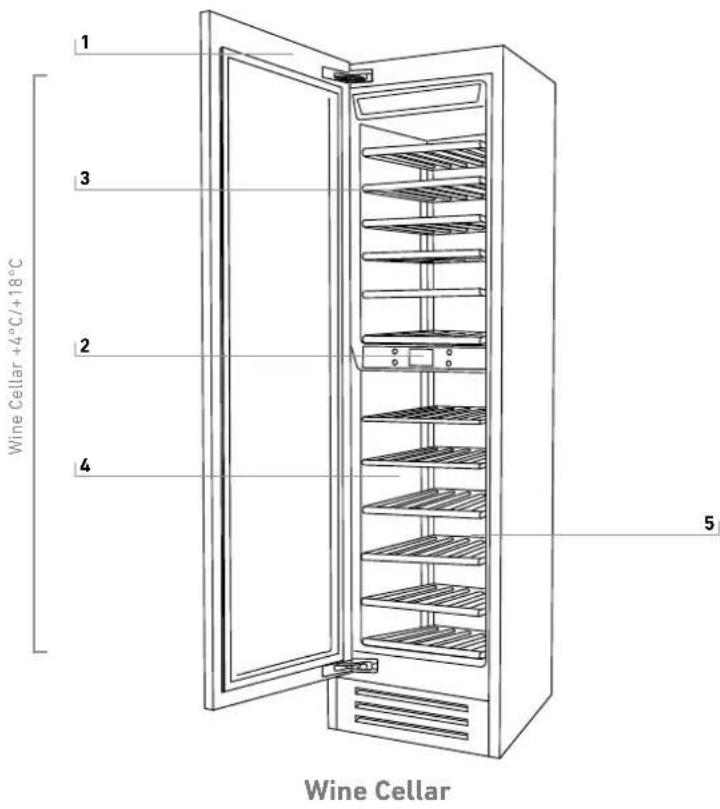
1 Prepainted white aluminium structure.
2 Interactive control panel.
3 Upper Compartment.
4 Premium durmast wood full-extraction shelves on titanium-alloy ball bearing glides with soft closing system.
5 Lower compartment.
3.3 Electronic Control
The innovative electronic control system designed by Bertazzoni maintains constant temperature on the 2 temperature zones and visualizes it on the control panel display. It also allows user interaction making it possible to personalize settings of the various functions and to receive sound and/or visual messages should any malfunction occur in the appliance.
3.4 Main control panel





On/Off
Touch the icon to turn the unit on or off.

Home
Touch the Home icon for going back to the main display screen.

Alarm
Touch the icon to view the alarm tone functions and to deactivate them.

Back
Touch the arrow icon for going back to the previous display screen.
4.1 Turning the appliance on and off
First time starting the unit
Touch the button. The display shows the following launch screens:

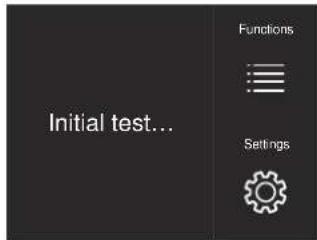
1) Bertazzoni Logo.
2) Initial test (last 3 minutes).
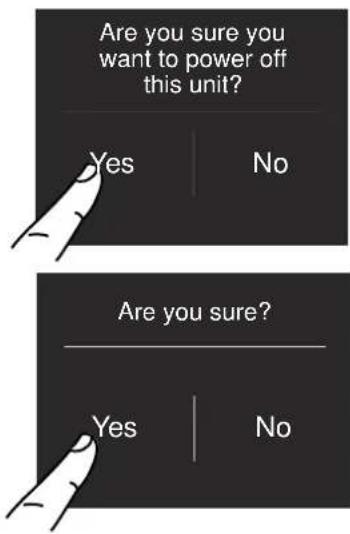
2) Touch the icon Yes to switch off.
3) Confirm shutdown by touching the Yes icon.

When the wine cellar is off there are no warning signs that prove that the wine cellar is plugged to a socket.
3) The display shows the main screen with the environment temperature measured from the wine cellar inside the compartments. Automatically the unit starts to cool down until reaching the set temperatures.
Switching off upper and lower compartments.
The upper compartment and the lower compartment, can be shutdown individually.
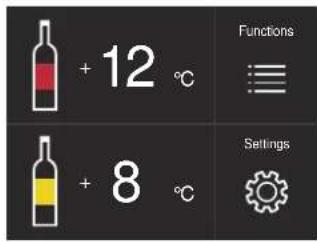
When the appliance is first switched on is recommended to wait at least 12 hours without opening the doors and before placing any bottles inside the unit. During such period deactivate any error message by pressing the Alarm button.
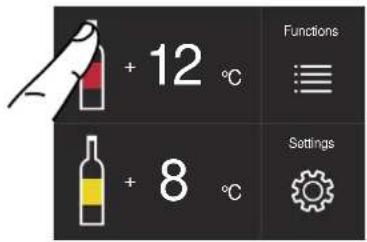
1) Home screen.
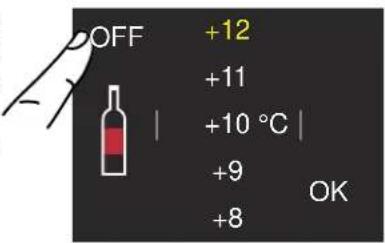
2) Touch the Off icon.
Shutdown

1) Touch the button off.
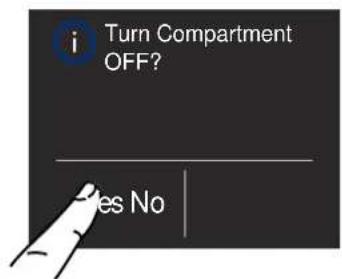
3) Touch the icon Yes to turn compartment off.
EN
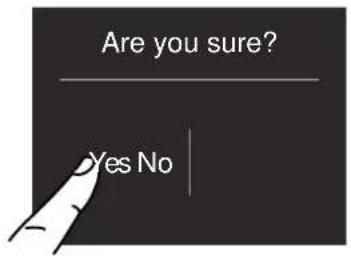
4) Touch the icon Yes for confirming the deactivation.
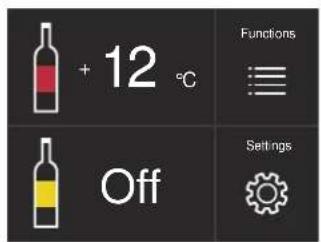
5) On the home screen appears the icon off, which indicates that the lower compartment is off.
For turning off the upper compartment follow the same directions
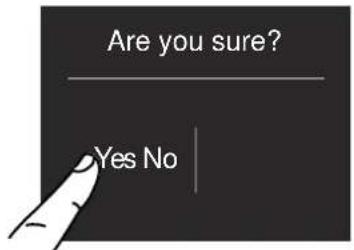
4) Touch the Yes icon for confirming.
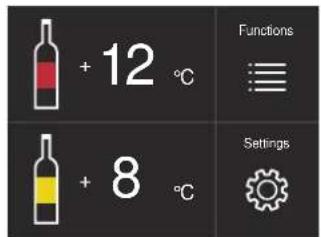
5) Turn on again the lower compartment. Home screen will open up.
The same procedure is required if you want to restart the upper cellar compartment.
Turning the upper and lower compartments on again
To turn the unit on again press the button, the display will turn on and the launch screen will appear again with the temperatures measured inside the wine cellar compartments. The wine cellar will start to cool down until reaching the set temperatures.
Restart the compartments.
In case you wish to turn the upper and lower compartments on again.
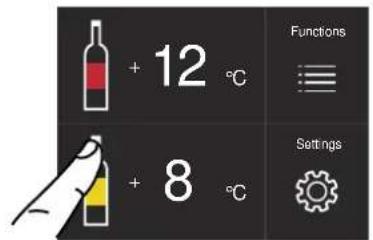
1) Home screen. To turn on the lower compartment on again, touch the icon
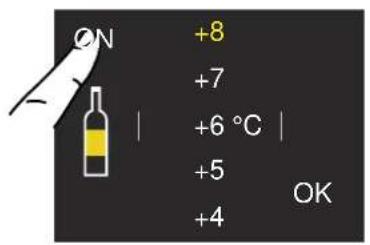
2) Touch the On icon.
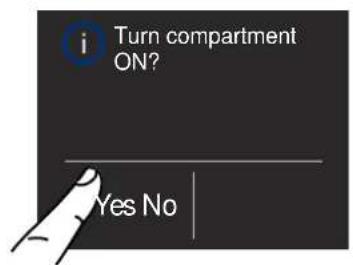
3) Touch the Yes icon.
Switching off for long periods
During long absence periods it is recommended to switch off the wine cellar by pressing the Unit button for three seconds and disconnecting the electrical plug or the breaker controlling the socket.
Completely empty the wine cellar, clean and dry it and leave the doors and drawers partially open to prevent unpleasant odors.

If at the first startup the Standby message does not appear, but another message appears, it means that the appliance has already started the cooling process.
During the first startup, it will not be possible to use the Menu to modify the factory settings until the preset temperature has been reached.
Each time the appliance is switched on it goes through a self-diagnosis procedure lasting three minutes before completely starting up.
4.2 How to adjust the temperature for different requirements
Each model has been carefully tested before leaving the factory and is adjusted in such a way to ensure high performance and low power consumption. Usually, it is not necessary to modify the settings.
Follow the following on screen steps to personalize the temperature settings:
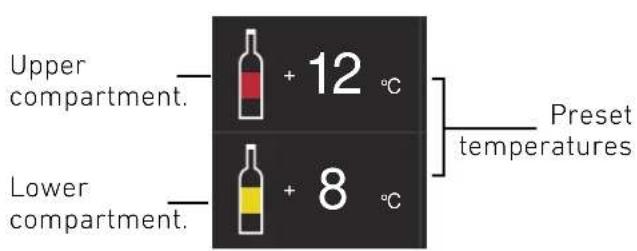
Modify the temperatures compartment
Example: How to modify the upper compartment temperature.
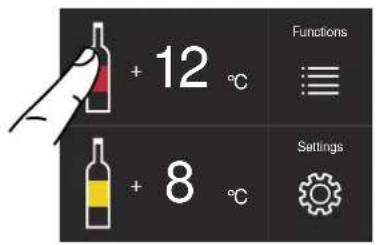
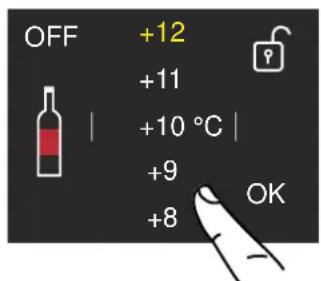
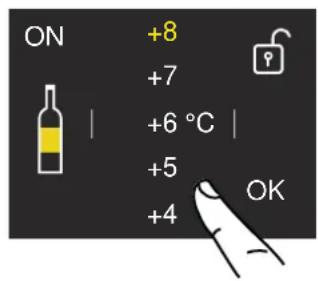
1) Home screen. Touch icon of upper compartment.
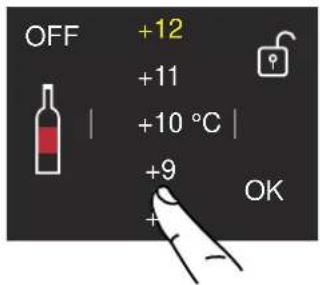
2) Scroll up/down to select the desided temperature.
Upper Compartment from +4^ to +18^ (from 39^ to 64^ ).
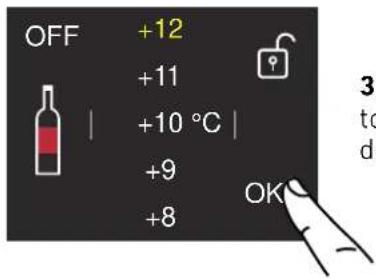
3) Touch the icon Ok to confirm the desired temperature.

The temperature shown can vary slightly in respect to the set temperature following frequent openings of the doors or insertion of room temperature foods or large quantities of foods.
It might take between 6 to 12 hours to reach the selected temperature.
Padlock icon
The padlock icon shows up when the temperatures are set up.
The padlock open/close shows that the compartment's temperatures can or can not be modified by the user.

Usually a yellow padlock will show open, in that case you can scroll up or down with a finger on the display, selecting the desired temperature and press OK to confirm.
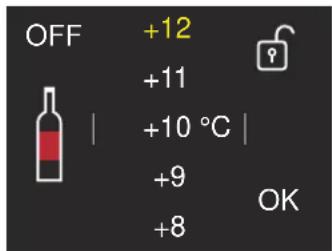
Whereas a closed padlock will be seen if the user has activated a function that modifies the settings of the wine column and prevents the user from changing the temperature of the compartment.
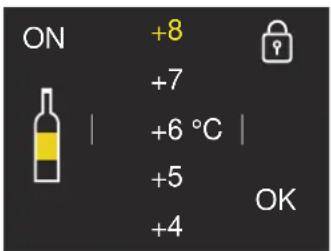
If the icon function is touched and a specific function is set, the yellow padlock will be seen closed and it won't be possible to change the temperature of the compartments as long as the function won't be completed or if it is manually deactivated as long as the function is active.
4.3 Information signals of warning messages on the display
An integrated control system will give information through messages you will see on the display. There is an alarm tone that occurs with some error messages which can be turned off by touching the alarm button on the main control panel. You can find the list of the error messages at the end of this manual.

4.4 Wine Cellar temperatures
Most red wines are best stored at slightly warmer temperatures.
Red Wine
from +10^ to +18^
(from 50^ to 64^ )
White Wine
from +4^ to +9^
(from 39^ to 48^ )
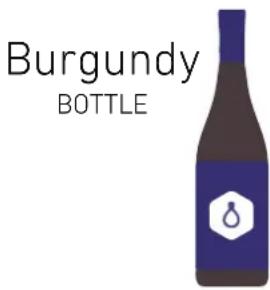
For example if a temperature higher than +9^ is set for white wine, the display will change icon from white wine to red wine.
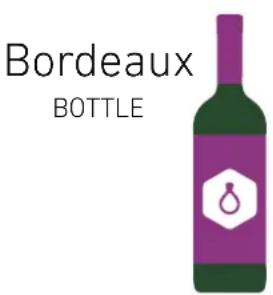
Bordeaux
BOTTLE
EN
INFORMATION FOR USING THE DISPLAY
It is possible to personalize the operation of your unit in order to adapt it to the different ways you might want to use it.
1) Humidity Control
This function enables to set the humidity of the upper and lower compartments. The default setting is set to "Medium".
5.1 Functions
After touching the functions icon on the home screen, the user will be shown the icons of the following available functions.
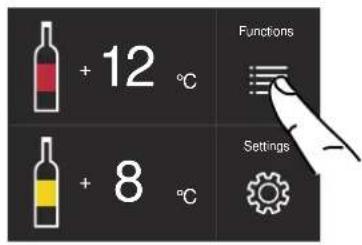
A) Home screen. Touch the Functions icon.
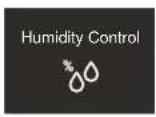
1) Humidity Control.
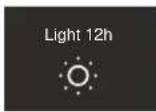
2) Light 12h.
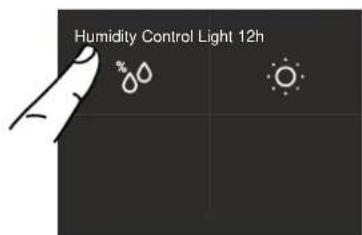
B) Touch the Humidity Control icon.
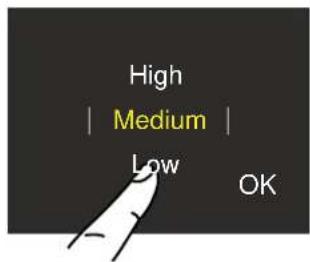
c) Scroll until setting the desired humidity and press Ok.
2) Interior light for 12h
This function enables to set the timing of the interior light and it stays on 12 hours when the wine cellar door is closed, in order to see the inner part lighted up, through the glass.
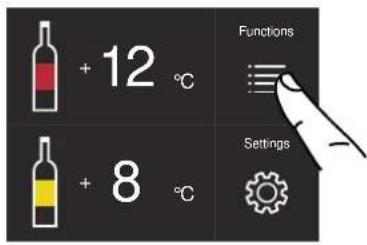
A) Home screen. Touch the Functions icon.
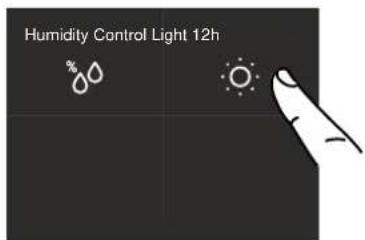
B) Touch the Light 12h icon.
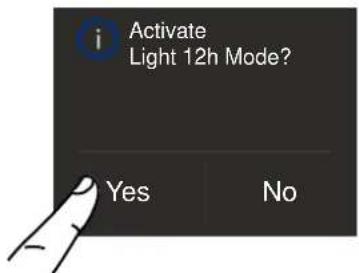
C) Push Yes if you want to activate Light 12h Mode.
5.2 Settings
It is possible to personalize the settings of your wine cellar or adapting it to the different ways you might want to use it.
1) Date.
2) Time.
3) Celsius and Fahrenheit.

4) Language.
5) Sabbath.
6) Reset.
7) Demo Mode.
8) Maintenance.
9) Service.
10) Information.
EN
1) Date
The display will show the date in the format (day:month:year).
By touching the display you can modify the settings.
2) Time
The display shows the hours and minutes in the format hh:mm.
This function selects the display at 12 or 24 h.
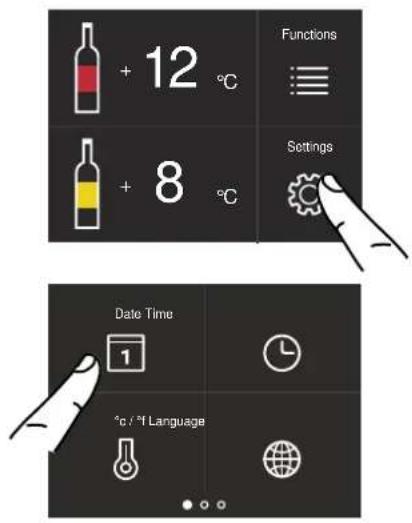
A) Home screen. Touch the Settings icon.
c) Scroll up or down until the desired year appears and press Ok.
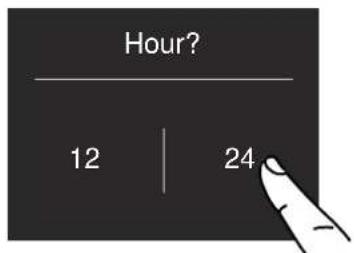
c) Touch the desired method which you want the time to display: 12 hour or 24 hours.
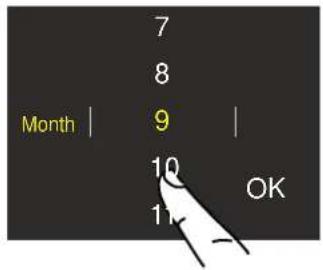
D) Scroll up or down until the desired month appears and press Ok.
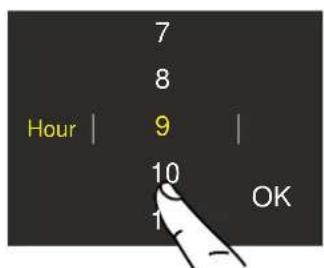
D) Scroll up / down to set the hour and then press ok.
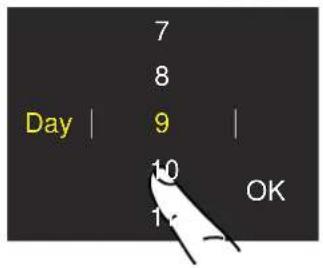
E) Scroll up or down until the desires date appears and press Ok.
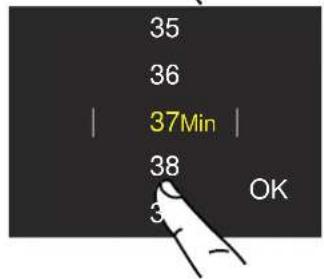
E) Scroll up / down to set the minutes and then press Ok.
3) Set ^ C / ^
This function allows the temperature to be displayed in Centigrade or Fahrenheit. The factory setting is in Centigrade.
4) Language
To set the language of the fridge, simply touch the settings button on the display.
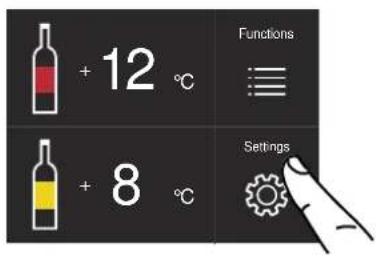
A) Home screen. Touch the Settings icon.
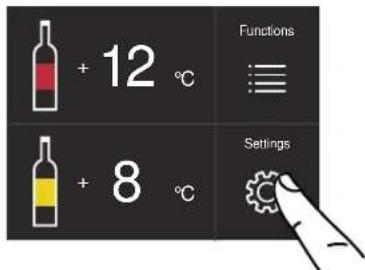
A) Home screen. Touch the Settings icon.
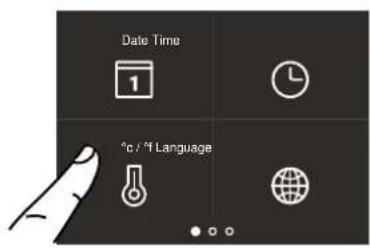
B) Touch the icon ^ C / F
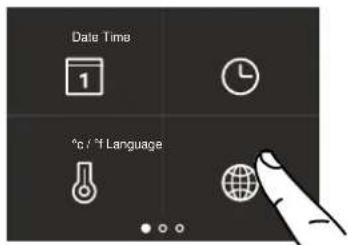
B) Touch the Language icon.
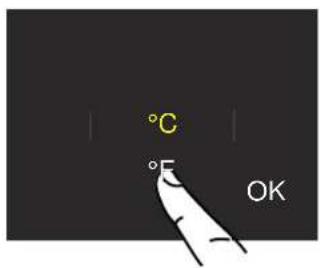
C) Scroll up / down to select either Centigrade or Fahrenheit degrees and press Ok.
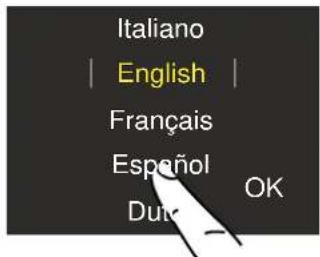
c) Scroll up / down to select the desired language and press Ok.
EN
6) Sabbath Mode
The function makes it possible to comply to certain religious observances requiring the operation of the appliance to not be affected by the opening or closing of the doors. The thermostatic control and inner lighting are deactivated.
7) Reset
It gives the possibility to restore the base settings that were set in the factory, cancelling all the changes that has been made from there onward.
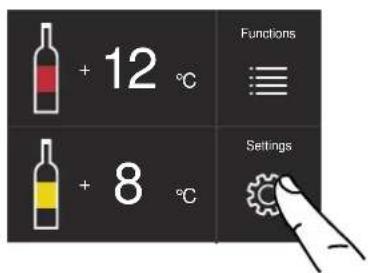
A) Home screen. Touch the Settings icon.
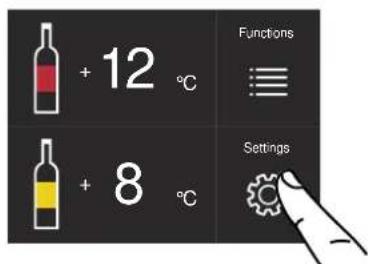
A) Home screen. Touch the Settings icon.
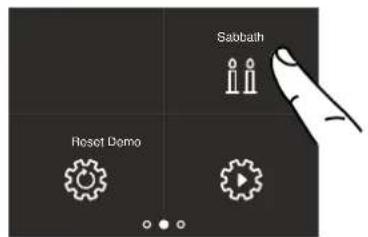
B) Scroll right once and touch the Sabbath icon.
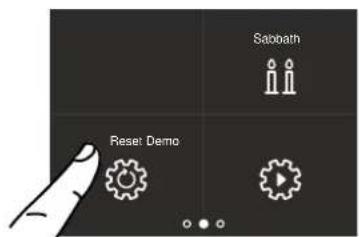
B) Scroll right once and toch touch the Reset icon.
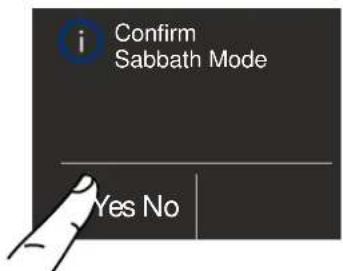
c) Touch the Yes button to confirm the Sabbath Mode.
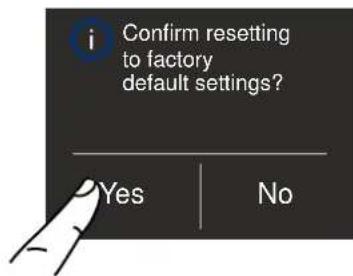
c) Touch the Yes button to to confirm the selection of the resetting of factory default settings.
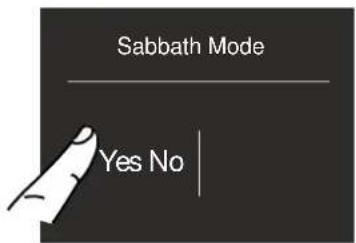
D) Touch the Yes button to activate the function.
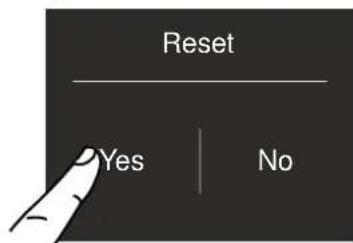
E) The wine cellar will work accordingly to this configuration.
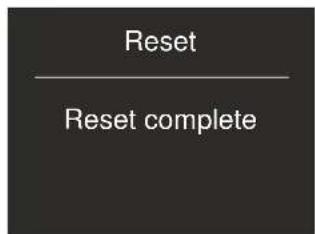
E) The reset has been performed. The wine cellar's factory settings have been restored.
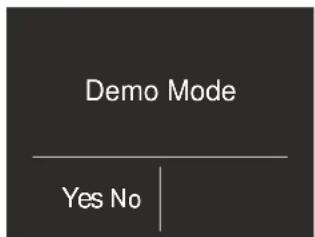
8) Demo Mode
It is possible to simulate the functioning of the wine column, for showroom display or for trade shows.
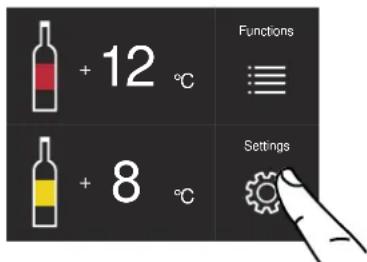
A) Home screen. Touch the Settings icon.
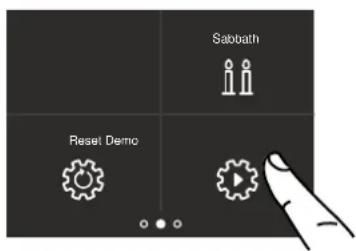
B) Scroll right once and touch Demo mode.
9) Maintenance (through alarm sign)
For the entire to function as designed, it is important to periodically clean the access toe-kick cover and the condenser. The default setting of the unit is "Warning disabled". Cleaning is recommended every 6 months. Audio and visual on display messages will serve as standard reminders. It is possible to disable the warning signal and see the time left before the next cleaning that has to be done.
For details see following pages.
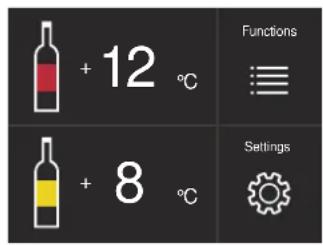
A) Home screen. Touch the Settings icon.
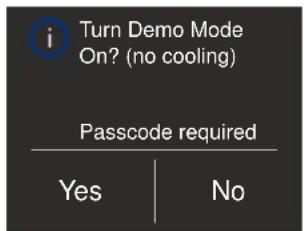
C) Touch Yes.
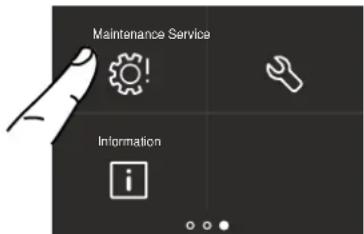
B) Scroll to the right twice and touch the Maintenance icon.
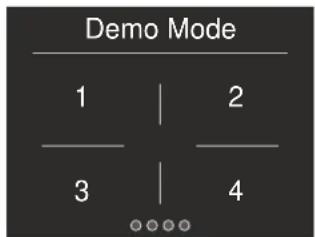
D) Insert the password for the activation.
Default password 1-2-3-4.
c) If you want to enable the warning, touch the icon reset.
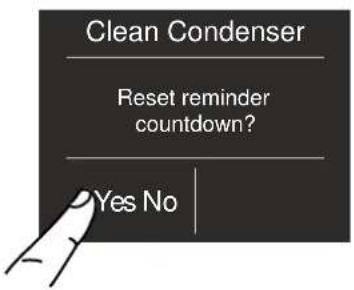
D) To enable it, touch the Yes icon.
If you want to disable the reminder, at step C touch Off, then touch Yes.
10) Service
The service function is reserved for the Bertazzoni assistance.
11) Info System
The Info System function shows the product data, for example the software code, serial number and the factory code of the of the wine cellar.
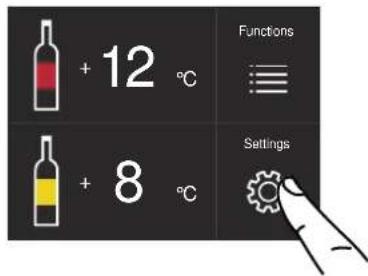
A) Home screen. Touch the Settings icon.
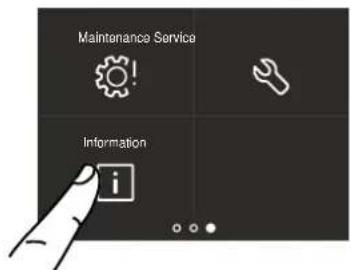
B) Touch the Information icon.
| Sk Power | HW: 0504 SW: 0518 |
| Sk User | HW: 1002 SW: 1069 - G1011 |
C) The display will show the data specific to the appliance.
6.1 Internal Layout (positioning, adjustment, removal)
Wine shelf
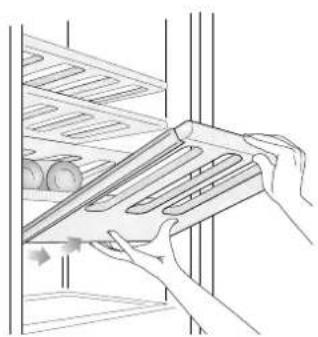
The shelves can be easily removed for cleaning. Remove the bottles, completely extract the shelf, tilt it upward until the wheels are detach from the side rails and extract it.
7.1 Interior lighting
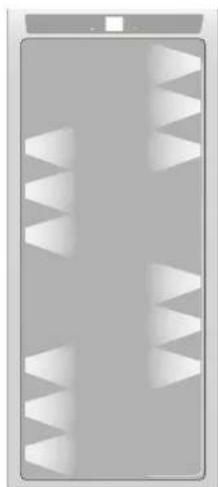
To provide optimum interior lighting, LED strips illuminate both compartments from the top and sets of LED lights directly illuminate different areas of both zones.
In case of malfunction and/or failure of the lighting system, you should contact an authorized Bertazzoni Service Agent.
8.1 General directions
Wine can be stored for extended periods of time, especially under the following conditions:
Suitable temperature without significant mid to long term temperature changes over time
Controlled level of humidity
Protection from light
Absence of vibrations
Absence of odours
Bottle kept horizontal.
All of these conditions are fully met in the Bertazzoni Wine Cellar.
8.2 Conservation temperature
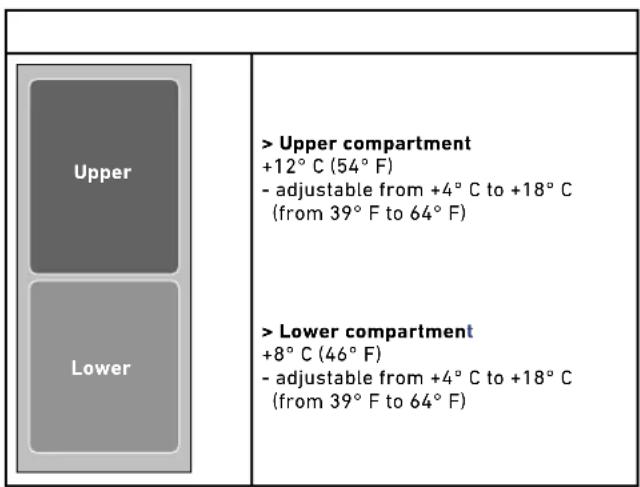
The space offered by the upper and lower compartments, allows conservation of your best wines at two different temperatures.
The two compartments are initially set to the following temperatures:
Upper compartment
+12° C (54° F) - adjustable from +4° C to +18° C (from 39° F to 64° F)
Lower compartment
+8°C (46°F) - adjustable from +4°C to +18°C (from 39°F to 64°F)
All the temperatures can be modified according to the characteristics of the wines and personal preferences. However, you should attempt to keep the temperature as constant as possible over time.
Rapid and large-scale temperature variations can in fact cause dilation of the liquid and early aging of the wine.
You should also avoid very low temperatures (below 4^ - 39^ ) which may lead to the formation of deposits and damage the aesthetic qualities of the wine.
All the compartments offer optimal conditions and take into account all these needs. It should however be noted that the upper compartment, in
particular, is thermostatically controlled in a very precise manner and ensures the utmost care and attention over time of your most prized bottles. When the upper compartment is set below +12^ C (54^) the lower compartment must not be set beyond +10^ C (50^) .
8.3 Time of conservation
Improvement of wine over time and its duration usually depends on the character of the variety and its type. The following chart shows the best period of conservation and aging for various types in ideal conservation conditions offered by your appliance.
However, you should always follow the instructions of the winemaker, especially for fine wines.
| TYPE OF WINE CONSERVATION TEMPERATURE TIME OF CONSERVATION | |
| New wines (Vin Nouveau) da 12° a 14°C 6 months | |
| Sweet sparkling wines da 8° a 10°C 1 year | |
| Rosé da 10° a 14°C 1 year | |
| Semi-sparkling wines da 10° a 12°C 1-2 year | |
| Normal white wines da 10° a 14°C 1-2 year | |
| Light red wines da 12° a 14°C 2 year | |
| Dry sparkling wines da 8° a 10°C 2 year | |
| Classic sparkling wines da 8° a 10°C 3-4 year | |
| Barrique and Vigorous white da 8° a 12°C 3-5 year | |
| Normal red wines da 14° a 16°C 3-5 year | |
| Barrique and Vigorous red wines | da 14° a 18°C 7-10 year |
| Straw wines or Liquorous wines | da 16° a 18°C 10-15 year |
8.4 Consumption temperature
As a general rule, white wines should be served at a temperature between 10 and 12^ (50 and 54^ ) and red wines between 12 and 14^ (54 and 57^ ).
Some wines may however be best enjoyed at higher or lower temperatures.
You should also keep in mind that, during the summer, wine is generally enjoyed at lower temperatures than during the winter.
You should also consider the following:
White wines
White wines are normally not served at high temperatures, since they are generally more acidic that red wines and not very tannic. Therefore they are more enjoyable at low temperatures.
It is preferable to serve these wines between 10^ and 14^ (50°F and 57°F). Young, fresh and aromatic wines can also be served at 10^ (50°F), while less aromatic ones are served at 12^ (54°F).
Temperatures between 12^ and 14^ (54°F and 57°F) are for soft, mature white wines that have been aged for some years in the bottle.
Higher temperatures would favour the exaltation of the sweet character of the wine, at the expense of the acidity and flavour, which are considered pleasant and desirable characteristics of this type of wine.
Rosé
Rose wine is served at the same temperature as white wines. It should be noted that these wines may include a certain amount of tannin and may therefore be preferable at higher temperatures. Therefore, they are served between 10^ and 12^ (50°F and 54°F), if young and fresh, and between 12^ and 14^ (54°F and 57°F) if robust and mature.
Due to the special processing they undergo, new vintage wines contain a low tannin content and are therefore more enjoyable if served between 12^ and 14^ (54 and 57^ ).
Red wines
Since they contain more tannin and are less acidic, red wines are normally served at higher temperatures.
Younger wines with less tannin are normally served between 14^ and 16^ (57 and 61^ ), while more full-bodied ones that are more tannic may be served at up to 18^ ( 64^ ). Some wines that have aged for years in the bottle, still full-bodied and tannic, may be served at 18^ ( 64^ ) or even 20^ ( 68^ ).
Young red wines with little tannin and slightly structured may be enjoyable at lower temperatures, between 12^ and 14^ (54 and 57^ ).
Sparkling wines
It is difficult to provide instructions to cover the wide variety of sparkling wines available.
As a general rule, sweeter and more aromatic sparkling wines should be served at lower temperatures, down to 8^ (46^) , whereas more tannic sparkling wines may be served at higher temperatures, up to 14^ (57^) .
Dry sparkling wines are usually served between 8^ and 10^ (46 and 50^ ).
"Classic" sparkling wines are normally served at these temperatures, which may be as high as 12^ C (54^) for sparkling wines that have been aged for some time.
It is however advisable, especially for finer wines, to follow the suggestions and recommendations of the winemaker on the bottle.
These types of wines can be served at temperatures between 16^ and 18^ (61 and 64^ ), depending on personal tastes, to attenuate the sweet taste of straw wines, it can also be served at 10^ ( 50^ ).
8.5 Position of bottles
The sliding shelves are made of fine wood and contoured so as to hold bottles of the most classical traditional shape or of the most modern design.
Whether your collection holds fine bouteilles or petit bouteilles, they will be right at home in the Bertazzoni Wine Cellar.
You can store Magnum bottles on the top shelf of both the lower and upper compartments. Alternatively, Magnum bottles can be stored in other positions, but, in this case, you need to remove the shelf just above the one that will hold them.

Warning
After a prolonged interruption of electrical power, once the electrical power is reactivated, an audible signal will indicate if the temperature has been raised above normal levels. In addition to this the display will show for one minute the highest temperature detected inside the compartments, to allow the user to decide how to better use the food items. After one minute the display will resume normal operation, while the Alarm button will continue to blink.
Press the Alarm button to display the highest recorded temperatures.
9.1 Care and Cleaning
To clean the parts made of steel use a microfiber cloth and the sponge provided in the kit with the appliance. Always use the cloth and sponge in the direction of the steel's satin finish.
Every now and then, to polish the steel, wipe with a slightly damp microfiber cloth.
Do not use the sponge on aluminium parts, such as the handles and the profiles of the glass shelves.
You should use special care to keep the ventilation openings in the appliance or in the cabinet that houses it free of obstructions.

Note
Carefully follow the detailed directions that can be found in the provided kit and never use abrasive or metallic products which could scratch and damage the satin finishing on the appliance permanently.
Before performing any sort of cleaning, disconnect the appliance from the electrical power supply.
Make sure you do not damage the refrigerant circuit in any way.

Warning
Do not use chlorine-based detergents or cleaning agents.
9.2 Cleaning of the toe kick cover, filter and condenser
The unit requires, for a correct operation, the cleaning of the toe kick cover, filter and condenser.
It is recommended to perform the following cleaning steps very 6 months. An audio and visual message on the display will serve as a reminder. It is possible to disable the warning signal and see the time left before the next cleaning has to be done.
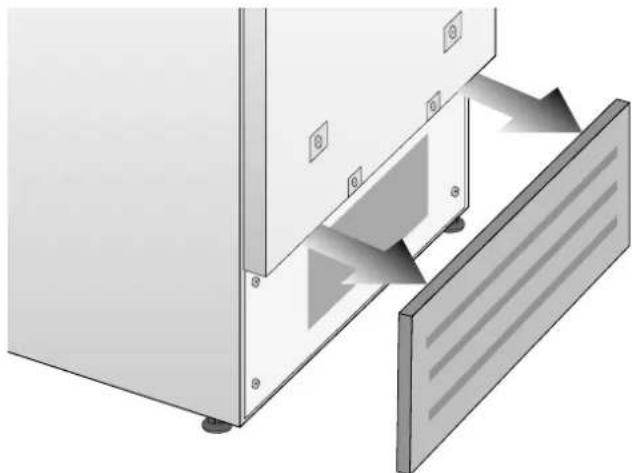
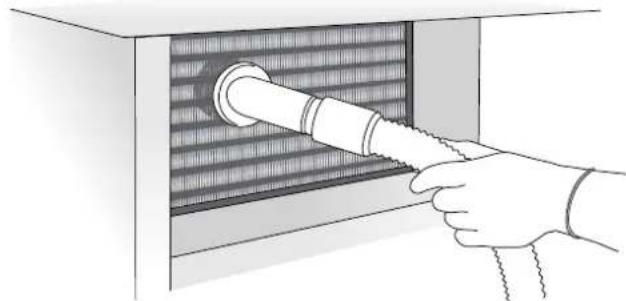
Behind the frontal toe kick cover is the condenser. To clean it use a vacuum cleaner with a soft brush attachment at maximum power, sweeping it along the vent slits. In case of a significant dust build up, the toe kick cover can be removed to allow a more accurate cleaning of the filter.
On the maintenance settings, after the installation of the unit and after it has been turned on, you can set the condenser cleaning warning.
In the case the warning sign is enabled, there will be an audible signal every 6 months, alerting that it is time to clean the condenser.
After cleaning it, touch the reset icon in order to reactivate the warning signal in 6 months.
If you do not want the cleaning signal alert for the condenser, touch the Off icon.
Lower condenser
For cleaning the condenser follow the instructions:
Switch off the appliance by pressing the Unit button on the main control panel for approx 3 seconds.
Wait approx 30 minutes, until the finned condenser cools down to room temperature.
Remove the removable grille under the door.
Clean it thoroughly of any dust build up as shown in the picture, taking care not to damage the condenser.
Restart the unit again, pressing on the unit button for three second.

Warning
The edges of the condenser are sharp, therefore use adequate protection for hands and arms when cleaning the condenser.
9.3 Internal cleaning
Clean the internal and removable parts by washing them with a solution of lukewarm water and a small amount of dishwashing detergent.
Rinse and dry right away.
Do not use mechanical devices or other methods to speed up defrosting.

Warning
Do not use water on the electrical parts, lights and control panel.

Warning
The use of chlorine-based detergents or similar that contains it should be avoided (bleach, hypochlorite, etc).

Note
Do not bring cold glass parts into contact with boiling water.
Do not wash any parts of the wine column in a dishwashing machine since this could damage or irreparably deform the parts.
10.1 Troubleshooting guide
If you notice malfunctions in your appliance, use this guide before calling Service. This guide may help you resolve the problem yourself or could provide important information to ensure rapid and effective service.
Malfunction message
A malfunction is usually indicated on the display. Problems that cannot be resolved by the user are signalled through a malfunction code.
The appliance does not work
Is the appliance connected to the electrical power supply?
Does electrical power arrive at the electrical socket?
Is the Unit key activated?
Is the condenser clean?
The internal temperatures are higher than normal
Does the display show a malfunction code?
Is the temperature adjusted correctly?
Is the condenser clean?
Were the doors or drawers open for a long period of time?
The appliance remains in function for a long time period
Bear in mind that during a very hot weather and with very high temperatures in the room it is normal that the compressor remains in operation for prolonged periods of time.
Were the doors or drawers open for a long period of time?
Is the condenser clean?
Check that the doors are closed and that the food or containers do not obstruct the perfect closure of the door.
If you hear strange noises
It is normal to hear noise from the fans or compressors during the defrost phase.
Noise could be louder depending on the position of the appliance and the surrounding environment.
Condensation forms both inside and out
If the climate is very humid, the formation of condensation is normal. Opening the door or
drawers for prolonged periods of time can contribute to the formation of condensation.
In any case, make sure that the doors are always completely closed.
The doors are difficult to open
The appliance was designed to permit hermetic closure.
When the door is closed, a vacuum situation can occur: in this case it is necessary to wait a few seconds until the pressure balances before opening the door.
10.2 Malfunction indications appearing on the display
| Display message Malfunction description | |
| Power Failure | Prolonged interruption of electrical power The appliance starts up again automatically and indicates the highest recorded temperatures. |
| Door open | Door open this message appears few minutes from the door opening. |
| Upper or lower zone too warm | See the troubleshooting guide. |
| Upper or lower zone too cold | Wait 12 hours. If the problem persists, contact Customer Care. |
| Error Code... | Functional problems call Customer Care who may help you to salvage the problem or put you in contact with the nearest Service Agent may help you solve the problem. |
| Check condenser | Check Condenser Every 6 months the display shows the message “Check Cond”, clean the condenser and follow the instructions above about how to clean the condenser. |
In case of errors, touch the button Alarm 4 and the display will show the error message with its error number code.
The message will be shown for 3 seconds, then it will go back to the home screen.
For blocking the message on the screen, press on the display, the button info ( i ). The message will be on the screen for 30 seconds, then it will go back to the home screen.
In the case there is more than one error message, the dispay will show in time sequence the different error messages.
1 INSTRUCTIONS IMPORTANTES EN MATIÈRE DE SECURITÉ ET POUR L'ENVIRONNEMENT 2
This function enables to set the humidity of the upper and lower compartments. The default setting is set to "Medium".
5.1 Fonctions
Compartment supérieur
- compartmento superior
+12°C(+54°F)
- compartmento inferior
+8°C(+46°F)
0 GIDS VOOR PROBLEEMOPISSING 28
in Spanje https://universal.bertazzoni.com/more/care-service
in Nederland https://nl.bertazzoni.com/zorg-enservice
in Zweden https://se.bertazzoni.com/more/careservice
in Denemarken https://dk.bertazzoni.com/more/care-service

Belangrijk
risk for brand/brandfariga material.

Viktigt
4 TENDING OG SLUKNING AF APPARATET 16
Dorene ersvare at abne
- Importante
- INSTALLATION 6
- BEFORE STARTING 7
- APPLIANCE SWITCHING ON AND OFF 10
- FUNCTIONS AND SETTINGS 15
- INTERNAL LAYOUT 22
- LIGHTING 22
- WINE STORAGE 23
- CARE AND CLEANIG 26
- TROUBLESHOOTING GUIDE 28
- For your safety
- Important information when using the appliance
- Note
- Important
- Warning
- Caring for the environment
- Power voltage Danger of electrocution
- Plastic packaging Danger of suffocation
- Information for control bodies
- To save energy
- Installation
- Connection to the electrical power supply
- Refrigerant
- Know your appliance
- Main components
- Electronic Control
- Main control panel
- On/Off
- Home
- Alarm
- Back
- Turning the appliance on and off
- First time starting the unit
- Switching off upper and lower compartments.
- Shutdown
- Turning the upper and lower compartments on again
- Restart the compartments.
- Switching off for long periods
- How to adjust the temperature for different requirements
- Modify the temperatures compartment
- Padlock icon
- Information signals of warning messages on the display
- Wine Cellar temperatures
- INFORMATION FOR USING THE DISPLAY
- 1) Humidity Control
- Functions
- 2) Interior light for 12h
- Settings
- 1) Date
- 2) Time
- 3) Set ° C / °F
- 4) Language
- 6) Sabbath Mode
- 7) Reset
- 8) Demo Mode
- 9) Maintenance (through alarm sign)
- 10) Service
- 11) Info System
- Internal Layout (positioning, adjustment, removal)
- Wine shelf
- Interior lighting
- General directions
- Conservation temperature
- Time of conservation
- Consumption temperature
- White wines
- Rosé
- Red wines
- Sparkling wines
- Position of bottles
- Care and Cleaning
- Cleaning of the toe kick cover, filter and condenser
- On the maintenance settings, after the installation of the unit and after it has been turned on, you can set the condenser cleaning warning.
- Lower condenser
- For cleaning the condenser follow the instructions:
- Internal cleaning
- Troubleshooting guide
- Malfunction message
- The appliance does not work
- The internal temperatures are higher than normal
- The appliance remains in function for a long time period
- If you hear strange noises
- Condensation forms both inside and out
- The doors are difficult to open
- Malfunction indications appearing on the display
- INSTRUCTIONS IMPORTANTES EN MATIÈRE DE SECURITÉ ET POUR L'ENVIRONNEMENT 2
- Fonctions
- GIDS VOOR PROBLEEMOPISSING 28
- Belangrijk
- Viktigt
- TENDING OG SLUKNING AF APPARATET 16
- Dorene ersvare at abne
Brand : BERTAZZONI
Model : WC605BRX2T
Category : Refrigerator