Principia - Loudspeaker Sonus Faber - Free user manual and instructions
Find the device manual for free Principia Sonus Faber in PDF.



| Brand | Sonus Faber |
| Model | Principia (1, 3, 5, 7, Center) |
| Product type | Passive speaker |
| Series | Principia |
| Recommended use | Stereo, home theater, multichannel |
| Connection | Terminals for spade, banana, bare wire (single-wiring, bi-wiring, bi-amping) |
| Included accessories | Spikes, spike bases, silent blocks, screws, caps, dust covers, instruction manual |
| Cabinet material | Wood |
| Maintenance | Clean with a soft, slightly damp cloth; avoid heat, sun, and sharp objects |
| Safety | Do not expose to water, do not place magnetic objects nearby, avoid strong electromagnetic fields |
| Warranty | According to the regulations of the country of purchase |
| Compliance standards | 2014/30/EU (EMC), 2011/65/EU (RoHS), 2012/19/EU (WEEE), NF EN 60065, NF EN 55013, NF EN 55020, NF EN 61000-6-1, NF EN 61000-6-3 |
| Manufacturer | Sonus Faber SpA, Via Antonio Meucci 10, 36057 Arcugnano (VI), Italy |
| Customer service | customerservice@sonusfaber.com |
Frequently Asked Questions - Principia Sonus Faber
User questions about Principia Sonus Faber
0 question about this device. Answer the ones you know or ask your own.
Ask a new question about this device
Download the instructions for your Loudspeaker in PDF format for free! Find your manual Principia - Sonus Faber and take your electronic device back in hand. On this page are published all the documents necessary for the use of your device. Principia by Sonus Faber.
USER MANUAL Principia Sonus Faber
Thank you and congratulations for having purchased speakers from our PRINCIPIA Collection for listening to your favourite music or for audio-video use.
The speakers of the PRINCIPIA Collection are designed to immediately meet your highest expectations. As our aim is to ensure you get the best possible listening result in full safety, please read this instruction manual carefully before installation.
If you have any doubts or if you simply would like to know more, please consult the technical staff at your sales point or contact Sonus faber writing to customerservice@sonusfaber.com.
Finally, we highly recommend that you register your speaker online at www.sonusfaber.com.
Enjoy your music!
Verehrer Kunde,
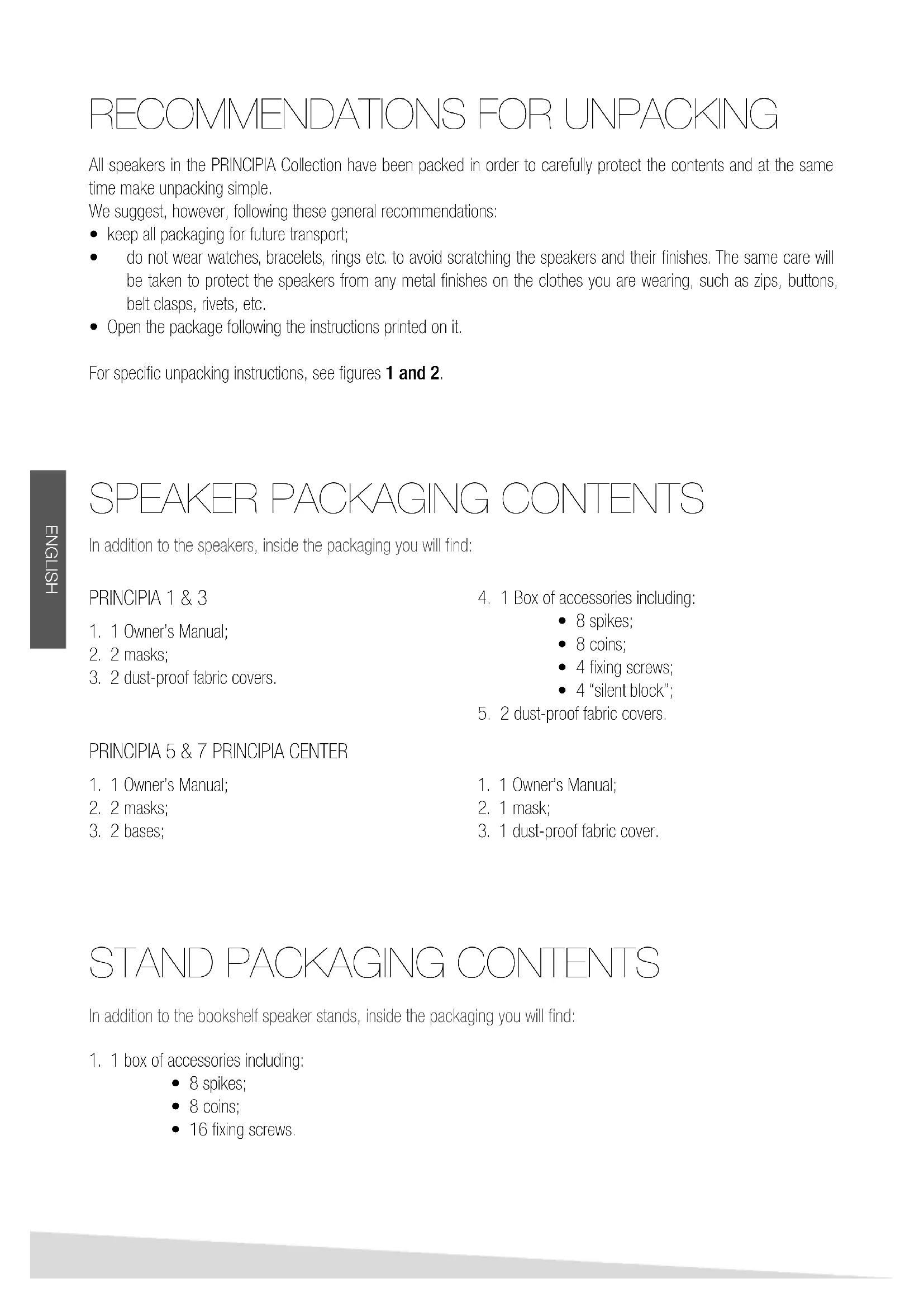
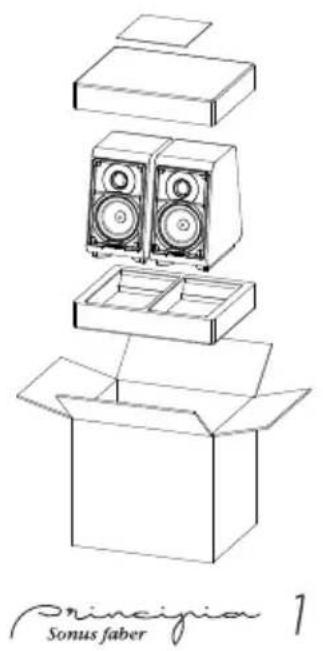
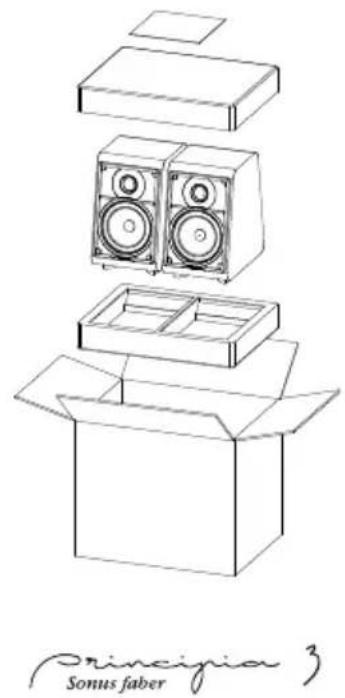
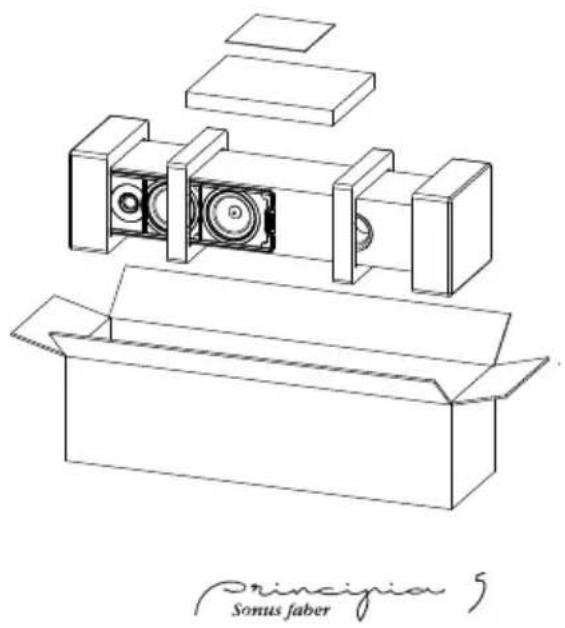
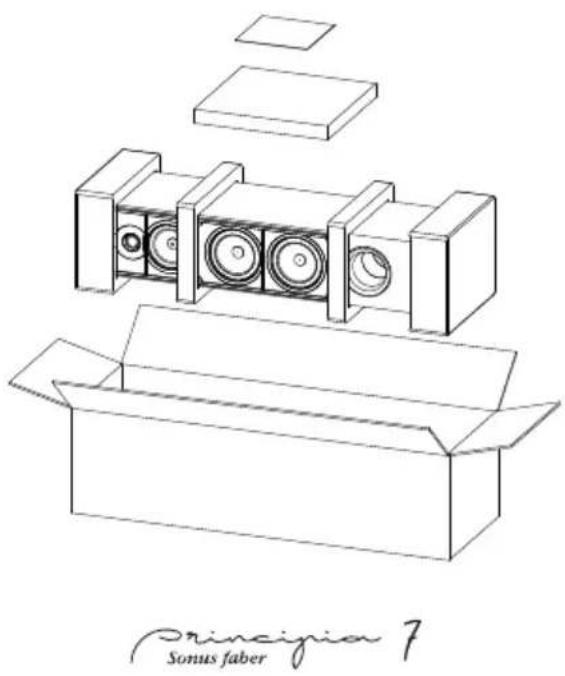
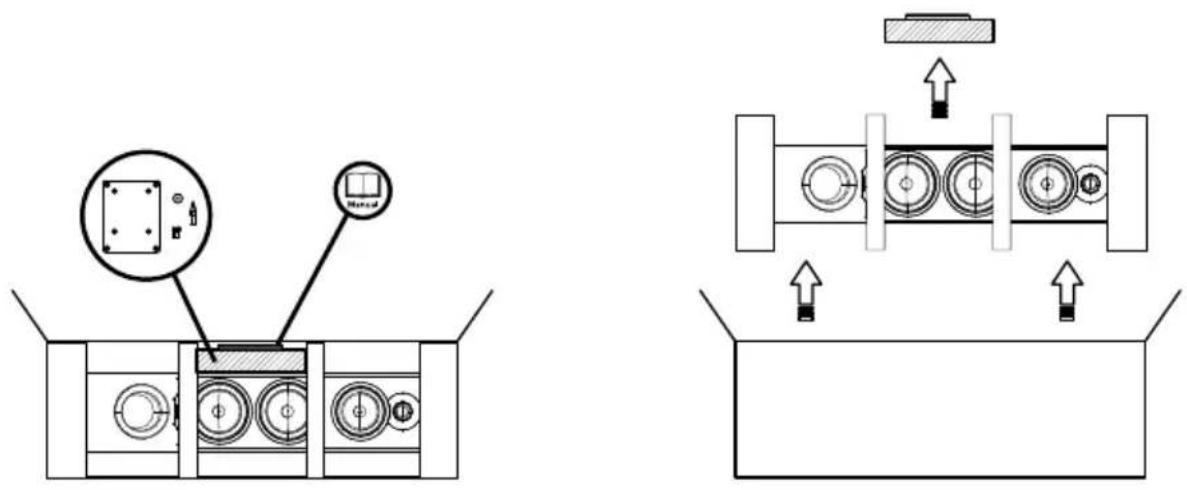
All speakers in the PRINCIPIA Collection have been packed in order to carefully protect the contents and at the same time make unpacking simple.
We suggest, however, following these general recommendations:
- keep all packaging for future transport;
- do not wear watches, bracelets, rings etc. to avoid scratching the speakers and their finishes. The same care will be taken to protect the speakers from any metal finishes on the clothes you are wearing, such as zips, buttons, belt clasps, rivets, etc.
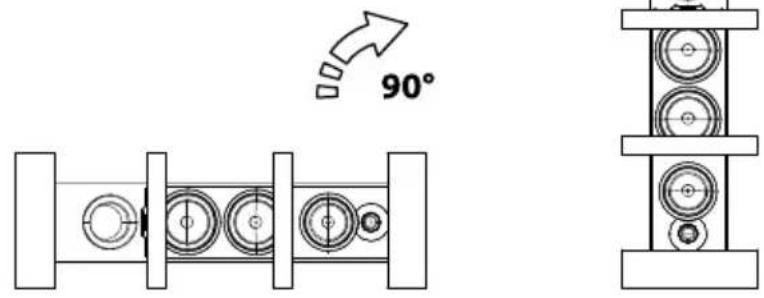
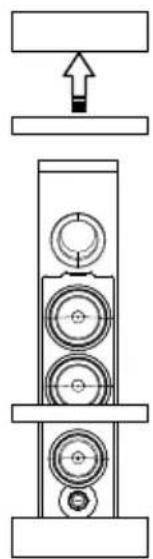
- Open the package following the instructions printed on it.
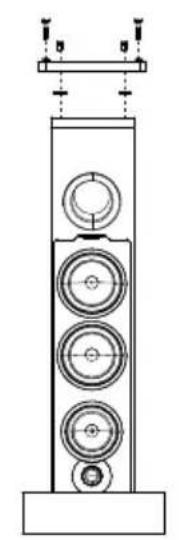
For specific unpacking instructions, see figures 1 and 2.
SPEAKER PACKAGING CONTENTS
In addition to the speakers, inside the packaging you will find:
PRINCIPIA 1 & 3
- 1 Owner's Manual;
- 2 masks;
-
2 dust-proof fabric covers.
-
1 Box of accessories including:
8 spikes;
8 coins;
4 fixing screws;
- 4 "silent block";
- 2 dust-proof fabric covers.
PRINCIPIA 5 & 7 PRINCIPIA CENTER
- 1 Owner's Manual;
- 2 masks;
-
2 bases;
-
1 Owner's Manual;
- 1 mask;
- 1 dust-proof fabric cover.
STAND PACKAGING CONTENTS
In addition to the bookshelf speaker stands, inside the packaging you will find:
- 1 box of accessories including:
8 spikes;
8 coins;
16 fixing screws.
ASSEMBLY
Follow the indications below for the model you have.
PRINCIPIA 1 & 3 PRINCIPIA 5 & 7
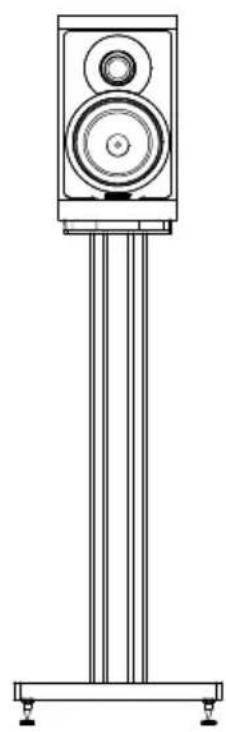
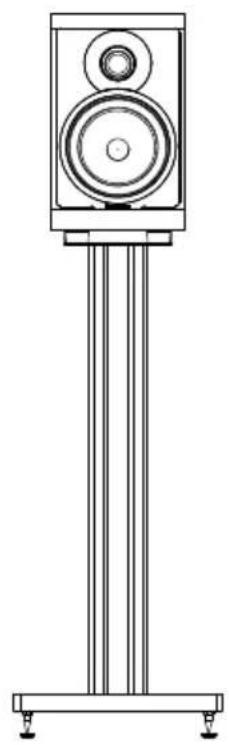
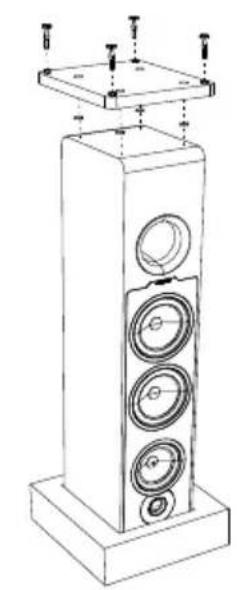
If you are using one of these bookshelf models with their specific stand, please read carefully the relevant assembly instructions and then the instructions for mounting the speaker on the stand (see fig. 3).
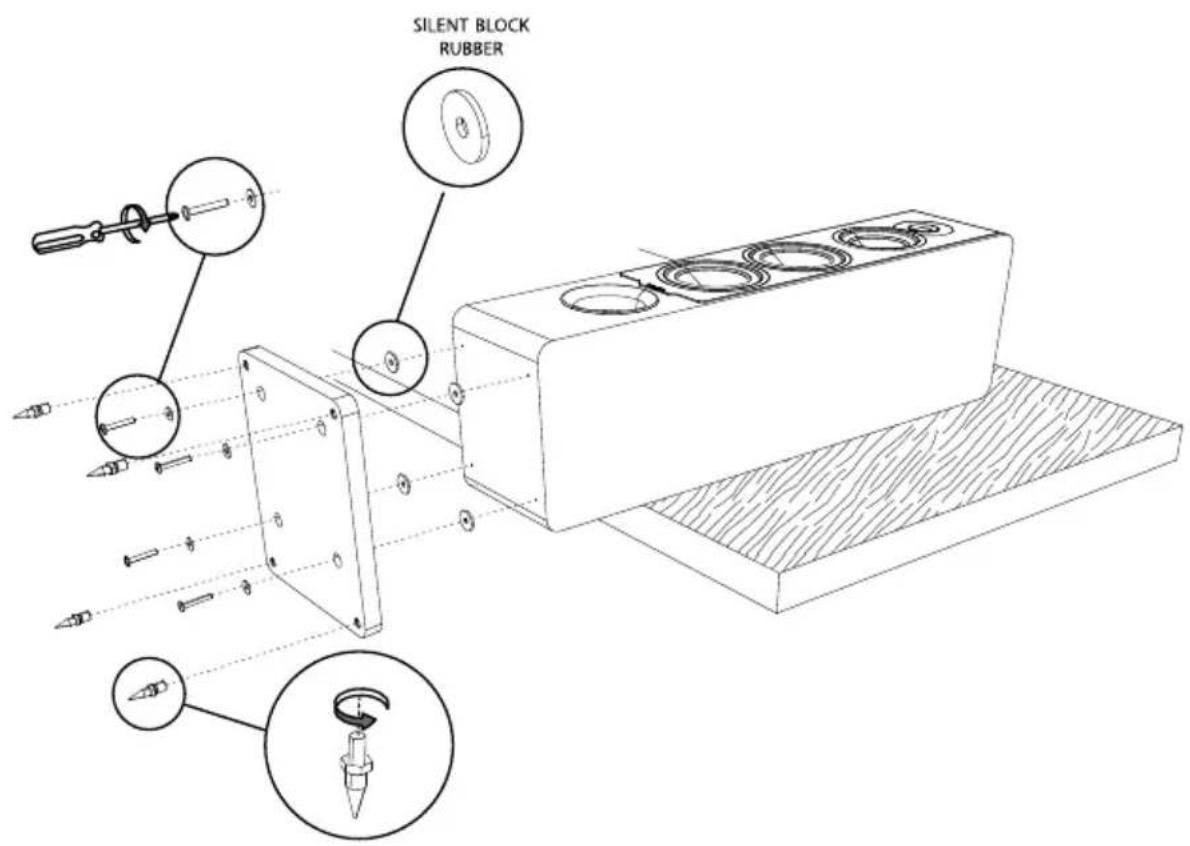
When assembling the base and spikes at the base of these floor-standing models, please follow the instructions shown in fig. 4 carefully.
PRINCIPIA CENTER
The PRINCIPIA Center model is designed to be simply placed on a dedicated surface.
CONNECTION INSTRUCTIONS
This operation must be carried out with all equipment switched off!
The connecting clamps that accept connection with spade connectors, bananas and with the bare cable are on the rear panel of each speaker.
There are 4 terminals on the PRINCIPIA 7, 5, 3 and 1 models which means that connection can be carried out in three ways:
MONO-WIRING BI-AMPLIFICATION
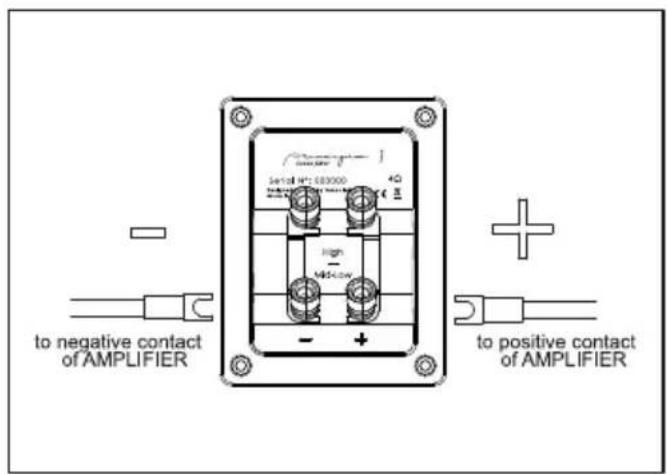
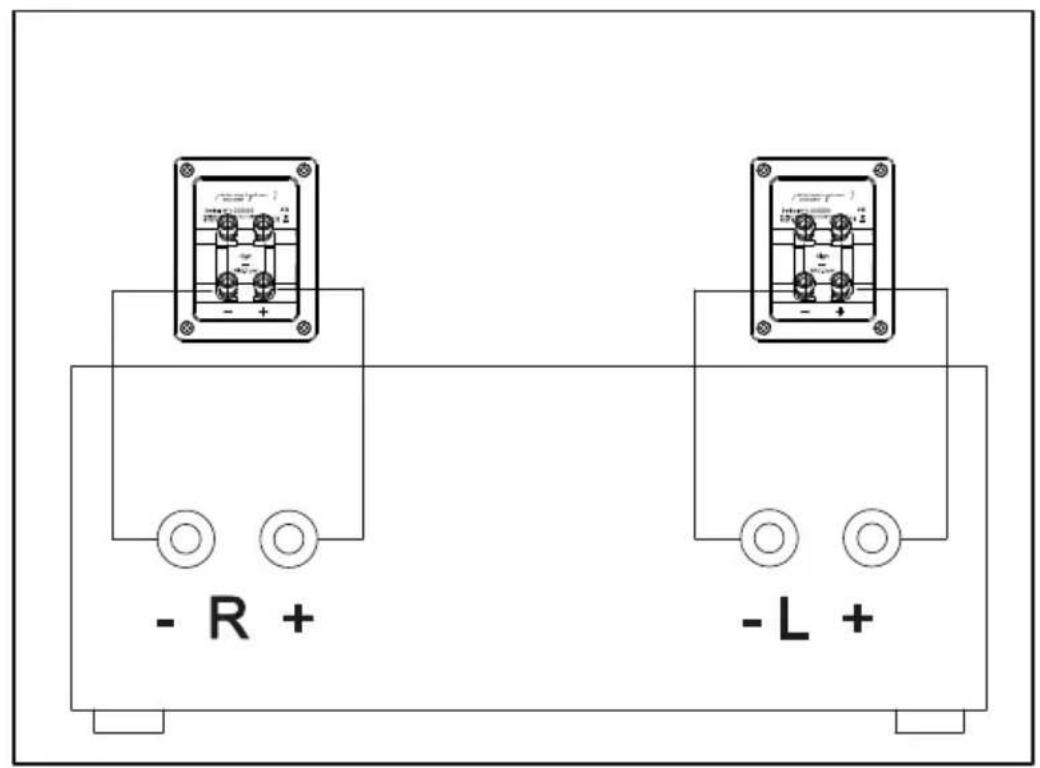
The terminals are to remain connected to each other through bridges; connect one speaker to the output terminals of the right channel of the amplifier, and the other speaker to the output terminals of the left channel of the amplifier, following the correct polarity as shown in fig. 5 and 6.
BI-WIRING
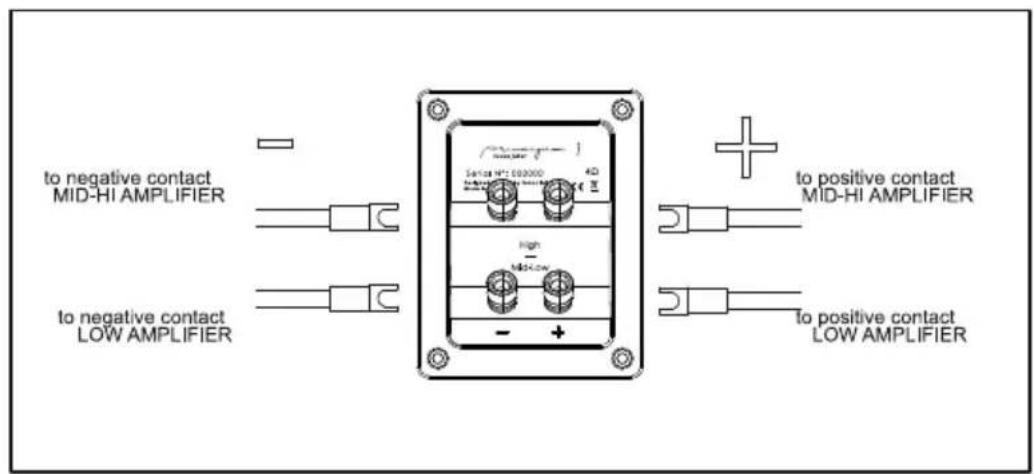
The purpose of this type of connection is to enhance general reproduction quality, and in particular the bass frequencies. This requires two pairs of power cables used as follows: remove the connections between the terminals (bridges), connect each pair of terminals separately to the amplifier as shown in fig. 7 and 8.
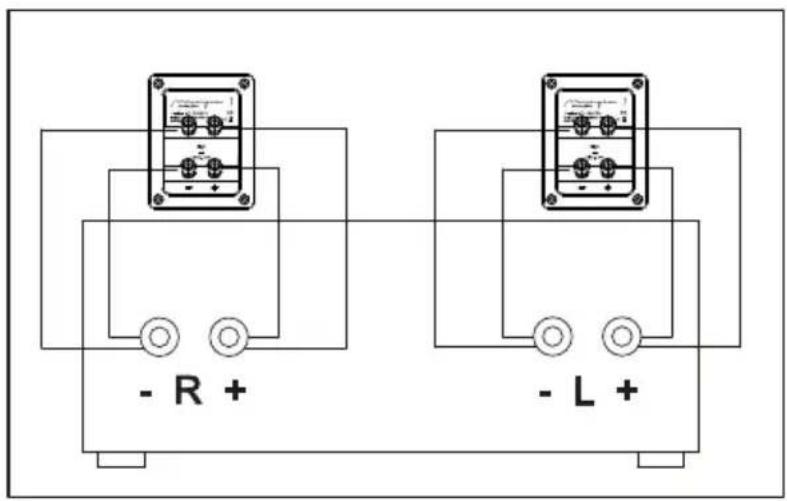
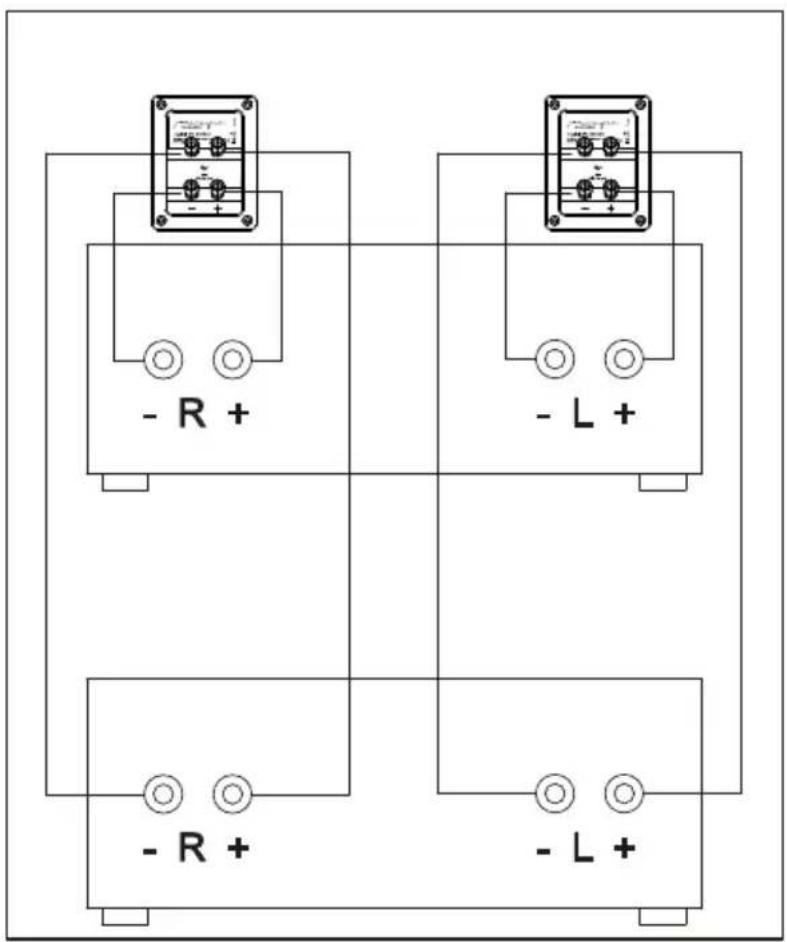
Bi-amplification improves the reproduced sound in a general manner, and in particular gives greater dynamics and control of the bass frequencies. It requires two stereo amplifiers and two pairs of power cables and the connections between the speaker terminals must be removed. One amplifier is used to amplify the high frequencies (right and left channels), and is connected by a pair of power cables to the terminals dedicated to the high frequency drivers.
The second amplifier is used to amplify the bass frequencies (right and left channels), and is connected by a pair of cables the terminals dedicated to the bass frequency drivers. See fig. 9.
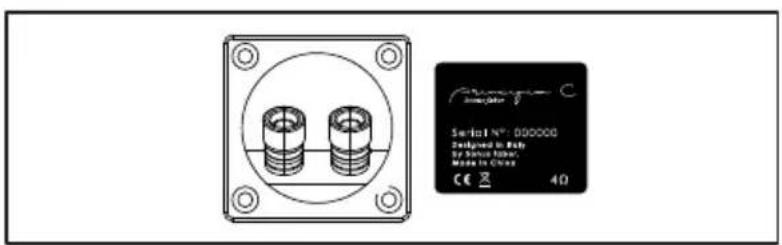
The PRINCIPIA Center model features two connection terminals; the type and mode of connection is as shown in fig. 10.
Finally, the accurate tightening of the contacts and a periodic check of these contributes to improved performance.
INSTALLATION RECOMMENDATIONS: IN THE LISTENING ENVIRONMENT
Sonus faber's PRINCIPIA Collection speakers were designed to be easily driven by the amplifier, and just as easy to integrate into the listening environment.
The high structural rigidity, front positioning of the reflex channel for the floor-standing models and angle of the speaker for perfectly positioning the drivers are design solutions that make the interaction of the speaker with the listening environment smoother and afford great and immediate satisfaction in listening without requiring special attention and adjustments.
For those who wish to obtain the best possible performance, these suggestions may be useful:
- The PRINCIPIA 1 and 3 stand models are recommended for small listening environments. The PRINCIPIA 5 and 7 models are excellent for larger listening environments. Should you wish to set up a multi-channel or home theatre system, the perfect solution is to combine the aforementioned models with the PRINCIPIA Center central channel.
IMPORTANT: If the PRINCIPIA 1 and 3 models are used without their stand and placed directly on a shelf or piece of furniture, we highly recommend making sure that the entire base of the speakers rests on the surface. The lower reflex port needs to rest completely on a smooth surface to ensure proper reproduction of low frequencies.
- The choice of the listening room and the speaker position influence the performance of the whole system. A room with an irregular shape is preferable; this type of room improves the response in the environment because it limits the formation of standing waves;
- Rugs and curtains (without exaggerating) positively influence the acoustic response, because they contribute to absorbing reflections and standing waves that are created in the listening room.
- There are no hard and fast rules for every environment. A good approach to the problem,
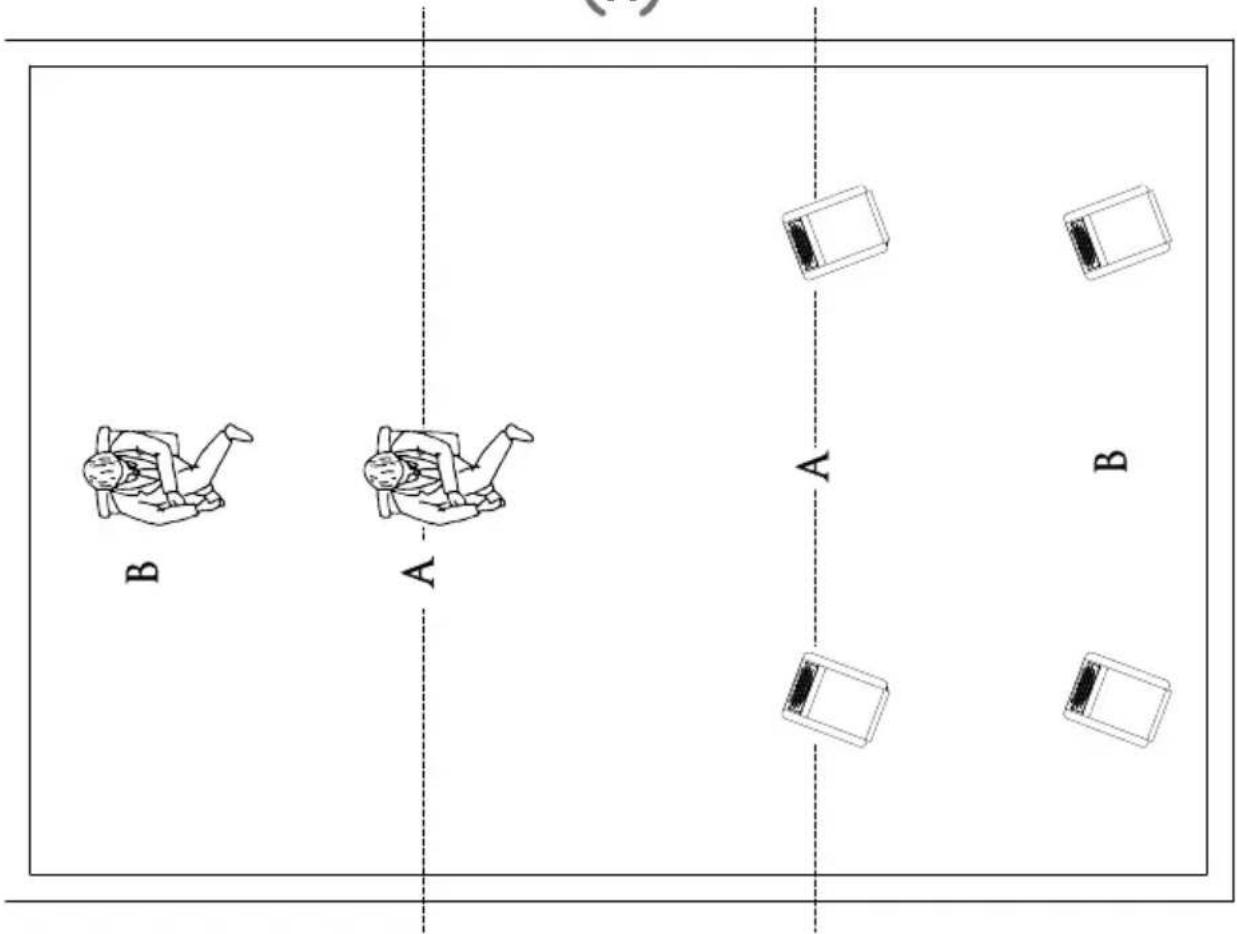
however, is to virtually divide the listening environment into three equal parts, as shown by the broken lines in fig. 11. At this point, position the speakers on the first of these lines and well away from the side walls. The listening position should be placed on the other line, as shown in fig. 11/A. This will ensure a good amount of air all around the subjects involved in the stereo reproduction, because the speakers can work freely while the listener is shielded off from the acoustic reflections that generate near the walls and corners of the room. Fig. 11 also shows how the speakers should be angled to converge towards the listening point, so creating the typical 'isosceles triangle' configuration. This final adjustment, consisting of angling the speakers literally towards the ears of the listener, greatly improves the focus of the stereophonic image.
- We are aware that many of our customers will not be able to create these quasi-ideal listening conditions because of objective problems connected with the organization of spaces and furniture in the home environment; we therefore advise positioning the speakers away from room corners and keeping them at a distance of 70 - 80~cm min. from the side and back walls. Keeping a distance of 150-250 cm between the speakers improves stereo reproduction.
HOMETHEATRE AND MULTI-CHANNEL SYSTEMS
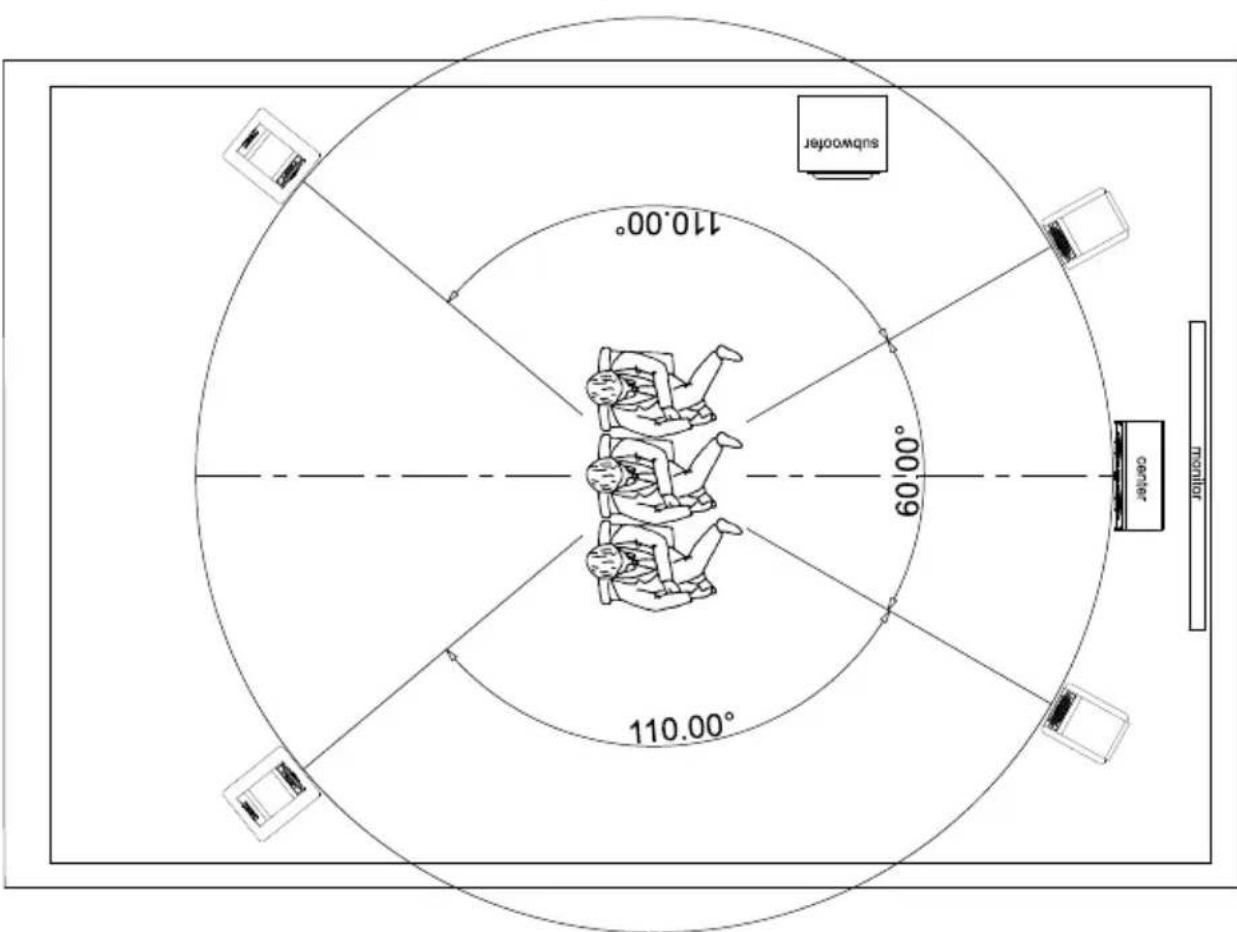
In addition to being used for traditional stereo listening, our speakers can also be used with home theatre and multi-channel systems. Considering the aforementioned placement suggestions for the main channel speakers (front), those for the rear channels should be positioned as shown in fig. 12, with the center speaker exactly in line with the vertical axis passing through the center of the video screen (either above or below it). The subwoofer can be positioned nearly anywhere in the room, although we recommend avoiding the corners.
For additional suggestions on the best setup, we advise reading the indications supplied with your amplification system.
MAINTENANCE
The speakers do not require any special maintenance other than periodic general cleaning. We recommend using a soft, slightly moistened cloth to clean the wooden part of the cabinet. Any dust on the drivers must be removed using a soft paintbrush, being very careful not to damage their delicate membranes, in particular those of the tweeter.
Wood is a natural, living material that can be affected by environmental conditions. We advise keeping the speakers distant from heat sources or windows, in particular during the summer months.
We advise keeping the speakers away from direct sunlight. These simple guidelines will help to keep your speakers perfect for many years.
WARRANTY
The PRINCIPIA Collection speakers have been designed and built following the highest quality standards.
In spite of this, should a fault or malfunction occur, the speakers you have purchased are covered by Warranty according to the regulations in force in the country in which they were purchased. Should such an event occur, please contact the Sonus faber Dealer where the speakers were purchased and refer to the aforementioned regulation.
For your benefit, please note the following:
- keep the document that proves purchase in order to show it to the retailer if necessary;
- return speakers in need of repair in their original packaging to your dealer in order to transport them safely to an authorised Service Center, together; with a description of the malfunction or defect;
- the warranty covers the speakers for any construction defects as long as they have not been disassembled, modified, tampered with or used for purposes or in ways that have not been provided for in this manual.
| PRINCIPIA 1 | |
| Loudspeaker System 2 way standmount bookshelf vented box | |
| Tweeter | 29 mm high definition precoated fabric dome drive Bonus faber design. |
| Midrange - | |
| Midwoofer | 1x150 mm. Free compression basket design and PP cone. Ultra dynamic performance and linearity. Bonus Faber design. |
| Woofer - | |
| Passive radiator - | |
| Crossover points 2.500 Hz | |
| Frequency Response 50 Hz – 25.000 Hz | |
| Sensitivity (2.83V/1m) 87 dB SPL | |
| Nominal impendence 4 Ohm | |
| Suggested Amplifier Power Output | 30W – 150W without clipping |
| Long-term max input voltage (IEC-268-5) 20V rms | |
| Dimensions HxWxD (mm) 320x175x280 | |
| Optional dedicated stand HxWxD (mm) 725x306x370 | |
| Total dimensions HxWxD (mm) 1040x306x370 | |
| Weight (kg/each) | 5 |
PRINCIPIA 3 PRINCIPIA 5 PRINCIPIA 7 PRINCIPIA CENTER
| 2 way standmount bookshelf vented box | 2 way floorstanding vented box | 3 way floorstanding vented box | 2 way closed box with passive radiator |
29 mm high definition precoated fabric dome driver. Sonus Faber Design.
| 1x150 mm. Free compression basket design and thermo-mouldered polypropylene cone (PP). Ultra dynamic performance and linearity. Bonus Faber design. | |||
| - | - | - | |
| 1x180 mm. Free compression basket design and PP cone. Ultra dynamic performance and linearity. Bonus Faber design. | 2x150 mm. Free compression basket design and PP cone. Ultra dynamic performance and linearity. Bonus Faber design. | 1x150 mm. Free compression basket design and PP cone. Ultra dynamic performance and linearity. Bonus Faber design. | |
| - | - | 2x180 mm. Free compression basket design and PP cone. Ultra dynamic performance and linearity. Bonus Faber design. | - |
| - - - | 1x150 mm. Free compression basket design and PP cone. Bonus Faber design. |
2.500 Hz 2.500 Hz 250 Hz - 2.500 Hz 2.000 Hz
45 Hz - 25.000 Hz 40 Hz - 25.000 Hz 38 Hz - 25.000 Hz 50 Hz - 25.000 Hz
88 dB SPL 90 dB SPL 90 dB SPL 87 dB SPL
4 Ohm 4 Ohm 4 Ohm 4 Ohm
50W-200W
without clipping
40W-250W
without clipping
40W-300W
without clipping
30W-150W
without clipping
20V rms 22V rms 22V rms 20V rms
335x197x292 1000x250x280 1060x270x355 190x520x230
725x306x370 - - -
1060x306x370 1000x250x280 1060x270x355 190x520x230
SUPPORT DRAWINGS
onincic 1 Sonus faber
oninacgian 3 Sonus faber
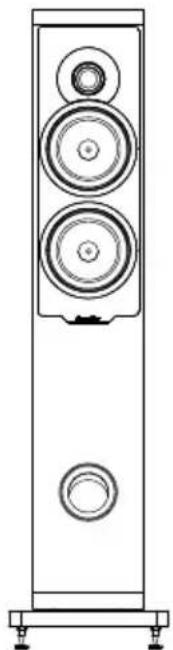
nncicgion 5 Somus faber
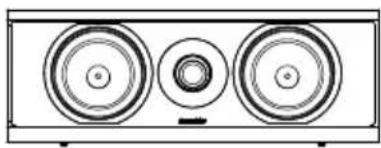
Prinieia C Sonus faber
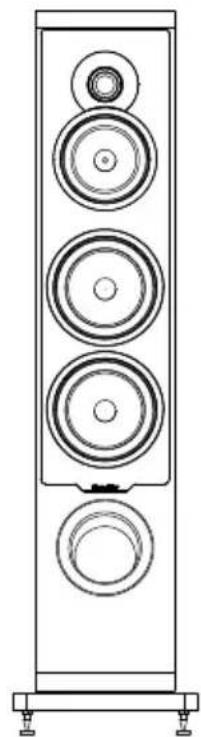
onincic 7
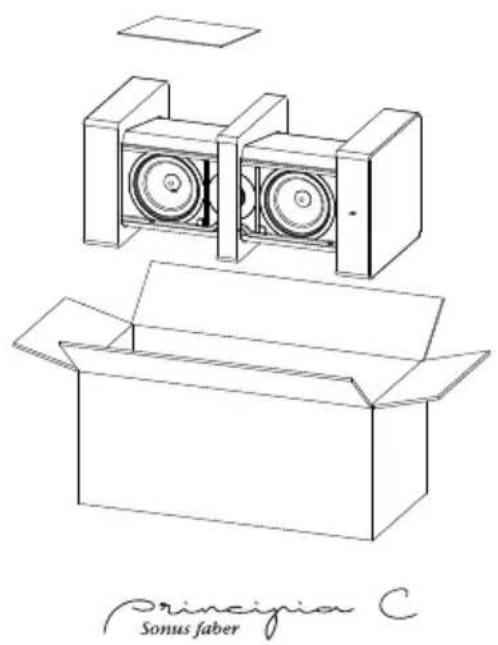
(1)
(2)

(3)
(4)
(5)
(6)
(7)
SUPPORT DRAWINGS
(8)
(9)
(10)
(11)
(12)

Install the speakers in order to achieve the best possible stability. If it's the case, adjust points/feet supports. Avoid placing heavy objects on the speaker as they can compromise its stability.
In case the speaker is placed on a surface other than the suggested stands (ex. shelves, bookcases, TV supports, etc.) or directly the floor, firstly check that it can support the weight of the speaker(s). Also check that there is enough friction between the speaker and the surface in order to avoid any movement caused through vibrations whilst in use. Where needed rubber adhesive feet can be purchased from all good hardware stores.
Do not put any objects containing water or other liquid/liquefiable substance on the speaker system.
Follow the connection diagram suggested in the instructions manual. Remember that the parallel connection of two or more speakers can damage your amplifier. If in doubt, contact your dealer.
Whilst the audio system is operative at high volumes avoid staying in close proximity to the speaker system. This can cause permanent damage to your hearing! Children should maintain a safe distance from the speaker system of at least 50cm.
The speakers produce an electromagnetic field which is harmless to humans and pets, but they can cause disturbances in the correct functioning of electronic equipment such as monitors or cathode tube TVs when placed in close proximity. If this occurs, simply and slowly distance one from the other. As a further precaution, it is not advisable to place credit cards or similar magnetically read objects on top of the speaker system.
The technology behind the functioning of the speakers is based on the principles of electromagnetism, and thus the user should avoid operating equipment that generates strong electromagnetic fields as these could affect the correct functioning of the speaker. Avoid placing transmitting devices such as mobile phones, cordless phones, intercom systems etc. on top of the speaker systems.
Do not directly connect to a constant voltage (100V, 70.7V or similar) sound distribution system. This could have as a consequence a serious system's overload with probable damages to the loudspeaker system and/or the amplifier unit.
Keep amplifier-speaker connection and power (mains) cables separate. Mains cables carry an alternating voltage at a frequency of 50Hz (60Hz in Japan and the USA) and an intensity that can be high, and thus produce an electromagnetic field even at audio frequency around them. In the case of coupling of these two types of cables an annoying hum noise will be perceived through the speakers. If this should occur, do provide an adequate distance between the cables.
Be very careful during the assembly and disassembly of the rubber string grille, if present. Check that the first metal string holder is properly inserted before tightening the strings to secure the second one.
The speaker cable terminals accept banana plugs. Remove the red and black plastic caps only if you intend to implement this type of connection and ensure that the other end of the cable is connected to the power output terminals of your amplifier. This protection is aimed at avoiding accidental connection to unprotected electrical outlets.

SICHERHEITSHINWEISE
DECLARATION OF CONFORMITY
Sonus Faber SpA with headquarter in Via Antonio Meucci, 10 - 36057 Arcugnano (VI) Italy, under its sole responsibility that the passive speaker system:
PRINCIPIA 1 - PRINCIPIA 3 - PRINCIPIA 5 - PRINCIPIA 7 - PRINCIPIA Center
you have purchased which this declaration relates is in conformity to:
Directive: 2014/30/EU (EMC) Electromagnetic compatibility.
2011/65/EU (RoHS) Restriction of the use of certain hazardous substances in electrical and electronic equipment.
2012/19/EU (WEEE) Waste electrical and electronic equipment.
Standards: EN 60065:2014
Audio, video and similar electronic apparatus - Safety requirements.
EN 55013:2001 + A1:2003 + A2:2006
Sound and television broadcast receivers and associated equipment - Radio disturbance characteristics.
EN 55020:2007
Immunity characteristics - Limits and methods of measurement.
EN 61000-6-1:2007
Generic standards - Immunity for residential, commercial and light industrial environments.
EN 61000-6-3:2007 + A1:2012
Generic standards - Emission standard for residential, commercial and light industrial environments.
Arcugnano, 20.11.2015
Mauro Grange
CEO
The passive speaker system:
PRINCIPIA 1 - PRINCIPIA 3 - PRINCIPIA 5 - PRINCIPIA 7 - PRINCIPIA Center
is in conformity to International standards.
IEC 60065:2014
Audio, video and similar electronic apparatus - Safety requirements.
UL 60065-1 7th Edition
Standard for audio, video and similar electronic apparatus - Safety requirements.
CAN/CSA-C22.2 60065-3 + A1:2006
Audio, video and similar electronic apparatus - Safety requirements.
CISPR 13:2001 + A1:2003 + A2:2006
Sound and television broadcast receivers and associated equipment - Radio disturbance characteristics
- Limits and methods of measurement.
CISPR 20:2006
Sound and television broadcast receivers and associated equipment - Immunity characteristics
- Limits and methods of measurement.
IEC 61000-6-1:2005
Generic standards - Immunity for residential, commercial and light-industrial environments.
IEC 61000-6-3:2006
Generic standards - Emission standard for residential, commercial and light-industrial environments.
Arcugnano, 20.11.2015
Mauro Grange
CEO
DECLARATION OF CARB COMPLIANCE
California Air Resources Board (CARB) ATCM 93120 phase 2 compliant for formaldehyde.
INFORMAZIONI PER LA TUTELA AMBIENTALE
Waste of electrical and electronic equipment
Directive WEEE 2002/96/EC - RoHS 2011/65/EU
(for residents in EU Countries only)
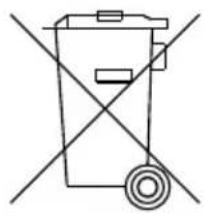
This l o t t on electrical and electronic equipment (WEEE).
The presence of dangerous substances in the electrical and electronic equipments can have potential con sequences on the environment and human health in the cycle of reprocessing this product.
Therefore, at the end of its lifetime, this product shall not be disposed with other non non-recycled waste.
As the end user, your role is of prime importance in the cycles of re-using, recycling, and other forms of valorisation of this electrical and electronic equipment.
Local authorities and resellers have set special procedures for the purpose of collecting and recycling this product.
You have the obligation to use the selective waste collection systems put in place by your local authorities.
INFORMATIONEN ZUM UMWELTSCHUTZ





- Verehrer Kunde,
- SPEAKER PACKAGING CONTENTS
- PRINCIPIA 1 & 3
- PRINCIPIA 5 & 7 PRINCIPIA CENTER
- STAND PACKAGING CONTENTS
- ASSEMBLY
- PRINCIPIA 1 & 3 PRINCIPIA 5 & 7
- PRINCIPIA CENTER
- CONNECTION INSTRUCTIONS
- MONO-WIRING BI-AMPLIFICATION
- BI-WIRING
- INSTALLATION RECOMMENDATIONS: IN THE LISTENING ENVIRONMENT
- HOMETHEATRE AND MULTI-CHANNEL SYSTEMS
- MAINTENANCE
- WARRANTY
- SUPPORT DRAWINGS
- SICHERHEITSHINWEISE
- DECLARATION OF CONFORMITY
- PRINCIPIA 1 - PRINCIPIA 3 - PRINCIPIA 5 - PRINCIPIA 7 - PRINCIPIA Center
- IEC 60065:2014
- UL 60065-1 7th Edition
- CAN/CSA-C22.2 60065-3 + A1:2006
- CISPR 13:2001 + A1:2003 + A2:2006
- CISPR 20:2006
- IEC 61000-6-1:2005
- IEC 61000-6-3:2006
- Arcugnano, 20.11.2015
- Mauro Grange
- CEO
- DECLARATION OF CARB COMPLIANCE
- INFORMAZIONI PER LA TUTELA AMBIENTALE
- INFORMATIONEN ZUM UMWELTSCHUTZ
Brand : Sonus Faber
Model : Principia
Category : Loudspeaker