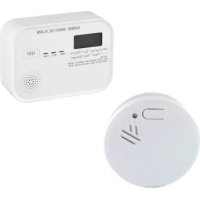
34148 - Gas detector CHACON - Free user manual and instructions
Find the device manual for free 34148 CHACON in PDF.



| Product type | Carbon monoxide (CO) detector |
| Brand | Chacon |
| Model | 34148 |
| Dimensions | 107 x 77 x 36 mm |
| Power supply | 3 AA LR6 alkaline batteries (3-year lifespan) |
| Sensor | Carbon monoxide (CO) detection |
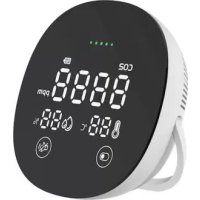
| Display | LCD with CO concentration and battery level |
| Sound alarm | >85 dB at 3 m |
| LED indicators | Green (power), Yellow (error/low battery), Red (alarm) |
| Test function | TEST button to check operation |
| Silent mode | Yes, for concentrations <200 ppm |
| Low battery detection | Yes, voltage <3.6 V |
| End of life | Alarm after 10 years (replacement required) |
| Standard | BS EN 50291-1:2018 |
| Operating temperature | -10°C to +45°C |
| Operating humidity | 0-93% |
| Standby current | <30 µA |
| Alarm current | <65 mA |
| Displayed concentration range | 10-550 ppm |
| Product lifespan | 10 years |
| Maintenance | Monthly cleaning with vacuum and damp cloth; do not use chemical products |
| Safety | Do not disassemble, do not paint, do not obstruct openings, use only specified batteries, do not expose to water |
| Package contents | Detector, manual, mounting kit |
| Installation | Wall mounting at >1.5 m from floor, 0.3 m from ceiling, away from corners and furniture |
Frequently Asked Questions - 34148 CHACON
User questions about 34148 CHACON
0 question about this device. Answer the ones you know or ask your own.
Ask a new question about this device
Download the instructions for your Gas detector in PDF format for free! Find your manual 34148 - CHACON and take your electronic device back in hand. On this page are published all the documents necessary for the use of your device. 34148 by CHACON.
USER MANUAL 34148 CHACON
Mode d'emploi / Gebruiksaanwijzing / Manual de uso Manual de instruções / Istruzioni per l'uso / User manual
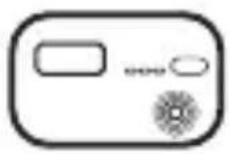
Co detector

1x
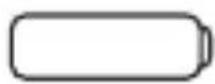
3x

FR Enregistrer la garantie
EN Registering the guarantee
To register your warranty, fill in the online form at www.chacon.com/warranty
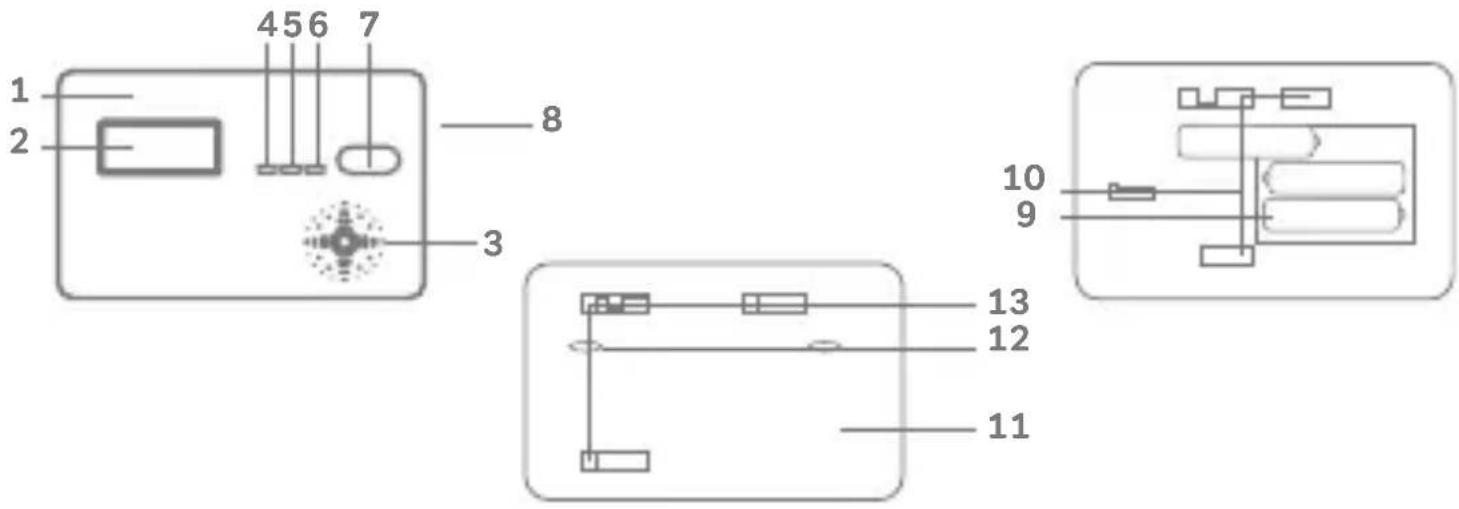
Présentation du produit / Productpresentatie / Presentación del producto / Apresentação do produto / Presentazione del prodotto / Product overview
| FR NL ES PT | ||||
| 1. Détecteur de Co Co melder | Detector de co Detector de | moedas | ||
| 2. Écran LCD LCD-scherm Pantalla LCD Visor LCD | ||||
| 3. Haut-parleur Luidspreker | Altavoz Orador | |||
| 4. Indicateur defonctionnement(LED Verte) | Stroomindicator(Groene LED) | Indicador dealimentación (LED verde) | Indicador deenergia (LED verde) | |
| 5. Indicateur d'erreur(LED Jaune) | Foutindicator(Gele LED) | Indicador de error(LED amarillo) | Indicador de erro(LED Amarelo) | |
| 6. Indicateur d'alarme(LED Rouge) | Alarmindicator(Rode LED) | Indicador de alarma(LED rojo) | Indicador dealarme (LED vermelho) | |
| 7. Bouton de test Testknop Botón de prueba | Botão de teste | |||
| 8. | Capteurs d'analyse | Analyse sensoren | Sensores de análisis | Sensores de análise |
| 9. Compartiment de la batterie | Batterijcompartiment | Compartimento dela batería | Compartimento da bateria | |
| 10. | Trous de montage | Bevestigingsgaten | Agujeros demontaje | Furos demontagem |
| 11. | Plaque de montage | Montageplaat | Placa de montaje | Placa demontagem |
| 12. | Trous pour les vis | Gaten voorschroeven | Agujeros paratornillos | Buracos para parafusos |
| 13. | Boucles defermeture | Gesp | Hebilla | Fivela |
Note: The yellow LED will flash twice and you will hear a «beep» at least once a minute.
2.6. Aviso de fin de vida útil
3. Installation of the Co detector
Thank you for using this product.
- Please read all instructions carefully before using the product.
- Do not attempt to disassemble or repair the product yourself, otherwise the product will be out of warranty.
- This alarm has been designed and tested to detect CO in a residential environment. It implements BS EN 50291-1:2018.
- This carbon monoxide alarm is designed to detect carbon monoxide and cannot be used to detect smoke or any other gas.
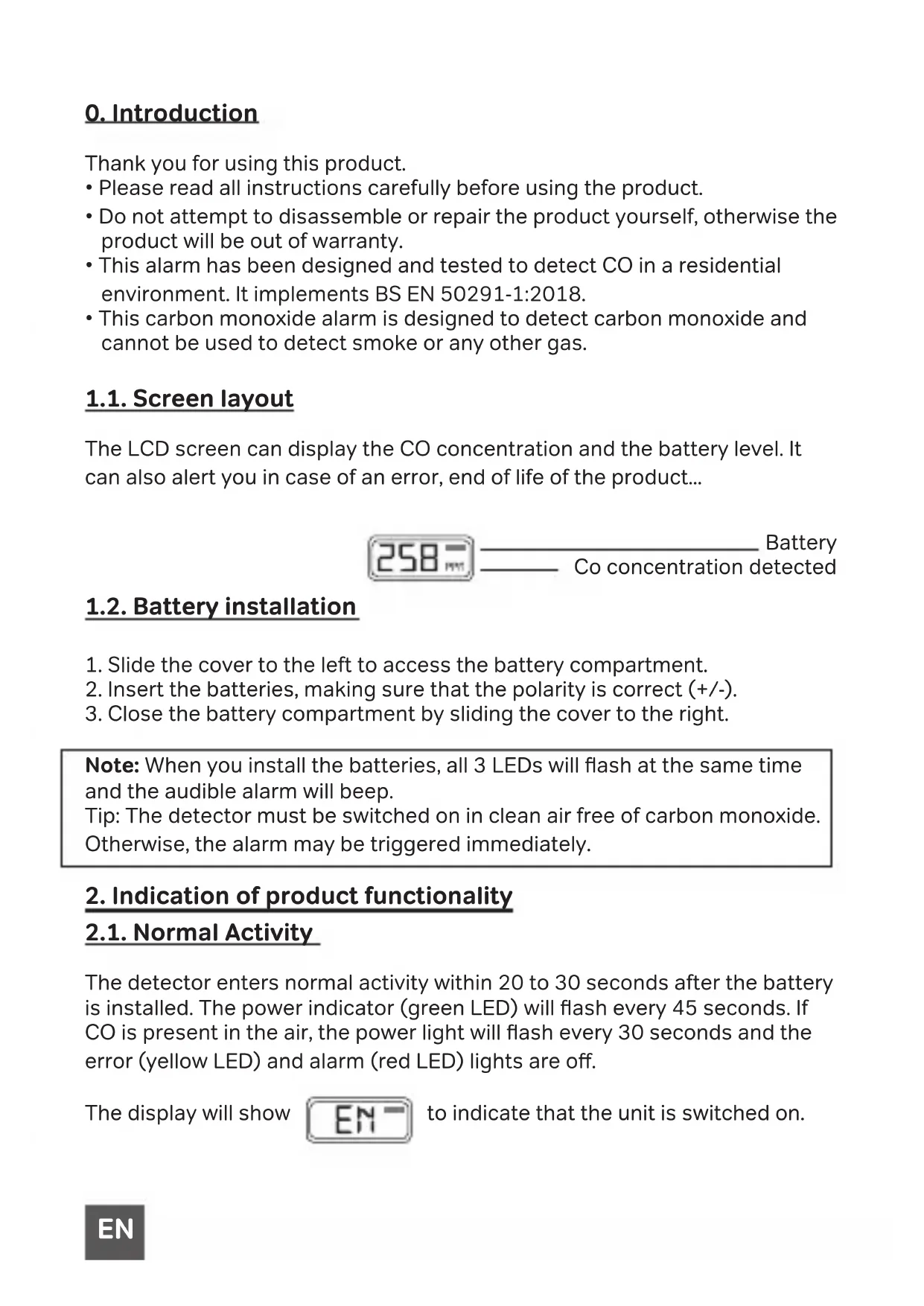
1.1. Screen layout
The LCD screen can display the CO concentration and the battery level. It can also alert you in case of an error, end of life of the product...
258 Battery Co concentration detected
1.2. Battery installation
- Slide the cover to the left to access the battery compartment.
- Insert the batteries, making sure that the polarity is correct (+/-).
- Close the battery compartment by sliding the cover to the right.
Note: When you install the batteries, all 3 LEDs will flash at the same time and the audible alarm will beep. Tip: The detector must be switched on in clean air free of carbon monoxide. Otherwise, the alarm may be triggered immediately.
2. Indication of product functionality
2.1. Normal Activity
The detector enters normal activity within 20 to 30 seconds after the battery is installed. The power indicator (green LED) will flash every 45 seconds. If CO is present in the air, the power light will flash every 30 seconds and the error (yellow LED) and alarm (red LED) lights are off.
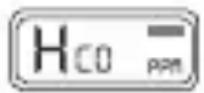
The display will show

to indicate that the unit is switched on.
2.2. Alarm warning
The alarm will not stop until the CO concentration is below 40 ppm. Place the detector in fresh air so that the alarm can be automatically stopped after 6 minutes, or you can simply stop the alarm by pressing the TEST button for 1 to 3 seconds.
When the CO concentration is above 550 PPM, the display will show
The red LED will flash 5 times with «beeps». The alarm will sound 3 times every 10 seconds.
Note: When you hear successive beeps, this means a high concentration of CO. Please leave the room immediately and call for help.
2.3. Low CO warning
When the CO concentration exceeds 30 ppm for more than 60 minutes, or when the CO concentration exceeds 40 ppm for more than 40 minutes, a low CO concentration warning is generated. The low CO concentration warning differs significantly from the alarm warning:
| Low CO warning Alarm warning (high) | Co detection) |
| Red LED flashes 4x and beeps at low speed.Repeats 1x every 3 to 5sec. | The red LED flashes 5 times and beeps at high speed. The alarm sounds 3 times every 10sec. |
In daily life, low concentrations of carbon monoxide can often happen. For example, smoking a cigarette or burning a candle can produce low concentrations of CO. Although not dangerous, prolonged exposure can affect the health of vulnerable groups such as children, pregnant women or the elderly people.
Note: This is not a dangerous situation, so don't panic.
2.4. Low battery warning
When the voltage falls below 3.6 V, a low battery warning is issued at least once a minute. On the display you can see the battery level in real time. The low battery notification will only be issued in case D.
Note: The yellow LED will flash and you will hear a «beep» at least once a minute.
2.5. Error warning
If you see this on the display, it means that something is interfe- xide sensors, electronic damage or a volatile gas in can affect the sensor and cause a temporary the damaged unit and place it in the open air for o normal.
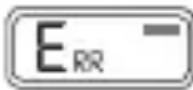
If the device doesn't restore itself after this time, it is permanently damaged. Don't use the product again. Don't try to repair it by yourself and replace the product by a new one.
Note: The yellow LED will flash twice and you will hear a «beep» at least once a minute.
2.6. End of life warning
If you see

on the screen, it means that the product is at the end of its life and needs to be replaced.
Note: This product has a 10-year life expectancy. You can see the date of manufacture and replacement on the product.
2.7. Testing your CO detector
We recommend that you test your CO alarm at least once a week by pressing the TEST button, to ensure that the sensors, alarm and indicator lights are working properly.
When you press the TEST button, you will see

on the screen.
2.8. Muting the alarm
When a concentration below 200PPM is detected, the red LED and the alarm will sound. To mute the alarm, press and hold the TEST button for 3 to 5 seconds until the alarm indicator (red LED) flashes without beeping.
Note: If you hold the TEST button and the alarm sounds again shortly afterwards, the CO concentration may be above 200PPM. Make sure you are not in a dangerous situation before activating the alarm silence mode.
3. Installation of the Co detector
For wall mounting, the height of the installation position should be more than 1.5m. The unit should be at least 0.3m from the ceiling. In addition, the unit should be 1.5m away from corners, sides of the wall and large furniture.
Steps for installing the alarm:
a) Take out the mounting plate and align it with the wall in the position you have chosen. Mark the holes with a pencil dot. Using your wall punch and a hammer, make two holes in the marked locations (6mm diameter, 40mm deep).
b) Insert the two plastic plugs into the holes. Fix the mounting plate to the wall by screwing it upwards.
c) After ensuring that the mounting plate is securely fastened to the wall, power up the detector and test it according to section 2.7. If the test result is normal, slide the alarm onto the mounting plate.
4. Advice - installation locations
We advise you to install the CO detector in bedrooms and living rooms. You can also install them in places where you think there is a CO leak. To ensure that people can hear the alarm from all sleeping areas, we suggest that you install this product on every level of your home.
To avoid damage to the product and to prevent false alarms, do not install the unit in the following locations:
- In enclosed spaces (kitchen cupboard or behind the curtain).
- In obstructed areas (behind a piece of furniture).
- On the door or on a water pipe.
- Near a door, window, fan, air conditioner, vent or drain.
- In areas where the temperature can easily drop to -10^ or exceed 40^ .
- In areas where there is a lot of dust that could block the sensors.
- In areas that are too humid or near cooking utensils or cooking equipment.
Note: If you want to put the alarm in the garage, please do not install it near the exhaust of the vehicles. Because when your start your car, a high concentration of CO is generated and the temporary CO that does not kill can cause the alarm to sound.
5. Gases that can cause false alarms
Methane, propane, isobutane, ethylene, ethanol, alcohol, isopropanol, benzene, toluene, ethyl acetate, hydrogen, hydrogen sulphide and sulphur dioxide. Almost all aerosols, alcohols, paints, thinners, solvents, binders, hair sprays, aftershaves, perfumes, car exhaust (cold start) and some detergents.
When the product is exposed to the above-mentioned gases, it may give false alarms or be permanently damaged. When the alarms are activated and you smell an irritating gas, this may be a false alarm, as CO is colorless and odorless.
Tip: Place the product in clean air, if it is still in alarm state 30 minutes later, it means that the product has been polluted. You must place the unit in clean air for 24 hours. If the product does not recover after this time, it means that the sensor has been damaged and the product should not be used anymore.
6. Maintenance advice
The product must be kept clean when in use, otherwise its performance will be affected and may even damage the alarm. It should be cleaned and tested once a month as follows.
- Remove dust with a hoover.
- Wipe the surface with a soft, slightly damp, wrung-out cloth.
- Press the TEST button and ensure that the detector is working properly, then reinstall it for use.
Note: Do not clean the alarm with chemicals such as alcohol, petrol, detergents... This may damage the alarm.
7. What is carbon monoxide?
Carbon monoxide is a colorless and odorless gas that can cause death and is generated by the combustion of any combustible material. Every year Co kills hundreds of people and poisons many more. In high concentrations, Co can kill within minutes. (See point 7.2).
7.1. Possible sources of carbon monoxide
Carbon monoxide can be generated by heating and combustion equipment,
such as cookers, water heaters, fireplaces, charcoal grills, natural gas boilers, heaters, motor vehicles...
Note: The product only indicates the presence of carbon monoxide, and warns people to deal with the situation or leave. It can't prevent the presence of CO.
7.2. Symptoms following CO poisoning
35PPM is the maximum permissible concentration for continuous exposure for a healthy adult over an 8-hour period.
- Common mild symptoms (200 PPM; within 2 to 3 hours): Mild headache, nausea, vomiting, fatigue.
• Common moderate symptoms (400PPM):
o Within 1 to 2 hours: Headache, drowsiness, confusion, increased heart rate. o After 3 hours: Danger of death - Common severe symptoms (above 500PPM): Convulsion, loss of consciousness, cardiorespiratory failure, brain damage, death.
Note: Young children and the elderly may be more vulnerable. If you experience even mild symptoms of CO poisoning, consult your doctor immediately!
8. Safety advice
- As the coverage area of CO detection is limited, we recommend that you install CO detectors in every room of your home to effectively protect the whole family.
- Do not spray chemical sprays such as deodorant, hairspray, perfume, insecticide or spray paint near the alarm.
- Do not paint the CO alarm.
- Do not block or cover the alarm's ventilation hole with glue or other objects.
- Do not attempt to disassemble or repair the product yourself.
- Do not mix alkaline, standard (zinc carbon) or rechargeable (ni-cad, ni-mh, etc.) batteries.
- Please use only the type of battery indicated in the manual.
- Do not leave used batteries lying around in the unit, as this may damage the unit.
-
Incorrect use of the battery may damage nearby objects and result in fire or serious injury.
-
Please keep batteries away from children. If you suspect that batteries have been ingested, seek medical attention immediately. Swallowing the battery can lead to serious consequences; internal burns within 2 hours or death.
- Recycle used batteries in accordance with environmental protection practices.
- The unit is not water resistant. Do not expose it to rain or immerse it in water.
- Please keep these instructions for use in a safe place.
- In case of carbon monoxide poisoning, call the emergency services for help. Do not return to your home until the alarm has stopped and the air has returned to normal.
9. Technical specifications
• Gas detected: carbon monoxide
• Dimension: 107*77*36mm
- Battery: 3xAA LR6 (capacity: 3 years)
- Low battery warning
- Battery life: 3 years
- Operating conditions:
o Temperature: -10°C to +45°C
o Humidity: 0-93%
- Standby current: < 30uA
• Alarm current: <65mA
- Alarm: >85dB (3m from device)
• Display concentration range: 10-550PPM
- Power indicator: Flashes approximately every 45 seconds.
• Product Lifetime: 10 years
- Box content: Co detector + manual + mounting kit
Support
www.chacon.com/support

EN: For indoor use only
This product must be treated in accordance with European Directive 2002/96/EC with the aim of being recycled or dismantled to minimise its impact on the environment. For further information, please contact your local or regional authorities.
CE

EN : Sort your waste according to the instructions of your municipality.
Chacon S.A. – Avenue Mercator 2 – 1300 Wavre – Belgium Made in PRC
- FR Enregistrer la garantie
- EN Registering the guarantee
- Présentation du produit / Productpresentatie / Presentación del producto / Apresentação do produto / Presentazione del prodotto / Product overview
- Aviso de fin de vida útil
- Installation of the Co detector
- Screen layout
- Battery installation
- Indication of product functionality
- Normal Activity
- Alarm warning
- Low CO warning
- Low battery warning
- Error warning
- End of life warning
- Testing your CO detector
- Muting the alarm
- Advice - installation locations
- Gases that can cause false alarms
- Maintenance advice
- What is carbon monoxide?
- Possible sources of carbon monoxide
- Symptoms following CO poisoning
- Safety advice
- Technical specifications
- CE
Brand : CHACON
Model : 34148
Category : Gas detector