
FAHE 18 B2 - Electric pruner PARKSIDE - Free user manual and instructions
Find the device manual for free FAHE 18 B2 PARKSIDE in PDF.


| Brand | Parkside |
| Model | FAHE 18 B2 |
| Type | Cordless pole pruner |
| Battery voltage | 18 V |
| Battery type | Lithium-ion |
| Battery capacity | 1.5 Ah |
| Charger | FAHE 18 B2-2 |
| Charger voltage | 220-240 V ~ 50 Hz |
| Charging time | approx. 60 min |
| Chain speed | max. 5 m/s |
| Weight (incl. accessories) | approx. 4.0 kg |
| Oil tank capacity | 65 ml |
| Cutting length | approx. 200 mm |
| Guide bar | 8" Oregon O80NDEA318 |
| Chain | Oregon 91P033X |
| Sound pressure level | 72.57 dB(A) |
| Sound power level | 103.20 dB(A) |
| Vibration front handle | 0.866 m/s² (K=1.5 m/s²) |
| Vibration rear handle | 1.138 m/s² (K=1.5 m/s²) |
| Telescopic reach | Adjustable via quick-release |
| Lubrication | Automatic |
| Delivery contents | Pole, charger, battery, shoulder strap, scabbard, guide bar, chain, oil, mounting tool, user manual |
| Warranty | 3 years |
| After-sales service France | 0800 919270 |
Frequently Asked Questions - FAHE 18 B2 PARKSIDE
User questions about FAHE 18 B2 PARKSIDE
0 question about this device. Answer the ones you know or ask your own.
Ask a new question about this device
Download the instructions for your Electric pruner in PDF format for free! Find your manual FAHE 18 B2 - PARKSIDE and take your electronic device back in hand. On this page are published all the documents necessary for the use of your device. FAHE 18 B2 by PARKSIDE.
USER MANUAL FAHE 18 B2 PARKSIDE
Translation of the original instructions
IAN 108534
FR BE
Before reading, unfold the page containing the illustrations and familiarise yourself with all functions of the device.
GB Translation of the original instructions Page 33
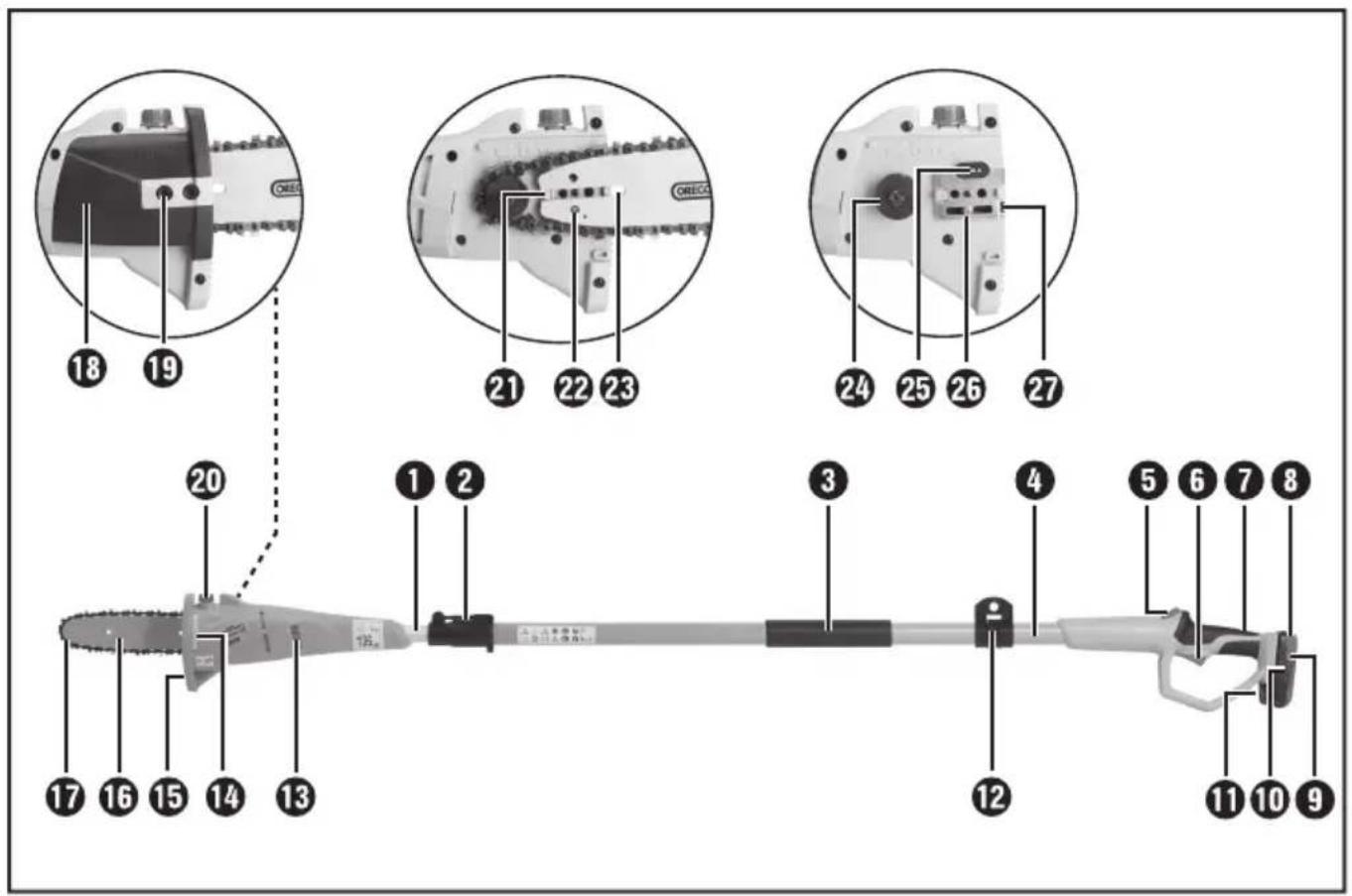
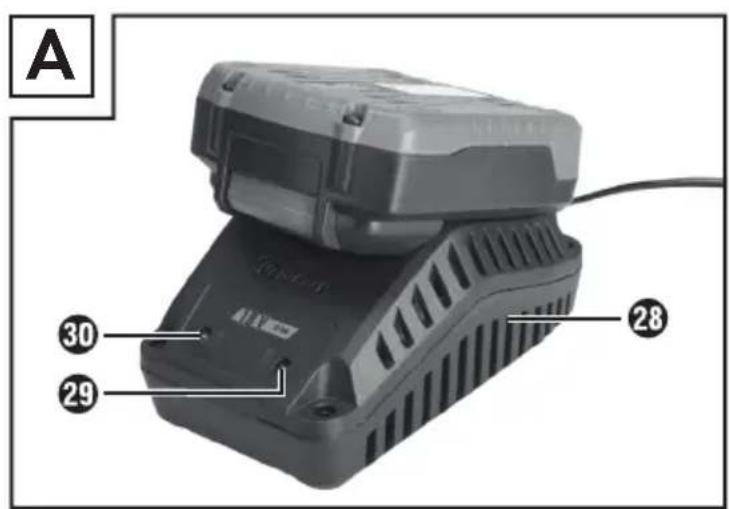

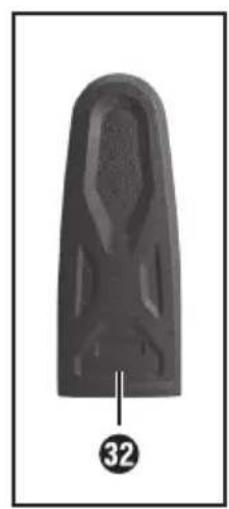

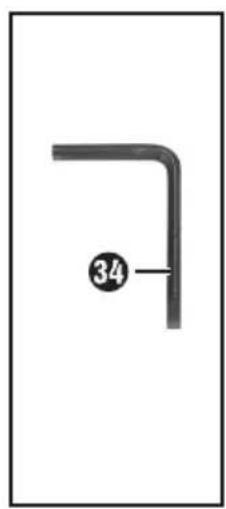
Table des matieres
Introduction 2
Usage conforme 2
Equipment 2
Matériel livre 2
3
KOMPERNASS HANDELS GMBH
BURGSTRASSE 21
44867 BOCHUM
GERMANY
www.kompernass.com
(inkl. Zubehor): ca. 4,0 kg
Volumen Oltank: 65 cm
KOMPERNASS HANDELS GMBH
BURGSTRASSE 21
44867 BOCHUM
GERMANY
www.kompernass.com
General power tool safety warnings 36
1.Work area safety 36
2. Electrical safety 36
3. Personal safety 37
4. Power tool use and care 37
5.Use and handling of the cableless electrical power tool 38
6. Service 38
Appliance-specific safety instructions for cordless pruners 38
Precautions against kickback 39
Further safety instructions 40
Safety guidelines for battery chargers 40
Original accessories/auxiliary equipment 41
Before initial use 41
Charging the battery pack (see fig. A) 41
Attaching/disconnecting the battery pack to/from the device 41
Checking the battery charge level 41
Fixing/attaching the shoulder strap 41
Mounting the saw chain and blade 42
Tightening and checking the saw chain 42
Lubricating the chain 42
Sharpening the saw chain 42
Initial use 43
Switching on and off 43
Checking the automatic oil system 43
Adjusting the telescopic handle 43
Sawing techniques 43
Working safely. 44
Transport and storage 44
Cleaning and maintenance 44
Troubleshooting: Cordless pruner 45
Maintenance intervals: Cordless pruner 45
45
Disposal 46
Appendix 46
Warranty 46
Service 47
importer 47
Translation of the original Conformity Declaration 47
CORDLESS PRUNER FAHE 18 B2
Introduction

tulations on the purchase of your new appliance. You have selected a high quality product. The operating instructions are part of this product. They contain important information on safety, usage
and disposal. Before using the product, familiarise yourself with all handling and safety instructions. Use the product only as described and for the range of applications specified. Please also pass these operating instructions on to any future owner(s).
Intended use
This appliance is intended for trimming branches in trees. It is not designed for extensive sawing work, felling trees or cutting of materials such as masonry, plastics or foods. Use this product only as described and for the areas of applications specified. The appliance is not meant for commercial use. The appliance is designed for use by adults. This appliance is not intended for use by anyone (including children) with reduced physical, sensory or mental capabilities or lack of experience and/or knowledge. The use of the appliance in rain or in humid environments is prohibited. Any other usage of or modification to the appliance is deemed to be improper and carries a significant risk of accidents. The manufacturer shall assume no liability for damage attributable to misuse.
Features
1 Telescopic handle
Quick release for telescopic handle
3 Handle
4 Appliance shaft
5 Safety lock-out
6 ON/OFF switch
7 Rear handle
Battery pack
9 Battery charge level button
10 Battery display LED
1 Release button forbattery pack
12 Carrying lug
13 Ventilation slits
Viewing window for the oil level
15 Stop
16 Blade
Saw chain
Sprocket cover
19 Screw
20 Oil filler cap
21 Blade guide
Blade hole
23 Guide rail
24 Chain sprocket
25 Oil dispenser
26 Chain tensioner pin
27 Chain-tensioner screw
28 High-speed charger
29 Red charge control LED
30 Green charge control LED
31 Shoulder strap
Blade guard
Organic chain oil
Assembly tool
Package contents
1 cordless pruner FAHE 18 B2
1 high-speed battery charger FAHE 18 B2-2
1 battery pack FAHE 18 B2-1
1 shoulder strap
1 blade guard
1 Blade
1 saw chain
100 ml organic chain oil
1 assembly tool
1 operating instructions
Technical data
Cordless pruner: FAHE 18 B2
Rated voltage: 18 V
Max. rotational speed: 2500 m/s
No-load speed: max. 5 m/s
Weight
(with accessories): approx. 4.0kg
Oil tank volume: 65 cm
Cut length: approx. 200 mm
Blade: 8" Oregon O80NDEA318
Saw chain: Oregon 91P033X
Battery: FAHE 18 B2-1
| Type: LITHIUM | |
| Rated voltage: 18 V = | |
| Capacity: 1.5 Ah |
High-speed
battery charger: FAHE 18 B2-2
INPUT:
Rated voltage: 220-240 V , 50 Hz
Power consumption: 70 W
OUTPUT:
Rated voltage: 18 V
Charging current: 1.8 A
Charging time: approx. 60 min
Fuse (internal): 3.15 A
Protection class: II/回
Noise and vibration data:
Measured values for noise determined in accordance with EN ISO 4871. The A-rated noise level of the power tool is typically as follows:
Sound pressure level: 72.57 dB(A)
Sound power level: 103.20 dB(A)
Uncertainty K: 2.5 dB

Wear ear protection!
Vibration values (vector total of three directions) determined in accordance with EN 60745: Vibration
at the front handle: Vibration emission value a_h = 0.866 m/s^2 Uncertainty K = 1.5 m/s^2
Vibration
at the rear handle: Vibration emission value a_h = 1.138 m/s^2 Uncertainty K = 1.5 m/s^2

WARNING!
Also reduce the risk due to vibrations, e.g. the risk of Raynaud's phenomenon, by taking frequent breaks and rubbing your hands together!
ION
NOTE
The vibration level specified in these instructions has been measured in accordance with a standardised measuring procedure specified in EN 60745 and can be used to make equipment comparisons. The specified vibration emission value can also be used to make an initial exposure estimate.

WARNING!
The vibration level varies in accordance with the use of the power tool and may be higher than the value specified in these instructions in some cases. There is a risk of underestimation of the vibration load if the power tool is used regularly in this manner. Try to keep the vibration loads as low as possible. Measures to reduce the vibration load are, e.g. wearing gloves and limiting the working time. In this case all states of operation must be included (e.g. times when the power tool is switched off and times where the power tool is switched on but running without load).
Explanation of symbols on the appliance:

Read the operating instructions and safety advice before initial operation!
GB

Wear protective gloves!

Wear safety shoes!

Wear ear protection!

Wear a hard hat!

Wear safety goggles!

Keep bystanders away from the appliance!

Do not use chain saw one-handed!

Always use chain saw two-handed!

Beware of chain saw kickback and avoid contact with bar tip!

Protect the appliance against rain or moisture!
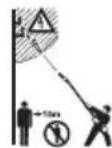
Risk of fatal electrical shock! Keep at least 10 m away from overhead power lines.

Caution! Falling objects. Especially when cutting above head height.

Beware of thrown objects!

Caution! Risk of injury due to running blades.
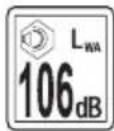
Sound power level LWA data in dB.

Turn the device off and remove the battery pack before performing any maintenance work!!
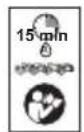
A full tank will last for approx. 15 minutes of continuous operation.

neral power tool - safety warnings

WARNING!
Read all safety warnings and all instructions. Failure to follow the safety instructions and other instructions may result in electric shock, fire and/or serious injury.
NOTE
National regulations may restrict the use of the appliance.
Save all safety instructions and other instructions for future reference.
The term "power tool" in the safety instructions refers to your mains-operated (cable) power tools or battery-operated (cableless) power tool.
1. Work area safety
a) Keep work area clean and well lit. Cluttered or dark areas invite accidents.
b) Do not operate power tools in explosive atmospheres, such as in the presence of flammable liquids, gases or dust. Power tools create sparks which may ignite the dust or fumes.
c) Keep children and bystanders away while operating a power tool. Distractions can cause you to lose control.
2. Electrical safety
a) Power tool plugs must match the outlet. Never modify the plug in any way. Do not use any adapter plugs with earthed (grounded) power tools. Unmodified plugs and matching outlets will reduce risk of electric shock.
b) Avoid body contact with earthed or grounded surfaces, such as pipes, radiators, ranges and refrigerators. There is an increased risk of electric shock if your body is earthed or grounded.
c) Do not expose power tools to rain or wet conditions. Water entering a power tool will increase the risk of electric shock.
d) Do not abuse the cable. Never use the cable for carrying, pulling or unplugging the power tool. Keep cable away from heat, oil, sharp edges or moving parts. Damaged or entangled cables increase the risk of electric shock.
e) When operating a power tool outdoors, use an extension cable suitable for outdoor use. Use of a cable suitable for outdoor use reduces the risk of electric shock.
f) If operating a power tool in a damp location is unavoidable, use a residual current device (RCD) protected supply. Use of an RCD reduces the risk of electric shock.
3. Personal safety
a) Stay alert, watch what you are doing and use common sense when operating a power tool. Do not use a power tool while you are ill, tired or under the influence of drugs, alcohol or medication. A moment of inattention while operating power tools may result in serious personal injury.
b) Use personal protective equipment. Always wear safety goggles. Protective equipment such as dust mask, non-skid safety shoes, hard hat, or hearing protection used for appropriate conditions will reduce personal injuries.
c) Prevent unintentional starting. Ensure the switch is in the off position before connecting to power source and/or battery pack, picking up or carrying the tool. Carrying power tools with your finger on the switch or energising power tools that have the switch on invites accidents.
d) Remove any adjusting key or wrench before turning the power tool on. A wrench or a key left attached to a rotating part of the power tool may result in personal injury.
e) Do not overreach. Keep proper footing and balance at all times. This enables better control of the power tool in unexpected situations.
f) Dress properly. Do not wear loose clothing or jewellery. Keep your hair, clothing and gloves away from moving parts. Loose clothes, jewellery or long hair can be caught in moving parts.
g) If devices are provided for the connection of dust extraction and collection facilities, ensure these are connected and properly used. Use of dust collection systems can can reduce dust-related hazards.
4. Power tool use and care
a) Do not force the power tool. Use the correct power tool for your application. The correct power tool will do the job better and safer at the rate for which it was designed.
b) Do not use the power tool if the switch is defective. Any power tool that cannot be controlled with the switch is dangerous and must be repaired.
c) Disconnect the plug from the power source and/or the battery pack from the power tool before making any adjustments, changing accessories, or storing power tools. Such preventive safety measures reduce the risk of starting the power tool accidentally.
d) Store idle power tools out of the reach of children. Do not allow persons unfamiliar with the power tool or these instructions to operate the power tool. Power tools are dangerous in the hands of untrained users.
e) Maintain power tools. Check for misalignment or binding of moving parts, breakage of parts and any other condition that may affect the power tool's operation. If damaged, have the power tool repaired before use. Many accidents are caused by poorly maintained power tools.
f) Keep cutting tools sharp and clean. Properly maintained cutting tools with sharp cutting edges are less likely to bind and are easier to control.
g) Use the power tool, accessories and tool bits etc. in accordance with these instructions, taking into account the working conditions and the work to be performed. Use of the power tool for operations other from those intended could result in a hazardous situation.
5. Use and handling of the cableless electrical power tool
a) Charge a rechargeable battery unit using only the charger recommended by the manufacturer. Chargers are often designed for a particular type of rechargeable battery. There is a risk of fire if other types of rechargeable battery are used.
b) Only the rechargeable battery units supplied are to be used with the power tools. The use of other rechargeable battery units may lead to the danger of injury or fire.
c) When they are not being used, store rechargeable battery units away from paper clips, coins, keys, nails, screws or other small metal objects that could cause the contacts to be bridged. Short-circuiting the contacts of a rechargeable battery may result in burns or fire.
d) Fluid may leak out of rechargeable batteries if they are misused. If this happens, avoid contact with the fluid. If accidental contact occurs, rinse the affected area with water. Seek additional medical help if any of the fluid gets into your eyes. Escaping battery fluid may cause skin irritation or burns.
CAUTION! RISK OF EXPLOSION! Never charge non-rechargeable batteries.
Protect the battery from heat, e.g. also from continuous sunlight, fire, water and humidity. There is a risk of explosion.
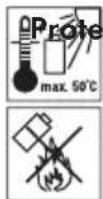

6. Service
a) Have your power tool serviced by a qualified repair person using only original replacement parts. This will ensure that the safety of the power tool is maintained.
Appliance-specific safety instructions for cordless pruners
Always wear a hard hat, hearing protection and safety gloves. Also wear eye protection to prevent splashes of oil or saw dust from falling into your eyes. Wear a dust mask to protect yourself from dust.
Never use the appliance while standing on a ladder.
Do not lean too far forwards while using the appliance. Ensure you are standing firmly and keep your balance at all times. Use the supplied carrying strap to spread the weight evenly on the body.
Wear sturdy, non-slip boots.
Do not use the appliance in the rain.
Do not use the appliance near overhead power lines. Maintain a minimum distance of 10m to overhead power lines.
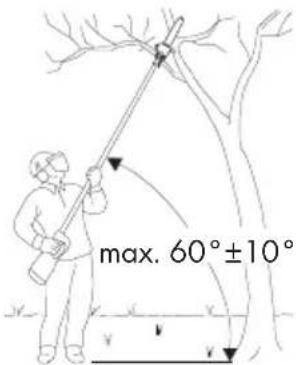
Do not stand under the branches that you want to cut off, to avoid injuries due to falling branches. Be aware of branches that may spring back, to avoid injuries. Work at an angle of approximately 60^ .
■ Be aware that the appliance can kick back.
- Keep an eye not only on the branches being cut, but also on falling material, to avoid tripping.
After 30 minutes' work, take a break of at least one hour.
Always wear protective gloves.
Cover the guide rail and the chain during transport during transport and storage using the cover.
Do not use the appliance in a potentially explosive environment containing flammable liquids, gases or dusts. The sparks generated by the machine could ignite the vapours or gases.
The power outlet used must be suitable for the plug. To avoid electrical shocks, never try to modify the plug.
Never remove the plug from the power supply by pulling on the power cable. Always pull the power plug itself. Do not drag or carry the appliance using the power cable. Keep power cable away from heat, oil, sharp edges or moving parts.
Remove the battery pack from the appliance after completion of work or during cleaning and maintenance.
Avoid unintentional starting of the appliance.
Appliances with defective switches must be repaired immediately to avoid damage or injuries.
Store the appliance outside of the reach of children. Only those who are fully acquainted with these operating instructions and the appliance itself may operate the appliance.
Maintain power tools carefully. Check for misalignment or binding of moving parts, breakage of parts and any other condition that may affect the power tool's operation. If damaged, have the power tool repaired before use. Many accidents are caused by poorly maintained power tools.
- Keep cutting tools sharp and clean. Properly maintained cutting tools with sharp cutting edges are less likely to bind and are easier to control.
Therefore, have the appliance checked by qualified specialists. Use only the replacement parts recommended by the manufacturer.
Precautions against kickback
CAUTION KICKBACK!
Be aware of the danger of kickback when working with the appliance. There is a risk of personal injury. You can avoid kickbacks by being careful and using the correct sawing technique.
- Contact with the tip of the rail can, in some cases, lead to an unexpected rearwards reaction resulting in the guide rail flying upwards towards the operator (see Fig. A).
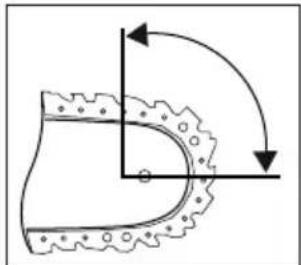
Fig. A
■ Kickbacks can occur if the tip of the guide rail touches an object or if the wood bends and the saw chain gets caught in the cut (see Fig. B).
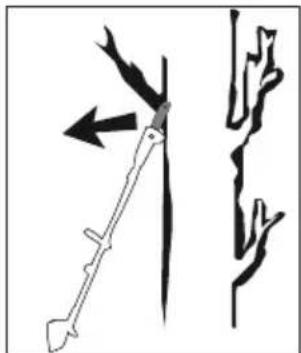
Fig.B
If the saw chain jams in the upper edge of the guide rail, the rail can kick back violently towards the operator.
Any such reaction can lead to you losing control over the saw and possibly injuring yourself. Do not rely solely on the chainsaw's built-in safety devices. As the user of a chainsaw, you can take a number of measures to avoid accidents and injury. A kickback is caused by incorrect use or misuse of the power tool. It can be avoided by taking proper precautions as given below:
Hold the saw firmly with both hands, with your thumb and finger around the handles of the chainsaw. Hold your body and arms in a position in which you can withstand kickback forces. If suitable measures are taken, the operator can control the recoil forces. Never let go of the chainsaw.
Avoid an abnormal posture and do not saw above shoulder height. This will prevent inadvertent contact with the tip of the rail and allows a better control of the chainsaw in unexpected situations.
GB
Always use the replacement rails and saw chains specified by the manufacturer. Incorrect replacement rails and saw chains can lead to a tearing of the saw chain and/or kickback.
Follow the manufacturer's instructions for sharpening and maintenance of the saw chain. Setting the depth stop too low can increase the risk of kickback.
Do not saw with the tip of the blade. This can lead to kickback.
Ensure that there are no objects on the ground that you can trip over.
Further safety instructions

CAUTION! RISK OF INJURY!
To prevent injuries, never touch the appliance above the handle while it is running!
- Keep the appliance, the cutting mechanism and the blade guard in good condition to prevent injury.
Children should be supervised to ensure that they do not play with the appliance.
Do not use the appliance until you have familiarised yourself with its use.
Do not work with a damaged or incomplete appliance or an appliance that has been modified without the consent of the manufacturer. Never use the unit with defective protective equipment. Do not use the appliance if it has a defective on/off switch. Before use, check the security state of the appliance, especially the blade and the saw chain. If the appliance has been dropped, check for significant damage or defects.
Never start the appliance before the blade, saw chain and sprocket covers have been fitted correctly.
When starting and operating the appliance, ensure that it does not come into contact with the ground, stones, wire or other foreign material. Switch the appliance off before you put it down.
The device is designed for two-handed operation. Never work with one hand.
Hold the appliance only by the insulated handles as the saw chain could come into contact with hidden power lines. Contact between the saw chain and a live wire may make exposed metal parts of the power tool live and could give the operator an electric shock.
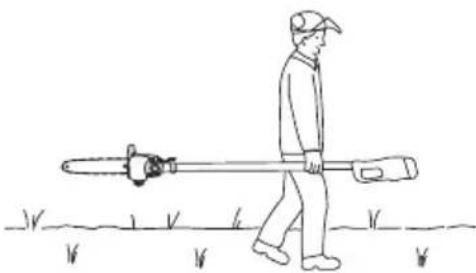
Make sure that the appliance is switched off when relocating the appliance and that you cannot accidentally touch the on/off switch. Carry the appliance with the saw chain and blade facing backwards. Fit the blade guard during transportation.
- Attach the bumper spike firmly before every cut and do not start until this has been done.
■ Be extremely careful when sawing small bushes and branches. The thin branches and twigs can catch in the saw and fly in your direction or knock you off balance.
Do not cut any wood that is lying on the ground and do not attempt to saw roots that are protruding from the soil. Avoid immersing the saw chain in the soil at all costs, as this could blunt the saw chain.
When sawing a branch under tension, be aware of the possibility of the branch flying back once the tension is suddenly removed. There is a risk of personal injury.
- Do not use force to free the appliance if the cutting tools get caught or jammed in branches. Switch the appliance off immediately and do not switch it on until the blockage has been removed. There is a risk of personal injury!
Safety guidelines for battery chargers
This appliance may be used by children aged 8 years and above and by persons with limited physical, sensory or mental capabilities or lack of experience and knowledge, provided that they are under supervision or have been told how to use the appliance safely and are aware of the potential risks. Children must not use the appliance as a plaything. Cleaning and user maintenance tasks may not be carried out by children unless they are supervised.

only.
This charger is suitable for indoor use
If the supply cord is damaged, it must be replaced by the manufacturer, its service agent or similarly qualified persons in order to avoid a hazard.

RESIDUAL RISKS!
Even if you operate this power tool properly, there will still be residual risks. The following risks can occur in the context of the design and construction of this power tool:
a) Cuts
b) Hearing damage, if no suitable hearing protection is worn.
c) Damage to health caused by hand-arm vibrations if the appliance is used for extended periods or is not properly used and maintained.

WARNING!
Do not operate the appliance with a damaged cable, power cable or power plug. A damaged power cable causes danger to life by electric shock.
Original accessories/auxiliary equipment
Use only the additional equipment and accessories detailed in the operating instructions.
The use of tools and accessories other than those recommended in the operating instructions could lead to an increased risk of personal injury for you.
Before initial use
Charging the battery pack (see fig. A)

CAUTION!
Always unplug the appliance before you remove the battery pack 8 from or connect the battery pack to the high-speed charger 28
Never charge the battery pack when the ambient temperature is below 10^ or above 40^ .
Connect the battery pack to the high-speed charger (see Fig. A).
Insert the power plug into the mains power socket. The red control LED 29 will light up.
The green control LED indicates that the charging process is complete and the battery pack is ready for use.
Fit the battery pack back onto the appliance.
Never recharge a battery pack again immediately after rapid charging. This could overcharge the battery pack, thus reducing the lifespan of the battery and charger.
You should always switch the high-speed charger off for at least 15 minutes between successive charging processes. Also disconnect the power plug from the mains power socket.
Attaching/disconnecting the battery pack to/from the device
Attaching the battery pack:
Allow the battery pack to click onto the rear handle of the appliance.
Removing the battery pack:
Press the release button and remove the battery pack.
Checking the battery charge level
Press the battery charge level button to check the status of the battery (see also main diagram). The status/remaining charge will be shown on the battery display LED 10 as follows:
RED/ORANGE/GREEN = maximum charge/ performance RED/ORANGE = medium charge/performance RED = low charge - charge the battery
Fixing/attaching the shoulder strap
Hook the shoulder strap into the carrying lug 12
Adjust the length of the shoulder strap to your size so that carrying lug is at hip height when hooked in place.
In addition, you can adjust the height of the carrying lug on the telescopic handle by loosening the allen screw.
Mounting the saw chain and blade

WARNING!
Wear protective gloves! There is a risk of injury from the sharp cutting teeth!
NOTE
Pay close attention to the running direction of the saw chain 17 on the blade 18 and at the sprocket cover 18
Depending on wear, the blade can be turned round.
Remove the two screws and remove the sprocket cover.
Place the sawing chain into the blade groove.
To install, hold the blade tilted at an angle of approx. 45 degrees upward, and guide the sawing chain around the chain wheel.
Lay the guide rail over the blade guide 21 while inserting the chain tensioner pin 25 the blade hole 22
Refit the sprocket cover and finger-tighten the two screws.
Now you can tighten the saw chain (see section Tightening and checking the saw chain).
Then tighten the screws of the sprocket cover.
Tightening and checking the saw chain

WARNING!
Wear protective gloves! There is a risk of injury from the sharp cutting teeth!
Using the assembly tool, turn the chain-tensioner screw a clockwise direction to increase the tension.
The saw chain must lie against the underside of the blade. Check whether the saw chain can be drawn by hand over the blade 16
NOTE
A new saw chain stretches and must be tightened more regularly.
Lubricating the chain
Remove the oil filler cap 20.
Fill the oil tank with approx. 65~ml of organic chain oil 33.

WARNING!
- Never work without chain lubrication! If the saw chain runs dry, the cutting equipment may become irreparably damaged within a short time. Always check chain lubrication and oil level in the tank before starting work.
NOTE
Use only saw chain oil. Preferably biodegradable. Do not use waste oil, motor oil, etc.
While working, check whether the automatic chain lubrication is working correctly. Check the chain lubricator before and during work.
Sharpening the saw chain
NOTE
You will find detailed information on sharpening in the sharpening set, e.g. from Oregon.
Alternatively, you can use an electrical saw chain sharpening device and follow the instructions of the manufacturer.
If you have any doubts about implementing the work, the saw chain should be replaced.
Initial use
NOTE
Comply with regulations regarding noise protection and local rules. Using the appliance on certain days (e.g. on Sundays and public holidays), during certain times (midday period, night time) or in certain locations (e.g. health resorts, clinics, etc.) may be restricted or prohibited.
Switching on and off
Switching on:
Press the safety lock-out and keep it pressed and then press the on/off switch
Switching off:
Release the ON/OFF switch.
Checking the automatic oil system
Before starting work, check the automatic oil system.
Switch the appliance on and hold it over a lightly coloured floor surface. The appliance must not touch the ground.
If there is an oil trace, the appliance is operat ing correctly.
If there is no oil trace, clean the oil dispense or have the appliance repaired by our Customer Service.
To clean, wipe the residues from the oil dispenser using a brush or cloth.
Adjusting the telescopic handle
The telescopic handle 1 can be adjusted continuously by means of the quick release 2
Activate the quick release and adjust the length by pushing or pulling as required.
Close the quick release again, thereby fixing the desired working length of the telescopic handle.
Sawing techniques

WARNING!
Pay attention to falling clippings.
Be aware of the danger of branches flying back.
NOTE
Place the stop on the branch. This will help you work more safely and quietly.
Now you can begin with the sawing.
Sawing off small branches
Saw small branches (00 - 8cm) from the top down (see figure).
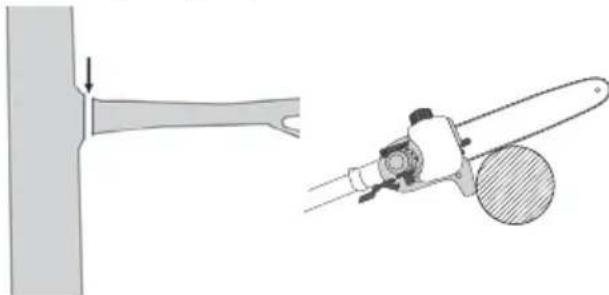
Sawing off larger branches
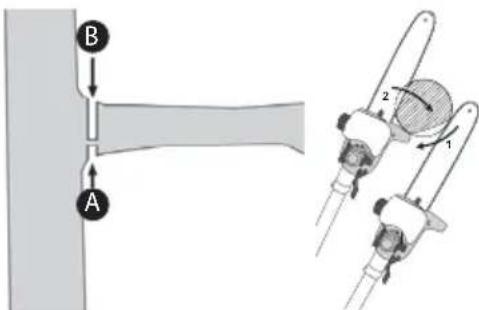
When sawing larger branches (0 8-20 cm), first make a relief cut A (see figure).
A relief cut also prevents peeling of the bark on the main trunk.
Saw from the top B to the bottom A.
Saw in sections
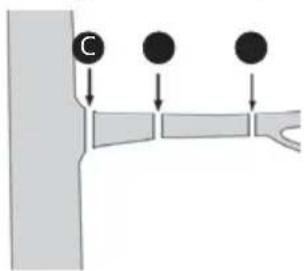
Long or thick branches should be shortened before making the final cut (see figure).
Working safely
- Keep the appliance, the cutting mechanism and the blade guard ③ good condition to prevent injury.
If the appliance has been dropped, check for significant damage or defects.
Maintain the specified angle 60^± 10^ to ensure safe working (see figure).
Do not use the appliance while standing on a ladder or with unsteady footing.
Do not be tempted into making a poorly considered cut. You could endanger yourself and others.
Children should be supervised to ensure that they do not play with the appliance.
- Change your working position regularly. Using the appliance for a long time can lead to vibration-related circulation disorders of the hands. You can extend the usage duration by means of appropriate gloves or by taking regular breaks. Note that any personal predisposition to poor blood circulation, low external temperatures or large prehensile forces can reduce the usage period.
Transport and storage
Use the blade guard for transporting the appliance.
Ensure that the appliance cannot switch on during transport (see figure).
Always clean the appliance thoroughly before storing.
Store the appliance in a dry place and out of the reach of children.
Store the appliance horizontally or secured against falling.
Empty the oil tank. Organic chain oil can become resinous or leak through the vent hole in the oil filler cap.
Cleaning and maintenance

Always switch the appliance off and remove the battery before carrying out any work on the appliance.
The appliance must always be kept clean, dry and free from oil or grease.
Never allow fluids to get into the device.
Use a soft, dry cloth to clean the housing. Never use petrol, solvents or cleansers which can damage plastic.
If a lithium-ion battery is to be stored for an extended period, the charge level should be checked regularly. The optimum charge level is between 50% and 80% . The optimum storage climate is cool and dry.
The pole pruner must be cleaned of sawdust at regular intervals.
Troubleshooting: Cordless pruner
| Problem Possible | Cause Troubleshooting | |
| Saw chain 17 runs with difficulty, chain comes off | Chain tension insufficient Check chain tension | |
| No progress | Saw chain 18 dry/overheating or is sagging | Top up with oil or grind, replace or tighten the saw chain 17 |
Maintenance intervals: Cordless pruner
The figures given here are based on normal operating conditions. In the event of more difficult conditions, such as strong dust generation and longer daily working hours, the given intervals are to be reduced correspondingly.
| Appliance part Action | Before | starting work | Weekly In the event of faults | In the event of damage | As required |
| Lubricating the chain | check | X | |||
| Saw chain 17 | check and note sharpness | X | |||
| check chain tension | X | ||||
| sharpen | X | ||||
| Guide rail 28 | check (wear, damage) | X | |||
| clean and turn | X | X | |||
| deburr | X | ||||
| replace | X | X | |||
| Chain sprocket 29 | check | X | |||
| replace | X |
Spare part orders
Replacement parts can be ordered directly from the service centre. Please provide the following details when making an order: machine type and item number.
GB
Disposal

packaging is made from environmen- tally friendly material and can be disposed of at your local recycling plant.
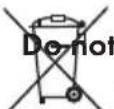
dispose of power tools in your normal domestic waste!
European Directive 2012/19/EU requires that worn-out power tools be collected separately and recycled in an environmentally compatible manner.

dispose of batteries in your normal domestic waste!
Defective or worn-out rechargeable batteries must be recycled according to Directive 2006/66/EC. Take the battery pack and/or device to the existing collection facilities.
Please consult your local authorities regarding suitable disposal of worn out power tools/battery packs.
Appendix
Warranty
You are provided a 3-year warranty on this appliance, valid from the date of purchase. This appliance has been manufactured with care and inspected meticulously prior to delivery. Please retain your receipt as proof of purchase. In the event of a warranty claim, please contact your Customer Service unit by telephone. This is the only way to guarantee free return of your merchandise.
The warranty only covers claims for material and manufacturing defects, not for damage sustained during carriage, components subject to wear and tear or damage to fragile components such as switches or batteries. This appliance is intended solely for private use and not for commercial purposes. The warranty shall be deemed void in the case of misuse or improper handling, use of force or interventions which were not carried out by one of our authorised Service centres. Your statutory rights are not restricted by this warranty. The warranty period is not prolonged by repairs made under the warranty. This also applies to replaced and repaired components. Any damage or defects present at the time of purchase must be reported immediately after unpacking, but no later than two days after the date of purchase. Repairs carried out after expiry of the warranty period shall be subject to charge.
Service
WARNING!
Have the power tool repaired by the Service centre or a qualified electrician and only using genuine replacement parts. This will ensure the ongoing safety of the appliance.
Always ensure that the power plug or the mains cable is replaced only by the manufacturer of the appliance or by that party's approved Customer Service unit. This will ensure the ongoing safety of the appliance.
GB Service Great Britain
Tel.: 0871 5000 720 (£ 0.10/Min.)
E-Mail: kompernass@lidl.co.uk
IAN 108534
Hotline availability: Monday to Friday from
KOMPERNASS HANDELS GMBH
BURGSTRASSE 21
44867 BOCHUM
GERMANY
www.kompernass.com
Translation of the original Conformity Declaration
We, KOMPERNASS HANDELS GMBH, Custodian of Documents: Mr. Semi Uguzlu, BURGSTR. 21, 44867 BOCHUM, DEUTSCHLAND, hereby declare that this product complies with the following standards, normative documents and the EC directives:
Machinery Directive
(2006/42/EC)
EC Low Voltage Regulations
(2006/95/EC)
EMC (Electromagnetic Compatibility)
(2004/108/EC)
RoHS Directive
(2011/65/EU)
Applied harmonised standards:
EN 60745-1:2009+A11
EN ISO 11680-1:2011
EN55014-1:2006+A1+A2
EN 55014-2:1997+A1+A2
EN 60335-1:2012+A11
EN 60335-2-29: 2004+A2
EN 62233:2008
EN 61000-3-2: 2014
EN 61000-3-3:2013
Type/appliance designation:
Cordless pruner FAHE 18 B2
Year of manufacture: 06 - 2015
Serial number: IAN 108534
Bochum, 20/05/2015
Semi Uguzlu
- Quality Manager -
The right to effect technical changes in the context of further development is reserved.
KOMPERNASS HANDELS GMBH
BURGSTRASSE 21
44867BOCHUM
DEUTSCHLAND/GERMANY
www.kompernass.com
Last Information Update:
05/2015·Ident.No.:FAHE18B2-052015-2
- FR BE
- Table des matieres
- Introduction 2
- General power tool safety warnings 36
- Before initial use 41
- Initial use 43
- Transport and storage 44
- Cleaning and maintenance 44
- Troubleshooting: Cordless pruner 45
- Maintenance intervals: Cordless pruner 45
- Disposal 46
- Appendix 46
- CORDLESS PRUNER FAHE 18 B2
- Introduction
- Intended use
- Features
- Package contents
- Technical data
- Battery: FAHE 18 B2-1
- High-speed
- OUTPUT:
- Noise and vibration data:
- WARNING!
- NOTE
- neral power tool - safety warnings
- Save all safety instructions and other instructions for future reference.
- Work area safety
- Electrical safety
- Personal safety
- Power tool use and care
- Use and handling of the cableless electrical power tool
- CAUTION! RISK OF EXPLOSION! Never charge non-rechargeable batteries.
- Service
- Appliance-specific safety instructions for cordless pruners
- Precautions against kickback
- CAUTION KICKBACK!
- Further safety instructions
- CAUTION! RISK OF INJURY!
- Safety guidelines for battery chargers
- RESIDUAL RISKS!
- Original accessories/auxiliary equipment
- Before initial use
- Charging the battery pack (see fig. A)
- CAUTION!
- Attaching/disconnecting the battery pack to/from the device
- Attaching the battery pack:
- Removing the battery pack:
- Checking the battery charge level
- Fixing/attaching the shoulder strap
- Mounting the saw chain and blade
- Tightening and checking the saw chain
- Lubricating the chain
- Sharpening the saw chain
- Initial use
- Switching on and off
- Switching on:
- Switching off:
- Checking the automatic oil system
- Adjusting the telescopic handle
- Sawing techniques
- Sawing off small branches
- Sawing off larger branches
- Saw in sections
- Working safely
- Transport and storage
- Cleaning and maintenance
- Troubleshooting: Cordless pruner
- Maintenance intervals: Cordless pruner
- Spare part orders
- Disposal
- Appendix
- Warranty
- Service
- GB Service Great Britain
- Translation of the original Conformity Declaration
- Machinery Directive
- EC Low Voltage Regulations
- EMC (Electromagnetic Compatibility)
- RoHS Directive
- Applied harmonised standards:
- Type/appliance designation:
Brand : PARKSIDE
Model : FAHE 18 B2
Category : Electric pruner