ManualGo.com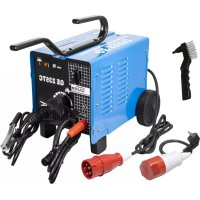
GE 235TC - Welding machine Güde - Free user manual and instructions
Find the device manual for free GE 235TC Güde in PDF.



Download the instructions for your Welding machine in PDF format for free! Find your manual GE 235TC - Güde and take your electronic device back in hand. On this page are published all the documents necessary for the use of your device. GE 235TC by Güde.
USER MANUAL GE 235TC Güde
Translation of the original instructions Electrode welding device
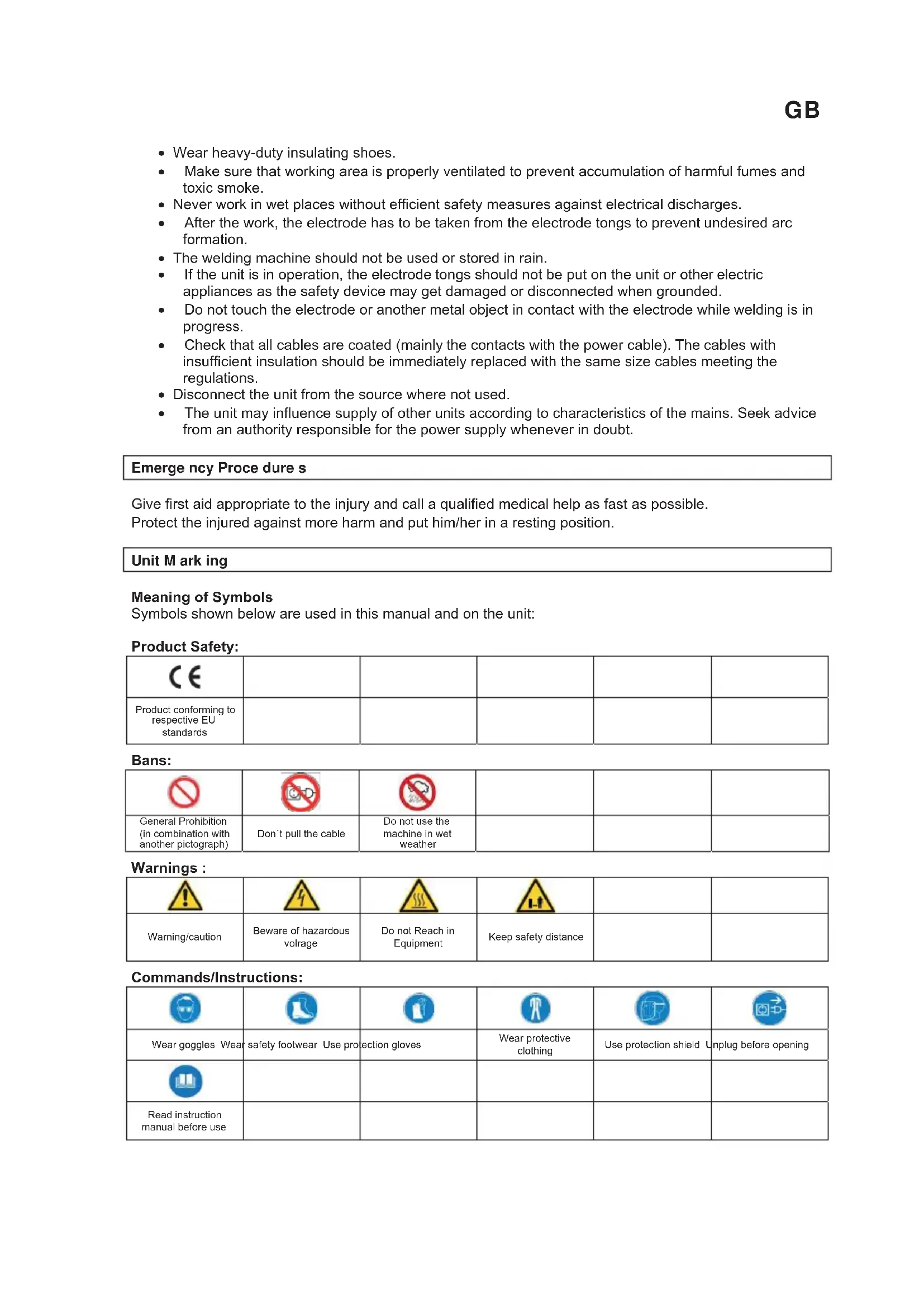
Product conforming to respective EU standards
General Prohibition (in combination with another pictograph) Don´t pull the cable Do not use the machine in wet weather
Warning/caution Beware of hazardous volrage Do not Reach in Equipment Keep safety distance Commands/Instructions:
Wear goggles Wear safety footwear Use protection gloves Wear protective clothing Use protection shield Unplug before opening
Read instruction manual before useGB Environment Protection: Dispose of the waste in an environment-aware manner. Cardboard packaging material may be delivered to a salvage point for recycling. Defective electric and electronic devices or those to be disposed of should be delivered to a salvage point for recycling. Packaging: Protect from rain Packaging placing direction – up Fragile! Technical Data: Mains connection Weight Product-specific: Manual arc welding with coated electrode Short circuit protection The machine may be used in the electrical shock hazardous areas Electrode diameter according to welding current 230 V connection 400 V connection transformer Electrode holder Earthing tongs Downward characteristic Mains connection Temperature indicator Use in Compliance w ith De term inat ion The welding unit is designed for metal welding using electrodes. The units and any accessories on the welding site are meeting respective provisions when delivered. The manufacturer shall not be held liable for any damages if the generally valid regulations and provisions contained herein are not observed. Re sidua l Ha zard and Preve ntive Act ion Electrical Residual Hazards Threat Description Preventive Action Residual Hazard Indirect electric contact Simultaneous contact with earthing terminal and the electrode cable may result in electrical shock. prevent contact Indirect electric contact Residual heat hazards Threat Description Preventive Action Residual Hazard Burns, frostbites x Contact with the piece to be welded may cause serious burns. x Splashes released in the course of welding may harm both the welder and his clothing.
Do not touch the piece being welded use protective gloves x Wear protection clothing Burns, frostbites Radiation hazard Threat Description Preventive Action Residual Hazard Infrared, visible and UV light Looking in the arc may result in severe injury of eyes , Always use welder protection shield Infrared, visible and UV lightGB Material and other substances hazards Threat Description Preventive Action Residual Hazard Contact, inhalation Long-lasting inhalation of fumes in the course of welding may be health hazardous.
Have the fumes extracted when welding x Work in a properly ventilated area x Avoid direct inhalation of fumes Fire or explosion x Easily inflammable materials may ignite in direct area of welding. x Oil, fuel or gas tanks may explode at welding
Do not work near inflammable materials. x Tanks of any kind should be completely emptied, cleaned and well-ventilated. Only properly trained professionals are allowed to weld tanks. Failure to Observe Human-Factor Principles Threat Description Preventive Action Residual Hazard Negligent use of personal protection equipment Welding without required personal protection equipment may result in health hazard. Use required personal protection equipment for welding. Disposal The instructions for disposal are expressed in the pictographs on the unit or the packaging. For description of individual meaning see chapter “Unit Marking”. Ope rator Require me nt s The operator is required to read the instruction manual carefully before using the unit. Qualification The unit is designed to be used by trained arc welders or instructed persons of similar qualification. Minimum Age The unit shall be operated by persons above 18 years of age. Operation by juvenile operators is an exception, if it is as a part of professional training under supervision of a teacher with an aim to obtain skills. Training Only trained persons should operate the unit. This operating manual should be made available to each user. . Technic a l Data Voltage/Frequency: 230 V/400 V; 50 Hz Max. welding current : 190 A Regulated zone : 40 – 190 A Electrode diameter Ø: 2 – 4 mm Idling voltage : 48 V Protection class : IP 21 S Insulation class : H Weight : 22,4 kg Ordering no.: 20005 Tra nsport a nd St ora ge The unit should be stored at a dry place out of the reach of unauthorised persons. Make sure that the unit is unplugged. Remember that the electrodes too have to be kept at a dry place. ,GOHVWDWHSRZHU
Procedure Carry out the assembly of separate parts in the order as indicated in figures. Mind the correct arrangement of the parts. Ope ra tion Fig. 7
4. Earthing connection
5. Electrode holder connection
Fig. 8 Having changed from 230 V to 400 V, take steps as follows:
3. Remove the lock screw and fit it on the 400 V side.
4. Before putting the unit in operation again, make sure that the
knob may be turn in position 400 V and cannot be turned in position 230 V. - The unit may be used at a room temperature from 20°C without the thermal protection being put on with the number of reference electrodes n
from warm condition without switching the thermal protection on. - The earthing tongs need to be connected with the piece to be welded in a way providing for a good contact. The touch points should be cleaned so that no grease or other impurities that could adversely affect the welding output are present. - The unit has a main switch, yellow light indicator, thermal protection and a hand wheel to control the welding current. The control is done with regard to welding current valuea and electrode diameter. Cuation: The indicators will light at overloading only.GB Thermal protection is provide on the unit to switch off the welding current supply automatically as soon as the inner temperature. As it drops to a value of correct operation, the unit switches on again. Ope ration Sa fety Prec aut ions See also chapter Residual hazards and safety measures and safety action arising therefrom. x Do not use the unit before you have read the instruction manual. x Observe all the safety instruction contained herein. x Be responsible to other persons. Ste p by St ep I nst ruct ions The welding area should be free of any rust and varnish. The electrode is selected by the type of material. It is recommended to test the electrode and the current intensity on scrap at the beginning. Place the electrode ca 2 cm above the starting point. Always use a welding shield, welder´s gloves and protective clothing. Touch the piece and slightly pull the electrode. Wrong (arc too long ) Corre ct (ca 1 – 1.5 multiple of the electrode diameter) Precise length of the arc is critical as the current and voltage intensity varies. Poor intensity of current makes both the weld and resistance worse. The electrode angle support should be 70-80 degree forward with regard to the piece worked. Too big (??) angle makes the slag slide under the edging material. If the angle is too small, the arc will fluctuate and splash. In either of the cases the wells is porous and weakened Wrong Wrong Corre ct The slag should not be removed before the weld gets cooled. Continue welding of an interrupted weld after the slag is removed. Wrong Corre ct The welder should try to keep the arc length constant. As the electrode get worn, it should typically get nearer. It is recommended to remove the lectrode in the direction of the weld to avoid forming a porous crater.GB Faults – Causes – Trouble shoot ing CAUTION: ALWAYS CHECK POWER FUSES FIRST! Fault Cause Troubleshooting Fuse activated
1. Welding current too high for the fuse. 1. Use a stronger fuse.
2. Use inertial fuse.
Even welding impossible
1. Poor earthing contact on the cable /tongs 1. Clean the piece and provide for a good contact
1. Unclean piece 1. Remove any rust, grease and other impurities
before getting down to the welding job. Welding current not available
1. Reverse conduct of the welding current doe
not provide right contact Thermal protection light on
2. Defective electronics
1. Check the reverse line of welding current for good
2. Let the unit cool down. The work may be
continued when the light indicator goes off .