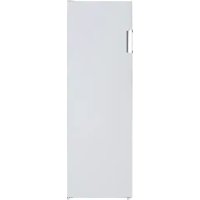
VPVR170 - Freezer Veripart - Free user manual and instructions
Find the device manual for free VPVR170 Veripart in PDF.


| Product type | Freezer |
| Brand | Veripart |
| Model | VPVR170 |
| Dimensions (H x W x D) | 1700 x 544 x 641 mm |
| Power supply | 220-240 V ~ 50 Hz |
| Climate class | SN, N, ST, T |
| Refrigerant | R600a (isobutane) |
| Temperature range | -16 °C to -24 °C |
| Functions | Quick freezing, open door alarm, power failure memory, automatic and manual defrost |
| Lighting | LED |
| Door reversal | Yes, possible |
| Noise level | Not specified |
| Energy class | Not specified |
| Freezing capacity | Not specified |
| Weight | Not specified |
| Included accessories | Ice cube tray, shelves, drawers, bottle holder |
| Maintenance and cleaning | Regular interior cleaning with soft cloth and mild detergent; automatic or manual defrost |
| Safety | Grounding; do not use extension cord; do not store flammable substances; do not block ventilation openings |
| Spare parts and repairability | Contact Coolblue after-sales service (Weena 664, Rotterdam, 010 798 8999) |
Frequently Asked Questions - VPVR170 Veripart
User questions about VPVR170 Veripart
0 question about this device. Answer the ones you know or ask your own.
Ask a new question about this device
Download the instructions for your Freezer in PDF format for free! Find your manual VPVR170 - Veripart and take your electronic device back in hand. On this page are published all the documents necessary for the use of your device. VPVR170 by Veripart.
USER MANUAL VPVR170 Veripart
- VPVR144NF -VPVR170 -
Handleiding
Instruction Manual
Mode d'emploi
Bedienungsanleitung
INHOUD
VEILIGHEID 3
Veiligheidstips 3
WAARSCHUWINGEN VOOR AFVALVERWERKING
Relevant information for the best-known and most popular sources of information on the subject are: - Relevance information - Incentive information - Relevance information - Relevance information - Relevance information - Relevance information
MAINTENANCE AND CLEANING 52
SIMPLE TROUBLESHOOTING AND SOLUTIONS 55
CERTIFICATIONS
SAFE RECOVERY INSTRUCTIONS 57
WARNINGs FOR DISPOSAL 58
REVERSING THE DOOR SWING 60
46
57
SAFETY
! ! Warning!
- It is hazardous for anyone other than authorised service personnel to carry out servicing or repairs which involve the removal of covers. To avoid the risk of an electric shock do not attempt to repair this appliance yourself.
! Warning!
- Risk of Ire / Iammable materials.
SAFETY TIPS
- Do not use electrical appliances such as hair dryers or heaters to defrost your freezer.
- Containers withflammable gases or liquids can leak at low temperatures.
- Do not store any containers with fammable materials, such as spray cans, the extinguisher roll cartridges etc. in the freezer.
service agent or similarly qualified persons in order to avoid a hazard.
- This appliance can be used by children aged 8 years and above and persons with reduced physical, sensory or mental capabilities or lack of experience and knowledge if they have been given supervision or instruction concerning use of the appliance in a safe way and understand the hazards involved. Children should not play with the appliance. Cleaning and user maintenance should not be done by children without supervision.
- This refrigerating appliance is not intended to be used as a built-in appliance.
-
This appliance is intended to be used in households and similar locations such as:
-
staff kitchen areas in shops, offices and other work environments;
- farm houses or by clients in hotels, motels and other residential type environments;
- bed and breakfast type environments;
-
catering and similar non-retail applications.
-
Keep ventilation openings clear of obstruction.
- Do not use mechanical devices or other means to accelerate the defrosting process, other than those recommended by the manufacturer.
- Do not damage the refrigerant circuit.
- Do not use electrical appliances inside the food storage compartments of the appliance, unless they are of the type recommended by the manufacturer.
- Do not store explosive substances such as aerosol cans with a flammable propellant in this appliance.

Warning!
- Refrigerating appliances - in particular a freezer-freezer Type I - might not operate consistently (possibility of defrosting of contents or temperature becoming too warm in the frozen food compartment) when placed for an extended period of time below the cold end of the range of temperatures for which the refrigerating appliance is designed.
- The refrigerant used in your appliance and insulation materials requires special disposal procedures.
- When positioning the appliance, ensure the supply cord is not trapped or damaged.
- Do not locate multiple portable socket-outlets or portable power supplies at the rear of the appliance.
Children below the age of 8 years are not allowed to load and unload refrigerating appliances.
To avoid contamination of food, please respect the following instructions:
- Opening the door for long periods can cause a significant increase in the temperature of the compartments of the appliance.
- Clean surfaces that come in contact with food and accessible drainage systems regularly.
- Store raw meat and fish in suitable containers in the freezer, so that they are not in contact with or drip onto other food.
- Two-star frozen-food compartments are suitable for storing pre-frozen food, storing or making ice-cream and making ice cubes.
- One-, two- and three-star compartments are not suitable for the freezing of fresh food.
If the refrigerating appliance is left empty for long periods, switch it off,
Climate Range
The information about the climate range of the appliance is provided on the rating plate. It indicates which ambient temperature (that is, room temperature) is necessary for the optimal operation of the appliance.
| CLIMATE RANGE PERMISSIBLE AMBIENT TEMPERATURE | |
| SN From +10°C to +32°C | |
| N From +16°C to +32°C | |
| ST | From +16°C to +38°C |
| T | From +16°C to +43°C |

Note!
- Given the limit values of the ambient temperature range for the climate classes for which the refrigerating appliance is designed and the fact that the internal temperatures could be affected by such factors as the location of the refrigerating appliance, the ambient temperature and the frequency of door opening, the setting of any temperature control device might have to be adjusted to allow for these factors, if appropriate.
- If the power cable is damaged, it must be replaced by the manufacturer, its service agent or similarly qualified persons in order to avoid a hazard.
- When operating in an environment other than the specified climate type (i.e., beyond the rated ambient temperature range), the appliance may not be able to maintain the desirable compartment temperatures.
Freon-free
The freon-free refrigerant (R600a) and the foaming insulation material (cyclopentane) used in the freezer cause no damage to the ozone layer and have a very small impact on global warming. R600a is flammable. It is sealed in a refrigeration system that will not leak during normal use. But, in case of refrigerant leakage due to the refrigerant circuit being damaged, be sure to keep the appliance away from open flames and open the windows for ventilation as quickly as possible.
PRODUCT FEATURES
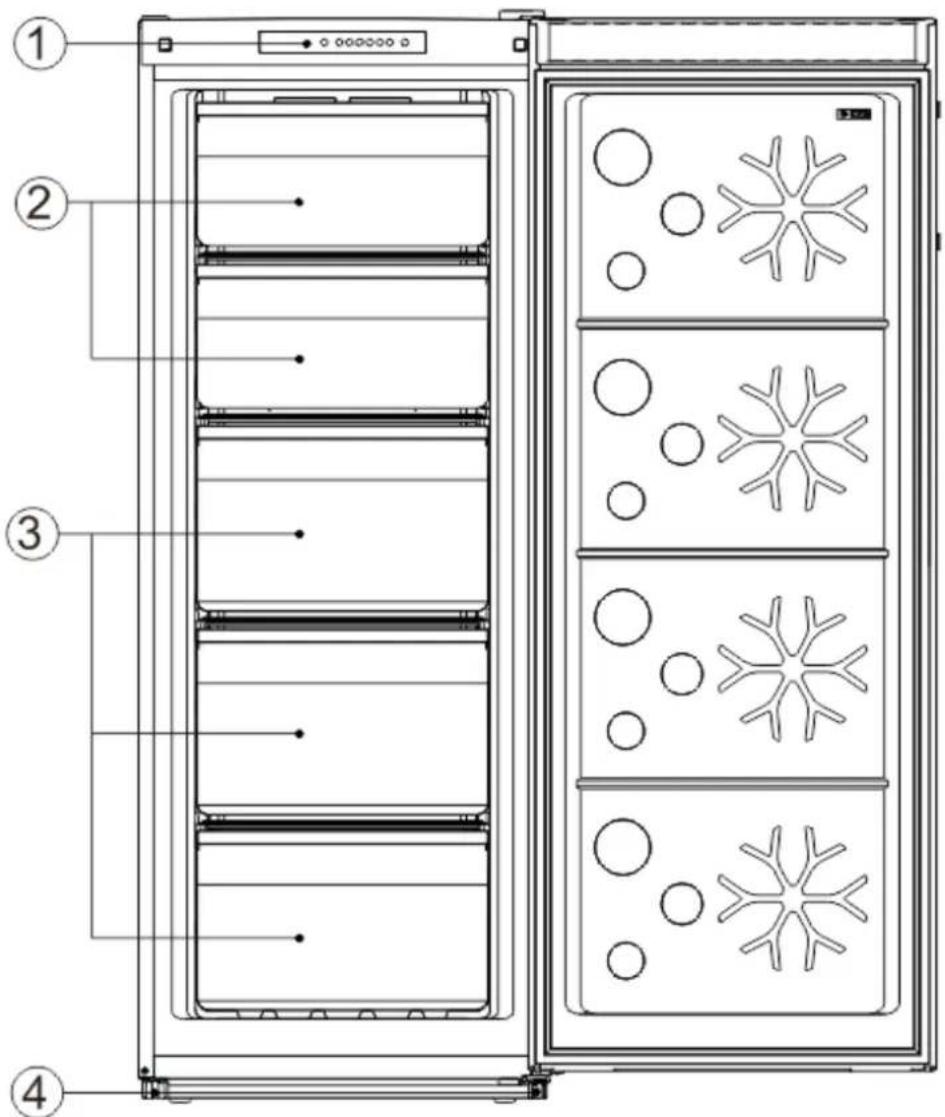
VPVR144NF
- Control panel
- Flip cover
- Freezer drawers
- Adjustable feet
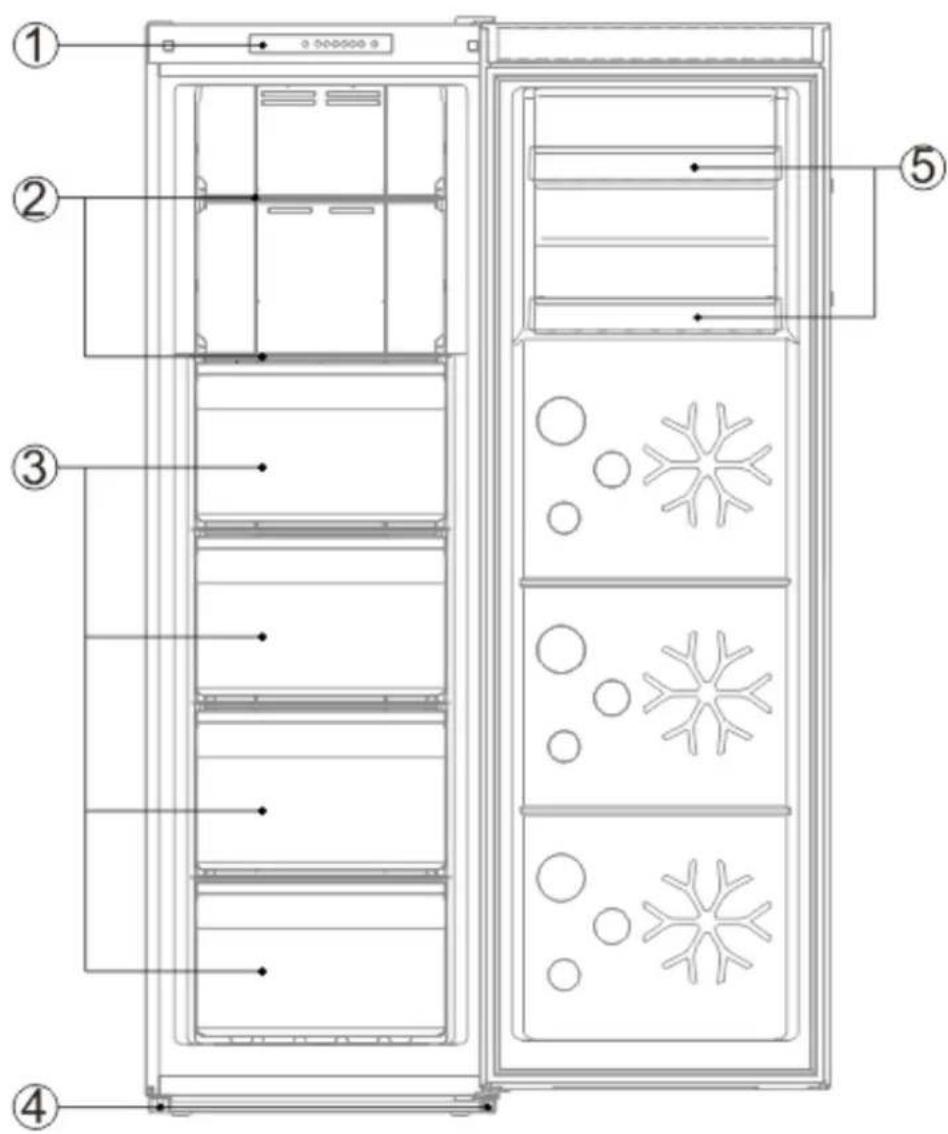
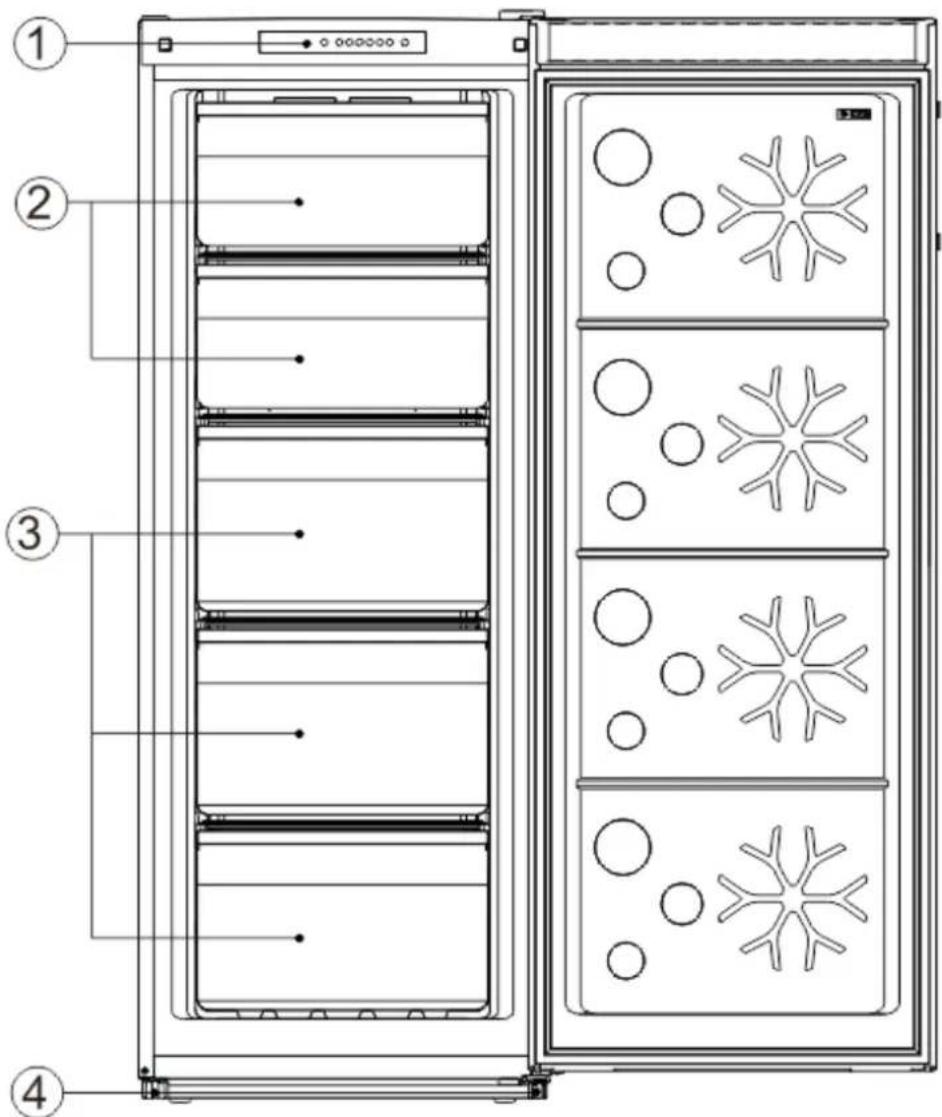
VPVR170
- Control panel
- Freezer glass shelves
- Freezer drawers
- Adjustable feet
- Bottle racks
Due to technological innovation, the product descriptions in this manual may not be completely consistent with your freezer.
PREPARATION FOR USE
Installation location:
1. Ventilation
The position you select for the freezer installation should be well-ventilated and cool. Do not locate the freezer near a heat source such as a cooker, and avoid situating it in direct sunlight, thus guaranteeing the refrigeration effect while saving energy consumption. Do not put the freezer in a damp place, in order to prevent the freezer from rusting and leaking electricity. The area of the total space of the room in which the freezer is installed, when divided by the refrigerant charge amount of the freezer, should not be less than 8g / m^3

Note!
- The amount of refrigerant contained in the freezer can be found on the rating label.
2. Heat dissipation space
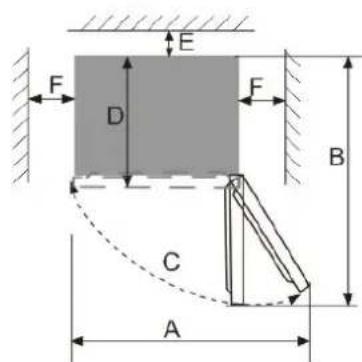
When working, the freezer gives off heat to its surroundings. Therefore, at least 30mm of free space should be left on the top, more than 100mm on both sides, and more than 50mm at the back of the freezer.

1
2
| WDHABC(°) EF | |||||||
| 544 641 | 1443 890 | 1096 125 | 50 100 | ||||
| 544 641 | 1700 890 | 1096 125 | 50 100 | ||||
Dimensions in mm.

Note!
Figure 1 and Figure 2 only illustrate the space requirements of the product.
3. Level ground
Place the freezer on a flat, solid floor to keep it stable and to avoid excessive vibration and noise. When the freezer is placed on carpet, a straw mats or polyvinyl chloride, the solid backing plates should be applied underneath the freezer, so as to prevent colour changes due to heat dissipation.
- Unobstructed ventilation must be maintained around the appliance or in an embedded structure.
Preparations for use
1. Standing time
After the freezer is properly installed and well cleaned, do not switch it on immediately. Wait to switch the freezer on only after more than 4 hours, so as to ensure its normal operation.
2. Cleaning
Confirm the accessory parts inside the freezer and wipe the inside with a soft cloth.
3. Power-on
Insert the plug into the socket to start the compressor. After 4 hours, open the freezer door. If the temperature inside the freezer compartment has dropped noticeably, the refrigeration system is working normally.
4. Stoge of food
After the freezer has been running for a period of time, the internal temperature of the freezer will be automatically controlled according to the user's chosen temperature setting. After the freezer is fully cooled, you may load it with food, which usually needs 2~3 hours to cool completely. In summer, when the outside temperature is high, it takes more than 4 hours for food to be fully cooled (Try to open the freezer door as little as possible before the internal temperature has cooled down).

Warning!
- If the freezer is installed in a damp area, make sure to check whether the ground wire and leakage circuit breaker are normal. If vibration noises are produced due to the freezer contacting the wall or if the wall gets blackened by air convection around the compressor, move the freezer away from the wall. Installation of the freezer may cause static or image distortions on mobile phones, fixed-line telephones, radio receivers or televisions nearby, so try to keep the freezer as far away from such devices as possible.
FUNCTIONS
When the freezer system is connected to the power supply for the first time, all icons on the display panel will be illuminated for 2 seconds, and the system will be set at -18°C by default.
Functions
Frost


1. Temperature setting
The temperature can be adjusted by pressing the 'SET' key. Every time the "SET" key is pressed, the current mode indicator lights go off and the next mode indicator lights up, with the said mode setting validated if there is no key operation within 5 seconds (otherwise, the mode setting will be invalid). After the setting takes effect, the temperature will be immediately controlled as per the mode setting.
The temperature modes cycle as follows:
$$ - 1 6 ^ {\circ} \mathrm {C} > - 1 8 ^ {\circ} \mathrm {C} > - 2 0 ^ {\circ} \mathrm {C} > - 2 2 ^ {\circ} \mathrm {C} > - 2 4 ^ {\circ} \mathrm {C} > \text {米} > - 1 6 ^ {\circ} \mathrm {C} ^ {\prime \prime} $$
2. Fast freezing
When the fast-freezing function is enabled, the compartment temperature can be cooled rapidly, which is beneficial for the preservation of the food's nutrition and freshness.
After a cumulative running period of 26 hours, the fast-freezing function will stop automatically, with the temperature mode restored to that set before the fast-freezing function was enabled.
3. Door open alarm
When the freezer door remains open for more than 3 minutes, the buzzer will sound. The alarm can be suspended for 3 minutes by pressing any key but it will not stop until the door is properly closed.
4. Power-cut memory
In case of power failure, the freezer will return to its operating state before the power failure once the power supply is restored.
5. Power-on delay
In order to protect the freezer compressor from being damaged in the case of short-time power failure (i.e., less than 5 minutes), the compressor will not be started immediately after it is powered on.
6. Defrosting
The freezer can be defrosted automatically or manually.
If the freezer is not defrosting, the automatic defrosting program can be enabled by holding down the SET key for 15 seconds, with all the mode indicator lights illuminated. Refrigeration will be stopped, and the defrosting process started. During the defrosting process, you can hold down the SET key for 3 seconds to manually stop defrosting, or wait until the defrosting program finishes.
In order to avoid frequent defrosting of the freezer, do not access the defrost function during the defrosting process; and make sure not to enable the defrost function again within 10 minutes after it is manually disabled.
7. Fault alarm
When the alarm indicator keeps flashing (with the corresponding indicator light of "-16, -20, -24, or fast freezing" flickering simultaneously), it indicates a fault with the freezer. Please contact the seller in such a case.
INSTRUCTIONS FOR FOOD STORAGE
Food storage locations
Do not put too much food inside the freezer. Keep enough space between items; if items are too close together, the cold air flow will be blocked, thus affecting the refrigeration effect. Do not store excessive amounts or very heavy food, to avoid damage to the shelf. When storing food, keep it away from the inner wall; and do not place water-rich foods too close to the back of the freezer, lest they get frozen to the inner wall.
Freezer mode
Long-term storage of foods: The freezer compartment, where the temperature is generally controlled below -18^ , is suitable for the long-term preservation of foods, but the shelf life indicated on the food packages should be adhered to.
Freezer drawer: Used for frozen food storage. Large pieces of meat or fish should be cut into smaller portions, packed separately in freezer bags and distributed evenly in the drawer.
Fast freezing
- Refer to the description of the fast-freezing function in the "Functions" section.
- In contrast to normal freezing, fast freezing enables food to pass through the maximum ice crystal formation zone at the fastest speed. Fast freezing can freeze water in the food into fine ice crystals, without damaging the cell membrane, so cell moisture will not be lost when thawing, and the original freshness and nutrition can be maintained.
-
The fast-freezing function is designed to preserve the nutrition of the frozen food, by freezing the food thoroughly in the shortest time. Fast freezing consumes more energy than the normal freezing does.
-
Allow hot foods to cool down to room temperature before putting them in the freezer compartment.
-
Do not put glass containers filled with liquid or sealed cans of liquid in the freezer compartment, so as to avoid breakage or bursting due to volume expansion when the liquid freezes.
- Divide the food into convenient, smaller portions.
- It is best to wrap food before freezing it., The packaging used should be dry, to prevent the bags from freezing together. Foods should be packed in or covered by suitable materials that are firm, tasteless, impervious to air and water, non-toxic and pollution-free, to avoid cross-contamination and transfer of odours.
Tips for shopping for frozen food
- When buying frozen food, consult the Storage Guidelines on the packaging. You will be able to store each item of frozen food for the period shown against the star rating. This is usually the period stated as "Best beforex", found on the front of the packaging.
- Check the temperature of the frozen food cabinet in the shop where you buy frozen food.
- Make sure the frozen food package is in perfect condition.
- Always buy frozen products last on your shopping trip or visit to the supermarket.
- Try to keep frozen food together whilst shopping and on the journey home, as this will help to keep the food cooler.
- Don't buy frozen food unless you can freeze it straight away. Specially insulated bags can be bought from most supermarkets and hardware shops. These keep frozen foods cold longer.
- For some food, thawing before cooking is unnecessary. Vegetables and pasta can be added directly to boiling water or steamed. Frozen sauces and soups can be put into a saucepan and heated gently until thawed.
- Use quality food and handle it as little as possible. When food is frozen in small quantities, it will take less time to freeze or thaw.
- Estimate the amount of food to be frozen. When freezing large amounts of fresh food, adjust the temperature control knob to the low mode. With the freezer temperature lowered, foods can be frozen quickly to maintain freshness.
How to use the ice-making box
Place the ice cube tray in the upper position of the freezer compartment, so that it freezes as soon as possible.
TIPS FOR SPECIAL CIRCUMSTANCES
Moving the freezer/freezer
- Location
Do not place your freezer/freezer near a heat source, e.g. cooker, boiler or radiator. Avoid placing it in direct sunlight in out-buildings or verandas.
- Levelling
Make sure to level your freezer/freezer using the front levelling feet. If the freezer is not level, the seal of the door gasket will be affected, and this might lead to the operational failure of the freezer/freezer.
After placing the freezer/freezer in position, wait for 4 hours before using it, to allow the refrigerant to settle.
Installation
Do not cover or block the vents or grills of your appliance.
When you are away for a long time:
- If the appliance will not be used for several months, turn it off first, and then unplug the plug from the wall outlet.
- Take out all foods.
- Clean and dry the interior thoroughly. To prevent odours and mould growth, leave the door ajar: either block it open or have the door removed if necessary.
- Keep the cleaned appliance in a dry, ventilated place and away from heat sources, move the appliance gently, and do not place heavy objects on top of it.
- The unit should not be accessible to unsupervised children.
MAINTENANCE AND CLEANING

Warning!
- Before cleaning, unplug the power plug first; Do not plug in or unplug the freezer with wet hands, because there is a risk of electric shock and injury. Do not spill water directly on the freezer in order to avoid rust, electricity leakage and accidents. Do not insert your hands into the bottom of the freezer, as there is a risk of being scratched by sharp metal corners.
Internal cleaning and external cleaning
Any food residue in the freezer is liable to produce bad odours, so the freezer must be cleaned regularly. The fresh food compartment is usually cleaned once a month.
Remove all shelves, the crisper box, bottle racks, cover board, and drawers etc., and clean them with a soft towel or sponge dipped in warm water or neutral detergent.
Clean off any dust that has accumulated on the rear panel and side plates of the freezer often.
After using detergent, be sure to rinse with clean water, and wipe dry.

Warning!
- Do not use a hard bristle brush, steel wire brush, detergent, soap powder, alkaline detergent, benzene, gasoline, acid, hot water or other corrosive materials to clean the cabinet surface, door gasket, plastic decorative parts, etc., so as to avoid damage.
- Carefully wipe dry the door gasket and clean the groove using a thin implement (i.e. a wooden chopstick) wrapped in cotton wool. After cleaning, attach the four corners of the door gasket first, and then embed it segment by segment into the door groove.
Interruption of power supply or failure of the refrigerating system
- See to frozen food if the freezer will be off for an extended time (such as during an interruption of the power supply or failure of the refrigerating system).
-
Try to open the freezer door as little as possible. In this way food can remain safe and fresh for hours, even in hot weather.
If you receive a power outage notice in advance: -
Adjust the thermostat knob to the high mode an hour in advance, so that food is fully frozen (do not store new food during this time!). Restore the temperature mode to the original setting when the power supply t returns to normal.
- You can also make a block of ice using a large, watertight container and put it in the upper part of the freezer, so as to extend the storage time of the food inside.

Note!
- Once the freezer is in use, it is better to use it continuously and under normal circumstances. Do not stop or start its use unnecessarily as this might affect its service life.
Defrosting
This appliance is designed with automatic defrosting function, and it can also be manually defrosted.
Changing the lamp
The LED lamp used for lighting inside the freezer offers low energy consumption and a long service life. In case of any abnormality, please contact the seller.
Safety-check after maintenance
Is the power cord broken or damaged?
Is the power plug firmly inserted into the socket?
Is the power plug abnormally warm?

Note!
- Electric shock or fire may result if the power cord or plug is damaged or covered with dust. If there is any abnormality, please unplug the power plug and contact the vendor.
How to disassemble the parts
Shelf: Hold one end of the shelf and lift it up while pulling it outward.
Flip cover: Maintaining the flip cover in a vertical position, align it with the rotating shaft opening on the right side and pull it outward to remove it.

Warning!
- When using the freezer, do not close the door when the flip cover is opened, to avoid damaging the freezer door!
SIMPLE TROUBLESHOOTING AND SOLUTIONS
Not every malfunction needs to be fixed by the technical service personnel. You can try to solve the problem.
| CASE INSPECTION SOLUTIONS | ||
| No refrigeration | Is the freezer plugged in? - Are breakers and fuses broken? - Any loss of electricity or line trip? | - Re-insert the plug into the electricity outlet. - Open the door and check whether the lamp is lit. |
| Abnormal noise | Is the freezer stable? - Is the freezer touching the wall? | - Adjust the freezer's levelling feet. - Move it slightly away from the wall. |
| Poor refrigerating efficiency | - Is there hot food or too much food inside? - Is the door opened too frequently? - Are any food containers stuck in the door gasket? - Is the appliance situated in direct sunlight or near a furnace or stove? - Is the location well-ventilated? - Is the temperature setting too high? | - Only put food into the freezer after it has cooled. - Check and close the door. - Check the door gasket and remove any packaging that is stuck. - Move the freezer away from the heat source. - Clear the area around the freezer to maintain good ventilation. - Set to the appropriate temperature. |
| Peculiar smell in freezer | - Has any food spoiled? - Does the freezer need cleaning? - Are you storing food with strong flavours or odours? | - Throw away spoiled food. - Clean the freezer. - Pack food with strong flavours tightly. |
| Buzzer alarm | - Is any door open? | - Open the door, then close it again. |
| All indicator lights on the display panel ON | - Is the defrosting function enabled? - Hold | ld down the SET key for 3 seconds (for details, refer to the Function section concerning Defrosting). |

Note!
- If the above descriptions are not applicable, do not disassemble and repair the refrigerator yourself. Repairs carried out by inexperienced persons may cause injury or serious malfunctions. Contact the seller where your purchase was made. This product should be serviced by an authorized engineer and only genuine spare parts should be used.
- When the appliance is not in use for long periods, disconnect it from the electricity supply, empty it of all food and clean the appliance, leaving the door ajar to prevent unpleasant smells.
CERTIFICATIONS
Electrical information
This electrical appliance must be grounded.
This product is equipped with a plug that is suitable for all houses equipped with sockets meeting the current specifications.
If the fitted plug is not suitable for your socket outlets, it should be cut off and carefully disposed of. To avoid a possible shock hazard, do not insert the discarded plug into a socket.
This product complies with the EEC directives.
SAFE RECOVERY INSTRUCTIONS
Disposal
Old appliances still have some surplus value. An environmentally friendly approach will ensure that valuable raw materials are recycled.
The refrigerants used in your equipment and insulation materials require special handling procedures. Make sure there is no pipe damage on the back of the equipment before handling.
Up-to-date information on the options for disposing of old equipment and its packaging can be obtained from the local municipal office.
Correct disposal of this product
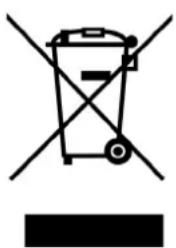
This symbol indicates that this product should not be disposed with regular household waste anywhere in the EU. To prevent possible harm to the environment or human health from uncontrolled waste disposal, recycle it responsibly to promote the sustainable reuse of material resources. To return your used device, please use the municipal return and collection systems available or contact the retailer where the product was purchased. They can take this product for environmentally safe recycling.
WARNING FOR DISPOSAL
- The refrigerant and cyclopentane foaming material used for the freezer are flammable. Therefore, when the freezer is scrapped, it should be kept away from any fire source and be recovered by a specialised recovery company with corresponding qualifications and disposed of by other means than combustion, so as to prevent damage to the environment or any other harm.
- When the freezer is scrapped, disassemble the doors, and remove the door gasket and shelves. Put the doors and shelves in a proper place, so as to prevent the trapping any children.
Contact information for professional repair, such as internet webpages, addresses, contact details
| AFTERSALES SERVICE STATION LIST: | |
| Address | Weena 664, 3012 CN, Rotterdam |
| Contact numner | 010 798 8999 |
| Website www.coolblue.nl | |

Note!
- The address or contact phone number of the service site is subject to change without prior notice. Please confirm whether the service station is directly affiliated with our company when requiring services.
Relevant information for ordering spare parts, directly or through other channels,is provided by the manufacturer, importer or authorised representative.
The minimum period during which spare parts, necessary for the repair of the appliance, are available.
Instructions how to find the model information in the product database, as defined in Regulation (EU) 2019/2019 by means of a weblink to the model information as stored in the product database or a link to the product database and information on how to find the model identifier on the product.
REVERSING THE DOOR SWING
-
Make sure that your freezer is unplugged.
-
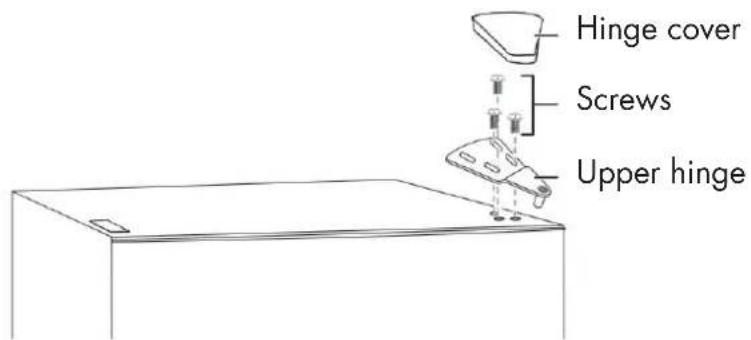
Pry the hinge cover up and off, remove the three screws that secure the upper hinge to the door, then remove the hinge.
-
Remove the freezer compartment door from the cabinet.
-
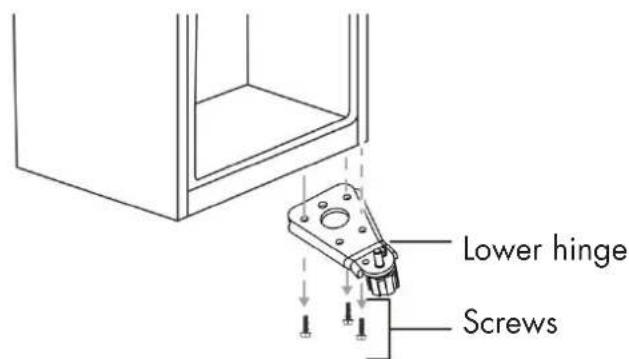
Remove the screws that secure the lower hinge to the right side of the cabinet, then remove the hinge.
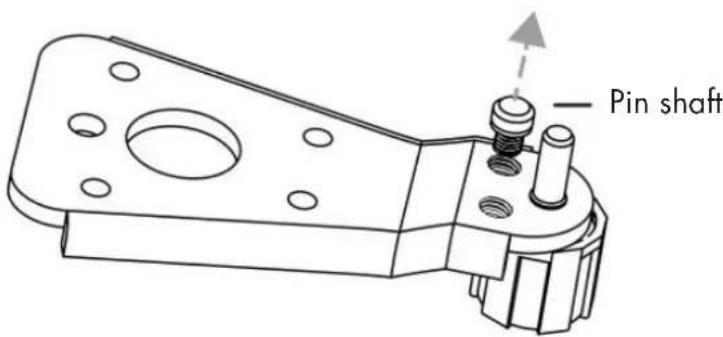
- Remove the washer and nut that secure the pin shaft to the right hole on the lower hinge, then remove the shaft.
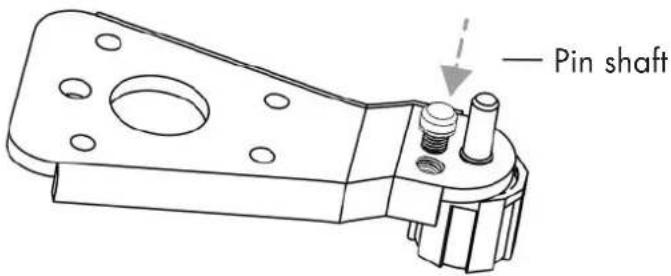
- Insert the pin shaft into the left hole on the lower hinge, then secure the shaft with the washer and nut.
- Install the lower hinge on the left side of the cabinet.
- Remove the screw that secures the door stop from the bottom right of the freezer compartment door, then remove the door stop and install to the bottom left side.
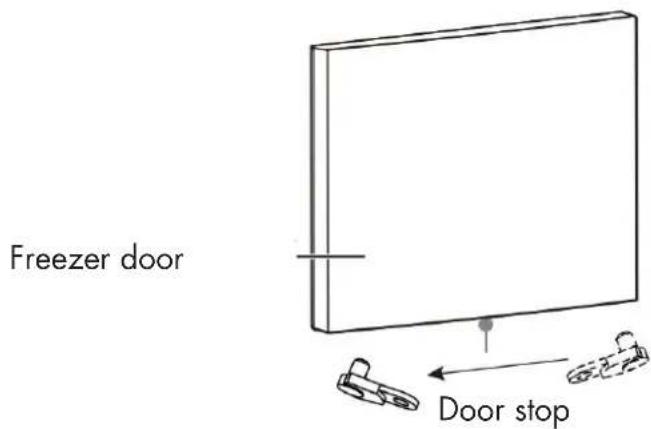
-
Install the freezer compartment door.
-
Move the door bushing from the top right side of the freezer door to the top left side of the door. Then move the left hole cover to the right side.
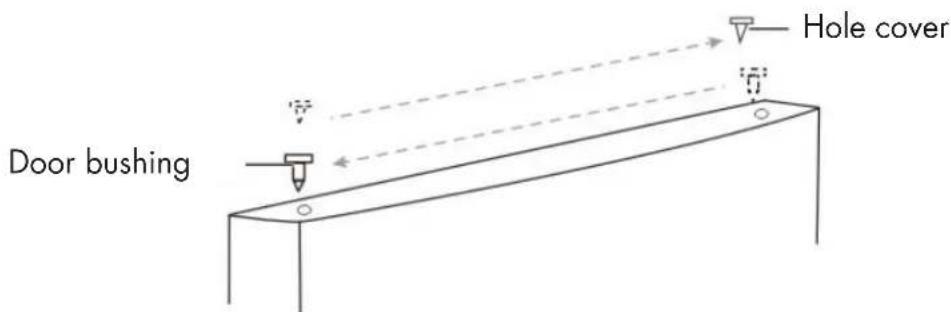
- Remove the screw that secures the hinge screw hole cover from the top left side of the cabinet, remove the cover and secures the cover on the top right side of the cabinet.
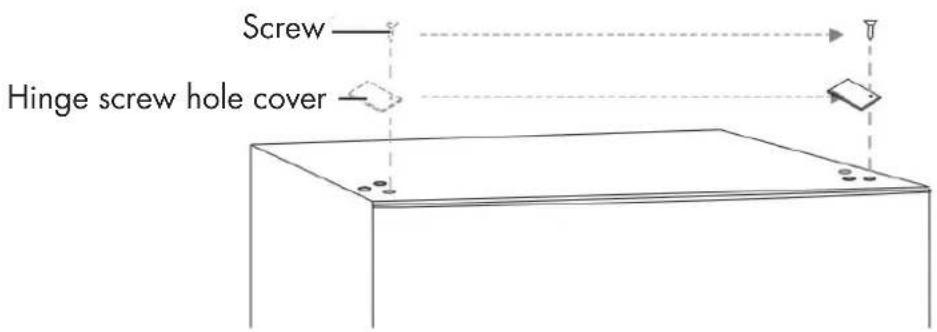
-
Secure the upper hinge to the top left side of the cabinet with the three screws you removed previously. Before you tighten the upper hinge screws, make sure that the top of the door is level with the cabinet and that the rubber gasket makes a good seal. Install the hinge cover over the hinge on the top left side of the cabinet.
-
Remove the left hole plugs, unscrew the bolts, and remove the right hole plugs.
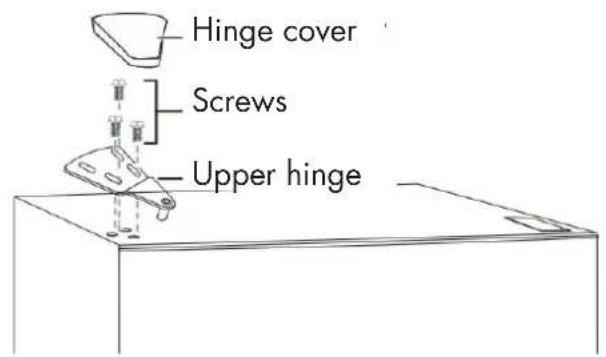
- Remove the left hole plugs, unscrew the bolts, and remove the right hole plugs.
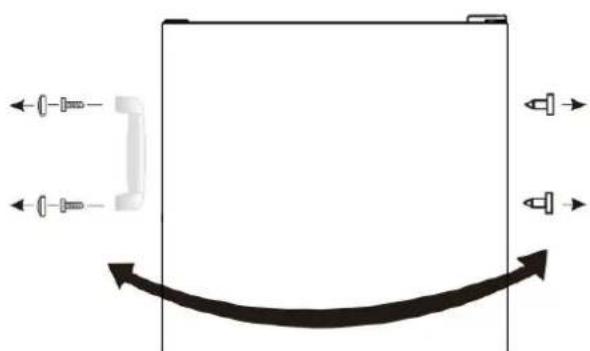
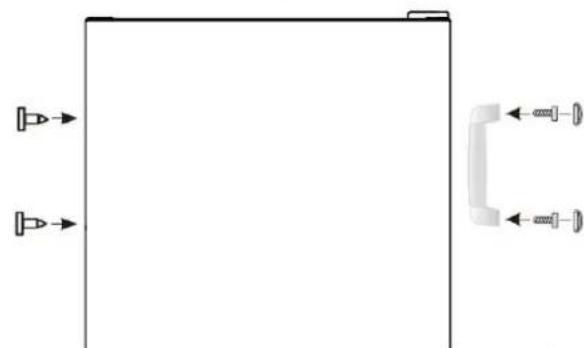
- Install the right hole plugs on the left side of the door, and install the handle on the right side of the door.
SOMMAIRE
SECURITE
65
CHARACTERISTIQUES DU PRODUIT 71
PREPARATION POUR LA MISE EN SERVICE 73
FONCTIONS
77
INSTRUCTIONS POUR LA CONSERVATION
DES ALIMENTS 79
CONSEILS POUR LES BESOINS PARTICULIERS 82
ENTRETIEN ET NETTOYAGE 83
ANALYSE DE PANNES SIMPLES ET RÉSOLUTION 86
CERTIFICATIONS 88
INSTRUCTIONS DE RÉCUPÉRATION EN
TOUTESECURITE 88
AVERTISSEMENTS POUR LA MISE AU REBUT 89
INVERSION DE LA PORTE 91
SECURITE
Advertisement!
CARACTERISTIQUES DU PRODUIT