NN-Q523 - Microwave Oven PANASONIC - Free user manual and instructions
Find the device manual for free NN-Q523 PANASONIC in PDF.


User questions about NN-Q523 PANASONIC
0 question about this device. Answer the ones you know or ask your own.
Ask a new question about this device
Download the instructions for your Microwave Oven in PDF format for free! Find your manual NN-Q523 - PANASONIC and take your electronic device back in hand. On this page are published all the documents necessary for the use of your device. NN-Q523 by PANASONIC.
USER MANUAL NN-Q523 PANASONIC
For further information, please also refer to the operating instructions.
Inverter technology is the key
Inverter technology for microwave ovens has been developed by a Panasonic initiative over a period of more than 10 years. It is the key technology for making a very different type of microwave oven which has a number of special qualities:
- It makes possible the first oven in the industry which controls the amount of microwave energy linearly. This new distribution system allows cooking and defrosting food without losing its flavour.
- It provides efficient conversion of electrical energy to microwave energy, resulting in minimizing power requirements without sacrificing microwave output.
- It allows a dramatic enlargement of oven cavity size even in a compact oven body, due to the small size of the inverter circuit, which replaces the currently used bulky transformer.
- Finally, at the end of the product's useful life, not using bulky transformers made of iron makes the process of recycling discarded ovens environmentally friendly.
| Contents | ||
| Cooking with Microwave Energy | .2 | Defrosting Guidelines .9 |
| General Guidelines | .2-3 | Defrosting Common Foods .10 |
| Quick Check Guide to Cooking Utensils | .4 | Combination Cooking and Reheating Charts .11-13 |
| Microwave Power Levels | .5 | Meat & Poultry .14-15 |
| Grilling | .5 | Fish .16 |
| Combination Cooking | .5 | Vegetables .17 |
| Accessories to Use | .5 | Eggs & Cheese .18 |
| Reheating | .6 | Rice, Pasta, Dried Vegetables & Jacket Potatoes .18 |
| Reheating by Microwave | .6-7 | Common Queries Answered .19 |
| Microwaving Cooking Tips | .8 | |
The items in this book are guidelines only. The total time will vary depending on the starting temperature of the food and the container used.
Always check if the food is piping hot before consumption.
Cooking with Microwave Energy
Microwaves are a form of high frequency electromagnetic waves similar to those used in radios. Electricity is converted into microwave energy by a magnetron tube. The microwaves travel from a magnetron tube to the oven cavity where they are reflected, transmitted or absorbed.
Reflection
Microwaves are reflected by metal similar to the way a ball would bounce off a wall. Most metal cookware and utensils are not recommended for microwave cooking, since they would produce uneven cooking. Also, if a metal dish is placed close to the oven wall (which is also metal), arcing (bluish sparks) could occur. Arcing can damage an oven or cause a fire.
Transmission
Microwaves pass through some materials such as paper, glass and plastic much like sunlight shining through a window. Because these substances do not absorb or reflect the microwave energy, they are ideal materials for microwave cooking containers. However, they will get hot during cooking, because as food cooks, heat is conducted from the food to the dish.
Absorption
Microwaves are absorbed by food. They penetrate to a depth of about 2-4 cm. Microwave energy excites the molecules in the food (especially water, fat and sugar molecules), and causes them to vibrate very quickly. The vibration causes friction and heat is produced. In large foods, the heat which is produced is conducted to the centre to finish cooking the food.
General Guidelines
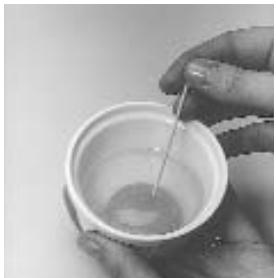
PIERCING
The skin or membrane on some foods will cause steam to build up during cooking.
These foods must be pierced or a strip of skin
should be peeled off before cooking to allow the steam to escape. Eggs, potatoes, apples, sausages etc, will all need to be pierced before cooking. DO NOT ATTEMPT TO BOIL EGGS IN THEIR SHELLS.
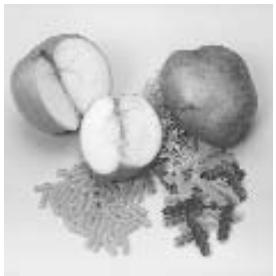
MOISTURE CONTENT
Many fresh foods e.g. vegetables and fruit, vary in moisture content throughout the season. Jacket potatoes are a
particular example of this. For this reason cooking times may have to be adjusted throughout the year. Dry ingredients e.g. rice, pasta, can dry out further during storage and cooking times may differ from ingredients freshly purchased.
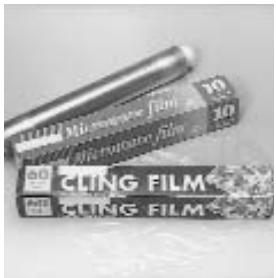
CLING FILM
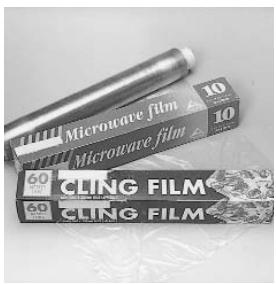
Cling film helps keep the food moist and the trapped steam assists in speeding up cooking times. However it should be pierced before
cooking, to allow excess steam to escape. Always take care when removing cling film from a dish as the build-up of steam will be very hot. Always purchase cling film that states on the packet "suitable for microwave cooking" and use as a covering only. Do not line dishes with cling film.
Dense foods e.g. meat, jacket potatoes and cakes, require a STANDING TIME (inside or outside of the oven) after cooking, to allow heat to finish conducting to cook the centre completely.
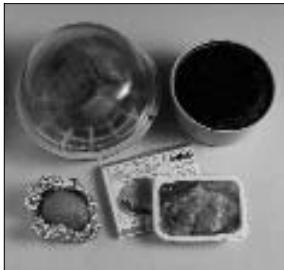
STANDING TIME
MEAT JOINTS -
Stand 8 - 10 mins. wrapped in tin foil.
JACKET POTATOES -
Stand 5 mins. wrapped in tin foil.
LIGHT CAKES - Stand 5 mins. before removing from dish.
RICH DENSE CAKES - Stand 15-20 mins.
FISH - Stand 2-5 mins.
EGG DISHES - Stand 2-3 mins.
PRECOoked CONVENIENCE
FOODS - Stand for 5 mins.
PLATE MEALS - Stand for 2-5 mins.
VEGETABLES - Boiled potatoes benefit from standing for 1-2 mins., however most other types of vegetables can be served immediately.
DEFROSTING - It is essential to allow standing time to complete the process. This can vary from 5 mins. e.g. raspberries, to up to 1 hour for a joint of meat.
If food is not cooked after STANDING
TIME, return to oven and cook for additional time.
En-2
General Guidelines
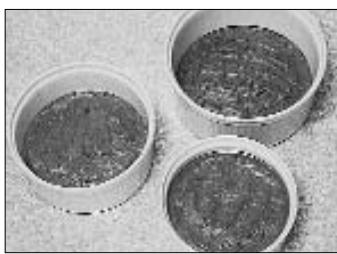
DISH SIZE
Follow the dish sizes given in the recipes, as these affect the cooking and reheating times. A quantity of food spread in a bigger dish cooks and reheats more quickly.
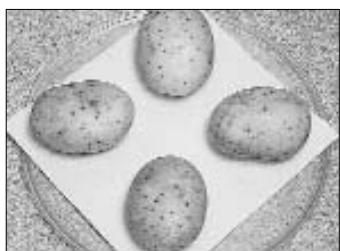
QUANTITY
Small quantities cook faster than large quantities, also small meals will reheat more quickly than large portions.
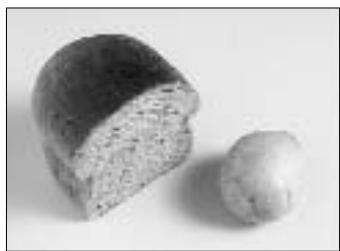
DENSITY
Porous airy foods heat more quickly than dense heavy foods.
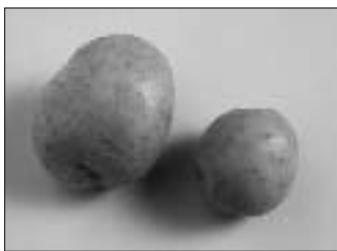
SHAPE
Even shapes cook evenly. Food cooks better by microwave when in a round container rather than square.
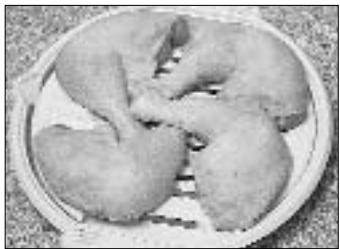
ARRANGING
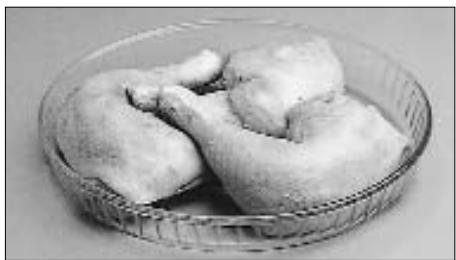
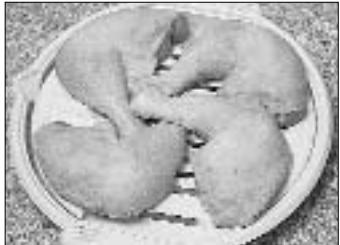
Individual foods e.g. chicken portions or chops, should be placed on a dish so that the thicker parts are to the outside.
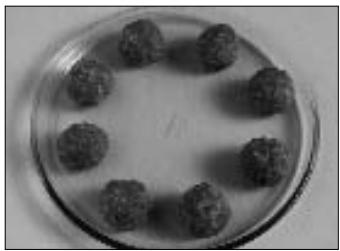
SPACING
Foods cook more quickly and evenly if spaced apart. NEVER pile foods on top of each other.
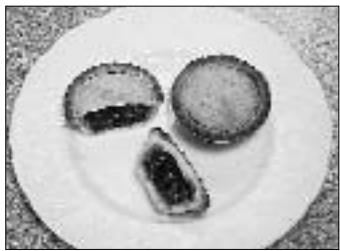
INGREDIENTS
Foods containing fat, sugar or salt heat up very quickly. The filling may be much hotter than the pastry. Take care when eating. Do not overheat even if the pastry does not appear to be very hot.
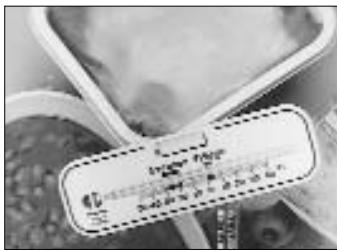
STARTING TEMPERATURE
The colder the food, the longer it takes to heat up. Food from a fridge takes longer to reheat than food at room temperature.
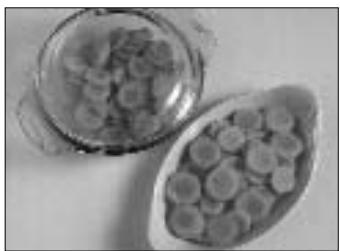
COVERING
Cover foods with microwave cling film or a self-fitting lid. Cover fish, vegetables, casseroles, soups. Do not cover cakes, sauces, jacket potatoes, pastry items.
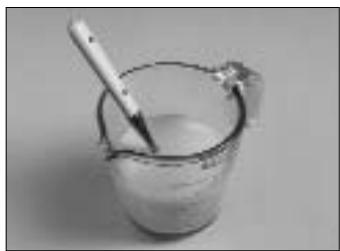
TURING AND STIRRING
Some foods require stirring during cooking. Meat and poultry should be turned after half the cooking time.
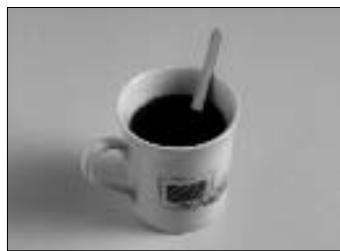
LIQUIDS
All liquids must be stirred before and during heating. Water especially must be stirred before and during heating, to avoid eruption. Do not heat liquids that have previously been boiled. DO NOT OVERHEAT.
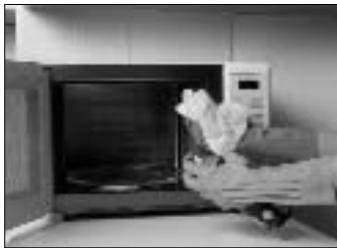
CLEANING
As microwaves work on food particles, keep your oven clean at all times. Stubborn spots of food can be removed by using a branded oven cleaner, sprayed onto a soft cloth, always wipe the oven dry after cleaning. Avoid any plastic parts and door area.
Quick Check Guide to Cooking Utensils
| Cookware | For Microwave | For Grill | For Combination |
| Heat resistant glass | ✓ | ✓ | ✓ |
| Microwave-safe plastic cookware | ✓ | × | × |
| Heat resistant china and ceramics | Do not use dishes with a metal rim or pattern; or jugs or mugs with glued handles. | ✓ | ✓ |
| Pottery, Earthenware, Stoneware | × | × | × |
| Foil/Metal containers | × | ✓ | × |
| Wicker, Wood, Straw baskets | × | × | × |
| Cling film | ✓ | × | × |
| Aluminium foil | Small amounts of aluminium foil can be used to SHIELD and prevent food from overheating when cooking or defrosting. Take care that the foil does not touch the sides or top of the oven. | ✓ | ✓ |
| Microwave Power Levels | |
| Power Level | Use |
| Max. Power: 1000 W | Reheating meals and sauces; Cooking fish, vegetables, sauces, and preserves |
| min ** 270 W (*) | Defrosting frozen foods |
| 600 W | Roasting; Cooking egg sauces and sponge cakes; Heating milk |
| 440 W (NN-Q543/NN-Q523/NN-Q553) | Cooking and reheating chicken casseroles and quiches |
| 250 W | Cooking stews, casseroles, rice puddings, rich fruit cakes, and egg custards |
Note: (*) CYCLIC DEFROST with automatic standing time (see page 9).

Grilling
DO NOT ATTEMPT TO PREHEAT THE GRILL.
The quartz Grill on your oven gives fast, even cooking for a wide variety of foods.
There is 1 Grill setting of 1300W
Place food to be grilled on the wire rack or in a shallow dish on wire rack. Place this on the turntable. For large weight foods, place the dish directly on the turntable.
The food being grilled should normally be turned over after half the grilling time.
Never cover foods when grilling.
There is NO MICROWAVE POWER ON THE GRILL ONLY PROGRAM.
Approximate Times for Grilling
| First side | Second side | |
| Steak (4 pieces, well done) | approx. 10 mins. | approx. 10 mins. |
| Loin of pork (slices) | approx. 12 mins. | approx. 10 mins. |
| Porkchops | 12-14 mins. | approx. 12 mins. |
| Kebabs | approx. 12 mins. | approx. 12 mins. |
| Sausages | 6-7 mins. | approx. 6 mins. |
| Chicken legs | 15-20 mins. | 15-20 mins. |
| Toast | 3-4 mins. | 3 mins. |

Combination Cooking
Combination cooking is ideal for many foods. The Microwave power cooks them quickly, while the Grill provides traditional browning and crisping; all of this happening simultaneously.
The following 3 combination modes are available:
NOTE:
- Never cover foods when cooking on a Combination program.
- For small quantities do not cook by Combination, cook by Grill or Microwave only for best results.
- Do not preheat the oven on Combination.
| Combination mode | Display | Grill power | Microwave power | Uses |
| 1 | G1-600 W | 1300 W | 600 W | White meat, lamb, whole poultry, gratin dishes. Preheating of pizza pan. |
| 2 | G1-440 W | 1300 W | 440 W | Sausages, red meat, pieces of poultry, fish. |
| 3 | G1-250 W | 1300 W | 250 W | 4/4 style cakes, quiches, pork chops, gratin dishes with eggs. |
Accessories to Use
| Microwave | Grill | Combination |
Reheating
Many convenience foods are readily available in supermarkets. You may also wish to reheat homecooked food or leftovers. This can all be done safely in your oven, however you must check the food carefully to see if it is piping hot before serving, just as you would in a conventional oven.
Chilled foods to be reheated must also be stored correctly.
How do I choose which method to reheat by?
The heat method i.e. Microwave only or Combination, depends on the type of food to be reheated. For foods that do not require browning, reheat by microwave only. For foods that do require browning, reheat by Combination.
How long do I reheat foods for?
There are reheating charts for Microwave and Combination: these charts give timings that are a guideline ONLY, as the exact time will depend on the weight of the food, size of the dish used and start temperature.
What should I do if the food I am reheating does not appear in the charts?
It is not possible to test every food available for the following charts, however we have selected a great variety of foods, and suggest that by following the guidelines given, you can reheat safely and successfully.
Stirring and Turning
Whenever possible, foods should be stirred or turned over during reheating. This helps ensure that the food reheats evenly on the outside and in the centre.
Standing Time
Many foods require a STANDING TIME after reheating. Standing time is a rest time which allows the heat in the food to continue to transfer to the centre, thus eliminating cold spots. If the food has been covered during the reheating time, then leave the covering on during the standing time. Stand time is particularly important for dense foods e.g. Lasagnes, Gratins, etc and those foods that cannot be stirred during reheating.
When is food reheated?
Reheated food should be served "piping hot" i.e. steam should be visibly emitted from all parts. As long as good hygiene practices have been followed during the preparation and storage of the food, then reheating by microwave or Combination present no added safety risks.
Foods that cannot be stirred should be cut with a knife to test that they are well heated through.
Even if manufacturer's instructions or the times in the reheating charts have been followed, it is still important to check that the food is piping hot. If in doubt, always return the food to your oven for further reheating.
Reheating by Microwave
| Food | Weight/quantity | Fresh | Frozen |
| DELICATESSEN STARTERS | |||
| - croque monsieur | 1 piece (170 g) | MAX 1 min | MAX 2 mins 30 secs to 3 mins |
| 2 pieces (320 g) | MAX 2 mins | MAX 5 mins | |
| - shellfish (4) | 1 piece (170 g) | MAX 2 mins | MAX 3 mins |
| 2 pieces (220 g) | - | MAX 6 to 7 mins | |
| - unfilled pancake (2) | 1 piece | MAX 30 secs | - |
| - stuffed pancake (2) (3) | 1 piece (150 g) | - | MAX 3 to 4 mins |
| 2 pieces (300 g) | - | MAX 5 mins | |
| - soup (2) | 400 g | MAX 4 mins | - |
| 1 litre | MAX 6 to 7 mins | MAX 11 to 12 mins | |
| - small pizza (1) | 1 piece (160 g) | MAX 1 min | MAX 2 mins 30 secs to 3 mins |
| - American pizza | 1 piece (400 g) | MAX 4 to 5 mins | MAX 7 to 8 mins |
| - small quiche (1) | 1 piece (130 g) | 600 W 1 min 10 secs | MAX 3 mins |
| - large quiche | 1 piece (400 g) | 600 W 3 mins | 600 W 7 to 8 mins |
| - Nem, Samosa (3) | 2 pieces (100 g) | MAX 15 to 20 secs | - |
| READY-COOKED DISHES | |||
| - stuffed tomatoes | 1 piece (170 g) | MAX 2 mins | MAX 6 to 7 mins |
| - Chilli con Carne (2) (3) | 400 g | MAX 3 mins 40 secs | - |
| - Chicken Korma with rice (2) (3) | 350 g | - | MAX 6 mins |
| - Quenelles (2) (3) | 6 pieces (240 g) | - | 600 W 6 mins |
| - Snails (2) (3) | 12 pieces (100 g) | 440 W 2 mins | 600 W 2 mins - 2 mins 30 secs |
| - Gratin dishes (starchy with meat) (4) | 300 - 400 g | MAX 3 mins | MAX 8 to 10 mins |
| 600 g | MAX 6 to 8 mins | MAX 13 to 14 mins | |
| 1 kg | MAX 10 to 11 mins | MAX 16 to 18 mins |
Reheating by Microwave
| Food | Weight/quantity | Fresh | Frozen |
| READY-COOKED DISHES (cont.) | |||
| - vegetable gratin (with/without meat) (4) | 300 - 400 g | MAX 6 mins | MAX 11 to 13 mins |
| 1 kg | MAX 12 mins | MAX 18 mins + 600 W 6 mins | |
| - fish gratin (4) | 450 g | - | 600 W 12 to 15 mins |
| 1 kg | - | MAX 18 mins + 250 W 5 mins | |
| - fish in sauce (2) (3) | 225 g | - | MAX 6 to 7 mins |
| FILLINGS | |||
| - starchy (2) | 300 g | MAX 2 to 3 mins | MAX 4 to 5 mins |
| - vegetables (2) | 100 g | MAX 1 min to 1 min 30 secs | - |
| 200 g | MAX 1 min 30 secs to 2 mins | - | |
| - purée (2) (3) | |||
| of potato | 200 g | MAX 1 min 30 secs | MAX 4 mins 30 secs |
| of vegetables | 200 g | MAX 1 to 2 mins | MAX 5 mins |
| 400 g | MAX 3 mins 30 secs | MAX 8 mins | |
| - spaghetti in sauce (2) | 210 g | MAX 2 mins | - |
| 450 g | MAX 4 mins | - | |
| - rice (2) | 150 g | MAX 1 min | MAX 2 mins 30 secs |
| 300 g | MAX 2 mins 30 secs | MAX 4 mins 30 secs | |
| MEAT AND FISH | |||
| - hamburger (raw) (2) | 1 piece (150 g) | - | MAX 1 min 30 secs |
| - cocktail sausages (2) (3) | 120 g | 250 W 2 to 3 mins | - |
| - pieces of cooked meat | |||
| minced steak (2) | 100 g | 600 W 40 to 50 secs | - |
| pork 2 pieces (2) | 130 g | 600 W 1 min 30 secs | - |
| lamb 2 pieces (2) | 160 g | 600 W 1 min | - |
| beef 2 pieces (2) | 120 g | 600 W 50 secs | - |
| chicken leg (2) | 205 g | MAX 1 min 40 secs | - |
| chicken nuggets | 10 pieces (200 g) | - | MAX 2 mins 30 secs |
| cordon bleu | 1 piece (100 g) | - | MAX 2 mins |
| MISCELLANEOUS | |||
| - baby food | |||
| (small pot at room temperature) | 30 g | 600 W 15 secs Test | - |
| 120 g | 600 W 25 secs Test | - | |
| 200 g | 600 W 40 secs Test | - | |
| - breakfast pastries (1) | 2 x 50 g | - | MAX 30 to 40 secs or min ** 3 mins |
| - bread (1) | |||
| - sliced sandwich bread | 800 g | - | min ** 8 mins |
| - slice | 60 g | - | MAX 40 secs |
| - baguette | 150 g | - | MAX 30 to 40 secs |
| - 1 wholemeal loaf | 500 g | - | MAX 2 mins 30 secs + 1/2 hr stand |
| - rye bread roll | 1 piece (85 g) | - | MAX 40 secs |
| 3 x 85 g | - | MAX 1 min 10 secs |
(1) Remove packaging and wrap in absorbent paper. (2) Cover. (3) Stir halfway through cooking time. (4) Remove the aluminium tray and put the gratin in a heat-resistant microwaveable dish.
BABY BOTTLES and FOOD JARS - CAUTION
Milk or formula MUST be stirred or shaken thoroughly before heating and again at the end, and tested carefully before feeding a baby.
For 210-240 ml of milk at fridge temperature, remove top and teat. Heat on 1000 W for 25-30 secs. CHECK CAREFULLY.
For 90ml of milk at fridge temperature, remove top and teat. Heat on 1000 W for 10-15 secs. CHECK CAREFULLY.
N.B. Liquid at the top of the bottle will be much hotter than at the bottom of the bottle and must be shaken thoroughly before checking the temperature.
Microwave Cooking Tips
To soften butter for easy spreading on removal from the fridge
Soften for 35-40 seconds on (for 150g). Remove any foil beforehand.
Swelling dried fruit
Add 4 tablespoons of water to 200g of raisins or prunes, (they can be swollen with rum for cakes). Stir and heat on 1000W for 2 to 3 minutes. Allow to stand for 10 minutes.
Restoring cheese to room temperature
Cheese removed from the refrigerator must be placed in the oven and "warmed" for 30 seconds -1 minute (depending on the size of the cheese) at 250 W.
Blanching almonds or hazelnuts
Cover with hot water and cook for 3-6 minutes on 1000W (return to boil). Cool, drain and the skin is then easy to remove.
Drying herbs
Place absorbent paper on the turntable. Carefully spread out the finely chopped, fresh herbs on the paper. Repeat several times if necessary. Heat on 1000 W for a few minutes, checking them every 30 seconds until the herbs begin to dry. Extreme care must be taken to ensure that the herbs do not remain in the oven too long; otherwise, they will disintegrate, and possibly catch fire. Leave the herbs on the absorbent paper for a further 2 hours at room temperature, then store in air-tight containers.
Making caramel
Cook 100g of sugar with 2 tablespoons of water in a bowl for 2-3 minutes on 1000~W , checking halfway-through cooking time. Remove caramel before it becomes darkened since it will continue to cook outside. You can stop the cooking with 2 tablespoons of very hot water (beware of sharp edges).
Liquifying hardened honey
Remove the lid to the pot, place in oven and heat on 250 W for 30-50 seconds, depending on the quantity. Stir and repeat if necessary.
CROUTINS MINUTES
Cut two slices of white bread into small cubes. Spread out these cubes on a plate. Heat on 1000 W for 2 minutes then allow to stand for 5 minutes. You can rub a clove of garlic on the slices of bread before cutting them or drizzle with a few drops of olive oil.
How to obtain more juice from an orange or a lemon
Before squeezing, place orange or lemon in microwave for 30-40 seconds on 1000W , then squeeze immediately; this will produce more juice.
Melting butter
100g of butter in a ramekin dish covered with a saucer will melt in around 1 minute at 600 W.
Melting chocolate
Break 100g chocolate into little pieces into a bowl and heat at 600~W for 2 - 2^1 / 2 minutes (the time may vary depending on the cocoa and sugar content). Stir at least once during cooking.
Leaving dough to prove
Place the covered dough in the oven and heat for around 5 minutes on ^** (for 500g of dough). Leave the dough in the oven (away from air currents) until it has doubled in volume.
Making mulled wine
In an ovenproof glass (or mug), mix together 20 CL of red wine, the zest of a lemon, a pinch of cinnamon, one clove and 2-4 teaspoons of sugar according to taste. Heat on 1000 W for 1 - 1^1/2 minutes.
"Deodorise" your oven
To rid your oven of that "fisby" smell, place a bowl of white wine vinegar or water with the juice of a lemon inside the oven. Heat on 1000 W for 5 minutes. Wipe off the steam that collects on the oven walls.
Preparing a hot compress
Heat a clean, damp, folded cloth on a plate for 1-2 minutes on 1000 W. Check temperature before applying the cloth.

Defrosting Guidelines
The biggest problem when defrosting food in a microwave is to get the inside defrosted before the outside starts to cook. For this reason Panasonic have made the defrosting on your oven CYCLIC DEFROST, just select the 270 watts DEFROST ^min* pad and set the required time. The oven then divides this time into 8 stages. These stages alternate between defrosting (total of 4) and standing (total of 4).
During the standing stages there is no microwave power in the oven, although the light will remain on and the turntable will turn. The automatic stand times ensure a more even defrost and for small items the usual stand time can be eliminated.
Tips for Defrosting
Check the defrosting several times, even if you use the automatic buttons. Observe the standing times.
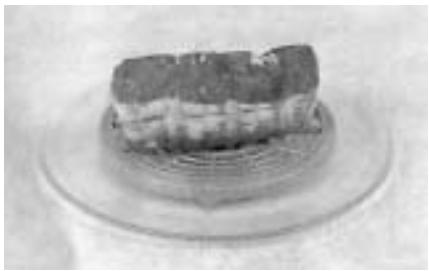
STANDING TIMES
Individual portions of food may be cooked almost immediately after defrosting (5 minutes standing time for steaks, 15 minutes for fruit and pastry). It is normal for large portions of food to be frozen in the centre. Before cooking, allow
to stand for a minimum of one hour. During this standing time, the temperature becomes evenly distributed and the food is defrosted by conduction. NB If the food is not going to be cooked immediately, store it in the refrigerator. Never refreeze defrosted food without first cooking it.
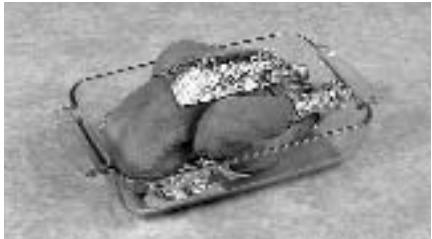
JOINTS AND POULTRY
It is preferable to place the joints on an upturned plate or plastic rack so that they are not resting in the juices. It is essential to protect delicate or projecting parts of this food with
small pieces of foil to prevent these parts from cooking. It is not dangerous to use small pieces of foil in your oven, provided they do not come into contact with the oven walls.
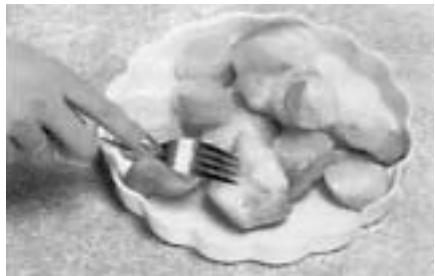
MINCED MEAT OR CUBES OF MEAT AND SEAFOOD
Since the outside of these foods quickly defrosts, it is necessary to separate them, break the blocks into pieces frequently while defrosting and remove them when they have defrosted.
SMALL PORTIONS OF FOOD
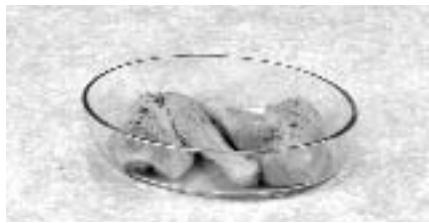
Chops and chicken pieces must be separated as soon as possible so that they defrost evenly throughout. Fatty parts and the ends defrost more quickly. Place them near the centre of the turntable or protect them.
Auto Weight Defrost
This feature allows you to enter the weight in grams and the oven will select the correct defrosting time for the foods described. Do not use for porous foods e.g. bread, cakes and convenience foods etc.
See Operating Instructions for selection of the grams. During the defrosting process, the oven will beep to remind you to check the food i.e. turn, shield or break the food apart, as shown above.
There are two categories for Auto Weight Defrost:
| Recommended Weight (Min.- Max.) | |
| 1. Small pieces e.g. Fish/Chops, Sausages, Chicken Portions | 100 - 1200 g |
| 2. Big pieces e.g. Meat Joints, Whole Chicken | 400 - 2000 g |
Defrosting Common Foods
Select Defrost Power min\*\* 270 W then the approximate time given below.
The times given below are guidelines only. Always check the progress of the food by opening the oven door and then re-starting. For larger quantities adjust times accordingly. It is not essential to cover food during defrosting.
| Food | Weight/quantity | Time in minutes | Standing times (minimum) |
| MEAT | |||
| - joints with bone# | 500 g | 18 - 20 | 60 |
| - roast filleted# | 500 g | 20 - 22 | 70 |
| - chops# | 500 g | 8 - 12 | 15 |
| - cutlets# | 250 g | 6 - 7 | 10 |
| - kidneys* | 250 g | 7 - 8 | 10 |
| - lean beef* | 430 g (2) | 11 - 12 | 10 |
| - entrecôte* | 150 g | 4 - 6 | 10 |
| - minced beef, sausage meat, pork mince* | 500 g | 10 - 12 | 10 |
| - hamburger* | 200 g (2) | 6 - 7 | 10 |
| 400 g (4) | 10 - 12 | 10 | |
| - meat for stewing/braising* | 500 g | 12 - 14 | 15 |
| - whole poultry# | 500 g | 12 - 13 | 60 |
| - poultry pieces# | 1 kg (4) | 22 - 24 | 30 |
| - poussin# | 400 g | 15 | 30 |
| - rabbit# | 500 g | 14 - 15 | 30 |
| - pork sausages* | 300 g (2) | 10 - 11 | 15 |
| BUTTER | 250 g | 2 | 10 |
| FRUIT COULIS | 200 g | 3 - 4 | 10 |
| CHEESE* | 450 g | 3 | 10 |
| RED FRUIT* | 200 g | 5 - 6 | 10 |
| 300 g | 9 | 10 | |
| 500 g | 12 | 10 | |
| CAKES AND PUDDINGS | |||
| - Victoria Sandwich Cake | 400 g (1) | 7 | 10 |
| - Black Forest | 550 g (1) | 4 - 5 | 15 |
| - Bavarois | 110 g (1 portion) | 8 seconds | 15 |
| - raspberry tart | 470 g (1) | 10 | 15 |
| CONCENTRATED FRUIT JUICE | 200 ml | 4 | 4 |
| PASTRY | |||
| - sweet flan or shortcrust* | |||
| - puff* | 370 g (block) | 4 - 5 | 5 |
| 300 g (block) | 3 - 4 | 5 | |
| FISH | |||
| - whole# | 400 g (2) | 10 - 12 | 15 |
| - fillets# | 500 g (4) | 13 - 14 | 15 |
| - fish steak with bone* | 380 g (2) | 10 | 15 |
| - thick steaks without bone* | 200 g (2) (4) | 9 | 15 |
| - shrimps/prawns* | 200 g | 7 | 10 |
NOTES
turn this food halfway through defrosting and protect ends and projecting parts with foil.
* stir, turn or separate several times during defrosting.
Combination Cooking and Reheating Charts (NN-F663/NN-F623/NN-F653)
| Food | Weight/quantity | Time required - fresh | Time required - frozen |
| ENTREES | |||
| - croque monsieur (2) (3) | 1 piece (100 g) | 1 min 30 secs Combi 1 + 3 mins grill | 3 mins Combi 1 |
| 2 pieces (300 g) | 5 mins Combi 2 | 3 mins 30 Combi 1 | |
| 1 piece (150 g) | 3 to 4 mins Combi 1 + 1 min grill | 3 to 4 mins Combi 2 | |
| - shellfish (1) (remove croissant halfway through) | 1 piece (100 g) | - | 5 mins Combi 2 |
| 1 piece (170 g) | 2 mins 30 secs Combi 1 + 2 mins grill | 5 to 7 mins Combi 2 | |
| 2 pieces (2 x150 g) | 4 to 5 mins Combi 1 | 7 mins 30 secs Combi 1 | |
| - cheese croissant, gnocchi (1) | 1 piece (160 g) | 3 to 4 mins Combi 1 | 3 mins 30 secs Combi 2 |
| 2 pieces (300 g) | 4 to 5 mins Combi 1 | - | |
| - roulé au fromage (1) (3) | 1 piece (130 g) | 3 mins Combi 1 | 3 mins Combi 2 |
| - large sausage roll (2) (3) | 1 piece (130 g) | 1 min 40 secs Combi 3 | 3 mins Combi 1 |
| - stuffed pancakes (1) (3) | 1 piece (150 g) | - | 4 mins 30 secs Combi 1 |
| 1 piece (190 g) | 3 mins Combi 1 | - | |
| 2 pieces (2 x 130 g) | 3 mins 30 secs to 4 mins Combi 2 | 7 mins Combi 1 | |
| - mini-quiches (1) | 12 pieces (180 g) | MAX 50 secs + 2 mins grill | MAX 2 mins + 3 mins grill |
| - American pizza (2) small big | 1 piece (200 g) | 2 mins Combi 3 + 2 mins grill | MAX 3 mins + 3 mins grill |
| 1 piece (450 g) | - | 5 to 6 mins Combi 1 | |
| 1 piece (750 g) | - | 8 mins Combi 1 + 2 min grill | |
| - pizza (2) small big | 1 piece (200 g) | 4 mins Combi 2 | MAX 2 mins 10 secs + 3 to 4 mins grill |
| 1 piece (300 g) | 3 mins Combi 1 + 1 min 30 secs grill | - | |
| 1 piece (400 g) | 3 mins 30 secs Combi 1 + 1 min 30 secs grill | Autopizza*** | |
| 1 piece (600 g) | 5 mins Combi 1 + 1 min 30 secs grill | Autopizza*** | |
| thin crust calzone (3) | 1 piece (500 g) | 4 mins Combi 1 + 1 min 30 secs grill | - |
| 1 piece (420 g) | 3 mins Combi 1 + 2 mins grill | - | |
| - small quiche (2) | 1 piece (130 g) | 2 mins Combi 3 | - |
| 1 piece (200 g) | 4 mins Combi 2 | - | |
| 2 pieces (300 g) | 4 mins Combi 3 | Autoquiche*** | |
| - large quiche | 1 piece (400 g) | 3 mins 30 secs Combi 1 | - |
| 1 piece (500 g) | 4 mins 30 secs Combi 1 + 1 min 30 secs grill | Autoquiche*** | |
| 1 piece (600 g) | 5 mins Combi 1 | Autoquiche*** | |
| - double crust pastry pie with cheese, ham or bacon filling (2) (3) | 1 piece (300 g) | 4 to 5 mins Combi 1 | - |
| 1 piece (500 g) | 6 to 7 mins Combi 1 | - | |
| - double crust mushroom pie | 1 piece (450 g) | 8 mins Combi 1 | - |
| COoked DISHES | |||
| - Lasagne Bolognaise (1) | 130 g | 2 mins Combi 1 + 3 mins grill | - |
| 300 g | 6 to 8 mins Combi 2 | AutoGratin*** | |
| 1 kg | Combi 1 10 to 12 mins | AutoGratin*** | |
| - fish gratin (1) | 450 g | - | AutoGratin*** |
| 800 g | - | AutoGratin*** | |
| - vegetable gratin (1) | 450 g | 5 - 7 mins Combi 1 | AutoGratin*** |
| 1 kg | 12 - 14 mins Combi 1 | AutoGratin*** | |
| SIDE DISHES | |||
| - Dauphine potato (1) (3) | 200 g | - | 4 mins 30 secs Combi 1 |
| - noiseties potato (1) (3) | 350 g | - | 4 mins Combi 1 + 3 mins grill |
| - Duchesse potato (1) | 500 g | - | 7 mins Combi 1 + 7 mins grill |
| - oven chips (1) (3) | 400 g | - | 8 to 10 mins Combi 1 |
| MEAT AND FISH | |||
| - Confit of duck (1) (3) | 2 pieces (400 g) | 4 mins Combi 1 + 3 mins grill | - |
| - Cordon bleu (1) (3) | 1 piece (120 g) | 4 mins Combi 1 | 3 mins 30 secs Combi 1 |
| - Chicken nuggets (1) (3) | 10 pieces (200 g) | 3 mins Combi 1 + 2 mins grill | 6 mins Combi 2 |
| MISCELLANEOUS | |||
| - ready-cooked double crust almond pie (2) (3) | 1 piece (400 g) | 3 mins to 3 min 30 secs Combi 3 | 4 to 5 mins Combi 2 |
| - apricot crumble (1) | 1 piece (300 g) | - | 5 to 6 mins Combi 1 |
| - croissants & other types of sweet rolls (2) (3) | 1 piece (60 g) | Grill 2 mins | MAX 12 secs + 2 mins grill (or Auto) |
(1) Put in a heat-resistant microwaveable dish (or a piece of greaseproof paper) on the wire rack. (2) Remove packaging and place directly on the wire rack. (3) Turn or stir halfway through cooking time.
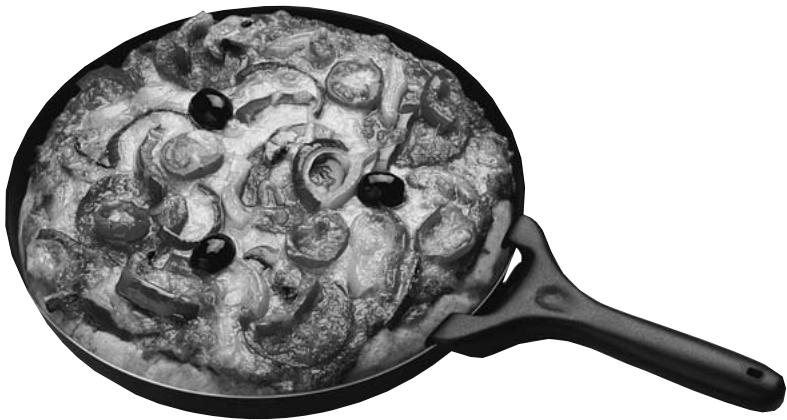
Cooking Chart For Your Pizza Pan (NN-F663/NN-F623)
Unless otherwise indicated, the pizza pan is always preheated for 4 minutes on Combination N°1.
| Food | Weight/quantity | Fresh | Frozen |
| - appetisers - tartlets | 12 pieces (160 g) | - | 2 mins 30 secs Combi 1 |
| - appetisers - vol-au-vents (for cooking) | 15 pieces (210 g) | - | 7 mins 30 secs Combi 2** |
| - choux pastry | 20 pieces (150 g) | - | 1 min 30 secs Combi 1** |
| - crique lardons-fromage | 1 x 170 g | 4 mins Combi 2 | 3 mins Combi 1 + 2 mins grill |
| - tarte alsacienne | 1 x 120 g | 4 mins Combi 3 | 3 mins 30 secs Combi 1 |
| PIZZA | |||
| - standard crust | 2 x 140 g | 4 mins 30 secs Combi 2 | - |
| 200 g | - | 3 mins Combi 1 | |
| 300 g | 6 mins Combi 1 | 7 mins Combi 1 | |
| 500 g | 5 mins Combi 3 | 6 mins Combi 1 | |
| - thin crust | 200 g | 4 mins Combi 3 | 3 mins Combi 1 |
| 250 g | 2 mins Combi 1 + 2 mins grill** | 3 mins Combi 1 | |
| - American style | 500 g | - | 6 mins Combi 1 |
| - McCain rise and up | 500 g | - | 10 mins 30 secs Combi 1 |
| QUICHES & PIES | |||
| - quiche lorraine | 1 x 100 g | - | 2 mins 30 secs to 3 mins Combi 1 |
| 2 x 150 g | 3 mins Combi 2 | - | |
| 150 g | - | 2 mins 30 secs to 3 mins Combi 1 | |
| 400 g | - | 5 to 6 mins Combi 1 | |
| 2 x 120 g | - | 5 mins Combi 1 | |
| 400 g | - | 6 mins 30 secs Combi 1** | |
| - Savoie pie | 450 g | 4 mins 30 secs to 5 mins Combi 1** | 10 min Combi 1* + ** |
| - double crust mushroom pie | 450 g | 6 to 7 mins Combi 1** | - |
| - seafood quiche | 350 g | 4 mins Combi 2** | - |
| - quiche with onion and anchovy filling | 1 x 150 g | - | 2 mins 40 secs Combi 1 |
| - stuffed crepes | 4 pieces (200 g) | - | 3 mins Combi 1 |
| 2 pieces (100 g) | - | 1 min 40 secs Combi 1* | |
| - stuffed pancakes | 2 pieces (140 g) | 3 mins Combi 2 | 5 mins Combi 1 |
| - roulé au fromage, large sausage roll | 130 g | 2 mins Combi 3 | 2 mins 20 secs to 3 mins (roulé) Combi 3 |
| 2 x 130 g | 2 mins 30 secs Combi 1 | 3 mins Combi 1** | |
| - chicken vol-au-vents | 1 piece (150 g) | 2 mins 20 secs Combi 1 | 4 mins Combi 1 (remove the lid) |
| 2 x 150 g | 3 mins Combi 1 | 6 mins 30 secs to 7 mins Combi 1 (remove the lid) | |
| - gnocchis | 2 x 130 g | - | 6 mins Combi 1 |
| - croque-monsieur | 1 x 100 g | 3 mins Combi 3* | - |
| 2 x 100 g | 4 mins Combi 3 + 1 min grill | - | |
| 1 x 160 g | 3 mins 30 secs to 4 mins Combi 3 | 3 mins Combi 1 | |
| 2 x 160 g | 5 to 6 mins Combi 3 | 5 mins Combi 1 | |
| - croque-bacon/tomato | 1 x 140 g | 2 mins 30 secs Combi 2 | 3 mins 30 secs Combi 1 |
| POTATOES | |||
| - oven chips | 200 g | - | 5 mins Combi 1 + 3 to 5 mins grill* |
| 400 g | - | 6 mins Combi 1 + 5 to 7 mins grill* | |
| - potato wedges | 300 g | - | 4 mins Combi 1 + 5 mins grill* |
| - Duchesse potato | 400 g | - | 9 mins Combi 1 + 4 mins grill |
| - Dauphine potato | 200 g | - | 4 to 5 mins Combi 1* |
| - roast potatoes | 9 pieces (600 g) | - | 10 mins Combi 1* |
| - noiseties potato | 450 g | - | 8 mins Combi 1 + 3 mins grill* |
| - pieces/quarters (raw) | 500 g to 1 kg | 15 to 20 min Combi 1* | - |
| SAUSAGES | 2 pieces (120 g) | 2 mins Combi 1* | 3 mins 30 secs Combi 1* |
| 3 pieces (180 g) | 3 mins Combi 1* | 4 mins Combi 1* | |
| - Toulouse sausage | 1 piece (150 g) | 3 mins 30 secs to 4 mins Combi 2* | 4 mins 30 secs Combi 1* |
| - pork sausages* | 1 piece (150 g) | 5 mins Combi 2* | 7 mins Combi 1* |
() Turn or stir halfway through cooking.
(^*) Allow to stand for 5 minutes after heating.
Unless otherwise indicated, the pizza pan is always preheated for 4 minutes on Combination N°1.
Cooking Chart For Your Pizza Pan (NN-F663/NN-F623)
| Food | Weight/quantity | Fresh | Frozen |
| - pork chop* | 180 g | 3 to 4 mins Combi 2* | 6 mins Combi 1* |
| - duck fillet* | 1 piece (350 g) | 4 mins Combi 3 + 5 mins grill* | - |
| - chicken legs | 2 pieces (670 g) | 10 mins Combi 1 + 4 mins grill* | 18 mins Combi 1 + 4 mins grill* |
| -hamburgers* standard | |||
| 1 piece (100 g) | 1 min 50 secs to 2 mins Combi 3* | 3 mins 30 secs to 4 mins Combi 3* | |
| 1 piece (140 g) | 2 mins 30 secs to 3 mins Combi 3* | - | |
| 2 pieces (200 g) | - | 4 mins 20 secs Combi 3* | |
| 4 pieces (400 g) | - | 3 mins 30 secs to 4 mins Combi 3 | |
| -breaded fish* | 2 pieces (200 g) | 3 mins 40 secs Combi 2* | 5 mins Combi 1* |
| - fish sticks | 5 pieces (150 g) | - | 4 mins Combi 1* |
| 10 pieces (300 g) | - | 5 mins Combi 1* | |
| -cordon bleu | 1 piece (100 g) | 3 mins 30 secs Combi 3* | 3 mins Combi 1* |
| 2 pieces (200 g) | 3 mins 30 secs Combi 2* | 5 mins Combi 1* | |
| - chicken nuggets | 10 pieces (200 g) | 4 mins Combi 2* | 4 mins Combi 1* |
| 5 pieces (100 g) | 3 mins Combi 2* | 3 mins Combi 1* | |
| - omelette | 4 beaten eggs | 1 to 2 mins Combi 1* | - |
| 8 beaten eggs | 2 mins to 2 mins 30 secs Combi 1* | - | |
| - apple strudel (pre-cooked)* | 300 g | - | 4 mins 30 secs to 5 mins Combi 1* and ** |
| - double crust almond pie (pre-cooked) | 400 g | - | 2 mins 30 secs Combi 1** |
| - apple fritters (pre-cooked) | 7 pieces (220 g) | - | 6 mins Combi 3* |
| - waffles (pre-cooked) | 1 piece (70 g) | - | 2 mins 30 secs Combi 3* |
| - croustade aux pommes (pre-cooked) | 400 g | - | 5 mins Combi 1** |
| - kouing aman aux pommes (pre-cooked) | 550 g | - | 3 mins Combi 1** |
| - Tarte Tatin | 1 piece (600 g) | - | 7 mins Combi 1** /stand apple side down |
| 1 piece (150 g) | - | 2 mins Combi 2** /stand apple side down | |
| - nut brownies (pre-cooked) | 2 pieces (150 g) | - | 1 min 30 secs Combi 3 * and ** |
() Turn or stir halfway through cooking.
(^*) Allow to stand for 5 minutes after heating.
En-13
Meat & Poultry
Guidelines
DEFROSTED JOINTS
If the meat has previously been frozen, ensure it is properly thawed before cooking by microwave. Defrosted joints of meat must be allowed to STAND for a minimum of 1 hour before cooking to ensure the centre is fully defrosted.
FAT
Large amounts of fat absorb microwave energy and can cause the meat next to it to overcook. Always choose joints that aren't excessively fatty.
Cooking with microwave only
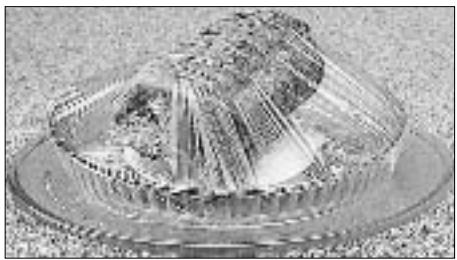
Place joints on an upturned plate in a microwaveable dish and on the turntable. It is important that the joint should not soak in its juice. The upturned plate is not needed for pieces of meat or poultry if fricasseed or cooked
with an accompaniment.
It is advisable to cover the meat with a lid or cling-film to speed up cooking and prevent splashes.
STANDING TIME
Meat and poultry require a minimum of 15 mins. STANDING TIME wrapped in tin foil after cooking by microwave. Roast meat is always easier to carve after STANDING and the meat will continue to cook during the STAND TIME.
BONE
Bone tips on legs of lamb and crown roasts may need shielding when cooked by microwave, to prevent overcooking.
How to cook small cuts of meat by microwave
Some cuts of meat can be cooked by microwave although due to their short cooking times and no heat source, they will not crisp and brown.
They should always be cooked on a microwave rack to lift them out of their juices.
Arrange drumsticks so the fleshiest part is towards the outside.
TURING
Joints and poultry should be turned over halfway through cooking.
SHIELDING
Large joints may need shielding with pieces of smooth aluminium foil after half the cooking time to avoid overcooking on the outside edges. Turks and large chickens should have their breast meat, legs and wings protected. Secure foil with toothpicks and do not allow foil to touch the walls of the oven.
How to roast a joint by Combination
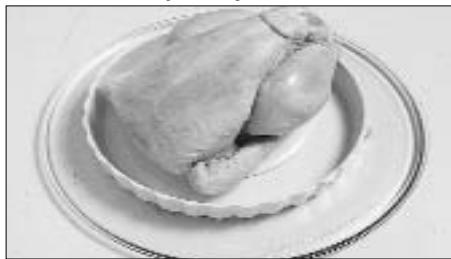
Place the joint on an upturned saucer on heatproof dish. Joints are best cooked by microwave only then browned and crisped by a final Combination stage. DO NOT cover.
Tips for stews and ragouts
BEFORE: the accompanying vegetables must be cut into regular pieces and pre-cooked, otherwise they may stay crunchy when cooking is completed. Lightly cover the pieces of meat with flour, to ensure the sauce cooks properly.
DURING cooking, it is essential to keep the pieces of meat covered by the liquid using an upturned saucer or plate (to prevent the meat from drying out). Since cooking stews takes a long time and sometimes there is a lot of evaporation, do not hesitate to add liquid while cooking if necessary. Cover the vessel with a lid to restrict evaporation. Bring to the boil on 1000 W for 10 to 12 mins. then continue cooking for the desired length of time at 250 W.
Cooking small cuts of meat by Grill or Combination
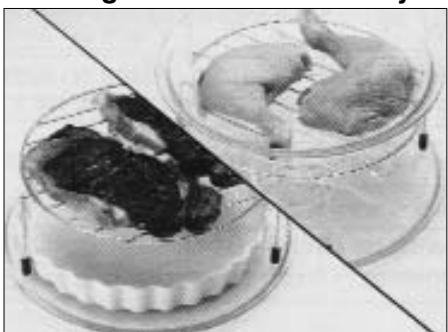
Place food on the wire rack. Place the wire rack on the turntable. Use a heatproof dish to catch grease/drips.
For larger pieces or pieces of meat that will not fit without touching the roof or catching on the grill, place in a heatproof dish on turntable. The grilling action will still brown the food, but may take slightly longer.
Meat & Poultry
For 500g (time in minutes)
| Type of meat | Microwave only*** | Cooking time in minutes | Combination or grill | Cooking time in minutes |
| BEEF | ||||
| - rib* | Grill | 25 -30** | ||
| - roast* | 600 W | 5 | Combi 3 | 7 - 8 |
| - stew | MAX then 250 W | 10 then 60 - 75** | - | - |
| LAMB | ||||
| - roast on the bone* | 600 W | 6 - 7 | Combi 1 | 7 - 8 |
| - rolled shoulder* | 600 W | 8 | Combi 1 | 8 - 9 |
| - stew* | MAX then 250 W | 10 then 40 - 50** | - | - |
| VEAL | ||||
| - roast shoulder* | 600 W | 14 - 15 | Combi 1 | 10 - 11 |
| - stew | MAX then 250 W | 10 then 50 - 60 ** | - | - |
| PORK | ||||
| - roast fillet* | 600 W | 15 - 17*** | Combi 1 | 11 - 12 |
| - roast spare rib* | 600 W | 15 - 17*** | Combi 1 | 12 - 13 |
| - stew | MAX then 250 W | 10 then 50 - 60** | - | - |
| - ribs* | - | - | Grill | 20 |
| CHICKEN - GUINEA FOWL - TURKEY | ||||
| - roast whole | - | - | Combi 1 | 8 - 9 |
| - pieces* | 600 W | 7 - 8 | Combi 2 or Grill | 12 - 14 25** |
| - turkey drumstick* | - | - | Combi 1 | 8 - 9 |
| - turkey pieces | 600 W | 12 | Combi 1 | 10 - 11 |
| DUCK | ||||
| - roast whole | - | - | Combi 1 then grill | 9 - 10 then 4** |
| - pieces* | - | - | Combi 1 then grill | 7 - 8 then 6** |
| - stew | MAX then 250 W | 10 then 70** | - | - |
| RABBIT | MAX | 7 - 8 | - | - |
| GAME | ||||
| - roast* | MAX | 5 - 6*** | Combi 3 | 9 - 11 |
| - stew | MAX then 250 W | 10 then 70** | - | - |
| CHIPOLATAS, MERVUEZ* | MAX | 3 - 4 | Grill | 12 - 14** |
| PORK SAUSAGE (1 pce)* | - | - | Combi 2 | 8** |
| Toulouse Sausage (2 pces)* | - | - | Combi 2 | 10 |
| or Grill | 15** | |||
Note: For boned or stuffed meat, increase cooking time by at least 5 mins. (depending on weight).
dish placed on the wire rack for grill or combination cooking, if the thickness of the meat allows; otherwise, on the turntable.
Regardless of the weight.
** with microwave-only cooking, the cooking times of joints (pork, veal, lamb, beef) apply to joints that have previously been browned on all sides in a pan (for a few minutes).
Fish
Fish cooks very well by microwave as it stays moist and the lingering fish smells left in conventional ovens are avoided.
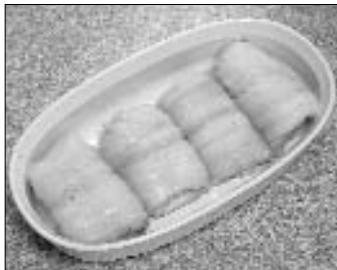
ARRANGING
Thin fillets of fish i.e. plaice, should be rolled up prior to cooking to avoid overcooking on the thinner outside edge and tail.
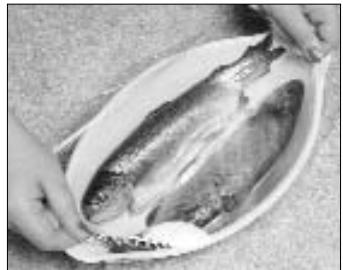
COVERING
Always cover fish with either microwave cling film or use a dish with a self-fitting lid.
SALT
WHOLE FISH
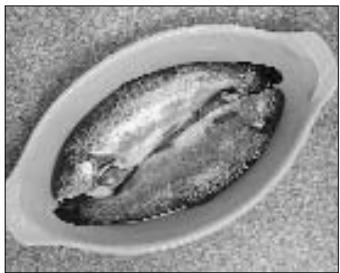
If cooking 2 whole fish together, they should be arranged head to tail for even cooking. Large whole fish must have the tail and head shielded halfway through cooking with smooth pieces of tin foil secured with toothpicks.
DO NOT sprinkle salt onto fish before cooking as this may make the fish dry.
COOKING FISH BY GRILL OR COMBINATION
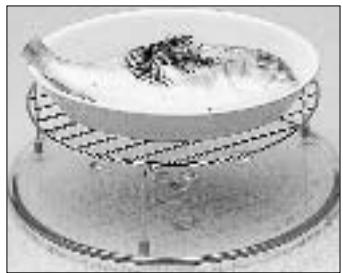
Brush fish with melted butter or oil to keep fish moist. Place on wire rack. DO NOT add salt, however sprinkle with pepper or herbs if required.
WHEN IS FISH COoked?
Fish is cooked when it flakes easily and becomes opaque.
LIQUID
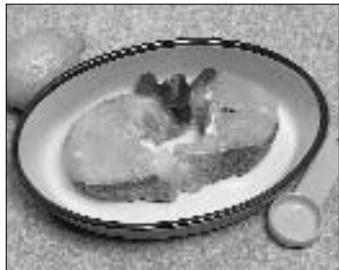
Fresh fish should always be sprinkled with 30 ml (2 tbsp) of lemon juice or white wine. When cooking Frozen fish, add liquid as above for even cooking.
Big fish (more than 400 g)
You are recommended to turn them over halfway through cooking time and to protect the head and tail with a small piece of aluminium foil to avoid overcooking. (Attention: the aluminium must not touch the walls of the oven).
FISH STEAKS
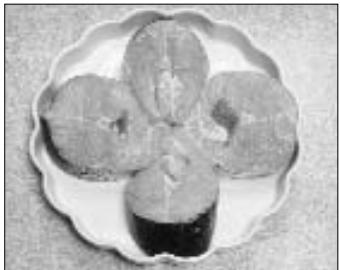
Fish steaks should be arranged in a circle - thicker part to the outside - to avoid overcooking and disintegration of the tail ends.
Stand time
Fish should STAND after cooking for 2-3 mins. This can be outside the oven to enable the oven to be used for further cooking.
Fish en papillote
You can make papillotes of fish by replacing the aluminium foil by microwaveable greaseproof paper (or parchment paper).
Cooking Time for 500g in minutes
| Food | FRESH | FROZEN | ||
| Power | Time | Power | Time | |
| Fish in thin fillets | 600 W | 4 - 5 | MAX | 10 |
| Fish in thick fillets | 600 W | 5 - 6 | MAX | 11 - 12 |
| Fish steaks | 600 W | 5 - 7 | MAX | 11 - 13 |
| Whole fish | 600 W | 5 | MAX | 12 |
| Shrimp* | 600 W | 4 - 5 | ||
| Mussels* | 600 W | 5 - 6 | ||
| Scallops* | 600 W | 6 - 7 | ||
| Squid* | 600 W | 5 - 6 | MAX | 11 |
| Crab* | 600 W | 5 - 6 | ||
| Fish croquettes (1 piece=50 g)* | MAX | 3 min 30 (2 pieces) or 5 min (4 pieces) |
*We do not recommend cooking with the Auto menu for these fish.
Vegetables
ADDED WATER
Very water-rich vegetables such as tomatoes, courgettes, aubergines, frozen vegetables for ratatouille, mushrooms, spinach, endives, lettuce, onions, most fruits, etc., to which little or no water should be added, since microwave cooking uses the water contained in the foods naturally.
Fairly water-rich vegetables, to which 4 to 5 tablespoons of water should be added for 500g , to create the steam which cooks the vegetables and prevents dehydration: cauliflower, leeks, broccoli, Brussels sprouts, fennel, carrots, celeriac, asparagus, dwarf beans, potatoes, cabbages, turnips, artichokes, etc.
Vegetables containing relatively little water, to which 8 to 10 tablespoons of water should be added per 500g to encourage hydration: peas, broad beans, runner beans, French beans.
In all cases: vegetables must be cooked on 1000 W power (except for whole cauliflower) and must not be salted before cooking, but after. This is because the salt absorbs the natural moisture of the vegetable and encourages dehydration.
Fresh/Frozen Vegetables Manual Cooking Charts - Use Max Power (1000 W) For 500g (time in minutes)
| VEGETABLES | FRESH | FROZEN |
| Artichokes: | ||
| - whole | 11 - 12 | - |
| - hearts | 10 - 12 | 13 - 16 |
| Asparagus* | 10 - 12 | 14 - 15 |
| Aubergines | 9 - 11 | - |
| Beetroot* | 18 - 20 | - |
| Chinese Leaves | 8 - 10 | 14 - 15 |
| Broccoli | 8 - 10 | 13 - 15 |
| Mushrooms | 9 - 10 | 13 - 15 |
| Carrots: | ||
| - round slices | 10 - 12 | 13 - 15 |
| - strips | 12 - 14 | - |
| Cabbage* | 12 - 14 | - |
| Cauliflower | 10 - 12 | 13 - 15 |
| Brussels sprouts | 10 - 12 | 13 - 15 |
| Boule celery | 9 - 11 | - |
| Celery* | 15 - 17 | - |
| Courgettes | 8 - 10 | 13 - 15 |
| Endives | 12 - 14 | 18 - 20 |
| Spinach: | ||
| - chopped | - | 12 |
| - leaves | 9 - 10 | 13 |
| VEGETABLES | FRESH | FROZEN |
| Broad beans* | 16 - 19 | 18 - 20 |
| Fennel: | ||
| - whole cut in half | 12 - 14 | - |
| - thin cut | 17 - 20 | - |
| Green beans* | 12 - 13 | 12 - 13 |
| Dwarf beans | 10 - 13 | - |
| Mixed spring vegetables* | - | 15 - 16 |
| Corn on cob (2 cobs)* | 12 - 14 | 14 - 17 |
| Turnips | 10 - 12 | 18 - 20 |
| Onions | 9 - 12 | 15 - 18 |
| Peas* | 20 | 16 - 18 |
| Mange-tout peas | 10 - 12 | - |
| Thin sliced leeks | 12 - 14 | 15 - 16 |
| Leek stalks | 12 - 14 | 15 - 16 |
| Squash | 10 - 12 | - |
| Capsicum | 12 - 14 | 14 - 16 |
| Whole potatoes (<220 g) | 9 - 12 | - |
| Cut potatoes | 10 - 12 | - |
| Ratatouille | 16 - 18 | 14 - 16 |
| Salsify | 12 - 14 | 14 - 16 |
| Tomatoes* | 4 - 5 | - |
*We do not recommend cooking with the Auto menu for these vegetables.
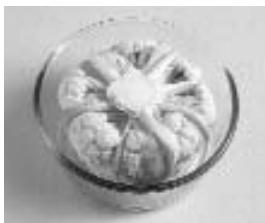
A whole cauliflower must be cooked head down, on 600 W power, for 12 to 15 mins. (according to size of cauliflower) with 6 tablespoons of water.
Eggs & Cheese
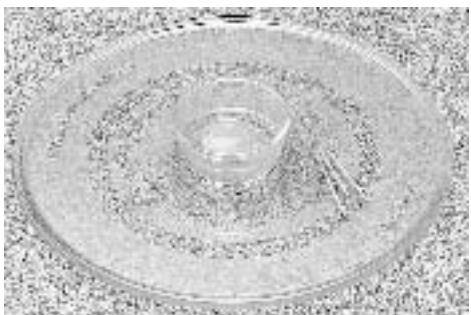
the film covering it is not pierced. So push the tip of a toothpick into the centre of the yolk; if the egg is fresh, it will not spill out. The yolk and the white react differently to the microwaves and unfortunately the yolk cooks more quickly. When eggs are beaten (omelette), the edges should be taken into the centre halfway through cooking time.
Poached eggs
Heat 50ml of water with salt and a dash of vinegar for 1 min on 1000~W . Break the egg into the boiling water and carefully pierce the yolk and the white with a toothpick; cook on 600~W for 30 to 40
Eggs are delicate products which require special attention. This is because if they are placed straight into the oven, they explode because of the pressure created inside the shell. Being broken, the yolk also explodes if
seconds (depending on the size of the egg). Leave to stand for 1 minute, then drain and serve.
Scrambled eggs
Mix 2 raw eggs in a bowl with a little cream or milk, a knob of butter, salt and pepper. Cook for 40 seconds on 1000 W. Remove and beat briskly with a fork. Resume cooking on 1000 W for a further 30 to 40 seconds. The eggs should remain creamy.
Oeufs cocotte
Break the egg into a buttered ramekin, season with salt and pepper, pierce the yolk and the white with a toothpick. Add the desired ingredients (cream, mushrooms, lumpfish roe, etc.). Cook for 1 min 30 sec to 2 min per egg at 250 W, depending on the size of the egg and the quantity of garnish.
Cheeses react differently depending what type they are: the fattier they are the quicker they melt. If they are cooked for too long a time, they harden. When possible, it is preferable to add grated cheese at the last moment (for pasta, gratins, etc.).
Rice, Pasta, Dried Vegetables & Jacket Potatoes
The cooking times for dried vegetables in the microwave are much the same as with traditional cooking. On the other hand, these foodstuffs heat up very quickly, without taking on a reheated flavour, so long as they are in a closed vessel, with butter or sauce mixed in.
For the cooking, use a big vessel (to avoid any overspill). Fully cover with water or stock. Leave to stand for at least 5 to 8 minutes after cooking.
Rice
Once the liquid reaches boiling point, cook for approx. 20 minutes at 250W , regardless of the quantity of rice.
Semolina
Semolina cooks perfectly in a microwave oven, with no risk of burning. Simply add a volume of water equal to that of the semolina, bring to the boil covered on 1000 W for 2 min 30 sec (for 200 g of medium-grain semolina with 0.2 l of water), then cook on 250 W for about 3 min while it swells.
Pasta
Remember to salt the cooking water and stir once during cooking. When the liquid is bubbling, cook for 7 or 8 minutes on 1000W for 250g of pasta (for 1 litre of water) and 10 minutes for 250g of ravioli.
Dried vegetables
Fully cover with water and leave to soak for one night. The next day, rinse and drain. Cover with water. Do not salt before cooking (this hardens the dried vegetables). Cook for 10 minutes on 1000 W then 15 to 30 minutes on 250 W. Monitor the cooking and add water if necessary: the dried vegetables must always be covered with liquid.
Jacket potatoes
Varieties of potatoes vary in their suitability for cooking by microwave. The ideal size of potato to be cooked by microwave or Combination is 200g -250 g. Microwaving jacket potatoes is quicker than Combination, but will produce a soft result. Combination cooking will produce a drier, crisper texture. If you wish to further enhance the browning at the end of cooking, use the GRILL (see chart below). Before Cooking wash potatoes and prick skins several times. Spread around edge of turntable.
After Cooking remove from oven and wrap in tin foil to retain the heat. Leave to stand for 5 mins.
Jacket Potatoes - Manual Cooking Chart
| Qty | Mins. on 1000 W | Mins. on Grill to crisp |
| 1 | 4-7 | 8-10 |
| 2 | 7-10 | 10-12 |
| 4 | 11-15 | 11-13 |
Common Queries Answered
| Problem | Cause | Solution |
| Food cools quickly after being MICROWAVED. | Food not cooked through. | Put back in oven for extra time.Remember foods at fridge temperature require more cooking time than food at room temperature. |
| Rice pudding or casserole boils over during cooking by MICROWAVE. | Container too small. | For liquid foods, use container twice the volume of food. |
| Food cooks too slowly when cooked by MICROWAVE. | Oven not receiving correct power. | Oven should be on an independent outlet. |
| Food temperature from fridge colder than room temperature. | Extra time required for cooking colder foods. | |
| Meat is tough when cooked by MICROWAVE or Combination. | Power setting too high. | Use reduced power level for meats. |
| Meat salted before cooking. | Do not salt before cooking. Add salt if necessary, after cooking. | |
| Cake remains uncooked in centre when cooked by MICROWAVE. | Too short a cooking and/or standing time. | Add extra cooking time/standing time. |
| Scrambled or poached eggs tough and rubbery when cooked by MICROWAVE. | Cooking time too long. | Take care when cooking small quantities of eggs, once spoiled they cannot be saved. |
| Quiche/Egg Custards are tough and rubbery when cooked by MICROWAVE. | Power level too high. | Use reduced power levels for these items. |
| Quiche/Egg Custards are tough and rubbery when cooked by Combination. | Cooked too long. Dish size larger than stated in recipe. | Always check progress of food as it cooks. |
| Cheese sauce is tough and stringy when cooked by MICROWAVE. | Cheese cooked with sauce. | Add cheese at the end of cooking time. The heat of the sauce will melt the cheese. |
| Vegetables are dry when cooked by MICROWAVE. | Cooked uncovered. | Cover with a lid or cling film. |
| Low moisture content, e.g. old root vegetables. | Add extra 2-4 tbsp. of water. | |
| Salt added before cooking. | Salt after cooking if necessary. | |
| Condensation appears in the oven. | This is normal and means the food is cooking faster then the moisture can be expelled from the oven. | Wipe off with a soft cloth. |
| Turntable rotates in both directions. | This is normal. | |
| Warm air is felt coming from the door seal area. | The oven door is not an air-tight seal. | This is normal and does not indicate any microwave leakage. |
| Blue sparks or arcing is seen when using the metal accessories. | Using metal accessories on MICROWAVE only is incorrect. If using a Combination program check accessories for any damage. | Stop the oven IMMEDIATELY. Do not use the metal accessories on MICROWAVE only. Check minimum weight of food on Auto Programs. |
| The GRILL periodically turns off during GRILLING or Combination. | During cooking the GRILL will cycle on and off so that the food does not burn before it is cooked through in the centre. | This is normal. |
INVERTER
DISPOSITIONE DEL CIBO
Por estarzon los tiempos de cocción tendrán que serajustadosa lo largodel ano. Los alimentos sesos (arroz, pasta....),SEO,SEOSEOSEOSEOSEOSEOSEOSEOSEOSEOSEOSEOSEOSEOSEOSEOSEOSEOSEOSEOSEOSEOSEOSEOSEOSEOSEOSEOSEOSEOSEOSEOSEOSEOSEOSEOSEOSEOSEOSEOSEOSEOSEOSEOSEOSEOSEOSEOSEOSEOSEOSEOSEOSEOSEOSEOSEOSEOSEOSEOSEOSEOSEOSEOSEOSEOSEOSEOSEOSEOSEOSEOSEOSEOSEOSEOSEOSEOSEOSEOSEOSEOSEOSEOSEOSEOSEOSEOSEOSEOSEOSEOSEOSEOSEOSEOSEOSEOSEOSEO
Film transparente
Ziemniaki w mundurkach
Ziemniaki w mundurkach
MAIPEIMAPOIY STO KPIA H SE MIKTO IPOI PAMMA
IpeaTo yapaIe AiouEvo Boutu npAia va va to kpatnoTe Zoupeo.ToTnOteNoTeToOn
oxapa Tou ooupvou.MHN tou
npooaTe ae aati, aaaa uOpoeiTa va to pavtoe Te npiepi
nmuwika.
Meyalo 巧 (eYaAUTepo ano 400 yp.)
ZuvioTata va to yupicEte oTo meoo Tou xpovou ayepedmuoc kai npTei va npOoTaueEte TO kepaI KA TnV oupa eva mko Komuati
alouuivoxapto yia va anouyeTe TO utepBoLIOK nmo. (Ppooo: to alouuivoxapto dEv npTei va ayyici ta toxwmaTou opuovou).
Xpovoc Avouvns
| Празьгелема | Агия | Альпер |
| Таразьгелема крачеву урпуна мета to майерега мікрокúмatura. | Toразьгелема ду мійсіліцу To ожіюс ду мійсіліцу | Валенье туразьгелема дохуwoу ву хуvo. Бухибіец озі ртофесою рыхioкота хуvo. Бухибіец озі ртофесою рыхioкота хуvo. Бухибіец озі ртофесою рыхioкота хуvo. Бухибіец oзі ртофесою рыхioкота хуvo. Бухибіец oзі ртофесою рыхioкота хуvo. Бухибіец oзі ртофесою рыхioкота хуvo. Бухибіец oзі ртофесою рыхioкота хуve хуve хуve хуve хуve хуve хуve хуve хуve хуve хуve хуve хуve хуve хуve хуve хуve хуve хуve хуve хуve хуve хуve хуve хуve ху've ху've ху've ху've ху've ху've ху've ху've ху've ху've ху've ху've ху've ху've ху've ху've ху've ху've ху've ху've ху've ху've ху've ху've ху've хуve ху've ху've ху've ху've ху've ху've ху've ху've ху've ху've ху've ху've ху've ху've ху've ху've ху've ху've ху've ху've ху've ху've ху've хуve хуve ху've ху've ху've ху've ху've ху've ху've ху've ху've ху've ху've ху've ху've ху've ху've ху've ху've ху've ху've ху've ху've ху've хуve ху've хуve ху've ху've ху've ху've ху've ху've ху've ху've ху've ху've ху've ху've ху've ху've ху've ху've ху've ху've ху've ху've ху've ху've хуve хуve хуve ху've ху've ху've ху've ху've ху've ху've ху've ху've ху've ху've ху've ху've ху've ху've ху've ху've ху've ху've ху've ху've хуve ху've ху've хуve ху've ху've ху've ху've ху've ху've ху've ху've ху've ху've ху've ху've ху've ху've ху've ху've ху've ху've ху've ху've ху've хуve ху've хуve хуve ху've ху've ху've ху've ху've ху've ху've ху've ху've ху've ху've ху've ху've ху've ху've ху've ху've ху've ху've ху've ху've хуve хуve ху've хуve ху've ху've ху've ху've ху've ху've ху've ху've ху've ху've ху've ху've ху've ху've ху've ху've ху've ху've ху've ху've ху've хуve хуve хуve хуve ху've ху've ху've ху've ху've ху've ху've ху've ху've ху've ху've ху've ху've ху've ху've ху've ху've ху've ху've ху've хуve ху've ху've ху've хуve ху've ху've ху've ху've ху've ху've ху've ху've ху've ху've ху've ху've ху've ху've ху've ху've ху've ху've ху've ху've хуve ху've ху've хуve хуve ху've ху've ху've ху've ху've ху've ху've ху've ху've ху've ху've ху've ху've ху've ху've ху've ху've ху've ху've ху've хуve ху've хуve ху've хуve ху've ху've ху've ху've ху've ху've ху've ху've ху've ху've ху've ху've ху've ху've ху've ху've ху've ху've ху've ху've хуve ху've хуve хуve хуve ху've ху've ху've ху've ху've ху've ху've ху've ху've ху've ху've ху've ху've ху've ху've ху've ху've ху've ху've ху've хуve хуve ху've ху've хуve ху've ху've ху've ху've ху've ху've ху've ху've ху've ху've ху've ху've ху've ху've ху've ху've ху've ху've ху've ху've хуve хуve ху've хуve хуve ху've ху've ху've ху've ху've ху've ху've ху've ху've ху've ху've ху've ху've ху've ху've ху've ху've ху've ху've ху've хуve хуve хуve ху've хуve ху've ху've ху've ху've ху've ху've ху've ху've ху've ху've ху've ху've ху've ху've ху've ху've ху've ху've ху've ху've хуve хуve хуve хуve хуve ху've ху've ху've ху've ху've ху've ху've ху've ху've ху've ху've ху've ху've ху've ху've ху've ху've ху've ху've хуve ху've ху've ху've ху've хуve ху've ху've ху've ху've ху've ху've ху've ху've ху've ху've ху've ху've ху've ху've ху've ху've ху've ху've ху've хуve ху've ху've ху've хуve хуve ху've ху've ху've ху've ху've ху've ху've ху've ху've ху've ху've ху've ху've ху've ху've ху've ху've ху've ху've хуve ху've ху've хуve ху've хуve ху've ху've ху've ху've ху've ху've ху've ху've ху've ху've ху've ху've ху've ху've ху've ху've ху've ху've ху've хуve ху've ху've хуve хуve хуve ху've ху've ху've ху've ху've ху've ху've ху've ху've ху've ху've ху've ху've ху've ху've ху've ху've ху've ху've хуve ху've хуve ху've ху've хуve ху've ху've ху've ху've ху've ху've ху've ху've ху've ху've ху've ху've ху've ху've ху've ху've ху've ху've ху've хуve ху've хуve ху've хуve хуve ху've ху've ху've ху've ху've ху've ху've ху've ху've ху've ху've ху've ху've ху've ху've ху've ху've ху've ху've хуve ху've хуve хуve ху've хуve ху've ху've ху've ху've ху've ху've ху've ху've ху've ху've ху've ху've ху've ху've ху've ху've ху've ху've ху've хуve ху've хуve хуve хуve хуve ху've ху've ху've ху've ху've ху've ху've ху've ху've ху've ху've ху've ху've ху've ху've ху've ху've ху've ху've хуVE хуVE хуVE хуVE хуVE хуVE хуVE хуVE хуVE хуVE хуVE хуVE хуVE хуVE хуVE хуVE хуVE хуVE хуVE хуVE хуVE хуVE хуVE хуVE хуVE хуve хуve хуve хуve хуve хуve хуve хуve хуve хуve хуve хуve хуve хуve хуve хуve хуve хуve хуve хуve хуve хуve хуve хуve хуVE хуVE хуVE хуVE хуVE хуVE хуVE хуVE хуVE хуVE хуVE хуVE хуVE хуVE хуVE хуVE хуVE хуVE хуVE хуVE хуVE хуVE хуVE хуVE хуVt'о хуVE хуVE хуVE хуVE xуVE xуVE xуVE xуVE xуVE xуVE xуVE xуVE xуVE xуVE xуVE xуVE xуVE xуVE xуVE xуVE xуVE xуVE xуVE xуVE xуVE xуVE xуVE xуVE xуVE XyVE XyVE XyVE XyVE XyVE XyVE XyVE XyVE XyVE XyVE XyVE XyVE XyVE XyVE XyVE XyVE XyVE XyVE XyVE XyVE XyVE XyVE XyVE XyVE XyVE XYVE XYVE XYVE XYVE XYVE XYVE XYVE XYVE XYVE XYVE XYVE XYVE XYVE XYVE XYVE XYVE XYVE XYVE XYVE XYVE XYVE XYVE XYVE XYVE XYVE XyVE XyVE XyVE XyVE XyVE XyVE XyVE XyVE XyVE XyVE XyVE XyVE XyVE XyVE XyVE XyVE XyVE XyVE XyVE XyVE XyVE XyVE XyVE XyVE X yVE X yVE X yVE X yVE X yVE X yVE X yVE X yVE X yVE X yVE X yVE X yVE X yVE X yVE X yVE X yVE X yVE X yVE X yVE X yVE X yVE X yVE X yVE X yVE X yVE XyVE XyVE XyVE XyVE XyVE XyVE XyVE XyVE XyVE XyVE XyVE XyVE XyVE XyVE XyVE XyVE XyVE XyVE XyVE XyVE XyVE XyVE XyVE XyVE X年2017年1月1日16:30前16:30前16:30前16:30前16:30前16:30前16:30前16:30前16:30前16:30前16:30前16:30前16:30前16:30前16:30前16:30前16:30前16: 30前16:30前16:30前16:30前16:30前16:30前16:30前16:30前16:30前16:30前16:30前16:30前16:30前16:30前16:30前16:30前16:30前 16:30前16:30前16:30前16:30前16:30前16:30前16:30前16:30前16:30前16:30前16:30前16:30前16:30前16:30前16:30前16:30前16: |
F000B5Q50EP