USER MANUAL HCE1400 SCHEPPACH
natural_image
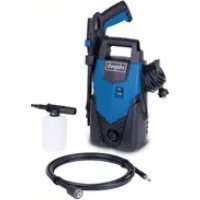
Product photo of a Schoppack water heater with attached hose and spray bottle (no visible text or symbols)
HCE1400
| DE | Elektro-HochdruckreinigerOriginalbedienungsanleitung | 5 |
| GB | Electrical high-pressure cleanerTranslation of original instruction manual | 18 |
| FR | Nettoyeur haute pression électriqueTraduction des instructions d'origine | 29 |
| DK | Elektrisk højtryksrenserOversættelse fra den oprindelige betjeningsvejledning | 40 |
1
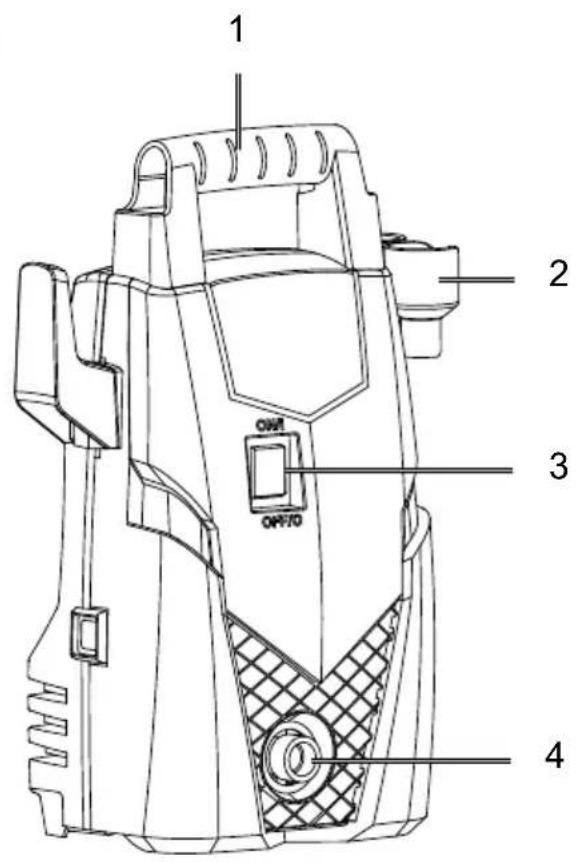
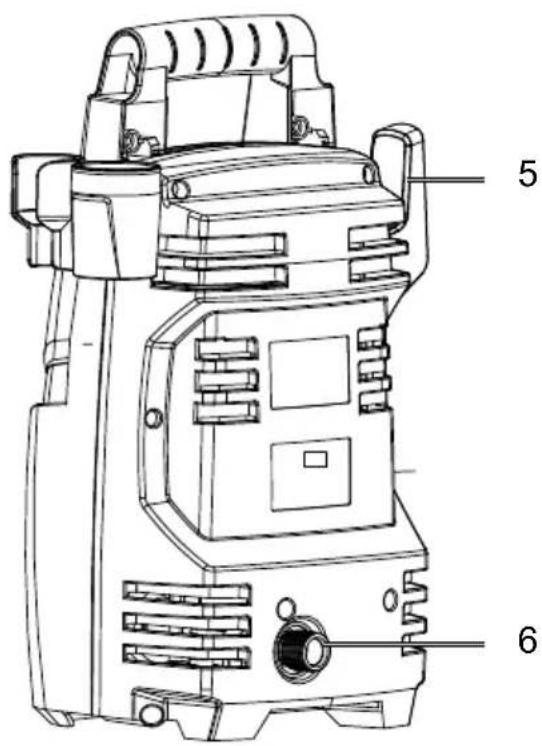
2
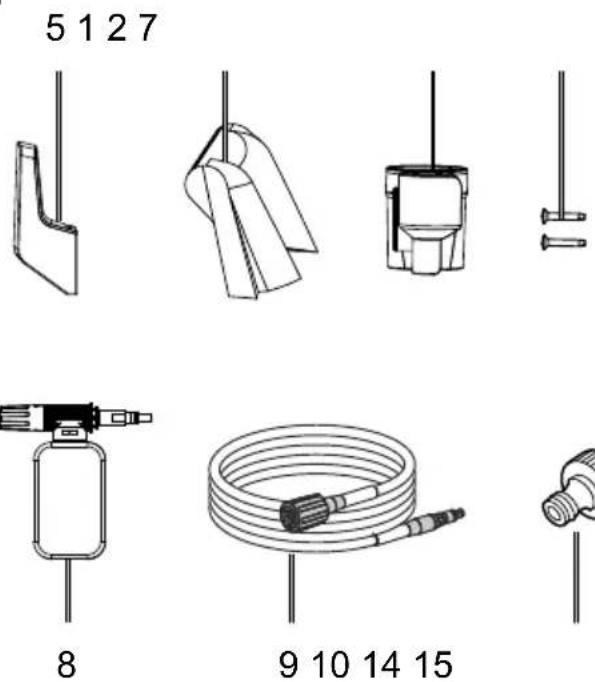
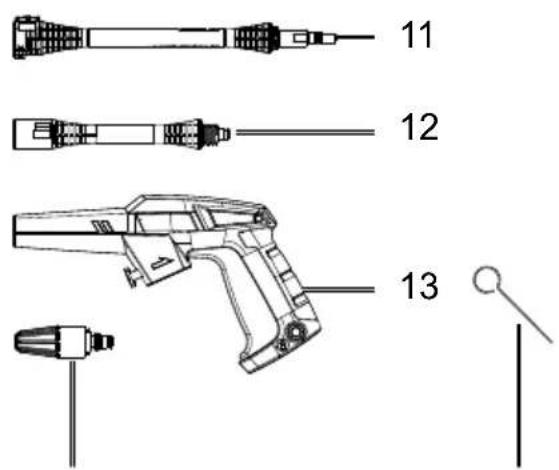
6
Günzburger Straße 69
D-89335 Ichenhausen
Verehrter Kunde,
Homepage: https://www.scheppach.com/de/service
Explanation of the symbols on the device
Symbols are used in this manual to draw your attention to potential hazards. The safety symbols and the accompanying explanations must be fully understood. The warnings themselves will not rectify a hazard and cannot replace proper accident prevention measures.
 | Warning - read the instruction manual to reduce the risk of injury. |
 | Wear hearing protection. Excessive noise can result in a loss of hearing. |
 | Wear safety goggles. Sparks created during work or fragments, chippings and dust ejected by the device can case sight loss. |
 | Protection class II |
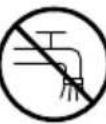 | The device must not be connected directly to the public drinking water network. |
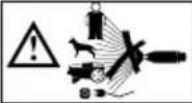 | Do not direct the high-pressure jet towards any persons, animals, active electrical equipment or the device itself. |
 | The product complies with the applicable European directives. |
| ⚠ Attention! | We have marked points in this operating manual that impact your safety with this symbol. |
Table of contents: Page:
- Introduction....20
- Device description (Fig. 1 + 2)....20
- Scope of delivery 20
- Proper use 20
- General safety instructions.... 21
- Technical data....23
- Unpacking....24
- Assembly 24
- Start up 25
- Electrical connection 25
- Cleaning 26
- Storage 26
- Maintenance 26
- Disposal and recycling....27
- Troubleshooting 28
- Declaration of conformity 54
1. Introduction
Manufacturer:
Scheppach GmbH
Günzburger Straße 69
D-89335 Ichenhausen
Dear Customer,
we wish you much pleasure and success in working with your new device.
Note:
In accordance with the applicable product liability laws, the manufacturer of this device assumes no liability for damage to the device or caused by the device arising from:
- Improper handling
• Non-compliance with the operating manual,
• Repairs carried out by third parties, unauthorised specialists.
• Installing and replacing non-original spare parts
• Application other than specified
- Failure of the electrical system in the event of the electrical regulations and VDE provisions 0100, DIN 57113 / VDE0113 not being observed
Note:
Read through the complete text in the operating manual before installing and commissioning the device.
This operating manual should help you to familiarise yourself with your device and to use it for its intended purpose.
The operating manual includes important instructions for safe, proper and economic operation of the device, for avoiding danger, for minimising repair costs and downtimes, and for increasing the reliability and extending the service life of the device.
In addition to the safety instructions in this operating manual, you must also observe the regulations applicable to the operation of the device in your country.
Keep the operating manual at the device, in a plastic sleeve, protected from dirt and moisture. They must be read and carefully observed by all operating personnel before starting the work.
The device may only be used by personnel who have been trained to use it and who have been instructed with respect to the associated hazards.
The required minimum age must be observed.
In addition to the safety instructions in this operating manual and the separate regulations of your country, the generally recognised technical rules relating to the operation of such machines must also be observed.
We accept no liability for accidents or damage that occur due to a failure to observe this manual and the safety instructions.
2. Device description (Fig. 1 + 2)
- Handle
- Lance holder
- On/off switch
- Water supply connection
- Cable holder
- Connection for high-pressure hose
- Screw
- Cleaning agent container
- High-pressure hose
10 Adapter for water connection
- Spraying lance
- Extension piece
- Pistol
- Nozzle
- Nozzle cleaning needle
3. Scope of delivery
• High-pressure cleaner
- Handle (1)
- Lance holder (2)
- Cable holder (5)
- 2x screw (7)
- Cleaning agent container (8)
• High-pressure hose (9)
- Adapter for water connection (10)
- Spraying lance (11)
- Extension (12)
- Pistol (13)
- Nozzle (14)
- Nozzle cleaner needle (15)
- Operating manual
4. Proper use
The high-pressure cleaner is intended for use in private areas for cleaning vehicles, machines, buildings, façades, etc. with high pressure.
The machine may only be used in the intended manner. Any use beyond this is improper.
The user/operator, not the manufacturer, is responsible for damages or injuries of any type resulting from this.
An element of the intended use is also the observance of the safety instructions, as well as the assembly instructions and operating information in the operating manual.
Persons who operate and maintain the machine must be familiar with it and must be informed about potential dangers.
In addition, the applicable accident prevention regulations must be strictly observed.
Other general occupational health and safety-related rules and regulations must be observed.
The liability of the manufacturer and resulting damages are excluded in the event of modifications of the machine.
The machine may only be operated with original parts and original accessories from the manufacturer.
The safety, operating and maintenance specifications of the manufacturer, as well as the dimensions specified in the technical data, must be observed.
Please note that our equipment was not designed with the intention of use for commercial or industrial purposes. We assume no guarantee if the device is used in commercial or industrial applications, or for equivalent work.
The device is intended for use by adults. Children over the age of 16 may use the tool except under supervision. The manufacturer is not liable for damage caused by an improper use or incorrect operation of this device.
5. General safety instructions
Failure to follow all instructions listed below may result in electric shock, fire and/or serious injury.
Save all warnings and instructions for future reference.
Before using your device for the first time, read these safety instructions and the original operating manual. Act accordingly.
- In addition to the information in the operating manual, the general safety and accident prevention regulations of the legislature must be observed.
- Warning and information labels attached to the device provide important information for safe operation.
Danger levels
⚠️ DANGER
• Information on an imminent danger that will lead to severe personal injury or death.
⚠ WARNING
• Information on a potentially dangerous situation that can lead to severe personal injury or death.
△CAUTION
• Information on a potentially dangerous situation that can lead to minor injuries.
ATTENTION
• Information on a potentially dangerous situation that can lead to property damage.
Electrical components
⚠️ DANGER
• Danger of electric shock.
- Never touch the mains plug and socket with wet hands.
- Check the mains connection cable with mains plug for damage before each use. Have a damaged mains connection cable replaced immediately by an authorised customer service/electrician. Do not operate the device with a damaged mains connection cable.
- All live parts in the work area must be protected from water jets.
- The mains plug and coupling of an extension lead must be waterproof and must not lie in the water. The coupling must still not lie on the floor. It is recommended to use cable drums, which guarantee that the socket is at least 60 mm above the ground.
- Ensure that the mains power connection and extension lead are not broken or damaged by being driven over, crushed, pulled or the like. Protect the mains connection cable from heat, oil and sharp edges.
- Pull out the mains plug before carrying out any cleaning and maintenance work!
- All repair work, also to any electrical components, must be carried out by an authorised customer service centre.
⚠ WARNING
- The device may only be connected to an electrical connection that has been carried out by an electrician in accordance with IEC 60364.
- Connect the device to alternating current only. The voltage must match the type plate on the device.
- Protection class I devices may only be connected to properly earthed power sources.
- For safety reasons, we generally recommend operating the device via a residual current circuit breaker (max. 30 mA).
- An unsuitable electrical extension lead can be dangerous. For outdoor use, only use an approved, appropriately labelled, electrical extension lead with a sufficient cable cross-section:
1 - 10 m: 1.5 mm ^2 ; 10 - 30 m: 2.5 mm ^2
• Always completely unwind the extension lead from the cable drum.
Safe use
DANGER
- The user must use the device as intended. They must take the local conditions into account and pay attention to persons around them when working with the device.
- Check important components such as the high-pressure hose, hand spray gun and safety devices for damage before each use. Replace damaged components immediately. Do not operate the device with damaged components.
- High-pressure jets can be dangerous when used improperly. The jet must not be directed towards any persons, animals, active electrical equipment or the device itself.
- Do not direct the high-pressure jets at others or yourself in order to clean clothing or footwear.
- Vehicle tyres/tyre valves can be damaged by the high-pressure jet and burst. The first sign of this is discolouration of the tyre. Damaged vehicle tyres/tyre valves are life-threatening. Maintain a jetting distance of at least 30 cm when cleaning!
⚠ WARNING
- Do not use the device when other people are in range unless they are wearing protective clothing.
- The device must not be operated by children or untrained persons.
- This device is not designed to be operated by persons with impaired physical, sensory or mental capabilities, or who have insufficient experience and/or insufficient knowledge unless they are being supervised by a person who is responsible for their safety or they are receiving instruction about how this device is to be used and have understood the resulting dangers. Children may not play with the device.
• Children should be supervised in order to ensure that they do not play with the device.
△CAUTION
- Before doing any work with or on the device, ensure that it is stable in order to avoid accidents or damage if the device topples over.
- The emergent water jet at the high pressure nozzle creates a recoil force on the hand spray gun. Make sure you have a secure footing and hold the hand spray gun and jet pipe firmly.
- Never leave the device unattended while it is in operation.
ATTENTION
- Switch the device off at the device switch during longer work breaks.
- Do not operate the device at temperatures below 0^ .
Other dangers
⚠️ DANGER
- Do not operate the device in explosive environments.
- Do not spray objects that contain harmful substances (e.g. asbestos).
- Never draw in liquids containing solvents or undiluted acids and solvents! These include, for example, petrol, paint thinner or heating oil. The spray mist is highly flammable, explosive and poisonous. Do not use acetone, undiluted acids and solvents as they corrode the materials used on the device.
- Keep packaging material away from children, there is a risk of suffocation!
⚠ WARNING
- In accordance with the applicable regulations, the device must never be operated in the drinking water network without a system separator. Make sure that the connection of your household water system, on which the high-pressure cleaner is operated, is equipped with a system separator in accordance with EN 12729 type BA.
• Water that has run through a system separator is no longer considered drinking water.
- High-pressure hoses, fixtures and couplings are important for device safety. Only use high-pressure hoses, fixtures and couplings recommended by the manufacturer.
- When disconnecting the inlet or the high-pressure hose, hot water can escape from the connections after operation.
⚠️CAUTION
- When selecting the storage location and during transport, note the weight of the device (see technical data) in order to avoid accidents or injuries.
- Uninterrupted use of the device for several hours can lead to numbness in the hands in rare cases.
- Wear gloves.
- Keep hands warm.
• Take regular breaks from work.
Working with a cleaning agent
⚠ WARNING
- This device has been developed for the use of cleaning agents that are supplied or recommended by the manufacturer. The use of other cleaning agents or chemicals may affect the safety of the device.
- Incorrect use of cleaning agents can cause severe injuries or poisoning.
- Keep cleaning agents out of the reach of children.
Safety devices
CAUTION
- Safety devices are used to protect the user and must not be changed or bypassed.
Personal protective equipment
CAUTION
- Wear suitable protective clothing and safety goggles to protect against splashing water or dirt.
- Aerosols can develop when using high-pressure cleaners. Inhaling aerosols can cause damage to your health. Depending on the application, fully shielded nozzles (e.g. surface cleaners) can be used for high-pressure cleaning, which significantly reduce the emission of aqueous aerosols. The use of such shielding is not possible in all applications. If the use of a fully shielded nozzle is not possible, a respirator of class FFP 2 or comparable, depending on the environment to be cleaned, must be used.
Residual risks
Even when this power tool is operated properly, residual risks still remain. The following hazards may arise in connection with the design and construction of this power tool:
- Lung damage if suitable dust protection mask is not worn.
- Hearing damage if suitable hearing protection is not worn.
- Damage to health resulting from hand/arm vibration if the device is used over an extended period of time or if it is not properly operated and maintained.
Warning! This power tool generates an electromagnetic field during operation. This field can impair active or passive medical implants under certain circumstances. In order to prevent the risk of serious or deadly injuries, we recommend that persons with medical implants consult with their physician and the manufacturer of the medical implant prior to operating the power tool.
6. Technical data
Mains voltage 220-240 V\~ / 50/60 Hz
| Power consumption 1400 W |
| Design pressure / working pressure (p) | 7.5 MPa |
| Max. permissible pressure (p max) | 11 MPa |
| Delivery rate 5 l/min |
| Max. water supply pressure | 0.4 MPa |
| Protection class II |
| Weight 4.5 kg |
| Protection category IPX5 |
⚠️DANGER!
Noise and vibration
The noise and vibration levels have been determined in accordance with EN 60335.
| Sound pressure level L_pA | 73 dB |
| Uncertainty K_pA | 3 dB |
| Sound power level L_WA | 88 dB |
| Uncertainty K_WA | 3 dB |
Wear hearing protection.
Excessive noise can result in a loss of hearing.
Total vibration emission values (vector sum of three directions) determined per EN 60335.
Vibration emission value a_h ≤ 2.5 m/s^2
The specified vibration emission value has been measured according to a standardised testing procedure and can be used for comparison of one power tool with another; and may change depending on the way in which the power tool is used and in exceptional cases may be higher than the specified value.
The specified vibration emission value can be used to compare one power tool with another.
The specified vibration emission value can also be used for an initial estimation of the impair.
Keep the noise level and vibration to a minimum!
- Only use faultless devices.
- Maintain and clean the device at regular intervals.
- Adapt your working methods to the device.
- Do not overload the device.
- Have the device checked if necessary.
- Switch the device off if it is not in use.
- Wear gloves.
7. Unpacking
- Open the packaging and carefully remove the device.
- Remove the packaging material, as well as the packaging and transport safety devices (if present).
- Check whether the scope of delivery is complete.
- Check the device and accessory parts for transport damage. In the event of complaints the carrier must be informed immediately. Later claims will not be recognised.
- If possible, keep the packaging until the expiry of the warranty period.
- Familiarise yourself with the device by means of the operating manual before using for the first time.
- With accessories as well as wearing parts and replacement parts use only original parts. Spare parts can be obtained from your specialist dealer.
- When ordering please provide our article number as well as type and year of manufacture for your equipment.
⚠ WARNING!
The device and the packaging material are not children's toys! Do not let children play with plastic bags, films or small parts! There is a danger of choking or suffocating!
8. Assembly
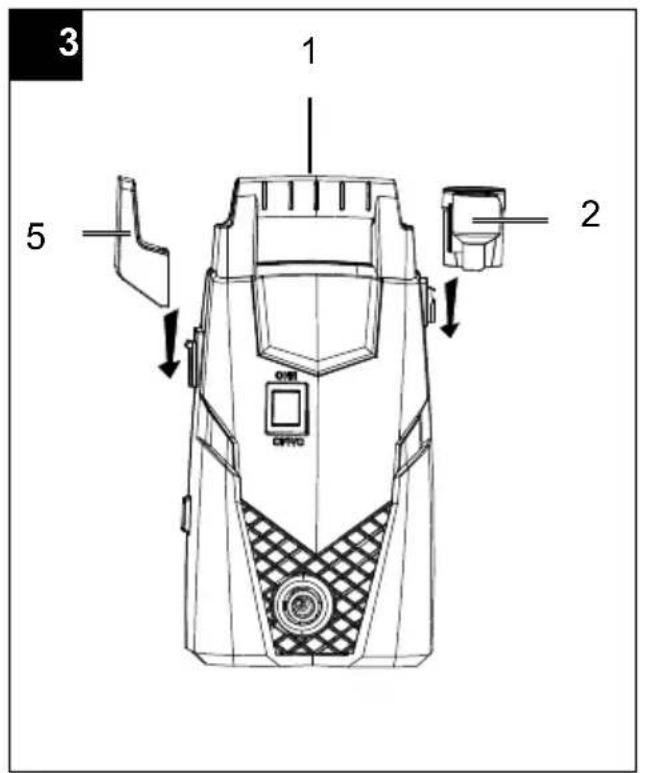
8.1 Assembling the device (Fig. 3)
- Push the handle (1) onto the fastening point at the top of the device and use the included screws (7) to secure it.
- Slide the lance holder (2) and the cable holder (5) onto the side of the connection point on the device.
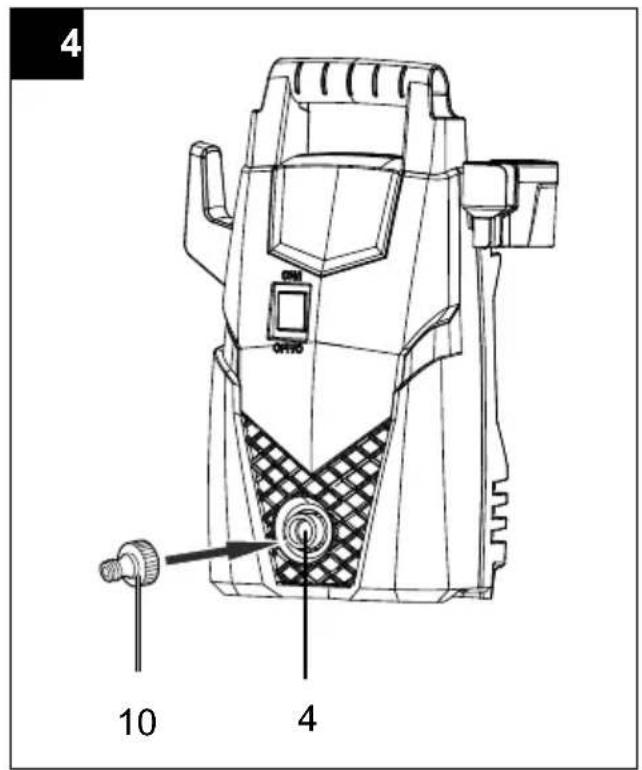
8.2 Water supply connection (Fig. 4)
- Screw the adapter for the water supply (10) onto the water supply connection (4).
- The adapter for the water supply (10) features a connection for standard hose coupling systems. Attach the hose coupling of the supply hose (min. ∅ 1/2"/ approx. 13 mm) onto the connection for the water supply (10).
- Always use an enhanced water hose with an industry-standard coupling (not included in the scope of delivery) for the water supply. The length should be at least 6.0 m.
- A backflow prevention device must be installed between the drinking water and the high-pressure cleaner! Ask your plumbing expert about this.
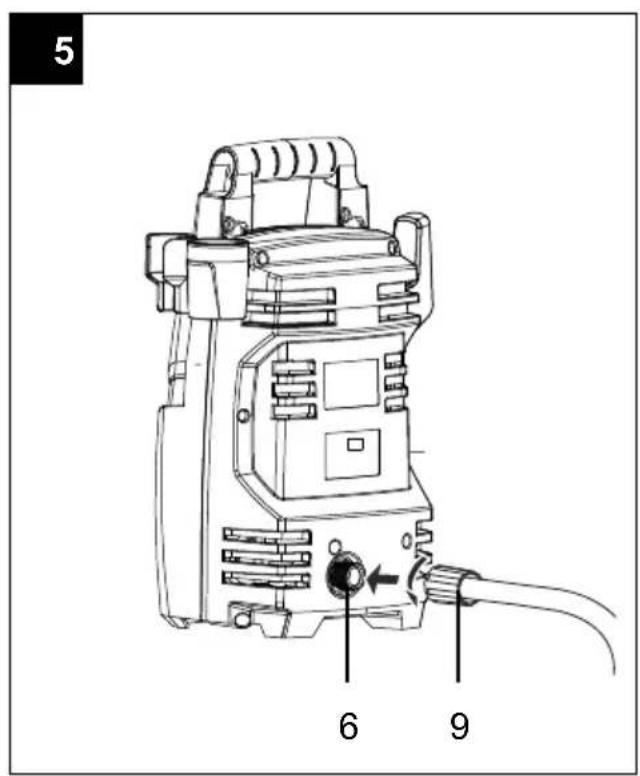
8.3 High-pressure hose connection (Fig. 5, 6)
- Connect the high-pressure hose (9) to the connection for the high-pressure hose (6). Remove the protective cover first.
- Insert the other end of the high-pressure hose (9) into the pistol connection (13).
- To remove the high-pressure hose (9), press the button Taste (A) and pull it out.
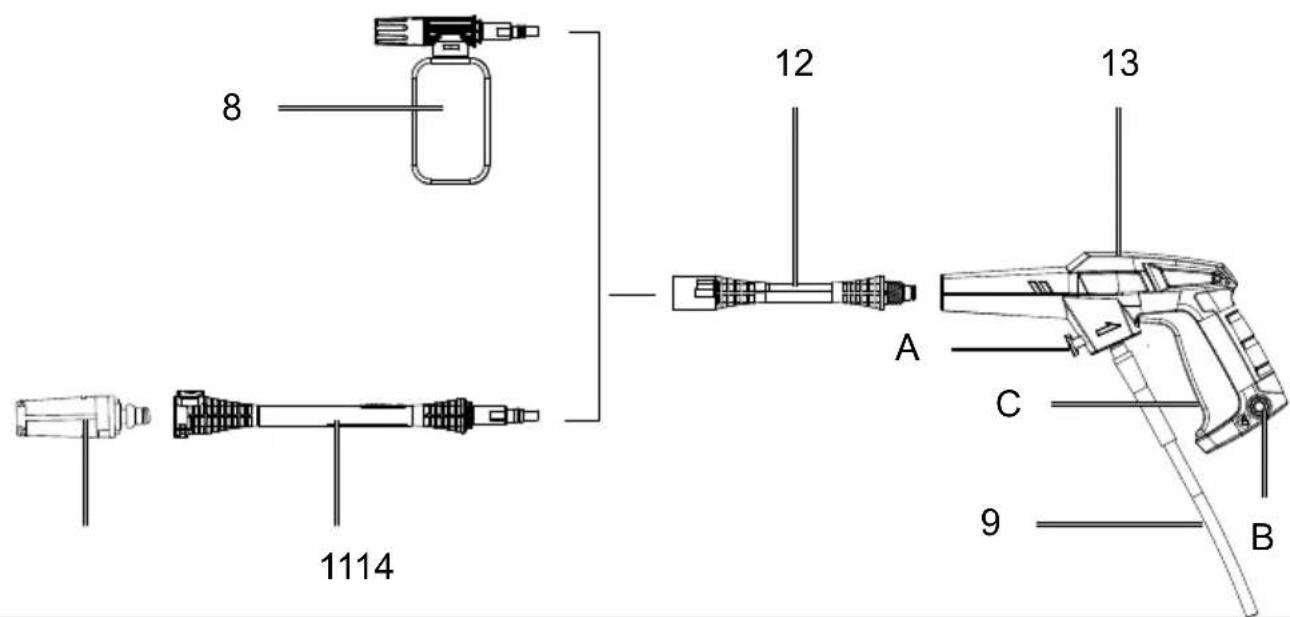
8.4 Connecting the attachments (Fig. 6)
- Screw the extension (12) into the retainer for the pistol (13).
- To use the detergent container (8), insert it into the extension (12) and turn it until it locks into place.
- To use the nozzle (14), first mount the spray lance (11). Insert spraying lance (11) in the extension (12) and turn until it locks. Now connect the nozzle (14) on the spray lance (11). Make sure that the nozzle (14) is locked.
8.5 Suction from open tanks/containers and natural bodies of water
- Use a special self-suction accessory (not included in the scope of delivery / available from specialist dealer). With this accessory, the high-pressure cleaner can take in water 0.5 m above the water level. This can last about 25 to 50 seconds.
- Immerse the accessory's hose completely under water to drive the air out of the hose.
- Connect the accessory's hose to the high-pressure cleaner, and make sure that the suction strainer remains under water.
- Let the high-pressure cleaner run with the spray gun removed until the water flows evenly out of the high-pressure hose. If no water comes out after 25 to 50 seconds, switch off and check all connections.
- Once the water is flowing, turn off the high-pressure cleaner and connect the spray gun and spray lance to start work.
9. Start up
Attention!
Always make sure the device is fully assembled before commissioning!
The machine consists of an assembly with a pump, which is covered by a shockproof housing. The machine is equipped with a lance and a handy pistol for an optimal working position, whose shape and equipment comply with the applicable regulations.
9.1 Correct use of the device
- The high-pressure cleaner must be set up on a level, firm surface.
• Each time the machine is operated, it is recommended to observe the correct operating position: one hand on the gun and the other hand on the lance.
- The water jet must never be directed at electrical lines or the machine.
- A small amount of leakage of the pump is normal in order to avoid damaging the pump when it is at a standstill.
- The machine must not be used in rooms where there is a risk of explosion under any circumstances.
-
The working temperature must be between +5 and 50°C. Do not cover or make changes to the lance or spray nozzles.
-
The high-pressure cleaner is designed for operation with cold or moderately warm water (max. up to 50°C); higher temperatures will cause damage to the pump.
- The incoming water must not be dirty, sandy or contaminated with chemical products that can impair the function and decrease the durability of the machine.
9.2 Commissioning (Fig. 1, 6)
Once you have completely assembled the high-pressure cleaner and all connections have been made, proceed as follows:
- Turn on the water supply.
- Unlock the pistol (13) via the locking switch (B). Pull back the trigger lever (C) so that the air in the device can discharge. (Fig. 6)
- Switch on the device by setting the on/off switch (3) to "ON".
- Next, press the trigger lever (C).
- To switch off, release the trigger lever (C), and the device switches to stand-by. The high-pressure cleaner starts again when you press the trigger lever (C).
- To switch off the high-pressure cleaner completely, set the on/off switch (3) to "OFF".
9.3 Cleaning agent container (8)
Fill the cleaner container (8) with the corresponding cleaner.
9.4 Using the nozzle (Fig. 6)
By turning the nozzle (14), the spot jet can be changed to flat jet
10. Electrical connection
The electrical motor installed is connected and ready for operation. The connection complies with the applicable VDE and DIN provisions. The customer's mains connection as well as the extension cable used must also comply with these regulations.
Damaged electrical connection cable.
The insulation on electrical connection cables is often damaged.
This may have the following causes:
- Pressure points, where connection cables are passed through windows or doors
- Kinks where the connection cable has been improperly fastened or routed
- Places where the connection cables have been cut due to being driven over
• Insulation damage due to being ripped out of the wall outlet
• Cracks due to the insulation ageing.
Such damaged electrical connection cables must not be used and are life-threatening due to the insulation damage.
Check the electrical connection cables for damage regularly. Ensure that the connection cables are disconnected from electrical power when checking for damage.
Electrical connection cables must comply with the applicable VDE and DIN provisions. Only use connection cables with designation H05VV-F.
The printing of the type designation on the connection cable is mandatory.
AC motor
The mains voltage must be 230 V\~
Extension cables up to 25 m long must have a cross-section of 1.5 mm ^4 .
- Before connecting the machine, make certain that the data on the type plate matches with the mains power data.
Connection type Y
If the mains connection cable of this device is damaged, it must be replaced by the manufacturer, their service department or a similarly qualified person to avoid dangers.
11. Cleaning
Danger!
Disconnect the mains plug before carrying out any cleaning work.
- Keep protective devices, air vents and the engine housing as free of dust and dirt as possible. Rub the device clean with a clean cloth or blow it off with compressed air at low pressure.
• We recommend that you clean the device directly after every use.
- Clean the device at regular intervals using a damp cloth and a little soft soap. Do not use any cleaning products or solvents; they could attack the plastic parts of the device. Make sure that no water can penetrate the device interior. Water entering a power tool will increase the risk of electric shock.
11.1 Cleaning the nozzle (Fig. 1)
- To clean a clogged nozzle, please use the nozzle cleaner needle (15) provided.
11.2 Long service life of the electric pump
If longer downtimes of the machine (more than 3 months) are planned in rooms where there is a risk of frost, it is advisable to fill the product with an anti-freeze (similar agent as used for vehicles).
If the device has not been used for a long time, limescale builds up in the electric pump, which can lead to starting difficulties.
12. Storage
Store the device and its accessories in a dark, dry and frost-free place that is inaccessible to children. The optimum storage temperature lies between 5 and 30 °C.
Store the power tool in its original packaging. Cover the power tool to protect it from dust or moisture. Store the operating manual with the power tool.
13. Maintenance
The device has no further internal parts that require maintenance.
With this product, it is necessary to note that the following parts are subject to natural or usage-related wear, or that the following parts are required as consumables.
Wearing parts*: hose, lance, nozzles and attachments, air filters, seals
* may not be included in the scope of delivery!
Connections and repairs
Connections and repair work on the electrical equipment may only be carried out by electricians.
Please provide the following information in the event of any queries:
• Machine data - type plate
• Engine data - type plate
Spare parts and accessories can be obtained from our Service Centre. To do this, scan the QR code on the front page.
14. Disposal and recycling
Notes for packaging


The packaging materials are recyclable. Please dispose of packaging in an environmentally friendly manner.
Notes on the electrical and electronic equipment act [ElektroG]
![SCHEPPACH HCE1400 - Notes on the electrical and electronic equipment act [ElektroG] - 1](/content/2026/03/525788/images/91d0e6f50da8ba9e8e1b1f4103338ada18259c4c3ef15be930a0266326eccc86.jpg)
Electrical and electronic appliances do not belong in household waste, but should be collected and disposed of separately.
• Used batteries or rechargeable batteries are not installed permanently in the old appli- must be removed non-destructively before dis- al. Their disposal is regulated by the battery act.
- For additional take-back conditions of the manufacturers and distributors, please contact the respective customer service.
- In the case of delivery of a new electrical device by the manufacturer to a private household, the latter may arrange for the free collection of the old electrical device upon request from the end-user. Get in contact with the manufacturer's customer service.
• These statements only apply to devices installed and sold in the countries of the European Union and which are subject to the European Directive 2012/19/EU. Different provisions may apply to the disposal of electrical and electronic appliances in countries outside the European Union.
15. Troubleshooting
The following table shows fault symptoms and describes remedial measures in the event of your machine failing to work properly. If you cannot localise and rectify the problem with this, please contact your service workshop.
| Fault Possible cause Remedy |
| Device does not work. | No electrical voltage on the device. | Check fuse, mains cable, mains plug and have them replaced by qualified personnel if necessary. |
| The conductor cross-section of the extension lead is too small or the extension lead is too long. | Use extension leads with a larger wire cross-section or use shorter extension leads. |
| Mains voltage is below the specified value. | Contact the energy supply company if necessary. |
| Pump is frozen. Check, defrost if necessary. | |
| Motor runs, but no pressure is built up. | Intake of air in the water supply. | Check supply hose and hose connections, replace if necessary. |
| Outlet nozzle too large. Check, replace if necessary. | |
| Irregular operating pressure. | Intake of air in the water supply. | Check supply hose and hose connections, replace if necessary. |
Günzburger Straße 69
D-89335 Ichenhausen
Cher client,
Günzburger Straße 69
D-89335 Ichenhausen
Kære kunde,
Standard references:
EN 60335-1:2012+A11+A13+A1+A14+A2+A15; EN 60335-2-79:2012; EN 62233:2008
EN IEC 55014-1:2021; EN IEC 55014-2:2021; EN IEC 61000-3-2:2019+A1; EN 61000-3-3:2013+A1+A2
This declaration of conformity is issued under the sole responsibility of the manufacturer.
The object of the declaration described above fulfils the regulations of the directive 2011/65/EU of the European Parliament and Council from 8th June 2011, on the restriction of the use of certain hazardous substances in electrical and electronic equipment.
Subject to change without notice
Documents registrar: Georg Kohler
Günzburger Str. 69, D-89335 Ichenhausen
Garantie DE
Apparent defects must be notified within 8 days from the receipt of the goods. Otherwise, the buyer's rights of claim due to such defects are invalidated. We guarantee for our machines in case of proper treatment for the time of the statutory warranty period from delivery in such a way that we replace any machine part free of charge which provably becomes unusable due to faulty material or defects of fabrication within such period of time. With respect to parts not manufactured by us we only warrant insofar as we are entitled to warranty claims against the upstream suppliers. The costs for the installation of the new parts shall be borne by the buyer. The cancellation of sale or the reduction of purchase price as well as any other claims for damages shall be excluded.
Garantii EE