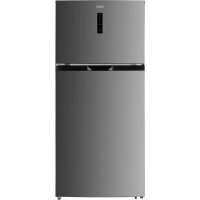
CT6304NFILE - Fridge SABA - Free user manual and instructions
Find the device manual for free CT6304NFILE SABA in PDF.


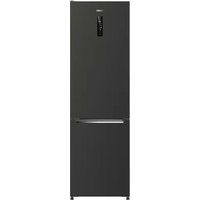
| Product type | Combined refrigerator-freezer, freestanding |
| Brand | SABA |
| Model | CT6304NFILE |
| Height (mm) | 1870 |
| Width (mm) | 750 |
| Depth (mm) | 840 |
| Weight (kg) | 75 |
| Power supply | 220-240 V ~ 50 Hz, 1.30 A |
| Defrost power (W) | 220 |
| Refrigerant | R600a (isobutane, 62 g) |
| Insulation foam | Cyclopentane |
| Climate class | N, ST (16°C to 38°C) |
| Freezer star rating | 4 stars |
| Defrost technology | No Frost (automatic) for the refrigerator; manual defrost for the freezer |
| Main functions | Power Cool (quick cooling), electronic temperature setting, LED display, child lock |
| Lighting | LED (energy efficiency class G, cannot be replaced by user) |
| Interior layout | Glass shelves, crisper drawer with humidity control, door balconies, fresh box |
| Maintenance and cleaning | Clean interior with baking soda and warm water; do not use abrasive products |
| Safety | Key lock, automatic shutdown after 60s inactivity, instructions to prevent child entrapment |
| Spare parts and repairability | Availability of spare parts for repairs for 10 years; legal conformity warranty 2 years |
| General information | Manufactured under license CONFORAMA France; complete manual available on conformance.fr |
Frequently Asked Questions - CT6304NFILE SABA
User questions about CT6304NFILE SABA
0 question about this device. Answer the ones you know or ask your own.
Ask a new question about this device
Download the instructions for your Fridge in PDF format for free! Find your manual CT6304NFILE - SABA and take your electronic device back in hand. On this page are published all the documents necessary for the use of your device. CT6304NFILE by SABA.
USER MANUAL CT6304NFILE SABA
natural_image
Exterior view of a modern SABA refrigerator with front panel and side door (no visible text or symbols)SABA
CT6304NFILE
FR
GB
FR
UTILISATION
B. Mode "POWER COOL / Locking / Unlocking"
FR
ACHAT DE PRODUITS SURGELÉS
natural_image
Line drawing of a hand placing a rectangular object on a shelf (no text or symbols)POSITIONNEMENT DES BALCONNETS DE PORTE
natural_image
Simple diagram of a container with two upward arrows inside, no text or symbols presentFR
REEMPLACEMENT DE LA LUMIÈRE LED
flowchart
graph LR
    A["User Icon"] --> B["LED"]
    B --> C["LED"]
    C -->|Signal| B
LED lighting source
Replaceable by professional
Thank you for choosing SABA quality. This product has been developed by our team of professional and according to European regulations. In order to get the most out of your new appliance, we recommend that you read this instruction manual carefully and keep it for future reference.

SABA is a German brand born in 1923 in the heart of the black forest.
Pioneers in electrical equipment, it continues its search for quality by offering smart products that will accompany you on a daily life.
This product has been manufactured and sold under the responsibility of CONFORAMA FRANCE.
SABA, and the SABA logo are trademarks used under license by CONFORAMA FRANCE – further information at www.saba-brand.com.
All other products, services, companies, trademarks, trade or product names and logos referenced herein are the property of their respective owners.
TABLE OF CONTENT
SAFETY INSTRUCTIONS.... 3
DESCRIPTION OF THE DEVICE....9
INSTALLATION....10
USE....12
DAILY USE 21
MAINTENANCE 25
TROUBLESHOOTING 30
CUSTOMER SERVICE....31
TECHNICAL INFORMATION.... 32
DISPOSAL 33
DISPOSAL OF OLD ELECTRICAL
APPLIANCES 33
SAFETY INSTRUCTIONS
- IMPORTANT SAFETY INSTRUCTIONS: READ CAREFULLY AND KEEP FOR FUTURE REFERENCE
-
This appliance is intended to be used in household and similar applications such as:
-
staff kitchen areas in shops, offices and other working environments;
- farm houses and by clients in hotels, motels and other residential type environments;
- bed and breakfast type environments;
-
catering and similar non-retail applications;
-
WARNING: Keep ventilation openings, in the appliance enclosure or in the built-in structure, clear of obstruction.
- WARNING: Do not use mechanical devices or other means to accelerate the defrosting process, other than those recommended by the manufacturer.
- WARNING: Do not damage the refrigerant circuit.
- If the refrigerant circuit is damaged:
- Avoid naked flames and sources of ignition.
- Thoroughly ventilate the room in which the appliance is situated.
- WARNING: Do not use electrical appliances inside the food storage compartments of the appliance, unless they are of the type recommended by the manufacturer.
- This appliance can be used by children aged from 8 years and above and persons with reduced physical, sensory or mental capabilities or lack of experience and knowledge if they have been given supervision or instruction concerning use of the appliance in a safe way and understand the hazards involved.
- Children shall not play with the appliance.
- Cleaning and user maintenance shall not be made by children without supervision.
- WARNING: When positioning the appliance, ensure the supply cord is not trapped or damaged.
- If the supply cord is damaged, it must be replaced by the manufacturer, its service agent or similarly qualified persons in order to avoid a hazard.
- WARNING: Do not locate multiple portable socket-outlets or portable power supplies at the rear of the appliance.
- WARNING: To avoid a hazard due to instability of the appliance, it must be fixed in accordance with the instructions.
-
Do not store explosive substances such as aerosol cans with a flammable propellant in this appliance.
-
For information on the installation, handling, maintenance and disposal of the device, and the method of replacing the lamp, please refer to the following paragraphs of this manual.
- Gas warning: risk of fire / flammable materials
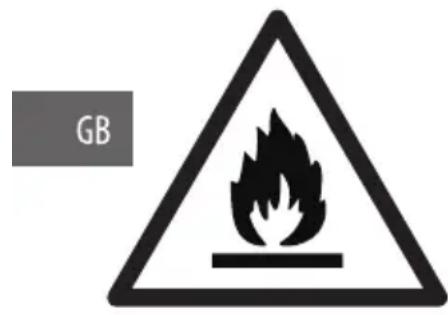
Please keep the product far away fire source during using, service and disposal. There are flammable materials at the back of the appliance. Please according to local regulations regarding disposal of the appliance for its flammable blowing gas, Before you scrap the appliance, please take off the doors to prevent children trapped.
-
To avoid contamination of food, please respect the following instructions:
-
Opening the door for long periods can cause a significant increase of the temperature in the compartments of the appliance.
- Clean regularly surfaces that can come in contact with food and accessible drainage systems.
- Store raw meat and fish in suitable containers in the refrigerator, so that it is not in contact with or drip onto other food.
-
Two-star frozen-food compartments are suitable for storing pre-frozen food, storing or making ice-cream and making ice cubes.
-
One-, two- and three-star compartments are not suitable for the freezing of fresh food.
- If the refrigerating appliance is left empty for long periods, switch off, defrost, clean, dry, and leave the door open to prevent mould developing within the appliance.
WARNINGS
- If you are discarding an old freezer or refrigerator with a lock/ catch fitted to the door, ensure that it is left in a disabled condition to prevent the entrapment of young children when playing.
- Unplug the appliance from the mains socket when not in operation and before cleaning. Remove food before cleaning the appliance.
- Do not insert oversized food as this could cause incorrect operation.
- Extreme caution must be used when moving an appliance.
- Do not give children ice-cream and water ices direct from the freezer as the low temperature may cause ‘freezer burns’ on the lips.
- The appliance must be installed on the ground, on a flat, horizontal surface, making sure that the ventilation openings are completely clear.
-
Never try to replace or repair any part or component of the appliance yourself; seek the assistance of professional, qualified personnel, if need be.
-
This refrigerating appliance is not intended to be used as a built-in appliance.
-
In order to improve efficiency of the cooling system and save energy, it is necessary to maintain good ventilation around the appliance for the dissipation of heat. For this reason, sufficient clear space should be available around the refrigerator.
-
To save energy, please avoid keeping the door open for a long time when using the appliance.
-
Replacing certain parts of your household electrical appliance may lead to a danger. Please ensure that you have the necessary skills and own all tools required to carry out the self-repair operations safely. Otherwise, please contact a qualified professional.
-
Regarding the information pertaining to the installation, handling, servicing and disposal of the appliance, thanks to refer to the below paragraph of the manual.
-
As old refrigeration equipment may contain CFC's which will damage the ozone layer, when disposing of any refrigeration equipment please contact your local waste disposal department for advice on the correct method of disposal.
-
Replacing certain parts of your household electrical appliance may lead to a danger. Please ensure that you have the necessary skills and own all tools required to carry out the self-repair operations safely. Otherwise, please contact a qualified professional.
-
Please according to local regulations regarding disposal of the appliance for its flammable blowing gas. Before you scrap the appliance, please take off the doors to prevent children trapped.
- Children aged from 3 to 8 years are allowed to load and unload refrigerating appliances.
GB
DESCRIPTION OF THE DEV
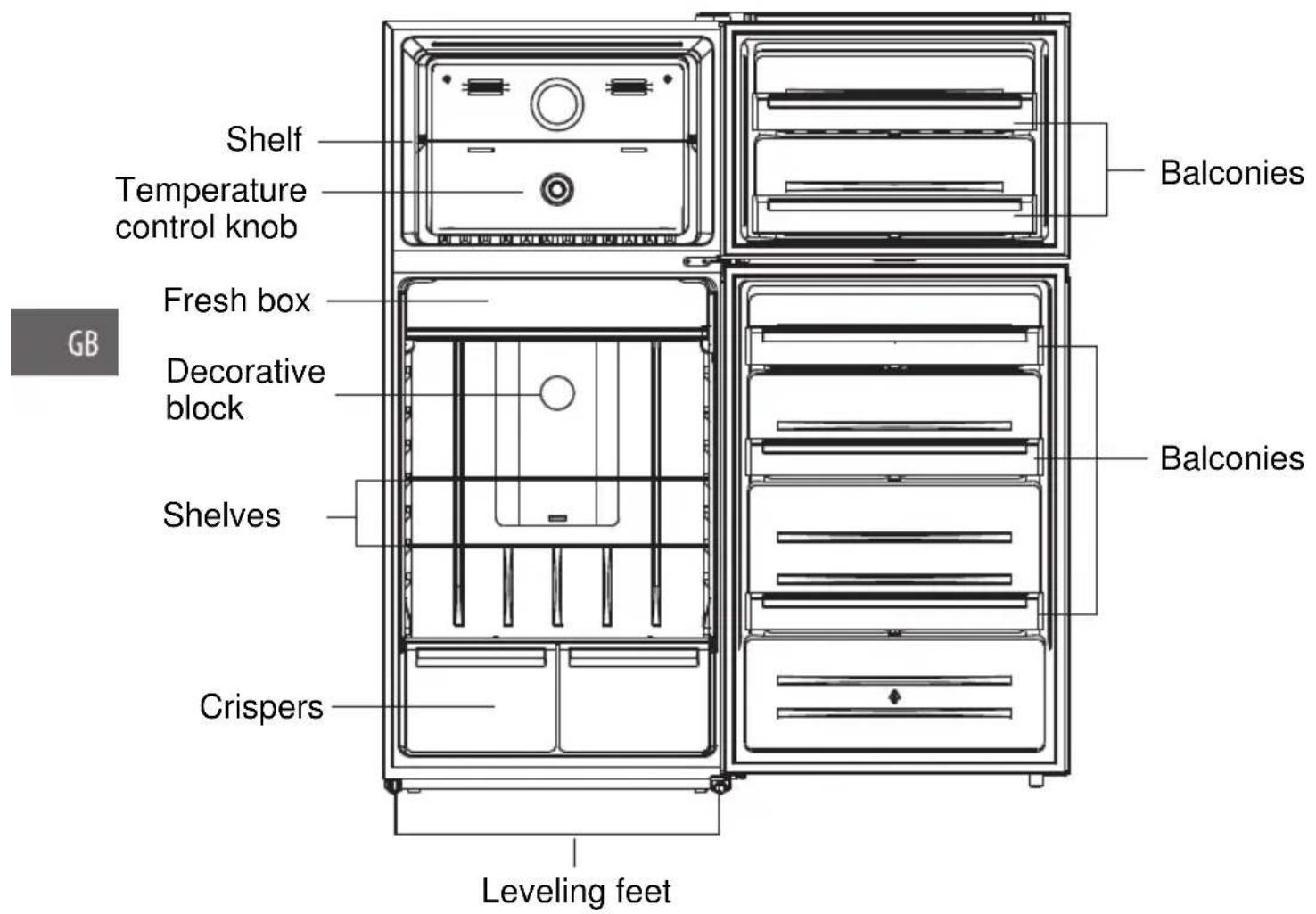
NOTE: The appliance design is subject to change without prior notice.
INSTALLATION
- Position the appliance and allow it to stand for two to three hours before it is turned on for the first time to allow the system to settle. Do not position next to any heat source e.g. cooker, boiler or in direct sunlight etc.
- Allow at least 10cm of space at the top and 10 cm of space on both sides of the appliance and between the back of the appliance and the wall for adequate air circulation. The appliance is not designed for recessed installation (“building in”).
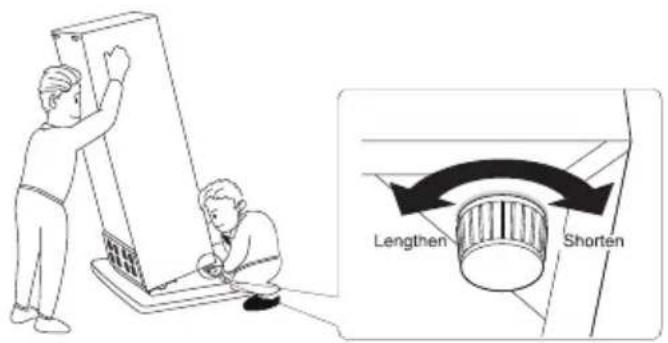
• Install on a good firm level surface, and any unevenness of the floor should be corrected prior to installation, slight unevenness can be overcome by adjusting the front feet. - NOTE: If the appliance is positioned on a carpet, soft floor covering you should readjust the front feet once the appliance has had time to settle.
SPACE REQUIREMENT
- Keep enough space of door open.
- Keep at least 100mm gap at two sides and back.
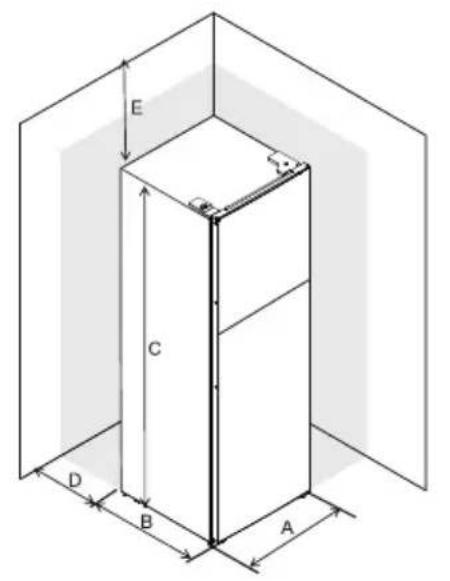
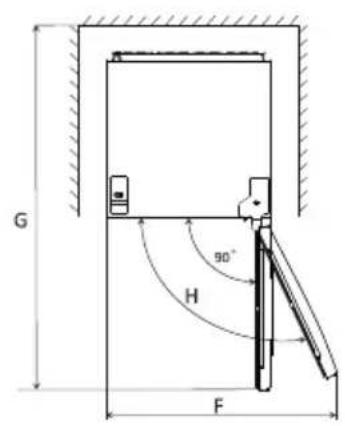
| A | 840 |
| B | 750 |
| C | 1870 |
| min=50D | |
| min=50E | |
| F | 1580 |
| 1500G | |
| 135°H |
GB
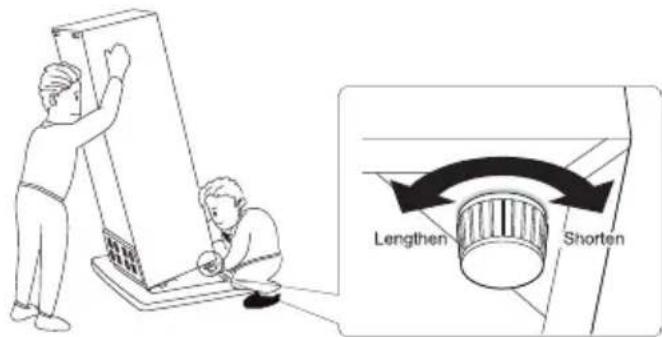
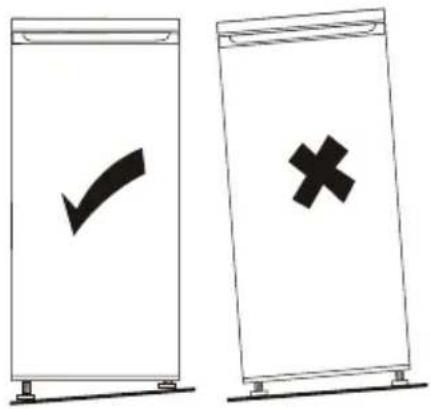
LEVELLING THE UNIT
To do this adjust the two levelling feet at front of the unit.
If the unit is not level, the doors and magnetic seal alignments will not be covered properly.
USE
- This appliance is designed to operate in ambient temperature between 16°C and 38°C. If these temperatures are exceeded, i.e. colder or warmer, the appliance will not operate correctly. If the ambient temperatures are exceeded for long periods, the temperature in the freezer section will rise above -18°C and food spoilage may occur.
- Remove all packaging materials from the appliance. Wash the inside of the cabinet with lukewarm water and bicarbonate of soda (5ml to 0.5 liter of water). Dry the appliance thoroughly.
- When you use the freezer for the first time or after defrosting, set the thermostat control to the maximum position for at least 2 hours before introducing food to be stored, and then readjust to the normal position.
- If there is a power failure, do not open the door. Frozen food should not be affected if the failure lasts for less than 12 hours. If the failure is longer, then the food should be checked and either eaten immediately or cooked and then re-frozen.
USER CONTROL PANEL
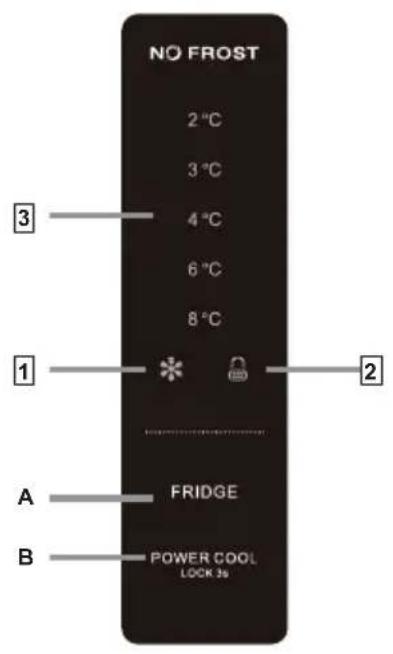
Key Operation
A. "FRIDGE" mode
This key is workable both in User Defined Mode as well as Super Mode. After entering the temperature control of the fridge compartment, this key flashes. By touching the key consecutively. the temperature would change in a circle of "2°C, 3°C, 4°C, 6°C, 8°C", after which 5-second flashing means the selection of temperature is settled.
B. "POWER COOL / Locking / Unlocking" mode
By touching this key to enter or exit the "POWER COOL" mode. If enters this mode, the temperature of fridge room will cool down very quickly until it reaches 2°C to satisfy consumer's need.
This model will exit in two ways:
- this mode will exit automatically until it keeps running 50 hours.
- this mode will exit manually by consumer touching this key.
- Unlocking: Press for 3 seconds in the mode of locking, all the keys would be unlocked after the a beep.
- Locking: Press for 3 seconds in the mode of unlocking, all the keys would be locked after a beep.
All buttons will only valid under unlock mode.
No operation in 60 sec will lock the display automatically.
Display
- "POWER COOL" mode LED light display which indicates this mode function is valid or not now.
- "LOCK" mode LED light display which indicates this UI control is Locking or Unlocking now.
- "FRIDGE" mode LED light display which indicates the setting temperature of fridge room now.
Operating Condition
- The control panel is 100% lit up for 3 seconds, which operates exactly, as per the setting (mode and temperature) before the power off. The system will be automatically locked 2 seconds after the last key operation. After locking, the light of the panel would be out 60 seconds after the last key operation.
- Both preset temperatures of fridge compartment would be shown on the display.
Temperature Control of the Freezer Compartment
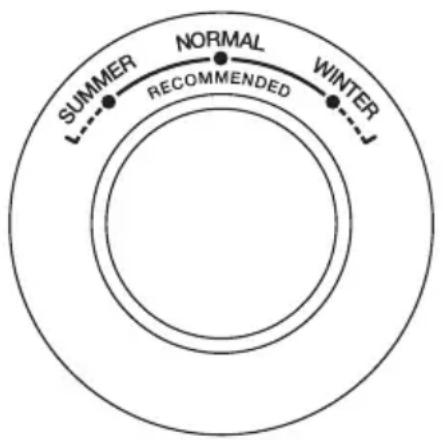
- Plug on your appliance. The internal temperature is controlled by a sensor. There are 3 settings: SUMMER, NORMAL and WINTER.
- The appliance may not operate at the correct temperature if it is in a particularly hot or if you open the door often.
Important!
Usually we advise the user set the temperature control knob at "NORMAL" or "RECOMMENDED". Set the temperature control knob at "SUMMER" in summer or hot days.
If the ambient temperature is very high (above 43^ C), consider adjusting it to the dotted line on the left. Set the temperature control knob at "WINTER" in winter or cold days.
If the ambient temperature is very low (below 10^ C), consider adjusting it to the dotted line on the right.
flowchart
graph TD
    A["SUMMER"] --> B["NORMAL"]
    B --> C["WINTER"]
    C --> D["RECOMMENDED"]
Temperature Setting Recommendation
| Environment temperature | Freezer compartment | Fridge compartment | |
| Summer | 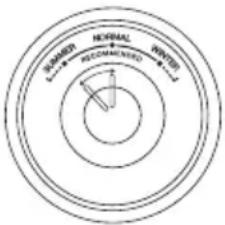 | Fridge set on 4°C | 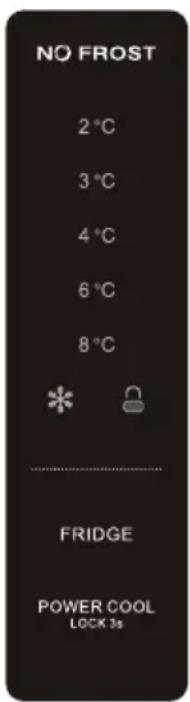 |
| Set on Summer ~ Normal | |||
| Normal | Fridge set on 4°C | ||
| Set on Normal | |||
| Winter | Fridge set on 4°C | ||
| Set on Normal ~ Winter | |||
• Information above give users recommendation of temperature setting.
- For energy saving, the coldest set only apply to special need (such as quick-freezing or ice making), and need turn back after special need.
Impact on Food Storage
- Under recommended setting, the best storage time of fridge is no more than 3 days.
- Under recommended setting, the best storage time of freezer is no more than 1 month.
- The best storage time may reduce under other setting.
TEMPERATURE INDICATE
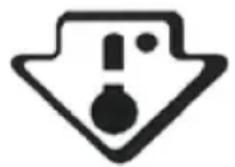
- In order to help you get the correct adjustment of your device, it is equipped with a temperature gauge placed in the coldest area.
-
For the proper storage of food in your refrigerator and in particular in the coldest area, make sure that “OK” appears in the temperature indicator.
-
The symbol on the left side indicates the location of the coldest area of your refrigerator. It defines the height of this area.
- If “OK” is not displayed, the average temperature in this area will be very high. You ought to adjust the thermostat to a colder setting.
- For every modification of your thermostat, you are supposed to wait for the stabilization of the temperature inside the unit before proceeding, if necessary, to a new setting. Do change the position of the thermostat gradually and wait at least 12 hours before re-checking.
- NOTE: after charging the device for fresh food or after repeated or prolonged door openings, it is normal that the inscription “OK” does not appear in the temperature indicator. Wait at least 12 hours before readjusting the thermostat.
- The symbol on the left side indicates the location of the coldest area of your refrigerator. It defines the height of this area.
- If “OK” is not displayed, the average temperature in this area will be very high. You ought to adjust the thermostat to a colder setting.
- For every modification of your thermostat, you are supposed to wait for the stabilization of the temperature inside the unit before proceeding, if necessary, to a new setting. Do change the position of the thermostat gradually and wait at least 12 hours before re-checking.
- NOTE: after charging the device for fresh food or after repeated or prolonged door openings, it is normal that the inscription “OK” does not appear in the temperature indicator. Wait at least 12 hours before readjusting the thermostat.
natural_image
Pure warning symbol with exclamation mark inside a downward arrow (no text or numbers)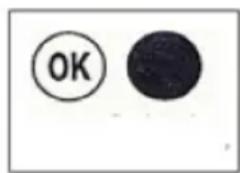
SHOPPING FOR FROZEN FOOD
- The appliance is rated as a 4 star freezer and can freeze fresh food and store pre-frozen food. When you are buying frozen food, look at the Storage Guidelines on the packaging. You will be able to store each item of frozen food for the period shown against the 4 star rating.
FREEZING FRESH FOOD
- Ensure that your freezing operations are carried out under the most hygienic conditions as freezing alone does not improve the food.
- Never put hot or even warm foodstuffs into the freezer.
- Prior to freezing the food, food should always be covered tightly with foil, plastic film, placed in plastic bags or stored in airtight containers. This will prevent food from dehydrating and to prevent any strong odors of some foods transferring to milder ones.
- To freeze raw meat, wrap in plastic bags or in airtight containers and place on the lowest shelf to avoid cross contamination.
- Do not allow raw meat to come into contact with cooked foods. For safety, only store raw meat for two or three days. Fruit and vegetables should be thoroughly cleaned and placed in the crisper.
- Milk and other liquids should be sealed with lids and placed in the bottle shelf in the door.
- NOTE: The ambient temperature of the freshly stored food and how often the door is opened affect the temperature in the refrigerator. If required, change the thermostat temperature settings.
STORING FROZEN FOOD
- All frozen food you purchase should be placed in the freezer as soon as possible to avoid them from defrosting and spoiling.
- All storage recommendations printed on the packaging of frozen food by the manufacturer should always be followed.
- When using the freezer for the first time or after defrosting, set the thermostat knob to the maximum position for at least 2 hours before introducing food to be stored, and then readjust it to the normal position.
ENERGY-SAVING TIPS
• Install the fridge or freezer in a cool place out of direct sunlight and away from cookers, heaters, dishwashers or any hot air emitting items.
- Do not set the freezer temperatures lower than necessary. Set the internal temperature within the correct range e.g. adjust the thermostat at middle position -18°C in the freezer respectively.
- Let pre-cooked foods cool down before placing them in the fridge or freezer. This will prevent the internal temperature of the fridge from rising.
- Keep your freezer full, but not over crowded, Try to leave about 20% free space for air circulation.
- To prevent cold air escaping, limit the frequency of opening door. When retuning from shopping, sort foods to be kept in your freezer before opening the door. Only open the door to put food in or take it out.
- Make sure the door seal is clean and in good condition. It should hold a piece of paper tightly in place when shut.
- Defrost regularly or when ice is more than 5mm thick. Thick ice covering the inner sides significantly increases energy use.
- The combination of the drawers, baskets and shelves shown in the device description is optimal for efficient energy savings. Changing the combination proposition could alter the efficiency.
DAILY USE
FIRST USE
Cleaning the interior
Before using the appliance for the first time, wash the interior and all internal accessories with lukewarm water and some neutral soap so as to remove the typical smell of a brand new product, then dry thoroughly.
GB
IMPORTANT! Do not use detergents or abrasive powders, as these will damage the finish.
FRIDGE FOOD
Storage time of different food in different compartments according to be below table.
| Refridgeratorcomportments | Type of food | Storage time |
| Door or balconies offridge compartment | ·Food with natural preservatives, such jams,juices, drinks, condiments.·Do not store perishable foods. | 3 days |
| Crisper drawer(salad drawer) | ·Fruits, herbs and vegetables should be placed separately in the crisper bin.·Do not store bananas, onions, potatoes, garlic in the refrigerator. | 1 week |
| Fridge shelf - middle | ·Dairy products, eggs | 1 week |
| Fridge shelf - top | ·Foods that do not need cooking, such as ready-to-eat food, deli meats, leftovers | 1 week |
FREEZING FRESH FOOD
- The freezer compartment is suitable for freezing fresh food and storing frozen and deep-frozen food for a long time.
- Place the fresh food to be frozen in the bottom compartment.
- The maximum amount of food that can be frozen in 24 hours is specified on the rating plate.
- The freezing process lasts 24 hours: during this period do not add other food to be frozen.
- The combination of the drawers, baskets and shelves shown in the device description is optimal for efficient energy savings. Changing the combination proposition could alter the efficiency.
STORING FROZEN FOOD
When first starting-up or after a period out of use. Before putting the product in the compartment, let the appliance run at least 2 hours on the lowest temperature.
IMPORTANT! In the event of accidental defrosting, for example the power has been off for longer than the value shown in the technical characteristics chart under "rising time", the defrosted food must be consumed quickly or cooked immediately and then re-frozen (after cooked).
| Food | Storage time |
| Bacon, casseroles, milk | 1 month |
| Bread, ice cream, sausages, pies, prepared shell fish, oily fish | 2 months |
| Non-oily fish, shellfish, pizza, scones and muffins | 3 months |
| Ham, cakes, biscuits, beef and lamb chops, poultry pieces | 4 months |
| Butter, vegetables (blanched), eggs whale and yolks, cooked crayfish, mincedmeat (raw),pork (raw) | 6 months |
| n,Fruit (dry ar in syrup), egg 12 months | |
whit
THAWING
Deep-frozen or frozen food, prior to be used, can be thawed in the freezer compartment or at room temperature, depending on the time available for this operation.
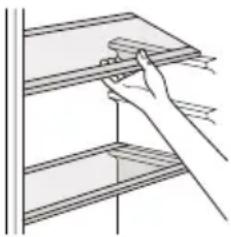
MOVABLE SHELVES
The walls of the refrigerator are equipped with a series of runners so that the shelves can be positioned as desired.
natural_image
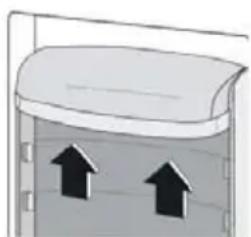
Line drawing of a hand using a tool to lift or install a shelf (no text or symbols)POSITIONING THE DOOR BALCONIES
To permit storage of food packages of various sizes, the door balconies can be placed at different heights. To make these adjustments proceed as follows: gradually pull the balcony in the direction of the arrows until it comes free, then reposition as required.
natural_image
Simple diagram of a container with two upward arrows indicating flow or movement (no text or symbols)Setting the Humidity in the Crisper
- Low humidity: move the regulator to the left.
- High humidity: move the regulator to the right.

MAINTENANCE
NOISE FROM YOUR APPLIANCE
You may notice some rather unusual noises. The noises are caused by circulation of refrigerant in the cooling system. It has become more pronounced since the introduction of CFC free gases. This is not a fault and will not affect the performance of your fridge.
GB
PROLONGED OFF PERIODS
If the appliance is not in use for a long period of time, proceed as follows:
- Disconnect from the mains supply.
- Clean and dry the inside (see ‘Cleaning and maintenance’).
- Leave the door open to prevent any unpleasant smells from building up while the appliance is not in use.
NOTES FOR USE
- Do clean and defrost your appliance regularly.
- Do check contents of the compartments every so often.
- Do store commercially prepared food in accordance with the instructions given on the packets.
- Do choose high quality fresh food and be sure it is thoroughly clean before freezing it.
-
Do wrap all food in food quality polythene bags or air tight containers and make sure any air is excluded.
-
Do Not store poisonous or any dangerous substances in your freezer. It is designed for the freezing of edible foodstuffs only.
- Do Not consume food which has been frozen for an excessive length of time.
- Do Not leave the door open for long periods, as this will make the appliance more costly to run and cause excessive ice formation.
- Do Not use sharp objects such as knives to remove the ice from the appliance. Only use a plastic scraper.
- Do Not put hot food into the appliance. Let it cool down to room temperature.
- Do Not put liquid-filled bottles or sealed cans containing carbonated liquids into the freezer as they may burst.
- Do Not give children ice-cream and water ices direct from the freezer as the low temperature may cause freezer burns' on the lips.
- Do Not try to keep frozen food which has thawed; it should be eaten within 24 hours or cooked and re-frozen.
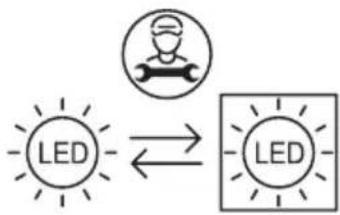
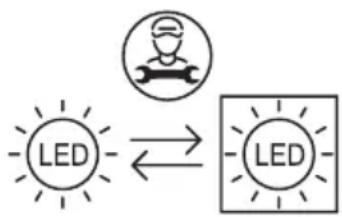
LED LIGHT REPLACEMENT
flowchart
graph TD
    A["LED"] --> B["Worker Icon"]
    B --> C["LED"]
    C --> D["Arrow Down"]
    D --> E["LED"]
LED lighting source
Replaceable by professional
WARNING: the LED light must not be replaced by the user! If the LED light is damaged, contact an authorized service representative for repairing.
The product contains two light sources of energy efficiency class G.
CLEANING
- Unplug the appliance.
- Remove all substances.
- Clean the inside and outside walls with a clean sponge or soft cloth using warm water or 1 teaspoon of bicarbonate of soda to 1.2 liters of water.
- Rinse well and wipe dry with a clean soft cloth.
- If the appliance is not to be used for a long period of time then it is recommended to remove all the food stuff, clean the inside of the appliance and leave the door open to allow the air to circulate thus avoiding unpleasant odors.
- Dusts behind the refrigerator and on the ground shall be timely cleaned to improve the cooling effect and energy saving.
- The interior of the refrigerator should be cleaned regularly to avoid odor.
- Check the door gasket regularly to make sure there are no debris.
- Please turn off the power before cleaning, remove all food, shelves, drawers, etc.
- Clean the door gasket with mild soap and water. Use a soft cloth or sponge to clean the inside of the refrigerator, with two tablespoons of baking soda and a quart of warm water. Then rinse with water and wipe clean, and open the door and dry it naturally before the power is turned on.
- For areas that are difficult to clean in the refrigerator(such as narrow sandwiches, gaps or corners), it is recommended to wipe them regularly with a soft rag, soft
brush, etc. and when necessary, combined with some auxiliary tools (such as thin sticks) to ensure no contaminant accumulation in these areas.
- Do not use soap, detergent, scrub powder, spray cleaner, etc., as these may cause odors in the interior of the refrigerator.
- Clean the bottle frame, shelves and drawers with a mild detergent and dry with a soft cloth.
- Wipe the outer surface of the refrigerator with a soft cloth dampened with soapy water, detergent, etc., and then wipe dry.
- Do not use hard brushes, clean steel balls, wire brushes, abrasives, such as toothpastes, organic solvents (such as alcohol, acetone, banana oil, etc.), boiling water, acid or alkaline items clean refrigerator considering that this may damage the fridge surface and interior.
Boiling water and benzene may deform or damage plastic parts.
- Do not rinse with water so as not to affect the electrical insulation properties.
- It is advisable to clean the appliance regularly and to remove any food deposits or splashes; in particular, clean the door seals, recesses and adjacent parts.
-
Don’t overlook parts of the appliance such as the humidity controller, light casing, racks, egg and butter compartments, ice cube tray, and all of the drainage areas, etc.
-
If the appliance is not kept clean and in good condition, its surface could deteriorate and inexorably affect the length of its service life, and could lead to a dangerous situation.
- The appliance must not be steam cleaned.
- Use only a non-abrasive sponge, rinse with clean water then dry thoroughly before putting the parts back in place.
- Never use abrasive cleaning products or hard metal scrapers to clean the appliance, as they could scratch the surfaces and break down the coating.
• After cleaning, leave the inside of the appliance to dry with the door open before plugging it into the mains again. • When re-stocking the appliance, be especially careful not to hit, scratch, crack or break the internal surfaces.
TROUBLESHOOTING
Caution! Before troubleshooting, disconnect the power supply. Only a qualified electrician of competent person must do the troubleshooting that is not in this manual.
Important! There are some sounds during normal use (compressor, refrigerant circulation)
| Problem | SolutionPossible Caus | |
| Appliance does not work. | Mains plug is not plugged in or is loose. | Insert mains plug. |
| Fuse has blown or is defective. | Check fuse, replace if necessary. | |
| Socket is defective. | Mains malfunctions are to be corrected by an electrician. | |
| Appliance freezes or cools too much. | Temperature is set too cold. | Turn the temperature regulator to a warmer setting temporarily. |
| The food is not frozen enough. | Temperature is not properly adjusted. | Please look in the initial Temperature Setting section |
| Door was open for an extended period. | Open the door only as long as necessary. | |
| A large quantity of warm food was placed in the appliance within the last 24 hours. | Turn the temperature regulation to a colder setting temporarily. | |
| The appliance is near a heat source. | Please look in the installation location section. | |
| Heavy build up of frost on the door seal. | Door seal is not air tight. | Carefully warm the leaking sections of the door seal with a hair dryer(on a cool setting).At the same time shape the warmed door seal by hand such that it sits correctly. |
| Unusual noises. | Appliance is not level. | Re-adjust the feet. |
| The appliance is touching the wall or other objects. | Move the appliance slightly. | |
| A component, e.g. a pipe, on the rear of the appliance is touching another part of the appliance or the wall. | If necessary, carefully bend the component out of the way. | |
| Indicator lights flashing. | Sensor fault | Inform the maintenance center. |
If the malfunction shows again, contact the Service Center.
CUSTOMER SERVICE
We decline liability for any damage or accident derived from any use of this appliance which is not in conformity with the instructions contained in this manual.
Duration of availability of spare parts: 10 years.
In accordance with Article L. 217 of the Consumer Code, your product benefits from a legal guarantee of conformity of 2 years.
This instruction book is also available on our website: www.conforama.fr
If you have a problem with your product, before going to your Conforama store, please get in touch with our aftersales services for electrical household appliances: http://sav-client.conforama.fr/
09 69 32 05 05
From Monday to Saturday, 08:30 to 19:00 Price of a local call
TECHNICAL INFORMATION
Flash the QR code on the energy label or below to access its main information.
| Model | Website | QR Code |
| CT6304NFILE | https://eprel.ec.europa.eu/qr/1943644 | 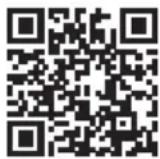 |
| Reference: | CT6304NFILE |
| 220-240V~Rated voltage: | |
| Ampere: | 1.30A |
| Defrost power input: | 220W |
| 50HzRated frequency | |
| Climate class: | N,ST |
| Refrigerant: | R600a(62g) |
| IProtection against electrical shock: | |
| CYCLOPENTANEInsulation foam: |
Climate class:
- Temperate (N): ‘this refrigerating appliance is intended to be used at ambient temperatures ranging from 16 °C to 32 °C’.
- Subtropical (ST): ‘this refrigerating appliance is intended to be used at ambient temperatures ranging from 16 °C to 38 °C’.
DISPOSAL
The refrigerating gas contained in the circuit of this appliance is isobutane (R600a); it causes a low level of pollution but is inflammable. Please contact your local disposal department for advice on the correct method of disposal.
DISPOSAL OF OLD ELECTRICAL APPLIANCES
European directive 2012/19/EU on Waste from Electrical and Electronic Equipment (WEEE), requires that used household appliances are not thrown into the normal municipal waste stream.
Used appliances must be collected separately in order to optimize the rate of recovery and recycling of materials that compose them, and to reduce the impact on human health and on the environment. The crossed bin symbol is affixed to all the products to remind you of the obligations of separated collection.
CE
CONFORAMA France
- SABA
- UTILISATION
- Mode "POWER COOL / Locking / Unlocking"
- ACHAT DE PRODUITS SURGELÉS
- POSITIONNEMENT DES BALCONNETS DE PORTE
- REEMPLACEMENT DE LA LUMIÈRE LED
- TABLE OF CONTENT
- SAFETY INSTRUCTIONS
- WARNINGS
- DESCRIPTION OF THE DEV
- INSTALLATION
- SPACE REQUIREMENT
- LEVELLING THE UNIT
- USE
- USER CONTROL PANEL
- Key Operation
- "FRIDGE" mode
- "POWER COOL / Locking / Unlocking" mode
- Display
- Operating Condition
- Temperature Control of the Freezer Compartment
- Important!
- Temperature Setting Recommendation
- Impact on Food Storage
- TEMPERATURE INDICATE
- SHOPPING FOR FROZEN FOOD
- FREEZING FRESH FOOD
- STORING FROZEN FOOD
- ENERGY-SAVING TIPS
- DAILY USE
- FIRST USE
- Cleaning the interior
- FRIDGE FOOD
- THAWING
- MOVABLE SHELVES
- POSITIONING THE DOOR BALCONIES
- Setting the Humidity in the Crisper
- MAINTENANCE
- NOISE FROM YOUR APPLIANCE
- PROLONGED OFF PERIODS
- NOTES FOR USE
- LED LIGHT REPLACEMENT
- CLEANING
- TROUBLESHOOTING
- CUSTOMER SERVICE
- TECHNICAL INFORMATION
- Climate class:
- DISPOSAL
- DISPOSAL OF OLD ELECTRICAL APPLIANCES
Brand : SABA
Model : CT6304NFILE
Category : Fridge