
I6VSH2(W)EX - Cooker INDESIT - Free user manual and instructions
Find the device manual for free I6VSH2(W)EX INDESIT in PDF.



| Product Type | Freestanding Electric Cooker |
| Brand | Indesit |
| Model | I6VSH2(W)EX |
| Oven dimensions (HxWxD) | 32 x 43.5 x 39.5 cm |
| Oven volume | 65 L |
| Useful drawer dimensions (WxDxH) | 42 x 46 x 8.5 cm |
| Ceramic hob power | Front left: 1700 W, Rear left: 1200 W, Rear right: 1200 W, Front right: 2300 W, Total: 6400 W |
| Power supply | 230 V single-phase ~ (possible 400 V 2N~ or 3N~) |
| Oven functions | Static, Pastry, Top heating element, Grill, Rotisserie (on certain models) |
| Cleaning | Assisted steam cleaning, door removal for cleaning |
| Safety | Anti-tip safety chain, control lock not provided |
| Oven light | Bulb 230 V, 25 W, E14 base |
| Repairability index | Not specified |
Frequently Asked Questions - I6VSH2(W)EX INDESIT
User questions about I6VSH2(W)EX INDESIT
0 question about this device. Answer the ones you know or ask your own.
Ask a new question about this device
Download the instructions for your Cooker in PDF format for free! Find your manual I6VSH2(W)EX - INDESIT and take your electronic device back in hand. On this page are published all the documents necessary for the use of your device. I6VSH2(W)EX by INDESIT.
USER MANUAL I6VSH2(W)EX INDESIT
Operating Instructions COOKER AND OVEN
Contents
Operating Instructions,1 ATTENTION, 2
Description of the appliance-Overall view,7
Description of the appliance-Control Panel,8 Installation,9
Start-up and use,11
Cooking modes,11
Using the hob,14
Precautions and tips,15
Care and maintenance,16
Assistance,16
FR
Français
Operating Manual for the Refrigerating Machine with a Screw Compressor
Contents
Operating Manual
ATTENTION
Product Description - General View
Product Description - Control Panel
Installation
Switching On and Operation
Cooking Programs
Safety Recommendations
Technical Maintenance and Care
Technical Maintenance
KZ
Kazakh
Instructions for Use
Contents
Instructions for Use
Table of contents 7
Table of contents 8
Introduction, 57
Safety and warnings, 59
Group of devices and accessories 64
Maintenance and technical inspection 65
Appendix 65

1
y
GB
ATTENTION
WARNING: The appliance and its accessible parts become hot during use.
Care should be taken to avoid touching heating elements.
Children less than 8 years of age shall be kept away unless continuously supervised.
This appliance can be used by children aged from 8 years and above and persons with reduced physical, sensory or mental capabilities or lack of experience and knowledge if they have been given supervision or instruction concerning use of the appliance in a safe way and understand the hazards involved. Children shall not play with the appliance. Cleaning and user maintenance shall not be made by children without supervision.
WARNING: Unattended cooking on a hob with fat or oil can be dangerous and may result in fire.
NEVER try to extinguish a fire with water, but switch off the appliance and then cover flame e.g. with a lid or a fire blanket.
Do not use harsh abrasive cleaners or sharp metal scrapers to clean the oven door glass since they can scratch the surface, which may result in shattering of the glass.
The internal surfaces of the compartment (where present) may become hot.
Never use steam cleaners or pressure cleaners on the appliance.
Remove any liquid from the lid before opening it.
Do not close the glass cover (if present) when the gas burners or electric hotplates are still hot.
WARNING: Ensure that the appliance is switched off before replacing the lamp to avoid the possibility of electric shock.
WARNING: Danger of fire: do not store items on the cooking surfaces.
WARNING: If the surface in glassceramic is cracked, switch off the appliance to avoid the possibility of electric shock.
! When you place the rack inside, make sure that the stop is directed upwards and in the back of the cavity.
FR
WARNING
a 1
a 1
jll j 1000
a
:gljlll 4
GB
Description
Overall view
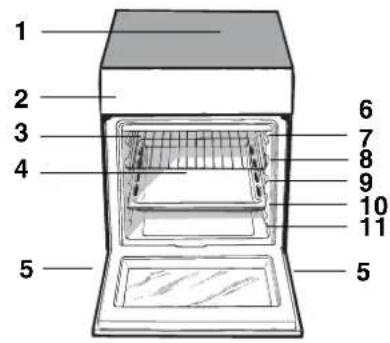
1.Glass ceramic hob 2. Control panel 3.Sliding grill rack 4.DRIPPING pan 5. Adjustable foot 6.GUIDERAILS for the racks 7.position 5 8.position 4 9.position 3 10.position 2 11.position 1
PT
Descrição
Vista de Conjunto
- Ceramic hob
- Control panel
- GRID shelf
- DRIP TRAY shelf
- Adjustable foot
- Sliding guides
- Position 5
- Position 4
- Position 3
- Position 2
- Position 1
KZ
Knobs for the hob
Oven knobs
- Oven door handle
- Back panel taps 3. GRID
- TUTKAJBI TABA
- PetteerinRaeeteriH
- BAFblTTAYbI JXOJIAP
- 5-position
- 4-position
- 3-position 10.2-position
- 1-position
FR
Description
Overview
Description of the appliance
Control panel
1. SELECTION knob 2. THERMOSTAT knob 3. Electric HOTPLATE control knob 4. THERMOSTAT indicator light 5. TIMER knob 6. ELECTRIC HOTPLATE indicator light

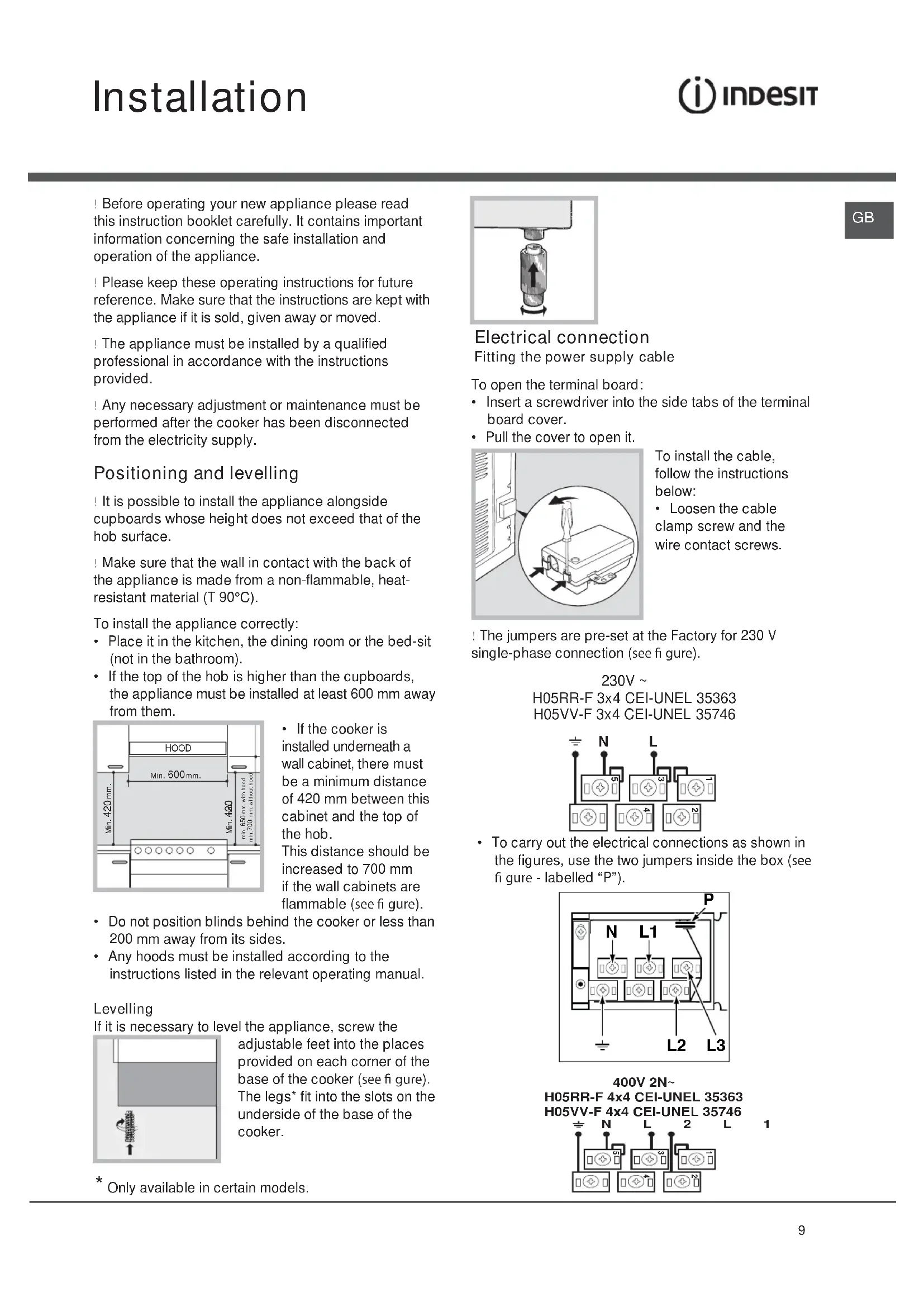
Before operating your new appliance please read this instruction booklet carefully. It contains important information concerning the safe installation and operation of the appliance. Please keep these operating instructions for future reference. Make sure that the instructions are kept with the appliance if it is sold, given away or moved. ! The appliance must be installed by a qualified professional in accordance with the instructions provided. Any necessary adjustment or maintenance must be performed after the cooker has been disconnected from the electricity supply.
Positioning and levelling
It is possible to install the appliance alongside cupboards whose height does not exceed that of the hob surface. Make sure that the wall in contact with the back of the appliance is made from a non-flammable, heat-resistant material (T ≥ 90°C).
To install the appliance correctly:
- Place it in the kitchen, the dining room or the bed-sit (not in the bathroom). If the top of the hob is higher than the cupboards, the appliance must be installed at least 600 mm away from them.
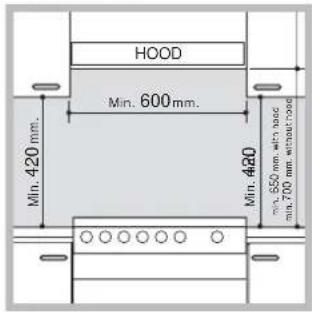
- If the cooker is installed underneath a wall cabinet, there must be a minimum distance of 420 mm between this cabinet and the top of the hob.
This distance should be increased to 700 mm if the wall cabinets are flammable (see figure).
- Do not position blinds behind the cooker or less than 200 mm away from its sides.
- Any hoods must be installed according to the instructions listed in the relevant operating manual.
Levelling
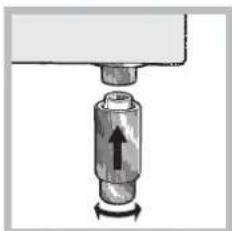
If it is necessary to level the appliance, screw the
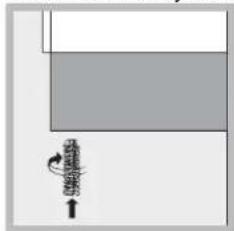
adjustable feet into the places provided on each corner of the base of the cooker (see figure). The legs* fit into the slots on the underside of the base of the cooker.
* Only available in certain models.
Electrical connection
Fitting the power supply cable
To open the terminal board:
- Insert a screwdriver into the side tabs of the terminal board cover. Pull the cover to open it.
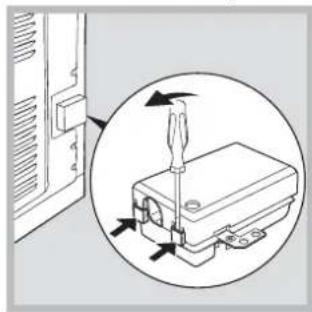
To install the cable, follow the instructions below: - Loosen the cable clamp screw and the wire contact screws.
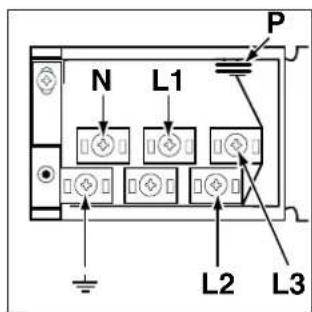
! The jumpers are pre-set at the factory for 230V single-phase connection (see figure).
230V~
H05RR-F 3x4 CEI-UNEL 35363
H05VV-F 3x4 CEI-UNEL 35746
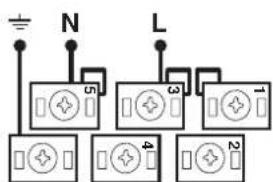
- To carry out the electrical connections as shown in the figures, use the two jumpers inside the box (see figure - labelled "P").
400V 2N~ H05RR-F 4x4 CEI-UNEL 35363 H05VV-F 4x4 CEI-UNEL 35746
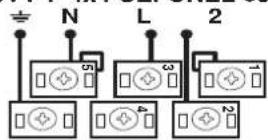
1
400V 3N~
H05RR-F 5x2.5 CEI-UNEL 35363
H05VV-F 5x2.5 CEI-UNEL 35746
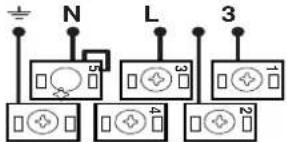
L
- Secure the power supply cable by fastening the cable clamp screw then put the cover back on.
Connecting the supply cable to the electricity mains Install a standardised plug corresponding to the load indicated on the appliance data plate (see Technical data table).
The appliance must be directly connected to the mains using an omnipolar switch with a minimum contact opening of 3 mm installed between the appliance and the mains. The switch must be suitable for the charge indicated and must comply with current electrical regulations (the earthing wire must not be interrupted by the switch). The supply cable must be positioned so that it does not come into contact with temperatures higher than 50°C at any point.
Before connecting the appliance to the power supply, make sure that:
- The appliance is earthed and the plug is compliant with the law.
- The socket can withstand the maximum power of the appliance, which is indicated by the data plate.
- The voltage is in the range between the values indicated on the data plate.
- The socket is compatible with the plug of the appliance. If the socket is incompatible with the plug, ask an authorised technician to replace it. Do not use extension cords or multiple sockets.
! Once the appliance has been installed, the power supply cable and the electrical socket must be easily accessible. ! The cable must not be bent or compressed. ! The cable must be checked regularly and replaced by authorised technicians only. ! The manufacturer declines any liability should these safety measures not be observed.
We recommend cleaning the oven before using it for the first time, following the instructions provided in the "Care and maintenance" section.
| TABLE OF CHARACTERISTICS | |
| Oven dimensions (HxWxD) | 32x43.5x39,5 cm |
| Volume | 65 l |
| Useful measurements relating to the oven compartment | width 46cm depth 42 cm height 8.5 cm |
| 2 Voltage and frequency | see data plate Data plate, is located inside the flap or, after the oven compartment has been opened, on the left-hand wall inside the oven. |
| Ceramic hob | |
| Front Left | 1700 W |
| Back Left | 1200 W |
| Back Right | 2300 W |
| Front Right | 1200 W |
| Max. ceramic hob consumption | 6400 W |
| ENERGY LABEL | Directive 2002/40/EC on the label of electric ovens. Standard EN 50304 Natural convection energy consumption heating mode: Static |
| This appliance conforms to the following European Economic Community directives: 2006/95/EC dated 12/12/06 (Low Voltage) and subsequent amendments - 2004/108/EC dated 15/12/04 (Electromagnetic Compatibility) and subsequent amendments - 93/68/EEC dated 22/07/93 and subsequent amendments. 2002/96/EC 1275/2008 (Stand-by/Off mode) | |
Safety Chain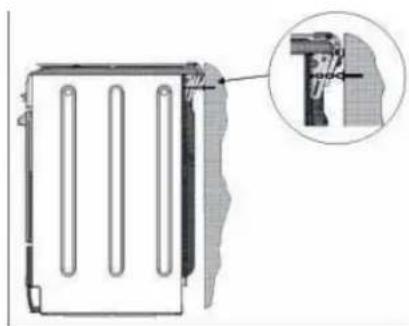
! In order to prevent accidental tipping of the appliance, for example by a child climbing onto the oven door, the supplied safety chain MUST be installed!
The cooker is fitted with a safety chain to be fixed by means of a screw (not supplied with the cooker) to the wall behind the appliance, at the same height as the chain is attached to the appliance.
Choose the screw and the screw anchor according to the type of material of the wall behind the appliance. If the head of the screw has a diameter smaller than 9 mm, a washer should be used. Concrete wall requires the screw of at least 8 mm of diameter, and 60 mm of length.
Ensure that the chain is fixed to the rear wall of the cooker and to the wall, as shown in figure, so that after installation it is tensioned and parallel to the ground level.
Using the oven
The first time you use your appliance, heat the empty oven with its door closed at its maximum temperature for at least half an hour. Ensure that the room is well ventilated before switching the oven off and opening the oven door. The appliance may emit a slightly unpleasant odour caused by protective substances used during the manufacturing process burning away.
Before operating the product, remove all plastic film from the sides of the appliance.
- Select the desired cooking mode by turning the SELECTOR knob.
- Select the recommended temperature for the cooking mode or the desired temperature by turning the THERMOSTAT knob.
A list detailing cooking modes and suggested cooking temperatures can be found in the relevant table (see Oven cooking advice table).
During cooking it is always possible to:
- Change the cooking mode by turning the SELECTOR knob.
- Change the temperature by turning the THERMOSTAT knob.
- Set the total cooking time and the cooking end time (see below).
- Stop cooking by turning the SELECTOR knob to the "0" position.
! Never put objects directly on the bottom of the oven; this will avoid the enamel coating being damaged.
Only use position 1 in the oven when cooking with the rotisserie spit.
Always place cookware on the rack(s) provided.
Cooking Modes
Convection Mode
Position of thermostat knob between 60°C and Max. On this setting, the top and bottom heating elements come on. This is the classic, traditional type of oven which has been perfected, with exceptional heat distribution and reduced energy consumption. The convection oven is still unequalled when it comes to cooking dishes made up of several ingredients, e.g. cabbage with ribs, Spanish style cod, Ancona style stockfish, tender veal strips with rice, etc. Excellent results are achieved when preparing veal or beef-based dishes as well (braised meats, stew, goulash, wild game, ham etc.) which need to cook slowly and require basting or the addition of liquid. It nonetheless remains the best system for baking cakes as well as
Fruit and cooking using covered casserole dishes for oven baking. When cooking in convection mode, only use one dripping pan or cooking rack at a time, otherwise the heat distribution will be uneven. Using the different rack heights available, you can balance the amount of heat between the top and the bottom of the oven. Select from among the various rack heights based on whether the dish needs more or less heat from the top.
Pastry Model
Position of thermostat knob: Between 60°C and Max. The bottom heating element comes on.
This mode is ideal for baking and cooking delicate foods - especially cakes that need to rise because the heat coming from the bottom helps the leavening process.
Please note that it takes a considerable amount of time for the higher temperatures to be reached, therefore we recommend you use the "Convection Mode" in these cases.
"Top" Oven
Position of thermostat knob: Between 60°C and Max. The top heating element comes on.
This mode can be used to brown food at the end of a cooking.
Grill
Position of thermostat knob: Max
The top central heating element comes on.
The extremely high and direct temperature of the grill makes it possible to brown the surface of meats and roasts while locking in the juices to keep them tender.
The grill is also highly recommended for dishes that require a high temperature on the surface: beef steaks, veal, rib steak, fillets, hamburgers etc...
Some grilling examples are included in the "Practical Cooking Advice" paragraph.
The oven light
Set knob to the symbol to turn it on. It lights the oven and stays on when any of the electrical heating elements in the oven come on.
Thermostat Light Thermostat Light Thermostat Light This light indicates that the oven is heating. When it turns off, the temperature inside the oven has reached the setting made with the thermostat knob. At this point, the light will turn on and off as the oven maintains the temperature at a constant level.
* Only available in certain models.

The turnspit
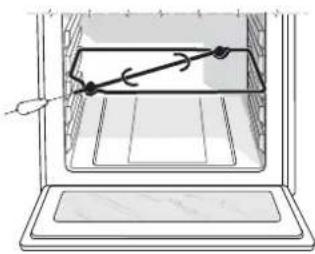
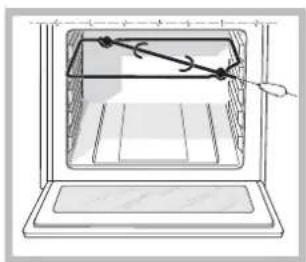
To start the turnspit, proceed as follows: a) place the oven tray on the 1st rack; b) insert the special turnspit support on the 3rd rack and position the spit by inserting it through the special
hole into the turnspit at the back of the oven; c) start the turnspit using knob "L" to select setting
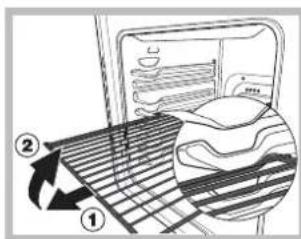
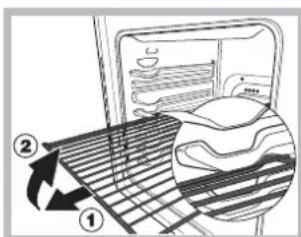
WARNING! The oven is provided with a stop system to extract the racks and prevent them from coming out of the oven.(1) As shown in the drawing, to extract them completely, simply lift the racks, holding them on the front
part, and pull (2).
Practical Cooking Advice
When cooking in the oven, use only one dripping pan or rack at a time. Select from among the top or bottom rack heights based on whether the dish needs more or less heat from the top.
Preheating
If the oven must be preheated (this is generally the case when cooking leavened foods), we recommend you use the "convection mode" to reach the desired temperature as quickly as possible. When preheating is over, which is indicated by the red light "E" going out, select the required cooking mode.
Cooking Fish and Meat
When cooking white meat, fowl and fish, use temperature settings from 180°C to 200°C.
For red meat that should be well done on the outside while tender and juicy in the inside, it is a good idea to start with a high temperature setting (200°C - 220°C) for a short time, then turn the oven down afterwards. In general, the larger the roast, the lower the temperature setting. Place the meat on the centre of the grid and place the dripping pan beneath it to catch the fat. Make sure that the grid is inserted so that it is in the centre of the oven. If you would like to increase the amount of heat from below, use the low rack heights. For savoury roasts (especially duck and wild game), dress the meat with lard or bacon on the top.
- Only available in certain models.
Baking Cakes
When baking cakes, always preheat the oven and do not open the oven door during baking to prevent the cake from dropping.
Using the Grill
Use the "grill" mode, placing the food under the centre of the grill (situated on the 3rd or 4th rack from the bottom) because only the central part of the top heating element is turned on.
Use the bottom rack (1st from the bottom), placing the dripping pan provided to collect any sauce and/or grease and prevent the same from dripping onto the oven bottom.
When using this mode, we recommend you set the thermostat to the highest setting. However, this does not mean you cannot use lower temperatures, simply by adjusting the thermostat knob to the desired temperature.
In models fitted with a rotisserie, you can use the spit kit provided when using the "grill" mode. In this case, cook with the oven door shut, placing the spit kit on the third oven rack from the bottom and the dripping pan on the bottom rack to collect any sauce and/or dripping fat.
! Always use the grill with the oven door shut. This will allow you both to obtain excellent results and to save on energy (approximately 10% ).
Therefore the best results when using the grill modes are obtained by placing the grid on the lower racks (see cooking table) then, to prevent fat and grease from dripping onto the bottom of the oven and smoke from forming, place a dripping pan on the 1st oven rack from the bottom.
Cooking Control Timer Knob
Some models are equipped with a timer program to control when the oven shuts off during cooking. To use this feature, you must wind the knob one full turn in the counter-clockwise direction; Then, turn the knob in the clockwise direction, to set the time by matching up the indicator on the control panel with the number of minutes on the knob.
At the end of the programmed length of time, the timer will sound and automatically turn off the oven.
Attention: to use the oven in manual mode without the cooking control timer, match the indicator on the
control panel with the symbol on the timer knob. When the oven is not in use, the cooking control timer can be used like a normal timer.
Oven cooking advice table
| Selector knob setting | Food to be cooked Weight (In kg) | Cooking rack position from bottom | Preheating time (minutes) | Thermostat knob setting | Cooking time (minutes) |
| 1 Convection | Duck | 1 | 3 | 15 | 200 |
| Roast veal or beef | 1 | 3 | 15 | 200 | |
| Pork roast | 1 | 3 | 15 | 200 | |
| Biscuits (short pastry) | - | 3 | 15 | 180 | |
| Tarts | 1 | 3 | 15 | 180 | |
| Lasagne | 1 | 3 | 10 | 190 | |
| Lamb | 1 | 2 | 10 | 180 | |
| Mackerel | 1 | 2 | 10 | 180 | |
| Plum-cake | 1 | 2 | 10 | 170 | |
| Cream puffs | 0.3 | 3 | 10 | 180 | |
| Sponge-cake | 0.5 | 3 | 10 | 170 | |
| Savoury pies | 1.5 | 3 | 15 | 200 | |
| 2 Pastry Mode | Raised Cakes | 0.5 | 3 | 15 | 160 |
| Tarts | 1 | 3 | 15 | 180 | |
| Fruit cakes | 1 | 3 | 15 | 180 | |
| Brioches | 0.5 | 3 | 15 | 160 | |
| 3 Top Oven | Browning food to perfect cooking | - 3/4 | 15 220 - | ||
| 4 Grill | Soles and cuttlefish | 1 | 4 | 5 | Max |
| Squid and prawn kebabs | 1 | 4 | 5 | Max | |
| Cod filet | 1 | 4 | 5 | Max | |
| Grilled vegetables | 1 | 3/4 | 5 | Max | |
| Veal steak | 1 | 4 | 5 | Max | |
| Cutlets | 1 | 4 | 5 | Max | |
| Hamburgers | 1 | 4 | 5 | Max | |
| Mackerels | 1 | 4 | 5 | Max | |
| Toasted sandwiches | n.° 4 | 4 | 5 | Max | |
| With rotisserie (where present) | |||||
| Veal on the spit | 1.0 | - | 5 | Max | |
| Chicken on the spit | 1.5 | - | 5 | Max | |
| Lamb on the spit | 1.0 | - | 5 | Max |
NB: cooking times are approximate and may vary according to personal taste. When cooking using the grill, the dripping pan must always be placed on the 1st oven rack from the bottom.
Using the glass ceramic hob
GB
! The glue applied on the gaskets leaves traces of grease on the glass. Before using the appliance, we recommend you remove these with a special non-abrasive cleaning product. During the first few hours of use there may be a smell of rubber which will disappear very quickly.
Switching the cooking zones on and off To switch on a cooking zone, turn the corresponding knob in a clockwise direction.
To switch it off again, turn the knob in an anticlockwise direction until it is in the "0" position.
If the COOKING ZONE ON indicator light is lit, this shows that at least one of the cooking zones on the hob is switched on.
Cooking zones
The hob is equipped with electric radiant heating elements. When they are in use the following items on the hob become red.
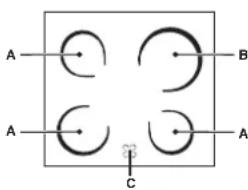
A. The cooking zone with radiant heating elements. B. The cooking zone with HILITE heating elements. C. The residual heat indicator light: this indicates
that the temperature of the
corresponding cooking zone is
greater than 60°C even when
the heating element has been switched off but is still hot.
Cooking zones with radiant heating elements.
The circular radiant heating elements become red 10-20 seconds after they have been switched on.
| Setting | Normal or Fast Plate |
| 0 | Off |
| 1 | Cooking vegetables, fish |
| 2 | Cooking potatoes (using steam) soups, chickpeas, beans. |
| 3 | Continuing the cooking of large quantities of food, minestrone |
| 4 | For roasting (average) |
| 5 | For roasting (above average) |
| 6 | For browning and reaching a boil in a short time. |
Cooking zones with HILITE heating elements.
Traditional cooking zones are made up of circular heating elements. They turn red approximately 10 seconds after they have been turned on.
HILITE cooking zones ensure a uniform distribution of the temperature.
The HILITE lamps warm up rapidly to high temperatures which results in:
Rapid temperature rise (compared to a gas burner)
Rapid cooling - Uniform temperature over the entire surface Traditional cooking zone control knobs. Each cooking zone is fitted with a control knob allowing you to select from 12 different temperature settings from a minimum of 1 to a maximum of 12.
| Set. | Radiant Burner |
| 0 | Off |
| 1 | To melt butter and chocolate. |
| 2 | To heat liquids. |
| 3 | |
| 4 | For creams and sauces. |
| 5 | |
| 6 | For cooking at the boiling point. |
| 7 | |
| 8 | For roasts. |
| 9 | |
| 10 | For boiling large pieces of meat. |
| 11 | |
| 12 | For frying. |
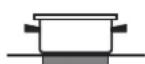
Practical advice on using the hob - Use pans with a thick, flat base to ensure that they adhere perfectly to the cooking zone.
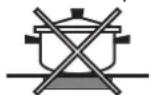
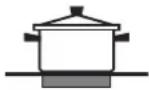
Always use pans with a diameter that is large enough to cover the hotplate fully, in order to use all the heat produced.
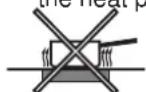
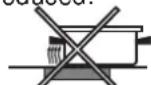
- Always make sure that the base of the pan is completely clean and dry: this ensures that the pans adhere perfectly to the cooking zones and that both the pans and the hob remain effective for a longer period of time.
- Avoid using the same cookware that is used on gas burners: the heat concentration on gas burners may have warped the base of the pan, causing it not to adhere to the surface correctly.
Never leave a cooking zone switched on without a pan on top of it, as doing so may cause the zone to become damaged.
Precautions and tips
! This appliance has been designed and manufactured in compliance with international safety standards.
The following warnings are provided for safety reasons and must be read carefully.
General safety
- These instructions are only valid for the countries whose symbols appear in the manual and on the serial number plate located on the appliance.
- The appliance was designed for domestic use inside the home and is not intended for commercial or industrial use.
- The appliance must not be installed outdoors, even in covered areas. It is extremely dangerous to leave the appliance exposed to rain and storms.
- Do not touch the appliance with bare feet or with wet or damp hands and feet.
- The appliance must be used by adults only for the preparation of food, in accordance with the instructions outlined in this booklet. Any other use of the appliance (e.g. for heating the room) constitutes improper use and is dangerous. The manufacturer may not be held liable for any damage resulting from improper, incorrect and unreasonable use of the appliance.
- The instruction booklet accompanies a class 1 (insulated) or class 2 - subclass 1 (recessed between 2 cupboards) appliance.
- Do not touch the heating elements or certain parts of the oven door when the appliance is in use; these parts become extremely hot. Keep children well away from the appliance.
- Make sure that the power supply cables of other electrical appliances do not come into contact with the hot parts of the oven.
- The openings used for the ventilation and dispersion of heat must never be covered.
- Do not use unstable or misshapen pans on the cooking zones; this will help to avoid accidental spills. Make sure pan handles are turned towards the centre of the hob in order to avoid accidental burns. Always use oven gloves when placing cookware in the oven or when removing it.
- Do not use flammable liquids (alcohol, petrol, etc...) near the appliance while it is in use.
- Do not place flammable material in the lower storage compartment or in the oven itself. If the appliance is switched on accidentally, it could catch fire. Always make sure the knobs are in the position when the appliance is not in use.
- When unplugging the appliance, always pull the plug from the mains socket; do not pull on the cable.
- Never perform any cleaning or maintenance work without having disconnected the appliance from the electricity mains.
- If the appliance breaks down, under no circumstances should you attempt to perform the repairs yourself. Repairs carried out by inexperienced persons may cause injury or further malfunctioning of the appliance. Contact Assistance.
- Do not rest heavy objects on the open oven door.
- The internal surfaces of the compartment (where present) may become hot.
- The glass ceramic hob is resistant to mechanical shocks, but it may crack (or even break) if hit with a sharp object such as a tool. If this happens, disconnect the appliance from the electricity mains immediately and contact a Service Centre.
- If the surface of the hob is cracked, switch off the appliance to prevent electric shocks from occurring.
- Remember that the cooking zones remain relatively hot for at least thirty minutes after they have been switched off.
- Keep any object which could melt away from the hob, for example plastic and aluminium objects, or products with a high sugar content. Be especially careful when using plastic film and aluminium foil or packaging: if placed on surfaces that are still hot, they may cause serious damage to the hob.
- Do not place metal objects (knives, spoons, pan lids, etc.) on the hob as they may become hot.
- The appliance should not be operated by people (including children) with reduced physical, sensory or mental capacities, by inexperienced individuals or by anyone who is not familiar with the product. These individuals should, at the very least, be supervised by someone who assumes responsibility for their safety or receive preliminary instructions relating to the operation of the appliance.
- Do not let children play with the appliance.
- If the cooker is placed on a pedestal, take the necessary precautions to prevent the cooker from sliding off the pedestal itself.
Disposal
- When disposing of packaging material: observe local legislation so that the packaging may be reused.
- The European Directive 2002/96/EC relating to Waste Electrical and Electronic Equipment (WEEE) states that household appliances should not be disposed of using the normal solid urban waste cycle. Exhausted appliances should be collected separately in order to optimise the cost of reusing and recycling the materials inside the machine, while preventing potential damage to the atmosphere and to public health. The crossed-out dustbin is marked on all products to remind the owner of their obligations regarding separated waste collection.
For further information relating to the correct disposal of exhausted household appliances, owners may contact the public service provided or their local dealer.
Respecting and conserving the environment
- You can help to reduce the peak load of the electricity supply network companies by using the oven in the hours between late afternoon and the early hours of the morning. Always keep the oven door closed when using the TOP OVEN, GRILL and GRATIN modes: This will achieve improved results while saving energy (approximately 10%).
- Check the door seals regularly and wipe them clean to ensure they are free of debris so that they adhere properly to the door, thus avoiding heat dispersion.
Switching the appliance off
Disconnect your appliance from the electricity supply before carrying out any work on it.
Cleaning the oven
! Never use steam cleaners or pressure cleaners on the appliance.
- Clean the glass part of the oven door using a sponge and a non-abrasive cleaning product, then dry thoroughly with a soft cloth. Do not use rough abrasive material or sharp metal scrapers as these could scratch the surface and cause the glass to crack.
- The stainless steel or enamel-coated external parts and the rubber seals may be cleaned using a sponge which has been soaked in lukewarm water and neutral soap. Use specialised products for the removal of stubborn stains. After cleaning, rinse and dry thoroughly. Do not use abrasive powders or corrosive substances.
- The inside of the oven should ideally be cleaned after each use, while it is still lukewarm. Use hot water and detergent, then rinse well and dry with a soft cloth. Do not use abrasive products.
- The accessories can be washed like everyday crockery, and are even dishwasher safe.
- Dirt and grease should be removed from the control panel using a non-abrasive sponge or a soft cloth.
- Stainless steel can be marked by hard water that has been left on the surface for a long time, or by aggressive detergents that contain phosphorus. We recommend that the steel surfaces are rinsed well then dried thoroughly.
Inspecting the oven seals
Check the door seals around the oven regularly. If the seals are damaged, please contact your nearest After-sales Service Centre. We recommend that the oven is not used until the seals have been replaced.
Replacing the oven light bulb
- After disconnecting the oven from the electricity mains,
as/for ambient lighting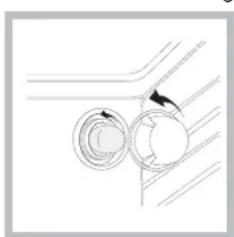
remove the glass lid covering the lamp socket (see figure).
- Unscrew the light bulb and replace it with a similar one: voltage 230 V, wattage 25 W, cap E 14.
- Replace the lid and reconnect the oven to the electricity supply. ! Do not use the oven lamp
Cleaning the glass ceramic hob
! Do not use abrasive or corrosive detergents (for example, products in spray cans for cleaning barbecues and ovens), stain removers, anti-rust products, powder detergents or sponges with abrasive surfaces: these may scratch the surface beyond repair.
- It is usually sufficient simply to wash the hob using a damp sponge and dry it with absorbent kitchen roll.
- If the hob is particularly dirty, rub it with a special glass ceramic cleaning product, then rinse well and dry thoroughly.
- To remove more stubborn dirt, use a suitable scraper (this is not supplied with the appliance). Remove spills as soon as possible, without waiting for the appliance to cool, to avoid residues forming crusty deposits. You can obtain excellent results by using a rustproof steel wire sponge - specifically designed for glass ceramic surfaces - soaked in soapy water.
- If plastic or sugary substances have accidentally been melted on the hob, remove them immediately with the scraper, while the surface is still hot.
- Once it is clean, the hob may be treated with a special protective maintenance product: the invisible film left by this product protects the surface from drips during cooking. This maintenance should be carried out while the appliance is warm (not hot) or cold.
- Always remember to rinse the appliance well with clean water and dry it thoroughly: residues can become encrusted during subsequent cooking processes.
| Glass ceramic hob cleaners | Available from |
| Window scraper Razor blade scrapers | DIY Stores |
| Replacement blades DIY Stores, supermarkets, chemists | |
| COLLO lunetaHOB BRITEHob CleanSWISSCLEANER | Boots, Co-op stores,department stores, Regional Electricity Company shops,supermarkets |
Assistance
! Never use the services of an unauthorised technician.
Please have the following information to hand:
The type of problem encountered. The appliance model (Mod.). The serial number (S/N). The latter two pieces of information can be found on the data plate located on the appliance.
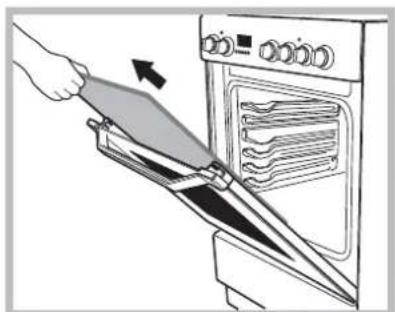
Removing and fitting the oven door:
1. Open the door
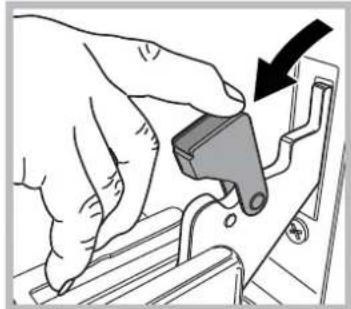
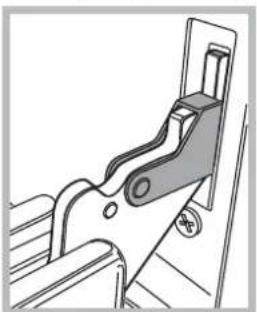
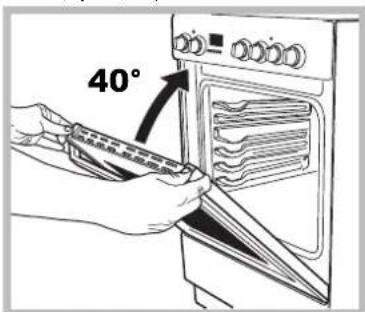
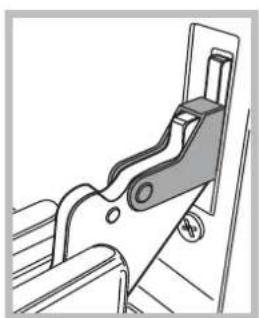
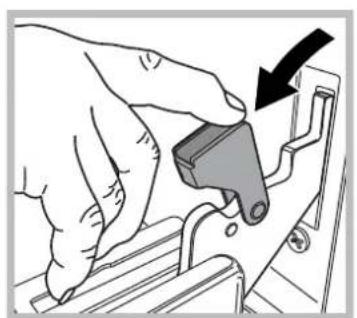
2. Make the hinge clamps of the oven door rotate backwards completely (see photo)

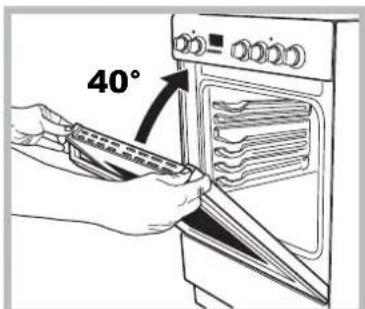
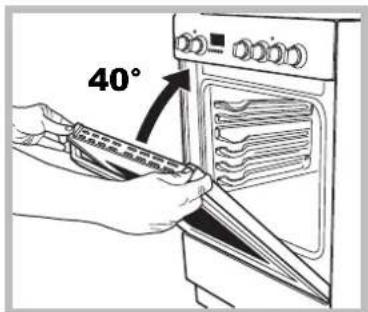
3. Close the door until the clamps stop (the door will remain open for 40° approx.) (see photo)
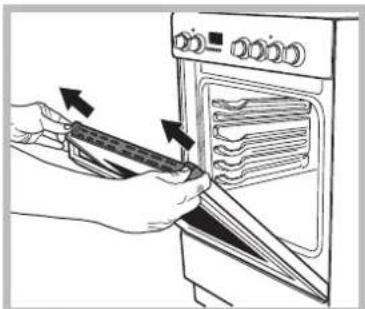
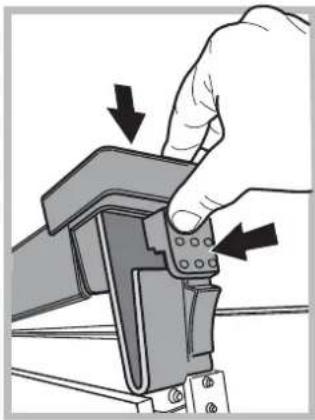
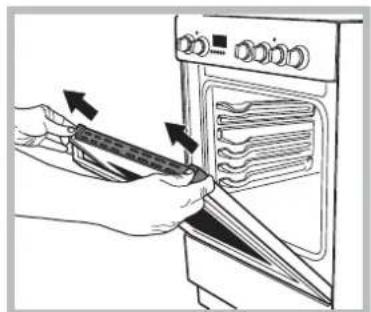
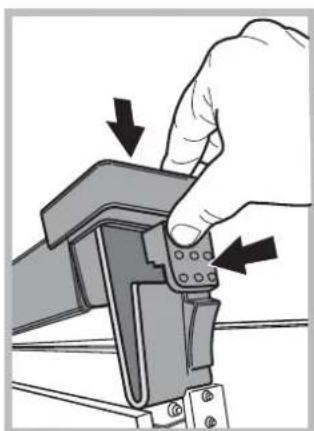
- 4. Press the two buttons on the upper profile and extract the profile (see photo)
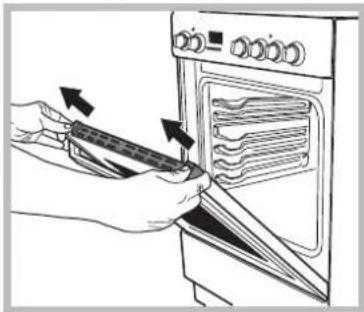
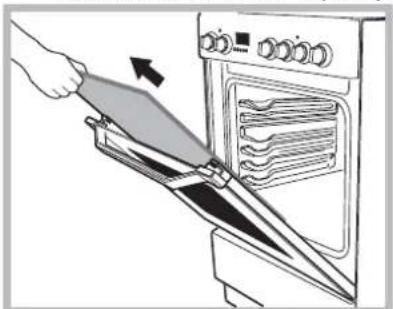
5. Remove the glass sheet and do the cleaning as indicated in chapter: "Care and maintenance".
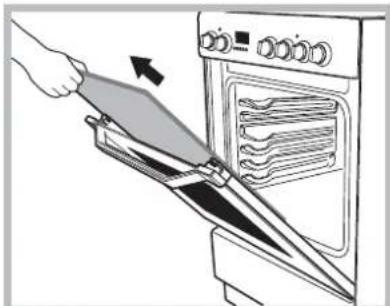
- Replace the glass.
WARNING! Oven must not be operated with inner door glass removed!
WARNING! When reassembling the inner door glass, insert the glass panel correctly so that the text written on the panel is not reversed and can be easily legible.
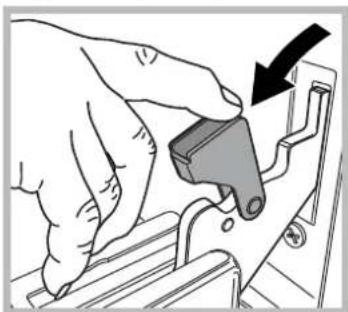
- Replace the profile; a click will indicate that the part is positioned correctly. 8. Open the door completely. 9. Close the supports (see photo).
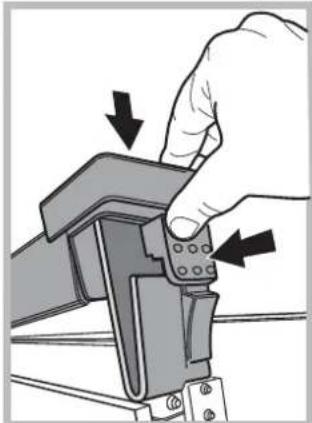
- Now the door can be completely closed and the oven can be started for normal use.
Steam-Assisted Oven Cleaning
This method of cleaning is recommended especially after cooking very fatty (roasted) meats.
This cleaning process facilitates the removal of dirt from the oven walls by generating steam inside the oven cavity for easier cleaning.
Important! Before you start steam-cleaning:
- Remove any food residue and grease from the bottom of the oven. - Remove any oven accessories (grids and drip pans).
Perform the above operations according to the following procedure:
- Pour 300 ml of water into the baking tray in the oven, placing it on the bottom shelf. In models where the drip pan is not present, use a baking sheet and place it on the grill at the bottom shelf.
- Select the oven function: Pastry Model, and set the temperature to 100°C.
- Keep it in the oven for 15 minutes.
- Turn off the oven.
- Once the oven has cooled, you can open the door to complete the cleaning with water and a damp cloth.
- Eliminate any residual water from the cavity after finishing cleaning.
When steam-cleaning is done, especially after cooking fatty foods or when grease is difficult to remove, you may need to complete the cleaning with the traditional method described in the previous paragraph.
! Perform cleaning only in the cold oven!
Installation
| Set | Radiant Burner |
| 0 | Off |
| 1 | To melt butter and chocolate. |
| 2 | To heat liquids. |
| 3 | |
| 4 | For creams and sauces. |
| 5 | |
| 6 | For cooking at the boiling point. |
| 7 | |
| 8 | For roasts. |
| 9 | |
| 10 | For boiling large pieces of meat. |
| 11 | |
| 12 | For frying. |
It is possible to change the cooking settings:
- change the cooking mode by turning the SELECTOR knob; - change the temperature by turning the THERMOSTAT knob; - set the cooking duration and end time (see below); - interrupt cooking by turning the SELECTOR knob to the "0" position.
! Do not place objects directly on the oven floor to avoid damaging its enamel coating. Use the oven shelf level 1 only when cooking on the spit. Always place cookware on the rack or baking tray of the oven.
Thermostat indicator light
The indicator light shows that the oven is heating up. The light goes out when the temperature inside the oven reaches the value set with the thermostat knob. From that moment, the intermittent switching on and off of the indicator light will show that the oven maintains a constant temperature.
Oven light
The light comes on when the SELECTOR knob is set to any position other than "0".
The light remains on while the oven is in operation.
When the knob is turned, the light will come on without activating the heating elements.
Cooking end time knob
Some ovens are equipped with a timer for programming the end of cooking. To use it, turn the knob clockwise one full turn against the clock.
Then turn it back to set the lower time, aligning the fixed mark on the front panel with the desired lower time. After the set time has elapsed, the oven will automatically turn off, in addition to the alarm.
Attention: For using the oven in convection mode, i.e., excluding the programming of the end of cooking, the fixed mark on the front panel must coincide with the symbol
Cooking modes
The temperature value from 50°C to Max can be set for all cooking modes except the grill mode, for which only the maximum (Max) power level is recommended.
STATIC OVEN
Both heating elements are on - upper and lower. With this traditional cooking mode, it is best to use only one level of the oven; when cooking on several levels, heat distribution will be uneven.
LOWER HEATING ELEMENT
The lower heating element operates. This mode is recommended for dishes (in baking molds) whose surface is already cooked but requires further cooking of the central part, or for desserts covered with toppings or cream to brown their surface. Note that in this mode it is impossible to reach the maximum temperature in the oven (250 °C), so it is not recommended to cook using only this setting, except for convection baking, which requires a temperature of 180 °C or lower.
UPPER HEATING ELEMENT
Temperature between 50°C and Max.
The lighting is on, and the grill emits infrared radiation. The high and direct heat of the grill allows you to quickly brown the surface of the meat, keeping it juicy and tender.
W
Temperature between 50°C and Max.
The lighting is on, and the double heating element of the grill is working, the motor starts to rotate the spit. This grill is larger than usual and has a completely new design: cooking efficiency is 50% higher. The double grill ensures even cooking of the roast even at the corners of the oven.
Using a pressure cooker can reduce cooking time and save up to 10% of electricity.
When cooking with a pressure cooker, place the food on the lower levels, and place a drip tray underneath to collect fat or juice from the cooked food.
Practical tips
Before cooking, place the grill on the first level under the top heating element/grill.
Grill
Insert the grid at level 3 or 4. Place the food in the center of the grid. - We recommend setting the maximum power level: the top heating element is regulated by the thermostat and may not always be on.
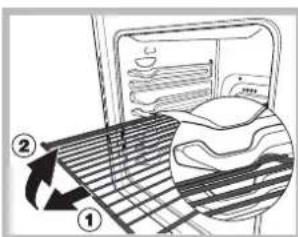
The oven is equipped with a system for removing the grids, which allows them to be pulled out of the oven not completely (1). To fully remove the grids, it is enough to take them by the front part and pull them towards you (2).
As shown in the diagram, take them by the front part and pull them towards you (2).
Spit
When using the spit, proceed as follows:
a) Place the drip tray on the 1st level; b) Insert the spit frame on the 4th level and place the spit on it, inserting its end into the special hole in the rear wall of the oven; c) Turn on the spit, setting the handle to the position for large quantities of food, or to the position
Auxiliary table for preparing the oven
| Рек imm пригоровлия | Бликов | Вес, Кг | Уразовь духовки | Вреемп prejud- варительно разоррев духовки, мин | Рекоменуемая temпера typа, С° | Вреем пригоровлия, мин |
| Сточеская духовka | Пазаныя Канеллочи | 2,5 2,5 | 2 3 | 5 5 | 200 200 200 180 200 180 | 45-50 30-35 30-35 60-70 80-90 90-100 70-80 70-80 70-80 30-40 30-35 25-30 15-20 10-15 |
| Мakронная залеганka Телегда | 2,0 1,7 | 3 3 | 5 10 | 200 180 200 180 180 180 180 180 180 180 180 180 180 180 180 180 180 180 180 180 180 180 180 180 180 180 180 180 170 | 200 200 200 200 200 200 200 200 200 200 200 200 200 200 200 200 200 200 200 200 200 200 200 200 200 200 | |
| Куршиа Утka | 1,5 1,8 | 3 3 | 10 10 | 200 180 180 180 180 180 180 180 180 180 180 180 180 180 180 180 180 180 180 180 180 180 180 180 180 | 80-90 90-100 90-100 90-100 90-100 90-100 90-100 90-100 90-100 90-100 90-100 90-100 90-100 90-100 90-100 90-100 | |
| Крочь Свинна | 2 2,1 | 3 3 | 10 10 | 180 180 180 180 180 180 180 180 180 180 180 180 180 180 180 180 180 180 180 180 180 180 180 180 180 | 200 200 200 200 200 200 200 200 200 200 200 200 200 200 200 200 200 200 200 200 200 200 200 200 25-30 25-30 25-30 25-30 25-30 25-30 | |
| Бараннaya | 1,8 | 3 | 10 | 180 180 180 180 180 180 180 180 180 180 180 180 180 180 180 180 180 180 180 180 180 180 180 180 25-30 25-30 25-30 25-30 25-30 25-30 25-30 25-30 25-30 25-30 25-30 25-30 25-30 25-30 25-30 25-30 25-30 26-30 26-30 26-30 26-30 26-30 26-30 26-30 26-30 26-30 26-30 26-30 26-30 26-30 26-30 26-30 26-30 26-30 | 200 200 200 200 200 200 200 200 200 200 200 200 200 200 200 200 200 200 200 200 200 200 200 200 26-30 26-30 26-30 26-30 26-30 26-30 26-30 26-30 26-30 26-30 26-30 26-30 26-30 26-30 26-30 26-30 25-30 25-30 25-30 25-30 25-30 25-30 25-30 25-30 25-30 25-30 25-30 25-30 25-30 25-30 25-30 25-30 | |
| Скунбрыя | 1,1 | 2 | 5 | 180 180 180 180 180 180 180 180 180 180 180 180 180 180 180 180 180 180 180 180 180 180 180 180 185 185 185 185 185 185 185 185 185 185 185 185 185 185 185 185 185 185 185 185 185 185 185 185 185 186 186 186 186 186 186 186 186 186 186 186 186 186 186 186 186 186 186 186 186 186 186 186 186 186 185 185 185 185 185 185 185 185 185 185 185 185 185 185 185 185 185 185 185 185 185 185 185 185 18. 18. 18. 18. 18. 18. 18. 18. 18. 18. 18. 18. 18. 18. 18. 18. 18. 18. 18. 18. 18. 18. 18. 18. 18. 18. 18. 18. 18. 18. 18. 18. 18. 18. 25-30 25-30 25-30 25-30 25-30 25-30 25-30 25-30 25-30 25-30 25-30 25-30 25-30 25-30 25-30 25-30 25-45 25-45 25-45 25-45 25-45 25-45 25-45 25-45 25-45 25-45 25-45 25-45 25-45 25-45 25-45 25-45 25-45 25- 25- 25- 25- 25- 25- 25- 25- 25- 25- 25- 25- 25- 25- 25- 25- 25- 25- 25- 25- 25- 25- 25- 25- 25- 25- 25- 25- 25- 25- 25- 25- 25- 25- - 25- 25- 25- 25- 25- 25- 25- 25- 25- 25- 25- 25- 25- 25- 25- 25- 25- 25- 25- 25- 25- 25- 25- 25- 25- 25- 25- 25- 25- 25- 25- 25- 25-30 25-30 25-30 25-30 25-30 25-30 25-30 25-30 25-30 25-30 25-30 25-30 25-30 25-30 25-30 25-30 25-65 25-65 25-65 25-65 25-65 25-65 25-65 25-65 25-65 25-65 25-65 25-65 25-65 25-65 25-65 25-65 25-65 25- 25- 25- 25- 25- 25- 25- 25- 25- 25- 25- 25- 25- 25- 25- 25- 25- 25- 25- 25- 25- 25- 25- 25- 25- 25- 25- 25- 25- 25- 25- 25- 26-30 26-30 26-30 26-30 26-30 26-30 26-30 26-30 26-30 26-30 26-30 26-30 26-30 26-30 26-30 26-30 26-65 26-65 26-65 26-65 26-65 26-65 26-65 26-65 26-65 26-65 26-65 26-65 26-65 26-65 26-65 26-65 26-65 26- 26- 26- 26- 26- 26- 26- 26- 26- 26- 26- 26- 26- 26- 26- 26- 26- 26- 26- 26- 26- 26- 26- 26- 26- 26- 26- 26- 26- 26- 26- 26- 26- 26- - 26- 26- 26- 26- 26- 26- 26- 26- 26- 26- 26- 26- 26- 26- 26- 26- 26- 26- 26- 26- 26- 26- 26- 26- 26- 26- 26- 26- 26- 26- 26- 26- 26-30 26-30 26-30 26-30 26-30 26-30 26-30 26-30 26-30 26-30 26-30 26-30 26-30 26-30 26-30 26-30 26- 26- 26- 26- 26- 26- 26- 26- 26- 26- 26- 26- 26- 26- 26- 26- 26- 26- 26- 26- 26- 26- 26- 26- 26- 26- 26- 26- 26- 26- 26- 26- 26-65 26-65 26-65 26-65 26-65 26-65 26-65 26-65 26-65 26-65 26-65 26-65 26-65 26-65 26-65 26-65 26-30 26-30 26-30 26-30 26-30 26-30 26-30 26-30 26-30 26-30 26-30 26-30 26-30 26-30 26-30 26-30 26- 30-30 26-30 26-30 26-30 26-30 26-30 26-30 26-30 26-30 26-30 26-30 26-30 26-30 26-30 26-30 26-30 26-30 |
Note. The given preparation time is approximate and may vary according to your discretion. When using the grill, it is mandatory to place the tray on the lower level of the oven.
RU
Using the glass-ceramic work surface
RU
Before using the equipment, remove any residues from the glass-ceramic work surface using a special scraper. During the first hours of use, you may notice a slight odor — it will disappear very quickly.
Switching the heating zones on and off
To switch on a heating zone, turn the corresponding knob clockwise.
To switch off a heating zone, turn the knob counterclockwise to the «0» position.
The residual heat indicator lights up when the heating zone is switched on.
Using the heating zones
The work surface is equipped with radiant heating elements that heat up quickly after being switched on.
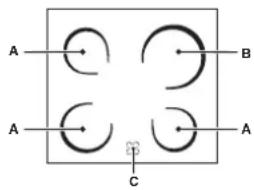
A. Heating zone. B. Heating zone. HILITE C. Residual heat indicator: shows that the temperature of the corresponding heating zone is above 60°C, even when it is already switched off but has not yet cooled down.
Heating zones
with radiant heating elements
These zones are similar to gas burners: easy to control and quickly reach the set temperature, allowing the user to control the power level.
Turn the corresponding knob clockwise to positions 1 to 6.
If you pull out the plug from the socket.
Under no circumstances should you attempt to repair the equipment yourself. Repairs performed by unqualified personnel can irreparably damage the equipment or cause it to malfunction. Contact an authorized service center. Do not place objects on the open oven door. - The equipment must not be used by persons (including children) with reduced physical, sensory, or mental capabilities, nor by those unfamiliar with the instructions in this manual. Use of the equipment is permitted only under the supervision of persons responsible for its safety or after receiving instructions on how to operate it. Do not allow children to play with the equipment. WARNING! Accessible parts of the equipment may become hot during operation. Do not let children come near. - If the hob is installed on a pedestal, take necessary precautions to prevent the hob or the pedestal from slipping.
Disposal
- When disposing of packaging material and when getting rid of old equipment, comply with current disposal regulations. According to European Directive 2002/96/EC on the disposal of electrical and electronic equipment (WEEE), old electrical appliances must not be placed in the general unsorted waste stream: they must be collected separately to optimize the recovery and recycling of materials and to reduce the negative impact on human health and the environment. The symbol of a crossed-out wheeled bin on the product indicates that this equipment must be disposed of separately.
For information on the correct disposal of old equipment, consumers should contact local authorities or the supplier.
Energy saving and environmental protection
Using the equipment in the morning or evening allows you to reduce the peak load on the electrical grid and save energy. For the best results in terms of energy saving (approximately 10%), always use the "Grill" and "Dual Grill" modes with the oven door closed. - Regularly check the oven door seals and clean them, removing any grease and dirt: to prevent leaks, the seals must fit tightly against the door.
RU
Disconnecting the equipment
Before any maintenance work on the equipment, disconnect it from the electrical supply. Never use the oven cavity for storing aerosols.
Cleaning the oven
Wipe the external surfaces of the stainless steel parts, as well as the rubber seals, with a soft cloth dampened in a solution of warm water with neutral soap, then rinse and wipe carefully. To remove stubborn dirt, use special products. After cleaning, rinse and wipe dry. Do not use abrasive powders or products containing aggressive substances. The oven should be cleaned inside after each use, while it is still warm. Use warm water with neutral detergent, then rinse well and wipe with a cloth. Do not use abrasive cleaning products. The glass of the oven door should be cleaned with a soft, non-abrasive cleaning agent, then wiped dry with a cloth. Do not use abrasive products or metal scrapers, which could damage the surface and cause cracks in the glass. - The appliance can be washed as usual (even in a dishwasher). - Remove any food residues or dirt left on the control panel after cooking with a non-abrasive sponge or soft cloth.
Check the seals
Regularly check the door seals around the entire perimeter. If they are damaged, contact an authorized service center. Do not use the oven until the seals have been replaced.
Replacing the light bulb
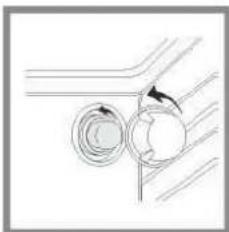
1. Disconnect the appliance from the power supply, then remove the glass cover with the lamp holder (see figure).
2. Unscrew the bulb and replace it with one of the same characteristics: voltage 230 V, power 25 W, type E14.
3. Install the glass cover back in place and reconnect the appliance to the power supply.
! Do not use the oven light bulb for room lighting.
Cleaning the glass-ceramic surface
! Do not use abrasive or aggressive cleaning products (e.g., oven cleaning sprays, rust removers, anti-corrosion products, powders, or abrasive sponges): they can irreparably damage (scratch) the surface.
- Usually, it is enough to wipe the work surface with a damp cloth and dry it with a paper towel.
- If the work surface is heavily soiled, use special products for cleaning glass-ceramic, then rinse well and wipe dry. - To remove heavy dirt, use a special scraper for glass-ceramic (not supplied with the appliance). To avoid the formation of burnt-on residue, remove splashes and food residues after cooking while the surface is still warm. Use a damp anti-corrosion sponge, specially designed for cleaning glass-ceramic surfaces.
- If during cooking, food particles (which may melt) accidentally fall onto the hot work surface, remove them immediately with a scraper while the surface is still warm. At the same time, you can treat the surface with a special product for glass-ceramic cooktops, which leaves an invisible protective film on the surface, protecting it from splashes during cooking. This treatment should be done when the work surface is warm (not hot) or cold. Always remember to rinse and dry the work surface thoroughly to prevent the formation of limescale after subsequent cooking.
Cleaning with the steam function:
Using this cleaning mode is recommended after cooking greasy foods (roasts, meat).
This cleaning procedure may involve a process of removing dirt from the oven walls by generating steam inside the oven cavity. Thus, cleaning the oven cavity directly will be easier.
Important! Before starting the steam cleaning process:
- Remove food residues / grease from the bottom of the oven cavity; - remove any additional accessories (racks, trays).
After performing the above operations, we recommend the following:
1- Pour 300 ml of water into a deep oven container; place it on the first level from the bottom. In models without a deep container, use a standard oven baking tray and place it on the first level from the bottom. 2- Select the function
LOWER HEATING ELEMENT
and set the temperature to 100°C
3- Turn on the oven for 15 minutes; 4- Turn off the oven; 5 - When the oven has cooled, open the door and finish cleaning with a damp cloth. 6- Remove any remaining water from the cavity after the cleaning process.
If the steam cleaning procedure is performed after cooking food (especially greasy products), or when the oven is very dirty, it is advisable to complete the cleaning process with the traditional method described in the previous paragraph.
!All cleaning procedures must be carried out after the oven has cooled down!
!The manufacturer is not responsible for damage caused by improper use of the appliance. The manufacturer's warranty does not cover damage resulting from misuse.
!The manufacturer is not responsible for damage caused by improper use of the appliance. The manufacturer's warranty does not cover damage resulting from misuse.
Installation
The large-sized built-in cabinets must be secured to the wall to prevent tipping. The large items must be secured to the wall using the brackets provided, with the appropriate material (T 90°C) for the wall type.
To install the large items:
- First, place the pipes and then the brackets (for the bathtub). Follow the instructions for the brackets, and install them at a distance of 200 mm from the large items.
Required (see figure).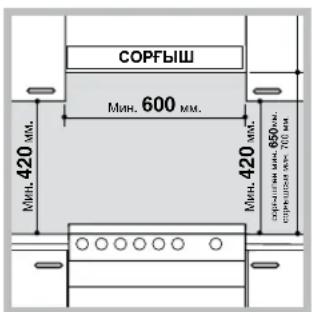
When installing the cabinet on the floor, the distance between the top of the cabinet and the bottom of the sink must be at least 420 mm. If the cabinet is installed on the floor, this distance can be increased up to 700 mm.
- The back of the cabinet or the side panels must be installed at least 200 mm away from the wall. The installation must be done according to the instructions for the anti-tip device.
Installation
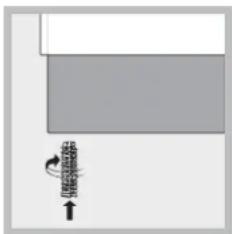
If installation is required, use the brackets* provided with the product to secure it to the wall (see figure).
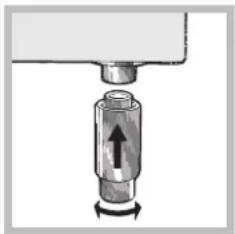
The brackets* must be inserted into the holes on the bottom of the product.
Electrical connection
Connecting the power cable
To connect the terminals:
- Remove the protective caps from the terminals.
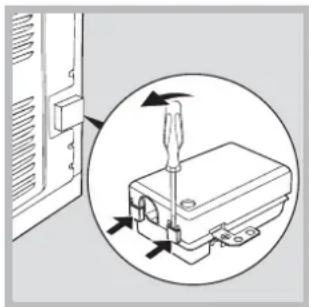
To remove them, pull them off.
Cable connection terminals for temperature sensors:
The cable must be connected to the contact terminals without tension. The contact terminals must be placed at a distance of at least 230V from each other (see figure).
230V~ H05RR-F 3x4 CEI-UNEL 35363 H05VV-F 3x4 CEI-UNEL 35746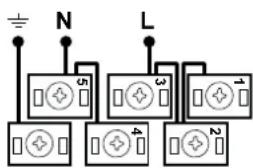
For connection to electrical cables, use contact terminals (see figure - marked with "P").
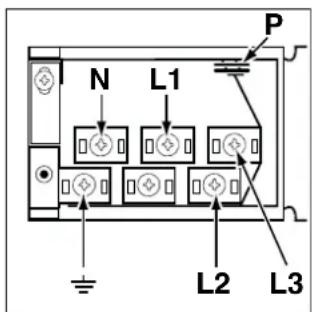
- The terminals must be suitable for the cable cross-section.
400V 2N~
H05RR-F 4x4 CEI-UNEL 35363
H05VV-F 4x4 CEI-UNEL 35746
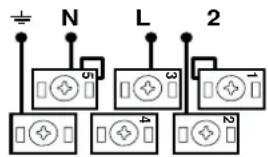

400V 3N~ H05RR-F 5x2.5 CEI-UNEL 35363 H05VV-F 5x2.5 CEI-UNEL 35746
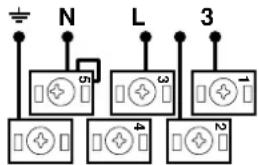

Secure the cable with a cable gland or clamp to prevent strain on the connections.
Do not bend the electrical cable sharply.
For installation, refer to the relevant standards and regulations (see technical data).
There must be a minimum distance of 3 mm between the heater and any flammable materials. The heater must be connected to the electrical supply via a separating device with a contact gap of at least 3 mm (e.g., a circuit breaker). The electrical cable must not be routed above the heater or in areas where the temperature exceeds 50°C.
Cable connection to the power supply terminals:
Connect the cable according to the wiring diagram. - The socket must be installed according to the relevant standards and must be easily accessible. Incorrect installation may cause hazards. - The socket must be connected to the protective earth conductor. If the socket is not connected to the protective earth, have it replaced by a qualified electrician. Use only sockets and plugs with protective earth.
Install the device only through a certified electrician and a socket with a grounding contact.
Do not use the device if the cable is damaged.
If the cable is damaged, it must be replaced by the manufacturer, its service agent, or similarly qualified persons.
Do not pull the cable to disconnect the plug from the socket; grasp the plug itself.
Before first use, read the instructions given in the section "Purpose and Technical Service" and follow them.
Safety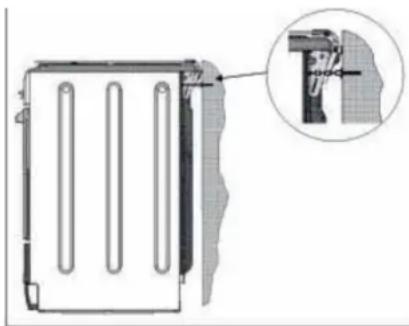
To avoid danger, if the device is used by children or persons with reduced physical, sensory, or mental capabilities, or lack of experience and knowledge, they must be supervised or instructed on safe use and understand the hazards involved.
Children must not play with the device; keep it out of reach of children when in use.
The anchor bolts for mounting must be selected according to the material of the wall.
If the wall is made of concrete, use dowels. For the dowels, drill holes with a diameter of 8 mm and a depth of 60 mm.
After drilling the holes and cleaning them of dust, insert the dowels and then secure the device with screws.
| TEXHUNKALBIK CINATTAMAJAP KECTECI | |
| Посьемерí (БхExT) | 32x43,5x32x39,5 cm |
| Калеми 65л | |
| Песштей сень karогары Куат ТУТВИН Mэнì | 2250 Вт |
| Песьелiri né КатуICTы пайдальы Еншемерí | сени 46см Терендiri 42сm Биikтiri 8,5сm |
| Кермен men киілік | depekter костecin караныз |
| Керамкильк пл'tа Жыл'dam Кал'tы Кал'tы Керамкильк пл'tанын сень karогары Куат ТУТВИН мэнì | 1700 Br 1200 Br 2300 Br 1200 Br 6400 Br |
| КУТВ БELГICI | Зелекр的新шторин бел Ricin'deri 2002/40/EC Нскayы. EN 50304 стандары Табири Ковеця Куатын ТУТВИн КьДыру рекимi: —— —— Kohвеця |
| CE | Бул курьлгыЕуponа экоюнамкалык Калыдастьгын сень калci Нускayлары сай каледи: 12.12.2006 Курney) кале EC (Темен Керney) кале Калыrelе 15.12.204 Курьлгы 2004/108/ EC (Делекромагнитti Унlecimдійк) кале e3reptулergi - 22.07.1993 Жыл'tы 93/68/EEC кале e3reptулergi. 2002/96/EC 1275/2008 (Куту/өшірулі реким) |
If the device is mounted on a wall, the screws must be tightened with a torque wrench to the specified value.
Installation
Before first use, check the device for damage and do not use it if it is damaged. If the device is damaged, it must be repaired by a qualified person. During installation, use protective gloves to avoid injury from sharp edges. Before installation, remove all plastic parts from the device.
- Select the operating mode using the selector switch.
- The thermostat knob is used to set the required temperature.
The operating modes and the required temperature are set using the temperature control knob (see the figure below).
To set the required mode, do the following:
To turn on the device, turn the thermostat knob to the required mode. - To change the temperature, turn the thermostat knob. Only use the knob to turn the device on and off (see the figure below). - To turn off the device, turn the thermostat knob to the "0" position.
! Do not immerse the device in water; this may cause a short circuit. If the device is used improperly, there is a risk of fire. ! Do not use the device near flammable materials.
Operating modes
Convection mode
Thermostat knob position between 60°C and higher
When this parameter is set, the heating elements are switched on. This mode is suitable for baking, roasting, and grilling with low heat consumption. When using convection mode, place the food on the baking tray or wire rack, in the middle or lower position, and use the appropriate cookware. For best results, use dark metal pans, glass or ceramic dishes, and avoid opening the oven door frequently. When cooking meat or poultry, it is recommended to use a meat thermometer to ensure proper doneness. In convection mode, only one tray or baking sheet should be used at a time to ensure even cooking. Various baking sheets can be placed on different levels to utilize the heat more efficiently. The temperature can be adjusted using the thermostat knob.
*Only for certain models.
KZ
Convection mode
Set the thermostat knob between 60°C and higher
The heating elements are switched on. The internal fan circulates hot air, which speeds up the cooking process. This mode is suitable for baking and roasting at high temperatures, and is called "Convection mode" in this manual.
"High"
The thermostat setting is set to: 60°C and the heating element is on.
The heating element is connected to the mains. It can be turned on to heat the food.
grill

The thermostat setting is set to: the heating element is connected to the mains. The grill is designed to maintain the temperature of the food in a warm state. However, the grill's temperature can be adjusted to suit different types of food: vegetables, meat, fish, cheese, desserts, hamburgers, etc. Some examples are given in the "Food heating table" paragraph.
New lamp
The thermostat knob is set to the desired position. It can be turned to adjust the heating elements. The thermostat lamp indicates the heating status. When the temperature inside the device reaches the set temperature, the thermostat switches off. In this case, the temperature will be maintained at a constant level.
WARNING! Do not use the device for purposes other than intended, and do not allow children to use it. Keep it away from water.
As shown, to remove the grill, lift it up and pull it out (2).
Food heating table
The heating elements (top and bottom) are placed in the upper position.
Grill
- Place the grill in position 3 or 4. Place the food on the grill. The heating element will heat the food. The heating element can be used with the thermostat.
NIIULA
Clean the grill with a damp cloth. Do not immerse it in water. To clean the grill, do not use abrasive cleaners, as they may damage the surface. - The grill can be washed in the dishwasher.
Grill-bar) New lamp and grill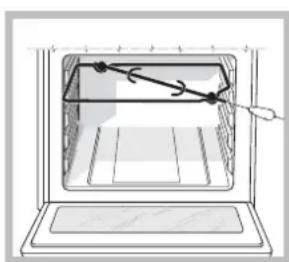
Before using the device, read the operating instructions:
a) Insert the plug of the power cord into a 1-phase socket; b) Connect the ground wire to the 4-pin connector, insert the ground wire into the ground terminal, and tighten the screw.
Body of the device

Setting the cooking time
- To set the cooking time, turn the timer knob clockwise to the desired time.
- To set the required time, turn the knob counterclockwise: compare the minutes indicated on the timer knob with the indicator on the control panel.
- When the set time has elapsed, the device emits a sound signal and turns off.
- Turning off occurs automatically when the cooking time expires.
If you need to turn off the device before the set time has elapsed, turn the timer knob to the zero position.
Table "Recommendations for cooking time"
| Реттей Тукасын Каллы | Даьыдалатын Tarам Салмak (кг) | Теменец санаганда nicipy TarTPaSbIHbH no3nucrybI | Адын за Кыздуру УзakТыБы (MinHyT) | Термocтат Тукасын Каллы | Пису УзakТыБы (MinHyT) | |
| 1 Кonsвекця | Учек Кырсылган 6уЗay hemece сыр eti Кырсылган 社ошka eti Пechенbe (kiшkeHTaH naH eHIMdepi) Балiiш Лазань Жас кoи eti Марpenь Мени Косылган Кекс Шад�алган каймakты 6Балiiш Пирor Хоч niICTi 6Балiiш | 1 1 1 -1 1 1 1 1 1 1 1 1 1 0.5 1.5 | 3 3 3 3 3 3 3 3 2 2 2 2 3 3 3 3 3 3 3 3 3 3 3 3 3 3 3 3 3 3 3 3 3 3 3 3 3 3 3 3 3 3 3 3 3 3 3 3 3 3 3 3 3 3 3 3 3 3 3 3 3 3 4 - | 15 15 15 15 15 15 15 15 15 15 15 15 15 15 15 15 15 15 15 15 15 15 15 15 15 15 15 15 15 15 15 15 15 15 - | 200 200 200 180 180 190 180 180 170 180 170 180 170 200 160 180 180 160 160 150 180 180 170 180 170 200 30-40 35-40 50-60 30-35 40-50 30-35 20-25 30-35 | |
| 2 Кондітөрін Тaramдаг рөхimi | Көтөрінгтөрттөр Балiiш Жemic көсылган 6Балiiш Бриштөр | 0.5 1 1 0.5 | 3 3 3 3 3 3 3 3 3 3 3 3 3 3 3 3 3 3 3 3 3 3 3 3 3 3 3 3 3 3 3 3 3 3 3 3 3 3 3 3 3 3 3 3 3 3 3 3 3 3 | 15 15 15 15 15 15 15 15 15 15 15 15 15 15 15 15 15 15 15 15 15 15 15 15 15 15 15 15 15 15 15 15 15 | 30-40 35-40 50-60 25-30 | |
| 3 Пewsін Жогары Жагы | Камл тaram дайындан ушin тaramы Кызэрту | -3/4 | 15 220 - | |||
| 4 Г irrь | Камбалma мен каркатиca Каллмар мен acшан кебы Тразда baydemeci Грильде писінгі көkenістэр Бүүүүүүүүүүүүүүүүүүүүүүүүүүүүүүүүүүүүүүүүүүүүүүүүүүүүүүүүүүүүүүүүүүүүүүүүүүүүүүүүүүүүүүүүүүүүүүүүүүүү | 4 4 4 4 3/4 4 4 4 4 4 4 4 4 4 4 4 4 4 4 4 4 4 4 4 4 4 4 4 4 4 4 4 4 4 4 4 4 4 4 4 4 4 4 4 4 4 4 4 4 4 4 4 4 4 4 | 5 5 5 5 5 5 5 5 5 5 5 5 5 5 5 5 5 5 5 5 5 5 5 5 5 5 5 5 5 5 5 5 5 5 5 5 5 5 5 5 5 5 5 5 5 5 5 5 5 5 5 | EHжогары EHжогары EHжогары EHжогары EHжогары EHжогары EHжогары EHжогары EHжогары EHжогары EHжогары EHжогары EHжогары EHжогары EHжогары EHжогары EHжогары EHжогarы EHжогarы EHжогarы EHжогarы EHжогarы EHжогarы EHжогarы EHжогarы EHжогarы EHжогarы EHжогarы EHжогarы EHжогarы EHжогarы EHжогarы EHжогarы EHжогarы EH Welch | 8-10 6-8 10 10-15 15-20 15-20 7-10 15-20 2-3 | |
| Гриль-бар болса Гриль ictiride niciipinten 6uzay eti Гriпь ictiride niciipinten tanbyk eti | 1.0 2.0 | - | 5 5 | EHжогары EHжогары EHжогары EHжогары EHжогары EHжогары | 70-80 70-80 |
Expert: the cooking times are approximate and can be adjusted according to personal preference. After the cooking time has elapsed, the plug of the power cord should be removed from the socket.
KZ
The electric connector is connected to the indicator lamp. The connector is connected to the network.
Cooking tips
The device is equipped with electric heating elements. They heat up after being turned on.

A. Before turning on the heating elements, read the instructions. B. Before turning off the heating elements, read the instructions. C. The heating indicator light: when the heating element is on, it will light up and stay on until the set temperature is reached.
The temperature should not exceed 60°C.
Instructions for turning on the heating elements
They are controlled by the heating indicators and can be turned off. They are similar to gas appliances: they can be controlled easily and they heat up and cool down quickly, so there is no need to wait long.
The plate should be placed in a position between 1 and 6 on the dial.
| Параметр | Калыntынемец Калдам плота |
| 0 Θширni | |
| 1 | Кекенic, балыкNICIPу |
| 2 | Картои (буней), Нокат, Бурах NICIPу, copna дайыnday |
| 3 | Улken мелшерд тafam Лени Кекенic Kocылfaн стiti copnaны дайыndayыжалfacтbyp |
| 4 | КыэрUpу ушin (optашa) |
| 5 | КыэрUpу ушin (optашадан xorapby) |
| 6 | Кызарту Кал hayra a3 уakыttа кетkiэу ушin. |
Instructions for turning off the heating elements
They are controlled by the heating indicators and can be turned off. They are similar to gas appliances: they can be controlled easily and they heat up and cool down quickly, so there is no need to wait long.
The plate should be placed in a position between 1 and 12 on the dial.
The cooking zone consists of round heating elements.
They turn red approximately 10 seconds after they are turned on.
The cooking zone ensures even distribution of temperature.
The plates heat up quickly to high temperatures, which leads to:
- Rapid temperature increase (compared to gas burners)
- Rapid cooling
- Even temperature across the entire surface.
Danger! The device must not be used in explosive atmospheres.
Safety instructions
This device may only be used with the accessories specified by the manufacturer. Use only original spare parts. The manufacturer is not liable for damage caused by improper use. If the device is damaged, do not use it. Do not use the device if it has been dropped or shows visible damage. - After each use, clean the device with a dry cloth. Do not use water or cleaning agents, as this may damage the device. Do not use sharp objects to clean the device. - If the device is used in a dusty environment or with aggressive substances, clean it more frequently. Do not use the device if it is damaged or has loose parts. Do not use the device if the power cord or plug is damaged. If the device is not working properly, contact a qualified technician. Do not attempt to repair the device yourself.
Device description
The device is supplied with the accessories described. If accessories are missing, contact your dealer before first use. Do not use the device without the accessories.
Device operation
- Before switching on, check that the mains voltage matches the voltage indicated on the rating plate (see figure).
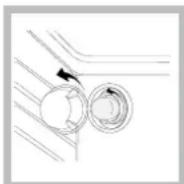
- Connect the device to a suitable power outlet: 230 V, 25 W, type E 14.
- Do not operate the device without the protective cover.
Cleaning and maintenance
Before cleaning or maintenance, disconnect the device from the power supply. Do not use abrasive or aggressive cleaning agents, brushes, or sharp objects. Do not immerse the device in water or other liquids.
- Clean the device with a soft, dry cloth. Do not use water or solvents.
- If the device is very dirty, clean it with a slightly damp cloth and then dry it. Do not use any cleaning agents. To remove stubborn dirt, use a soft brush (do not use metal brushes). Do not use the device if the power cord is damaged. If the device is not working properly, contact a qualified technician. Do not attempt to repair the device yourself. - Do not use the device if the plug or socket is damaged. - If the device is damaged, do not use it. - Always disconnect the device from the power supply before cleaning. The device must be stored in a dry place, out of reach of children. Do not expose the device to rain or moisture. Do not use the device near water. - Do not use the device if it has been dropped or shows visible damage. - Do not use the device if the power cord or plug is damaged. - Do not use the device if it is not working properly. - Do not attempt to repair the device yourself. - Do not use the device if the housing is cracked or broken.
| Шыны керамкалык плNTа тazapTKыштапы | Сатынатын черпесурпсурпсурпсурпсурпсурпсурпсурпсурпсурпсурпсурпсурпсурпсурпсурпсурпсурпсурпсурпсурпсурпсурпсурпсурпсурпcs |
| Тереze Кырfvычы Yстара ЖузiiHIN, Кырfvычтапы | Керек-жарak ДУKEндерi |
| Косалны жуздер | Кураел-жабдьк ДУKEндерi, сунермаркутер, дэPixаналap |
| COLLO luneta HOB BRITE ПлNTаны тазалay SWISSCLEANER | Boots, КоонератиВТИК ДУKEн, Унburnерmar, aiMaNTbIK ЗЕКТР КOMпанясынын DУKEндерi, сунермаркутер |
Device storage
All parts of the boiler must be protected from corrosion. It is possible to supply spare parts for the boiler upon request. Before starting the boiler, check that all connections are tight.
Caution
The following safety instructions must be observed:
Boiler model (MOD). Serial number (S/N).
It is necessary to ensure proper ventilation in the boiler room or to install an exhaust hood.

Before starting the boiler:
- Old boiler
- If the old boiler is to be replaced, remove it (see photo).
- Check that the boiler is installed correctly (the boiler must be open at 40° - see photo).
- Check the flue gas passages and clean them if necessary (see photo).
- Read the instructions carefully and follow them: "Operation and Maintenance".
- Install the boiler.
WARNING! Do not operate the boiler without water!
WARNING! If the boiler is operated without water, the warranty will be void.
Connect the boiler to the heating system and fill it with water.
- The sharp edges of the ring, the ring's surface treatment "TYK" is done.
- If only the sharp edges are removed.
- Check the cable (see photo).
- Ehni ecikti tonbifbImen kaybin, neuTI aetterieKocyfa 60anaBl.
NeWti 6ydbH KEMerImeH Ta3aJAY:
Bytataay pexmi MaJIbI TaFamap (KybpdaK, et) nicipreHHEN KeIH YcblHInaBl.
By Ta3aJay ic pacimi neuTih iuiHde 6y uhrapy apkbln neuTih ka6bipraJapbHaFbi kipdi xoIO ypciciH xeHHTeDi. By JxarDaJa, neuTH iuiH e3 6etIH36eH Ta3anaRah OHai BonaBl.
We provide the necessary tools and equipment for the work; we take out the necessary tools and equipment (tables and dishes).
After completing the above steps, we do the following:
1- Pour 300 ml of water into the dish; place it on the heating device. We prepare the dish according to the standard recipe and place it on the heating device.
2- Turn on the device
Dishwasher mode I
Heat the temperature to 100°C;
3- Leave it for 15 minutes; 4- Turn off the device; 5- After the water has cooled, take it out and pour out the water and clean the dish. 6- After the cleaning process is complete, remove the water channels inside the dish.
The device is intended for use in accordance with the manufacturer's instructions, and the device must be used only for the intended purpose as described in the relevant sections of this manual.
Warning: Read the instructions before using the device!
:
j 1
n nn nnnnnnnnnnnnnnnnnnnnnnnnnnnnnnnnnnnnnnnnnnnnnnnnnnnnnnnnnnnnnnnnnnnnnnnnnnnnnnnnnnnnnnnnnnnnnnnnnnnnnnnnnnnnnnnnn
Aai jall
j 1
Jai jie jao cdilio /plebi cdilio 5i alljip
jll
()
Lai yao jao oXei oJySall ci Jao
gac 1j jll jall jell 300 -1
jie g jie 2 gill y d gall s aill no Jy
aelll j 1j1s gannll
jrrnnaa 1
100
15 12d lac all
jai jai 4
cllll lgl 15
a.b.aa
Iac elg! 2e y gill g aia ola joa cali -6
∴ b 1 = 3/2,b 2 = - 3/2
i 1
paai i 1i iia i jll i k ic
aaii aaii aiaiaai iaiii aaii
11 1
1
j11)
()
4 4
jll 1e jccg jn jnn jn jn jn .5
jil jil jil jil jil jil jil jil jil jil jil jil jil jil jil jil jil jil jil jil jil jil jil jil jil jil jil jil jil jil jil jil jil jil jil jil jil jil jil jil jil jil jil jil jil
(3)
La 1
jlll yllll lall" 14 1
a
i 1
1
glll jaii gaii jai jai jai jai iie!
y
Aa1gJgGgGg
7
3.3a
. 8.
10
- a b c d e f g h i j k l
Sul
1 1 1 1 1 1 1 1 1 1 1 1 1 1 1 1 1 1 1 1 1 1 1 1 1 1 1 1 1 1 1 1 1 1
aalal aagaaagaaagaaagaaagaaagaaagaaagaaagaaagaaagaaagaaagaaagaaagaaagaaagaaagaaagaaagaaagaaagaaagaaagaaagaaagaaagaaagaaagaaagaaagaaagaaagaaagaaagaaagaaagaaagaaagaaagaaagaaagaaagaaagaaagaaagaaagaaagaaagaaagaaagaaa
| ملاoverview | الإستعمالالترجمةالترجمةالترجمة |
| DIY ملاoverview | الإستعمالالترجمةالترجمةالTRL |
| IWOWOWOWOWOWOWOWOWOWOWOWOWOWOWOWOWOWOWOWOWOWOWOWOWOWOWOWOWOWOWOWOWOWOWOWOWOWOWOWOWOWOWOWOWOWOWOWOWOWOWOWOWOWOWOWOWOWOWOWOWOWOWOWOWOWOWOWOWOWOWOWOWOWOWOWOWOWOWOWOWOWOWOWOWOWOWOWOWOWOWOWOWOWOWOWOWOWOWOWOWWOWOWOWOWOWOWOWOWOWOWOWOWOWOWOWOWOWOWOWOWOWOWOWOWOWOWOWOWOWOWOWOWOWOWOWOWOWOWOWOWOWOWOWOWOWOWOWOWOWOWOWOWOWOWOWOWOWOWOWOWOWOWOWOWOWOWOWOWOWOWOWOWOWOWOWOWOWOWOWOWOWOWOWOWOWOWOWOWOWOWOWOWOWOWOWOWOWOWOWowowowowowowowowowowowowowowowowowowowowowowowowowowowowowowowowowowowowowowowowowowowowowowowowowowowowowowowowowowowowowowowowowowowowowowowowowowowowowowowowowowowowowowowowowowowowowowowowowowowowawowowowowowowowowowowowowowowowowowowowowowowowowowowowowowowowowowowowowowowowowowowowowowowowowowowowowowowowowowowowowowowowowowowowowowowowowowowowowowowowowowowowowowowowowowowowowowowowowowowowwwowowowowowowowowowowowowowowowowowowowowowowowowowowowowowowowowowowowowowowowowowowowowowowowowowowowowowowowowowowowowowowowowowowowowowowowowowowowowowowowowowowowowowowowowowowowowowowowowowowowwowowowowowowowowowowowowowowowowowowowowowowowowowowowowowowowowowowowowowowowowowowowowowowowowowowowowowowowowowowowowowowowowowowowowowowowowowowowowowowowowowowowowowowowowowowowowowowowowowowowewowowowowowowowowowowowowowowowowowowowowowowowowowowowowowowowowowowowowowowowowowowowowowowowowowowowowowowowowowowowowowowowowowowowowowowowowowowowowowowowowowowowowowowowowowowowowowowowowowowowpowowpowpowpowpowpowpowpowpowpowpowpowpowpowpowpowpowpowpowpowpowpowpowpowpowpowpowpowpowpowpowpowpowpowpowpowpowpowpowpowpowpowpowpowpowpowpowpowpowpowpowpowpowpowpowpowpowpowpowpowpowpowpowpowpowpowpowpowpowpowpowpowpowpowpowpowpowpowpowpowpowpowpowpowpowpowpowpowpowpowpowpowpowpowpowpowpowpowpowpowpow PowPowPowPowPowPowPowPowPowPowPowPowPowPowPowPowPowPowPowPowPowPowPowPowPowPowPowPowPowPowPowPowPowPowPowPowPowPowPowPowPowPowPowPowPowPowPowPowPowPowPowPowPowPowPowPowPowPowPowPowPowPowPowPowPowPowPowPowPowPowPowPowPowPowPowPowPowPowPowPowPowPowPowPowPowPowPowPowPowPowPowPowPowPowPowPowPowPowPowPowPowpowpowpowpowpowpowpowpowpowpowpowpowpowpowpowpowpowpowpowpowpowpowpowpowpowpowpowpowpowpowpowpowpowpowpowpowpowpowpowpowpowpowpowpowpowpowpowpowpowpowpowpowpowpowpowpowpowpowpowpowpowpowpowpowpowpowpowpowpowpowpowpowpowpowpowpowpowpowpowpowpowpowpowpowpowpowpowpowpowpowpowpowpowpowpowpowpowpowpow powder powder powder powder powder powder powder powder powder powder powder powder powder powder powder powder powder powder powder powder powder powder powder powder powder powder powder powder powder powder powder powder powder powder powder powder powder powder powder powder powder powder powder powder powder powder powder powder powder powder powder powder powder powder powder powder powder powder powder powder powder powder powder powder powder powder powder powder powder powder powder powder powder powder powder powder powder powder powder powder powder powder powder powder powder powder powder powder powder powder powder powder powder powder powder powder powder powder powder powder pow pow pow pow pow pow pow pow pow pow pow pow pow pow pow pow pow pow pow pow pow pow pow pow pow pow pow pow pow pow pow pow pow pow pow pow pow pow pow pow pow pow pow pow pow pow pow pow pow pow pow pow pow pow pow pow pow pow pow pow pow pow pow pow pow pow pow pow pow pow pow pow pow pow pow pow pow pow pow pow pow pow pow pow pow pow pow pow pow pow pow pow pow pow pow pow pow pow pow pow powder powder powder powder powder powder powder powder powder powder powder powder powder powder powder powder powder powder powder powder powder powder powder powder powder powder powder powder powder powder powder powder powder powder powder powder powder powder powder powder powder powder powder powder powder powder powder powder powder powder powder powder powder powder powder powder powder powder powder powder powder powder powder powder powder powder powder powder powder powder powder powder powder powder powder powder powder powder powder powder powder powder powder powder powder powder powder powder powder powder powder powder powder powder powder powder powder powder powder Powder Powder Powder Powder Powder Powder Powder Powder Powder Powder Powder Powder Powder Powder Powder Powder Powder Powder Powder Powder Powder Powder Powder Powder Powder Powder Powder Powder Powder Powder Powder Powder Powder Powder Powder Powder Powder Powder Powder Powder Powder Powder Powder Powder Powder Powder Powder Powder Powder Powder Powder Powder Powder Powder Powder Powder Powder Powder Powder Powder Powder Powder Powder Powder Powder Powder Powder Powder Powder Powder Powder Powder Powder Powder Powder Powder Powder Powder Powder Powder Powder Powder Powder Powder Powder Powder Powder Powder Powder Powder Powder Powder Powder Powder Powder Powder Powder Powder Powder Powder powder powder powder powder powder powder powder powder powder powder powder powder powder powder powder powder powder powder powder powder powder powder powder powder powder powder powder powder powder powder powder powder powder powder powder powder powder powder powder powder powder powder powder powder powder powder powder powder powder powder powder powder powder powder powder powder powder powder powder powder powder powder powder powder powder powder powder powder powder powder powder powder powder powder powder powder powder powder powder powder powder powder powder powder powder powder powder powder powder powder powder powder powder powder powder powder powder powder powderpowpowpowpowpowpowpowpowpowpowpowpowpowpowpowpowpowpowpowpowpowpowpowpowpowpowpowpowpowpowpowpowpowpowpowpowpowpowpowpowpowpowpowpowpowpowpowpowpowpowpowpowpowpowpowpowpowpowpowpowpowpowpowpowpowpowpowpowpowpowpowpowpowpowpowpowpowpowpowpowpowpowpowpowpowpowpowpowpowpowpowpowpowpowpowpowpowpowpowgowgowgowgowgowgowgowgowgowgowgowgowgowgowgowgowgowgowgowgowgowgowgowgowgowgowgowgowgowgowgowgowgowgowgowgowgowgowgowgowgowgowgowgowgowgowgowgowgowgowgowgowgowgowgowgowgowgowgowgowgowgowgowgowgowgowgowgowgowgowgowgowgowgowgowgowgowgowgowgowgowgowgowgowgowgowgowgowgowgowgowgowgowgowgowgowgowgowgowgowwoman woman woman woman woman woman woman woman woman woman woman woman woman woman woman woman woman woman woman woman woman woman woman woman woman woman woman woman woman woman woman woman woman woman woman woman woman woman woman woman woman woman woman woman woman woman woman woman woman woman woman woman woman woman woman woman woman woman woman woman woman woman woman woman woman woman woman woman woman woman woman woman woman woman woman woman woman woman woman woman woman woman woman woman woman woman woman woman woman woman woman woman woman woman woman woman woman woman woman woman womanWoman woman woman woman woman woman woman woman woman woman woman woman woman woman woman woman woman woman woman woman woman woman woman woman woman woman woman woman woman woman woman woman woman woman woman woman woman woman woman woman woman woman woman woman woman woman woman woman woman woman woman woman woman woman woman woman woman woman woman woman woman woman woman woman woman woman woman woman woman woman woman woman woman woman woman woman woman woman woman woman woman woman woman woman woman woman woman woman woman woman woman woman woman woman woman woman woman woman woman woman women women women women women women women women women women women women women women women women women women women women women women women women women women women women women women women women women women women women women women women women women women women women women women women women women women women women women women women women women women women women women women women women women women women women women women women women women women women women women women women women women women women women women women women women women women women women women women women women women women women women woman woman woman woman woman woman woman woman woman woman woman woman woman woman woman woman woman woman woman woman woman woman woman woman woman woman woman woman woman woman woman woman woman woman woman woman woman woman woman woman woman woman woman woman woman woman woman woman woman woman woman woman woman woman woman woman woman woman woman woman woman woman woman woman woman woman woman woman woman woman woman woman woman woman woman woman woman woman woman woman woman woman woman woman woman woman woman woman woman woman woman woman woman woman woman woman woman woman woman wom wom wom wom wom wom wom wom wom wom wom wom wom wom wom wom wom wom wom wom wom wom wom wom wom wom wom wom wom wom wom wom wom wom wom wom wom wom wom wom wom wom wom wom wom wom wom wom wom wom wom wom wom wom wom wom wom wom wom wom wom wom wom wom wom wom wom wom wom wom wom wom wom wom wom wom wom wom wom wom wom wom wom wom wom wom wom wom wom wom wom wom wom wom wom wom wom wom wom womwoman wom wom wom wom wom wom wom wom wom wom wom wom wom wom wom wom wom wom wom wom wom wom wom wom wom wom wom wom wom wom wom wom wom wom wom wom wom wom wom wom wom wom wom wom wom wom wom wom wom wom wom wom wom wom wom wom wom wom wom wom wom wom wom wom wom wom wom wom wom wom wom wom wom wom wom wom wom wom wom wom wom wom wom wom wom wom wom wom wom wom wom wom wom wom wom wom wom wom womWoman wom wom wom wom wom wom wom wom wom wom wom wom wom wom wom wom wom wom wom wom wom wom wom wom wom wom wom wom wom wom wom wom wom wom wom wom wom wom wom wom wom wom wom wom wom wom wom wom wom wom wom wom wom wom wom wom wom wom wom wom wom wom wom wom wom wom wom wom wom wom wom wom wom wom wom wom wom wom wom wom wom wom wom wom wom wom wom wom wom wom wom wom wom wom wom wom wom wom womwormwormwormwormwormwormwormwormwormwormwormwormwormwormwormwormwormwormwormwormwormwormwormwormwormwormwormwormwormwormwormwormwormwormwormwormwormwormwormwormwormwormwormwormwormwormwormwormwormwormwormwormwormwormwormwormwormwormwormwormwormwormwormwormwormwormwormwormwormwormwormwormwormwormwormwormwormwormwormwormwormwormwormwormwormwormwormwormwormwormwormwormwormwormwormwormwormwormwormworm Worm Worm Worm Worm Worm Worm Worm Worm Worm Worm Worm Worm Worm Worm Worm Worm Worm Worm Worm Worm Worm Worm Worm Worm Worm Worm Worm Worm Worm Worm Worm Worm Worm Worm Worm Worm Worm Worm Worm Worm Worm Worm Worm Worm Worm Worm Worm Worm Worm Worm Worm Worm Worm Worm Worm Worm Worm Worm Worm Worm Worm Worm Worm Worm Worm Worm Worm Worm Worm Worm Worm Worm Worm Worm Worm Worm Worm Worm Worm Worm Worm Worm Worm Worm Worm Worm Worm Worm Worm Worm Worm Worm Worm Worm Worm Worm Worm Worm Worm Wormwormwormwormwormwormwormwormwormwormwormwormwormwormwormwormwormwormwormwormwormwormwormwormwormwormwormwormwormwormwormwormwormwormwormwormwormwormwormwormwormwormwormwormwormwormwormwormwormwormwormwormwormwormwormwormwormwormwormwormwormwormwormwormwormwormwormwormwormwormwormwormwormwormwormwormwormwormwormwormwormwormwormwormwormwormwormwormwormwormwormwormwormwormwormwormwormwormwormworm wormwormwormwormwormwormwormwormwormwormwormwormwormwormwormwormwormwormwormwormwormwormwormwormwormwormwormwormwormwormwormwormwormwormwormwormwormwormwormwormwormwormwormwormwormwormwormwormwormwormwormwormwormwormwormwormwormwormwormwormwormwormwormwormwormwormwormwormwormwormwormwormwormwormwormwormwormwormwormwormwormwormwormwormwormwormwormwormwormwormwormwormwormwormwormwormwormwormwormworm wormswormwormwormwormwormwormwormwormwormwormwormwormwormwormwormwormwormwormwormwormwormwormwormwormwormwormwormwormwormwormwormwormwormwormwormwormwormwormwormwormwormwormwormwormwormwormwormwormwormwormwormwormwormwormwormwormwormwormwormwormwormwormwormwormwormwormwormwormwormwormwormwormwormwormwormwormwormwormwormwormwormwormwormwormwormwormwormwormwormwormwormwormwormwormwormwormwormwormwormillumillumillumillumillumillumillumillumillumillumillumillumillumillumillumillumillumillumillumillumillumillumillumillumillumillumillumillumillumillumillumillumillumillumillumillumillumillumillumillumillumillumillumillumillumillumillumillumillumillumillumillumillumillumillumillumillumillumillumillumillumillumillumillumillumillumillumillumillumillumillumillumillumillumillumillumillumillumillumillumillumillumillumillumillumillumillumillumillumillumillumillumillumillumillumillumillumillumillumillumllumillumillumillumillumillumillumillumillumillumillumillumillumillumillumillumillumillumillumillumillumillumillumillumillumillumillumillumillumillumillumillumillumillumillumillumillumillumillumillumillumillumillumillumillumillumillumillumillumillumillumillumillumillumillumillumillumillumillumillumillumillumillumillumillumillumillumillumillumillumillumillumillumillumillumillumillumillumillumillumillumillumillumillumillumillumillumillumillumillumillumillumillumillumillumillumillumillumillumillum illumillumillumillumillumillumillumillumillumillumillumillumillumillumillumillumillumillumillumillumillumillumillumillumillumillumillumillumillumillumillumillumillumillumillumillumillumillumillumillumillumillumillumillumillumillumillumillumillumillumillumillumillumillumillumillumillumillumillumillumillumillumillumillumillumillumillumillumillumillumillumillumillumillumillumillumillumillumillumillumillumillumillumillumillumillumillumillumillumillumillumillumillumillumillumillumillumillumillumillumulfulfulfulfulfulfulfulfulfulfulfulfulfulfulfulfulfulfulfulfulfulfulfulfulfulfulfulfulfulfulfulfulfulfulfulfulfulfulfulfulfulfulfulfulfulfulfulfulfulfulfulfulfulfulfulfulfulfulfulfulfulfulfulfulfulfulfulfulfulfulfulfulfulfulfulfulfulfulfulfulfulfulfulfulfulfulfulfulfulfulfulfulfulfulfulfulfulfulfulfurdulduldul dul dul dul dul dul dul dul dul dul dul dul dul dul dul dul dul dul dul dul dul dul dul dul dul dul dul dul dul dul dul dul dul dul dul dul dul dul dul dul dul dul dul dul dul dul dul dul dul dul dul dlul dul dul dul dul dul dul dul dul dul dul dul dul dul dul dul dul dul dul dul dul dul dul dul dul dul dul dul dul dul dul dul dul dul dul dul dul dul dul dul dul dul dul dul dul dul dul dul dul dul da da da da da da da da da da da da da da da da da da da da da da da da da da da da da da da da da da da da da da da da da da da da da da da da da da da da da da da da da da da da da da da da da da da da da da da da da da da da da da da da da da da da da da da da da da da da da da da da da da da da Da da da da da da da da da da da da da da da da da da da da da da da da da da da da da da da da da da da da da da da da da da da da da da da da da da da da da da da da da da da da da da da da da da da da da da da da da da da da da da da da da da da da da da da da da da da da da da da da da da da da DA DA DA DA DA DA DA DA DA DA DA DA DA DA DA DA DA DA DA DA DA DA DA DA DA DA DA DA DA DA DA DA DA DA DA DA DA DA DA DA DA DA DA DA DA DA DA DA DA DA DA DA DA DA DA DA DA DA DA DA DA DA DA DA DA DA DA DA DA DA DA DA DA DA DA DA DA DA DA DA DA DA DA DA DA DA DA DA DA DA DA DA DA DA DA DA DA DA DA DA GA GA GA GA GA GA GA GA GA GA GA GA GA GA GA GA GA GA GA GA GA GA GA GA GA GA GA GA GA GA GA GA GA GA GA GA GA GA GA GA GA GA GA GA GA GA GA GA GA GA GA GA GA GA GA GA GA GA GA GA GA GA GA GA GA GA GA GA GA GA GA GA GA GA GA GA GA GA GA GA GA GA GA GA GA GA GA GA GA GA GA GA GA GA GA GA GA GA GA GAGA GA GA GA GA GA GA GA GA GA GA GA GA GA GA GA GA GA GA GA GA GA GA GA GA GA GA GA GA GA GA GA GA GA GA GA GA GA GA GA GA GA GA GA GA GA GA GA GA GA GA GA GA GA GA GA GA GA GA GA GA GA GA GA GA GA GA GA GA GA GA GA GA GA GA GA GA GA GA GA GA GA GA GA GA GA GA GA GA GA GA GA GA GA GA GA GA GA GA GA BA BA BA BA BA BA BA BA BA BA BA BA BA BA BA BA BA BA BA BA BA BA BA BA BA BA BA BA BA BA BA BA BA BA BA BA BA BA BA BA BA BA BA BA BA BA BA BA BA BA BA BA BA BA BA BA BA BA BA BA BA BA BA BA BA BA BA BA BA BA BA BA BA BA BA BA BA BA BA BA BA BA BA BA BA BA BA BA BA BA BA BA BA BA BA BA BA BA BA BA NA NA NA NA NA NA NA NA NA NA NA NA NA NA NA NA NA NA NA NA NA NA NA NA NA NA NA NA NA NA NA NA NA NA NA NA NA NA NA NA NA NA NA NA NA NA NA NA NA NA NA NA NA NA NA NA NA NA NA NA NA NA NA NA NA NA NA NA NA NA NA NA NA NA NA NA NA NA NA NA NA NA NA NA NA NA NA NA NA NA NA NA NA NA NA NA NA NA NA NANA NA NA NA NA NA NA NA NA NA NA NA NA NA NA NA NA NA NA NA NA NA NA NA NA NA NA NA NA NA NA NA NA NA NA NA NA NA NA NA NA NA NA NA NA NA NA NA NA NA NA NA NA NA NA NA NA NA NA NA NA NA NA NA NA NA NA NA NA NA NA NA NA NA NA NA NA NA NA NA NA NA NA NA NA NA NA NA NA NA NA NA NA NA NA NA NA NA NA NA Na Na Na Na Na Na Na Na Na Na Na Na Na Na Na Na Na Na Na Na Na Na Na Na Na Na Na Na Na Na Na Na Na Na Na Na Na Na Na Na Na Na Na Na Na Na Na Na Na Na Na Na Na Na Na Na Na Na Na Na Na Na Na Na Na Na Na Na Na Na Na Na Na Na Na Na Na Na Na Na Na Na Na Na Na Na Na Na Na Na Na Na Na Na Na Na Na Na Na Na NA Na Na Na Na Na Na Na Na Na Na Na Na Na Na Na Na Na Na Na Na Na Na Na Na Na Na Na Na Na Na Na Na Na Na Na Na Na Na Na Na Na Na Na Na Na Na Na Na Na Na Na Na Na Na Na Na Na Na Na Na Na Na Na Na Na Na Na Na Na Na Na Na Na Na Na Na Na Na Na Na Na Na Na Na Na Na Na Na Na Na Na Na Na Na Na Na Na Na NA NA NA NA NA NA NA NA NA NA NA NA NA NA NA NA NA NA NA NA NA NA NA NA NA NA NA NA NA NA NA NA NA NA NA NA NA NA NA NA NA NA NA NA NA NA NA NA NA NA NA NA NA NA NA NA NA NA NA NA NA NA NA NA NA NA NA NA NA NA NA NA NA NA NA NA NA NA NA NA NA NA NA NA NA NA NA NA NA NA NA NA NA NA NA NA NA NA NA NNA NNA NNA NNA NNA NNA NNA NNA NNA NNA NNA NNA NNA NNA NNA NNA NNA NNA NNA NNA NNA NNA NNA NNA NNA NNA NNA NNA NNA NNA NNA NNA NNA NNA NNA NNA NNA NNA NNA NNA NNA NNA NNA NNA NNA NNA NNA NNA NNA NNA NBA NBA NBA NBA NBA NBA NBA NBA NBA NBA NBA NBA NBA NBA NBA NBA NBA NBA NBA NBA NBA NBA NBA NBA NBA NBA NBA NBA NBA NBA NBA NBA NBA NBA NBA NBA NBA NBA NBA NBA NBA NBA NBA NBA NBA NBA NBA NBA NBA NBA NBBN BNB NBBN BNB NBBN BNB NBBN BNB NBBN BNB NBBN BNB NBBN BNB NBBN BNB NBBN BNB NBBN BNB NBBN BNB NBBN BNB NBBN BNB NBBN BNB NBBN BNB NBBN BNB NBBN BNB NBBN BNB NBBN BNB NBBN BNB NBBN BBBN BNB NBBN BNB NBBN BNB NBBN BNB NBBN BNB NBBN BNB NBBN BNB NBBN BNB NBBN BNB NBBN BNB NBBN BNB NBBN BNB NBBN BNB NBBN BNB NBBN BNB NBBN BNB NBBN BNB NBBN BNB NBBN BNB NBBN BNB BNB NBBN BNB NBBN BNB NBBN BNB NBBN BNB NBBN BNB NBBN BNB NBBN BNB NBBN BNB NBBN BNB NBBN BNB NBBN BNB NBBN BNB NBBN BNB NBBN BNB NBBN BNB NBBN BNB NBBN BNB NBBN BNB NBBN BNB NBBB NBBN BNB NBBN BNB NBBN BNB NBBN BNB NBBN BNB NBBN BNB NBBN BNB NBBN BNB NBBN BNB NBBN BNB NBBN BNB NBBN BNB NBBN BNB NBBN BNB NBBN BNB NBBN BNB NBBN BNB NBBN BNB NBBN BNB NBBN B NB NB NB NB NB NB NB NB NB NB NB NB NB NB NB NB NB NB NB NB NB NB NB NB NB NB NB NB NB NB NB NB NB NB NB NB NB NB NB NB NB NB NB NB NB NB NB NB NB NB NB NB NB NB NB NB NB NB NB NB NB NB NB NB NB NB NB NB NB NB NB NB NB NB NB NB NB NB NB NB NB NB NB NB NB NB NB NB NB NB NB NB NB NB NB NB NB NB NB NBNB NB NB NB NB NB NB NB NB NB NB NB NB NB NB NB NB NB NB NB NB NB NB NB NB NB NB NB NB NB NB NB NB NB NB NB NB NB NB NB NB NB NB NB NB NB NB NB NB NB NB NB NB NB NB NB NB NB NB NB NB NB NB NB NB NB NB NB NB NB NB NB NB NB NB NB NB NB NB NB NB NB NB NB NB NB NB NB NB NB NB NB NB NB NB NB NB NB NB NB BB BB BB BB BB BB BB BB BB BB BB BB BB BB BB BB BB BB BB BB BB BB BB BB BB BB BB BB BB BB BB BB BB BB BB BB BB BB BB BB BB BB BB BB BB BB BB BB BB BB BB BB BB BB BB BB BB BB BB BB BB BB BB BB BB BB BB BB BB BB BB BB BB BB BB BB BB BB BB BB BB BB BB BB BB BB BB BB BB BB BB BB BB BB BB BB BB BB BB BBBB BB BB BB BB BB BB BB BB BB BB BB BB BB BB BB BB BB BB BB BB BB BB BB BB BB BB BB BB BB BB BB BB BB BB BB BB BB BB BB BB BB BB BB BB BB BB BB BB BB BB BB BB BB BB BB BB BB BB BB BB BB BB BB BB BB BB BB BB BB BB BB BB BB BB BB BB BB BB BB BB BB BB BB BB BB BB BB BB BB BB BB BB BB BB BB BB BB BB BB AB AB AB AB AB AB AB AB AB AB AB AB AB AB AB AB AB AB AB AB AB AB AB AB AB AB AB AB AB AB AB AB AB AB AB AB AB AB AB AB AB AB AB AB AB AB AB AB AB AB AB AB AB AB AB AB AB AB AB AB AB AB AB AB AB AB AB AB AB AB AB AB AB AB AB AB AB AB AB AB AB AB AB AB AB AB AB AB AB AB AB AB AB AB AB AB AB AB AB ABAB AB AB AB AB AB AB AB AB AB AB AB AB AB AB AB AB AB AB AB AB AB AB AB AB AB AB AB AB AB AB AB AB AB AB AB AB AB AB AB AB AB AB AB AB AB AB AB AB AB AB AB AB AB AB AB AB AB AB AB AB AB AB AB AB AB AB AB AB AB AB AB AB AB AB AB AB AB AB AB AB AB AB AB AB AB AB AB AB AB AB AB AB AB AB AB AB AB AB AB. |
oo
ailllll lglal 1jiey is
.(Mod.) j = 11 j 1
(S/N)
g 1000000000000000000000000000000000000000000000000000
jie jie jie jie jie jie jie
Aie Jae jai! 1a aal bai jia jia jia jia jia
jLQ1
I 1
j4 = 276
15 15
ai 0,1 = 1/2
i
Therefore m = 3/11
C. 1/2 all 3 small
Therefore m = 3/11
(1)
151 2 4
y 1
1
y j 1
y 1
i 1
y
H05RR-F 3x4 CEI-UNEL 35363
H05VV-F 3x4 CEI-UNEL 35746
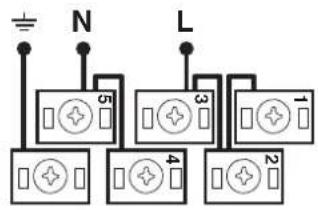
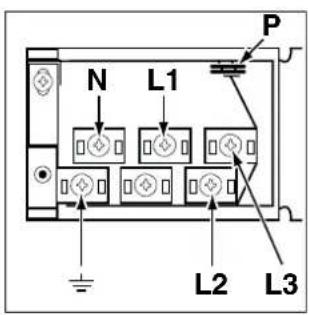
- OPERATING INSTRUCTIONS COOKER AND OVEN
- FR
- OPERATING MANUAL FOR THE REFRIGERATING MACHINE WITH A SCREW COMPRESSOR
- KZ
- INSTRUCTIONS FOR USE
- GB
- ATTENTION
- WARNING
- DESCRIPTION
- OVERALL VIEW
- PT
- DESCRIÇÃO
- VISTA DE CONJUNTO
- KNOBS FOR THE HOB
- OVEN KNOBS
- OVERVIEW
- DESCRIPTION OF THE APPLIANCE
- CONTROL PANEL
- POSITIONING AND LEVELLING
- LEVELLING
- ELECTRICAL CONNECTION
- USING THE OVEN
- COOKING MODES
- THE TURNSPIT
- PRACTICAL COOKING ADVICE
- PREHEATING
- COOKING FISH AND MEAT
- BAKING CAKES
- USING THE GRILL
- COOKING CONTROL TIMER KNOB
- USING THE GLASS CERAMIC HOB
- COOKING ZONES
- PRECAUTIONS AND TIPS
- GENERAL SAFETY
- DISPOSAL
- RESPECTING AND CONSERVING THE ENVIRONMENT
- SWITCHING THE APPLIANCE OFF
- CLEANING THE OVEN
- INSPECTING THE OVEN SEALS
- REPLACING THE OVEN LIGHT BULB
- CLEANING THE GLASS CERAMIC HOB
- ASSISTANCE
- REMOVING AND FITTING THE OVEN DOOR
- STEAM-ASSISTED OVEN CLEANING
- INSTALLATION
- THERMOSTAT INDICATOR LIGHT
- OVEN LIGHT
- COOKING END TIME KNOB
- STATIC OVEN
- LOWER HEATING ELEMENT
- UPPER HEATING ELEMENT
- W
- PRACTICAL TIPS
- GRILL
- SPIT
- USING THE GLASS-CERAMIC WORK SURFACE
- RU
- SWITCHING THE HEATING ZONES ON AND OFF
- USING THE HEATING ZONES
- HEATING ZONES
- WITH RADIANT HEATING ELEMENTS
- ENERGY SAVING AND ENVIRONMENTAL PROTECTION
- DISCONNECTING THE EQUIPMENT
- CHECK THE SEALS
- REPLACING THE LIGHT BULB
- CLEANING THE GLASS-CERAMIC SURFACE
- CLEANING WITH THE STEAM FUNCTION
- CONNECTING THE POWER CABLE
- DO NOT BEND THE ELECTRICAL CABLE SHARPLY
- OPERATING MODES
- CONVECTION MODE
- NEW LAMP
- FOOD HEATING TABLE
- NIIULA
- SETTING THE COOKING TIME
- COOKING TIPS
- INSTRUCTIONS FOR TURNING ON THE HEATING ELEMENTS
- INSTRUCTIONS FOR TURNING OFF THE HEATING ELEMENTS
- SAFETY INSTRUCTIONS
- DEVICE DESCRIPTION
- DEVICE OPERATION
- CLEANING AND MAINTENANCE
- DEVICE STORAGE
- CAUTION
- BEFORE STARTING THE BOILER
- CONNECT THE BOILER TO THE HEATING SYSTEM AND FILL IT WITH WATER
- NEWTI 6YDBH KEMERIMEH TA3AJAY
- SUL
- OO
- JIE JIE JIE JIE JIE JIE JIE
- JLQ
- AI
- H05RR-F 3X4 CEI-UNEL
- H05VV-F 3X4 CEI-UNEL
Brand : INDESIT
Model : I6VSH2(W)EX
Category : Cooker