USER MANUAL KDW 60121 A2 BI Koenic
∴ m = 3/11
M
1/2 =
1 + u/1 - u/1 = ( 1 + u) u1 < u/1 = u
③ ADE 为等腰 Rt 体现
∴ m = 3/11
图
图
B
1 2 = 4 - 2rr
B. V
1 + u/7 = 70%
图
1/2 =
Inne-CuH
Company
“Www.cninfo.com.cn)
A
1000000000000000000000000000000
C∈
KOENIC
Built-in Dishwasher
KTA5012A2D
图()
1
F
F:50
1

1
()
图1-6
∴ m = 3/11 ;
(1)A、B、C四组
h:km:c:g:
deranans 37-32

1


Sicherheitshinweise
- This product can be used by children aged from 8 years and above and persons with reduced physical, sensory or mental capabilities or lack of experience and knowledge if they have been given supervision or instruction concerning use of the appliance in a safe way and understand the hazards involved.
- Children shall not play with the product.
- Cleaning and user maintenance shall not be made by children without supervision.
- This product is designed for washing maximum 14 place settings.
- The door shall not be left in the open position since this could present a tripping hazard.
- Follow the instructions on how to load the dishwasher. Warning! Knives and other utensils with sharp points must be loaded in the basket with their points down or placed in a horizontal position.
Safety instructions
- The product is designed for the preparation of normal household quantities in the home, or in household-like, non-commercial environments. Household-like environments include staff kitchens in shops, offices, agricultural and other small businesses or for use by guests at bed-and-breakfast establishments, small hotels and similar residential facilities.
- The dishwasher has ventilation openings in the base. These openings must not be obstructed by a carpet.
- If the supply cord is damaged, it must be replaced by the manufacturer, its service agent or similarly qualified persons in order to avoid a hazard.
- Follow the instructions in the chapter Cleaning and Care.
English
Safety instructions
Congratulations!
Thanks for your purchase of a KOENIC product. Please read this manual carefully and keep it for future reference.
Intended use
This product is only intended for cleaning dishes and cutlery which are dishwasher proof or suitable for dishwashers. Any other use may result in damages to product or injuries. This product is designed for household use only and not intended for commercial use. The Imtron GmbH assumes no liability for damage to the product, for property damage or for personal injury due to careless or improper usage of the product, or usage of the product which does not meet the manufacturer's specified purpose.
Before first time use
Carefully remove the product and accessories from the original packaging. It is recommended to keep the original packaging for storage. If you wish to dispose of the original packaging, please observe applicable legal provisions. Should you have any questions regarding proper disposal, contact your local waste management center.
Inspect the delivery contents for completeness and damages. Should the delivery contents be incomplete or damaged, contact your sales outlet immediately.
After unpacking, please refer to chapter
Cleaning and care.

Do not dispose of this product as unsorted municipal waste. Return it to a designated collection point for the recycling of WEEE.
By doing so, you will help to conserve resources and protect the environment. Contact your retailer or local authorities for more information.
Content
1 x Dishwasher
1 x User manual
1 x warranty card
Part list
A Control panel
A1 On/Off button
A2 Rinse aid indicator
A3 Softener (salt) indicator
A4 Water connection indicator
A5 Digital display
A6 Program display
A7 Program selection button P
A8Rinse zone selection button
A9 Start/Pause-button
A10 Child lock indicator
A11 Rinse zone indicators
A12 Timer buttons
B Handle
Door
Cutlery tray
Upper dish basket
Lower dish basket
G Fill compartment
Detergent tab/powder compartment
G1 Cover
G2 Compartment for main washing
G3 Lock
G4 Compartment for pre-washing
Rinse aid compartment
G5 Fill indicator
G6 Rinse aid container
H Inside
H1 Salt container
H2 Water outlet with filter set
H3 Upper and lower spray arms
Backside
Power cord with plug
Waste water hose (pre-assembled)
K Hose for water inlet (pre-assembled)
Accessories
Funnel (not shown)
English
Installation
Fig.1 The dishwasher must be installed in sufficient proximity of water, sewage and electrical connection.

Caution
After unpacking open the door and remove all transport protections from the baskets and spray arms. Ensure that the spray arms can rotate freely.
Note:
Please check the included mounting material, brackets, screws and Velcro strip for attaching the decorative panel, etc.
1 Observe the installation dimensions.
- A location near the sink is recommended to allow for an easier connection of the dishwasher to water and sewage connections
- At the back of one or both lateral cupboards, recesses of size 80 × 100 mm must be fitted for water, sewage and electrical connection (A).
If the dishwasher is installed in a corner, a minimum clearance of 50mm between the opened door and surrounding cabinets must be respected.
Note the dimensions, holes and cutouts of the decorative plate.
Pull apart the supplied Velcro strips and remove the protective strips. Stick the 4 Velcro strips in the recesses of the door and the decorative plate. Align the decor panel and attach it to the door of the dishwasher.
5 Remove the 4 lower screws.
Screw the supplied 4 long screws through the door and fasten the decorative plate.
The springs of the dishwasher door were set correctly at the factory.
After installation of the decorative plate, the spring force of the door may have to be adjusted.
- Twist the adjusting screws on both sides to increase/decrease the spring force. Please refer to the illustration next to the screws.
The spring force is adjusted correctly when the fully opened door remains in a horizontal position and can be moved up all the way by slightly pulling on it.
8 Fasten the condensation strip below the worktop. Make sure that it closes with the front edge of the countertop.
The dishwasher must be connected to drainage.
- The hose is already connected to the waste water outlet. Cut the straps and unwind the hose.
- Connect the end to a drainpipe (Option A or B). Consider the max. height of the outlet of drainage hose.
Note:
A suitable hose holder is available as optional accessories.
10 Connect the water inlet to tap water supply (3 / 4 ) using the pre-assembled hose and make sure it is fastened tightly.
Note:
If the water pipes are new or have not been used for an extended period of time, let the water run to make sure that the water is clear and free of impurities. If this precaution is not taken, there is a risk that the water inlet can get blocked and damage the appliance.
1 Connect the power plug to the mains.
The dishwasher must be placed in the installation position so that it is absolutely level.
- The rear stands can be adjusted in height by turning the middle Phillips screw (Pos. A). Please refer to the figure next to the screw (UP: rear is raised, DOWN: rear is lowered).
The front feet can be adjusted by turning by hand.
- Check the horizontal stand with a spirit level on horizontal or vertical surfaces in the interior of the dishwasher and the door.
Place the dishwasher into final position.
14 The dishwasher must be fastened with screws in the mounting position.
I. Wood Countertop: Insert the mounting bracket on top of the cut-outs. Now screw the mounting bracket with the underside of the countertop.
II. Natural stone countertop: Remove the plastic cap of the side walls of the dishwasher (door open). Fasten the dishwasher laterally with the screws through the openings of the cabinets left and right from the dishwasher.
Preparation
Putting salt into the salt container
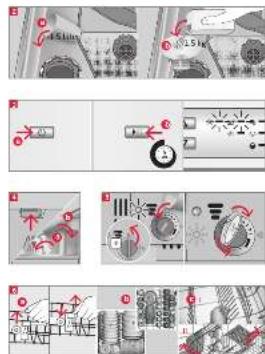
Fig. 2 Depending on your tap water hardness (hardness degree) use additional salt (water softener). Always consider instruction provided with the salt.
- Remove the basket and then unscrew and remove the cap from the salt container.
- Before first usage, pour 1.5 Lit. of water in the salt container of your machine.
- Place the end of the funnel (supplied) into the hole and pour in about 1.5kg of salt. It is normal for a small amount of water to come out of the salt container.
After filling the container, screw the cap tightly back clockwise.
- Immediately after filling the salt into the salt container, a washing program should be started (rapid program suggested). Otherwise the filter system, pump or other important parts of the machine may be damaged by salty water which will void the warranty.
Note:
Depending on how fully the salt dissolves, the salt warning light may still be on even though the salt container is filled.
English

Warning
- Only use salt specifically designed for use in dishwashers! All other types of salt not specifically designed for use in a dishwasher, especially table salt, will damage the dishwasher. In case of damages caused by the use of unsuitable salt the manufacturer does not give any warranty nor is liable for any caused damages.
If salt has been spilled a soak or a rapid program should be run to remove the excess salt.
- Only fill with salt right before starting one of the complete washing programs. This will prevent any grains of salt or salty water, which may have been spilled, remaining on the bottom of the machine for any period of time, which may cause corrosion.
- The salt container must only be refilled when the salt warning light in the control panel comes on.
Adjusting salt consumption
Fig.3 Activate the setup mode: Close the door within 60 seconds after power ON, press Start/Pause button and hold for 5 seconds, the machine will enter setting mode which is indicated by the alternatingly blinking indicator lights of 喜 and
Adjust level of salt consumption:
Press the Start/Pause button to select the proper setting according to your local environment. Follow table below to find correct setting.
| Water Hardness level | Setting |
| °dH1) | mmol/(l2) |
| 0-5 0-0.94 H1 | |
| 6-11 1.0-2.0 H2 | |
| 12-17 2.1-3.0 H3* | |
| 18-22 3.1-4.0 H4 | |
| 23-34 4.1-6.0 H5 | |
| 35-55 6.1-9.8 H6 | |
The product will exit the setup mode automatically 5 seconds after the last setting/operation of the switch.
Note:
German measurement for the degree of water hardness
2 Millimol, international unit for water hardness
Factory setting Contact your local water board for information on the hardness of your water supply.
Adding detergent
Fig. 4 The dispenser must be refilled before the start of each wash cycle.
For the correct amount follow the instructions provided with the detergent.
- Press release button. The lid springs open.
Always add the detergent just before starting each wash cycle, otherwise it could get damp and will not dissolve properly.
If the dishes are heavily soiled, place an additional detergent dose in the pre-wash detergent chamber. This detergent will take effect during the pre-wash phase.
Consider the difference of two compartments:
a) Compartment for detergent for main wash cycle.
b) Compartment for detergent for pre-wash cycle.
- Close the lid and press it down until it locks in place.
Note:
Only use detergent specifically made for use in dishwashers. Keep your detergent fresh and dry.
Fill rinse aid dispenser
Fig. 5 Your dishwasher is designed to use liquid rinse aids which are released during the final rinse to prevent water from forming droplets on your dishes.
- Open the cap and pour the rinse aid into the dispenser until the level indicator turns completely black. The volume of the rinse aid container is about 110ml .
To open the dispenser, turn the cap to the "open" (left) arrow and lift it out.
Pour the rinse aid into the dispenser, being careful not to overfill it.
| Indicator Status |
| ● | Full |
| ◎ | ¾ full |
| ◎ | ½ full |
| ◎ | ¼ full |
| ○ | Empty |
- Seal the cap by inserting it aligned with "open" arrow and turning it to the "closed" (right) arrow.
Note:
Never fill the rinse aid dispenser with any other substances (e.g. Dishwasher cleaning agent, liquid detergent). This would damage the appliance.
- Rinse aid is automatically added during the last rinse, ensuring thorough rinsing, and spot and streak free drying.
If the rinse aid dispenser is empty the rinse aid signal lamp will turn on red.
Adjust the rinse aid dispenser
The dosage can be adjusted in 6 levels. Default level is 4. This setting is a recommendation.
Note:
- Set the dosage level higher, if stains remain on the dishes.
- Set the dosage lower, if clouds or streaks remain on the dishes.
Use a coin to change the setting.
English
Loading the dishwasher basket
Only dishes and cutlery which are dishwasher proof or suitable for dishwashers. Follow instructions of manufacturers.
- Scrape off any large amounts of leftover food. Soften remnants of burnt food e.g. in pans It is not necessary to rinse the dishes under running water.
- Place objects in the dishwasher in the following way:
- Items such as cups, glasses, pots/ pans, are face down.
- Curved items, or those with recesses, should be loaded at a slant so that water can run off.
- All utensils must be stacked securely to prevent them from tipping over.
- All utensils must be placed in a way that the spray arms can rotated freely during washing.
- Arrange small dishes in the upper basket, e.g. lightweight and delicate items such as Saucers, cups, glasses, dessert bowls etc.
- Arrange large and heavy parts in the lower basket, such as plates, platters, pots, bowls etc.
Note:
Very small items should not be washed in the dishwasher as they could easily fall out of the basket.

Warning
- Long bladed knives stored in an upright position are a potential hazard.
- Do not let any item extend through the bottom of the basket.
Always load sharp utensils with the sharp points down!
- Do not overload your dishwasher as this will impair the results.
Adjusting the upper basket
Fig. 6a In order to get more space in the upper or lower basket to make room for taller pieces of crockery, you can load the upper basket in 2 positions. Pull up the upper basket to move it up. Push the handles on both sides to move the basked down.
Fig. 6b Observe the general plan for placing dishes and cutlery into the basket. See table below for possible part designations.
| 1
Cups | 2
Saucers |
| 3
Glasses | 4
Small serving bowl |
| 5
Medium
serving bowl | 6
Large bowl |
| 7
Dinner plates | 8
Dessert dishes |
| 9
Soup plates | 10
Oval platter |
Fig. 6c Additional supports can be popped up at the lower basket (I).
Additional trays can be lowered at the upper basket (II).
Fig. 7a Observe the plan for placing cutlery into the cutlery basket. See table below for possible part designations.
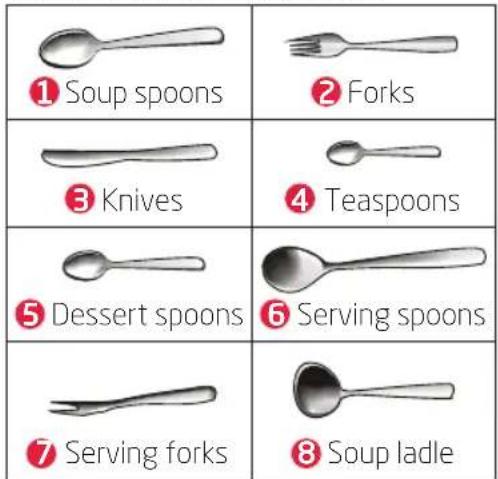
Fig.7 The cutlery tray can be adjusted according to your needs.
I. standard position, both halves inclined
II. left side flat, right half inclined
III. both halves flat, right half increased
IV. left flat, right open, right half moved over the left half
V. left flat, right open, right half removed
Operation
Washing dishes
Fig. 8 Consider following steps to start the washing process:
1.Prepare dishwasher.
2. Load the dishwasher basket.
3. Add detergent or rinse aid.
4. Make sure the water-tap/water supply is open, the appliance is connected to the mains and the door is closed correctly.
5. Push Ein/Aus switch to turn on the dishwasher and choose your program, refer to chapter Choosing Program.
Note:
If only one basket is used you can switch off the unused rinsing zone. Press the rinse zone selection button to select the desired rinse zone. Observe the indicators or
- Push Start/Pause button. To stop the process push again Start/Pause button.
Note:
We recommend to use the half load function if the dishes are only slightly soiled.
- Select the extra dry function if you want the dishes to be extra dry.
The functions half load and extra dry cannot be selected at once.
These modes can only be used with the program setting Intensive Normal , ECO, Glass and 90 min .90
English
- To start the washing process at a later time, press the timer or buttons and by pressing them several times set the hours by which the start is to be delayed. 1-24 hours start time delay can be set. Then press the Start/Pause button. The dishwasher starts washing cycle when the preset time has elapsed.
Note:
The program lights show the state of the dishwasher:
-
Program light on: standby or pause.
Program light blinking: washing process ongoing.
-
When the working cycle has finished, the buzzer of the dishwasher will sound for 8 seconds, then stop.
-
Turn off the appliance using the Ein/Aus button and shut off the water supply.
- Open the door of the dishwasher.

Warning
It is dangerous to open the door during an ongoing cycle, because the hot water may scald you.
- Wait a few minutes before unloading the dishwasher to avoid handling the dishes and utensils while they are still hot. They will also dry better.
- Unload the dishwasher.
Pause the washing cycle
You can modify the washing program when the dishwasher has only been running for a short time. Otherwise, the detergent may have already been released, and the appliance may have already drained the wash water.
- Press Start/Pause button more than three seconds the machine will switch to the stand by state.
- Change the program to the desired cycle setting.
- Press Start/Pause button again to continue the washing process.
Note:
If you open the door during an ongoing cycle, the machine will pause. When you close the door and press the Start/Pause button, the machine will continue working after 10 seconds.
If you forgot a dish you can pause the process and add it, but make sure the detergent compartment has not already opened.
1. Open the door a little to pause the washing process.
2. After the spray arms came to a halt, you can open the door completely.
3. Add forgotten dishes.
4. Close the door and press the Start/ Pause button again and the dishwasher will continue after 10 seconds.
Child lock
- The child lock can be activated when the dishwasher is running or started with the start time delay.
- Press the timer buttons simultaneously for 3 seconds. All keys of the dishwasher are locked and the corresponding indicator light on. To deactivate child lock, press the two buttons again for 3 seconds.
Consider below table to choose the correct program according your needs.
Fig. 9 Choosing program
| Program | Information and purpose | Description of cycle | Detergent Pre/Main | Running time in min | Energy cons. in kWh | Water cons. in litre | Rinse aid |
| Auto | Auto sensing wash, lightly, normally or heavily soiled crockery, with or without dried-on food. | Pre-wash (45 °C) Autowash (45-55 °C) Rinse Rinse (65 °C) Drying | 5/30 g (or 2 piece) | 150 0.9 | -1.311-15 | | ★ |
| Normal | For normally soiled loads such as pots, plates, Glasses and lightly soiled pans. | Pre-wash 45 °C Wash 55 °C Rinse Rinse 65 °CDrying | 5/30 g (or 2 piece) | 185 1.3 | 13.5 | | ★ |
| Intensive | For heavily soiled crockery, and nor-mally soiled pots, pans, dishes, etc. with dried on soiling. | Pre-wash 50 °C Wash 60 °C Rinse Rinse Rinse 70 °CDrying | 5/30 g (or 3 in 1) | 175 1.6 | 17.5 | | ★ |
| Glass | For lightly soiled crockery and glass. | Pre-wash Wash (45 °C) Rinse (65 °C) Drying | 5/30 g (or 2 piece) | 130 0.9 | 13 | | |
| ECO (*EN50242) (Öko) | This is the standard programme; It is suitable to clean normally soiled tableware and it is the most efficient program in terms of its combined energy and water consumption for that type of tableware. | Pre-wash Wash 45 °C Rinse 65 °CDrying | 5/30 g (or 2 piece) | 195 0.93 | 10 | | ★ |
| 90 min. | For normally soiled loads that need quick wash. | Wash (65 °C) Rinse Rinse (65 °C) Drying | 35 g (or 1 piece) | 90 1.3 | 35 12.5 | | ★ |
| Rapid | A quick rinse for lightly soiled loads without drying. | Rinse 45 °C Rinse 50 °C Rinse 55 °C | 25 g 30 | 0,75 11 - | | | |
Legal note:
left-on mode is 0.49 W
Left-on mode duration: Power will be cut off automatically 30 min. after a program has ended.
English
Cleaning and care

Warning
- When cleaning, never use solvents or abrasive materials, hard brushes, metallic or sharp objects. Solvents are harmful to human health and can attack plastic parts, while abrasive cleaning mechanisms and tools may scratch the surface(s).
Clean the exterior surfaces of the product with a slightly damp cloth and dry them well. Make sure that no water enters the product interior (e.g. at the switches).
- Clean the edge around the door using a soft, warm and damp cloth only. To avoid penetration of water into the door lock and electrical components, do not use a spray cleaner of any kind.
Cleaning the filter assembly
The filter prevents larger remnants of food or other objects from getting inside the pump. Inspect the filters for blocking every time the dishwasher has been used.
Fig.10 The filter system consists of a coarse filter, a flat (Main filter) and a micro filter (fine filter).
- Main filter A: Food and soil particles trapped by this filter are pulverized by a special jet on the spray arm and washed down to drain.
- Fine filter B: This filter holds soil and food residue in the sump area and prevents it from being spread out over the dishes during a wash cycle.
- Coarse filter C: Larger items, such as pieces of bones or glass that could block the drain are trapped in the coarse filter. To remove the items caught by the filter, gently squeeze the tap on the top of this filter and lift it up.
Disassemble and clean the filter according to following steps:
- Turn the filter cap (filter C) counterclockwise and take off whole filter assembly.
Take out filters B and C.
Take out filter C.
- Wash filters under running water.
- Reassembling is done in reverse order. Make sure the filter system is installed correctly.

Warning
Do not use the dishwasher if the filter system is not installed.
Cleaning the spray arms
Fig. To prevent possible clogging the spray arms can be easily removed for periodic cleaning of the nozzles.
- Grasp the middle of the spray arm, pull it upwards to remove it.
- Wash the arms under a jet of running water.
- Return them carefully to their seat and make sure that the spray arms are installed correctly and can turn freely.
Error codes
| Code Meaning Possible causes |
| E1 Longer inlet time | ·Faucets not opened
·Water intake is restricted
·Water pressure is too low |
| E4 Overflow • Some component of dishwasher leaks |
Troubleshooting
If there are any problems during operation, please refer to the following table. If problems cannot be solved as indicated under Solution, please contact your manufacturer.
| Problem Possible causes Solution | |
| Product does not work | Interrupted power supply | Check the power supply |
| Water pressure is too low | Check whether water supply is connected properly and water is turned on |
| Dishwasher door is not closed properly | Ensure door is properly closed |
| Water is not pumped out of the dishwasher | Kink in drain hose Check | the drain hose |
| Filter is clogged Check and clean the coarse filter |
| Kitchen sink is clogged Check whether the kitchen sink is draining well or call a service agent for help |
| Sud in the tub • Improper detergent | Only use special dishwasher detergent | Spilled rinse aid |
| • Wipe up rinse-aid spills |
| Sud tub interior | Detergent with colourant was used | Only use detergent without colourant |
| White film on inside surface | Hard water minerals | Clean the interior with a damp sponge regularity |
| Rust stains on cutlery | Cutlery are not corrosion resistant | Do not wash these items in dishwasher |
| A programme was not run after refilling salt | Always run a quick programme after adding salt |
| Softener lid is loose Check and tighten it |
| Knocking noise in the cabinet | Spray arm is knocking against an item in the basket | Interrupt the program and re-arrange the items |
| Rattling noise • Items of crockery are loose in the cabinet |
English
| Knocking noise in water pipes | • Caused by on-site installation or cross section of the piping | • This has no influence in the dishwasher function |
| Dishes are not clean | • Dishes not loaded correctly | • Re-arrange the dishes |
| • Spray arms are blocked |
| • Not enough detergent • Add more detergent |
| • Program was not powerful enough | • Choose another program |
| • Filter is dirty or not correctly inserted | • Clean the filter and ensure it is assembled correctly |
| Cloudiness on glassware | • Too much detergent | • Use less detergent and choose shortest cycle for cleaning glasses |
| Black or grey marks on dishes | • Aluminum utensils have rubbed against dishes | • Use a mild abrasive cleaner |
| Detergent left in dispenser cups | • Detergent cups are blocked | • Re-arrange the dishes |
| Dishes are not drying • Improper loading |
| • Rinse-aid level is too low • | Increase the rinse-aid level |
| • Dishes removed too soon • | Do not removed the dishes immediately after washing. |
Technical Data
| Power consumption 1760 - 2100 W |
| Rated voltage / frequency 220 - 240 V ~ 50 Hz |
| Water pressure (flow pressure) 0.4 - 10 bar (0.04 - 1 MPa) |
This is a Dishwasher.
- Erp-testing was done according to EN50242:2008+A11, Directive(EU)1016/2010, Directive(EU)1059/2010.
- See website below for detailed technical information or ask your vendor for specification sheet. www.koenic-online.com.