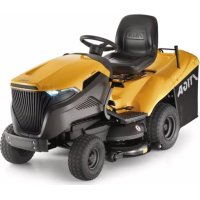
Estate 6102 HW - Tractor STIGA - Free user manual and instructions
Find the device manual for free Estate 6102 HW STIGA in PDF.



| Product type | Garden tractor |
| Brand | STIGA |
| Model | Estate 6102 HW |
| Engine | Briggs & Stratton (models 400000, 440000, 490000) |
| Engine power | Approximately 15-20 hp |
| Displacement | 724 cc (model 440000) / 810 cc (model 490000) |
| Fuel tank capacity | Approximately 6 liters |
| Cutting width | 102 cm (estimated) |
| Cutting height | Adjustable, multiple positions |
| Transmission | Hydrostatic (HW) |
| Maximum speed | Approximately 8 km/h |
| Weight | Approximately 250 kg |
| Dimensions (L x W x H) | 2200 x 1100 x 1200 mm (estimated) |
| Fuel type | Unleaded gasoline (87 octane minimum) |
| Starting system | Electric (electric starter) |
| Engine oil capacity | 1.8 - 2.0 L (depending on model) |
| Recommended oil type | SAE 30, 10W-30, 5W-30 depending on temperature |
| Air filter | Paper with pre-filter |
| Spark plug | Resistor type (ref. 491055) or platinum (ref. 5066) |
| Routine maintenance | Oil change every 50 hours, air filter annually |
| Safety | Engine stop, protection against projectiles, CO |
| Spare parts | Available at authorized Briggs & Stratton dealer |
| Repairability | Service by authorized repairer recommended |
Frequently Asked Questions - Estate 6102 HW STIGA
User questions about Estate 6102 HW STIGA
0 question about this device. Answer the ones you know or ask your own.
Ask a new question about this device
Download the instructions for your Tractor in PDF format for free! Find your manual Estate 6102 HW - STIGA and take your electronic device back in hand. On this page are published all the documents necessary for the use of your device. Estate 6102 HW by STIGA.
USER MANUAL Estate 6102 HW STIGA
Copyright © Briggs & Stratton Corporation, Milwaukee, WI, USA. All rights reserved.
This manual contains safety information to make you aware of the hazards and risks associated with engines and how to avoid them. It also contains instructions for the proper use and care of the engine. Because Briggs & Stratton Corporation does not necessarily know what equipment this engine will power, it is important that you read and understand these instructions and the instructions for the equipment. Save these original instructions for future reference.
Note: The figures and illustrations in this manual are provided for reference only and may differ from your specific model. Contact your dealer if you have questions.
For replacement parts or technical assistance, record below the engine model, type, and code numbers along with the date of purchase. These numbers are located on your engine (see the Features and Controls section).
| Date of Purchase | |
| Engine Model - Type - Trim | |
| Engine Serial Number |
Recycling Information

Recycle all packaging, used oil, and batteries according to applicable government regulations.
Operator Safety
Safety Alert Symbol and Signal Words
The safety alert symbol (A) is used to identify safety information about hazards that can result in personal injury. A signal word (DANGER, WARNING, or CAUTION) is used with the alert symbol to indicate the likelihood and the potential severity of injury. In addition, a hazard symbol may be used to represent the type of hazard.
DANGER indicates a hazard which, if not avoided, will result in death or serious injury.
WARNING indicates a hazard which, if not avoided, could result in death or serious injury.
CAUTION indicates a hazard which, if not avoided, could result in minor or moderate injury.
NOTICE indicates a situation that could result in damage to the product.
Hazard Symbols and Meanings
| Safely information about hazards that can result in personal injury. | Read and understand the Operator's Manual before operating or servicing the unit. | ||
| Fire hazard Explosion hazard | |||
| Shock hazard Toxic fume hazard | |||
| Hot surface hazard Noise hazard | protection recommended for extended use. | ||
| Thrown object hazard - Wear eye protection. | Explosion hazard |
| Frostbite hazard Kickback hazard | |
| Amputation hazard - moving parts | Chemical hazard |
| Thermal heat hazard Corrosive |
Safety Messages

WARNING
Briggs & Stratton® Engines are not designed for and are not to be used to power: fun-karts; go-karts; children's, recreational, or sport all-terrain vehicles (ATVs); motorbikes; hovercraft; aircraft products; or vehicles used in competitive events not sanctioned by Briggs & Stratton. For information about competitive racing products, see www.briggsracing.com. For use with utility and side-by-side ATVs, please contact Briggs & Stratton Power Application Center, 1-866-927-3349. Improper engine application may result in serious injury or death.

WARNING

Fuel and its vapors are extremely flammable and explosive.
Fire or explosion can cause severe burns or death.
When Adding Fuel
- Turn engine off and let engine cool at least 2 minutes before removing the fuel cap.
- Fill fuel tank outdoors or in well-ventilated area.
- Do not overfill fuel tank. To allow for expansion of the fuel, do not fill above the bottom of the fuel tank neck.
- Keep fuel away from sparks, open flames, pilot lights, heat, and other ignition sources.
- Check fuel lines, tank, cap, and fittings frequently for cracks or leaks. Replace if necessary.
- If fuel spills, wait until it evaporates before starting engine.
When Starting Engine
- Make sure that spark plug, muffler, fuel cap and air cleaner (if equipped) are in place and secured.
- Do not crank engine with spark plug removed.
- If engine floods, set choke (if equipped) to OPEN / RUN position, move throttle (if equipped) to FAST position and crank until engine starts.
When Operating Equipment
- Do not tip engine or equipment at angle which causes fuel to spill.
- Do not choke the carburetor to stop engine.
- Never start or run the engine with the air cleaner assembly (if equipped) or the air filter (if equipped) removed.
When Changing Oil
- If you drain the oil from the top oil fill tube, the fuel tank must be empty or fuel can leak out and result in a fire or explosion.
When Tipping Unit for Maintenance
- When performing maintenance that requires the unit to be tipped, the fuel tank, if mounted on the engine, must be empty or fuel can leak out and result in a fire or explosion.
When Transporting Equipment
- Transport with fuel tank EMPTY or with fuel shut-off valve in the CLOSED position.
When Storing Fuel Or Equipment With Fuel In Tank
- Store away from furnaces, stoves, water heaters or other appliances that have pilot lights or other ignition sources because they can ignite fuel vapors.

WARNING


Starting engine creates sparking.
Sparking can ignite nearby flammable gases.
Explosion and fire could result.
If there is natural or LP gas leakage in area, do not start engine.
- Do not use pressurized starting fluids because vapors are flammable.

WARNING

POISONOUS GAS HAZARD. Engine exhaust contains carbon monoxide, a poisonous gas that could kill you in minutes. You CANNOT see it, smell it, or taste it. Even if you do not smell exhaust fumes, you could still be exposed to carbon monoxide gas. If you start to feel sick, dizzy, or weak while using this product, get to fresh air RIGHT AWAY. See a doctor. You may have carbon monoxide poisoning.
- Operate this product ONLY outside far away from windows, doors and vents to reduce the risk of carbon monoxide gas from accumulating and potentially being drawn towards occupied spaces.
- Install battery-operated carbon monoxide alarms or plug-in carbon monoxide alarms with battery back-up according to the manufacturer's instructions. Smoke alarms cannot detect carbon monoxide gas.
- DO NOT run this product inside homes, garages, basements, crawlspaces, sheds, or other partially-enclosed spaces even if using fans or opening doors and windows for ventilation. Carbon monoxide can quickly build up in these spaces and can linger for hours, even after this product has shut off.
- ALWAYS place this product downwind and point the engine exhaust away from occupied spaces.

WARNING

Rapid retraction of starter cord (kickback) will pull hand and arm toward engine faster than you can let go.
Broken bones, fractures, bruises or sprains could result.
- When starting engine, pull the starter cord slowly until resistance is felt and then pull rapidly to avoid kickback.
- Remove all external equipment / engine loads before starting engine.
- Direct-coupled equipment components such as, but not limited to, blades, impellers, pulleys, sprockets, etc., must be securely attached.

WARNING

Rotating parts can contact or entangle hands, feet, hair, clothing, or accessories.
Traumatic amputation or severe laceration can result.
- Operate equipment with guards in place.
- Keep hands and feet away from rotating parts.
- Tie up long hair and remove jewelry.
- Do not wear loose-fitting clothing, dangling drawstrings or items that could become caught.

WARNING


Running engines produce heat. Engine parts, especially muffler, become extremely hot.
Severe thermal burns can occur on contact.
Combustible debris, such as leaves, grass, brush, etc. can catch fire.
- Allow muffler, engine cylinder and fins to cool before touching.
- Remove accumulated debris from muffler area and cylinder area.
- It is a violation of California Public Resource Code, Section 4442, to use or operate the engine on any forest-covered, brush-covered, or grass-covered land unless the exhaust system is equipped with a spark arrester, as defined in Section 4442, maintained in effective working order. Other states or federal jurisdictions may have similar laws. Contact the original equipment manufacturer, retailer, or
dealer to obtain a spark arrester designed for the exhaust system installed on this engine.

WARNING
Unintentional sparking can result in fire or electric shock.
Unintentional start-up can result in entanglement, traumatic amputation, or laceration.
Fire hazard
Before performing adjustments or repairs:
- Disconnect the spark plug wire and keep it away from the spark plug.
- Disconnect battery at negative terminal (only engines with electric start.)
- Use only correct tools.
- Do not tamper with governor spring, links or other parts to increase engine speed.
- Replacement parts must be of the same design and installed in the same position as the original parts. Other parts may not perform as well, may damage the unit, and may result in injury.
- Do not strike the flywheel with a hammer or hard object because the flywheel may later shatter during operation.
When testing for spark:
- Use approved spark plug tester.
- Do not check for spark with spark plug removed.
Features and Controls
Engine Controls
Compare the illustration (Figure: 1, 2) with your engine to familiarize yourself with the location of various features and controls.
A. Engine Identification Numbers Model - Type - Code
B. Spark Plug
C. Air Cleaner
D. Dipstick
E. Oil Drain Plug
F. Air Intake Grille
G. Oil Filter
H. Electric Starter
1. Carburetor
J. Fuel Filter (if equipped)
K. Fuel Pump (if equipped)
L. Quick Oil Drain (if equipped)
M. Oil cooler (if equipped)
N. Electric Control Unit (if equipped)
Engine Control Symbols and Meanings
| Engine speed - FAST Engine speed - SLOW | ||
| STOP | Engine speed - STOP ON - OFF | |
| Engine start - Choke CLOSED | ||
| Fuel Cap Fuel Shut-off - OPEN | Fuel Shut-off - CLOSED | |
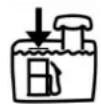
Fuel level - Maximum Do not overfill
Operation
Oil Recommendations
Oil Capacity: See the Specifications section.
NOTICE
This engine was shipped from Briggs & Stratton without oil. Equipment manufacturers or dealers may have added oil to the engine. Before you start the engine for the first time, make sure to check the oil level and add oil as specified by the instructions in this manual. If you start the engine without oil, it will be damaged beyond repair and will not be covered under warranty.
We recommend the use of Briggs & Stratton® Warranty Certified oils for best performance. Other high-quality detergent oils are permitted if classified for service SF, SG, SH, SJ or higher. Do not use special additives.
Outdoor temperatures determine the correct oil viscosity for the engine. Use the chart to select the best viscosity for the outdoor temperature range expected. Engines on most outdoor power equipment operate well with 5W-30 Synthetic oil. For equipment operated in hot temperatures, Vanguard ^8 15W-50 Synthetic oil gives the best protection.
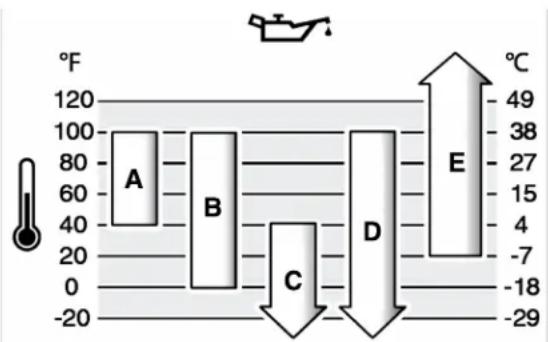
| A | SAE 30 - Below 40 °F (4 °C) the use of SAE 30 will result in hard starting. |
| B | 10W-30 - Above 80 °F (27 °C) the use of 10W-30 may cause increased oil consumption. Check the oil level frequently. |
| C | 5W-30 |
| D | Synthetic 5W-30 |
| E | Vanguard® Synthetic 15W-50 |
Check Oil Level
Before adding or checking the oil
Make sure the engine is level.
Clean the oil fill area of any debris.
- Remove the dipstick (A, Figure 3) and wipe with a clean cloth.
- Install and tighten the dipstick (A, Figure 3).
- Remove the dipstick and check the oil level. Correct oil level is at the top of the full indicator (B, Figure 3) on the dipstick.
- If oil level is low, slowly add oil into the engine oil fill (C, Figure 3). Do not overfill. After adding oil, wait one minute and then recheck the oil level.
Note: Do not add oil at the quick oil drain, if equipped.
- Install and tighten the dipstick (A, Figure 3).
Low Oil Protection System (if equipped)
Some engines are equipped with a low oil sensor. If the oil is low, the sensor will either activate a warning light or stop the engine. Stop the engine and follow these steps before restarting the engine.
Make sure the engine is level.
- Check the oil level. See the Check Oil Level section.
6 BRIGGSandSTRATTON.com
- If the oil level is low, add the proper amount of oil. Start the engine and make sure the warning light (if equipped) is not activated.
- If the oil level is not low, do not start the engine. Contact a Briggs & Stratton Authorized Service Dealer to have the oil problem corrected.
Fuel Recommendations
Fuel must meet these requirements:
- Clean, fresh, unleaded gasoline.
A minimum of 87 octane/87 AKI (91 RON). High altitude use, see below.
Gasoline with up to 10% ethanol (gasohol) is acceptable.
NOTICE Do not use unapproved gasolines, such as E15 and E85. Do not mix oil in gasoline or modify the engine to run on alternate fuels. Use of unapproved fuels will damage the engine components, which will not be covered under warranty.
To protect the fuel system from gum formation, mix a fuel stabilizer into the fuel. See Storage. All fuel is not the same. If starting or performance problems occur, change fuel providers or change brands. This engine is certified to operate on gasoline. The emissions control system for this engine is EM (Engine Modifications).
High Altitude
At altitudes over 5,000 feet (1524 meters), a minimum 85 octane/85 AKI (89 RON) gasoline is acceptable.
For carbureted engines, high altitude adjustment is required to maintain performance. Operation without this adjustment will cause decreased performance, increased fuel consumption, and increased emissions. Contact a Briggs & Stratton Authorized Service Dealer for high altitude adjustment information. Operation of the engine at altitudes below 2,500 feet (762 meters) with the high altitude adjustment is not recommended.
For Electronic Fuel Injection (EFI) engines, no high altitude adjustment is necessary.
Add Fuel

WARNING


Fuel and its vapors are extremely flammable and explosive.
Fire or explosion can cause severe burns or death.
When adding fuel
- Turn engine off and let engine cool at least 2 minutes before removing the fuel cap.
- Fill fuel tank outdoors or in well-ventilated area.
- Do not overfill fuel tank. To allow for expansion of the fuel, do not fill above the bottom of the fuel tank neck.
- Keep fuel away from sparks, open flames, pilot lights, heat, and other ignition sources.
- Check fuel lines, tank, cap, and fittings frequently for cracks or leaks. Replace if necessary.
-
If fuel spills, wait until it evaporates before starting engine.
-
Clean the fuel cap area of dirt and debris. Remove the fuel cap.
- Fill the fuel tank (A, Figure 4) with fuel. To allow for expansion of the fuel, do not fill above the bottom of the fuel tank neck (B).
- Install the fuel cap.
Start and Stop Engine
Start Engine

WARNING


Fuel and its vapors are extremely flammable and explosive.
Fire or explosion can cause severe burns or death.
When Starting Engine
- Ensure that spark plug, muffler, fuel cap and air cleaner (if equipped) are in place and secured.
- Do not crank engine with spark plug removed.
- If engine floods, set choke (if equipped) to OPEN / RUN position, move throttle (if equipped) to FAST position and crank until engine starts.

WARNING

POISONOUS GAS HAZARD. Engine exhaust contains carbon monoxide, a poisonous gas that could kill you in minutes. You CANNOT see it, smell it, or taste it. Even if you do not smell exhaust fumes, you could still be exposed to carbon monoxide gas. If you start to feel sick, dizzy, or weak while using this product, shut it off and get to fresh air RIGHT AWAY. See a doctor. You may have carbon monoxide poisoning.
- Operate this product ONLY outside far away from windows, doors and vents to reduce the risk of carbon monoxide gas from accumulating and potentially being drawn towards occupied spaces.
- Install battery-operated carbon monoxide alarms or plug-in carbon monoxide alarms with battery back-up according to the manufacturer's instructions. Smoke alarms cannot detect carbon monoxide gas.
DO NOT run this product inside homes, garages, basements, crawlspaces, sheds, or other partially-enclosed spaces even if using fans or opening doors and windows for ventilation. Carbon monoxide can quickly build up in these spaces and can linger for hours, even after this product has shut off. - ALWAYS place this product downwind and point the engine exhaust away from occupied spaces.
NOTICE This engine was shipped from Briggs & Stratton without oil. Before you start the engine, make sure you add oil according to the instructions in this manual. If you start the engine without oil, it will be damaged beyond repair and will not be covered under warranty.
Determine The Starting System
Before starting the engine, you must determine the type of starting system that is on your engine. Your engine will have one of the following types.
ReadyStart® System: This features a temperature controlled automatic choke. It does not have a primer.
- Electronic Fuel Management System: This features an Electronic Control Unit that monitors engine and temperature conditions. It does not have a manual choke or a primer.
- Choke System: This features a choke to be used for starting in cool temperatures. Some models will have a separate choke control while others will have a combination choke / throttle control. This type does not have a primer.
To start your engine, follow the instructions for your type of starting system.
Note: Equipment may have remote controls. See the equipment manual for location and operation of remote controls.
ReadyStart® System
- Check the engine oil. See the Check Oil Level section.
- Make sure equipment drive controls, if equipped, are disengaged.
- Move the fuel shut-off (A, Figure 5), if equipped, to the OPEN position.
- Move the throttle control (B, Figure 5), if equipped, to the FAST position. Operate the engine in the FAST position.
Note: For starting in cold weather temperatures (below 32^ F), move the combination choke and throttle lever (B, C, Figure 5) to the CLOSED position.
- Turn the electric start switch (D, Figure 5) to the ON or START position or push button (E).
NOTICE To extend the life of the starter, use short starting cycles (five seconds maximum). Wait one minute between starting cycles.
Note: If the engine does not start after repeated attempts, contact you local dealer BRIGGSandSTRATTON.comor call 1-800-233-3723 (in USA).
Electronic Fuel Management System
- Check the engine oil. See the Check Oil Level section.
- Make sure equipment drive controls, if equipped, are disengaged.
- Move the fuel shut-off (A, Figure 5), if equipped, to the OPEN position.
- Move the throttle control (B, Figure 5), if equipped, to the FAST position. Operate the engine in the FAST position.
- Turn the electric start switch (D, Figure 5) to the ON or START position.
NOTICE To extend the life of the starter, use short starting cycles (five seconds maximum). Wait one minute between starting cycles.
Note: If the engine does not start after repeated attempts, contact you local dealer BRIGGSandSTRATTON.com or call 1-800-233-3723 (in USA).
Choke System
- Check the engine oil. See the Check Oil Level section.
- Make sure equipment drive controls, if equipped, are disengaged.
- Move the fuel shut-off (A, Figure 5), if equipped, to the OPEN position.
- Move the throttle control (B, Figure 5), if equipped, to the FAST position. Operate the engine in the FAST position.
- Move the choke control (C, Figure 5), or the combination throttle and choke lever (B, C, Figure 5), to the CLOSED position.
Note: Choke is usually unnecessary when restarting a warm engine.
- Turn the electric start switch (D, Figure 5) to the ON or START position.
NOTICE To extend the life of the starter, use short starting cycles (five seconds maximum). Wait one minute between starting cycles.
- As the engine warms up, move the choke control (C, Figure 5) to the OPEN position.
Note: If the engine does not start after repeated attempts, contact you local dealer BRIGGSandSTRATTON.com or call 1-800-233-3723 (in USA).
Stop Engine


Fuel and its vapors are extremely flammable and explosive.
Fire or explosion can cause severe burns or death.
-
Do not choke the carburetor to stop the engine.
-
Move the throttle control (B, Figure 5) to the SLOW position.
- Turn the key switch (D, Figure 5) to the OFF position. Remove the key and keep in a safe place out of the reach of children.
- After the engine stops, move the fuel shut-off (A, Figure 5), if equipped, to the CLOSED position.
Maintenance
NOTICE If the engine is tipped during maintenance, the fuel tank, if mounted on engine, must be empty and the spark plug side must be up. If the fuel tank is not empty and if the engine is tipped in any other direction, it may be difficult to start due to oil or gasoline contaminating the air filter and/or the spark plug.

When performing maintenance that requires the unit to be tipped, the fuel tank, if mounted on the engine, must be empty or fuel can leak out and result in a fire or explosion.
We recommend that you see any Briggs & Stratton Authorized Service Dealer for all maintenance and service of the engine and engine parts.
NOTICE All the components used to build this engine must remain in place for proper operation.

WARNING


Unintentional sparking can result in fire or electric shock.
Unintentional start-up can result in entanglement, traumatic amputation, or laceration.
Fire hazard
Before performing adjustments or repairs:
- Disconnect the spark plug wire and keep it away from the spark plug.
- Disconnect battery at negative terminal (only engines with electric start).
- Use only correct tools.
- Do not tamper with governor spring, links or other parts to increase engine speed.
- Replacement parts must be of the same design and installed in the same position as the original parts. Other parts may not perform as well, may damage the unit, and may result in injury.
- Do not strike the flywheel with a hammer or hard object because the flywheel may later shatter during operation.
When testing for spark:
-
Use approved spark plug tester.
-
Do not check for spark with spark plug removed.
Emissions Control Service
Maintenance, replacement, or repair of the emissions control devices and systems may be performed by any off-road engine repair establishment or individual. However, to obtain "no charge" emissions control service, the work must be performed by a factory authorized dealer. See the Emissions Control Statements.
Maintenance Schedule
First 5 Hours
Change oil 2
Every 8 Hours or Daily
- Check engine oil level
Clean area around muffler and controls
Clean air intake grille
Every 25 Hours or Annually
Clean air filter
Clean pre-cleaner 1
Every 50 Hours or Annually
Change engine oil
* Replace oil filter (if equipped) 3
Service exhaust system
Every 100 Hours or Annually
Change engine oil
Replace oil filter (if equipped) 4
Annually
- Replace spark plug
- Replace air filter
- Replace pre-cleaner
- Replace fuel filter
Service cooling system - Check valve clearance
1 In dusty conditions or when airborne debris is present, clean more often.
2 Only engines without oil filter.
3 Engine without oil filter or with standard black oil filter (see Specifications page for part number).
4 Engines with high-efficiency yellow or orange oil filter (see Specifications page for part number).
5 Not required unless engine performance problems are noted.
Electronic Fuel Management System
The Electronic Fuel Management System monitors engine temperature, engine speed, and battery voltage to adjust the choke during engine starting and warm up. There are no adjustments on the system. If starting or operation problems occur, contact an Authorized Briggs & Stratton Dealer.
NOTICE Make sure to follow the steps below or the Electronic Fuel Management System could be damaged.
- Never start the engine if the battery cables are loose.
- Turn the key to the OFF position or remove the starter switch before
disconnecting, removing and / or installing the battery. - Never use a battery charger to start the engine.
- Never disconnect the battery cables while the engine is running.
- When connecting the battery cables, first connect the positive (+) cable and then connect the negative (-) cable to the battery.
- When charging the battery, turn the ignition switch to the off position and disconnect the negative (-) battery cable from the battery.
- Do not spray water directly on the Electronic Control Unit.
Carburetor and Engine Speed
Never make adjustments to the carburetor or engine speed. The carburetor was set at the factory to operate efficiently under most conditions. Do not tamper with the governor
spring, linkages, or other parts to change the engine speed. If any adjustments are required contact a Briggs & Stratton Authorized Service Dealer for service.
NOTICE The equipment manufacturer specifies the maximum speed for the engine as installed on the equipment. Do not exceed this speed. If you are not sure what the equipment maximum speed is, or what the engine speed is set to from the factory, contact a Briggs & Stratton Authorized Service Dealer for assistance. For safe and proper operation of the equipment, the engine speed should be adjusted only by a qualified service technician.
Service Spark Plug
See Figure: 6
Check the gap (A, Figure 6) with a wire gauge (B). If necessary, reset the gap. Install and tighten the spark plug to the recommended torque. For gap setting or torque, see the Specifications section.
Note: In some areas, local law requires using a resistor spark plug to suppress ignition signals. If this engine was originally equipped with a resistor spark plug, use the same type for replacement.
Service Exhaust System

WARNING


Running engines produce heat. Engine parts, especially muffler, become extremely hot.
Severe thermal burns can occur on contact.
Combustible debris, such as leaves, grass, brush, etc. can catch fire.
- Allow muffler, engine cylinder and fins to cool before touching.
- Remove accumulated debris from muffler area and cylinder area.
- It is a violation of California Public Resource Code, Section 4442, to use or operate the engine on any forest-covered, brush-covered, or grass-covered land unless the exhaust system is equipped with a spark arrester, as defined in Section 4442, maintained in effective working order. Other states or federal jurisdictions may have similar laws. Contact the original equipment manufacturer, retailer, or dealer to obtain a spark arrester designed for the exhaust system installed on this engine.
Exhaust system parts are installed by the equipment manufacturer. For specific maintenance and replacement parts information, contact the equipment manufacturer.
Remove accumulated debris from muffler and cylinder area. Inspect the muffler for cracks, corrosion, or other damage. Remove the deflector or the spark arrester, if equipped, and inspect for damage or carbon blockage. If damage is found, install replacement parts before operating.

WARNING
Replacement parts must be of the same design and installed in the same position as the original parts. Other parts may not perform as well, may damage the unit, and may result in injury.
Change Engine Oil
See Figure: 7, 8, 9, 10
Used oil is a hazardous waste product and must be disposed of properly. Do not discard with household waste. Check with your local authorities, service center, or dealer for safe disposal/recycling facilities.
Remove Oil
- With engine off but still warm, disconnect the spark plug wire (D, Figure 7) and keep it away from the spark plug (E).
- Remove the dipstick (A, Figure 8).
Oil Drain Plug, if equipped
- Remove the oil drain plug (F, Figure 8). Drain the oil into an approved container.
Note: Various oil drain plugs (G, Figure 8) are installed. - After the oil has drained, install and tighten the oil drain plug (F, Figure 8).
Quick Oil Drain, if equipped
- Disconnect the quick oil drain hose (H, Figure 9) from the side of the engine.
-
Turn and remove the oil drain cap (I, Figure 9). Carefully lower the quick oil drain (H) into an approved container (J).
-
After the oil has drained, install the quick oil drain cap (I, Figure 9). Attach the quick oil drain hose (H) to the side of the engine.
Change Oil Filter, if equipped
Some models are equipped with an oil filter. For replacement intervals, see the Maintenance Schedule.
- Drain the oil from the engine. See Remove Oil section.
- Remove the oil filter (K, Figure 10) and dispose of properly.
- Before you install the new oil filter, lightly lubricate the oil filter gasket with fresh, clean oil.
- Install the oil filter by hand until the gasket contacts the oil filter adapter, then tighten the oil filter 1/2 to 3/4 turns.
- Add oil. See Add Oil section.
- Start and run the engine. As the engine warms up, check for oil leaks.
- Stop the engine and check the oil level. Correct oil level is at the top of the full indicator (B, Figure 8) on the dipstick.
Add Oil
-
Make sure the engine is level.
Clean the oil fill area of any debris.
See the Specifications section for oil capacity. -
Remove the dipstick (A, Figure 8) and wipe with a clean cloth.
- Slowly pour oil into the engine oil fill (C, Figure 8). Do not overfill. After adding oil, wait one minute and then check the oil level.
Note: Do not add oil at the quick oil drain (H, Figure 9), if equipped.
- Install and tighten the dipstick (A, Figure 8).
- Remove the dipstick and check the oil level. The correct oil level is at the top of the full indicator (B, Figure 8) on the dipstick.
- Install and tighten the dipstick (A, Figure 8) again.
- Connect the spark plug wire (D, Figure 7) to the spark plug (E).
Service Air Filter
See Figure: 11, 12, 13

WARNING


Fuel and its vapors are extremely flammable and explosive.
Fire or explosion can cause severe burns or death.
- Never start and run the engine with the air cleaner assembly (if equipped) or the air filter (if equipped) removed.
NOTICE Do not use pressurized air or solvents to clean the filter. Pressurized air can damage the filter and solvents will dissolve the filter.
See the Maintenance Schedule for service requirements.
Various models use either a foam or a paper filter. Some models may also have an optional pre-cleaner that can be washed and reused. Compare the illustrations in this manual with the type installed on your engine and service as follows.
Paper Air Filter (with pre-cleaner)
- Loosen the fastener(s) (A, Figure 11).
- Remove the air filter cover (B, Figure 11).
- Remove the filter (C, Figure 11) and the pre-cleaner (D), if equipped.
- To loosen debris, gently tap the filter on a hard surface. If the filter is excessively dirty, replace with a new filter.
- Wash the pre-cleaner (D, Figure 11), if equipped, in liquid detergent and water. Allow the pre-cleaner to thoroughly air dry. Do not oil the pre-cleaner.
- Assemble the dry pre-cleaner (D, Figure 11), if equipped, and the filter (C) into the air filter base (E).
- Install the air filter cover (B, Figure 11) and secure with fastener(s) (A). Make sure the fastener(s) is tight.
Service Air Filter Assembly (Cartridge with pre-cleaner)
- Loosen the fastener(s) (A, Figure 12, 13).
- Remove the air filter cover (B, Figure 12, 13).
-
To remove the filter (C, Figure 12, 13), lift the end of the filter.
-
To loosen debris, gently tap the filter on a hard surface. If the filter is excessively dirty, replace with a new filter.
- Remove the pre-cleaner (D, Figure 12, 13) from the filter (C).
- Wash the pre-cleaner (D, Figure 12, 13) in liquid detergent and water. Allow the pre-cleaner to thoroughly air dry. Do not oil the pre-cleaner.
- Assemble the dry pre-cleaner (D, Figure 12, 13), if equipped, to the filter (C).
- Install the filter (C, Figure 12, 13) and pre-cleaner (D), if equipped, into the filter base (E) and push down until the filter snaps in place.
- Install the air filter cover (B, Figure 12, 13) and secure with fastener(s) (A). Make sure the fastener(s) is tight.
Service Fuel System
See Figure: 14

WARNING


Fuel and its vapors are extremely flammable and explosive.
Fire or explosion can cause severe burns or death.
- Keep fuel away from sparks, open flames, pilot lights, heat, and other ignition sources.
- Check fuel lines, tank, cap, and fittings frequently for cracks or leaks. Replace if necessary.
- Before cleaning or replacing the fuel filter, drain the fuel tank or close the fuel shut-off valve.
- If fuel spills, wait until it evaporates before starting engine.
- Replacement parts must be the same and installed in the same position as the original parts.
Fuel Filter, if equipped
- Before replacing the fuel filter (A, Figure 14), if equipped, drain the fuel tank or close the fuel shut-off valve. Otherwise, fuel can leak out and cause a fire or explosion.
- Use pliers to squeeze tabs (B, Figure 14) on the clamps (C), then slide the clamps away from the fuel filter (A). Twist and pull the fuel lines (D) off of the fuel filter.
- Check the fuel lines (D, Figure 14) for cracks or leaks. Replace if necessary.
- Replace the fuel filter (A, Figure 14) with an original equipment replacement filter.
- Secure the fuel lines (D, Figure 14) with clamps (C) as shown.
Service Cooling System

WARNING


Running engines produce heat. Engine parts, especially muffler, become extremely hot.
Severe thermal burns can occur on contact.
Combustible debris, such as leaves, grass, brush, etc., can catch fire.
- Allow muffler, engine cylinder and fins to cool before touching.
- Remove accumulated debris from muffler area and cylinder area.
NOTICE Do not use water to clean the engine. Water could contaminate the fuel system. Use a brush or dry cloth to clean the engine.
This is an air cooled engine. Dirt or debris can restrict air flow and cause the engine to overheat, resulting in poor performance and reduced engine life.
- Use a brush or dry cloth to remove debris from the air intake grille.
- Keep linkage, springs and controls clean.
- Keep the area around and behind the muffler, if equipped, free of any combustible debris.
- Make sure the oil cooler fins, if equipped, are free of dirt and debris.
After a period of time, debris can accumulate in the cylinder cooling fins and cause the engine to overheat. This debris cannot be removed without partial disassembly of the engine. Have a Briggs & Stratton Authorized Service Dealer inspect and clean the air cooling system as recommended in the Maintenance Schedule.
Storage

WARNING


Fuel and its vapors are extremely flammable and explosive.
Fire or explosion can cause severe burns or death.
When Storing Fuel Or Equipment With Fuel In Tank
- Store away from furnaces, stoves, water heaters or other appliances that have pilot lights or other ignition sources because they can ignite fuel vapors.
Fuel System
See Figure:0150
Store the engine level (normal operating position). Fill fuel tank (A, Figure15) with fuel. To allow for expansion of fuel, do not overfill above the fuel tank neck (B).
Fuel can become stale when kept in a storage container for more than 30 days. Each time you fill the container with fuel, add fuel stabilizer to the fuel as specified by the manufacturer's instructions. This keeps fuel fresh and decreases fuel-related problems or contamination in the fuel system.
It is not necessary to drain fuel from the engine when fuel stabilizeris added as instructed. Before storage, turn the engine ON for 2 minutes to move the fuel and stabilizer through the fuel system.
If gasoline in the engine has not been treated with a fuel stabilizer, it must be drained into an approved container. Run the engine until it stops from lack of fuel. The use of a fuel stabilizer in the storage container is recommended to maintain freshness.
Engine Oil
While the engine is still warm, change the engine oil. See the Change Engine Oil section.
Troubleshooting
For assistance, contact your local dealer or go to BRIGGSandSTRATION.com or call 1-800-233-3723 (in USA).
Specifications
| Model: [400000] | |
| Displacement[40.03ftci (656cc)] | |
| Borel U2.970in (75,431mm)] | |
| Stroke U2.890in (73,411mm)] | |
| Oil Capacity[62 - 64oz (1,8 - 1,90L)] | |
| Spark Plug Cap[1.030in (.761mm)] | |
| Spark Plug Torque[1180lb-in (201Nm)] | |
| Armature Air Gap[1.008 - .012in (.20 - .301mm)] | |
| Intake Valve Clearance[1.004 - .006in (.10 - .157mm)] | |
| Exhaust Valve Clearance[1.004 - .006in (.10 - .157mm)] | |
| Model:440000 | |
| Displacement [44.18] ci (724 cc) | |
| Bore l 3.120in (79,241mm) | |
| Stroke [2.890] in (73,411mm) | |
| Oil Capacity [62 - 64]oz (1,8 - 1,90L) | |
| Spark Plug Gap [.030] in (.76]mm) | |
| Spark Plug Torque [180]b-in (20]Nm) | |
| Armature Air Gap [.008 - .012]in (.20 - .300mm) | |
| Intake Valve Clearance [.004 - .006]in (.10 - .15]mm) | |
| Exhaust Valve Clearance [.004 - .006]in (.10 - .15]mm) | |
| Model: [490000] | |
| Displacement [49.42lci (810cc)] | |
| Borell 3.300lin (83,811mm) | |
| Stroke 2.890lin (73,411mm) | |
| Oil Capacity 166 - 680oz (1,9 - 2,00L) | |
| Spark Plug Capull .030lin (.761mm) | |
10 BRIGGSandSTRATTON.com
| Model:[490000] |
| Spark Plug Torque[180Nm] |
| Armature Air Gap [ .008 - .012in (20 - ,30mm)] |
| Intake Valve Clearance [ .004 - .006 in (10 - ,150mm)] |
| Exhaust Valve Clearance [ .004 - .006lin (10 - ,15mm)] |
Engine power will decrease 3.5% for each 1,000 feet (300 meters) above sea level and 1% for each 10^ (5.6^) above 77^ (25^) . The engine will operate satisfactorily at an angle up to 15^ . Refer to the equipment operator's manual for safe allowable operating limits on slopes.
| Service Parts - Model:1400000,1440000,1490000 | |
| [Service Part] [Part Number] | |
| Air Filter, Paper (Figure11) 1499486 | |
| Air Filter Pre-cleaner (Figure11)1273638 | |
| Air Filter, Paper (Figure13)1591334 | |
| Air Filter Pre-cleaner (If equipped) (Figure13)1797704 | |
| Air Filter, Paper (Figure12)1792105 | |
| Air Filter Pre-cleaner (Figure12)1792303 | |
| Oil - SAE 300 110028 | |
| Oil Filter, Standard - Black | 1492932 |
| Oil Filter, High Efficiency - Yellow | 1795890 |
| Oil Filter, High Efficiency - Orange | 1798576 |
| Fuel Filter | 1691035 |
| Resistor Spark Plug | 1491055 |
| Long Life Platinum Spark Plug | 15066 |
| Spark Plug Wrench | 119374 |
| Spark Tester | 119368 |
We recommend that you see any Briggs & Stratton Authorized Dealer for all maintenance and service of the engine and engine parts.
Power Ratings: The gross power rating for individual gasoline engine models is labeled in accordance with SAE (Society of Automotive Engineers) code J1940 Small Engine Power & Torque Rating Procedure, and is rated in accordance with SAE J1995. Torque values are derived at 2600 RPM for those engines with "rpm" called out on the label and 3060 RPM for all others; horsepower values are derived at 3600 RPM. The gross power curves can be viewed at www.BRIGGSandSTRATTON.COM. Net power values are taken with exhaust and air cleaner installed whereas gross power values are collected without these attachments. Actual gross engine power will be higher than net engine power and is affected by, among other things, ambient operating conditions and engine-to-engine variability. Given the wide array of products on which engines are placed, the gasoline engine may not develop the rated gross power when used in a given piece of power equipment. This difference is due to a variety of factors including, but not limited to, the variety of engine components (air cleaner, exhaust, charging, cooling, carburetor, fuel pump, etc.), application limitations, ambient operating conditions (temperature, humidity, altitude), and engine-to-engine variability. Due to manufacturing and capacity limitations, Briggs & Stratton may substitute an engine of higher rated power for this engine.
Warranty
Briggs & Stratton Engine Warranty
Effective January 2019
Limited Warranty
Briggs & Stratton warrants that, during the warranty period specified below, it will repair or replace, free of charge, any part that is defective in material or workmanship or both. Transportation charges on product submitted for repair or replacement under this warranty must be borne by purchaser. This warranty is effective for and is subject to the time periods and conditions stated below. For warranty service, find the nearest Authorized Service Dealer in our dealer locator map at BRIGGSandSTRATTON.COM. The purchaser must contact the Authorized Service Dealer, and then make the product available to the Authorized Service Dealer for inspection and testing.[1]
There is no other express warranty. Implied warranties, including those of merchantability and fitness for a particular purpose, are limited to the warranty period listed below, or to the extent permitted by law.liability for incidental or consequential damages are excluded to the extent exclusion is permitted by law. Some states or countries do not allow limitations on how long an implied warranty lasts, and some states or countries do not allow the exclusion or limitation of incidental or consequential damages, so the above limitation and exclusion may not apply to you.
This warranty gives you specific legal rights and you may also have other rights which vary from state to state and country to country 4.
Standard Warranty Terms 1,2,3
Vanguard®; Commercial Series 3
Consumer Use - 36 months
Commercial Use - 36 months
XR Series
Consumer Use - 24 months
Commercial Use - 24 months
All Other Engines Featuring Dura-Bore™ Cast Iron Sleeve
Consumer Use - 24 months
Commercial Use - 12 months
All Other Engines
Consumer Use - 24 months
Commercial Use - 3 months
1 These are our standard warranty terms, but occasionally there may be additional warranty coverage that was not determined at time of publication. For a listing of current warranty terms for your engine, go to BRIGGSandSTRATTON.com or contact your Briggs & Stratton Authorized Service Dealer.
2 There is no warranty for engines on equipment used for prime power in place of a utility; standby generators used for commercial purposes, utility vehicles exceeding 25 MPH, or engines used in competitive racing or on commercial or rental tracks.
3 Vanguard installed on standby generators: 24 months consumer use, no warranty commercial use. Commercial Series with manufacturing date before July 2017: 24 months consumer use, 24 months commercial use.
4 In Australia - Our goods come with guarantees that cannot be excluded under the Australian Consumer Law. You are entitled to a replacement or refund for a major failure and for compensation for any other reasonably foreseeable loss or damage. You are also entitled to have the goods repaired or replaced if the goods fail to be of acceptable quality and the failure does not amount to a major failure. For warranty service, find the nearest Authorized Service Dealer in our dealer locator map at BRIGGSandSTRATTON.COM, or by calling 1300 274 447, or by emailing or writing to salesenquiries@briggsandstratton.com.au, Briggs & Stratton Australia Pty Ltd, 1 Moorebank Avenue, Moorebank, NSW, Australia, 2170.
The warranty period begins on the original date of purchase by the first retail or commercial consumer. "Consumer use" means personal residential household use by a retail consumer. "Commercial use" means all other uses, including use for commercial, income producing or rental purposes. Once an engine has experienced commercial use, it shall thereafter be considered as a commercial use engine for purposes of this warranty.
Save your proof of purchase receipt. If you do not provide proof of the initial purchase date at the time warranty service is requested, the manufacturing date of the product will be used to determine the warranty period. Product registration is not required to obtain warranty service on Briggs & Stratton products.
About Your Warranty
This limited warranty covers engine-related material and/or workmanship issues only, and not replacement or refund of the equipment to which the engine may be mounted. Routine maintenance, tune-ups, adjustments, or normal wear and tear are not covered under this warranty. Similarly, warranty is not applicable if the engine has been altered or modified or if the engine serial number has been defaced or removed. This warranty does not cover engine damage or performance problems caused by:
- The use of parts that are not original Briggs & Stratton parts;
- Operating the engine with insufficient, contaminated, or an incorrect grade of lubricating oil;
- The use of contaminated or stale fuel, gasoline formulated with ethanol greater than 10% , or the use of alternative fuels such as liquefied petroleum or natural gas on engines not originally designed/manufactured by Briggs & Stratton to operate on such fuels;
- Dirt which entered the engine because of improper air cleaner maintenance or re-assembly;
- Striking an object with the cutter blade of a rotary lawn mower, loose or improperly installed blade adapters, impellers, or other crankshaft coupled devices, or excessive v-belt tightness;
- Associated parts or assemblies such as clutches, transmissions, equipment controls, etc., which are not supplied by Briggs & Stratton;
-
Overheating due to grass clippings, dirt and debris, or rodent nests which plug or clog the cooling fins or flywheel area, or by operating the engine without sufficient ventilation;
-
Excessive vibration due to over-speeding, loose engine mounting, loose or unbalanced cutter blades or impellers, or improper coupling of equipment components to the crankshaft;
- Misuse, lack of routine maintenance, shipping, handling, or warehousing of equipment, or improper engine installation.
Warranty service is available only through Briggs & Stratton Authorized Service Dealers. Locate your nearest Authorized Service Dealer in our dealer locator map at BRIGGSandSTRATTON.COM or by calling 1-800-233-3723 (in USA).
80004537 (Rev. F)
Briggs & Stratton Emissions Warranty
California, U.S. EPA, and Briggs & Stratton Corporation Emissions Control Warranty - Your Warranty Rights and Obligations For Briggs & Stratton Engine Models with "B" or "G" Trim Designation (Model-Type-Trim Representation xxxxxx xxxx Bx or xxxxxx xxxx Gx)
The California Air Resources Board, U.S. EPA, and Briggs & Stratton (B&S) are pleased to explain the exhaust emissions ("emissions") control system warranty on your 2019-2021 engine. In California, new small off-road engines and large spark ignited engines less than or equal to 1.0 liter must be designed, built, and equipped to meet the State's stringent anti-smog standards. B&S must warrant the emissions control system on your engine for the periods of time listed below provided there has been no abuse, neglect or improper maintenance of your small off-road engine or equipment leading to the failure of the emissions control system.
Your emissions control system may include parts such as the carburetor or fuel-injection system, the ignition system, catalytic converter, fuel tanks, fuel lines (for liquid fuel and fuel vapors), fuel caps, valves, canisters, filters, clamps and other associated components. Also included may be hoses, belts, connectors, and other emission-related assemblies.
Where a warrantable condition exists, B&S will repair your engine at no cost to you including diagnosis, parts, and labor.
Manufacturer's Warranty Coverage:
The exhaust emissions control system on your engine is warranted for two years. If any emissions-related part on your engine is defective, the part will be repaired or replaced by B&S.
Owner's Warranty Responsibilities:
- As the engine owner, you are responsible for the performance of the required maintenance listed in your owner's manual. B&S recommends that you retain all receipts covering maintenance on your engine, but B&S cannot deny warranty coverage solely for the lack of receipts or for your failure to ensure the performance of all scheduled maintenance.
- As the engine owner, you should however be aware that B&S may deny you warranty coverage if your engine or a part has failed due to abuse, neglect, or improper maintenance or unapproved modifications.
- You are responsible for presenting your engine to a B&S distribution center or service center as soon as the problem exists. The warranty repairs shall be completed in a reasonable amount of time, not to exceed 30 days. If you have a question regarding your warranty rights and responsibilities, you should contact B&S at 1-800-444-7774 (in USA) or BRIGGSandSTRATTON.COM.
Briggs & Stratton Emissions Control Warranty Provisions
The following are specific provisions relative to your Emissions Control Warranty Coverage. It is in addition to the B&S engine warranty for non-regulated engines found in the Operator's Manual.
1. Warranted Emissions Parts
Coverage under this warranty extends only to the parts listed below (the emissions control systems parts) to the extent these parts were present on the B&S engine.
a. Fuel Metering System
Cold start enrichment system (soft choke)
- Carburetor or fuel injection system
Oxygen sensor
Electronic control unit
- Fuel pump module
b. Air Induction System
Air cleaner
Intake manifold
c. Ignition System
- Spark plug(s)
- Magneto ignition system
d. Catalyst System
Catalytic converter
- Exhaust manifold
Air injection system or pulse value
e. Miscellaneous Items Used in Above Systems
Vacuum, temperature, position, time sensitive valves and switches
- Connectors and assemblies
Electronic controls
2. Length of Coverage
Coverage is for a period of two years from the date of delivery to an ultimate purchaser, or for the time period listed in the respective engine or product warranty statement, whichever is greater. B&S warrants to the original purchaser and each subsequent purchaser that the engine is designed, built, and equipped so as to conform with all applicable regulations adopted by the Air Resources Board; that it is free from defects in material and workmanship that could cause the failure of a warranted part; and that it is identical in all material respects to the engine described in the manufacturer's application for certification. The warranty period begins on the date the engine or equipment is delivered to an ultimate purchaser.
The warranty on emissions-related parts is as follows:
- Any warranted part that is not scheduled for replacement as required maintenance in the Operator's Manual supplied, is warranted for the warranty period stated above. If any such part fails during the period of warranty coverage, the part will be repaired or replaced by B&S at no charge to the owner. Any such part repaired or replaced under the warranty will be warranted for the remaining warranty period.
- Any warranted part that is scheduled only for regular inspection in the Operator's Manual supplied, is warranted for the warranty period stated above. Any such part repaired or replaced under warranty will be warranted for the remaining warranty period.
- Any warranted part that is scheduled for replacement as required maintenance in the Operators's Manual supplied, is warranted for the period of time prior to the first scheduled replacement point for that part. If the part fails prior to the first scheduled replacement, the part will be repaired or replaced by B&S at no charge to the owner. Any such part repaired or replaced under warranty will be warranted for the remainder of the period prior to the first scheduled replacement point for the part.
- Add-on or modified parts that are not exempted by the Air Resources Board may not be used. The use of any non-exempted add-on or modified parts by the owner will be grounds for disallowing a warranty claim. The manufacturer will not be liable to warrant failures of warranted parts caused by the use of a non-exempted add-on or modified part.
3. Consequential Coverage
Coverage shall extend to the failure of any engine components caused by the failure of any warranted emissions parts.
4. Claims and Coverage Exclusions
Warranty claims shall be filed according to the provisions of the B&S engine warranty policy. Warranty coverage does not apply to failures of emissions parts that are not original equipment B&S parts or to parts that fail due to abuse, neglect, or improper maintenance as set forth in the B&S engine warranty policy. B&S is not liable for warranty coverage of failures of emissions parts caused by the use of add-on or modified parts.
Look For Relevant Emissions Durability Period and Air Index Information On Your Small Off-Road Engine Emissions Label
Engines that are certified to meet the California Air Resources Board (CARB) small off-road Emissions Standard must display information regarding the Emissions Durability Period and the Air Index. Briggs & Stratton makes this information available to the consumer on our emissions labels. The engine emissions label will indicate certification information.
The Emissions Durability Period describes the number of hours of actual running time for which the engine is certified to be emissions compliant, assuming proper maintenance in accordance with the Operator's Manual. The following categories are used:
Moderate:
Engines at or less than 80 cc displacement are certified to be emissions compliant for 50 hours of actual engine running time. Engines greater than 80 cc displacement are certified to be emissions compliant for 125 hours of actual engine running time.
Intermediate:
Engines at or less than 80 cc displacement are certified to be emissions compliant for 125 hours of actual engine running time. Engines greater than 80 cc displacement are certified to be emissions compliant for 250 hours of actual engine running time.
Extended:
Engines at or less than 80 cc displacement are certified to be emissions compliant for 300 hours of actual engine running time. Engines greater than 80 cc displacement are certified to be emissions compliant for 500 hours of actual engine running time.
For example, a typical walk-behind lawn mower is used 20 to 25 hours per year. Therefore, the Emissions Durability Period of an engine with an intermediate rating would equate to 10 to 12 years.
Briggs & Stratton engines are certified to meet the United States Environmental Protection Agency (USEPA) Phase 2 or Phase 3 emissions standards. The Emissions Compliance Period referred to on the Emissions Compliance label indicates the number of operating hours for which the engine has been shown to meet Federal emissions requirements.
For engines at or less than 80 cc displacement:
Category C = 50 hours, Category B = 125 hours, Category A = 300 hours
For engines greater than 80 cc displacement and less than 225 cc displacement:
Category C = 125 hours, Category B = 250 hours, Category A = 500 hours
For engines of 225 cc or more displacement:
Category C = 250 hours, Category B = 500 hours, Category A = 1000 hours
80084161A
Briggs & Stratton Emissions Warranty
California, U.S. EPA, and Briggs & Stratton Corporation Emissions Control Warranty - Your Warranty Rights and Obligations For Briggs & Stratton Engine Models with "F" Trim Designation (Model-Type-Trim Representation xxxxxx xxxx Fx)
The California Air Resources Board, U.S. EPA, and Briggs & Stratton (B&S) are pleased to explain the exhaust and evaporative emissions ("emissions") control system warranty on your 2019-2021 engine/equipment. In California, new equipment that use small off-road engines must be designed, built, and equipped to meet the State's stringent anti-smog standards. B&S must warrant the emissions control system on your engine/equipment for the periods of time listed below provided there has been no abuse, neglect or improper maintenance of your small off-road engine or equipment leading to the failure of the emissions control system.
Your emissions control system may include parts such as the carburetor or fuel-injection system, the ignition system, catalytic converter, fuel tanks, fuel lines (for liquid fuel and fuel vapors), fuel caps, valves, canisters, filters, clamps and other associated components. Also included may be hoses, belts, connectors, and other emission-related assemblies.
Where a warrantable condition exists, B&S will repair your engine/equipment at no cost to you including diagnosis, parts, and labor.
Manufacturer's Warranty Coverage:
The exhaust and evaporative emissions control system on your engine/equipment is warranted for two years. If any emissions-related part on your engine/equipment is defective, the part will be repaired or replaced by B&S.
Owner's Warranty Responsibilities:
- As the engine/equipment owner, you are responsible for the performance of the required maintenance listed in your owner's manual. B&S recommends that you retain all receipts covering maintenance on your engine/equipment, but B&S cannot deny warranty coverage solely for the lack of receipts or for your failure to ensure the performance of all scheduled maintenance.
- As the engine/equipment owner, you should however be aware that B&S may deny you warranty coverage if your engine/equipment or a part has failed due to abuse, neglect, or improper maintenance or unapproved modifications.
- You are responsible for presenting your engine/equipment to a B&S distribution center or service center as soon as the problem exists. The warranty repairs shall be completed in a reasonable amount of time, not to exceed 30 days. If you have a question regarding your warranty rights and responsibilities you should contact B&S at 1-800-444-7774 (in USA) or BRIGGSandSTRATTON.COM.
Briggs & Stratton Emissions Control Warranty Provisions
The following are specific provisions relative to your Emissions Control Warranty Coverage. It is in addition to the B&S engine warranty for non-regulated engines found in the Operator's Manual.
1. Warranted Emissions Parts
Coverage under this warranty extends only to the parts listed below (the emissions control systems parts) to the extent these parts were present on the B&S engine and/or B&S supplied fuel system.
a. Fuel Metering System
Cold start enrichment system (soft choke)
- Carburetor or fuel injection system
Oxygen sensor
Electronic control unit
- Fuel pump module
- Fuel line (for liquid fuel and fuel vapors), fuel line fittings, clamps
- Fuel tank, cap and tether
- Carbon canister and mounting bracket
Pressure relief valves
Liquid/Vapor separator
b. Air Induction System
Air cleaner
- Intake manifold
- Purge and vent line
c. Ignition System
- Spark plug(s)
- Magneto ignition system
d. Catalyst System
Catalytic converter
- Exhaust manifold
Air injection system or pulse value
e. Miscellaneous Items Used in Above Systems
Vacuum, temperature, position, time sensitive valves and switches
- Connectors and assemblies
Electronic controls
- Length of Coverage
Coverage is for a period of two years from the date of delivery to an ultimate purchaser, or for the time period listed in the respective engine or product warranty statement, whichever is greater. B&S warrants to the original purchaser and each subsequent purchaser that the engine is designed, built, and equipped so as to conform with all applicable regulations adopted by the Air Resources Board; that it is free from defects in material and workmanship that could cause the failure of a warranted part; and that it is identical in all material respects to the engine described in the manufacturer's application for certification. The warranty period begins on the date the engine or equipment is delivered to an ultimate purchaser.
The warranty on emissions-related parts is as follows:
- Any warranted part that is not scheduled for replacement as required maintenance in the Operator's Manual supplied, is warranted for the warranty period stated above. If any such part fails during the period of warranty coverage, the part will be repaired or replaced by B&S at no charge to the owner. Any such part repaired or replaced under the warranty will be warranted for the remaining warranty period.
- Any warranted part that is scheduled only for regular inspection in the Operator's Manual supplied, is warranted for the warranty period stated above. Any such part repaired or replaced under warranty will be warranted for the remaining warranty period.
- Any warranted part that is scheduled for replacement as required maintenance in the Operator's Manual supplied, is warranted for the period of time prior to the first scheduled replacement point for that part. If the part fails prior to the first scheduled replacement, the part will be repaired or replaced by B&S at no charge to the owner. Any such part repaired or replaced under warranty will be warranted for the remainder of the period prior to the first scheduled replacement point for the part.
-
Add-on or modified parts that are not exempted by the Air Resources Board may not be used. The use of any non-exempted add-on or modified parts by the owner will be grounds for disallowing a warranty claim. The manufacturer will not be liable to warrant failures of warranted parts caused by the use of a non-exempted add-on or modified part.
-
Consequential Coverage
Coverage shall extend to the failure of any engine components caused by the failure of any warranted emissions parts.
- Claims and Coverage Exclusions
Warranty claims shall be filed according to the provisions of the B&S engine warranty policy. Warranty coverage does not apply to failures of emissions parts that are not original equipment B&S parts or to parts that fail due to abuse, neglect, or improper maintenance as set forth in the B&S engine warranty policy. B&S is not liable for warranty coverage of failures of emissions parts caused by the use of add-on or modified parts.
Look For Relevant Emissions Durability Period and Air Index Information On Your Small Off-Road Engine Emissions Label
Engines that are certified to meet the California Air Resources Board (CARB) small off-road Emissions Standard must display information regarding the Emissions Durability Period and the Air Index. Briggs & Stratton makes this information available to the consumer on our emissions labels. The engine emissions label will indicate certification information.
The Emissions Durability Period describes the number of hours of actual running time for which the engine is certified to be emissions compliant, assuming proper maintenance in accordance with the Operator's Manual. The following categories are used:
Moderate:
Engines at or less than 80 cc displacement are certified to be emissions compliant for 50 hours of actual engine running time. Engines greater than 80 cc displacement are certified to be emissions compliant for 125 hours of actual engine running time.
Intermediate:
Engines at or less than 80 cc displacement are certified to be emissions compliant for 125 hours of actual engine running time. Engines greater than 80 cc displacement are certified to be emissions compliant for 250 hours of actual engine running time.
Extended:
Engines at or less than 80 cc displacement are certified to be emissions compliant for 300 hours of actual engine running time. Engines greater than 80 cc displacement are certified to be emissions compliant for 500 hours of actual engine running time.
For example, a typical walk-behind lawn mower is used 20 to 25 hours per year. Therefore, the Emissions Durability Period of an engine with an intermediate rating would equate to 10 to 12 years.
Briggs & Stratton engines are certified to meet the United States Environmental Protection Agency (USEPA) Phase 2 or Phase 3 emissions standards. The Emissions Compliance Period referred to on the Emissions Compliance label indicates the number of operating hours for which the engine has been shown to meet Federal emissions requirements.
For engines at or less than 80 cc displacement:
Category C = 50 hours, Category B = 125 hours, Category A = 300 hours
For engines greater than 80 cc displacement and less than 225 cc displacement:
Category C = 125 hours, Category B = 250 hours, Category A = 500 hours
For engines of 225 cc or more displacement:
Category C = 250 hours, Category B = 500 hours, Category A = 1000 hours
80084158_A
Characteristicas y controlled
Controles del motor
Vanguard®; Serle commercial
Voir Figure: 7, 8, 9, 10
Voir Figure: 11, 12, 13

AVERTISSEMENT


Cylindree 40.03 ci (656 cc)
Alésage 2.970 in (75,43 mm)
Course 2.890 in (73,41 mm)
Ao transporte o equipments
- Transporte com o tanque de combustivel VAZIO ou com a valvula de fechamento de combustivel na posicao FECHADA.
Hakimili ya © Briggs & Stratton Corporation, Milwaukee, WI, Marekani. Haki zote zimehifadhi.
Mfumo wa Elektroniki wa Kudhibiti Fueli
- Angalia mafuta ya injini. Tazama sehemu Kuangalia Kiwango cha Mafuta
- Hakikisha vidhibiti vya kiendeshaji cha kifaa, iwapo vipo, vimetenganishwa.
- Sogeza kizima mafuta (A, Kielelezo 5), iwapo kipo, kwenye eneo la FUNGUA.
- Sogeza kidhibiti cha transfoma ndogo (B, Kielelezo 5), iwapo kipo, kwenye sehemu ya HARAKA. Endesha injini ikiwa kalika eneo la HARAKA.
- Geuza swichi ya kianzishi cha kielektroniki (D, Kielelezo 5) katika sehemu ya WASHA au ANZA.
Notisi li kurefusha maisha ya kianzishi, tumia misururu mifupi ya kuanzisha (kiwango cha juu cha sekunde tano). Subiri dakika moja katy mizunguko inayoanza.
Kumbuka: Iwapo injini haitaanza baada ya maioribio ya kurudia, wasiliana na mtoa huduma wako wa ndani au nenda kwenye BRIGGSandSTRATTON.com au piga simul 1-800-233-3723 (Marekani).
Mfumo wa Choki
- Angalia mafuta ya injini. Tazama sehemu Kuangalia Kiwango cha Mafuta.
- Hakikisha vidhibiti vya kiendeshaji cha kifaa, iwapovipo, vimetenganishwa.
- Sogeza kizima mafuta (A, Kielelezo 5), iwapo kipo, kwenye eneo la FUNGUA.
- Sogeza kidhibiti cha transforma ndogo (B, Kielezeo 5), Iwapo kipo, kweney sehemu ya HARAKA. Endesa injini ikiwa katika eneo la HARAKA.
- Sogeza kidhibiti cha choki (C, Kielelezo 5), au mchanganyiko wa transforma ndogo ya gari na wenZO wa choki (B C, Kielelezo 5), kwenye sehemu ya IMEFUNGWA.
Mfumo wa Elektroniki wa Kudhibiti Fueli
Mfumo wa Udhibiti Fueli wa Eletroniki hufuatilia halijoto ya injini, kasi, na volteji ya betri ili kurekebisha choki wakati wa kuanzisha injini na kupasha joto. Hakuna marekebisho kwenye mfumo. Matatizo ya kuanza au uendeshaji yakitokea, wasiliana na Mhudumu Aliyeidhinishwa wa Briggs & Stratton.
Notisi Hakikisha kuwa umefuata hatua zilizo hapa chini au huenda Udhibiti Fueli wa Eletroniki umeharibika.
- Usiwahi kuanza injini kebo za betri zikiwa zimelegea.
- Geuza ufunguo upande wa kuzima kabla ya kutenganisha, kuondoana / au kusakinisha betri.
- Usiwahi kutumia chaja ya betri kuanzisha injini.
- Usiwahi kutenganisha kebo za betri huku injini ikiwa inafanya kazi.
- Unapounganisha kebo za betri, kwanza unganisha kebo chanya (+) kisha uunganishe kebo这里有(-)kwenye betri.
- Unapochaji betri, geuza swichi ya moto upande wa kuzima na utenganishe kebo\ hasi ya betri (-) kutoka kwenye betri.
- Usinyunyize maji moja kwa moja kwenye Kitengo cha Kidhibiti cha Elektroniki.
Kabureta na Kasi ya Injini
Shughulikia Kuziba Cheche
Tazama Kielelezo: 6
Angalia nafasi ilyo (A, Kielelezo 6) na kipimo (B). Iwapo ni muhimu, weka upya nafasi. Sakinisha na ukaze kuziba cheche katika toku iliyopendekezwa. Kwa uwekaji wa nafasi au toku, tazama Vipimo sehemu.
Kumbuka: Katika baadhi ya maeneo, sheria y ndani huhitaji kutumia kuziba cheche ambayo haipitishi nishati li dupunga ishara za kuwaka. Iwapo injini hii likuwa na kuziba cheche ambayo haipitishi nishati mwanzoni, tumia ain a sawa kwa ubadilishija.
Shughulikia Mfumo wa Eneo la kutolea moshi



Injini inayoendesa inazalisha joto. Sehemu za injini,hususan mfa, hwa moto zaidi.
Kuchomeka vikali kunaweza kusababishwa unapogusana nazo.
Uchafu unaoweza kuwaka, kama vile majani, nyasi, brashi n.k. unaweza kushika moto.
Shughulikia Kichuja Hewa
Tazama Kelelezzo: 11, 12, 13


Fueli na mvuke wake unawaka na kulipuka hara sana.
Moto au mlipuko unaweza kusababisha kuchomeka vikali au kifo.
- Kamwe usiwashe na kuendesa wakati uunganishaji wa kisafisha hewa (iwapo kipo) au kichuja hewa (iwapo kipo) kimeondolewa.
Notisi Usitumie hewa au majimaji yaliyoshinikizwa kusafisha kichujio. Hewa iliyoshinikizwa inaweza kuharibu kichujio na majimaji yatayeyusha kichujio.
Shughulikia Mfumo wa Kupoesha

Onyo


Injini inayoendesa inazalisha joto. Sehemu za injini, hususan mfa, hwa moto zaidi.
Kuchomeka vikali kunaweza kusababishwa unapogusana nazo.
Uchafu unaoweza kuwaka, kama vile majani, nyasi, brashi, n.k., unaweza kushika moto.
Mpigo 2.890 in (73,41 mm)
Kiwango cha Mafuta 62-64 oz (1,8-1,9 L)
Nafasiya Kuziba Cheche .030 in (.76 mm)
Toku ya Kuziba Cheche 180 lb-in (20 Nm)
J589p 1s1s J2w .0000000000000000000000000000000000000000000000000000000000000000000
JzJJI 1jz Jz Jz Jz Jz Jz Jz Jz Jz Jz Jz Jz Jz Jz Jz Jz Jz Jz Jz Jz Jz Jz Jz Jz Jz Jz Jz Jz Jz Jz Jz Jz Jz Jz Jz Jz Jz Jz Jz Jz Jz Jz Jz
029p0j0g1sgl 000000000000000000000000000000000000000000000
j0sglb00000000000000000000000
aJbU aIbuU oOg jOg UoJU JUe OJU gJU bU JU 1uJU uUdU sJcEooJU JU eJU JU dU 0uJU uUJU
oJc sccsccg gocg oolpO ploosggl osgwlgl aogsslll 100 pull sgsaogowuL uagwgl wgl use wu 200 su c eulw lglse gssg oI pU Oo oe jy wu wu wu wu wu wu wu wu wu wu wu wu wu wu wu wu wu wu wu wu wu wu wu wu wu wu wu wu wu wu wu wu wu wu wu wu wu wu wu wu wu wu wu wu wu wu wu wu wu
JgolJ.

120
s s s s s s s s s s s s s s s s s s s s s s s s s s s s s s s s s s s s s s s s s s s s s s s s s s s s s s s s s s s s s s s s s s s s s s s s s s s s s s s s s s
sUgJUgUJyUgUOgUJyUgUgUoUoUoUoUoUoUoUoUoUoUoUoUoUoUoUoUoUoUoUoUoUoUoUoUoUoUoUoUoUoUoUoUoUoUoUoUoUoUoUoUoUoUoUoUoUoUoUoUoUoU0
JgjUyJg jUyUg UyUg UyUg UyUg UyUg UyUg UyUg UyUg UyUg UyUg UyUg UyUg UyUg UyUg UyUg UyUg UyUg UyUg UyUg UyUg UyUg UyUg UyUg UyUg UyUg UyUg

gJ gJ gJ gJ gJ gJ gJ gJ gJ gJ gJ gJ gJ gJ gJ gJ gJ gJ
0ofooggljblUuUuUg2uus
loJ.
m = 311
looe oeloojoojuiu Jooeeooo Jusu



afofofofofofofofofofofofofofofofofofofofofofofofofofofofofofofofofofofofofofofofofofofofofofofofofofofofofofofofofofofofofofofofofofofofofofofofo
g1.0jy g1.0jy j1.0jy sJ 02g0g p JgE gSJBv JgE wU J 02g0g
a.s.e.b.c
UJUJgj.buJUJgEgljUv:
J5eWcssUoOgjUclU2pUuS)OjUbUU2gUU JU
JgE gJgJgJgJgJgJgJgJgJgJgJgJgJgJgJgJgJgJgJgJgJgJgJgJgJgJgJgJgJgJgJgJgJgJgJgJgJgJgJgJg
J2PJI.
g2sJg0g0g0g0g0g0g0g0g0g0g0g0g0g0g0g0g0g0g0g0g0g0g0g0g0g0g0g0g0g0g0g0g0g0g0g0g0g0g0g0g0g0g0g0g0g0g0g0g0g0g
Jgssjg 2,1JJUJ)gsgUgUgUgUg Ug Ug Ug Ug Ug Ug Ug Ug Ug Ug Ug Ug Ug Ug Ug Ug Ug Ug Ug Ug Ug Ug Ug Ug Ug Ug Ug Ug Ug Ug Ug Ug Ug Ug Ug Ug Ug Ug Ug Ug Ug Ug Ug Ug Ug Ug Ug Ug Ug Ug
JUJI JSEWUJUQI 100000000000000000000000000000000
JswwSJEUJWuPULUoAUXUaUeUUOgUeEseLulOe
elgoJg
sjjgogwepwglg
sJJJ 0
algoJUcW oJw
JJJ
ssJooJJ JsEooJSS
JU
0jooJUJUUUUU)29.99JJU
00000000000000000000000000000000000000
000000000000000000000000000000000000000
Jgogjgljulgbsjglwllb.
loulgJrJUJJ gJUJJ g
m = 311
JUJI JUJU 00g 2E 2S2UJ (B. Ue SJE 92gUJ (3UUJI
JzjUuusuueo20C.(3JUu)uUuUuUuUuUuUuUuUuUuUuUuUuUuUuUuUuUuUuUuUuUuUuUuUuUuUuUuUuUuUuUuUuUuUuUuUuUuUuUuUuUuUuUuUuUuUuUuUuUuUu
sJUgssuJfSsuJgBcSsuJgJusuJ:Jp(DJJUJU 0jso2JUJ3.
.51ob
Jl2 s) oJl Jl aJcJl np Oo jsoCJJ)
2E 10000000000000000000000000000000000000000000000000000000000000
gwoEgogu2oUUo
2gj00s0000000000000000000000000000000000000000000000000000000
gjglgjoo
gjgl jgj0j0c0cbg 0jgl2
uJz oOg u p sU JI aJgUgUgUgUgUgUgUgUgUgUgUgUgUgUgUgUgUgUgUgUgUgUgUgUgUgUgUgUgUgUgUgUgUgUgUgUgUgUgUgUgUgUgUgUgUgUgUgUgUgUg U g U g U g U g U g U g U g U g U g U g U g U g U g U g U g U g U g U g U g U g U g U g U g U g U g U g U g U g U g U g U g U g U g U g U g U g U g U g U g U g U g U g U g U g U g U g U g U g U g U g U
JU JU 10000000000000000000000000000000000000
jU jU b1 loJyWuJg.LoU JyWuG iJgG u
J2pU1.
2g0gUgOgUoUcUcUeB.
gJgJU 1JzOgJrOgSsJfWJgJU gJgJU sJgJU (C).
JgJgJgJgJgJgJgJgJgJgJgJgJg
000000000000000000000000000000000000000
Jse wu b u u u u u u u u u u u u u u u u u u u u u uuuuuuuuuuuuuuuuuuuuuuuuuuuuuuuuuuuuuuuuuuuuuuuuuuuuuuuuuuuuuuuuuuuuuuuuuuuuuuuuuuuuuuuuuuuuuuuuuuuuuuuuuuuuuuuuuuuuuuuuuuuuuuuuuuuuuuuuuuuuuuuuuuuuuuuuuuuuuuuuuuuuUU
sJgWpQ 1
10JU 2
gJU JG (A. gJU S U 29 U |.5UUJ OPEN (20
2.29.99JUUJU1A18.99JJ2000uUJ18.99JJU7JUJU14JUJU15UUU
FAST (E,29J S W J29P J E.5S.W FAST (E,S,W).
32g,gjki,jj
gJUgJU pU JgU 32 (BC,
JU EJ U g0gSJ5.
oJgJgJrJUJJsE
5:JUJUJIbJU
JgJgSg

JgJgJJgJgOgOgOgOgOgOgOgOgOgOgOgOgOgOgOgOgOgOgOgOgOgOgOgOgOgOgOgOgOgOgOgOgOgOgOgOgOgOgOgOgOgOgOgOgOgOgOgOgOgOg
suiJuswUJJ 5
jJgglJgJgJgE
JSEWU 1uUuUuUuUuUuUuUuUuUuUuUuUuUuUuUuUuUuUuUuUuUuUuUuUuUuUuUuUuUuUuUuUuUuUuUuUuUuUuUuUuUuUuUuUuUuUuUuUuUuUu
FAST (EgJU JcJU J Ew. (EgJFAST (EgJ).
sui juJusg wJU 5
JglJgEwJl.
JSEWU 00000000000000000000000000000000000000000000000000000000000000000000
JUALL JUGLLJU UGLJGLZOgEgUJGLJUgUgBRIGGSandSTRATTON.com gUgLOUgUgUgUgUgUgUgUgUgUgUgUgUgUgUgUgUgUgUgUgUgUgUgUgUgUgUgUgUgUgUgUgUgUgUgUgUgUgUgUgUgUgUgUgUgUgUgUgUgUgU
gujulbu
gU 100000000000000000000000000000000000000
sJSSGpOgPwEeJ.2pJUcSjQJI 1
0g 1
J 1.3
FAST (gJ JJ JJ JJ JJ JJ FAST (sJ)
5
JSeJUuUuUuUuUuUuuUUuuuuuuuuuuuuuuuuuuuuuuuuuuuuuuuuuuuuuuuuuuuuuuuuuuuuuuuuuuuuuuuuuuuuuuuuuuuuuuuuuuuuuuuuuuuuuuuuuuuuuuuuuuuuuuuuuuuuuuuuuuuuuuuuuuuuuuuuuuuuuuuuuuuuuuuuuuuuuuuuuuuuuuuuuuuuuuuuUU
.7
2
JU JU UUUUUUUUUUUUUUUUUUUUUUUUUUUUUUUUUUUUUUUUUUUUUUUUUUUUUUUUUUUUUUUUUUUUUUUUUUUUUUUUUUUUUUUUUUUUUUUUUUUUUUUUUUUUUUUUUUUUUUUUUUUUUUUUUUUUUUUUUUUUUUUUUUUUUUUUUUUUUUUUUUUUUUUUUUUUUUUUUUUuuuuuuuuuuuuuuuuuuuuuuuuuuuuuuuuuuuuuuuuuuuuuuuuuuuuuuuuuuuuuuuuuuuuuuuuuuuuuuuuuuuuuuuuuuuuuuuuuuuuuuuuuuuuuuuuuuuuuuuuuuuuuuuuuuuuuuuuuuuuuuuuuuuuuuuuuuuuuuuuuuuuuuuuuuuuuuuuuuuuuuuuuuuuuuuuuuuuuuuu uu
J J 08g
j 1 j 1 j 1 j 1 j 1 j 1 j 1 j 1 j 1 j 1 j 1 j 1 j 1 j 1 j 1 j 1 j 1 j 1 j 1 j 1 j 1 j 1 j 1 j 1 j 1 j 1 j 1 j 1 j 1 j 1 j 1 j 1 j 1 j 1 j
00gJU 201 (A. UUUUUUUUUUUUUUUUUUUUUUUUUUUUUUUUUUUUUUUUUUUUUUUUUUUUUUUUUUUUUUUUUUUUUUUUUUUUUUUUUUUUUUUUUUUUUUUUUUUUUUUUUUUUUUUUUUUUUUUUUUUUUUUUUUUUUUUUUUUUUUUUUUUUUUUUUUUUUUUUUUUUUUUUUUUuuuuuuuuuuuuuuuuuuuuuuuuuuuuuuuuuuuuuuuuuuuuuuuuuuuuuuuuuuuuuuuuuuuuuuuuuuuuuuuuuuuuuuuuuuuuuuuuuuuuuuuuuuuuuuuuuuuuuuuuuuuuuuuuuuuuuuuuuuuuuuuuuuuuuuuuuuuuuuuuuuuuuuuuuuuuuuuuuuuuuuuuuuuuuuuuuuuuuuuu
Jie wj oepw pwh sueo jusul gull oov bolp jy eobjpe 0e j 1000 Jie wj oepw uoeo jouo 1000 Jie wj uoi 1000 Jie wj uoi 1000 Jie wj uoi 1000
pJ pU oUs
0g pOu oJgU gU JgU UgU .UgU JgU uE 2uU 0g UuU
100wJp2o eJU 8jU 8jU 8jU 8jU 8jU 8jU
gJ.0uJJJUoJUeOJUJUoJUoJUoJUoJUoJUoJUoJUoJUoJUoJUoJUoJUo
0gblwJL
1 4442
100 100 100 100 100 100 100 100 100 100 100 100 100 100 100 100 100 100 100 100 100 100 100 100 100 100
Jg2JJ.1geJSSeUoUoUoUoUoUoUoUoUoUoUoUoUoUoUoUoUoUoUoUoUoUoUoUoUoUoUoUoUoUoUoUoUoUoUoUoUoUoUoUoUoUoUoUoUoUoUoUoUoUoU0
.ogbglg bgs g 00000000000000000000000000000000000000000000000000000000000000000000000000
jg oJUJI gBglpsuO uO JGLsUJlsEgBg OJU 0gS JSLgUeOgUoOgUoOgUoOgUoOgUoOgUoOgUoOgUoOgUoOgUoOgUoOgUoOgUoOgUoOgUoOgUoOgUoOgUoOgUoOgUoOgUoOgUoOgUoOgUoOgUoOgU0
JrJU sJ sS
10,9,8,7:JUJU
a 100 aJcJU U 88 s. aJbU J OeJU U 00 u Joo WpU U 88 s. 00 u Joo WpU U 88 s. 00 u Joo WpU U 88 s. 00 u Joo WpU U 88 s. 00 u Joo WpU U 88 s. 00 u Joo WpU U 88 s. 00 u Joo WpU U 88 s. 00 u Joo WpU
0Jl
(D)Jgω|Jgεμωg∈b,g(7JUωJJ(E).
lojooJj0JUuUoJUoJUo
JJJ6oOooJIgJJJJx
gogooo s j ooo o o o o o o o o o o o g (G,8JJJ).
(F.8JUJWJ).
lojooJUJI Ub.0sJJgJgJgJgJgJgB
sui s9o wp o2g1 p0 2g
sJUgJUgJUgJUgJUgJUgJUgJUgJUgJUgJUgJUgJUgJUgJUgJUgJUgJUgJUgJUgJUgJUgJUgJUgJUgJUgJUgJUgJUgJUgJUgJUgJUgJUg
1oJyOJgOJLooJUoEooJooA(A.8).
sGgUgUgUgUgUgUgUgUgUgUgUgUgUgUgUgUgUgUgUgUgUgUgUgUgUgUgUgUgUgUgUgUgUgUgUgUgUgUgUgUgUgUgUgUgUgUgUgUgUgUg
1JUJU JpOg Og Ug Ug Ug Ug B.10g SJIg (8JJU
labpUggluLjUJUeUJU2A(A.8).
.3
.4
J.
.5
.6JxJ
sgoJjJJoo
13,12,11:JUJUJU

JgJUgJgUJgUgUgUgUgUgUgUgUgUgUgUgUgUgUgUgUgUgUgUgUgUgUgUgUgUgUgUgUgUgUgUgUgUgUgUgUgUgUgUgUgUgUgUgUgUgUgUgUgUgUg
0gJ 000000000000000000000000000000000000000000
U|U|)eJooOeogooJooJooJooJooUoUoUoUoUoUoUoUoUoUoUoUoUoUoUoUoUoUoUoUoUoUoUoUoUoUoUoUoUoUoUoUoUoUoUoUoUoUoUoUoUoUoUoUoUoUoUoUoUoUoU0
16.16.17.18.19.20.21.22.23.24.25.26.27.28.29.30.31.32.33.34.35.36.37.38.39.40.41.42.43.44.45.46.47.48.49.50.51.52.53.54.55.56.57.58.59.60.61.62.63.64.65.66.67.68.69.E
1.2008J 11.2008J 11.2008J 11.2008J 11.2008J 11.2008J 11.2008J 11.2008J 11.2008J 11.2008J 11.2008J 11.2008J 1
21objpojg cjj 0o ooc 0e ggsgpeep
3.3cJU JgJgJgJgJgJgJgJgJgJgJgJgJgJgJgJgJgJgJgJgJgJgJgJgJgJgJgJgJgJgJgJgJg
UJ(g)gU(A.13,12JUJ).1
gl0J J b(B.13,12J).2
2.2gJJJJJJjP (K, pSJW JUw uOp Jzog (10 JUwJr.JuJU (C).
p0gUJ.190J JcU pU pU 190J UJ UJ UJ UJ UJ UJ UJ UJ UJ UJ UJ UJ UJ UJ UJ UJ UJ
jUJgJJgOoC
g1.29g0gJUjE 0000000000000000000000000000000000000000000000
1Jg3gJU 000000000000000000000000000000000000
000
39.991p10b5c0.0001999999999
22 22 22 22 22 22 22 22 22 22 22 22 22 22 22 22 22 22 22 22 22 22 22 22 22 22 22 22 22 22 22 22 22 22 00
1
2g.9gJU 0UJ S UJ.
| .004 - .006 in (.10 - .15 mm) | v2wJρlρuρωJz |
| .004 - .006 in (.10 - .15 mm) | ρLεJρUρωJz |
490000:jlbJl
| 591334 | 13 | JU W J | S | G R J | L G | J L | J U | J S | J F |
| 797704 (ω ψ ω ∘ ∪ ∪ ∪ ∖ ∘ ∘ ∘ ∘ ∘ ∘ ∘ ∘ ∘ ∘ ∘ ∘ ∘ ∘ ∘ ∘ ∘ ∘ ∘ ∘ ∘ ∘ ∘ ∘ ∘ ∘ ∘ ∘ ∘ ∘ ∘ ∘ ∘ ∘ ∘ ∘ ∘ ∘ ∘ ∘ ∘ ∘ ∘ ∘ ∘ ∘ ∘ ∘ ∘ ∘ ∐ ∘ ∘ ∘ ∘ ∘ ∘ ∘ ∘ ∘ ∘ ∘ ∘ ∘ ∘ ∘ ∘ ∘ ∘ ∘ ∘ ∘ ∘ ∘ ∘ ∘ ∘ ∘ ∘ ∘ ∘ ∘ ∘ ∘ ∘ ∘ ∘ ∘ ∘ ∘ ∘ ∘ ∘ ∘ ∘ ∘ ∘ ∘ ∘ ∘ ∌ ∘ ∘ ∘ ∘ ∘ ∘ ∘ ∘ ∘ ∘ ∘ ∘ ∘ ∘ ∘ ∘ ∘ ∘ ∘ ∘ ∘ ∘ ∘ ∘ ∘ ∘ ∘ ∘ ∘ ∘ ∘ ∘ ∘ ∘ ∘ ∘ ∘ ∘ ∘ ∘ ∘ ∘ ∘ ∘ ∘ ∘ ∘ ∘ ∘ √ ∘ ∘ ∘ ∘ ∘ ∘ ∘ ∘ ∘ ∘ ∘ ∘ ∘ ∘ ∘ ∘ ∘ ∘ ∘ ∘ ∘ ∘ ∘ ∘ ∘ ∘ ∘ ∘ ∘ ∘ ∘ ∘ ∘ ∘ ∘ ∘ ∘ ∘ ∘ ∘ ∘ ∘ ∘ ∘ ∘ ∘ ∘ ∘ ∘ ∗ ∘ ∘ ∘ ∘ ∘ ∘ ∘ ∘ ∘ ∘ ∘ ∘ ∘ ∘ ∘ ∘ ∘ ∘ ∘ ∘ ∘ ∘ ∘ ∘ ∘ ∘ ∘ ∘ ∘ ∘ ∘ ∘ ∘ ∘ ∘ ∘ ∘ ∘ ∘ ∘ ∘ ∘ ∘ ∘ ∘ ∘ ∘ ∘ ∘ ∔ ∘ ∘ ∘ ∘ ∘ ∘ ∘ ∘ ∘ ∘ ∘ ∘ ∘ ∘ ∘ ∘ ∘ ∘ ∘ ∘ ∘ ∘ ∘ ∘ ∘ ∘ ∘ ∘ ∘ ∘ ∘ ∘ ∘ ∘ ∘ ∘ ∘ ∘ ∘ ∘ ∘ ∘ ∘ ∘ ∘ ∘ ∘ ∘ ∘ ∙ ∘ ∘ ∘ ∘ ∘ ∘ ∘ ∘ ∘ ∘ ∘ ∘ ∘ ∘ ∘ ∘ ∘ ∘ ∘ ∘ ∘ ∘ ∘ ∘ ∘ ∘ ∘ ∘ ∘ ∘ ∘ ∘ ∘ ∘ ∘ ∘ ∘ ∘ ∘ ∘ ∘ ∘ ∘ ∘ ∘ ∘ ∘ ∘ ∘ ∖ ∘ ∘ ∘ ∘ ∘ ∘ ∘ ∘ ∘ ∘ ∘ ∘ ∘ ∘ ∘ ∘ ∘ ∘ ∘ ∘ ∘ ∘ ∘ ∘ ∘ ∘ ∘ ∘ ∘ ∘ ∘ ∘ ∘ ∘ ∘ ∘ ∘ ∘ ∘ ∘ ∘ ∘ ∘ ∘ ∘ ∘ ∘ ∘ ∖ √ ∘ ∘ ∘ ∘ ∘ ∘ ∘ ∘ ∘ ∘ ∘ ∘ ∘ ∘ ∘ ∘ ∘ ∘ ∘ ∘ ∘ ∘ ∘ ∘ ∘ ∘ ∘ ∘ ∘ ∘ ∘ ∘ ∘ ∘ ∘ ∘ ∘ ∘ ∘ ∘ ∘ ∘ ∘ ∘ ∘ ∘ ∘ ∘ √ √ √ √ √ √ √ √ √ √ √ √ √ √ √ √ √ √ √ √ √ √ √ √ √ √ √ √ √ √ √ √ √ √ √ √ √ √ √ √ √ √ √ √ √ √ √ √ √ √ ∙ √ √ √ √ √ √ √ √ √ √ √ √ √ √ √ √ √ √ √ √ √ √ √ √ √ √ √ √ √ √ √ √ √ √ √ √ √ √ √ √ √ √ √ √ √ √ √ √ √ ∇ √ √ √ √ √ √ √ √ √ √ √ √ √ √ √ √ √ √ √ √ √ √ √ √ √ √ √ √ √ √ √ √ √ √ √ √ √ √ √ √ √ √ √ √ √ √ √ √ √ ∶ √ √ √ √ √ √ √ √ √ √ √ √ √ √ √ √ √ √ √ √ √ √ √ √ √ √ √ √ √ √ √ √ √ √ √ √ √ √ √ √ √ √ √ √ √ √ √ √ √ ∗ √ √ √ √ √ √ √ √ √ √ √ √ √ √ √ √ √ √ √ √ √ √ √ √ √ √ √ √ √ √ √ √ √ √ √ √ √ √ √ √ √ √ √ √ √ √ √ √ √ ∞ √ √ √ √ √ √ √ √ √ √ √ √ √ √ √ √ √ √ √ √ √ √ √ √ √ √ √ √ √ √ √ √ √ √ √ √ √ √ √ √ √ √ √ √ √ √ √ √ √ ∫ √ √ √ √ √ √ √ √ √ √ √ √ √ √ √ √ √ √ √ √ √ √ √ √ √ √ √ √ √ √ √ √ √ √ √ √ √ √ √ √ √ √ √ √ √ √ √ √ √ ∡ √ √ √ √ √ √ √ √ √ √ √ √ √ √ √ √ √ √ √ √ √ √ √ √ √ √ √ √ √ √ √ √ √ √ √ √ √ √ √ √ √ √ √ √ √ √ √ √ √ ∩ √ √ √ √ √ √ √ √ √ √ √ √ √ √ √ √ √ √ √ √ √ √ √ √ √ √ √ √ √ √ √ √ √ √ √ √ √ √ √ √ √ √ √ √ √ √ √ √ √ ∼ √ √ √ √ √ √ √ √ √ √ √ √ √ √ √ √ √ √ √ √ √ √ √ √ √ √ √ √ √ √ √ √ √ √ √ √ √ √ √ √ √ √ √ √ √ √ √ √ √ ∧ √ √ √ √ √ √ √ √ √ √ √ √ √ √ √ √ √ √ √ √ √ √ √ √ √ √ √ √ √ √ √ √ √ √ √ √ √ √ √ √ √ √ √ √ √ √ √ √ √ ∍√ √ √ √ √ √ √ √ √ √ √ √ √ √ √ √ √ √ √ √ √ √ √ √ √ √ √ √ √ √ √ √ √ √ √ √ √ √ √ √ √ √ √ √ √ √ √ √ √ √ ∑ √ √ √ √ √ √ √ √ √ √ √ √ √ √ √ √ √ √ √ √ √ √ √ √ √ √ √ √ √ √ √ √ √ √ √ √ √ √ √ √ √ √ √ √ √ √ √ √ √ ∛ (∅) |
| 13 ∑J ∑w ∑J) |
glj gl jg 10.0000000000000000000000000000000000000000000000000000000000000000000000000000000000000
3.2.1 oJgJU JpJb
@Vanguard3 aJLcUJ aJwUJl:
joo36-Jo0wJpO
36-5j20 1
j0b0g 1
Jg0g2Jg0g2Jg0g2Jg0g2Jg0g2Jg0g2Jg0g2Jg0g2Jg0g2Jg0g2Jg0g2Jg0g2Jg0g2Jg0g2Jg0g2Jg0g2Jg0g2Jg0g2Jg0g2Jg0g2Jg0g
jssu oipooo jll oepaill sue ojuol u wuouu u p o oosu 2 aqslsucilpplpsu ouiuupu s iuiu u pduususususu JU 25 gglusluyuowuullwauugg asjgluulMPH. lcluoggl glasjcuuagglglwglwglwgl
Vanguard 24 sblsulj uJ jU jU jU jU jU jU jU jU jU jU jU jU jU jU jU jU jU jU jU jU jU jU jU jU jU jU jU jU jU jU jU jU jU jU jU jU jU jU jU jU jU jU jU jU jU jU jU jU jU jU j U 2017 gssgss
1.1p000000000000000000000000000000000000000000000000000000000
2g6 20 g 10g j 10g j 10g j 10g j 10g j
JUwJgSgSbJI jIeJI UoJU SsU 29g3gpluJ .%10 JgU WUWU UJzEgSsUo/ooUoUoUJ sJIgJUwJUJI gJI Briggs & Stratton uJgeU.
oJ sblcJI e,spcUJ sl.
.3Jgolgl0uJ 0uJyUg1ooosuOg0oog0g0g0g
4olglgJgJgJgJgJgJgJgJgJgJgJgJgJgJgJgJgJgJgJgJgJgJgJgJgJgJgJgJgJgJgJgJgJgJgJgJgJgJgJgJgJgJgJgJgJgJgJgJgJg
.5uJyooUoOgblqUoOgOgOgOgOgOgOgOgOgOgOgOg

- Recycling Information
- Operator Safety
- Safety Alert Symbol and Signal Words
- Safety Messages
- WARNING
- When Adding Fuel
- When Starting Engine
- When Operating Equipment
- When Changing Oil
- When Tipping Unit for Maintenance
- When Transporting Equipment
- When Storing Fuel Or Equipment With Fuel In Tank
- Features and Controls
- Engine Controls
- Engine Control Symbols and Meanings
- Operation
- Oil Recommendations
- NOTICE
- Check Oil Level
- Low Oil Protection System (if equipped)
- BRIGGSandSTRATTON.com
- Fuel Recommendations
- High Altitude
- Add Fuel
- Start and Stop Engine
- Start Engine
- Determine The Starting System
- ReadyStart® System
- Electronic Fuel Management System
- Choke System
- Stop Engine
- Maintenance
- Fire hazard
- Before performing adjustments or repairs:
- When testing for spark:
- Emissions Control Service
- Maintenance Schedule
- Carburetor and Engine Speed
- Service Spark Plug
- Service Exhaust System
- Change Engine Oil
- Remove Oil
- Oil Drain Plug, if equipped
- Quick Oil Drain, if equipped
- Change Oil Filter, if equipped
- Add Oil
- Service Air Filter
- Paper Air Filter (with pre-cleaner)
- Service Air Filter Assembly (Cartridge with pre-cleaner)
- Service Fuel System
- Fuel Filter, if equipped
- Service Cooling System
- Storage
- Fuel System
- Engine Oil
- Troubleshooting
- Specifications
- Warranty
- Briggs & Stratton Engine Warranty
- Standard Warranty Terms 1,2,3
- XR Series
- All Other Engines
- About Your Warranty
- Briggs & Stratton Emissions Warranty
- Manufacturer's Warranty Coverage:
- Owner's Warranty Responsibilities:
- Briggs & Stratton Emissions Control Warranty Provisions
- Warranted Emissions Parts
- Length of Coverage
- Consequential Coverage
- Claims and Coverage Exclusions
- Look For Relevant Emissions Durability Period and Air Index Information On Your Small Off-Road Engine Emissions Label
- Moderate:
- Intermediate:
- Extended:
- For engines at or less than 80 cc displacement:
- For engines greater than 80 cc displacement and less than 225 cc displacement:
- For engines of 225 cc or more displacement:
- a. Fuel Metering System
- Characteristicas y controlled
- Controles del motor
- Vanguard®; Serle commercial
- AVERTISSEMENT
- Ao transporte o equipments
- Mfumo wa Elektroniki wa Kudhibiti Fueli
- Mfumo wa Choki
- Kabureta na Kasi ya Injini
- Shughulikia Kuziba Cheche
- Shughulikia Mfumo wa Eneo la kutolea moshi
- Shughulikia Kichuja Hewa
- Shughulikia Mfumo wa Kupoesha
- Jl2 s) oJl Jl aJcJl np Oo jsoCJJ)
- oJgJgJrJUJJsE
- JgJgSg
- J J 08g
- pJ pU oUs
- JrJU sJ sS
- lojooJj0JUuUoJUoJUo
- lojooJUJI Ub.0sJJgJgJgJgJgJgB
- sgoJjJJoo
- oJgJU JpJb
Brand : STIGA
Model : Estate 6102 HW
Category : Tractor