EM 40 - Exercise bike Christopeit - Free user manual and instructions
Find the device manual for free EM 40 Christopeit in PDF.



User questions about EM 40 Christopeit
0 question about this device. Answer the ones you know or ask your own.
Ask a new question about this device
Download the instructions for your Exercise bike in PDF format for free! Find your manual EM 40 - Christopeit and take your electronic device back in hand. On this page are published all the documents necessary for the use of your device. EM 40 by Christopeit.
USER MANUAL EM 40 Christopeit
natural_image
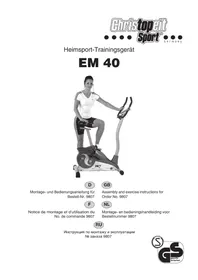
Woman exercising on an EMM 40 exercise bike (no visible text or symbols)D
GB
Assembly and exercise instructions for Order No. 9807
F
NL
text_image
Exploded view diagram of a mechanical device with numbered parts for identification and assembly reference.text_image
Technical diagram of a mechanical device with numbered components for identificationSchritt 2:
Montage der Pedalen (23L+23R) an den Pedalarmen (25L+25R).
text_image
Technical diagram of an exercise machine with numbered parts and a close-up view of the component being adjusted.text_image
Technical diagram of an exercise bike with numbered components for identificationtext_image
Technical diagram showing a mechanical assembly with numbered parts and a close-up of the component being inserted.text_image
Technical diagram of an exercise bike with numbered components for identificationtext_image
Technical diagram of a stationary exercise bike with labeled components including 3L, 3R, and numbered parts 1 through 6.natural_image
Line drawing of an exercise bike with labeled components (no text or symbols present)TRAININGSCOMPUTER
text_image
STOCK PROGRAM ; LEVEL 5 TEST F + - Enter Start/ Stop Christopent Sporttext_image
Programm3 (Tal)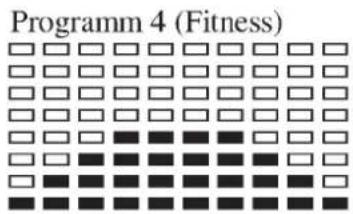
text_image
Programm 4 (Fitness)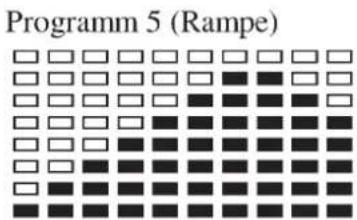
text_image
Programm 5 (Rampe)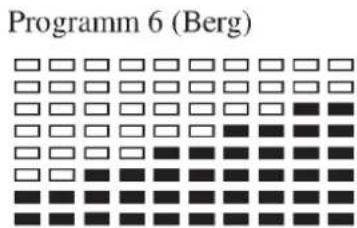
text_image
Programm 6 (Berg)P7 (Intervall)
natural_image
Grid of black and white squares with no text or symbolsP8 (U1 - U4)
natural_image
Grid of white and black squares with no text or symbolsnatural_image
Grid of 16 squares with varying fill patterns and shades, no text or symbols presentProgramm 10 (60% max. Puls)
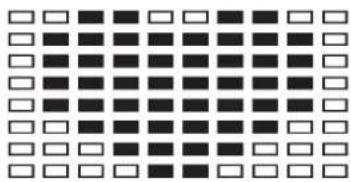
natural_image
Grid of alternating black and white squares with no text or symbolsProgramm 11 (75% max. Puls)
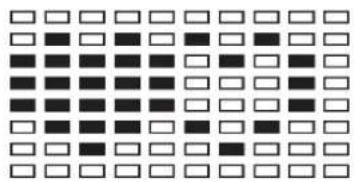
natural_image
Grid of white squares with black and white dots in a 5x5 pattern (no text or symbols)Programm 12 (85% max. Puls)
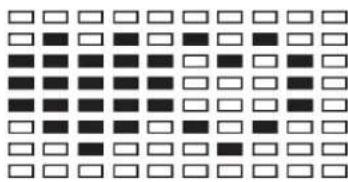
natural_image
Grid of 20 empty squares with varying fill patterns (no text or symbols)natural_image
Grid of white squares with black, white, and blue dots in a 2x2 pattern (no text or symbols)Programme 2 -7: Fitness
- Summary of Parts Page 3
- Important Recommendations and Safety Information Page 13
- Parts List Page 14 - 15
- Assembly Instructions With Exploded Diagrams Page 16 - 18
- Computer instructions Page 19 - 21
- Training Instructions Page 22
Dear customer,
We congratulate you on your purchase of this home training sports unit and hope that we will have a great deal of pleasure with it. Please take heed of the enclosed notes and instructions and follow them closely concerning assembly and use.
Please do not hesitate to contact us at any time if you should have any questions.
Important Recommendations and Safety Instructions
Our products are all TÜV-GS tested and therefore represent the highest current safety standards. However, this fact does not make it unnecessary to observe the following principles strictly.
- Assembly the machine exactly as described in the installation instructions and use only the enclosed, specific parts of the machine contained in the parts list. Before assembling, verify the completeness of the delivery against the delivery notice and the completeness of the carton against the parts list in the installation and operating instructions.
- Check the firm seating off all screws, nuts and other connections before using the machine for the first time and at regular intervals to ensure that the trainer is in a safe condition.
-
Set up the machine in a dry, level place and protect it from moisture and water. Uneven parts of the floor must be compensated by suitable measures and by the provided adjustable parts of the machine if such are installed. Ensure that no contact occurs with moisture or water.
-
Place a suitable base (e.g. rubber mat, wooden board etc.) beneath the machine if the area of the machine must be specially protected against indentations, dirt etc.
-
Before beginning training, remove all objects within a radius of 2 metres from the machine.
-
Do not use aggressive cleaning agents to clean the machine and employ only the supplied tools or suitable tools of your own to assemble the machine and for any necessary repairs. Remove drops of sweat from the machine immediately after finishing training.
-
Your health can be impaired by incorrect or excessive training. Consult a doctor before beginning a planned training programme. He can define the maximum exertion (pulse, Watts, duration of training etc.) to which you may expose yourself and can give you precise information on the correct posture during training, the targets of your training and your diet. Never train after eating large meals.
-
Only train on the machine when it is in correct working order. Use original spare parts only for any necessary repairs.
-
When setting the adjustable parts, observe the correct position and the marked, maximum setting positions and ensure that the newly adjusted position is correctly secured.
-
Unless otherwise described in the instructions, the machine must only be used for training by one person at a time.
-
Wear training clothes and shoes which are suitable for fitness training with the machine. Your clothes must be such that they cannot catch during training due to their shape (e.g. length). Your training shoes should be
appropriate for the trainer, must support your feet firmly and must have non-slip soles.
- If you notice a feeling of dizziness, sickness, chest pain or other abnormal symptoms, stop training and consult a doctor.
- Never forget that sports machines are not toys. They must therefore only be used according to their purpose and by suitably informed and instructed persons.
- People such as children, invalids and handicapped persons should only use the machine in the presence of another person who can give aid and advice. Take suitable measures to ensure that children never use the machine without supervision.
- Ensure that the person conducting training and other people never move or hold any parts of their body into the vicinity of moving parts.
- At the end of its life span this product is not allowed to dispose over the normal household waste, but it must be given to an assembly point for the recycling of electric and electronic components. You may find the symbol on the product, on the instructions or on the packing.
The materials are reusable in accordance with their marking. With the re-use, the material utilization or the protection of our environment. Please ask the local administration for the responsible disposal place. - This machine is a speed-independent machine.
- The machine is equipped with 16-speed resistance adjustment. This makes it possible to reduce or increase the braking resistance and thereby the training exertion. Pressing the button “-” for the resistance setting towards stage 1 reduces the braking resistance and thereby the training exertion. Pressing the button “+” for the resistance setting towards stage 16 increases the braking resistance and thereby the training exertion.
- This machine has been tested and certified in compliance with EN 957-1 and -5 "H, A". The maximum permissible load (=body weight) is specified as 150 kg.
Parts List – Spare Parts List
EM 40 Order No. 9807
Technical data: Issue: 01. 06. 2007
Ergometer of class HA/EN 957-1/5 with high accuracy
- Approx. 8 kg flywheel
• Motor- and Computer-controlled resistance
• 6 installed training programs
• 3 Heart rate programs
• 4 individual programs, resistance adjustable in 16 steps
• 1 Body fat program
• Hand pulse measurement
• Horizontally and vertically adjustable saddle - Saddle and handle bar inclination adjustable
• Saddle individual to change
• Floor level compensation
• Wheels for easier transportation
• Power plug (Adapter) - Computer, showing at same time: Speed, time, distance, approx. calories, body fat analysis, pedal revolutions per minute, Watt and heart rate
- Input of limits for time, distance and approx. calories
• Announcements of higher limits
• Fitness test announcement
• Max. body weight 150 KG
Space requirement approx. L 107, W 54, H 145 cm
Please check after opening the packing that all the parts shown in the following parts lists are there. Once you are sure that this is the case, you can start assembly.
Please contact us if any components are defective or missing, or if you need any spare parts or replacements in future:
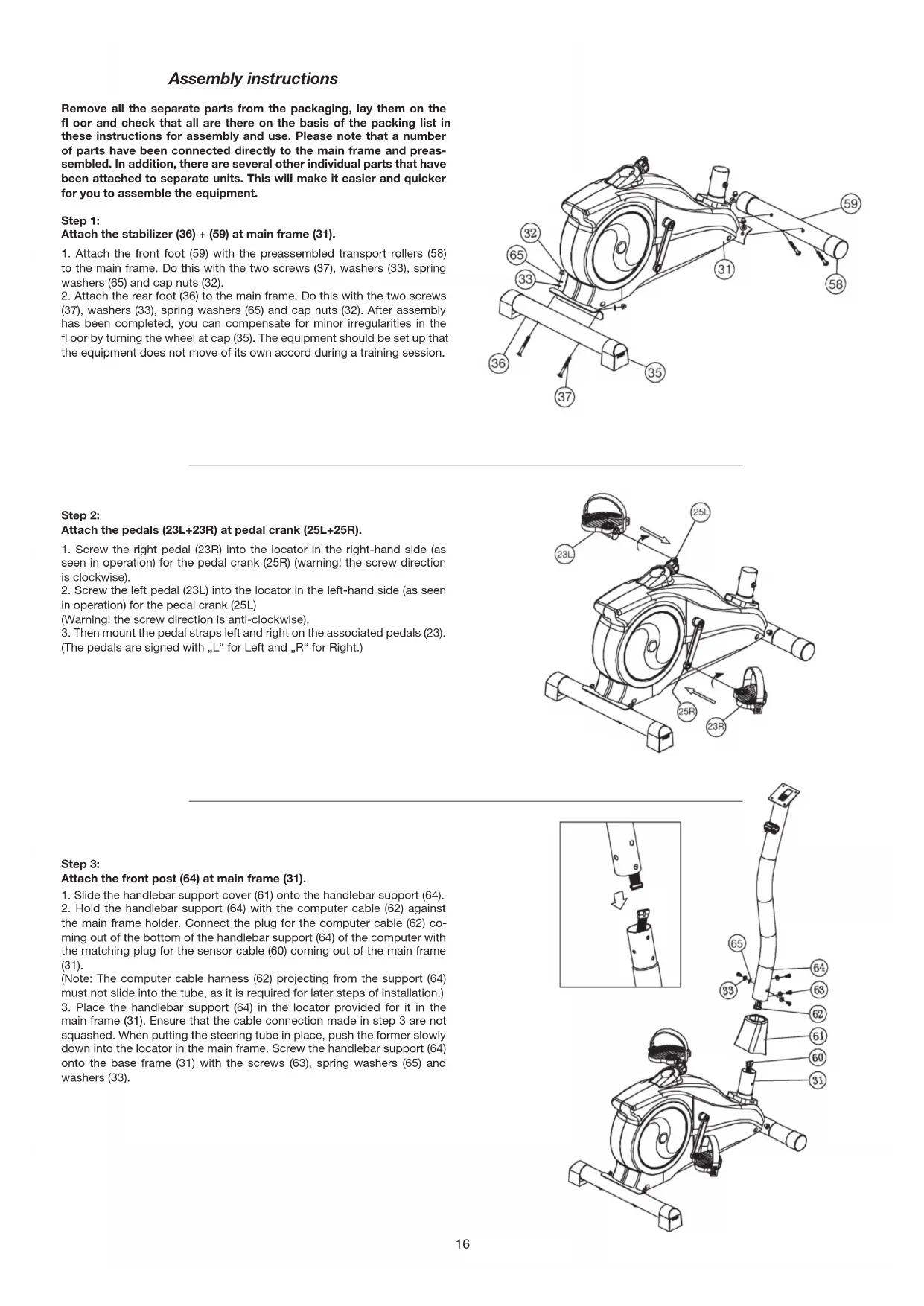
Assembly instructions
Remove all the separate parts from the packaging, lay them on the floor and check that all are there on the basis of the packing list in these instructions for assembly and use. Please note that a number of parts have been connected directly to the main frame and preassembled. In addition, there are several other individual parts that have been attached to separate units. This will make it easier and quicker for you to assemble the equipment.
Step 1: Attach the stabilizer (36) + (59) at main frame (31).
- Attach the front foot (59) with the preassembled transport rollers (58) to the main frame. Do this with the two screws (37), washers (33), spring washers (65) and cap nuts (32).
- Attach the rear foot (36) to the main frame. Do this with the two screws (37), washers (33), spring washers (65) and cap nuts (32). After assembly has been completed, you can compensate for minor irregularities in the floor by turning the wheel at cap (35). The equipment should be set up that the equipment does not move of its own accord during a training session.

text_image
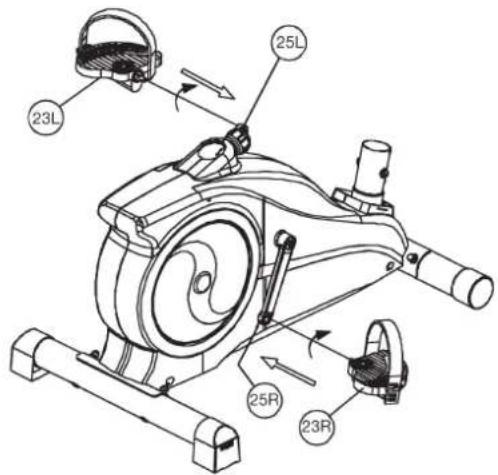
Technical diagram of a mechanical device with numbered components for identificationStep 2: Attach the pedals (23L+23R) at pedal crank (25L+25R).
- Screw the right pedal (23R) into the locator in the right-hand side (as seen in operation) for the pedal crank (25R) (warning! the screw direction is clockwise).
- Screw the left pedal (23L) into the locator in the left-hand side (as seen in operation) for the pedal crank (25L)
(Warning! the screw direction is anti-clockwise). - Then mount the pedal straps left and right on the associated pedals (23). (The pedals are signed with „L“ for Left and „R“ for Right.)
text_image
Technical diagram of a stationary exercise machine with labeled components and directional arrows indicating motion or movement.Step 3: Attach the front post (64) at main frame (31).
- Slide the handlebar support cover (61) onto the handlebar support (64).
- Hold the handlebar support (64) with the computer cable (62) against the main frame holder. Connect the plug for the computer cable (62) coming out of the bottom of the handlebar support (64) of the computer with the matching plug for the sensor cable (60) coming out of the main frame (31).
(Note: The computer cable harness (62) projecting from the support (64) must not slide into the tube, as it is required for later steps of installation.) - Place the handlebar support (64) in the locator provided for it in the main frame (31). Ensure that the cable connection made in step 3 are not squashed. When putting the steering tube in place, push the former slowly down into the locator in the main frame. Screw the handlebar support (64) onto the base frame (31) with the screws (63), spring washers (65) and washers (33).
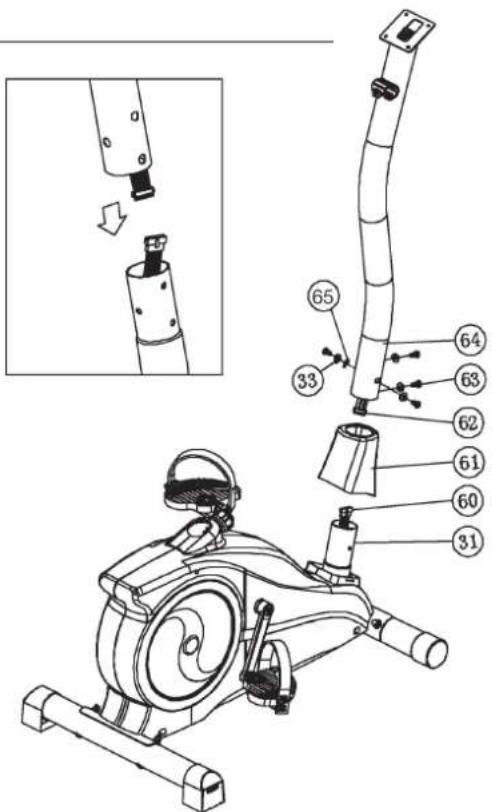
text_image
Technical diagram of an exercise machine with labeled parts and a close-up view showing mechanical assembly details.Step 4: Attach the handlebar (7) at handlebar support (64).
- Guide the preassembled handlebar unit (7) through the upper part of the handlebar post (64) with pulse cable (4) behind the handlebar support and close the bracket of handlebar holder.
- Screw the handlebar (7) in desired position at the handlebar post (64) with spacer (9) and handlebar screw (10).
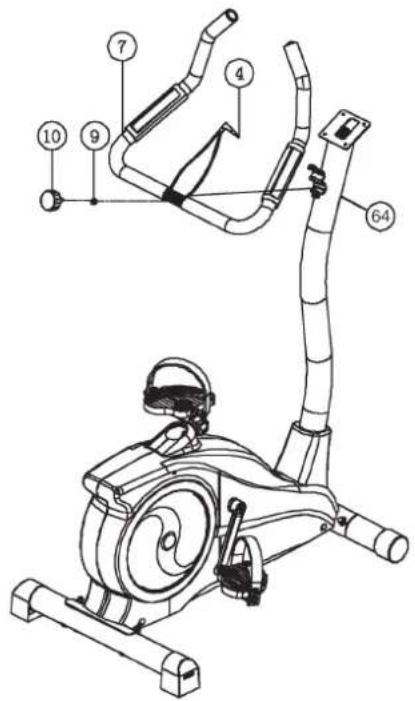
text_image
Technical diagram of an exercise bike with numbered components for identificationStep 5: Attach the saddle (12) at saddle slide (14).
- Push the saddle (12) with saddle bracket into the saddle slide (14) and tight it up in desired position.
- Place the saddle slide (14) into the holder of saddle post (18), set it at the desired position and screw it onto the saddle support (12) by screw (13) washer (16) and star grip nut (17).
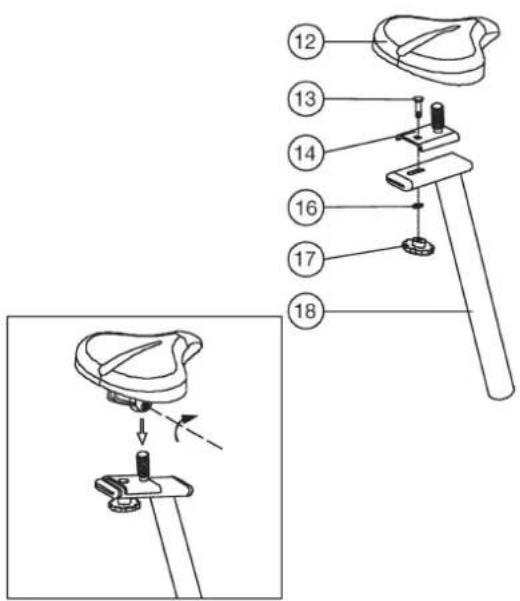
text_image
Technical diagram showing a mechanical assembly with numbered parts and a close-up of a component detail.Step 6: Attach the saddle support (18) at main frame (31).
- Push the saddle support tube (18) into the matching locator in the main frame (31), set it at the desired position and lock it by inserting the bolt with the quick release (20) in place and doing it up tight.
(The setting of the saddle support can be adjusted easily as desired later through turning and pulling the quick release (20).)
Furthermore, you must ensure when setting this desired position that the seat pillar is not pulled out of the main frame further than the highest setting position, which is marked.
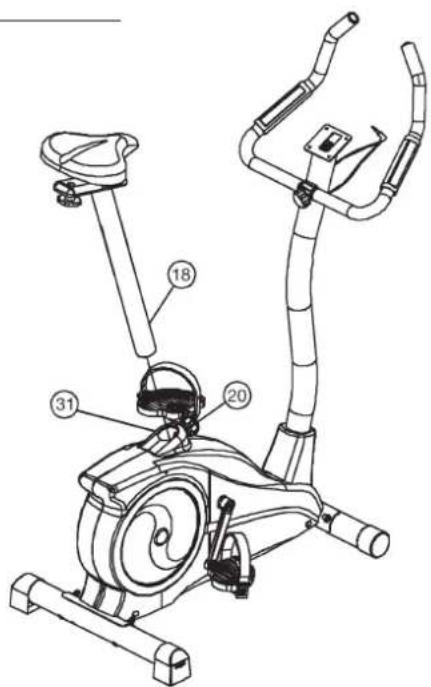
text_image
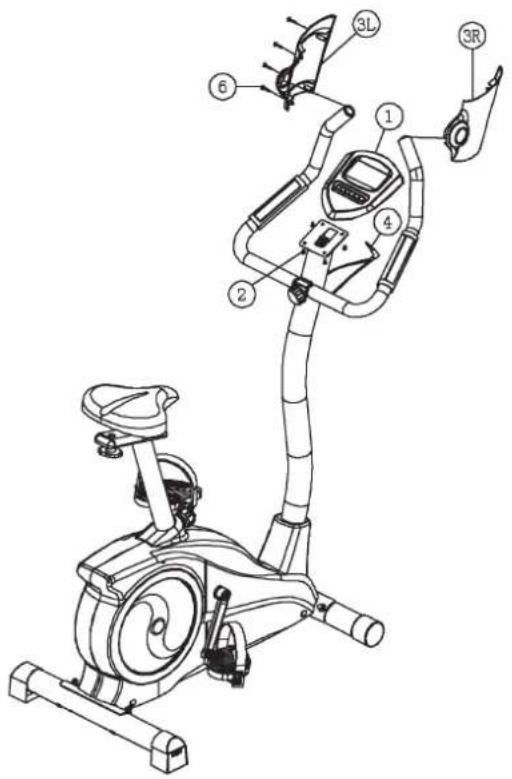
Technical diagram of an exercise bike with numbered components for identificationStep 7: Attach the computer (1) at handlebar support (64).
- Push the plug of the connecting cable (62) projecting from the top of handlebar support (64) into the associated socket of the computer (1).
- Place the computer on the plate provided for it on the handlebar support (64) and attach it with the screws (2).
- Push the plug of the pulse cable (4) projecting from the handlebar (7) into the associated socket of the computer (1).
- Attach the handlebar covers (3) at the handlebar holder of handlebar support (64) with screws (6).
text_image
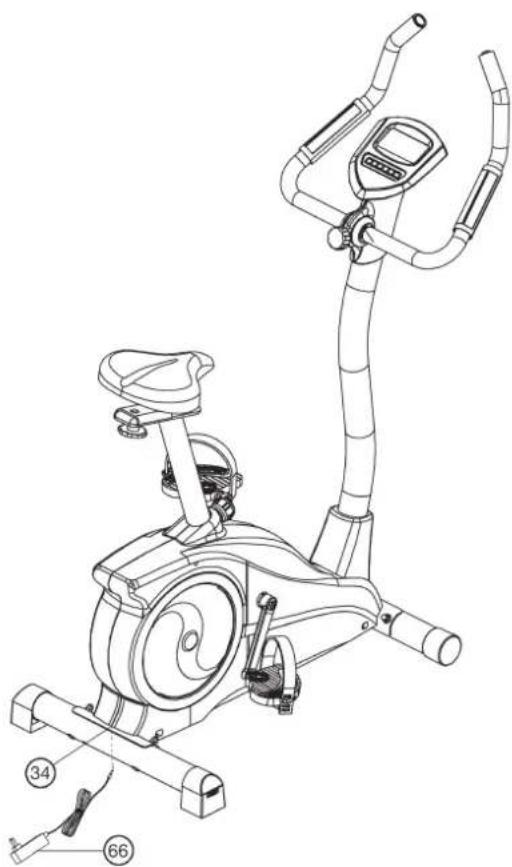
Technical diagram of a stationary exercise bike with labeled components including 3L, 3R, and numbered parts 1 through 6.Step 8: Attach the power.
- Please insert the plug of adaptor (66) to the jack (34) of chain guard.
- Please insert the plug of adaptor (66) to the jack of wall power (230V\~50Hz).
Step 9:
Checks
- Check the correct installation and function of all screwed and plug connections. Installation is thereby complete.
- When everything is in order, familiarise yourself with the machine at a low resistance setting and make your individual adjustments.
Note:
Please keep the tool set and the instructions in a safe place as these may be required for repairs or spare parts orders becoming necessary later.
natural_image
Line drawing of an exercise bike with labeled components (no text or symbols present)Computer instruction for 9807
text_image
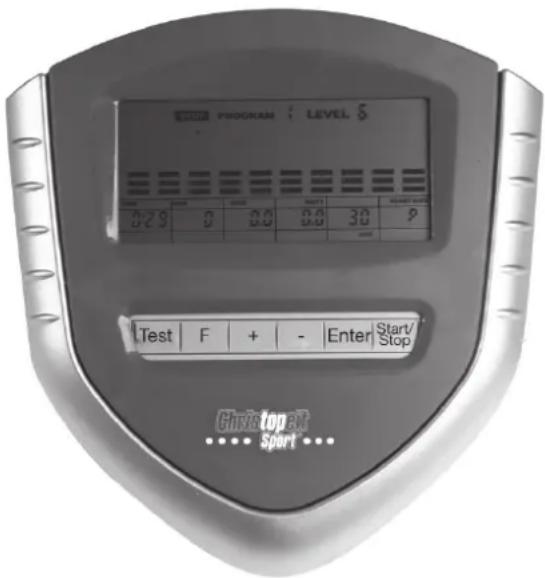
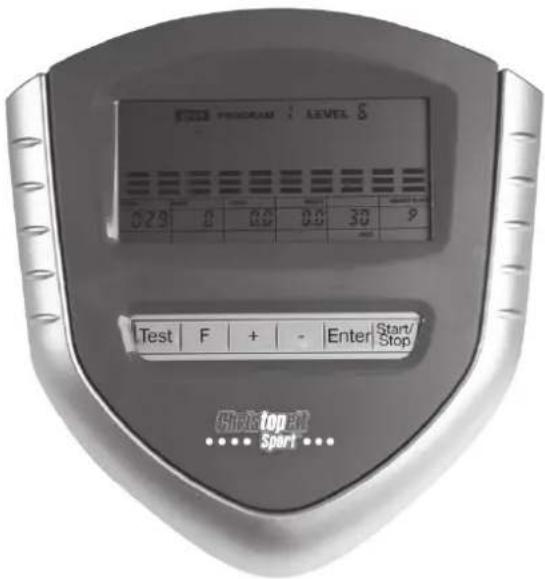
CD-ROM / LEVEL 5 029 0 0.0 0.0 30 9 Test F + - Enter Start/Stop Christop ER • • • • Sport • • •A Time
B Speed / Km/h
C Distance
D KJoule
E RPM
F Pulse
G U1 - U4
H Level of resistance
1 Program No.
J Stop - display
K Start - display
L U1 - U4 - Key
M Start - Stop - key
N Enter - key
O - key
P + key
R Fitness - key
S Watt
The monitor is designed for programmable magnetic bikes and introduced with the following categories:
Key Functions about Displays; Operating Ranges; Things You Should Know Before Exercising; Operation Instructions
KEY FUNCTIONS
There are total 6 keys: START/STOP (S), ENTER (E), U1 - U4, UP (+), DOWN (-), and RECOVERY (Test).
„S“ -key: Starts or stops the chosen program and resets the monitor by pressing and holding for 2 seconds.
„E“ -key: Chooses the functions from PROGRAMS, GENDER, TIME, HEIGHT, WEIGHT, DISTANCE, WATT, TARGET HEART RATE, AGE, and 10 columns. The chosen function shall fl ash. Please note that not all the functions can be selected in every program according to the types of each program.
„U1-U4“ -key: Changes the displays of the values between U1 -U4.
,+“ (up)-key: Selects or increases the values of PROGRAMS, GENDER, TIME, HEIGHT, WEIGHT, DISTANCE, WATT, TARGET HEART RATE, AGE, and 10 columns.
„-“ (down)-key: Selects or decreases the values of PROGRAMS, GENDER, TIME, HEIGHT, WEIGHT, DISTANCE, WATT, TARGET HEART RATE, AGE, and 10 columns.
„Test“ -key: Starts the function of PULSE RECOVERY.
ABOUT DISPLAY
A. START: Indicates the program selected has started.
B. STOP: Indicates the program selected has stopped and users are free to change the programs and the value of functions applied.
C. PROGRAM: Indicates the programs selected from PROGRAM 1 to PROGRAM 13.
D. LEVEL: Indicates the level of loading selected from LEVEL 1 to LEVEL 16.
E. GENDER: Indicates the gender (Male or Female) selected (M/F).
F. TIME/HEIGHT/WEIGHT Display: Indicates only of TIME, HEIGHT, and WEIGHT displayed depending on the programs.
G. RPM/SPEED/ AV/SPEED /KMH (MPH) Display: Indicates value of RPM, SPEED, and KMH (MPH) displayed depending on the programs.
H. DISTANCE/ODO/FAT% Display: Indicates value of DISTANCE and FAT% displayed depending on the programs.
I. KJOULE/WATT/BMR Display: Indicates value of KJOULE, WATT, and BMR displayed depending on the programs.
J. TARGET H.R./BMI/AGE Display: Indicates value of TARGET HEART RATE, BMI, and AGE displayed depending on the programs.
K. HEART RATE/BODY TYPE Display: Indicates value of HEART RATE and BODY TYPE displayed depending on the programs.
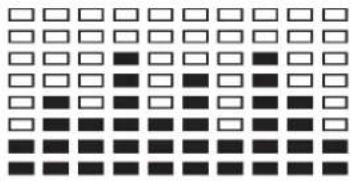
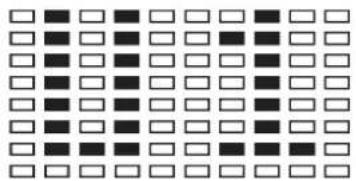
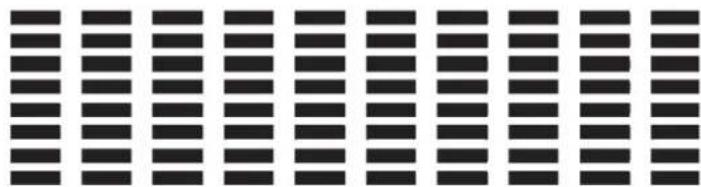
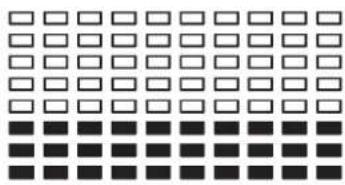
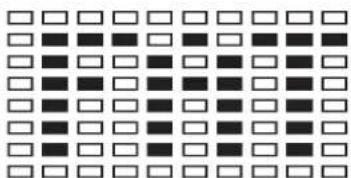
L. LOADING Profi les: There are 10 columns of loading bars, and 8 bars in each column. Each column represents 3 minutes workout (without the change of TIME value), and each bar represents 2 levels of loading.
natural_image
Repeating pattern of black rectangular blocks on white background (no text or symbols)Operating Ranges
| Values | Range (Count up) | Count down | Preset | Increment (Decrement) |
| PROGRAM | 1 ~ 15 | 15 ~ 1 | 1 | 1 |
| LEVEL | 1 ~ 16 | 16 ~ 1 | N/A | 1 |
| GENDER | Male, Female | N/A | Male | N/A |
| TIME | 0:00 ~ 99:00 | 99:00 ~ 5:00 | 0:00 | 1:00 |
| HEIGHT (cm) | 110.0 ~ 199.5 | 199.5 ~ 110.0 | 175.0 | 0.5 |
| WEIGHT (kg) | 10.0 ~ 199.8 | 199.8 ~ 10.0 | 70.0 | 0.2 |
| DISTANCE | 0.0 ~ 999.0 | 999.0 ~ 1.0 | 0.0 | 1.0 |
| WATT | 30 ~ 300 | 300 ~ 30 | 100 | 10 |
| TARGET H.R. | 60 ~ 220 | 220 ~ 60 | 90 | 1 |
| AGE | 10 ~ 99 | 99 ~ 10 | 30 | 1 |
Things You Should Know Before Exercising
A. The values calculated or measured by the computer are for exercise purpose only, not for medical purpose.
B. The Variables May Need To Change In The Programs:
Programs
Variable
P1 - P7 Time, Distance, Kal.
P8 Time, Distance, Kal., 10 Intervals
P9 Time, Distance, Watt
P10 - P12Time, Distance, Kal., Age, Target HR
P13 Gender, Height, Weight, Age
Please note that only 1 value of TIME or DISTANCE can be adjusted. Both adjustments do not exist at the same time. For example, the value of DISTANCE is „0.0“ while the value of TIME is adjusted to be any number except „00:00“.
C. Programs Selection:
There are 13 programs with 1 Recovery including 1 Manual Program, 6 Preset Programs, 1 Speed Independent Program, 3 Heart Rate Control Programs, 1 Body Fat Program, 4 User Setting Programs, and 1 Pulse Recovery Measuring.
D. Program Graph:
Each graph shown is the profile of the loading in each interval (column). With the value of TIME counting up, each interval is 3 minutes that all the columns make up 30 minutes. With the value of TIME counting down, each interval is the value of setup TIME divided by 10. For example, if the time value is setup to 40 minutes, each interval will be 40 minutes divided by 10 intervals (40/10=4). Then, each interval will be 4 minutes.
The following graphs are all the profi les in the monitor.
Program 1 (Manual)
natural_image
Grid of white and black squares with no text or symbolsProgram 2 (Polling)
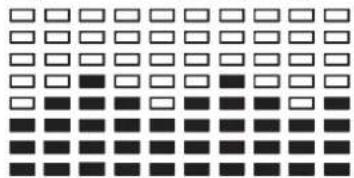
natural_image
Grid of black and white squares with varying shades (no text or symbols)Program 3 (Valley)
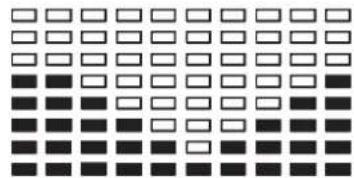
natural_image
Grid of black and white squares with varying shades (no text or symbols)Program 4 (Fat Burn)
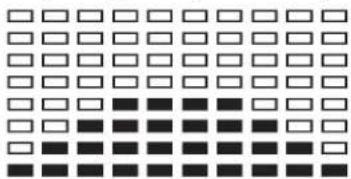
natural_image
Grid of 16 empty squares with varying shades of black and white, no text or symbols presentProgram 5 (Ramp)
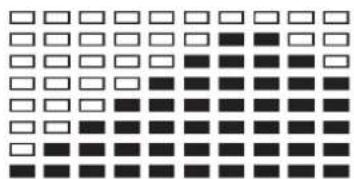
natural_image
Grid of black and white squares with no text or symbolsProgram 6 (Mountain)
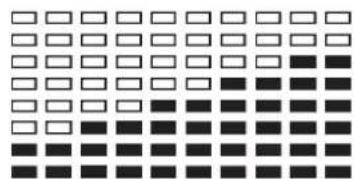
natural_image
Grid of black and white squares with no text or symbolsProgram 7 (Random)
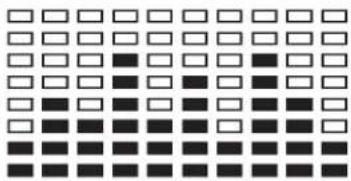
natural_image
Grid of black and white squares with no text or symbolsProgram 8 (U1 - U4)
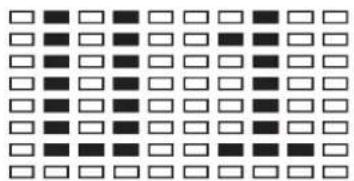
natural_image
Grid of 16 squares with varying shades of gray and black, no text or symbols presentProgram 9 (Speed Independent)
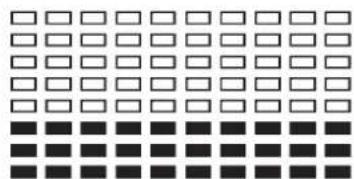
natural_image
Grid of black and white squares with no text or symbolsProgram 10 (60% H.R.C.)
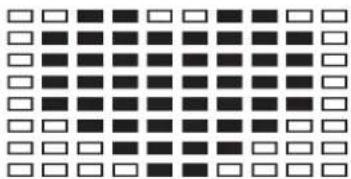
natural_image
Grid of black and white squares with no text or symbolsProgram 11 (75% H.R.C.)
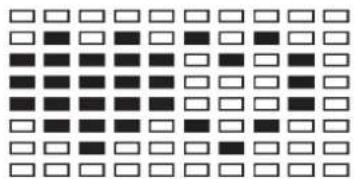
natural_image
Grid of 20 empty squares with varying shades of black, white, and blue (no text or symbols)Program 12 (85% H.R.C.)
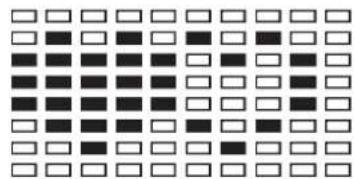
natural_image
Grid of 20 identical black and white squares with no text or symbolsProgram 13 (Body Fat)
natural_image
Grid of white squares with black, white, and blue dots in a 3x3 pattern (no text or symbols)E. Body Types:
There are 9 body types divided according to the FAT% calculated. Type 1 is from 5% to 9%. Type 2 is from 10% to 14%. Type 3 is from 15% to 19%. Type 4 is from 20% to 24%. Type 5 is from 25% to 29%. Type 6 is from 30% to 34%. Type 7 is from 35% to 39%. Type 8 is from 40% to 44%. Type 9 is from 45% to 50%.
F. BMR: Basal Metabolism Ratio
G. BMI: Body Mass Index = Bodyweight : bodyheight ^2
Operation Instructions
A. Exercising with a Specific Goal:
- TIME Control: Sets up a period of time to exercise.
- DISTANCE Control: Sets up a certain distance to exercise.
- BODY FAT Control: Computer designs various programs for different people with different body fat ratio.
- WATT Control: Keeps different bodies burning in desire WATT consumed.
- Heart Rate Control: Keeps users to exercise under a safe heart-beating condition
B. Pulse Rate:
The whole set of heart rate detector include 2 sensors each side. Each sensor has 2 pieces of metal parts. The correct way to get detected is to gently hold both metal parts each hand. With the good signals picked up by the computer, the heart mark in the HEART RATE/BODY TYPE Display shall flash.
C. Manual Program:
PROGRAM 1 is a manual program. Press „ENTER“ key to select TIME, DISTANCE, and AGE. Then, press „+“ or „-“ key to adjust the values. The default level of loading is 6. After pressing „S“ key to exercise, please also apply the heart rate detector appropriately. Users may exercise in any desire level (by pressing „+“ or „-“ during the workout) with a period of time or a certain distance. With the input of age, the computer may suggest a target heart rate to exercise. The suggested heart rate is 85%(220 – age). So, if the heart rate detected equals to or greater than the TARGET H.R., the value of HEART RATE will keep flashing.
Please note that it is a warning for users to slow down or to lower the level of loading.
D. Preset Programs:
PROGRAM 2 to PROGRAM 7 are the preset programs. Press „E“ key to select TIME, DISTANCE, and AGE. Then, press „+“ or „-“ key to adjust the values. Users may exercise with different level of loading in different intervals as the profi les show. After pressing „START/STOP“ key to exercise, please also apply the heart rate detector appropriately. Users may also exercise in any desire level (by pressing „+“ or „-“ during the workout) with a period of time or a certain distance. With the input of age, the computer may suggest a target heart rate to exercise. The suggested heart rate is 85%(220 – age). So, if the heart rate detected equals to or greater than the TARGET H.R., the value of HEART RATE will keep fl ashing.
Please note that it is a warning for users to speed down or to lower the level of loading.
E. User Setting Programs:
Program 8 if the user-setting program that store the calculated values from U1 - U4. Users are also free to edit the values in the order of TIME, DISTANCE, AGE, and the level of loading in 10 intervals. The values and profits will be stored in the memory after setup. After pressing „S“ key to exercise, please also apply the heart rate detector appropriately. Users may also change the ongoing loading in each interval by pressing „+“ or „-“ key, and they will not change the level of loading stored in the memory. With the input of age, the computer may suggest a target heart rate to exercise. The suggested heart rate is 85% (220 - age). So, if the heart rate detected equals to or greater than the TARGET H.R., the value of HEART RATE will keep flashing.
Please note that it is a warning for users to speed down or to lower the level of loading.
F. Speed Independent Program:
Program 9 is a Speed Independent Program. Press „E“ key to select the values of TIME, DISTANCE, WATT, and AGE. Then, press „+“ or „-“ key to adjust the values. After pressing „S“ key to exercise, please also apply the heart rate detector appropriately. During the exercise, the level of loading is not adjustable. In this program, computer will adjust the level of loading according to the value of WATT setup. For example, the level of loading may increase while the speed is too slow. Also, the level of loading may decrease while the speed is too fast. As a result, the calculated value of WATT will close to the value of WATT setup by users. With the input of age, the computer may suggest a target heart rate to exercise. The suggested heart rate is
85%(220 – age). So, if the heart rate detected equals to or greater than the TARGET H.R., the value of HEART RATE will keep fl ashing.
Please note that it is a warning for users to speed down or to lower the level of loading.
G. Heart Rate Control Programs:
Program 10 to Program 12 are the Heart Rate Control Programs. In Program 10 to Program 12, press „E“ key to select TIME, DISTANCE, and AGE. Then, press „+“ or „-“ key to adjust the values. Users may exercise in a period of time or a certain distance with 60% Max Heart Rate in Program10, 75% Max Heart Rate in Program 11, and 85% Max Heart Rate in Program 12. After pressing „S“ key to exercise, please also apply the heart rate detector appropriately. In these programs, the computer will adjust the level of loading according to the heart rate detected. For example, the level of loading may increase while the heart rate detected is lower than TARGET H.R. Also, the level of loading may decrease while the heart rate detected is higher than TARGET H.R. As a result, the user's heart rate will be adjusted to close the TARGET H.R. in the range of TARGET H.R. -5 and TARGET H.R. +5.
H. Body Fat Program:
Program 13 is a special program designed to calculate users' body fat ratio and to design a specific loading profile for users. With 9 different body types, the computer can generate 9 different profi les for each. Press „E“ key to select GENDER, HEIGHT, WEIGHT, and AGE. Then, press „+“ or „-“ key to adjust the values. After pressing „S“ key to calculate body fat, please also apply the heart rate detector appropriately. Then, the calculation values of FAT%, BMR, BMI, BODY TYPE, will show up shortly.
I. Pulse Recovery:
It is a function to check the condition of pulse recovery that is scaled from 1.0 to 6.0 while 1.0 means the best and 6.0 means the worst and the increment is 0.1. In order to get rated correctly, users must test it right after the workout fi nished by pressing „Test“ key and then stop exercising. After the key is pressed, please also apply the heart rate detector appropriately. The test will last for 1 minute and the result will show in the display.
Training instructions
You must consider the following factors in determining the amount of training effort required in order to attain tangible physical and health benefits:
1. Intensity:
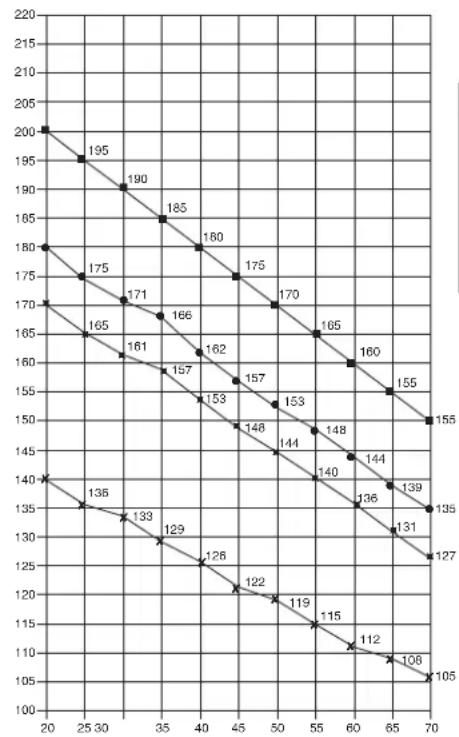
The level of physical exertion in training must exceed the level of normal exertion without reaching the point of breathlessness and / or exhaustion. A suitable guideline for effective training can be taken from the pulse rate. During training this should rise to the region of between 70% to 85% of the maximum pulse rate (see the table and formular for determination and calculation of this).
During the first weeks, the pulse rate should remain at the lower end of this region, at around 70% of the maximum pulse rate. In the course of the following weeks and months, the pulse rate should be slowly raised to the upper limit of 85% of the maximum pulse rate. The better the physical condition of the person doing the exercise, the more the level of training should be encreased to remain in the region of between 70% to 85% of the maximum pulse rate. This should be done by lengthening the time for the training and / or encreasing the level of difficulty.
If the pulse rate is not shown on the computer display or if for safety reasons you wish to check your pulse rate, which could have been displayed wrongly due to error in use, etc., you can do the following:
a. Pulse rate measurement in the conventional way (feeling the pulse at the wrist, for example, and counting the number of beats in one minute).
b. Pulse rate measurement with a suitable specialised device (available from dealers specialising in health-related equipment).
2.Frequency
Most experts recommend a combination of health-conscious nutrition, which must be determined on the basis of your training goal, and physical training three times a week. A normal adult must train twice a week to maintain his current level of condition. At least three training sessions a week are required to improve one's condition and reduce one's weight. Of course the ideal frequency of training is fi ve sessions a week.
3. Planning the training
Each training session should consist of three phases: the warm-up phase, the training phase, and the cool-down phase. The body temperature and oxygen intake should be raised slowly in the warm-up phase. This can be done with gymnastic exercises lasting fi ve to ten minutes.
Then the actual training (training phase) should begin. The training exertion should be relatively low for the first few minutes and then raised over a period of 15 to 30 minutes such that the pulse rate reaches the region of between 70% to 85% of the maximum pulse rate.
In order to support the circulation after the training phase and to prevent aching or strained muscles later, it is necessary to follow the training phase with a cool-down phase. This should be consist of stretching exercises and / or light gymnastic exercises for a period of fi ve to ten minutes.
4. Motivation
The key to a successful program is regular training. You should set a fixed time and place for each day of training and prepare yourself mentally for the training. Only train when you are in the mood for it and always have your goal in view. With continuous training you will be able to see how you are progressing day by day and are approaching your personal training goal bit by bit.
line
| X | Y1 | Y2 | |---|---|---| | 20 | 200 | 195 | | 25 | 195 | 190 | | 30 | 190 | 185 | | 35 | 185 | 180 | | 40 | 180 | 175 | | 45 | 175 | 170 | | 50 | 170 | 165 | | 55 | 165 | 160 | | 60 | 160 | 155 | | 65 | 155 | 150 | | 70 | 150 | 145 | | 20 | 170 | 140 | | 25 | 165 | 135 | | 30 | 161 | 133 | | 35 | 157 | 129 | | 40 | 153 | 126 | | 45 | 148 | 122 | | 50 | 144 | 119 | | 55 | 140 | 115 | | 60 | 136 | 112 | | 65 | 131 | 108 | | 70 | 127 | 105 | The chart displays a single descending trend for each data point. The x-axis ranges from 20 to 70, and the y-axis ranges from 100 to 220. The labels above the lines represent the specific data points in each row.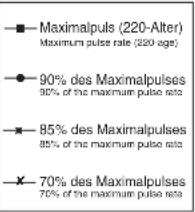
bar
| Category | Value (%) | |---|---| | Maximalpuls (220-Alter) Maximum pulse rate (220-age) | | | ● | 90% des Maximalpulses 90% of the maximum pulse rate | | × | 85% des Maximalpulses 85% of the maximum pulse rate | | ✗ | 70% des Maximalpulses 70% of the maximum pulse rate |Calculation formula: Maximum pulse rate = 220 - age (220 minus your age)
90% of the maximum pulse rate = (220 - age) x 0.9
85% of the maximum pulse rate = (220 - age) x 0.85
70% of the maximum pulse rate = (220 - age) x 0.7
text_image
Technical diagram of a mechanical device with numbered components for identificationEtape n° 2:
text_image
Technical diagram of a stationary exercise machine with labeled components and motion arrowsEtape n° 3:
text_image
Technical diagram of an exercise machine with numbered parts and a close-up view of the component being adjusted.text_image
Technical diagram of an exercise bike with numbered components for identificationtext_image
Technical diagram showing a mechanical assembly with numbered parts and a close-up of a component being inserted.text_image
Technical diagram of an exercise bike with numbered components labeled 18, 20, and 31.text_image
Technical diagram of a stationary exercise bike with labeled components including 3L, 3R, and numbered parts 1 through 6.natural_image
Line drawing of an exercise bike with labeled components (no text or symbols present)text_image
Technical diagram of a mechanical device with numbered components for identificationStap 2:
Montage van de pedalen (23L+23R)
text_image
Technical diagram of a stationary exercise machine with labeled components and directional arrows indicating motion or movement.Stap 3:
text_image
Technical diagram of an exercise machine with numbered parts and a close-up view of the component being adjusted.text_image
Technical diagram of an exercise bike with numbered components for identificationStap 5: Montage van de zadelhouder (14) en de zadel (12).
text_image
Technical diagram showing a mechanical assembly with numbered parts and a close-up of a component being adjusted.Stap 6: Montage van de zadelsteunbuis (18).
text_image
Technical diagram of an exercise bike with numbered components labeled 18, 20, and 31.Stap 7: Montage van de computer (1)
text_image
Technical diagram of a stationary exercise bike with labeled components including 3L, 3R, and numbered parts 1 through 6.natural_image
Line drawing of an exercise bike with labeled components (no text or symbols present)text_image
Programma 4 (fi tness)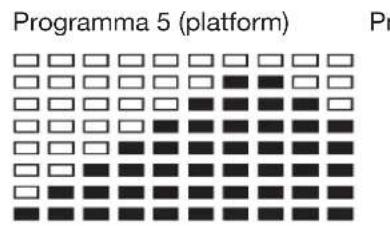
text_image
Programma 5 (platform) Pr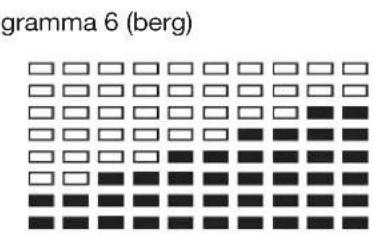
natural_image
Grid of black and white squares with no text or symbols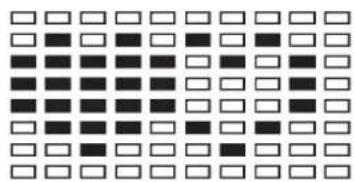
natural_image
Grid of white squares with black, white, and blue dots in a 3x4 pattern (no text or symbols)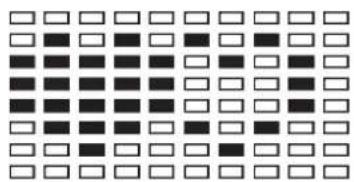
natural_image
Grid of alternating black and white squares with no text or symbols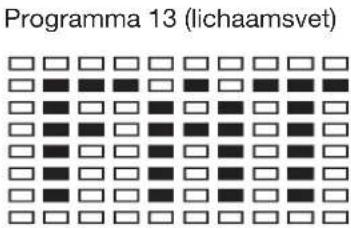
text_image
Programma 13 (lichaamsvet)Programma 1: handmatig
3. Planning van de training
text_image
Technical diagram of a mechanical device with numbered components for identificationtext_image
Technical diagram of a stationary exercise machine with labeled components and directional arrows indicating motion or movement.text_image
Technical diagram of an exercise machine with numbered components and a close-up view of the device's internal structure.text_image
Technical diagram of an exercise bike with numbered components for identificationtext_image
Technical diagram showing a mechanical assembly with numbered parts and a close-up of a component being adjusted.text_image
Technical diagram of an exercise bike with numbered components for identificationtext_image
Technical diagram of a stationary exercise bike with labeled components including 3L, 3R, and numbered parts 1 through 6.natural_image
Line drawing of an exercise bike with labeled components (no text or symbols present)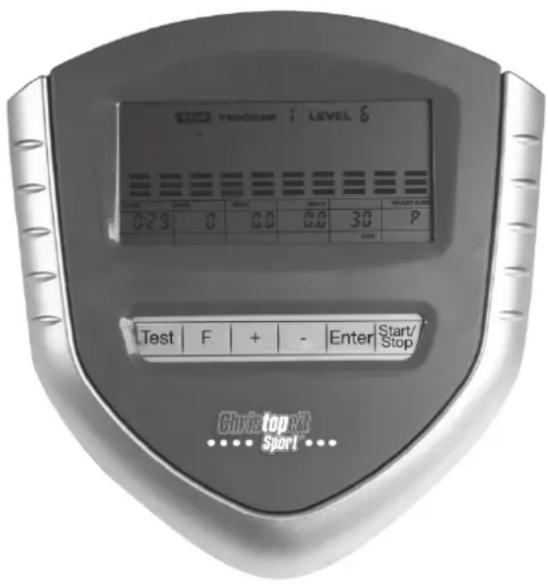
text_image
SICCO PROGRAM ; LEVEL 6 0-25 0 8.0 8.0 30 P TEST SUB TEST F + - Enter Start/ Stop Christopark Sport...Компьютер
natural_image
Grid of black and white squares with no text or symbolsnatural_image
Grid of white and black squares with no text or symbolsnatural_image
Grid of 20 identical squares with varying fill and shading styles (no text or symbols)natural_image
Grid of white squares with black and white dots in a 4x4 pattern (no text or symbols)text_image
top Sports© by Top-Sports Gilles GmbH D-42551 Velbert (Germany)
Service:
Tel.: +49 (0)2051/6067-0
Fax: +49 (0)2051/6067-44
