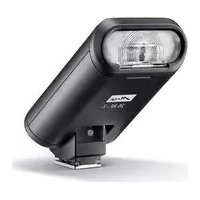
Mecablitz 26 AF2 - Flash METZ - Free user manual and instructions
Find the device manual for free Mecablitz 26 AF2 METZ in PDF.


| Product type | Electronic flash for digital SLR cameras |
| Brand | Metz |
| Model | Mecablitz 26 AF2 |
| Maximum guide number (ISO 100) | 26 with tele diffuser 85 mm; 20 with standard reflector 35 mm; 14 with wide-angle diffuser 24 mm |
| Reflector coverage | 35 mm (standard), 24 mm (with built-in wide-angle diffuser), 85 mm (with tele diffuser) |
| Compatible flash modes | Canon E-TTL/E-TTL II, Nikon i-TTL/i-TTL-BL, Fujifilm TTL, Olympus TTL, Pentax P-TTL, Sony pre-flash TTL/ADI |
| Wireless slave mode | Yes (Canon, Nikon, Olympus, Pentax, Sony) |
| LED video light | Built-in, 2 power levels, ~30 lux at 1 m, battery life 2 to 5 h |
| Power supply | 2 AAA batteries (LR3/HR3/FR3): alkaline, NiMH or lithium |
| Battery life (number of flashes) | Approx. 100 (alkaline), 110 (NiMH), 160 (lithium) |
| Recycling time | 0.3 to 8 seconds |
| Color temperature | Approx. 5600 K |
| Dimensions (W x H x D) | Approx. 63 x 85 x 85 mm (total height 110 mm in normal position) |
| Weight (without batteries) | Approx. 115 g |
| Head tilt | 4 positions: 0°, 20°, 40°, 90° |
| Flash mount | Standard hot shoe with lock |
| AF assist light | Yes, range 6 to 9 m; close limit 0.7 to 1 m |
| Firmware update | Via micro USB port (micro-USB type) |
| Auto power off | Standby after 10 min, Auto-Off after 1 h (can be disabled in slave and video mode) |
| Supplied accessories | Built-in wide-angle diffuser, tele diffuser, hot shoe base, quick guide, pouch |
| Optional accessories | Flash stand S60, TTL cables for Canon (TCC-10) and Nikon (TCC-20) |
| Maintenance | Clean with a soft dry cloth; do not use cleaning products |
Frequently Asked Questions - Mecablitz 26 AF2 METZ
User questions about Mecablitz 26 AF2 METZ
0 question about this device. Answer the ones you know or ask your own.
Ask a new question about this device
Download the instructions for your Flash in PDF format for free! Find your manual Mecablitz 26 AF2 - METZ and take your electronic device back in hand. On this page are published all the documents necessary for the use of your device. Mecablitz 26 AF2 by METZ.
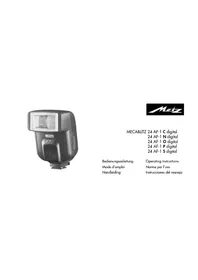
USER MANUAL Mecablitz 26 AF2 METZ
natural_image
Black Motz 254-7 brand light bulb device (no visible text or symbols on body)www.metz-mecatech.de
Vorwort....3
6.1 Indirect flitsen 72
11Troubleshooting....78
6.1 Indirect flitsen
ong. 63mm x 85mm (110mm) x 85mm
1 Safety instructions....85
2 Dedicated flash functions ..... 86
3 Preparing the flash unit for use....89
3.1 Mounting the flash unit....89
3.2 Power supply 90
3.3 Switching the flash unit on and off ..... 91
3.4 Standby / Auto OFF for the flash unit.....91
4 LED displays on the flash unit ..... 92
4.1 Flash readiness indication ..... 92
4.2 Correct exposure indication ..... 92
5 Flash modes....93
5.1 TTL operating modes ..... 93
5.1.1 E TTL- and E TTL II - flash mode (Canon) ..... 93
5.1.2 i-TTL/i-TTL-BL flash mode (Nikon) ..... 93
5.1.3 TTL flash mode with measurement pre-flash (Olympus) 94
5.1.4 P-TTL flash mode (Pentax) ..... 94
5.1.5 Preflash TTL and ADI metering (Sony) ..... 94
5.1.6 TTL flash mode with measurement pre-flash (FUJIFILM) 94
5.2 Automatic Fill-in flash mode ..... 94
5.3 Manual flash exposure correction in TTL flash mode..95
5.4 Remote slave flash mode ..... 95
5.4.1 26AF-2 Canon 95
5.4.2 26AF-2 Nikon....96
5.4.3 26AF-2 Olympus....96
5.4.4 26AF-2 Pentax....96
5.4.5 26AF-2 Sony....96
5.4.6 26AF-2 FUJIFILM....97
5.5 Video light 98
6 Flash techniques....98
6.1 Bounce flash 98
6.2 Using the integrated wide-angle diffuser / telephoto lens cover....99
6.3 Flash exposure memory FE ..... 100
7 Automatic flash sync speed control ..... 101
8 Automatic AF auxiliary light. 101
9 Triggering control (auto-flash)....102
10 Care and maintenance....103
10.1 Firmware updates....103
10.2 Conditioning the flash capacitor ..... 103
11 Troubleshooting....104
12 Technical data....106
13 Optional accessories....107
Disposal of batteries 107
Introduction
Thank you for choosing a Metz mecatech product.
We are delighted to welcome you as a customer.
You will of course be impatient to start using the flash unit.
However, it is worthwhile reading the operating instructions and learning how to use the unit correctly.
The 26AF-2 flash unit comes in different versions and is accordingly suitable for:
- Digital Canon cameras with E-TTL and E-TTL-II - flash metering.
- Digital Nikon cameras with i-TTL flash metering.
- Olympus/Panasonic - Digital cameras with TTL flash control and flash socket system, as well as the compatible digital cameras from Leica.
- Digital Pentax cameras with P TTL flash metering.
- Digital Sony reflex cameras with TTL preflash and ADI metering.
- Digital FUJIFILM system cameras with TTL flash control.
This flash unit is not suited for other brands of cameras.
Take a look at the diagrams at the end of the manual.

Attention - Extremely important safety information!
Proper Use
This flash unit is intended solely for taking pictures of motifs in the photographic field. It may be operated only with the accessories described in this instruction manual or the accessories approved by Metz.
The flash unit may not be used for any purpose other than that described above.
① Locking button
② ON / OFF button
③ Battery compartment
④ LED video light button
Press once: 1/1 performance
LED stays on
Press twice: 1/2 performance
LED flashes slowly
Video light off due to switch to another operating mode.
⑤ SLAVE button
⑥ TTL button
⑦ STATUS LED
Flash-ready indication (green)
Exposure control indication (red)
⑧ USB socket (micro)
⑨ LED video light/AF auxiliary light
Video light if:
Switch video light on by pressing the button ④ or data bus of the camera* for video (dependent on camera model)
⑩ Slave sensor
⑪ Telephoto lens cover
⑫ Wide angle diffuser disk (recessed)
*dependant on camera model
1 Safety instructions
The flash unit may in no event be activated in the vicinity of inflammable gases or liquids (petroleum, solvents etc.). RISK OF EXPLOSIONS!
Do not flash directly into eyes from a close distance! Direct flashing into the eyes of persons or animals can cause damage to the retina and severe disruption of the vision – up to and including permanent blindness!
⚠️ Never use a flash unit to photograph car, bus, bicycle, motorbike or train drivers while they are driving. Blinding the driver can lead to an accident!
⚠️ If the housing has been damaged in such a way that internal components are exposed, the flash unit may no longer be used. Remove the batteries! Do not touch any internal components. HIGH VOLTAGE!
After repeated flashing, do not touch the diffuser. Risk of burns!
Do not dismantle the flash unit! HIGH VOLTAGE! Repairs should only be performed by authorised service personnel.
- Only use the power sources designated and authorised in the operating manual!
- Do not open the batteries or short them!
- In no event the batteries be exposed to high temperatures like direct sunlight, fire or similar!
- Never throw flat/dead batteries onto a fire!
- Do not use any toxic batteries or rechargeable batteries!
- Remove the used batteries immediately from the device! Chemicals can escape from used batteries (so-called “leaks”) resulting in damage to the device!
- Batteries may not be recharged!
- Do not expose the flash unit to water drops and splashes!
- Protect your flash unit from heat and high air humidity! GB Do not keep it in the glove compartment of your car!
- Rapid changes in temperature may lead to condensation. If this occurs, allow time for the unit to become acclimatized!
-
When you activate the flash, there should be no opaque material directly in front of or on the reflector cover (flash window). The intense energy emissions can otherwise lead to scorching or spotting of the material and/or the reflector cover.
-
After a series of flashes with full power and short intervals, a pause of at least 3 minutes must be observed after each series of 20 flashes!
- When taking a series of flash shots at full light output and with rapid recycling times due to the high level of thermal energy.
2 Dedicated flash functions
Dedicated flash functions are flash functions that have been specially adapted to a given camera system. Depending on the type of camera, different flash functions are supported.
26AF-2 Canon
- Flash-ready indication in camera viewfinder/camera display
• Automatic flash sync speed control
• E-TTL flash mode / E-TTL II flash mode
• Automatic fill-in flash control - Manual flash exposure correction for E-TTL / E-TTL II (set on the camera if possible)
- Flash exposure storage FE with E-TTL / E-TTL II
- 1st or 2nd curtain synchronisation (REAR) (must be supported by the camera)
- AF auxiliary light control (set on the camera if possible)
- Programmed auto flash mode
- Wireless remote slave E-TTL/M flash mode (set on the camera if possible)
- Wake-up function for the flash unit
26AF-2 Nikon
- Flash-ready indication in camera viewfinder/camera display.
- Correct exposure indicator in camera viewfinder /camera display.
• Automatic flash sync speed control. - i TTL flash mode / i TTL BL flash mode
- Manual flash i TTL exposure correction (set on the camera if possible)
- Flash exposure measurement memory for i TTL and i TTL BL ^1)
- /1st or 2nd curtain synchronisation (REAR) (set on the camera if possible)
- AF auxiliary light control (dependant on camera model)
- Programmed auto flash mode.
- Wireless remote slave TTL/M flash mode (set on the camera if possible)
- Preflash function for reducing the red-eye effect (set on the camera if possible)
- Triggering control/auto-flash
- Wake-up function for the flash unit.
1) not with Coolpix cameras
26AF-2 FUJIFILM
- Flash-ready indication in camera viewfinder/camera display.
• Automatic flash sync speed control.
• TTL with measuring preflash
• Automatic flash / triggering control - Manual flash TTL exposure correction (set on the camera if possible)
- 1st or 2nd curtain synchronisation (REAR) (set on the camera if possible)
- AF auxiliary light control (dependant on camera model)
- Programmed auto flash mode.
- Preflash function for reducing the red-eye effect (set on the camera if possible)
- Wake-up function for the flash unit.
26AF-2 Olympus
- Flash-ready indication in camera viewfinder/camera display.
• Automatic flash sync speed control - TTL flash mode (with measurement pre-flash)
- Micro-FourThirds/FourThirds-System compatible
• Automatic fill-in flash control - Manual flash exposure correction for TTL (set on the camera if possible)
• Automatic flash / triggering control - 1st or 2nd curtain synchronisation (2nd Curtain / SLOW2) (set on the camera if possible)
• AF auxiliary light control (set on the camera if possible) - Programmed auto flash mode
- Wireless remote slave TTL/M flash mode (set on the camera if possible)
- Preflash for red-eye reduction
- Wake-up function for the flash unit
26AF-2 Pentax
- Flash-ready indication in camera viewfinder/camera display
• Automatic fill-in flash control - P-TTL flash mode
• Automatic P-TTL-fill-in flash control - Manual flash exposure correction (set on the camera if possible)
- AF auxiliary light control (set on the camera if possible)
- Programmed auto flash mode
- Wireless remote slave P-TTL flash mode (set on the camera if possible)
- Preflash for red-eye reduction
• Automatic flash / triggering control - Wake-up function for the flash unit
26AF-2 Sony
- Flash-ready indication in camera viewfinder/camera display
• Automatic fill-in flash control - Preflash TTL and ADI metering
• Automatic fill-in flash control - Manual flash exposure correction
- /1st or 2nd curtain synchronisation (REAR) (set on the camera if possible)
- AF auxiliary light control (set on the camera if possible)
- Wireless remote slave TTL/M flash mode (set on the camera if possible)
- Programmed auto flash mode
- Wake-up function for the flash unit
It is impossible to describe all camera types and their individual dedicated flash functions within the scope of these instructions. Therefore, please refer to the flash mode description in your camera's operating instructions to find out which functions are supported and which ones have to be set manually on the camera. Using lenses not equipped with a CPU (i.e., lenses without auto focus mode), results in certain functional limitations!
3 Preparing the flash unit for use
3.1 Mounting the flash unit
Mounting the flash unit on the camera
Turn off the camera and flash before mounting or removing.
- Press and Locking button ① (Remove the protective cap on Sony) and slide the flash unit, together with the connection base, into the camera's hot shoe as far as possible.
- Release Locking button ① – the flash unit is now locked.
In camera housings which have no locking hole, the spring-loaded locking pin retracts into the housing of the flash unit to avoid damage to the surface.
Removing the flash unit from the camera
Turn off the camera and flash before mounting or dismounting.
- Press and Locking button① and remove the flash unit with the connection base from the camera.
3.2 Power supply
Suitable batteries/rechargeable batteries
The flash unit can be operated with any of the following batteries:
- 2 nickel-metal-hydride batteries 1.2V, type IEC HR3 (size AAA).
- 2 alkaline-manganese dry cell batteries 1.5V, type IEC LR3 (size AAA).
• 2 lithium batteries 1.5V, type IEC FR3 (size AAA).
Please only use the power sources given above. If other power sources are used, there is a risk of damaging the flash unit.
If your flash unit is not going to be used for an extended period of time, remove the batteries.
Replacing batteries
The disposable / rechargeable batteries are empty or dead if the recycling time (time from triggering a full-power flash, e.g. for TTL through a test flash, to the moment the flash-ready indicator lights up again) exceeds 60 sec. In VIDEO mode, the video light is switched off and the Video button LED flashes quickly.
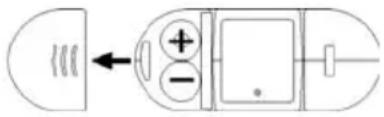
- Switch off the flash unit by pressing ON/OFF button ② until all LED displays turn off.
- Remove the flash unit from the camera and slide the battery compartment cover ③ outwards.
- Insert batteries according to the picture.
- Depress the inserted batteries with the battery compartment cover ③ and push the battery compartment cover ③ back inside.
When inserting batteries, ensure that the polarity is correct and matches the symbols in the battery compartment. Inserting the batteries in the wrong direction can destroy the flash unit! Always replace all batteries simultaneously, and make sure that batteries are the same brand and have the same capacity.
Flat or dead batteries should not be disposed of with ordinary household waste. Help protect the environment, and dispose of flat/dead batteries at the appropriate collection points.
3.3 Switching the flash unit on and off
- Press ON/OFF button②.
The flash unit switches on afterwards with the mode of operation that was used last..
- To switch it off, press ON/OFF button② until all LED displays turn off.
To check the function, press the TTL-button for (approx. 3sec.). A testflash will be released.
If the flash unit will not be used for an extended period of time, we recommend that you switch off the flash unit with the ON/OFF button ② and remove the power source (disposable/rechargeable batteries).
3.4 Standby / Auto OFF for the flash unit
The flash unit is configured so that 10 minutes after -
- being switched on,
- a flash is fired
• the shutter release is actuated - the camera's exposure metering system is switched off...
... switched to stand-by mode, (Auto-OFF) to save energy and to protect the power source from unintentional discharging.
The flash-ready indicator ⑦ goes out.
The STATUS LED ⑦ flashes red in stand-by mode.
The most recently used operating setting is retained after automatic shutdown and is immediately restored when the camera is switched on.
The flash unit can be turned on again by tapping the shutter release (wake-up function).
The flash unit shuts off completely approx. 1 hour after last use (AUTO-OFF).
In slave and Videolicht the automatic cut-off is not activated.
The flash unit should always be turned off using the ON/OFF button ② if it is not going to be used for an extended period.
4 LED displays on the flash unit
4.1 Flash readiness indication
When the flash capacitor on the flash unit is charged, the STATUS-LED⑦ button lights up in green, thus indicating that the flash unit is ready.
This means that flash light can be used for the next shot. Flash readiness is also transmitted to the camera and indicated accordingly in the camera's viewfinder.
If a photograph is taken before flash readiness appears, then the flash unit will not be triggered. If the camera has already switched to flash sync speed, the shot may have the wrong exposure.
4.2 Correct exposure indication
If the exposure is correct, then button STATUS-LED ^⑦ lights up in red for around 3 seconds if the photograph has been correctly exposed in flash modes TTL; (see 5.1)!
If there is no exposure control indication after the shot in the TTL mode of operation, then the photograph was underexposed.
In that case, you must:
- set the next smaller f-stop (e.g. use f-stop 8 instead of 11), or
- reduce the distance to the subject or to the reflection surface (e.g. for indirect flashes), or
- set a higher ISO value on the camera.
5 Flash modes
Depending on the camera or flash unit type, various TTL flash modes and the SLAVE flash mode are available.
The video light can be switched on for videos.
The flash mode is set by using the assigned TTL, SLAVE or LED button.
5.1 TTL operating modes
The TTL flash modes offer a simple method of obtaining very good flash shots. In TTL flash mode, the exposure is measured by a sensor in the camera. It measures the light reflected by the subject through the lens (TTL = "Through The Lens"). Here the camera automatically determines the flash performance required for a correct exposure of the shot.
The advantage of the TTL flash mode is that all factors influencing exposure (e.g. filters, change of aperture and focal length changes with zoom lens, extensions for close-ups, etc.) are automatically taken into account in adjusting the flash light.
If the shot is exposed correctly, the STATUS LED ^⑦ lights up in red for approx. 3 seconds (see 4.2).
To define the range of the flash unit, see table (page 160).
Setting procedure
- Switch on the flash unit with the ON/OFF button ②.
- Press the TTL button ⑥ on the flash unit to set the TTL mode of operation.
- Set a suitable mode of operation on the camera, e.g. P, S, A.
- Tap the shutter release to transfer data between the flash unit and the camera.
5.1.1 E TTL- and E TTL II - flash mode (Canon)
E-TTL and E-TTL-II flash modes are digital flash modes.
5.1.2 i-TTL/i-TTL-BL flash mode (Nikon)
The i-TTL flash mode is supported by CLS-compatible Nikon cameras.
The i-TTL-BL flash mode are only supported by CLS-compatible cameras if lenses are used that transmit distance data to the camera (for example, "D-AF Nikkor lens").
When shooting this data is taken into consideration in addition in adjusting the flash exposure.
Some cameras do not support the BL function in combination with SPOT exposure metering! In these cases, the normal i-TTL flash mode is set.
5.1.3 TTL flash mode with measurement pre-flash (Olympus)
The TTL flash mode with measuring preflash is a further development of the standard TTL flash mode of analogue cameras.
Depending on the camera model, the preflashes precede the main flash by such a short interval that they practically cannot be distinguished from the main flash! The preflashes do not contribute to the lighting of the shot.
5.1.4 P-TTL flash mode (Pentax)
The P-TTL flash mode is a digital TTL flash mode that is a further development of the TTL flash mode of analogue cameras.
5.1.5 Preflash TTL and ADI metering (Sony)
Preflash TTL and ADI metering are digital TTL flash operating modes and refined versions of the TTL flash operation found in analogue cameras.
In the case of ADI metering, additional distance data from the lens is incorporated into the flash exposure process. The selection and/or setting of the preflash TTL and ADI metering operating modes are carried out on the camera (see camera operating instructions).
5.1.6 TTL flash mode with measurement pre-flash (FUJIFILM)
The TTL flash mode with measuring preflash is a further development of the standard TTL flash mode of analogue cameras.
5.2 Automatic Fill-in flash mode
The automatic fill-in flash mode is activated by most cameras when the automatic programme P is selected and by Vari or subject programmes during daylight (see camera operating manual).
Fill-in flash mode overcomes troublesome shadows and produces a more balanced exposure between subject and background with contre-jour shots. The camera's computer-controlled metering system sets the most suitable combination of shutter speed, aperture and flash output.
Ensure that the contre-jour light source does not shine directly into the lens, as this will interfere with the camera's TTL metering system!
There is no setting or display for automatic fill-in flash in the flash unit.
5.3 Manual flash exposure correction in TTL flash mode This function must be set on the camera, see the camera user manual.
The auto flash exposure mode of most cameras is adjusted to a reflection factor of 25% (the average reflection factor of flash subjects).
A dark background that absorbs much of the light or a highly reflective bright background (backlit shots, for example) may result in, respectively, underexposure or overexposure of the subject.
To offset these effects, the flash exposure can be adjusted manually for the shot with a correction value. The extent of the correction depends on the contrast between the subject and background!
Tip:
Dark subject against light background: positive correction factor.
Light subject against dark background: negative correction factor.
Exposure correction by means of alteration of the lens aperture setting is impossible, since the camera's automatic exposure program regards the altered aperture setting as the normal working aperture setting. When setting the correction factor, the distance shown in the display can change and be adjusted to the correction factor (depending on the camera model)!
After the shot, remember to cancel the TTL flash exposure correction in the camera!
Strongly reflecting objects in the motif can have a negative impact on the camera's automatic exposure. The photograph will be underexposed. Remove reflecting objects or set a positive correction value.
5.4 Remote slave flash mode
Applicable to all versions:
The slave flash units must be able to receive the light from the master or controller flash unit with the integrated slave sensors ⑩ for the remote mode. Set the group and the remote channel on the camera, the master or the controller flash unit.
5.4.1 26AF-2 Canon
The flash unit supports Canon's wireless E TTL Remote System in slave flash mode (set on the camera if possible).
Wireless remote control of one or more slave flash units by one master or controller flash unit on the camera (for example, mecablitz 64AF-1 digital Canon) or by the camera master (depending on the camera type) is thus possible
For slave flash unit 26AF-2, slave group A as well as all remote channels 1, 2, 3 and 4 are always set.
5.4.2 26AF-2 Nikon
The flash unit supports the wireless Nikon remote system in slave flash mode (set on the camera if possible) and is compatible with the Nikon “Advanced Wireless Lighting” system.
Here wireless remote control of one or more slave flash units by a master flash unit (depending on the camera type) on the camera (e.g. mecablitz 64AF-1 digital Nikon) or by the camera's master is possible.
For slave flash unit 26AF-2, slave group A as well as all remote channels 1, 2, 3 and 4 are always set.
5.4.3 26AF-2 Olympus
GB As a slave flash unit (set on the camera if possible), the flash unit is compatible with the wireless Olympus RC flash system (RC = remote control).
Here wireless remote control of one or more slave flash units by a master flash unit (depending on the camera type) on the camera (e.g. mecablitz 64AF-1 digital Olympus) or by the camera's master is possible.
For slave flash unit 26AF-2, slave group A as well as all remote channels 1, 2, 3 and 4 are always set.
5.4.4 26AF-2 Pentax
The flash unit supports the wireless Pentax PTTL remote system in slave flash mode (set on the camera if possible).
Here wireless remote control of one or more slave flash units by a master or controller flash unit on the camera (for example, 64AF-1 digital Pentax) or by the camera's master is possible.
For slave flash unit 26AF-2, all remote channels 1, 2, 3 and 4 are always set.
5.4.5 26AF-2 Sony
The flash unit supports the wireless Sony remote system (CTRL and CTRL +n slave flash mode (set on the camera if possible).
Wireless remote control of one or more slave flash units by one master or controller flash unit on the camera (for example, mecablitz 64AF-1 digital Sony) or by the camera master (depending on the camera type) is thus possible.
For slave flash unit 26AF-2, slave group RMT as well as all remote channels 1, 2, 3 and 4 are always set.
5.4.6 26AF-2 FUJIFILM
The remote slave flash mode is not supported by FUJIFILM cameras at the time of printing this user guide.
The 26AF-2 automatically switches to the TTL mode of operation after around 1-2 seconds after pressing the SLAVE button ⑤.
When remote slave mode is supported by FUJIFILM cameras, the 26AF-2 can be used as a slave flash unit after a software update. Afterwards, wireless remote control of one or more slave flash units by a master flash unit (depending on the camera type) on the camera or by the camera's master is possible.
For slave flash unit 26AF-2, slave group A as well as all remote channels 1, 2, 3 and 4 are always set.
Depending on the camera model, the camera's internal flash unit can also function as a master or controller flash unit. Please consult the respective camera operating instructions for further tips on setting the master or controller flash unit.
Remote slave flash mode settings
- Switch on the flash unit with the ON/OFF button②.
- Press the SLAVE button⑤ on the flash unit to set the Remote-Slave mode of operation. The setting is immediately effective and automatically saved.
Testing remote flash mode
- Place the slave flash units in the desired positions for the shot. Use flash unit mounting foot to set up the slave flash unit.
Assembly / disassembly of the stand
- Press and Locking button ① and slide the flash unit, together with the connection base, into the mounting foot as far as possible.
- Press and Locking button ① and remove the flash unit with the connection base from the mounting foot.
- Wait for the flash readiness of all connected flash units. Once the slave flash units have achieved flash readiness, the STATUS LED⑦ lights up in green.
- Press the manual firing button on the master or controller flash unit to fire a test flash. The slave flash units respond with a test flash, if supported by the camera.
If a slave flash unit does not issue a test flash, correct the position of the slave flash unit to enable the slave sensor ⑩ to receive the light sent by the master/controller flash unit.
5.5 Video light
Use the video light to illuminate shots of moving images at close range.
- Press ON/OFF button②.
The flash unit switches on afterwards with the mode of operation that was used last. - Press the LED button ④ on the flash unit to switch on the video light. Each time you press the “LED” button ④, the light output switches between “full” and “half”
If the LED button ④ lights up continuously, you have set the full light output; if it blinks slowly, the light output is set to half.
If the batteries are almost empty, the video light switches off and the LED button④ blinks quickly.
GB
6 Flash techniques
6.1 Bounce flash
Bounce flash illuminates the subject more softly and reduces dense shadows. It also reduces the drop in light from foreground to background that occurs for physical reasons.
The flash unit can be tilted vertically for indirect flash. To avoid colour cast in your shots, the reflective surface should be colour-neutral or white.
The flash unit can be tilted via a hinge in the mounting foot. There are 4 different stop positions:
- 0° / "lying" on the camera First close-up range position, also for transport
- 20° Second close-up range position
- 40° Normal position (unit flashes in the direction of the optical axis)
- 90° / main body is vertical Position for indirect flashes (diagonally upwards)
Please note:
- The two close-up range positions result in illuminated areas at different distances. In the 0^ position, a test photograph, for example, should be taken to check whether there is any shadowing caused by the lens.
- Indirect flashes with the 90^ position illuminate the subject more softly and reduce dense shadows. This also reduces the light loss from the foreground to background that occurs for physical reasons.
- When tilting the main flash body, make sure that it snaps into place in the 90^ position to prevent direct light from falling on the subject from the reflector.
- To avoid colour casts in your shots, the reflective surface should be colour-neutral or white.
6.2 Using the integrated wide-angle diffuser / telephoto lens cover
The wide-angle diffuser and the telephoto lens cover change the beam angle of the flash unit. The wide-angle diffuser enlarges it so that shots with focal lengths up to 24mm ^1) are also illuminated uniformly.
This requires a reduction of the guide number and hence the range as well. By contrast, the telephoto lens cover bundles the light cone for focal lengths of 85mm ^1) and more, increases the guide number and hence increases the range.
1) Focal length information based on 35 mm format
Wide-angle diffuser
When not in use, the integrated wide-angle diffuser is pushed into the body of the flash unit below the reflector cover.
- Pull the diffuser vertically out of the flash body and allow it to fold onto the reflector cover of the flash unit.
The diffuser is held in position by spring force.
- To remove it, proceed in the reverse order.
Telephoto lens cover
- Place on the reflector cover of the flash unit so that the lens cover snaps into place.
- Pull to remove.
6.3 Flash exposure memory FE
Several Nikon, Sony and Canon cameras have a flash exposure memory (FV memory).
This is supported by the flash unit in the Nikon i-TTL and i-TTL-BL and in the Canon E-TTL flash modes.
It can be used to define and store the exposure level for the subsequent shot before the shot is actually taken.
This can be useful when, for example, the flash exposure has to be adjusted to specific details that may not be necessarily be identical with the main subject.
GB
This function is activated on the camera. The subject details for the flash exposure are measured and brought into focus by the cameraís AF sensor/metering window.
Pressing the camera's AE-L/AF-L button (Nikon) or FE button (Canon; the description may vary from camera to camera; see the camera operating manual) causes the flash unit to fire a test flash.
The stored metering value, for example “EL” or “FEL”, is then displayed in the camera viewfinder.
The camera uses the reflected light of the test flash to determine the light output required for the subsequent exposure. The actual main subject can then be brought into focus with the camera's AF sensor/metering window. When the shutter release is pressed, the picture will be exposed with the previously defined light output of the flash unit!
In Canon cameras, the flash exposure memory FE is not supported during the green fully-automatic programme, the Vari programme and the subject programmes!
Further details regarding settings and handling can be found in the camera operating manual!
7 Automatic flash sync speed control
Depending on the camera model and camera mode, the shutter speed is switched to flash sync speed when flash readiness is reached (see the camera's operating instructions).
Shutter speeds cannot be set faster than the flash sync speed, or they are switched automatically to the flash sync speed. Various cameras have a sync speed range, for example from 1/60 sec to 1/250 sec (see the camera's operating instructions). The sync speed set by the camera depends on the camera mode, the ambient light, and the focal length of the lens used.
Shutter speeds slower than the flash sync speed can be set according to the camera mode and the selected flash synchronisation.
In cameras with a between-the-lens shutter, the flash sync speed is not controlled automatically. As a result, the flash can be used at all shutter speeds.
8 Automatic AF auxiliary light
With system cameras, the AF auxiliary light is possible only if the camera supports it.
The automatic AF auxiliary light ⑨ is activated in the flash unit by the camera when the ambient lighting conditions become inadequate for automatic focusing. The white video LED is activated and the subject on which the camera can focus is illuminated. The range is approx. 6-9 m (with a standard 1.7/50 mm lens). Parallax error between lens and the AF auxiliary light ⑨ limits the close-up range with the AF auxiliary light ⑨ to approx. 0.7 m to 1 m.
If the AF auxiliary light ⑨ is to be activated by the camera, the “Single AF (S)” or “ONE SHOT” autofocus mode of operation must be set on the camera and the flash unit must indicate flash readiness. Some camera models support only the camera’s internal AF measuring beam.
In this case, the automatic AF auxiliary light ⑨ of the flash unit is not activated (as in the case of compact cameras; see the camera's operating instructions)!
Low-speed zoom lenses can significantly curtail the range of the AF auxiliary light ⑨!
Some cameras support the AF auxiliary light⑨ in the flash unit only with the camera's central AF sensor.
9 Triggering control (auto-flash)
On some cameras, the flash will not be fired when the prevailing light is sufficient for an exposure. When the camera shutter release is depressed, no flash exposure is triggered.
In various cameras, the triggering control only works in the full program mode or "P" program or must be activated on the camera (see camera operating instructions).
GB
10 Care and maintenance
Remove any dirt and dust with a soft, dry cloth. Do not use any cleaning agents – plastic components could be damaged.
10.1 Firmware updates
The firmware for the flash unit can be updated via the USB socket ⑧ and can conform to the functions of future cameras (firmware update).
Checking the firmware version
- Switch off the flash unit; to do this, press ON/OFF button ② until all LED displays turn off.
- Switch on the flash unit while holding down the TTL button⑥, then release the button.
The TTL ⑥ button on the flash unit blinks, followed by the SLAVE button ⑤.
The number of blink pulses indicates the firmware version; for example, if the TTL button⑥ blinks once and the SLAVE button⑤ blinks 3 times, firmware version 1.3 is installed.
For more information, visit the Metz homepage at www.metz-mecatech.de.
10.2 Conditioning the flash capacitor
The flash capacitor built into the flash unit undergoes a physical change when the device has not been used for a long time. For this reason it is necessary to switch the device every three months for approx. 10 mins. The power supplies must deliver enough power so that flash standby lights up no later than 1 min after switching on.
11 Troubleshooting
Should it happen that the flash does not work as specified, switch off the flash unit for about 10 seconds using the ON/OFF button②. Check the camera settings and make sure the foot of the flash unit is mounted correctly in the camera's accessory shoe.
Replace the batteries with new or freshly charged batteries.
The flash unit should function normally again once it is switched back on. If this is not the case, contact your local dealer.
Below is a list of some of the problems that may occur when the flash unit is used. For each item, possible causes and remedies for the problem are listed.
The AF measuring beam of the flash unit is not activated.
- The flash unit is not ready for firing.
- The camera is not in „Single-AF (S)“ or „ONE SHOT“ mode.
- The camera supports only its own internal AF measuring beam.
- Some cameras support the AF measuring beam in the flash unit only with the camera's central AF sensor. If a peripheral AF sensor is selected, then the AF measuring beam will not be activated in the flash unit. Activate the central AF sensor.
Automatic switching to the flash sync speed fails to occur.
- The camera has a between-the-lens shutter (as do most compact cameras), Switching to sync speed is therefore unnecessary.
- The camera operates with shutter speeds that are slower than the flash sync speed. Depending on the camera mode, there is no switch to flash sync speed (see the camera's operating instructions).
The shots have shadows in the bottom of the image.
- Because of parallax error between lens and flash unit, close-up shots may not, depending on the focal length at the bottom of the image, be fully illuminated. Turn the wide-angle diffuser in front of the reflector.
The shots are too dark.
- The subject is beyond the range of the flash unit. Note: Using bounce flash reduces the range of the flash unit.
- The subject contains very bright or highly reflective areas. The metering system of the camera or flash unit is deceived as a result. Set manually a positive flash exposure correction at the camera, e.g. +1 EV.
The shots are too bright.
- Certain minimum lighting distances must be maintained for close-up shots to avoid over-exposure. The minimum distance from the subject should be at least 10% of the maximum range. (Table of flash unit range, see page 160)
12 Technical data
Max. guide numbers at ISO 100:
14 with 24mm wide-angle lens
20 with 35 mm standard reflector
26 with 85 mm telephoto diffuser
Illumination of the reflector
(small picture format 24 x 36): 35mm
24 mm with integrated wide-angle diffuser
85 mm with telephoto diffuser
Flash modes:
Canon: ....E-TTL, E-TTL II, Remote-Slave mode
Nikon: .....i-TTL, i-TTL-BL, Remote-Slave mode
FUJIFILM: ..TTL
Olympus: ..TTL, Remote-Slave mode
Pentax: . . . . P-TTL, Remote-Slave mode
Sony: .....Pre-flash TTL, ADI measurement, Remote-Slave mode
Video light:_High-power LED
(also used for AF auxiliary light), typically
30 lux at 1 m distance, 2 brightness levels
Operating time: 2-5h
Power supply:
Two micro AAAs (alkaline-manganese batteries, NiMH rechargeable batteries, lithium batteries)
Colour temperature: Ca. 5600 K
Synchronisation:
low-voltage ignition
Number of flashes:
approx. 100 with high-capacity alkaline-manganese batteries
approx. 110 with NiMH rechargeable batteries
approx. 160 with lithium batteries.
Recycling time: approx. 0,3 s - 8 s.
Vertical swivel ranges and lock-in positions of the reflector head (see fold-out page):
0° First close-up range position / “lying” on the camera for transport
20° 2nd close-up range position
40° Normal position (unit flashes in the direction of the optical axis)
90° Indirect flashing (unit flashes diagonally upwards)
Dimensions in mm (W x H x D) in the normal position:
approx. 63 mm x 85 mm (110 mm) x 85 mm
Weight: approx. 115g (without power supplies)
Included:
Flash unit with integrated wide-angle diffuser and tele-photo lens cover, mounting foot, brief instructions and case.
13 Optional accessories
- Flash unit mounting foot S60 (order No. 000000607) for Slave mode.
- TTL-Connecting cable for Canon TCC-10 (order No. 000305118)
- TTL-Connecting cable for Nikon TCC-20 (order No. 000305126)
We accept no liability for malfunctions of or damage to the flash unit caused by the use of accessories of other manufacturers!
Errors excepted. Subject to changes!
Disposal of batteries
Do not dispose of spent batteries with domestic rubbish. Please return spent batteries to collecting points should they exist in your country!
Please return only fully discharged batteries.
Normally, batteries are fully discharged if:
- the device they powered switches itself off and indicates "Spent Batteries".
- they no longer function properly after prolonged use.
To ensure short-circuit safety please cover the battery poles with adhesive tape.
circa 63mm x 85mm (110mm) x 85mm
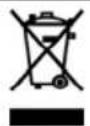
Your Metz product was developed and manufactured with high-quality materials and components which can be recycled and/or re-used.
This symbol indicates that electrical and electronic equipment must be disposed of separately from normal gar-bage at the end of its operational lifetime.
Please dispose of this product by bringing it to your local collection point or recycling centre for such equipment.
This will help to protect the environment in which we all live.
- Distances are given in metres and apply to use without a wide-angle diffuser or alternatively telephoto lens cover.
With a wide-angle diffuser, the range is reduced by approximately 1 f-stop; with the telephoto lens cover, it increases by approximately 1 f-stop.
- The values shown in bold are an example for ISO 200.
Note:
Within the framework of the CE approval symbol, correct exposure was evaluated in the course of the electromagnetic compatibility test.
Do not touch the contacts!
In exceptional cases the unit can be damaged if these contacts are touched.
CE Atención:
E
natural_image
Close-up of a black circular mechanical component with mounting base (no visible text or symbols)mecablitz mecalightmecastudio
natural_image
Studio setup with two lighting equipment and a black box on tripod (no visible text or symbols)
natural_image
Black-and-white photo of a DSLR camera with two rectangular screens mounted on a stand (no text or symbols visible)Metz - always first class.
C ∈
716 47 0098.A1
D F NL GB I E

- Indirect flitsen
- Introduction
- Proper Use
- Safety instructions
- Dedicated flash functions
- 26AF-2 Canon
- 26AF-2 Nikon
- 26AF-2 FUJIFILM
- 26AF-2 Olympus
- 26AF-2 Pentax
- 26AF-2 Sony
- Preparing the flash unit for use
- Mounting the flash unit
- Removing the flash unit from the camera
- Turn off the camera and flash before mounting or dismounting.
- Power supply
- Suitable batteries/rechargeable batteries
- Switching the flash unit on and off
- Standby / Auto OFF for the flash unit
- LED displays on the flash unit
- Flash readiness indication
- Correct exposure indication
- Flash modes
- TTL operating modes
- Setting procedure
- E TTL- and E TTL II - flash mode (Canon)
- i-TTL/i-TTL-BL flash mode (Nikon)
- TTL flash mode with measurement pre-flash (Olympus)
- P-TTL flash mode (Pentax)
- Preflash TTL and ADI metering (Sony)
- TTL flash mode with measurement pre-flash (FUJIFILM)
- Automatic Fill-in flash mode
- Ensure that the contre-jour light source does not shine directly into the lens, as this will interfere with the camera's TTL metering system!
- Manual flash exposure correction in TTL flash mode This function must be set on the camera, see the camera user manual.
- Tip:
- Remote slave flash mode
- 26AF-2 Canon
- 26AF-2 Nikon
- 26AF-2 Olympus
- 26AF-2 Pentax
- 26AF-2 Sony
- 26AF-2 FUJIFILM
- Remote slave flash mode settings
- Testing remote flash mode
- Assembly / disassembly of the stand
- Video light
- Flash techniques
- Bounce flash
- Please note:
- Using the integrated wide-angle diffuser / telephoto lens cover
- Wide-angle diffuser
- Telephoto lens cover
- Flash exposure memory FE
- Automatic flash sync speed control
- Automatic AF auxiliary light
- Triggering control (auto-flash)
- Care and maintenance
- Firmware updates
- Checking the firmware version
- Conditioning the flash capacitor
- Troubleshooting
- The AF measuring beam of the flash unit is not activated.
- Automatic switching to the flash sync speed fails to occur.
- The shots have shadows in the bottom of the image.
- The shots are too dark.
- The shots are too bright.
- Technical data
- Dimensions in mm (W x H x D) in the normal position:
- Included:
- Optional accessories
- Disposal of batteries
- Note:
Brand : METZ
Model : Mecablitz 26 AF2
Category : Flash