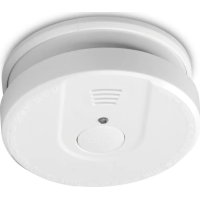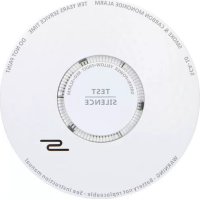
SCA10 - Smoke detector ALECTO - Free user manual and instructions
Find the device manual for free SCA10 ALECTO in PDF.



User questions about SCA10 ALECTO
0 question about this device. Answer the ones you know or ask your own.
Ask a new question about this device
Download the instructions for your Smoke detector in PDF format for free! Find your manual SCA10 - ALECTO and take your electronic device back in hand. On this page are published all the documents necessary for the use of your device. SCA10 by ALECTO.
USER MANUAL SCA10 ALECTO
| CE 001CPR2019-07-10 |
| Hesdo BV, Azielaan 12, 's-Hertogenbosch The Netherlands 19 001CPR2019-07-10 |
| EN 14604:2005/AC:2008 Smoke Alarm + CO alarm Device SCA-10 Fire detection in buildings |
| Essential characteristic 1: Pass Essential characteristic 2: Pass Essential characteristic 3: Pass Essential characteristic 4: Pass Essential characteristic 5: Pass Essential characteristic 6: Pass Essential characteristic 7: Pass Essential characteristic 8: Pass |
GENERAL:
| CE 001CPR2019-07-10 |
| Hesdo BV, Azielaan 12, 's-Hertogenbosch The Netherlands 19 001CPR2019-07-10 |
| EN 14604:2005/AC:2008 Smoke Alarm + CO alarm Device SCA-10 Fire detection in buildings |
| Essential characteristic 1: Pass Essential characteristic 2: Pass Essential characteristic 3: Pass Essential characteristic 4: Pass Essential characteristic 5: Pass Essential characteristic 6: Pass Essential characteristic 7: Pass Essential characteristic 8: Pass |
ALLGEMEIN:
| CE 001CPR2019-07-10 |
| Hesdo BV, Azielaan 12, 's-Hertogenbosch The Netherlands 19 001CPR2019-07-10 |
| EN 14604:2005/AC:2008 Smoke Alarm + CO alarm Device SCA-10 Fire detection in buildings |
| Essential characteristic 1: Pass Essential characteristic 2: Pass Essential characteristic 3: Pass Essential characteristic 4: Pass Essential characteristic 5: Pass Essential characteristic 6: Pass Essential characteristic 7: Pass Essential characteristic 8: Pass |
GENERAL:
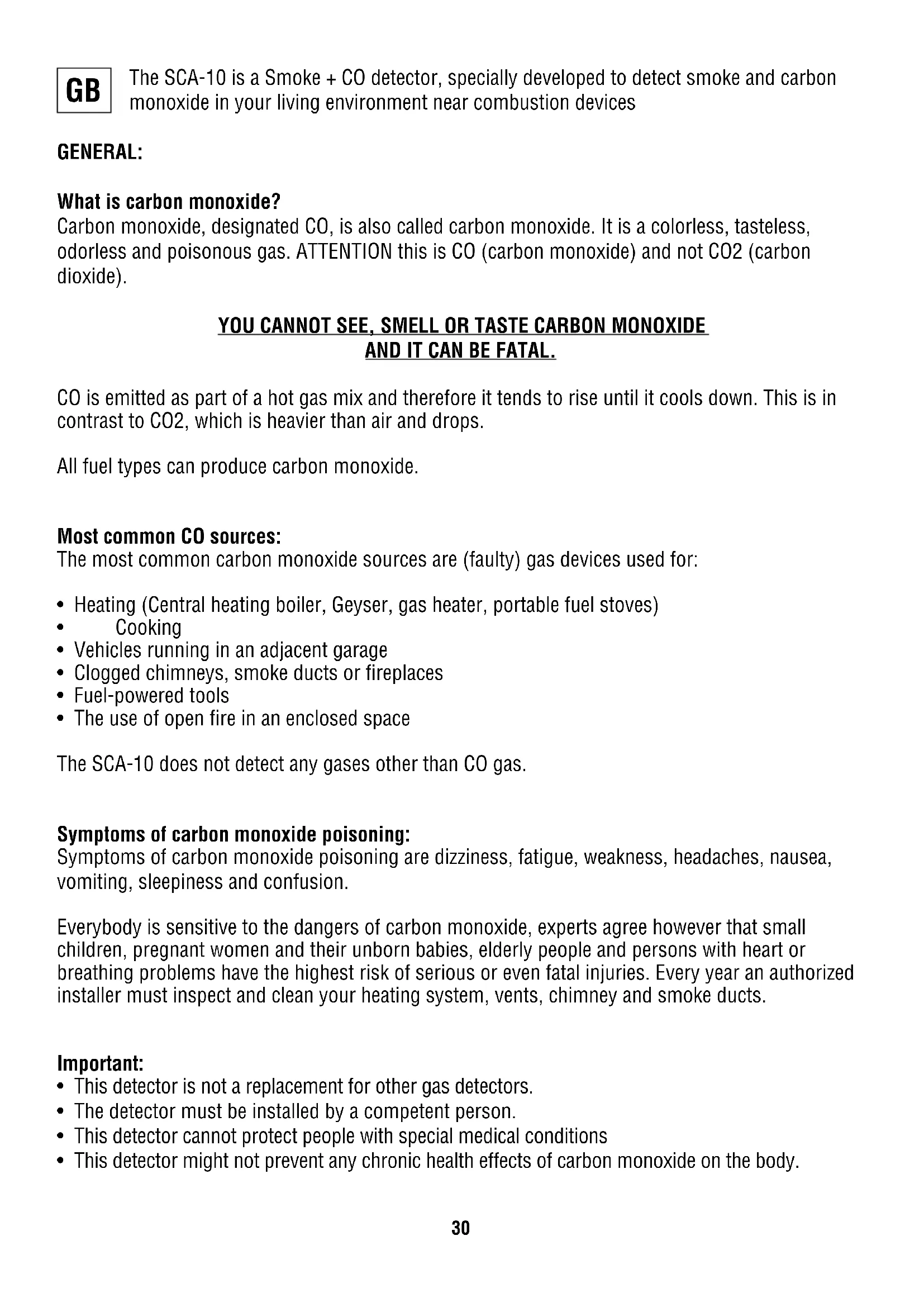
What is carbon monoxide?
Carbon monoxide, designated CO, is also called carbon monoxide. It is a colorless, tasteless, odorless and poisonous gas. ATTENTION this is CO (carbon monoxide) and not CO2 (carbon dioxide).
YOU CANNOT SEE, SMELL OR TASTE CARBON MONOXIDE AND IT CAN BE FATAL.
CO is emitted as part of a hot gas mix and therefore it tends to rise until it cools down. This is in contrast to CO2, which is heavier than air and drops.
All fuel types can produce carbon monoxide.
Most common CO sources:
The most common carbon monoxide sources are (faulty) gas devices used for:
- Heating (Central heating boiler, Geyser, gas heater, portable fuel stoves)
Cooking - Vehicles running in an adjacent garage
Clogged chimneys, smoke ducts or fireplaces - Fuel-powered tools
- The use of open fire in an enclosed space
The SCA-10 does not detect any gases other than CO gas.
Symptoms of carbon monoxide poisoning:
Symptoms of carbon monoxide poisoning are dizziness, fatigue, weakness, headaches, nausea, vomiting, sleepiness and confusion.
Everybody is sensitive to the dangers of carbon monoxide, experts agree however that small children, pregnant women and their unborn babies, elderly people and persons with heart or breathing problems have the highest risk of serious or even fatal injuries. Every year an authorized installer must inspect and clean your heating system, vents, chimney and smoke ducts.
Important:
- This detector is not a replacement for other gas detectors.
- The detector must be installed by a competent person.
- This detector cannot protect people with special medical conditions
-
This detector might not prevent any chronic health effects of carbon monoxide on the body.
-
This detector is not a replacement for the correct installation, use and periodic maintenance of combustion equipment, nor adequate ventilation of spaces in which these devices are being used.
- We recommend you to weekly test the detector using the "TEST/SILENCE" button on the detector.
- The detector's CO part only sounds the alarm when carbon monoxide is present at its sensor. Therefore, it's possible for carbon monoxide to be present elsewhere and the alarm doesn't sound.
- When the alarm sounds, possible harmful carbon monoxide levels are present! Carbon monoxide can be deadly!
| CO concentration | Period of inhaling and symptoms |
| 50PPM | The maximum concentration a healthy adult can withstand in 8 hours. |
| 200PPM | After 2-3 hours, mild headache, sensations of weakness, dizziness, nausea. |
| 400PPM | Within 1-2 hours, ache in forehead; after 3 hours, life-threatening. |
| 800PPM | Within 45 mins, dizziness, nausea, convulsions; Loss of consciousness within 2 hours; Fatal within 2-3 hours. |
| 1600PPM | Within 20 mins, headache, dizziness, nausea; Fatal within 1 hour. |
| 3200PPM | Within 5-10 mins, headache, dizziness, nausea; Fatal within 25-30 mins. |
| 6400PPM | Within 1-2 min, headache, dizziness, nausea; Fatal within 10-15 mins. |
| 12800PPM | Fatal within 1-3 min. |
Alarm
When the detector sounds the alarm, carbon monoxide (CO) might be present which can be fatal. Therefore, never ignore this alarm.
When there's an active alarm, the red LED will illuminate and beep tones are emitted. When the smoke dissipates or the carbon monoxide concentration drops below 40PPM, the alarm will stop.
What to do when the alarm sounds:
- Open doors and windows and immediately do outside into the fresh air. Check whether everybody has left the building.
- Call an official installer to inspect the correct functioning and state of maintenance of the combustion source (gas or oil powered equipment) that could be the cause for the CO alarm.
- Only enter the building again after the cause has been resolved and the building has been well ventilated.
The alarm sound can be switched off by pressing the TEST/SILENCE button.
It will only switch off in case smoke is detected.
Recommended locations for the installation of the SCA-10 General
- Install the detector in a location where the alarm can be heard inside bedrooms.
- Install the detector on a spot where the weekly check can be performed easily.
- We recommend using the combi indicator only in areas where a combustion device is present - which would allow CO and smoke to move quickly towards the ceiling and give a quick alert for both.
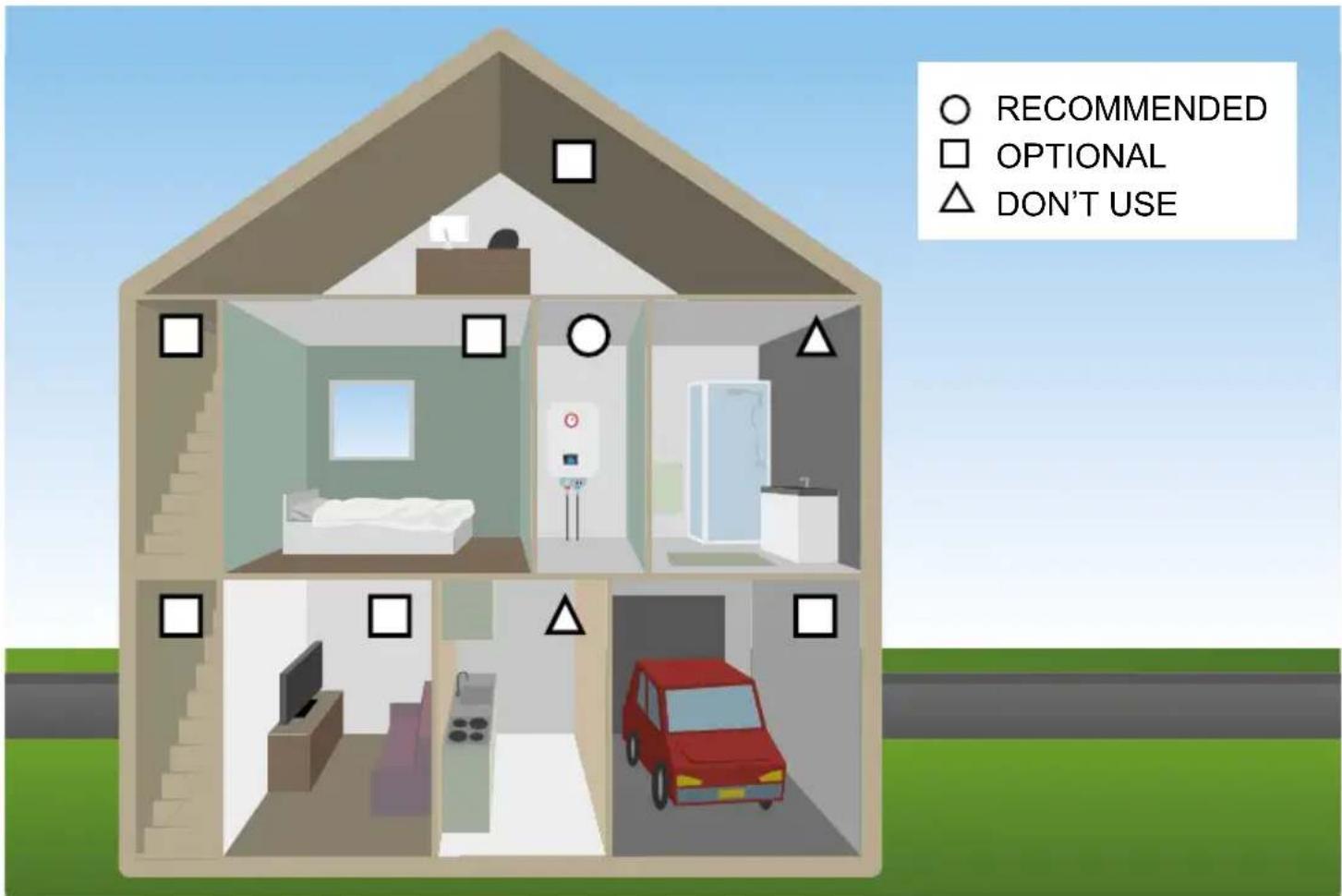
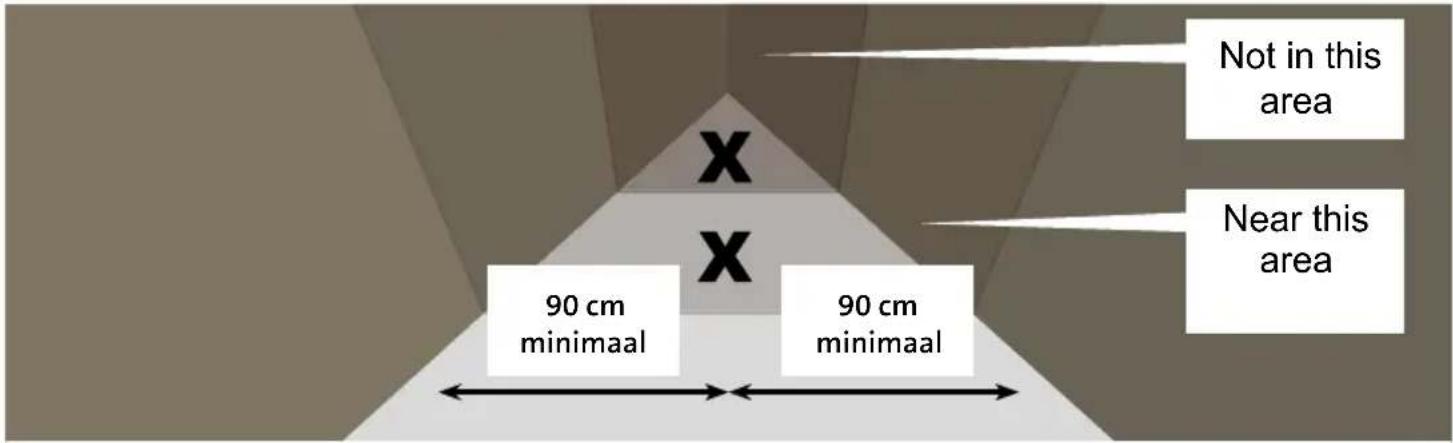
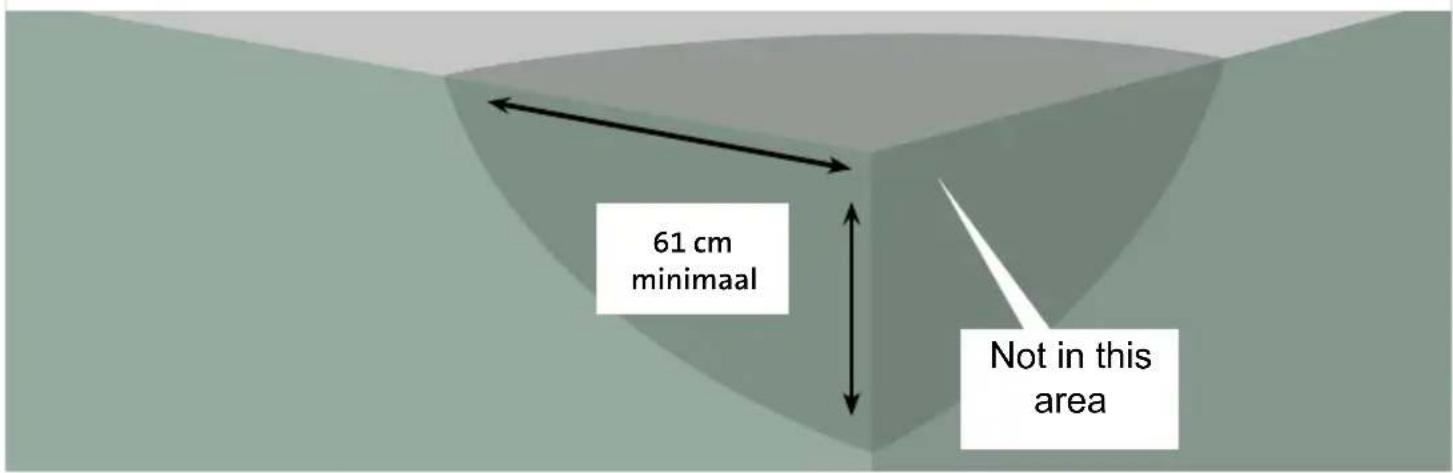
In spaces with combustion devices
- Install the detector at 1 to 3 meters away from combustion devices, within the air flow from the combustion device.
Install the detector way from of roof ridges, corners. arched ceilings or front roofs. - In the case of smaller spaces (< 4m^3) , the detector should be installed outside these spaces.
- Install the detector 61 centimeters from surrounding walls and ceilings. It is recommended to install the device on the ceiling of a room with a combustion device.
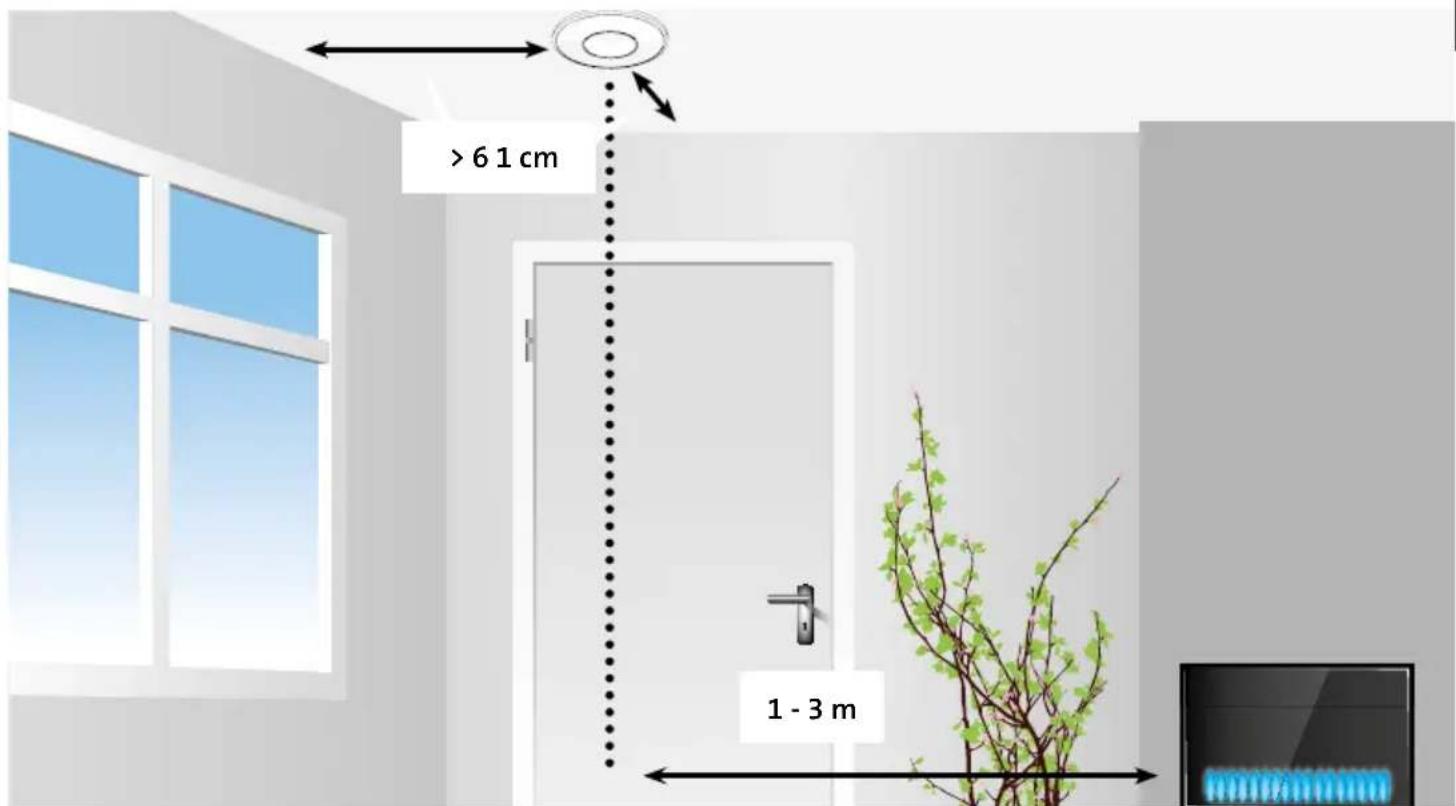
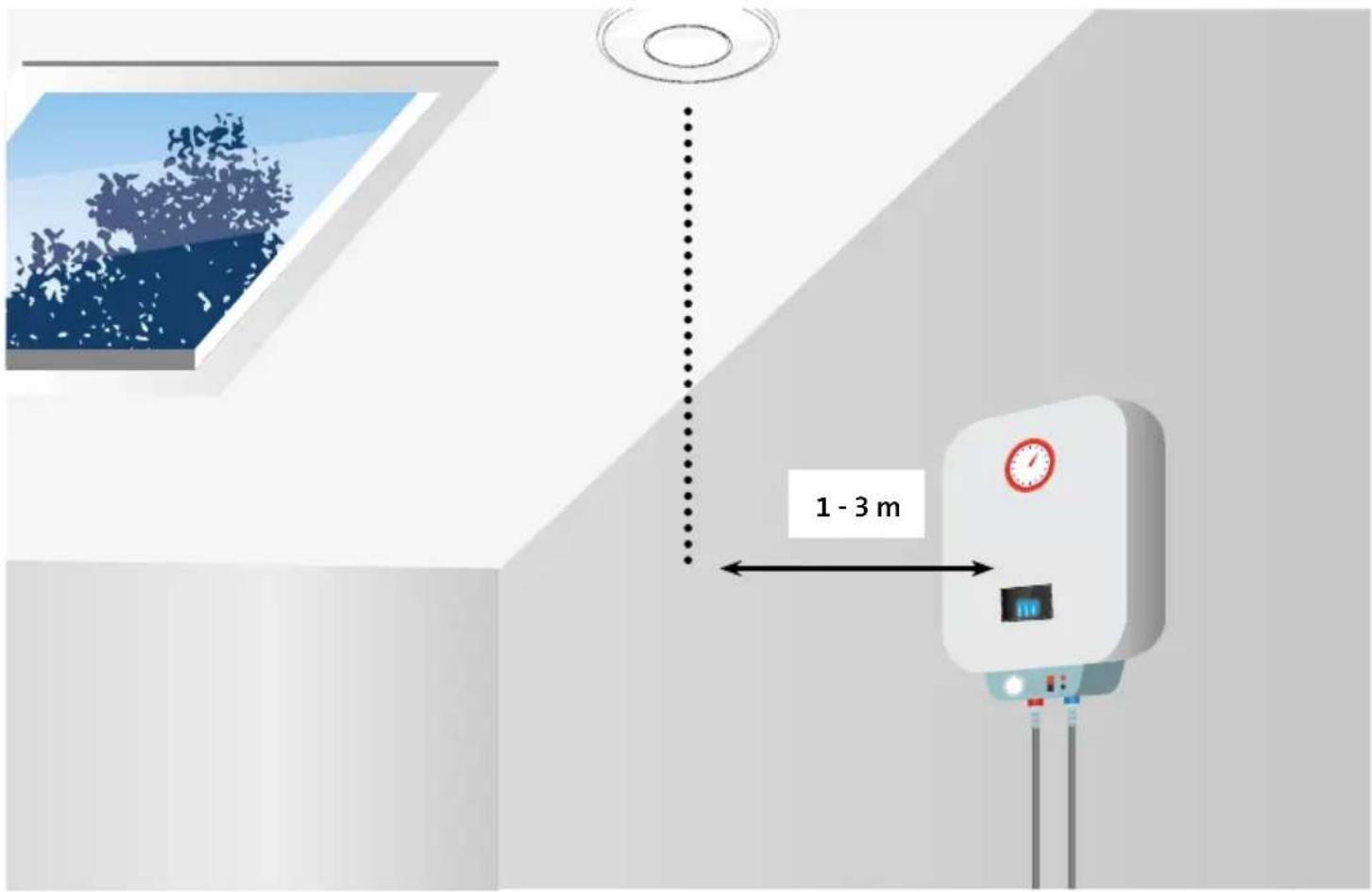
AVOID THE FOLLOWING PLACES FOR INSTALLATION:
- Do not install the detector in the turbulent air created by ceiling fans.
- Do not install the detector near vents with fresh air.
- Do not install the detector near doors and windows leading outdoors.
- Do not install the detector near extremely dusty, dirty or greasy spaces such as heating spaces < 4 m -3 or pantries. Dust, grease and household chemicals can affect the sensor.
- Install the detector at least 0.5 meters away from gas discharge lamps (halogen) because of electronic interferences that can lead to false alarms.
- Do not install the detector in humid and wet spaces, such as the bathroom.
- Never install the detector in spaces with temperatures lower than 0^ or higher than 40^ .
- Never install the detector in spaces with humidity higher than 90% RH.
- Never install the detector behind curtains or furniture. Carbon monoxide and smoke must be able to reach the sensor to ensure the sensor can properly detect carbon monoxide levels or smoke.
- Never install the detector flat on a table or similar surface.
- Never install the detector in spaces where spray cans may be used (hair spray, deodorant)
INSTALLATION:
- Install the mounting plate on a suitable spot
- Use the included plugs and screws.
- Now install the detector onto the mounting place.
- The LED will briefly illuminate, the detector will emit a short audiosignal.
- You can perform the first test by briefly pressing the test button, see also paragraph "Testing".
- The detector is now functional.
USE:
- Every 40 seconds, the green "POWER" LED will flash to indicate the detector is working.
- The table below shows when the detector will sound the alarm.
| CO concentration | NO ALARM for | ALARM for |
| 33PPM 120 min. | - | |
| 55PPM 60 min. | 90 min. | |
| 110PPM 10 min. | 40 min. | |
| 330PPM - 3 min. |
In accordance to the EN50291-1:2010 + A1:2012 standard.
3. When the alarm sounds, it will turn off within 40 seconds after moving the detector to a space with a CO concentration below 40PPM and without smoke.
4. The alarm sound can temporarily be turned off by pressing the TEST/SILENCE button (only during smoke detection).
5. Every 40 seconds, the detector will automatically perform an error check.
TEST/SILENCING:
When the detector is working under normal conditions, the sensor and siren should be tested at least every week. Press the "TEST/SILENCE" button. The device will shortly beep once, then beep three times while the red LED blinks, then beep four times shortly while the red LED blinks. This indicates the device is OK.
RESET ALARM:
The alarm can sometimes activate because of environmental influences, for example due to water vapor or dust. You can press the "TEST/SILENCE" button to silence the alarm for 10 minutes.
It is not possible to stop the alarm if CO is detected.
The red LED continues flashing but the siren will stop for 10 minutes.
If there is still smoke detected after thos 10 minutes, the alarm will continue.
LED INDICATION:
Red LED 3x every 1,5 seconds with alarm; Smoke detected
4x every 5 seconds with alarm; Carbon monoxide detected
Yellow LED Every 40 seconds; Sensor problem. If cleaning with a soft, dry brush will not resolve this, it means the sensor is defective.
2x every 40 seconds with beep: Battery almost empty.
The product needs to be replaced soon (Press the "TEST/SILENCE" button
during the beep to silence this alert tone for about 9 hours
Green LED Normal functioning, flashes every 40 seconds
REASON FOR SENSOR FAULT:
Faults can be caused by broken circuitry, a faulty sensor or faulty electronic parts. If cleaning the sensor with a dry, soft brush does not stop the yellow light from flashing, this means the product is defective.
SENSOR FAULT CAUSED BY CHEMICAL GASES:
When volatile chemical gases such as alcohol are the cause for error detection, this may be corrected by pulling the detector off the ceiling plate and leave it in fresh air for 24 hours. This may restore the CO sensor. If the error is not cleared after these 24 hours, the detector is faulty and should be replaced. Don't repair the detector yourself, but have it repaired by the importer.
When the alarm is contaminated and damaged by high concentrations of chemical gases, the sensor could be affected. This will lead to a temporary error or permanent damage. When the alarm sounds and you can smell a chemical gas, this could be the reason. Carbon monoxide is a colourless and odourless gas. Chemical gases do have an odour.
The following substances and gases can cause false alarms or permanently damage the detector: Methane, propane, iso-butane, ethylene, ethanol, alcohol, iso-propanol, benzene, toluene, acid, ether, hydrogen, hepatic gas, sulphur dioxide, aerosol, propellant, alcohol preparation, paint, thinner, dissolvent, bonding agents, shampoo, aftershave balm, perfume, car exhaust (cold start) and certain cleaning agents.
MAINTENACE:
To keep your detector in proper working order, please follow these steps:
- Check whether the alarm is working properly by pressing the test button every week.
- Clean the detector with a soft cloth or brush once every month to remove excess dust.
- Explain to children that they should not play with the detector.
- Ensure children are aware of the dangers of carbon monoxide poisoning and fire.
- Never use cleaning agents or other solutions to clean the detector.
- Never use air fresheners, hair spray or other aerosols near the detector.
- Don't paint the detector. Paint covers the vents preventing the sensor from detecting CO or smoke.
- Never disassemble, repair or modify the product yourself; there's a high risk that it will no longer function correctly or reliably.
PLAN AN ESCAPE ROUTE:
- Make a map and mark all locations of doors and windows and a possible escape route. Note that you may need an escape ladder on high floors.
- Ensure everyone in the house knows the sound the smoke alarms produce and regularly practice use of the escape route.
- Leave the house immediately according to the plan when hearing the alarm. Every second counts: so respond quickly. If you do not notice smoke or heat, check if everyone in the house is in a secure location.
- Do not open any doors without feeling wether the door is warm or if there is smoke coming from underneath the doors. If it is, do not open that door. If the door is cold, put your shoulder firmly against the door and open it a small amount to check for any heat or smoke first.
- If there is much smoke, keep low and take shallow breaths, preferably through a moist towel. Call the fire department as soon as you are safe outside.
BATTERY REPLACEMENT
The battery has a lifespan of 10 years. After 10 years you should replace the entire product because the battery cannot be replaced.
SENSOR REPLACEMENT:
The sensor has a lifespan of 10 years. After 10 years you should replace the entire product because the sensor cannot be replaced.
If the yellow LED illuminates within these 10 years, please refer to the paragraphs Reason for sensor fault and Sensor fault caused by chemical gases.
SPECIFICATIONS:
Power supply: 3VDC (EVE CR17450 INCL., non-replaceable)
Sensitivity and time: 30ppm CO, alarm is not activated within 120 minutes
50ppm CO, alarm is activated within 60~90 minutes
100ppm CO, alarm is activated within 10~40 minutes
300ppm CO, alarm is activated within 3 minutes
0.09~0.15 dB/m smoke, alarm is activated immediately
standby consumption: < 20 A
consumption at alarm: <20mA
Sound pressure at alarm: >85dB (1m distance)
Environmental conditions: 0 40^ 30 93% humidity
Storage conditions: -20^ - 50^, 10 95% humidity
Dimensions: 135*40mm
Weight: 185g
Type: Type B (unchecked output)
Smoke sensor: Photo-electric
CO sensor: Electro-chemical
Conforms to: EN14604-2005 + AC:2008
EN50291-1:2010 + A1:2012
DEACTIVATE
Before disposing of the product at an appropriate collection point, deactivate the product. A plastic deactivation key is located under the top of the product label. Break it off and insert it into the hole at "Warning".
EU DECLARATION OF CONFORMITY
Hereby, Hesdo declares that the radio equipment type SCA-10 is in compliance with Directive 2014/53/EU. The full text of the EU declaration of conformity is available at the following internet address:
http://DOC.hesdo.com/SCA-10-DOC.pdf
| CE 001CPR2019-07-10 |
| Hesdo BV, Azielaan 12, 's-Hertogenbosch The Netherlands 19 001CPR2019-07-10 |
| EN 14604:2005/AC:2008 Smoke Alarm + CO alarm Device SCA-10 Fire detection in buildings |
| Essential characteristic 1: Pass Essential characteristic 2: Pass Essential characteristic 3: Pass Essential characteristic 4: Pass Essential characteristic 5: Pass Essential characteristic 6: Pass Essential characteristic 7: Pass Essential characteristic 8: Pass |
| Mounting type Wall or Ceiling | |
| Main power source EVE CR17450 built-in | Lilon battery |
| Autonomy At least: 10 years | |
| Interconnectible device No | |
| Suitable for installation in a recreational vehicle | No |
| Individual alarm indicator Yes | |
| Alarm prevention facility No |
Our service department cannot give personalized information regarding the installation or placement of these devices in your specific environment. Please consult a mechanic or home security specialist.