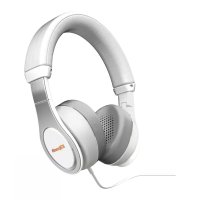
Reference OnEar II - Earphones KLIPSCH - Free user manual and instructions
Find the device manual for free Reference OnEar II KLIPSCH in PDF.



| Product type | On-ear headset |
| Brand | Klipsch |
| Model | Reference OnEar II |
| Weight (with cable) | Approx. 160 g |
| Connection type | Wired with 3.5 mm jack |
| Cable length | 1.2 m |
| Frequency response | 20 Hz - 20 kHz |
| Impedance | 32 Ω |
| Sensitivity | 110 dB |
| Transducer | 40 mm dynamic |
| Main functions | On-ear headphones with built-in remote and microphone |
| Compatibility | Smartphones, tablets, computers, audio players |
| Maintenance and cleaning | Clean with a soft, dry cloth. Do not use chemical products. |
| Safety | Observe recommended listening levels (max 85 dB). Do not use while driving. |
| Spare parts and repairability | Detachable cable and replaceable ear pads |
| Warranty | 2 years |
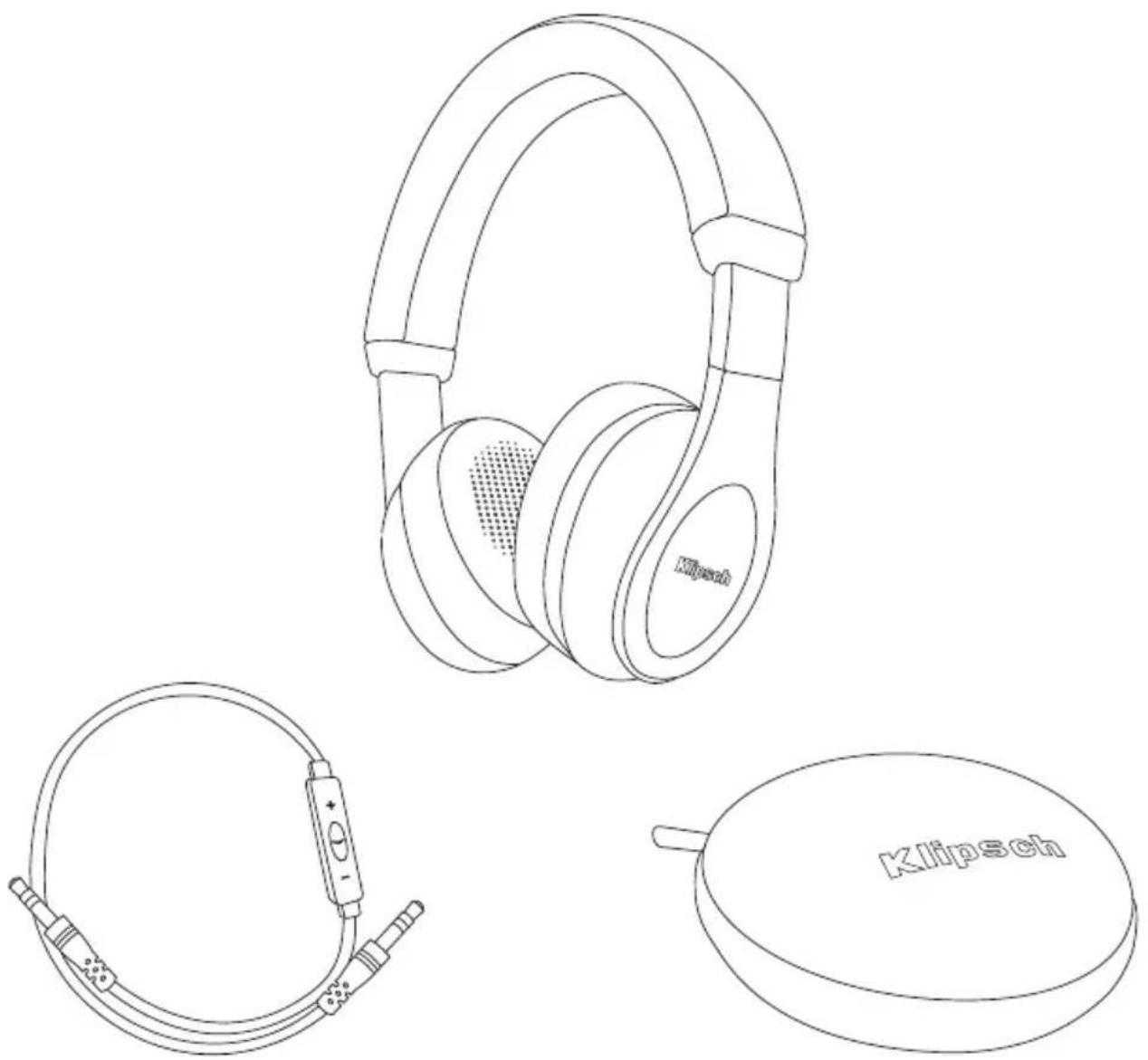
| Box contents | Headset, cable with remote, airplane adapter, carrying case |
| General information | Compliant with CE and FCC directives. Class B. |
Frequently Asked Questions - Reference OnEar II KLIPSCH
User questions about Reference OnEar II KLIPSCH
0 question about this device. Answer the ones you know or ask your own.
Ask a new question about this device
Download the instructions for your Earphones in PDF format for free! Find your manual Reference OnEar II - KLIPSCH and take your electronic device back in hand. On this page are published all the documents necessary for the use of your device. Reference OnEar II by KLIPSCH.
USER MANUAL Reference OnEar II KLIPSCH
IMPORTANT SAFETY INFORMATION
- READ these instructions.
- KEEP these instructions.
- HEED all warnings.
- FOLLOW all these instructions.
- DO NOT use this apparatus near water or moisture.
- If you hear ringing or experience pain or discomfort in your ears during or after using any in-ear audio product, that is a sign you are listening too loud. When your ears are exposed to high volumes (in excess of 85dB) for over an hour, you may be permanently damaging your hearing.
- Turn down your listening device's volume to zero before you insert the Klipsch headphones and turn on the device. Once you have the headphones on, gradually increase the volume to a comfortable, moderate volume.
- Do not install near any heat sources such as radiators, heat registers, stoves, or other apparatus (including amplifiers) that produce heat.
- ONLY USE attachments/accessories specified by the manufacturer.
-
REFER all servicing to qualified service personnel. Servicing is required when the apparatus has been damaged in any way, such as power-supply cord or plug is damaged, liquid has been spilled or objects have fallen into the apparatus, the apparatus has been exposed to rain or moisture, does not operate normally, or has been dropped
-
NEVER operate a motor vehicle while listening to or wearing your headphones. Not only dangerous, it is illegal in many places.
- NEVER operate heavy machinery while listening to or wearing your headphones.
- We don't recommend you use the headphones while riding a bicycle, running, or walking in heavy traffic areas.
WARNING:
Except in case of emergency, Klipsch recommends you do not use these headphones or headsets (headphones plus microphone) as aviation communication equipment as they are not engineered for many environmental conditions common in commercial or non-commercial aircraft (including, but not limited to: altitude, temperature, noise conditions, unpressurized aircraft, etc.) resulting in possible interference to critical communications.
The Occupational Safety Health Administration (OSHA) has issued headphone usage recommendations for maximum daily exposure and sound pressure levels (measured in decibels (dB)). A decibel is a unit of measure of sound, and decibels increase exponentially as sound gets louder. For example, conversational speech is typically around 60dB, and a rock concert in a stadium is often about 110dB.
OSHA GUIDELINES FOR NOISE EXPOSURE LIMITS
| Sound Pressure Level | Recommended Maximum Exposure Per Day |
| 90dB 8 Hours | |
| 92dB 6 Hours | |
| 95dB 4 Hours | |
| 97dB 3 Hours | |
| 100dB 2 Hours | |
| 102dB 1.5 Hours | |
| 105dB 1 Hours | |
| 110dB 30 Minutes | |
| 115dB 15 Minutes or less | |
| 120dB Avoid | as damage may occur |
EU COMPLIANCE INFORMATION
Eligible to bear the CE mark; Conforms to European Union Low Voltage Directive 2006/95/EC; European Union EMC Directive 2004/108/EC; European Union RoHS Directive 2002/95/EC; European Union WEEE Directive 2002/96/EC; European Union Registration, Evaluation, Authorization and Restriction of Chemicals (REACH) Directive 2006/121/EC.
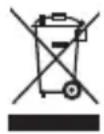
WEEE NOTICE
Note: This mark applies only to countries within the European Union (EU) and Norway.
This appliance is labeled in accordance with European Directive 2002/96/EC concerning waste electrical and electronic equipment (WEEE). This label indicates that this product should not be disposed of with household waste. It should be deposited at an appropriate facility to enable recovery and recycling.
FCC AND CANADA EMC COMPLIANCE INFORMATION
NOTE: This equipment has been tested and found to comply with the limits for a Class B digital device, pursuant to part 15 of the FCC Rules. These limits are designed to provide reasonable protection against harmful interference in a residential installation. This equipment generates, uses and can radiate radio frequency energy and, if not in-stalled and used in accordance with the instructions, may cause harmful interference to radio communications. However, there is no guarantee that interference will not occur in a particular installation. If this equipment does cause harmful interference to radio or television reception, which can be determined by turning the equipment off and on, the user is encouraged to try to correct the interference by one or more of the following measures:
Reorient or relocate the receiving antenna.
Increase the separation between the equipment and receiver.
Connect the equipment into an outlet on a circuit different from that to which the receiver is connected.
Consult the dealer or an experienced radio/TV technician for help.
Approved under the verification provision of FCC Part 15 as a Class B Digital Device.
Caution: Changes or modifications not expressly approved by the manufacturer could void the user's authority to operate this device.
This Class B digital apparatus complies with Canadian ICES-003.
PRODUCT REGISTRATION
Register your product online at www.klipsch.com/registe r
- Klipsch will keep you up-to-date on new products and promotions.
- Your personal information will never be resold.
- This registration information is not used for warranty purposes.
Please retain your receipt for warranty claims.
CONTENU
CONSIGNES DE SÉCURITÉ IMPORTANTES
INFORMATIONS DE CONFORMITÉ UE
INFORMATIONS DE CONFORMITÉ FCC ET CEM CANADA

Brand : KLIPSCH
Model : Reference OnEar II
Category : Earphones