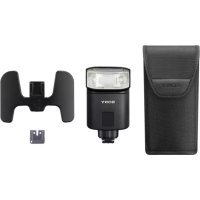
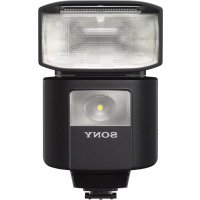
HVLF32M - Flash SONY - Free user manual and instructions
Find the device manual for free HVLF32M SONY in PDF.


| Product type | Compact electronic flash for Sony interchangeable lens cameras |
| Brand | Sony |
| Model | HVL-F32M |
| Dimensions (W × H × D) | 66 × 119 × 82 mm |
| Weight (without batteries) | 235 g |
| Power supply | 3 V DC from 2 LR6 alkaline batteries (AA type) or 2 AA rechargeable nickel-metal hydride batteries |
| Guide number (ISO 100, 35 mm format) | 31.5 at 105 mm, 19.5 at 24 mm |
| Zoom coverage | 24–105 mm (35 mm/APS-C format); built-in wide-angle for 15 mm |
| Flash modes | TTL, manual, wireless (controller/slave), flash off |
| Advanced functions | Bounce flash (vertical tilt 90°, horizontal rotation 180°), high-speed sync (HSS), slow sync, second-curtain sync |
| Wireless flash | Controller mode (mounted) or slave mode (detached); range 1–5 m |
| Reflector sheet | Built-in to highlight subject's eyes |
| Wide-angle adapter | Built-in, allows coverage up to 15 mm |
| Charge indicator | Green (100%), yellow (75%), orange (50%), red (25%) |
| LCD screen | Displays mode, power level, low battery, etc. |
| Mount | Sony multi-interface shoe with lock |
| Operating temperature | 0°C to 40°C |
| Maintenance and cleaning | Clean gently with a soft, dry cloth; do not use solvents |
| Safety | Do not disassemble (high voltage present), do not expose to rain, keep out of reach of children |
| Spare parts and repairability | Repair by qualified personnel only; standard batteries available commercially |
| Included accessories | Flash, protective cap, mini-stand, carrying case, documentation |
Frequently Asked Questions - HVLF32M SONY
User questions about HVLF32M SONY
0 question about this device. Answer the ones you know or ask your own.
Ask a new question about this device
Download the instructions for your Flash in PDF format for free! Find your manual HVLF32M - SONY and take your electronic device back in hand. On this page are published all the documents necessary for the use of your device. HVLF32M by SONY.
USER MANUAL HVLF32M SONY
Operating Instructions
Mode d'emploi
GB
FR
http://www.sony.net/
© 2014 Sony Corporation
Printed in China

HVL-F32M
English
Before operating the product, please read this manual thoroughly and retain it for future reference.
WARNING
To reduce the risk of fire or electric shock,
1) do not expose the unit to rain or moisture.
2) do not place objects filled with liquids, such as vases, on the apparatus.
Keep out of reach of small children to prevent accidental swallowing.
Do not expose the batteries to excessive heat such as sunshine, fire or the like.
Immediately remove the batteries and discontinue use if...
- the product is dropped or subjected to an impact in which the interior is exposed.
- the product emits a strange smell, heat, or smoke.
Do not disassemble. Electric shock may occur if a high voltage circuit inside the product is touched.
IMPORTANT SAFETY INSTRUCTIONS
When using your photographic equipment, basic safety precautions should always be followed, including the following:
Read and understand all instructions before using.
Close supervision is necessary when any appliance is used by or near children. Do not leave appliance unattended while in use.
Care must be taken as burns can occur from touching hot parts.
Do not operate appliance with a damaged cord or if the appliance has been dropped or damaged- until it has been examined by a qualified serviceman.
Let appliance cool completely before putting away. Loop cord loosely around appliance when storing.
To reduce the risk of electric shock, do not immerse this appliance in water or other liquids.
To reduce the risk of electric shock, do not disassemble this appliance, but take it to a qualified serviceman when service or repair work is required. Incorrect reassembly can cause electric shock when the appliance is used subsequently.
The use of an accessory attachment not recommended by the manufacturer may cause a risk of fire, electric shock, or injury to persons.
Batteries may become hot or explode due to improper use.
Use only the batteries specified in this instruction manual.
Do not install the batteries with the polarity (+/-) reversed.
Do not subject batteries to fire or high temperatures.
Do not attempt to recharge (except for rechargeable batteries), short or disassemble.
Do not mix, batteries of different types, brands or ages.
SAVE THESE INSTRUCTIONS
CAUTION
Do not touch the flashtube during operation, it may become hot when the flash fires.
For customers in Europe

natural_image
Symbol of a trash bin crossed with diagonal lines, no text or numbers presentDisposal of Old Electrical & Electronic Equipment (Applicable in the European Union and other European countries with separate collection systems)
This symbol on the product or on its packaging indicates that this product shall not be treated as household waste. Instead it shall be handed over to the applicable collection point for the recycling of electrical and electronic equipment. By ensuring this product is disposed of correctly, you will help prevent potential negative consequences for the environment and human health, which could otherwise be caused by inappropriate waste handling of this product. The recycling of materials will help to conserve natural resources. For more detailed information about recycling of this product, please contact your local Civic Office, your household waste disposal service or the shop where you purchased the product.
Notice for the customers in the countries applying EU Directives
Manufacturer: Sony Corporation, 1-7-1 Konan Minato-ku Tokyo, 108-0075 Japan For EU product compliance: Sony Deutschland GmbH, Hedelfinger Strasse 61, 70327 Stuttgart, Germany
For the customers in the U.S.A.
CAUTION
You are cautioned that any changes or modifications not expressly approved in this manual could void your authority to operate this equipment.
Owner's Record
The model and serial numbers are located under the flashtube.
Record the serial number in the space provided below.
Refer to them whenever you call upon your Sony dealer regarding this product.
Model No. HVL-F32M Serial No.
NOTE:
This equipment has been tested and found to comply with the limits for a Class B digital device, pursuant to Part 15 of the FCC Rules.
These limits are designed to provide reasonable protection against harmful interference in a residential installation.
This equipment generates, uses, and can radiate radio frequency energy and, if not installed and used in accordance with the instructions, may cause harmful interference to radio communications.
However, there is no guarantee that interference will not occur a particular installation. If this equipment does cause harmful interference to radio or television reception, which can be determined by turning the equipment off and on, the user is encouraged to try to correct the interference by one or more of following measures:
- Reorient or relocate the receiving antenna.
– Increase the separation between the equipment and receiver.
- Connect the equipment into an outlet on a circuit different from that to which the receiver is connected.
- Consult the dealer or an experienced radio/TV technician for help.
Table of Contents
What you can do with the HVL-F32M 8
Name of parts 12
Preparations
Inserting batteries (not supplied) 14
Attachment of the flash unit 16
Turning on the power 18
Basics
Using flash 20
Advanced Operations
Bounce flash 24
Manual flash 27
High-speed sync (HSS) 28
Wireless-flash mode (WL) 29
Additional Information
Notes on use ....38
Specifications 41
Before use
This flash unit can be used in combination with Sony Interchangeable Lens Digital Cameras, Sony Interchangeable Lens Digital HD Video Camera Recorders, and Sony Digital Still Cameras that have a conventional Multi Interface Shoe.
Some functions may not work depending on the model of your camera or video camera recorder.
For details on compatible camera models of this flash unit, visit the Sony website in your area, or consult your Sony dealer or local authorized Sony service facility.
See the operating instructions of this unit and refer to the operating instructions of your camera.
Keep the flashtube clean. The stain or dust, etc., on the flashtube may cause smoke or scorch by heat that is generated when you use flash. To clean the flashtube, wipe with a soft cloth, etc.
Although this flash unit is designed with dustproofness and splash-proofness in mind, it may not keep dust or splashes completely out.
What you can do with the HVL-F32M
With this compact flash unit, you will gain many advantages by controlling light and shadows. You will enjoy your photography more with this flash.
■ Taking a photo without a red-eye effect
You can reduce the red-eye phenomenon when using flash.
* The setting can be configured on your camera. For details, refer to the operating instructions of your camera.
■ Taking a photo with soft light (bounce flash)
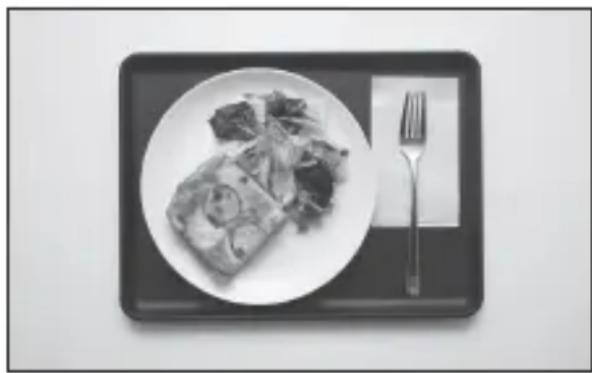
By directing the flash unit at the ceiling or wall, you can illuminate the subject with reflected light, reducing the intensity of shadows and producing a softer light.
Shooting without dropping shadows (bounce flash) (page 24)
In locations where lights are installed overhead, bounced flash can avoid dropped shadows of the photographer or camera. With bounce flash, you can take beautiful photos from above.

natural_image
Black-and-white photo of a plate with food and fork, no visible text or symbolsWithout flash
natural_image
Black-and-white photo of a plate with sliced meat and garnish, placed on a tray with a fork (no text or symbols visible)Bounce flash
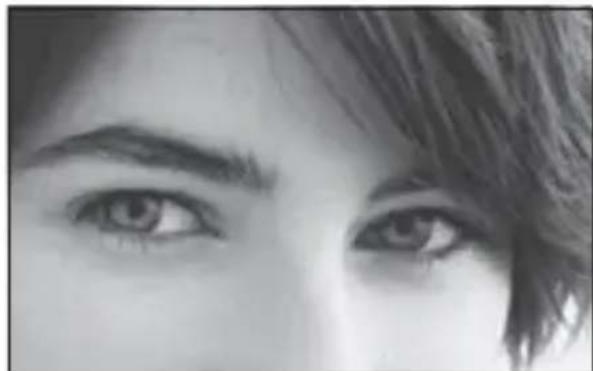
Making the subject look more vibrant (using the bounce sheet) (page 25)
The bounce sheet creates a highlight in the subject's eyes and makes the subject look more vibrant.
natural_image
Close-up grayscale portrait of a person's eyes and forehead (no text or symbols visible)
natural_image
Close-up black-and-white photo of a person's eyes and eyebrow (no text or symbols visible)Without the bounce sheet With the bounce sheet
■ Taking a photo for a sharp subject and blurred background, even against the light (high-speed sync)
With high-speed sync, you can shoot with wide aperture even in daylight or against the light. (page 28)

natural_image
Black-and-white photo of white flowers with green foliage in the background (no text or symbols visible)
natural_image
Black-and-white close-up of white flowers with blurred background foliage (no text or symbols)Normal flash High-speed sync
* Your camera needs to be compatible with high-speed sync. For details, refer to the operating instructions of your camera.
■ Shooting a subject and a sharp background, even in low light location (slow sync)
With slow sync, you can shoot a photo exposing both the subject and background, even in low light conditions.

natural_image
Black-and-white photo of a large tree with dense foliage against a dark background (no text or symbols visible)
natural_image
Exterior view of a modern glass office building with trees in front (no signage or text visible)Normal flash Slow sync
* The setting can be mode on your camera. For details, refer to the operating instructions of your camera.
■ Taking a photo with motion blur (rear curtain sync)
When your camera is set to rear curtain sync, the flash fires just before the shutter closes. Motion blur enables you to show that the subject, such as a car, was in motion.

natural_image
Black-and-white photo of a person playing pool cue with balls on a table (no visible text or symbols)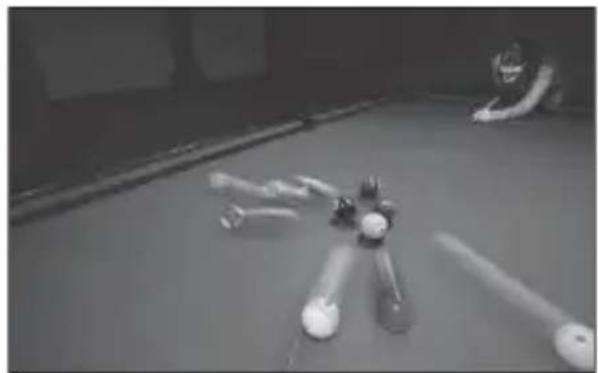
natural_image
Black-and-white photo of a pool table with balls and a person in the background (no visible text or symbols)Normal flash Rear curtain sync
* The setting of the feature can be configured on your camera. For details, refer to the operating instructions of your camera.
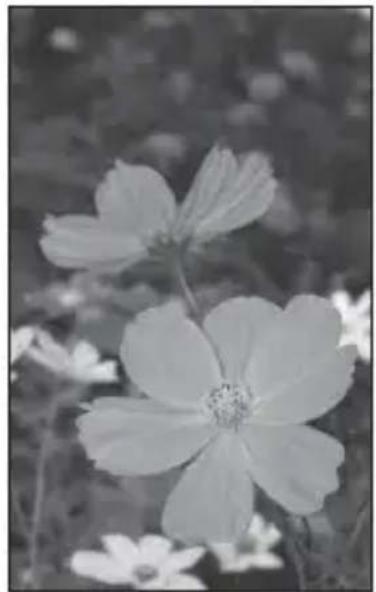
■ Taking a photo with controlled shading (wireless flash, off-camera flash)
Using multiple flash units (this flash unit, and the built-in flash of your camera or another flash unit) and lighting from multiple angles, you can control the intensity and placement of shadows. (page 29)
natural_image
Black-and-white close-up of a blooming cosmos flower with visible petals and center (no text or symbols)
natural_image
Black-and-white close-up of a cluster of cosmos flowers with soft focus background (no text or symbols)Normal flash Off-camera flash
■ Shooting a subject that reflects light (manual flash)
By adjusting the flash intensity, you can shoot a subject that reflects light, such a glass or metal. (page 27)
■ Shooting a very close subject
By rotating this flash unit downwards, you can shoot a subject between 0.7 ~m and 1.0 ~m from the camera to ensure accurate illumination. (page 25)
Name of parts
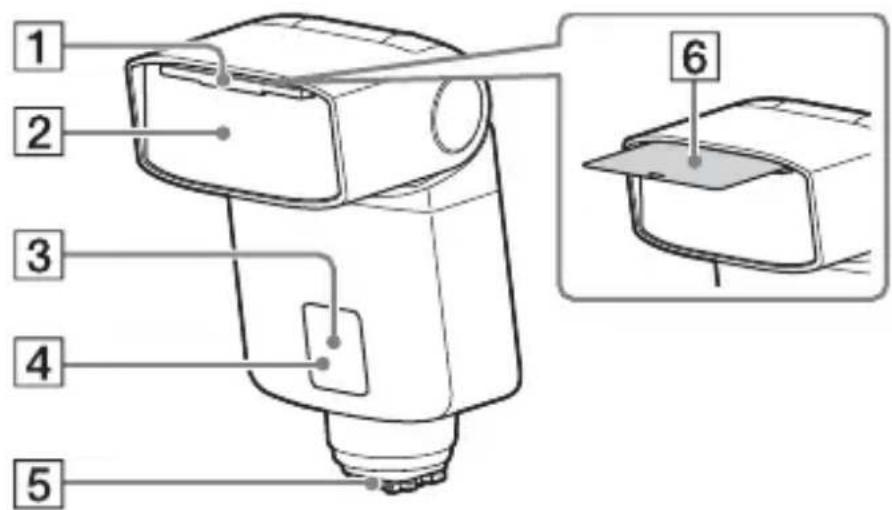
The numbers in parentheses are the page numbers where a description can be found.
1 Built-in wide panel (22)
4 Flash-ready indicator (33)
2 Flashtube
5 Multi Interface foot (16)
3 Wireless control signal receiver (33)
6 Bounce sheet (25)

7 Bounce indicator (upper/lower angle) (24)
11 Release button (16)
8 LCD panel (13)
12 Battery chamber door (14)
9 Control panel (13)
13 Mini-stand (31)
10 Lock lever (16)
* Tripod attachment hole
Control panel
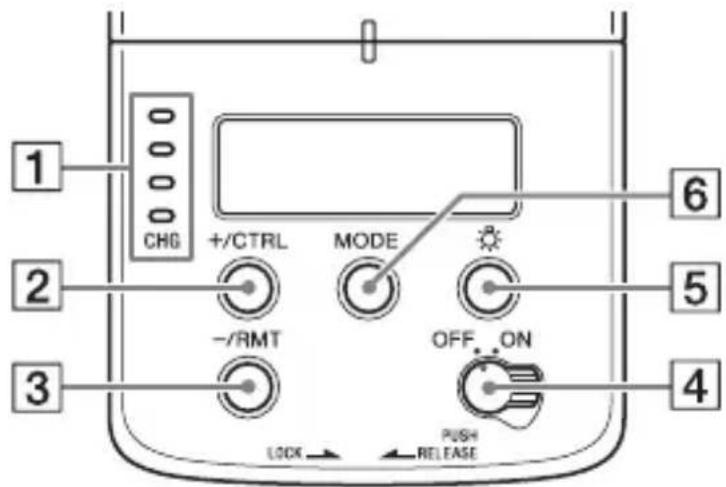
1 Charge progress indicator (19)
2 +/CTRL button (27, 36)
3 -/RMT button (27, 33)
4 Power switch (18)
5 LCD illuminator button
Turns on or off the light of the LCD panel.
6 MODE button (20, 36)
LCD panel

1 Manual-flash indicator (21, 27)
2 TTL-flash indicator (20, 21)
3 Power-level indicator (27)
4 Wireless controller/remote indicator (33, 35)
5 Low-battery indicator (18)
6 Flash Off mode indicator (20)
7 Wireless-flash indicator (29)
Inserting batteries (not supplied)
1 Open the battery chamber door as shown in the diagram.
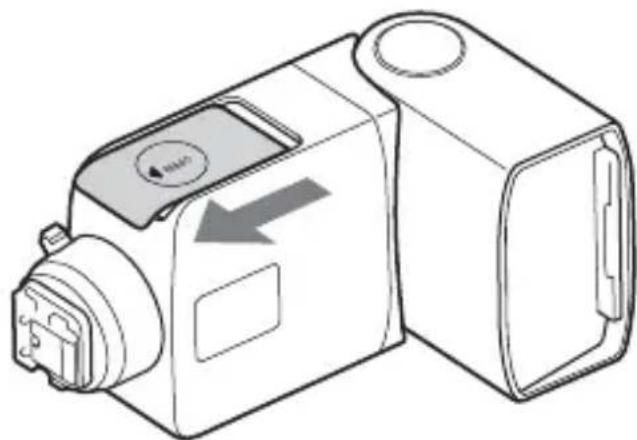
natural_image
Technical line drawing of a mechanical device with no visible text or symbols2 Insert the batteries in the battery chamber as shown on the battery chamber door.
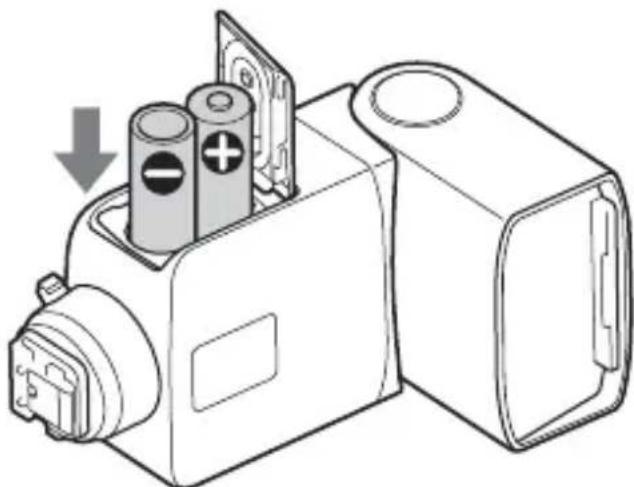
natural_image
Diagram of a battery pack with two cylindrical components and a downward arrow indicating direction (no text or symbols)The HVL-F32M may be powered by :
- Two LR6 (AA-size) alkaline batteries
- Two AA-size rechargeable nickel-metal hydride (Ni-MH) batteries* Always ensure that rechargeable nickel-metal hydride batteries are charged in the specified charger unit.
To close the battery chamber door, follow the reverse procedure for opening.
Attachment of the flash unit
1 Turn off the power of the flash unit.
If the built-in flash of the camera is protruding, lower it before attaching the flash unit.
2 Remove the protective cap from the terminal of the Multi Interface foot of the flash unit and remove the shoe cap from the camera.
3 Rotate the lock lever towards [RELEASE] while pressing the release button.

4 Firmly insert the Multi Interface foot all the way into the Multi Interface Shoe of the camera in the direction of the arrow.
5 Firmly rotate the lock lever towards [LOCK] to secure the flash unit.
- When attaching this unit to a camera that has an Auto-lock Accessory Shoe, use the Shoe Adaptor (ADP-AMA) (not supplied).
Removing the flash unit from the camera
Rotate the lock lever towards [RELEASE] while pressing the release button, then slide the flash unit forward.
- When not using the flash unit, reattach the protective cap to the terminal of its Multi Interface foot.
Turning on the power
Set the POWER switch to ON.
When the power of the flash unit is turned on, the LCD panel lights up.

Power save mode
The flash unit will turn off if it is not operated for 3 minutes when used by itself or connected to a camera that is in power save mode.
- During wireless flash photography (page 29), the flash unit changes to power save mode after 60 minutes.
- The flash unit automatically changes to power save mode when the power switch of the camera* is set to OFF.
* Except the DSLR-A100
Checking Batteries
The low-battery indicator appears on the LCD panel when the batteries are low.

blinking
Recommended to change batteries.
You can still use the flash unit even in this situation.
Only blinking
Flash cannot be used.
Insert new batteries.
Charge progress indicator
The color of the charge progress indicator shows the charging status for the flash operation.
- Green Fully charged
- Yellow About 75% charged
- Orange About 50% charged
- Red About 25% charged
The photo will be under-exposed because of a lack of luminescence if taken before charging is complete.
Note on continuous flash use
If you use the flash unit repeatedly over a short period, the built-in safety circuit may limit firing flashes and increase the interval between each flash.
If the internal temperature rises too high, the charge progress indicator will blink in red and you will be unable to use the flash unit for a while. In this case, turn the flash unit off for about 10 minutes to allow it to cool.
- Be careful when you take out the batteries, since they may be heated after continuous flash use.
Using flash
About the flash mode
The flash mode changes by pressing the MODE button.

- TTL-flash mode
The flash unit measures the light from the subject that is reflected through the lens, then adjust the flash intensity automatically.
* TTL = through the lens
- Manual-flash mode (page 27) You can adjust the flash intensity to provide the fixed flash intensity.
- Wireless-flash mode
Set to this mode for wireless flash photography.
• F I a s The flash unit does not fire.
Using flash
1 Press the MODE button to select the flash mode.
As an example, TTL-flash mode is selected.
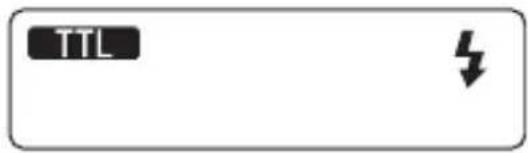
2 Press the shutter button to take a photo.
When the green charge progress indicator lights, the flash is ready to fire. After shooting, the charge progress indicator blinks in green when the proper exposure is obtained
- Fill-flash mode or auto-flash mode can be set on your camera.
- When using the flash unit with self-timer, press the shutter button after the green charge progress indicator lights.
Auto WB Adjustment with Color Temperature Info
White balance is automatically adjusted by your camera (except the DSLR-A100) based on color temperature information when the flash unit fires.
- Auto WB Adjustment functions when you attach the flash unit to your camera and use TTL flash mode on the flash unit.
- This function does not work during manual flash photography (page 27). Adjust white balance manually on your camera.
TTL\*-flash mode
Manual-flash mode provides a fixed flash intensity irrespective of the brightness of the subject and the camera setting. TTL-flash mode measures the light from the subject that is reflected through the lens.
TTL metering also has a P-TTL metering function, which adds a pre-flash to TTL metering, and an ADI metering function, which adds distance data to the P-TTL metering.
This flash unit defines all P-TTL and ADI metering as TTL-flash mode and is TTL
displayed on the LCD panel. *TTL = through the lens
- ADI metering is possible in combination with a lens with a built-in distance encoder. Before using the ADI metering function, check whether your lens has a built-in distance encoder by referring to the specifications in the operating instructions supplied with your lens.
Auto flash-coverage control (auto zoom)
This flash unit provides optimal flash coverage from 24 mm to 105 mm, according to the image sensor size (APS-C format/35mm format) of the camera and a focal length of the lens.

- When a lens having a focal length of less than 24 mm is used with auto zoom, [TTL] and [MANUAL] blinks in the LCD panel. In such a case, use the built-in wide panel is recommended to prevent darkening at the periphery of the image.
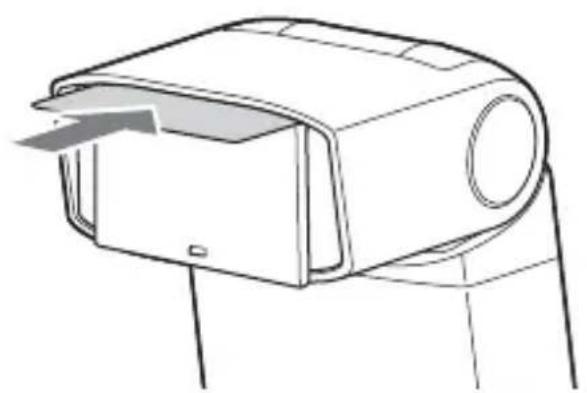
Built-in wide panel (15 mm zoom angle)
Pulling out the built-in wide panel extends flash coverage to include focal lengths from 15 mm to less than 24 mm.
1 Pull out the wide panel gently.

natural_image
Illustration of a mobile device with a paper sheet being inserted, showing airflow direction (no text or symbols)2 Push back the bounce sheet only.
natural_image
Line drawing of a device with a curved top and circular opening, showing a handle or cover (no text or symbols)When you replace the wide panel, push it firmly as far as it will go.
- Do not pull out or twist the wide panel forcibly. This may damage the wide panel.
- Push back the wide panel and the bounce sheet into the inside of the flash head when this flash unit is stored in the supplied case.
Flash coverage & focal length
The larger the focal length figure of the lens on a camera, the further away a subject can be photographed to take up the full screen; but the area that can be covered becomes smaller. Conversely, with a smaller focal length figure, subjects can be photographed with wider coverage. The flash coverage is the area that the light from the flash at a set intensity or greater can cover evenly, expressed as an angle. The flash coverage at which you can photograph is determined by the focal length.
By having flash coverage determined in accordance with focal length, flash coverage can be expressed as the figure for focal length.
Bounce flash
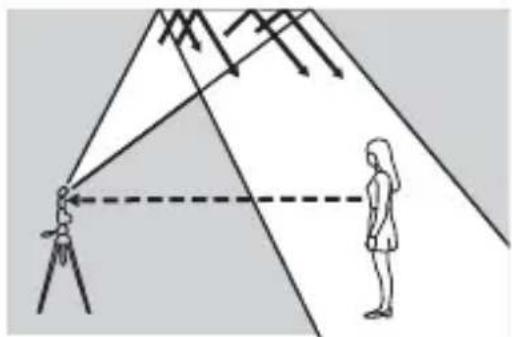
By directing the flash unit at the ceiling you can illuminate the subject with reflected light, reducing the intensity of the shadows and producing a softer light on the screen.
natural_image
Diagram showing a person using a surveying instrument to observe a person's reflection, with no text or symbols present.High-speed sync will be turned off when using bounce flash.
1 Rotate the flash unit upwards or to the left and right.

| Focal length of lens | Bounce angle |
| 70 mm minimum 30°, 45° | |
| 28 mm - 70 mm 60° | |
| 28 mm maximum 75°, 90° |
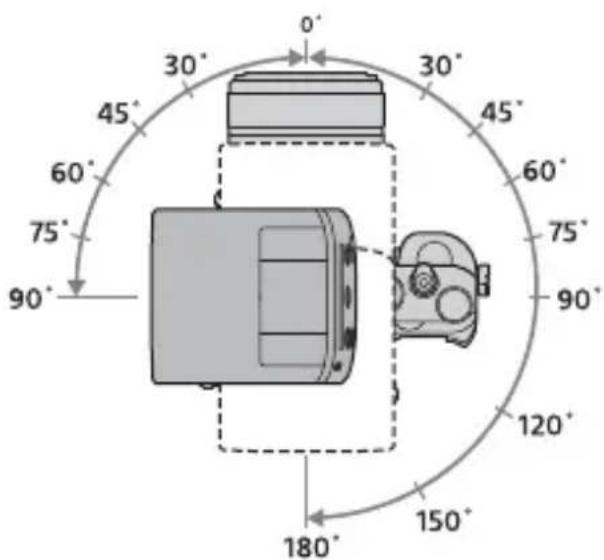
Top view
2 Press the MODE button to display [TTL] on the LCD panel.
3 Press the shutter button to take a photo.
Using the bounce sheet
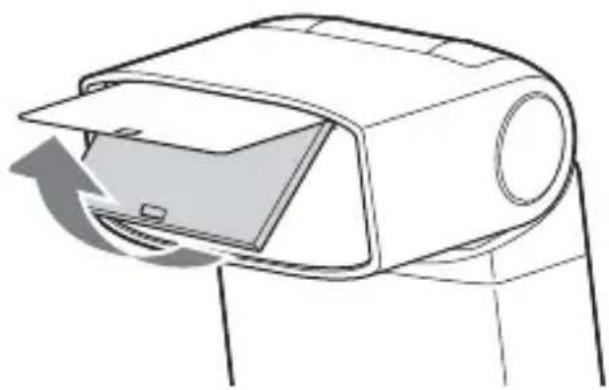
The bounce sheet creates a highlight in the subject's eyes and makes the subject look more vibrant.
1 Pull out the wide panel gently.
The bounce sheet is also pulled out. Push back the wide panel only.
natural_image
Line drawing of a printer with an open lid and paper feed, showing airflow direction (no text or symbols)2 Rotate the flash unit 90° upwards.
3 Press the MODE button to display [TTL] on the LCD panel.
4 Press the shutter button to take a photo.
Close-up photography
Tilt the flash slightly downwards when photographing objects between 0.7 m and 1.0 m from the camera to ensure accurate illumination.

natural_image
Illustration of a robotic arm projecting a potted plant to reflect light (no text or symbols)1 Rotate the flash unit 8° downwards.

natural_image
Diagram of a mechanical component with a circular end and a curved base, showing a rotation arrow (no text or symbols)2 Press the MODE button to display [TTL] on the LCD panel.
- When photographing at a distance closer than 0.7 m, use an off-camera flash, Macro Twin Flash, or Ring Light.
- The lenses with long length may obstruct the flash light.
Manual flash
Manual flash provides a fixed flash intensity irrespective of the brightness of the subject and the camera setting.
1 Set your camera to M (Manual) mode.
2 Press the MODE button to display [MANUAL] on the LCD screen.

3 Press the + / CTRL button or - / RMT button to select the power level.
- The power level can be set from 1/1 (maximum) to 128 (minimum).
- The power level range (e.g. 1/1 1/2 ) corresponds to the aperture range (e.g. F4 5.6 ).

4 Press the shutter button to take a photo.
High-speed sync (HSS)
High-speed sync allows flash photography with a wide aperture, leaving the background out of focus and accentuating the front subject.

natural_image
Black-and-white close-up of white flowering plants with blurred background foliage (no text or symbols)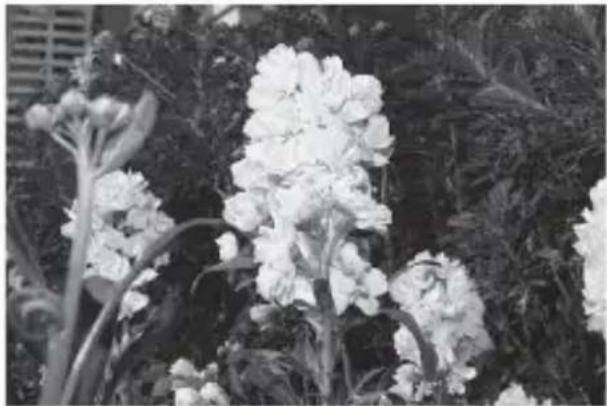
natural_image
Black-and-white photo of white flowers with green foliage in the background (no text or symbols visible)High-speed sync Normal flash
- In high-speed sync, the flash fires repeatedly at short intervals as if shooing in continuous light, which allows flash photography using high-speed shutter.
- High-speed sync allows flash photography with a wide aperture, even when shooting in daylight or against the sun.
Flash Sync Speed
Flash photography is generally associated with a maximum shutter speed referred to as the flash sync speed. This restriction does not apply to cameras designed for high-speed sync (HSS) photography, since they allow flash photography at the maximum shutter speed of the camera.
Wireless-flash mode (WL)
In the wireless-flash mode, you can separate the flash unit from the camera and use it
[A] Using the HVL-F32M that is separated from the camera (off-camera flash) (page 33)
[B] Using the HVL-F32M that is attached to the camera as the controller (page 35)
Wireless Flash Range
The wireless flash requires 2 flash units (includes the built-in flash of the camera). When the attached or built-in flash fires, it triggers the operation of the off-camera flash unit. Follow the points below when positioning the camera, flash, and subject.
- Place the off-camera flash within the circle in the following diagram.

flowchart
graph TD
    A["Camera"] -->|1 - 5 m (see Table 1)| B["Pot"]
    B -->|1 - 5 m (see Table 2)| C["Shot"]
    C -->|Do not place the flash directly behind the subject| B
    style B fill:#f9f,stroke:#333,stroke-width:2px
Place the camera and flash unit within a 1 m to 5 m radius of the subject
- In the wireless-flash mode, you cannot use a flash meter or color meter in wireless-flash mode because the pre-flash fires.
- In the wireless-flash mode, the flash coverage for this flash unit is automatically set to 24 mm.
-
The built-in flash of the A-mount camera, or the HVL-F20M, HVL-F32M, HVL-F43M or HVL-F60M can be used as the controller.
-
The HVL-F32M, HVL-F43M, HVL-F60M, etc., can be used as an off-camera flash unit.
- You can use several off-camera flashes at the same time.
- If you use the accessory (sold separately) for the flash unit, you can use the designated cable to place the flash unit and the camera separately.
- This flash unit is not compatible with multiple wireless flash with lighting ratio control.
- The wireless channel of this unit is fixed on channel-1.
Distance for wireless flash photography
Table1 Distance camera-subject
| Shutter speed Aperture | All shutter speeds |
| 2.8 1.4 - 5 | |
| 4 | 1 |
| 5.6 1 - 5 |
Units: m
Table2 Distance HVL-F32M-subject
| Shutter speed Aperture | Sync speed or slower | 1/250 sec | 1/500 sec | 1/1000 sec | 1/2000 sec |
| 2.8 1 - 5 1 - | 2.7 1 - 1.9 1 - | 1.4 - | |||
| 4 1 - 4.9 1 - | 1.9 1 - 1.4 - | ||||
| 5.6 1 - 3.5 1 - | 1.4 - - - |
Units: m
- The distances in the above table assume the use of ISO 100. If ISO 400 is used, the distances must be multiplied by a factor of two (assume a limit of 5 ~m ).
Attaching the supplied mini-stand
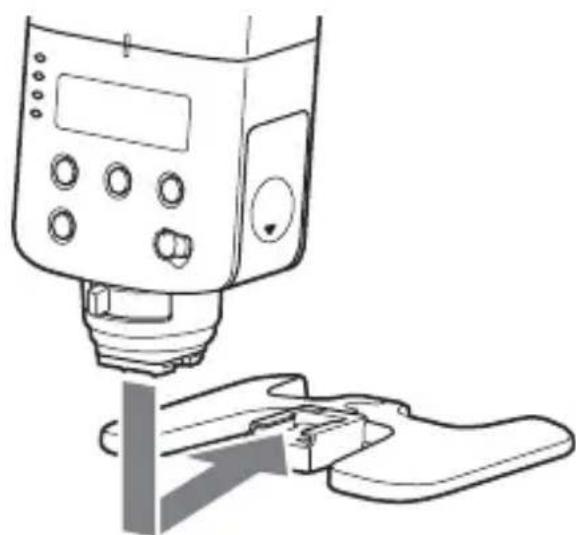
Use the supplied mini-stand when the flash unit is separate from the camera.
1 Open the supplied mini-stand.
The mini-stand is stored in the carrying case at the time of purchase.

flowchart
graph LR
    A["Initial Component"] --> B["Intermediate Component"]
    B --> C["Final Device"]
2 Remove the protective cap from the terminal of the Multi Interface foot of the flash unit.
3 Rotate the lock lever towards [RELEASE] while pressing the release button.
4 Firmly insert the Multi Interface foot all the way into the mini-stand in the direction of the arrow.
natural_image
Line drawing of a medical or laboratory device with control panel and mechanical components (no text or symbols)5 Rotate the lock lever towards [LOCK] to secure the flash unit to the mini-stand.
• See page 16 on operation for the release button and lock lever.
- You can attach the flash unit to a tripod using the tripod attachment hole under the mini-stand. Use the tripod equipped with the screw under 5.5 mm. Because the tripod equipped with the screw over 5.5 mm cannot hold the mini-stand firmly, the mini-stand may be damaged.
- When the mini-stand is split, fit the part of shaft into the other part.
![SONY HVLF32M - Rotate the lock lever towards [LOCK] to secure the flash unit to the mini-stand. - 1](/content/2026/03/451354/images/2ec759df567408009a4e32d3dce9af13f9e453b8cc3205ff0771dc6be913b1e8.jpg)
natural_image
Diagram showing two hands interacting with a device, one holding a device and the other holding a tool (no text or symbols present)[A] Using an HVL-F32M that is separated from the camera (off-camera flash)
Use the camera's built-in or another attached flash unit as the controller to fire the HVL-F32M.

1 Attach this flash unit to the camera and turn the power of this flash unit and camera on.
2 Set the camera to wireless-flash mode, then confirm that [WL] is displayed on the LCD panel of this flash unit.
For details on the setting method of the camera, refer to the operating instructions of the camera.
3 Remove this flash unit from the camera, then attach the mini-stand to this flash unit. (page 31)
4 Make sure that the built-in flash is fully charged, or attach another flash unit to the camera.
- Confirm that [RMT] is displayed on the LCD panel of this unit. If [CTRL] is displayed, press the -/RMT button to display [RMT].
- Confirm that the flash unit that is attached to the camera is set as the controller. For details, refer to the operating instructions of the flash unit.
5 Position the camera and this flash unit. (page 29)
6 Confirm that the built-in flash or the flash unit that is attached to the camera, and this flash unit are fully charged.
When the charge progress indicator lights in green, this flash unit is ready to fire. Also, the flash-ready indicator that is located on the front side of this flash unit blinks in the wireless-flash mode.
7 Press the shutter button to take a photo.
- For the test-flash, refer to the operation instructions of your camera.
- If this flash unit does not fire, change the position of the camera, this flash unit or subject, or point the wireless control-signal receiver towards the camera.
- The built-in flash of the A-mount camera, or the HVL-F20M, HVL-F32M, HVL-F43M or HVL-F60M can be used as the controller.
[B] Using the HVL-F32M that is attached to the camera as the controller
You can attach this flash unit to the camera to use as the controller. By firing the flash with this unit, any other flash unit that is separated from that camera (off-camera flash) will fire.
HVL-F32M
![SONY HVLF32M - [B] Using the HVL-F32M that is attached to the camera as the controller - 1](/content/2026/03/451354/images/4df7115dd32e5d37206a74426fae94025df075a9245f6f84a5b3d693eea23bf8.jpg)
natural_image
Illustration of a camera with a mounted lens and cap (no text or symbols)![SONY HVLF32M - [B] Using the HVL-F32M that is attached to the camera as the controller - 2](/content/2026/03/451354/images/9ff1a800d74a72e0fc847e7165c3e1eae411e6269ad8c1788026088e45f0891c.jpg)
![SONY HVLF32M - [B] Using the HVL-F32M that is attached to the camera as the controller - 3](/content/2026/03/451354/images/871de7bce86275dc360a90ef38986c0fd7f74c98e533502165564a40ee70243a.jpg)
Off-camera flash
1 Attach this flash unit to the camera, then turn on the camera, the flash unit and off-camera flash.
2 Set the camera, the flash unit and off-camera flash.
Camera setting:
1 Set the camera to wireless flash.
For details, refer to the operating instructions supplied with your camera.
This flash unit setting:
Set the flash unit as a controller.
1 Press the MODE button repeatedly to display [WL] on the LCD panel.

2 Press the + / CTRL button to display [CTRL] on the LCD panel.

Off-camera flash setting:
1 Set the off-camera flash to the wireless remote mode.
For details, refer to the operating instructions supplied with the off-camera flash. When the HVL-F32M is used as the off-camera flash, see page 33.
3 Position the camera and the off-camera flash.
4 Press the shutter button to take a photo.
- For the test-flash, refer to the operation instructions of your camera.
- If this flash unit does not fire, change the position of the camera, this flash unit or subject, or point the wireless control-signal receiver towards the camera.
Notes on use
Do not place this flash unit in the following locations
Regardless of whether this flash unit is in use or in storage, do not place it in any of the following locations. Doing so may lead to a malfunction.
- Placing this flash unit in locations subject to direct sunlight such as on dashboards or near a heater may cause this unit to deform or malfunction.
- Locations with excessive vibration
- Locations with electromagnetism
- Locations with excessive sand In locations such as the seashore and other sandy areas or where dust clouds occur, protect the unit from sand and dust.
This may lead to a malfunction.
While shooting
- This flash unit generates strong light, so it should not be used directly in front of the eyes.
- Do not use the flash 20 times in a row or in quick succession in order to prevent heating and degradation of the camera and flash unit. (when the power level is 1/32, 40 times in a row.)
Stop using the flash unit and cool it for 10 minutes or more, if the flash is triggered up to the limit for the number of times in quick succession.
- Do not put this flash unit with the camera attached in the bag, etc. It may result in a malfunction of this flash unit or the camera.
- Do not carry this flash unit with the camera attached. It may result in a malfunction.
- Do not use the flash near
s t people when rotating the flashtube during bounce photography. The flash light may damage the eyes, or the hot flashtube may cause a burn.
- When rotating the flashtube, be careful not to catch your fingers in the rotating part. You may be injured.
- This camera is designed to be dust and moisture-resistant, but is not waterproof or splash-proof.
- When closing the battery chamber door, press it firmly in while sliding it fully across. Be careful not to injure yourself by catching your finger in the
battery chamber door when closing it.
Batteries
- The battery level displayed on the LCD panel may be lower than the actual battery capacity, due to temperature and storage conditions. The displayed battery level may be restored to the correct value after the flash has been used a few times.
- Nickel-metal hydride batteries can lose power suddenly. If the low-battery indicator starts blinking or the flash can no longer be used while taking pictures, change or recharge the batteries.
- Do not use lithium-ion batteries because repeated flash use makes the batteries hot and the flash will no longer fire.
- The flash frequency and number of flashes provided by new batteries may vary from the values shown in the table, depending on the time elapsed since manufacture of the batteries.
- Remove the batteries only after turning the power off and
waiting several minutes, when changing the batteries. The batteries may be hot, depending on the battery type. Remove them carefully.
- Remove and store the batteries when you do not intend to use the camera for a long time.
Temperature
- The flash unit may be used over a temperature range of 0 °C to 40 °C.
- Do not expose the flash unit to extremely high temperatures (e.g. in direct sunlight inside a vehicle) or high humidity.
- To prevent condensation forming on the flash, place it in a sealed plastic bag when bringing it from a cold environment into a warm environment. Allow it to reach room temperature before removing it from the bag.
- Battery capacity decreases at colder temperatures. Keep your camera and spare batteries in a warm inside pocket when shooting in cold weather. The low-battery indicator may blink even when there is some power left in the batteries in cold weather. Batteries will
regain some of their capacity when warmed to normal operating temperature.
Maintenance
- Remove this unit from the camera. Clean the flash with a dry soft cloth. If the flash has been in contact with sand, wiping will damage the surface, and it should therefore be cleaned gently using a blower. In the event of stubborn stains, use a cloth lightly moistened with water or tepid water, and then wipe the unit clean with a dry soft cloth. Never use strong solvents, such as thinner or benzine, as these damage the surface finish.
- If fingerprints or debris are stuck to the lens or flashtube, we recommend that you gently remove any debris and then wipe the lens or flashtube clean with a soft cloth.
Specifications
Guide number
Normal flash (ISO100)
Manual flash/35mm-format
| Power level | Flash coverage setting (mm) | ||||
| 15* 24 | 50 70 105 | ||||
| 1/1 9.1 19.5 | 24 27.5 31.5 | ||||
| 1/2 6.4 13.8 | 17 19.5 22.3 | ||||
| 1/4 4.6 9.8 | 12 13.8 15.8 | ||||
| 1/8 3.2 6.9 | 8.5 9.7 11.1 | ||||
| 1/16 2.3 4.9 | 6 | 6.9 7.9 | |||
| 1/32 1.6 3.5 | 4.2 4.9 5.6 | ||||
| 1/64 | 1.1 2.4 | 3 3.4 3.9 | |||
| 1/128 | 0.6 1.7 | 2.1 | 2.4 2.8 | ||
*When the wide panel is attached.
APS-C format
| Power level | Flash coverage setting (mm) | ||||
| 15* 24 | 50 70 105 | ||||
| 1/1 9.1 19.5 | 27.5 27.5 | 31.5 | |||
| 1/2 6.4 | 13.8 19.5 | 19.5 22.3 | |||
| 1/4 4.6 9.8 | 13.8 13.8 | 15.8 | |||
| 1/8 3.2 6.9 | 9.7 9.7 11.1 | ||||
| 1/16 2.3 4.9 | 6.9 6.9 7.9 | ||||
| 1/32 1.6 3.5 | 4.9 4.9 5.6 | ||||
| 1/64 | 1.1 2.4 | 3.4 3.4 3.9 | |||
| 1/128 | 0.6 1.7 | 2.4 | 2.4 2.8 | ||
*When the wide panel is attached.
HSS flat flash (ISO100)
Manual flash/35mm-format
| Shutter speed | Flash coverage setting (mm) | ||||
| 15 24 5 | 0 70 105 | ||||
| 1/250 3.8 7 | 7 9.1 9.9 11 | .8 | |||
| 1/500 2.7 5 | 4 6.4 7 8.4 | ||||
| 1/1000 1.9 3 | .8 4.6 5 5.9 | ||||
| 1/2000 1.4 2 | .7 3.2 3.5 4 | .2 | |||
| 1/4000 1 1.9 | 2.3 2.5 3 | ||||
| 1/8000 0.7 1 | .4 1.6 | 1.8 | 2.1 | ||
| 1/12000 0.6 | 1.1 | 1.3 1.4 1.7 | |||
APS-C format
| Shutter speed | Flash coverage setting (mm) | ||||
| 15 24 50 70 105 | |||||
| 1/250 3.8 7.7 9 19.1 11.8 | |||||
| 1/500 2.7 5.4 6.4 6.4 8.4 | |||||
| 1/1000 1.9 3.8 4.6 4.6 5.9 | |||||
| 1/2000 1.4 2.7 3.2 3.2 4.2 | |||||
| 1/4000 1 1.9 2.3 2.3 3 | |||||
| 1/8000 0.7 1.4 1.6 1.6 2.1 | |||||
| 1/12000 0.6 1.1 1.3 1.3 1.7 | |||||
Frequency/Repetition
| Alkaline | Nickel hydride (2100 mAh) | |
| Frequency (sec) Approx. 0.1 - 5 Approx. 0.1 - 4 | ||
| Repetition (times) Approx. 120 or more Approx. 150 or more | ||
- Repetition is the approximate number of times that are possible before new batteries are completely dead.
| Continuous flash performance | 40 flashes at 5 flashes per second(Normal flash, light level 1/32, 105 mm, nickel-metal hydride battery) |
| Dimension (Approx.) | 66 mm × 119 mm × 82 mm (2 5/8 in. × 4 3/4 in. × 3 1/4 in.) (w/h/d) |
| Mass (Approx.) | 235 g (8.3 oz) (excluding the batteries) |
| Power requirements | DC 3 V |
| Recommended batteries | Two LR6 (AA-size) alkaline batteriesTwo AA-size rechargeable nickel-metal hydride batteries |
| Included items Flash unit (1), Connector protect cap (1), Mini-stand (stored in the carrying case) (1), Carrying case (1), Set of printed documentation | |
Functions in these operating instructions depend on testing conditions at our firm.
Design and specifications are subject to change without notice.
Trademark
"Multi Interface Shoe" is a trademark of Sony Corporation.
Français
natural_image
Symbol of a trash bin crossed with no text or numbers, representing waste sorting or disposal (no text present)Insertion des piles (non fournies) ....15
Fixation du flash ....17
natural_image
Black-and-white photo of a plate with food and fork on a rectangular tray (no text or symbols visible)natural_image
Top-down view of a plate with food and fork on a black tray (no text or symbols visible)natural_image
Close-up black-and-white photo of a person's eyes and eyebrow (no text or symbols visible)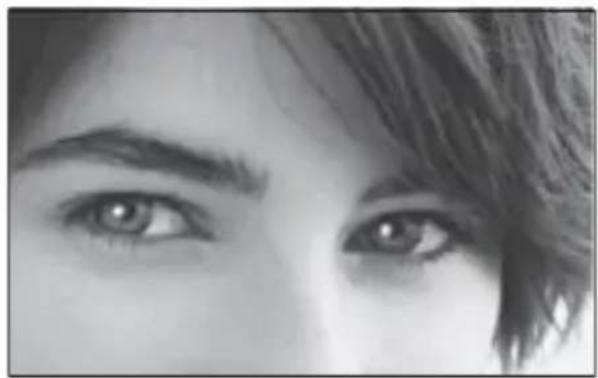
natural_image
Close-up grayscale portrait of a person's eyes and eyebrows (no text or symbols visible)natural_image
Black-and-white photo of white flowers with green foliage in the background (no text or symbols visible)
natural_image
Black-and-white close-up of white flowers with blurred background foliage (no text or symbols)natural_image
Black and white photo of a tree with dense foliage against a dark background (no text or symbols visible)Flash normal

natural_image
Exterior view of a modern multi-story office building with trees in front (no signage or text visible)Synchronisation lente
natural_image
Black-and-white photo of a person playing pool cue with balls on the table (no visible text or symbols)
natural_image
Black-and-white photo of a pool table with ball models and a person lying on the surface (no visible text or symbols)natural_image
Black-and-white close-up of two identical flower images with visible petals and centers, surrounded by blurred foliage (no text or symbols)13 Mini-support (32)
natural_image
Line drawing of a mechanical device with a directional arrow indicating motion (no text or symbols)Préparatifs
natural_image
Technical line drawing of a mechanical device with cylindrical components and a battery, showing no text or symbols.natural_image
Illustration of a printer with paper being inserted, showing airflow direction (no text or symbols)natural_image
Line drawing of a portable electronic device with a scroll wheel and ventilation slots (no text or symbols)natural_image
Diagram showing a person using a surveying instrument to observe a person on a tripod, with no text or symbols present.natural_image
Line drawing of a portable projector with a paper lid and scroll, showing airflow direction (no text or symbols)natural_image
Illustration of a robotic arm projecting a potted plant to light beams (no text or symbols)natural_image
Diagram of a mechanical component with a circular cutout and an arrow indicating rotation (no text or symbols)natural_image
Black-and-white close-up of white flowers with blurred background foliage (no text or symbols)
natural_image
Black-and-white photo of white flowers in a garden setting (no visible text or symbols)flowchart
graph LR
    A["Initial mechanical part"] --> B["Intermediate assembly"]
    B --> C["Device with internal components"]
natural_image
Line drawing of a digital scanner with control buttons and a mechanical device below (no text or symbols)natural_image
Diagram showing two mechanical components interacting, one with a handle and the other with a hook (no text or symbols)


- English
- WARNING
- IMPORTANT SAFETY INSTRUCTIONS
- SAVE THESE INSTRUCTIONS
- CAUTION
- For customers in Europe
- Disposal of Old Electrical & Electronic Equipment (Applicable in the European Union and other European countries with separate collection systems)
- Notice for the customers in the countries applying EU Directives
- For the customers in the U.S.A.
- Owner's Record
- NOTE:
- Table of Contents
- Preparations
- Basics
- Advanced Operations
- Additional Information
- Before use
- What you can do with the HVL-F32M
- ■ Taking a photo without a red-eye effect
- ■ Taking a photo with soft light (bounce flash)
- Shooting without dropping shadows (bounce flash) (page 24)
- Making the subject look more vibrant (using the bounce sheet) (page 25)
- ■ Taking a photo for a sharp subject and blurred background, even against the light (high-speed sync)
- ■ Shooting a subject and a sharp background, even in low light location (slow sync)
- ■ Taking a photo with motion blur (rear curtain sync)
- ■ Taking a photo with controlled shading (wireless flash, off-camera flash)
- ■ Shooting a subject that reflects light (manual flash)
- ■ Shooting a very close subject
- Name of parts
- Control panel
- LCD panel
- Inserting batteries (not supplied)
- Attachment of the flash unit
- Turn off the power of the flash unit.
- Remove the protective cap from the terminal of the Multi Interface foot of the flash unit and remove the shoe cap from the camera.
- Rotate the lock lever towards [RELEASE] while pressing the release button.
- Firmly insert the Multi Interface foot all the way into the Multi Interface Shoe of the camera in the direction of the arrow.
- Firmly rotate the lock lever towards [LOCK] to secure the flash unit.
- Removing the flash unit from the camera
- Turning on the power
- Set the POWER switch to ON.
- Power save mode
- Checking Batteries
- Charge progress indicator
- Note on continuous flash use
- Using flash
- About the flash mode
- Press the MODE button to select the flash mode.
- Press the shutter button to take a photo.
- Auto WB Adjustment with Color Temperature Info
- TTL\*-flash mode
- Auto flash-coverage control (auto zoom)
- Built-in wide panel (15 mm zoom angle)
- Pull out the wide panel gently.
- Push back the bounce sheet only.
- Flash coverage & focal length
- Bounce flash
- Using the bounce sheet
- Press the shutter button to take a photo.
- Close-up photography
- Press the MODE button to display [TTL] on the LCD panel.
- Manual flash
- High-speed sync (HSS)
- Flash Sync Speed
- Wireless-flash mode (WL)
- Wireless Flash Range
- Distance for wireless flash photography
- Attaching the supplied mini-stand
- Open the supplied mini-stand.
- Firmly insert the Multi Interface foot all the way into the mini-stand in the direction of the arrow.
- Rotate the lock lever towards [LOCK] to secure the flash unit to the mini-stand.
- [A] Using an HVL-F32M that is separated from the camera (off-camera flash)
- Position the camera and this flash unit. (page 29)
- Confirm that the built-in flash or the flash unit that is attached to the camera, and this flash unit are fully charged.
- Press the shutter button to take a photo.
- [B] Using the HVL-F32M that is attached to the camera as the controller
- This flash unit setting:
- Press the MODE button repeatedly to display [WL] on the LCD panel.
- Press the + / CTRL button to display [CTRL] on the LCD panel.
- Off-camera flash setting:
- Set the off-camera flash to the wireless remote mode.
- Position the camera and the off-camera flash.
- Notes on use
- Do not place this flash unit in the following locations
- While shooting
- Batteries
- Temperature
- Maintenance
- Specifications
- Guide number
- Trademark
- Français
Brand : SONY
Model : HVLF32M
Category : Flash