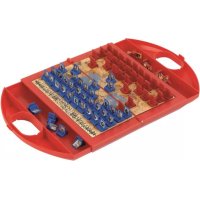
Stratego Travel - Board game Jumbo - Free user manual and instructions
Find the device manual for free Stratego Travel Jumbo in PDF.



User questions about Stratego Travel Jumbo
0 question about this device. Answer the ones you know or ask your own.
Ask a new question about this device
Download the instructions for your Board game in PDF format for free! Find your manual Stratego Travel - Jumbo and take your electronic device back in hand. On this page are published all the documents necessary for the use of your device. Stratego Travel by Jumbo.
USER MANUAL Stratego Travel Jumbo
text_image
Jumbo 00494 STRATEGO® TRAVELMade by Jumbo International, P.O. Box 2224, 1500 GE, Zaandam, NL
© Jumbo International, Zaandam, The Netherlands
Made in China
GB Warning: Not suitable for children under 3 years of age due to small parts. Please keep this box for future reference.
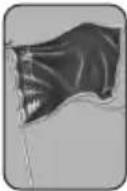
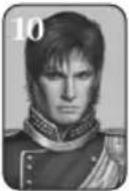
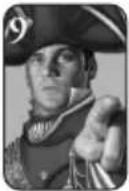
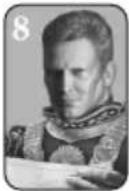
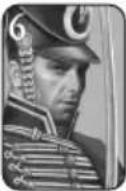
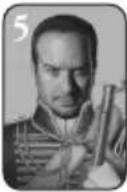
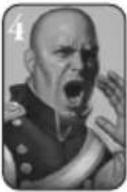
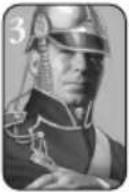
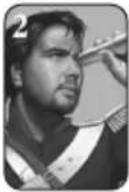
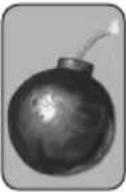
Ranks and number of pieces for each rank
 |  |  |  |  |  | |
| NL | Vaandel | Maarschalk | Generaal | Kolonel | Majoor | Kapitein |
| F | Drapeau | Maréchal | Général | Colonel | Commandant | Capitaine |
| D | Fahne | Feldmarschall | General | Oberst | Major | Hauptmann |
| GB | Flag | Marshal | General | Colonel | Major | Captain |
| DK | Fane | Feltmatskal | General | Oberst | Major | Kaptajn |
| S | Fana | Fältmarskalk | General | Överste | Major | Kapten |
| I | Bandiera | Maresciallo | Generale | Colonnello | Comandante | Capitano |
| E | Bandera | Mariscal | General | Coronel | Comandante | Capitán |
| x1 | x1 | x1 | x2 | x3 | x4 | |
 |  |  |  |  |  | |
| NL | Luitenant | Sergeant | Mineur | Verkenner | Spion | Bom |
| F | Lieutenant | Sergent | Démineur | Éclaireur | Espionne | Bombe |
| D | Leutnant | Unteroffizier | Mineur | Aufklärer | Spionin | Bombe |
| GB | Lieutenant | Sergeant | Miner | Scout | Spy | Bomb |
| DK | Løjtnant | Underofficer | Minør | Spejder | Spion | Bombe |
| S | Löjtnant | Sergeant | Minör | Spanare | Spion | Bomb |
| I | Tenente | Sergente | Artificiere | Esploratore | Spia | Bomba |
| E | Teniente | Sargento | Minador | Explorador | Espía | Bomba |
 |  |  | [AGBH] |  |  | |
NL STRATEGO® TRAVEL
text_image
Grid puzzle with character portraits in a 3x3 grid, likely for a game or educational material.flowchart
graph TD
    A["Shaded Square"] --> B["Arrow"]
    C["Shaded Square"] --> B
    D["Shaded Square"] --> B
    E["Shaded Square"] --> B
    F["Shaded Square"] --> B
    G["Shaded Square"] --> B
    H["Shaded Square"] --> B
    I["Shaded Square"] --> B
    J["Shaded Square"] --> B
    K["Shaded Square"] --> B
    L["Shaded Square"] --> B
    M["Shaded Square"] --> B
    N["Shaded Square"] --> B
    O["Shaded Square"] --> B
    P["Shaded Square"] --> B
    Q["Shaded Square"] --> B
    R["Shaded Square"] --> B
    S["Shaded Square"] --> B
    T["Shaded Square"] --> B
    U["Shaded Square"] --> B
    V["Velden waarnaar je jouw stukken mag verplaatsen of vijandelijke stukken die je mag aanvallen."]
text_image
Grid puzzle with nine numbered character images in grayscale, likely for a game or educational material.text_image
Grid of 24 grayscale images showing a character's face recognition or animation sequence, with each image containing a unique character and a circular object.Allgemeine Regeln:
flowchart
graph TD
    A["Shaded Square"] --> B["Arrow Up"]
    C["Shaded Square"] --> D["Arrow Down"]
    E["Shaded Square"] --> F["Arrow Left"]
    G["Shaded Square"] --> H["Arrow Right"]
    I["Shaded Square"] --> J["Arrow Left"]
    K["Shaded Square"] --> L["Arrow Right"]
    M["Shaded Square"] --> N["Arrow Left"]
    O["Shaded Square"] --> P["Arrow Right"]
Stratego ^® is a game of attack and defence in which suspense and surprise are important elements. The rules of Stratego ^® Travel are the same as those for Stratego ^® Original or Stratego ^® Duel. With Stratego ^® Travel it is also possible to interrupt the game and continue it later.
The game in brief:
Both players have an army of 40 pieces. The pieces have different ranks. Each of the players has a flag. The object of the game is to defend your own flag while attempting to capture your opponent's flag. Before the battle begins, you set about doing this by secretly setting up the most effective formation you can.
Box contents:
- 2 x 40 playing pieces
Preparations:
- Open the lids and then open both transparent covers.
- Decide who is to play with which colour.
- Lay the board down so that the storage compartments in the lids are positioned in front of the players, with the red sticker giving the ranks in front of the red player and the blue sticker in front of the blue player.
Two games:
Two different games can be played with this version of Stratego: Stratego Duel and Stratego Original. If you've never played Stratego before or are only familiar with Stratego Junior, Stratego Duel is the ideal game to start with. Stratego Duel is super fast on three counts: learn fast, play fast and win fast! But once you're ready to become a real strategist, Stratego Original is the game for you, giving you total command over a complete army of 40 pieces. This will give you a chance to show what you're really made of!
Stratego Duel:
For Stratego Duel, both players need the following 10 pieces:
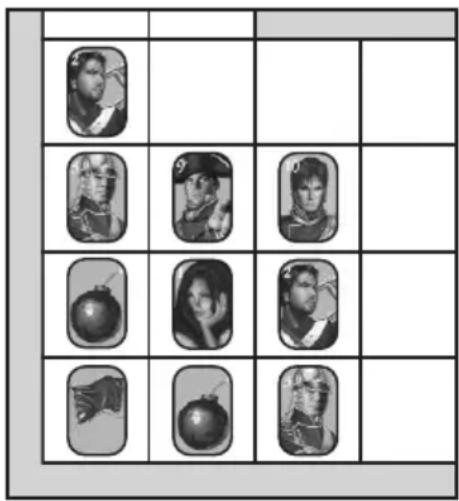
Flag x 1, Bomb x 2, Marshal x 1, General x 1, Miner x 2, Scout x 2, Spy x 1
The pieces are set up on the bottom four rows of the game board. You can therefore choose from 40 fields for your 10 pieces. You could, for example, position all your pieces at the back in a corner, and then protect your flag with two bombs (see example). The advantage here is that only the enemy miners can capture the flag, because they alone can sweep the bombs. The disadvantage is that your opponent will immediately know the corner in which to look for the flag. You can choose the smartest formation for yourself.
Carefully read the general Stratego rules below. The rules apply to both Stratego Duel and Stratego Original. You will find it easier to learn to play Stratego Duel because it is played with fewer pieces.
Stratego Original:
All the pieces are used when playing Stratego Original. Each player therefore uses 40 playing pieces. This means that when setting up all the fields, the bottom four rows are filled. The object of the game Stratego is to capture your enemy's flag. It would also be wise to position your flag
somewhere at the rear, making it more difficult to capture instantly. You only have six bombs to use as extra protection for your flag. You must divide your high and low pieces evenly across the field so that your opponent has a harder time trying to conquer your army. But your formation must also offer you opportunities to launch an attack of your own...
Example of Stratego Duel starting set-up.
text_image
Grid puzzle with nine numbered character images in grayscale, arranged in 3x3 grid cells.Example of Stratego starting set-up.
 |  |  |  |  |  |  |  |  |  |
| -HTCH] |  |  |  |  |  |  |  |  |  |
 |  |  |  |  |  |  |  |  |  |
 |  |  |  |  |  |  |  |  |  |
General rules:
Preparations:
Lay the game board down on the table. The players draw lot to determine who plays red, since red always goes first. Both players have an army of 10 (Stratego Duel) or 40 (Stratego Original) pieces, including a flag. You must try to capture your opponent's flag while protecting your own. You first put together a secret formation by placing your playing pieces on your half of the game board in such a way as to conceal their rank from your opponent. In other words, you place your pieces with the image facing you and their back to your opponent. The pieces have a specific sequence: the higher the number, the higher the rank. If a piece with a higher rank takes a piece with a lower rank, the piece with the higher rank wins and the piece with the lower rank is taken off the board. The flag can be conquered by any of the enemy's pieces that can be moved.
The playing pieces and formation:
The players take the sorting table that matches the colour of their pieces. Each piece has its own illustration and number indicating its rank. The field Marshal has the highest rank and has been assigned the number 10, the General has a 9, etc., down to the Spy with the number 1. Only the bombs and flag do not have a number because they have a special role in the game. You position your pieces on the bottom four rows of the game board. You place them with their back to your opponent so that you alone can see the illustrations. The two middle rows (with the lakes) remain empty. No playing pieces may be placed here when setting up the game. Setting up the board is an important part of the game. It determines whether you win or lose. You will find some useful tips at the end of these instructions. Once the players are ready after setting up their playing pieces, the screen is removed. The sorting tables are placed next to the board. The pieces that are removed from play during the game must be placed here so that your opponent can also see which pieces you have already taken. The sorting tables are numbered so that you can see where to place the pieces taken during the game.
Course of the game:
Red starts. The players then move their pieces in turns. You move a piece to an empty field or to a field occupied by one of your opponent's pieces. The latter option is called an attack. Each player may only move a single piece during his or her turn!
Moving:
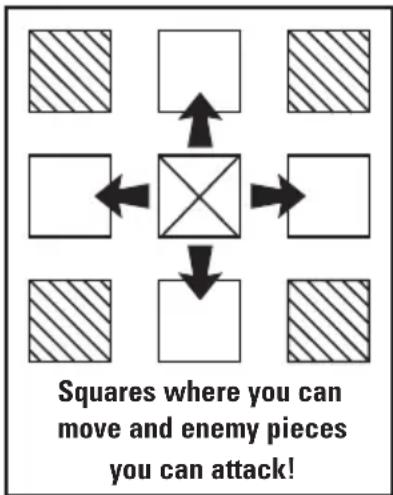
You can move a piece one place to the left or right, or one place forwards or backwards. The Scout (number 2) is an exception to this rule; more details below.
Each field can accommodate one piece only; the pieces cannot jump over other pieces and they may not be moved diagonally.
The playing pieces may not be positioned in or jump over the two lakes in the centre of the board.
You may not continuously move a piece back and forth between the same two fields. The limit here is set at three moves. It is important then to determine which player began moving to and fro. This player has to stop first too, and this could
lead to losing an important piece. The rule is known as the 'two field' moves rule.
You may also not continuously pursue one or more enemy pieces. If this happens (and extends across more than two fields) the aggressor must stop this at once.
The bombs and the flag may never be moved and therefore remain in the same place throughout the duration of the game.
Special rules apply to the Scouts (2). Scouts can jump over an unlimited number of empty fields. Of course, they can only do so in a straight line, i.e. to the left, to the right, forwards or backwards. As far as they can as long as the fields are empty because they cannot jump over their own army's pieces or those of the enemy. Neither can they jump over the lakes. Scouts are the only pieces that can launch an attack from a sizeable distance.
Attacking
If one of your pieces is immediately in front of, next to or behind one of your opponent's pieces, you can attack that piece. Attacks are launched as follows: you take your piece, tap the enemy piece and say the rank (or number) of your piece. Your opponent then says the rank (or number) of his or her piece. The piece with the lowest rank loses and is removed from the board. If the attacking piece wins, it takes the place of the losing piece. If the defending piece wins it simply remains where it was. If you attack a piece of the same rank, both pieces lose and are removed from the board. You are never obliged to attack. As mentioned above, Scouts can attack from a considerable distance. The fields in between must be empty though and the Scout must move in a straight line. A Scout (2) can therefore eliminate a Spy (1) from a sizeable distance.
The ranks:
The Field Marshal (10) outranks a General (9) and all the pieces of a lower rank. The General (9) outranks the Colonels (8) and all the lower ranks. This applies down to the Spy (1), which holds the lowest rank.
flowchart
graph TD
    A["Shaded Square"] --> B["Central Cross"]
    C["Shaded Square"] --> B
    D["Shaded Square"] --> B
    E["Shaded Square"] --> B
    F["Shaded Square"] --> B
    G["Shaded Square"] --> B
    H["Shaded Square"] --> B
    I["Shaded Square"] --> B
    J["Shaded Square"] --> B
    K["Shaded Square"] --> B
    L["Shaded Square"] --> B
    M["Shaded Square"] --> B
    N["Shaded Square"] --> B
    O["Shaded Square"] --> B
    P["Shaded Square"] --> B
    Q["Shaded Square"] --> B
    R["Shaded Square"] --> B
    S["Shaded Square"] --> B
    T["Shaded Square"] --> B
    U["Shaded Square"] --> B
    V["Shaded Square"] --> B
    W["Shaded Square"] --> B
    X["Shaded Square"] --> B
    Y["Shaded Square"] --> B
    Z["Shaded Square"] --> B
    AA["Shaded Square"] --> B
    AB["Shaded Square"] --> B
    AC["Shaded Square"] --> B
    AD["Shaded Square"] --> B
    AE["Shaded Square"] --> B
    AF["Shaded Square"] --> B
    AG["Shaded Square"] --> B
    AH["Shaded Square"] --> B
    AI["Shaded Square"] --> B
    AJ["Shaded Square"] --> B
    AK["Shaded Square"] --> B
    AL["Shaded Square"] --> B
    AM["Shaded Square"] --> B
    AN["Shaded Square"] --> B
    AO["Shaded Square"] --> B
    AP["Shaded Square"] --> B
    AQ["Shaded Square"] --> B
    AR["Shaded Square"] --> B
    AS["Shaded Square"] --> B
    AT["Shaded Square"] --> B
    AU["Shaded Square"] --> B
    AV["Shaded Square"] --> B
    AW["Shaded Square"] --> B
    AX["Shaded Square"] --> B
    AY["Shaded Square"] --> X
    AZ["Shaded Square"] --> X
    BA["Shaded Square"] --> X
    BB["Shaded Square"] --> X
    BC["Shaded Square"] --> X
    BD["Shaded Square"] --> X
    BE["Shaded Square"] --> X
    BF["Shaded Square"] --> X
    BG["Shaded Square"] --> X
    BH["Shaded Square"] --> X
    BI["Shaded Square"] --> X
    BJ["Shaded Square"] --> X
    BK["Shaded Square"] --> X
    BL["Shaded Square"] --> X
    BM["Shaded Square"] --> X
    BN["Shaded Square"] --> X
    BO["Squares where you can move and enemy pieces you can attack!"]
The ranks are depicted in the correct order on the screen and are listed at the
beginning of these instructions, where they are given by name and rank. It's a good idea to memorise the ranks. Of course, you can play with just the numbers – i.e. my '8' beats your '5' – but it sounds better to say my 'Colonel' beats your 'Lieutenant'.
Bombs and Miners (3). Any piece that attacks a bomb loses. The bomb stays in the same place. The only exception to this rule is the Miner. If a Miner attacks a bomb it becomes inactive and must be removed from play. The Miner then takes the place of the destroyed bomb.
The Spy (1). While the Spy is very seductive she holds the lowest rank; any piece that attacks her wins. But she has one extremely powerful attribute that makes her a mysterious intriguer. If a Spy attacks a Field Marshal (10) she wins the battle! This only applies if the Spy launches the attack. If the Field Marshal attacks, it beats a Spy and clears it from the board. The flag can be conquered by any piece. This includes a jumping Scout!
The winner:
You can win the game by conquering your opponent's flag. You also win if your opponent cannot move anything. This would be the case if your opponent were left with only bombs and a flag, or if bombs block the path of his or her last moving pieces.
Useful tips:
- Position your flag somewhere in the back row(s). Possibly surround it with bombs so that it can only be conquered by your enemy's Miners (3).
- It may also be a good idea to protect the corner field with your bombs, as if your flag were hidden there. Meanwhile, in reality, your flag may be hidden somewhere at the rear in the centre of the playing field!
- Watch out! Don't put too many bombs in the front line. This would hinder the movement of your own playing pieces.
- Position pieces with both high and low ranks in the first two rows. A piece is relatively well protected if there is another piece (of at least two ranks higher) behind or next to it. After all, if an enemy Captain (6) beats your Lieutenant (5), you'll need at least a Major (7) to retaliate and win.
-
Also position a number of Scouts (2) in the first rows. This will enable you to Scout out advancing troops. But position some of them at the rear as well, to save them for the final showdown. If you are forced to play without any Scouts you may as well be fighting in the dark.
-
Position your Spy (1) close to your General (9). If an enemy Field Marshal (10) threatens your General, your Spy can offer it some cover.
- It may be tempting to penetrate uncharted enemy territory with your high-ranking pieces. But the risk is great: if you lose a Colonel or higher ranking piece, this usually leads to defeat.
- Once you identify the enemy Field Marshal, your General can take any of the pieces that move beyond the cover of the Field Marshal.
Attack!
S STRATEGO® TRAVEL
text_image
Grid puzzle with nine numbered character images, likely for a game or educational material.flowchart
graph TD
    A["Shaded Square"] --> B["Cross Symbol"]
    C["Shaded Square"] --> B
    D["Shaded Square"] --> B
    E["Shaded Square"] --> B
    F["Shaded Square"] --> B
    G["Shaded Square"] --> B
    H["Shaded Square"] --> B
    I["Shaded Square"] --> B
    J["Shaded Square"] --> B
    K["Shaded Square"] --> B
    L["Shaded Square"] --> B
    M["Shaded Square"] --> B
    N["Shaded Square"] --> B
    O["Shaded Square"] --> B
    P["Shaded Square"] --> B
    Q["Shaded Square"] --> B
    R["Shaded Square"] --> B
    S["Shaded Square"] --> B
    T["Shaded Square"] --> B
    U["Shaded Square"] --> B
    V["Shaded Square"] --> B
    W["Shaded Square"] --> B
    X["Shaded Square"] --> B
    Y["Shaded Square"] --> B
    Z["Shaded Square"] --> B
    AA["Shaded Square"] --> B
    AB["Shaded Square"] --> B
    AC["Shaded Square"] --> B
    AD["Shaded Square"] --> B
    AE["Shaded Square"] --> B
    AF["Shaded Square"] --> B
    AG["Shaded Square"] --> B
    AH["Shaded Square"] --> B
    AI["Shaded Square"] --> B
    AJ["Shaded Square"] --> B
    AK["Shaded Square"] --> B
    AL["Shaded Square"] --> B
    AM["Shaded Square"] --> B
    AN["Shaded Square"] --> B
    AO["Shaded Square"] --> B
    AP["Shaded Square"] --> B
    AQ["Shaded Square"] --> B
    AR["Shaded Square"] --> B
    AS["Shaded Square"] --> B
    AT["Shaded Square"] --> B
    AU["Shaded Square"] --> B
    AV["Shaded Square"] --> B
    AW["Shaded Square"] --> B
    AX["Shaded Square"] --> B
    AY["Shaded Square"] --> X
    AZ["Shaded Square"] --> X
    BA["Shaded Square"] --> X
    BB["Shaded Square"] --> X
    BC["Shaded Square"] --> X
    BD["Shaded Square"] --> X
    BE["Shaded Square"] --> X
    BF["Shaded Square"] --> X
    BG["Shaded Square"] --> X
    BH["Shaded Square"] --> X
    BI["Shaded Square"] --> X
    BJ["Shaded Square"] --> X
    BK["Shaded Square"] --> X
    BL["Shaded Square"] --> X
    BM["Shaded Square"] --> X
    BN["Shaded Square"] --> X
    BO["Fält dit du kan flytta dina pjäser och/eller attackera fiendepjäser."]
Rang:
text_image
Grid puzzle with 12 grayscale character images arranged in 3x3 grid, likely for a game or educational material.Eksempel på en Stratego Original-opstilling.
|  |  |  |  |  |  |  | | |
 |  |  |  |  |  |  |  |  |  |
 |  |  |  |  |  |  |  |  |  |
 |  |  |  |  |  |  |  |  |  |
Spilleregler:
Spillet:
flowchart
graph TD
    A["Square Block 1"] --> B["Cross"]
    C["Square Block 2"] --> B
    D["Square Block 3"] --> B
    E["Square Block 4"] --> B
    F["Square Block 5"] --> B
    G["Square Block 6"] --> B
    H["Square Block 7"] --> B
text_image
Grid puzzle with nine character portraits in various positions, likely for a game or educational material.Stratego Original:
flowchart
graph TD
    A["Shaded Square"] --> B["Central Cross"]
    C["Shaded Square"] --> B
    D["Shaded Square"] --> B
    E["Shaded Square"] --> B
    F["Shaded Square"] --> B
    G["Shaded Square"] --> B
    H["Shaded Square"] --> B
    I["Shaded Square"] --> B
    J["Shaded Square"] --> B
    K["Shaded Square"] --> B
    L["Shaded Square"] --> B
    M["Shaded Square"] --> B
    N["Shaded Square"] --> B
    O["Shaded Square"] --> B
    P["Shaded Square"] --> B
    Q["Shaded Square"] --> B
    R["Shaded Square"] --> B
    S["Shaded Square"] --> B
    T["Shaded Square"] --> B
    U["Shaded Square"] --> B
    V["Shaded Square"] --> B
    W["Shaded Square"] --> B
    X["Shaded Square"] --> B
    Y["Shaded Square"] --> B
    Z["Shaded Square"] --> B
    AA["Shaded Square"] --> B
    AB["Shaded Square"] --> B
    AC["Shaded Square"] --> B
    AD["Shaded Square"] --> B
    AE["Shaded Square"] --> B
    AF["Shaded Square"] --> B
    AG["Shaded Square"] --> B
    AH["Shaded Square"] --> B
    AI["Shaded Square"] --> B
    AJ["Shaded Square"] --> B
    AK["Shaded Square"] --> B
    AL["Shaded Square"] --> B
    AM["Shaded Square"] --> B
    AN["Shaded Square"] --> B
    AO["Shaded Square"] --> B
    AP["Shaded Square"] --> B
    AQ["Shaded Square"] --> B
    AR["Shaded Square"] --> B
    AS["Shaded Square"] --> B
    AT["Shaded Square"] --> B
    AU["Shaded Square"] --> B
    AV["Shaded Square"] --> B
    AW["Shaded Square"] --> B
    AX["Shaded Square"] --> B
    AY["Shaded Square"] --> X
    AZ["Shaded Square"] --> X
    BA["Shaded Square"] --> X
    BB["Shaded Square"] --> X
    BC["Shaded Square"] --> X
    BD["Shaded Square"] --> X
    BE["Shaded Square"] --> X
    BF["Shaded Square"] --> X
    BG["Shaded Square"] --> X
    BH["Shaded Square"] --> X
    BI["Shaded Square"] --> X
    BJ["Shaded Square"] --> X
    BK["Shaded Square"] --> X
    BL["Shaded Square"] --> X
    BM["Shaded Square"] --> X
    BN["Shaded Square"] --> X
    BO["Shaded Square"] --> X
    BP["Shaded Square"] --> X
    BQ["Shaded Square"] --> X
    BR["Shaded Square"] --> X
    BS["Shaded Square"] --> X
    BT["Shaded Square"] --> X
    BU["Shaded Square"] --> X
    BV["Shaded Square"] --> X
    BW["Shaded Square"] --> X
    BX["Shaded Square"] --> X
    BY["Shaded Square"] --> X
    BZ["Shaded Square"] --> X
    CA["Shaded Square"] --> X
    CB["Shaded Square"] --> X
    CC["Shaded Square"] --> X
    CD["Shaded Square"] --> X
    CE["Shaded Square"] --> X
    CF["Shaded Square"] --> X
    CG["Shaded Square"] --> X
    CH["Shaded Square"] --> X
    CI["Shaded Square"] --> X
    CJ["Shaded Square"] --> X
    CK["Shaded Square"] --> X