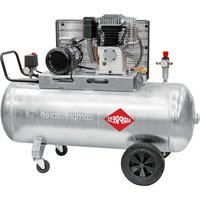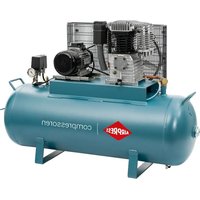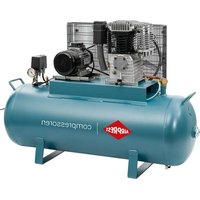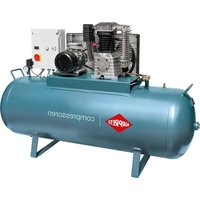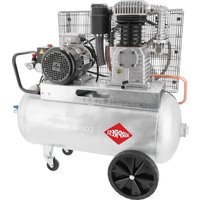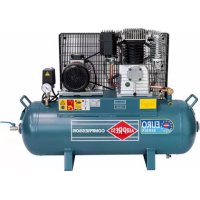
K 100450 400V - Compressor Airpress - Free user manual and instructions
Find the device manual for free K 100450 400V Airpress in PDF.



| Features | Details |
|---|---|
| Product type | Compressor |
| Power supply voltage | 400V |
| Power | Not specified |
| Airflow | Not specified |
| Maximum pressure | Not specified |
| Dimensions | Not specified |
| Weight | Not specified |
| Recommended use | Industrial and professional applications |
| Maintenance | Regularly check oil levels and clean filters |
| Safety | Use personal protective equipment (PPE) when operating |
| Warranty | Not specified |
| Additional information | Refer to the user manual for detailed instructions |
Frequently Asked Questions - K 100450 400V Airpress
User questions about K 100450 400V Airpress
0 question about this device. Answer the ones you know or ask your own.
Ask a new question about this device
Download the instructions for your Compressor in PDF format for free! Find your manual K 100450 400V - Airpress and take your electronic device back in hand. On this page are published all the documents necessary for the use of your device. K 100450 400V by Airpress.
USER MANUAL K 100450 400V Airpress
Please read this instruction manual carefully before use.
1.0 Prefatory note page 24
2.0 Safety instructions page 24
3.0 Placing page 26
3.1 Electric connection page 26
3.2 Air connection page 27
4.0 First use page 27
5.0 Operation page 27
6.0 Maintenance page 28
7.0 Functioning page 31
8.0 Possibilities of failure page 31
9.0 Technical details page 33

ATTENTION
To be able to use this compressor installation properly, a number of measurements must be taken. The following points will contribute to making you a satisfied user of this installation.
1.0 PREFATORY NOTES
Buying your AIRPRESS compressor installation, you have become the owner of a compressor installation with a high performance and reliability level. Correct use and regular maintenance will increase the life of the compressor.
In this manual you will find operation and maintenance instructions. Read it carefully and keep it as a guide to your compressor.
The K-compressor has been built to supply compressed air for industrial use. In particular the appliance cannot be used to produce air to be breathed by humans or used on direct contact with foodstuffs. The appliance must be used only for the purpose for which it was specifically designed. All other uses are to be considered incorrect and therefore unreasonable. The manufacturer cannot be held responsible for any damage resulting from improper, incorrect or unreasonable use.
This machine is not suitable for external installation.
2.0 SAFETY INSTRUCTIONS
Important: please read and observe the following safety instructions before using the machine.
- No body must be allowed to use the compressor unless they have read the instruction manual and have been instructed in the regulations to follow for correct and safe use.
- The machine must be used by adults only. Use of the compressor by apprentices
of not less than 16 years of age must be supervised by an adult authorised to use the machine.
- Keep children and visitors away from the working area.
- Be cautious when using compressed air. Never aim the air flow at people or animals. Do not use compressed air to clean clothing.
- Compressed air is not suitable to inhale.
- Do not wear loose clothing or neckties that can get caught in moving parts. Preferably wear safety goggles, nonslip footwear and Wear protective hair covering to contain long hair.
- Only use the machine outside in dry, well-ventilated surroundings with clean air and do not expose the machine to rain.
- The compressor should be placed in such way that all points, destined to carry it will really do so. Take also care of a horizontal position.
- This machine is not fit for continuous running, but service for 50% per 60 minutes.
- Keep your work area clean and well lighted.
- Do not use the machine in areas where fumes from paint, solvents or flammable liquids pose a potential hazard.
- Do not exceed the maximum operating pressure and only use the machine in an ambient temperature between +5^ and +40^ .
- Never attempt to tamper with the protections of the compressor or to operate the machine without these.
- The working parts of the machine can become hot during operation. Let the machine cool down after use.
- After each use the tank must be vented and the moisture collected in the tank must be bled. Not bleeding the tank can lead to leakage and may cause a dangerous situation. Condensate must be disposed of in conformity with the local regulations in force or install an oil/water separator.
- Check that the electric circuit is adequately protected and that it corresponds with the power, voltage and frequency of the motor. Check that there is a ground connection and a regulation differential switch upstream.
- Use cables with an adequate section and avoid use of free and inadequately insulated connections.
- Never open the pushbutton box on the motor. Should this be necessary, contact a qualified electrician.
- Make sure that the machine and the cable never come in contact with water.
- Treat the power cable with care. Do not attempt to move the machine by pulling the cable. Do not yank the cable to unplug it; keep the cable away from excessive heat, oil and sharp objects.
-
Never leave the machine unattended with the power supply "on". Also disconnect the power cable when:
-
you leave the machine, even for a short time
- not in use
- carrying out maintenance work
-
changing attachment or moving the machine.
-
WARNING: the warnings, cautions and instructions discussed in this instruction manual cannot cover all possible conditions and situations that may occur. It must be understood by the operator that common sense and caution
are factors which cannot be built into this product, but must be supplied by the operator.
- Only those persons who are aware of how to use the compressor by having read this manual, should use the machine. Injudicious use may cause danger.
Danger plates (see page 42)
The plates fitted on the compressor unit are part of the machine; they have been applied for safety purposes and must not be removed or spoiled for any reason.
3.0 PLACING
The AIRPRESS compressor should be placed in such way that all points, destined to carry it will really do so. Take also care of a horizontal position.
The engine should get sufficient cooling air; so never cover the ventilating openings. Place the compressor in cool dust free and well-ventilated surroundings with clean air. Never place the compressor in a room where will be sprayed or in an environment with aggressive substances in the air. Good ventilation is essential to discharge the cooling air. Mind that the drain tap for condensation water (16), the oil drain tap (17) and the oil level glass (8) will always remain attainable. We suggest to leave a space of approximately 50 cm for ventilation and maintenance.
The temperature in the compressor room must not be lower than +5^ or higher than +40^ .
Notice: Insufficient air supply, too high temperature and fouling of the air filter reduce the efficiency of the compressor considerably.
3.1 ELECTRIC CONNECTION
At the factory the machine is already fully equipped with cables. The machine now has to be connected to your own electricity supply. Connect the machine to a separate group. Beware that voltage and amperage of your electric circuit meet the needs of the motor. Use only cables with the right diameter. The factory suggests to use cables of at least 2.5 qmm (for motors over 10 HP: 4 qmm).
It is well advised to place a main switch between the compressor installation and the electric circuit, so you can shut off all the electricity before maintenance. Use only skilled personnel for electric connections.
Before first use first read chapters 3.2 and 4.0.
3.2 AIR CONNECTION
Best use for connection of the compressor to an air circuit a flexible hose, to isolate fibrations from the machine. The diameter of the hose must meet the connection of the ball cock.
4.0 FIRST USE
1 Check if the instructions mentioned above have been executed.
2 Check the oil level of the compressor. The oil level has to be on the red dot on the inspection glass (8). Possibly oil has been lost during transport. Fill if necessary with AIRPRESS compressor oil through desaeration motor case/oil refill cap (11).
3 Check tension on the V-belt. At the right tension the V-belt can easily be turned by hand approximately 45 degrees. If necessary improve tension (see chapter 5.0 point 5).
4 Let the compressor run for a short while so you can check if the turning direction is correct (see arrow on belt protector (3)). If the motor runs in the wrong direction, switch two phases of the electric plug. Disconnect electricity!
5 For daily operation of the compressor see chapter 5.0.
6 After 20 working hours fix the head bolts. See below: TIGHTENING MOMENTS BLACK PUMPS BUILD ON: K 100-300 t/m K 300-600 head bolts: 27 Nm. (from 2002) K 300-700 t/m K 500-700 S head bolts: 55 Nm. (from 2002) K 500-1000 t/m K 500-1500 S head bolts: 94 Nm. (from 2002)
5.0 OPERATION
Types with thermal overload device:
K 100-300 & K 100-300/M
K 300-600
K 100-450
K 300-700 S*1
K 200-450
K 200-600
Types with star-delta switch:
K 300-700 S*2
K 500-1000 Super
K 500-700 Super
K 500-1500 Super
Check if the pressure switch is turned off. Connect electricity. Turn on the pressure switch. If the air pressure in the air tank is lower than the 'switch on pressure', the compressor will turn itself on, until maximum pressure has been reached. Is the pressure in the tank higher than the 'switch on pressure' the machine will not start, but will be stand by to start when the pressure drops too low.
When switching of the compressor, first switch the pressure switch to "0" before turning off the electricity. The pressure switch takes the pressure off the compressed air circuit, so that the compressor can run freely when it starts again. This prevents damage to the motor.
The electric motor of your compressor is protected against burning by a thermal overload device. This device turns off the motor automatically, if the motor should get overloaded, or if one phase should fall out. By pressing the reset button on the thermal overload device after a short time, the compressor will function again.
6.0 MAINTENANCE
Before carrying out any maintenance jobs it is obligatory to stop the machine and disconnect it from the power mains.
1 After the first 50 operating hours and then every 250 operating hours the oil should be refreshed. Therefore, turn out the oil draintap (17) and also remove the desaeration motor case/oil refill cap (11). Collect the oil. If the oil does not come out any longer, turn in the oil draintap (17) and fill with fresh oil through the desaeration motor case/oil refill cap (11) up to the red dot on the oil level glass (8).
Always respect the regulations in force for disposing of old oil!
2 Regularly drain condensation water. The drain tap is situated at the bottom of the tank. Draining with pressure in the tank is the easiest way.
Condensate must be disposed of in conformity with the local regulations in force (not in the sewer!).
As an alternative you can place an oil/water separator. Ask your dealer for information.
3 The oil level should also be checked regularly. The oil level must be on the red dot on the oil level glass (8). If necessary refill with AIRPRESS compressor oil (article code 36380) through the desaeration motor case/oil refill cap (11).
Checking daily can prevent a lot of troubles!
Use oil of the same type as that already in the machine; do not mix different types of oil!
4 The air filter element should be cleaned or changed regularly. This change depends on the amount of fouling and should be done more often in dusty situations and less often in a clean situation. For cleaning the filter element, take out the filter container with the filter. Then clean the filter by blowing off the dust.
5 The V-belt should be checked after every 1000 hours. At the right tension, the V-belt can easily be turned 45 degrees by hand.
If tension is too high, strong corrosion will occur or eventually the spindle of motor or pump may break. At too little tension, the efficiency of the compressor decreases considerably.
Tightening the V-belt goes as follows:
Dismount the belt protector (3).
Unscrew the fastening bolts on the motor sledge.
Remove the V-belt. Place the motor at the right distance from the pump.
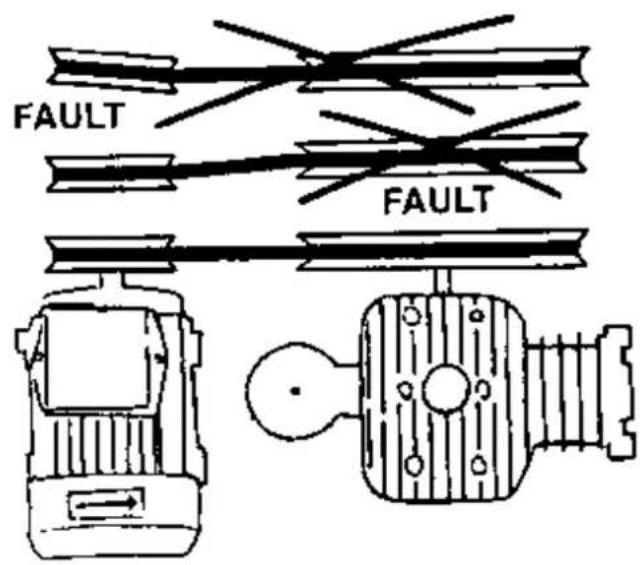
Make sure that the pulley of the motor runs in the same line parallel with the flywheel on the pump (see drawing). Tighten the fastening bolts and replace the V-belt. Worn V-belts should be replaced by new ones with the same size.
Note: Regular maintenance of your compressor will increase durability and reliability.
LEGENDA
1 air filter 5 second step compressor 9 pressure switch
2 electric motor 6 aftercooler 10 pressure gauge
3 first step compressor 7 non return valve 11 air tank
4 intercooler 8 safety valve

FUNCTIONAL DIAGRAM
MAINTENANCE TABLE
| works daily weekly | kly every | every | 250 hours 1000 | hours |
| draining condensation water | ||||
| check oil level | ||||
| clean air filter | ||||
| refresh oil (first time after 50 hours) | ||||
| check V-belt |
7.0 FUNCTIONING (see functional diagram)
The pressure switch controls the compressor. In the factory the pressure switch is set to start and stop the machine at a specific pressure. When the maximum pressure has been reached, the pressure switch works as follows:
- Types with thermal overload device: the compressor stops and relieves the pressure from the internal air circuit. If pressure drops below the starting pressure, the motor wilt start and the pump delivers air to the tank.
- Types with star-delta switch: the compressor stops and the internal air circuit is being relieved from its pressure through the electric valve (14). If pressure drops below the starting pressure, the following happens: the electric valve is open and the compressed air is being released. A time relay leaves the compressor to run freely for a few seconds in star position. Then the compressor switches to delta position and the electric valve is being excited and closes. Now the pump is working and pressure is being built up in the tank until the maximum pressure is reached.
Valid for all Airpress compressors model K:
Sound power level: Lw(A) = 99dB(A) (re 1 pW).
Sound pressure level: Lp(A) = 87dB(A) (re 20~ Pa
Measured according to NEN-EN 12076.
8.0 POSSIBILITIES OF FAILURE
1 When pushing the pressure switch the compressor does not run:
*blown fuse - renew the fuse
tank at pressure
motor broken - repair/renew
thermal failure - reset thermal relay (see point 2)
defective pressure switch - repair/renew
- blown control current fuse - renew fuse
- defective star-delta switch - consult repair service
2 Repeating thermal failure:
*blown fuse - renew fuse
* loose wire - repair
pressure switch does not relieve - repair/renew valve air circuit
too low voltage - remove extension cable or use heavier
- defective electric valve - repair/renew
* overloading - reduce loading
3 Compressor keeps blowing off air:
- defective non-return valve - repair/renew
4 Too little air production:
- dirty air filter - clean/renew filter
- V-belt too loose - tighten V-belt
- defective valves - renew
5 Leaking safety valve:
- pressure too high - set pressure switch
- defective safety valve - renew
* general failures
- failures only with types with star-delta switch
Note:
to obtain conditioned dry air it is recommended to use a compressed air dryer in combination with a pressure reducing valve for a constant operating pressure. Ask your dealer for more information.
9.0 TECHNICAL DETAILS
| Type | Order number | Number of cylinders | Number of stages | Hp | Motorpower | kW | Volt (50 Hz.) | Air tank capacity (litre) | Crank case capacity (litre) | Operating pressure (bar) | Maximum pressure (bar) | Service per 60 minutes | Air intake capacity (L/min.) | Weight (kg) | Slow fuse |
| K 100 - 300 | 36509 | 2 | 2 | 2 | 1,5 | 400 | 100 | 1,5 | 12 | 15 | 50% | 300 | 110 | 10A | |
| K 100 - 450 | 36512 | 2 | 2 | 3 | 2,2 | 400 | 100 | 1,5 | 12 | 15 | 50% | 450 | 110 | 10A | |
| K 200 - 450 | 36520 | 2 | 2 | 3 | 2,2 | 400 | 200 | 1,5 | 12 | 15 | 50% | 450 | 150 | 10A | |
| K 200 - 600 | 36500 | 2 | 2 | 4 | 3 | 400 | 200 | 1,5 | 12 | 15 | 50% | 600 | 170 | 10A | |
| K 300 - 600 | 36524 | 2 | 2 | 4 | 3 | 400 | 300 | 1,5 | 12 | 15 | 50% | 600 | 180 | 10A | |
| K 300 - 700 S *1 | 36521 | 2 | 2 | 5,5 | 4 | 400 | 300 | 2,8 | 12 | 15 | 50% | 700 | 200 | 16A | |
| K 300 - 700 S *2 | 36525 | 2 | 2 | 5,5 | 4 | 400 | 300 | 2,8 | 12 | 15 | 50% | 700 | 200 | 16A | |
| K 500 - 700 Super | 36510 | 2 | 2 | 5,5 | 4 | 400 | 500 | 2,8 | 12 | 15 | 50% | 700 | 330 | 16A | |
| K 500 - 1000 Super | 36516 | 2 | 2 | 7,5 | 5,5 | 400 | 500 | 3,6 | 12 | 15 | 50% | 1000 | 360 | 20A | |
| K 500 - 1500 Super | 36523 | 2 | 2 | 10 | 7,5 | 400 | 500 | 3,6 | 12 | 15 | 50% | 1500 | 425 | 25A |
All Airpress compressors from type K 100-300 until K 500-1500 Super are equipped with:
- 5 meter rubber cable with plug
- safety valve
- pressure gauge
- automatic pressure switch
- condensation water drain cock
- steel feet with construction holes
- handles
V-belt protector
-test flange
^1 = with motor safety switch ^2 = with star delta switch and hour counter
All compressors are protected by a thermal
overload device.
Modelchanges reserved.
All compressors are provided with Euro-Norm (CE-Choice)
FRANÇAIS
TABLE DES MATIERES
The plates fitted on the compressor unit are part of the machine; they have been applied for safety purposes and must not be removed or spoiled for any reason.
Waste electrical products should not be disposed of with household waste. Please recycle where facilities exist. Check with your Local Authority or retailer for recycling advice.
(F)
For claims against the guarantee, please send us the machine/the apparatus with the completed guarantee certificate and invoice free of charge.
Adres/Adresse/Address/Adresse
The machine/apparatus supplied carries a twelve month guarantee, starting from the day of purchase. If any breakdowns occur within this period, caused by material or structural defects, this guarantee will cover parts as well as labour costs. This guarantee will not cover claims if:
- The instructions in this manual have not been observed.
- The machine/apparatus has been modified in such a way that it no longer functions properly, not even when damaged parts are replaced with the proper components.
- Damage is due to frost, dropping, impact, unauthorized disassembly, improper connection to the electricity grid etc.
- Damage is due to the use of extension leads thinner than 2,5mm^2 . This only applies to 230 volts. If the guarantee claim is accepted, the machine/apparatus will be repaired and returned free of charge. No other damages will be paid.
CONDITIONS DE GARANTIE
EC-declaration of conformity
We, Airpress, P.O. Box 114, 8900 AC Leeuwarden, The Netherlands, taking full
responsibility, declare that the products
compressors K 100-300, K 100-450, K 200-450, K 200-600, K 300-600, K 300-700S,
K 500-700S, K 500-1000S, K 500-1500S
to which this declaration refers, comply with the machinery directive 2006/42/EC, the EMC
directive 2004/108/EC, the low tension directive 2006/95/EC and the directive 2006/42/EC.
The Netherlands, Leeuwarden, 28th July 2011
paint spraying
- inflating tyres
greasing
- blasting
water spraying
- pneumatic tools
COMPRESSEURS
pour: