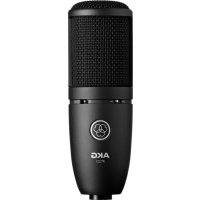
P120 - Microphone AKG - Free user manual and instructions
Find the device manual for free P120 AKG in PDF.



| Product type | 2/3" back electret pressure gradient condenser microphone |
| Brand | AKG |
| Model | P120 |
| Polar pattern | Cardioid |
| Frequency response | 20 Hz to 20 kHz |
| Sensitivity | 24 mV/Pa (-32.5 dBV) |
| Electrical impedance | ≤ 200 ohms |
| Recommended load impedance | ≥ 1000 ohms |
| Equivalent noise level | 19 dB(A) per IEC 60268-4 |
| Signal-to-noise ratio | 75 dB(A) at 1 Pa |
| Maximum sound pressure level (0.5% THD) | 130 / 150 dB SPL (0 / -20 dB pad) |
| Power supply | 48 V ±4 V phantom power per IEC 61938 |
| Current consumption | ≤ 3 mA |
| Connector | 3-pin male XLR (pin 2 hot) |
| Low-cut filter | 300 Hz, 6 dB/octave |
| Switchable pad | -20 dB |
| Dimensions (diameter) | 54 mm |
| Dimensions (length) | 165 mm |
| Net weight | 455 g |
| Temperature range | -10 °C to +60 °C |
| Body material | Metal, robust front grill |
| Included accessories | Microphone, stand adapter |
| Maintenance and cleaning | Slightly damp cloth, avoid excessive moisture |
| Safety | Ensure that the connected device has a safety ground |
Frequently Asked Questions - P120 AKG
User questions about P120 AKG
0 question about this device. Answer the ones you know or ask your own.
Ask a new question about this device
Download the instructions for your Microphone in PDF format for free! Find your manual P120 - AKG and take your electronic device back in hand. On this page are published all the documents necessary for the use of your device. P120 by AKG.
USER MANUAL P120 AKG
Please read the manual before using the equipment!
MODE D'EMPLOI 22
1 Safety and the environment. 13
Environment 13
2 Description 14
Introduction 14
Contents 14
Optional Accessories 14
Short description 14
Features. 15
3 Connecting to Audio Equipment 16
General 16
Pinout 16
Connecting the Microphone 16
4 Operation 17
Operating instructions 17
5 Cleaning 18
Microphone 18
6 Troubleshooting 19
7 Technical data 20
P120 20
P220 21
1 Safety and the environment

Risk of damage
Please make sure that the piece of equipment your microphone will be connected to fulfills the safety regulations in force in your country and is fitted with a ground lead.
Environment

- At the end of the lifetime of the product, disconnect the housing, electronics and cable from each other and discard all components according to applicable disposal regulations.
- The packaging is recyclable. Dispose of the packaging via an appropriate collection system provided for this purpose.
2 Description
| Introduction | Thank you for your decision to buy an AKG product. Please read the user instructions carefully before using the unit and keep them in a safe place so that you can refer to them in the future at any time. We wish you a lot of fun and success! |
| Contents | P120: • Microphone • Stand adapter |
| P220: • Microphone • Spider shock mount • Carrying case | |
| Check that the packaging contains all of the items listed for your system. If anything is missing, please contact your AKG dealer. | |
| Optional Accessories | • PF80 pop filter • ST305 table stand • W4000 external windscreen |
| Short description | The P120 and P220 are heavy-duty, rugged condenser microphones built to the same strict quality standards as all other AKG products. The P120 uses a 2/3" back electret diaphragm, while the P220 is a true condenser microphone with a 1" large diaphragm. Designed on the basis of AKG's decades of knowhow and feedback from sound engineers around the world using AKG studio microphones every day, these general-purpose microphones bring AKG studio quality to the worlds of recording, live sound, and broadcasting. |
Features
The P120 and P220 share the following features:
-
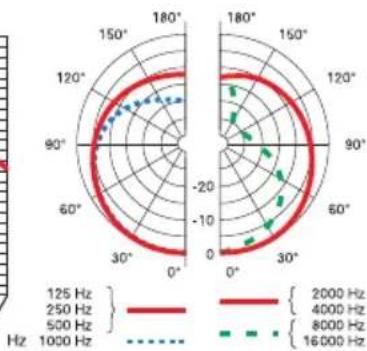
Cardioid polar pattern: The microphone is most sensitive to sounds arriving from in front of it while picking up much less of sounds arriving from the sides or rear (from monitor speakers or neighboring instruments). This makes the microphone equally suited for recording and onstage use.
-
Gold-sputtered diaphragm: The diaphragm is made of a plastic foil that is gold-sputtered on one side only to prevent shorting to the back electrode even at extremely high sound pressure levels.
-
All-metal body: The all-metal body adds to the rejection of RF interference so you can use the microphone near transmitter stations and along with wireless microphones or other communications equipment. The extremely rugged, heavy body and sturdy front grill protect the microphone from damage from tough handling on stage.
-
High headroom, minimum distortion: Capable of handling sound pressure levels up to 150 dB (P120) or 155 dB (P220) without introducing perceptible distortion and built to resist high temperatures and humidity, the microphone will give excellent results in a wide range of applications.
-
Bass cut filter: Selector 1 on the microphone front further reduces low-end distortion caused by footfall or wind noise, etc. The filter also minimizes the proximity effect that close-in miking from less than 4 inches causes in any unidirectional microphone. The filter rolls off at 6 dB/octave
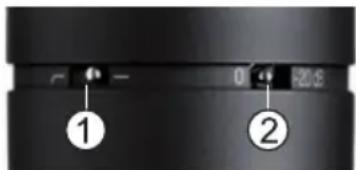
Figure 1: Bass cut and preattenuation switches on microphone front
(P120) or at 12 dB/octave (P220) from 300Hz downward.
- Switchable preattenuation pad: Selector 2 on the microphone front lets you increase the headroom by 20dB for distortionfree close-in recording. The preattenuation pad prevents the microphone's output level, particularly at low frequencies, from overloading the miniature transformers used in many mixer input stages, etc.
3 Connecting to Audio Equipment
General
The microphone uses a condenser transducer designed for 48-volt phantom powering to IEC 61938 and needs an external power supply.
Pinout
The microphone provides a balanced output on a 3-pin male XLR connector:
Pin 1: ground
Pin 2: hot
Pin 3: cold
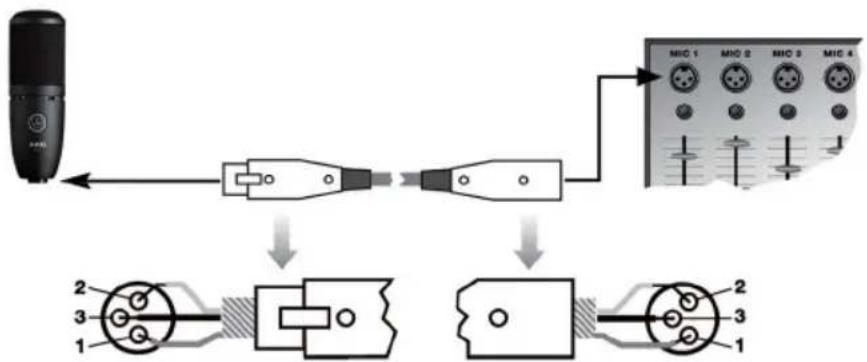
Figure 2: Connecting to a balanced input with phantom power
Connecting the Microphone
1) Use an XLR cable to connect the microphone to a balanced XLR input with phantom power.
2) Switch the phantom power on. (Refer to the user manual of the unit to which you connected your microphone.)
4 Operation
Operating instructions
The P120 and P220 are general-purpose cardioid microphones for recording, broadcast, and onstage use.
Every instrument radiates its sound in a specific way. Therefore, to get the best sound it is crucial to experiment with microphone placement.
The following hints apply to both the P120 and the P220.
The front of the microphone is the side of the body with the AKG logo on it.
Therefore, always aim the logo at the sound source you are going to record!
Being a unidirectional (cardioid) microphone, the P120/P220 will pick up very little sound from the rear.
- When recording wind instruments or vocals, make sure not to blow or sing directly into the microphone.
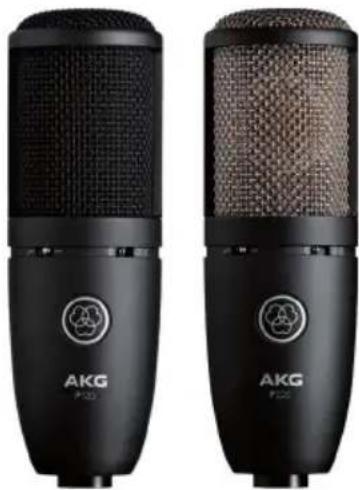
Figure 3: Microphone front
To avoid unwanted wind and pop noise or moisture problems, place an optional PF80 pop screen from AKG between the microphone and vocalist/instrument.
- Keep the microphone dry. Moisture from blowing or singing directly at the capsule from a short distance, or extremely high humidity may cause the microphone to start crackling or go very quiet due to partial short circuits in the polarization voltage.
If you use the microphone in the open air, use an optional AKG W4000 windscreen to protect the microphone from moisture and reduce wind noise. - High volume instruments: You can use this microphone for close-in recording of very loud instruments (brass instruments, kick drum, etc.). Just switch the preattenuation pad in to increase the microphone's capability of handling sound pressure levels up to 150 dB (P120) or 155 dB (P220).
- Low-frequency noise: To suppress low-frequency noise such as air conditioning rumble, footfall noise, or traffic sounds, switch the bass cut filter in.
5 Cleaning
Microphone
- Use a soft cloth moistened with water to clean the surface of the microphone body.
6 Troubleshooting
| Problem Possible Cause | Remedy | |
| No sound Power to mixer and/or amplifier | plifier is off. | Switch power to mixer or amplifier on. |
| Channel or master fader on mixer, or volume control on amplifier is at zero. | Set channel or master fader on mixer or volume control on amplifier to desired level. | |
| Microphone is not connected to mixer or amplifier. | Connect microphone to mixer or amplifier. | |
| Cable connectors are seated loosely. | Check cable connectors for secure seat. | |
| Cable is defective. | Check cable and replace if damaged. | |
| No supply voltage | Switch phantom power on. Phantom power supply: connect to power outlet or insert battery (batteries). Check cable and replace if necessary. | |
| Distortion Channel gain control on mixer set too high. | Turn gain control down CCW. | |
| Move microphone further away from sound source. Switch preattenuation pad in. | ||
| Crackling noises or low output | Partial short circuits due to excessive humidity. | Place microphone in warm, dry room and allow to dry. |
7 Technical data
P120
| Type: | 2/3" back electret condenser pressure-gradient microphone |
| Polar pattern: cardioid | |
| Sensitivity: | 24 mV/Pa (-32.5 dBV) |
| Frequency response: | 20 Hz to 20 kHz (see frequency response trace) |
| Electrical impedance: | ≤ 200 ohms |
| Recommended load impedance: | ≥ 1000 ohms |
| Equivalent noise level to IEC 60268-4: | 19 dB(A) |
| Signal to noise: | 75 dB(A) re 1 Pa |
| Max. SPL for 0.5% THD: | 130 / 150 dB SPL (0 / -20 dB) |
| Temperature range: | -10 °C to +60 °C (14 °F - 140 °F) |
| Phantom powering: | 48 V ±4 V to IEC 61938 |
| Current consumption: | ≤ 3 mA |
| Connector: 3-pin XLR (pin 2 hot) | |
| Diameter: | 54 mm (2.13 in.) |
| Length: | 165 mm (6.5 in.) |
| Net weight: | 455 g (16 oz.) |
| Bass cut pad: | 300 Hz, 6 dB/octave |
| Preattenuation pad: | -20 dB |
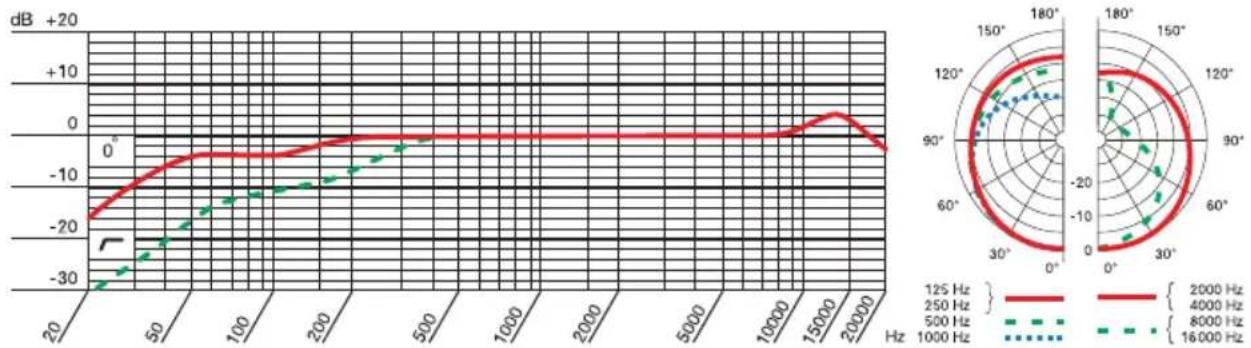
Frequency
Response
P220
| Type: | 1" large-diaphragm, true condenser pressure-gradient microphone |
| Polar pattern: cardioid | |
| Sensitivity: | 20 mV/Pa (-34 dBV) |
| Frequency response: | 20 Hz to 20 kHz (see frequency response trace) |
| Electrical impedance: | ≤ 200 ohms |
| Recommended load impedance: | ≥ 1000 ohms |
| Equivalent noise level to IEC 60268-4: | 16 dB(A) |
| Signal to noise: | 78 dB(A) re 1 Pa |
| Max. SPL for 0.5% THD: | 135 / 155 dB SPL (0 / -20 dB) |
| Temperature range: | -10 °C to +60 °C (14 °F - 140 °F) |
| Phantom powering: | 48 V ±4 V to IEC 61938 |
| Current consumption: | ≤ 3 mA |
| Connector: 3-pin XLR (pin 2 hot) | |
| Diameter: | 54 mm (2.13 in.) |
| Length: | 165 mm (6.5 in.) |
| Net weight: | 530 g (18.7 oz.) |
| Bass cut pad: | 300 Hz, 12 dB/octave |
| Preattenuation pad: | -20 dB |
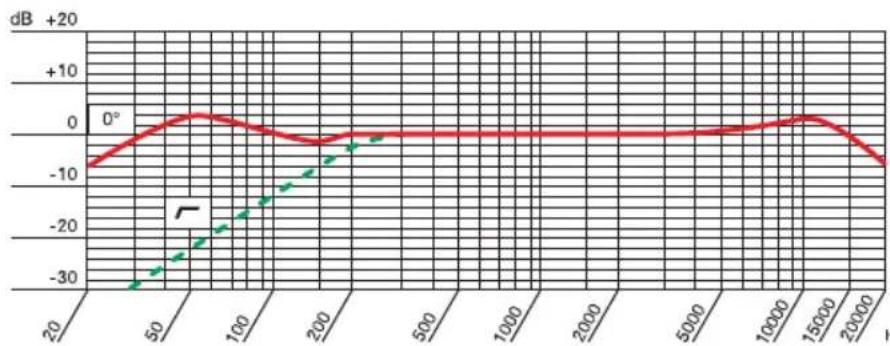
Frequency
Response
This product corresponds to the standards stated in the Declaration of Conformity. You can request the Declaration of Conformity by e-mail from sales@akg.com.
Sommaire
For other products and distributors worldwide visit www.akg.com


ROHS OK
Technische Änderungen vorbehalten. Specifications subject to change without notice. Ces caractéristiques sont susceptibles de modifications. Ci riserviamo il diritto di effettuare modifiche tecniche. Nos reservamos el derecho de introducir modificaciones Tecnicas. Especificações sujeitas a mudanças sem aviso prévio.
Printed in China (P.R.C.) 03/14/5042913