Sacco Prestigio BN180 - Baby carrier Baninni - Free user manual and instructions
Find the device manual for free Sacco Prestigio BN180 Baninni in PDF.

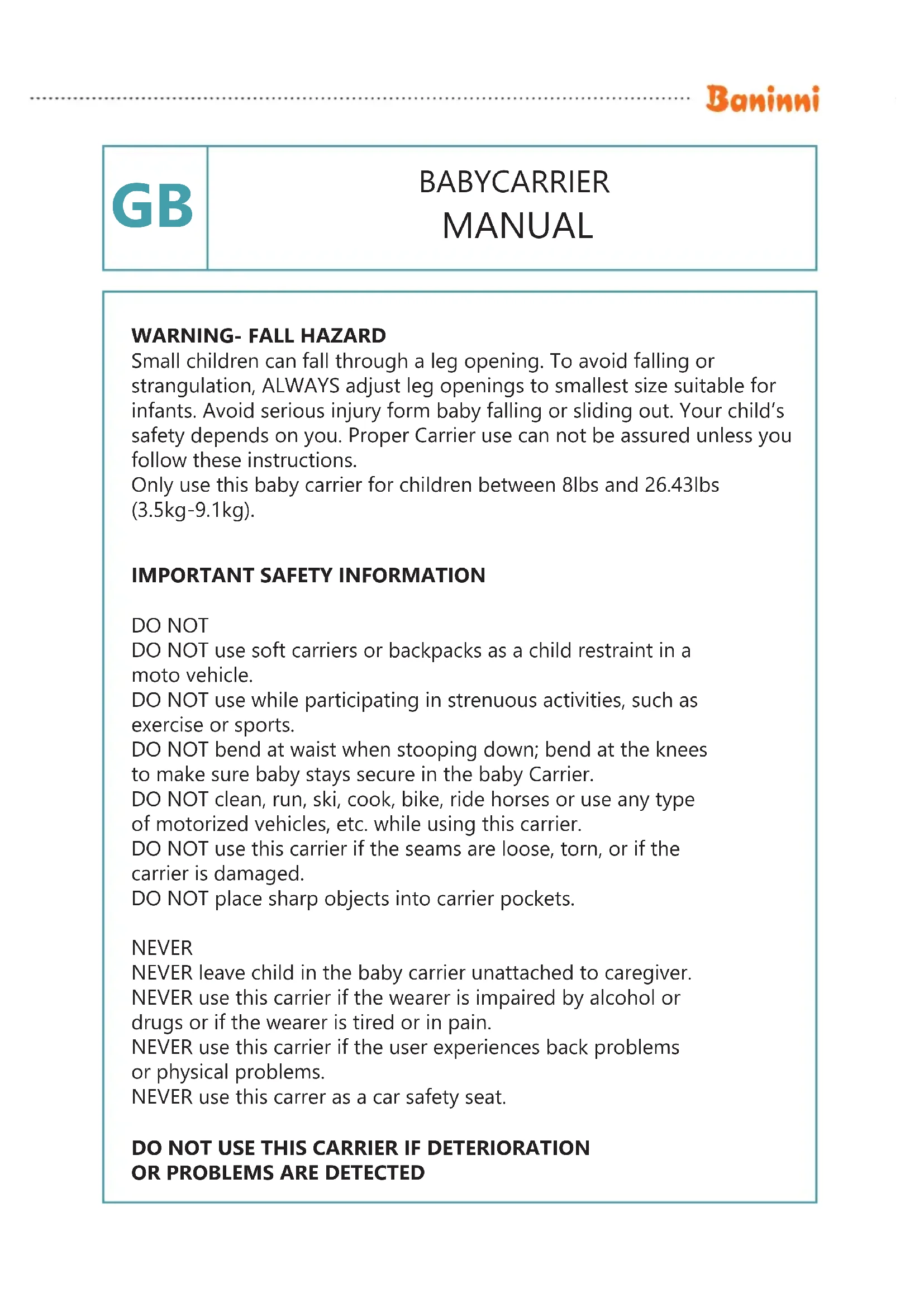


| Product type | Baby carrier |
| Brand | Baninni |
| Model | Sacco Prestigio BN180 |
| Supported weight | 3.5 kg - 12 kg |
| Recommended age | From birth to approximately 12 months |
| Carrying positions | Facing the wearer, facing the world (back turned) |
| Headrest | Adjustable, can be turned to adapt to age |
| Shoulder straps | Padded, adjustable, crossed at the back |
| Waist belt | Padded, with adjustment buckle |
| Side openings | Velcro and buckles for easy installation |
| Leg openings | Adjustable, must be as small as possible for safety |
| Arm openings | For small babies, arms go inside |
| Front pocket | Yes |
| Material | Padded fabric |
| Care | Hand wash with a damp cloth, do not use bleach |
| Safety | Check all buckles and fastenings before each use; do not use during violent or sports activities |
| Usage | For walking only, do not use in a car or for sports |
Frequently Asked Questions - Sacco Prestigio BN180 Baninni
User questions about Sacco Prestigio BN180 Baninni
0 question about this device. Answer the ones you know or ask your own.
Ask a new question about this device
Download the instructions for your Baby carrier in PDF format for free! Find your manual Sacco Prestigio BN180 - Baninni and take your electronic device back in hand. On this page are published all the documents necessary for the use of your device. Sacco Prestigio BN180 by Baninni.
USER MANUAL Sacco Prestigio BN180 Baninni
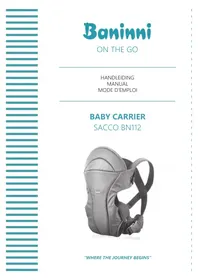
SACCO PRESTIGIO BN180
natural_image
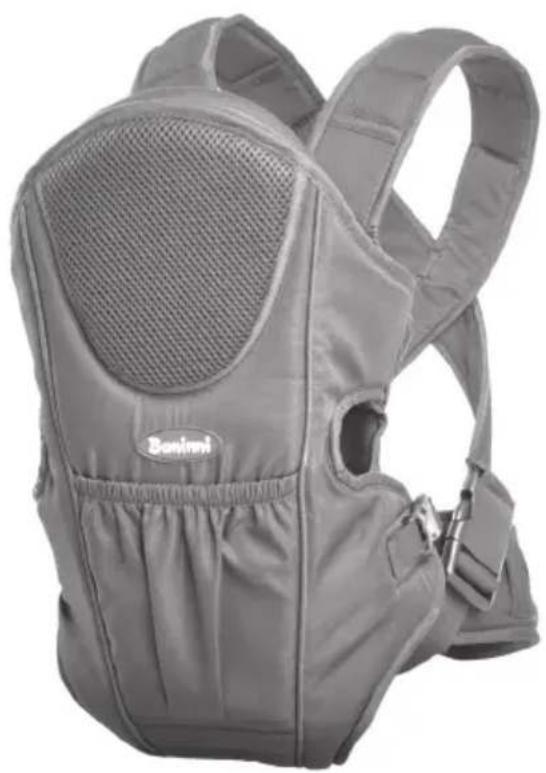
Gray baby Slovenia-style backpack with mesh backrest and 'Bonini' logo (no text or symbols on body)"WHERE THE JOURNEY BEGINS"
NL
BABYCARRIER HANDLEIDING
WAARSCHUWING – GEVAAR OM TE VALLEN
WAARSCHUWING PRODUCTSLIJTAGE
natural_image
Person wearing a backpack and gloves, viewed from behind (no visible text or symbols)natural_image
Back view of a person wearing a full-body medical harness (no text or symbols visible)natural_image
Line drawing of a person sitting in a chair, holding an object (no text or symbols)natural_image
Line drawing of a woman breastfeeding a baby on a school chair (no text or symbols)natural_image
Line drawing of a person adjusting a rope or cable (no text or symbols)natural_image
Person wearing a baby in a full-body suit, holding a backpack (no visible text or symbols)natural_image
Back view of a person wearing a full-body medical harness (no text or symbols visible)natural_image
Illustration of a person carrying a baby in a car seat (no text or symbols)natural_image
Illustration of a woman breastfeeding a baby on a school desk (no text or symbols)natural_image
Line drawing of a person in bed receiving a medical procedure (no text or symbols)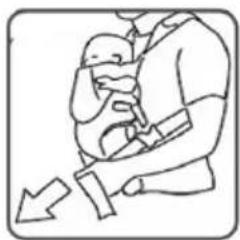
natural_image
Illustration of a person holding a baby with an arrow indicating downward motion (no text or symbols)IMPORTANT
natural_image
Illustration of a person's lower back and upper arm wearing a belt buckle (no text or symbols)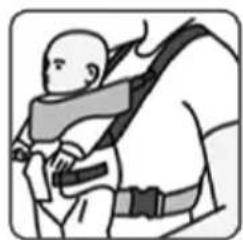
natural_image
Illustration of a baby wearing a full-body safety harness (no text or symbols)WARNING
natural_image
Illustration of a baby wearing a seatbelt, holding an object (no text or symbols present)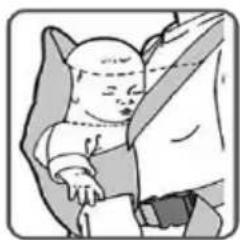
natural_image
Illustration of a baby being held by an adult (no text or symbols present)Small children can fall through a leg opening. To avoid falling or strangulation, ALWAYS adjust leg openings to smallest size suitable for infants. Avoid serious injury form baby falling or sliding out. Your child's safety depends on you. Proper Carrier use can not be assured unless you follow these instructions.
Only use this baby carrier for children between 8lbs and 26.43lbs (3.5kg-9.1kg).
IMPORTANT SAFETY INFORMATION
DO NOT
DO NOT use soft carriers or backpacks as a child restraint in a moto vehicle.
DO NOT use while participating in strenuous activities, such as exercise or sports.
DO NOT bend at waist when stooping down; bend at the knees to make sure baby stays secure in the baby Carrier.
DO NOT clean, run, ski, cook, bike, ride horses or use any type of motorized vehicles, etc. while using this carrier.
DO NOT use this carrier if the seams are loose, torn, or if the carrier is damaged.
DO NOT place sharp objects into carrier pockets.
NEVER
NEVER leave child in the baby carrier unattached to caregiver. NEVER use this carrier if the wearer is impaired by alcohol or drugs or if the wearer is tired or in pain.
NEVER use this carrier if the user experiences back problems or physical problems.
NEVER use this carrier as a car safety seat.
DO NOT USE THIS CARRIER IF DETERIORATION OR PROBLEMS ARE DETECTED
DO NOT ASSEMBLE OR USE CARRIER UNTIL YOU READ AND UNDERSTAND THESE INSTRUCTIONS.
Keep instruction for future use.
HOW TO KEEP YOUR CHILDSAFE WHILE USING THIS BABY CARRIER
1) This baby carrier is designed for use by adults while walking only. Verify all buckles, toggles, straps and adjustments are secure before each use.
2) Always make sure that your baby's nose and mouth are clear and unobstructed by the Carrier or clothing so as to ensure easy breathing.
3) The baby must face towards you until he or she is able to hold his or her head upright independently.
4) Hold on to your baby tightly until all buckles and latches are secured in place and straps are pulled tight around the user's body. Sit down when placing and removing baby.
5) Make sure baby's body parts and skin are clear when locking buckles or snaps to prevent from pinching.
6) Check often to ensure that the baby is not too hot, straps are snug but not too tight and the baby is secure.
HELPFUL HINTS
1) To minimize stress on your shoulders and back, spread the fabric on your shoulders to evenly distribute the weight of the baby.
2) To nurse in privacy, sit down comfortably, loosen the staps and have your hands supporting the baby and the baby carrier at all times. Make sure to tighten the straps again before standing up.
3) When learning to place your baby in the baby carrier, do so over a bed or soft surface, or with the help of another person.
4) If you feel that the baby carrier is too tight for your baby:
Step1: To check if the Size Adjustment Buckle is in the correct position for your baby's size.
Step2: To adjust the Straps Buckles so as to increase the length of the straps.
This will give more space for you and your baby.
PRODUCT WEAR WARNING
This product is subject to normal wear and tear over time. The user should inspect this product before each use for signs of deterioration such as tears or separations.
text_image
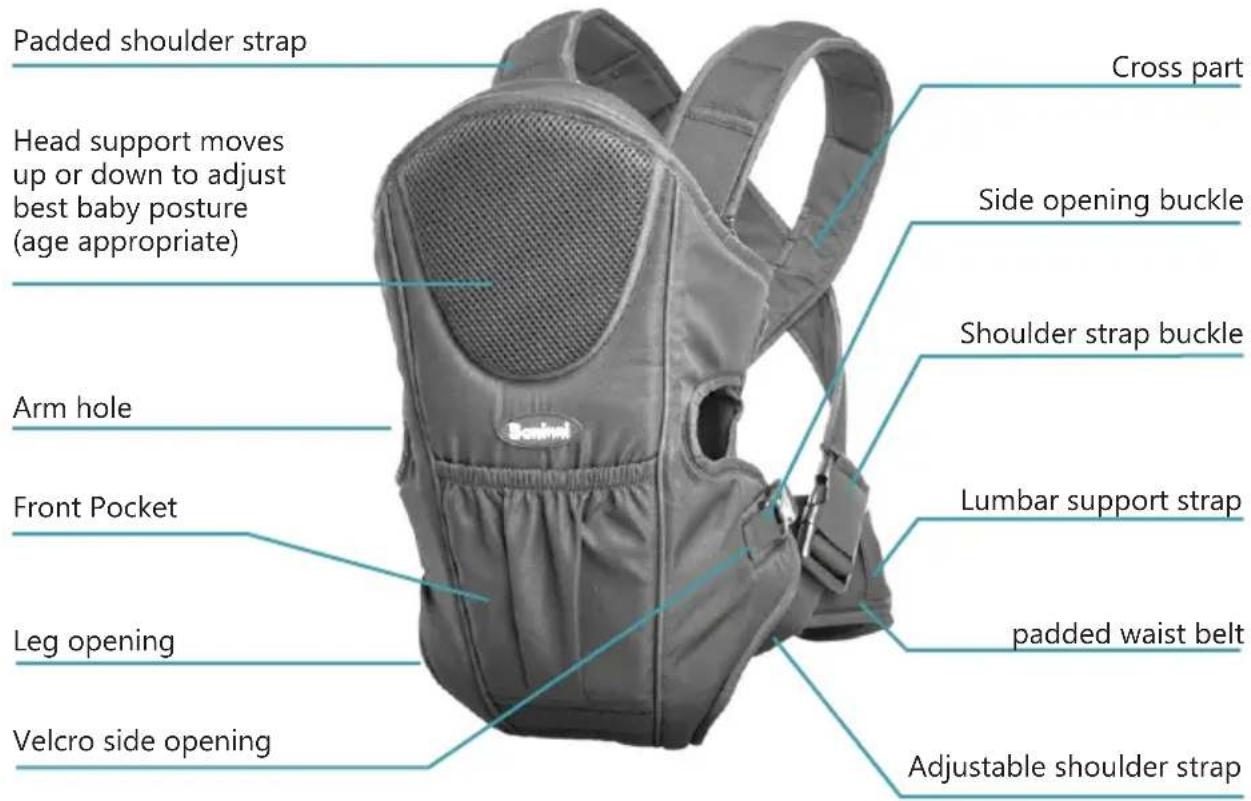
Padded shoulder strap Head support moves up or down to adjust best baby posture (age appropriate) Arm hole Front Pocket Leg opening Velcro side opening Cross part Side opening buckle Shoulder strap buckle Lumbar support strap padded waist belt Adjustable shoulder strap1.Face in Position
natural_image
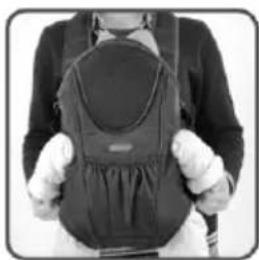
Person wearing a backpack and gloves, viewed from behind (no visible text or symbols)Your cute baby needs lots of close contact and attention! this facing-in position is a perfect way to keep your cute baby cuddled against you. The wrap around head support cradles baby's head and neck. You can entertain and bond with your baby by talking, touching, playing, and making eye-contact.
natural_image
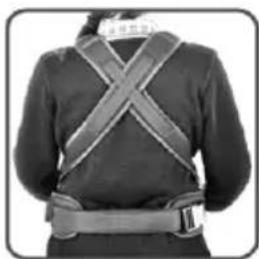
Back view of a person wearing a full-body medical harness (no text or symbols visible)Step1: Pass the shoulder straps over you head, crossing behind your back, and fasten the buckles at both sides of the carrier. At the same time fasten the waist belt.
natural_image
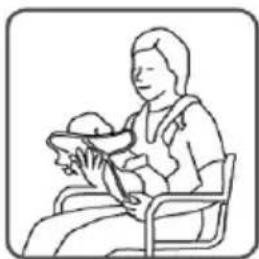
Line drawing of a person sitting in a chair, holding an object (no text or symbols)Step2: Sitting down, release one side of the head support. Unbuckle the side opening and detach Velcro fasteners. Carefully slide baby into the carrier through the opening and hold baby against you. Make sure that each of baby's legs are securely in it's own opening and baby's arms are through the arm holes.(the bigger baby's arm can rest comfortably on the sides of the head support.)
natural_image
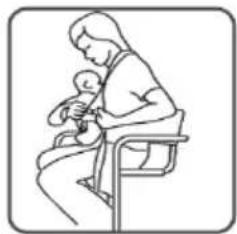
Line drawing of a woman breastfeeding a baby on a school chair (no text or symbols)Step 3: Make sure that each of baby's legs is through the leg opening. Fasten the Velcro fasteners.
natural_image
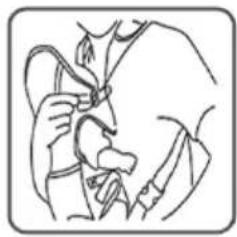
Line drawing of a person adjusting a rope or cable (no text or symbols)Step 4: While supporting baby's weight with one hand, fasten the head support buckles. Before releasing your hold on the baby, ensure that the buckles is securely fastened.
2. Face out position
natural_image
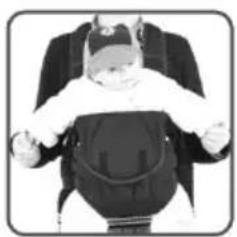
Person wearing a backpack and cap, viewed from behind (no visible text or symbols)When your baby can fully support his or her own head, it is time to explore! Facing-out position lets the baby have the best of word-beingheld by you and checking out the things that are going on all around you.
natural_image
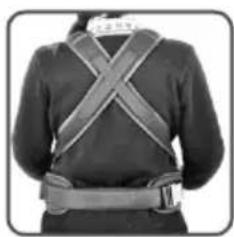
Back view of a person wearing a full-body medical harness (no text or symbols visible)Step1: Pass the shoulder straps over you head, crossing behind your back, and fasten the buckles at both sides of the carrier. At the same time fasten the waist belt.
natural_image
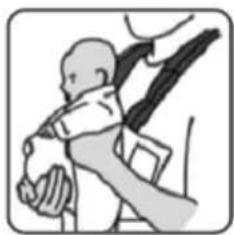
Illustration of a baby being lifted by adult hands, no text or symbols presentStep2: Sitting down, release one side of the head support. Unbuckle the side opening and detach Velcro fasteners. Carefully slide baby into the carrier through the opening, making him or her face away from you.
natural_image
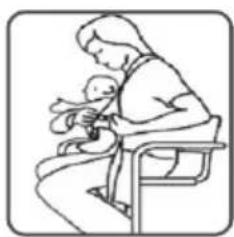
Illustration of a woman breastfeeding a baby on a chair (no text or symbols)Step 3: Make sure that each of baby's legs is through the leg opening. Fasten the Velcro fasteners.
natural_image
Illustration of a person performing a medical procedure on another person (no text or symbols present)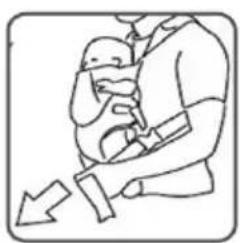
natural_image
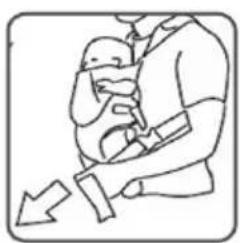
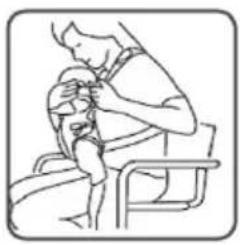
Illustration of a person holding a baby with an arrow indicating force or pressure (no text or symbols)Step 4: Fasten buckles over Velcro side opening and the head support buckles. Adjust the head support straps until baby's back is snugly against your chest Baby should not lean forward. (Notice: A smaller baby's arms should be positioned through the arm hole's. A bigger baby's arms will rest comfortably over the side of the head support.)
Step 5: While supporting baby's weight with one hand, pull on the end of webbing strap to adjust fit. Leg opening must be adjusted to the smallest possible size. Before releasing your hold on the baby, ensure that the buckles are securely fastened.
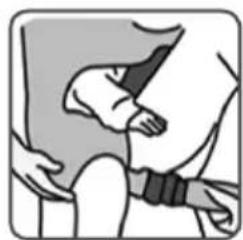
IMPORTANT
natural_image
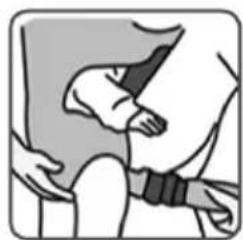
Illustration of a person's lower back with bandages, no text or symbols presentAdjust the carrier until baby is high on your chest. You should be able to easily kiss the top of your baby's head.
natural_image
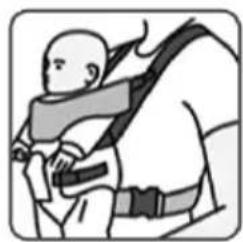
Illustration of a baby wearing a full-body safety harness (no text or symbols)A smaller baby's arms should be positioned through the arm hole's(see instruction). A bigger baby's arms will rest comfortably over the side of the head support.
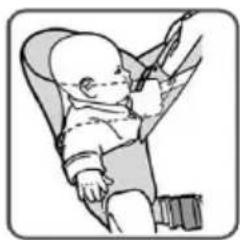
WARNING
natural_image
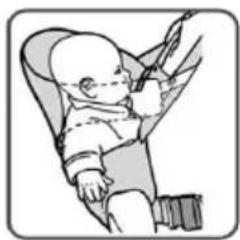
Illustration of a baby wearing a seatbelt, holding an object (no text or symbols present)If baby falls asleep, turn baby's face to the side to provide an unobstructed source of air. Failure to comply may cause a potential suffocation hazard.
natural_image
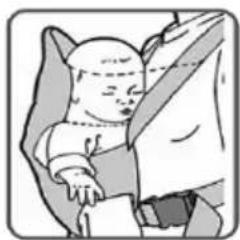
Illustration of a baby being held by an adult (no text or symbols present)There should always be room between baby's face and your chest to provide a clear source of air.
FR
BABYCARRIER MODE D'EMPLOI
AVERTISSEMENT – DANGER DE CHUTE
natural_image
Person wearing a backpack and gloves, viewed from behind (no visible text or symbols)natural_image
Back view of a person wearing a full-body medical harness (no text or symbols visible)natural_image
Line drawing of a person sitting in a chair, holding an object (no text or symbols)natural_image
Illustration of a woman breastfeeding a baby on a school chair (no text or symbols)natural_image
Line drawing of a person adjusting a rope or cable (no text or symbols)natural_image
Person wearing a backpack and cap, viewed from behind (no visible text or symbols)natural_image
Back view of a person wearing a full-body medical harness (no text or symbols visible)natural_image
Illustration of a baby being lifted by adult hands, no text or symbols presentnatural_image
Illustration of a person sitting on a chair holding a baby (no text or symbols present)natural_image
Line drawing of a person breastfeeding a baby in a chair (no text or symbols)