OWM 16222 A3 - Washing machine OK - Free user manual and instructions
Find the device manual for free OWM 16222 A3 OK in PDF.


| Product type | Washing machine |
| Brand | OK |
| Model | OWM 16222 A3 |
| Washing capacity | 6 kg |
| Dimensions (W × D × H) | 595 × 450 × 850 mm |
| Supply voltage | 220-240 V ~ 50 Hz |
| Rated power | 2000 W |
| Protection class | I |
| Protection rating | IPX4 |
| Maximum spin speed | 1200 rpm |
| Energy efficiency class | A+++ |
| Spin efficiency class | B |
| Wash programs | Cotton, Synthetic, Wool, Express 15 min, Underwear, Mixed, Sport, Rinse, Spin, Drum Clean |
| Additional functions | Extra rinse, Intensive |
| Noise level (wash) | 62 dB(A) |
| Noise level (spin) | 78 dB(A) |
| Annual water consumption | 9400 L/year |
| Annual energy consumption | 151 kWh/year |
| Water pressure | 0.05 - 1 MPa |
| Filters | Pump filter, inlet filter |
| Safety | Door lock, foam detection, water level protection |
| Included accessories | Transport plugs, inlet hose, drain hose |
| Maintenance | Regular cleaning of the pump filter, detergent drawer and inlet filter |
Frequently Asked Questions - OWM 16222 A3 OK
User questions about OWM 16222 A3 OK
0 question about this device. Answer the ones you know or ask your own.
Ask a new question about this device
Download the instructions for your Washing machine in PDF format for free! Find your manual OWM 16222 A3 - OK and take your electronic device back in hand. On this page are published all the documents necessary for the use of your device. OWM 16222 A3 by OK.
USER MANUAL OWM 16222 A3 OK
natural_image
Front view of a white washing machine with a circular dial and front panel (no visible text or symbols)HERZLICHEN GLÜCKWUNSCH!
Thanks for your purchase of an ok. product. Please read this manual carefully and keep it for future reference.
IMPORTANT SAFETY INSTRUCTIONS. READ CAREFULLY AND KEEP FOR FUTURE REFERENCE.
- This product can be used by children aged from 8 years and above and persons with reduced physical, sensory or mental capabilities or lack of experience and knowledge if they have been given supervision or instruction concerning use of the product in a safe way and understand the hazards involved.
- Children shall not play with the product.
- Cleaning and user maintenance shall not be made by children unless they are supervised.
- Children less than 3 years should be kept away unless continuously supervised.
- A damaged power cord may only be replaced by the authorised service agent in order to avoid hazards.
- The maximum mass of dry cloth to be used in the product is 6 kg.
- For products with ventilation openings in the base, the openings must not be obstructed by a carpet.
- This product is connected to the water mains. Consider minimum and maximum permitted inlet water pressure, see chapter Technical Data. Consider all instructions about installation for detachable hose-sets, use new hose-sets for installation. Do not reuse old hose-sets
- The product is designed for the preparation of normal household quantities in the home, or in household-like, non-commercial environments. Household-like environments include staff kitchens in shops, offices, agricultural and other small businesses or for use by guests at bed-and-breakfast establishments, small hotels and similar residential facilities.
EN
14
-
Read this user manual thoroughly before first use and pass it on with the product. Pay attention to the warnings on the product and in this user manual. It contains important information for your safety as well as for the use and maintenance of the equipment.
-
Use the product only for its intended purpose and with recommended accessories and components. Improper use or wrong operation may lead to hazards.
-
Never leave the product unsupervised while it is switched on.
-
Never immerse electrical parts of the product in water or any other fluids during cleaning or operation. Never hold the product under running water.
-
Do not under any circumstances attempt to repair the product yourself. For servicing and repairs, please consult an authorised service agent (e.g. damaged power cord, product has been dropped, etc.).
-
The mains voltage must match the information on the rating label of the product.
-
Avoid damages to the power cord that may be caused by kinks or contact with sharp corners.
-
Keep this product including power cord and power plug away from all heat sources such as ovens, hot plates and other heat-producing products/objects.
-
Only unplug from the power socket by the plug itself. Do not pull on the cord.
-
Unplug the product ..
-
when the product is not being used,
- in case of malfunctions,
- before attaching / detaching accessories and
-
before cleaning the product.
-
Use this product in dry indoor areas only and never outdoors.
-
Never use, expose or put the product near to:
-
direct sunlight and dust;
-
fire (fireplace, grill, candles), water (water splashes, vases, bath tub) or heavy moisture.
-
This product is not intended for commercial use. It is designed for household use only.
INTENDED USE
This product is designed for washing clothes and textiles. Any other use may result in damage to the product or injuries. This product is designed for household use only and not intended for commercial use. The Imtron GmbH assumes no liability for damage to the product, for property damage or for personal injury due to careless or improper usage of the product, or usage of the product which does not meet the manufacturer's specified purpose.
COMPONENTS
A. Control panel
A1 Display
A2 Start/Pause button
A4 Temperatur button
A5 Program selector
A6 On/Off switch Ein/Aus
A3 Function button Extra Spülen/ Intensiv (Extra rinse/Intense)
B. Detergent drawer
C. Door with window
D. Power cord with plug
E. Door handle
F. Lint filter
G. Water connection
H. Sewage hose
I. Transport restraint
J. Adjustable feet

Transport restraints must be removed before the first use as described in chapter Installation.
BEFORE FIRST TIME USE
- Carefully remove the product and accessories from the original packaging. It is recommended to keep the original packaging for storage. If you wish to dispose of the original packaging, please observe applicable legal provisions. Should you have any questions regarding proper disposal, contact your local waste management center.
- Inspect the delivery contents for completeness and damages. Should the delivery contents be incomplete or damaged, contact your sales outlet immediately.
• After unpacking, please refer to chapter Cleaning and care.
EN
INSTALLATION
Note:
The washing machine is equipped with power cord and plug and needs sewage and tap water connection. Make sure before installation that the wall outlet is at the desired place of installation. Consider the dimension (chapter Technical data) of the product for placing and installation.
Caution!
- Before initial operation the transport restraints must be removed from the backside of the unit. Operating the washing machine with mounted transport restraints leads to serious damages.
- Keep the transport restraints for later use. Never transport the device without correctly mounted transport restraints!
Fig. 1 Loosen the four transport restraints with an open-end wrench (13 mm) and unscrew them completely. Insert the 4 supplied blind plugs in the holes.
Fig. 2 Place the washing machine on an even, horizontal and steady surface. For levelling the feet are adjustable and can be screwed in or out.
• Unscrew the lock nuts with a open-end wrench (16 mm).
• Turn the feet to the right to screw them in and to the left to unscrew them.
- Use a spirit level to check whether the appliance is leveled. If the appliance is not standing horizontally or is tilting the feet must be adjusted again.
• If the unit is leveled and does not tilt, tighten the nuts with the open-end wrench.
Fig. 3 The washing machine must be connected to a drain.
- The drain hose is already fixed to the sewage connection. Pull the hose out of the clamps and unwind it.
- Connect the other end to the drain pipe (option A or B). Observe the max. height of the hose end.
Note: Suitable hose holders are available as optional accessories.
Fig. 4 Connect the water inlet to the water system (3/4") using the supplied hose and make sure that everything is connected correctly and firmly. The water pressure must be between 0.05 MPa and 1 MPa. A pressure reducing valve must be used if the water pressure is exceeds 1 MPa.
Note:
- If the water pipes are new or have not been used for an extended period of time, allow a certain amount of water to drain until you are sure that the water is clear and free of foreign objects.
- If this point is not observed, there is a risk that the water inlet will become clogged and the unit will be damaged.
Fig. 5 Plug the mains plug into a suitable socket.
PREPARATION
Before first use
• Make sure the transport restraints on the back of the unit have been removed.
- Remove all accessories and other materials from the washing drum.
- Before washing cloth for the first time, run the appliance without any cloth but some detergent in the "Cotton 60°C" program, see Start washing.
OPERATION
Fig. 6 Preparation of the garments
Caution!
-
Do not wash fabrics that are not suitable for machine wash. Observe the instructions on the care label of the laundry.
• Hard or pointed foreign objects (eg. nails, coins) can damage laundry and components.
• Never wash laundry soaked with gasoline, thinner, alcohol or solvents. -
Check the pockets of all laundry and empty them.
- Before washing, remove dirt, stains and hair from the laundry, eg. by pre-soaking and pre-washing by hand.
- Sort the laundry according to colors and the washing procedures and washing temperatures indicated on the care labels. Do not wash white laundry together with coloured laundry but separately. Newly bought coloured laundry must be washed separately.
- Turn applications such as buttons and embroideries inwards. If necessary, close zippers, buttons or hooks before washing, and tie loose straps or loops together.
- Wash brassiere in a laundry bag to prevent the steel hangers from loosening. In particular, fine textiles such as curtains, crochet work or small articles (socks, handkerchiefs, neckties, etc.) should be washed in a closed laundry bag.
• Always remove removable parts such as hooks, eyelets, e.g. from curtains. - During the washing of large and heavy single items such as bedclothes, covers, bath towels, jeans, lined winter jackets, etc., the drum can become imbalanced especially during spinning. To minimize imbalances always wash several clothes together as one load.
- Linting clothes should be washed separately, otherwise there will be visible lint on all clothes, especially on black clothes.
Fig. 7 Fill the laundry
- Untangle the garments and place them neatly into the washing drum.
- If possible use the max. loading capacity. Do not overload the washing machine. Do not cram the laundry in the washing drum but load it in a way that the laundry is still being circulated during the washing process. Different sizes and thicknesses of the laundry influence the loading capacity.
- Close the door, making sure that no laundry is trapped between the door and the seal.
SELECT AND FILLING IN DETERGENT
Caution!
- Keep detergents out of the reach of children!
- Observe the instructions of the detergent regarding dosage and storage.
- Only use detergents suitable for washing machines and make the right selection, taking into account the kinds of laundry to be washed (cotton, colored, white etc.).
- Do not use bleach, as it can damage the washing machine and the laundry.
EN
Fig. 8
- Open the detergent drawer.
Note the different compartments:
A: Detergent for main wash, option 1 for washing powder, option 2 for liquid detergent
B: Fabric softener for rinsing
C: Detergent for pre-wash
- Fill in laundry detergent and fabric softener according to manufacturer's instructions.
Note on foam detection: If too much detergent is used, excessive foam is formed. The foam formation is checked and excessive foam is removed.
- Close the detergent drawer by pushing it in completely.
Start washing
- Turn on the washing machine with the Ein/Aus switch.
- Use the program selector to select a suitable program and, if necessary, a suitable additional function. Please refer to the following Program table.
- Use the Temperatur (temperature) button to change the temperature if the preset temperature does not meet your requirements. The higher the temperature the more energy is consumed.
- If necessary, select one of the additional functions, Intense or Extra Rinse, by pressing the Function button.
- Start the washing process by pressing the Start/Pause button.
Caution! The door may only be opened if the appliance is not running, e.g. after a washing program is finished. Do not try to open the door while the appliance is running.
Display
In the display you can see the following functions:
- Running time
• Failure codes and service information
Fig. 9 Program table
| Program | Max. load in kg | Laundry detergent tray | Extra rinse | Intense | Standard/maximum temperature in °C | Standard time in h:mm | Spin speed in min^-1 | ||
| Tray A/2/ Main wash cycle | Tray B/ / Fabric softener | Tray C/1/ Pre wash | |||||||
| Cotton/ Pre-wash | 6 | 60/90 | 2:03 | 1200 | |||||
| Cotton/ Standard* 6 | 60/90 2:18 1200 | ||||||||
| Cotton/ Quick wash 3 | 40/40 0:48 800 | ||||||||
| Synthetic/ Standard 3 | 40/60 1:00 800 | ||||||||
| Synthetic/ Quick wash | 3 | cold/40 0:30 800 | |||||||
| Wool 1.5 | cold/40 0:45 600 | ||||||||
| Express 15 min 1.5 | 20/40 0:15 800 | ||||||||
| Lingerie 3 | 60/90 1:41 800 | ||||||||
| Mix 3 | 60/60 1:31 1200 | ||||||||
| Sport wash 3 | 60/60 1:46 1200 | ||||||||
| Rinse 6 | / | 0:23 800 | |||||||
| Spin | 6 | / | 0:12 1200 | ||||||
| Drum clean | 0 | 90/90 1:00 400 | |||||||

not available/not applicable; ○ optional; ● standard
* Standard program: Cotton 60°C / 40°C
With full and partial load, these are the standard wash programs to identify the information on the energy label. These programs are suitable to clean normally soiled laundry and of combined energy and water consumption most efficiently.
EN
CLEANING AND CARE
Caution!
- When cleaning, never use solvents or abrasive materials, hard brushes, metallic or sharp objects. Solvents are harmful to human health and can attack plastic parts, while abrasive cleaning mechanisms and tools may scratch the surface(s).
- Switch off the washing machine and let it cool down completely before cleaning.
- Clean the exterior surfaces of the product with a slightly damp cloth and dry them well. Make sure that no water enters the product interior (e.g. at the switches).
Fig. 10
Cleaning the detergent drawer
- Pull out the drawer. Press the tab marked with an arrow above the fabric softener compartment and pull out the drawer completely.
- Wash the chambers with water.
• If necessary, use a soft brush to clean the housing. - Insert the detergent drawer.
Fig. 11
Clean the filter of the lye pump
Caution!
• Never operate the washing machine without a filter.
• The filter of the lye pump prevents foreign objects from affecting the pumping system.
- Clean or check the filter regularly depending on the frequency of use, approximately once a month.
- Check the filter if the water is not pumped out or if the noise is increased during pumping.
- Before opening the service flap, place a big cloth in front and below the flap. Large amounts of water may leak when removing the filter.
- Make sure that all water has been pumped out during the previous wash cycle and then turn off the power and unplug the power cord.
- Open the maintenance flap by inserting a coin or screwdriver tip into the slot.
- Place a collecting tray in front of it to catch any leaking water. Pull off the hose, remove the plug and drain all water into a collecting tray. Insert the plug into the hose and push the hose back into the clip.
• Turn the filter cover to the left. Catch leaking water!
• Clean the filter under running water. - Insert the filter and turn it to the right. Make sure that the filter is properly fixed so that no water can leak.
- Close the maintenance flap.
Fig. 12 Inlet filter
Caution!
- Close the water supply!
• After cleaning, always make sure that the water hose is properly installed and no water leaks.
Filter at the tap
Clean the filter if there is an insufficient flow of water when the water tap is open.
• Unscrew the supply hose from the water tap.
- Wash the inlet filter under running water.
• Reconnect the supply hose.
- Unscrew the supply hose from the water tap. - Wash the inlet filter under running water. - Reconnect the supply hose.
Supply filter at the washing machine
Clean the filter regularly, approximately every three months.
• Unscrew the supply hose on the back of the unit.
• Clean the filter with a small brush.
• Reconnect the supply hose.
- Unscrew the supply hose on the back of the unit. - Clean the filter with a small brush. - Reconnect the supply hose.
ERROR CODES
| Problem | Cause Solution | |
| Err1•Lock - error•Shut the door properly | ||
| Err2•Drainage error, water is not fully drained within 6 minutes | Clean pump filterCheck drain hose installation | |
| Err3•Temperature sensor error•Contact the After sales service | ||
| Err4•Heating error(Appears at the end of a cycle) | Contact the After sales service | |
| Err5•Water level not reached after 8 minutes.Drain hose is self-syphoning. | Make sure that tap is fully opened and water pressure is normalCheck drain hose installation | |
| Err7•Motor - error•Contact the After sales service | ||
| Err8 | •Water protective level - error | Contact the After sales service |
| Unb | •Unbalanced load - error | Check and balance laundry load in the drumReduce the load |
| PAUS | •Modus after power interruption | When power is reconnected, press the Start/Pause button for program to continue |
EN
22
TROUBLESHOOTING
If there are any problems during operation, please refer to the following table. If problems cannot be solved as indicated under Solution, please contact your manufacturer.
| Problem Possible causes Solution | ||
| Product does not work and/or indicator/display does not light | Interrupted power supplyCheck the power supply | |
| Door cannot be opened | Machine's protection mechanism is active | Disconnect from the power |
| Heating faultNTC | is damaged and heating pipe is aging | Contact the service center |
| Water leakageConnection between inlet pipe or outlet hose and tap or washing machine is not tight.Drain pipe is blocked | Check and fasten the water pipesClean up outlet hose | |
| Water is flowing from the bottom of the machine | The inlet pipe is not connected firmly.Outlet hose has water leakage | Fix the inlet pipeReplace the drain hose |
| Washing result is not satisfying | The clothes are to dirtyInsufficient detergent quantity | Select a proper programAdd proper detergent quantity |
| Abnormal noise Great vibration | Fixing bolts are loosenMachine is installed on an unsolid floorMetal articles inside the drumMachine stands on a uneven floor | Check if transport restraints have been removedCheck if machine is installed on even floorCheck for any metal articles insideAdjust the feet of the machine |
TECHNICAL DATA
| Rated Voltage : 220 - 240 V~, 50 Hz |
| Rated power : 2000 W |
| Protection class : I |
| Max. capacity : 6 kg |
| Dimensions : 595 x 450 x 850 mm |
| Protection degree : IPX4 |
DISPOSAL
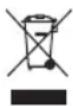
Do not dispose of this product as unsorted municipal waste. Return it to a designated collection point for the recycling of WEEE. By doing so, you will help to conserve resources and protect the environment. Contact your retailer or local authorities for more information.
ENHORABUENA
Fig. 5 Plug the mains plug into a suitable socket.
PREPARAZIONE
| Ungefähre Angabe der Programmdauer, der Restfeuchte, des Energie- und Wasserverbrauchs der Hauptwaschprogramme bei vollständiger Befüllung und/oder Teilbefüllung | Standard 60°C full load:178 min, 53 %, 0,69 kWh/cycle, 49,3 L/cycle, Standard 60°C partial load:178 min, 53%, 0,70 kWh/cycle, 33,1 L/cycle, Standard 40°C partial load:158 min, 53 %, 0,47 kWh/cycle, 30,1 L/cycle, | |
| Waschmittelempfehlungen für die verschiedenen Waschtemperaturen | Waschpulver oder flüssige Waschmittel | |
| PRODUCT FICHE | ||
| a | Importer's nameTrade mark | Imtronok. |
| b Model identifier OWM 16222 A3 | ||
| c | Rated capacity in kg of cotton for the standard 60 °C cotton programme at full load or the 40 °C cotton programme at full load (whichever is the lower) | 6 kg |
| d Energy efficiency class A+++ | ||
| e EU Ecolabel Yes | ||
| f | Annual energy consumption (AEc) in kWh per year | Energy consumption 151 kWh per year based on 220 standard washing cycles for cotton programmes at 60 °C and 40 °C at full and partial load, and the consumption of the low-power modes. Actual energy consumption will depend on how the appliance is used. |
| g | Energy consumption (Et,60 , Et,601⁄2, Et,401⁄2) of the standard 60 °C cotton programme at full load and partial load and of the standard 40 °C cotton programme at partial load; | Et,60 : 0.69Et,601⁄2 : 0.70Et,401⁄2 : 0.47 |
| h | Weighted power consumption of the off-mode and of the left-on mode | 0.5 W / 1.0 W |
| i | Annual water consumption (AWc), in litres per year | Water consumption 9400 litres per year, based on 220 standard washing cycles for cotton programmes at 60 °C and 40 °C at full and partial load. Actual water consumption will depend on how the appliance is used. |
| j Spin-drying efficiency class B | ||
| k | Maximum spin speed attained for the standard 60 °C cotton programme at full load or the standard 40 °C cotton programme at partial load, whichever is the lower, and remaining moisture content attained for the standard 60 °C cotton programme at full load or the standard 40 °C cotton programme at partial load, whichever is the greater. | 1200 rpm |
| I | Standard 60 °C cotton programmeStandard 40 °C cotton programme | They are suitable to clean normally soiled cotton laundry and they are the most efficient programmes in terms of combined energy and water consumptions for washing that type of cotton laundry.Note:The actual water temperature may differ from the declared cycle temperature |
| m | Programme time of thestandard 60 °C cotton programme at full 178 partial load (60 °C) 178 minstandard 40 °C cotton programme at partial loadin minutes and rounded to the nearest minute | min158 min |
| n | Duration of the left-on mode ( T_1 ) if the household washing machine is equipped with a power management system | YES |
| o | Airborne acoustical noise emissions expressed in dB(A) re 1 pW and rounded to the nearest integer during the washing and spinning phases for the standard 60 °C cotton programme at full load | Washing: 62 dBSpinning: 78 dB |
| p | Household washing machine is intended to be built-in | No |

- HERZLICHEN GLÜCKWUNSCH!
- IMPORTANT SAFETY INSTRUCTIONS. READ CAREFULLY AND KEEP FOR FUTURE REFERENCE.
- EN
- INTENDED USE
- COMPONENTS
- BEFORE FIRST TIME USE
- INSTALLATION
- Note:
- Caution!
- PREPARATION
- Before first use
- OPERATION
- Fig. 6 Preparation of the garments
- Fig. 7 Fill the laundry
- SELECT AND FILLING IN DETERGENT
- Fig. 8
- Start washing
- Display
- CLEANING AND CARE
- Fig. 10
- Cleaning the detergent drawer
- Fig. 11
- Clean the filter of the lye pump
- Fig. 12 Inlet filter
- Filter at the tap
- Supply filter at the washing machine
- TROUBLESHOOTING
- DISPOSAL
- ENHORABUENA
- PREPARAZIONE
Brand : OK
Model : OWM 16222 A3
Category : Washing machine