EasyManual
Twirlock - Saucepan FAGOR - Free user manual and instructions
Find the device manual for free Twirlock FAGOR in PDF.



Frequently Asked Questions - Twirlock FAGOR
User questions about Twirlock FAGOR
0 question about this device. Answer the ones you know or ask your own.
Ask a new question about this device
Download the instructions for your Saucepan in PDF format for free! Find your manual Twirlock - FAGOR and take your electronic device back in hand. On this page are published all the documents necessary for the use of your device. Twirlock by FAGOR.
USER MANUAL Twirlock FAGOR
FAGOR TWIRLOCK PRESSURE COOKER USER'S MANUAL
CONTENTS
Important Safeguards 4
Manufacturer's Recommendations 5
Introduction. 6
Twirlock Pressure Cooker 7
Components and Features 7
Cooking with the Twirlock Pressure Cooker. 12
Before the First Use 12
Adding Food and Liquid 12
Closing the Lid and Cooking 13
Releasing Pressure After Cooking 14
Care and Cleaning 17
Cleaning the Pressure Valve 18
Basic Instructions for Cooking 19
Fresh and Frozen Vegetables 19
Fresh and Dried Fruit 21
Dried Beans and Other Legumes 22
Grains. 23
Meat and Poultry 23
Seafood and Fish. 25
Adapting Traditional Recipes to Use in the Twirlock Pressure Cooker 25
Troubleshooting 26
Espanol 30
Français. 59
Limited Warranty 89
This is a U.L.-listed appliance. The following safeguards are recommended by most portable appliance manufacturers.
IMPORTANT SAFEGUARDS
When using pressure cookers, basic safety precautions should always be followed:
- Read all instructions.
- Do not touch hot surfaces. Use handles or knobs.
- Close supervision is necessary when the pressure cooker is used near children.
- Do not place the pressure cooker in a heated oven.
- Extreme caution must be used when moving a pressure cooker containing hot liquids.
- Do not use pressure cooker for other than its intended use.
- This appliance cooks under pressure. Improper use may result in scalding injury. Make certain unit is properly closed before operating. See the "Closing the Lid and Cooking" section in this manual.
- Do not fill the unit over two thirds full. When cooking foods that expand during cooking such as rice or dried vegetables, do not fill the unit over one-half full. Over filling may cause a risk of clogging the vent pipe and developing excess pressure. See the "Basic instructions for cooking" section in this manual.
- Be aware that certain foods, such as applesauce, cranberries, pearl barley, oatmeal or other cereals, split peas, noodles, macaroni, rhubarb, or spaghetti can foam, froth, and sputter, and clog the pressures release device (steam vent). These foods should not be cooked in a pressure cooker.
- Always check the pressure release devices for clogging before use.
- Do not open the pressure cooker until the unit has cooled and all internal pressure has been released. If the handle is difficult to turn, this indicates that the cooker is still pressurized - do not force it open. Run cold water over the cooker to cool it to reduce the internal pressure. Any pressure in the cooker can be hazardous. See the "Releasing Pressure After Cooking" section in this manual.
- Do not use this pressure cooker for pressure frying with oil.
- When the normal operating pressure is reached, turn the heat down so all the liquid, which creates the steam, does not evaporate.
- SAVE THESE INSTRUCTIONS.
Manufacturer's Recommendations
To fully enjoy your new Fagor Pressure Cooker, please read carefully these recommendations before you start using your pressure cooker, and follow them accordingly:
- Please make sure children do not have access to or reach the pressure cooker while cooking.
- Before using your pressure cooker, and each time you use it, check to make sure that the safety mechanisms (such as heat indicator, safety valve, silicone gasket, lid, and body) are not damaged or dirty.
- Never use the pressure cooker with a worn or torn gasket. Inspect the gasket before every use to make sure it is pliable and does not have any cracks or tears. If you need to replace it, see the "Care and Cleaning" section of this manual for instructions.
- It is very important that the pressure cooker is not filled over the "Max 2/3" indicator line with food and liquid. If you're cooking grains or foods that expand during cooking, do not fill the cooker more than half full. Too much steam might be produced if the unit is too full with food and liquid.
- Before cooking, make sure that the gasket is in good condition and in place, and that the operating valve is free of food particles that could clog it up. See the instructions found in this manual for more detailed instructions.
- Make sure the pressure cooker has been properly closed before cooking. If the lid is not closed and locked securely in place, the pressure cooker will not build pressure.
- After releasing the pressure from the pressure cooker, open the lid towards the back of your stove since there may be some steam still inside the cooker.
- Caution: do not use the pressure cooker on an outdoor LP gas burner or commercial ranges. This pressure cooker is for household use ONLY.
- Pressure cookers are not to be used for medical purposes, such as sterilizers, as pressure cookers are not designed to reach the temperatures necessary for complete sterilization.
- Do not allow anyone who is not familiar with the instructions to use the pressure cooker.
Introduction
Thank you for purchasing the Fagor Twirlock Pressure Cooker. We appreciate the confidence you have placed in our company by selecting one of our many pressure cookers. We are confident that this pressure cooker will give you many years of excellent service.
Surrounded by endless myths, pressure cookers are probably the least understood of cookware. This is unfortunate since pressure cookers provide many advantages over traditional cooking. First and foremost, most foods can be cooked in a fraction of the time, in most cases up to one-third of the time. Since the food is being cooked for such a shorter period, it is less likely to lose its color and flavor, as well as vital minerals and vitamins that are normally evaporated or diluted when cooking in large quantities of water, for longer periods of time.
Made from high-quality, heavy-gauge, stainless steel, Fagor Pressure Cookers are manufactured and designed with a concern for function and safety, meeting all international safety standards. Fagor's easy-to-use pressure valve and pressure indicator make it simpler than ever to determine the proper amount of heat and how to maintain it. We know that once you begin using your Fagor Pressure Cooker, you'll understand why it is the single most important piece of cookware you'll ever own.
Today people are more conscious of the food and products they consume that affect the environment. Fagor recognizes consumer demand for more eco-friendly products and manufacturing processes. Fagor pressure cookers are polished using only mechanical procedures instead of chemical. In addition to being manufactured in a more environmentally respectful way, pressure cookers save you energy in the kitchen too. Compared to traditional cooking methods, cooking with a pressure cooker saves up to 70% cooking time. And less time spent cooking means less energy used, and less heat produced in the kitchen. Also, cooking with a pressure cooker retains essential vitamins and nutrients, bringing you healthier meals. Using Fagor pressure cookers will not only make a difference in your health, but a difference in our world. This may be the most efficient piece of cookware in your kitchen.
Before you begin cooking, it is important that you read this detailed user's manual and make sure you understand how to operate, care and maintain your Fagor Twirlock Pressure Cooker so that you will be able to enjoy many years of use.
Visit our website, www.fagoramerica.com to learn more about our line of cookware, small electrics and large appliances.
The Twirlock Pressure Cooker has a 7.4 qt. capacity and includes:
- Instruction manual.
- Steamer/pasta basket with trivet.
- Recipe book.
Twirlock Pressure Cooker
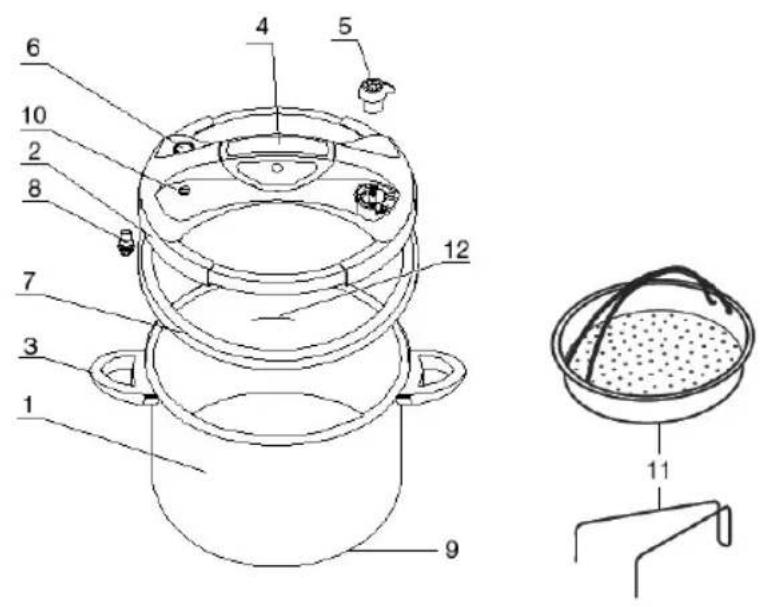
Components and Features
- Pressure Cooker Pot: Made of high-quality, heavy-gauge, stainless steel, all cooking takes place in the pressure cooker pot.
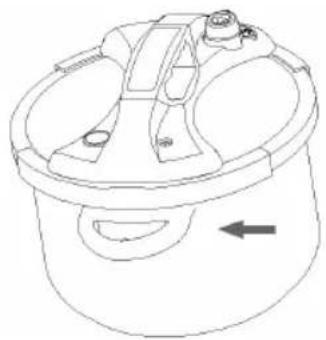
- Lid: Made of high-quality, heavy-gauge, stainless steel, the lid must be properly locked in order to build-up sufficient pressure for cooking. In order to open the lid turn the handle towards the direction of the arrow next to the word OPEN and lift it. In order to close the lid place it any position on top of the pressure cooker pot, press downward and turn the handle towards the direction of the arrow next to the word CLOSE.
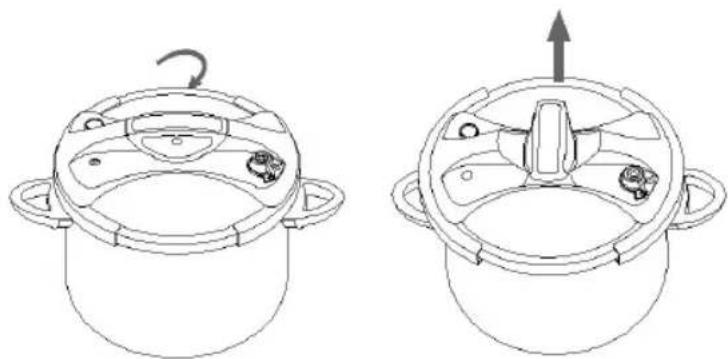
WARNING: NEVER FORCE THE PRESSURE COOKER TO OPEN
- Pot Handles: They are used to move and carry the pressure cooker, do not use the lid handle to carry the whole unit.
-
Lid Handle: Used to remove the lid from the pressure cooker, the top of the lid contains important components vital to the use of the pressure cooker. To reduce the risk of burns or spills, the lid and pot handle should be positioned so that they do not extend over adjacent surface units or overhang over the edge of the stove top.
-
Pressure Valve: This pressure valve features a steam release position and pressure setting position.
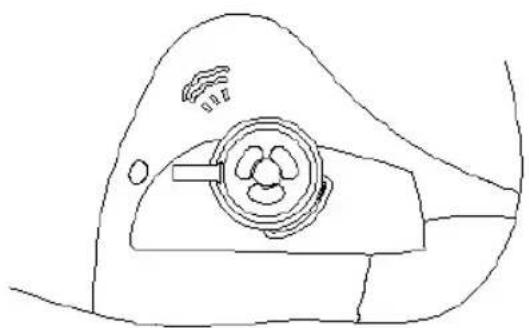
| Selector's Position | Pounds of Pressure Per Square Inch (psi) | Pressure level |
| ### | 0 Steam Release | |
| ● | 12 High |
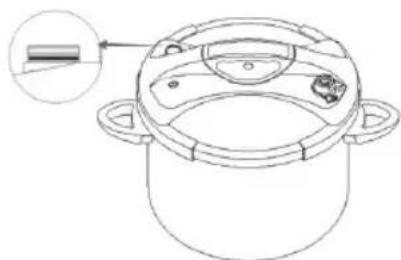
- Heat Indicator: The Heat Indicator can automatically indicate the heat condition inside the pressure cooker. When the heat inside the cooker is low the handle will safely and easily open. When the pressure cooker builds pressure the heat indicator will show a white ring, which means that the pressure cooker is under working state and can't be opened. It will be visible in the whole process of cooking. If you see the second - red ring during the cooking process, it means the heat is too high inside the pressure cooker and it should be removed to cool down. Only proceed with cooking after checking the pressure valve for food particles and making sure the gasket is secured in place.
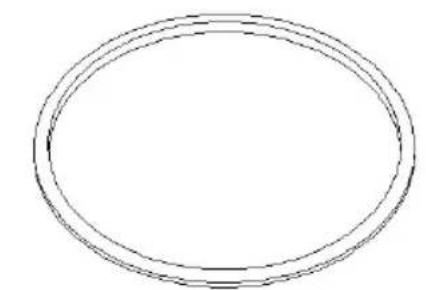
- Gasket: In order to provide a proper seal when pressure cooking, a silicone gasket is positioned around the underside of the lid. Never use the pressure cooker without the silicone gasket properly positioned. Do not use the pressure cooker with a worn or torn gasket. It should be replaced immediately if worn or torn. Contact the Fagor Customer Service Department at: 1-800-207-0806 or email at: info@fagoramerica.com. Gaskets can also be purchased online at www.fagoramerica.com.
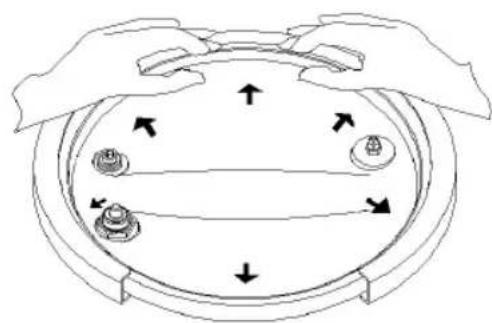
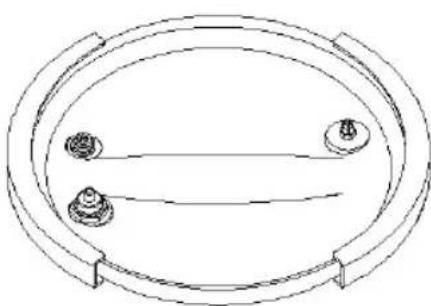
- Safety Valve: Located under the lid handle. The safety valve is activated in case of an excess pressure build-up. The pressure cooker cannot be opened if there is still pressure inside the cooker.
- Thermo Heat Conductive Base: Since the objective of a pressure cooker is rapid cooking, the bottom of the pressure cooker pot has a thermo heat conductive base, comprised of three layers of metal. The first layer is stainless steel, which is safe for contact with food. In view of the fact that aluminum should not be in contact with food and it does not have magnetic properties, the aluminum middle layer is sandwiched between the two outer layers. Aluminum is the best heat conductor and therefore provides faster and more even heat distribution. The last layer is stainless steel with magnetic properties, making the pressure cooker compatible with induction cooking.
- Pressure Indicator: The pressure indicator is the red tipped rod, located on top of the lid handle. It indicates whether there is pressure inside the cooker. As the pressure cooker heats and pressure builds, the pressure indicator will rise automatically producing a slight amount of steam that escapes from the pressure valve. If the pressure indicator is raised, there is pressure inside the cooker and the pressure cooker cannot be opened. The pressure lock on the lid will be blocked and will not slide to the open position. If the pressure indicator is not raised, there is no pressure inside the cooker, and you can safely open the lid.
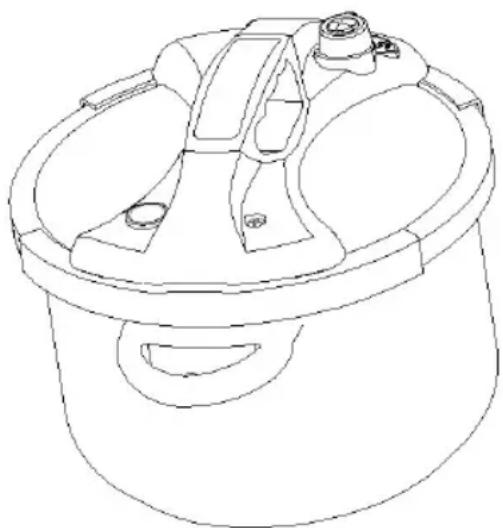
- Stainless Steel Steamer Basket and Trivet: The Twirlock Pressure Cooker also comes with a stainless steel steamer basket & trivet. They are used for steaming foods under pressure without placing them directly in the cooking liquid.
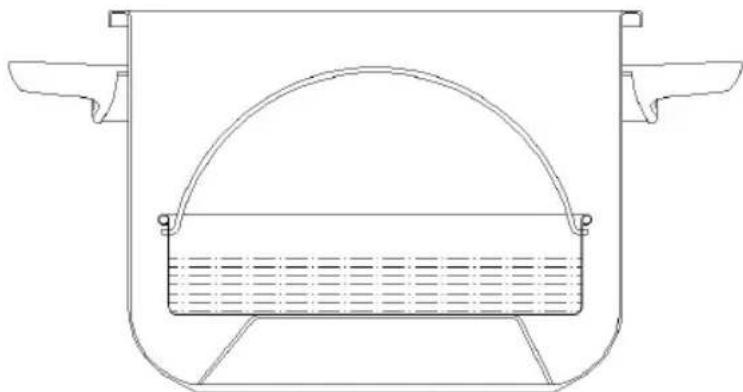
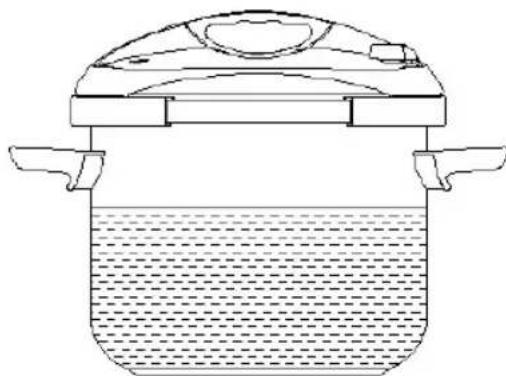
- Max 2/3 Line: This line indicates the maximum amount of liquid and food that should not exceed the pressure cooker. When filling the pressure cooker please do not fill it beyond the Max 2/3 line or more than two-thirds full with liquid and food, or half full if you're cooking foods that expand during cooking (for example rice or other grains).
Cooking with the Twirlock Pressure Cooker.
NOTE: FAGOR PRESSURE COOKERS ARE INTENDED FOR DOMESTIC COOKING SURFACES FOR HOUSEHOLD USE ONLY
Before the First Use
To open the pressure cooker, put it on a flat surface and turn the turning handle toward the direction the arrow marked on the handle (open). Before using the pressure cooker for the first time, hand wash all the parts and components with warm water and mild dishwashing soap. Rinse well and towel dry. The pressure cooker pot is dishwasher safe. Always remove the gasket when washing the lid. Wash the gasket with warm, soapy water; rinse well and towel dry. Cover the gasket with a thin coat of cooking oil (e.g., vegetable, olive, canola, etc.). Follow this procedure every time you wash the pressure cooker in order to extend the life of the gasket and to facilitate locking the lid in place.
Adding Food and Liquid
- To cook with the Twirlock Pressure Cooker, it is very important to use at least 1/2 a cup of liquid if you're cooking for 10 minutes or less, or 2 cups of water if you're cooking for more than 10 minutes; NEVER USE LESS. It is important to always use some cooking liquid in a pressure cooker since it is the liquid that creates the steam necessary to build the pressure. Without liquid the pressure cooker cannot build any pressure. You can use water, broth, wine or any other kind of liquid to cook, except oil. You can use oil to brown meat or soften onions directly in your pressure cooker before adding the rest of the ingredients, but the oil should never be the ONLY cooking liquid.
WARNING: Pressure cookers are NOT pressure fryers.
- Never fill the pressure cooker past the "Max 2/3" line. It is necessary to leave enough space in the cooker for it to be able to build pressure. Fill the pressure cooker pot only halfway when cooking with foods that will either expand in size and/or produce foam as they cook, such as dried beans or other legumes and grains. Also fill only halfway when preparing soups or stock.
- You can add food and liquid directly into the pressure cooker, or, optionally, you can steam your food in the stainless steel steamer basket. To use the stainless steel steamer basket, place the metal support trivet on the bottom of the pressure cooker, add at least half a cup of liquid, and place the steamer basket containing the food on top.
Closing the Lid and Cooking
- When you're ready to start cooking, place the lid on the pressure cooker pot, press the lid down lightly if needed, turn the turning handle toward the direction of the arrow marked on the handle (close). Once the pressure cooker is locked, select the pressure setting position on the pressure valve. Pressure level is HIGH PRESSURE, equivalent to 12 psi (pounds of pressure per square inch).
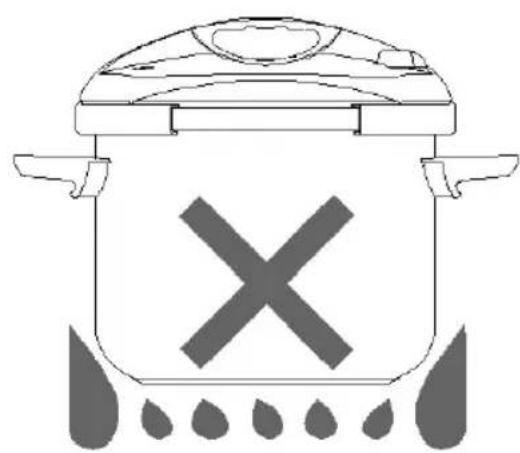
- Position the pressure cooker on the center of the stove burner. The Twirlock Pressure Cooker can be used on all types of burners including gas, electric, ceramic and induction. As to not discolor the sides of the pot, always adjust the burner so that when using gas, the flames remain under the base and do not extend up the sides. When cooking on an electric burner, select a burner the same diameter as the base or smaller.
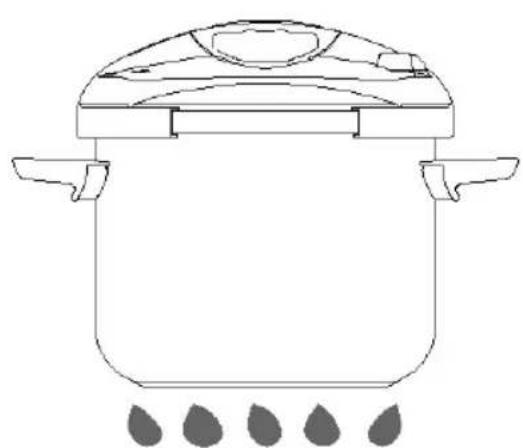
- Begin heating with the burner set on high heat if you have a gas or induction stove. (ELECTRIC STOVE USERS - SEE NOTE TO ELECTRIC STOVE USERS). When the pressure indicator has risen and steam starts to come out of the pressure valve for first time, lower the heat to maintain a gentle, steady stream of steam. At this moment, the COOKING TIME STARTS and you can begin timing your recipe. It is recommended that a kitchen timer be used to monitor the exact cooking time.
- If at any time during cooking an excessive amount of steam is released by the operating valve, lower the burner heat to adjust and maintain the proper level of pressure.
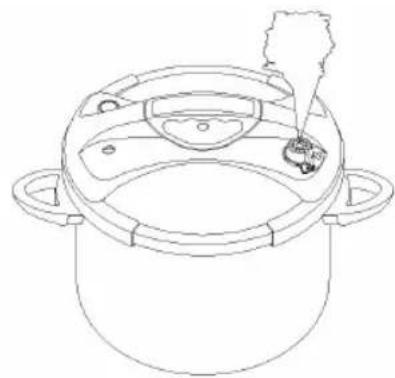
- If the pressure drops and little or no steam comes out of the pressure valve, raise the burner heat just until a gentle, steady stream of steam is released and can be maintained.
- While cooking, never inadvertently shake the pressure cooker. This can cause the automatic valve to release steam, which will create a drop in pressure.
NOTE TO ELECTRIC STOVE USERS
Since the coils on an electric stove retain heat for a long time, food often becomes overcooked when the burner is turned down for simmering (when cooking time is started). To compensate for that, we recommend using the Two-Burner Method: Turn on one burner to medium heat and bring your cooker to pressure. Turn on the second burner to low so that once pressure has been achieved and steam starts to come out of the operating valve on your cooker you can carefully move the pressure cooker with oven mittens to the low burner and start the pressure cooking time. You can then turn off the burner with the medium heat. Make sure you don't lower the heat too much on the low burner; there should always be a steady steam of steam coming out of the pressure valve when cooking. If there is no more steam coming out of the operating valve and/ or the pressure indicator drops, raise the heat until steam starts coming out of the operating valve, and adjust the cooking time by 1 or 2 minutes.
Once there is pressure inside the pressure cooker the heat indicator will show a white ring, which means the pressure cooker is under working state and cannot be opened. It will be visible while cooking. If you see the RED ring during the cooking process it means the heat is too high inside the pressure cooker and it should be removed to cool down. Only proceed with cooking after checking the pressure valve for food particles and make sure the gasket is secured in place.
Releasing Pressure After Cooking
Always check your recipe to determine if the pressure cooker should be cooled down naturally, or whether the quick release method should be used. The Fagor Twirlock Pressure Cooker also features an automatic release position on the pressure valve that can be used for releasing pressure automatically when cooking foods such as stews, meats, poultry, soups. Do not use for vegetables or tender foods as this will result in overcooking. You can choose one of the following 3 methods to release the pressure.
-
Natural Release Method: To use this method, remove the pressure cooker from the hot burner and let the pressure drop and cool down naturally. Depending on the amount of food and liquid in the cooker, this method can take from 10-15 minutes. Once pressure has totally been released, the pressure indicator has dropped and there isn't any more steam coming out of the operating valve, go to # 4 in this section.
-
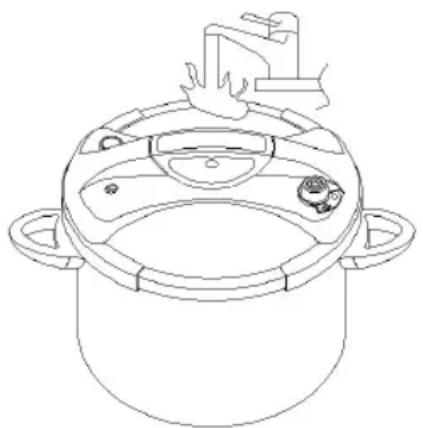
Quick Release Method: Also called the cold-water release method, is used to release pressure as quickly as possible. This method is used primarily when cooking vegetables, seafood and other tender foods that can quickly overcook. To use this method, remove the pressure cooker from the burner, place in the sink and run tap water gently over the lid until steam dissipates and the pressure indicator is lowered.
IMPORTANT! PLEASE NOTE:
When using the quick release method, always run mild temperature tap water at a gentle flow over the metal portion of the pressure cooker lid. Never aim the faucet directly onto the pressure valve located on upper handle.
WARNING: By disregarding this advice and deploying a strong cold water stream directly onto the pressure valve, you will create the risk of sudden drop in pressure inside the cooker, which can result in steam being suddenly ejected from under the pressure cooker lid. This steam is extremely hot and can potentially cause serious burns. When putting the cooker in the sink, tilt it so the cold water will run down the sides of the cooker. Once the pressure has been released completely and the pressure indicator has dropped, go to step # 4 in this section.
NEVER IMMERSE THE PRESSURE COOKER IN WATER.
- Automatic Release Method: When using the automatic release method, turn the dial on the pressure valve to the release position and the steam will be released automatically.
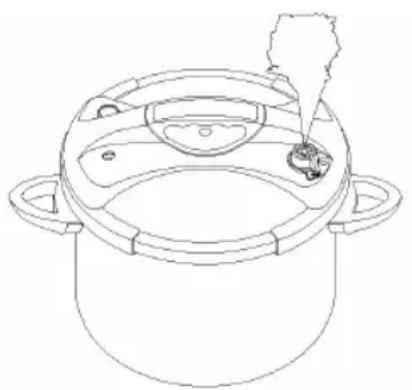
WARNING: The steam coming out of the pressure valve will be very hot, and might disperse some droplets of hot water. Do not place your hands directly in front of the jet of steam, and make sure it is not directed towards anything that can be damaged by the heat. Once the steam has totally been released and the pressure indicator has dropped, go to #4 in this section.
- After all the pressure has been released and you see the pressure indicator has lowered; you can now open your pressure cooker. To open the pressure cooker, turn the turning handle towards the direction of the arrow next to the word OPEN. Even though you have already released the pressure, never open the pressure cooker towards your face since there may be intense cooking steam still inside the unit. To avoid the risk of scalding, let the droplets of condensed water drip back from the lid into the cooker.
- Opening during cooking. If you should need to open the pressure cooker during the cooking process, it must be depressurized first as described in this section. We recommend using the automatic release method for this purpose, as this method will cool down your pressure cooker the least, hence aiding to build pressure again faster to continue cooking. The lid will be hot, so be careful when opening and closing it; to reduce the risk of burns, only touch the handles. Remember that you are interrupting the cooking process by opening the pressure cooker; when you continue cooking, you must adjust the remaining cooking time and set the timer accordingly.
- Never force the cooker open. It may only be opened if the pressure indicator has dropped into its socket completely and no more steam escapes when the safety lock is moved to the open position.
Care and Cleaning
- The Twirlock Pressure Cooker is made of high-quality, heavy gauge, stainless steel.
- The pressure cooker pot is dishwasher safe but the lid is not. The lid should be washed by hand with warm water, mild dishwashing soap and a nonabrasive cleaning pad. Do not use metal scouring pads or abrasive cleaners as they will scratch the pot and possibly ruin the finish.
- To remove stubborn stains and any discoloration in the interior of the pressure cooker, try adding the juice of half a lemon and 1 to 2 cups of water to the pressure cooker pot. Cook at high pressure for 15 minutes, and then remove from heat. Let pressure release naturally, and then wash as usual.
- After cleaning, towel dry with a clean, soft kitchen cloth.
- In order to extend the life of the silicone gasket, remove after each use and wash with warm water and mild, dish washing soap. Rinse and dry well, then cover with a thin coat of vegetable oil before replacing. For increased safety and best results, the silicone gasket should be replaced approximately every 12-18 months, depending on the usage. You can order a new gasket by calling Fagor Customer Service Number to receive an order form at: 1-800-207-0806, or by going to the online shop section of our website: www.fagorama.com.
- To store, DO NOT LOCK THE LID IN PLACE. Simply place the lid upside down on top of the pressure cooker pot. This will avoid the risk of a vacuum forming inside the cooker during storage, which would make the opening of the lid difficult. It will also prevent stale odors from forming inside the cooker.
- Before using the Fagor Twirlock Pressure Cooker, always check the handles, to make sure that they are securely screwed in place. If not, tighten the handle screws with a screwdriver.
- Replacement Parts: Only use authentic replacement parts manufactured and distributed by Fagor America, Inc. The use of any unauthorized parts and or attachments may cause unit failure and will void any warranty protection provided by the manufacturer. You can order spare parts by calling Fagor Customer Service Number at: 1-800-207-0806, or by going to the online shop section of our website: www.fagorama.com .
ENGLISH
Cleaning the Pressure Valve
After every use, check to make sure that the Pressure Valve is clear of any built-up particles. To do so, move the pressure valve to the steam position and remove the valve (see detailed instructions below). Clean it by running water through it. Next, lift the lid up to the light and look through the hole under the pressure valve. Make sure you can see through it and there are no food particles blocking it. If necessary, clean it with a small brush or pipe cleaner.
1. TO REMOVE THE PRESSURE VALVE FOR CLEANING PURPOSES:
Move the operating valve to the pressure release position. Jiggle the pressure valve side to side as you pull it gently upwards to remove it from its socket.
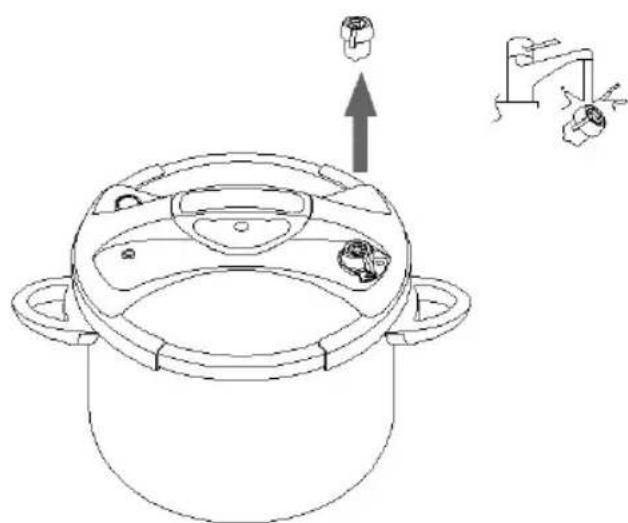
- TO REPLACE THE VALVE AFTER CLEANING: Hold the pressure valve over the vent pipe and push the pressure valve down until it is seated properly into position.
Basic Instructions for Cooking
In this section you will find basic instructions for cooking foods which are most commonly prepared in pressure cookers. Do not chop or cut food inside the cooker with a knife or other sharp utensil to avoid scratching the pot. For soups and stocks, do not fill the pressure cooker over 1/2 full! Remember to ALWAYS use some cooking liquid. Operating the cooker without any cooking liquid or allowing the cooker to boil dry will damage the cooker and will not allow it to build pressure for proper functioning.
Fresh and Frozen Vegetables
- Wash all fresh vegetables thoroughly.
- Peel all root vegetables, such as red beet, carrots, potatoes and turnips.
- Whole winter pumpkin should be pierced several times with a fork before cooking.
- When you steam vegetables in the steamer basket on the support trivet you should use at least half a cup of water.
- If the approximate cooking time is more than 10 minutes you should use two cups of water.
- You should never fill the pressure cooker to more than two-thirds of its capacity.
- When you cook frozen vegetables you must extend the total cooking time by between 1 and 2 minutes.
- If possible, use the cold water release method when the cooking time is completed. This is the fastest way to release the steam and will avoid overcooking tender vegetables. You can also use the automatic release method.
| VEGETABLES APPROXIMATE COOKING TIME PRESSURE LEVEL | ||
| Artichoke, large, without leaves 11-14 minutes High | ||
| Artichoke, medium, without leaves 7-10 minutes High | ||
| Asparagus, fine, whole 1-2 minutes High | ||
| Asparagus, thick, whole 1-3 minutes High | ||
| Beans, white, in the pod 10 minutes High | ||
| Beans, in the pod 5 minutes High | ||
| Broccoli, shoots 10 minutes High | ||
| Broccoli, stalks 10 minutes High | ||
| Brussels sprouts, whole 5 minutes High | ||
| Cabbage, red or green, in quarters | 4-5 minutes High | |
| Cabbage, red or green, 1/4 inch slices | 1 minute | High |
| Carrots, 1/4 inch slices | 1 minute | High |
| Carrots, 1-inch slices | 5 minutes High | |
| Cauliflower, flower heads | 2-4 minutes High | |
| Common cabbage, thickly cut | 1-3 minutes High | |
| Corn, on the cob 4 minutes High | ||
| Endive, thickly cut | 1-3 minutes High | |
| Green curly kale, thickly cut | 6 minutes High | |
| Green beans, whole | 2-4 minutes High | |
| Okra, small pods | 2-4 minutes High | |
| Onions, whole, 1 1/2- inch diameter | 2 minutes High | |
| Peas, in the pod | 1 minute | High |
| Potatoes, white, new, small whole 6 minutes High | ||
| Potatoes, white, 1 1/2- inch slices | 7 minutes High | |
| Pumpkin, 2-inch slices 4-5 minutes High | ||
| Red beet, in 1/4 inch slices | 5 minutes High | |
| Red beet, small, whole | 15 minutes High | |
| Red beet, large, whole | 25 minutes High | |
| Swiss chard, thickly cut | 2 minutes High | |
| Spinach, frozen | 5 minutes High | |
| Spinach, fresh, thickly cut | 2 minutes High | |
| Swede, 1 -inch slices | 9 minutes High | |
| Sweet potato, 1 1/2- inch slices | 6 minutes High | |
| Tomatoes, in quarters | 2 minutes High | |
| Turnip, small, in quarters 4 minutes High | ||
| Turnip, in 1 1/2- inch slices | 4 minutes High | |
| Zucchini, Acorn, half | 9 minutes High | |
| Zucchini, Summer, 1-inch slices | 10 minutes High | |
Fresh and Dried Fruit
Fresh fruit:
- Wash and/or core fruit. If you prefer, peel and slice it.
- Cook fruit in the steamer or pasta basket on the support trivet and add at least 12 a cup of water or fruit juice.
- Never fill the pressure cooker above the "Max 2/3" line.
- If you prefer, add sugar and/or seasoning to the fruit before or after cooking.
- When you cook whole or halved fruit, use the quick-release. When you cook fruit in slices or pieces to make purée or conserve use the natural release method.
- Cooking times can vary depending on the ripeness of the fruit.
Dried fruit:
- Put dried fruit in the pressure cooker with 1 cup of water or fruit juice for each cup of dried fruit.
- If you prefer, you can add seasoning or other flavorings. Use the quick-release method when the cooking period is complete. If after the cooking period the fruit is still hard, let it simmer in the cooker with the lid removed until it is ready. Add water if necessary
| FRUIT APPROXIMATE COOKING TIME PRESSURE LEVEL | ||
| Apples,dried 3-4 minutes High | ||
| Apples,fresh in slices or pieces 2-4 minutes High | ||
| Apricots,dried 5 minutes High | ||
| Apricots,fresh,whole or in halves 2-4 minutes High | ||
| Peaches,dried 5-6 minutes High | ||
| Peaches,fresh,in halves 3-4 minutes High | ||
| Pears,dried | 5-6 minutes High | |
| Pears,fresh in halves | 4-5 minutes High | |
| Prunes | 5-6 minutes High | |
| Raisins | 5-6 minutes High | |
Dried Beans and Other Legumes
- WARNING: Never fill the pressure cooker to more than half its capacity with beans and legumes, as these foods tend to expand and froth during cooking.
- Clean out any foreign particles. Rinse them with warm water.
- Soak beans in four times their volume of warm water for at least four hours before cooking them, or if you prefer, leave them to soak overnight. Do not add salt to the water as this hardens the beans and prevents them absorbing water.
- Do not soak dried split lentils.
After soaking, remove floating beans and shell. - Strain the water off the beans.
- Rinse them in warm water (this also applies to dried split lentils).
- Put the beans or legumes in the pressure cooker. Add three cups of water for each cup of beans or legumes. Do not add salt; beans and legumes should be seasoned after cooking.
- Add a tablespoon of vegetable oil for each cup of water to eliminate the foam they produce.
- To add more flavors, cook beans or lentils with some laurel leaves and a small peeled onion embedded with two cloves of spice.
- After the cooking time is up, use the natural release method to allow the pressure to decrease naturally.
- Cooking times may vary depending on the quality of the beans. If, after the recommended cooking time, the beans are still hard, continue cooking them with the lid off. If necessary, add water.
- A cup of beans or other legumes yields approximately two cups when cooked.
| BEANS AND LEGUMES APPROXIMATE COOKING TIME PRESSURE LEVEL | ||
| Azuki 5-6 minutes High | ||
| Beans, white 6-9 minutes High | ||
| Beans, scarlet, red 12-15 minutes High | ||
| Beans, black | 10-12 1/2 minutes | High |
| Beans, colored | 5-8 minutes High | |
| Chick peas | 12-15 minutes High | |
| Lentils, red | 9-11 1/2 minutes | High |
| Lentil soup | 9-12 1/2 minutes | High |
| Lentils, green | 9-12 1/2 minutes | High |
| Pigeon peas | 9-11 1/2 minutes | High |
Grains
- WARNING: Never fill the pressure cooker to more than half its capacity with grains, as these foods tend to expand and froth during cooking.
- Clean out any foreign particles. Rinse them with warm water. Soak grains, in four times their volume of warm water for at least four hours before cooking them, or if you prefer, leave them to soak overnight. Do not add salt, for this will harden grains and prevent them from absorbing water.
- Do not leave rice to soak.
After soaking remove floating grains or shells. - Drain the water off the grains.
- Rinse them in warm water (this also applies to rice.)
- Cook each cup of grain in the quantity of water indicated in the recipe or on the package.
- If you prefer, add salt to taste.
- After the cooking time is up, use the natural release method to allow the pressure to decrease naturally.
- Cooking times may vary depending on the quality of the grains. If after the recommended cooking time the grains are still hard, continue cooking them with the lid off. If necessary, add water.
- A cup of grains expands to approximately two cupfuls when cooked.
| GRAINS (1 cup) | APPROXIMATE WATER QUANTITY | COOKING TIME PRESSURE LEVEL |
| Rice, basmati 1 1/2 cups 6-9 minutes High | ||
| Rice, brown 1 1/2 cups 19-25 minutes High | ||
| Rice, long grain 1 1/2 cups 6-9 minutes High | ||
| Rice, wild 3 cups 27-31 minutes High |
Meat and Poultry
- Remove all the visible fat from the meat or poultry. If you are preparing a complete cut of meat or poultry, such as a roast, cut it in such a way that it fits in the cooker without touching the sides.
- Meat and poultry cut up into small pieces cooks more quickly.
- To achieve best results, brown the meat or poultry with 2 to 3 tablespoons of vegetable or olive oil in the pressure cooker with the lid off before adding the other ingredients. Do not overload the pressure cooker (never more than the "Max 2/3" line). Brown the meat in batches, if necessary. Drain the excess fat and begin cooking as indicated in the recipe.
- Always cook meat and poultry with at least 1/2 a cup of liquid. If the cooking time exceeds 15 minutes, use two cups of liquid. Meats with preservatives or salted meats should be covered by the water.
-
Never fill the pressure cooker more than the "Max 2/3" line.
-
When you prepare a concentrated stock or soup, put all the ingredients in the pressure cooker and add water to half its capacity.
- Exact cooking times vary depending on the quality and quantity of the meat which is cooked. Unless the recipe indicates otherwise, the cooking times given are for 3 lbs. of meat or poultry. Also, the larger the cut of meat, the longer the cooking time will be.
- After the cooking time is up, use the natural release method to allow the pressure to decrease naturally.
- When you cook beef or poultry with vegetables, begin by cooking the meat in stock or another liquid. Subtract from the cooking time recommended for the meat, the cooking time of the vegetable ingredient which takes longest to cook. Pressure cook the meat first. Release the pressure from the cooker using the quick release method. Open the cooker and add the vegetables. Check the seasoning. Bring the pressure cooker up to pressure again and continue pressure cooking for the cooking time recommended for the vegetables. If you want to add vegetables which cook rapidly, such as peas or mushrooms, do not pressure cook them at the same time as the other vegetables that take longer to cook. Add them to the cooker right before serving and boil them in the pressure cooker with the lid off until they are ready. Example: if you are cooking a beef brisket (cooking time 43 minutes) with potatoes (cooking time 7 minutes) and sliced carrots (cooking time 1 12 minute), you should first cook the meat by itself for 34 12 minutes, then release the pressure, add the potatoes and cook for an additional 7 minutes. Finally, add the carrots and let them simmer for another minute or so until they are cooked.
| MEAT AND POULTRY APPROXIMATE | COOKING TIME PRESSURE LEVEL | |
| Beef/veal, roast or brisket 43-50 minutes High | ||
| Beef/veal, (shanks) 1 1/2-inch wide 31-37 minutes High | ||
| Beef/veal, 1-inch cubes, 1 1/2-pounds 12-18 1/2 minutes High | ||
| Beef/veal, roast or brisket 43-49 1/2 minutes High | ||
| Beef, dressed, 2 pounds 12-18 1/2 minutes High | ||
| Meatballs, 1-2 pounds 6-12 1/2 minutes High | ||
| Beef, cured 62-74 1/2 minutes High | ||
| Pork, roast | 50-56 minutes High | |
| Pork, ribs, 2 pounds | 19 minutes | High |
| Pork leg, smoked, 2 pounds | 25-31 minutes High | |
| Pork, ham, pieces | 25-31 minutes High | |
| Lamb, leg | 43-49 1/2 minutes High | |
| Lamb, 1-inch cubes, 1 1/2-pounds | 12-22 1/2 minutes High | |
| Chicken, whole, 2 to 3 pounds | 15-22 1/2 minutes High | |
| Chicken, in pieces, 2 to 3 pounds | 10-12 1/2 minutes High | |
| Soup or concentrated stock of beef or fowl | 12-18 1/2 minutes High |
Seafood and Fish
- Clean and gut fish. Take out all the visible bone.
- Scrub and rinse shellfish in cold water. Soak clams and mussels in a container of cold water with the juice of one lemon, for an hour, to remove sand from them.
- Cooking times can vary depending on the seafood which is cooked.
- Cook seafood in the steamer basket on the support trivet with at least 34 of a cup of liquid. Apply a fine layer of vegetable oil to the steamer basket when you cook fish to avoid sticking.
- If you prefer, add seasoning or flavoring to the cooking liquid.
- Never fill the pressure cooker to more than the "Max 2/3" line.
- When you prepare concentrated stock or soup put all the ingredients in the pressure cooker and add water to half of its capacity.
- Use the automatic or cold water release method when cooking time is up.
| SEAFOOD AND FISH APPROXIMATE COOKING TIME PRESSURE LEVEL | ||
| Crab 2-4 minutes High | ||
| Fish fillet, 1 1/2-to 2 pounds thick 2-4 minutes High | ||
| Fish soup or concentrated fish stock 6-8 minutes High | ||
| Fish, whole, gutted 6-8 minutes High | ||
| Lobster, 1 1/2-to 2 pounds 2-4 minutes High | ||
| Mussels 2-4 minutes High | ||
| Prawns (shrimp) 1-2 1/2 minutes | High | |
Adapting Traditional Recipes to Use in the Twirlock Pressure Cooker
It is easy to adapt your favorite recipe for use in a pressure cooker. For the most part, soups, stews, braised and slow roasted meats and poultry, and slow-simmered recipes, such as tomato sauce and fruit preserves provide the best results.
Meats and Poultry: When preparing meats and poultry, brown well in the pressure cooker pot using at least 2 tablespoons of vegetable or olive oil. Pour off any excess fat and sauté onions, garlic or any other vegetables as called for in the recipe. Add the remaining ingredients and at least a 1/2 cup of cooking liquid such as broth, diluted tomato purée or wine.
Soups: Soups are quick and easy to prepare. Add meat, poultry or seafood to the pressure cooker along with any desired vegetables, herbs and spices. Add liquid ingredients, filling pressure cooker only halfway.
Troubleshooting
In order to ensure best results when using the Twirlock Pressure Cooker, be certain to read all of the instructions and safety tips contained in this owner's manual and all other printed materials provided by the manufacturer. The following are practical tips and solutions to some common problems you may experience when using the Twirlock Pressure Cooker.
| PROBLEM | The lid will not close. |
| REASON | If the instructions in the “Closing the Lid and Cooking” section of this manual were not followed carefully, the lid might get jammed while trying to close it. |
| SOLUTION | If there is some resistance when attempting to close the lid, do not force it. Make sure the lid is positioned on top of the pressure cooking pot and press downwards as described in the “Closing the Lid and Cooking” section of this manual. If you need assistance, please contact the Fagor Customer Service Department at: 1-800-207-0806 or email at: info@fagorama.com. |
| PROBLEM | There is water leaking while the cooker is building pressure. |
| REASON | While the pressure cooker is building pressure, a little water might drip. The water comes from steam condensed on the inside of the lid. The dripping will stop when the pressure cooker reaches full pressure. However, if it's a continuous leak, or does not stop after pressure has been reached, it might be because the gasket has not been washed properly and oiled. |
| SOLUTION | Make sure you wash and dry your gasket after every use, and oil it regularly. |
| PROBLEM | Pressure does not build-up (the visual pressure indicator does not pop-up after more than 5 minutes on high heat). |
| REASON | 1. There is not enough liquid. 2. The pressure cooker was not properly closed. 3. The valve is dirty and/or obstructed. 4. The silicone gasket is not in place, or is dirty or worn. 5. The operating valve is not in the correct position. |
| SOLUTION | 1. Always use the appropriate amount of liquid called for in the recipe. This amount should never be less than 1/2 cup. However, never fill the pressure cooker more than half full with liquids. 2. Following the instructions given in this manual, close the pressure cooker so that a tight seal is created, which will allow for adequate pressure build-up. 3. The valve can become dirty when cooking foods such as dried beans which have a tendency to foam. Clean the valve periodically. 4. Make sure the silicone gasket is clean and well positioned before using the pressure cooker. After continued use, the silicone gasket will begin to wear and should be replaced at least once a year if the pressure cooker is used frequently. 5. Make sure the operating valve has been turned to the pressure setting. The pressure cooker will not build-up pressure if the operating valve is turned to the steam release position (Fig. X - the picture of the steam icon). |
| PROBLEM | The visual pressure indicator has popped up, but there is no steam releaseds by the operating valve. |
| REASON | 1. There is not enough liquid in the cooker. 2. The valve is dirty and/or obstructed. 3. The burner heat is not high enough. |
| SOLUTION | 1. Make sure there is enough liquid. There should always be at least half a cup of liquid in the pressure cooker, or 2 cups if the cooking time is over 10 minutes. 2. The valve can become dirty when cooking foods such as dried beans which have a tendency to foam. Clean the valve periodically. See the "Care and Cleaning" section in this manual for instructions on how to remove the valve for cleaning. 3. Turn up the heat to medium high until a gentle, steady stream of steam is released from the operating valve. |
| PROBLEM | A gentle, steady stream of steam is released from the operating valve and small drops of water condensation collect on the lid. |
| REASON | When used properly, the operating valve will release a gentle steady stream of steam as well as some drops of condensed water on the lid. |
| SOLUTION | This is normal operation. If there is a lot of water gushing out of the operatings valve with the steam, see below. |
| PROBLEM | A strong, forceful, gushing jet of steam is escaping from the operating valve with or without drops of condensation. |
| REASON | 1. The burner heat is too high. 2. The valve is dirty. 3. The safety valve is malfunctioning. |
| SOLUTION | 1. Lower the heat so that only a gentle, steady stream of steam is released. 2. Check the valve to see if there are any remaining food particles. Remove with a toothpick. 3. The safety valve must be replaced. Contact the Fagor Customer Service Department at: 1-800-207-0806 or email at: info@fagoramerica.com. |
| PROBLEM | Steam is escaping around the edge of the lid. |
| REASON | 1. The pressure cooker is too full. 2. The pressure cooker was not closed properly. 3. The silicone gasket is not in place, or it is dirty or worn. |
| SOLUTION | 1. Never fill the pressure cooker more than MAX 2/3 line or 1/2 full when cooking liquids or foods that froth and expand during cooking. 2. Following the instructions given in this manual, close the pressure cooker so that a tight seal is created which will allow for adequate pressure build-up. 3. Make sure the silicone gasket is clean and well positioned before using the pressure cooker. After continued use, the silicone gasket will begin to wear and should be replaced at least once a year if the pressure cooker is used frequently. |
| PROBLEM | The pressure cooker cannot be opened after cooking. |
| REASON | 1. There is still pressure built-up in the pressure cooker. 2. If the pressure indicator has dropped but you still cannot open the lid, it might be because the lid has not been turned completely to the OPEN position. |
| SOLUTION | 1. Use the automatic or the cold water release method to release any remaining pressure. Make sure the pressure indicator has dropped. Try opening again. 2. Turn the lid to the direction of the arrow located next to the word OPEN and lift the lid. |
| PROBLEM | Foods are under-cooked. |
| REASON | 1. Cooking time is too short. 2. The automatic or cold water release method was inadequately used to release the pressure. |
| SOLUTION | 1. Always check the cooking time in your recipe. If still under-cooked, extend cooking time by approx. 1 to 2 minutes and cook under pressure, or simmer without lid until desired texture is achieved. 2. Use natural release method so that food has benefit of additional cooking time as pressure drops. |
| PROBLEM | Food is over-cooked. |
| REASON | 1. Cooking time is too long. 2. The natural release method was inadequately used to release pressure. |
| SOLUTION | 1. Always check the cooking times in your recipe. If food is overcooked, shorten the cooking time by at least 1 to 2 minutes. 2. Use the automatic or cold water release method so that pressure drops immediately. |