Transocean Chronograph 1461 - Watch Breitling - Free user manual and instructions
Find the device manual for free Transocean Chronograph 1461 Breitling in PDF.


Frequently Asked Questions - Transocean Chronograph 1461 Breitling
User questions about Transocean Chronograph 1461 Breitling
0 question about this device. Answer the ones you know or ask your own.
Ask a new question about this device
Download the instructions for your Watch in PDF format for free! Find your manual Transocean Chronograph 1461 - Breitling and take your electronic device back in hand. On this page are published all the documents necessary for the use of your device. Transocean Chronograph 1461 by Breitling.
USER MANUAL Transocean Chronograph 1461 Breitling
INSTRUMENTS FOR PROFESSIONALS

TRANSOCEAN CHRONOGRAPH 1461
TRANSOCEAN CHRONOGRAPH 1461
FRANÇAIS
MISE EN SERVICE 5
PARTICULARITES 9
ENTRETIEN 12
ENGLISH
PREPARING THE WATCH FOR USE 16
SPECIAL CHARACTERISTICS 20
MAINTENANCE 23
DEUTSCH
INBETRIEBNAHME 27
BESONDERHEITEN 31
WARTUNG 34
ITALIANO
REMONTAGE-MISEA L'HEURE
H. MESURE D'UN TEMPS COURT AVEC INTERRUPTION
A chronometer is a high-precision instrument that has successfully passed the entire battery of tests imposed by the COSC (Swiss Official Chronometer Testing Institute), a neutral and independent body which individually tests each movement according to the prescriptions in force.
The certification test for wristwatches with sprung balance oscillators, according to the ISO 3159 norm, consists of observing each movement for 15 days and 15 nights, in 5 positions and at 3 different temperatures (8^,23^, 38^) . In order to earn the prestigious chronometer label, a movement's performances must meet 7 very strict criteria, including a daily variation in rate ranging between only -4 / + 6 seconds.
The term "chronometer" should not be confused with that of "chronograph", which is a complicated watch fitted with an additional mechanism enabling the measurement of the duration of an event. A chronograph is not necessarily chronometer-certified, but all B REITLING chronographs carry the much-coveted title of "chronometers".
PREPARING THE WATCH FOR USE
WINDING-TIME-SETTING
Note bene: mechanical watches endowed with a date, day, month or moon-phase indicator are equipped with a complex mechanism that is set into motion between 8 pm and 3 am. It is therefore vital to avoid adjusting the calendar or moving the time backwards during this period.

-
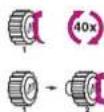
Wind the watch by 40 clockwise turns of the crown.
-
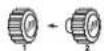
Pull the crown out to position 2. Turn the hands so as to make the calendar jump once when the hands pass through midnight. Then adjust the hour and minute.
-
Push the crown back in to position 1.
AJUSTING ADDITIONAL FUNCTIONS
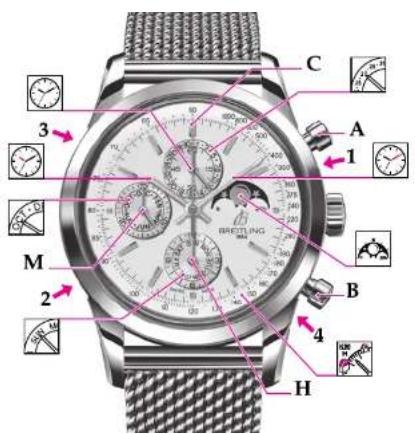
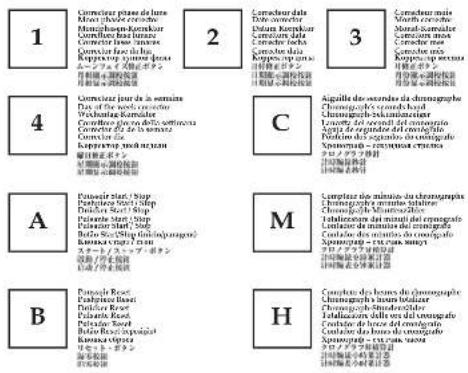
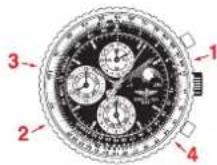
Corrections of functions other than the time are performed by pressing the pushpieces with a soft pointed object and in the following order:
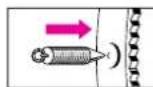
- Phase of the Moon: pushpiece 1, located between 2 and 3 o'clock
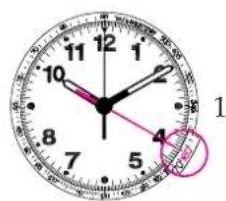
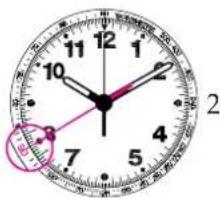
- Date: pushpiece 2, located at 8 o'clock
- Month: pushpiece 3, located between 9 and 10 o'clock
- Day of the week: pushpiece 4, located between 4 and 5 o'clock.

USING THE CHRONOGRAPH
I. MEASURING A SINGLE SHORT TIME
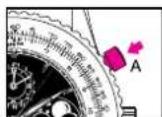
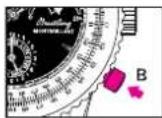
- Press pushpiece A to start the chronograph. Hand C shows the measurement in seconds.
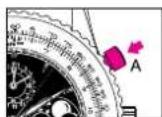
- Stop the measurement by pressing pushpiece A once more. The measurement is done in hours (totalizer H), minutes (totalizer M), seconds and 1/4 of a second (hand C).
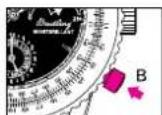
- Return the chronograph to zero by pressing pushpiece B.
II. MEASURING AN INTERRUPITED SHORT TIME
- Press pushpiece A to start the chronograph. Hand C allows you to follow the measurement in seconds.
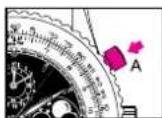
- To interrupt the measurement, press pushpiece A once more. To restart the time measurement, press pushpiece A. This procedure makes it possible to add several short times.
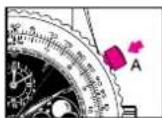
- The chronograph is reset to zero by pressing pushpiece B, once the final measurement has been stopped.
SPECIAL CHARACTERISTICS

USING THE TACHOMETER
The tachometer is the graduation on the dial or flange of your B REITLING chronograph enabling you to determine average speeds or hourly productivity rate, based on an observation period of less than 60 seconds.
- Average or mean speed
Using the chronograph to measure the time required to cover a kilometre or a mile. If it takes 20 seconds to cover 1 km or 1 mile, the scale respectively indicates an average speed of 180km / h or 180 miles/h.
- Hourly productivity rate
Measuring the time required to produce 1 unit. If the chronograph is stopped at 40 seconds, the tachometric scale indicates 90, corresponding to an hourly productivity rate of 90 units.

SUN COMPASS
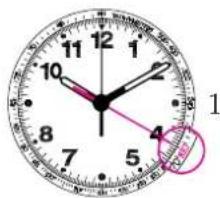
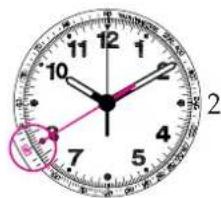
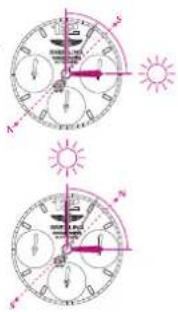
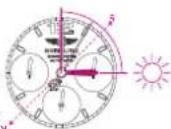
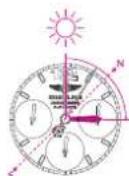
Your BREITING chronometer may be used as a sun compass, thus enabling you to determine the Northerly-Southerly direction. For regions that have instated daylight saving time, subtract one hour when directing the watch.
In the Northern hemisphere
Point the hour hand precisely towards the sun. In relation to the watch dial, the point located midway between the current time and 12 o'clock indicates the South, the North being exactly opposite.
In the Southern hemisphere
Point the hour-marker located at 12 o'clock on the dial precisely towards the sun. In relation to the watch dial, the point located midway between the current time and 12 o'clock indicates the North, the South being exactly opposite.
MAINTENANCE
YOUR BRETTUNG chronometer is a sophisticated instrument which is constantly subjected to a wide variety of stresses and strains. Within a very small volume, a large number of components contribute to handling all the functions. Their mechanical action inevitably leads to a certain amount of wear and tear, which may be controlled by maintenance consisting of renewing the lubrication and replacing worn components. Like any precision measurement instrument, your watch must be regularly maintained in order to function at its highest level of potential: we recommend a regular service every two years, while the complete overhaul should be scheduled about every five years. Your authorized B BRETTUNG dealer will be pleased to handle this for you.
WATER-RESISTANCE
The movement of your chronometer is protected by a sophisticated case fitted with water-resistance gaskets. Under the influence of certain external factors such as perspiration, cosmetics, perfumes or dust, these gaskets progressively deteriorate and must be periodically replaced, ideally every two years. Moreover, we recommend an annual water-resistance test, which takes only a few minutes, performed by your authorized B REITLING agent.
The complex construction of the case used for NAVITIMER models, featuring a design faithful to the vintage 1950s models, means they are not suited to aquatic activities. The crown, pushpieces and bezel must under no circumstances be activated when the watch is damp. The water-resistance indication, expressed in bars, must be considered a safety factor, protecting your chronometer from dust and splashing. Only watches that are water-resistant to 5 or more bars should be subjected to repeated immersions.
USEFUL TIPS
BREITLING genuine leather straps are crafted with the most refined materials and represent extremely high-quality products. Like all objects in natural skin (shoes, gloves, etc.), their length of life varies considerably, according to the conditions in which they are worn. In particular, water, cosmetics and perspiration accelerate the aging process.
BREITLING metal cases and bracelets are crafted from the finest alloys and ensure sturdyness and wearer comfort. Regular cleaning with a soft damp brush will keep your watch shiny. For watches fitted with a leather strap, proceed in the same manner, taking care to avoid wetting the strap.
WHAT TO AVOID
Like any valuable objects, B REITING chronometers deserve special care. It is important to protect them from jarring and knocks by hard objects, and not to expose them to chemical products, solvents, dangerous gases, or magnetic fields. Moreover, your B REITING chronometer is designed to run smoothly at temperatures ranging between 0^ and 50^ .
IHR BREITLING CHRONOMETER
- Fase da lua: corrector 1, colocado entre as 2h e as 3h.
2.Data:corrector 2, colocado nas 8h. - Mês: corrector 3, colocado entre as 9h e as 10h.
- Dia da semana: corrector 4, colocado entre as 4h c as 5h.
UTILIZACAO DO CRONOGRAFO
I. MEDICAO DE UM UNICO TEMPO CURTO
2. PounbodumueMbocmb aac
Hn onpeeneHHn daHHIOHO HOKAHTe.HcIeYET HMEpHTB.PBMH,HeoXOJIHMOE JIN pOHOBOCTBa cHHNtBu HmecpeHH. EclHa XPOHOpaCc HOBaHOCb HOKa3aHc 40 cckuH,TO Ha TAcHMeTPheCKoII KAne NOBHTe IINPp90,CoOTBeCTByIOuaa PON3BOHTeBHOCTH 90 eHHMn B Vac.

COJIHEHbIKOMIAC
XpOHOMETP BRETTING MOXHO TAKKE HcHIOB3OBATb B KaeTcTB coHHeHOTo KOMtACA npn OponeEHHHNpaBJIeHHe CbeP/IO.B oIACTHX, IIE HcHIOB3yETCH. eHHe BPEM, cJHyET pinnHMATBo BHMHAnee CCBN BPEmEH HA OHIN YAC.
Hcnoa3o6anue na ceepno no.ayuapun
Aconyio cTpeKy yctahOBHTb TOHNO Hn HappanenHHIO K coTHIy. B nHeTpnePOMeXyTKa MEJy ayteHTHnHM bPmeHem H 12-vaCOBOI OTmKo HA uHep6.bac HaxoHOTcIg. CCBp Jx HaxoHITcB HA TnOraHbHO pTOrHronoONXHO CTOpOE Hnep65.lata.
Hcnoaoboeae ha kohom noiuyapu
HJIEKc, paCNOIOKEHHy 12-ACOBOH OTMHTKH,HaIPABHTtTOHO K COHJIy. B cepEHNHE paccTcHBB MEXJy ayTeHTHbHBM NOKa3A HHHMH npEMEHn 12-ACOBOH OTMTKo HAIHPep6:tare HAXOHTCR cEBp. IOr HAXOITRCa HJHaHOHn HO npOTTHo IIOOXHn CTropHe IINHep6:tata.
PEMOHT
Bai xpoHometp BRETTLNG-TO qacoH3mepeHcIbIy IHP6Op bIcOKoI yPOHH, KOTOpB tAcTo pOAB0aTe HENpebpHBO B OeH TBKaeJIbX Yc0BnIHx. Ha oeH MaTeBHkOMPocpaTH eRapMOHHIO paOABOT MIOOHcIe HeTAEHa, KOTOpB pyKOBoIT BCEM fYHKINM, MexAHINCKHe npOeCEbI HeN3E6XHO BeYr K 13AHIINHEAMOCHT, NOCJeCTBH KOTOpOB MOKH CECTH HA MHHHYM, OcYIeCTBIA CIEHAIIBH peMOHT (CMA3Ka H 3AmEHa H3HO HmEHHNIX JETaTE). KaH KAKIIH TOnHII INP6Op NO H3MEPeHHIO BpeMeHH, TaK n HAIIN YacH IOJIKHb peYIHPHO IPOXoONHT IIP OPHAIKTHNECKH OMOT pCMoHT. ToJIbKO IIpy CO6IOH HTHX YCOBBHO OHMOY E6OIOHNO PAoBtTa. M PckOMChAYem IPOBOUHT CBPCHC KAKJIbIgBaIHO HAKQINX IIT, TET JETATb, PEBHHN. 3TH YcUTyBAM cYIOBONCTBNC m HpeOCTABRT BCC oFIIHAAIIbIe IPOJauBuMapKn BRITLNG.
BOHOHEIPOHHIIAEMOCTb
MexAHIM HAIHIO XPOHOEMETPA TANIHINHOT NOIIEKCTBNOIHKOPYNCOM CYIIOHTHEHHM. Pa3HNHII BHNHII INHNNK, KAK HAPHPMEK, NOT, KOcMeTHeCKHe CpeCTA, JyHXN HINH M0YRT YIIOHTHEHHIOBPOJITb. IOHOYM YIIOHTHEHHO DJOIKHbPcTYPBHO PeE3 KAKBc2 ROJA O6OEHNHATCb. MI PEKOMEHUYEM RAM NO3OMY PpOepaBH BOJHOENPHHIAEMOCb, OHH PA3 I TOI BCCPBCHOM HINPe QHPMB BRHTLING HIN y OoHnAUHBO IPODAABu. OTTOCT IIHTTC BEORIN HECKOJIKO MNHYT.
YunHbHH KOHcTpyKuHIO MOJcN NAVITTER, KOTOPAR HINCTC TOnOHU KOHNH OPHHUAI
THNECTbIX TOB. BHKUaIaIa3AH, He peKOMeHyTeC aHaBH cAsb IHCNOJI3OBATb B BoJE - 3TH MOpEIE H INpeJHuaHeuH Jn HIOHOJBOAH B OBe, EclH NaCH tAHyT MOKpHMn,
TO CJIeIyET BOChPHeHrCTBOBaHT MaHHiJInH C TOLOBKO 3ABOJa, O6OJKOM H KHOJKAmH
VPObeH H eepoHIIaEMocTH B 6apax OTHOCHTCR KIOKA3IHMM bIJIH B OBOJHX 6bpfR. BtBko Yacb C BOJOHOpeHPOHIaEMocTIO OT 5 apob IIHHe MOrTy 6blr, IOBTOPO HIOJI3OBaHb B BOJE.
COBETbl
PemHK BRITING H3 HATypbHOB KOHN CpeaHbH3 camoro KaucctBeHHORo MATEpHana ToHKO BILJIKK.KAK h y BCex H3eJIHN H3 HHTpyuHIOK KOHN (06byB, HepHTKN H. T.I.) cpoK rOHDCHT peMeIka 3ABHCNT OT HHTECHBOCTHN HycONBNI er HcNOB3OBAHH.B npeyO OuePeH, KOCMETHeCKC HcECTBaH NOT YcKOPHT IOPOCC CTpeAHKOHO.
Kopnyc MapKH BREllING H metalineckhe 6paicntbH 13TOTOBIEHb H3 KaueCTBHeHbix 6aIaropnohIX metalno. PerypnaHcNtKa MRKc moeohm HteooykO nparrnpyet coxapahnncHX npepacHOrO BHeHcTO HIOCHTCN H KACAM C KOKaHBM pcmekom, OJAHKO KOK He JIOJKA cOnpHKocatCBc B OBOH.
BAKHO
Tak Ka K KaKaHn IeHHn IppeMeT xpoHoMeTp MapKn BREITING Tpe6yert ocoBoro yxOJa. OecpcAHTBCaHn TaCtO yIapOBn HauoHnHaHn HA TbePae MeTb HIO6cHnKOTKHOATKa Yacoc C XmHueckHM BHeIECTAMn, ONAHN HamaRn HmM RAHHTHNNIOJANMn. Baan XpoHOMeT paccuTTaH h630rKaHHyio paObyr npH TemHepatypom pcKeHOr o 0 JIo 50^
pralitrolng·口n-一
Printed in Switzerland B-TC1461.1202.1,200