Transocean Chronograph QP - Watch Breitling - Free user manual and instructions
Find the device manual for free Transocean Chronograph QP Breitling in PDF.


Frequently Asked Questions - Transocean Chronograph QP Breitling
User questions about Transocean Chronograph QP Breitling
0 question about this device. Answer the ones you know or ask your own.
Ask a new question about this device
Download the instructions for your Watch in PDF format for free! Find your manual Transocean Chronograph QP - Breitling and take your electronic device back in hand. On this page are published all the documents necessary for the use of your device. Transocean Chronograph QP by Breitling.
USER MANUAL Transocean Chronograph QP Breitling
INSTRUMENTS FOR PROFESSIONALS

TRANSOCEAN CHRONOGRAPH QP
TRANSOCEAN CHRONOGRAPH QP
FRANÇAIS
MISE EN SERVICE 5
PARTICULARITÉS 10
ENTRETIEN 13
ENGLISH
PREPARING THE WATCH FOR USE 17
SPECIAL CHARACTERISTICS 22
MAINTENANCE 25
DEUTSCH
INBETRIEBNAHME 29
BESONDERHEITEN 34
WARTUNG 37
ITALIANO
REMONTAGE-MISEA L'HEURE
A chronometer is a high-precision instrument that has successfully passed the entire battery of tests imposed by the COSC (Swiss Official Chronometer Testing Institute), a neutral and independent body which individually tests each movement according to the prescriptions in force.
The certification test for wristwatches with sprung balance oscillators, according to the ISO 315 9 norm, consists of observing each movement for 15 days and 15 nights, in 5 positions and at 3 different temperatures (8^,23^, 38^) . In order to earn the prestigious chronometer label, a movement's performances must meet 7 very strict criteria, including a daily variation in rate ranging between only -4 / +6 seconds.
The term "chronometer" should not be confused with that of "chronograph", which is a complicated watch fitted with an additional mechanism enabling the measurement of the duration of an event. A chronograph is not necessarily chronometer-certified, but all B REITING chronographs carry the much-coveted title of "chronometers".
PREPARING THE WATCH FOR USE
WINDING-TIME-SETTING
Note bene: mechanical watches endowed with a date, day, month or moon-phase indicator are equipped with a complex mechanism that is set into motion between 8 pm and 3 am. It is therefore vital to avoid adjusting the calendar or moving the time backwards during this period.

- Wind the watch by 40 clockwise turns of the crown.
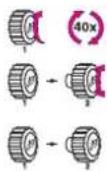
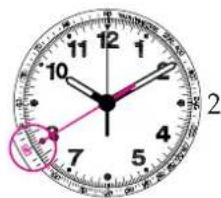
- Pull the crown out to position 2. Then adjust the hour and the minute.
CORRECTING AND SETTING MECHANICAL FUNCTIONS
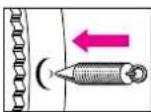
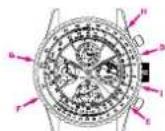
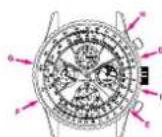
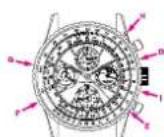
Functions other than the time are effected by pressing with a slightly blunt point (like a ballpoint tip) on the watch's recessed correctors as follows:
-
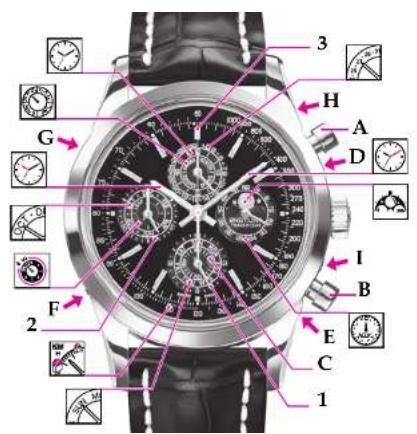
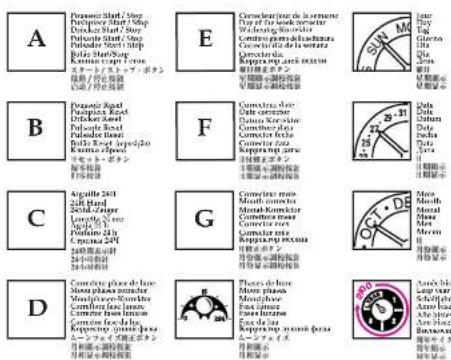
Moonphases: Press on the D corrector to position the moon in its current phase.
-
Date: Press on the F corrector and position the hand on the digit 1.
-
Month and year: Press on the G corrector to adjust the month and, if necessary, the year. For example, for the year 2005, which follows a leap year (bissextile), the hand must be placed in the sector 1 of the year area.
CORRECTING AND SETTING MECHANICAL FUNCTIONS
- Season: Press on the H corrector to bring the season hand to the mark preceding the current season, then adjust the hand as follows:
January:0 pressure February:2 pressures March:4 pressures April:0 pressure May:2 pressures June:4 pressures July: 0 pressure August:2 pressur September:4 pressures October:0 pre November:2 pressures December:4 pres
- D ate: Press on the F corrector to position the hand on the exact date.
- Day: Press on the F corrector to position the hand on the exact day.
- Week: Press on the I corrector to position the hand on the exact week.
If the watch is not worn on the wrist, it must absolutely be placed in its rewinding box so as to keep its various functions current.
USING THE CHRONOGRAPH
I. MEASURING A SINGLE SHORT TIME
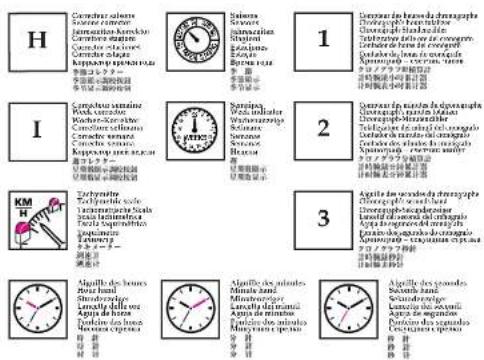
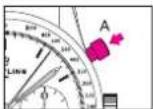
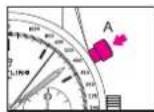
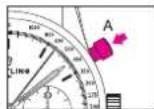
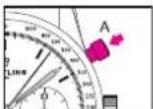
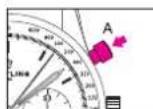
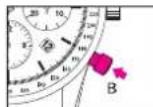
- Press pushpiece A to start the chronograph. Hand 3 shows the measurement in seconds.
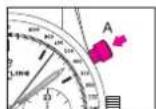
- Stop the measurement by pressing pushpiece A once more. The measurement is done in hours (totalizer 1), minutes (totalizer 2), seconds and 1/4 of a second (hand 3).
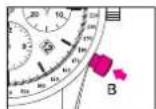
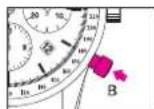
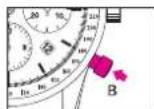
- Return the chronograph to zero by pressing pushpiece B.
II. MEASURING AN INTERRUPTED SHORT TIME
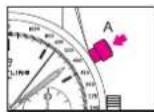
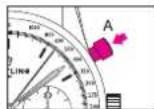
- Press pushpiece A to start the chronograph. Hand 3 allows you to follow the measurement in seconds.
- To interrupt the measurement, press pushpiece A once more. To restart the time measurement, press pushpiece A. This procedure makes it possible to add several short times.
- The chronograph is reset to zero by pressing pushpiece B, once the final measurement has been stopped.
SPECIAL CHARACTERISTICS

USING THE TACHOMETER
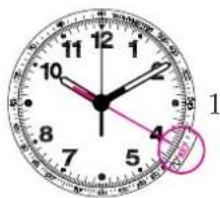
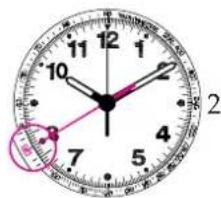
The tachometer is the graduation on the dial or flange of your B REITLING chronograph enabling you to determine average speeds or hourly productivity rate, based on an observation period of less than 60 seconds.
- Average or mean speed
Using the chronograph to measure the time required to cover a kilometre or a mile. If it takes 20 seconds to cover 1 km or 1 mile, the scale respectively indicates an average speed of 180km / h or 180 miles/h.
- Hourly productivity rate
Measuring the time required to produce 1 unit. If the chronograph is stopped at 40 seconds, the tachometric scale indicates 90, corresponding to an hourly productivity rate of 90 units.

SUN COMPASS
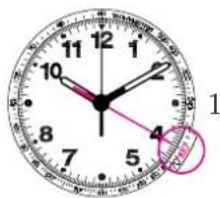
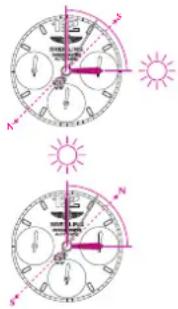
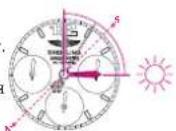
Your BREITLING chronometer may be used as a sun compass, thus enabling you to determine the Northerly-Southerly direction. For regions that have instated daylight saving time, subtract one hour when directing the watch.
In the Northern hemisphere
Point the hour hand precisely towards the sun. In relation to the watch dial, the point located midway between the current time and 12 o'clock indicates the South, the North being exactly opposite.
In the Southern hemisphere
Point the hour-marker located at 12 o'clock on the dial precisely towards the sun. In relation to the watch dial, the point located midway between the current time and 12 o'clock indicates the North, the South being exactly opposite.
MAINTENANCE
Your BRETTUNG chronometer is a sophisticated instrument which is constantly subjected to a wide variety of stresses and strains. Within a very small volume, a large number of components contribute to handling all the functions. Their mechanical action inevitably leads to a certain amount of wear and tear, which may be controlled by maintenance consisting of renewing the lubrication and replacing worn components. Like any precision measurement instrument, your watch must be regularly maintained in order to function at its highest level of potential: we recommend a regular service every two years, while the complete overhaul should be scheduled about every five years. Your authorized B BRETTUNG dealer will be pleased to handle this for you.
WATER-RESISTANCE
The movement of your chronometer is protected by a sophisticated case fitted with water-resistance gaskets. Under the influence of certain external factors such as perspiration, cosmetics, perfumes or dust, these gaskets progressively deteriorate and must be periodically replaced, ideally every two years. Moreover, we recommend an annual water-resistance test, which takes only a few minutes, performed by your authorized B REITLING agent.
The complex construction of the case used for NAVITIMER models, featuring a design faithful to the vintage 1950s models, means they are not suited to aquatic activities. The crown, pushpieces and bezel must under no circumstances be activated when the watch is damp. The water-resistance indication, expressed in bars, must be considered a safety factor, protecting your chronometer from dust and splashing. Only watches that are water-resistant to 5 or more bars should be subjected to repeated immersions.
USEFUL TIPS
BREITLING genuine leather straps are crafted with the most refined materials and represent extremely high-quality products. Like all objects in natural skin (shoes, gloves, etc.), their length of life varies considerably, according to the conditions in which they are worn. In particular, water, cosmetics and perspiration accele rate the aging process.
BREITLING metal cases and bracelets are crafted from the finest alloys and ensure sturdyness and wearer comfort. Regular cleaning with a soft damp brush will keep your watch shiny. For watches fitted with a leather strap, proceed in the same manner, taking care to avoid wetting the strap.
WHAT TO AVOID
Like any valuable objects, B REITING chronometers deserve special care. It is important to protect them from jarring and knocks by hard objects, and not to expose them to chemical products, solvents, dangerous gases, or magnetic fields. Moreover, your B REITING chronometer is designed to run smoothly at temperatures ranging between 0^ and 50^ .
IHR BREITLING CHRONOMETER
Cehra6pb: 4 HaKHaMa OkT86pb: 0 HaKHMOB
Hor6p: 2 haxnma Jekabp: 4 haxnma
- Dara: Haxnab Ha KhoiKy F, yctahOBHTe cTpeNky Ha cooTbETCTryHOyIO nay.
6.ДeнБ:HaKMMHTI Na KIOHky E H NOMECTHTE CTpe.IKY Ha COOTBERCTBYOIMn DeH.
7.HeJH:I JIO TO OYTO6bI yCTAOHBHTB CTpeIKy HA COOTBETCTNYIOUYIO HeJIIO, CJIeIyET HAKATI HA KNKY I.
EChBbHc6yDcTc HcbHocHTbTOJHcOxpaCHHHBccHX JOIOIROBpeMHbIXyHKIN, HacbclnyET NOMECTHB CnHuaHHyIO KOp06ky CnoNooPOTHM MExAHHNOMM.
OBCLYKBAHHEXPOHOPTPA
I. IPOCTOE H3MEPEHNE KOPOTKOFOTPE3BA BPEMEIH
1.IaKmHe Ha KhoNkY A BKNIOHTe XPOHOrpa. CTeJIka 3 no3BOBIEr OIIpeJIITb KOJIHecTbO IIPOUcIHHX cKeYJH.
2.ⅡA octaHOBKn XpoHOrpaBa eine pa3 HaKmHHe Ha KhoNky A. 04Ka3AHn6 OH3MepCMOM O1Pc3K BCpCMH MoKHO IpOHTATb B Hacx (CteTINK 1), MHyTAt (CteTHNK 2), B CekYHJAn H B 1/4 DoHH cekyHbI (ctpeTKa 3).
3.O6Hy.TeHHe XpoHorpaJa IpoH3BOJHTcR NyTeM HaKaTHHa KhoNkY B.
H. H3MEPEHHNE KOPOTKOTO OTPE3KA BPEMEHHC OCTAHOBKOH
1.BKHOHHe XPOHorpaHa:HKMHTe Ha KONky A.CTeJka 3 HAAHHACTBnITbChnOTCnITbAaCTcCKyHbl.
2.ДИнгпсдшимин Имсрелимссдуct OHTB HAKHTB KHOHky A. TAKHIMOBAOLOM MOKHO IMepHTB HECKOTIKO OTPe3KO BpEMHH y cmmmpoarht, HX.
3. NocTe OKOHuaHHN HmpeHHn IpOHBOHPTc O6HyneHHe NOKaAHn HAcAThm Ha KhoNkY B.
OCOBEHHOCTN

HICIOIB3OBAHNE TAXHMETPHUECKOHIIKAJIbI
TaxHMeTp HaxoDHTca Huaep6LATE HIN HA OoOke BOKpy IuHep6Ia HnIOpa3eHmetc H na pTaCm. C nmoHbIO hkaTb MOHO HmepHTb cpeHIOCKopocrB bHJKeHHnPiOn HBOITBILHOCT B uac H aOHObE optKREpweHN IOI 60 cekyU.
1.Cpehnackopocmb
IOnpeHcKopocnCclnyeTcHOMOIOxpoHOrpaHa3MePHTBpeM,EO6xoOHMOeIbpeoIOHOHODHO KHOometpA. TaKa HApHMc,pCnH MaI IpeoIOHO HNOHO KHOometpNoHao6NtO20 cekyHTo Hkane NoHRTcnoKokatte.HcpenHcKopocn180 km/uc.
2. Pounbodome.bnoemb aac
IIOpeIEHINH DAHHOT HOKA3HTEN CNEyET HMEpTT BPCM, HcO6xoHIMoe IIN pOHOBCTBA EHNHIIHbHMePENH. Ec.II Ha xPOHOPTe HOBaTcHbKoA3HHe 40 cckuHTo HA TaXHMeTpHHeCKo IIKaTe NOBHTC IIHp90, COOTBeCTbYIOJpa PnOH3BOHTteBHoCTN 90 eHNHII B Yac.

COJIHEHbI KOMIAC
XPOHOMETP BRIILLING MOKHO TAKKE HNOIOB3OBATB KAIIECTBC COIHEHOTO KOIMACA INP onpEeHHn HnpanTeHH nceep/Ke. B oblaTae, rne HcnoIObYerctaJeTHee npEmr, cTeyert IIHHMATEB BO BHIMAHNC CUBH BPCMCHN H OoHH'AC.
Hcnoa3oanue na ceepno no.iyuapua
Yacoby cTeIky ycTaHOBBt ToHO No HApBaTeHHo K coHHiB YeHHTpeIpOmeKyTKa MeKHy ayteTmHHm IpemeHm 12-acaBOHO tMeTKOH HaHepDePate HaxoHITc Ior. CeBep Jx HaxoHITc HA HnAraHbHO IpOTBnHOIOKHO CTOPHO IHpE6 OHaTa.
Hcno6306anue na oonno noayuapua
HHeKc, paonIOKeHHb y 12-ACOBoN OTMeTKn, HAnpaBHr ToHNO KCOHN. B CepeJIne PaCCToONHIM MeKJy ayTeHTTHHBM NOKaHHM IPeMeHH n 12-ACOBoN OTMeTKn Ha IINpepBnre HAXOJIITccebp. IOR HAXOITcR HA IIARHOHLBO NPOTHBO NOIOXHO CTOpOE IHpepNJATA.

PEMOHT
Bau xpoHOMcTp BRETTLNG-3TO uacOHm3peHrTeIbIbI HpH6Op BACOKO yPOBHI, KOTOPb HAcoTPOaBtET HneppeBHO B OBEH TAKeBIX YCIOBHX. Ha oEhMaJIeHbKoPOM pOCTPAHCTe RAPMOHHIO paBOtaIOT MIOHOrCEHeIHE HeTAIN, KOTOpHE pyKOHOIT IcEMH FyIKIHIMM. MexAHcckHe IPOIECCs HEN3E6KeHIO BeYr K HAIHNAMeOHTN, NOCTeTHRA KOTOPOI MOKHO CBeCTHa N aMIHHIO, OcyueCTBIA CIEuHaJIbH peMOHT (CMaKa H ZMeEHBOHHeHHIX JetaAei). Ka H KaKIIb ToTHII INp6Op IO HMEpeHHIO BpeMeHH, TaH N aHHIaH cIooKbHpeYIHPHO IPOXoHHT IbPOfHAKTIckCNOCMOT r PCMOHT. ToIbKO IIpu COIoJHcHIN 3THx YCOBHON OHMy 6c0HHoHO PAoBAtb. My PCKOMCHyCM IPOBOHTB cepBHC KAcKHe Ira RoHa J KAcHIX NHT, Iet JeNaTH, PeHHNHO. 3TH yCytNH Bam C yNOBtCBHc HPCIOCTABRT BCC OFHuaHbIbIbe HPOAABII MapKn B REITLNG.
BOHOHEIPOHHIaEMOCTb
MexHnM HnHrno XPOHOmETPA 1IHHHnEOTIOIECTNBOJIKOPYCOM CYIIOHTEHNN. PaHnHnHE HnHHHnKAA KANHPHMEp, NOT, KOCMeTHeCKHe CpeCTBA, IyXH NIN HnB MORYT yIIOHTCHHNIOBpeITb. IOIOTOMY yIIOHTHEHNIOIOLKHN peTylAHOpe3 KaKb2e 2 Roja o6MeHNATc. MJI peKoHmIIeM RAM NO3OTMy Iponeptl BDOHnPONHIAeMOCT, OHH P3 B TO B CepBHChOM HCtPC pHmPL BRILTLING HN y OPHuHaIbHOIO IPOaBuA. OT TcCT JNTTcBcERO TINH HeCKoLKO MIHYT.
YHTBBAH KOHC TpyKIO MOJN N AVITIMER, KOTOPAR HIBCTCR TOUHOI KOHH OPHIHHAJI
THIECETbIX RTOB, BKIOHJA IIIaIH, HE peKoMeHYteCR DAHNBE YacbI HCIOJI3OBATb B ODE - 3THMOJEH IIEPINIAHAeHJI, HINCHOI3OBAHIN B OIDE. EcIH NaCBy CTAHYT MOKHMn,
TO CIEyET BOChPEHITCTBOBHT, MAHNIIJHIMC H IOBKOKN 3AOJQA, OOOJKOM KHOIKKAHM
VPOBeHB HENPOHHaEMOCTH B 6apax OTHCHTCR KIOKA3AHMM IIbTI H BOJHbIX 6pIgT. ToJIbKO YAcHcI BOJOHNPOHHaEMOCTIOOT 5 apOB IIHHE MOYr 6bl, IIOBTOHO HIOJI3OBAHIN B
BOJE.
COBETBI
PemeHHBRETTINGHATypaHbHOKoKcCteAaHbH3camoroKaeeCTBeHHORoMaepnHaTa TOnHOKbHbIKK.KaHbXHcIeHINHtYPaHbHOKoKx(06yBu,NEpAHTKN.T.L)cpOK OIOHOCTHpeMeUKA 3ABHCNTOHHTHEBHBOCTHHycOBHero HcNOBHNOTIOEPOOBOHBA. B npeByO uepe, KocMeTHueCKHe CpeCTBaHNOTYcOPOHOT pOeHcSTapeHHKOxo
Kopnyc Mapkn BREILING HMetaJIePecKeH 6pAcTebI H3ROTObHeHb I3 KaIeCTBeHHbIX 6IaIroPOHbIX metaJIaON. Pery.lnphrae CHKTa McOeyHcN HeTOuyKoR paHantHyET coxpauHEHx INpeKpCHOrO BHeCnO Bua. OTO OTHOCrH N K TacAM C KOKAhBm pcmEkwOM, ODAHko KOKa HEoJDKHa COIIPhKocATcbc C BoDOn.
BAKHO
Tak Ka K KaKbI IeHHI IpeMe TxPOHOmeTp MapKn BREITING Tpe6yet oocbo r yxoTa. O6pcIaHc BAIII cAacb ot yIapOBn HauCHe Hn TbePMcTe b H36eJIaTe KOHtAKTa YaocB nMHEeKCNH BHeIeCTAmn, ONaHcNm raaAMn HmarrHIMn NOJMMn. BAIIN XPOHOmeTp paccuHTAHn H6eOTKa3HIOypo4Ory npH TeMnepaTyphom peKeHMoT 0, 05 ^ C