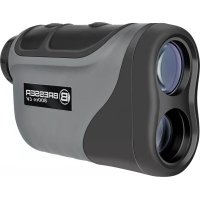
LV 6X25 - Rangefinder BRESSER - Free user manual and instructions
Find the device manual for free LV 6X25 BRESSER in PDF.


| Product type | Monocular laser rangefinder with speed measurement function |
| Brand | Bresser |
| Model | LV 6X25 |
| Power supply | 1 x 3V CR2 battery (included) |
| Battery life | Approximately 15 seconds before auto-off; continuous measurement in Live mode (20 seconds max) |
| Distance measurement range | 4 m to 800 m |
| Speed measurement range | Up to 300 km/h |
| Distance accuracy | ± 1 m |
| Speed accuracy | ± 5 km/h |
| Magnification | 6x |
| Objective lens diameter | 25 mm |
| Optical coating | Multi-coated objective, laser-protected eyepiece |
| Field of view | 110 m at 1000 m (6.3° angle) |
| Focus | By diopter compensation (eyepiece adjustment) |
| Operating modes | Standard (up to 155 m), RAIN (rain, up to 20 m), 155 (beyond 155 m), SPEED (speed) |
| Measurement units | Meters (M) or yards (Y) for distance; m/s or km/h for speed |
| Display | LCD in the viewfinder (distance, speed, units, accuracy bars) |
| Laser class | Class 1 (eye-safe under normal use) |
| Laser wavelength | 905 nm (infrared) |
| Box contents | Rangefinder, belt pouch, lanyard, cleaning cloth, CR2 battery, protective cap |
| Cleaning and maintenance | Use a soft microfiber cloth; moisten if necessary with eyeglass cleaner; remove the battery if not used for a long time |
| Warranty | 2 years (extension possible by registering at bresser.de) |
Frequently Asked Questions - LV 6X25 BRESSER
User questions about LV 6X25 BRESSER
0 question about this device. Answer the ones you know or ask your own.
Ask a new question about this device
Download the instructions for your Rangefinder in PDF format for free! Find your manual LV 6X25 - BRESSER and take your electronic device back in hand. On this page are published all the documents necessary for the use of your device. LV 6X25 by BRESSER.
USER MANUAL LV 6X25 BRESSER
Laser Rangefinder and Speedmeter
6x25 800m LV
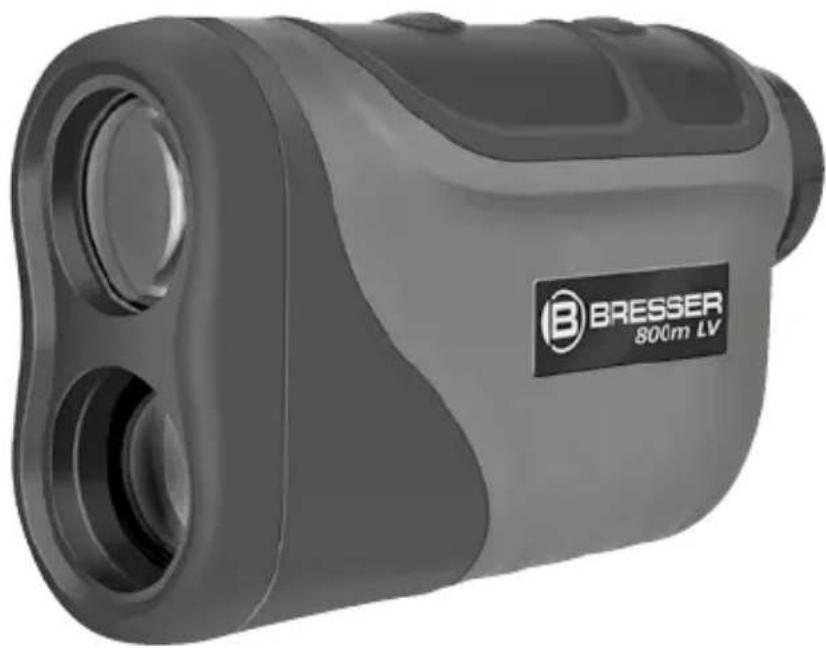
Art. No. 40-25840
DE BEDIENUNGSPANLEITUNG
GBINSTRUCTIONMANUAL
FR MODE D'EMPLOI
ES INSTRUCCIONES DE USO
IT INSTRUZIONI PER L'uso
NL HANDLEIDING
PL INSTRUKGJA OBSLUGI
RU PYKOBODCTBOIIO 3KCNYYATAUIN
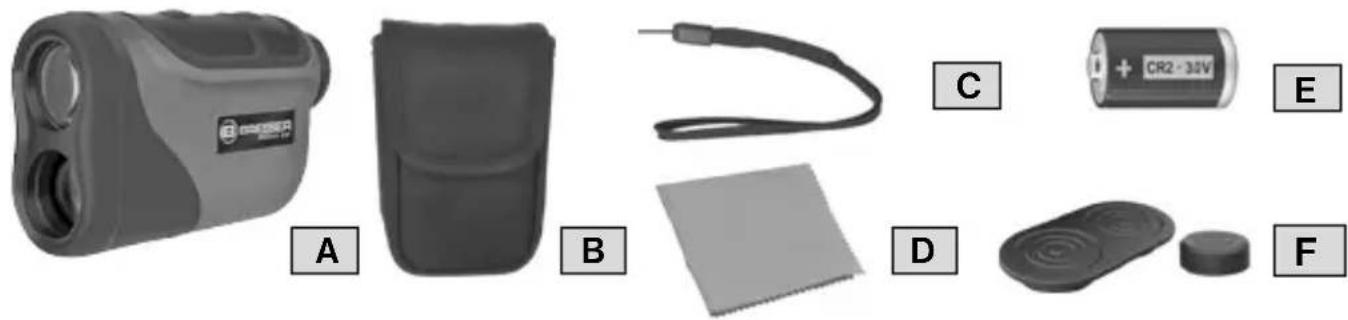
Fig. 1
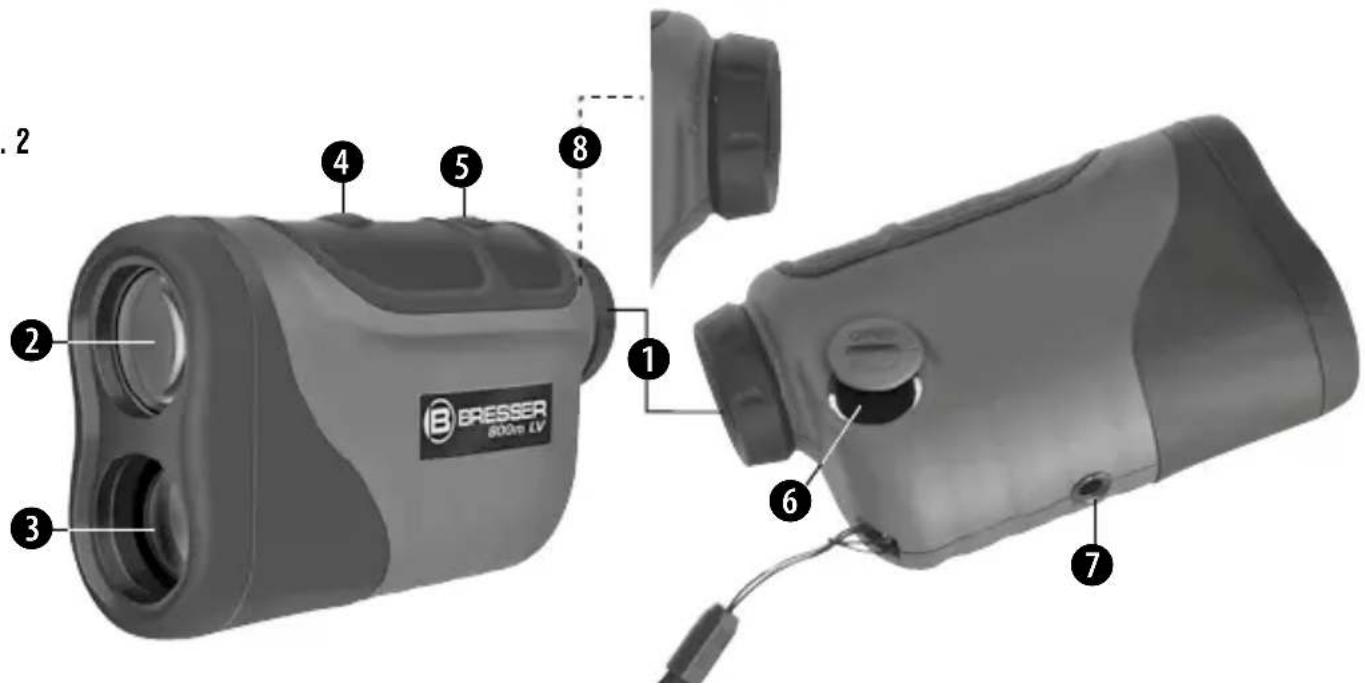
Fig. 2
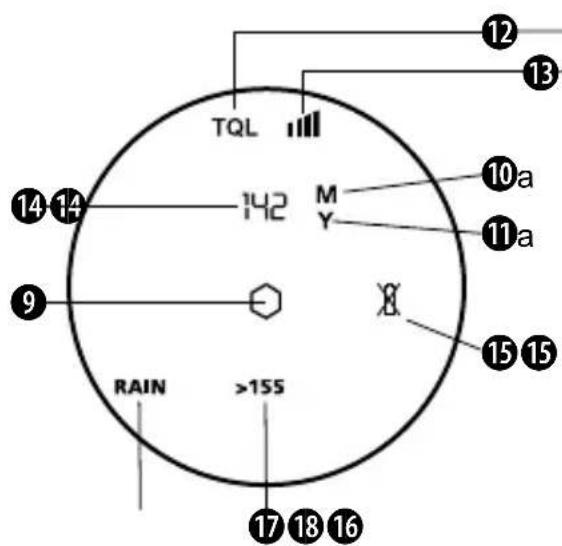
Fig. 3
DE Bedienungsanleitung 4
GB Instruction Manual 14
FR Mode d'emploi 23
ES Instrucciones de uso 33
Istruzione per l'uso 43
NL Handleiding 53
PL Instrukcja obslugi 63
RU RykoBoIcTBO no 3Kcnnyatau.73
GARANTIE & SERVICE / WARRANTY & SERVICE
GARANTIE ET SERVICE / GARANTÍA Y SERVICIO
GARANZIA E ASSISTENZA / GARANTIE & SERVICE
GWARANCJA I SERWIS / ΓΑPAHTNIRI
OBCJYKINBAHNE 82
KLASSE 1 LASER PRODUKT
CLASS 1 LASER PRODUCT
This device has been classified as a CLASS 1 LASER product according to IEC 60825-1.
The accessible laser radiation is safe under reasonably foreseeable conditions, and under normal conditions of use.
Do not open the housing. The device does not contain any parts that can be serviced by the end consumer. Servicing of this unit must be left up to qualified service personnel.
Intended use
The device is designed for measuring distances.

RISK of physical injury!
Never look through this device directly at or near the sun. There is a risk of BLINDING YOURSELF! This device contains electronic components that are powered by either a mains connection or batteries. Never leave a child unsupervised with this device. The device should only be used as per these instructions otherwise there is a serious RISK of ELECTRICAL SHOCK.
Batteries should be kept out of children's reach. When inserting batteries please ensure the polarity
is correct. Leaking or damaged batteries can cause injury if they come into contact with the skin. If you need to handle such batteries please wear suitable safety gloves.
Children should only use this device under supervision. Keep packaging materials (plastic bags, rubber bands, etc.) away from children. There is a risk of SUFFOCATION.

DANGER of fire and explosion!
Never short circuit the device or batteries or throw into a fire. Exposure to high temperatures or misuse of the device can lead to short circuits, fire or even explosion!
Never subject the device - especially the lenses - to direct sunlight. Light ray concentration can cause fires and/or burns.

RISK of material damage!
Never take the device apart. Please consult your dealer if there are any defects. The dealer will contact our service centre and send the device in for repair if needed.
Only use the batteries that have been recommended. Always replace low or used batteries. Remove the battery from the device after long periods of disuse.
Do not subject the device to temperatures exceeding 60 C.
RESPECT privacy!
This device is meant for private use. Respect others privacy - do not use the device to look into other peoples homes, for example.

DISPOSAL
Dispos of the packaging material/s as legally required. Consult the local authority on the matter if necessary.
Do not dispose of electrical equipment in your ordinary refuse.
The European guideline 2002/96/EU on Electronic and Electrical Equipment Waste and relevant laws applying to it require such used equipment to be separately collected and recycled in an environment-friendly manner. Empty batteries and accumulators must be disposed of separately. Information on disposing of all such equipment made after 01 June 2006 can be obtained from your local authority.

EC Declaration of Conformity
Bresser GmbH has issued a „Declaration of Conformity“ in accordance with applicable guidelines and corresponding standards. This can be viewed any time upon request.
Scope of delivery (Fig. 1)
Rangefinder and Speedmeter (A), Belt pouch (B), Hand strap (C), Cleaning cloth (D), 1 piece 3V battery type CR2 (E), Dust Caps (F)
Parts Overview (Fig. 2)
Eyepiece (with function display)
Scope objective (also laser emission objective)
3 Laser reception objective
Mode button ("MODE")
Triggering button ("ON/MEASURE")
6 Battery compartment with covering
Tripod adapter thread
8 Dioptre setting
Usage
Your Rangefinder and Speedmeter combines the functions of a common spotting scope and a laser distance and speed-measuring instrument. It can measure the distance of any object in the field of view, and it displays the distance directly. It also measures the speed of moving objects (e.g. car) and displays it.
Because of its small size and light weight, it is carried conveniently. It only needs a 3V battery that is convenient to buy and to exchange.
This device can be widely used in sports (e.g. Golf, motor sport) and other activities (e.g. hunting).
Inserting the battery
Open the battery compartment cover (Fig. 2, 6) with a coin and a quarter turn in the direction of the arrow (OPEN) and take it off. Insert the 3V battery with + side first, into the battery compartment.
Important note: Make sure when inserting the battery that the polarity is correct (+/-) as shown at the bottom of the compartment.
(FIG. 3, 15) Always replace weak or empty batteries with a new, complete set of batteries at full capacity. After installing the battery, replace the cover and screw it firmly against the direction of the arrow.
Operation
- Look through the eyepiece (Fig. 2, 1) and point at an object approximately 100 meters away. Keep turning the eyepiece setting ring (Fig. 2, 8) until the object looked at is in sharp focus.
- Depress the function button (Fig. 2, 5) for about 1 second to turn the device on.
- When you now look into the eyepiece (Fig. 2, 1) the function symbols appear in the lens coverage (Fig. 3).
- When turning on the device the measurement unit last used (M or Y) (Fig. 3, 10a/11a) applies.
Press and hold the Mode button (Fig. 2, 4) to change the measurement unit. The measurement unit in the display will then alter.
- Press Mode button (Fig. 2, 4) a few times to select the operating mode you want to work with. Read chapter "Display System" (item 6) to learn more about the available operating modes.
- Then aim the central circle (Fig. 3, 9) at the object.
- To make a measurement press the function button (Fig. 2, 5) one time briefly. The distance or speed of the object will be shown at the top of the function display.
- Press and hold the button to use the Live-Mode. In Live-Mode, you always have the current distance displayed. After 20 seconds, the function is automatically switched off, but you can always go back to Live-Mode if you press and hold the button again.
- The rangefinder has four modes that can be selected in sequence after turning on by pressing the Mode button (Fig. 2, 4). The mode in use is shown at the bottom of the function display (Fig. 3, 16-18). Please refer to the chapter "Display System" (item 6) for further information on this.
- The power would be switched off automatically after approx. 15 seconds if the distance-measuring instrument is not used.
Note: Distance measuring with the Rangefinder is affected by the characteristics of the object (color, surface finish, size and shape), the angle of the emitted laser beam to the target and the lighting conditions (e.g. the visibility of weather). If the object is large, the color of the object is bright (highly reflective), the surface is smooth and shiny, and the laser beam is vertical with the surface of the
object, the maximum range is increased. On the reverse, the maximum range is decreased.
Measurement precision may be influenced by grass, leaves, twigs etc. covering the object. How precisely the device has measured is displayed on the measurement bar (Fig. 3, 13).
Display System (Fig. 3)
- Symbol for aim (Fig. 3, 9). The object to be measured should be aimed at the inner circle.
- Distance or speed display (Fig. 3, 14). Distance and speed are indicated with maximum three digits. If “- - - ” is shown, no distance or speed can be measured.
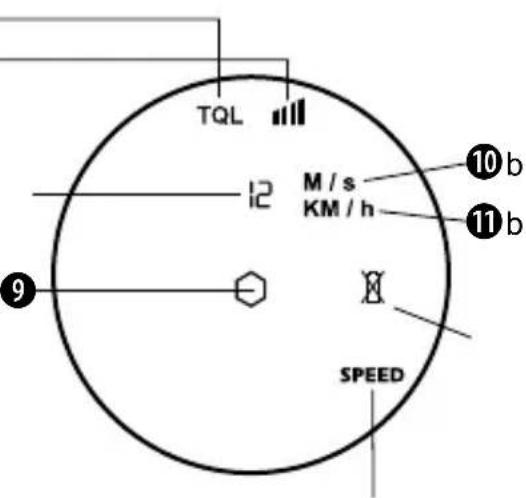
- Measurement units: "M" (Meters; Fig. 3, 10a) or "Y" (Yards; Fig. 3, 11a), "M/S" (Meters per second; Fig. 3, 10b) or "KM/h" (Kilometers per hour; Fig. 3, 11b)
- The standby function will be signalized by „TQL“ (Fig. 3, 12).
- There are four operating modes available:
Standard (no symbol): function for normal light conditions and measurement distances not exceeding 155m .
RAIN (Fig. 3, 16): function for weather and measurement distances up to 20m .
155 (Fig. 3, 17): function for normal light and distances over 155m .
SPEED (Fig. 3, 18): function for normal light and speed measurement up to 300km / h
Cleaning and maintenance
Remove the device from it's energy source before cleaning (remove battery).
Lenses (eyepieces and/or object lenses) should be cleaned with a soft, lint-free cloth (e.g. microfibre)
only. Do not use excessive pressure - this may scratch the lens.
Dampen the cleaning cloth with a spectacle cleaning fluid and use it on very dirty lenses.
Protect the device from dust and moisture. Store the device in the bag supplied or in its original packaging. Batteries should be removed from the device if it is not going to be used for a long period of time.
The mode button ("MODE") and the triggering button ("ON/MEASURE") should not be pressed at the same time, or it may cause trouble.
Troubleshooting
If Rangefinder cannot work anymore resulted from wrong operation, please remove the battery compartment lid (Fig. 2, 6) in order to cut down the current. Then close the battery compartment again and see if it is OK. If the instrument cannot work all the same, maybe some other troubles encountered. Devices which become defective during the warranty period can be returned to the dealer where the device was bought.
Specifications
| Distance measurement range: 4m up to | 800m | |
| Distance measurement method: semiconductor laser measurement (harmless for eyes) | ||
| Laser wavelength: 905nm | ||
| Accuracy in distance / speed measurement: | +/- 1 m | |
| +/- 5 km/h | ||
| Type of measurement display: Inner-visibility field LCD display | ||
| Effective aperture of the objective lens: 25mm | ||
| Coating: Objective lens with multi coating | ||
| Eyepiece laser protective coating | ||
| Diameter of the exit pupil: 4.49mm | ||
| Distance of the exit pupil: 17.6mm | ||
| Type of focusing adjustment: Focusing through dioptre setting | ||
| Magnification: 6x | ||
| Field of view: 110m/1000m | ||
| Angle of view: 6.3 degrees | ||
| Batteries or accumulators: 1 pc 3V battery (type CR2) | ||
| Impulse laser diode: 1 pc., type OSRAM | SPL PL90-3 LED class 1 · P=75 W · λ=905 nm EN 60825-1:2007 | |
Informations generales
Advertencias de character general
PRODUCTO DE CLASE 1
BESCHERMING van privacy!
IcnoIb3OBaHne np6opa
- ПосмOTPnTE B OKyIaR (pnc. 2, 1) Ha obBeKT, HaxOJaIuNcB Cta MeTpax OT Bac. OtperyIpyIte pe3-KoCTb N3O6paXeHnI Prn NOMOu KOnbua DnOITprHnKoppeKuN (pnc. 2, 8).
- HaxmTe u ydepXnBaIte BbIKIOaTeIb (pnc. 2, 5) B TeueHne TpeX cekyHd, YTo6bl BKIOuHTb np6Op.
- Tocne 3toro Ha nnH3e OkyIpa (pnc.2,1) noBntc nnCnne (pnc.3).
- Haximai Te KhoKy MODE (pnc. 2, 4), YTO6bI BbIbpaTb Heo6xOIMbI pexm n3mepeHn. Boee np-po6hna HOpmaunr o doctynbIX pexmax coepkntcB pa3dene «Dncnnne»
-
Habeinte ueHTpaIbHbI Kpyr (pnc. 3, 9) Ha nHTepecyOuIIN BAC oBbeKT.
-
YTo6bI npOn3BecTn H3MepeHne, HaxMITE BbIKNoTuateNb OdnH pa3 (pnc. 2, 5). Pnp6Op n3MePnt pacCToRHeNo o6BeKtA NII eO CKOpocTb N BbIEeTe pe3yNbTaT Ha DnCnJIeN.
- При повторгом вклочени ппбора pe3уьтаты 6удт BBIOДNTbCВ ТEx Лнцх ИЗмереня, КOTOPbie 6bln Использовны B npошlb pa3 (M nln Y) (pnc. 3, 10a/11a).ЧTo6bl ИЗмeнТь eDINHцbl ИЗмереня, нажмITE и уdeckжвайte кногky MODE (pnc. 2, 4). Вhecенье ИЗмeнeня оTO6pa3ЯТСА на диспee.
- Дя Вьзова ржима Live-Mode нахшite и уdeckивайт eноку.В зTom ржиме на диспee Bcerda noka3bIBAeTcra Tekyшee 3haueHne pacctToHnry.Чepez 20 cekyнд Функця abTomatuweckn OTknHoua-etcra, HO bbl BCERda CMOxKeTe BepHyTBcR B 3TOT peKIM, Haxab N ydeckxNBaR KONkY cHOBa.
- CyuieCTByeT cheTbipe pexnma pa6oTbI np6opa. Bb6op pexnma ocyuieCTBnaTeTcI nocneIOBaTeNbHIM HaxktaHem KhoNk MODE (pnc. 2, 4). NIKTOrpaMMA Bb6paHHoro pexnma oTo6paXaETcR B HxKHeJ qactn dncnner (pnc. 3, 16-18). Boone noOp6NaHnΦopMaun O DoCTyINbIX pexnmax CoepKNTcR B pa3dene «Dscnnei».
- Ecn np6op He nCnoB3yeTcB TeueHne 15 cekyH, nTaHne 6yTe OTKIOUeHO.
Ipimechne: Tochocb n3mepeHn paCCToHn DO oBeKta 3aBnCt OT xapaKTepnCTNK camoro obekTa (Ubeta, CBOcTB NOBepxHOCTN, pa3MePOB n FOPMbl), yrna cOpnikocHObeHn Ia3epHOrO LyuA C obekTOM n IporDhix ycNoBn. MakcimalbHo TOUHoe n3mepeHne MOXHO NOnyHT b npu YcNoBn, UTO obEeK T KpyHbI IN JRPkn, C rJaIKoN IOBepxHOCTbO, a Na3epHbI Nuy NaJaET CTpO r NepNeHNkUyRn HO IOBepxHOCTN obEeKtA. Ha ToCHocb n3mepeHn MOrTy NOBnraTb DpyTne ObekTb, HaxOJaUncsE B Pone 3peHn I qactNuHO
3aKpbBaIOuIe ObBeKT (TpaBa, IncTbI, BcTBn I T. n.). CneuaJIbHbI INHdNkATOp Ha DInCnIee Noka3bIBaET ToUHOCTb IIPOBEdEHNO I3MepeHnra (pnc. 3, 13).
Диспел (pnc.3)
- Ppncen (pcn. 3, 9): O6bekt n3MepeHn IOnJxH haoDnTbcra CToPO B cEHTpe 3TOrO Kpyra.
- Pe3ynbTaT (pnc. 3, 14): ПонуehHbIe pe3ynbTaBtIиЗмepenHЯOT6paXaOTcB bToiЧаTиДИСПЯ.ЕсппpacCTOHaHHe ИИ SCopoCtB onpeIeJIbT HeBO3MOxHOb,Ha IINcPJIee NOBHTcR «- - - »
- EunHnCbI n3mepeHn: M (MeTpbl; pnc. 3, 10a) nn Y (apdb; pnc. 3, 11a), M/S (MeTpbl B cekHy; pnc. 3, 10b) nn KM/h (KnlomTePbI B yac; pnc. 3, 11b)
- Hauinb TQL coo6aet o nepexoe npnbopa B pexm oxndaHn (pnc. 3, 12).
- CyuieCTByeT ueTbipe peKIma n3MepeHnIa:
CTaHdapTbIy (HET NIKTORpaMMbl): NOxOJIT IJIY N3MepeHNI pN HOpMaJIbHOM OCBeUeHNI Ha pacCToHnB V npedeJax 155 MeTpoB.
RAIN (pnc. 3, 16): noxodnt dna n3mepeHn npnnoXOM ocbeueHn Ha paCCToHn B npedeJax 20 MeTPOB.
155 (pnc. 3, 17): noxodnt nIy I3mepeHn npn HopmaIbHOM oCbeueHn n Ha paCtOaHn 6oJee 155 MeTPOB.
SPEED (pnc. 3, 18): noxdxodnt dny n3mepeHn ckopoctn (B npedeJax 300 km/uy) npn HopMaJIbHOM OcBeueHn.
Yxoid no6cnykBaHne
Ipeed uNCTKOJ OTKJIIOHTe yCTPOINCTBO OT NCTOCHNA PIITAHN (BbIDepHnTe 7TEPCENbHyO BUNKy I3 PO3ETKN IIIN BbIHbTe 6aTapeiKn)! IIN3bl (OKyJIrpbl N OBekTNB) CNEyET ONUATb TOnbKO MRAKOHN HETKAHO CN-ΦeTKoH (HaNPIMEP, MKNPOΦn6pO). He daBInTe cNIuKOM cINbHO - MOXHO NOUAPANaTB INH3Y. DnA YdANEH N8Ee CINbHbIX 3aRpy3HeH NCMouITE YNCTAUYO CaΦeTKy B XnIKOCTN IINQKOB IN PNOPTne IIN3bl C He6OJIbShm ycIIINEM. BepeInTe yCTPOINCTBO OT NblN IN BnAgr. XpaHInTe yCTPOINCTBO B KeIce nII IN BOpINHAJIbHOYNAKOBKe. EcIn yCTPOINCTBO He 6yDet NcPONb3OBAtbcra B TeueHne DnITeNBHO R BPemeH, BbIHbTe I3 Hero 6aTapeiKn! He NaJImaTe KhoNkY MODE IN BbIKIOUaTeNb ONDOBpeMeHNO, TAK KaK 3TO MOxET pINBeCTN K NORBJIeHNO OUn6ok B pa6ote pIn6opa.
YcTpaHHe HEnoJaIOK
При ВОЗнКовени HeNoJaIOK ChIMITE KpbIshky 6aTapeHOrO OTeKa (pnc.2,6),чTo6bl OTKnIOuHTb nI-taHne.3akpoIte KpbIshky I npOBepbTe pa60Tu np6opa.EcIn npo6Iema He peSeHa,a rapaHTnHbI cPOK np6opa eIe He nCTeK,obpaITecb B 6JIIXaIIshN cepBnCHbI ueHtp dIpy pEmOnTa IIIN 3aMeHbI np6opa.
TexHnueckne xapaKTepeNCTnKN
The regular guarantee period is 2 years and begins on the day of purchase. To benefit from an extended voluntary guarantee period as stated on the gift box, registration on our website is required. You can consult the full guarantee terms as well as information on extending the guarantee period and details of our services at www.bresser.de/warranty_terms.
Would you like detailed instructions for this product in a particular language? Then visit our website via the link below (QR code) for available versions.
Alternatively you can also send an email to manuals@bresser.de or leave a message on +49 (0) 28 72 - 80 74-220*. Please always state your name, precise address, a valid phone number and email address, as well as the article number and name.
*Number charged at local rates in Germany (the amount you will be charged per phone call will depend on the tariff of your phone provider); calls from abroad will involve higher costs.
FR GARANTIE ET SERVICE

- Laser Rangefinder and Speedmeter
- KLASSE 1 LASER PRODUKT
- CLASS 1 LASER PRODUCT
- Intended use
- RISK of physical injury!
- DANGER of fire and explosion!
- RISK of material damage!
- RESPECT privacy!
- DISPOSAL
- EC Declaration of Conformity
- Scope of delivery (Fig. 1)
- Parts Overview (Fig. 2)
- Usage
- Inserting the battery
- Operation
- Display System (Fig. 3)
- Cleaning and maintenance
- Troubleshooting
- Specifications
- Informations generales
- Advertencias de character general
- PRODUCTO DE CLASE 1
- BESCHERMING van privacy!
- IcnoIb3OBaHne np6opa
- Диспел (pnc.3)
- Yxoid no6cnykBaHne
- YcTpaHHe HEnoJaIOK
- FR GARANTIE ET SERVICE
Brand : BRESSER
Model : LV 6X25
Category : Rangefinder