First Trio SP Comfort - Car seat Nania - Free user manual and instructions
Find the device manual for free First Trio SP Comfort Nania in PDF.


Frequently Asked Questions - First Trio SP Comfort Nania
User questions about First Trio SP Comfort Nania
0 question about this device. Answer the ones you know or ask your own.
Ask a new question about this device
Download the instructions for your Car seat in PDF format for free! Find your manual First Trio SP Comfort - Nania and take your electronic device back in hand. On this page are published all the documents necessary for the use of your device. First Trio SP Comfort by Nania.
USER MANUAL First Trio SP Comfort Nania
Thank you for purchasing this Group 0-1-2 car seat. If you require assistance with this product or if you wish to change an accessory, please contact our customer service department (see details on reverse).
SAFETY INSTRUCTIONS
PLEASE READ THESE INSTRUCTIONS CAREFULLY BEFORE BEGINNING THE INSTALLATION. IF THE SEAT IS NOT INSTALLED CORRECTLY, YOUR CHILD'S SAFETY MAY BE AT RISK. DO NOT USE THIS CHILD SEAT ON A PASSENGER SEAT Fitted WITH AN AIR BAG!
The seat may be installed in a front-facing or rear-facing position with a 3-point safety belt to UN/ECE No.16 standard or equivalent. Do not use it on side-facing or rear-facing seats. Always remember to fasten and correctly adjust the child's harness and never start the car without first checking that the seat is properly fixed to the passenger seat as shown in these instructions. It is important to check that the straps of the seat belt are fully tightened and that the harness lap strap is positioned as low as possible to support your child's pelvis. Check that the seat belt and harness straps are not twisted. For maximum protection, there must be no slack between the car seat and the passenger seat. Please refer to the method recommended in these instructions. The seat must not be modified in any way and no elements should be added. It is recommended that you replace this car seat if it has been subjected to a severe impact following an accident or in case of wear. You should regularly check that the harness is not showing signs of wear; check in particular the harness points, the seams and the adjustment devices. Never leave your child unattended in the seat. Check that no part of the seat is trapped in the door or in a fold-down passenger seat. If your car has a fold-down rear seat, check that it is correctly locked in the vertical position. Direct exposure to the sun increases the temperature inside vehicles. For this reason, you are advised to cover the child's car seat when not in use in order to prevent the elements, in particular the fixations, from getting hot and burning the child. Do not use your car seat without its cover and only replace it with a cover that has been recommended by the manufacturer. In an emergency, the child must be able to be freed quickly. The buckle, which can be easily opened, must therefore not be covered. Teach your child not to play with the buckle. Always remember to check that there are no scraps of food or other remains in either the harness buckle or the central adjuster. Luggage and other heavy or sharp objects must be fixed down in the car. Objects that are not attached may injure a child in the event of an accident. In winter, make sure that the child is not wearing over-bulky clothes.
GB
The correct type of safety belt to use with your car seat
Your car seat must ONLY be installed on a passenger seat fitted with a 3-point safety belt (1). NEVER install your car seat on a passenger seat fitted with a 2-point safety belt (2)!
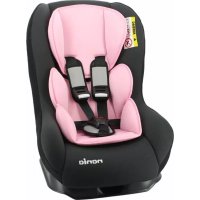
Your Gr. 0-1-2 car seat (3)
This is a Group 0-1-2 car seat that is designed for children weighing between 0 and 25kg
A. Cover
B. Pillow (some models only)
C. Shoulder pad (x2)
D. Infant reducer cushion (some models only)
E. Adjuster (x2)
F. Adjustment strap (x2)
G.Shell
H. Harness buckle
I. Belt guides for rear-facing use
J. Belt guides front-facing use
Adjusting the harnesses
Make sure that the harness of your car seat is adapted to the height of your child before starting to install the seat in your car. The harnesses can be adjusted to 4 different heights and must be positioned as close as possible to your child's shoulders (4).
- The two lower positions are ONLY intended for use in group 0, for a child weighing from 0 to 10kg in a rear-facing position. If your child's shoulders are between two levels in a rear-facing configuration, choose the lower of the two.
- The two upper positions are ONLY intended for use in group 1, for a child weighing from 9 to 18kg in a front-facing position. If your child's shoulders are between two levels in front-facing configuration, choose the higher of the two.
To adjust the height of the harnesses, remove the upper section of one of the harness straps by pivoting the metal anchor located behind the back rest and then pulling it through the slots of the shell and cover (5). Repeat the operation on the upper section of the second strap.
Feed the ends of the harness straps through the slots at identical level in both the cover and the shell, according to the chosen configuration:
- For a rear-facing configuration (Gr. 0, from 0 to 10kg ), the harnesses are fed through one of the two lower positions (6) and then up to the third position to be secured inside the shell (7) (8). Make sure that the metal anchor is correctly positioned and that the ends of the harness straps are not twisted.
IMPORTANT: Whichever of the two lower positions you have chosen, make sure that the metal anchors of the harnesses are well secured through the slots of the third position of the shell.
- For a front-facing position (Gr. 1, from 9 to 18kg ), the harnesses are fed through one of the two upper positions (9) and are secured directly behind the position chosen, at the back of the shell (10)(11). Make sure that the metal anchor is correctly positioned and that the ends of the harness straps are not twisted.
Installing the car seat in a rear-facing position (Gr. 0, from 0 to 10kg )
DANGER! DO NOT USE THIS CHILD'S CAR SEAT ON A PASSENGER SEAT Fitted WITH AN AIR BAG!
Fasten the vehicle seat belt (12). Place the car seat in a rear-facing position on either the front seat or the rear seats of your vehicle (13). Feed the waist strap of the seat belt through the guides located under the base of the car seat (14). Pull and feed the diagonal part of the seat belt through the guides located behind the back rest of the car seat. The diagonal strap passes through the upper guide on the side nearest the belt winder and through the lower guide on the side nearest the seat belt buckle (15). Place the car seat so that only the back of its base is in contact with the seat of the vehicle (16). Make sure the belt is not twisted and pull it as tightly as possible (17).
IMPORTANT: once the car seat has been installed, the vehicle seat buckle must not be touching the waist strap guide located under the base of the car seat. If it does, choose another place in the vehicle. If in doubt, please contact our customer service department.
Place your child in the car seat, following the instructions in the section entitled 'Installing your child in the car seat with a harness'.
Installing the car seat in a front-facing position (Gr. 1, from 9 to 18kg )
Place the car seat in a front-facing position on the rear seat of the vehicle. Pull on the vehicle seat belt until it is completely loose. Feed the two straps of the belt through the opening in the shell (18), bringing them out through the opposite opening. The belt should pass between the shell and the car seat cover. Fasten the seatbelt (19). Place the car seat so that only the front of its base is in contact with the seat of the vehicle (20). On the side nearest the belt winder, pull up the diagonal belt through the slot located on the side of the shell (21). Make sure the belt is not twisted and pull it as tightly as possible (22).
IMPORTANT: once the car seat has been installed, the vehicle seat buckle must not touch the opening through which the belt passes on the side of the car seat. If it does, choose another place in the vehicle. If in doubt, please contact our customer service department.
Place your child in the car seat, following the instructions in the section entitled 'Installing your child in the car seat with a harness'.
Installing your child in the car seat with a harness (Gr. 0 / Gr. 1)
Loosen the harnesses by pressing on the adjuster buttons positioned on the upper section of the harnesses, grasp the lower section and pull simultaneously (23). Press on the red button in the centre to open the harness buckle (24). Open out the harnesses (25) and place your child in the car seat. Put the harness connectors together and insert them into the buckle, making sure you hear a 'click' (26). Pull on the adjusting strap of one of the harnesses until it is properly tightened against your child (27). Repeat the operation with the adjusting strap of the second harness.
IMPORTANT: A correctly adjusted harness is essential for your child's protection. There should not be more than finger's width between the harness and your child.
Removing the harness
Put the harness buckle ends together and close the buckle in order to assemble the various parts of the harness and the crotch strap. This will enable you to store the harness more easily for future use. Remove one of the upper sections of the harness by pivoting the metal anchor located behind the back of the shell and then pulling it through the slots of the back rest and cover (28). Repeat the operation with the second upper strap section.
Remove one of the lower sections of the harness by pivoting the metal anchor located under the base of the car seat and then pulling it through the slots of the base and the cover (29). Repeat the operation with the second lower section. Remove the crotch strap by pivoting the metal anchor and then feeding it through the slots of the base and the cover (30).
Simply reverse this procedure when you wish to put back your car seat harness.
Installing the car seat in a front-facing position (Gr. 2, from 15 to 25kg
Make sure that you have removed the harness of the car seat before starting the installation. Follow the instructions in the section entitled 'Removing the harness'.
Place the car seat in a front-facing position on the rear passenger seat of your vehicle and sit your child in the car seat. Pull on the seat belt until it is completely loose. Thread the seat belt through the openings on the side of the shell and cover of the car seat (31). Pull on the belt and threaded through the openings on the opposite side of the shell and cover (32). Fasten the seatbelt (33). On the side nearest the belt winder, pull up the diagonal belt through the slot located on the side of the shell (34). Place the car seat so that only the front of its base is in contact with the seat of the vehicle (35). Make sure the belt is not twisted and pull it as tightly as possible (36). Check that the diagonal lies across your child's shoulder, clear of their neck.
IMPORTANT: once the car seat has been installed, the vehicle seat buckle must not touch the opening through which the belt passes on the side of the car seat. If it does, choose another place in the vehicle. If in doubt, please contact our customer service department.
Storing the instructions
Keep these instructions to hand, by sliding them between the cover and the shell of your car seat (37).
Maintenance information
All the fabric parts are removable. To take off the cover, first remove the harness following the instructions in the section entitled 'Removing the harness' (38).
Minor stains can be cleaned using a sponge and soapy water or hand-washed at 30^ in soapy water. Do not use bleach, do not iron, do not machine wash or tumble dry.
To put the cover back on, start with the top of the shell (39), then the sides (40) and finally the lower part (41).
WARNING
This car seat is a 'Universal' child restraint system. It has been approved in accordance with regulation No.44/04
and is suitable for general use in vehicles and is compatible with the majority (some exceptions) vehicle seats.
It is more likely that the seat is perfectly compatible if the vehicle manufacturer states that its vehicles are suitable for 'Universal' child restraint systems.
- This restraint system is classified as 'Universal' in accordance with the strictest approval criteria, whereas earlier models do not correspond to these new provisions.
- It can only be adapted to vehicles with 3-point safety belts that are either fixed or have a roller mechanism and that have been approved to UN/ECE No.16 or other equivalent standards.
- If in doubt, please contact the manufacturer or retailer of the restraint system.
ONACHO! HE I3IIOA3BAIeCTOaHTO 3A ABTOMOBn BbPxy C PNEHA Bb3dUHnBA Bb3rABHnlaI
3akonhaite 0e3onacntaHnKoAH Ha aBTOMO6na (12).Noctabete cToaHTo C rpb6 KbM ABXKeHneTO HA npedhata Hn HA 3aHaTata CeaaKa Ha aBTOMo6na (13).IpekapaiTe pemHHabaunnpes KOpema pebHK HA 0e3onacntaHnKoAH npes 3 BoaHTte, pa3noaokeHN IOa CeaaKaTA Ha cToaHTo (14).N3dpnaiTe n npekapaiTe dAnorHahATA qACT Ha 0e3onacntaHnKoAH npes 3 BoaHTte, pa3noaokeHN 3aA o6eRaKaTA HA cToaHTo. DnArOHaAHnRT pEmbk MNHABA ppe3 ropHnBaOaHT O cTpaHATA Ha npibpuaotO yctpoCTBO n npes 3doHnBDAOT cTpaHATA Ha 3akOnaKaTAt Ha 0e3onacntaHnKoAH Ha aBTOMo6na (15).Noctabete cToaHTo Taka, ye EaHnCTBeHO 3aHaTata qACT Ha OCHOBATA My Da 6bDe B KOHTAKT CbC CeAAUata Yact HA npedHata Hn 3aHaHata CeaaKa Ha aBTOMo6na (16).Piobepete daan 0e3onacntaHnRT KoAH He e ycKaH n ToNBHe TE MAKcImmaHo (17).
BHIMAHHE! CAAKATO CTOAHTO 6bde MOHTIPAHO, 3aKONHAAkATA HA o6e3oNAcTNEAHN KOAAN HA ABTomoBnAA He Tp8Ba DA BAN3A B KOHTAKT C BOADAHA H PPEMNHABAUII Npe3 KOpema KOAAN, PA3NOAOXEN NOA CEAAkATA HA CTOAHTO. AKO TOBA e TAKA, N36epete dpyrO MRCTo B ABTomoBnAA. PnCbMHeHne Ce OObpHETe KbM HAIIN OTAE 3a OBCAYKBaHE HA KAINETHI.
CAOXETe AETETO B CTOAHTO, KATO CnA3BATE YKa3AHNRTA O T PA3Aea "IOCTABRHe HA AETETO B CTOAHTO C KOAAHA C 4AOCTHO OXBaaHae".
HCTaAnpaHe Ha cToaUeTO 3a ABTomO6Ha C AnuCe KbM ABHXeHNeTO (rpyna 1, ot 9 ao 18 kr)
Noctabete cToaTeo C Anle KbM ABXKeHHeTo Ha 3aHaTata CeaaKa Ha aBtOMo6Ha. N3Abpnaite Obe3onacnTeAHn KOaH Ha aBTOMo6Ha, dOKaTO rO onbHete N3JAAo. PpekapaiTe DBATA peMbKa Ha oBe3onacnteAHn KOaH npe3 OTbopa HA Kopnyca (18) Hn N3BaTe pne3 HacpeuHn OBp. Obe3onacnteAHn KOaH Tpr6Ba Da MInaba MeKdy KopNyca n TaIIncepnTa Ha cToaTeo. 3akOnyaiTe Obe3onacnteAHn KOaH (19). Noctabete cToaTeo Taka, Ye eAnHCTBeHO npEahata Yact HA OCHOBATA My Aa 6bAe B KOtAKT CbC CEaHTATA HCaaKA Ha aBTOMo6Ha (20).OT cTpaHATA Ha npBupauTo yCTpoNCTBO N3Abpnaite DnArOHaHN PeMbK HA Ob3onacnteAHn KOaH NO abXHHata Ha OTbopa, pa3nooxen OTcTpaHn Ha Kopnyca (21). Ppobepete DAAN Ob3onacnteAHnRt KOaH He e ycKaH n rO bHete MaKcImmaHo (22).
BHIMAHNEI CKeA KATO CTOAHTO 6bDe MOHTnPAHO, 3aKoHVAkATA Ha 0e3ONaCTeAHN KOAan HA aBTOMoBnAA He TpBa DA OONIPA pa3NOAOXeHn OCTpaHn HA CTOAHTO OTBOP, npeHa3HaueH 3a npekapBaHe HA 0e3O NaCTeAHN KOAn. Ako ToBa e Taka, H3BepeTe dpyTo MAcTOb ABTOMObNA. PnC bMHeHne Ce 06bPheTe KbM HauHr OTeA 3a 0BCAYKBaHe HA KANEHTN.
CaoKete AeTeTO B CToAHTO, KATO CnA3BATE YKa3AHNRTA OT PA3eAA "NoCTABRHe Ha AeTeTO B CToAHTO C KOAAHc CuaocTHo 0xbaaane".
IocTabaHe Ha AeTeTo B CToAChTo C KOaHa C cAocTHo 06XbaaHe (rpyna 0 / rpyna 1)
H3bnpaHTpe pmbuHTe Ha KOaHa C zAAoCTHO 0xbuahe, KATO HATNCHEe 6yTOHHe HA yCTpOINCTBATA 3a peYIpaHc, pa3noaoxehn BbpyrOpHte pmbuHa To3n KOaAH, XbaHete DOAHA TAcH Ha pmbuHTe n dpbnHete eAnOBpemEHHO (23). OTbOpTe KAoyaaKaTa Ha KOaHa C zAAoCTHO 0xbuahe, KATO HATNCHEe cepBeHHa 6yToH B cHTbpaH (24). NocTabete HACPAHn KOaAHTE (25) n CAOXeTe AeTeTo B cTOneTo. CbeHNHe e3NHTata HA KOaHa C zAAoCTHO 0xbuahe H r3akONaHTe B KAoyaaKaTA -Tpr6Ba Da yyeTe UpaKBAhe (26). H3bPaNTe pmbka 3a peryIpaHne Ha dBXkHATA Ha eHNHRA DOKato 6bde NAdEAHO 13NBat Bbpxy AeTeTo (27). NobTope Ceuata OepaunC peMbka 3a peryIpaHne Ha dBXkHATA H bTOPN KOaAH.
BHIMAHNE! OobpoTo onbBaHe Ha KOaHnTe C IAAOCTHO 0xbaaHae e Heo6xoAnMo 3a ocHpyBaHe MaKcMaHa 3aunTa Ha Deteto. Mexy KoAHa H Deteto He TpBb Da octabte pa3ctoHne, NO-TOAIMO ot De6eHnHata Ha npbct.
OTCTpaHraBaHe Ha KOaHa C LAAoCTHO 06XbaaHe
CbeHHe e3HETATA HA KIAOHaKATA 3aKONHte, 3a Da Cb6epete CbCTABHtE eAeMeHTn HA KOAna C IIOCTHO Oxbauane Hn HA aeHTATA 3a Yataa. Taka MoXeTe DA CbxpaHBAte NO-AeCHO KOMPAAkTA KOAnH 3a 6bdeu HxkAn. N3BaDEte EaHHNr OT rOpHNr peMbun HA KOAna C IAAoCTHO Oxbauane, KATO 3aBbPTNTe MeTAAHn ORpaHnHTeA, pa3noaoKeH B 3aHATA qACT Ha o6aERaKaTa HA Kopnyca, n CAe ToBa r O N3AbpnaTe ppe3 OTBOPHTe HA Kopnyca ot o6aERaKaTa n OT TANuEpnra (28). POBTope CeUata Onpau n 3a BTopnra ropen pembk.
N3BaTe eAnHnO T OAnHnTe PembUHa C LAAoCTHO 0xbalAHe, KATO 3aBbPTnTe MetAHnHnOrpaHnHTe, pa3noLoXeH B 3aHATA qACT Ha CeaaKATA HA CTOnHETo, n CAe TOBA To N3aBpNaIte Ipe3 OTbOpHTe Ha CeaaKaTt Ha cToHETo Hn TaHnEepnTa (29).NobTopete CbUata Oepauu H 3a BTopna H oAen peMbK. N3BaTe AENTATA 3a YATAA, KATO 3aBbPTnTe MetaHnO rpaHnHTe H CaeTobA To ppekapate Ipe3 OTbOpHTe Ha CeaaKaTt Ha cToHETo Hn TaHnEepnTa (30).
Iobtopete npoueaypata B o6paTeH peA, KOrato NCKATE Da CAOXHTe KOAnHTe Ha BaWTo CTOAne NO MecTATA MM.
HCTaAnpaHe Ha cToaUeTO 3a ABtOMo6nA C Anue KbM ABHXKeHHeTO
(1pyna 2, oT 15 Da 25 Kr)
PpOBepe TaAaKoAahbT CuaocTHo 0xbaaane Ha cToaHTe OOTcpaHEn IpeHn HCTaAmpaHe B aBTOMo-6na. Hanpabete cnpaBka B pa3deaaa ,OTcpaHraBahe Ha KOaHa CuaocTHo 0xbaaane".
IocTabete cToaTeo C Anue KbM ABXKeHHeTO Ha 3aHaTata CeaKa HA aBtOMoBuHa n CaoKeTe AeTeTo B Hero. N3bPnAte OBe3OanACHTeAHN RAoAH HA aBtOMoBuHa, AOKato rOnbHete H3raLo. IpekapaiTe oBe3OanACHTeAHN KAoAH ppe3 OTbOpNTe HA Kopnyca Hr HAnu TAnuepnrta Hc ToaTeo (31). N3bPnAte OBe3OanACHTeAHN KOAN Hr OpeKapai Te Ppe3 HacpeuHInTe OTbOpn Hr TAnuepnrta Hr KopNyca (32). 3akOnHaiTe OBe3OanACHTeAHN KOAN (33).OT CTpaHATA H np6npuLto yCTpOncTBO h3bPnAte DAnroHaHN Pembk HA oBe3OanACHTeAHN KOAN NO DaJxHATA Ha OTbopa, PaNoAoKeH eOTcpanHn HA Kopnyca (34).IOCTabete cToaTeTo Taka, Ye eAnHCTBEHO PpeHATA My YACT DA bDe B KOtAKT CbC CeaAuta YAcT HA 3aHaTata CeaAka HA aBtOMoBuHa (35). IpOBepete dAAHObE3OanACHTeAHN KOAN He eYcUaHn rOnbHete MAKcMaHaHO (36). YBepete ce, Ye dAnrOHaHNr Pembk HA ObE3OanACHTeAHN KOAN MnHaba BBypxy pAMOTO HA Deteto, 6e3 da Donnpa Bpata My.
BHIMAHNE! CKeA KATO CTOAHTO 6bDe MOHTIpaHO, 3aKoNVAkATA Ha oBe30nACHTeHNA KOaH Ha aBTOMoBnAA He Tp8Ba Da OONIPA pa3NoAOXeHNA OTCTPAHn HA CTOAHTO OTBOP, npeHa3Haeh 3a npekapBaHe Ha oBe30nACHTeHNA KOaH. Ako TOBa e Taka, H36epete ApyTo MAcTo B ABTOMoBnAA. PnC bMHeHne Ce o6bphete KbM HAIINr OTeA 3a OBCAYKBaHe HA KANEHTN.
Cbxpahene Ha ynbTbaHeTo
3anaTe HactoTo yntbTaHe, Kato NoCTaBte MeXdy TaHnUepnraHa Kopnyca Ha CTOnAHTo (37).
Ipenopbkn 3a noAdApbXkKa
BcHnK TeKTNaHn Yactn Moat Da Ce CBAAT. OCTpaHbAte KOaAHnte, KATO cna3BaTe yKa3AHnTa OT pa3deA aOTcTpaHbAhe Ha KoAAHa C 1octHO o6Xbaaane", 3a da MOKeTe Da CBAnte TaHuepNtHa CTOnAHTO (38).
PnHaHHe Ha Aeko 3AmbpcBaHe NoHCTe C NOMOHTa Ha BAAxHa Tb6a HcanyHeHa BOa Hn H3nepeTe Ha pbKa Cbc CanyHeHa BOa C TemNepaTypa ot 30 C. He n3noA3BaIte 6eAnHa, He rAadete, He nepet E npaHa MaunHa, He cAaraiTe B CyuHnH.
Caoke TaunepnTa Ha MaCTO Bbpxy Kopnyca, Kato NaCTabte NbpBO B rOpHata Act (39), CAd TOBa Bbpxy CTpaHHHTe Actn (40) HAKPAR-B DOAHATA Act (41).
PPEAynPEXKAEHNE
ToBa cTOnue 3a ABTomO6nE "yHnBepcaHa" CNTema 3a oBe3onacBaHe Ha daeua. Oo6peHo no PpaBnAo No 44/04, To e npEaHa3HaueHo 3a Wnpoka yNtpe6a B Aekn ABtomO6nAn E CbMeCTmO C NOBEeTO ceaAkn HA ABTomO6nAn (C HkON N3KAIouHeHn).
-Пьана CBМЕСТИМОCT CE NOAуHABA NO-AeCHO, KORATO ABTomOБиAHNIT KOHCTpyKTop DeKAapnpa, Ye HerOBITE. ABTomOБиAN Ca npncnOCo6eHN 3a INHCTaHnPAHe Ha „YHNBepcaHIn" CnCTeMn 3a Obe3ONacBaHe.
TAsn CnCTema 3a Obe3onacBaHe e KaacnPhiunpaHa KATO "yHNBepcAHa" CnopeAn3KAIOHTeHO CTPNKTHN KpItepn 3a Oo6peHne No OTHoWeHne Ha PpeAnuHm MoeAn, KOITo Beue He OTROBapr H a HObIte pa3nppe6n.
- Aa Ce H3NoA3Ba eAnHCTBHeO B aBTOMo6nH C o6e3OnacHTeAH N KOaH N TpHToKOBo 3akpeNBAhe, qNKcHpaH N N C np6bnpaL O yCTpoHCTBO, B cBtBETCTBne C PpaBnAo Ne 16 Ha IKE Ha OOH n An dpyr EKBuBaIeHTEN CTAHApT.
- PnKoAe6aHnCe o6bPHeTe KbM pOn3BODnteHa cHCTeMaTa 3a OBe3OJaCBAHe HAn MaRa3Hn,OT KOHTO CTe 3aKuynn.