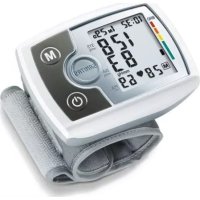
SBM 03 - Blood pressure monitor SANITAS - Free user manual and instructions
Find the device manual for free SBM 03 SANITAS in PDF.


| Product type | Wrist blood pressure monitor, non-invasive oscillometric |
| Brand | Sanitas |
| Model | SBM 03 |
| Dimensions (L x W x H) | 84 x 62 x 30 mm |
| Weight | Approx. 112 g (without batteries) |
| Power supply | 2 AAA 1.5 V batteries (alkaline recommended) |
| Measurement range - Pressure | Cuff: 0-300 mmHg, systolic: 60-260 mmHg, diastolic: 40-199 mmHg |
| Measurement range - Pulse | 40-180 beats/min |
| Accuracy | Systolic ±3 mmHg, diastolic ±3 mmHg, pulse ±5% |
| Memory | 60 memory slots with date and time |
| Main functions | Blood pressure measurement, arrhythmia detection, WHO classification, automatic shut-off |
| Cuff size | 14.0 to 19.5 cm wrist circumference |
| Display | LCD with date, time, blood pressure, pulse, battery symbol, arrhythmia, WHO class |
| Operating conditions | +5°C to +40°C, humidity ≤90% |
| Storage conditions | -20°C to +55°C, humidity ≤95% |
| Battery life | Approx. 180 measurements depending on pressure and inflation |
| Care and cleaning | Clean with a slightly damp cloth, without solvent or immersion |
| Safety | Type BF equipment, IPX0, compliant with CE 93/42/EEC |
| Spare parts and repairability | Use only original cuff, repairs by authorized service center |
| General information | Do not use on newborns, pregnancy with medical advice, not for pre-eclampsia patients |
Frequently Asked Questions - SBM 03 SANITAS
User questions about SBM 03 SANITAS
0 question about this device. Answer the ones you know or ask your own.
Ask a new question about this device
Download the instructions for your Blood pressure monitor in PDF format for free! Find your manual SBM 03 - SANITAS and take your electronic device back in hand. On this page are published all the documents necessary for the use of your device. SBM 03 by SANITAS.
USER MANUAL SBM 03 SANITAS
Please read these instructions for use carefully and keep them for later use, be sure to make them accessible to other users and observe the information they contain.
1. Getting to know your instrument
The wrist blood pressure monitor is used for non-invasive measurement and monitoring of adults' arterial blood pressure.
You can use it to measure your blood pressure quickly and easily, storing the results and displaying the progression of readings. A warning is issued for anyone suffering from cardiac arrhythmia.
The values determined are classified and graphically evaluated according to WHO guidelines.
Keep these instructions carefully for further use and also let other users have access to them.
2. Important information

Signs and symbols
The following symbols are used in these instructions for use, on the packaging and on the type plate for the device and accessories:
| Caution |
| Note Note on important information |
| Follow instructions for use |
| Type BF applied part |
| Direct current |
| Disposal in accordance with EC Direc- tive – WEEE (Waste Electrical and Elec- tronic Equipment). |
| Manufacturer |
| Permissible storage temperature and humidity |
| Operating 5°C 40°C RH ≤90% | Permissible operating temperature and humidity |
| J | Keep dry |
| SN Serial | number |
| CE 0483 | The CE labelling certifies that the product complies with the essential requirements of Directive 93/42/EEC on medical products. |

Advice on use
- In order to ensure comparable values, always measure your blood pressure at the same time of day.
Before every measurement, relax for about five minutes. - If you want to perform several measurements on the same person, wait five minutes between each measurement.
- Do not take a measurement within 30 minutes after eating, drinking, smoking or exercising.
-
Repeat the measurement if you are unsure of the measured value.
-
The measurements taken by you are for your information only - they are not a substitute for a medical examination! Discuss the measurements with your doctor, and never base any medical decisions on them (e.g. medicines and their administration)!
- Do not use the blood pressure monitor on newborns or patients with preeclampsia. We recommend consulting a doctor before using the blood pressure monitor during pregnancy.
- In the case of restricted circulation on the arm as a result of chronic or acute vascular diseases (including vascular constriction), the accuracy of the wrist measurement is limited. In this case you should avoid using an upper arm blood pressure monitor.
- Cardiovascular diseases may lead to incorrect measurements or have a detrimental effect on measurement accuracy. The same also applies to very low blood pressure, diabetes, circulatory disorders and arrhythmias as well as chills or shaking.
- The blood pressure monitor must not be used in connection with a high-frequency surgical unit.
- Only use the unit on people who have the specified wrist measurement for the device.
- Please note that when inflating, the functions of the limb in question may be impaired.
- During the blood pressure measurement, blood circulation must not be stopped for an unnecessarily long
time. If the device malfunctions, remove the cuff from the arm.
- Do not allow sustained pressure in the cuff or frequent measurements. The resulting restriction of the blood flow may cause injury.
- Ensure that the cuff is not placed on an arm in which the arteries or veins are undergoing medical treatment, e.g. intravascular access or therapy, or an arteriovenous (AV) shunt.
- Do not use the cuff on people who have undergone a mastectomy.
- Do not place the cuff over wounds as this may cause further injury.
- The blood pressure monitor can only be operated with batteries.
- To conserve the batteries, the monitor switches off automatically if no buttons are pressed for one minute.
- The device is only intended for the purpose described in these instructions for use. The manufacturer is not liable for damage resulting from improper or careless use.
Storage and Care
-
The blood pressure monitor is made up of precision electronic components. Accuracy of readings and the instrument's service life depend on careful hand ling.
-
You should protect the device from impact, moisture, dirt, major temperature fluctuations and direct exposure to the sun's rays.
- Never drop the device.
- Do not use near strong electromagnetic fields, i.e. keep it away from any radio systems and mobile phones.
- Only ever use the cuffs provided with the monitor or original replacement cuffs. Otherwise erroneous results will be recorded.
Do not press any buttons until the cuff is in position. - If the instrument is not used for any length of time, we recommend removing the batteries.
Advice on batteries
- Batteries can be fatal if swallowed. You should therefore store the batteries and products where they are inaccessible to small children. If a battery has been swallowed, call a doctor immediately.
- Batteries should not be charged or reactivated with any other means, nor should they be taken apart, thrown in the fire or short-circuited.
-
Remove the batteries from the instrument if they are worn out or if you are not going to use the instrument for any length of time. This prevents any damage as a result of leakage. Always replace all the batteries at the same time.
-
Never use different types of battery, battery brands or batteries with different capacities. You should preferably use alkaline batteries.
Repair and disposal
- Batteries do not belong in domestic refuse. Used batteries should be disposed of at the collection points provided.
- Never open the instrument. If these instructions are not heeded, the warranty will be null and void.
- Never attempt to repair the instrument or adjust it yourself. We can no longer guarantee perfect functioning if you do.
- Repairs may only be performed by Customer Service or authorized dealers. However, always check the batteries and replace them if necessary prior to making any complaint.
The appliance should be disposed of accord ding to Regulation-WEEE (Waste Electrical and Electronic Equipment). In case of queries, please contact the municipal authorities responsible for waste disposal in your area.
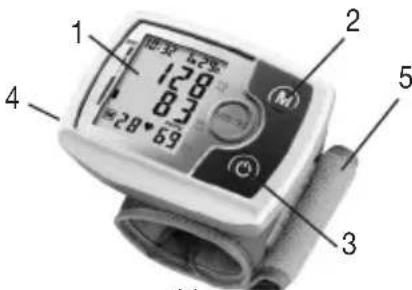
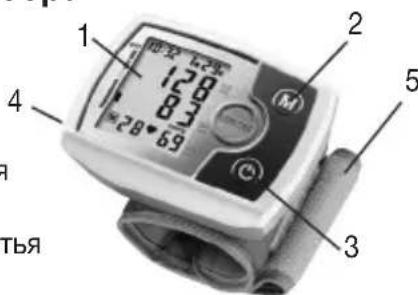
3. Unit description
- Display
- Memory button M
- START/STOP
- Battery cover
- Wrist cuff
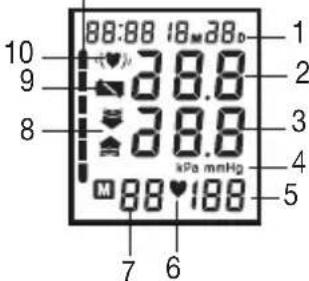
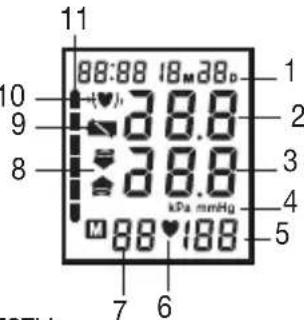
Icons in the display:
- Time and date
- Systolic pressure
- Diastolic pressure
- mmHg unit
- Measured pulse
- Pulse icon
- Number of memory space
- Inflate/deflate arrow
- Change battery icon
10.Cardiac arrhythmia icon - WHO classification
4. Prepare measurement Inserting battery
- Remove the battery cover (left side of the unit).
- Insert two 1.5 V micro batteries (alkaline, type LR 03). Make absolutely sure that you insert the batteries with
11
the correct polarity as marked. Do not use rechargeable batteries.
- Replace the battery cover carefully.
If the change battery icon is displayed, measurement is no longer possible and you must replace all the batteries.
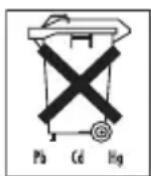
Used batteries do not belong in the household waste. You are legally obliged to dispose of the batteries. Dis- pose of them via your specialist electrical supplier or local collect ting point for recyclable waste.
Note: You will find these markings on batteries containing harmful substances: Pb = battery containing lead, Cd = battery containing cadmium, Hg = battery containing mercury.
Setting date and time
It is vital to set date and time. Only in this way is it possible to save and subsequently retrieve your measured values with the right date and time.
Time is shown in 24 hour format.
Note: If you hold down M, you can set the values faster.
- Press and M simultaneously. The month starts flashing. Using the M button, set the month 1 to 12 and confirm with
- Set the day, hour and minute and confirm in each case with .
5. Measuring blood pressure
Positioning cuff
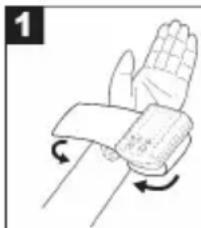
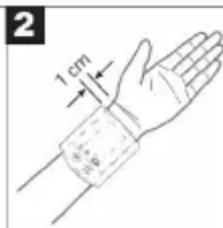
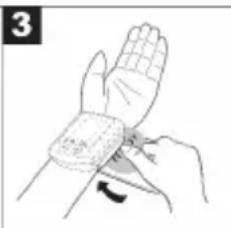
- Bare your left wrist, making sure that the circulation in the arm is not restricted by any clothes etc. that are too tight. Position the cuff on the inside of your wrist.
- Fasten the cuff with the Velcro fastening so that the upper edge of the monitor is positioned approx. 1 cm below the ball of your thumb.
- The cuff has to be fitted tightly around the wrist but should not constrict it.
Important: The instrument should only be operated with the original cuff.
Correct posture
- Rest for approx. 5 minutes before each measurement. Otherwise there may be divergences.
- You can perform the measurement while sitting or lying. To carry out a blood pressure measurement, make sure you are sitting comfortably with your arms and back leaning on something. Do not cross your legs.
Place your feet flat on the ground. Make sure to rest your arm and move it. Always make sure that the cuff is at heart level. Otherwise significant deviations can occur. Relax your arm and the palm of your hand.
- In order not to distort the result, it is important to keep still during the measurement and not talk.
Measuring blood pressure
- Switch on the blood pressure monitor with the button.
- Before the measurement, the last saved test result is briefly displayed. If there is no measurement in the memory, the instrument always displays the value
- The cuff automatically inflates. Cuff air pressure is released slowly. If a tendency towards high blood pressure is already detectable, the cuff is pumped up again and cuff pressure increased further. As soon as a heart rate is detected, the heart rate symbol is displayed.
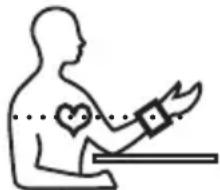
- Heart rate, systolic and diastolic blood pressure are displayed.
- You can interrupt measurement at any time by pressing the button.
- Erappears if it has not been possible to perform the measurement properly. Observe the section in these instructions on error messages/troubleshooting and repeat the measurement.
- The test result is saved automatically.
Evaluating results
Cardiac arrhythmia:
This instrument can identify possible cardiac arrhythmia disorders during measurement and if necessary indicates the measurement with the flashing icon (♥),
This may be an indicator for arrhythmia. Arrhythmia is a condition where the heart rhythm is abnormal as a result of defects in the bioelectrical system controlling the heart beat. The symptoms (omitted or premature heart beats, slow or excessively fast heart rate) may be caused, among other things, by heart disease, age, physical predisposition, excessive use of stimulants, stress or lack of sleep. Arrhythmia can only be ascertained through examination by your doctor.
Repeat the measurement if the flashing icon (心) displayed after the measurement. Please note that you should rest for 5 minutes between measurements and
not talk or move during the measurement. If the icon (心) appears often, please contact your doctor. Any self-diagnosis and treatment based on the test results may be dangerous. It is vital to follow your doctor's instructions.
WHO classification:
In accordance with the guidelines/definitions of the World Health Organization and the latest findings, the
measurements can be classified and assessed according to the following table. However, these standard values serve only as a general guideline, as the individual blood pressure varies in different people and different age groups etc. It is important to consult your doctor regularly for advice. Your doctor will tell you your individual values for normal blood pressure as well as the value above which your blood pressure is classified as dangerous.
| Range of blood pressure values | Systolic (in mmHg) D | astolic (in mmHg) Measure |
| Grade 3: Severe hypertension ≥180 | ≥110 Seek medical advice | |
| Grade 2: Moderate hypertension 160-179100-109Seek medical advice | ||
| Grade 1: Mild hypertension 140-15990-99Have it checked regularly by doctor | ||
| High-normal 130-13985-89Have it checked regularly by doctor | ||
| Normal 120-12980-84Check it yourself | ||
| Optimal <120 <80 | Check it yourself |
Source: WHO, 1999
According to WHO Guidelines/Definitions and the latest findings, the test results can be classified and evaluated according to the following chart.
The bar graph in the display and the scale on the unit indicate the range of the blood pressure which has been recorded. An acoustic evaluation of your measurement also follows.
If the values for systolic and diastolic pressure are in two different WHO ranges (e.g. systolic in the high-normal range and diastolic pressure in the normal range) the graphic WHO classification on the unit indicates the higher range (high-normal in the example described).
6. Saving, retrieving and deleting results
- The results of each successful measurement are stored together with date and time. With more than 60 items of measured data, the earliest items of data measured are lost.
- In order to retrieve measurement results again, press the memory button M. The instrument first displays the number of memory spaces occupied and then automatically switches to the last saved test result. If you continue pressing the memory button M, the last results in each case are measured and displayed with date, time and graphic WHO classification.
- You can clear the memory by holding down the memory button M for 3 seconds.
7. Error messages/troubleshooting
In case of faults, the Ermessage appears in the display. Error messages may appear if:
- systolic or diastolic pressure could not be measured (Erdi appears on the display),
- systolic or diastolic pressure was outside the measurement range (Hior Lappears on the display),
- the cuff is fastened too tightly or loosely (EeB Er4 appears on the display),
-
the pump pressure is higher than 300mmHg (Er5 appears on the display),
-
pumping up takes longer than 160 seconds (ErB appears on the display),
- there is a system or device error (ErA ErO Er7 ErB appears on the display),
the batteries are almost empty
In the above cases, you must repeat the measurement. Reinsert the batteries if necessary, or else replace them.
Technical alarm - description
Should the recorded blood pressure (systolic or diastolic) lie outside the limits specified in the section "Technical specifications", the technical alarm will appear on the display indicating either H_1 or L_1 such cases, you should seek medical assistance and check the accuracy of your procedure.
The limit values for the technical alarm are factory set and cannot be adjusted or deactivated. These alarm limit values are accorded second priority under the standard IEC 60601-1-8.
The technical alarm is a non-locking alarm and must not be reset. The signal shown on the display will disappear automatically after about 8 seconds.
8. Cleaning and Care
- Clean your blood pressure monitor carefully using a slightly damp cloth only.
-
Do not use any detergents or solvents.
-
Never hold the instrument under water as otherwise liquid can penetrate and damage the instrument.
-
Never place any heavy objects on the instrument.
-
Technical details
Model no. SBM 03
| Measurement method | Oscillometric, non-invasive blood pressure measurement on the wrist |
| Measurement range | Cuff pressure 0 – 300 mmHg, systolic 60–260 mmHg, diastolic 40–199 mmHg, Pulse 40 – 180 beats/minute |
| Display accuracy | systolic ± 3 mmHg, diastolic ± 3 mmHg, pulse ± 5 % of the value shown |
| Measurement inaccuracy | Max. permissible standard deviation according to clinical testing: systolic 8 mmHg /diastolic 8 mmHg |
| Memory | 60 memory spaces |
| Dimensions | L 84 mm x W 62 mm x H 30 mm |
| Weight | Approx. 112 g (without batteries) |
| Cuff size | 14.0 to 19.5 cm |
| Permissible operating conditions | +5 °C to +40 °C, ≤ 90 % relative air humidity (non-condensing) |
| Permissible storage conditions | -20°C to +55°C, ≤95% relative air humidity, 800 – 1050 hPa ambient pressure |
| Power supply | 2x1,5V — — AAA batteries |
| Battery life | For approx. 180 measurements, depending on the blood pressure level and/or pump pressure |
| Accessories | Instruction for use, 2 x 1.5 V AAA batteries, storage box |
| Classification | Internal supply, IPX0, no AP or APG, continuous operation, type BF applied part |
Technical information is subject to change without notification to allow for updates.
-
This unit is in line with European Standard EN 60601-1-2 and is subject to particular precautions with regard to electromagnetic compatibility (EMC). Please note that portable and mobile HF communication systems may interfere with this unit. More details can be requested from the stated Customer Service address or found at the end of the instructions for use.
-
This device is in line with the EU Medical Devices Directive 93/42/EC, the "Medizinproduktegesetz" (German Medical Devices Act) and the standards EN 1060-1 (non-invasive sphygmomanometers, Part 1: General requirements), EN 1060-3 (non-invasive sphygmomanometers, Part3: Supplementary requirements for electro-mechanical blood pressure measuring systems) and IEC 80601-2-30 (Medical electrical equipment - Part 2-30: Particular requirements for the safety and essential performance of automated non-invasive blood pressure monitors).
- The accuracy of this blood pressure monitor has been carefully checked and developed with regard to a long useful life. If using the device for commercial medical purposes, it must be regularly tested for accuracy by appropriate means. Precise instructions for checking accuracy may be requested from the service address.
FRANÇAIS
BHHMaTeIbHO npOHTe DaHHyIO nHCTpyKcHIO NO 3KcPnPyTaUIN, COxpaHNTe ee N O3HaKoMbTe C HeN I DpyRnx NOIb3OBaTeJeN.
2. Baxhble yka3aHn

IoRcHnK CmBoJAm
B INHCTpykunno npimHeHIO,Ha ynaKOBKe n Ha TnIOBOI TabJIuKpe np6opa n npHaJnxHocTe nCNoJb3yIOTc CJeDyUOUIe CmMBoJI:
Yka3aHnB OTHoUeHn 6aTapeek
- IporlaTbIbAHne 6aTapeek MoKet npNBOuNTb K OnacHocTN DnJ Xn3HN. Po3Tomy XpaHInTe 6aTapeiKn nI3deJIINB HeIOCTyHOM dJaTee MeCte. B Cnyae IporlaTbIbAHn 6aTapeiKn He3aMeDInTeNbHO o6paTNTecb K BpaCy.
3anpeaaetc3apkaTb nnn peaktnBnpoBaTb 6atapeKn INhIMN CnOCo6aMn, pa3bnpaTb nx, 6pocatB B OROH NIN 3amblKaTb HaKOpOTko. - BbItaIte 6aTapeKn n3 annapaTa, ecn OHn pa3pJxHe bI eCn Bbl dInTeBHOe BpeM He noJIb3yeTeCb np6Opom. TaKIM o6pa3OM Bbl npedOTbpaUaeTe yIep6, KOTOpBIM MOKeT 6bITb Bbl3BaH BblNBUMcra 3JIeKTPoJNTom. Bcerda 3aMeHnTe BCE 6aTapeKn ODHOBpeMeHHO.
He nCnoJb3yIte 6aTapeKn pa3JIuHbIX TINOB, MapOK nIIn 6aTapeKn C pa3JIuHcH oMkoCTbIO. IpeMMyIeCTBeHHO nC nOJIb3yIte ⅢeIoUHbIe 6aTapeKn.

Yka3aHnno pemOHTy uynlnnaun
- BaTapeeKn 3aIpeucaTe CbIbpaCbIBaTb B 6bITOBOMycOp. YTNIN3NpyTe NcIOJb3OBAHHbIe 6TaapeeKnYepe3 COOTBeTCTByUoMn NyHKT c6opa OTxOoB.
He otKpbBaIte npnbop. HecobJIOJeHne BeTe K noTepe rapaHTnN.
3anpeaaetcamaocToaTeIbHo pemOHnpoBaTb nIpeylnpoBaTb np6Op.B 3om clyuae 60JIbe He rapaHTnpyetc 6ezynpeuHocTb pa60Tbl. - PemOH pa3peWaeTcBbINOJIHrTb TOLbKO cepBc-Ho cIyX6eΦnPMbl Nn ABTOpN3IpOBaHHbIM cepBcHbIM OpraHn3aunM. Ho nepeJ IIObIM peKJaMaunM BhaJane npOBepTe 6aTaapeuKn n, npn Heo6xOUMOCTn,3aMeHInTe nx.
- Ytun3npyTe np6op corlacho Tpe6oBaHnA M Полoxhenя obytun3aunn 3JIeKtpnueckoro n ЗлкрнHorO obopydoBaHn - WEEE (Waste

Electrical and Electronic Equipment). Пов BCem Bonpo-cam по утллзаци образаuntecь в COOTBETCTBYIO-ую KOMMyHaJIbHyI O cnyx6y.
3.Опсане пибopa
- Ducnnnei
- KhoNka BBOda B nAMrTb M
- Khonka
- Kpbiuka oTceka dna 6aTaapeek
5.MaHKeTa dIra 3aIacTbI
HnkaaHa dncnnee:
- Bpemn n daTa
2.Cnctolueeckoe daBneHne
3.ДиactoJInueckoeДавЛeHne - EunHnua n3mepenra: MM PT, CT.
5.ДиactoJIuYeCKoe daBJIeHne
6.ПИKTOrpMaM«Пиьc»
7.Homep yueken namrtn
8.ИЗмepeHHoe 3haueHne yactOTbI nyIbca
9.ПИKTOrpammaЗamEнbl6aTapeek
10.ПикTORpammaHapyшенyaPITMa cepdua - KlaaccnФикauя BO3
BbINOJIHHTb n3MepenHe KPOBHOrO daJIeHnA
BkHIOHTe annapaT hXkATnEM KHOJKN
- Ipeed n3MepenHem Ha KOPOTKoe Bpemn NOBnEeTc npocJeHm coxpaHeHHb pe3yIbTaT n3MepeHn. EcnB namrTH He coxpaHebl n3MepeHn, np6Op noka3bIBaET BeHnHy 0.
MaHKeTa HakaunBaetc aBtOMaTnueckn. 3aTeM daBJIeHne BO3dyxa B MaHXeTe MeJHeHNO CTpaBnBaetc. Ipn yke pacno3HaHHo TeHdeHcN K BbICOKOMy KPOBHyOMy daBLeHIO pOn3BODITcR NOBTOpHOe HaKaunBaHne N daBJIeHne B MaHXeTe eIe pa3 NOBbIaETcR. KaK Toblko pacno3HaETcR nylbc, NoBnEeTcR NIKTo-rgpMa
- ПокаьВаяютca pe3yЛьТаТы ИЗМереня СИСТОЛУЕCKORO И ДИАСТОЛУЕСКОго КрOBЯногу Давлиеля ИчACTOTы пььс.
BbIMoKTe BJIIOBOMOmeHT npeBaTb N3MepeHHe HaxKaTnEM KHOKN
-ПИКТOrpammaErcnoBnIeTcra,ecnH3MpeHne He MoXkET 6bITb BbINOJIHeHO DoJNXhIM O6pa3OM.PpoHTnte rnaBy «Coo6uEHHaO HeNCnpaBHOCTx/YcTaP aHHeHne HEnCnpaBHOCTeB» B DaHHoN IHCTpyKcnn I NOBTOpuTe N3MepeHne.
- Pe3yIbTaT n3MepeHnA bTOMaTuYeCKn COxpaHReTCB nAmrTu.
OueHka pe3yIbTaTOB
HapyeHn cepdeHoro pntMa:
DaHbI annapaT MoKET BO BpeMn3MepeHnNDeHTnΦuPoBaT Bo3MOxHbIe HApUWeHnCepdEHorO UKNla I B NOo6Hom CJIyae yKa3bIbAeT Ha 3TO NIKTo-rgpAMMoI (♥).
3TO MOKET Cnykntb HnDnKaTOPOM apNTMN. ApNTMn - 3TO 3a6oJIeBAHne, pN KOToPOM cepdeHbI pNTM hapywaetc n3-3a NopOKOB B 6no3JIeKtpueckO cnCTeme, KOTOPa ynpabJrEeCepDeHbIMCOKpaSeHnA MmCmTOMbl (pOnyUeHHbIe IIN npExKeBpeMeHHbIe cepdeHbIe COKpaSeHnA, MeIeHHbI INN cInuKOM 6bICTpbI INybc)MOrY Bbl3bIBaTcR, CpeIN npOeyero, 3a6oJIeBAHNrMn cepdua, Bo3pactOM, fN3IOLOrueckO npedpacNoLOXeHHOCtBu, Ype3MEpHbIM yN0Tpe6JIeHnEM TOHN3NPuyUxN IN BO36yKdaIOxN IpOdyKTOB, CTpeccOM INN HeoocbIaHnEM. ApNTMn MOKET 6bITb OShapyKeHa ToNbKO pN ObcJeIOBaHn BpaOH.
IOBTOPHe n3MepHne, ecn nnKTOrpaMMa 10B-
JnreTcHa dncJIee nocJe n3MepeHn. YHTte, yTO
peed n3MepeHnEM Bbl DoJXHbI 5 MmHyT OTdoxHyTb,
a BO Bpemn n3MepeHn He doJXHbI rObOpTb N DBnRatbcra.Ecn nnKTorpaMMa 10BnIeTcYacTo,
6bpatntecb K bpaU. CamoJnaHocTnKa n camOJe-
Hne Ha OCHOBAHN pe3yIbTaTob N3MepeHn MOYr 6bITb onachbIM. 06a3aTeIbHO BblONHnTe yKa3aHnBpaua.
KlaaccnФнkaua BO3:
Corlacho DnpeKTHBaM/NoJoxKeHnM BcemnpHoi opraHn3aun 3npaBOoXpaHeHn (BO3) n HOBeuHm NccJeDIOBaHnM pe3yIbTaTb I3MepeHn MOxHO KJIaccnΦNtUPOBaTb N OceHnBaTb B COOTBETCTBn CO CNeDyIOuee Ta6nuei.
6paTte BnMaHne, YTO 3TO yCpeHHeHbIe 3Haehn I CnyKaT TOJbKO dI np6Bn3ntelbHorO opueHTnpoBaHn, TAK KaK INDINuYaNbHbIe 3HaueHnApTePnAIBHO DaBJeHn MOyT BapbNPOBaTcBcR B 3aBNCIMOCtN OT npHaJNeXHoCTN K ToI INI INHOB Bo3pactHOrpynn, a TaKKe DpyrNX INHNBNUdAylbHbIX Oco6EHocTei.
Baxho peryIaRHO KOHCyIbTnPOBaTbcra C BpaOm.Bpa OnpeDenr Baun nHdNvDyAaNbHbIe 3NaueHnHaOpMaNb-Horo apTePnaIbHoro daBJIeHn, a TaKxE 3NaueHn, KOTOpbIe MOryt 6bIT bIaBac onaChbIM.
6. CoxpaHeHne, Bbl3OB u ydaJIeHne pe3yIbTaTOB n3MepeHn
- Pe3yIbTaTb KaKdOrO yCneUHOro n3MepeHn coXpaHЯIOTcB namrBmecTe C daToi N BpEmeHem. Ppi 6oJee Yem 60 pe3yIbTaTax cambl cTapbl pe3yIbTaT ydaJIaReTcR.
-ДЯВьИЗОВаpe3yЛБТAOBи3МepeHnHaXmITe KHOKNY BBOaB nAmrTbM.PnI6Op BHaJaNe yKa3blBaET YNCJIO 3aHrTBIX JaeeK nAmrTn, a 3aTeM aBTOMaTHueCKn NepExOJNT K NOcJIeHNemy COxpaEHNHomy pe3yЛБТaTy Ni3MepeHn. PnДaJIbHeuNX HaxaTnx KHOKNBBOA B nAmrTb M NOKa3bBAIoTcR NOcJIeHNpe3yЛБТaTbI N3MepeHn C DaToN, BpeMeHem I rpaΦnueCKm IpeDCTabHeHnEM KlaaccnФkaCmN BO3.
Bb mokeTe ctepeTb namrTb, haxab KhoNky BBOda M u ydepXnBae ee 3 ceKyHdbI.
7. Coo6eHnO HeNCpPaBHOCTaX/ UcTpaHHe HeNCpPaBHOCTeI
Pn HncnpaBHOCTx Ha nCnIe NOBbIeTc coo6Hne Er. Coo6uEHnO oOnbKaX noBbIOTc, ecnn
He ydaIOcb n3MePntb CnCTOJIuYeCKoe nn dnaCTOJIuYeCKoe daBneHne (Ha dinCnIee NoRbIaTeTcra Haanbc Er 1nn E);2
3HaueHnI3MepeHnCnCTOnuYeCKOTo NnDnactOnuYeCKoTO DaBHeHn He BXoT B Dnana3OH n3MepeHn (Ha nCnlee NoBbIeTcnaHnNcBnN)
MaHKeTa 3aTAYTa CnNtKOM Cna6o NnCnIeKOM Tyro (Ha nCnlee NoBbIeTcra HaNNCb En)Er4
BO BpemHaKaUHnBaO3DyXa DaBJIeHHe IpeBblCnIO 300 MM pT. CT. (Ha DCNnee NOBJIeTCa HApINCbEr5);
- HakaunBaHne dInTc8 6olee 160 c (Ha nCnIee noBJIaETc8 HaNnCb Er6);
- npoun30wn c6oB B pa6ote cnCTembl nn npun6opa (Ha nucnnee noaBnEe Tc Hnncb ErA Eer7 Er-B);
- 6aTapeiKnNoTu npa3pJKeHbI
B 3tix cIyayx IOBTOPeTe I3MepeHne.
Pn Heo6xOaMOCtN, 3aHOBO yCTaHOBNTe 6aTapeKIN 3aMeHInTe CTapbIe.
CnHnTpeBOr npHecO6JIoDeHmTexHnuecknx daHHbIX -Onncahne
Ecnnn3MepeHHoe 3NaueHne apTeepnaIbHoro daBJeHn (CnCTOJIuHeCKoR OIN dNactOJIuHeCKoR) HaxODITc3a npedeJAMn rpaHnU, yka3aHNbIX B pa3deJe «TexHueCKne DaHHBe», Ha DCnIee OTo6pa3NTcR cInHan TpeBOrN, IMeIOUIM BnD COo6UeHnR H INn Ld 3TOM Cnyae CNeJyET o6paNTbcR K Bpau NIN pOBepntb npabunbHOCT b POnceDypbl n3MepeHnR.
IpaHnHyIbe 3HaueHnIcHnIa TpeBOrn yCTaHOBHebl Ha npEeInpNtIN-n3rOToBnTeIe n He MOrY TbITb N3MeHeHb IIN DeaKTHBnPoBaHb. CorlaCHO cTaHdapTy
IEC-60601-1-8,3TN 3NaHeHnO6NaJaOT Hn3Km npOpuTeTOM.
CnHaT TpeBOrn npH Heco6IIODeHm TeXnuecknx DaHbIX He Tpe6yeT c6pOca n OTKIOUaETc CaMOCToTeNbHO. OTo6paXaEMbI Ha dncNlee CnHaI NcYe3aet aBTOMaTuueCKn npImepHo Uepe3 8 ceKyHd.
8. Yxod 3a annapatom
- Pn OunCTke np60paIy I3MepeHna apTeepNaHbHO DaJIeHnI DeIcTByIte OCTOpOxHO INCNoB3yIte TOnbKO Cnerka BlaXHyIO caFetKy.
- Kateropnueckn 3aInpaetcN cnoJb3OBaTb NCTA Une CpeDCTBa uN paCTBOpNTeN.
Kateropnueckn 3anpeaetcnaorpykaTb annapat B BOy, T. K. B annapaT MoKeT nONaCTb XnDkoCTb INOBpeNTb erO.
He cTabbTe Ha npnbop TjXkeIbe IpeDMeTbI.
9. TexHnueckne daHHbIe
MoeBb Nc SBM 03
MeToI n3MepenHnOcuiIINpyuOuH,HeiHbA3NBHOe n3MepHne apTePnaJIbHOro daBLeHnI 3aIaCTbI
CoΦmHrep uTpacc 218,
89077-YM, TepMaHnA n
ΦπμMbXaHcДиHcJIaRe JTTd
88524 YTTeHbaiJnep, TepMaHnA
Фирma-ИМнортep: OOOБОИPEP,109451r.MockBa, yI.IpepeBa62,Kopn.2,oФис3
CepBnchbI ueHtp: 109451 r. MockBa, yI. IpeepBa 62, Kopn. 2
Tei(paKc) 495-658 54 90
bts-service@ctdz.ru
Даразпобожи_
Iopnnncb npoabua
LUtamn mara3uHa
Poiinncb nokyntela
Electromagnetic Compatibility Information
Table 1 For all ME EQUIPMENT and ME SYSTEMS
| Guidance and manufacture's declaration - electromagnetic emissions | ||
| The SBM 03 is intended for use in the electromagnetic environment specified below.The customer or the user of the SBM 03 should assure that it is used in such an environment. | ||
| Emissions test | Compliance | Electromagnetic environment - guidance |
| RF emissions CISPR 11 | Group 1 | The SBM 03 uses RF energy only for its internal function. Therefore, its RF emissions are very low and are not likely to cause any interference in nearby electronic equipment. |
| RF emissions CISPR 11 Class B The SBM 03 is suitable for use | in all establishments other than domestic and those directly connected to the public low-voltage power supply network that supplies buildings used for domestic purposes. | |
| Harmonic emissions IEC 61000-3-2 Not applicable | ||
| Voltage fluctuations/flicker emissions IEC 61000-3-3 | Notapplicable | |
Table 2 For all ME EQUIPMENT and ME SYSTEMS
| Guidance and manufacturer's declaration - electromagnetic immunity | |||
| The SBM 03 is intended for use in the electromagnetic environment specified below. The customer or the user of the SBM 03 should assure that it is used in such an environment. | |||
| IMMUNITY test | IEC 60601 test level | Compliance level | Electromagnetic environment - guidance |
| Electrostatic discharge (ESD) IEC 61000-4-2 | ±6 kV contact ±8 kV air | ±6 kV contact ±8 kV air | Floors should be wood, concrete or ceramic tile. If floors are covered with synthetic material, the relative humidity should be at least 30%. |
| Power frequency (50/60 Hz) magnetic field IEC 61000-4-8 | 3 A/m 3 A/m | Power frequency magnetic fields should be at levels characteristic of a typical location in a typical commercial or hospital environment. | |
| NOTE: UT is the a.c. mains voltage prior to application of the test level. | |||
Table 3 For ME EQUIPMENT and ME SYSTEMS that are not LIFE-SUPPORTING
| Guidance and manufacturer's declaration - electromagnetic immunity | |||
| The SBM 03 is intended for use in the electromagnetic environment specified below. The customer or the user of the SBM 03 should assure that it is used in such an environment. | |||
| IMMUNITY test | IEC 60601 test level | Compliance level | Electromagnetic environment - guidance |
| Conducted RF IEC 61000-4-6 Radiated RF IEC 61000-4-3 | 3Vrms150 kHz to 80 MHz3V/m80 MHz to 2,5 GHz | Not applicable3V/m | Portable and mobile RF communications equipment should be used no closer to any part of the SBM 03, including cables, than the recommended separation distance calculated from the equation applicable to the frequency of the transmitter.Recommended separation distance:d=1,2√P80 MHz to 800 MHzd=2,3√P800 MHz to 2,5 GHzWhere P is the maximum output power rating of the transmitter in watts (W) according to the transmitter manufacturer and d is the recommended separation distance in meters (m).Field strengths from fixed RF transmitters, as determined by an electromagnetic site survey,a should be less than the compliance level in each frequency range.bInterference may occur in the vicinity of equipment marked with the following symbol: |
| NOTE 1 At 80 MHz and 800 MHz, the higher frequency range applies.NOTE 2 These guidelines may not apply in all situations. Electromagnetic propagation is affected by absorption and reflection from structures, objects and people. | |||
| aField strengths from fixed transmitters, such as base stations for radio (cellular/cordless) telephones and land mobile radios, amateur radio, AM and FM radio broadcast and TV broadcast cannot be predicted theoretically with accuracy. To assess the electromagnetic environment due to fixed RF transmitters, an electromagnetic site survey should be considered. If the measured field strength in the location in which the SBM 03 is used exceeds the applicable RF compliance level above, the SBM 03 should be observed to verify normal operation. If abnormal performance is observed, additional measures may be necessary, such as re-orienting or relocating the SBM 03.bOver the frequency range 150 kHz to 80 MHz, field strengths should be less than 3 V/m. | |||
Table 4 For ME EQUIPMENT and ME SYSTEMS that are not LIFE-SUPPORTING
| Recommended separation distances between portable and mobile RF communications equipment and the SBM 03 | |||
| The SBM 03 is intended for use in an electromagnetic environment in which radiated RF disturbances are controlled. The customer or the user of the SBM 03 can help prevent electromagnetic interference by maintaining a minimum distance between portable and mobile RF communications equipment (transmitters) and the SBM 03 as recommended below, according to the maximum output power of the communications equipment. | |||
| Rated maximum output power of transmitter(W) | Separation distance according to frequency of transmitter(m) | ||
| 150 kHz to 80 MHzNotapplicable | 80 MHz to 800 MHzd=1,2√P | 800 MHz to 2,5 GHzd=2,3√P | |
| 0,01-0,120,23 | |||
| 0,1-0,380,73 | |||
| 1-1,22,3 | |||
| 10-3,87,3 | |||
| 100-1223 | |||
| For transmitters rated at a maximum output power not listed above, the recommended separation distance d in meters (m) can be determined using the equation applicable to the frequency of the transmitter, where P is the maximum output power rating of the transmitter in watts (W) according to the transmitter manufacturer.NOTE 1 At 80 MHz and 800 MHz, the separation distance for the higher frequency range applies.NOTE 2 These guidelines may not apply in all situations. Electromagnetic propagation is affected by absorption and reflection from structures, objects and people. | |||

- Getting to know your instrument
- Important information
- Signs and symbols
- Advice on use
- Storage and Care
- Advice on batteries
- Repair and disposal
- Unit description
- Icons in the display:
- Prepare measurement Inserting battery
- Setting date and time
- Measuring blood pressure
- Positioning cuff
- Correct posture
- Measuring blood pressure
- Evaluating results
- Cardiac arrhythmia:
- WHO classification:
- Saving, retrieving and deleting results
- Error messages/troubleshooting
- Technical alarm - description
- Cleaning and Care
- FRANÇAIS
- Baxhble yka3aHn
- IoRcHnK CmBoJAm
- Yka3aHnB OTHoUeHn 6aTapeek
- Yka3aHnno pemOHTy uynlnnaun
- 3.Опсане пибopa
- HnkaaHa dncnnee:
- BbINOJIHHTb n3MepenHe KPOBHOrO daJIeHnA
- OueHka pe3yIbTaTOB
- HapyeHn cepdeHoro pntMa:
- KlaaccnФнkaua BO3:
- CoxpaHeHne, Bbl3OB u ydaJIeHne pe3yIbTaTOB n3MepeHn
- Coo6eHnO HeNCpPaBHOCTaX/ UcTpaHHe HeNCpPaBHOCTeI
- CnHnTpeBOr npHecO6JIoDeHmTexHnuecknx daHHbIX -Onncahne
- Yxod 3a annapatom
- TexHnueckne daHHbIe
- Electromagnetic Compatibility Information
Brand : SANITAS
Model : SBM 03
Category : Blood pressure monitor