SBC 55 - Blood pressure monitor SANITAS - Free user manual and instructions
Find the device manual for free SBC 55 SANITAS in PDF.



| Product type | Wrist blood pressure monitor |
| Brand | Sanitas |
| Model | SBC 55 |
| Measurement method | Oscillometric, non-invasive |
| Measurement range (pressure) | 0 – 300 mmHg |
| Measurement range (pulse) | 40 – 180 pulses/min |
| Accuracy (pressure) | ±3 mmHg |
| Accuracy (pulse) | ±5 % of displayed value |
| Memory | 60 measurements with date and time |
| Special functions | Arrhythmia detection, WHO classification, voice function (3 languages), automatic shut-off |
| Cuff size | For wrist circumference 140 to 195 mm |
| Dimensions | 82 × 77 × 31 mm |
| Weight | approx. 140 g |
| Power supply | 2 AAA 1.5 V batteries (LR03) |
| Battery life | approx. 250 measurements |
| Display | Digital: systolic/diastolic pressure, pulse, date, time, WHO classification |
| Settings | Date/time, voice volume, language (German, English, Spanish) |
| Operating conditions | Temperature: 5 to 40 °C, relative humidity: 40 to 80 % |
| Storage conditions | Temperature: -20 to 55 °C, relative humidity: 10 to 95 % |
| Maintenance | Clean with a slightly damp soft cloth; do not use solvents, do not immerse |
| Safety | Applied part type B, CE compliance (EN60601-1-2, EN1060-1/3) |
| Batteries | Use alkaline batteries; remove if not used for extended period |
| Included accessories | Storage case, instruction manual, 2 AAA batteries |
Frequently Asked Questions - SBC 55 SANITAS
User questions about SBC 55 SANITAS
0 question about this device. Answer the ones you know or ask your own.
Ask a new question about this device
Download the instructions for your Blood pressure monitor in PDF format for free! Find your manual SBC 55 - SANITAS and take your electronic device back in hand. On this page are published all the documents necessary for the use of your device. SBC 55 by SANITAS.
USER MANUAL SBC 55 SANITAS
Speaking blood pressure monitor 11-18
F Mode d'emploi
Tensiometre parlant 19-27
Ipn6op IJIa U3MepeHna daBneHnA
Ha 3aTnCTbe 37-48
Serviceadresse:

Hans Dinslage GmbH, Riedlinger Straße 28
88524 Uittenweiler, GERMANY
Please read these instructions for use carefully and keep them for later use, be sure to make them accessible to other users and observe the information they contain.
1. Getting to know your instrument
The wrist blood pressure monitor is used for non-invasive measurement and monitoring of adults' arterial blood pressure.
You can use it to measure your blood pressure quickly and easily, storing the results and displaying the progression of readings. A warning is issued for anyone suffering from cardiac arrhythmia.
The values determined are classified and graphically evaluated according to WHO guidelines.
The device also has an acoustic voice output.
2. Important information

Advice on use
- Always measure your blood pressure at the same time of day, in order to ensure that values are comparable.
-
Relax for approx. 5 minutes before each measurement.
-
You should wait five minutes before measuring a second time.
The readings that you take may only be used for information purposes - they are not a substitute for a medical examination! Discuss your results with the doctor. Never use them to make medical decisions independently (e.g. regarding medication and dosage thereof).
If circulation on one arm is restricted as a result of chronic or acute vascular disease (including vasoconstriction), the precision of any wrist measurement is impaired. In this case, use a blood pressure monitor for the upper arm. - There may be incorrect measurements where there is cardiocirculatory disease, as well as with very low blood pressure, circulatory disorders, dysrhythmia and other preexisting diseases.
- Only use the instrument on persons whose wrist has the right circumference for the instrument.
-
You may only operate the blood pressure monitor with batteries. Note that it is only possible to save data when your blood pressure monitor is receiving power. As soon as the batteries are dead, the date and time on the blood pressure monitor are lost. Any measurement results that have been stored are however retained.
-
The automatic switch-off function switches off the blood pressure monitor in order to preserve the batteries, if no button is pressed within one minute.
Storage and Care
- The blood pressure monitor is made up of precision electronic components. Accuracy of readings and the instrument's service life depend on careful handling.
- You should protect the device from impact, moisture, dirt, major temperature fluctuations and direct exposure to the sun's rays.
- Never drop the device.
- Do not use near strong electromagnetic fields, i.e. keep it away from any radio systems and mobile phones.
- Only ever use the cuffs provided with the monitor or original replacement cuffs. Otherwise erroneous results will be recorded.
- Do not press any buttons until the cuff is in position.
- If the instrument is not used for any length of time, we recommend removing the batteries.
Advice on batteries
-
Batteries can be fatal if swallowed. You should therefore store the batteries and products where they are inaccessible to small children. If a battery has been swallowed, call a doctor immediately.
-
Batteries should not be charged or reactivated with any other means, nor should they be taken apart, thrown in the fire or short-circuited.
- Removethe batteries from the instrument if they are worn out or if you are not going to use the instrument for any length of time. This prevents any damage as a result of leakage. Always replace all the batteries at the same time.
- Neveruse different types of battery, battery brands or batteries with different capacities. You should preferably use alkaline batteries.
Repair and disposal
- Batteries do not belong in domestic refuse. Used batteries should be disposed of at the collection points provided.
- Never open the instrument. If these instructions are not heeded, the warranty will be null and void.
- Never attempt to repair the instrument or adjust it yourself. We can no longer guarantee perfect functioning if you do.
- Repairs may only be performed by Customer Service or authorized dealers. However, always check the batteries and replace them if necessary prior to making any complaint.
- The appliance should be disposed of according to Regulation 2002/96/EC-WEEE (Waste Electrical and Electronic Equipment). In case

of queries, please contact the municipal authorities responsible for waste disposal in your area.
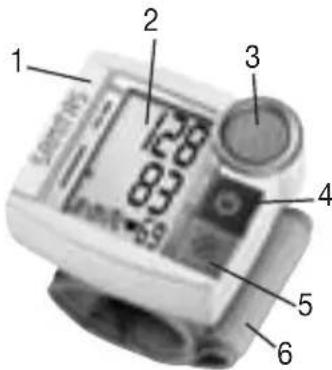
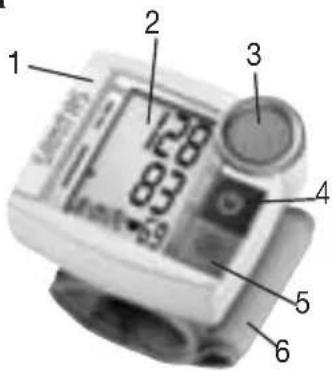
3. Unit description
- Battery cover
- Display
- Loudspeaker
- START/STOP button
- Memory button M
- Wrist cuff
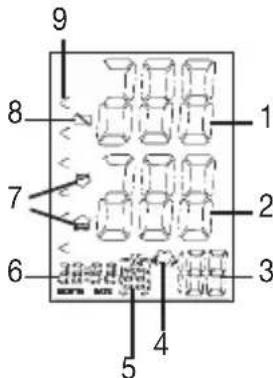
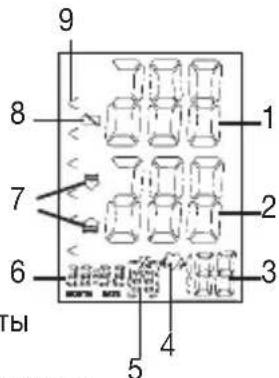
Icons in the display:
- Systolic pressure
- Diastolic pressure
- Pulse rate
- Pulse icon / Cardiac arrhythmia icon
- Number of memory space
- Time and date
- Inflate/deflate arrow
- ,Change battery' icon
- WHO classification
4. Prepare measurement
Inserting battery
- Remove the battery cover (left side of the unit).
- Insert two 1.5 V micro batteries (alkaline, type LR 03). Make absolutely sure that you insert the batteries with the correct polarity as marked. Do not use rechargeable batteries.
- Replace the battery cover carefully.
If the, change battery' icon is displayed, measurement is no longer possible and you must replace all the batteries.
Once batteries have been removed from the device, the time must be reset. Any measurement results that have been stored are however retained.
Note: You will find these markings on batteries containing harmful substances: Pb = battery containing lead, Cd = battery containing cadmium, Hg = battery containing mercury.

Setting date and time
It is vital to set date and time. Only in this way is it possible to save and subsequently retrieve your measured values with the right date and time. Time is shown in 24 hour format.
Note: If you hold down ,M^ , you can set the values faster.
- Press ,O^ and ,M^ simultaneously. The year starts flashing. Set the year with ,M^ and confirm with, O^ .
- Set the month, day, hour and minute and confirm in each case with .
Voice function
You can set the voice function in the switched off state. The device offers 3 languages (English, German, Spanish). The device is set to German on delivery. To change the language selection, press and hold down the ,M' button until the desired language appears in the display.
L1-German
L2-English
L3-Spanish
L0-Language off
The device changes the language automatically if you keep the, M^ button pressed. You are informed of the language acoustically each time it changes. Release the, M^ button to confirm your desired language.
Volume adjustment: After selection of the language, the bar graph of the WHO classification in the left part of the display flashes and displays the current volume. You can change the volume by pressing and holding
down the ,M^ button - the higher the bar rises, the louder the acoustic output.
Press the, M^ button again to confirm the selected volume and to switch off.
5. Measuring blood pressure
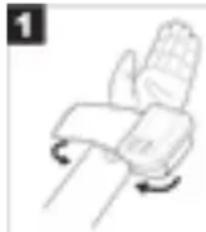
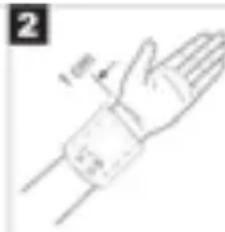
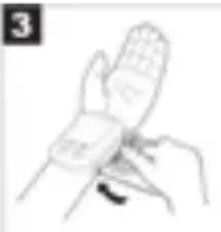
Positioning cuff
- Bare your left wrist, making sure that the circulation in the arm is not restricted by any clothes etc. that are too tight. Position the cuff on the inside of your wrist.
- Fasten the cuff with the Velcro fastening so that the upper edge of the monitor is positioned approx. 1 cm below the ball of your thumb.
- The cuff has to be fitted tightly around the wristbut should not constrict it.
Important: The instrument should only be operated with the original cuff.
Correct posture
- Rest for approx. 5 minutes before each measurement. Otherwise there may be divergences.
- You can perform the measurement either sitting or lying down. It is
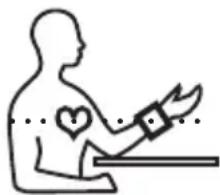
essential to support your arm and have it at an angle. Always make sure that the cuff is level with your heart. Otherwise there may be serious divergences. Relax your arm and the palms of your hands.
- In order not to distort the result, it is important to keep still during the measurement and not talk.
Measuring blood pressure
- Switch on the blood pressure monitor with the button.
- Before the measurement, the last saved test result is briefly displayed. If there is no measurement in the memory, the instrument always displays the value 0^ .
- The cuff is pumped up to 180mmHg . Cuff air pressure is released slowly.
If a tendency towards high blood pressure is already detectable, the cuff is pumped up again and cuff pressure increased further. As soon as a heart rate is detected, the heart rate symbol is displayed.
-
Heart rate, systolic and diastolic blood pressure are displayed.
-
You can interrupt measurement at any time by pressing the O^ button.
- Er_- appears if it has not been possible to perform the measurement properly. Observe the section in these instructions on error messages/troubleshooting and repeat the measurement.
- The test result is saved automatically.
Evaluating results
Cardiac arrhythmia:
This instrument can identify possible cardiac arrhythmia disorders during measurement and if necessary indicates the measurement with the flashing icon (♥) This may be an indicator for arrhythmia. Arrhythmia is a condition where the heart rhythm is abnormal as a result of defects in the bioelectrical system controlling the heart beat. The symptoms (omitted or premature heart beats, slow or excessively fast heart rate) may be caused, among other things, by heart disease, age, physical predisposition, excessive use of stimulants, stress or lack of sleep. Arrhythmia can only be ascertained through examination by your doctor.
Repeat the measurement if the flashing icon (心)_1 is displayed after the measurement. Please note that you should rest for 5 minutes between measurements and not talk or move during the measurement. If the icon (心)_1 appears often, please contact your doctor. Any
self-diagnosis and treatment based on the test results may be dangerous. It is vital to follow your doctor's instructions.
WHO classification:
According to WHO Guidelines/Definitions and the latest findings, the test results can be classified and evaluated according to the following chart:
| Range of blood pressure values Systolic (in mmHg) | Diastolic (in mmHg) | Measure |
| Grade 3: Severe hypertension >=180 | >=110 Seek medical advice | |
| Grade 2: Moderate hypertension 160 -179 100 -109 | Seek medical advice | |
| Grade 1: Mild hypertension 140 -159 | 90 - 99 Have it checked regularly by doctor | |
| High-normal 130 -139 | 85 - 89 Have it checked regularly by doctor | |
| Normal 120 -129 | 80 - 84 Check it yourself | |
| Optimal <120 <80 Check it yourself |
Source: WHO, 1999
The bar graph in the display and the scale on the unit indicate the range of the blood pressure which has been recorded. An acoustic evaluation of your measurement also follows.
If the values for systolic and diastolic pressure are in two different WHO ranges (e.g. systolic in the high-normal range and diastolic pressure in the normal range) the graphic WHO classification on the unit indicates the higher range (high-normal in the example described).
6. Saving, retrieving and deleting results
- The results of each successful measurement are stored together with date and time. With more than 60 items of measured data, the earliest items of data measured are lost.
- In order to retrieve measurement results again, press the memory button, M^ . The instrument first displays the number of memory spaces occupied and then automatically switches to the last saved test result. If you continue pressing the memory button, M^ , the last results in each case are measured are
displayed with date, time and graphic WHO classification.
- You can clear the memory by holding down the memory button, M' for 3 seconds.
7. Error messages/troubleshooting
In case of faults, the Er_' message appears in the display.
Error messages can occur when
- inflation takes longer than 3 minutes (Er6 appears in the display),
- the cuff is too tight or too loose (Er3 or Er4 appears in the display),
- the blood-pressure values are unusually high or low (Er1 or Er2 appears in the display),
the inflation pressure is higher than 300mmHg (Er5 appears in the display),
- there is a system or device error (Er0, Er7, Er8, Er9, ErA or ErB appears in the display)
- the batteries are almost flat; the batteries must be replaced.
In the above cases, you must repeat the measurement. Make sure that the cuff tube is properly inserted and that you do not move or talk.
Re-insert the batteries if necessary, or else replace them.
8. Cleaning and Care
- Clean your blood pressure computer carefully using only a slightly moistened cloth.
- Donot use any detergents or solvents.
- Never hold the instrument under water as otherwise liquid can penetrate and damage the instrument.
- Never place any heavy objects on the instrument.
9. Technical details
Model no. SBC 55
Measurement Oscillating, non-invasive blood
method: pressure measurement on the wrist
Measurement range
Pressure 0-300 mmHg, heart rate 40-180 beats/minute
Precision of Systolic
± 3mmHg / m
pressure reading
diastolic ± 3mmHg
pulse ± 5% of displayed value
Measurement Max. admissible standard
uncertainty deviation according to clinical
examination: systolic 8 mmHg / diastolic 8 mmHg
Memory 1x
60 storable data lines
Dimensions L 82
X W 77 X H 31 mm
Weight Approx. 140 g
Cuff size For a wrist circumference of
approx. 140 to 195mm
Admissible operating +5^ to +40^ , 40-80%
temperature relative humidity
Admissible -20°C to +55°C, 10-95%
storage temperature relative humidity
Power supply 2 × 1.5 ~V Micro
(Alkaline Type LR 03)
Battery life For
250 measurements
Accessories Storage box, instructions for
use, 2 x AAA batteries
Classification Application part
type B
Explanation of Application part type B
symbols Caution! Read the Instructions
for Use.


-
This unit is in line with European Standard EN60601-1-2 and is subject to particular precautions with regard to electromagnetic compatibility (EMC). Please note that portable and mobile HF communication systems may interfere with this instrument. For more details, please contact customer service at the address indicated.
-
The instrument is in line with the EU Medical Products Directive 93/42/EC, the German medical products act and European standards EN1060-1 (non-invasive blood pressure monitors, Part 1: general requirements) and EN1060-3 (non-invasive blood pressure monitors, Part 3: Supplementary Requirements for Electromechanical Blood Pressure Measurement Systems).
-
If you are using the instrument for commercial or economic purposes, you must check measurement precision regularly in accordance with the Operators' Ordinance on Medical Products'. Even in the case of private use, we recommend checking measurement precision every two years at the manufacturers.

Yka3aHnB B OTHoWeHn6aTaapeek
IporlaTbBaHne 6aTapeek MOKeT npBODntb K onacHOCTn dna JxN3HN. PO3OMy xpaHnte 6aTapeKn n3dJIIN B HeIOCTynHom dna DeTee MeCe. B Cnyae nporlaTbBaHn6aTapeKn He3aMeDInTeNbHO 6bpaNTecb K BpaCy.
3anpeaetc3apkaTb nIpeakTbBnpoBaTb 6atapeKn INbIMn CnocO6amn,pa3bnpaTb nx,6pocatb B OROH bnn 3AmkA Tb HaKOpOTko.
- BbItaunTe 6aTapeiKu n3 annapata, ecn OH npa3pXeHb I nn ecnn Bbl dInteIbHoe BpeM He noIb3yeTeCb npnbopom. TAKIM o6pa3OM Bbl npedOTBpaAaeTe yueep6, KOtOpbi MOxet 6bITb Bbl3BaH BblNBwIMc3JeKTPoNtOM. Bcerda 3aMeHnTe BCE 6aTapeiKn OndHObpemehno.
He nCnoB3yIe 6aTapeKn pa3nUHbIX TINOB, MapOK nIb 6aTapeKc c pa3nUHoi EMKocTbIO. PpenMyEcTeBENHO nC nOJb3yIe 7eJeNoCHbIe 6aTapeKn.
Uka3aHnnopeMOHTyuyTIN3aun
BaTapeKn 3aPeuaeTcBbIbpaCbIBaTb B 6bITOBMycop. YtJIN3NpyTe NcNoJIb3OBAHHbIe 6TaapeKnYepe3 COOTBeTCTByIOUm NyHKT c6opa OTXoDOb.
He otKpbBaIte npnbop. HecobJIOJeHne BeTe K noTepe rapaHTn.
3aPpeaaetcramoCTeTbHO pemOHnpOBaTBnn perynipOBaT np6Op. B 3OM cIyae 60JIwe He rapaHTnpyeTc 6eYnpueHocT paOtbl.
- Pemont pa3pewaeTcBbINOnHrToIbKO cepBnCHoI cnJx6e cnpMbI nn ABTOpN3uPObaHHbIM cepBnCHbIM opraHn3aqIaM. Ho nepei IIO6bIMn peKnaMaQyRMn BhaJaIe npOBepTe 6aTaapeKn, npn Heo6xoDnMOCTn,3amEnHTe nx.
- Ytun3nyte np6op corlacho Tpe6oBaHnM IonoJxHnO6 yTun3aunn 3neKtpueckoro n 3neKtpoHHOrO obopyoBaanr 2002/96/EC - WEEE ("Waste Electrical and Electronic Equipment"). NOb Cem BOpocam no yTun3aunn o6paauTecb B COOTBeTCTByIOUyIO KOMMyHaJIbHyIO cIyX6y.
3.Описане пибopa
1.Kpbioka oTecka dna 6batapeek
2.Диспел.
3.Грмкогорптелb
4. Khonka Start/Stop
5.Khonka BBOda B namATb M
6.MaHxeta 3aTb
HdkkaqnaHa dncnlee:
1.CntOnJIueckoe daBHeHne
2.Диactonuueckoe daBneHne
3. 3NaOH cepdueeHnH
4.ПИКТOrpMa Пульс /Hapyшен рNTma cepdua
5. Homep ayeKn namrtn
6. Bpemn daTa
7.ИЗмеренhoe 3haueHne yactOTbI nylbca
8. INKtorpamma 3aMeHbI 6aTapeek
9. KnaccnФикuaBO3
Cornacno DnpeKtBam/OppeJeHnB BcemnpHoi opraH3aun 3dpabooxpanHeN (BO3) n HOBeuMM NCCneOBAHnM pe3yNbTaTbI n3MepeHm MOXHO
KlaaccnphiunpoBaTb nOueHtB, KaK yKa3aHO B HIXeCneDyUoSe TabNue.
6. CoxpaHene, BbI3OB u ydaJIeHne pe3yJbTaTOB n3MepeHnA
- Pe3yIbTaTbKaKdIoro yCNeuHOro n3MepeHnA coXpaHIOITcB NpAMrN BMeCTe C DaToN IN BpeMeHem. Ppi 60nee Yem 60 pe3yIbTaTax cambi CTapbi pe3yIbTaT ydaJIaTeTc.
-ДЯ Bы3OBa pe3yNbTaTOB ИЗМерени HaXMMTe KнОКу BBOda B NaMЯТь „M". Ппбор BHAчаJe Yka3bIBAeT YNCSLO 3aHHTbIX YaYeK PnAMrTn, a 3aTeM AВТOMaTиЧЕСКИ NepExOДТК NOсLEДHEmY COxPahEHHomу pe3yNbTaTy ИЗМерени. ПрДалБншnx HaxatNk HONKn BBOda B NaMЯТь „M" NOka3bIBAOTcЯ NOcLeДHne pe3yNbTaTbI IN3Мерени C DaToR, BpeMeHem I rpaФИЧECKM INpeDCTaBNeHem KlnaccnФИKaUm BO3.
BbMOKeTe CTepeTb NAMrTb, HaxaB KHONky BBOda "M"u ydepKnBaer ee 3 cekyHdbI.
7. CoobseHnO HeNCpPaBHOCTaX/ YcTpaHHe HeNCpPaBHOCTe
Pn HncnpaBHOCTaX Ha dncnnee NOABnEeTcA coo6ueHne „Er_.
Co06ueHnO HeuCnpaBHOCTX MOrTy NORBIAITbCA, ECIN
- HakaunbaHne dInTCa 60Jee 3 MmHyT (Ha dncnnee noBnreTeR6),
MaHKeTa HaNoXeHa CInIeKOM CnIbHO nIN CnIeKOM cna6o (Ha dncnnee noBnEerTc Er3 nn Er4), - 3NaueHne apTepnAbHoro DaBHeHna Ype3BbUaHOBbICOKoe nIu Ype3BbUaHNO HN3Koe (Ha DnCJIeE noABJAErEr1 nIu Er2),
-Давленине Накачиваимпревыwaet 300 MM pT. CT.(Ha dincnnee noRBnEeTcR Er5), -
IMeETcH HeucnpaBHOCTb CnCTEmbl Nn np6opa (Ha dncnlee noaBnEeTcR Er0, Er7, Er8, Er9, ErA nn ErB)
-
6aTapeiKNIOHTI NOJIHOCTbIO pa3pJXeHbI, 6aTapeiKN Heo6xOdMnO 3aMeHHTb.
B 3tix cnyaix noBtopnte n3mepeHne. CneiTe 3a Tem, yTO6bl WJnAHr MaHXeTb 6bl npabNlbo BCTaBnEH yTO6bl BbI He DnurAinCb I He pa3roBapuBaII.
Pn Heo6xOJIMOCtN, 3aHOBO yCTaHOBNTe 6aTapeKu nn 3aMeHnte cTapble.
8. Yxod 3a annapatom
- Octopoxho ouuau Te annapat cnerka cmouehno Tpnnko.
Kateropueckn 3anpeaaetcnaonb3oBaTb uHCTaune cpeDCTBa nn pactBOpNTeIN.
Kateropnueckn 3anpeaaetcnaorpyxata annapat B BOy, T. K. B aannapat MOXET nonactb XndkocTb IN NOBpeINTb erO.
HE cTaBbTe Ha npu6op TjKeIbe IpeDMeTbI.
9. TexHnueckne daHHbIe
MoJIb N° SBC 55
MeToI n3MepenH HeINBa3nBHOe,
OCLUNLOMeTpnuCeckoe
I3MpeHne KPOBraHOrO DaBHeHn
Ha 3aIaCTbe
Диапазонизмерени
nybc 40-180 ydapOB B MmHyTu
ToHOCb INHINKauu CnCTOJInueeCKoe ± 3 MM pT. CT./
DaBHeHn DnactOJIuYeCKoe ± 3 MM pT. CT./
Nylbc ± 5% yka3bIbaemoro
3Nauchen
IorpeuHocb MaKc. dOnyCTnMoE cTaHapTHoe
N3MepeH NTOKIOHOHe COI NaCHO
KJIINHUYECKNIM NCbITaHnAM:
CnCTOJIuueckoe 8 MM pT. CT./
dnaactoJIHueCKoe 8 MM pT. CT.
1x60coxpaHReMbIXCTpOK
aHHbIX
Pa3Mepbl
82x77xB32MM
Bec Okono 140 r
Pa3Mep MaXkeTbI IJIa OKpyxHocn 3aIacTbI OT
140do 195 MM
DOn.pabocayoT +5^ 10+40°C,
OTHCNTeJIbHa
TempeaTpa BnaXHoCTb Bo3dyxa 40-80%
Don. TemnepaTpa oT-20°C do +55°C,
OTHOCHTeJIbHa
XpaHEnn
BlaXHOCTb BO3dyxa 10-95%
3neKtponntaHne
2x1,5B Micro
(Alkaline TUN LR 03)
Cpok cnky6bl 6aTapeek Dn250 n3mepenH
PnHaJNeJExKHOCTN
UexoIДЯхpaheHnA,
HNCpykUPI NO pIMMeHHeHIO,
TapeиKn,AAA
26a
KlaccnФикага.
AKTINBHyI y3eJ Tnna B
IORCHENCIMBOJIOB
AKTINBHyI y3eJ Tnna B
BHHMaHHe! IpOueCTb

HnCTpyKUIO no npmHeHNO!


- Getting to know your instrument
- Important information
- Advice on use
- Storage and Care
- Advice on batteries
- Repair and disposal
- Unit description
- Icons in the display:
- Prepare measurement
- Inserting battery
- Setting date and time
- Voice function
- Measuring blood pressure
- Positioning cuff
- Correct posture
- Measuring blood pressure
- Evaluating results
- Cardiac arrhythmia:
- WHO classification:
- Saving, retrieving and deleting results
- Error messages/troubleshooting
- Cleaning and Care
- Technical details
- Yka3aHnB B OTHoWeHn6aTaapeek
- Uka3aHnnopeMOHTyuyTIN3aun
- 3.Описане пибopa
- HdkkaqnaHa dncnlee:
- CoxpaHene, BbI3OB u ydaJIeHne pe3yJbTaTOB n3MepeHnA
- CoobseHnO HeNCpPaBHOCTaX/ YcTpaHHe HeNCpPaBHOCTe
- Yxod 3a annapatom
- TexHnueckne daHHbIe
Brand : SANITAS
Model : SBC 55
Category : Blood pressure monitor