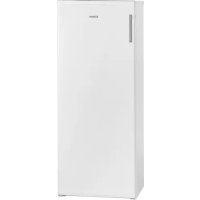
VS 3171 - Refrigerator BOMANN - Free user manual and instructions
Find the device manual for free VS 3171 BOMANN in PDF.

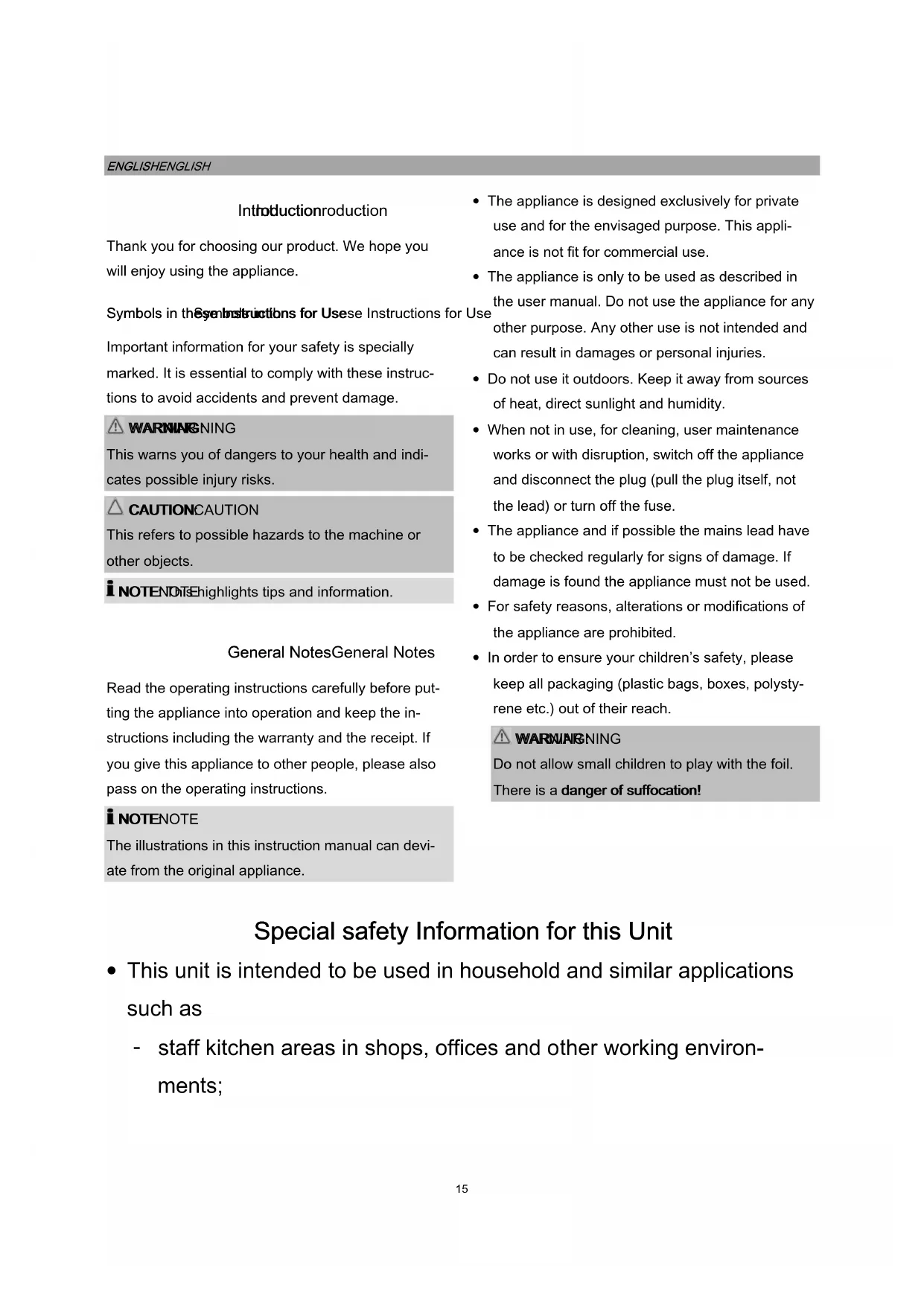


| Product type | Refrigerator |
| Brand | Bomann |
| Model | VS 3171 |
| Energy efficiency class | A++ |
| Annual energy consumption | 103 kWh/year |
| Total net capacity | 245 L |
| Supply voltage | 220-240 V ~ 50 Hz |
| Rated power | 75 W |
| Refrigerant | R600a (Isobutane) |
| Climate class | N/ST/T |
| Noise level | 40 dB(A) |
| Defrosting | Automatic |
| Interior lighting | Yes (replaceable bulb) |
| Number of glass shelves | 4 (height adjustable) |
| Number of door balconies | 4 (including 1 bottle holder) |
| Vegetable drawer | 1 with glass cover |
| Egg trays | 2 |
| Reversible door hinge | Possible |
| Adjustable feet | Yes (front) |
| Castors | Yes (rear) |
Frequently Asked Questions - VS 3171 BOMANN
User questions about VS 3171 BOMANN
0 question about this device. Answer the ones you know or ask your own.
Ask a new question about this device
Download the instructions for your Refrigerator in PDF format for free! Find your manual VS 3171 - BOMANN and take your electronic device back in hand. On this page are published all the documents necessary for the use of your device. VS 3171 by BOMANN.
USER MANUAL VS 3171 BOMANN
HAUSHALTSAUGDAIARUMKUHLSCHRANKBRAN713171
HOUSEHOLD@LLARDER/CHLADNICKA/KOELKAST/FRIGO
DEUTSCHDEUTSCH
Inhaltinhalt
Introduction. Page 15
General Notes. Page 15
Special safety Information for this Unit......Page 15
Transport and Packaging.. Page 17
Appliance Equipment.. Page 17
Installation. Page 17
Startup / Operation.. Page 19
Cleaning and Maintenance.. Page 21
Troubleshooting......Page 21
Technical Data.. Page 22
Disposal. Page 22
Product Data Sheet.. Page 23
CESKYCESKY
ObsahObsah
Uvod.. Page 24
Introduction. Page 43
Remarques generales.. Page 43
InstallationInstallation
Thank you for choosing our product. We hope you will enjoy using the appliance.
Symbols in the given instructions for Usese Instructions for Use
Important information for your safety is specially marked. It is essential to comply with these instructions to avoid accidents and prevent damage.
WARNING NING
This warns you of dangers to your health and indicates possible injury risks.
CAUTIONCAUTION
This refers to possible hazards to the machine or other objects.
NOTENDhighlights tips and information.
General Notes General Notes
Read the operating instructions carefully before putting the appliance into operation and keep the instructions including the warranty and the receipt. If you give this appliance to other people, please also pass on the operating instructions.
NOTENOTE
The illustrations in this instruction manual can deviate from the original appliance.
- The appliance is designed exclusively for private use and for the envisaged purpose. This appliance is not fit for commercial use.
- The appliance is only to be used as described in the user manual. Do not use the appliance for any other purpose. Any other use is not intended and can result in damages or personal injuries.
- Do not use it outdoors. Keep it away from sources of heat, direct sunlight and humidity.
- When not in use, for cleaning, user maintenance works or with disruption, switch off the appliance and disconnect the plug (pull the plug itself, not the lead) or turn off the fuse.
- The appliance and if possible the mains lead have to be checked regularly for signs of damage. If damage is found the appliance must not be used.
- For safety reasons, alterations or modifications of the appliance are prohibited.
- In order to ensure your children's safety, please keep all packaging (plastic bags, boxes, polystyrene etc.) out of their reach.
WARMINGING
Do not allow small children to play with the foil.
There is a danger of suffocation!
Special safety Information for this Unit
-
This unit is intended to be used in household and similar applications such as
-
staff kitchen areas in shops, offices and other working environments;
-
farm houses and by clients in hotels, motels and other residential type environments;
- bed and breakfast type environments;
- catering and similar non-retail applications.
WARNING:WARNING:
- Keep ventilation openings, in the appliance enclosure or in the built-in structure, clear of obstruction.
- Do not use mechanical devices or other means to accelerate the defrosting process (if necessary), except those described in this manual (depending on the model included the scope of delivery).
- Do not damage the refrigerant circuit.
- Do not operate any electrical devices inside the appliance.
-
Do not store explosive substances such as aerosol containers with flammable propellant in the appliance.
-
This appliance can be used by children aged from 8 years and above and persons with reduced physical, sensory or mental capabilities or lack of experience and knowledge if they have been given supervision or instruction concerning use of the apparatus. Appraise and understand the hazards involved.
ChildrenShirdraot play with the appliance. - Cleaning and user maintenance shall maintain the appearance by children in the areas they are older 8 years and supervised.
-
Do not try to repair the appliance on your own. Always contact an authorized technician. To avoid the exposure to danger, always have faulty cable be replaced only by the manufacturer, by our customer service or by qualified person and with a cable of the same type.
-
Use the provided collection points of electrical equipment for the disposal of the appliance.
CoolantCoolant

WARNING NING
The coolant circuit of this appliance contains the refrigerant Isobutane (R600a), a natural gas that is flammable and of high environmental compatibility. Make sure no parts of the coolant circuit get damaged during transport and installation of the appliance.
- In case of damage, do not put the appliance into operation. Contact your distributor.
CAUTION: Transport protection!
Pull off the foil from the appliance sides.
IOTENOTE
Production residue or dust may have collected on the appliance. We recommend cleaning the appliance according to chapter "Cleaning and Maintenance".
If the coolant circuit is damaged:If the coolant circuit is damaged:
- avoid any open flames or ignition source,
- disconnect the plug,
- thoroughly air the room in which the appliance is installed and
- contact an authorized technician.
Transport and包装和包装
Transport the applianceansport the appliance
Transport the appliance, if possible, only in vertical position. Otherwise, it is absolutely necessary to allow the appliance standing upright for a few hours before installation "Prior to first use". Protect the appliance during transport against weather influences.
I NOTENOTE
The appliance has castors which facilitate the transport and installation of the appliance. Tilt the appliance back slightly and move it gently.
Unpack the appliance Unpack the appliance
- Remove the appliance from its packaging.
- Remove all packaging material, such as foils, fillers and cardboard packaging.
- To prevent hazards, check the appliance for any transport damage.
Appliance Equipment
Appliance overview
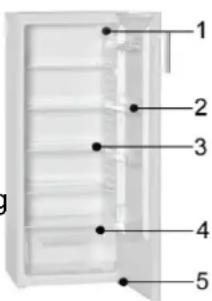
1 Temperature control / interior light
2 Door storage racks
3 Height-adjustable glass shelves
4 Vegetable box with glass cover
5 Adjustable feet at the front / castors at the rear
Delivery scope
4 x height-adjustable glass shelf, 1 x vegetable box with glass cover, 4 x door storage rack (incl. metal rod for bottle holder), 2 x egg tray, for assembling the door handle: door handle incl. fixing screws with covers, for reversing the door opening: dummy cap (A)
Installation
Conditions for the installation location
-
Good ventilation is required around the appliance, in order to dissipate the heat properly and to guarantee efficient cooling operation at low power consumption. Sufficient clearance is necessary.
-
Gap to the back and to the side walls each approx. 5 cm;
-
Place the appliance so that the appliance door can open without being impeded.
-
Only install at a location with an ambient temperature suitable for the climate class of the appliance. For information on the climate class, please refer to chapter "Technical Data" or to the rating label located in the interior or on the rear side of the appliance.
- Place the appliance on a steady and safe surface. If the appliance is not horizontally leveled, adjust the feet accordingly.
-
Avoid the installaion: Avoid the installation:
-
near heaters, next to a stove, direct sunlight or any other heat sources;
- at locations with high humidity (e.g. outdoors, bathroom), as metal parts would be susceptible to corrosion under such circumstances;
- near volatile or flammable materials (e.g. gas, fuel, alcohol, paint, etc.), in rooms which may have poor air circulation (e.g. garages).
- Do not expose the appliance any weather.
Assembling the door handleAssembling the door handle

Remove the cover caps from the door outer side and tighten the handle with the delivered screws into the underlying holes. Put the included screw covers on.
Electrical connectionElectrical connection

WARNING:WARNING:
- The installation to the mains supply must conform to the local standards and regulations.
- Improper connection may cause to an electromagnetic electric shockshock
- Do not modify the appliance plug. If the plug does not fit properly to the outlet, let install a proper outlet by an authorized specialist.

WARNING:WARNING:
- The accessibility of the power plug must be ensured to disconnect the appliance from the power supply in case of emergency.

CAUTIONCAUTION
In case of disconnection or power failure:
- Wait for approx. 5 minutes before restarting.
-
Check the operation settings.
-
Ensure that your mains power corresponds with the specifications of the appliance. The specifications are printed on the rating label.
- Connect the mains cable to a properly installed and earthed wall outlet.
- If the plug after installation is not accessible, a corresponding disconnect device must be available to meet the relevant safety regulations.
Reverse the door opening Reverse the door opening
If required, the door openings can be moved from the right (supplied condition) to the left side.

WARNING:WARNING:
When replacing the door stops, the appliance must be disconnected from the power supply. Always unplug the appliance first.

NOTENOTE
- When installing, ask another person to assist.
-
You possibly need: screw wrench, Phillips screwdriver as well as a thin-blade screwdriver.
-
Remove the cover caps on the top cover. Loosen the screws underneath and remove the top cover.
- Transfer the blind cap of the appliance cover at the opposite side.
- Dismount the upper door hinge. Open the appliance
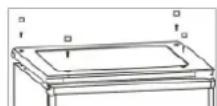
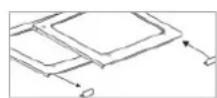
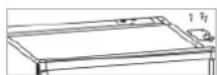
door a little and lift it out of the lower door hinge.
- Remove the dummy cap (B)
and insert supplied dummy
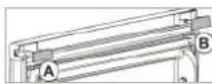
cap (A). Place the appliance door safely aside.
iNOTENOTE
Keep the dummy cap (B) for another possible door opening reverse.
- Tilt the appliance slightly backwards and block it in this position. Unscrew the feet.
Dismount the foot bracket and the lower door hinge.
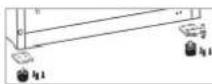
- Attach the door hinge at the other appliance side,
after you have unscrewed the hinge pin and used it from the
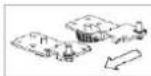
other hinge side. Transfer and fix the foot bracket too. Turn in the feet accordingly.
-
Replace the appliance upright. Put the appliance door on the hinge pin and fix it in its intended position.
-
Transfer the upper door hinge at the opposite side, after you have unscrewed the hinge pin and
used it from the other hinge side.
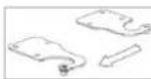
Put the hinge pin in the hole of
the appliance door and fasten the hinge.
-
Replace the appliance cover, which you have removed at the beginning. Tight the screws and clip the screw covers on.
-
Check if the door is aligned vertically and horizontally optimally so that the smooth opening and closing of the door is guaranteed.
-
Dismount the door handle and attach it to the corresponding other door outer side. Refer to the instructions in "Assembling the door handle". Transfer the cover caps on the exposed holes to the respective other door outer side.
Prior to first usePrior to first use
CAUTIONCAUTION
After transport, the appliance should be left standing upright for about 4 hours before connecting to the power supply. Nonobservance could lead to malfunction of the cooling system and causes an appliance breakdown.
Clean the appliance interior including all accessory parts. Consider the instructions which we provide in the chapter "Cleaning and Maintenance".
Starting the appliance Starting the appliance
- Connect the appliance to the power supply.
- Operate the temperature control. See also the following section "Settings".
SettingsSettings
Setting [0] means that the appliance is in the off state. Turn the temperature control clockwise, starting from this setting; the appliance will turn on automatically.
The power levels [1-7] regulates the different values of the internal temperature.
Setting 0SSettiggting 1SSettigg7 Setting 7Setting 7
Off state Lowest setting Highest setting
(warmest inside (coldest inside
temperature) temperature)
Note that the temperature will change depending on the ambient temperature, frequency of door opening and the amount of food in the appliance.
During initial operation, turn the temperature control to the highest setting first, until the appliance has reached the desired operating temperature. Afterwards it is recommended to turn the control back to a medium setting; correcting the temperature at a later point would then be easier.
Interior Light Interior light
When opening the appliance door, the interior light will turn on automatically.
Storing food Storing food
NOTE:Re65mmendation!Recommendation!
To guarantee that the temperature is low enough, you should pre-cool the appliance a few times before initial loading foods.
CAUTION:CAUTION:
Always pay attention to the storage instructions on the sales packaging.
Always store food covered or packed in order to prevent drying-out and transfer of odor or taste onto other food items. You may pack the food with e.g.
-
Polyethylene plastic bags or foil
-
Special plastic covers with elastic strip
-
Plastic bowl with lid
-
Aluminum foil
Recommendations Recommendations
- Store fresh packed items on the glass shelves, fresh fruits and vegetables in the vegetable box.
- Place bottles in the door storage rack.
-
By the air circulation different climate zones arises.
-
The coldest zone is located at the rear and the lower fridge part. Recommended for the storage of foods such as fish, sausages and meat.
-
The warmest zone is located at the door and the upper fridge part. Suitable for the storage of e.g. cheese and butter.
-
Let warm food cool down first.
Operating noiseOperating noise
| Type of soundToQeauSeQauiSe | |
| Mumbling Compressor during its operation | |
| Liquid sounds Circulation of the refrigerant | |
| Click sounds The temperature control turns the compressor on or off |
| Type of soundTQandUse | |
| Disturbing noises | Vibration of the shelves or cooling coils |
Switching off
To switch off the appliance turn the temperature control to the off state.
If the appliance is out of use for long periods:
- Remove the appliance content.
- Disconnect the appliance from the power supply.
- Thoroughly clean the appliance (see "Cleaning and Maintenance").
- Leave open the appliance door to prevent unpleasant odours.
Tips for Energy saving
- Disconnect the appliance from the power supply if the appliance is not in use.
- Do not install the appliance near stoves, heaters or other heat sources. In case of higher ambient temperatures, the compressor will run more frequently and longer.
- Ensure sufficient ventilation at the bottom and rear side. Never block ventilation openings.
- Allow warm dishes to cool down before putting into the appliance.
- Do not adjust the temperature colder than necessary.
- Do not open the door longer than necessary.
- The appliance should be defrosted regularly.
- The seal of the appliance door must be completely intact, so that the door closes properly.
WARNING:WARNING:
- Always switch off and disconnect the appliance from the power supply before cleaning and user maintenance.
- Do not use steam cleaners for cleaning the appliance; moisture could enter electrical components. Risk of electric shock!Rhts stealechukshdaklage the plastic parts.
- The appliance must be dry before restarting operation.
CAUTION:CAUTION:
- Do not use a wire brush or other sharp, abrasive items.
- Do not use any acidic or abrasive detergents.
- Do not damage the refrigerant circuit.
Cleaning the appliance Including InteriorCleaning the app
- Clean the appliance interior, the exterior surfaces, the accessories and the door seal regularly with warm water and mild detergent.
- Remove for that the appliance content and storage at a cool location.
- Clean the thaw water discharge channel / opening carefully e.g. with a pipe cleaner.
- After everything was thoroughly dried, you can restart the operation.
DefrostingDefrosting
The appliance has an automatic defrosting system. During defrosting water drops drains off at the back of the cooling chamber. The thaw water running through a channel, is collected in a drip tray located on the compressor, where it will evaporate.
Make sure the water discharge opening does not get clogged. A light formation of ice on the interior back during operation is normal.
Specification: 220SspCm240w, max. 15 W
- Loosen the screw of the lamp cover and remove the cover to the back.
- Replace the defective bulb.
- Reattach the lamp cover and tighten the screw.
- Reconnect the appliance and put into operation again.
Troubleshooting Troubleshooting
Before you contact an authorized specialist
| Problem | Cause / Action |
| Appliance is not working or not properly | - Insert the power plug correctly or check the fuse.- Check the temperature setting.- Check the ambient temperature.- Unblock the ventilation openings, install interior the appliance freely. |
| Stove food is too warm | - Check the temperature setting.- Open the door only as long as necessary.- Check the location. |
| Loud noise during operation | - Check the appliance position.- See the section “Operating noise”. |
| Water on the appliance bottom | - Check the temperature setting.- Clean the water discharge channel / opening. |
| Interior light is not working | - Insert the power plug correctly or check the fuse.- See the section “Reverse the bulb”. |
| Water on the outer surface. | On days of high humidity, condensation might occur on the outer surface of the appliance. No malfunction! |
NOTE:
If a problem still persists after following the steps above, contact your trader or an authorized technician.
Technical DataTechnical Data
Electrical connelEiortll conne
Mains voltage: 220-240 V~
Mains frequency: 50 Hz
Power consumption: 75 W
Dimension H x W x D / Weight.........Dimension H x W x D / Weight..........
Appliance size: 144.0 x 55.5 x 55.0 cm
Net weight: approx. 40.0kg
The right to make technical and design modifications in the course of continuous product development remains reserved.
DisposalDisposal
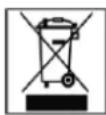
Meaning of the "Dustbin" SymbolMeaning of the "Dustbin" Symbol
Protect our environment; do not dispose of electrical equipment in the domestic waste.
Please return any electrical equipment that you will no longer use to the collection points provided for their disposal.
This helps avoid the potential effects of incorrect disposal on the environment and human health.
This will contribute to the recycling and other forms of reutilization of electrical and electronic equipment.
Information concerning where these can be disposed of can be obtained from your local authority.
WARNING:WARNING:
Remove or disable any existing snap and bolt locks, if you take the unit out of operation or dispose it.
| BrandBrand | BOMANNBOMANN |
| ModelModel | VS 3171VS 3171 |
| CategoryCategory | 1 |
| Energy Efficiency class2) | A++ |
| Annual Energy consumption3) kWh/a | 103 |
| Net capacity cooling total I | 245 |
| - thereof cold storage compartment I | - |
| - thereof wine storage compartment I | - |
| - thereof cellar compartment I | - |
| - thereof storage compartment for fresh-food I | 245 |
| Net capacity freezing total I | - |
| Star rating4) | - |
| Design temperature of other compartments | - |
| Coldest storage temperature of wine storage compartment | - |
| Frost-free | - |
| Temperature rise time h | - |
| Freezing capacity kg/24h | - |
| Climate class5) | N/ST/T |
| Noise emission dB(A) re1 pW | 40 |
| Built-in | - |
| Wine storage appliance | - |
1) Category: 1 = Refrigerator with one or more fresh-food storage compartments, 2 = Refrigerator-cellar, Cellar and Wine storage appliances, 3 = Refrigerator-chiller and Refrigerator with a 0-star compartment, 4 = Refrigerator with a one-star compartment, 5 = Refrigerator with a two-star compartment, 6 = Refrigerator with a three-star compartment, 7 = Refrigerator-freezer, 8 = Upright freezer, 9 = Chest freezer, 10 = Multi-use and other refrigerating appliances
2)A+++ (highest efficiency) to G (lowest efficiency)
3) Annual energy consumption ^ XYZ^ kWh per year based on standard test results for 24 h . Actual energy consumption will depend on how the appliance is used and where is located.
4) = compartment: a frozen-food storage compartment in which the temperature is not warmer than -6°C
** = compartment: a frozen-food storage compartment in which the temperature is not warmer than -12°C
*** = compartment: a frozen-food storage compartment in which the temperature is not warmer than -18°C
(***) = food freezer compartment in which the temperature is not warmer than -18°C and a min. freezing capacity in 24 h
5) Climate class SN: ambient temperature of +10^ up to +32^ Climate class N: ambient temperature of +16^ up to +32^ Climate class ST: ambient temperature of +16^ up to +38^ Climate class T: ambient temperature of +16^ up to +43^
This appliance has been tested according to all relevant current CE guidelines, such as electromagnetic compatibility and low voltage directives, and has been constructed in accordance with the latest safety regulations.
CESKYCESKY
UvodUvod
WAARSCHUWING:WAARSCHUWING:
WAARSCHUWING:WAARSCHUWING:
WAARSCHUWINGAIRISCHUW
WAARSCHUWING:WAARSCHUWING:
WAARSCHUWING:WAARSCHUWING:
WAARSCHUWING:WAARSCHUWING:
WAARSCHUWING:WAARSCHUWING:
WAARSCHUWING:WAARSCHUWING:
Dimensions H x I x P / PoidsDimensions.H.xJ.x.P./Poids.
Dimensions de l'appareil : .........144,0 x 55,5 x 55,0 cm
Poids net : .....................envviron 40 kg
- DEUTSCHDEUTSCH
- Inhaltinhalt
- CESKYCESKY
- ObsahObsah
- InstallationInstallation
- WARNING NING
- CAUTIONCAUTION
- General Notes General Notes
- NOTENOTE
- WARMINGING
- Special safety Information for this Unit
- WARNING:WARNING:
- CAUTION: Transport protection!
- IOTENOTE
- Transport and包装和包装
- Transport the applianceansport the appliance
- I NOTENOTE
- Unpack the appliance Unpack the appliance
- Appliance Equipment
- Appliance overview
- Adjustable feet at the front / castors at the rear
- Delivery scope
- Installation
- Conditions for the installation location
- iNOTENOTE
- SettingsSettings
- Interior Light Interior light
- Storing food Storing food
- NOTE:Re65mmendation!Recommendation!
- CAUTION:CAUTION:
- Recommendations Recommendations
- Operating noiseOperating noise
- Switching off
- To switch off the appliance turn the temperature control to the off state.
- Tips for Energy saving
- Cleaning the appliance Including InteriorCleaning the app
- DefrostingDefrosting
- Troubleshooting Troubleshooting
- Before you contact an authorized specialist
- NOTE:
- Technical DataTechnical Data
- DisposalDisposal
- UvodUvod
- WAARSCHUWINGAIRISCHUW
- WAARSCHUWING:WAARSCHUWING:
Brand : BOMANN
Model : VS 3171
Category : Refrigerator