PF85GWA - Fridge PROLINE - Free user manual and instructions
Find the device manual for free PF85GWA PROLINE in PDF.


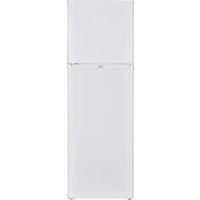
| Product Type | 48 cm Under-Counter Refrigerator |
| Brand | Proline |
| Model | PF85GWA |
| Total Gross Volume | 120 L |
| Total Net Volume | 92 L |
| Refrigerator Net Volume | 82 L |
| Freezer Net Volume | 10 L |
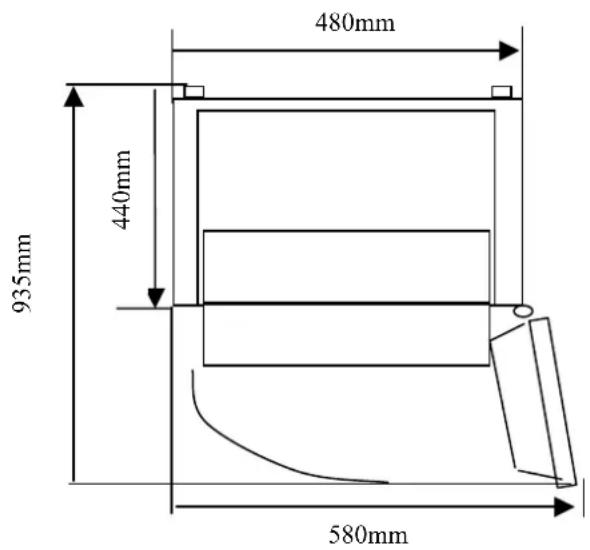
| Dimensions (W x D x H) | 480 x 500 x 840 mm |
| Weight | Approximately 28 kg |
| Power Supply | 220-240 V ~ 50 Hz |
| Climate Class | N (+16 °C to +32 °C) |
| Energy Class | A |
| Annual Consumption | 132 kWh/year |
| Refrigerant | R600a (26 g) |
| Noise Level | < 39 dB(A) |
| Thermostat | 6 positions (0 to 5), position 3 for normal use |
| Interior Light | 10 W bulb (E14 socket) |
| Defrost Type | Manual |
| Reversible Door | Yes (left/right) |
| Included Accessories | Glass shelves, vegetable bin, bottle bins, ice cube tray, defrost tray |
| Maintenance and Cleaning | Interior cleaning with warm water and baking soda; defrost when ice reaches 3-4 mm |
| Safety | Door lock unusable to prevent child entrapment; do not use sharp objects to defrost |
| Warranty | Household use only; any other use voids warranty |
Frequently Asked Questions - PF85GWA PROLINE
User questions about PF85GWA PROLINE
0 question about this device. Answer the ones you know or ask your own.
Ask a new question about this device
Download the instructions for your Fridge in PDF format for free! Find your manual PF85GWA - PROLINE and take your electronic device back in hand. On this page are published all the documents necessary for the use of your device. PF85GWA by PROLINE.
USER MANUAL PF85GWA PROLINE
PROLINE 48cm UNDER COUNTER FRIDGE INSTRUCTION MANUAL
MODEL No.: PF85GWA
Please read this instruction manual carefully before operation. Keep these instructions in a safe place for future reference
CONTENTS
Part Identification 1
Safety Information 2
Installation 2
Electrical Connection 3
Operating your refrigerator 4
Setting the Thermostat Control 4
Defrosting 4
Cleaning your refrigerator 5
Reversing the door 6
Maintenance 7
Trouble shooting 8
Do's and Don'ts 10
Technical data 11
Helpline 12
Disclaimer 12

PARTS AND FEATURES
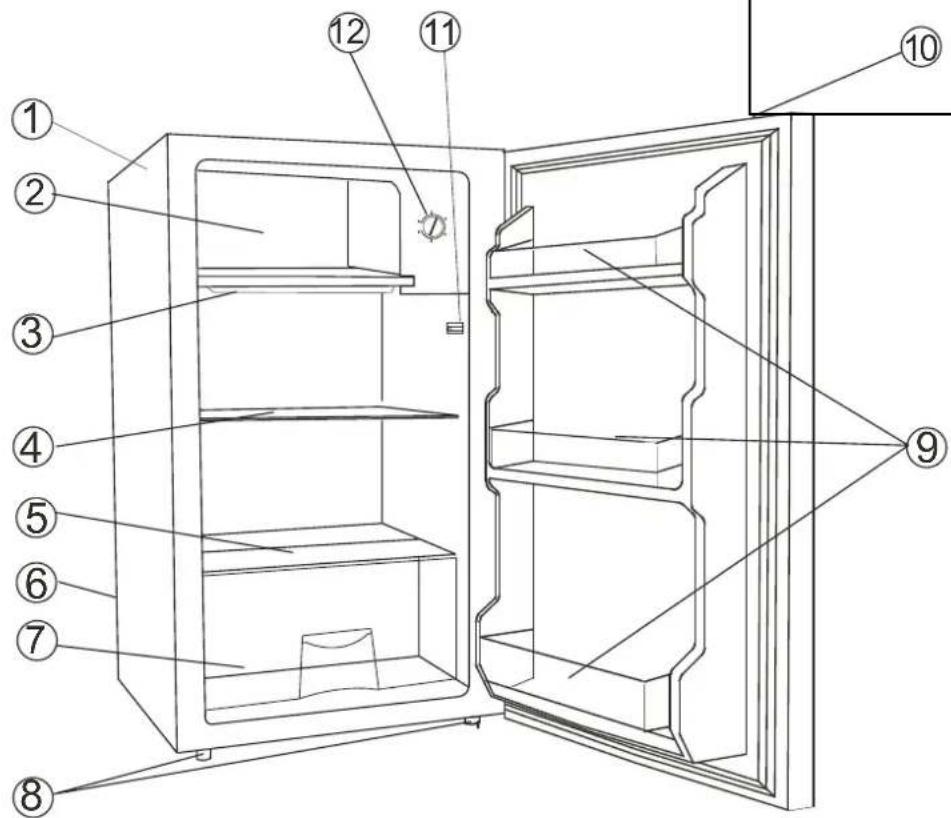
① Cabinet
② Freezer Compartment Door
③ Drip Tray
④ Shelves
⑤ Glass cover
⑥ Compressor(back)
⑦ Crisper box
⑧ Leveling Legs
Bottle Racks
10 Recessed Handle
⑪ Door switch
12 Temperature Control Knob
Dear Customer:
Thank you for buying a Proline Refrigerator. To ensure that you from your new refrigerator, please take time to read through the this manual.
Please ensure that the packing material is disposed of in accordance with environmental requirements.
Safety information
This information is provided in the interest of your safety. Please carefully before carrying out the installation or use of the refriger
get the best resultssimple instructions in
ce with the current
read the following
If you are discarding an old freezer or refrigerator/chiller with a lock/catch fitted. Ensure that it is left in a safe condition with the lock/catch broken to prevent the entrapment of children.
Old refrigerator equipment may contain CFC's that will damage the ozone layer. When disposing of any refrigerator equipment please contact your local waste disposal department for advise on safe disposal.
This refrigerator must be only used for its intended purpose.
If the power cable requires replacement, this must only be undertaken by a suitably qualified person, as special purpose tools are required.
WARNING: This appliance is intended for domestic use only, any other use may invalidate the warranty and might be dangerous. If you are disposing of an old appliance with a lock or latch fitted, ensure it is left in a safe condition with the lock or catch broken or disabled to avoid the entrapment of children when playing.
INSTALLATION: Position the refrigerator and allow to stand for two or three hours before it is turned on for the first time to allow the system to settle. Do not position next to any heatsource e.g. cooker, boiler or in direct sunlight etc.
A clearance of 10cm must be left between the sides of the appliance and any adjacent cabinets or walls to allow for adequate air circulation. This refrigerator is not designed for a recessed installation ("building in")
Install on a good firm level surface, you can turn the front feet to stabilise any minor unevenness.
The refrigerator is heavy, carry the refrigerator by the casing not the door.
For purpose of safety all electrical repairs or maintenance must be carried out by a qualified electrician or service agent.
Warning the plug must be accessible after the refrigerator is in position
This appliance is for refrigerating food and making ice cubes.
If the supply cord is damaged, it must be replaced by the manufacturer or its service agent or a similarly qualified person in order to avoid an electrical hazard.
ELECTRICAL CONNECTION
For your safety please read the following information
Warning: This appliance must be earthed.
The appliance must be connected to a 220-240 volts 50 cycle AC supply by means of a three pin socket, suitably earthed and should be protected by a 13 amp fuse in the plug.
The appliance is supplied with a 13 amp 3 pin plug fitted with a 13 amp fuse. Should the fuse require replacement, it must be replaced with a fuse rated at 13 amp and approved to BS1362.
If the mains plug is unsuitable for the socket outlet in your home or is removed for any other reason, then the cut off plug should be disposed of safely to prevent the hazard of electric shock, Remove the fuse before disposal.
There is a danger of electric shock if the cut off plug is inserted into any 13 amp socket outlet.
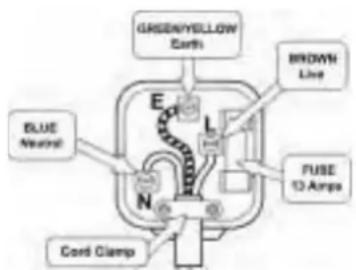
How to wire a 13 amp plug.
Important
The wires in the mains lead on this appliance are coloured in accordance with the following code:
Green and Yellow - Earth
Blue - Neutral
Brown-Live
As the colours may not correspond with the markings identifying the terminals in your plug proceed as follows.
The green and yellow wire must be connected to the terminal in the plug which is marked with the letter E or with the earth symbol 1 or coloured green and yellow.
The blue wire must be connected to the terminal marked N or coloured black.
The brown wire must be connected to the terminal marked L or coloured red
Make sure the cord is held firmly under the cord clamp.
Operating your refrigerator
Before plugging in your refrigerator for the first time remove all packing, clean the refrigerator with warm water and bicarbonate of soda. Wipe dry with a soft cloth. Plug the refrigerator into the mains power supply ensuring that the voltage is the same as the rating label and then turn the thermostat control knob that is situated at the left hand side of the unit to the midway position. The compressor should then start. Do not operate your refrigerator in a room where the temperature is likely to fall below 10 degrees C 50 degrees F at night and /or especially in winter, as it is designed to operate in ambient temperatures between +10 to +32 degrees C at lower temperatures the refrigerator may not operate, resulting in a reduction in the storage life of the food.
Setting the temperature control
To control the internal temperature, adjust the thermostat control knob according to the ambient temperature or purpose of use.
The temperature control knob has 6 setting from the coldest "5" to the warmest "1. (0 1,2,3,4,5).
Adjust the temperature control to the setting that best suits your needs normal position 3.
Turning the control to the "0" position stops the cooling cycle, but does not turn off the power to the refrigerator.
If the unit is unplugged, power lost, or turned off, you must wait 10 minutes before restarting the refrigerator. If you attempt to restart before this time delay, the refrigerator may not start.
Making ice cubes
Fill the ice cube tray 34 full of clean water and place the tray in the low temperature compartment and close the door.
To remove the ice cubes from the tray run the tray under water for a shot time and twist the tray slightly to loosen the ice cubes.
Defrosting
The surface of the evaporator ices up when the refrigerator is in use. When the frost layer reaches 3 - 4mm thick the refrigerator must be defrosted and cleaned.
Otherwise it may result in lower efficiency and high energy consumption.
- Take out all the food ferom the fridge and the ice tray and keep the door open.
- Turn the thermostat to the off position (0) unplug the refrigerator from the mains supply.
- Position the water collection tray under the ice box on the shelf below.
- After all the ice as melted dry the unit carefully and empty the water collection tray.
- Reinsert the mains plug and set the thermostat to its original setting.
- Leave to stand until the correct temperature as been reached then introduce your food.
Cleaning your refrigerator
Turn the Thermostat control to "OFF" position then remove the wall socket, open the door and remove all the contents to a shelf.
It mains plug from the tool place remove the
f soda solution . The
Wipe the inside surface with a warm water and bicarbonate of soda solution solution should be about 2 tablespoon of bicarbonate of soda to 2 pints of water.
Wash the shelf and tray with a mild detergent solution.
Wring excess water out of the sponge or cloth when cleaning area of the controls.
Wash the outside cabinet with warm and mild liquid detergent. Rinse well and wipe dry with a clean soft cloth.
If the plastic parts in the refrigerator remain contaminated for a long time by oil (animal or vegetable), they will age and possibly crack. The drain pan gets dirty very easily if it is not cleaned regularly, bad odours will be produced, get into the habit of cleaning this pan regularly. Make sure you keep the door seal and adjacent surface clean to maintain a good air tight seal.
Replacing The Lamp
- Turn the thermostat to the off position (0) and disconnect from the mains.
- Remove and empty if required, the drip tray underneath the ice compartment.
- The Lamp is located in the back of the thermostat housing, unscrew the lamp in a clockwise direction until the lamp comes out of the lamp fitting.
- Screw a new 10 Watt (E14 Base) lamp into the lamp fitting in a anti-clockwise direction until tight.
- Replace the drip tray and re-connect to the wall outlet.
- Set the thermostat to your preferred setting and close the door
Changing the reversible door
This refrigerator has been built with the door hinges on to change the opening direction, follow the instructions below:
- Remove the upper hinge cover (6) first
- Remove the two screws (1) that hold the upper hinge (5) (right side) to the Fridge body. Remove the upper hinge (5).
3.Lift the door and place it on a padded surface to prevent scratching it. - Remove the two screws (8) that hold the lower hinge(2) and remove the lower hinge(2).
- Remove the left front foot (4) and transfer it to the right side.
- Reverse the hole cover plate (7) from the left side to the right.
- Before fitting the lower hinge (2), remove the hinge-pin (9) and reverse the direction of the lower hinge (2). Then install the lower hinge (2) onto the left side of the lower frame with two screws (8).
- Insert the hinge-pin (9) to the lower hinge (2).
- position the door in place making sure the door seats onto the lower hinge(2)
- While holding the door in the closed position secure the upper hinge (5) in the top frame on left side with two screws (1). Remember, do not tighten the two screws (1) until the top of the door is levelled with the top of the fridge.
- Install the upper hinge cover (6) and the hole cover plate (7) on the upper hinge.
Changing the reversible door
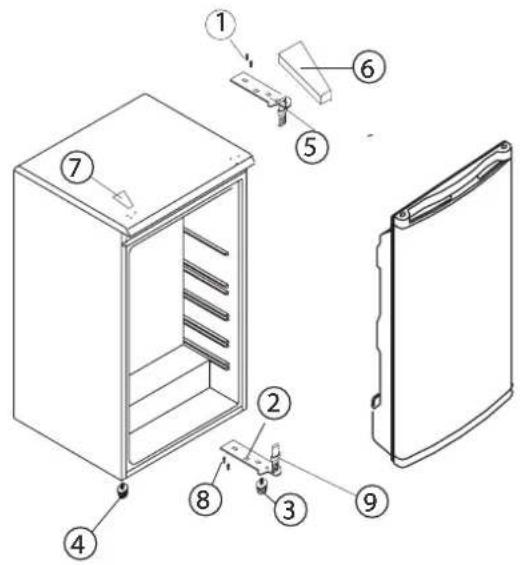
FIGURE 1
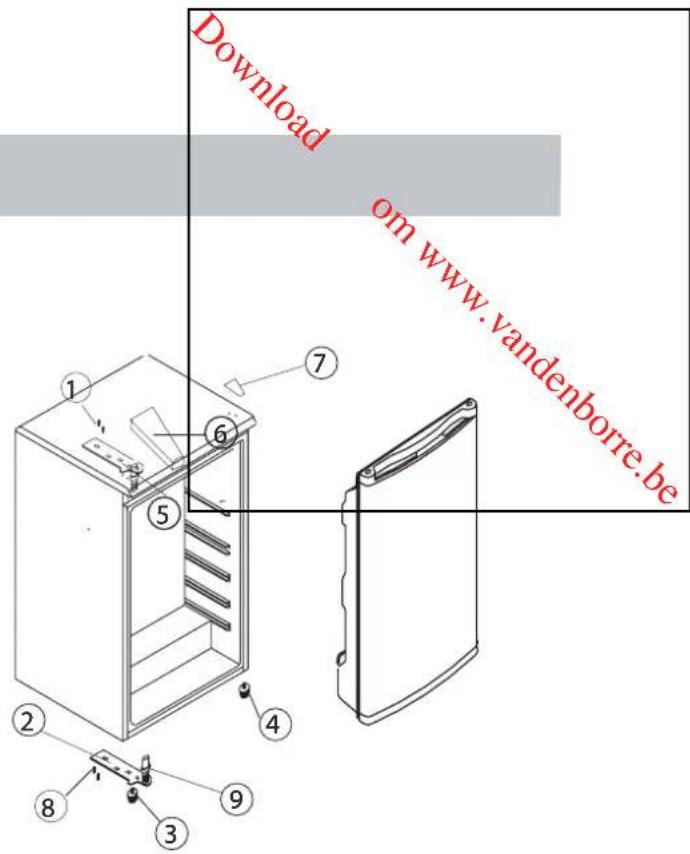
FIGURE 2
FIGURE 1 - REPRESENTS POSITION OF COMPONENTS PRIOR TO DOOR REVERSAL.
FIGURE 2 - REPRESENTS POSITION OF COMPONENTS AFTER DOOR REVERSAL.
Maintenance
Wipe the inner and outer surface of the refrigerator and its accessories with wet cloth. If they are too dirty, scrub them with neutral detergent, and then clean them with water and dry them with clean cloth. After this, a small quantity of glass wax is recommended to polish the refrigerator surface with a flannelette.
Troubleshooting
- When the refrigerator does not work
Check if there is a power failure.
Check if the power plug is plugged into the power outlet.
Check that the fuse has not blown.
- When the refrigerator is cooling excessively
The temperature control dial may be set too high.
If you place foodstuffs containing a lot of moisture directly under the cool air outlets, they will freeze easily. This does not indicate a malfunction.
- When the refrigerator is not cooling sufficiently
The food may be packed too tightly together which will block the flow of cool air.
You may have put something hot or a lot of foodstuffs into the refrigerator .
The door may not have been closed properly.
The door gaskets may be damaged.
The refrigerator may not be ventilated.
There may be insufficient clearance between the refrigerator and the surfaces Immediately both sides and above.
The temperature control dial may not be set properly.
- When condensation form on the outside of the refrigerator.
Condensation may form on the outside when the humidity is high such as during a wet seas on. This is the same result as the condensation formed when chilled water is poured into a glass. It does not, therefore, indicate a failure, wipe dry with a dry cloth.
- When you hear a sound like water flowing.
A sound like water flowing is the refrigerant flowing. It does not indicate a malfunction.
- When the cabinet's side panel heats up
The side panel of the cabinet will heat up when the door is opened or closed frequently, when s tarting the unit and when the unit operates in summer with high ambient outside temperature, In such case, do not touch the panel, it results from the dissipation of the heat from inside the cabinet, and it does not mean that something is wrong with the refrigerator.
Before calling for service
Please check the following points:
1. The refrigerator is not working
Check the plug is inserted correctly into the wall socket
Check there is power to the wall socket by plugging in another appliance, if the other appliance works, check the fuse in the appliance plug.
2. The refrigerator is noisy when running
Check the appliance is level and is not in contact with another appliance or kitchen furniture.
3. The refrigerator does not cool sufficiently.
If the door has been opened too often, or it has been left open for a while it will take time for the appliance to reach its set temperature.
Check the air flow around the refrigerator has not been reduced due to insufficient clearance.
NOTE: The following characteristics should not be l
A gentle tricking sound caused by coolant flowing through the pipe.
Compressor operating at high temperature.
Prolonged off periods
If the refrigerator is not in use for a long period of time, proceed as follows:
Disconnect the refrigerator from the main supply by removing the plug from the socket.
Clean and dry the inside as instructed under the heading of cleaning the appliance.
Leave the door open to prevent any unpleasant smells from building up while the appliance is not in use.
If there is a power failure for a short time keep the door closed check the contents of the refrigerator every so often.
Do's and don'ts
Do- Clean and defrost your appliance regularly (See "Defrosting")
Do- Take off any unusable leaves on vegetables and wipe off any soil.
Do- Leave lettuce, cabbage, parsley and cauliflower on the stem.
Do- Wrap raw meat and poultry loosely in polythene
Do- Wrap fish and offal in polythene bags.
Do- Wrap food with a strong odour or which may dry out, in polythene bags, or aluminium foil or place in airtight container.
Do- Keep food for as short a time as possible and adhere to "best before" and "Use by" etc. dates.
Do- Store commercially prepared food in accordance with the instructions given on the packets.
Do- Wrap all food in food quality polythene bags and make sure any air is excluded.
Do-Keep ventilation openings, in the appliance enclosure clear of obstruction.
Do- Chill white wines, beer, larger and mineral water before serving.
Do- Old refrigerator equipment may contain CFC's which will damage the ozone layer, When disposing of any refrigerator equipment please contact your local waste disposal department for advise on safe disposal.
Do- This appliance must be only used for its intended purpose storing food.
Don't- Cover the shelves with any protective materials which may obstruct air circulation.
Don't- Store poisonous or any dangerous substances in your larder fridge. It has been designed for the storage of edible foodstuffs only.
Don't- Store cooked and fresh food together in the same container. They should be packaged and stored separately.
Don't- Leave the door open for long periods, as this will make the appliance more costly to run and cause excessive ice formation.
Don't- Use sharp edged objects such as knives or forks to remove the ice.
Don't- U se hairdryers, or electrical appliances for defrosting only use item recommended by the manufacturer.
Don't- Put hot food into the appliance. Let it cool down first.
Don't- Damage the refrigerant circuit at any time.
Don't-If the power cable requires replacement, this must only be undertaken by a suitably qualified person as special purpose tools are required.
Don't- Store poisonous or any dangerous substances in your refrigerator. It has been designed for the storage of edible foodstuffs only.
Don't -allow children to play with the refrigerator or tamper with the controls.
Siting of the appliance
Do not keep your appliance in a room where the temperature is likely to fall below 10 degrees C (50 degrees F) at night and/or especially in winter, as it is designed to operate in ambient temperatures between +10 and +32 degrees C (50 and 90 degrees F). At lower temperatures the appliance may not operate, resulting in a reduction in the storage life of the food.
NOTE:
DO NOT POSITION YOUR APPLIANCE IN AN EXCESSIVELY COLD OR HUMID AREA SUCH AS A GARAGE/CELLAR OR OUT BUILDINGS ETC.
Technical data
| Brand Proline | |
| Appliance type Refrigerator | |
| Star rating No | |
| Total gross volume (1.) 120L | |
| Total usable volume (1.) 92L | |
| Freezer usable volume (1.) 10L | |
| Refrigerator useful volume 82L | |
| Freezing capacity (kg/24h) | |
| Climate Class +Ambient Range N (+16C to +32C) | |
| Energy class (1) A | |
| Power consumption (kWh/year) (2) 132 | |
| Supply voltage (Vac/Hz) 220-240~, 50Hz | |
| Noise [dB(A)re 1 pW] <39 | |
| Refrigerating agent R600a | |
| Outside dimensions (W x D x H) | 480*500*840mm |
| Refrigerating Blowing Gas | 26 g Pentant |
| (1) Energy class: A....G (A= economical...G= less economical) | |
| (2) The real power consumption depends on using conditions and appliance location. | |
Service
If you have any questions regarding the installation or operation of your new appliance please contact our help line on 0113 2793520 during normal office hours.(Please note: you can not book a service call through this number).
If you require a Service Engineer to call The number is on your sales receipt.
Environmental Notes:
Do not dispose of your packaging materials with normal household waste. These materials are recyclable and should be sorted (e.g. cardboard, plastic, polystyrene) and disposed of in accordance with local regulations.
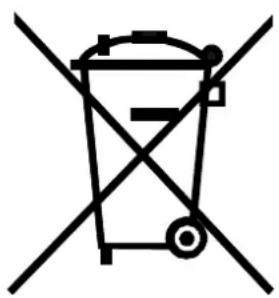
Waste electrical and electronic Products must not be disposed Of with household waste.Please Refer to the retailer from whom You purchased this item for Disposal instructions.

We undertake the policy of one of continuous development and for this reason we reserve the right to change specifications without prior notice.
Kesa UK. HU1 3AU 07/01/2007
PROLINE
Roztok by mél-byt yody.
myjete oblast okolo

- PROLINE 48cm UNDER COUNTER FRIDGE INSTRUCTION MANUAL
- CONTENTS
- PARTS AND FEATURES
- Safety information
- ELECTRICAL CONNECTION
- Warning: This appliance must be earthed.
- How to wire a 13 amp plug.
- Important
- Operating your refrigerator
- Setting the temperature control
- Making ice cubes
- Defrosting
- Cleaning your refrigerator
- Replacing The Lamp
- Changing the reversible door
- Maintenance
- Troubleshooting
- Before calling for service
- The refrigerator is not working
- The refrigerator is noisy when running
- The refrigerator does not cool sufficiently.
- NOTE: The following characteristics should not be l
- Prolonged off periods
- Do's and don'ts
- NOTE:
- Service
- PROLINE
Brand : PROLINE
Model : PF85GWA
Category : Fridge