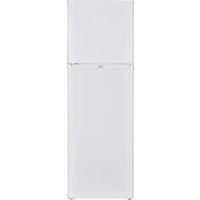
DD254NFWH - Refrigerator PROLINE - Free user manual and instructions
Find the device manual for free DD254NFWH PROLINE in PDF.



| Product type | Free-standing fridge-freezer |
| Brand | Proline |
| Model | DD254NFWH |
| Dimensions (H x W x D) | 1670 x 550 x 600 mm |
| Net weight | 50 kg |
| Power supply | 220-240 V~, 50 Hz, 0.9 A |
| Nominal power consumption | 110 W |
| Energy efficiency class | F |
| Annual energy consumption | 248 kWh/year |
| Total volume | 248 L (refrigerator 194 L, freezer 54 L) |
| Climate class | Temperate / Subtropical (16 °C to 38 °C) |
| Autonomy during power failure | 11 hours |
| Freezing capacity | 2.5 kg/24 h |
| Refrigerant | R600a (isobutane) – 52 g |
| Defrosting | Automatic (No Frost) in both compartments |
| Temperature control | Separate buttons for refrigerator (4 positions including OFF) and freezer (3 positions) |
| Interior lighting | LED (class G) |
| Door reversibility | Possible (recommended by a professional) |
| Warranty | 24 months |
| Included accessories | Shelves, door balconies, vegetable drawer with humidity control cover, freezer drawers, cold zone temperature indicator |
Frequently Asked Questions - DD254NFWH PROLINE
User questions about DD254NFWH PROLINE
0 question about this device. Answer the ones you know or ask your own.
Ask a new question about this device
Download the instructions for your Refrigerator in PDF format for free! Find your manual DD254NFWH - PROLINE and take your electronic device back in hand. On this page are published all the documents necessary for the use of your device. DD254NFWH by PROLINE.
USER MANUAL DD254NFWH PROLINE
NOMS DES PIÈCES....8
AVANT D'INSTALLER L'APPAREIL....9
INSTALLATION 9
TEMPÉRATURE AMBIANTE....10
AVANT DE METTRE DES ALIMENTS DANS L'APPAREIL....10
COUPURE DE COURANT....10
RÉGLER LES TEMPÉRATURES ....10
DÉPLACER VOTRE APPAREIL.... 11
CONSERVER DES ALIMENTS DANS LE COMPARTIMENT DE RÉFRIGÉRATION ....11
CONGELER ET CONSERVER DES ALIMENTS DANS LE COMPARTIMENT DE CONGÉLATION ....15
FAIRE DES GLAÇONS ....19
DÉGIVRAGE....19
INVERSION DU CÔTÉ D'OUVERTURE DES PORTES....19
CONSEILS D'ÉCONOMIE D'ÉNERGIE....21
BRUITS DE FONCTIONNEMENT....21
NETTOYAGE ET ENTRETIEN 22
DÉPANNAGE....23
SPÉCIFICATIONS 23
FICHE D'INFORMATION SUR LE PRODUIT....24
SERVICE DE RÉPARATION ET PIÈCES DE RECHANGE....26
MISE AU REBUT....27
MERCI DE BIEN VOULOIR LIRE LES CONSIGNES DE SÉCURITÉ ATTENTIVEMENT AVANT L'UTILISATION DE L'APPAREIL ET DE LES CONSERVER POUR CONSULTATION ULTERIEURE.
AVERTISSEMENTS
natural_image
Simple line drawing of a roasted chicken with visible ribs and skirt (no text or symbols)Poisson e) frui)s de 1er
natural_image
Illustration of a fish with scales and fins, labeled '0=4' (no text or symbols on the fish itself)- S'+34 d/+ven9 J90e 49/ck=4 ju4&u'7u 3ende67+n /u H3u4
natural_image
Simple line drawing of a slice of pizza with visible toppings (no text or symbols)natural_image
Illustration of assorted vegetables including carrots, broccoli, and a gourd (no text or symbols)natural_image
Technical line drawing showing a mechanical assembly before and after modification (no text or symbols)natural_image
Technical line drawing of a mechanical clamp or bracket (no text or symbols)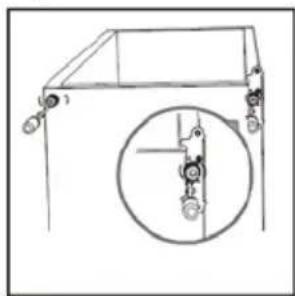
natural_image
Technical line drawing of a mechanical lifting device with a circular inset showing internal components (no text or symbols)natural_image
Pure technical line drawing of a mechanical bracket or clamp assembly without any text, numbers, or symbolsnatural_image
Line drawings of a device with a lid and base, showing a close-up of its edge (no text or symbols)natural_image
Two technical line drawings showing a person using a device on a wall, with no visible text or symbols.CONSEILS D'ÉCONOMIE D'ÉNERGIE
https://eprel.ec.europa.eu/screen/product/refrigeratingappliances2019/334091
https://eprel.ec.europa.eu/screen/product/refrigeratingappliances2019/374920
SERVICE DE RÉPARATION ET PIÈCES DE RECHANGE
natural_image
Warning symbol with exclamation mark inside a downward arrow (no text or numbers)VERIFICATION DE LA TEMPERATURE DANS LA ZONE LA PLUS FROIDE
IMPORTANT SAFETY INSTRUCTIONS....6
NAMES OF PARTS....7
BEFORE INSTALLING THE APPLIANCE....7
INSTALLATION 7
AMBIENT TEMPERATURE....8
BEFORE PLACING FOOD IN THE APPLIANCE....8
POWER FAILURE....8
ADJUSTING THE TEMPERATURES 8
MOVING YOUR APPLIANCE....9
STORING FOOD IN THE FRIDGE COMPARTMENT....9
FREEZING AND STORING FOOD IN THE FREEZER COMPARTMENT....12
MAKING ICE CUBES....15
DEFROSTING 15
DOOR CONVERSION....15
TIPS FOR SAVING ENERGY....17
OPERATING NOISES....17
CLEANING AND MAINTENANCE....18
TROUBLESHOOTING....19
SPECIFICATIONS ....19
PRODUCT INFORMATION SHEET....20
REPAIR AND SPARE PARTS SERVICE....22
DISPOSAL....23
PLEASE READ THE FOLLOWING INSTRUCTIONS CAREFULLY BEFORE USING THE APPLIANCE AND KEEP FOR FUTURE REFERENCE.
WARNINGS
This appliance is intended to be used in household and similar applications such as
—staff kitchen areas in shops, offices and other working environments;
—farm houses and by clients in hotels, motels and other residential type environments;
—bed and breakfast type environments;
—catering and similar non-retail applications.
If the supply cord is damaged, it must be replaced by the manufacturer, its service agent or similarly qualified persons in order to avoid a hazard.
This appliance can be used by children aged from 8 years and above and persons with reduced physical, sensory or mental capabilities or lack of experience and knowledge if they have been given supervision or instruction concerning use of the appliance in a safe way and understand the hazards involved. Children shall not play with the appliance. Cleaning and user maintenance shall not be made by children without supervision.
Regarding the details instructions for cleaning the surfaces in contact with food and splash area, refer to the section “Cleaning and Maintenance” in page EN-18.
◆ The appliance shall not be exposed to rain.
✿ WARNING: Keep ventilation openings, in the appliance enclosure or in the built-in structure, clear of obstruction.
✿ WARNING: Do not use mechanical devices or other means to accelerate the defrosting process, other than those recommended by the manufacturer.
◆ WARNING: Do not damage the refrigerant circuit.
WARNING: Do not use electrical appliances inside the food storage compartments of the appliance, unless they are of the type recommended by the manufacturer.
Do not store explosive substances such as aerosol cans with a flammable propellant in this appliance.
✿ WARNING: For making ice (ice cubes), use potable water only.
✿ CAUTION: The cooling system is under high pressure. Do not touch it. Contact qualified maintenance services before disposal.
INSTALLATION: DO NOT INSTALL THIS APPLIANCE IN AREAS THAT ARE TOO HUMID OR TOO COLD, SUCH AS THE OUTBUILDINGS, GARAGES OR WINE CELLARS.
For dis-osal of)he a--liance:
To prevent possible harm to the environment or human health from uncontrolled waste disposal, recycle the appliance responsibly to promote the sustainable reuse of material resources, the refrigerants and the flammable insulation blowing gases. The disposal should only be done through public collection points; contact the waste treatment center nearest your home for more details on the correct procedures for disposal.
For ins)alla)ionh ser2icin4:
AHH3+7nce 4h/u3d Ke H37ce d /n 7 h/0+W/n973 53, 7nd keeH 9he ven9+379+/n 50ee3y. D/n'9 90y 9/0eH37ce /0 0eH7+0 7ny c/6H/nen94 Ky y/u04e35Q 74k 9he 4e0v+ce 7]ency 5/0 he3H +5 nece4470y.
For handlin4:
Always handle the appliance to avoid any damage.
Never freeze defrosted food except if they have been cooked before, in order to eliminate harmful bacteria. Never refreeze seafood that has been defrosted.
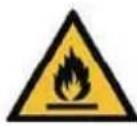
Warning; Risk of fire / flammable materials
- WARNING: When positioning the appliance, ensure the supply cord is not trapped or damaged.
- WARNING: Do not locate multiple portable socket-outlets or portable power supplies at the rear of the appliance.
- Children aged from 3 to 8 years are allowed to load and unload refrigerating appliances.
- To avoid contamination of food, please respect the following instructions:
- Opening the door for long periods can cause a significant increase of the temperature in the compartments of the appliance.
- Clean regularly surfaces that can come in contact with food and accessible drainage systems.
- Store raw meat and fish in suitable containers in the refrigerator, so that it is not in contact with or drip onto other food.
- Two-star frozen-food compartments are suitable for storing pre-frozen food, storing or making ice cream and making ice cubes.
— One-, two- and three-star compartments are not suitable for the freezing of fresh food.
- If the refrigerating appliance is left empty for long periods, switch off, defrost, clean, dry, and leave the door open to prevent mould developing within the appliance.
IMPORTANT SAFETY INSTRUCTIONS
- If you are discarding an old fridge freezer with a lock / catch fitted to the door, ensure that it is left in a disabled condition to prevent the entrapment of young children when playing.
- Unplug the appliance from the mains socket when not in operation and before cleaning. Remove food before cleaning the appliance.
- Do not insert oversized food as this could cause incorrect operation.
- Extreme caution must be used when moving the appliance.
- Do not give children ice-cream and water ices direct from the freezer compartment as the low temperature may cause 'freezer burns' on the lips.
- Do not stand or support yourself on the base or door, etc.
- Effervescent drinks should not be stored in the freezer compartment.
Dis-ose of your old a--liance
Fridge freezers contain refrigerant and gases in the insulation.
Refrigerant and blowing gases must be disposed of professionally. Ensure that tubing of the refrigerant circuit is not damaged prior to proper disposal.
NAMES OF PARTS
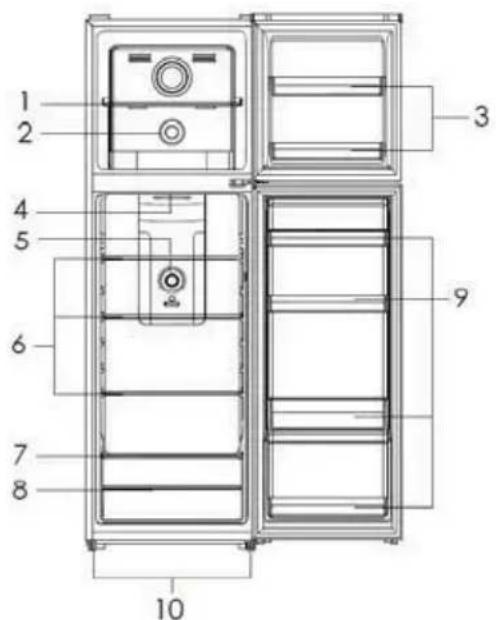
- Freezer shelf
- Freezer temperature control
- Freezer door shelves
- LED lights
- Fridge temperature control
- Fridge shelves
- Vegetable container cover with humidity control
- Vegetable container
- Fridge door shelves
- Adjustable feet
Recommended food arrangement
Refrigerator compartment (2°C \~ 4°C)
Cold air sinks so the bottom part is the coldest. Store your food in the optimal space to enjoy the fresh taste.
| Top section: | canned food, bread, cake... |
| Middle section: | dairy products, readymade food, desserts... |
| Bottom section: | meat, meat products, delicatessen ... |
| Container: | fresh fruit, vegetables, salads... |
Freezer compartment (-18°C \~ -22°C)
| Freezer drawers: | Freezing, storage of frozen food |
Refrigerator door shelves (2°C \~ 8°C)
| Top section: | eggs, butter, cheese... |
| Middle section: | beverages, cans, bottles... |
| Bottom section: | beverages, cans, bottles... |
BEFORE INSTALLING THE APPLIANCE
Before connecting your appliance to the power supply, check that the voltage stated on the rating label of your appliance corresponds to the voltage in your home. A different voltage could damage the appliance.
The plug is the only way to unplug the appliance and should therefore be accessible at all times. To turn off main power to the appliance, turn it off and then detach the plug from the outlet.
The appliance must be grounded. The manufacturer is not responsible for damages that may occur as a result of usage without grounding.
INSTALLATION
Install the appliance in a dry, well ventilated room. The installation location should neither be exposed to direct sunlight nor near a heat source, e.g. a cooker, radiator, etc.
To ensure adequate ventilation for the appliance, allow a minimum of 10 cm of airspace on each side of the cabinet.
For uneven surfaces, front feet can be aligned.
AMBIENT TEMPERATURE
This appliance is designed to operate in ambient temperature between 16^ C and 38^ C. If these temperatures are exceeded, i.e. colder or warmer, the appliance will not operate correctly. If the ambient temperatures are exceeded for long periods, the temperature in the freezer compartment will rise above -18^ C and food spoilage may occur.
BEFORE PLACING FOOD IN THE APPLIANCE
- Remove all packaging.
- Allow the appliance to run empty for 2 – 3 hours so the compartments can cool to the appropriate temperature.
- Clean the inside of the appliance with warm water and a little liquid detergent to remove manufacturing and transportation dust.
POWER FAILURE
If there is a power failure, do not open the doors of the appliance. Frozen food should not be affected if the power failure lasts for less than 11 hours.
Do not refreeze frozen foods that have thawed completely. The food may be dangerous to eat.
ADJUSTING THE TEMPERATURES
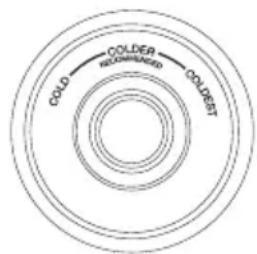
There is a temperature control knob inside the freezer compartment. You can set the freezer compartment temperature by turning this control knob.
There are 3 settings: COLD, COLDER and COLDEST. It is recommended to turn this control knob to the COLDER position for normal use.
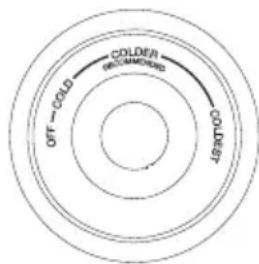
There is a temperature control knob inside the fridge compartment. You can turn this knob to set the fridge compartment temperature. There are 4 settings: OFF, COLD, COLDER and COLDEST.
The appliance may not operate the correct temperature if it is in a particularly hot or if you open the door often. Neither the fridge or freezer compartment works when the setting is OFF.
MOVING YOUR APPLIANCE
If the appliance is turned off for any reason, wait for 10 minutes before turning it back on. This will allow the refrigeration system pressures to equalize before restarting.
- Turn off the appliance and unplug it from the mains socket. Remove all food. Also remove all mobile parts (shelves, accessories, etc.) or fix them into the appliance to avoid any shock.
- Relocate and install. If the appliance has been left on its side for any length of time, leave it standing upright for at least 10 minutes before turning on.
Your appliance uses isobutane (R600a) as a refrigerant. Although R600a is an environmentally friendly and natural gas, it is explosive. Therefore you should be careful during shipment and installation to prevent your appliance's cooler elements from being damaged. In the event of a leak caused by damage to the cooler elements, move your appliance from open flame or heat sources and ventilate the room where the appliance is located for a few minutes.
STORING FOOD IN THE FRIDGE COMPARTMENT
The refrigerator compartment helps to extend the storage times of fresh perishable foods.
Fresh food care
For best results:
- Store foods that are very fresh and of good quality.
- Ensure that food is well wrapped or covered before it is stored. This will prevent food from dehydrating, deteriorating in colour or losing taste and will help maintain freshness. It will also prevent odour transfer.
- Make sure that strong smelling foods are wrapped or covered and stored away from foods such as butter, milk and cream which can be tainted by strong odours.
- Cool hot foods down before placing them in the refrigerator compartment.
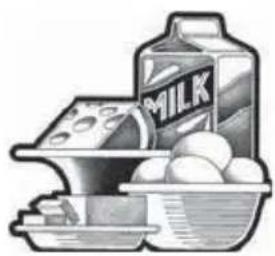
Dairy foods and eggs
- Most pre-packed dairy foods have a recommended 'use by /best before/best by/' date stamped on them. Store them in the refrigerator compartment and use within the recommended time.
- Butter can become tainted by strong smelling foods so it is best stored in a sealed container.
- Eggs can be stored in the refrigerator compartment.
natural_image
Illustration of milk and dairy products including a milk carton, cheese, and bread (no text or symbols)Red meat
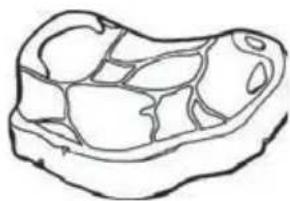
- Place fresh red meat on a plate and loosely cover with waxed paper, plastic wrap or foil.
- Store cooked and raw meat on separate plates. This will prevent any juice lost from the raw meat from contaminating the cooked product.
natural_image
Simple line drawing of a biological or geological cross-section (no text or symbols)Poultry
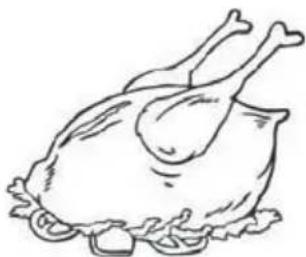
- Fresh whole birds should be rinsed inside and out with cold running water, dried and placed on a plate. Cover loosely with plastic wrap or foil.
- Poultry pieces should also be stored this way. Whole poultry should never be stuffed until just before cooking, otherwise food poisoning may result.
natural_image
Line drawing of a whole roasted chicken with leafy sides (no text or symbols)Fish and seafood
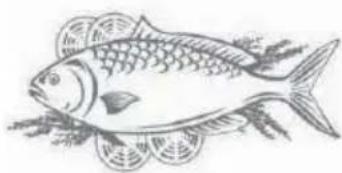
- Whole fish and fillets should be used on the day of purchase. Until required, refrigerate on a plate loosely covered with plastic wrap, waxed paper or foil.
- If storing overnight or longer, take particular care to select very fresh fish. Whole fish should be rinsed in cold water to remove loose scales and dirt and then patted dry with paper towels. Place whole fish or fillets in a sealed plastic bag.
- Keep shellfish chilled at all times. Use within 1 – 2 days.
Precooked foods and leftovers
• These should be stored in suitable covered containers so that the food will not dry out.
- Keep for only 1 – 2 days.
- Reheat leftovers only once and until steaming hot.
Vegetable and fresh fruit
- The vegetable container is the optimum storage location for fresh fruit and vegetables.
•Take care not to store the following at temperatures of less than 7^ C for long periods:
natural_image
Illustration of a fish with scales and decorative elements (no text or symbols)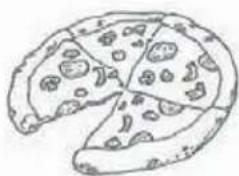
natural_image
Simple line drawing of a three-pie pizza with visible toppings (no text or symbols)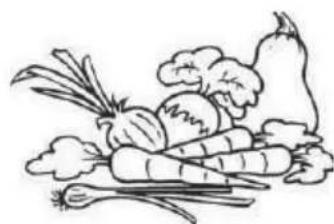
natural_image
Illustration of assorted vegetables including carrots, broccoli, and a gourd (no text or symbols)Citrus fruit, melons, aubergines, pineapple, papaya, courgettes, passion fruit, cucumber, peppers, tomatoes
- Undesirable changes will occur at low temperatures such as softening of the flesh, browning and/or accelerated decaying.
- Do not refrigerate avocados (until they are ripe), bananas, and mangoes.
Adjusting the vegetable container humidity
The vegetable container cover has a humidity control slider. You can use this slider to adjust the desired humidity according to the humidity and cooling condition of your food in the vegetable container.

Move the slider towards Fruits for thicker vegetables or fruits with skin.
Move the slider towards vegetables for leafy vegetables or more delicate fruits.
FREEZING AND STORING FOOD IN THE FREEZER COCOMPARTMENT
• To store deep-frozen food.
- To make ice cubes.
- To freeze food.
Note: Ensure that the freezer compartment door has been closed properly.
Purchasing frozen food
- Packaging must not be damaged.
- Use by the ‘use by /best before/best by/’ date.
- If possible, transport deep-frozen food in an insulated bag and place quickly in the freezer drawers.
Storing frozen food
Store at -18°C or colder. Avoid opening the freezer compartment door unnecessarily.
Freezing fresh food
Freeze fresh and undamaged food only.
To retain the best possible nutritional value, flavour and colour, vegetables should be blanched before freezing.
Aubergines, peppers, zucchini and asparagus do not require blanching.
Note: Keep food to be frozen away from food which is already frozen.
● The following foods are suitable for freezing:
Cakes and pastries, fish and seafood, meat, game, poultry, vegetables, fruit, herbs, eggs without shells, dairy products such as cheese and butter, ready meals and leftovers such as soups, stews, cooked meat and fish, potato dishes, soufflés and desserts.
- The following foods are not suitable for freezing: Types of vegetables, which are usually consumed raw, such as lettuce or radishes, eggs in shells, grapes, whole apples, pears and peaches, hard-boiled eggs, yoghurt, soured milk, sour cream, and mayonnaise.
Packing frozen food
To prevent food from losing its flavour or drying out, place food in airtight packaging.
- Place food in packaging.
- Remove air.
- Seal the wrapping.
- Label packaging with contents and dates of freezing.
Suitable packaging:
Plastic film, tubular film made of polyethylene, aluminium foil, freezer containers.
These products are available from specialist outlets.
Recommended storage times of frozen food in the freezer compartment
These times vary depending on the type of food. The food that you freeze can be preserved from 1 to 12 months (minimum at -18°C).
| Food | Storage time |
| Bacon, casseroles, milk | 1 month |
| Bread, ice cream, sausages, pies, prepared shellfish, oily fish | 2 months |
| Non-oily fish, shellfish, pizza, scones and muffins | 3 months |
| Ham, cakes, biscuits, beef and lamb chops, poultry pieces | 4 months |
| Butter, vegetables (blanched), eggs whole and yolks, cooked crayfish, minced meat (raw), pork (raw) | 6 months |
| Fruit (dry or in syrup), egg whites, beef (raw), whole chicken, lamb (raw), fruit cakes | 12 months |
Never forget:
- When you freeze fresh foods with a ‘use by /best before/best by/’ date, you must freeze them before the expiry of this date.
- Check that the food was not already frozen. Indeed, frozen food that has thawed completely must not be refrozen.
- Once defrosted, food should be consumed quickly.
MAKING ICE CUBES
Fill the ice cube tray (not supplied) with 34 full of drinking water and place in the freezer compartment. If the ice cube tray is stuck to the freezer compartment, loosen with a blunt tool only. To loosen the ice cubes, twist the ice cube tray slightly or hold briefly under flowing water.
DEFROSTING
This appliance is equipped with a frost free system.
This system enables the freezer compartment to remain permanently ice-free, however, the food stored in the freezer compartment will not defrost.
DOOR CONVERSION
If you need to hinge your doors on the opposite side it is recommended that you call your local authorized service agent to make this conversion or ask a technician.
Before you reverse the doors, you should ensure the appliance is unplugged and empty. It is recommended to use a crosshead screwdriver and a spanner (both not supplied).
- Remove the screws that fix the top cover and upper hinge cover to the appliance and then remove the top cover and upper hinge cover.
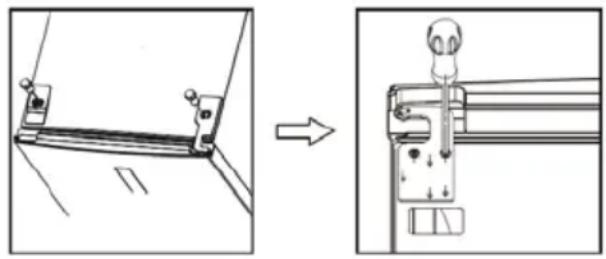
natural_image
Technical diagram showing a mechanical assembly before and after modification, with no visible text or symbols.-
Lift the freezer door and place it on a padded surface to prevent it from scratching.
-
Remove the screws from the middle hinge and then remove the middle hinge. Lift the fridge door and place it on a padded surface to prevent it from scratching.
Remove the blank covers and then fit them to the opposite side.
- Remove the screws, bottom hingewith adjustable foot from the bottom of the appliance.
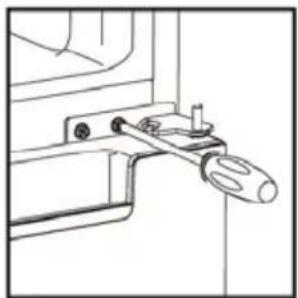
natural_image
Technical line drawing of a mechanical clamp or bracket assembly (no text or symbols)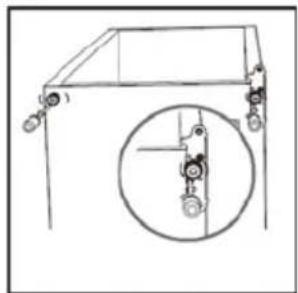
natural_image
Simple line drawing of a mechanical structure with pulleys and a circular inset showing a vertical component (no text or symbols)-
Remove the remaining adjustable foot from the other side of the bottom of the appliance.
-
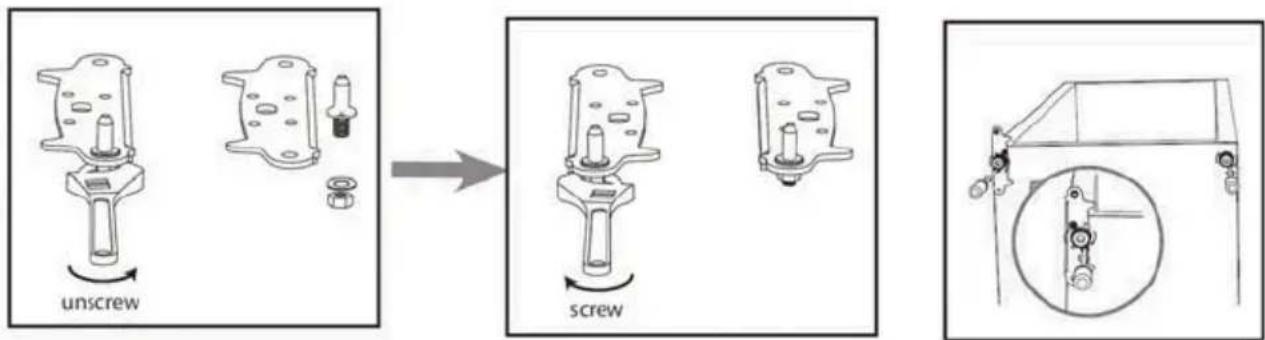
Unscrew the hinge pin from the bottom hinge. Turn over the bottom hinge and refit the screw the hinge pin onto the bottom hinge. Reattach the bottom hinge to the opposite side.
- After replacing the fridge door, screw the middle hinge back onto the opposite side.
Ensure the lower door is horizontally and vertically so seals are closed on all sides nally tightening the hinge.
natural_image
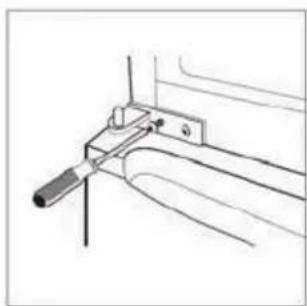
Pure technical line drawing of a mechanical clamp or bracket assembly without any text, numbers, or symbols- Unscrew the right middle stopper with metal block from the bottom of the freezer door and then install the left middle stopper with metal block on the left side of the bottom of the freezer door.
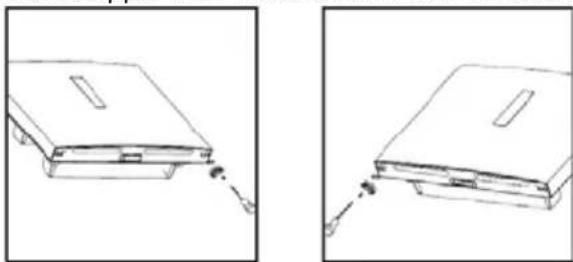
natural_image
Two technical line drawings of a device with a clip, shown from different angles (no text or symbols)- Fit the freezer door back into place. Reattach the upper hinge on the opposite side with screws and then fix the upper hinge cover to the upper hinge by tightening the screw. Attach the top cover to the opposite side.
- Ensure the fridge door is aligned horizontally and vertically so that the seals are closed on all sides before finally tightening the upper hinge.
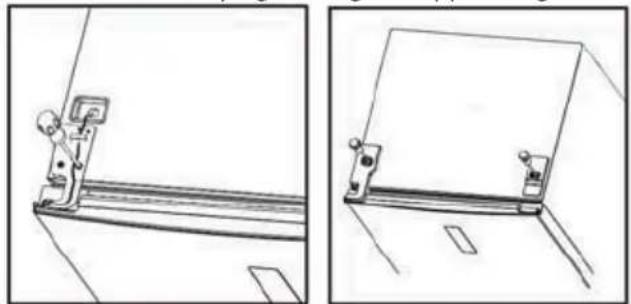
natural_image
Two technical line drawings showing a mechanical device mounted on a bracket, with no visible text or symbols.TIPS FOR SAVING ENERGY
For the most energy efficient use of your appliance:
- Ensure your appliance has adequate ventilation as recommended in the installation instructions.
- Allow warm food and drinks to cool down before placing in the appliance.
- Thaw frozen food in the refrigerator compartment and use the low temperature of the frozen food to cool refrigerated food.
- Keep door openings to a minimum.
- Open the appliance as briefly as possible.
- Ensure that the fridge and freezer doors are always closed properly.
OPERATING NOISES
Nor1al noises
•Motors are running.
●Refrigerant is flowing through the tubing.
CLEANING AND MAINTENANCE

Do not use abrasive cleaning agents or solvents.
- Disconnect the mains plug from the mains socket.
- Take out the food and store in a cool location.
- Clean the appliance with a soft cloth, warm water and detergent.
- Wipe the door seal with clear water only and then wipe dry thoroughly.
- After cleaning reconnect and set the temperature as desired.
- Put the food back into the appliance.
Cleaning Tips
- Remove all shelves, door shelves, vegetable containers, removable accessories (such as egg tray and ice cube tray if included) and/or drawers from the appliance. Wash them in warm soapy water with a soft sponge. Rinse and dry thoroughly.
- Wipe the interior parts (including door switch, temperature control knob and lamp cover) with a damp cloth soaked in a mixture of warm water and dishwashing liquid. For stubborn stains, use baking soda.
- Wipe down the doors, including edges, with a microfiber cloth dampened with a mild dishwashing liquid and water. Use a wetsponge and soft brush (such as toothbrush) to remove any stuck-on food.
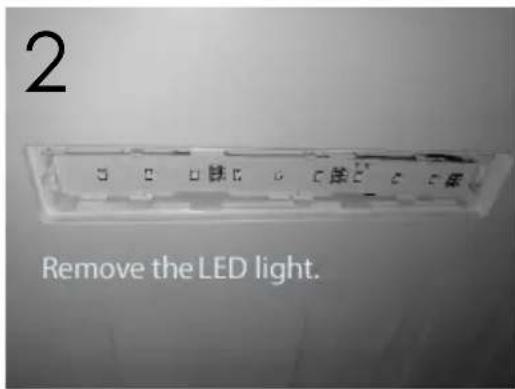
The LED lights in the fridge compartment cannot be replaced by the user. If the LED lights stop working, please contact the local authorised service agent.
TROUBLESHOOTING
If there is a problem with your appliance, please check the following points before contacting customer service.
| Pro(le1) | Possi(le causes) | Possi(le solu)ion |
| Appliance does not operate. | No electricity at power outlet. | Check that the plug is correctly connected and power switched on. |
| Noises Cabinet not stable or level. See installation section. | ||
| Appliance not cool | Temperature setting not correct.Frequent door openings.Large amount of food recently added. | See Adjusting the Temperatures section.Minimise door openings to allow temperatures to stabilise. |
SPECIFICATIONS
| Te1-era)ure rise )i1e | Power cut safe 11 h |
| Elec)ric shocE -ro)ec)ion class Class I | |
| Ra)ed 2ol)a4e and freDuency 220-240V~ | 50Hz |
| Ra)ed curren) 0.9A | |
| Ra)ed -ower in-u) 110W | |
| Defros)in4 -ower 150W | |
| La1- -ower | 2.0W |
| Insula)ion (lowin4 4as Cyclopentane | |
| Refri4eran)/A1oun) R600a/ 52g | |
| Ne) wei4h) | 50kg |
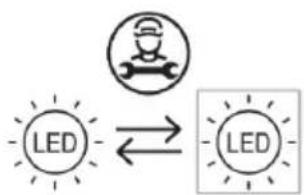
flowchart
graph LR
    A["LED"] <--> B["LED"]
Replaceable (LED only) light source by a professional
This product contains a light source of energy efficiency class G.
| Product Information Sheet COMMISSION DELEGATED REGULATION (EU) 2019/2016 with regard to energy labelling of refrigerating appliances | |||||
| Supplier's name or trade mark: Etablissements Darty & fils © | Proline | |||||
| Supplier's address: 9 Rue des Bateaux-Lavoirs, 94200 Ivry-sur-Seine, France | |||||
| Model identifier: DD254NFWH DD254NFSL | |||||
| Type of refrigerating appliance: | |||||
| Low-noise appliance: | no | Design type: | freestanding | ||
| Wine storage appliance: | no | Other refrigerating appliance: | yes | ||
| General product parameters: | |||||
| Parameter | Value | Parameter | Value | ||
| Overall dimensions (millimeter) | Height | 1670 | Total volume (dm3 or l) | 248 | |
| Width | 550 | ||||
| Depth 600 | |||||
| EEI | 125 | Energy efficiency class | F | ||
| Airborne acoustical noise emissions (dB(A) re 1 pW) | 41 | Airborne acoustical noise emission class | C | ||
| Annual energy consumption (kWh/a) | 248 | Climate class: | temperate/subtropical | ||
| Minimum ambient temperature (°C), for which the refrigerating appliance is suitable | 16 | Maximum ambient temperature (°C), for which the refrigerating appliance is suitable | 38 | ||
| Winter setting | no | ||||
| Compartment Parameters: | |||||
| Compartment type | Compartment parameters and values | ||||
| Compartment Volume (dm3 or l) | Recommended temperature setting for optimised food storage (°C) | Freezing capacity (kg/24 h) | Defrosting type (auto-defrost = A, manual defrost = M) | ||
| Pantry | no | — | — | — | — |
| Wine storage | no | — | — | — | — |
| Cellar | no | — | — | — | — |
| Fresh food | yes | 194,0 | 4,0 | — | A |
| Chill | no | — | — | — | — |
| 0-star or ice-making | no — | — — — | |||
| 1-star no — — | — — | ||||
| 2-star no — — | — — | ||||
| 3-star no — — | — — | ||||
| 4-star | yes | 54,0 | -18,0 | 2,5 | A |
| 2-star section no | — — — — | ||||
| Variable temperature compartment | no | — — | — | — | |
| For 4-star compartments | |||||
| Fast freeze facility no | |||||
| For wine storage appliances | |||||
| Number of standard wine bottles — | |||||
| Light source parameters (a): | |||||
| Type of light source LED | |||||
| Energy efficiency class G | |||||
| Minimum duration of the guarantee offered by the manufacturer : 24 months | |||||
| Additional information: | |||||
| Weblink to the supplier's website, where the information in point 4 of Annex II of Commission Regulation (EU)2019/2019 is found : www.darty.com | |||||
( ^a ) as determined in accordance with Commission Delegated Regulation (EU) 2019/2015.
Climate class:
- Temperate: 'this refrigerating appliance is intended to be used at ambient temperatures ranging from 16 °C to 32 °C'.
- Subtropical: 'this refrigerating appliance is intended to be used at ambient temperatures ranging from 16 °C to 38 °C'.
This refrigerating appliance is not intended to be used as a built-in appliance.
To find the model information in the product database :
Click the link
https://eprel.ec.europa.eu/screen/product/refrigeratingappliances2019/334091
https://eprel.ec.europa.eu/screen/product/refrigeratingappliances2019/374920

REPAIR AND SPARE PARTS SERVICE
Do not disassemble or repair the appliance by yourself. Failure to do so may result in an electric shock or personal injury.
To access to professional repair and order spare parts, please get the support from FNAC DARTY after-sales service.
Spare parts for your appliances will be delivered within 15 working days after having received the order.
Please Note!
All appliances have a 2-year warranty.
Warranty does not cover damages caused due to improper installation, unauthorized modification, self-repair or non-professional repair.
Contact us at :

www.darty.com

0978 970 970
24 Hours 7 Days a week

8 AM – 6 PM Mon to Sat

As a responsible company we care about the environment.
As such we urge you to follow the correct disposal procedure for the appliance and packaging materials. This will help conserve natural resources and ensure that it is recycled in a manner that protects health and the environment.
Before disposing of your appliance, dismantling LED light from your appliance.
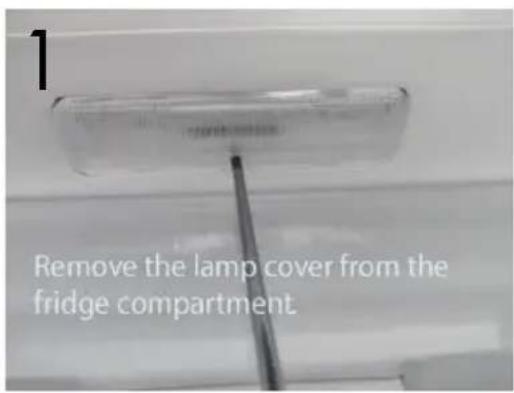
You must dispose of this appliance and its packaging according to local laws and regulations. Because this appliance contains electronic components, the appliance and its accessories must be disposed of separately from household waste when the appliance reaches its end of life.
Contact your local authority to learn about disposal and recycling. The appliance should be taken to your local collection point for recycling. Some collection points accept appliance free of charge.
We apologise for any inconvenience caused by minor inconsistencies in these instructions, which may occur as a result of product improvement and development.
natural_image
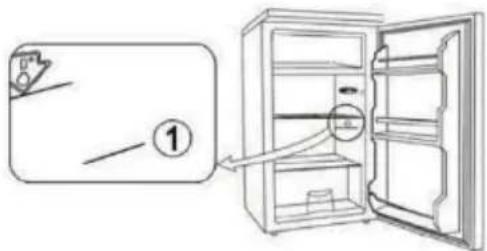
Warning symbol with exclamation mark and circular dot (no text)The symbol indicates the location of the coldest part of your refrigerator. This area is in between the vegetable compartment at the bottom and the symbol at the top, or the shelf at the same height. In order to maintain the temperature in this area, make sure not to change the position of this shelf.
In pulsed air refrigerators (equipped with a fan) or No Frost models, the coldest area symbol is not shown because the temperature is uniform throughout the interior.
INSTALLING THE TEMPERATURE INDICATOR
To help you adjust your refrigerator correctly, it is equipped with a temperature indicator that you can use to control the average temperature in the coldest area.
WARNING: This indicator is only intended for use in your refrigerator. Do not use it in another refrigerator (as the coldest area will not be the same) or for any other purpose.
TEMPERATURE INDICATOR: THE COLDEST PART OF YOUR REFRIGERATOR
CHECKING THE TEMPERATURE IN THE COLDEST AREA
• Using the temperature indicator, you should regularly check that the temperature is correct in the coldest part of your refrigerator. The temperature inside your refrigerator depends on a number of factors, such as the outside room temperature, how full your refrigerator is, and how often you open the door. Take these factors into consideration when adjusting your appliance.
When the indicator shows "OK", it means your thermostat is set properly and the temperature inside your refrigerator is correct.
If the indicator is white it means the temperature is too high, so you should
increase the thermostat and wait for 12 hours before checking the indicator
again.
After loading the refrigerator or opening the door, the indicator may turn white for a few seconds.

Correct setting
Temperature too high – adjust the thermostat
Inhoudsopgave
WAARSCHUWINGEN....2
BELANGRIJKE VEILIGHEIDSINSTRUCTIES....8
BESCHRIJVING VAN DE ONDERDELEN 8
VOOR INSTALLATIE VAN HET APPARAAT 9
INSTALLATIE....9
OMGEVINGSTEMPERATUUR....9
ALVORENS LEVENSMIDDELEN IN HET APPARAAT TE PLAATSEN....9
STROOMUITVAL....9
DE TEMPERATUUR AANPASSEN ....10
UW APPARAAT VERPLAATSEN....10
LEVENSMIDDELEN IN DE KOELKAST BEWAREN 11
LEVENSMIDDELEN IN DE VRIESKAST INVRIEZEN EN BEWAREN ....14
IJSBLOKJES MAKEN 18
ONTDOOIEN....18
PROBLEEMOPLOSSING....22
PRODUCTINFORMATIEBLAD....23
SERVICE VOOR REPARATIES EN RESERVEONDERDELEN....25
VERWIJDERING 26
LEES DE VOLGENDE INSTRUCTIES AANDACHTIG DOOR ALVORENS HET APPARAAT TEGEBRUIKEN ENBEWAAR ZEVOOR LATERE RAADPLEGING.
WAARSCHUWINGEN
UW APPARAAT VERPLAATSEN
natural_image
Illustration of a milk carton with a glass of milk and a plate of cheese (no text or symbols)Rood vlees
natural_image
Simple line drawing of a biological or geological cross-section (no text or symbols)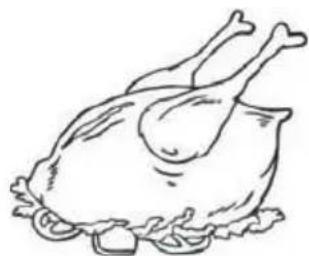
natural_image
Line drawing of a roasted chicken with leafy sides (no text or symbols)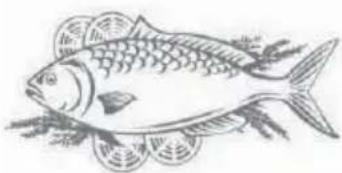
natural_image
Illustration of a fish with scales and fins, no text or symbols presentnatural_image
Simple line drawing of a slice of pizza with visible toppings (no text or symbols)Verse groente en fruit
natural_image
Illustration of fresh vegetables including carrots, broccoli, and a squash (no text or symbols)natural_image
Technical diagram showing a mechanical assembly before and after modification, with no visible text or symbols.natural_image
Technical line drawing of a mechanical clamp or bracket (no text or symbols)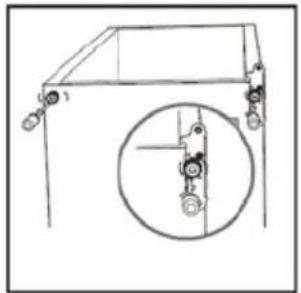
natural_image
Technical line drawing of a mechanical structure with pulleys and a circular inset showing a component (no text or symbols)natural_image
Pure mechanical assembly diagram without any text, numbers, or symbolsnatural_image
Two technical line drawings of a device with a lid and base, showing a close-up of the lid and base (no text or symbols)natural_image
Two technical line drawings showing a mechanical assembly with a small component and a flat panel mounted on a bracket (no text or symbols)ENERGIEBESPARINGSTIPS
https://eprel.ec.europa.eu/screen/product/refrigeratingappliances2019/334091
https://eprel.ec.europa.eu/screen/product/refrigeratingappliances2019/374920
natural_image
Warning symbol with exclamation mark and circular dot (no text)VERIFICATIE VAN DE TEMPERATUUR IN DE KOUDSTE ZONE
Low Voltage Directive (LVD)
Eco design requirements for energy-related products (ErP)
RoHS
EMC:
EN 55014-1:2017+A11:2020
EN 55014-2:2015
EN IEC 61000-3-2:2019
EN 61000-3-3:2013+A1:2019
LVD :
EN 60335-1:2012+A11:2014+A13:2017+A1:2019+A14:2019+A2:2019
EN 60335-2-24:2010+A1:2019+A2:2019
EN 62233:2008
ErP :
(EU) 2019/2016
(EU) 2019/2019
(EU) 2021/340
(EU)2021/341
EN 62552-1:2020
EN 62552-2:2020
EN 62552-3:2020
EN 60704-1:2010+A11:2012
EN 60704-2-14:2013+A11:2015+A1:2019
(EU) 2019/2015
(EU) 2019/2020
This declaration of conformity is drawn up under the sole responsibility of the manufacturer.
The person responsible for this declaration is:
Place, Date / Lieu :
Ivry-sur-Seine, mars 21, 2022
DocuSigned by:
Prndrag Petricevic
EA30F3FB8F314D0...



- MERCI DE BIEN VOULOIR LIRE LES CONSIGNES DE SÉCURITÉ ATTENTIVEMENT AVANT L'UTILISATION DE L'APPAREIL ET DE LES CONSERVER POUR CONSULTATION ULTERIEURE.
- AVERTISSEMENTS
- Poisson e) frui)s de 1er
- CONSEILS D'ÉCONOMIE D'ÉNERGIE
- SERVICE DE RÉPARATION ET PIÈCES DE RECHANGE
- VERIFICATION DE LA TEMPERATURE DANS LA ZONE LA PLUS FROIDE
- PLEASE READ THE FOLLOWING INSTRUCTIONS CAREFULLY BEFORE USING THE APPLIANCE AND KEEP FOR FUTURE REFERENCE.
- WARNINGS
- For dis-osal of)he a--liance:
- For ins)alla)ionh ser2icin4:
- For handlin4:
- IMPORTANT SAFETY INSTRUCTIONS
- Dis-ose of your old a--liance
- NAMES OF PARTS
- Recommended food arrangement
- BEFORE INSTALLING THE APPLIANCE
- INSTALLATION
- AMBIENT TEMPERATURE
- BEFORE PLACING FOOD IN THE APPLIANCE
- POWER FAILURE
- ADJUSTING THE TEMPERATURES
- MOVING YOUR APPLIANCE
- STORING FOOD IN THE FRIDGE COMPARTMENT
- Fresh food care
- Dairy foods and eggs
- Red meat
- Poultry
- Fish and seafood
- Precooked foods and leftovers
- Vegetable and fresh fruit
- Adjusting the vegetable container humidity
- FREEZING AND STORING FOOD IN THE FREEZER COCOMPARTMENT
- Purchasing frozen food
- Storing frozen food
- Freezing fresh food
- Packing frozen food
- Recommended storage times of frozen food in the freezer compartment
- Never forget:
- MAKING ICE CUBES
- DEFROSTING
- DOOR CONVERSION
- TIPS FOR SAVING ENERGY
- OPERATING NOISES
- Nor1al noises
- CLEANING AND MAINTENANCE
- Do not use abrasive cleaning agents or solvents.
- Cleaning Tips
- The LED lights in the fridge compartment cannot be replaced by the user. If the LED lights stop working, please contact the local authorised service agent.
- TROUBLESHOOTING
- SPECIFICATIONS
- REPAIR AND SPARE PARTS SERVICE
- Please Note!
- Before disposing of your appliance, dismantling LED light from your appliance.
- INSTALLING THE TEMPERATURE INDICATOR
- CHECKING THE TEMPERATURE IN THE COLDEST AREA
- Inhoudsopgave
- LEES DE VOLGENDE INSTRUCTIES AANDACHTIG DOOR ALVORENS HET APPARAAT TEGEBRUIKEN ENBEWAAR ZEVOOR LATERE RAADPLEGING.
- WAARSCHUWINGEN
- UW APPARAAT VERPLAATSEN
- Rood vlees
- Verse groente en fruit
- ENERGIEBESPARINGSTIPS
- VERIFICATIE VAN DE TEMPERATUUR IN DE KOUDSTE ZONE
- EMC:
- LVD :
- ErP :
Brand : PROLINE
Model : DD254NFWH
Category : Refrigerator