Buggy twenty4 B - Remote control toy XciteRC - Free user manual and instructions
Find the device manual for free Buggy twenty4 B XciteRC in PDF.



User questions about Buggy twenty4 B XciteRC
0 question about this device. Answer the ones you know or ask your own.
Ask a new question about this device
Download the instructions for your Remote control toy in PDF format for free! Find your manual Buggy twenty4 B - XciteRC and take your electronic device back in hand. On this page are published all the documents necessary for the use of your device. Buggy twenty4 B by XciteRC.
USER MANUAL Buggy twenty4 B XciteRC
natural_image
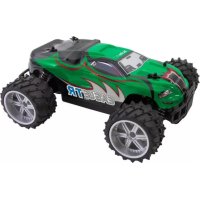
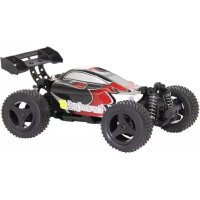
Top-down view of a black and white Honda 300 electric vehicle with visible wheels and suspension (no text or symbols)30600000 twenty4 Series Buggy 1:24 RTR 2.4 GHz red 30604000 twenty4 Series Buggy 1:24 RTR 2.4 GHz blue
natural_image
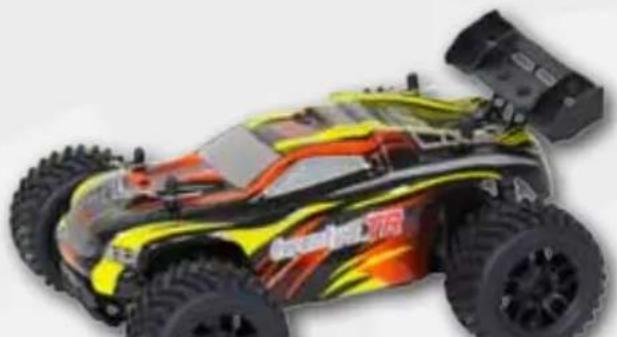
Exterior view of a yellow and black Honda 700 electric vehicle (no visible text or symbols)30601000 twenty4 Series Truggy 1:24 RTR 2.4 GHz silver 30605000 twenty4 Series Truggy 1:24 RTR 2.4 GHz black
natural_image
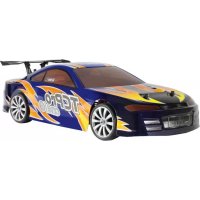
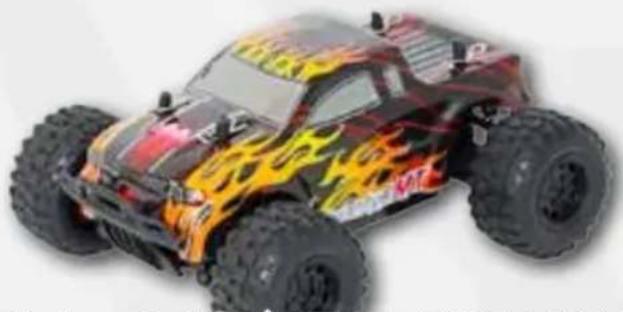
Roller off-road vehicle with flame-patterned racing suit (no visible text or symbols)30602000 twenty4 Series Truck 1:24 RTR 2.4 GHz red 30606000 twenty4 Series Truck 1:24 RTR 2.4 GHz blue
natural_image
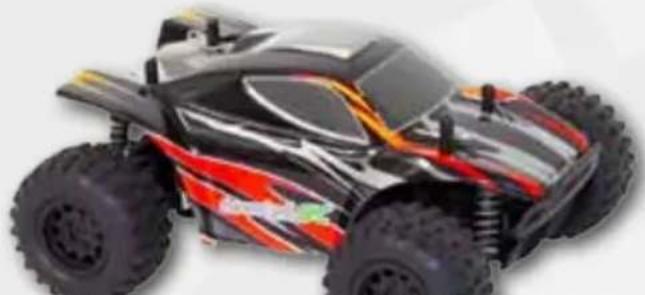
Black and white toy car with red and black stripes, partially covered by large tires (no visible text or symbols)30603000 twenty4 Series SC 1:24 RTR 2.4 GHz black 30607000 twenty4 Series SC 1:24 RTR 2.4 GHz blue
DE
Inhaltsverzeichnis
natural_image
Close-up of a black electronic device showing internal battery compartments with arrows pointing to the sides (no text or symbols visible)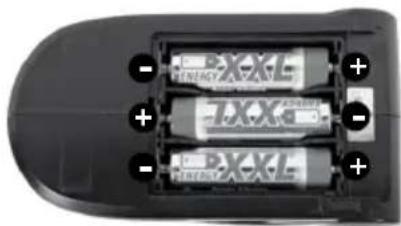
natural_image
Close-up of a black remote control with two batteries and four labeled 'PXXL' (no additional text or symbols visible)natural_image
Close-up of a toy car's front wheel with two batteries labeled 'ENERGY' and 'BXYL', showing battery structure and wiring (no readable text beyond labels)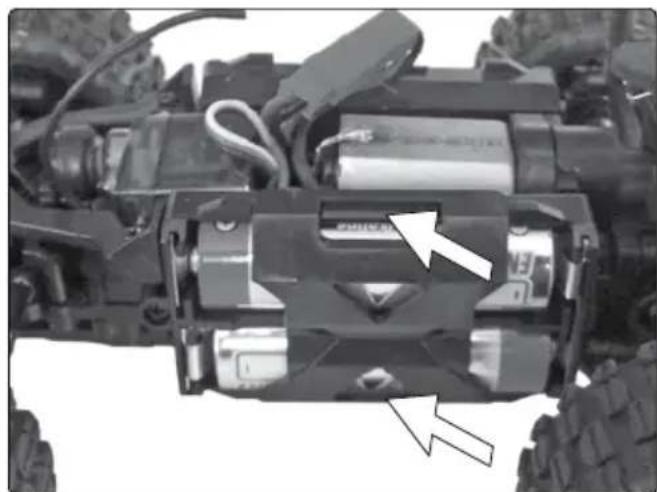
natural_image
Close-up of a mechanical assembly with visible battery, wheels, and a white arrow pointing to a component (no text or symbols)Inbetriebnahme
natural_image
Close-up of a mechanical component with an arrow pointing to a labeled 'ON' (no other text or symbols visible)natural_image
Black-and-white photo of a small toy car with two large tires and an arrow pointing to the front wheel (no text or symbols visible)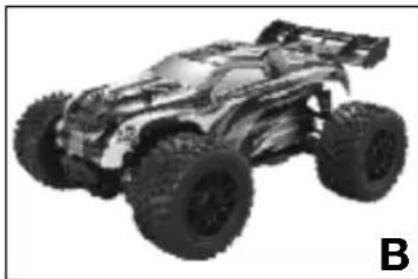
natural_image
Black-and-white photo of a toy car with large tires and front suspension (no visible text or symbols)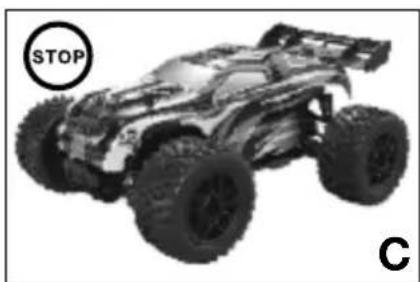
natural_image
Black-and-white photo of a toy car with large tires and a 'STOP' circular marker, labeled 'C' (no text or symbols on the vehicle itself)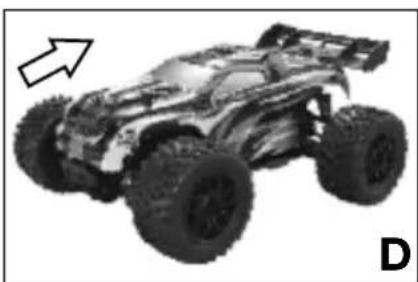
natural_image
Black-and-white photo of a toy car with large tires and a curved arrow pointing to the side (no text or symbols visible)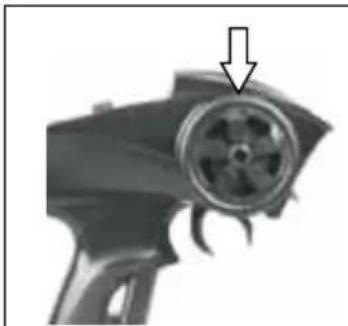
natural_image
Close-up of a mechanical component with a circular dial and arrow indicator (no text or symbols)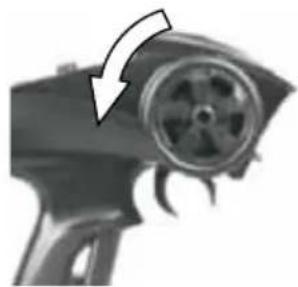
natural_image
Close-up of a handheld electric gun with a circular dial and arrow pointing to the blade (no text or symbols visible)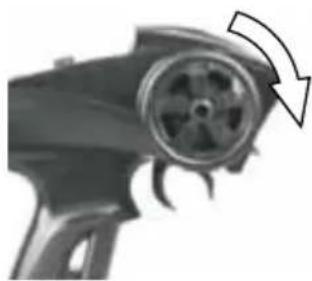
natural_image
Close-up of a handheld electric shaver with a circular impeller and arrow indicating rotation (no text or symbols)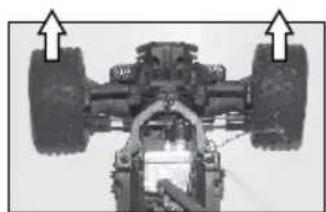
natural_image
Top-down view of a vehicle chassis with two large tires and a visible engine compartment (no text or symbols)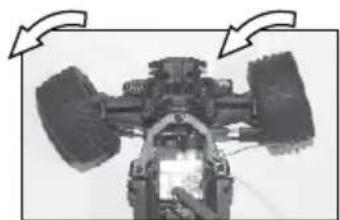
natural_image
Top-down view of a vehicle chassis with three wheels and a handheld device (no visible text or symbols)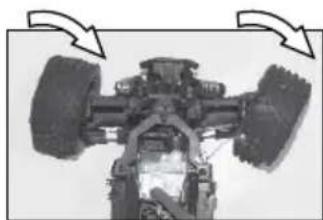
natural_image
Top-down view of a vehicle chassis with visible tires and structural components (no text or symbols)natural_image
Two technical diagrams showing a vehicle's wheel assembly and its side view, with no visible text or symbols.- Cd = Cadmium
- Pb = Blei
• Hg = Quecksilber - Li = Lithium
DE
DE
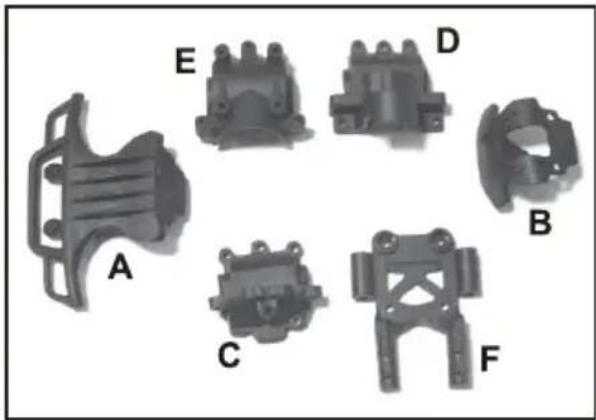
natural_image
Collection of seven different mechanical components labeled A through F, shown in grayscale without any text or symbols.30600013
natural_image
Mechanical assembly diagram showing internal components labeled A and B (no text or symbols beyond labels)30600014
A: Chassis
B: Servohalterung
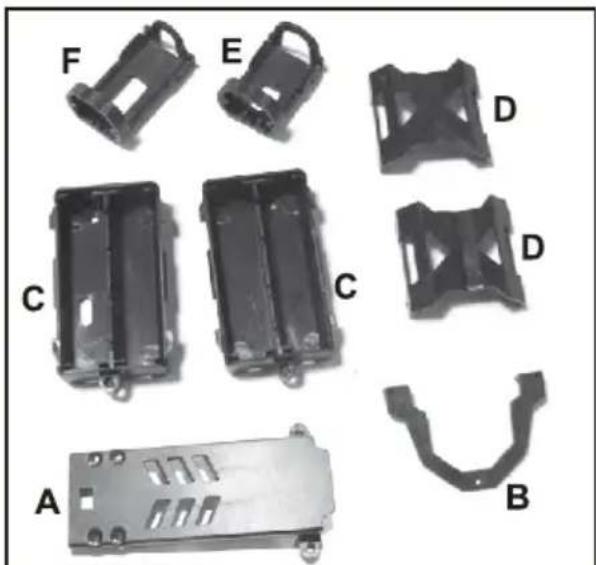
natural_image
Collection of various plastic electrical connectors and housing components, labeled A through F (no text or symbols on parts)30600015
text_image
H A B G C G F A D E E D F30600022
text_image
I J K K H G F E C L L D C A B L L30600017
A: Differenzialgehäuse | K: Differenziallager (6x10x3 mm)
B: Hauptzahnrad (34 Z.) | L: Radlager (5x8x3 mm)
C: Differenzialkegelräder groß (18 Z.)
D: Differenzialkegelräder klein (8 Z.)
E: Wellenritzel 8 Z.
F: Motorritzel 10 Z.
G: Motorritzel 12 Z.
H: Motorritzel 8 Z.
I: Differenzialeinheit
natural_image
Collection of mechanical components labeled A, B, C, D (no text or symbols beyond labels)30600018
text_image
A B C D E F G H I J K M N30600016
text_image
A B D E D G H C F30600019
Scope of delivery 17
Required accessories 17
Explanation of Symbols 17
WARNINGS AND SAFETY NOTES 17
Handling precautions for batteries or rechargeable batteries....19
The remote control system 19
Transmitter 20
BINDING: 20
Insert the batteries: 21
Getting started 21
After the ride: 23
Maintenance....23
Troubleshooting....24
Repairs, Spare parts....24
Specifications 25
Environmental Protection Notes 25
Notes on battery law 25
Declaration of conformity 54
Legal information
This manual is a publication of
All rights including translation, reproductions of any kind, such as photocopying, microfilming or storage in electronic data processing equipment, without the written permission of the publisher, reproduction in whole or part, is prohibited.
This manual corresponds to the technical status of the product at time of printing, changes in technology and equipment reserved. From the text and illustrations of this manual no claims can be derived.
NO LIABILITY FOR PRINTING ERROR! SUBJECT TO CHANGE!
The latest version of this manual can be found on the Internet at www.XciteRC.de
© Copyright 2013 by XciteRC-Modellbau GmbH & Co. KG
Thank you for purchasing a model of the Twenty4 series of XciteRC. This manual contains important instructions for operating your new model. Therefore, please read all instructions in this manual thoroughly before using the model, so that you can operate your model safely.
All company and product names mentioned are trademarks of their respective owners. All rights reserved.
Intended Usage
The Twenty4 is extensively constructed and electrically driven kite ready to fly including motor and speed controller. The control is wireless with the included 2.4 GHz remote control. The model may only be operated on a suitable and sufficiently large area without obstacles.
The product is not a toy and not suitable for children under 14 years of age, by children under 14 years the maintenance and operation of the model must be supervised by an adult.
Read and observe all warnings and safety instructions in this manual and on the packaging before operating!
This manual is part of this product. It contains important information for handling this product. Keep the manual for future reference and also it must be strictly kept and passed on the subsequent sale of the model to the buyer. Failure to follow the operating instructions and the safety instructions may invalidate the warranty.
Scope of delivery
RTR car model, pre-assembled
Transmitter
Manual with spare parts list
Required accessories
3 size AA batteries or rechargeable batteries for the transmitter
4 size AA rechargeable batteries for the car
Tools
Explanation of Symbols

WARNING: These instructions must be strictly observed by the operator! Failure to follow these instructions may interfere with the safe function. These notes are also for your own safety and that of other people!
ATTENTION: this information must be observed by the operator! Failure to follow these instructions can cause damage of many sorts, and the loss of warranty etc.

Information or advice, by which a smooth operation is ensured.

Instructions for care and maintenance to ensure a long duration of life of the product.
WARNINGS AND SAFETY NOTES
The following safety instructions must be strictly observed. For property damage, personal injury or consequential damage caused by improper use or non-observance of the safety instructions the XciteRC Modellbau GmbH & Co. KG accepts no liability. In these cases, the warranty becomes void.
Move your model always with the maximum caution and responsibility, otherwise it may cause damage to other property or even physical injury. We therefore recommend to secure the operation with a third party liability insurance. If you already have a liability insurance policy, check before start-up the model, whether radio-controlled models are covered by a corresponding amount.
EN

- The product contains small parts that can cause injury if swallowed, and must therefore be kept away from children under 3 years.
• The product is not a toy and not suitable for children under 14 years.
- The operation of radio-controlled models requires practice. In the beginning operate your new model therefore with extra caution and familiarize yourself with the response to your commands.
- WARNING: The safe operation requires concentration and quick reaction. Do not operate your model if you are tired or under the influence of drugs or alcohol – risk of accident and injury!
- ⚠️ WARNING: The control of this model is done via radio signals, which can be influenced by the environment. This may cause a suddenly loss of control of your model. Operate your model therefore only with sufficient light within line of sight and in an open area, away from cars, traffic and people – risk of accident and injury!
- Do not operate your model during a thunder storm or near radio towers or power lines.
- Radio remote controlled models may not be operated at any public space by implication (streets, roads, squares or lakes). Before operation please ask where the operation is allowed. This also applies to private property, here the consent of the owner is required.
- ⚠️ WARNING: Keep your fingers or loose clothing or hair away from the rotating parts or wheels - risk of injury!
- Always switch on the transmitter first, then the model. Ⓔ NOTE: during the operation of the transmitter must remain switched on!
- Never operate your model with low transmitter batteries, because this reduces the range of your model dramatically.
- If the drive battery is empty, the model first slow down until it no longer reacts properly to your commands. Stop the operation and change the drive battery or charge it again.
- Pay attention to the instructions and warnings for this and any other equipment used by you (chargers, rechargeable battery packs, etc.).
- WARNING: Keep packaging material, small parts, chemicals and electrical components away from children – risk of accident and injury!
- ATTENTION: Do not drive against obstacles that the model cannot overcome, and stay on full throttle. This can destroy the motor, speed controller or the transmission!
- The model and the transmitter may be neither get humid nor wet, especially the electronic components (receiver, speed controller, servo) and, if used, lithium batteries, are not waterproof! The model may not be used in the rain (or heavy fog), do not drive in wet grass or through puddles or snow.
- WARNING: Fire or explosion due to moisture in lithium batteries!
- Plastic parts (eg. suspension and body) is less flexible and can break more easily at cold temperatures (below 10 °C).
- The modification of the model is not permitted for safety and CE approval regulations, which applies in particular to the transmitter, receiver and speed controller. Maintenance or repairs using original replacement parts are excluded.
- The gears in the servo are made very precisely and with low tolerances, but also very small. Therefore never turn the front wheels by hand, which can seriously damage the servo.
• After use, first turn off the model and then the transmitter.
- WARNING: remove the drive battery from the model and transmitter after use. Store the model never with built-in battery. Fire hazard!
- Store batteries separately on a non-combustible surface.
• The drive components (motor and speed controller) or the car battery may become hot during operation.
WARNING: Risk of burns! Let these components cool down completely after the operation (and also before each battery change)!
Operation of the model is performed solely at the risk of the operator. Only a careful and deliberate operation protects against physical injury and damage to property.
Handling precautions for batteries or rechargeable batteries
- Keep batteries away from children! Never let batteries unattended, as they can be swallowed by children or pets!
- Use only the recommended or equivalent type of batteries / rechargeable batteries.
- ⚠️ WARNING: do not expose batteries / rechargeable batteries to heat or throw into fire - fire or explosion hazard!
- WARNING: insert batteries / rechargeable batteries with the correct polarity, no short-circuiting - fire or explosion hazard!
- If possible, always replace all batteries at the same time, never use new and used batteries and batteries with different charge levels simultaneously.
- Do not use defective or damaged batteries or rechargeable batteries – fire hazard! Risk of chemical burns on contact with skin, use protective gloves!
- ⚠️ WARNING: Do not attempt to recharge non-rechargeable batteries in a charger - fire or explosion hazard!
- Remove the rechargeable batteries from the device before charging.
- Charging may take place only with a suitable charger for the type of battery on a fireproof surface and under constant adult supervision – fire hazard!
- Immediately remove used batteries from the devices.
- NOTE: NiMH batteries must be checked at least every 3 months and, if necessary, recharged, otherwise because of the typic self-discharge they may get deep discharged and damaged! Therefore, better use so-called RTU batteries with a very low self-discharge.
- NOTE: note the specified storage voltage for lithium batteries. Is a completely full or empty lithium battery time stored for a longer time, it can be damaged.
The XciteRC Modellbau GmbH & Co. KG cannot monitor the proper use of the battery or batteries you use, therefore, the warranty is excluded due to incorrect charging or discharging.
The remote control system
Here you get an overview of the remote control system of your Twenty4 and its various features and settings. Before the first flight, you should have read and understood all these functions and settings.
• Make sure that the transmitter is turned off - ON / OFF switch in position O.
- Now open the battery compartment cover on the bottom of the transmitter and insert three AA batteries (or rechargeable batteries) into the battery compartment of the transmitter. Pay attention to the correct polarity!
- Close the battery compartment cover and turn on transmitter – push ON / OFF switch in position I.
- Both LED's must lit (red and green). Ⓔ NOTE: If the green LED is flashing, the model may not be started – crash hazard! Change transmitter batteries immediately (or charge batteries).
- Pay attention to the LED's also during operation. If only the green LED flashes, stop driving as soon as possible. If both LED's flashing, stop immediately and replace transmitter batteries (or recharge the batteries).
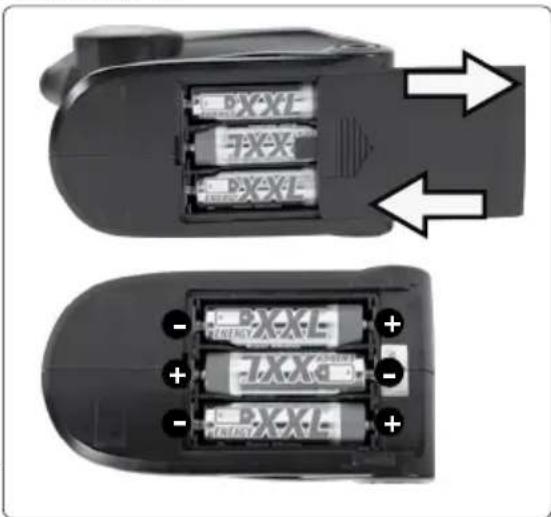
natural_image
Two black remote control devices with visible battery modules and arrows indicating direction (no text or symbols on the devices themselves)EN
Transmitter
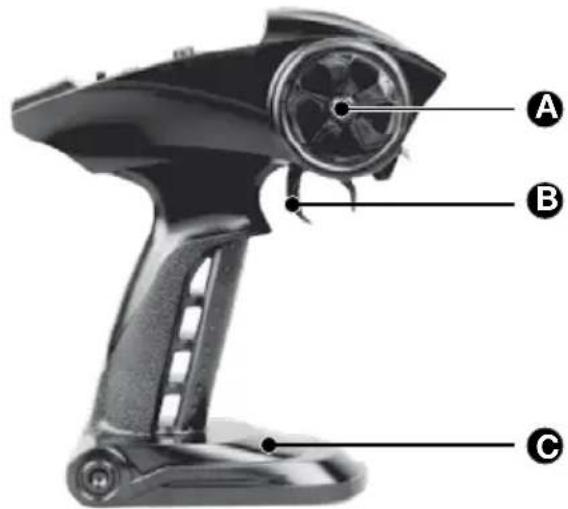
text_image
A B C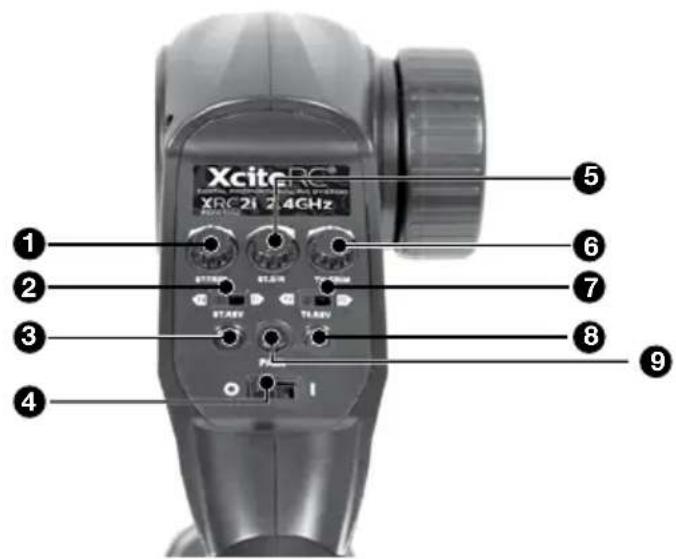
text_image
XciteRC XRC21 2.4GHz ① ② ③ ④ ⑤ ⑥ ⑦ ⑧ ⑨A: Steering wheel: direction right or left
B: Throttle trigger: controls the speed and direction of the model
C: Battery compartment
-
Control trim: adjusts the straight ahead driving
-
Servoreverse steering
-
POWER LED: indicates the battery voltage
-
On / Off Switch: Turns the power of the transmitter ON / OFF
-
Steering Dual Rate: sets the maximum curve radius
-
Throttle trim: adjust the neutral position of the controller (always in the middle position!)
-
Servoreverse throttle
-
BIND-LED: indicates a "bound" receiver
-
BIND (pair)-button

NOTE: the adjuster for the throttle trim TH.TRIM and the servo reverse switches for steering ST.REV and throttle TH.REV must not be adjusted. So check the correct position before every ride: throttle trim to the center position (mark on the adjuster points up), steering reverse: switch in position R, servo reverse throttle: switch also in position N.
BINDING:
The 2.4 GHz receiver of Twenty4 must be once „connected“ with a suitable transmitter, the so-called „binding“ procedure. This ensures that the receiver establishes a connection only with this transmitter and the model can be operated without interference. This process can be repeated any time.
The transmitter and receiver of the Twenty4 are already bound so that you can start flying immediately. Should a rebind gets necessary (eg. after a transmitter change), proceed as follows:
- Make sure that no other 2.4 GHz network (eg. WLAN or other transmitter) sends nearby.
- The distance between transmitter - Twenty4 should be maximum one meter.
- Switch on the vehicle, the red LED on the receiver starts to flash for approx. 5 seconds. Within these 5 sec. do the following:
- Press and hold the bind button on the transmitter, switch on the transmitter. Now release the bind button, the green LED begins to flash.
- After about 5 seconds all LED's (transmitter, receiver) light up permanently, the transmitter is now bound to the vehicle.
- If the model cannot be controlled, repeat the process.
Insert the batteries:
NOTE: use only rechargeable batteries for the vehicle, no alkaline batteries! With alkaline batteries the correct operation is not guaranteed.
WARNING: Make sure to read all safety instructions regarding the use of rechargeable batteries. Also, if necessary, further safety instructions in the manual for your used charger.
WARNING: insert batteries / rechargeable batteries with the correct polarity - fire or explosion hazard!
The contacts of the battery holder in the vehicle can fail by frequently changing the batteries. You recognize that in short breaks while driving. Slightly turn them into contact with a screwdriver so that they fit correctly to the battery cells!

natural_image
Close-up of a heavy-duty off-road vehicle battery pack with visible internal components and mounting holes (no text or symbols)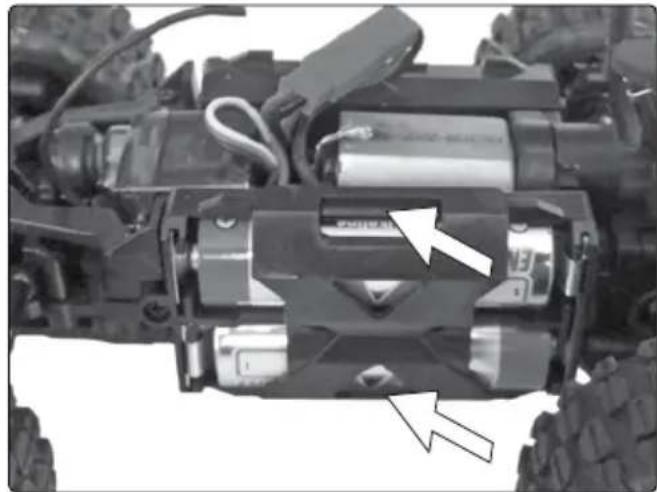
natural_image
Close-up of a mechanical assembly with visible components and a white arrow pointing to a component (no text or symbols)Getting started
Before you start, check all functions of the remote control. Does the vehicle follow exactly and directly your commands? Or does it react delayed or choppy? If yes, do not start anyway, but check transmitter and drive batteries and recharge or replace if necessary.
The run time of your Twenty4 depends on the surface. The maximum run time is reached on a straight and levelled surface. In hilly terrain or grass, the run time is much shorter, also the motor, speed controller and battery gets much warmer. If the battery is weak, the vehicle first gets slower until it finally stops completely. To increase the life time of the drive battery, you should cease operation when the vehicle begins to slow down.
- Switch on the transmitter, ON/OFF-switch in position I.
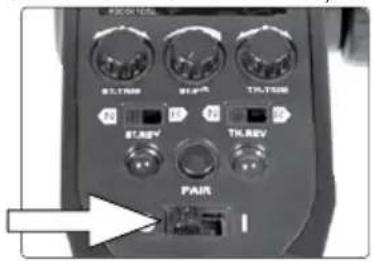
text_image
BUTTER STRAW TH-TRAW STREV TH-REV FAIR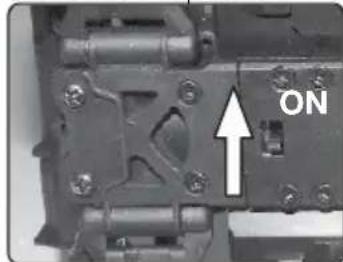
natural_image
Close-up of a mechanical component with a white arrow pointing to a labeled section (no readable text or symbols)-
Switch the vehicle ON. △Note: wait about 5 sec. before you move the throttle trigger. This is needed to connect the transmitter with the receiver properly.
-
Drive:
EN
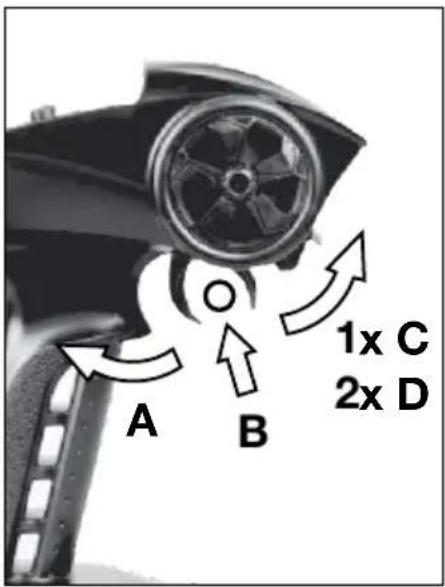
text_image
A B 1x C 2x D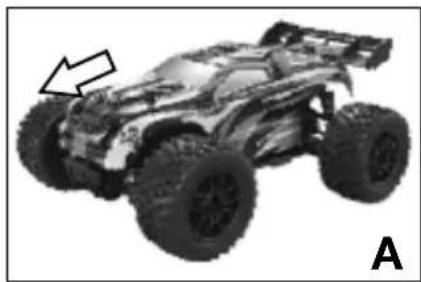
natural_image
Black-and-white photo of a toy car with visible tires and wheels, marked with an arrow and letter A (no text or symbols on the vehicle itself)
natural_image
Black-and-white photo of a toy car with extended tires and exposed suspension (no visible text or symbols)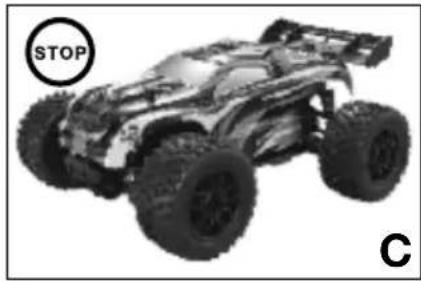
natural_image
Black-and-white photo of a toy car with large tires and a circular stop sign (no text or symbols on the vehicle itself)
natural_image
Black-and-white photo of a small toy car with large tires and a pointing arrow (no text or symbols)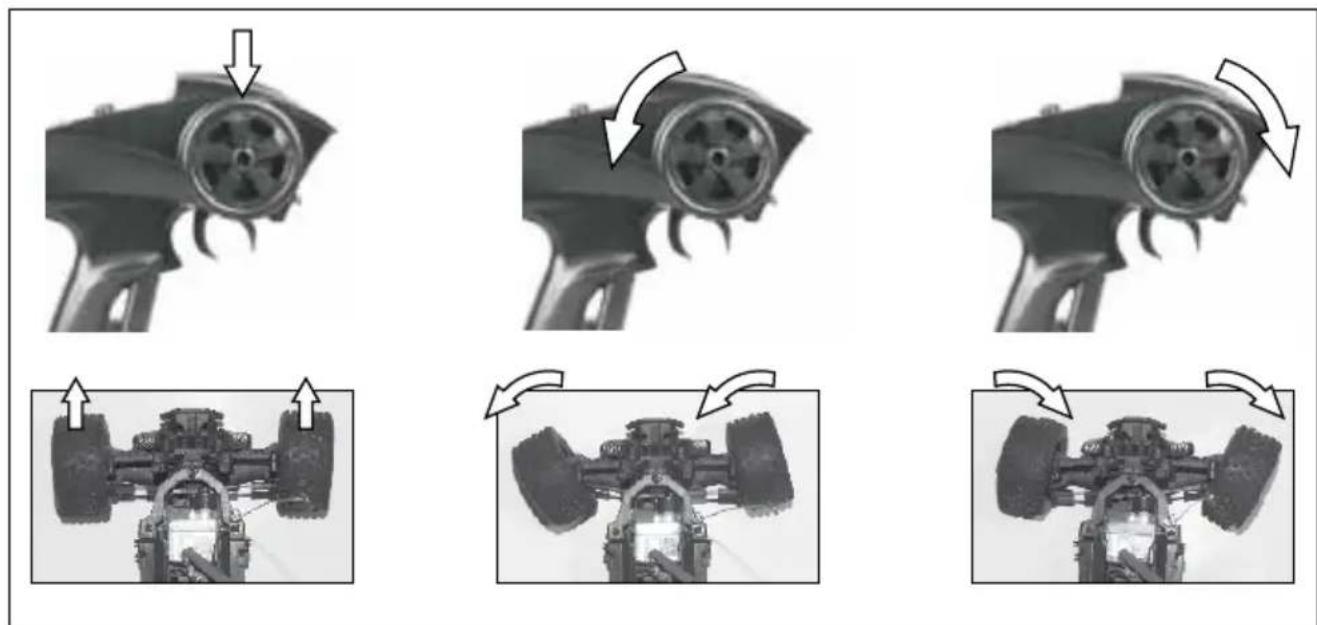
flowchart
graph TD
    A["Top Wheel"] --> B["Left Side"]
    B --> C["Top Wheel"]
    C --> D["Left Side"]
    D --> E["Bottom Gear"]
    E --> F["Right Side"]
    style A fill:#f9f,stroke:#333
    style B fill:#ccf,stroke:#333
    style C fill:#cfc,stroke:#333
    style D fill:#fcc,stroke:#333
    style E fill:#cff,stroke:#333
    style F fill:#ffc,stroke:#333

ATTENTION: The model runs with a fully charged battery up to one hour. In order not to overheat the motor, you should have a breake not later than 15 -30 minutes runtime to cool the engine - fire hazard!
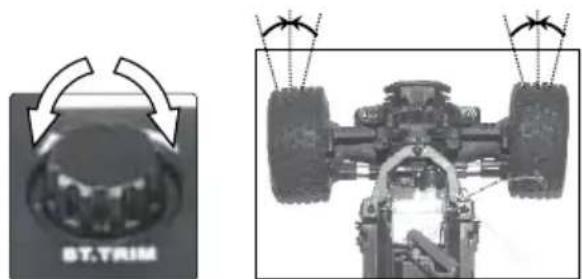
- Steering trim: Drive slowly forward on level ground. Now check the straight ahead driving and adjust with the ST.TRIM knob if necessary.
text_image
BT.TRIM- Optimize steering: the maximum steering angle is adjusted with the ST.D/R knob. More maximum steering results in a tighter wall-to-wall turning circle, the vehicle turns in easier, but maybe a little nervous to drive. First turn the knob to the left - minimum steering angle. Now turn the steering wheel fully to the right (or
left) and turn the adjusting knob ST.D/R slowly to the right until the desired steering angle is reached. You may do this setting also while running your vehicle. WARNING: do not turn too far, otherwise the steering arm press against the front uprights which may damage the steering servo!
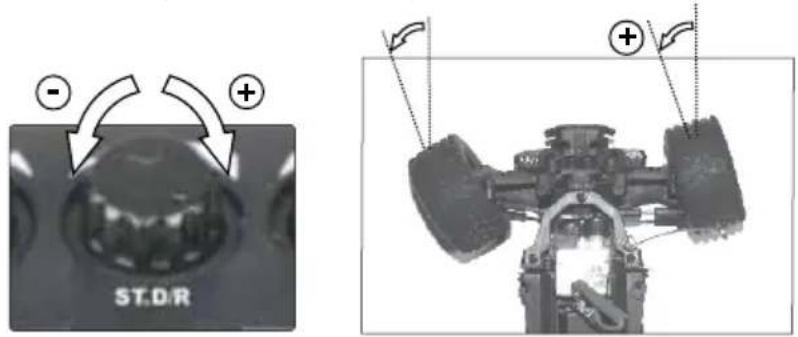
text_image
ST.D.R - +EN
After the ride:
- Switch OFF the vehicle first, then the transmitter (ON/OFF-switch in position O).
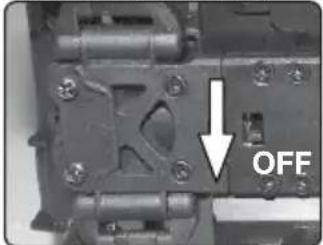
text_image
OFF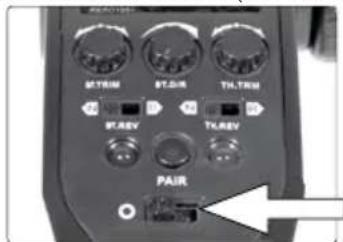
text_image
BTREM BT.DM TN.TRIM W.P.EBV W.P.EBV PAUR- WARNING: remove the batteries from the model – fire hazard!
Maintenance
To have fun with your model over a long period, occasional service work is required to get your model in good condition and to minimize wear.
- Remove dirt or dust depending with compressed air or a soft brush after each use. For stubborn dirt, a harder brush or a toothbrush can be used.
- To clean the body/fuselage no chemical cleaners such as thinners may used, as this damage the plastic of the body/fuselage. Normally a piece of soft cloth is ok, stubborn dirt can be removed with washing-up liquid.
- Check the tightness of all screws and tighten if necessary.
- Also check all connections, cables and power battery / rechargeable battery for damage.
- ⚠️ WARNING: Damaged batteries or rechargeable batteries must not be used again and must be disposed of immediately – fire hazard! Please note the disposal notes at the end of this manual.
- Check the model for worn, broken or jammed parts and gears and repair if necessary.
- ⚠️ WARNING: remove the batteries / rechargeable batteries of the transmitter and model when not in use – fire hazard!
Troubleshooting
| Problem Possible | Cause Solution | |
| Motor does not run | Motor cable unplugged or brokenDrive battery emptyThrottle trim TH.TRIM on the transmitter set incorrectlyMotor broken | Insert the motor cable or solderChange or charge the batteryCheck transmitter, set trim correctlyReplace the motor |
| Vehicle runs backwards | Throttle servo reverse switch TH.REV in R position | Set servo reverse switch in position N |
| Weak motor / no power | Battery is almost emptyThrottle trim TH.TRIM on the transmitter set incorrectlyDrive train does not run smoothlyVehicle is very loudMotor gets very hot | Change or charge the batteryCheck transmitter, set trim correctlyCheck drive train and clean if necessaryCheck pinion clearance, adjust if necessaryAllow motor to cool; check drive train for binding parts and precise gear mesh |
| Vehicle is hard to control | Transmitter LEDs flashing - transmitter batteries almost emptySteering trim ST.TRIM on the transmitter set incorrectlyInterferenceThrottle trim TH.TRIM on the transmitter set incorrectly | Change or charge the batteryCheck transmitter, set trim correctlyTurn off the vehicle and transmitter, make a quick break and then re-trySet throttle trim to the center position |
| Vehicle has no function | LEDs on the transmitter does not light upTransmitter - receiver not boundInterferenceThrottle trim TH.TRIM on the transmitter set incorrectlyCar aerial torn offTransmitter LEDs flashing - transmitter batteries almost emptyDrive battery emptyBattery contacts dirty or bent | Check that vehicle and transmitter are turned onRebind transmitter - receiver (see chapter BINDING)Set throttle trim to the center positionRepair antenna (vehicle)Change or charge the batteryChange or charge the batteryClean the contacts, re-adjust with a screwdriver |
| Vehicle runs very loud | Gear mash between the pinion and main gear set incorrectlyWorn gearsBearings runs tight or worn out | Check gear mesh adjust if necessaryCheck and replace if necessaryCheck and lubricate or replace if necessary |
Repairs, Spare parts
Normal wear and defective parts that result from an accident, are excluded from the warranty. These include in particular:
for car models: bald tires, worn parts and drive gears, or bent / broken suspension, chassis or bodywork ship models: damaged or broken propellers, torn superstructure
airplanes: damage due to improper transport or crash
If you find a part that is defective in material or workmanship right after opening the package, return - before you used it – to your dealer or directly to us and we will send you a replacement.
For the Twenty4 all parts are available as spares. If a part is defective or worn, you can identify it with the help of the exploded view, and the installation guide on pages 47 to 51 shows the correct installation.
In case of problems or questions, please contact your dealer or:
XciteRC Modellbau GmbH & Co. KG - Service, Autenbachstrasse 12, D-73035 Göppingen, Phone +49 / 7161 40 799 50
Email: service@xciterc.de
Spare parts for the Twenty4 you may order in your local hobby shop or online at http://www.XciteRC.de
Specifications
| Length 160-167 mm | |
| Width 121-130 mm | |
| Height 72-75 mm | |
| Wheel Base 102 mm | |
| Weight approx. 315 g | |
| Motor Brushed RC131 | |
| ESC 4x AA (4.8 - 6.0 V DC) | |
| Transmitter XRC 2i 2.4 GHz 2-channel | |
| Transmitter range approx. 50 m | |
Environmental Protection Notes
The symbol of the crossed out dust bin on the product or packaging indicates that this product must be disposed of separately from normal household waste. In order to avoid harmful effects on the environment and human health in the disposal of electrical and electronic equipment and the re-use or recycling are possible. You have the opportunity to submit electrical and electronic equipment free of charge at an
appropriate collecting point in your area. Please check with your city or town across the available depot. You also have the option to return old electrical and electronic equipment which has been purchased from us. We will then perform a proper recycling or reuse.
Possibly contained batteries must be removed from the product and disposed of at the appropriate collecting point.
Notes on battery law
According to the German Battery Act (BattG) the one who sells batteries (and accumulators etc.) or devices containing batteries, we are obliged to draw your attention to the following:
Batteries and rechargeable batteries should not be disposed of with household waste but you are legally obliged to return used batteries. Batteries can contain contaminants that could harm the environment or your health if improperly stored or disposed of. Batteries also contain important raw materials such as iron, zinc, manganese or nickel and can be recycled.
You can send us back the batteries after use either sufficient postage:
returned free of charge or in close proximity (eg in trade or municipal collection). The levy is limited to points of sale to end-users for the disposal of such waste batteries and customary amounts, which the distributor as new batteries in his range or has done.
Batteries containing pollutants are marked with a sign, a crossed-out rubbish bin, and the chemical symbol of the pollutant-heavy metal.
This crossed-out bin means that you must not dispose of batteries with household waste.
Among these characters, see also the following symbols have the following meanings:
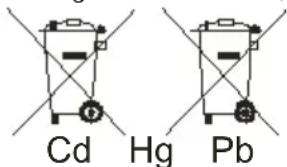
chemical
Chemical structures of cadmium (Cd), magnesium (Hg), and lead (Pb) in a waste bin diagram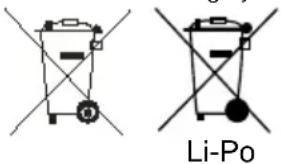
text_image
Li-Po- Cd = cadmium
- Pb = plumbium
- Hg = mercury
- Li = lithium
EN
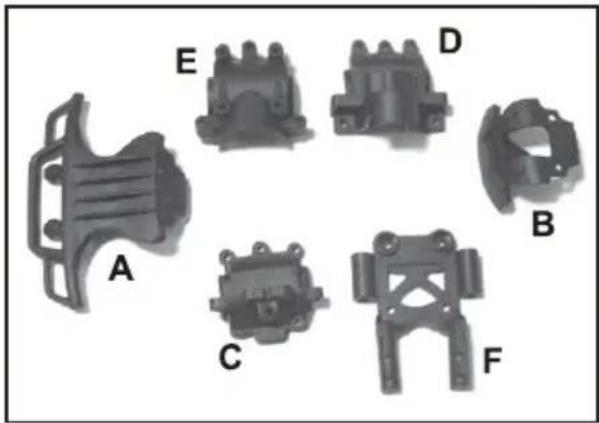
natural_image
Collection of six different mechanical components labeled A through F, shown in grayscale without any text or symbols.30600013
A: Front Bumper (M24 / DB24)
B: Front Bumper (B 24 / T24)
C: Front Gear Box (upper)
D: Rear Gear Box (upper)
E: Rear Gear Box (bottom)
F: Rear Gear Box Plate
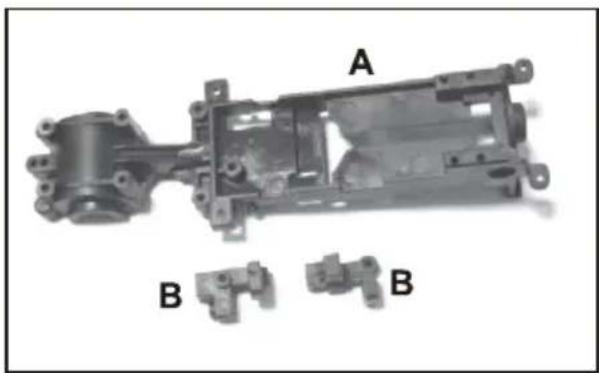
natural_image
Mechanical assembly diagram showing a shaft and housing with two labeled components (A and B), no text or symbols present.30600014
A: Chassis
B: Servo Retainer
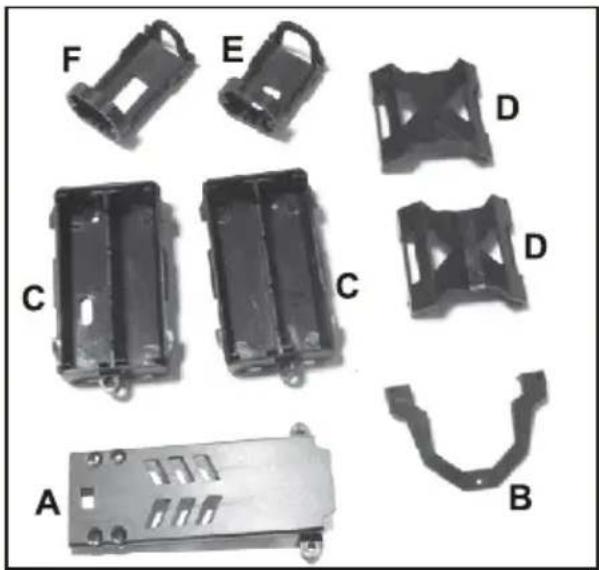
natural_image
Collection of various plastic electrical connectors and components, including housing, contacts, and a bracket (no text or symbols visible)30600015
A: PCB Mount
B: Upper Deck
C: Battery Compartment
D: Motor Mount (RC 131)
F: Motor Mount (RC 180)
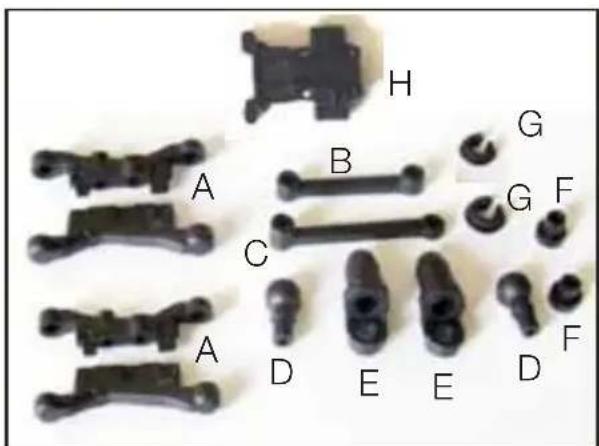
text_image
H A B G C G F A D E E D F30600022
A: Front/Rear Lower Suspension Arm
B: Front Upper Suspension Arm
C: Rear Upper Suspension Arm
D: Lower Shock Mount
E: Shock Body
F: Shock Bush
G: Shock Spring Holder
H: Front Gear Box Mount
The images may vary from the actual parts.
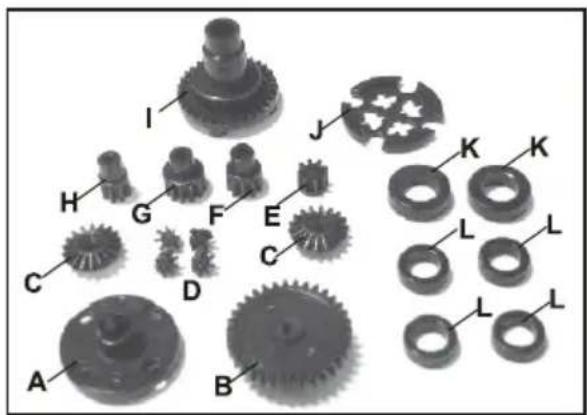
text_image
I J H G F E K C D C L L A B L L30600017
A: Diff. Housing A | K: Diff. Bushing (6x10x3 mm)
B: Spur Gear (34 T) | L: Wheel Shaft Bushing (5x8x3 mm)
C: Diff. Large Bevel Gear (18 T)
D: Diff. Small Bevel Gear (8 T)
E: Drive Pinion Gear (8 T)
F: Motor Pinion (10 T)
G: Motor Pinion (12 T)
H: Motor Pinion (8 T)
I: Diff. Housing B
J: Diff. Small Bevel Gear Mount
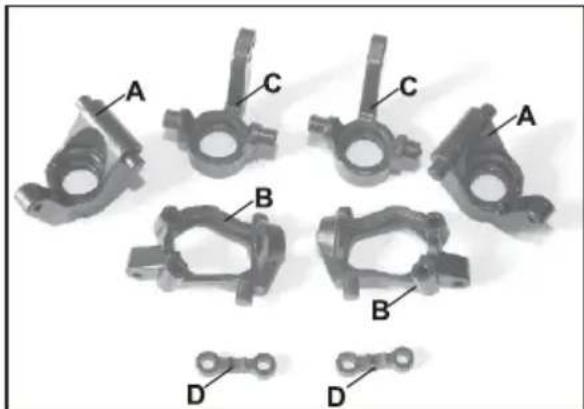
natural_image
Collection of mechanical components labeled A, B, C, D (no text or symbols beyond labels)30600018
A: Rear Uprights (Left/Right)
B: Front Uprights (Left/Right)
C: Front Steering Hubs (Left/Right)
D: Front Steering Hub Fasteners
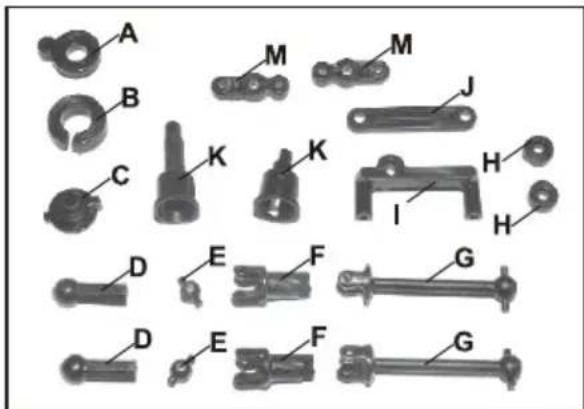
text_image
A B C D E F G H I J K M N30600016
A: Servo Saver Part 1 | K: Diff. Outdrive (Long + short)
B: Servo Saver Part 2 | M: Steering Turning Arm
C: Servo Saver Part 3
D: Steering Linkage Set End
E: Drive Joint Ball
F: Wheel Shaft
G: Drive Shaft
H: Main Drive Bushing (2x6x2.5 mm)
I: Steering Bushing Unit
J: Steering Ackerman Plate
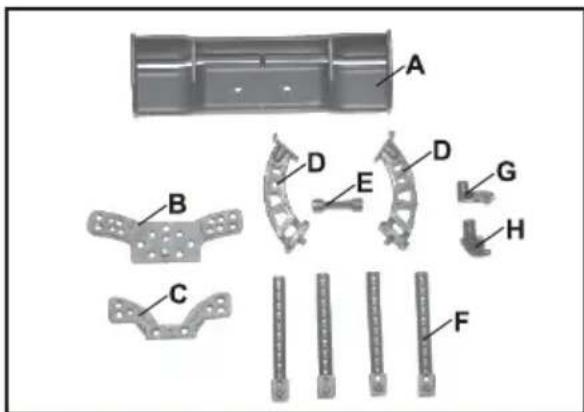
text_image
A B C D E D G H F30600019
A: Rear Wing (B24 / T24 only)
B: Rear Shock Tower
C: Front Shock Tower
D: Wing Stay (B24 / T24 only)
E: Wing Post (B24 / T24 only)
F: Body Posts (T24 / MT24 / DB24 only)
G: Front Body Post (B24 only)
H: Rear Body Post (B24 only)
The images may vary from the actual parts.
FR
Sommaire
natural_image
Close-up of a black electronic device showing two 3D battery modules with arrows pointing to one (no text or symbols visible)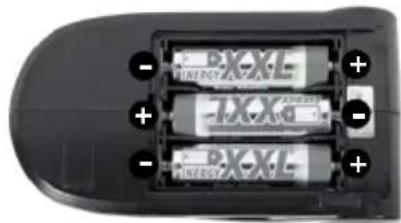
natural_image
Close-up of a black remote control with four batteries (DX-XXL, -IX-XG, -D-XL) and power connections marked with plus signs (no readable text or symbols beyond labels)natural_image
Close-up of a heavy-duty vehicle battery pack with visible internal components and mounting holes (no text or symbols)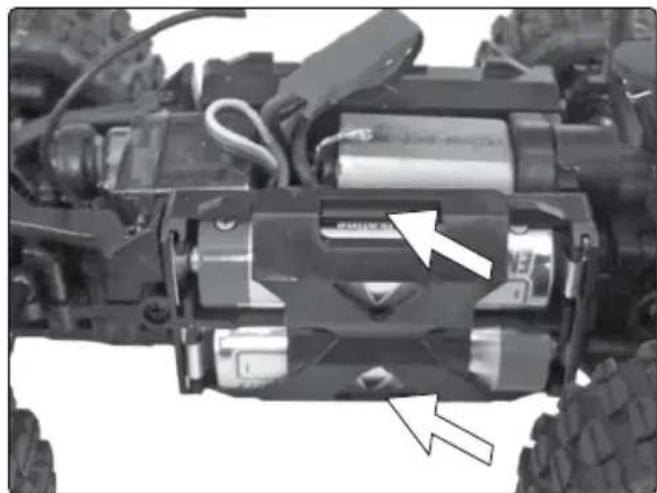
natural_image
Close-up of a mechanical assembly with visible components and a white arrow pointing to a component (no text or symbols)FR
FR
Mise en service
natural_image
Close-up of a mechanical component with bolt holes and an arrow pointing to a labeled section (no readable text or symbols)natural_image
Black-and-white photo of a toy car with visible tires and wheels, marked with an arrow and letter A (no text or symbols on the vehicle itself)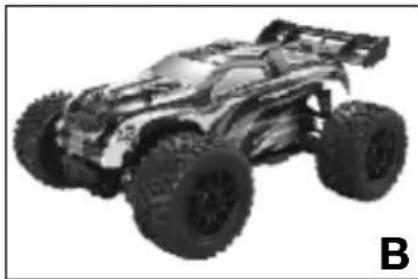
natural_image
Black and white photo of a toy car with large tires, no visible text or symbols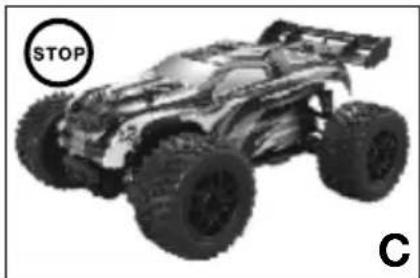
natural_image
Black-and-white photo of a toy car with visible tires and wheels, marked with a 'STOP' circular icon and letter 'C' (no text or symbols on the vehicle itself)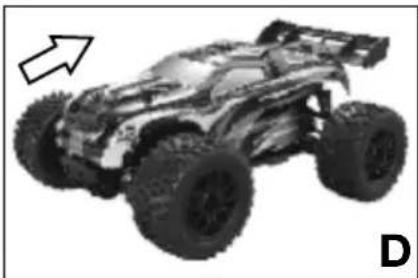
natural_image
Black-and-white photo of a small electric vehicle with visible tires and front suspension (no text or symbols)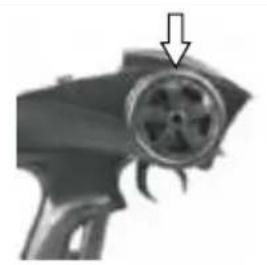
natural_image
Close-up of a mechanical component with a circular dial and arrow indicator (no text or symbols)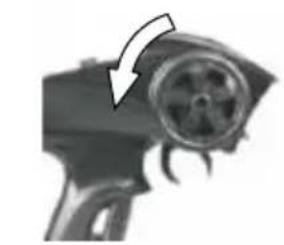
natural_image
Close-up of a handheld device with a circular dial and arrow indicator (no visible text or symbols)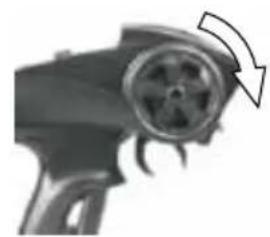
natural_image
Close-up of a handheld electric shaver with a circular dial and arrow indicating rotation (no text or symbols)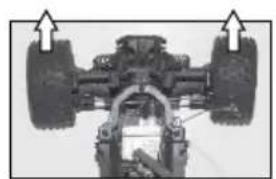
natural_image
Top-down view of a vehicle chassis with two wheels and suspension components (no visible text or symbols)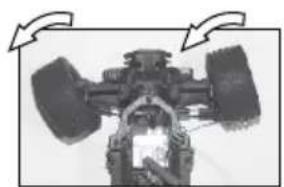
natural_image
Top-down view of a vehicle chassis with visible structural components and motion arrows (no text or symbols)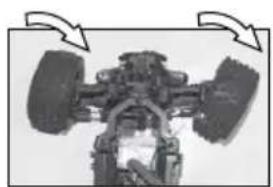
natural_image
Top-down view of a vehicle chassis with visible wheels and structural components (no text or symbols)natural_image
Collection of six labeled mechanical components (A–F) shown in grayscale, arranged in a circular layout without any text or symbols.30600013
natural_image
Exploded view of a mechanical assembly with labeled components A and B (no text or symbols beyond labels)30600014
A: Châssis
B: Support de Servo
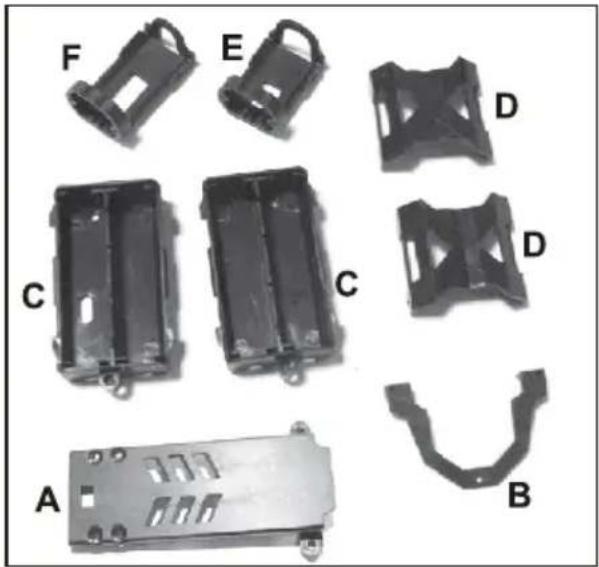
natural_image
Collection of various plastic electrical connectors and components, including fuses, housing, and a metal bracket (no text or symbols visible)30600015
text_image
H A B G C G F A D E E D F30600022
text_image
A B C D E F G H I J K L L L L K30600017
natural_image
Collection of mechanical components labeled A, B, C, D (no text or symbols beyond labels)30600018
text_image
A B C D E F G H I J K M N30600016
text_image
A B C D E D G H F30600019
Suspension Arm Hinge Pin (8)
Goupille bras (8)
30600003

Steering Linkage Screwbolt (8)
Steering Ball Bolt (8)
Rotules de direction (8)
30600006
Steering Bushing Pin (12)
Support de direction (12)
30600007
Châssis, support servo
30600015
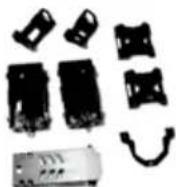
Battery Compartment - PCB Plate
natural_image
Collection of mechanical parts including bolts, shafts, and rods (no text or symbols visible)Antriebswellen, Servo Saver Drive Shaft Ass., Servo Saver Arbre de transmission, servo saver
text_image
Scanned image of Chinese characters and symbols, possibly from a document or labelnatural_image
Two black tire tires with textured soles, no visible text or markingsRäder Twenty4 Truggy komplett (4) Twenty4 Truggy Wheel complete (4) Pneu Twenty4 Truggy collé (4)
30600025
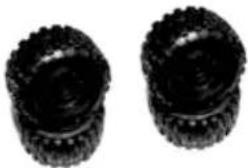
natural_image
Two black mechanical components with textured surfaces, no visible text or symbolsRäder Twenty4 MT/SC komplett (4) Twenty4 MT/SC Wheel complete (4) Pneu Twenty4 MT/SC collé (4)
61500001
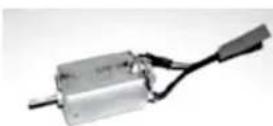
Motor RC131
Motor RC131
Moteur RC131
54100002
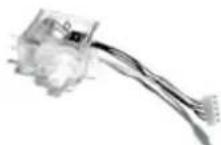
Servo für 1:24 Serie 3-adrig
Servo for 1:24 Series 3-wire
Servo pour 1:24 series à 3 brins
30600028
natural_image
Close-up of a circuit board with wires and components (no visible text or symbols)natural_image
Model of a silver and silver car (no visible text or symbols)Karosserie Twenty4 Truggy silber/blau Twenty4 Truggy Body silver/blue Carrosserie Twenty4 Truggy argent/bleu
30600032
natural_image
Colorful toy car with black, yellow, and red body (no visible text or symbols)Karosserie Twenty4 Truggy schwarz/rot Twenty4 Truggy Body black/red Carrosserie Twenty4 Truggy noir/rouge
30600033
natural_image
Blue toy car with white sole, isolated on white background (no text or symbols)Karosserie Twenty4 Truck schwarz/blau Twenty4 Truck Body black/blue Carrosserie Twenty4 Truck noir/bleu
30600034
natural_image
3D rendered model of a car with visible internal components and red highlights (no text or symbols)Karosserie Twenty4 Truck schwarz/rot Twenty4 Truck Body black/red Carrosserie Twenty4 Truck noir/rouge
30600035
natural_image
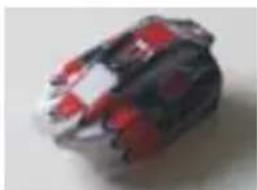
Close-up of a mechanical component with red and black surfaces (no visible text or symbols)Karosserie Twenty4 Buggy schwarz/rot Twenty4 Buggy Body black/red Carrosserie Twenty4 Buggy noir/rouge
30600036
natural_image
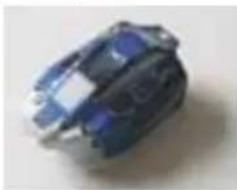
Close-up of a blue and silver mechanical component (no visible text or symbols)Karosserie Twenty4 Buggy schwarz/blau Twenty4 Buggy Body black/blue Carrosserie Twenty4 Buggy noir/bleu
30600037
natural_image
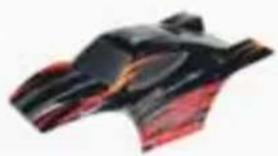
Abstract black and red geometric shapes with no text or symbolsKarosserie Twenty4 SC schwarz/rot Twenty4 SC Body black/red Carrosserie Twenty4 SC noir/rouge
30600038
natural_image
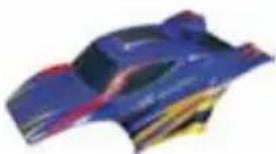
Abstract 3D rendering of a curved surface with blue, red, and yellow gradients (no text or symbols)Karosserie Twenty4 SC blau/gelb Twenty4 SC Body blue/yellow Carrosserie Twenty4 SC blue/jaune
30600039
Karosserieunterlagscheiben (12)
Body Post Pad (12)
Rondelles carrosserie (12)
50100001
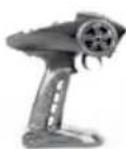
Sender XRC2i 2.4 GHz
Transmitter XRC2i 2.4 GHz
Emetteur XRC2i 2.4 GHz
30600100
natural_image
Close-up of a metallic electrical component with wires and a black connector (no visible text or symbols)Tuningmotor RC180
Tuningmotor RC180
Moteur tuning RC180
30600102
Kugellagersatz 1:24 Serie (14)
Ball Bearing 1:24 series (14)
natural_image
Two metallic mechanical brackets with bolt holes, shown from different angles (no text or symbols visible)Aluminum Shock Tower FR/RR
natural_image
Two metallic mechanical linkages or brackets, no text or symbols visibleAlu-Querlenker vo./hi.
Aluminum Lower Arms FR/RR
Alum. Motor Heat Sink
natural_image
Two identical mechanical linkages with circular ends and segmented ends, shown in grayscale (no text or symbols)Alum. Front Upper Adjustable Arms
Alum. Rear Upper Adjustable Arms
Diff. complete with Steel Outdrives
Alum Uprights/Hubs front (4)
Alum. Uprights/Hubs rear (pair)
Included are 3 different pinions. Re-adjust the gear mesh between the spur gear and motor pinion when installing.
text_image
Diagram illustrating the working principle of battery charging, showing charge distribution and polarity changes across different charging devices.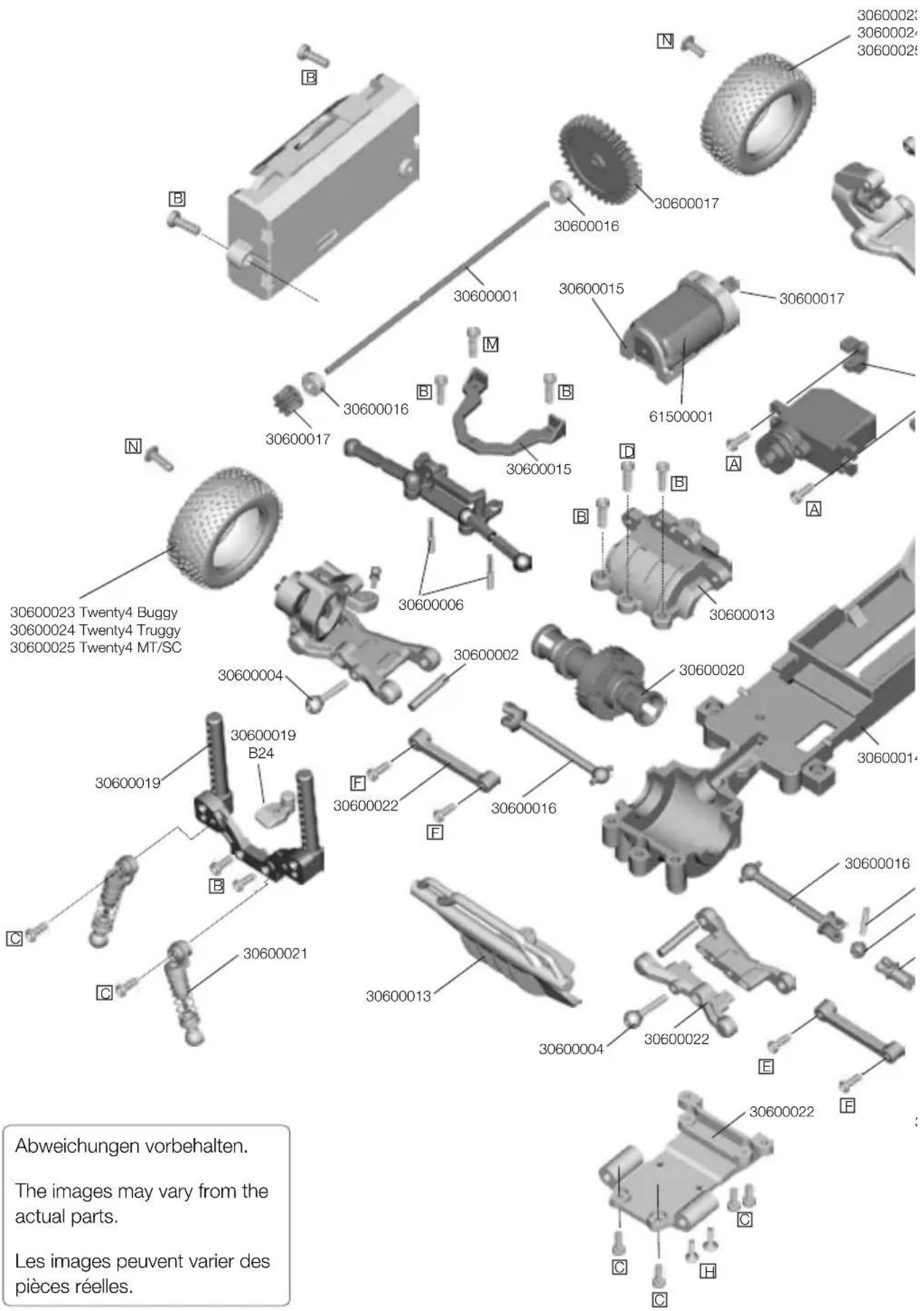
text_image
30600023 Twenty4 Buggy 30600024 Twenty4 Truggy 30600025 Twenty4 MT/SC Abweichungen vorbehalten. The images may vary from the actual parts. Les images peuvent varier des pièces réelles.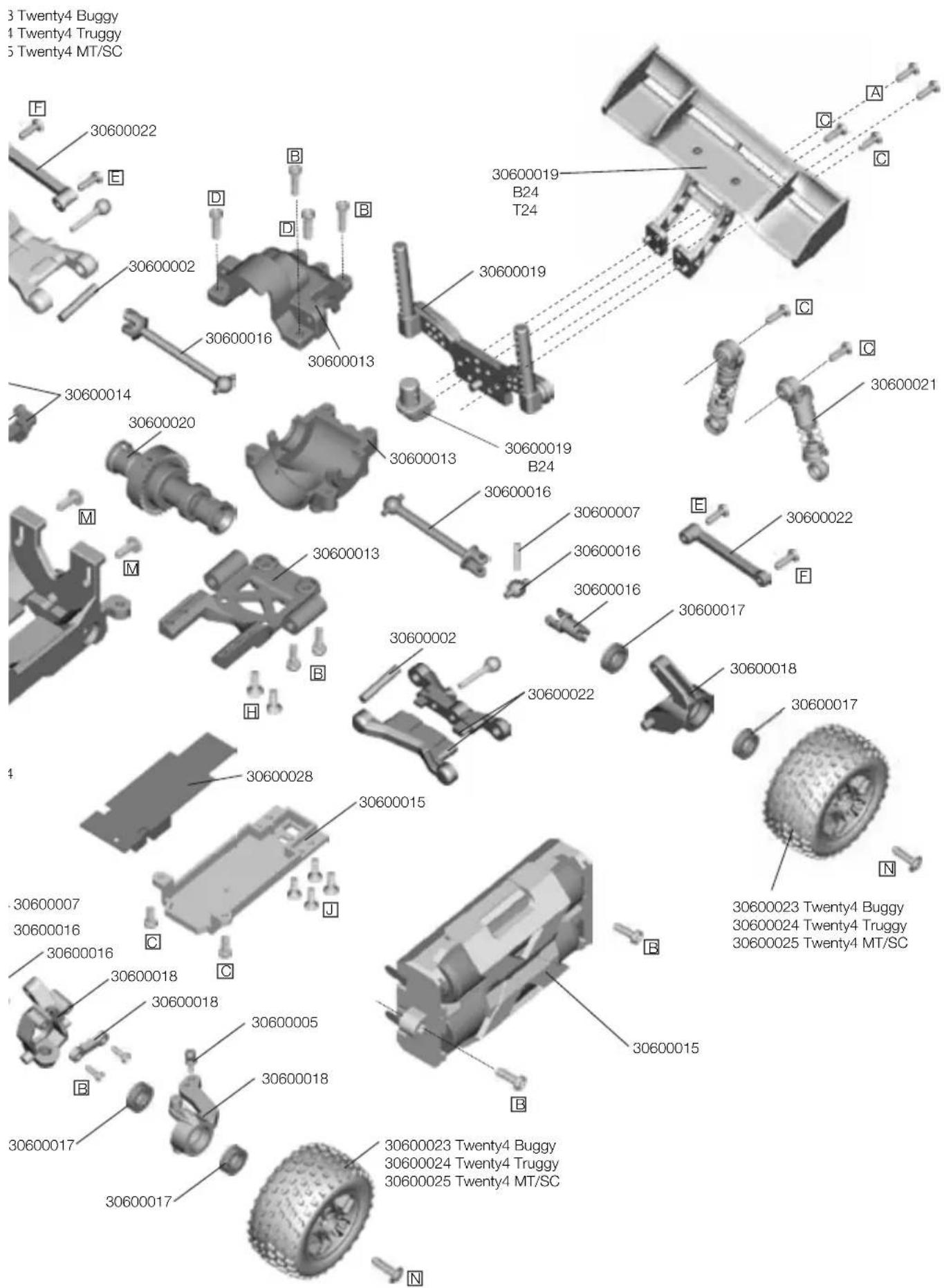
text_image
3 Twenty4 Buggy 4 Twenty4 Truggy 5 Twenty4 MT/SC 30600022 30600002 30600016 30600013 30600019 B24 T24 30600019 30600019 B24 30600014 30600020 30600013 30600013 30600019 B24 30600016 30600017 30600022 30600018 30600017 30600028 30600015 30600016 30600018 30600018 30600018 30600017 30600017 30600017 30600023 Twenty4 Buggy 30600024 Twenty4 Truggy 30600025 Twenty4 MT/SC 30600015 30600015 30600023 Twenty4 Buggy 30600024 Twenty4 Truggy 30600025 Twenty4 MT/SC NCE
EN The XciteRC Modellbau GmbH & Co. KG declare that this product complies with the essential requirements and other relevant regulations of the directives R&TTE 1999/5/EC and RoHS 2011/65/EC.
The detailed Declaration of Conformity can be found at www.XciteRC.com at the respective product link Declaration of Conformity or via E-mail: info@xciterc.de.