FP 812 E - Washing machine PROLINE - Free user manual and instructions
Find the device manual for free FP 812 E PROLINE in PDF.



| Product type | Washing machine |
| Brand | Proline |
| Model | FP 812 E |
| Washing capacity | 8 kg (dry laundry) |
| Maximum spin speed | 1200 rpm |
| Energy efficiency class | A+++ |
| Annual energy consumption | 196 kWh/year |
| Annual water consumption | 11000 L/year |
| Spin efficiency class | B |
| Height | 850 mm |
| Width | 595 mm |
| Depth | 565 mm |
| Weight | Approximately 70 kg (estimated) |
| Power supply | 220-240 V ~ 50 Hz |
| Nominal power | 2000 W |
| Water pressure | 0.05 - 1 MPa |
| Number of programs | 12 programs |
| Main programs | Cotton, Eco, Synthetics, Delicate, Sport, Mix, Wool, Rinse+Spin, Spin, Baby, Quick wash |
| Delay start function | 3 h, 6 h, 9 h or 12 h |
| Program memory function | Yes (Mem.Prg) |
| Child safety | Key lock |
| Installation type | Freestanding |
| Regular cleaning | Water inlet filter, drain pump, drum, detergent drawer |
| Country of manufacture | Not specified (estimation: China) |
Frequently Asked Questions - FP 812 E PROLINE
User questions about FP 812 E PROLINE
0 question about this device. Answer the ones you know or ask your own.
Ask a new question about this device
Download the instructions for your Washing machine in PDF format for free! Find your manual FP 812 E - PROLINE and take your electronic device back in hand. On this page are published all the documents necessary for the use of your device. FP 812 E by PROLINE.
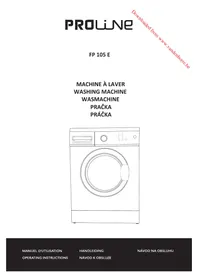
USER MANUAL FP 812 E PROLINE
DRUM WASHING MACHINE
TROMMELWASMACHINE
BUBNOVÁ PRAČKA
BUBNOVÁ PRÁČKA
MANUEL D'UTILISATION
OPERATING INSTRUCTIONS
HANDLEIDING
NAVOD KOBSLUZE
NAVOD NA OBSLUHU
TABLE DES MATIÈRES
Darty Plc © UK: EC1N 6TE 18 / 09 / 2014
CONTENTS
WARNING 20
IMPORTANT SAFETY INSTRUCTIONS 23
DESCRIPTION OF THE APPLIANCE 22
INSTALLATION 23
CONTROL PANEL 24
OPERATION 25
Washing for the first time. 25
25
Washing Clothes. 25
Programme chart. 27
Changing the programme, temperature and spin speed during operation 29
Washing Tips and Hints 29
CLEANING AND MAINTENANCE 31
Cleaning the exterior 31
Cleaning the drum 31
Repairing a frozen washing machine 31
Cleaning the detergent drawer and recess 32
Cleaning the inlet hose and the inlet filter 32
Cleaning the drain pump 33
TROUBLESHOOTING 33
TECHNICAL DATA SHEET 34
WARNING
This appliance is intended for domestic household use only and should not be used for any other purpose or in any other application, such as for non-domestic use or in a commercial environment.
This appliance can be used by children aged from 8 years and above and persons with reduced physical, sensory or mental capabilities or lack of experience and knowledge if they have been given supervision or instruction concerning use of the appliance in a safe way and understand the hazards involved. Children shall not play with the appliance. Cleaning and user maintenance shall not be made by children without supervision.
If the supply cord is damaged, it must be replaced by the manufacturer, its service agent or similarly qualified persons in order to avoid a hazard.
The new hose-sets supplied with the appliance are to be used; old hose-sets should not be reused.
For the details concerning the method of cleaning, please see section "Cleaning and maintenance" on pages 31-33.
CAUTION: Do not connect to the hot water supply.
The openings must not be obstructed by a carpet.
The water pressure must not be less than 0.05 MPa and not greater than 1 Mpa .
The maximum mass of dry clothes to be used in the washing machine is 8kg .
IMPORTANT SAFETY INSTRUCTIONS
- Keep the packing materials of the appliance away from children to avoid hazards.
- Do not plug the appliance to the power supply with wet hands.
- Never touch the appliance with wet hands or feet.
- In the event of any failure, first unplug the appliance and close the water tap.
- Keep the packing materials of the appliance away from children to avoid hazards.
- Do not plug the appliance to the power supply with wet hands.
- Never touch the appliance with wet hands or feet.
- In the event of any failure, first unplug the appliance and close the water tap.
- Do not attempt to repair by yourself. Please contact your authorised service agen
- Do not exceed the maximum loading capacity.
- The glass door becomes very hot during the washing cycle. Keep children and pets away from the appliance whilst it is in operation.
- Always unplug the appliance and turn off the water supply after use.
DESCRIPTION OF THE APPLIANCE
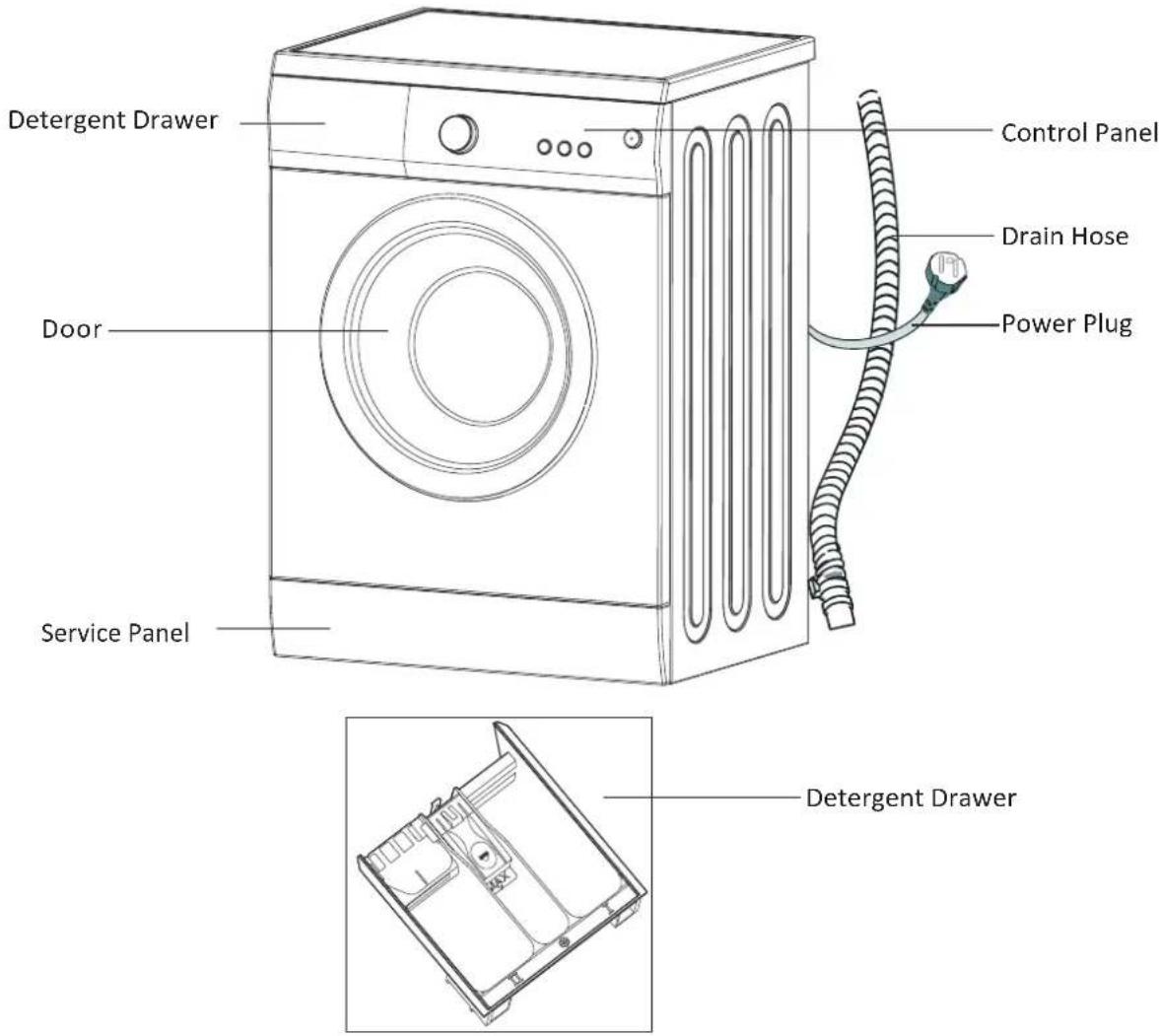
Accessories
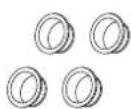
Transport hole plug
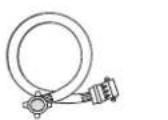
Water inlet pipe
INSTALLATION
Unpacking
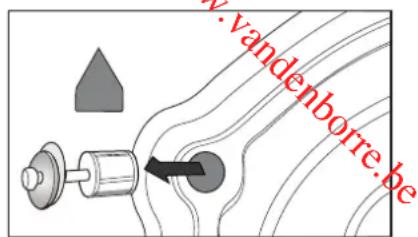
All transit bolts at the rear of the appliance and packing must be removed before using the appliance.
Keep all packaging away from children.
Keep all the transit bolts for re-use in case the appliance is to be transported again.
Positioning
Install the appliance on a flat hard floor.
Make sure that there is sufficient air circulation around the appliance.
Do not install the appliance on the carpet floor.
Levelling
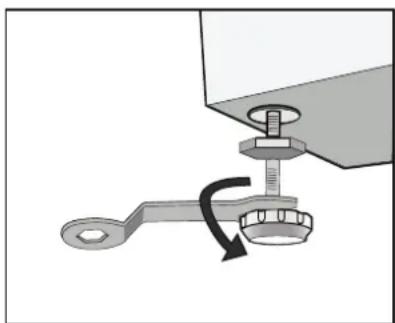
Level the appliance by raising or lowering the feet.
Loosen the lock nut using a spanner (not supplied) and turn the foot by hand until it contacts the floor.
Hold the foot with one hand and fasten the nut against the cabinet with a spanner.
Never put cartons, wooden blocks or similar materials under the machine to balance the irregularities on the level of the ground.
Accurate levelling prevents vibration, noise and displacement of the appliance during operation.
Electrical connection
Your washing machine works with 220-240V and 50Hz.
Electrical connections must be carried out by a qualified technician in compliance with the current safety regulations.
Your washing machine must be properly earthed. We will not be held responsible for any damage that may occur as a result of usage without correct earth connection.
Do not use extension leads or multi sockets.
Water inlet
Screw one end of the inlet hose on the back of the appliance.
The appliance must be connected to a cold water supply.
Connect the other end of the inlet hose to a tap with a 3/4'' thread.
Make sure that the water inlet hose is not twisted or blocked.
Water drainage
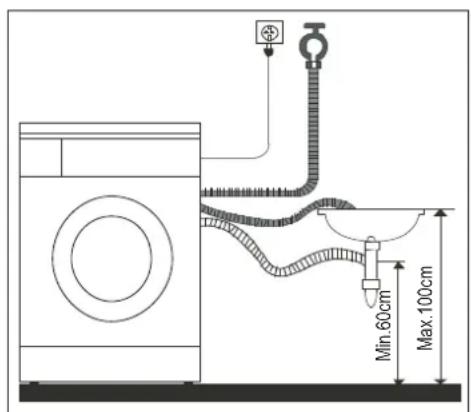
To plumb in the appliance, please use one of the following methods.
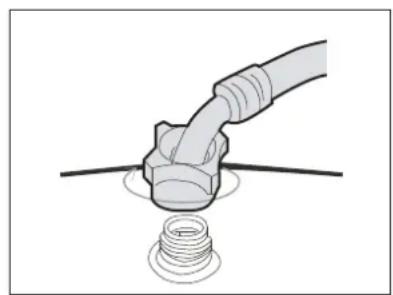
1.Push the hose firmly into a drainage standpipe.
OR
- Connect the drain hose onto a sink outlet spigot securely.
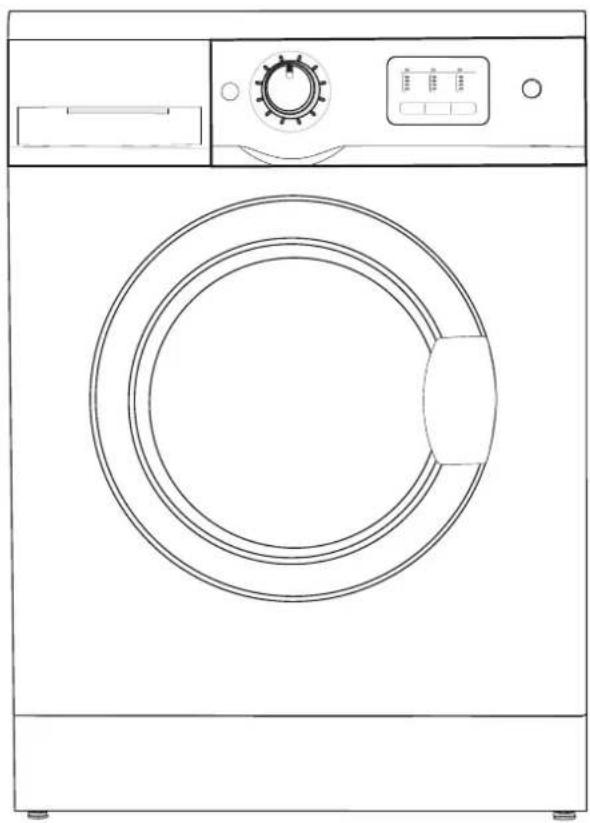
CONTROL PANEL
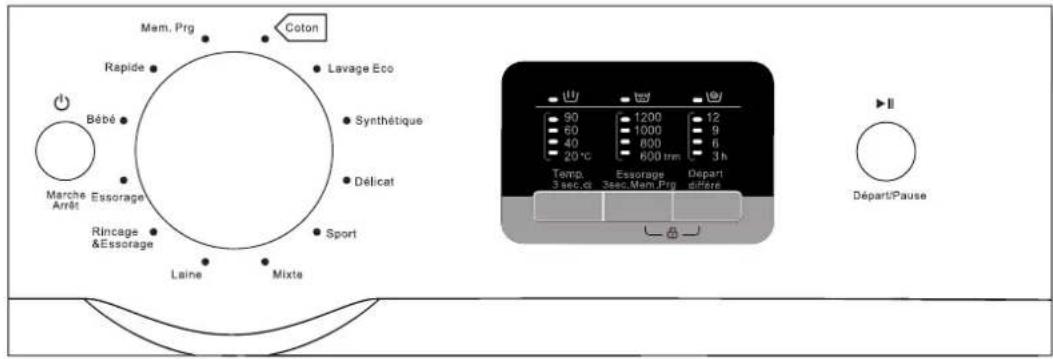
FP 812
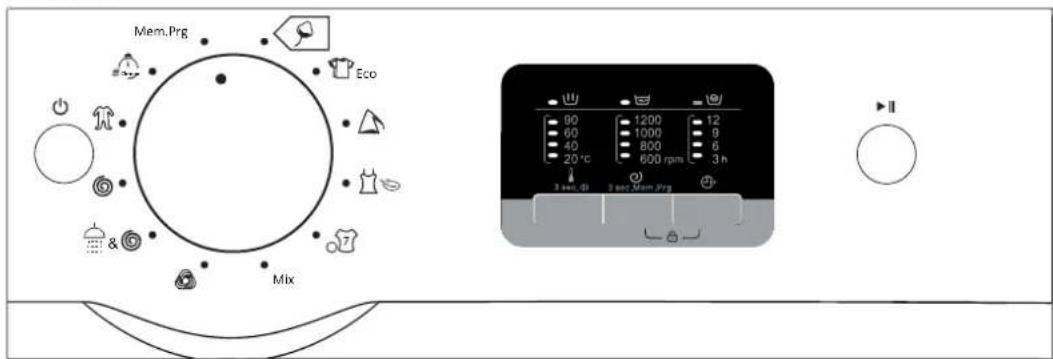
FP 812 E
| Programme knob | Turn the knob to select the desired programme. There are 12 programmes available. |
| Temp. 3 sec. / 3 sec. | Press the button repeatedly to select the temperature. The corresponding temperature indicator light will illuminate. Press and hold the button for 3 seconds, a beep will be heard and then signal function will be disabled. To activate this function, press and hold the button again for 3 seconds. |
| Temperature/Signal button | |
| Essorage 3sec.Mem.Prg / 3 sec.Mem.Prg | Press the button repeatedly to select the spin speed. The corresponding spin speed indicator light will illuminate. 1. Turn the knob to select a programme to be memorised. - If required, set the desired spin speed and washing temperature. 2. Press and hold the button for 3 seconds to memorise the programme. 3. Turn the knob to the Mem. Prg position and the memorised programme will be selected. The default factory memory programme is cotton. |
| Spin speed/Memory Programme button | |
| Départ différé / ∅ | Press the button repeatedly to select the delay time (3H, 6H, 9H or 12H) and the corresponding indicator light will illuminate. The appliance will start operation after the set time. |
| Delay button | |
| Start/Pause button | Press the button to start the desired programme. Press again to pause. |
| Power button | Press the button once to turn the appliance on. Press again to turn the appliance off. |
OPERATION
Washing for the first time
Before washing clothes for the first time, you must run a complete cycle without clothes.
- Press .
- Pour a little detergent into compartment II in the detergent drawer.
- Turn on the water supply to the appliance.
- Press ||
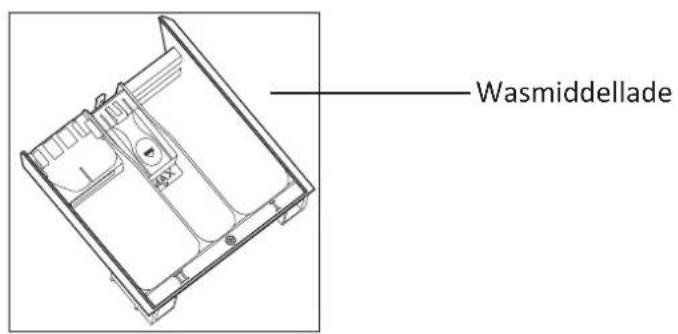
Compartment I: Detergent for pre-wash.
Compartment II: Detergent for main wash.
Compartment Additives, e.g. fabric softener.
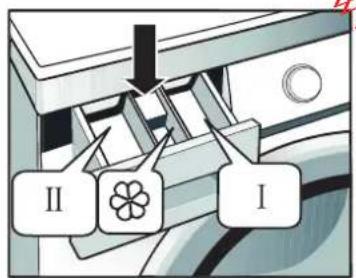
Putting detergent in the appliance
1.Pull out the detergent drawer.
2.Add laundry detergent into compartment II.
3.Add softener into Compartment as desired.
4.Add pre-wash detergent into compartment I as desired.
NOTE: Your detergent consumption will change according to your clothes' level of dirtiness. For slightly dirty clothes, do not pre-wash and put a small amount of detergent in the compartment II of the detergent drawer. To know what quantity of detergent you should use for your clothes, refer to the instructions on the packing of the detergents.
CAUTION: Concentrated softener or additive shall be diluted with a little water before being poured into the compartment otherwise it may obstruct the siphon and prevent the flow of .softener
Washing Clothes
When operating the machine, BEND DOWN AND KEEP YOUR EYES AT THE SAME LEVEL AS THE CONTROL PANEL TO CHECK THAT YOU HAVE SELECTED THE CORRECT PROGRAMME.
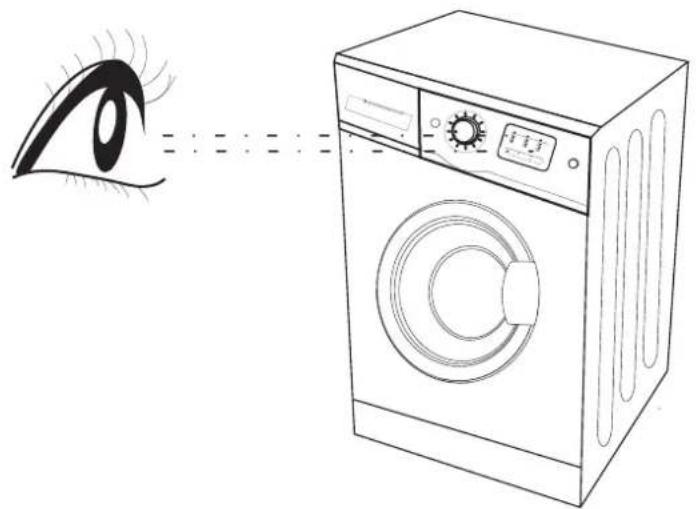
1.Open the door to load the articles into the drum.
DO NOT OVERLOAD the appliance or your laundry may not wash properly. Please refer to the chart below to determine the load capacity for the type of laundry you are washing.
| Fabric Type The maximum load of dry laundry |
| Cotton 8kg |
| Synthetic 4kg |
| Wool 2kg |
| Delicate 2.5kg |
2.Close the door.
3.Put the detergent and, if required, softener or pre-wash detergent, in the appropriate compartments.
4. Turn the water supply on and press
Delay timer: You can start the programme 3 hours, 6 hours, 9 hours or 12 hours later.
Repeatedly press Delay button to set a delay timer.
- Turn the programme knob to select the desired programme.
- Press Temp. / repeatedly to select the desired temperature. 3 sec.
- Press Essorage 3sec.Mem.Prg repeatedly to select the desired spin speed.
-
Press and the appliance will begin the cycle.
-
If the delay timer is set, the delay hour indicator light will flash. After the delay time
has elapsed, the appliance will begin the cycle. - To pause, press again.
9.When the cycle has finished,indicator lights 20^ 600rpm 3h will illuminate in sequence
and the washing machine will sound every 30 seconds for 4 minutes.
After a further period of 6 minutes, a beep will be heard and indicator lights



will illuminate in sequence.
- Open the door and remove the laundry.
Child lock
The function is designed to prevent children from operating the washing machine.
To activate the function: Press and hold Essorage 3sec.Mem.Prg / 3 sec.Mem.Prg Depart différé
for 3 seconds. It can only be activated when the machine is in operation.
In the child lock state, no button can work except the power button
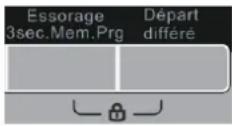
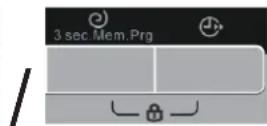
To deactivate the function: Press and hold Essorage 3sec.Mem.Prg 3 sec.Mem.Prg + Depart for 3 seconds.
Programme chart
| Programme | Max Load (Kg) | Detergent Compartment | Default Temperature / Maximum temperature (℃) | Default Running Time (Min) | Default Spin Speed (rpm) | ||
| I | II | \(\text{串}\) | |||||
| Cotton | 8.0 | ○ | bullet | ○ | 60/90 | 3:52 | 1200 |
| Eco Eco wash | 2.0 | × | bullet | ○ | 20/40 | 1:08 | 1000 |
| Synthetic | 4.0 | ○ | bullet | ○ | 40/60 | 1:12 | 800 |
| Delicate | 2.5 | × | bullet | ○ | Cold/20 | 1:00 | 600 |
| Sportswear | 4.0 | ○ | bullet | ○ | 40/60 | 1:25 | 1000 |
| Mix Mixed wash | 8.0 | ○ | bullet | ○ | 40/90 | 1:17 | 1000 |
| Wool | 2.0 | × | bullet | ○ | 20/40 | 0:58 | 600 |
| &Rinse & Spin | 8.0 | × | × | ○ | - | 0:32 | 1000 |
| Spin Baby care | 8.0 | × | × | × | - | 0:14 | 1000 |
| 8.0 | ○ | bullet | ○ | 60/90 | 1:46 | 1000 | |
| Quick wash | 2.0 | × | bullet | ○ | Cold/40 | 0:15 | 800 |
O-Optional
-Yes
X-No
NOTE:
The running time will vary depending on the water temperature and the load. The standard 60^ cotton programme and the standard 40^ cotton programme are the standard washing programmes.
| Washing Programme | Type of Laundry |
| Cotton | Bed sheets, quilt covers, pillowcases, gowns, underwear, etc. |
| Eco Eco wash | Lightly soiled clothes. |
| Synthetic | Shirts, coats, curtains, lace textiles or similar other blends. |
| Delicate | Delicate articles, such as silk. |
| Sportswear | Synthetic sports fabrics. |
| Mix Mixed wash | Mixed load of synthetic and cotton garments. |
| Wool | Only machine washable woollens. |
| Baby care | Baby clothes. |
| Quick | Lightly soiled clothes. |
| Temperature | Type of Laundry |
| 90°C Heavily | soiled articles, pure white cotton or flax, e.g. coffee tablecloths, canteen table cloths, towels, bed sheets. |
| 60°C | Moderately soiled articles, colourful flax, cotton and syntheticarticles with certain decolourising degree, e.g. shirts, pyjamas.Slightly soiled items, pure white flax, e.g. underwear. |
| 40°C,20°C,Cold water | Normally soiled articles, including synthetic and wool. |
Changing the programme, temperature and spin speed during operation
- Press to turn off the machine and press again to turn it on.
- Turn the programme knob to select a new programme.
- Press Temp. / 3 sec. and Essorage 3sec.Mem.Prg repeatedly to select the desired temperature and spin speed.
- Press to start washing.
Washing Tips and Hints
Sort your laundry according to the following characteristics:
- Type of fabric care label symbol: Sort laundry into cottons, mixed fibres, synthetics, silks, wools and rayon.
- Colour: Separate whites and colours. Wash new, coloured items separately.
- Size: Placing articles of different sizes in the same load will improve the washing performance.
- Sensitivity: Wash delicate items separately. Check the labels on the items you are washing or refer to the fabric care chart below.
| Graphic Symbol Illustration | Graphic Symbol Illustration | ||
| Hand Wash | × | No Machine Wash | |
| Washing (including Machine Wash and Hand Wash) | × | Do not Wash | |
| × | No Dry Clean | ||
| ○ | Dry Clean | ×× | No Wring |
| ○ | Warmly Dry Clean | ×× | No Bleach |
| ○ | Bleach | × | Do not Tumble Dry |
| ○ | Tumble dry | × | Do not Iron |
| ○ | Iron | × | Iron with Cloth |
| ○ | Steam Iron | ○ | Dry after Wash |
| ○ | Medium Temperature and Max. Temperature 150℃ | ○ | Line Dry in Shade |
| ○ | Line Dry | ||
- Empty pockets (key, coins, etc) and remove the harder decorative objects (e.g. brooches).
- Securing fasteners
Close zippers and fasten buttons or hooks; loose belts or ribbons should be tied together.
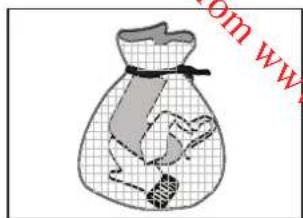
- Place small items such as socks, belts, etc. in a washing bag.
Washing a single big and heavy dress such as bath towel, jeans, wadded jacket etc. may unbalance the laundry in the drum. Therefore it is suggested to add one or two more clothes to be washed together so that draining can be done smoothly.
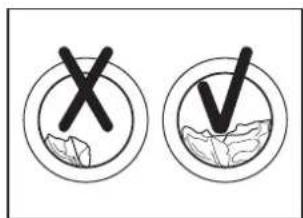
- Baby articles (baby clothes, towels and napkins) shall be washed separately. If they are washed together with the adults' clothes, they may be infected. Rinsing times shall be increased to ensure the thorough rinsing and cleaning without the detergent residues.
- It is suggested that the items that are easily stained such as white socks, collars and sleeves etc. shall be hand washed before being put into washing machine to achieve more ideal washing effects.
- The clothes which easily get fuzzed shall be washed separately; otherwise the other articles can be stained with dust and thrum etc. Preferably, black clothes and cotton clothes shall be washed separately.
- Do not wash water-proof materials (ski suits, outside napkin pads, raincoats, umbrella, car covers, sleeping sacks, etc).
For fabrics that can not get soaked easily such as water-proof cushions and clothes, it is better not to wash in a washing machine. Otherwise there will be water bursting out or abnormal vibration to cause danger during rinsing and draining so that the clothes may be damaged.
- Detergent tips
The type of detergent you should use is based on the type of fabric (cotton, synthetic, delicate items, wool), colour, washing temperature, degree and type of soiling. Please use "low suds" laundry detergent.
NOTE: Do not add more detergent than needed. Please follow the usage recommendation on the detergent package.
Follow the detergent manufacturer's recommendations based upon the weight of the laundry, the degree of soiling, and the hardness of the water in your area. If you do not know how hard your water is, ask your water authority.
NOTE: Keep detergents and additives in a safe, dry place out of the reach of children.
CLEANING AND MAINTENANCE
Make sure that the appliance is unplugged from the mains socket.
Cleaning the exterior
Clean the appliance surface with a soft cloth dampened with soap liquid.
Do not use organic chemicals or corrosive solvents.
Cleaning the drum
The rusts left inside the drum by the metal articles shall be removed immediately with chlorine-free detergents.
Never use steel wool.
Repairing a frozen washing machine
If the temperature drops below freezing and your washing machine is frozen:
1.Unplug the washing machine.
2. Pour warm water on the tap to loosen the water supply hose.
3.Remove the inlet hose and soak it in warm water.
4. Pour warm water into the drum and wait for 10 minutes.
5.Reconnect the inlet hose to the tap and check if the water supply and drain operations are normal.
NOTE: When the appliance is operated after repair, please make sure that the ambient temperature is above 0^ .
Cleaning the detergent drawer and recess
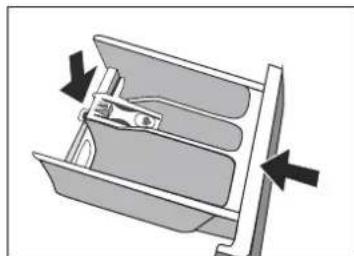
- Press the release lever inside of the detergent drawer and pull it out.
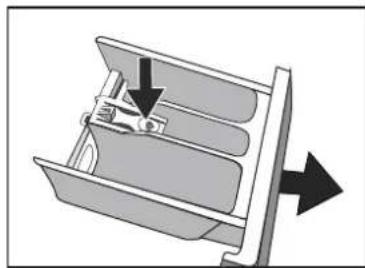
2.Remove the cap from compartment.
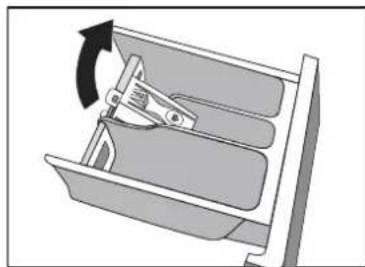
3.Clean all parts and drawer recess under running water.
4.Reinsert the cap by pushing it firmly into place.
5.Push the drawer back into place.
Cleaning the inlet hose and the inlet filter
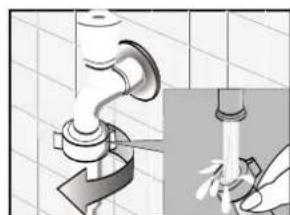
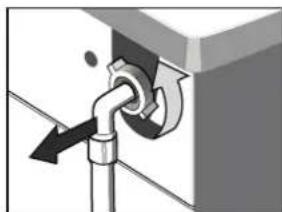
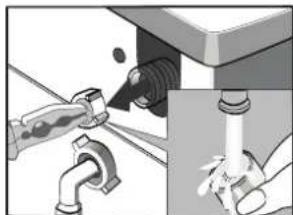
To prevent blockage to the water supply by ingress of foreign substances, clean the water inlet valve filter regularly.
Cleaning the drain pump
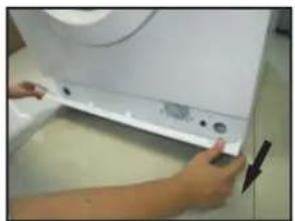
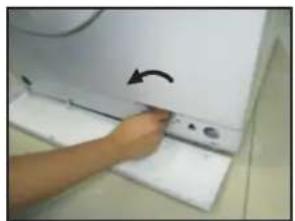
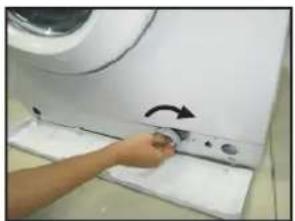
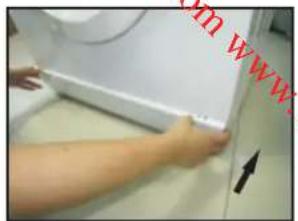
Drain the water out of the machine and then clean the drain pump.
Please inspect and clean the drain pump regularly.
Never remove the pump cover during a wash cycle. When replacing the pump cover, ensure it is securely tightened so as to stop leaks.
TROUBLESHOOTING
| Problems Possible | Cause Possible Solutions | |
| The washing machine will not start. | The door is not properly closed. | Close the door properly. |
| Poor connection to the power supply. | Check connection to the power supply. | |
| Power failure. | Check the power supply. | |
| Machine has not been switched on. | Switch the machine on. | |
| The door does not open. | Machine safety protection is working. | Unplug the machine from the mains socket. |
| Detergent remains in the detergent drawer after the programme is complete. | The detergent is not a low suds type. | Check if the detergent is appropriate. |
| Excessive use of detergent. | Reduce amount of detergent in the detergent. | |
| Washing machine vibrates or is too noisy. | Not all transit bolts have been removed. | Remove all transit bolts. |
| Washing machine is located on an uneven surface or is not level. | Make sure the washing machine is set on an even surface and levelled. | |
| Machine load is over 8 Kg. | Reduce amount of laundry in the drum. | |
| The washing machine does not drain and/or spin. | Drain hose is blocked. | Unblock the drain hose. |
| The filter is locked. | Unblock the filter. | |
| Drain hose end is higher than 100 cm above the floor. | Make sure the drain hose end is lower than 100 cm above the floor. | |
| Unbalance of the laundry. | Add clothes or run a spinning programme again. | |
| The washing result is not good. | Your Laundry was too dirty for the programme you selected. | Select a suitable programme. |
| The amount of detergent used is not appropriate. | Use more or less detergent, following the manufacturer's instructions. | |
| Clothes exceeding the maximum capacity have been filled in your machine. | Do not to exceed the maximum capacity of your machine. |
Error messages
| Status of indicator light | Cause | Solution | |||
| 90°C | 60°C | 40°C | 20°C | ||
| Off | Off | Off | Flash | Door is not properly closed. | Close the door properly. |
| Off | Off | Flash | Off | Water inlet error | Make sure the tap is turned on. Check the water pressure. Clean the water inlet filter. |
| Off | Off | Flash | Flash | Drainage error | Make sure the drain hose is not twisted or blocked. Make sure the drain hose is installed correctly. Clean the drain pump. |
If error still exists, please contact the maintenance personnel.
TECHNICAL DATA SHEET
Below is the sheet of household washing machine according to EU Regulation 1015/2010.
| Manufacturer | Proline |
| Type/Description | FP 812,FP 812 E |
| Capacity | 8 kg |
| Spin Speed | 1200 rpm |
| Energy efficiency class 1 | A*** |
| Annual energy consumption 2 | 196 kWh/annum |
| Power consumption of off-mode | 0.5W |
| Power consumption of left-on mode | 0.5W |
| Annual water consumption 3 | 11000 L/annum |
| Spin-drying efficiency class 4 | B |
| Standard washing cycle 5 | Cotton |
| Energy consumption of the standard 60° at full load | 0.97 kwh |
| Energy consumption of the standard 60° at partial load | 0.75 kwh |
| Energy consumption of the standard 40° at partial load | 0.72 kwh |
| Programme duration of standard 60° at full load | 232 min |
| Programme duration of standard 60° at partial load | 215 min |
| Programme duration of standard 40° at partial load | 214 min |
| Water consumption of the standard 60°C at full load | 54 L |
| Water consumption of the standard 60°C at partial load | 45 L |
| Water consumption of the standard 40°C at partial load | 45 L |
| Remaining moisture content of the standard 60°C at full load | 50% |
| Remaining moisture content of the standard 60°C at partial load | 55% |
| Remaining moisture content of the standard 40°C at partial load | 55% |
| Noise level of washing | 62 dB |
| Noise level of spinning | 77 dB |
| Mounting | Free standing |
| Height | 850 mm |
| Width | 595 mm |
| Depth | 565 mm |
| Power consumption | 2000W |
| Rate voltage/frequency | 220-240V~ / 50Hz |
| Water pressure | 0.05-1 MPa |
NOTE:
1 A*thighest efficiency) to D (lowest efficiency)
Energy consumption 196 kWh per year, based on 220 standard washing cycles for standard programme at 60^ and 40^ at full and partial load, and the consumption of the low-power modes. Actual energy consumption will depend on how the appliance is used.
Water consumption 11000 litres per year based on 220 standard washing cycles for standard programme at 60^ and 40^ at full and partial load. Actual water consumption will depend on how the appliance is used.
4 Spin-drying efficiency class B on a scale from G (least efficient) to A (most efficient)
The standard 60^ cotton programme and the standard 40^ cotton programme are the standard washing programmes. These programmes are suitable to clean normally soiled cotton laundry and they are the most efficient programmes in terms of combined energy and water consumptions for washing that type of cotton laundry. The actual water temperature may differ from the declared cycle temperature.
Please choose the suitable type of detergent for the various washing temperatures to get the best washing performance with less water and energy consumption.
We apologise for any inconvenience caused by minor inconsistencies in these instructions, which may occur as a result of product improvement and development.
Darty Plc © UK: EC1N 6TE 18/09/2014
INHOUDSOPGAVE
WAARSCHUWINGEN 37
BELANGRIJKE VEILIGHEIDSVOORZORGEN 39
BESCHRIJVING VAN HET APPARAAT 39
INSTALLATIE 40
BEDIENINGSPANEEL 41
BEDIENING 42
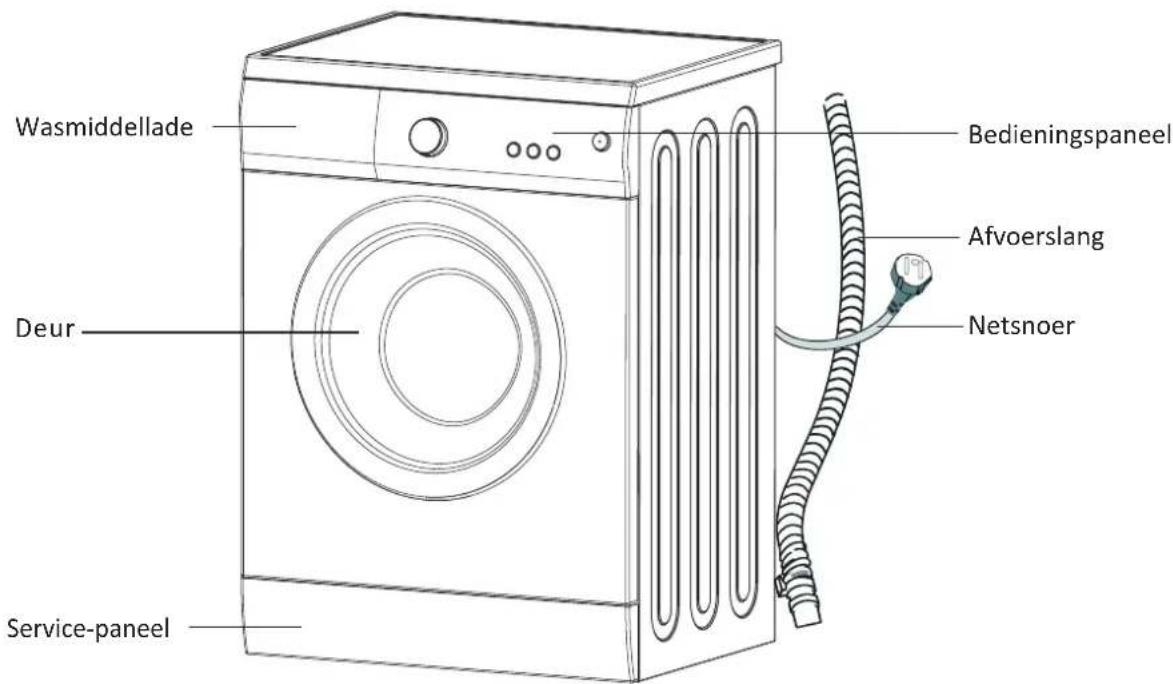
BESCHRIJVING VAN HET APPARAAT
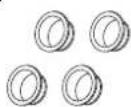
Accessoires
Darty Plc © UK: EC1N 6TE 18 / 09 / 2014
OBSAH
UPOZORNENI 54
DULEZITBEZPECNOSTNIPOKNY 56
POPIS PRISTROJE 56
MONTAZ 57
OVLADACI PANEL 58
PROVOZ 59
Prvniprani 59
Pridani pracico prostredku do pristroje. 59
Praniobleceni 59
Tabulka programu 61
Zmena programu a teploty beshem provozu 63
Tipy a triky pro prani 63
CISTENIA UDRZBA 65
Cisteni vnejsku 65
Cisteni bubnu. 65
Oprava zamrzle pračky 65
Čistěni prihrádky pro prací prostředek a její vyklenky. 66
Cisteni hadice a filtru pro privod vody. 66
Cisteni pumpy pro odtok 67
RESENI PROBLEMU 67
TECHNICKE UDAJE 68
UPOZORNÉNÍ
Darty Plc © UK: EC1N 6TE 18 / 09 / 2014
OBSAH
VAROVANIA 71
DOLEZITÉ BEZPECNOSTNÉ POKNY 73
73
INSTALLACIA 74
OVLADACI PANEL 75
POUZIVANIE 76
Prépranie 76
Pridanie pracieho prostriedku do zariadenia. 76
76
Tabul'ka programov 78
Zmena programu a teploty poças prevadzky 80
Rady a tipy pre pranie. 80
CISTENIE A UDRZBA 82
Cistenie vonkajsch chsti. 82
Cistenie bubna 82
RIESENIE PROBLEMOV 84
TECHNICKE UDAJE 85
VAROVANIA
Darty Plc © UK: EC1N 6TE 18 / 09 / 2014

- TABLE DES MATIÈRES
- CONTENTS
- WARNING
- IMPORTANT SAFETY INSTRUCTIONS
- DESCRIPTION OF THE APPLIANCE
- INSTALLATION
- Unpacking
- Positioning
- Levelling
- Electrical connection
- Water inlet
- The appliance must be connected to a cold water supply.
- Water drainage
- CONTROL PANEL
- OPERATION
- Washing for the first time
- Putting detergent in the appliance
- Washing Clothes
- Child lock
- Programme chart
- NOTE:
- Changing the programme, temperature and spin speed during operation
- Washing Tips and Hints
- - Securing fasteners
- - Detergent tips
- CLEANING AND MAINTENANCE
- Cleaning the exterior
- Cleaning the drum
- Repairing a frozen washing machine
- Cleaning the detergent drawer and recess
- Cleaning the inlet hose and the inlet filter
- Cleaning the drain pump
- TROUBLESHOOTING
- TECHNICAL DATA SHEET
- INHOUDSOPGAVE
- OBSAH
- UPOZORNÉNÍ
- VAROVANIA
Brand : PROLINE
Model : FP 812 E
Category : Washing machine