Expertise DG9020 - Generator ROWENTA - Free user manual and instructions
Find the device manual for free Expertise DG9020 ROWENTA in PDF.


| Product type | Steam generator |
| Brand | Rowenta |
| Model | Expertise DG9020 |
| Power supply | 220-240 V, grounded plug |
| Water tank capacity | Not specified, removable tank with Max level |
| Boiler type | Integrated boiler with drain indicator |
| Steam function | Steam control under the handle, adjustable flow |
| Precision steam jet | Button on the handle for difficult areas |
| Wet steam | Function for excess steam (depending on model) |
| Vertical steaming | Yes, thermostat on max |
| Dashboard | Green, orange, red indicators and Restart button |
| Water tank | Removable, top fill |
| Cord winder | Integrated, winding button |
| Iron rest plate | Integrated into the housing, non-slip pads |
| Boiler maintenance | Drain every 10 uses or depending on water hardness |
| Drain accessory | Supplied with two types of membranes |
| Safety | Pressure relief valve, thermal fuse |
| Recommended water type | Tap water, if hard mix 50% demineralised |
| Warranty | 1 year on the appliance, 2 years on the tank |
Frequently Asked Questions - Expertise DG9020 ROWENTA
User questions about Expertise DG9020 ROWENTA
0 question about this device. Answer the ones you know or ask your own.
Ask a new question about this device
Download the instructions for your Generator in PDF format for free! Find your manual Expertise DG9020 - ROWENTA and take your electronic device back in hand. On this page are published all the documents necessary for the use of your device. Expertise DG9020 by ROWENTA.
USER MANUAL Expertise DG9020 ROWENTA
natural_image
Line drawing of a portable electrical device with attached cable and control panel (no text or symbols)Instructions for use
Gebrauchsanweisung
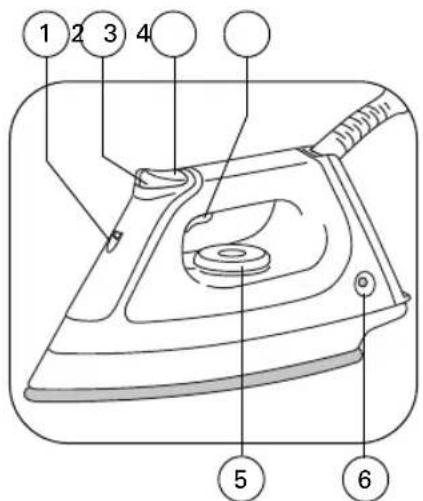
- "Precision Steam Jet" nozzle (depending on the model)
- "Precision Steam Jet" button (depending on the model)
- Humid steam button (depending on the model)
- Steam control button
- Temperature control dial for iron soleplate
- Iron temperature control light
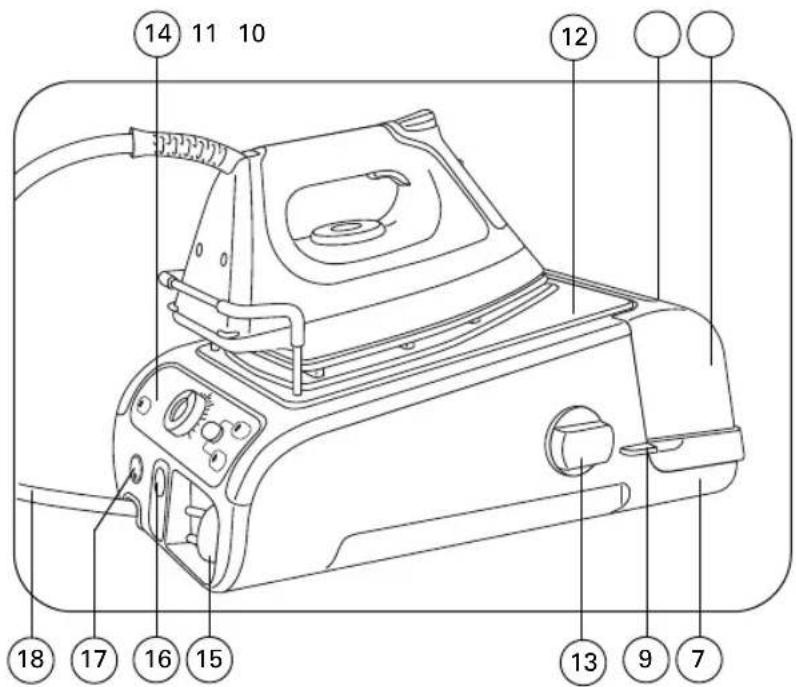
- Steam generator boiler (in the base unit)
-
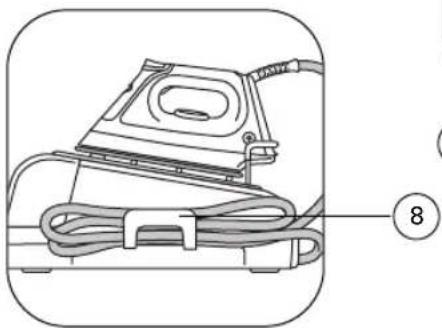
Cord fastener
-
Handles for removing and replacing the water tank
-
Removable water tank
-
Removable water tank filler cover
-
Iron rest
-
Boiler rinse plug
-
Control panel
-
Power cord storage space
-
Power cord reel button
-
Illuminated on / off switch
-
Iron-base steam cord
Control panel
2. PREPARING YOUR STEAM GENERATOR
- Place your steam generator on a stable, horizontal heat-resistant work surface.
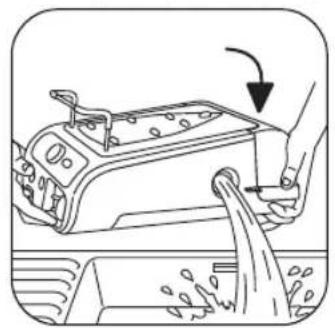
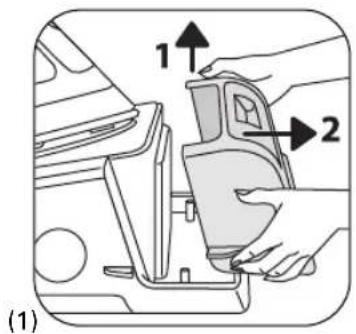
- Remove the water tank by pulling the handles upwards (1).
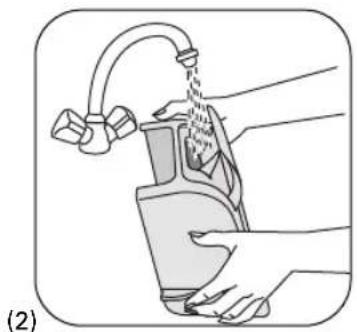
- Fill the water tank taking care not to exceed the maximum level (2).
- Replace it fully down in its housing (3).
natural_image
Illustration of a hand washing a water bottle with a pipe outlet (no text or symbols)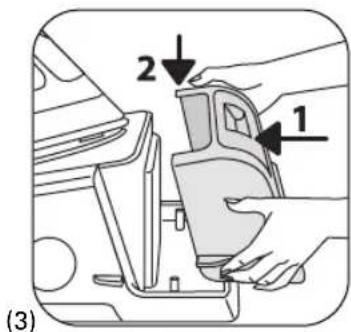
The water to use in your steam generator :
Your steam generator has been designed to operate using untreated tap water. However, if your water is very hard, mix it 50% untreated tap water with 50% distilled water.
Types of water to be avoided :
Do not use water from clothes dryers, scented water, water from refrigerators or air conditioners, rain water.
These contain organic waste or mineral elements that become concentrated when heated an cause spitting, brown staining or premature wear to the appliance.
3 • USING YOUR STEAM GENERATOR
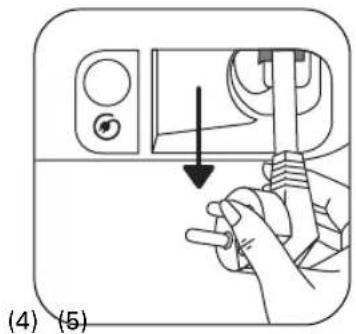
- Completely unwind the power cord from its storage space before connecting to an earthed socket (4).
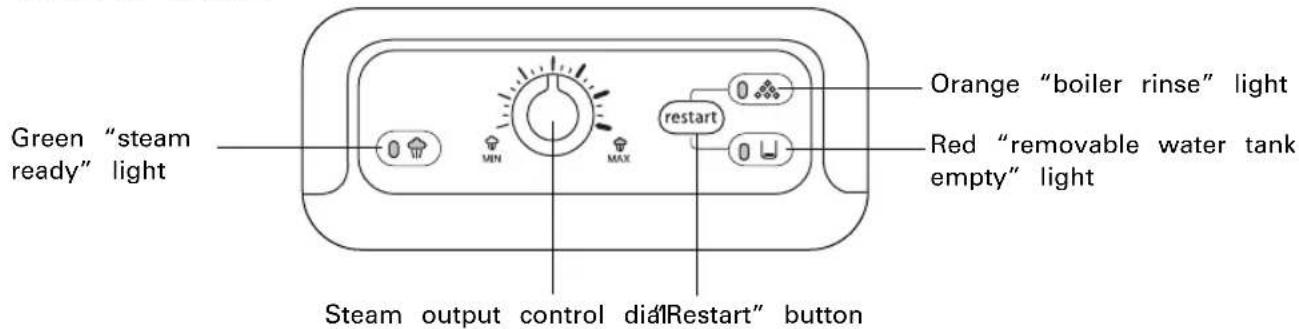
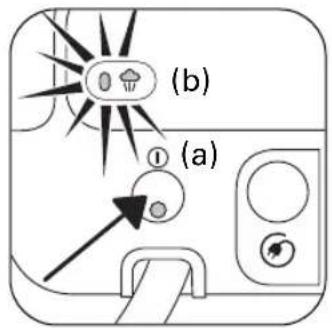
- Press on the on / off switch (located on the front of the base unit) (a): the green light (the control panel) flashes and the boiler heats up (b). It will take around 2 minutes for steam produced which is indicated when the green "steam ready" light stops flashing (5).
- The first time the appliance is used, there may be some fumes and smell but this is not harmful. They will not affect use and will disappear rapidly.
- When starting, and regularly while it is being used, your steam generator's electric pump injects water the boiler. It makes a noise but this is quite normal. You may also hear a clicking noise which is the valve opening. Again this is normal. If you are pressing on the steam control button at this time you lose a little steam pressure momentarily.
- Flashing green light: the water is heating up the boiler.
- Continuous green light : steam is ready for use.
- Continuous red light 0:1 the water tank is empty.
- Orange "boiler rinse" light flashes: your boiler needs rinsing. Note: the appliance must be cold (see section 11).
- "Restart" button:
- to be pressed briefly after each refill of the water tank to start ironing again (see paragraph
- to be held pressed for 2 or 3 seconds after rinsing the boiler (see paragraph 11).
5 • USING YOUR STEAM GENERATOR
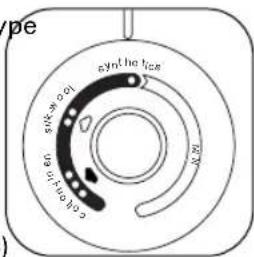
- Place the iron's temperature control to the type of fabric to be ironed (6).
● Synthetics (low temperature)
Silk/wool (medium temperature)
●●● Cotton/Linen (high temperature)
(7)
- The iron temperature control light turns on. (6) (7) Be careful! the steam generator is ready when the iron temperature control light goes out a when the green « steam ready » light stays continuous.
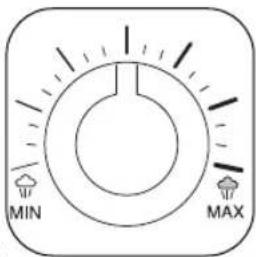
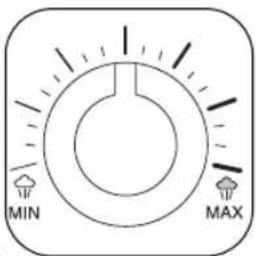
- Adjust the steam output control dial located on the control panel (7), eg : less steam for low tempe Note : It is normal for the connection cord to become warm during use.
SETTINGTHETEMPERATURE CONTROL AND STEAM OUTPUT CONTROL DIAL ACCORDINGTO THETYPE OF FABRICTO BE IRONED:
| Type of fabric | Setting temperature control | Setting steam output control dial | |
| Synthetics | 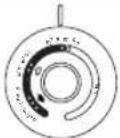 | (Low temperature) | 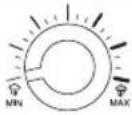 |
| Silk / Wool | 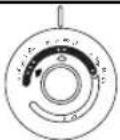 | (Medium temperature) | 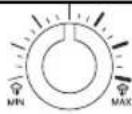 |
| Cotton / Linen | 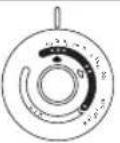 | (High temperature) | 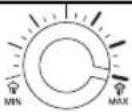 |
Recommendations:
To prime the steam circuit, either before using the iron for the first time, or if you have not used the steam function for a few minutes, press the steam control button several times in a row, holding the iron away from your clothes.
This will enable any cold water to be removed from the steam circuit.
- Iron temperature control setting
- Start with fabrics to be ironed at a low temperature and finish with those which need higher temperatures or Max).
- Mixed fibre fabrics : set the ironing temperature to the setting for the most delicate fabric.
- Woollen garments : press repeatedly on the steam control button to obtain short bursts of steam, without placing the iron on the garment itself.This will avoid making the fabric shiny.
- Steam output control dial setting :
- Thick fabric : increase the steam setting.
- At a low temperature : set the steam output control dial to the low position.
- Dry ironing :
- Do not press the steam control button beneath the iron handle. Do not press the "Precision Steam Jet" button or humid steam button on the iron handle (according to the model).
- If you are using starch, it should be sprayed onto the reverse side of the fabric to be iron
- Ironing board :
For best results a mesh type ironing board should be used to allow any excess steam to escap
It is recommended that you start with fabrics to be ironed at a low temperature: synthetics.
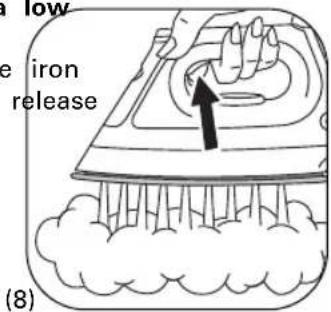
To obtain steam, press on the steam control button beneath the iron handle and keep it pressed (8). The steam will stop when you release the button.
For delicate fabrics ^● , press the steam control button (under the handle of the iron) intermittently to avoid possible water droplets appearing with the steam.
6 • WHEN THE RED LIGHT «WATERTANK EMPTY» COMES ON
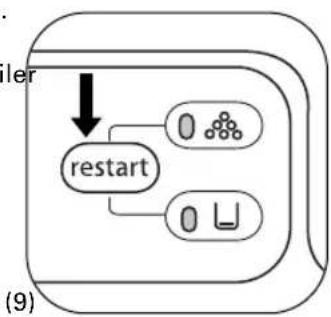
There is no more steam. The removable water tank is empty (9).
-
Remove the water tank and fill it up.
-
Ensure the water tank is replaced securely and press the boile "Restart" button located on the control panel to continue your ironing.
flowchart
graph TD
    A["restart"] --> B["0"]
    A --> C["0"]
7 • VERTICAL STEAM IRONING
- Set the iron temperature control and the steam output control dial (located on the control to the maximum position.
- Hang the garment on a coat hanger and hold the fabric slightly taut with one hand.
As steam is very hot, never attempt to remove creases from a garment
while it is being worn, always hang garments on a coat hanger
- Holding the iron in a vertical position, press repeatedly on the control button (beneath the iron handle) moving the iron from to bottom (10).
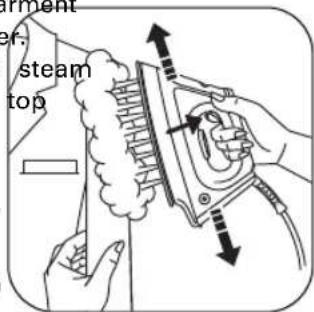
Recommendations:
For fabrics other than linen or cotton, hold the iron a few centimetres from the garment to avoid burning the fabric.
(10)
8 • HUMID STEAM FUNCTION (DEPENDING ONTHE MODEL)
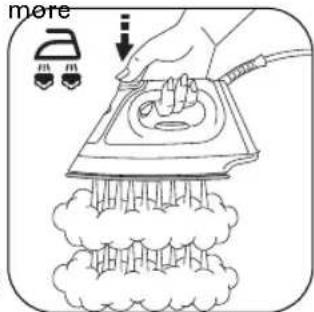
The humid steam button adds water vapour to the steam output.
Press 2 or 3 times on the humid steam button (11) to obtain a powerful, heavier burst of steam :
more
• for ironing thicker fabrics,
• to eliminate creases,
• for powerful vertical steam ironing.
Be careful :
Use the humid steam function very carefully because of the exceptional power of steam that may cause burns.
(11)
9 • “PRECISION STEAM JET” FUNCTION (DEPENDING ON THE MODEL)
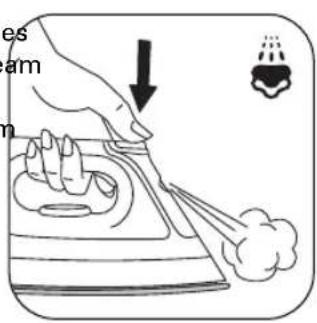
Your generator has a "Precision Steam Jet" function, allowing you to:
- Iron the most hard-to-reach areas (such as button holes, shirt cuffs and collars, darts in trc the inside of jacket and coat sleeves);
- Soften the fibres before ironing, when the fabric is very creased.
Use:
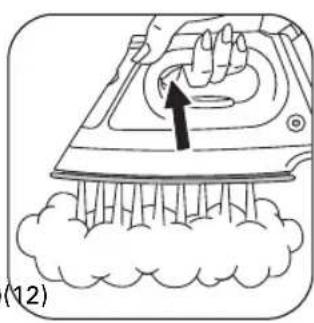
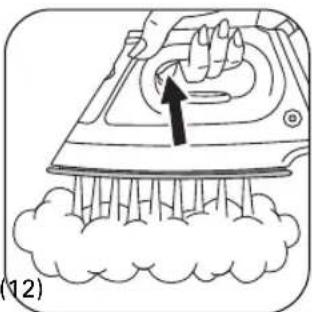
- With the iron on the ironing board, press the "Precision Steam Jet" button on the iron handle 2 or 3 tin to obtain short, powerful bursts of s at the front of the iron (12);
- Then iron the fabric using steam from the soleplate to smooth the fibres, by pressing the steam control button beneath the iron handle (13).
(13)(12)
natural_image
Diagram of a hand pressing down on a computer monitor with a cloud base, no text or symbols presentGB
10 • MAINTAINING YOUR STEAM GENERATOR
- Before cleaning, ensure that the appliance is unplugged and that the soleplate and the iron have cooled down.
- Do not use any cleaning or descaling products for cleaning the soleplate or the base-unit.
- Never hold the iron or the base unit under the tap.
-
Do not place the iron on a metal rest as this could damage it.
Place it on the iron rest on the base unit: it has non-slip pads and has been designed to stand high temperatures. -
The removable water tank: Empty and rinse the removable water tank (14)
2. The Iron soleplate
You can clean the soleplate of your iron, once it has cooled down, with a damp cloth or sponge.
If the soleplate is badly soiled, we recommend one of the commercially available specialist cleaning products.
Do not use aggressive or abrasive products for cleaning the soleplate. Do not place the iron on a rough support.
During pauses in ironing, always place the iron on the rest plate on the steam generator.
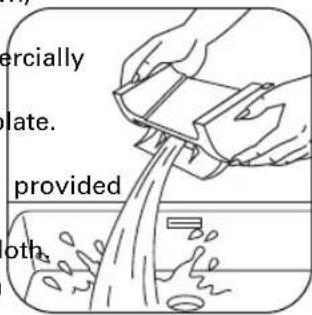
3.The base unit: Clean the plastic parts occasionally with a soft cloth. (14)
11 • THE ORANGE "BOILER RINSE" LIGHT FLASHES
Note:
- To extend the efficient operating life of your boiler and avoid scale particles on your liner generator is equipped with an orange "boiler rinse" warning light that flashes on the control panel after about 10 uses.
- If your water is hard, increase the frequency.
- Do not use descaling agents for rinsing out the boiler, as they could damage it.
I - TO RINSE THE BOILER USING RINSING ACCESSORY
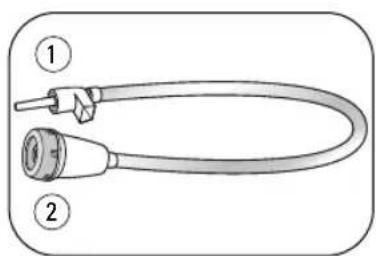
For greater effectiveness and for ease of operation, you are advised to use the rinsing accessory provided in the box. It will make it easier to rinse the boiler as the generator w need less handling.
natural_image
Diagram of a medical or laboratory device with two labeled parts (1 and 2), no text or symbols present.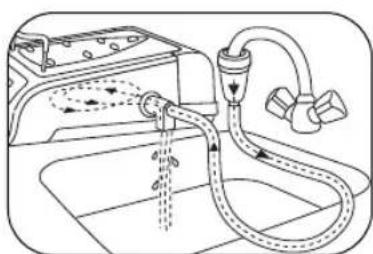
natural_image
Diagram of a car dashboard with hoses and valve, no text or symbols present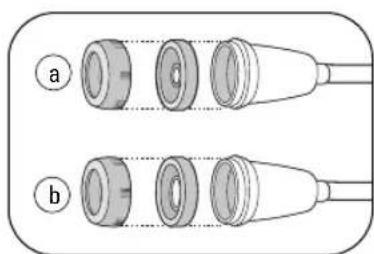
natural_image
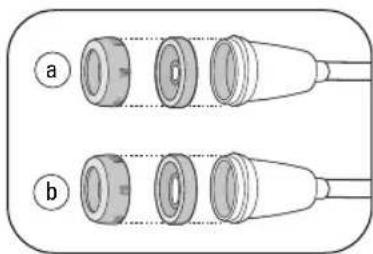
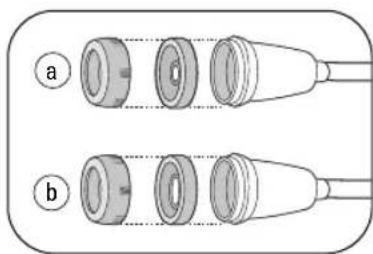
Diagram of two connected cylindrical devices labeled a and b, with no text or symbols present.Your rinsing accessory has been designed to work on a wide range of taps.
It is supplied with 2 types of membrane (a) (b). Choose the one best suited to your tap. If you do not wish to, or cannot use the rinsing accessory, refer to the advice in paragraph II.
GB
Before attempting to rinse the boiler of your generator, it is essential to leave it to cool for at least 2 hours in order to avoid any risk of scalding.
If the orange "boiler rinse" light flashes, you can continue ironing normally but remember to rinse the boiler first, the next time that you use it.
-
Check that the generator is cold and unplugged.
-
Place your steam generator on the edge of your sink.
-
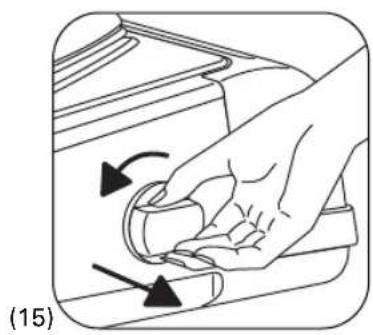
Remove the boiler rinsing cover located on the side of the appliance (15).
-
Using a coin, gently unscrew the boiler rinse plug (16).
-
Place the plastic nozzle ① of the rinsing pipe into the hole of the boiler and turn gently to the right until it locks. The outlet of this nozzle must be positioned over the sink (17).
-
Connect the rubber end ② of the rinsing pipe to a cold tap (18).
-
Turn the tap on gently and gradually and let cold water run through the rinsing pipe into the sink for about 1 minute (19).
-
Switch off the tap and remove the rinsing pipe.
-
Screw back and tighten up the boiler rinse plug with a coin.
-
Put the boiler rinsing cover back in place.
-
The next time you use the generator, hold down the "restart" button for 2 to 3 seconds to turn off the orange light.
natural_image
Illustration of a hand holding a knob with directional arrows indicating rotation (no text or symbols)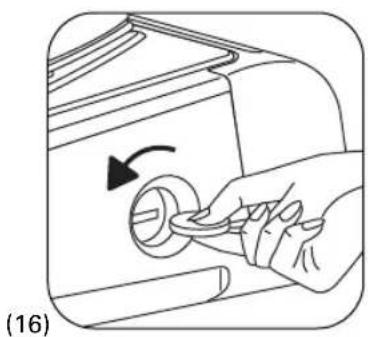
natural_image
Illustration of a hand holding a circular knob with an arrow indicating rotation (no text or symbols)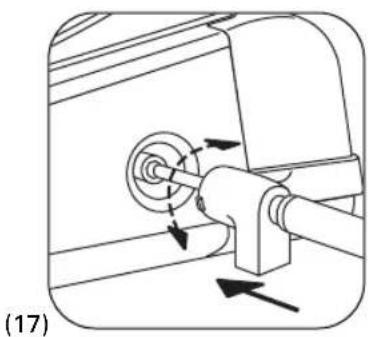
natural_image
Diagram of a hand operating a mechanical component with directional arrows indicating motion (no text or symbols)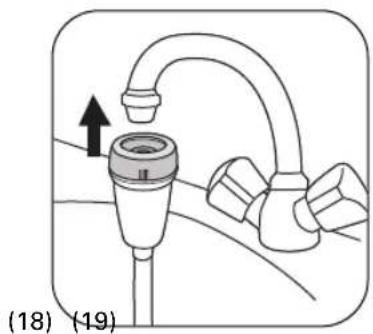
natural_image
Diagram of a faucet with an arrow indicating upward movement, labeled (18) and (19), showing no text or symbols beyond labels.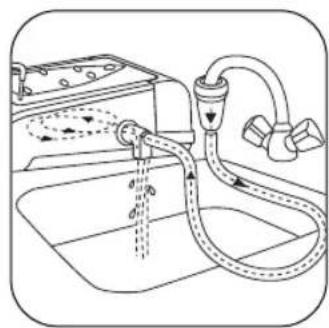
II - TO RINSE THE BOILER WITHOUT THE RINSING ACCESSORY
Before attempting to rinse the boiler of your generator, it is essential to leave it to cool for at least 2 hours in order to avoid any risk of scalding.
If the orange "boiler rinse" light flashes, you can continue ironing normally but remember to rinse the boiler first, the next time that you use it.
- Check that the generator is cold and unplugged.
- Place your steam generator on the edge of your sink.
- Remove the boiler rinsing cover located on the side of the appliance.
- Using a coin, gently unscrew the boiler rinse plug.
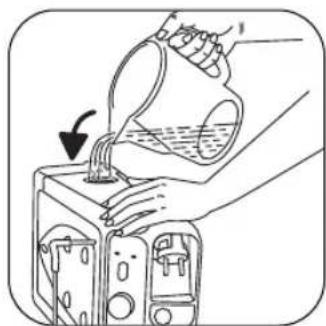
- Holding your steam generator in a tilted position, and using a jug, fill the boiler (in the with 1/4 litre of tap water.
- Shake the base unit for a few moments and then empty it completely over your sink.
To obtain the best result, we recommend that this operation is done twice.
natural_image
Illustration of hands pouring liquid from a container into a device (no text or symbols)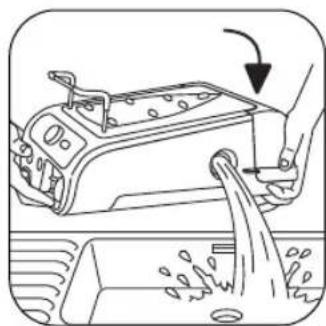
natural_image
Line drawing of a car interior with a hand pouring liquid into a sink (no text or symbols)- Screw back and tighten up the boiler rinse plug with a coin.
- Put the boiler rinsing cover back in place.
- The next time you use the generator, hold down the "restart" button for 2 to 3 seconds to turn off the orange light.
12 • PUTTING YOUR STEAM GENERATOR AWAY
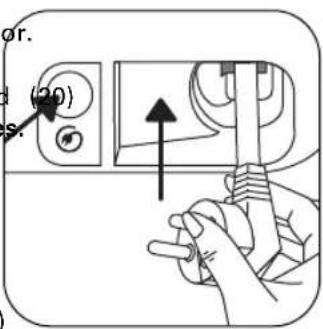
- Press the illuminated on/off switch O/I and unplug the generator.
- Place the iron on the iron rest plate.
- Press the cord reel button and guide the cord with your hand
- Leave the iron (and the iron rest) to cool down for 30 minutes
- You can now put your steam generator away.
(20)
13 • SAFETY RECOMMENDATIONS
- Your steam generator is an electrical appliance. It should be used under normal conditions. It is intended for domestic use only.
- For your safety, this appliance conforms to the applicable standards and regulations (Low Voltage, Electomagnetic Compatibility, Materials in contact with foodstuffs, Environmental Directives, as applicable...)
-
Your generator is fitted with 2 safety systems :
-
A pressure release valve which, in the event of a malfunction, releases any excess steam.
- A thermal fuse to prevent the appliance from overheating.
- This appliance is not intended for use by persons (including children) with reduced physical, mental capabilities, or lack of experience and knowledge, unless they have been given supervising instruction concerning use of the appliance by a person responsible for their safety.
- The appliance must be used and placed on a stable, heat-resistant surface.
- When you place the iron on the iron rest, make sure that the surface on which you place i
- Completely unwind the power cord from its storage space before connecting to an earthed socket.
• Always plug your steam generator into:
- An electrical installation with voltage between 220V and 240V. Connecting to the wrong volt may cause irreparable damage to the appliance and will invalidate your guarantee.
- An earthed socket. If you are using a mains extension lead, ensure that it is correctly rate with an earth, and is fully extended.
- Should the power cord or the boiler cord linking the iron to the base unit become damage must be replaced by a ROWENTA approved service centre to avoid the risk of danger or inj. Be careful:
- The soleplate and generator iron-rest can become very hot and cause burns: never touch t parts.
- Your appliance gives off steam which can cause burns.
- Handle your iron carefully, particularly when using the vertical steam function.
- Never direct the steam towards persons or animals.
- Never touch the electric cords with the soleplate of the iron.
- Never leave the appliance unattended :
- when it is connected to the mains,
- until it has cooled down (around 1 hour).
- Do not unplug the appliance by pulling on the cord.
• Always unplug your appliance :
- before rinsing out the boiler,
- before cleaning your generator,
- after each use.
- Before unscrewing the boiler rinse plug, wait until the generator is cold (unplugged for more than 2 hours).
- Never fill the boiler through the rinse hole (except for rinsing).
- Never immerse your steam generator in water or any other liquid. Never hold it under the wa
- While rinsing out the boiler, never fill it directly under the tap.
- The appliance must not be used if it has fallen to the floor, shows evidence of damage, leaks or fails to function correctly.
Never dismantle your appliance. To avoid any danger, have it inspected in a ROWENTA approved service centre.
- If you lose or damage the boiler rinse plug, have it replaced by a ROWENTA approved Service Centre.
This appliance is designed for domestic use only. In the case of professional use, inappropriation or failure to comply with the instructions, ROWENTA accepts no responsibility and the guarant does not apply.
14 • IS THERE A PROBLEM ?
| PROBLEMS | POSSIBLE CAUSES | SOLUTIONS |
| The thermostat light and the on/off switch are not illuminated. | The appliance is not switched on. | Check that your appliance is correctly plugged in and press the illuminated on/off switch (on the front of the base-unit). |
| Droplets of water run through the "Precision Steam Jet" nozzle. | The soleplate is not hot enough.The water has condensed in the pipes because you are using the "Precision Steam Jet" function for the first time or you have not used it for some time. | Wait until the soleplate has reached the correct temperature (iron temperature light goes out).Press the steam control button (beneath the from handle) holding it away from your ironing board, before activating the "Precision Steam Jet" button (on the iron handle). |
| Water runs through the holes in the soleplate. | You are using the steam control button before the iron is hot enough.Water has condensed in the pipes because you are using steam for the first time or you have not used it for some time.Over use of the humid steam function (which has cooled down the iron). | Decrease the steam output while ironing at low temperature (steam output control dial on the control panel).Wait for the thermostat light to go out before activating the steam control button.Press the steam control button away from your ironing board until the iron produces steam.Stop using the humid steam function and allow the thermostat light to come on and go off again before using this function again. |
| White streaks come through the holes in the soleplate. of scale | Your boiler has a build-up Rinse out the boiler because it has not been when the orange rinsed out regularly. (see chapter 11). If your | after every 10 uses, indicator light flashes water is hard, increase the frequency. |
| You have already rinsed the boiler and the orange "boiler rinse" light is flashing. | You have not pressed for long enough on the "Restart" button. | Hold the "Restart" button down for 2 to 3 seconds to turn off the indicator light. |
| Brown streaks come through the holes in the soleplate and stain the linen. | You are using chemical descaling agents or additives in the water for ironing.Your linen is not rinsed sufficiently or you have ironed a new garment before washing it. | Never add this type of product in the removable water tank or in the boiler (see our recommendations regarding water to be used).Ensure linen is rinsed thoroughly to remove any soap deposits or chemicals on new garments which have been sucked up by the iron. |
| The soleplate is dirty or brown and may stain the linen. | You are ironing at too high a temperature.You are using starch. | See our recommendations regarding temperature control setting.Always spray starch on the reverse side of the fabric to be ironed. |
| There is little or no steam. The | removable water tank is empty Fill the rem( red "water tank empty" light on). "Restart" button located on the control panel.The steam output control dial is set at Increase the steam output (control dial minimum. on the control panel). | |
| You have filled the tank but there is no steam. | The tank is not properly in place. | Check that the water tank is pushed firmly into place (see section 2). |
| The red "removable water tank empty" light is on. | You have not pressed the "Restart" button. | Press the "Restart" button on the control panel. |
| Steam escapes from the rinse plug. | The rinse plug has not been tightened The rinse plug seal is damaged. | Tightly the rinse plug correctly.Contact an Approved Service Centre to order a new rinse plug seal. |
| Steam escapes under the appliance. | The generator is faulty. | Stop using the generator and contact an Approved Service Centre. |
| The power cord does not fully retract. | The power cord has lost tension during retraction. | Pull the power cord out completely. Press the button and guide the cord with your free hand. |
HELPLINE
If you have any product problems or queries with your product, please telephone our Customer Relations team on : 0845 602 1454 (UK) (Calls charged at local rate) - (01) 4751947 (Ireland)
Consultourwebsite:www.rowenta.co.uk
ENVIRONMENT PROTECTION FIRST!
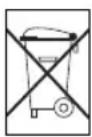
Your appliance contains valuable materials which can be recovered or recycled.
Leave it at a civic waste disposal centre.
D
1 • LERNEN SIE IHREN DAMPGENERATOR KENNEN
natural_image
Line drawing of a washing machine with attached cable and housing (no text or symbols)natural_image
Illustration of a hand washing a water dispenser with a hose, labeled (2) and (3), showing no text or symbols on the diagram itself.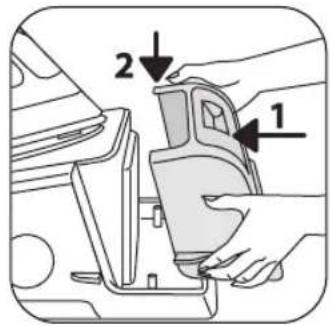
natural_image
Illustration of a hand holding a device with a downward arrow indicating action (no text or symbols present)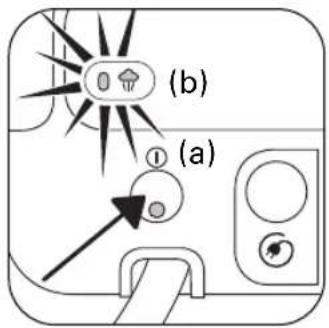
(4) (5)
(8)
UnsererTipp :
natural_image
Diagram of a hand pressing down on a machine component with a black arrow indicating the press or adjustment point (no text or symbols present)D
10 • DIE REINIGUNG IHRES DAMPFGENERATORS
natural_image
Diagram of a medical or laboratory device with two labeled parts (1 and 2), showing a coiled tube and connector (no text or symbols beyond labels)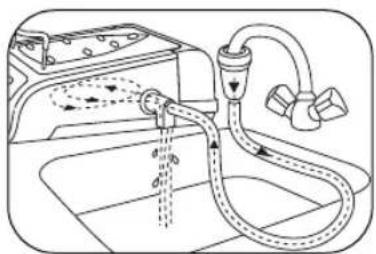
natural_image
Diagram of two types of connectors labeled a and b, showing internal components connected to wires (no text or symbols beyond labels)natural_image
Illustration of a hand pressing down on a piece of paper with a curved arrow indicating rotation (no text or symbols)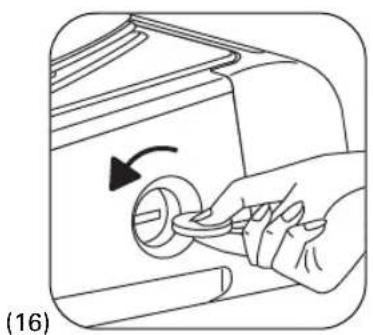
natural_image
Illustration of a hand holding a circular knob with an arrow indicating rotation (no text or symbols)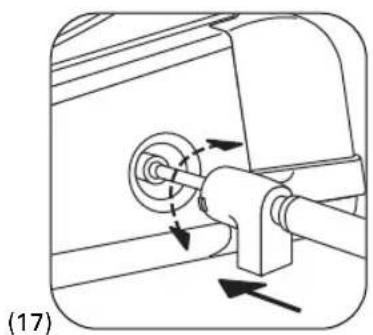
natural_image
Mechanical diagram showing a hand operating a rotating wheel with directional arrows, no text or symbols present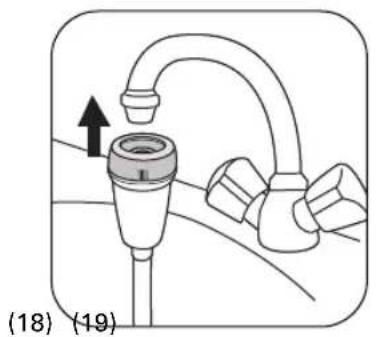
natural_image
Diagram of a faucet with an arrow indicating upward movement, no text or symbols present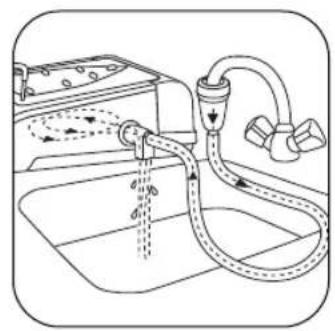
D
natural_image
Illustration of hands pouring liquid from a container into a machine (no text or symbols)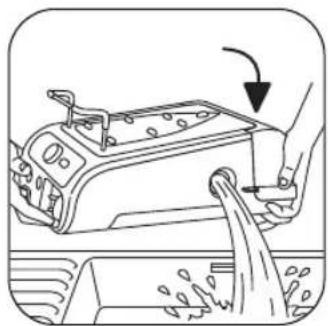
natural_image
Line drawing of a mechanical device with an arrow indicating motion, no text or symbols presentnatural_image
Illustration of a hand washing a water dispenser with a drain, showing liquid discharge (no text or symbols)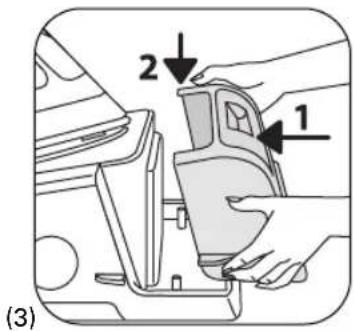
natural_image
Illustration of a hand holding a device with a downward arrow indicating motion (no text or symbols)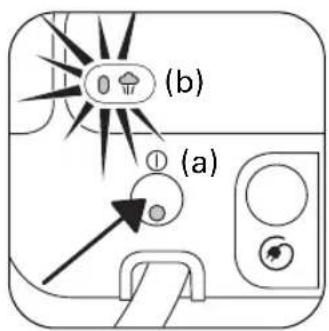
(4) (5)
natural_image
Illustration of hands using a power iron to lift a wall-mounted device, with arrows indicating motion direction (no text or symbols)natural_image
Diagram of a hand using a steam iron to clean air, with an arrow indicating the process (no text or symbols present)F
10 • POUR ENTRETENIR VOTRE GENERATEUR
natural_image
Diagram of a medical or laboratory device with two labeled parts (1 and 2), showing a coiled tube and connector (no text or symbols beyond labels)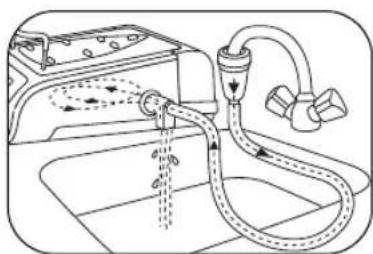
natural_image
Diagram of a washing machine with tubing and water flow indicators (no text or symbols)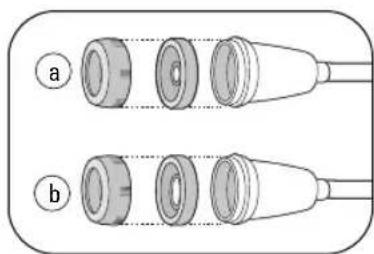
natural_image
Diagram of two connected cylindrical connectors labeled a and b, with no text or symbols present.natural_image
Illustration of a hand pressing down on a piece of paper with a curved arrow indicating rotation (no text or symbols)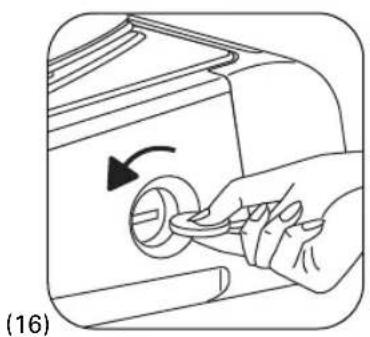
natural_image
Illustration of a hand holding a circular knob with an arrow indicating rotation (no text or symbols)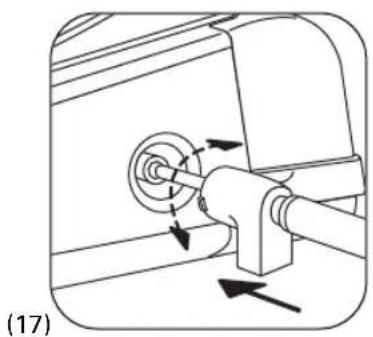
natural_image
Mechanical diagram showing a hand operating a rotating component with directional arrows (no text or symbols)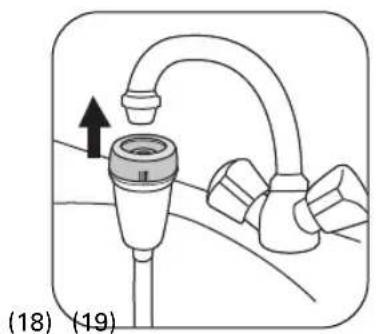
natural_image
Diagram of a faucet with an upward arrow indicating force or movement, labeled (18) and (19), no text or symbols present.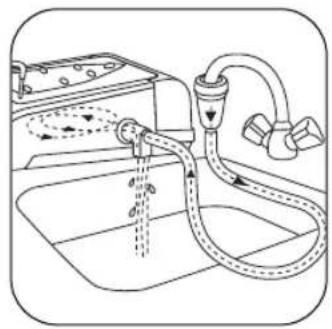
F
natural_image
Illustration of hands pouring liquid from a container into a device (no text or symbols)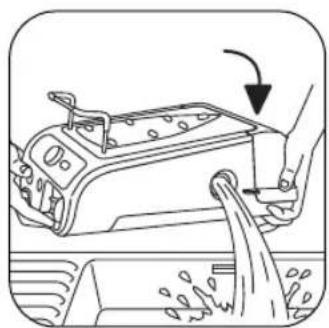
natural_image
Line drawing of a mechanical component with an arrow indicating rotation, no text or symbols presentnatural_image
Illustration of a hand washing a water dispenser with a faucet (no text or symbols)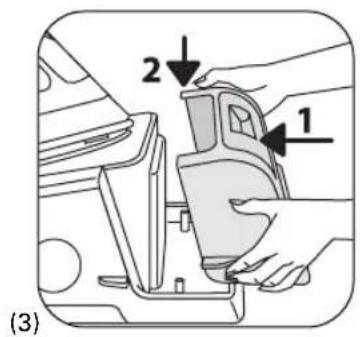
natural_image
Line drawing of a hand using a steam iron to clean or store air, with a cloud base and an arrow indicating the process (no text or symbols)NL
10 • HET SCHOONMAKEN VAN UW STOOMGENERATOR
natural_image
Diagram of a medical or laboratory device with two labeled parts (1 and 2), no text or symbols present.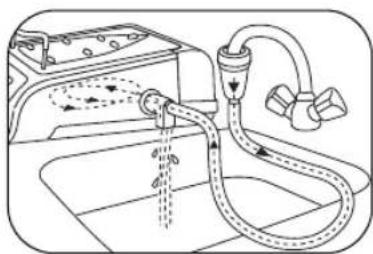
natural_image
Diagram of a car dashboard with water flow and valve (no text or labels)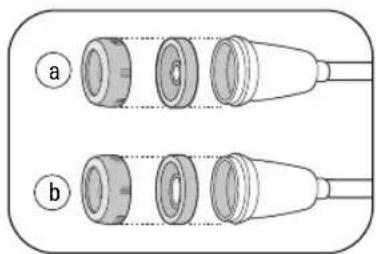
natural_image
Diagram of two types of connectors labeled a and b, showing internal components connected to wires (no text or symbols beyond labels)natural_image
Illustration of a hand pouring liquid into a container with an arrow indicating flow direction (no text or symbols)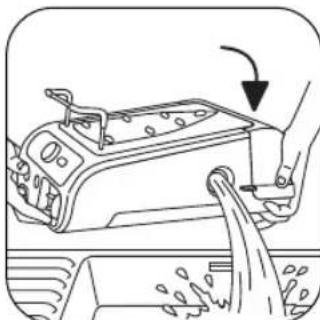
natural_image
Diagram of a vehicle interior showing a car intake manifold and a hand holding a tool, with no visible text or symbols.natural_image
Illustration of hands washing a faucet with liquid, no text or symbols present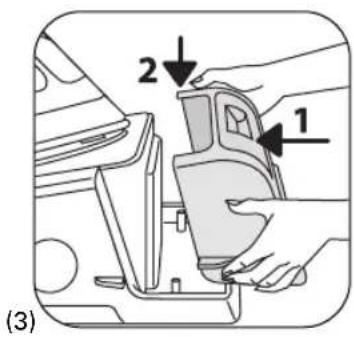
natural_image
Line drawing of a hand using a steam iron to clean or store air, with an arrow indicating the process (no text or symbols)6 • QUANDO SI ACCENDE LA SPIA LUMINOSA ROSSA "SERBATOIO ACQUA VUOTO"
natural_image
Illustration of a hand pressing down on a steam iron with an arrow indicating motion (no text or symbols)1
10 • COME PROVVEDERE ALLA MANUTENZIONE DEL GENERATOR
natural_image
Illustration of hands washing a water bottle from a sink (no text or symbols)11 • QUANDO LA SPIA ARANCIONE "RISCIACQUO CALDAIA" LAMPEGGIA
Attenzione:
natural_image
Diagram of a medical or laboratory device with labeled parts (1 and 2), no text or symbols present.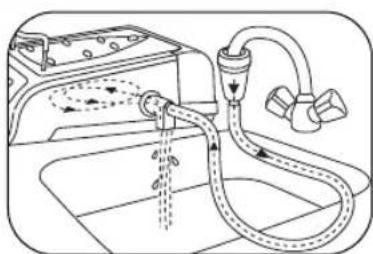
natural_image
Diagram of a washing machine with tubing and water flow indicators (no text or symbols)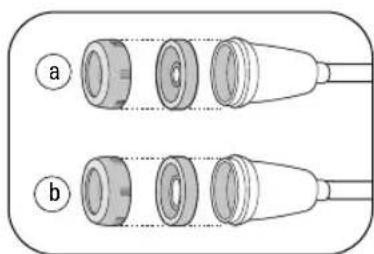
natural_image
Diagram of two labeled cylindrical connectors (a and b) with internal components, connected to a wire (no text or symbols present)natural_image
Illustration of a hand pressing down on a mechanical component with directional arrows (no text or symbols)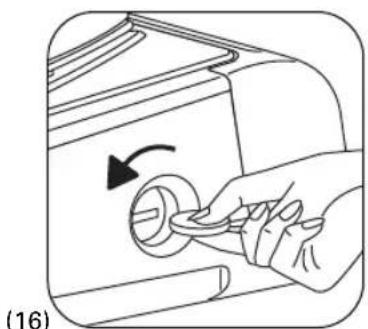
natural_image
Line drawing of a hand holding a circular knob with an arrow indicating rotation (no text or symbols)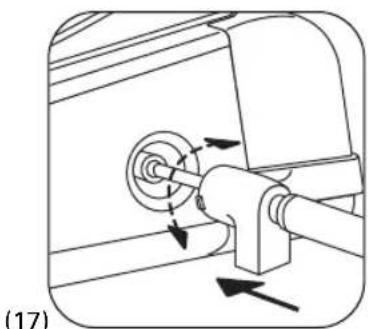
natural_image
Mechanical diagram showing a rotating shaft and lever mechanism with directional arrows (no text or symbols)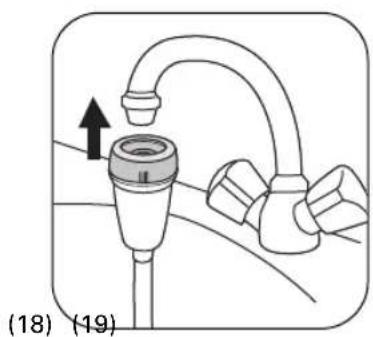
natural_image
Diagram of a faucet with an arrow indicating upward movement, no text or symbols present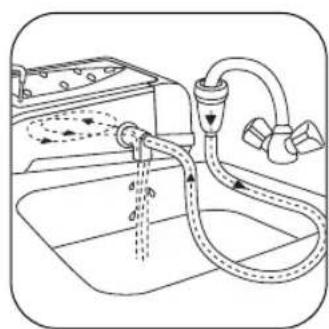
1
natural_image
Illustration of a hand pouring liquid into a container with an arrow indicating flow direction (no text or symbols)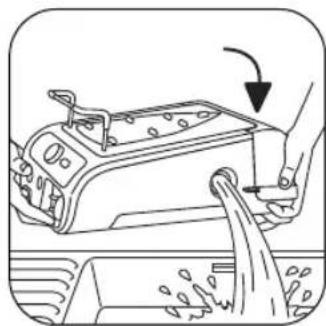
natural_image
Line drawing of a mechanical device with an arrow indicating motion, no text or symbols present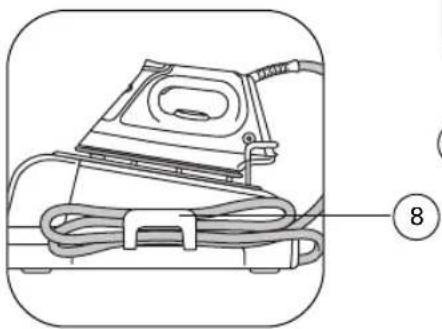
natural_image
Line drawing of a washing machine with coiled cable and labeled component (no text or symbols)natural_image
Illustration of a hand washing a baby bottle with a faucet, no text or symbols present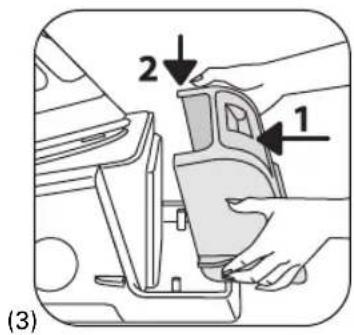
(7)
natural_image
Illustration of a hand using a steam iron to clean air, with a magnified view showing the iron being placed on it (no text or symbols present)natural_image
Diagram of a hand using a steam iron to clean or store air, with an arrow indicating the process (no text or symbols present)E
natural_image
Diagram of a medical or laboratory device with two labeled parts (1 and 2), no text or symbols present.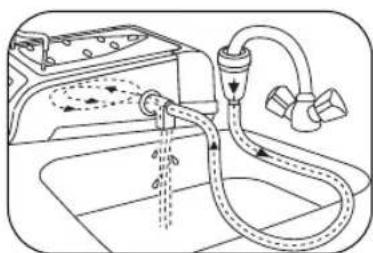
natural_image
Diagram of a car dashboard with hoses and valve, no text or symbols present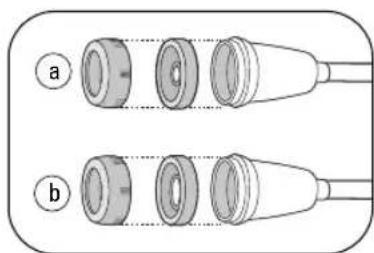
natural_image
Diagram of two labeled connectors (a and b) with internal components, no text or symbols presentnatural_image
Illustration of a hand pressing down on a mechanical component with directional arrows (no text or symbols)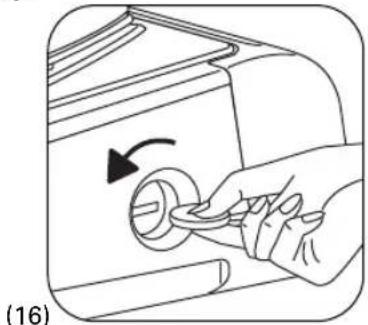
natural_image
Illustration of a hand holding a circular device with an arrow indicating rotation (no text or symbols)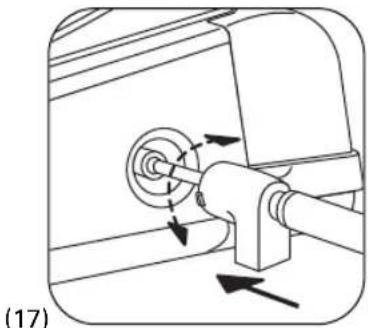
natural_image
Mechanical diagram showing a hand operating a rotating component with directional arrows (no text or symbols)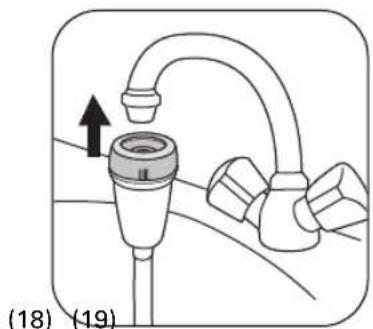
natural_image
Diagram of a faucet with an arrow indicating upward movement, labeled (18) and (19), no text or symbols present.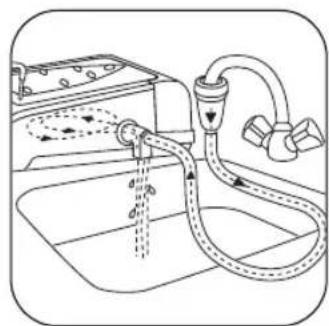
E
natural_image
Illustration of a hand pouring liquid into a container with an arrow indicating flow direction (no text or symbols)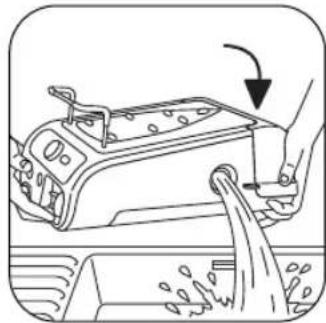
natural_image
Line drawing of a mechanical device with an arrow indicating rotation or movement (no text or symbols)natural_image
Illustration of a hand washing a small water bottle with a drain, no text or symbols present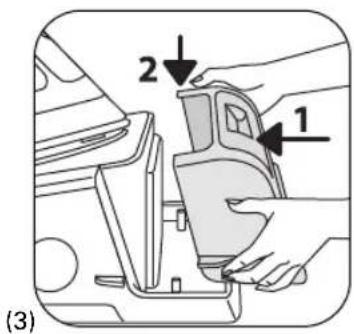
natural_image
Line drawing of a hand pressing down on a machine with a circular base and spout (no text or symbols)P
10 • PARA EFECTUAR A MANUTENÇÃO DO SEU GERADOR
natural_image
Diagram of a medical or laboratory device with two labeled parts (1 and 2), no text or symbols present.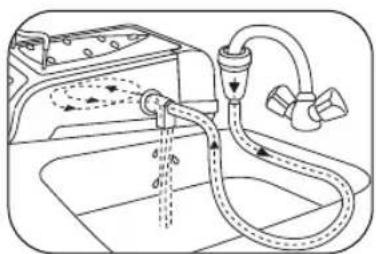
natural_image
Diagram of two identical cable connectors labeled a and b, showing internal components with dashed lines indicating alignment (no text or symbols beyond labels)natural_image
Illustration of a hand pressing down on a mechanical component with directional arrows (no text or symbols)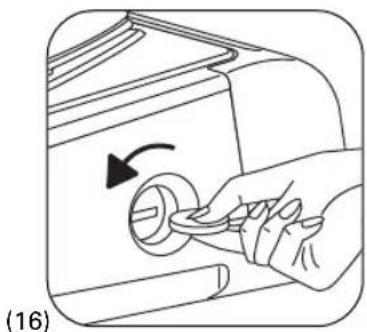
natural_image
Illustration of a hand holding a circular knob with an arrow indicating rotation (no text or symbols)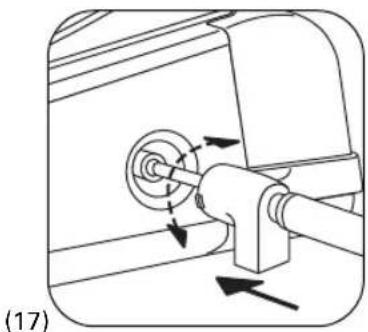
natural_image
Mechanical diagram showing a hand operating a rotating component with directional arrows (no text or symbols)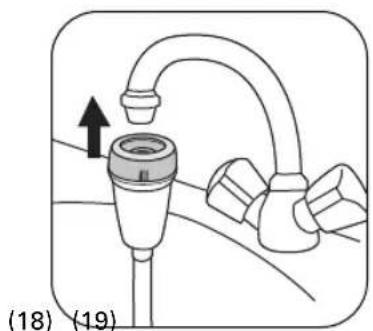
natural_image
Diagram of a kitchen sink with an upward arrow indicating force or movement, no text or symbols present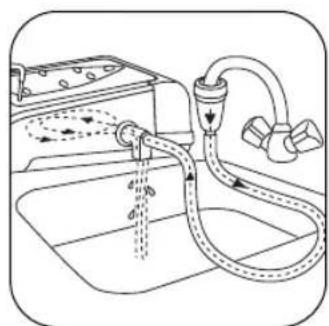
P
natural_image
Illustration of a hand pouring liquid from a container into a device (no text or symbols)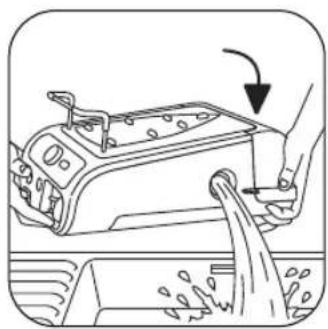
natural_image
Diagram of a car interior showing hand positioning and fluid flow (no text or symbols)natural_image
Illustration of hands washing a baby bottle with a curved tube above (no text or symbols)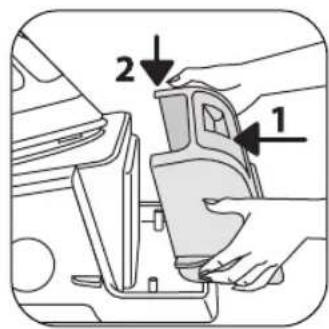
natural_image
Illustration of a hand pressing down on a computer monitor with an arrow indicating the press (no text or symbols present)flowchart
graph TD
    A["0"] --> B["restart"]
    C["0"] --> B
    B --> D["↓"]
natural_image
Illustration of hands using a power iron to lift a surface, showing motion arrows (no text or symbols)natural_image
Illustration of a hand using a steam iron to clean or store air by using a brush (no text or symbols)natural_image
Illustration of a hand using a power tool to clean air, with a spray bottle and fan nearby (no text or symbols)(13)(12)
natural_image
Diagram of a hand pressing down on a machine with a cloud underneath (no text or symbols)natural_image
Line drawing of hands washing a cup with water, no text or symbols presentnatural_image
Illustration of a medical catheter with a bulb and connector (no text or symbols)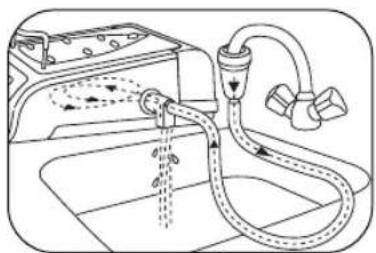
natural_image
Diagram of a car washing machine with water flow arrows indicating flow direction (no text or labels)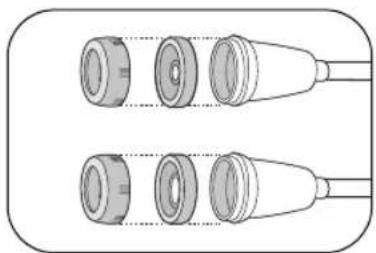
natural_image
Diagram of two identical cylindrical connectors with dashed outlines, no text or symbols presentnatural_image
Illustration of a hand holding a knob with directional arrows indicating rotation (no text or symbols)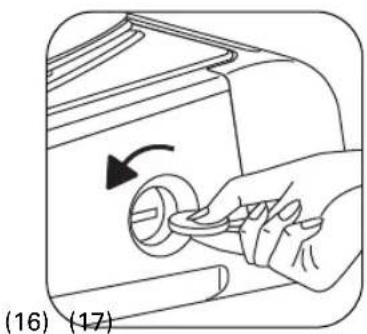
natural_image
Illustration of a hand holding a circular knob with an arrow indicating rotation (no text or symbols)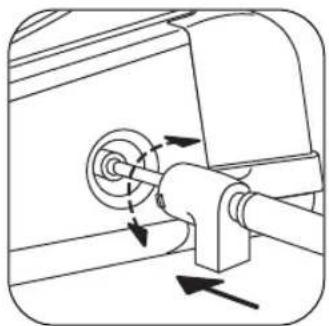
natural_image
Diagram of a mechanical device with directional arrows indicating motion or force (no text or symbols)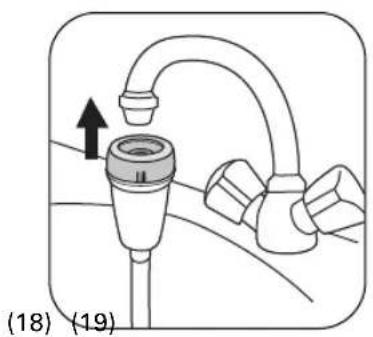
natural_image
Diagram of a medical or laboratory procedure showing a pipe fitting with an upward arrow, no text or symbols present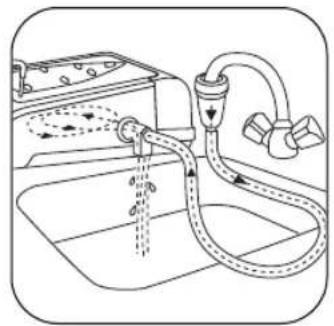
natural_image
Diagram of a water pump system with tubing and flow indicators (no text or symbols)GR
natural_image
Illustration of a hand pouring liquid into a container with an arrow indicating flow direction (no text or symbols)