ManualGo.com
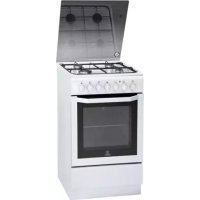
PIM 740 AS (IX) - Cooker INDESIT - Free user manual and instructions
Find the device manual for free PIM 740 AS (IX) INDESIT in PDF.


Download the instructions for your Cooker in PDF format for free! Find your manual PIM 740 AS (IX) - INDESIT and take your electronic device back in hand. On this page are published all the documents necessary for the use of your device. PIM 740 AS (IX) by INDESIT.
USER MANUAL PIM 740 AS (IX) INDESIT
Electrical connection
Burner and nozzle specifications
Description of the appliance, 18
Start-up and use, 19
Practical advice on using the burners
Practical advice on using the electric plates
Precautions and tips, 20
Maintenance and care, 21
Switching the appliance off
Cleaning the appliance
Operating Instructions
! Before operating your new appliance please read
this instruction booklet carefully. It contains important
information for safe use, installation and care of the
! Please keep these operating instructions for future
reference. Pass them on to possible new owners of
! Keep packaging material out of the reach of
children. It can become a choking or suffocation
hazard (see Precautions and tips).
! The appliance must be installed by a qualified
professional according to the instructions provided.
Incorrect installation may cause harm to people and
animals or may damage property.
! This unit may be installed and used only in
permanently ventilated rooms in accordance with
British Standard Codes Of Practice: B.S. 6172 / B.S.
5440, Par. 2 and B.S. 6891 Current Editions. The
following requirements must be observed:
• The room must be equipped with an air extraction
system that expels any combustion fumes. This
may consist of a hood or an electric fan that
automatically starts each time the appliance is
• The room must also allow proper air circulation, as
air is needed for combustion to occur normally. The
flow of air must not be less than 2 m
The air circulation system may
take air directly from the
outside by means of a pipe
with an inner cross section of
must not be vulnerable to any
The system can also provide
the air needed for combustion
indirectly, i.e. from adjacent
rooms fitted with air circulation
tubes as described above.
However, these rooms must not
bedrooms or rooms that may
present a fire hazard.
• Liquid petroleum gas sinks to the floor as it is
heavier than air. Therefore, rooms containing LPG
cylinders must also be equipped with vents to allow
gas to escape in the event of a leak. As a result
LPG cylinders, whether partially or completely full,
must not be installed or stored in rooms or storage
areas that are below ground level (cellars, etc.). It is
advisable to keep only the cylinder being used in
the room, positioned so that it is not subject to heat
produced by external sources (ovens, fireplaces,
stoves, etc. ) which could raise the temperature of
the cylinder above 50°C.
Fitting the appliance
Gas and mixed hobs are manufactured with type X
degree protection against overheating. The following
precautions must be taken when installing the hob:
• Kitchen cabinets adjacent to the appliance and
taller than the top of the hob must be at least 600
mm from the edge of the hob.
• Hoods must be installed according to their relative
installation instruction manuals and at a minimum
distance of 650 mm from the hob.
• Place the wall cabinets adjacent to the hood at a
minimum height of 420 mm from the hob (see
If the hob is installed beneath a
wall cabinet, the latter must be
situated at a minimum of 700
mm above the hob (see figure).
• The installation cavity should have the dimensions
indicated in the figure.
Enlarging the ventilation slotbetween window and floor.Adjacent Room Room to beVented
A Examples of ventilation holesfor comburant air.
In a chimney stack or branched flue. (exclusively for cooking appliances)Directly to the Outside
600mm min. 600mm min.
GB Fastening hooks are provided, allowing you tofasten the hob to tops that are between 20 and 40mm thick. To ensure the hob is securely fastenedto the top, we recommend you use all the hooksprovided. 555 mm
475 mm Hook fastening diagramHooking position Hooking positionfor top H=20 mm for top H=30 mm Front Hooking position Backfor top H=40 mm! Use the hooks contained in the “accessory pack”• Where the hob is not installed over a built-in oven, awooden panel must be installed as insulation. Thismust be placed at a minimum distance of 20 mmfrom the lower part of the hob.VentilationTo ensure adequate ventilation, the back panel of thecabinet must be removed. It is advisable to install theoven so that it rests on two strips of wood, or on acompletely flat surface with an opening of at least 45 x560 mm (see diagrams).Where a hob is installed above an oven without aforced ventilation cooling system, adequateventilation must be provided inside the cabinet bymeans of air holes through which air can pass (seefigure). Electrical connection Hobs equipped with a three-pole power supplycable are designed to operate with alternatingcurrent at the voltage and frequency indicated onthe data plate (this is located on the lower part of theappliance). The earth wire in the cable has a greenand yellow cover. If the appliance is to be installedabove a built-in electric oven, the electricalconnection of the hob and the oven must be carriedout separately, both for electrical safety purposesand to make extracting the oven easier.Connecting the supply cable to the mainsInstall a standardised plug corresponding to theload indicated on the data plate.The appliance must be directly connected to themains using an omnipolar circuit-breaker with aminimum contact opening of 3 mm installed betweenthe appliance and the mains. The circuit-breakermust be suitable for the charge indicated and mustcomply with current electrical regulations (the earthingwire must not be interrupted by the circuit-breaker).The supply cable must not come into contact withsurfaces with temperatures higher than 50°C.! The installer must ensure that the correct electricalconnection has been made and that it is compliantwith safety regulations. Before connecting to thepower supply, make sure that: 560 mm.45 mm.GB
• The appliance is earthed and the plug is
compliant with the law.
• The socket can withstand the maximum power of
the appliance, which is indicated on the data plate.
• The voltage is in the range between the values
indicated on the data plate.
• The socket is compatible with the plug of the
appliance. If the socket is incompatible with the
plug, ask an authorised technician to replace it. Do
not use extension cords or multiple sockets.
! Once the appliance has been installed, the power
supply cable and the electrical socket must be easily
! The cable must not be bent or compressed.
! The cable must be checked regularly and replaced
by authorised technicians only (see Assistance).
! The manufacturer declines any liability should these
safety measures not be observed.
The appliance should be connected to the main gas
supply or to a gas cylinder in compliance with current
national regulations. Before carrying out the
connection, make sure the cooker is compatible with
the gas supply you wish to use. If this is not the case,
follow the instructions indicated in the paragraph
“Adapting to different types of gas.”
When using liquid gas from a cylinder, install a
pressure regulator which complies with current
national regulations.
! Check that the pressure of the gas supply is
consistent with the values indicated in Table 1
(“Burner and nozzle specifications”). This will ensure
the safe operation and longevity of your appliance
while maintaining efficient energy consumption.
Connection with a rigid pipe (copper or steel)
! Connection to the gas system must be carried out in
such a way as not to place any strain of any kind on
There is an adjustable L-shaped pipe fitting on the
appliance supply ramp and this is fitted with a seal in
order to prevent leaks. The seal must always be
replaced after rotating the pipe fitting (seal provided
with appliance). The gas supply pipe fitting is a
threaded 1/2 gas cylindrical male attachment.
Connecting a flexible jointless stainless steel
pipe to a threaded attachment
The gas supply pipe fitting is a threaded 1/2 gas
cylindrical male attachment.
These pipes must be installed so that they are never
longer than 2000 mm when fully extended. Once
connection has been carried out, make sure that the
flexible metal pipe does not touch any moving parts
and is not compressed.
! Only use pipes and seals that comply with current
national regulations.
Checking the tightness of the connection
! When the installation process is complete, check the
pipe fittings for leaks using a soapy solution. Never
Adapting to different types of gas
To adapt the hob to a different type of gas other than
default type (indicated on the rating plate at the base
of the hob or on the packaging), the burner nozzles
should be replaced as follows:
1. Remove the hob grids and slide the burners off their
2. Unscrew the nozzles using a 7 mm socket spanner,
and replace them with nozzles for the new type of
gas (see table 1 “Burner and nozzle
3. Reassemble the parts following the above
procedure in the reverse order.
4. Once this procedure is finished, replace the old
rating sticker with one indicating the new type of
gas used. Sticker are available from any of our
• Adjusting the burners’ primary air :
Does not require adjusting.
• Setting the burners to minimum:
1. Turn the tap to the low flame position.
2. Remove the knob and adjust the adjustment screw,
which is positioned in or next to the tap pin, until
the flame is small but steady.16
3. Having adjusted the flame to the required low
setting, while the burner is alight, quickly change
the position of the knob from minimum to maximum
and vice versa several times, checking that the
flame does not go out.
4. Some appliances have a safety device
(thermocouple) fitted. If the device fails to work
when the burners are set to the low flame setting,
increase this low flame setting using the adjusting
5. Once the adjustment has been made, replace the
seals on the by-passes using sealing wax or a
! If the appliance is connected to liquid gas, the
regulation screw must be fastened as tightly as
! Once this procedure is finished, replace the old
rating sticker with one indicating the new type of gas
used. Stickers are available from any of our Service
! Should the gas pressure used be different (or vary
slightly) from the recommended pressure, a suitable
pressure regulator must be fitted to the inlet pipe (in
order to comply with current national regulations).
This appliance conforms to the following
European Economic Community directives:
- 2006/95/EEC dated 12/12/06 (Low
Voltage) and subsequent amendments
- 2004/108/EEC dated 15/12/04
(Electromagnetic Compatibility) and
subsequent amendments
- 93/68/EEC dated 22/07/93 and
subsequent amendments.
- 2009/142/EEC dated 30/11/09 (Gas) and
subsequent amendments.
- 2002/96/EC and subsequent
Burner and nozzle specifications
* At 15°C and 1013 mbar - dry gas
** Propane P.C.S. = 50.37 MJ/Kg
GB Description of the
Only available on certain models.
• ELECTRIC HOTPLATES may have different
diameters and operate at different power levels.
These power levels may be “normal” or “rapid” (the
latter may be distinguished from the others by a red
spot in the middle of the hotplate).
• The ELECTRIC HOTPLATE INDICATOR LIGHT
switches on whenever the selector knob is moved
from the ‘off’ position.
• GAS BURNERS differ in size and power. Use the
diameter of the cookware to choose the most
appropriate burner to cook with.
• Control Knobs for GAS BURNERS and ELECTRIC PLATES* adjust the power or the size of the flame.
• GAS BURNER ignition* enables a specific burner
to be lit automatically.
• SAFETY DEVICE* stops the gas flow if the flame is
accidentally extinguished.
Control Knobs for GAS BURNERS
and ELECTRIC HOTPLATES*
19 ! The position of the corresponding gas burner orelectric hotplate* is shown on every knob.Gas burnersEach burner can be adjusted to one of the followingsettings using the corresponding control knob:• OffMaximumMinimumTo light one of the burners, hold a lit match or lighternear the burner and, at the same time, press downand turn the corresponding knob anti-clockwise to themaximum setting.Since the burner is fitted with a safety device, theknob should be pressed for approximately 6 secondsto allow the automatic device keeping the flame alightto heat up.When using models with an ignition button, light thedesired burner by first pressing the gas burnersbutton (identifiable by the symbol), then pressingdown the corresponding knob as far as possible andturning it anticlockwise towards the maximum setting.! If a flame is accidentally extinguished, turn off thecontrol knob and wait for at least 1 minute beforetrying to relight it.To switch off the burner, turn the knob in a clockwisedirection until it stops (when reaches the “•” position).Electric hotplates*The corresponding knob may be turned clockwise oranti-clockwise and set to six different positions: Setting Normal or Fast Plate
High When the selector knob is in any position other thanthe off position, the ‘on’ light comes on. Practical advice on using the burners To ensure the burners operate efficiently:• Use appropriate cookware for each burner (seetable) so that the flames do not extend beyondthe bottom of the cookware.• Always use cookware with a flat base and acover.• When the contents of the pan reach boiling point,turn the knob to minimum.Burner
Reduced Rapid (RR)Semi-Rapid (S)Auxiliary (A)Triple Crown (TC)Ultrarapid (UR)Ø Cookware diameter (cm)24 - 2616 - 2010 - 1424 - 2624 - 26 Practical advice on using the electric
hotplates To avoid heat loss and damage to the hotplates, usepans with a flat base, whose diameter is no lessthan that of the hotplate itself.Setting
Off Cooking vegetables, fishCooking patatoes (using steam) soups, chickpeas, beans.Continuing the cooking of large quantities of food, minestrone.For roasting (average)For roasting (above average)---------For browning and reaching a boil in a short time ! Before using the hotplates for the first time, youshould heat them at maximum temperature forapproximately 4 minutes, without placing any panson them. During this initial stage, their protectivecoating hardens and reaches its maximumresistance. Start-up and use
* Only available on certain models.20
GB Precautions and tips
! This appliance has been designed and
manufactured in compliance with international safety
standards. The following warnings are provided for
safety reasons and must be read carefully.
• This is a class 3 built-in appliance.
• Gas appliances require regular air exchange to
maintain efficient operation. When installing the
hob, follow the instructions provided in the
paragraph on “Positioning” the appliance.
• These instructions are only valid for the
countries whose symbols appear in the manual
and on the serial number plate.
• The appliance was designed for domestic use
inside the home and is not intended for commercial
• The appliance must not be installed outdoors, even
in covered areas. It is extremely dangerous to leave
the appliance exposed to rain and storms.
• Do not touch the appliance with bare feet or with
wet or damp hands and feet.
• The appliance must be used by adults only for
the preparation of food, in accordance with the
instructions outlined in this booklet. Any other
use of the appliance (e.g. for heating the room)
constitutes improper use and is dangerous.
The manufacturer may not be held liable for
any damage resulting from improper, incorrect
and unreasonable use of the appliance.
• Ensure that the power supply cables of other
electrical appliances do not come into contact with
the hot parts of the oven.
• The openings used for ventilation and dispersion of
heat must never be covered.
• Always make sure the knobs are in the “”/“ ” position when the appliance is not in use.
• When unplugging the appliance always pull the plug
from the mains socket, do not pull on the cable.
• Never carry out any cleaning or maintenance work
without having detached the plug from the mains.
• In case of malfunction, under no circumstances
should you attempt to repair the appliance
yourself. Repairs carried out by inexperienced
persons may cause injury or further
malfunctioning of the appliance. Contact a Service
Centre (see Assistance).
• Always make sure that pan handles are turned
towards the centre of the hob in order to avoid
• Do not close the glass cover (if present) when the
gas burners or electric hotplates are still hot.
• Do not leave the electric hotplate switched on
without a pan placed on it.
• Do not use unstable or deformed pans.
• Remove any liquid from the lid before opening it.
• The appliance should not be operated by people
(including children) with reduced physical, sensory
or mental capacities, by inexperienced individuals
or by anyone who is not familiar with the product.
These individuals should, at the very least, be
supervised by someone who assumes responsibility
for their safety or receive preliminary instructions
relating to the operation of the appliance.
• The appliance is not intended to be operated
by means of an external timer or separate
remote-control system.
• When disposing of packaging material: observe local
legislation so that the packaging may be reused.
• The European Directive 2002/96/EC on Waste
Electrical and Electronic Equipment (WEEE),
requires that old household electrical appliances
must not be disposed of in the normal unsorted
municipal waste stream. Old appliances must be
collected separately in order to optimise the
recovery and recycling of the materials they
contain and reduce the impact on human health
and the environment. The crossed out “wheeled
bin” symbol on the product reminds you of your
obligation, that when you dispose of the
appliance it must be separately collected.
Consumers should contact their local authority or
retailer for information concerning the correct
disposal of their old appliance.GB
Switching the appliance off
Disconnect your appliance from the electricity supply
before carrying out any work on it.
Cleaning the appliance
! Do not use abrasive or corrosive detergents such as
stain removers, anti-rust products, powder detergents
or sponges with abrasive surfaces: these may scratch
the surface beyond repair.
! Never use steam cleaners or pressure cleaners on
• It is usually enough to wash the hob with a damp
sponge and dry it with absorbent kitchen roll.
• The removable parts of the burners should be
washed frequently with warm water and soap and
any burnt-on substances removed.
• For hobs which ligth automatically, the terminal part
of the electronic instant lighting devices should be
cleaned frequently and the gas outlet holes should
be checked for blockages.
• The electric hotplates should be cleaned with a
damp cloth and lubricated with a little oil while still
• Stainless steel can be marked by hard water that
has been left on the surface for a long time, or by
aggressive detergents containing phosphorus.
After cleaning, rinse and dry any remaining drops
Maintenance and care
Over time, the taps may become jammed or difficult to
turn. If this happens, the tap must be replaced.
! This procedure must be performed by a qualified
technician authorised by the manufacturer.22
It may happen that the appliance does not function properly or at all. Before calling the service centre for
assistance, check if anything can be done. First, check to see that there are no interruptions in the gas and
electrical supplies, and, in particular, that the gas valves for the mains are open.
The burner does not light or the flame is not even around the burner.
• The gas holes on the burner are clogged.
• All the movable parts that make up the burner are mounted correctly.
• There are draughts near the appliance.
The flame dies in models with a safety device.
Check to make sure that:
• You pressed the knob all the way in.
• You keep the knob pressed in long enough to activate the safety device.
• The gas holes are not blocked in the area corresponding to the safety device.
The burner does not remain lit when set to minimum.
Check to make sure that:
• The gas holes are not blocked.
• There are no draughts near the appliance.
• The minimum setting has been adjusted properly.
The cookware is unstable.
Check to make sure that:
• The bottom of the cookware is perfectly flat.
• The cookware is positioned correctly at the centre of the burner.
• The pan support grids have been positioned correctly.
If, despite all these checks, the hob does not function properly and the problem persists, call the nearest Customer
Service Centre. Please have the following information handy:
• The appliance model (Mod.).
• The serial number (S/N).
This information can be found on the data plate located on the appliance and/or on the packaging.
modifications successives
- 93/68/CEE du 22/07/93 et
modifications successives.
- 2009/142/CEE du 30/11/09 (Gaz) et
modifications successives.
as regras locais, de maneira que as embalagens