NetFly UP4 WN - Network card / adapter ATLANTIS-LAND - Free user manual and instructions
Find the device manual for free NetFly UP4 WN ATLANTIS-LAND in PDF.


| Product Type | Network card / wireless adapter |
| Model | NetFly UP4 WN |
| Brand | ATLANTIS-LAND |
| Wireless standards | IEEE 802.11b/g/n |
| Maximum data rate | 300 Mbps (150 Mbps for A02-UP1-WN) |
| Frequency | 2.4 GHz |
| Interface | USB 2.0/1.1 or PCI 32-bit depending on version |
| Operating modes | Infrastructure, Ad-Hoc, Access Point (Windows) |
| Security | WEP 64/128-bit, WPA/WPA2-PSK, WPA/WPA2, LEAP |
| Supported operating systems | Windows 2000/XP/Vista/7, Mac OS X (USB), Linux |
| Antenna | 2 dBi (PCI model) or integrated (USB) |
| Dimensions (estimated) | Approximately 80 x 25 x 10 mm (USB) |
| Weight (estimated) | Approximately 30 g (USB) |
| Power supply | Via USB port (5V) or PCI |
| Warranty | 2 years |
| Compliance | CE, Directive 1999/5/EC |
| Authorized channels (France) | Indoor: 1-13; Outdoor: 1-6 (channels 10-13 limited to 10 mW) |
| Operating temperature (estimated) | 0 to 40°C |
| Maintenance | Clean with a dry cloth, avoid moisture |
| Spare parts / Repairability | Not available, product not repairable |
Frequently Asked Questions - NetFly UP4 WN ATLANTIS-LAND
User questions about NetFly UP4 WN ATLANTIS-LAND
0 question about this device. Answer the ones you know or ask your own.
Ask a new question about this device
Download the instructions for your Network card / adapter in PDF format for free! Find your manual NetFly UP4 WN - ATLANTIS-LAND and take your electronic device back in hand. On this page are published all the documents necessary for the use of your device. NetFly UP4 WN by ATLANTIS-LAND.
USER MANUAL NetFly UP4 WN ATLANTIS-LAND
This product is covered by Atlantis 2 years warranty. For more detailed informations please refer to the web site www.atlantis-land.com.
For more detailed instructions on configuring and using this device, please refer to the online manual.
FRANCAIS
5.3 Advanced 25
5.4 Statistics 26
5.5 WMM 27
5.6 WPS 29
APPENDICE B: WPS (Wi-Fi Protected Setup) 34
APPENDICE C: AP Mode 36
1.PRODUCT OVERVIEW 51

Atlantis
1.1 How the Adapter works 52
1.2 System Requirements 53
2.PACKAGE CONTENTS 53
3. SOFTWARE INSTALLATION 54
3.1 Utility and Driver Installation 54
3.2 Uninstallation 55
4.HARDWARE INSTALLATION 55
4.1 Hardware Installation for PCI Card 55
4.2 Hardware Installation for USB Adapater 56
4.3 Using the Configuration Utility 57
5.RaUI CONFIGURATION UTILITY 58
5.1 Profile 58
5.1.1 Configuring WEP security 61
5.1.2 Configuring WPA-PSK / WPA2-PSK security 62
5.1.3 Configuring WPA / WPA2 security 62
5.2 Network 63
5.3 Advanced 64
5.4 Statistics 64
5.5 WMM 65
5.6 WPS 67
5.6.1 WPS (PBC Mode) Configuration 67
5.7 CCX 68
5.8 Radio On/Off 68
5.9 About 69
5.10 Help 69
- Support 70
APPENDIX A: AP Mode 71
APPENDIX B: Connect to a network using Windows client. 74
APPENDIX C: IP Address in DHCP Client Mode 76
APPENDIX D: Troubleshooting 78
FRANCAIS
1.ADAPTATEUR WIRELESS 86
APPENDIX A: Country Channel List. 112
APPENDIX B: Technical Specifications 115
A02-WC-W(300)N(v1.2)_MX01 (v1.02 Feb 2011)
Atlantis
AVVERTENZE
- Launch Config Utilities
- Switch to AP mode
- Open Diagnostic Testing Mode
- Exit
L'Utility di configurazione include 10 tabs: Profile, Network, Advanced, Statistics, WMM, WPS, CCX, Radio On/Off, About and Help.
Fax: +39.02.78.62.64.39
Website: http://www.atlantis-land.com
Email: info@atlantis-land.com
APPENDICE A: Disabilitare Zero Configuration
APPENDICE B: WPS (Wi-Fi Protected Setup)
APPENDICE C: AP Mode
No part of this publication may be reproduced, stored in a retrieval system, or transmitted in any form or by any means, whether electronic, mechanical, photocopying, recording or otherwise without the prior writing of the publisher. Windows™ 98SE/2000/ME/XP/VISTA are trademarks of Microsoft® Corp. Pentium is trademark of Intel. All copyright reserved.
The Atlantis logo is a registered trademark of Atlantis. All other names mentioned mat be trademarks or registered trademarks of their respective owners. Subject to change without notice. No liability for technical errors and/or omissions.
Wireless LAN, Health and Authorization for use
Radio frequency electromagnetic energy is emitted from Wireless LAN devices. The energy levels of these emissions however are far much less than the electromagnetic energy emissions from wireless devices like for example mobile phones. Wireless LAN devices are safe for use frequency safety standards and recommendations. The use of Wireless LAN devices may be restricted in some situations or environments for example:
- On board of airplanes, or
- In an explosive environment, or
In case the interference risk to other devices or services is perceived or identified as harmful
In case the policy regarding the use of Wireless LAN devices in specific organizations or environments (e.g. airports, hospitals, chemical/oil/gas industrial plants, private buildings etc.) is not clear, please ask for authorization to use these devices prior to operating the equipment.
Regulatory Information/disclaimers
Installation and use of this Wireless LAN device must be in strict accordance with the instructions included in the user documentation provided with the product. Any changes or modifications made to this device that are not expressly approved by the manufacturer may void the user's authority to operate the equipment. The Manufacturer is not responsible for any radio or television interference caused by unauthorized modification of this device, of the substitution or attachment.
Manufacturer and its authorized resellers or distributors will assume no liability for any damage or violation of government regulations arising from failing to comply with these guidelines.
CE Mark Warning
In a domestic environment, this product may cause radio interference, in which case the user may be required to take adequate measures.

Atlantis
CE in which Countries where the product may be used freely:
Germany, UK, Italy, Spain, Belgium, Netherlands, Portugal, Greece, Ireland, Denmark, Luxembourg, Austria, Finland, Sweden, Norway and Iceland.
France: except the channel 10 through 13, law prohibits the use of other channels.
CE/EMC Restriction of Liability
The product described in this handbook was designed, produced and approved according to the EMC-regulations and is certified to be within EMC limitations. If the product is used in an uncertified PC, the manufacturer undertakes no warranty in respect to the EMC limits. The described product in this handbook was constructed, produced and certified so that the measured values are within EMC limitations. In practice and under special circumstances, it may be possible, that the product may be outside of the given limits if it is used in a PC that is not produced under EMC certification. It is also possible in certain cases and under special circumstances, which the given EMC peak values will become out of tolerance. In these cases, the user himself is responsible for compliance with the EMC limits.
Declaration of Conformity
This equipment has been tested and found to comply with Directive 1999/5/CE of the European Parliament and of the Council on radio equipment and telecommunications terminal equipment and the mutual recognition of their conformity. After assessment, the equipment has been found to comply with the following standards: EN 300.328 (radio), EN 301 489-1, EN 301 489-17 (electromagnetic compatibility) and EN 60950 (safety). This equipment may be used in all European Union contries and in all countries applying Directive 1999/5/CE, without restriction, with the exception of the following countries:
France (FR): When this equipment is used outdoors, output power is limited to within the frequency bans listed on the chart. For more info, consult the website www.artelecom.fr.
| Location | Frequency Band (MHz) | Power (EIRP) |
| Indoor (no restriction) | 2400-2483,5 | 100mW(20dBm) |
| Outdoor | 2400-2454 | 100mW(20dBm) |
| 2454-2483,5 | 10mW(10dBm) |
Italy(IT): For more info, consult the website www.comunicazioni.it
Luxembourg: General authorization requie for network and service supply.
Norway (NO): This subsection does not apply for geographical area within a radius of 20km from the center of Ny Alesund.
Atlantis
Russia (CCP): only for indoor application.
CE
Declaration of Conformity
Hereby We declare that this product is in compliance with the essential requirements and other relevant provisions of Directive "Electromagnetic Compatibility" and 1999/5/CE within CE Marking Requirement.
CE Declaration is available on the web site www.atlantis-land.com.

Important information for the correct recycle/treatment
procedures of this equipment
The crossed-out wheeled bin symbol printed on the unit label or unit packaging indicates that this equipment must not be disposed of as unsorted municipal waste but it should be collected separately.
The waste of electric and electronic equipment must be treated separately, in order to ensure that hazardous materials contained inside the equipment are not buried thereby providing potential future problems for the environment and human health. Moreover, it will be possible to reuse and recycle some parts of the waste of electric and electronic equipment, contributing to reduce the quantities of waste to be disposed of and the depletion of natural resources.
As user of this equipment, you are responsible to return this waste of electronic equipment to an authorised collection facility set up by your Municipality. More detailed information on your nearest collection centre can be obtained from your Municipality or from other competent local entities.
If you are replacing the old equipment with a new equivalent product, the distributor must take-back the old equipment free of charge on a one-to one basis as long as the equipment is of equivalent type and fulfilled the same functions as the supplied equipment.
Your role in participating to the separate collection of waste of electric and electronic equipment is essential to ensure that environmental protection and human health objectives connected to a responsible treatment and recycling activities are achieved.
PS.: The above mentioned information are reported herewith in compliance with Directive 2002/96/CE, which requires a separate collection system and specific treatment and disposal

Atlantis
procedures for the waste of electric and electronic equipments (WEEE). For further and more detailed information, we invite you to visit our website at www.atlantis-land.com

CE Logo with attention Mark aren't fully compliant with minimum dimensions requirement to European Directive due to limited sticker area.


WEEE BIN Logo () isn't fully compliant with minimum dimensions requirement to European Directive due to limited sticker area.

Atlantis suggest to visit the web site www.atlantisland.com in order to retrieve update manual, techsheet and driver.

Before starting, take a few minutes to read this manual. Read all of instructions and save this manual for later reference.

Atlantis
Thank you for purchasing the Wireless USB Adapter that provides the easiest way to wireless networking. This User Manual contains detailed instructions in the operation of this product. Please keep this manual for future reference.
1.PRODUCT OVERVIEW
Thank you for purchasing the NetFly that provides the easiest way to wireless networking.
The NetFly (hereafter called the Adapter) is a high-efficiency wireless LAN Card/Adapter for wireless networking at home, in office or in public places. With the Adapter, you can roam between conference room and office without being disconnected the LAN cables; in addition, sharing files and printers can be easy tasks. The NetFly is available to Microsoft Windows operating systems (Windows XP/2000/VISTA/7, Linux and Mac OS X(only for USB Adapter)) and can be integrated into networking with either Ad-hoc mode (computer-to-computer, without an Access Point), Infrastructure mode (computer-to-access point, an Access Point is required) or Access Point Mode.
The device offers quick and easy access among wired network and wireless network. The NetFly also supports WPA/WPA2 security, it increases the level of data protection and access control for Wireless LAN.
MIMO radio technology (available only on 300Mbps devices) and multiple Antennas provide extended coverage and low throughput fluctuations.
Last but not least WPS and WMM supports offers an high throughput for HD Video Streaming and an easy way to make sure you wireless network.
Access Point Mode: PC with Wireless USB/PCI Adapter/Card work as an Access Point. You can save money and make a little network using Your PC+Adapter as an Access Point. This features is available only on selected SO (XP/Vista/7).
The NetFly AP4 WN is a wireless USB 2.0 adapter that provides instant access to data like news, weather, sports and stock information on your Samsung HDTV screen. It also supports Blu-ray Live with Netflix, Pandora and PC streaming of pictures and videos.
Atlantis
1.1 How the Adapter works
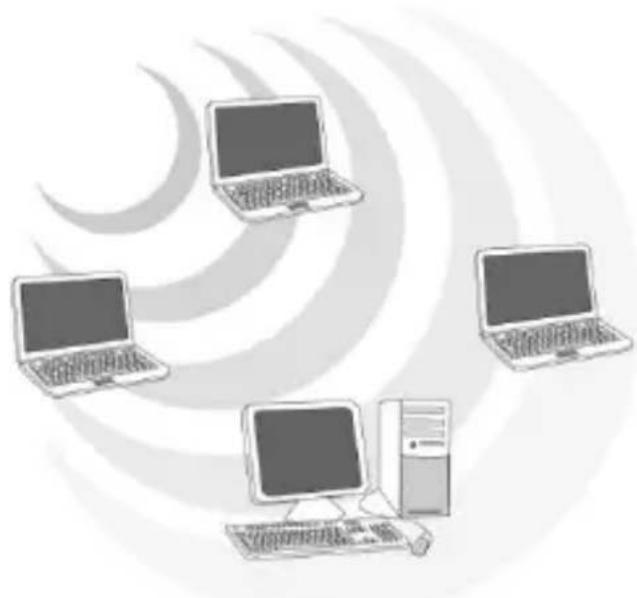
Ad-hoc Mode: An Ad-hoc network is a local area network or other small network, especially one with wireless or temporary plug-in connections, in which some of the network devices are part of the network only for the duration of a communications session. Users in the network can share files, print to a shared printer, and access the Internet with a shared modem. In this kind of network, new devices can be quickly added; however, users can only communicate with other wireless LAN computers that are in this wireless LAN workgroup, and are within range.
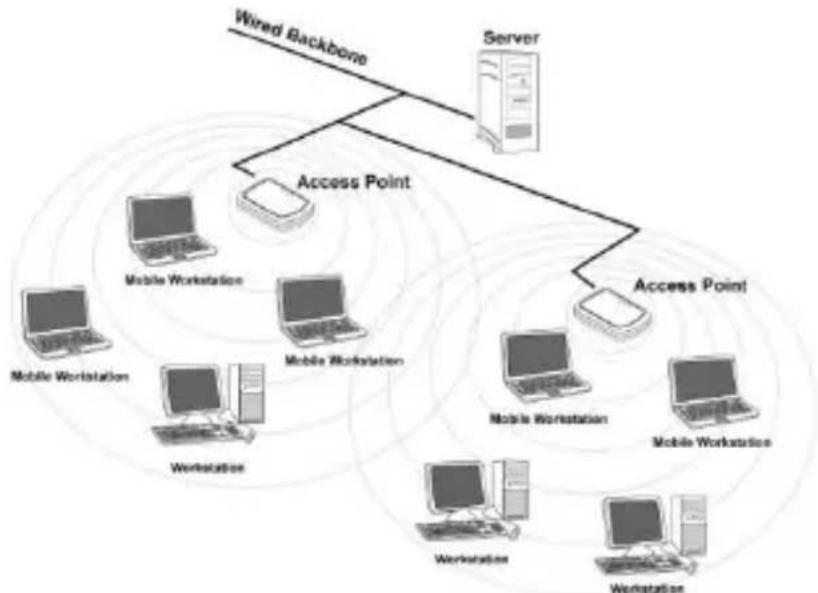
Infrastructure Networking Mode: The difference between Infrastructure network and Ad-hoc network is that the former one includes an Access Point. In an Infrastructure network, the Access Point can manage the bandwidth to maximize

Atlantis
bandwidth utilization. Additionally, the Access Point enables users on a wireless LAN to access an existing wired network, allowing wireless users to take advantage of the wired networks resources, such as Internet, email, file transfer, and printer sharing. The scale and range of the Infrastructure networking are larger and wider than that of the Ad-hoc networking.
Access Point Mode: PC with Wireless USB/PCI Adapter/Card work as an Access Point. You can save money and make a little network using Your PC+Adapter as an Access Point. This features is available only on selected SO (XP/Vista/7).
1.2 System Requirements
Before installing the Adapter, your PC should meet the following:
PC with available USB V2.0/1.1* slot (A02-UP1-WN, A02-UP-W300N, A02-UP4-W300N)
PC with available PCI 32bit slot (A02-PCI-W300N)
- Intel Pentium®III 600Mhz or compatible processor with 512 MB RAM
- Windows © 2000/XP/Vista/7, Mac OS X(only USB) and Linux operating system
Minimum 45 Mbytes free disk space for installing the driver and utilities
- CD-Rom drive
*When plug the device in the USB 1.1/1.0 port, the real throughput will be up to 6Mbps only when running 11Mbps or higher speed.

The throughput is limited to 6Mbps if the wireless N M USB adapter is plugged on an USB rev1.1 slot.
2. PACKAGE CONTENTS
Open the box of the NetFly Wireless Adapter/Card and carefully unpack it. The box should contain the following items:
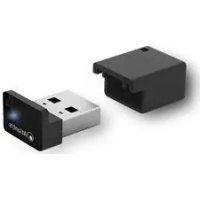
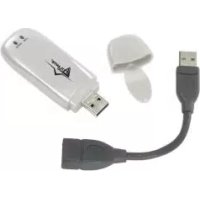
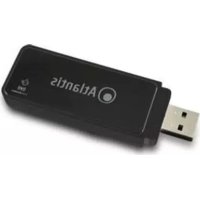
- One NetFly USB Wireless Adapter or NetFly PCI Wireless Card
- USB Cable (only for A02-UP-W300N, A02-UP4-W300N)
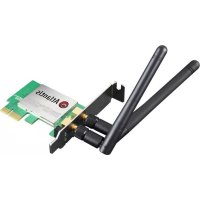
- 2 dBi Antenna (only for A02-PCI-W300N)
One MultiLanguage Quick Start Guide (English, French and Italian)

Atlantis
CD-Rom with Utility, Driver and Manual (English, French and Italian)
- 1 x Warranty Card and 1 x WEEE Card
If any item is found missing or damaged, please contact your local reseller for replacement.
3. SOFTWARE INSTALLATION
This section will lead you to install the driver and utility of the Wireless LAN Adapter/Card.
3.1 Utility and Driver Installation
- Insert the CD-ROM and the Auto-run program will appear (alternatively, open a file browser and double click on the start.htm file located in the CD directory).
- Click on A02-UP4-W300N icon (or A02-UP-W300N or A02-UP1-WN or A02-PCI-W300N) to select NetFly USB/Card Home Page.
- Select Utility and the install wizard will begin installing the software. Follow the install wizard instructions to complete the installation (select Install Driver and RaLink WLAN Utility (for Vista/7) or Ralink Configuration Tool (for XP)).
- Follow the Install Shield Wizard Instructions. Click Next to continue and finish it.

If you need to install the driver/utility manually, refer each Windows OS to the following CD-ROM directory path: CD-ROM:\USB\
Please plug Wireless USB Adapter into USB Slot or PCI Card (shut down before the computer the PC) into PCI Slot (check the next section), it will be recognized and auto installed.
The installation program will help you to setup the Wireless LAN utility.

Windows XP/Vista/7 have its own Wireless Utility; you can either use the utility of Windows XP/7/Vista or the provide utility. In this case during installation please select Install Driver Only (for 7/Vista) or Microsoft Zero Configuration Tool (for XP).

Atlantis
3.2 Uninstallation
To uninstall the Wireless USB/PCI Adapter/Adapter, go to the Control Panel of your system.
- Open the Add/Remove Programs.
- Select the Ralink Wireless Lan Card in the Add/Remove Programs and then click on the Remove.
- Click on Remove ALL [or Overwrite the older version install without remove].
Then chose Yes, I want to restart my computer and click Finish.
Now You can remove the Adapter/Card.
4. HARDWARE INSTALLATION
4.1 Hardware Installation for PCI Card
The setup of the Wireless LAN Card can be performed using the following steps:
- Shut down the computer, unplugs its power cord, and remove the chassis cover.
- Insert the contact edge of the NetFly card into the connector of any available PCI Bus Master expansion slot. Press the card firmly into the connector such that the card's contacts are fully seated in the connector.
Install the bracket screw and secure the card to the computer chassis. - Visually inspect the PCI Adapter and make sure that it is fully plugged in to the PCI slot.
Cover the computer's chassis. - Switch computer power on.
The OS will start an automatic hardware discovery procedure in order to find and install the best driver available for the device.

Make sure that there is a well environment that there is much intrusion to have a better connection.

Atlantis
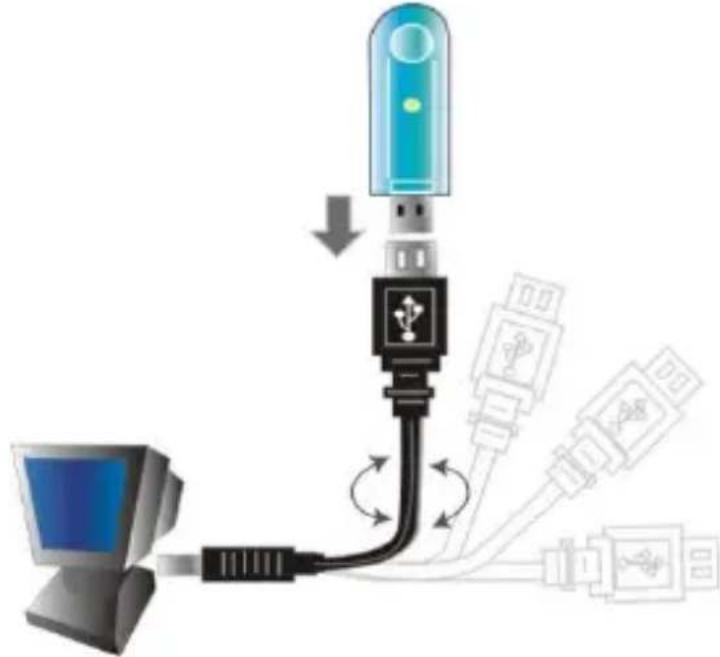
4.2 Hardware Installation for USB Adapater
Please plug the Wireless adapter (only when requested from OS) to a free USB slot on the PC.
Atlantis
4.3 Using the Configuration Utility
When the Wireless LAN Adapter was installed, you will see the icon on the Windows task bar. The user can configure the wireless settings using the Wireless Adapter Configuration Utility. Double-click the utility icon that appears in the taskbar

| ICON | SIGNAL QUALITY |
| R | Excellent |
| R | Good |
| R | Weak |
| R | Not connected yet |
| R | Device not recognized |
When You click on this icon in the Windows task bar You can see 4 different links:
- Launch Config Utilities
- Switch to AP mode
- Open Diagnostic Testing Mode
- Exit
| NOTE: | In windows XP, it provides wireless configuration utility named windows zero configuration which provides basic configuration function for WiressUSB Adapter. Currently, Ralink's utility provides WPA-PSK supplicant's functionality. If user required WPA function. Please select WZC as main utility. To make it easier for user to select the correct utility. RaConfig will let user make the selection when it first ran after XP boot. Click the |

Atlantis
icon of will bring up the selection window and let use make the selection. When coexisting with WZC, RaConfig only provides monitoring function, such as link status, site surveying, statistic counters and advance feature status
5. RaUI CONFIGURATION UTILITY
Double-click the Wireless LAN icon (or right-click and then select Launch Config Utilities) to launch the Configuration Utility. With the Wireless Adapter utility, users can configure all the functions provided by the Wireless Monitor Utility. Double-click the utility icon that appears in the taskbar.
The Wireless Monitor Utility includes 10 tabs: Profile, Network, Advanced, Statistics, WMM, WPS, CCX, Radio On/Off, About and Help.
5.1 Profile
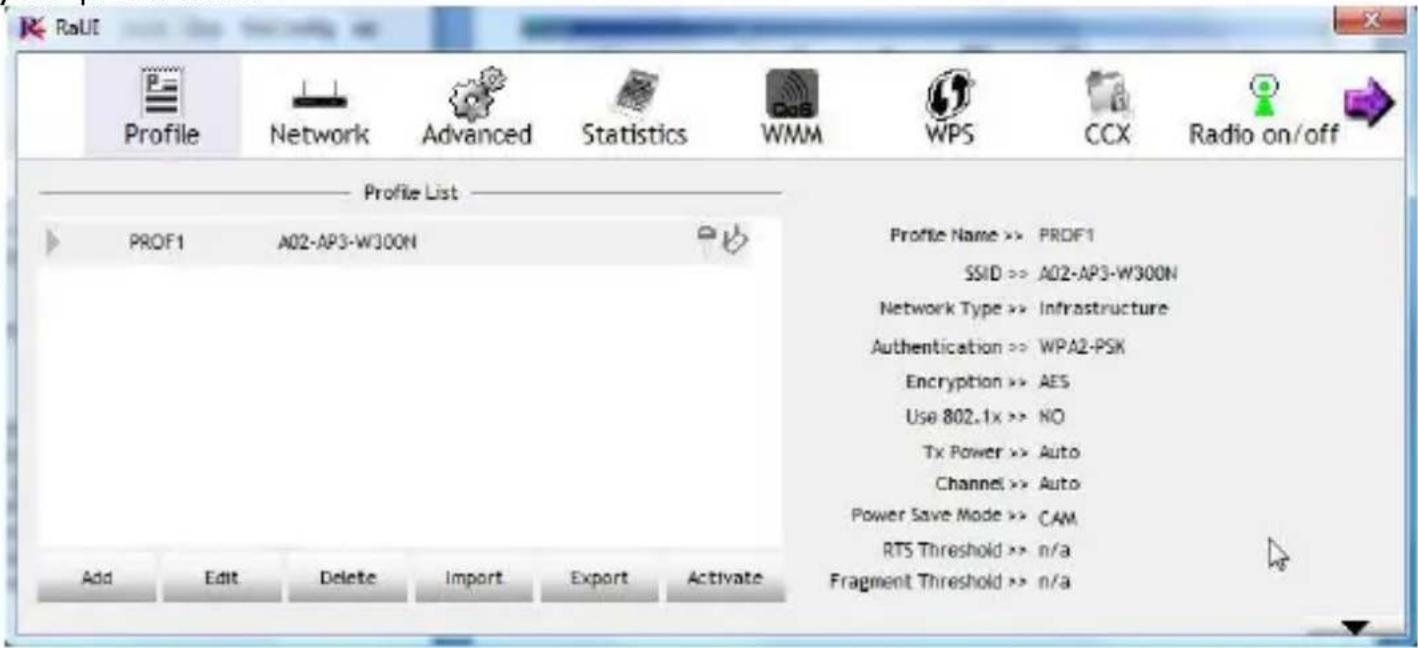
Profile can book keeping your favorite wireless setting among your home, office, and other public hotspot. You may save multiple profiles, and activate the correct one at your preference.

Atlantis

When use site survey to make the connection, none of profiles will have the connection status icon.
Click Add button in order to make a new profile, and click Delete button, after choose a profiule, in order to erase an existing profile.
Click Edit button to change the selected Profile or click Activate button, after choose a profile, in order to use selected profile for current connection.
If you need to add a new connection profile by pressing Add button, the following screen will be show:
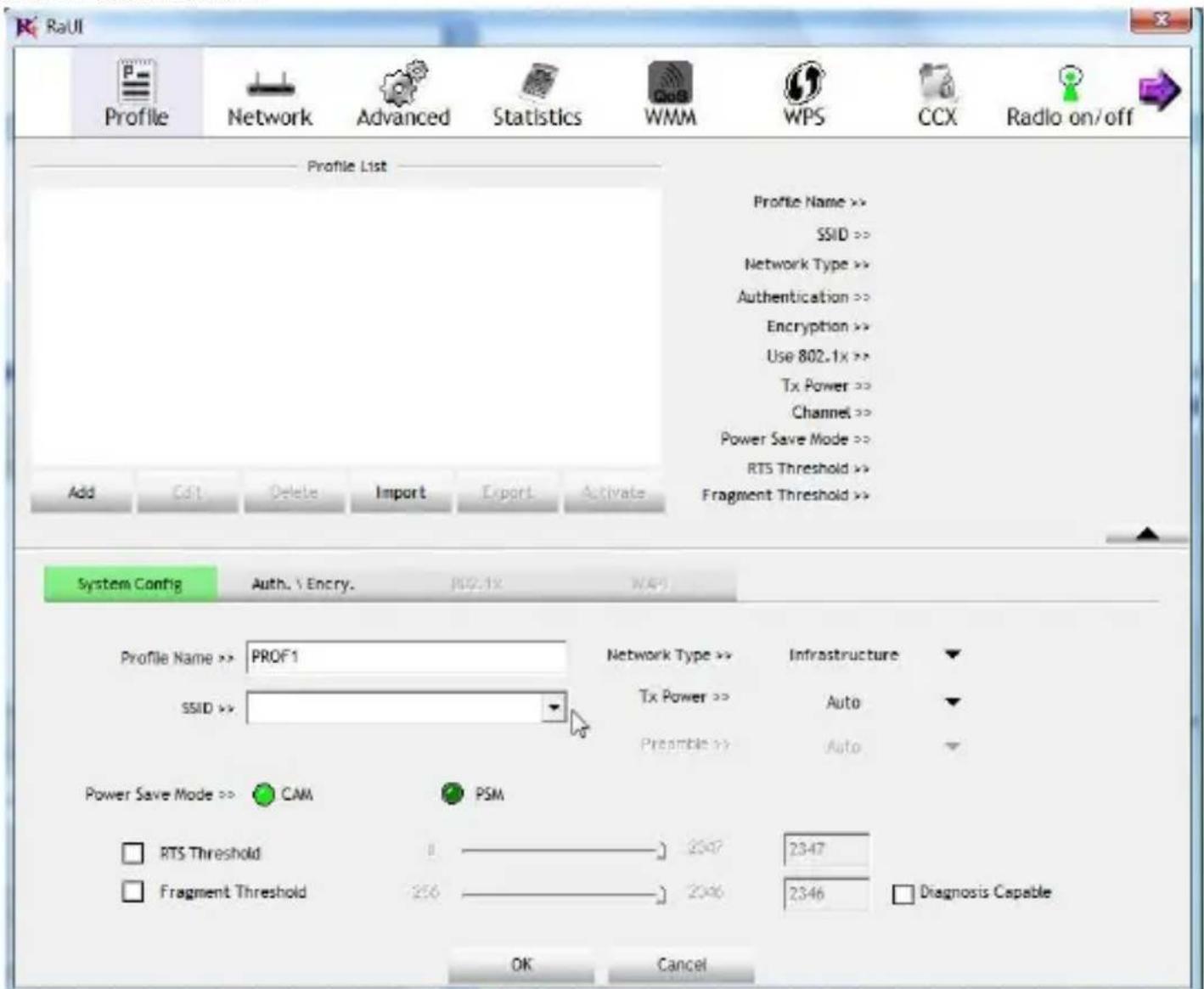
Profile Name: Name of profile, preset to PROF ( indicate 1, 2, 3).
SSID: AP or Ad-hoc name.
- Power Save Mode: Select power saving mode between CAM (Constant Awake Mode) or Power Saving Mode.

Atlantis
Network Type: Choose network type between Adhoc or Infrastructure.
RTS Threshold: Set value by scrolling bar.
- Fragment Threshold: Set value by scrolling bar.
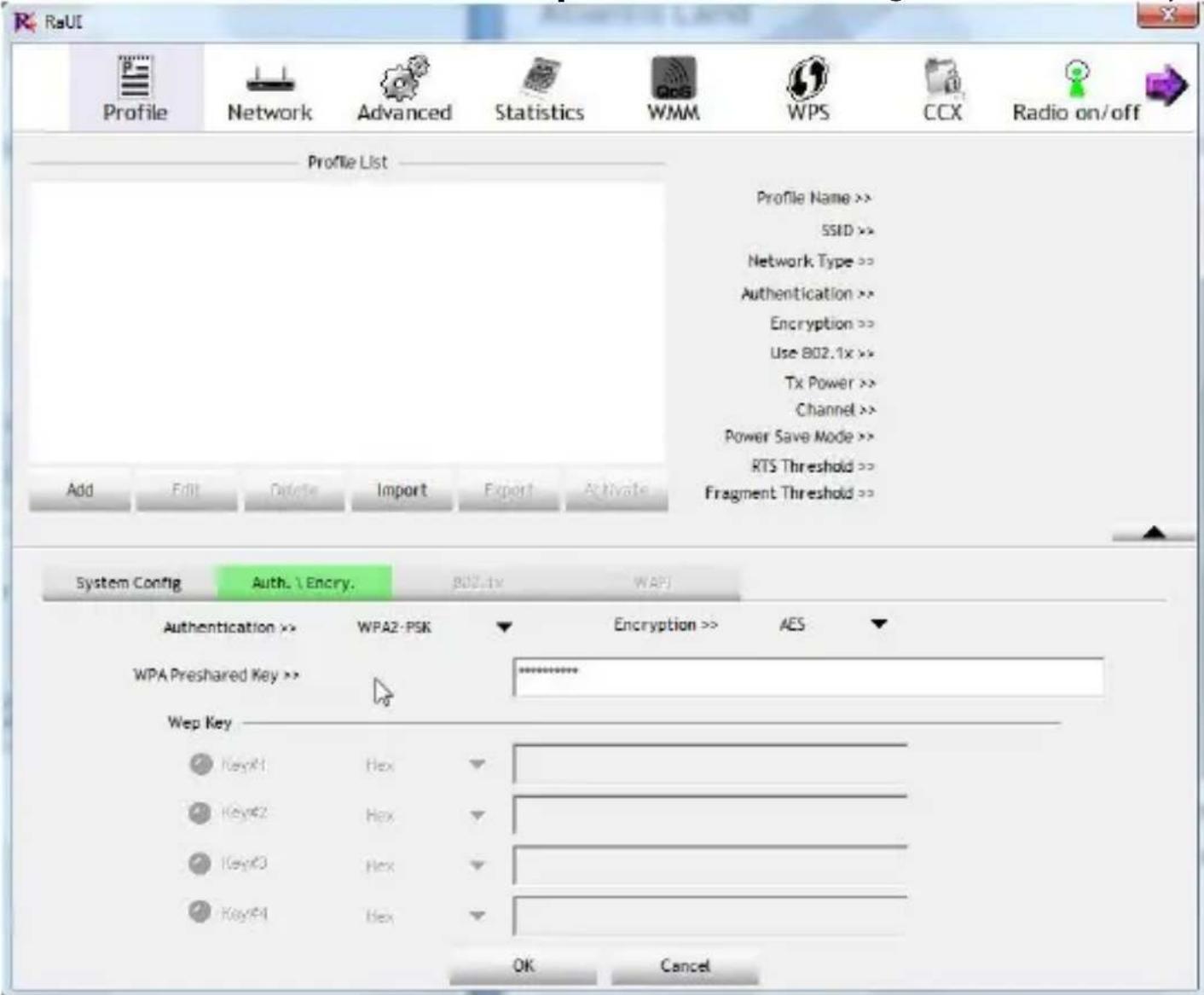
Click on Authentication and Security tab in order to configure wireless security.

Atlantis
5.1.1 Configuring WEP security
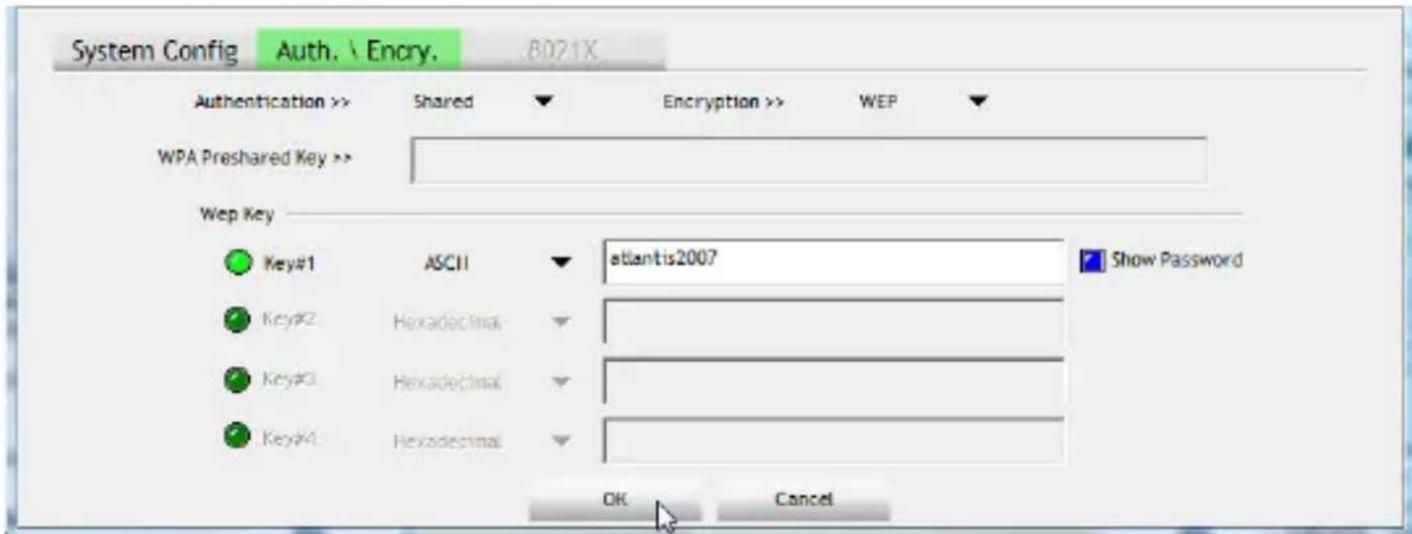
Authentication Type: Select Open or Shared authentication.
- Encryption Type: Select WEP.
WEP Key (1-4): Insert WEP keys to use and select which one to use for data encryption.
- Hexadecimal/ ASCII: Select input format for the key.
Press Show Password to view keys in clear mode.

How to configure WEP security:
If you select 64bit in Hex format, you must type 10 values in the following range (0~F, hexadecimal), or 64bit in ASCII format, you must type 5 values in the following range (0~A~Z and a~z Alphanumeric).
If you select 128bit in Hex format, you must type 26 value (0~F, hexadecimal), or 128bit in ASCII format, you must type 13 values in the following range (0~9, A~Z and a~z Alphanumeric).
| ASCII | HEX | |
| 64 bit | 5*X | 10*Y |
| 128 bit | 13*X | 26*Y |
X = [(0 9,A Z,a z Alphanumeric] Y = [0 9,A F Hexadecimal]
Be sure that the USB Adapter and the wireless station (AP) were set in the same key.

WEP is not completely secure. If possible please use WPA-PSK.
Atlantis
5.1.2 Configuring WPA-PSK / WPA2-PSK security
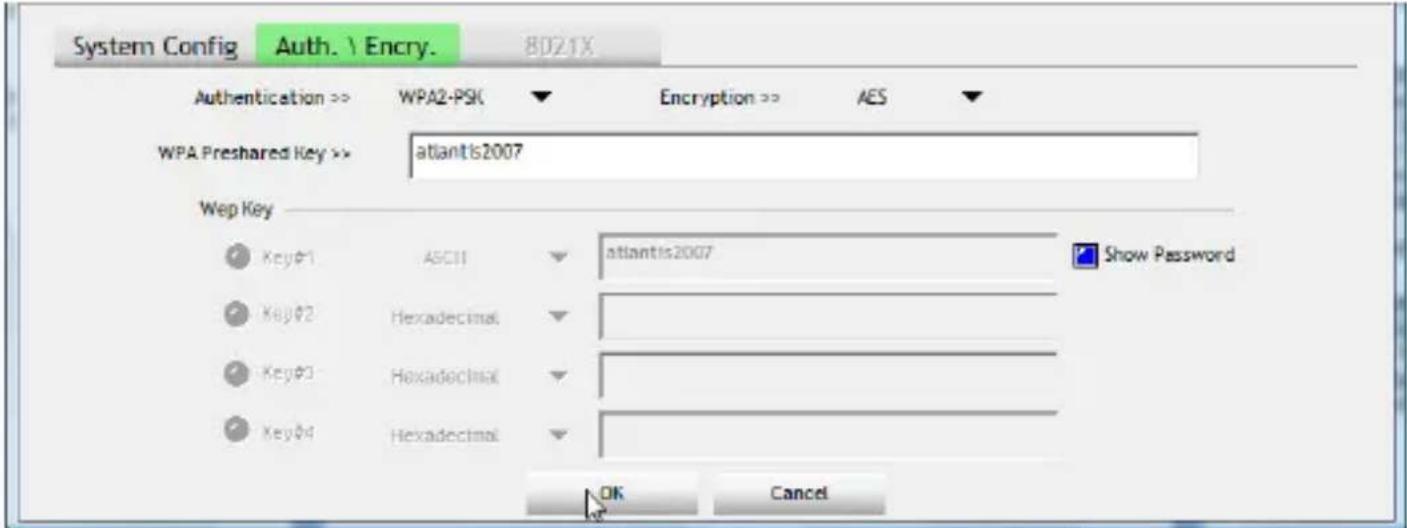
Authentication Type: Select WPA-PSK or WPA2-PSK.
- Encryption Type: Select encryption type between TKIP or AES.
WPA Pre-shared Key: Insert pre-shared key to use between AP and client (8-32 characters).
802.1x Setting: Select this option if is needed make authentication by RADIUS server.
Press Show Password to view pre-shared key in clear mode.
5.1.3 Configuring WPA / WPA2 security
To use this type of security, RADIUS server is needed.
For additional information about this configuration, please see section Help.

Atlantis suggest to use WPA2-PSK with AES. WEP or WPA/WPA2-PSK with TKIP can introduce degradations of wireless performance.

Atlantis
5.2 Network
Under the Network page, system will display the information of surrounding APs from last scan result. List information's include SSID, Signal, Channel, Encryption algorithm, and Network type as picture shown.
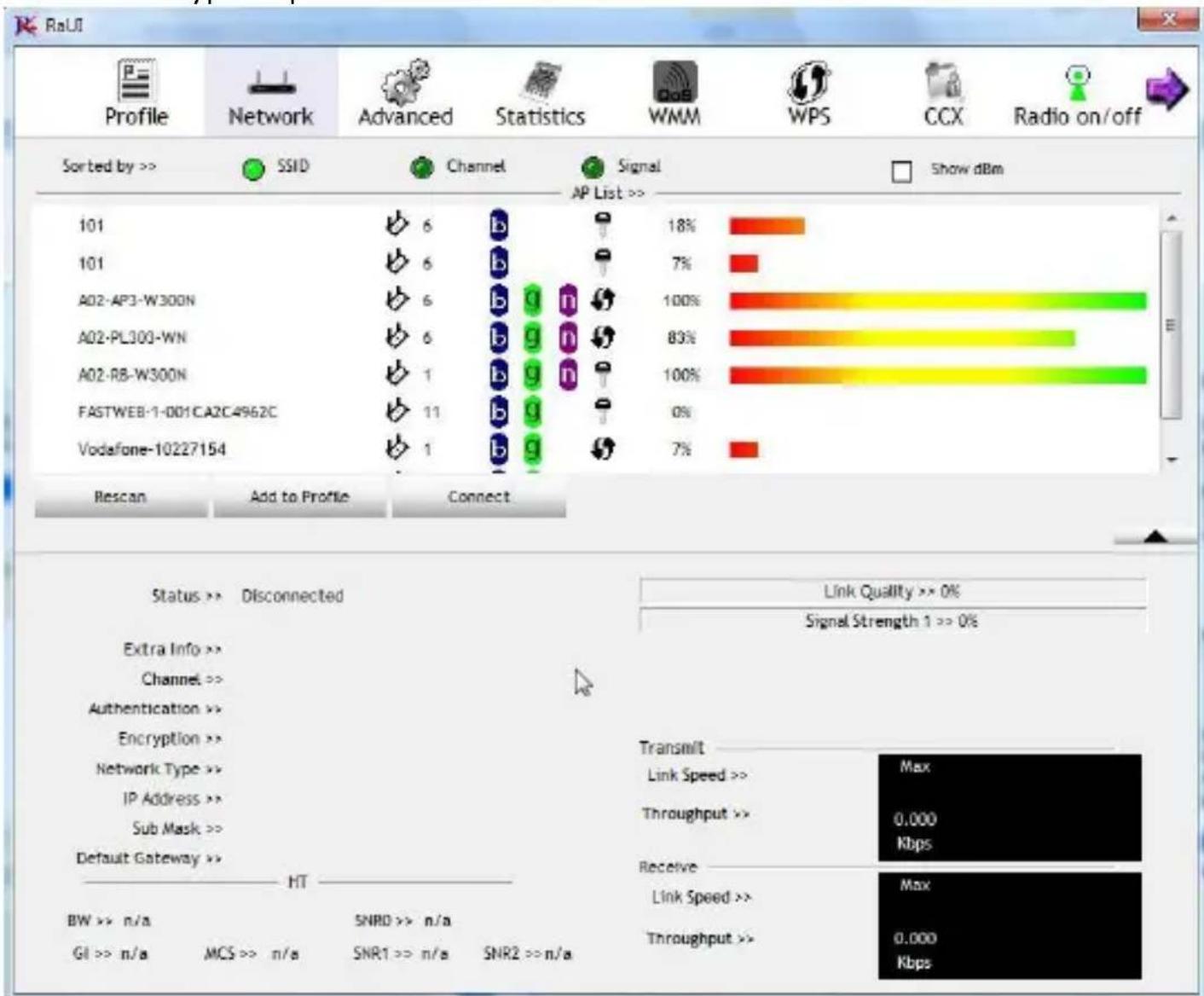
Rescan: Issue an rescan command to wireless NIC to update information on surrounding wireless network.
Connect: Command to connect to the selected network.
Add to Profile: select an AP profile, click Add to Profile. It will bring up profile page and save user's setting to a new profile.

If selected AP supports WEP or WPA/WPA2 You have to chose Authentication and Security tab in order to connect to the wireless network.
Atlantis
5.3 Advanced
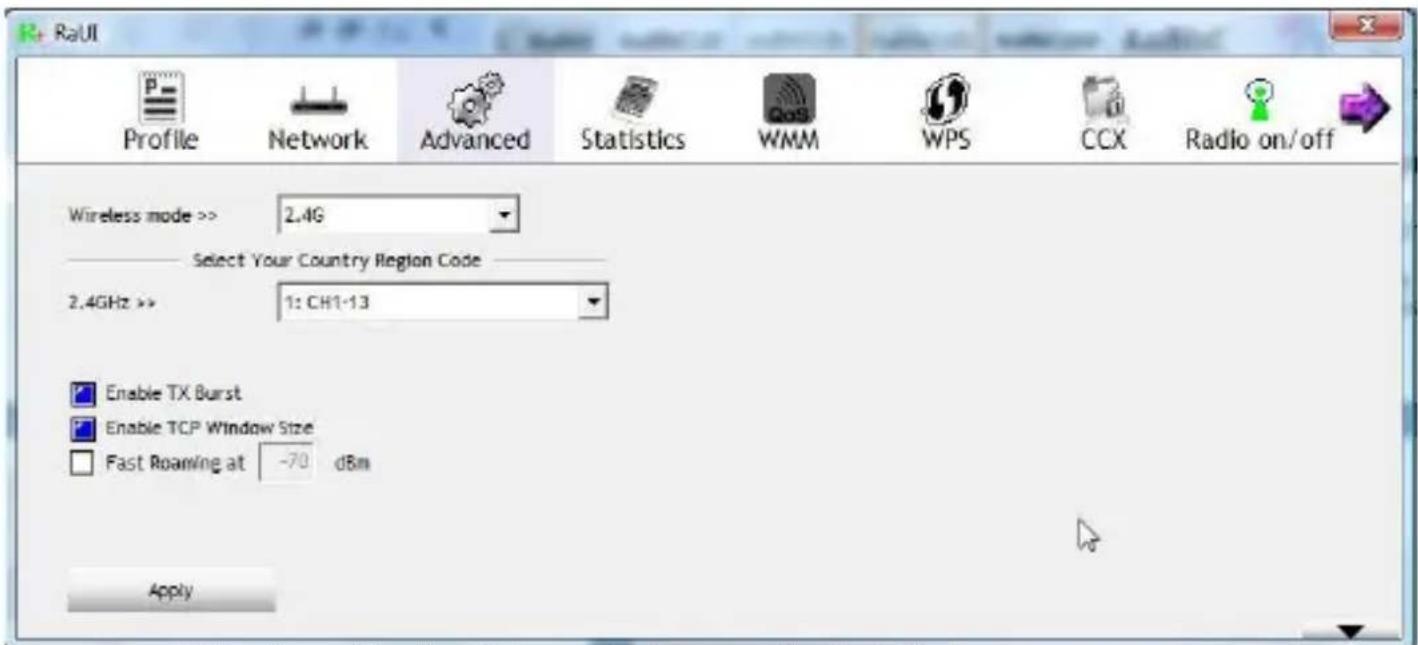
- Wireless Mode: Select wireless mode (2.4Ghz)
- Country Region Code: eight countries to choose. Country channel list. Select the country where you are using this Wireless Device, users are responsible for ensuring that the channel set configuration is in compliance with the regulatory standards of these countries. Please check on the Appendix A fore more information.
- Enable TX Burst: Ralink's proprietary frame burst mode.
- Enable TCP Windows Size: Optimise the TCP window size to allow for greater throughput.
- Fast Roaming at: enables fast roaming, which is set by the transmit power.
Click Apply in order to use these new settings.
5.4 Statistics
Statistics page displays the detail counter information based on 802.11 MIB counters. This page translates that MIB counters into a format easier for user to understand. The picture shows the detail page layout.
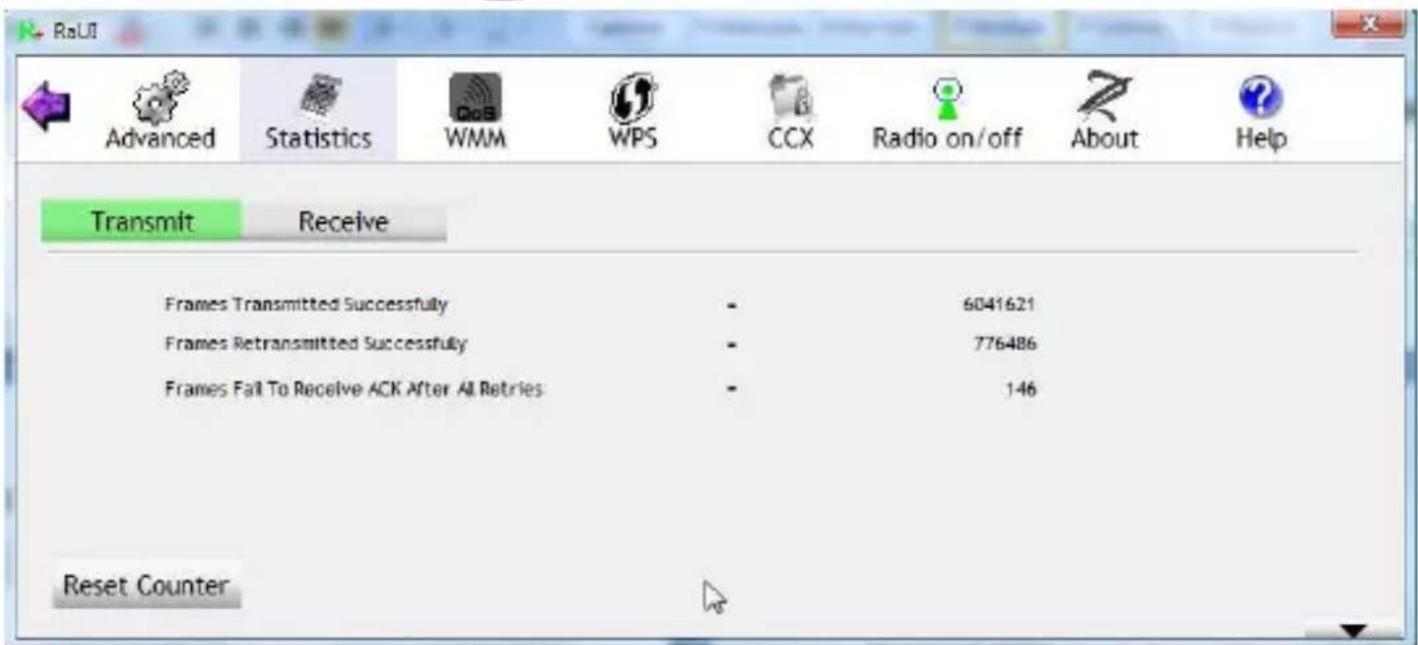
- Frames Transmitted Successfully: Frames successfully sent.
- Frames Transmitted Successfully Without Retry: Frames successfully sent without any retry.
- Frames Transmitted Successfully After Retry: Frames successfully sent with one or more reties.
- Frames Fail To Receive ACK After All Retries: Frames failed transmit after hitting retry limit.
- RTS Frames Successfully Receive CTS: Successfully receive CTS after sending RTS frame.
- RTS Frames Fail To Receive CTS: Failed to receive CTS after sending RTS.
- Frames Received Successfully: Frames received successfully.
- Frames Received With CRC Error: Frames received with CRC error.
- Frames Dropped Due To Out-of-Resource: Frames dropped due to
resource issue.
Duplicate Frames Received: Duplicate received frames.
Reset counters to zero.
5.5 WMM
This screen allows to enable WMM functionalities. PresWMM button to enable this function.

Atlantis
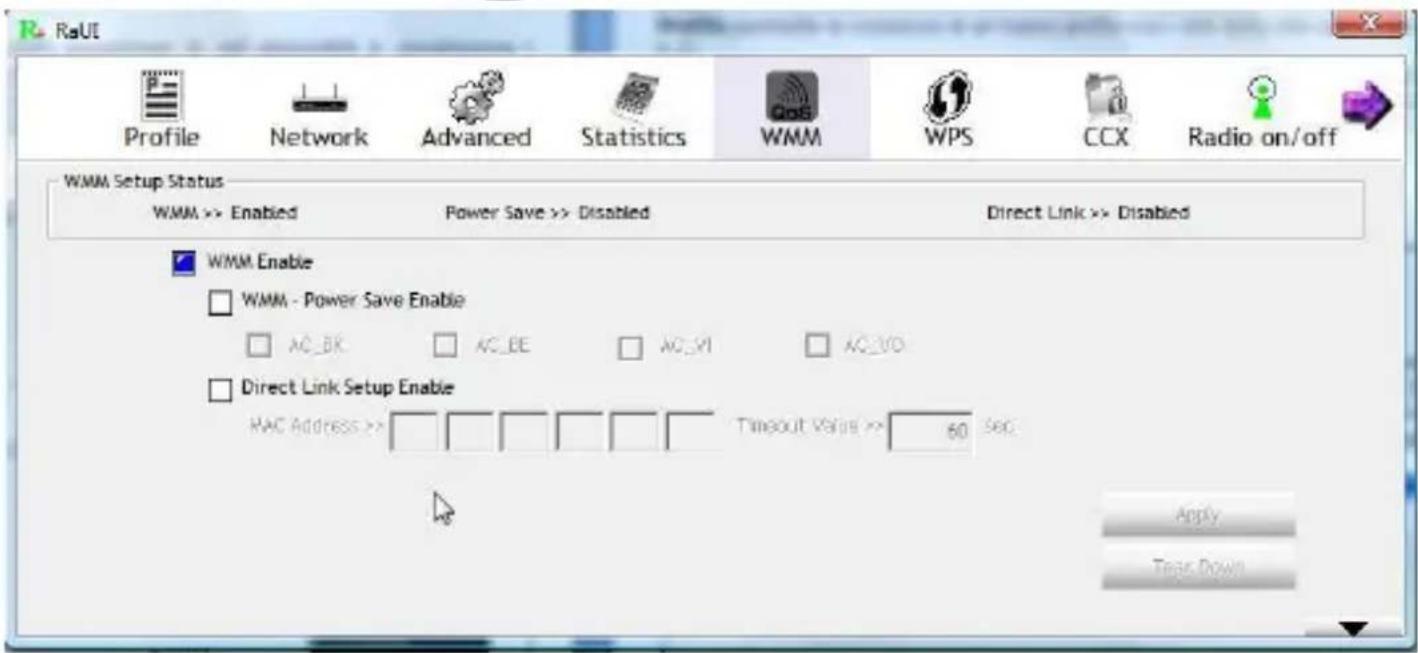
- WMM - Power Save Enable: Enable this function and select power saving mode. Please select which ACs you want to enable. Then click Apply button. The setting of enabling WMM - Power Save is successfully.
- Direct Link Setup: This function will be ready for future release of driver. Check on the OnLine help desk in ordere to obtain more information.
Atlantis
5.6 WPS
WPS is a set of specifications (supported by 802.11n draft) that will help you to configure your network easily.
It exists 2 ways to use WPS: PBC (Push Button Configuration) mode and PIN mode.
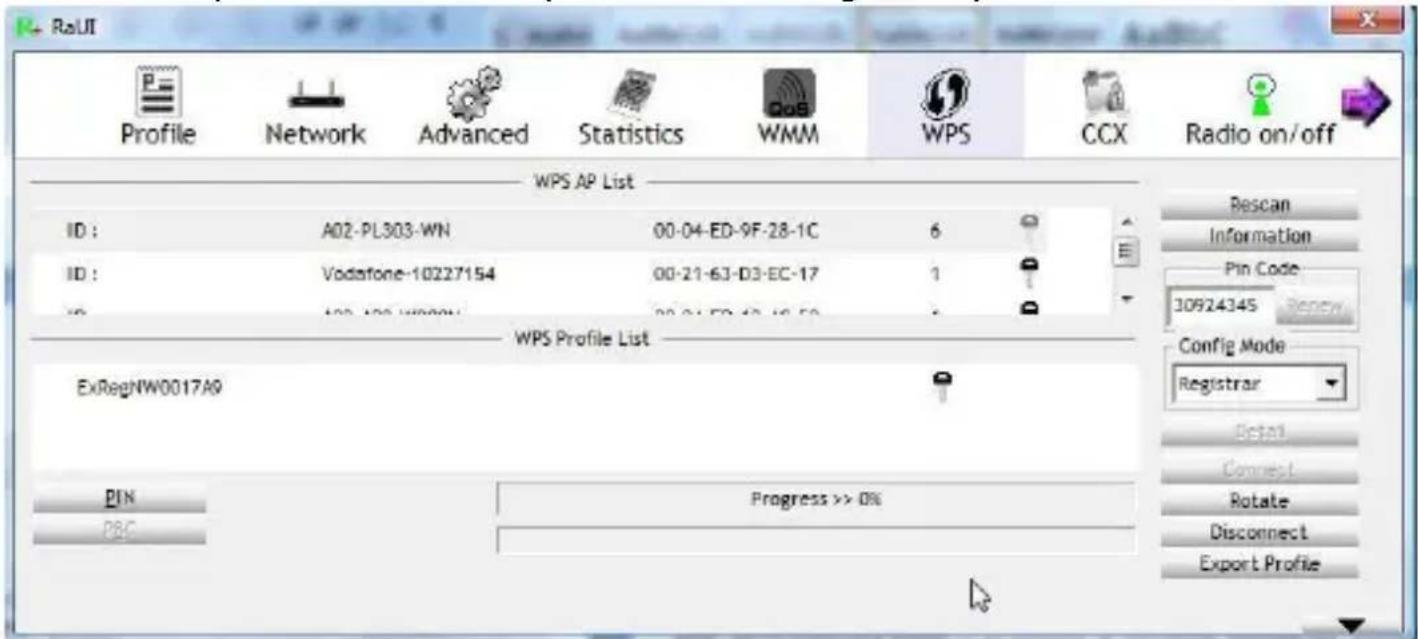
WPS AP List: Show a list of APs with WPS support.
WPS Profile List: Show a list of WPS profile pre-configured by user.
- Config Mode: Choose config mode between Enrollee or Registrar.
Rescan: Make a new scan of frequencies to search APs with WPS support.
Information: Show information about WPS AP selected.
- Renew: Make a new PIN code for this device.
- Detail: Show information about WPS Profile selected.
- Connect: Make a connection with WPS profile selected.
- Disconnect: Disconnect WPS profile.
- Export Profile: Export WPS profile selected to Profile.
- Delete: Delete WPS profile selected.
5.6.1 WPS (PBC Mode) Configuration
Following, is possible to find a procedure to configure a wireless secure connection by WPS (PCB Mode):
Before starting procedure, be sure that:
- There isn't any AP in WPS mode active.
-
Access Point that are in WPS mode have finished its
-
Set Enrollee mode in Config Mode.
- Click on PBC button to start synchronization process between AP and client.
- Press PCB button on AP.
For more informations:
http://www.wi-fi.org/files/kc_80_20070104_Introducing_Wi-Fi_ProTECTED_Setup.pdf
http://www.wi-fi.org/files/wp_18_20070108_Wi-Fi_Protected_Setup_WP_FINAL.pdf
5.7 CCX
In order to obtain more info about CCX (Cisco Compatible eXtensions) please check OnLine Help.
5.8 Radio On/Off
It can enable or disable RF module.

Atlantis
5.9 About
The About section shows the Driver Version, Firmware Version, MAC Address, IP Configuration and the Utility version.
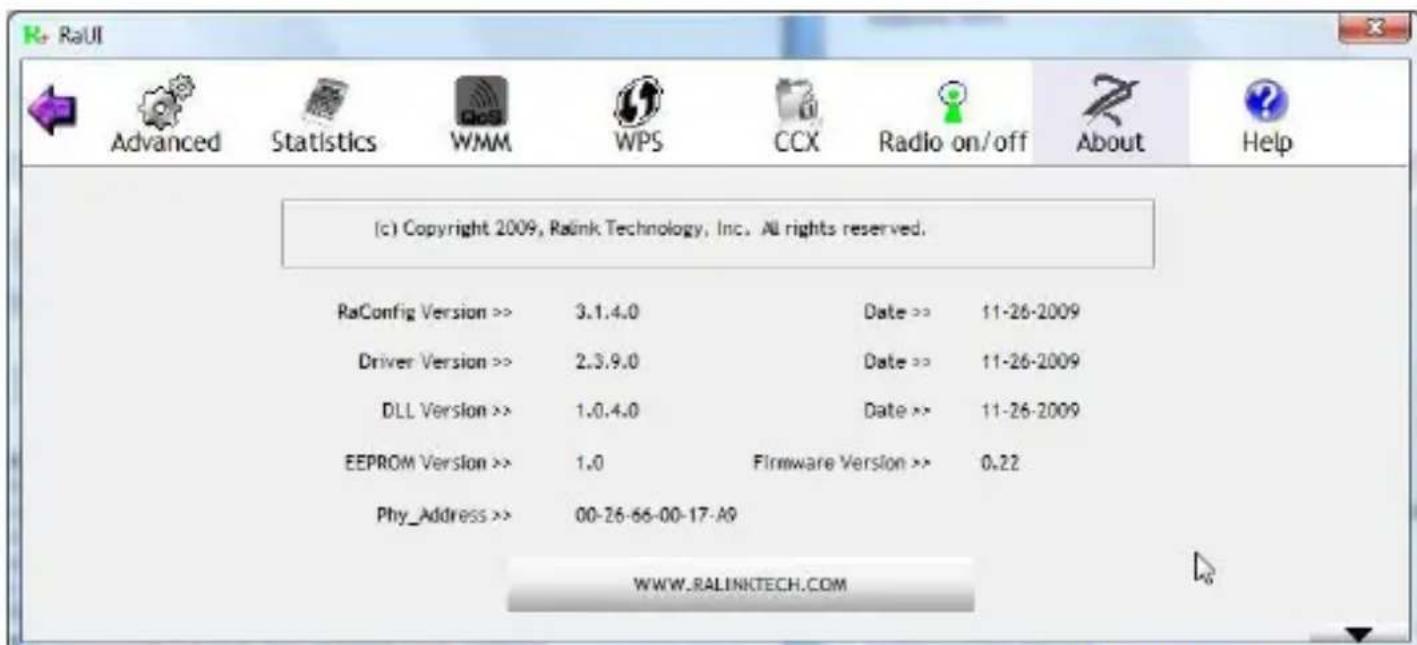
Please see this screen before download driver upgrade from www.atlantis-land.com
5.10 Help
Click here in order to watch OnLine Help.

Atlantis
6. Support
For technical questions and support, please contact our help-desk by ticket on http://www.atlantis-land.com/ita/supporto.php.
For generic informations, please send an e-mail to info@atlantis-land.com.
For presales informations, please send an e-mail to prevendite@atlantis-land.com.
Atlantis SpA
Via S. Antonio, 8/10
20020 Lainate (MI)
Fax: +39.02.78.62.64.39
Website: http://www.atlantis-land.com
Email: info@atlantis-land.com
APPENDIX A: AP Mode
Double-click the Wireless LAN icon (or right-click and then select Launch Config Utilities) tand chose Switch to AP mode. With the Wireless USB Adapter utility, users can configure all the functions provided by the Wireless Monitor Utility. Double-click the utility icon that appears in the taskbar.
The Wireless Monitor Utility includes six tabs: Config, Access Control List, Mac Table, Event Log, Statistics and About.
Config
This page can setting and display Soft AP detail information.
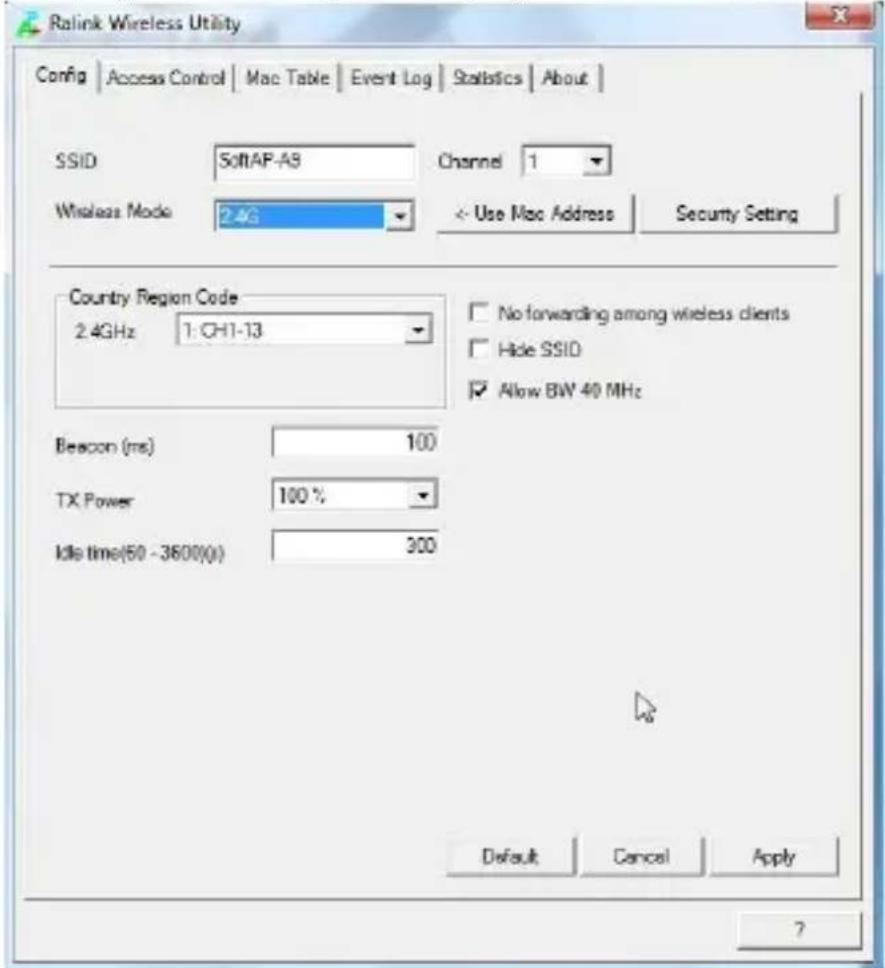
Definition of each field:
Wireless Mode: Select wireless mode(2.4 Ghz).
- SSID: AP name of user type. User also can select [Use Mac Address] to display it. System default is SoftAP-XX.
- Country Region Code: eight countries to choose. Country channel list. Select the country where you are using this Wireless Device, users are

Atlantis
responsible for ensuring that the channel set configuration is in compliance with the regulatory standards of these countries. Please check on the Appendix A fore more information.
- Beacon (ms): The time between two beacons. System default is 100 ms.
- TX Power: Manually force the AP transmits power. System default is 100% .
- No forwarding among wireless clients: No beacon among wireless client, clients can't share information each other. System default is no forwarding.
- Hide SSID: Don't display AP name. System default no hide.
- Allow BW 40Mhz: In order to use 40Mhz channel.
Click Apply in order to save all settings.
For more info please click on helb button.

The range of radio frequencies used by IEEE 802.11g wireless devices is called a "channel". Channels available depend on your geographical area. You may have a choice of channels (for your region) so you should use a different channel than an adjacent AP (access point) to reduce interference. Interference occurs when radio signals from different access points overlap causing interference and degrading performance.
Adjacent channels partially overlap however. To avoid interference due to overlap, your AP should be on a channel at least five channels away from a channel that an adjacent AP is using. For example, if your region has 11 channels and an adjacent AP is using channel 1, then you need to select a channel between 6 or 11.
Access Control
AP connected or can't connect with Mac address that user setting.
| Access Policy | Allow All | Reject All | Disable |
| Default Access | Access | Reject | Access |
| Result | Access Control function doesn’t allows clients whose MAC addresses in the list will be able to connect to this Access Point. | Access Control function allows clients whose MAC addresses in the list will be able to connect to this Access Point. | Access Point doesn’t check MAC addresses |
Mac Table
This screen displays the station detail information of current connection.

Atlantis
Detail information:
- MAC Address: The station's Mac address of current connection.
- AID: Raise value by current connection.
Power Saving Mode: The station of current connect whether it have to support.
Event Log
Record Soft AP all event time and message.
Event Time (yy/mm/dd-hh:mm:ss): Record event time.
- Message: All event message.
Statistics
Please check 5.4.
About
Please check 5.9.

Atlantis
APPENDIX B: Connect to a network using Windows client
MS Windows XP and Windows VISTA/7 can manage the USB/PCI client with its embedded utility for wireless networks; Windows 2000 and MAC OS X requires an external management utility (provided on the CD) to set and manage the USB/PCI wireless client.
Windows 7
You can access the Connect to a network dialog box from many locations in Windows 7, including the following:
- By clicking Start, and then Control Panel (select Large/Small Icon) then click on Network and Sharing Center icon. Click on Connect to a Netwok.
- From the Manage wireless connections (in the Wireless) select the wireless network SSID and click Connect.

If any wireless network is available, please check that the USB/PCI wireless client is correctly installed on your PC.
Windows VISTA
You can access the Connect to a network dialog box from many locations in Windows Vista, including the following:
- By clicking Start, and then Connect to from the Windows Vista desktop
From the Manage wireless connections dialog box - From the Connect/Disconnect context menu option of a wireless network adapter in the Network Connections folder.
- Select Wireless (on the combo box) in the filed Show, select the wireless network SSID and click Connect.

If any wireless network is available, please check that the USB/PCI wireless client is correctly installed on your PC.
Windows XP
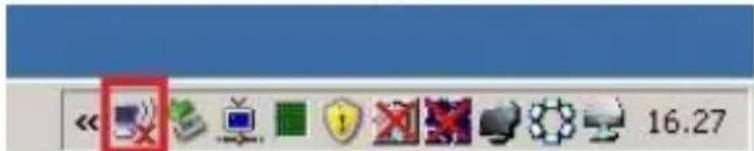
Double click on Wireless network icon on the system tray (see picture).

Atlantis
Select the wireless network SSID and click Connect.
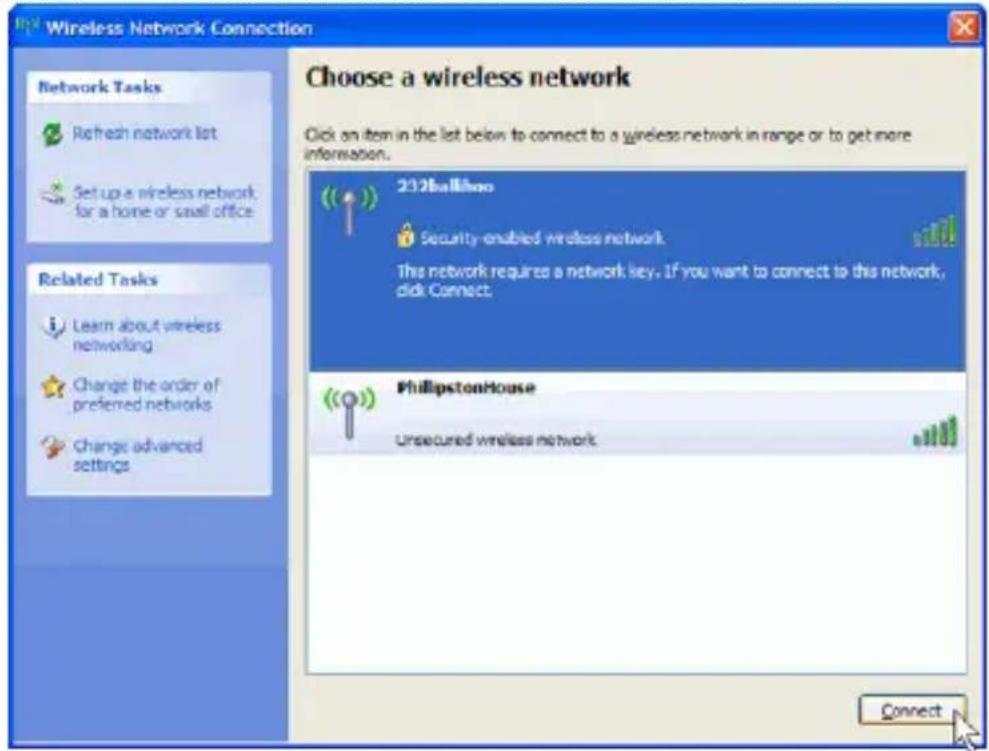

If any wireless network is available, please check that the USB/PCI wireless client is correctly installed on your PC.
APPENDIX C: IP Address in DHCP Client Mode
Configuring PC (Windows 2000)
- Go to Start / Settings / Control Panel. In the Control Panel, double-click on Network and Dial-up Connections.
Double-click LAN Area Connection/Wireless.
In the LAN Area Connection/Wireless Status window, click Properties. - Select Internet Protocol (TCP/IP) and click Properties.
- Select the Obtain an IP address automatically and the Obtain DNS server address automatically radio buttons.
- Click OK to finish the configuration.
Configuring PC (WindowsXP)
- Go to Start / Control Panel (in Classic View). In the Control Panel, double-click on Network Connections.
Double-click Local Area Connection/Wireless.
In the LAN Area Connection/Wireless Status window, click Properties. - Select Internet Protocol (TCP/IP) and click Properties.
- Select the Obtain an IP address automatically and the Obtain DNS server address automatically radio buttons.
- Click OK to finish the configuration.
Configuring PC (Windows Vista)
- Go to Start / Control Panel (in Classic View). In the Control Panel, double-click on Network and Sharing Center icon.
- Click Manage Network connections then double-click Local Area Connection/Wireless and click Properties.
- Click Continue (Windows needs your permission to continue).
- Select Internet Protocol Version 4 (TCP/IP) and click Properties.
- Select the Obtain an IP address automatically and the Obtain DNS server address automatically radio buttons.
- Click OK to finish the configuration

Atlantis
Configuring PC (Windows 7)
- Go to Start / Control Panel (select Large/Small Icon). In the Control Panel, double-click on Network and Sharing Center icon.
- Click Change Adapter Settings then double-click Local Area Connection/Wireless and click Properties.
- Click Continue (Windows needs your permission to continue).
- Select Internet Protocol Version 4 (TCP/IP) and click Properties.
- Select the Obtain an IP address automatically and the Obtain DNS server address automatically radio buttons.
- Click OK to finish the configuration
APPENDIX D: Troubleshooting
This chapter provides solutions to problems that may occur during the installation and operation of the WLAN 802.11n USB Adapter. Read the descriptions below to solve your problems.
| QUESTION | SOLUTION |
| My computer cannot find the Adapter | ·Make sure the Adapter has no physical damage. ·Make sure the Adapter is properly inserted into USB slot. ·Try the Adapter in other USB slots. ·Try another Adapter in that particular USB slot. |
| Cannot access any network resources from the computer. Make sure that the notebook PC is powered on | ·Make sure that the notebook PC is powered on. ·Make sure that the Adapter is configured with the same SSID and security options as the other computers in the infrastructure configuration. |
| Disable "Windows XP Wireless Zero Configuration | In Windows XP, it is recommended that you use the WLAN 802.11n Utility. Right after the installation, before opening the Utility, please follow the steps below to disable the Windows XP Zero Configuration: ·Go to Control Panel and double click Network Connections. ·Right-click Wireless Network Connection of WLAN 802.11n Wireless LAN, and select Properties. ·Select Wireless Networks tab, and uncheck the check box of Use Windows to configure my wireless network settings, and then click OK. |
| Can I run an application from a remote computer over the wireless network? | This will depend on whether or not the application is designed to be used over a network. Consult the application's user guide to determine if it supports operation over a network. |
| Can I play computer games with other | Yes, as long as the game supports multiple players over a LAN (local area network). |

Atlantis
| members of the wireless network? | Refer to the game's user guide for more information. |
| What is Spread Spectrum? | Spread Spectrum technology is a wideband radio frequency technique developed by the military for use in reliable, secure, mission-critical communications systems. It is designed to trade off bandwidth efficiency for reliability, integrity, and security. In other words, more bandwidth is consumed than in the case of narrowband transmission, but the trade-off produces a signal that is, in effect, louder and thus easier to detect provided that the receiver knows the parameters of the spread-spectrum signal being broadcast. If a receiver is not tuned to the right frequency, a spread-spectrum signal looks like background noise. There are two main alternatives, Direct Sequence Spread Spectrum (DSSS) and Frequency Hopping Spread Spectrum (FHSS). |
| What is DSSS? What is FHSS? And what are their differences? | Frequency-Hopping Spread-Spectrum (FHSS) uses a narrowband carrier that changes frequency in a pattern that is known to both transmitter and receiver. Properly synchronized, the net effect is to maintain a single logical channel. To an unintended receiver, FHSS appears to be short-duration impulse noise. Direct-Sequence Spread-Spectrum (DSSS) generates a redundant bit pattern for each bit to be transmitted. This bit pattern is called a chip (or chipping code). The longer the chip, the greater the probability that the original data can be recovered. Even if one or more bits in the chip are damaged during transmission, statistical techniques embedded in the radio can recover the original data without the need for retransmission. To an unintended receiver, DSSS appears as low power wideband noise and is rejected (ignored) by most narrowband receivers. |
| Would the information be intercepted while | WLAN features two-fold protection in security. On the hardware side, as with Direct Sequence Spread |

Atlantis
| transmitting on air? | Spectrum technology, it has the inherent security feature of scrambling. On the software side, WLAI offers the encryption function (WEP) to enhance security and access control. |
| What is WEP? | WEP is Wired Equivalent Privacy, a data privacy mechanism based on a 64-bit or 128-bit shared key algorithm, as described in the IEEE 802.11 standard. |
| What is infrastructure mode? | When a wireless network is set to infrastructure mode, the wireless network is configured to communicate with a wired network through a wireless access point. |
| What is roaming? | Roaming is the ability of a portable computer user to communicate continuously while moving freely throughout an area greater than that covered by a single access point. Before using the roaming function, the workstation must make sure that it is the same channel number with the access point dedicated coverage area. |
| What is ISM band? | The FCC and their counterparts outside of the U.S. have set aside bandwidth for unlicensed use in the ISM (Industrial, Scientific and Medical) band. Spectrum in the vicinity of 2.4 GHz, in particular, is being made available worldwide. This presents a truly revolutionary opportunity to place convenient high-speed wireless capabilities in the hands of users around the globe. |
| What is the IEEE 802.11g standard? | Approved in June, 2003 as an IEEE standard for wireless local area networks (WLANs), 802.11g offers wireless transmission over relatively short distances at up to 54 megabits per second (Mbps), compared with the 11 megabits per second of the 802.11b (Wi-Fi) standard. Like 802.11b, 802.11g operates in the 2.4 GHz range and is thus compatible with it. |
| What is the IEEE 802.11n standard? | Is an IEEE standard for wireless local area networks (WLANs), 802.11n offers wireless transmission over relatively short distances at up to 600 megabits (more bandwidth 40Mhz instead of 20Mhz and more flux) per second (Mbps) compared with the 54/11 |

Atlantis
| megabits per second of the 802.11g/b (Wi-Fi) standard. Like 802.11b/g, 802.11n operates in the 2.4 GHz range and is thus compatible with it. |
Atlantis
Copyright
- Launch Config Utility
- Switch to AP mode
- Open Diagnostic Testing Mode
- Exit
5. RaUI LOGICIEL DE CONFIGURATION POUR WINDOWS
Autentication and Security:
Fax: +39.02.78.62.64.39
Website: http://www.atlantis-land.com
Email: info@atlantis-land.com

Atlantis
APPENDICE C: AP Mode
APPENDIX A: Country Channel List
For some European Country, it may have its own domain; users are responsible for ensuring that the channel set configuration is in compliance with the regulatory standards of these countries.
| Country Name | Classification | Range |
| Argentina | 0 | CH1~11 |
| Australia | 1 | CH1~13 |
| Austria | 1 | CH1~13 |
| Bahrain | 0 | CH1~11 |
| Belarus | 1 | CH1~13 |
| Belgium | 1 | CH1~13 |
| Bolivia | 1 | CH1~13 |
| Brazil | 0 | CH1~11 |
| Bulgaria | 1 | CH1~13 |
| Canada | 0 | CH1~11 |
| Chile | 0 | CH1~11 |
| China | 1 | CH1~13 |
| Colombia | 1 | CH1~13 |
| Costa Rica | 1 | CH1~13 |
| Croatia | 0 | CH1~11 |
| Cyprus | 1 | CH1~13 |
| Czech Republic | 1 | CH1~13 |
| Denmark | 1 | CH1~13 |
| Ecuador | 0 | CH1~11 |
| Egypt | 1 | CH1~13 |
| Estonia | 1 | CH1~13 |
| Finland | 1 | CH1~13 |
| France | 1 | CH1~13 |
| France2 | 3 | CH10~13 |
| Germany | 1 | CH1~13 |
| Greece | 1 | CH1~13 |
| Hong Kong | 0 | CH1~11 |

Atlantis
| Hungary | 1 | CH1~13 |
| Iceland | 1 | CH1~13 |
| India | 1 | CH1~13 |
| Indonesia | 1 | CH1~13 |
| Ireland | 1 | CH1~13 |
| Israel | 1 | CH1~13 |
| Italy | 1 | CH1~13 |
| Japan | 5 | CH1~14 |
| Japan2 | 4 | CH14~14 |
| Japan3 | 1 | CH1~13 |
| Jordan | 1 | CH1~13 |
| Kuwait | 1 | CH1~13 |
| Latvia | 1 | CH1~13 |
| Lebanon | 1 | CH1~13 |
| Latvia | 1 | CH1~13 |
| Lebanon | 1 | CH1~13 |
| Liechtenstein | 1 | CH1~13 |
| Lithuania | 1 | CH1~13 |
| Luxembourg | 1 | CH1~13 |
| Macedonia | 1 | CH1~13 |
| Malaysia | 0 | CH1~11 |
| Mexico | 0 | CH1~11 |
| Morocco | 1 | CH1~13 |
| Netherlands | 1 | CH1~13 |
| New Zealand | 1 | CH1~13 |
| Nigeria | 1 | CH1~13 |
| Norway | 1 | CH1~13 |
| Panama | 0 | CH1~11 |
| Paraguay | 1 | CH1~13 |
| Peru | 0 | CH1~11 |
| Philippines | 0 | CH1~11 |

Atlantis
| Poland | 1 | CH1~13 |
| Portugal | 1 | CH1~13 |
| Puerto Rico | 0 | CH1~11 |
| Romania | 0 | CH1~11 |
| Russia | 1 | CH1~13 |
| Saudi Arabia | 0 | CH1~11 |
| Singapore | 1 | CH1~13 |
| Slovakia | 1 | CH1~13 |
| Slovenia | 1 | CH1~13 |
| South Africa | 1 | CH1~13 |
| South Korea | 1 | CH1~13 |
| Spain | 1 | CH1~13 |
| Sweden | 1 | CH1~13 |
| Switzerland | 1 | CH1~13 |
| Taiwan | 0 | CH1~11 |
| Thailand | 1 | CH1~13 |
| Turkey | 1 | CH1~13 |
| United Arab Emirates | 1 | CH1~13 |
| United Kingdom | 1 | CH1~13 |
| United States of America | 0 | CH1~11 |
| Uruguay | 0 | CH1~11 |
| Venezuela | 0 | CH1~11 |
| Yugoslavia | 0 | CH1~11 |
APPENDIX B: Technical Specifications
| Technical Specs | |
| Code | A02-PCI-WN |
| Standards | IEEE 802.11b/g/n |
| Chipset | RaLink® RT2760(2760+2720) |
| Interface | PCI 32bit |
| LED | 2 (Link, ACT) |
| WPS | Yes (Software) |
| Antenna | 2dBi dipole antenna with R-SMA connector |
| Advanced Features | AP Mode on Windows 7/Vista/XP WMM Direct Link Setup |
| Frequency Band | 2412 ~ 2483 MHz |
| Radio Technology | IEEE 802.11g/n: Orthogonal Frequency Division Multiplexing (OFDM) IEEE 802.11b: Direct Sequence Spread Spectrum (DSSS) |
| Modulations Scheme | DBPSK/DQPSK/CCK/OFDM |
| Media Access Protocol | CSMA/CA with ACK |
| Transmission Rate | Up to 150Mbps (auto-sense with auto fallback) |
| Security | 64/128-bit WEP, WPA-PSK, WPA2-PSK |
| Transmitting Power | 802.11b/g/n: up to 16 ± 1 dBm |
| Receiver Sensitivity | 802.11b (11Mbps): -84dBm @8% PER 802.11g (54Mbps): -74dBm @10% PER 802.11n (150Mbps): -65dBm @10% PER |
| Number of Operational Channel | Europe (13) |
| Range Coverage | Indoor: up to 100 meters Outdoor: up to 300 meters |
| Supported OS | MS Windows® VISTA (32/64-bit) MS Windows® XP (32/64-bit) MS Windows® 2000 (SP4 required) MS Windows® 7 (32/64-bit) Linux Kernel 2.6.29 |
| Certifications | CE (Europe), WHQL Certification for driver |
| Dimensions(mm) | 120 x 48 x 2 (PCB) |

Atlantis
| Temperature Range | Operation: 0°C ~ 40°C Storage: -10°C ~ 60°C |
| Humidity | 10% ~ 75% (non Condensing) |
| Continuos Current Consumption | 220mA (Tx), 380mA (Rx) |
| System Requirements | • PC with available PCI 32 bit slot • Intel® Pentium® III 600Mhz or compatible processor with 512MB RAM • Windows® 2000/XP/Vista/7 or Linux operating system • Minimum 45 Mbytes free disk space for installing the driver and utilities • CD-Rom drive |
| Package Contents | • NetFly PCI Wireless Card • 2 dBi Antenna • Quick Start Guide (English, French and Italian) • CD-Rom with Utility, Driver and Manual (English, French and Italian) • 1 x Warranty Card and 1 x WEEE Card |
Mac OS X is a trademark of Apple Inc.
All rights registered
Microsoft and Windows are registered trademarks of Microsoft Corporation
All trade names and marks are registered trademarks of respective companies
Specifications are subjected to change without prior notice. No liability for technical errors and/or omissions
Performance and Throughput are influenced by many factors (interference, noise, environments)

Atlantis
| Technical Specs | |
| Code | A02-UP1-WN(V1.2) |
| Standards | IEEE 802.11b/g/n |
| Chipset | RaLink® RT3070 |
| Interface | USB V2.0/V1.1 |
| LED | 1 STATUS |
| WPS | Yes (HW button) |
| Antenna | Internal Striped Antenna |
| Advanced Features | AP Mode on Windows 7/Vista/XP WMM Direct Link Setup |
| Frequency Band | 2412 ~ 2483 MHz |
| Radio Technology | IEEE 802.11g/n: Orthogonal Frequency Division Multiplexing (OFDM) IEEE 802.11b: Direct Sequence Spread Spectrum (DSSS) |
| Modulations Scheme | DBPSK/DQPSK/CCK/OFDM |
| Media Access Protocol | CSMA/CA with ACK |
| Transmission Rate | Up to 150Mbps (auto-sense with auto fallback) |
| Security | 64/128-bit WEP, WPA-PSK, WPA2-PSK |
| Transmitting Power | 802.11b/g/n: up to 16 ± 1 dBm |
| Receiver Sensitivity | 802.11b (1Mbps): -90dBm @8% PER 802.11b (6Mbps): -88dBm @8% PER 802.11b (11Mbps): -85dBm @8% PER 802.11g (54Mbps): -68dBm @10% PER 802.11n (150Mbps): -68dBm @10% PER |
| Number of Operational Channel | Europe (13) |
| Range Coverage | Indoor: up to 100 meters Outdoor: up to 300 meters |
| Supported OS | MS Windows® VISTA (32/64-bit) MS Windows® XP (32/64-bit) MS Windows® 2000 (SP4 required) MS Windows® 7 (32/64-bit) Linux Kernel 2.6.29 Mac OS X 10.3/10.4/10.5/10.6. |
| Certifications | CE (Europe), WHQL Certification for driver |
| Dimensions(mm) | 38 x 16 x 6 (without USB) |
| Temperature Range | Operation: 0°C ~ 32°C |

Atlantis
| Storage: -10°C ~ 60°C | |
| Humidity | 10% ~ 75% (non Condensing) |
| Continuos Current Consumption | 280mA (Tx), 410mA (Rx) |
| System Requirements | PC with available USB V2.0/1.1 slotIntel Pentium® III 600Mhz or compatible processor with 512MB RAMWindows 2000/XP/Vista/7, Mac OS X or Linux operating systemMinimum 45 Mbytes free disk space for installing the driver and utilitiesCD-Rom drive |
| Package Contents | One NetFly USB Wireless AdapterQuick Start Guide (English, French and Italian)CD-Rom with Utility, Driver and Manual (English, French and Italian)1 x Warranty Card and 1 x WEEE Card |
*When plug the device in the USB 1.1/1.0 port, the real throughput will be up to 6Mbps only when running 11Mbps or higher speed
Mac OS X is a trademark of Apple Inc.
All rights registered
Microsoft and Windows are registered trademarks of Microsoft Corporation
All trade names and marks are registered trademarks of respective companies
Specifications are subjected to change without prior notice. No liability for technical errors and/or omissions
Performance and Throughput are influenced by many factors (interference, noise, environments)

Atlantis
| Technical Specs | ||
| Code | A02-UP-W300N(V1.2) | A02-UP4-W300N |
| Standards | IEEE 802.11b/g/n | |
| Chipset | RaLink® RT3072 | RaLink® RT2870 |
| Interface | USB V2.0/V1.1 | |
| LED | 1 STATUS | |
| WPS | Yes (HW button) | |
| Antenna | 2 x Internal Striped Antennas | |
| Advanced Features | AP Mode on Windows 7/Vista/XP WMM Direct Link Setup | |
| Frequency Band | 2412 ~ 2483 MHz | |
| Radio Technology | IEEE 802.11g/n: Orthogonal Frequency Division Multiplexing (OFDM) IEEE 802.11b: Direct Sequence Spread Spectrum (DSSS) | |
| Modulations Scheme | DBPSK/DQPSK/CCK/OFDM | |
| Media Access Protocol | CSMA/CA with ACK | |
| Transmission Rate | Up to 300Mbps (auto-sense with auto fallback) | |
| Security | 64/128-bit WEP, WPA-PSK, WPA2-PSK | |
| Transmitting Power | 802.11b/g/n: up to 16 ± 1 dBm | |
| Receiver Sensitivity | 802.11b (1Mbps): -90dBm @8% PER 802.11b (6Mbps): -88dBm @8% PER 802.11b (11Mbps): -85dBm @8% PER 802.11g (54Mbps): -68dBm @10% PER 802.11n (150Mbps): -68dBm @10% PER 802.11n (300Mbps): -68dBm @10% PER | |
| Number of Operational Channel | Europe (13) | |
| Range Coverage | Indoor: up to 100 meters Outdoor: up to 300 meters | |
| Supported OS | MS Windows® VISTA (32/64-bit) MS Windows® XP (32/64-bit) MS Windows® 2000 (SP4 required) MS Windows® 7 (32/64-bit) Linux Kernel 2.6.29 Mac OS X 10.3/10.4/10.5/10.6. | |
| Certifications | CE (Europe), WHQL Certification for driver | |
| Dimensions(mm) | 68 x 27 x 10 (without USB) | |

Atlantis
| Temperature Range | Operation: 0°C ~ 32°C Storage: -10°C ~ 60°C |
| Humidity | 10% ~ 75% (non Condensing) |
| Continuos Current Consumption | 290mA (Tx), 440mA (Rx) |
| System Requirements | • PC with available USB V2.0/1.1 slot • Intel Pentium® III 600Mhz or compatible processor with 512MB RAM • Windows 2000/XP/Vista/7, Mac OS X or Linux operating system • Minimum 45 Mbytes free disk space for installing the driver and utilities • CD-Rom drive |
| Package Contents | • One NetFly USB Wireless Adapter • USB Cable • Quick Start Guide (English, French and Italian) • CD-Rom with Utility, Driver and Manual (English, French and Italian) • 1 x Warranty Card and 1 x WEEE Card |
*When plug the device in the USB 1.1/1.0 port, the real throughput will be up to 6Mbps only when running 11Mbps or higher speed
Mac OS X is a trademark of Apple Inc.
All rights registered
Microsoft and Windows are registered trademarks of Microsoft Corporation
All trade names and marks are registered trademarks of respective companies
Specifications are subjected to change without prior notice. No liability for technical errors and/or omissions
Performance and Throughput are influenced by many factors (interference, noise, environments)

Atlantis
Atlantis SpA Via S. Antonio, 8/10 20020 Lainate (MI) info@atlantis-land.com